Three billion people use social media globally. We use it to stay in touch with friends and family, share memorable moments in our lives, and entertain ourselves during our leisure time. Although social media has its benefits, it also has its negative effects. Much of the outcome depends on the characteristics of the user. One characteristic that impacts social media use is the user’s attachment style. In today’s GKIS article, you will learn what attachment style is, how a child’s attachment style may impact the way they use social media, and strategies to improve your family relationships and create healthier attachments.
Social Media Readiness
In the article “Do Kids Need Driver’s Training … for the Internet?” Dr. Bennett asks, “Does driving city streets have anything in common with browsing the internet?” She argues it does, stating that “ Like driving a car, browsing the internet can cause significant injury. But instead of a concussion, we see kids succumbing to anxiety, depression, and body image problems linked to cyberbullying, radicalization, and compare-and-despair. Also, like driving, kids browsing the internet can wander into any kind of digital neighborhood making friends from faraway places. Most of the places they visit are cool, with fun friends, creativity, and harmless excitement. But there are also digital neighborhoods that would horrify us. Dangerous people like predators and traffickers may be common there and so is intensely violent and explicit sexual content.” With over 25 years of helping kids and families navigate difficult situations resulting from screen use, she created an online course for tweens and teens called the GKIS Social Media Readiness Course.
Dr. B argues that kids need specific knowledge and problem-solving strategies to recognize red flags online, as well as psychological wellness tools to bolster mental health and overall resilience. Not only does our course teach kids what they need to know for online safety, but parents need knowledge too along with an ongoing cooperative dialogue with their kids about online issues. Creating this dialogue has a lot to do with healthy attachment.
Attachment
The father of attachment theory is John Bowlby, a British psychoanalyst who was interested in studying the intense distress that infants demonstrate when they are separated from their parents. Other attachment researchers went on to create theories and testing measurements, like the Strange Situation paradigm created by Mary Ainsworth.
Strange Situation
To test a child’s “attachment style,” researchers created a child separation situation in the psychology lab. For the Strange Situation method, researchers put a mother and toddler child alone in a room. The room was filled with toys and plenty of eye-catching items for the child. After some time of playing, a stranger enters the room and attempts to interact with the child. The mom is instructed to then leave the room. After a few minutes, she returns and comforts her child. A few minutes later the stranger returns and interacts with the child again. Then the mother comes back and greets her child.[2]
The Strange Situation was designed to present children with an uncommon, but not too overwhelming, experience. The child’s response was then coded and classified to fit in one of four attachment styles.
Attachment Styles
Attachment styles are academic descriptors of how an individual relates to other people. An attachment style is formed at an early age, and once established it stays with you.
Children with secure attachment styles have healthier relationships overall. Kids with avoidant, anxious, or disorganized attachment styles tend to form poor quality family and peer interactions. They have trouble maintaining healthy, mutually beneficial friendships because they’re often anxious or dependent.
The Four Types of Attachment Styles
SecureAttachment
Secure attachment is characterized by a stable sense of security and comfort to be out and about knowing that their caregiver will be there when needed. Caregivers of securely attached children are typically available, sensitive, and protective of the child. They use authoritative (warm and consistent) parenting strategies rather than being overly strict (authoritarian) or indulgent (permissive).
Avoidant Attachment
Avoidant attachment is characterized by a child who avoids interaction with the caregiver and shows no distress during separation. Caregivers of an avoidant attached child typically don’t acknowledge a distressed child, instead of shaming the child for showing emotions and having unrealistic expectations. These caregivers often don’t validate the child. Emotional validation is the process of encouraging emotional expression and offering warm acceptance and nurturance. Validating a child’s emotion is a critical element to teaching children socio-emotional intelligence and self-soothing.
Anxious Attachment
Anxious attachment is characterized by a child who fears abandonment and doesn’t interact with strangers. Kids with anxious attachment tend to be clingy and insecure. Caregivers of anxiously attached children are often overly protective or insensitive. They can be available at one moment, then unavailable, which can leave the child confused.
Disorganized Attachment
Disorganized attachment is characterized by a child who, when their caregiver unexpectedly leaves the room, will respond with a confused expression, freezing, and demonstrating unorganized behavior. Caregivers in this situation are inconsistent. More specifically, they may demonstrate kindness and care to their child sometimes and other times ignore their needs or get angry. Parents who send these types of mixed signals are often impaired due to mental illness, addiction, or severe overwhelm.
What does social media have to do with attachment?
Social media has become a new form for people to receive validation and support from others, especially for those who are building identities like tweens and teens. In a study by Stöven and Herzberg, researchers reviewed 17 studies on attachment styles and social media use. They found that people with higher levels of abandonment anxiety tend to overuse social media as a way to feel like they belong.[1] The subjects were more likely to seek support and attention from people online to feel good. Social media was a way for them to seek reassurance and feel like people liked them.
How is an over-reliance on social media for identity a problem?
A constant need for reassurance can cause undesired results, such as
trouble making decisions because the subject is too concerned about what others think.
anxiety or depressive symptoms when the subject does not get the response they hope for.
the subject having an “internal debate” with themselves with questions like, “what if?”
Ways to Improve Your Child’s Attachment and Make Them Healthier Adults
Be sensitive and compassionate. Children need nurturing warmth during their early years to identify the emotion, learn how to express it, and build the confidence to self-soothe on their own.
Respond calmly to your child. Modeling self-soothing is an awesome way to teach socio-emotional skill-building. Plus, it serves to clear the way for logical problem-solving rather than escalating an already stressful situation.
Get involved. Just as you would supervise and monitor your child’s exploration of city neighborhoods, you must do the same with digital neighborhoods. That means setting rules and expectations like those detailed in our Connected Family Courseand setting up parental controls using the resources (and discounts) offered in our Screen Safety Toolkit.
If you’d like all GKIS course materials delivered in an inexpensive, convenient, easy-to-follow drip on your smartphone, check out Dr. Bennett’s weekly parent and family coaching videos in the GetKidsInternetSafe App!
Thanks to CSUCI intern, Maira Soto for researching social media and attachment styles for this article.
I’m the mom psychologist who will help you GetKidsInternetSafe.
If your child has inquired about buying a deck of cards, candles, or pendulums, they might be showing interest in tarot! Tarot reading is a New Age practice that has acted as a spiritual guide and coping mechanism for many people. In the previous article on online astrology, we shed light on what astrology is, the marketing tactics behind it, and the psychological perspectives that relate to it. In today’s part two, this article covers tarot reading, testimony, common misconceptions, and red flags to be wary of.
What is tarot reading?
Tarot reading involves the process of picking cards, finding a common ground between the cards, and relating it to everyday life. Today’s tarot deck consists of 78 cards and are divided into two groups— the major arcana (22) and the minor arcana (56).[1] Similar to standard playing cards, tarot cards contain different suits and are used for different purposes (e.g., questions about spirituality, love, and finances).
I am not savvy in the world of tarot reading, so I interviewed someone who has used tarot in their life for over 20 years. For privacy purposes, I will refer to this person as “Hope.” Hope is not a professional tarot reader, but it is clear that her connection to tarot has merit. Hope deepened my understanding of tarot reading, as well as offered insight on misconceptions and red flags.
Tarot and Testimony
When asked about tarot reading and its massive trend across social media platforms, Hope stressed the importance of using caution and common sense, as fast information isn’t the best way to learn or receive information. During a time of chaos, people are looking for ways to cope and can easily be exploited. As discussed in the previous article on online astrology, horoscopes and tarot readings can work for you (positive effect) or work against you (negative effect).
Depending on the reading, children may succumb to high expectations or disappointment. Even when cautioned, kids simply don’t have the brain wiring or experience to anticipate all possible outcomes. They tend to lead with innocence and trust rather than cynicism and caution.
Hope recommends seeking tarot readers that have lineage through family members or those who have been taught by a reputable leader. Training, experience, and compassion should come together in a trustworthy tarot reader (as interpretations are also different among readers).
Common Misconceptions
Hope emphasized, “Tarot reading is not fortune-telling, rather, it’s about the reader interpreting the cards, breaking down its psychological symbols of the tarot, and applying it to everyday life.” It is meant to act as a guide, providing more open-ended questions than answers. Tarot also provides a different perspective, just as any other New Age practice such as meditation or yoga.
At face value, a tarot reading can come off very woo-woo, meaning unconventional beliefs concerning spirituality that typically do not have scientific proof. Hope explained that rituals can be meaningful by creating structure, providing creative, enriching support, and helping people move through the cycles of their life. Despite the crystal ball portrayals and witch-like stereotypes, tarot has evidently become more mainstream in the new age.
Red Flags
Hope advises beginners to “take what resonates and leave the rest.” Tarot is a tool that one can include in their toolkit of life, but it should not negate the power that someone has over their own life. Tarot is meant to be insightful, not harmful; she emphasized this by using a paywall as an example. “If someone tells you you’re going to have bad things happen to you unless you pay them $200, exit the door immediately.” A safe online experience with tarot reading should include keeping a sense of humor, as well as an open mind and sensible assessment.
Tarot Reading is Trending
Tarot Reading is trending on platforms, most notably TikTok. With a total of 913.4 million views, the hashtag #tarotreading has become a daily affirmation among TikTok users. Your child may seemingly come across this content by chance, but that is not always true. TikTok offers content to users using computer-generated algorithms (formulas) to lead their users to content in their “For You” feature. As a supportive parent, it may be helpful to acquaint yourself with accounts that are age-appropriate for your child to ensure a healthy online experience.
Elementually is a well-known mother-daughter duo with a following of 1.2 million users. Elementually offers multiple daily affirmations through tarot cards, pendulums, crystals, and dice. I investigated this account and found their page to be appropriate for users of all ages. Not only do they offer daily card affirmations, but they are interactive with their following. Comments are selected from posts, and answers are given based on pendulum and dice outcomes. This duo also offers free tarot card readings, while other influencers charge anywhere between $10-30.
Tarot and Algorithms
The biggest concern over any online experience includes algorithms. Algorithms take your personal data and utilize it for marketing purposes. An important term to become acquainted with is bait engagement. Bait engagement involves a call to action to the user (usually to provoke likes, comments, or shares), but in reality, it boosts the posts in favor of the algorithms. With regards to tarot reading (or any other subject), bait engagement may sound like “like/comment/share this post to claim your reading.” While it may give the user some peace of mind that they are acknowledging and accepting their daily affirmation/refutation, children must also recognize when they are being manipulated to act and perhaps even exploited for profit.
Online tarot reading may not be completely exclusive, as the algorithms within the “For You” feature expose the user to content they predict is favorable. Children must acknowledge hashtags and understand that it may not be a coincidence. As Hope said earlier in her interview, the user is ultimately the one in control. While it may be comforting to connect with a public reading, online tarot readers on TikTok typically post multiple times a day. Depending on the post your child comes across, they must consider algorithms when receiving their daily card or reading.
GKIS Tips for Online Safety
If your child chooses to incorporate tarot reading as a tool on their spiritual journey, GKIS is here to offer our Screen Safety Toolkit to ensure a safe online experience. Features of our toolkit include links and information about parental controls, filtering and blocking for safe browsing, and social media monitoring to help keep your children internet safe. To further expand your tween’s or teen’s knowledge of digital injuries, GKIS also offers a Social Media Readiness Course. Encouraging autonomy and accountability, this course equips youth with 10 social media lessons, mastery quizzes, and Dr. B’s psychological wellness techniques to help prevent digital injury.
Thanks to CSUCI intern Kaylen Sanchez for researching online tarot reading for this GKIS article.
I’m the mom psychologist who will help you GetKidsInternetSafe.
Most of us use our screens hours every day, whether it’s our phones, tablets, mobile gaming devices, televisions, or computers. Usually, when we’re using screens, we’re sitting and being inactive. With the rise of technology and remote work stations, more people are working at desks or home, going to school online, and using screens recreationally. Because of this, adults and children are more inactive than ever, putting them at risk of digital injuries and potentially life-threatening medical conditions. Today’s GKIS article alerts you to the American epidemic of the sitting disease, how it can contribute to medical illness, and how to reduce those risks and become more active as a family.
The Sitting Disease
According to the CDC, 25% of Americans spend eight or more hours sitting per day.[1]As a result, the U.S. is experiencing an epidemic of the potentially deadly sitting disease. The sitting disease refers to the harmful effects of a sedentary or an inactive lifestyle. Research shows that sitting for long periods can be bad for your health.
Cardiovascular Disease
For example, prolonged sitting is bad for your heart and can lead to cardiovascular disease. A study conducted by Tatiana Warren and colleagues measured the association between hours of sedentary behaviors (riding in a car and watching television) and heart disease. The researchers found that men who reported over 23 hours of sedentary activity had a 60% greater risk of dying from heart disease than men who reported only 11 hours of sedentary activity.[2]
Obesity and Type-Two Diabetes
People who spend more time sitting are also at greater risk of gaining body fat and developing obesity. This is because the number of calories burned while sitting is very low and excessive body fat results from consuming more calories than are burned throughout the day. Prolonged sitting can also put you at risk for type-two diabetes.[3]
Cancer
Those who sit for long periods daily also have an increased risk of developing certain cancers. One study conducted by the REGARDS team asked 8,000 middle-aged Americans to wear a tracking device every day for 5 years. Researchers found that the most inactive people had an 80% higher risk of dying from cancer than those who were more active.[4]
Other Physical Conditions
Migraines, back and neck problems, as well as carpal tunnel syndrome are other physical conditions that can arise from repetitive screen use. To read more about these digital injuries, check out the GKIS article Repetitive Strain, and Distraction Injuries from Screen Use.
Dr. Bennett’s book Screen Time in the Mean Time offers even more detail about repetitive screen use injuries and offers strategies on how to reduce the risk of digital injury and get closer to your kids.
Reduce the Risks of Medical Illness
Not only are repetitive screen use injuries preventable, so is the sitting disease. Small changes can make a big difference! The goal is to move more throughout the day, offering critical blood flow and stretching to stiffening muscles. It can be as simple as:
Taking the stairs instead of the elevator
Walking around while taking a phone call
Doing chores around the house
Stand up and sit down several times a day or do a few quick squat exercises
Drinking lots of water so you have to get up and go to the restroom often
Be More Active with the Family
It’s not just adults that suffer medical risk from too much sitting. Strengthen family relationships while encouraging good habits with some of these fun suggestions:
Morning walks are a great way to start the day and get moving.
Engage in active hobbies that you and the family enjoy like riding bikes, playing sports, or hiking.
Invest in a fitness tracker or a pedometer. Seeing how many steps you take throughout the day can help you determine if you are moving enough. I use an Apple Watch. Some of the many features of the Apple Watch is tracking movement, calories burned, and it even sends reminders to stand up. You can share your data with family or friends, and you can even compete with each other! To read about the pros and cons of fitness trackers check out our GKIS article Is Your Health Declining Due to Wearable Tech?.
Home workouts are also a great way to be active with the family. For a list of some great at-home workout apps, check out our article GKIS Recommended Exercise Apps for Families.
Limit Screen Time
Cutting downtime spent watching television or playing video games can be beneficial for your health. It’s just too easy to spend hours on the couch binge-watching your favorite show. But if you have no choice but to work online, Dr. Bennett suggests keeping a yoga mat next to your computer and practicing yoga stretches to break up sitting time.
She recommends subscribing to the SarahBethYoga on Youtube for a variety of high-quality, free yoga classes. Once you learn some stretches, you can practice them during breaks and even try them with your family to encourage them to move with you.
We know there are dangerous sites on the internet. But most of us have never accessed the dark web, where visitors are anonymous and access to the unthinkable is possible. Recently I visited and discovered that kids and teens easily access it to purchase illegal goods such as fake ids and drugs. Find out what is on the dark web, how easy it is for kids to access it, and what you can do to prevent it in today’s GKIS article. Caution: this article contains graphic descriptions of illegal activities, sex, and violence.
What is the dark web?
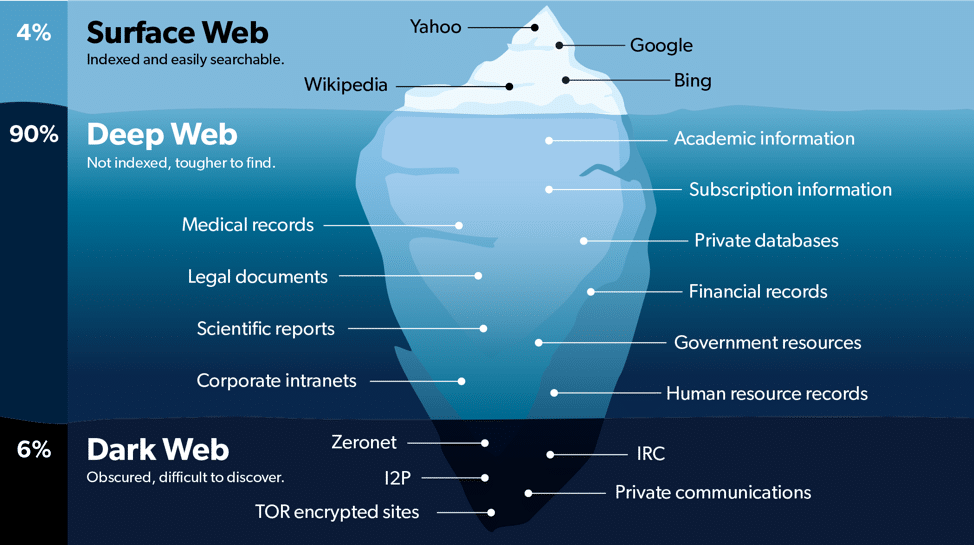
The dark web is the part of the internet that is not visible to regular search engines (like Google or Chrome) and requires the use of a special browser named Tor. Once Tor is downloaded and opened, you have arrived at what many call “Onionland.” Tor uses the onion router hidden service protocol, meaning that the Tor servers derived from the onion router offer users complete anonymity. Also, every website ends with .onion instead of .com, .org, or .gov.
The dark web is a criminal underworld where bad actors online sell and purchase illegal goods like drugs, weapons, counterfeit money, bank accounts, passports and ID’s, and much more. Dark web online shops are set up with customer reviews very much like Amazon which gives users the confidence to purchase from specific vendors. There is even a darker side to the dark web which consists of images and videos of gore, pornography, child sexual abuse, bestiality, and even live murder shows called red rooms where paying customers can tell the person torturing the victim what to inflict on the victim next or how they would like to see the victim killed.
Clear Web Versus Deep Web
The clear web is the part of the internet that can be accessed from any browser. It’s the smallest part of the web, which is astonishing because it seems that the content there is infinite but in actuality, it only accounts for about 4% of the content on the web. Some browsers, like Google, will censor certain websites. The search engine used by Tor, Duck Duck Go, does not censor and will not save your search history.
Then there is the deep web which is not to be confused with the dark web. The deep web is the largest part of the web. It consists of all the content that is not indexed and will not appear on regular search engines. Many government and private company websites exist there, where you would need an exact address to access them. Accessing without permission is illegal.
Is it easy to access the Dark Web?
It is very easy to access the dark web. I’ve included the steps here so you can recognize them if you ever come across these searches on your child’s browser.
To access the dark web, all you have to do is:
Purchase a VPN for extra security and anonymity (optional)
Download Tor
Access Hidden Wiki Links
Use the links on Hidden Wiki to help guide you through the dark web
Create an anonymous email
Purchase bitcoin (which is an online currency)
Find an online store through the hidden wiki that carries the products or services you are looking for
Using the hidden wiki as a guide, you can follow the steps above by merely clicking links and it will guide you through. You can easily find the hidden wiki by typing “hidden wiki” on the search bar in the Tor app.
Dark Web Dangers
Fake IDs and Drugs
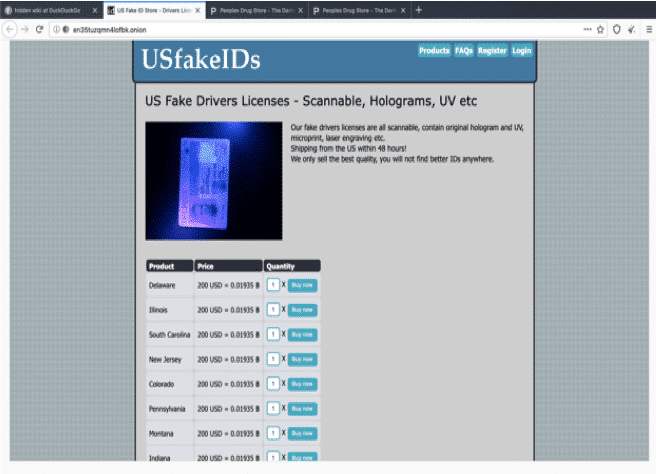
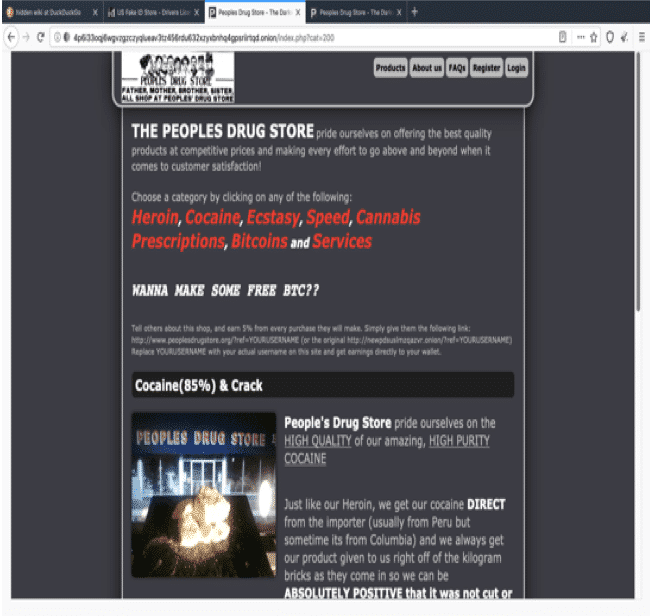
So, as a GKIS intern, how do I know that teens are accessing the dark web? I became interested when high school students that I worked with all had fake IDs and were getting into L.A. clubs. I asked how they got them, and they told me from the dark web using bitcoin. They also disclosed that they illegally purchase study drugs like Adderall and Modafinil as well as club drugs like cocaine and molly. I was shocked yet intrigued, so I followed these directions on how to get onto the dark web. I couldn’t believe how easy it was to access.
When I brought up my idea about writing about the dark web at our intern meeting, Dr. B worried we’d be publishing a how-to article. But I argued, and the other interns agreed, that there are plenty of YouTube videos showing the step-by-step process of accessing the dark web. Parents need to know about this!
It is mind-boggling how dangerous access to the dark web can be. As if purchasing illegal drugs from anonymous criminal vendors isn’t enough, consider that purity is not guaranteed. Drugs like cocaine and heroin have been known to be laced with fentanyl, an extremely powerful opiate that kills even the most severe addicts. And consider the risks teens take in 21-and-older clubs. Interaction with adults on the dark web can lead to any type of exploitive situation online and offline.
Violence and Pornography
Consider what watching violence and pornographic material can do to a child’s developing brain. For some kids, watching explicit material can lead to stress symptoms characteristic of clinical disorders such as acute stress disorder and PTSD. For others, they may become desensitized to shocking online content which may lead to craving and seeking increasingly dangerous content to experience that same rush. This type of explicit material can have a similar effect as addictive drugs due to the release of dopamine and endorphins.
Dopamine helps the brain recognize incentive salience. Incentive salience is the desiring attribute that includes a motivational component to a rewarding stimulus. In other words, dopamine is released when a reward is anticipated, and it motivates us to keep seeking that anticipated reward.
When shocking material is viewed, the opiate system in our brains begins to activate by releasing endorphins. Endorphins gives a sense of euphoria and eases pain, which is what heroin does. So, more and more shocking material may be craved due to dopamine released from the anticipation of viewing the shocking stimulus – and endorphins help ease the pain that the shocking stimulus caused. Endorphins are also what causes the “runners high” that people talk about after a good amount of cardiovascular exercise. So when we experience pain, endorphins are released to help ease the pain.
Hate Groups
An extremist group discussed in the media recently, the “Proud Boys,” is a group that is known for supporting President Trump and for their extremist chauvinist beliefs. If you search for their website on Google, you will likely not be able to find it. But if you use the search engine Duck Duck Go, it shows up right at the top.
Hate groups design their content to radicalize vulnerable adults and youth to their agenda. There have been many incidences where radical Islamic groups have radicalized western youth to fight for their cause. They do this on the clear web too. But when they need to be more discreet, they can use the deep web by creating a .onion site.
Facebook and other social media sites are on the deep web and their web address is www.facebookcorewwwi.onion. It is important to talk about these issues and set rules with your kids. because if they do not learn it from you they will learn from someone else who may not have the best intentions.
Without parent management tools, like those we recommend in our GKIS Screen Safety Toolkit, kids can spend hours over months interacting with extremists. These interactions can be moved offline and can result in child and teen trafficking as well as other crimes.
How You Can Keep Your Kids Safe From the Dark Web
If your kids have open access to the internet, GetKidsInternetSafe has an entire toolkit to get safety dialed in. Check out our GKIS Course Bundle in the plus and deluxe package options, which offers all of our GKIS courses plus bonuses for families with kids of all ages. Our course bundle option offers parent and teen education, communication tools, parenting tools, and tech tool recommendations. Our course summary page with the details can be found HERE.
Thanks to Andres Thunstrom for contributing to this GKIS article. Andres has been advised to never visit the dark web again. J
I’m the mom psychologist who will help you GetKidsInternetSafe.
In last week’s GKIS article, “How Teens Overshare,” we covered the ways kids intentionally and unintentionally share location information on social media and how to prevent this safety risk. In today’s article, we detail how cybercriminals victimize teens and offer more helpful information on how to get your kids internet safe.
Cyberstalkers
Cyberstalkers are predators who track online information to extort or harass, create cybercrimes like hacking or identity theft, or intercept a victim offline. Cyberstalkers can be complete strangers or people your teen may already be acquainted with.
Hackers
Hackers are predators who steal usernames, passwords, and personal information to gain access to a victim’s screen device. Once they can access, they can still further data, change or destroy information, install malware, and even take over the device’s camera.[1] Data can then be sold to other criminals on the dark web or be used for identity theft to take out loans and credit cards in your name.
Phishing
Phishing is a cybercrime in which a victim is contacted by email, telephone, or text message by someone posing as a legitimate institution to lure individuals into providing sensitive data. Phishing can also occur through websites and social media.[2] Dr. Bennett notes in her book, Screen Time in the Mean Time that the sensitive information obtained by phishing is often used for online login information such as usernames and passwords, bank account and credit card information, and even identity theft.
The most common example of phishing is email phishing. To email phish, the cybercriminal creates a fake domain that looks trustworthy and legitimate, then sends emails to potential victims asking them to click a link, download an attachment, or “update” their passwords.
To prevent your child from falling victim to online phishing, encourage them to only open emails, online messages, and text messages from trusted individuals and advise them to never click on any links or download attachments from an unusual or suspicious-looking email or message.
Identity Theft
According to The United States Department of Justice, “Identity theft and identity fraud are terms used to refer to all types of crime in which someone wrongfully obtains and uses another person’s personal data in some way that involves fraud or deception, typically for economic gain.”[5]
Cybercriminals often target younger individuals because children do not have bad credit (which is great for cybercriminals) and it is easy to keep it from being noticed until the child is older. In Dr. Bennett’s book, Screen Time in the Mean Time, she writes about a couple of children who were victims of identity theft.
Here are a few ways to protect your child from identity theft:
Install cybersecurity safeguards on phones, laptops, iPads, and any other device that need protection
Have family conversations about being wary of posting or sharing personal information online
Set up a virtual private network (VPN) to ensure the safety of your device(s)
Update passwords at least once a year and be sure that the new password does not include any information that may already be public such as, your teen’s name, age, pet’s name, or anything that could be easily guessed
Social Media Quizzes
Cybercriminals can also phish for information through social media by reviewing posts, asking questions, or offering an online quiz with targeted questions. Quiz questions to avoid include any that ask for your (or your mother’s) maiden name, your favorite color, the street you grew up on, your pets’ names, the first car you owned, or your best friend’s name.
The answers to these questions are often security answers on websites. With security information, personal accounts can be accessed for malicious intent. To prevent cybercrimes, ask your teen to refrain from taking online quizzes or you can encourage them to only take online quizzes from a legitimate source. Teaching your teen to withhold sharing personal information that could pose a security risk is vital to ensure their online safety.
Cyber Blackmail
Once a cybercriminal obtains sensitive information, they may use it to coerce a victim further. According to the BBC, “Cyber-blackmail is the act of threatening to share information about a person to the public, their friends or family unless a demand is met or money is paid.”[3] Cyber blackmail can take many forms and the cybercriminals who commit this crime use different tactics to take advantage of their victims.
Cybercriminals may even say that they have explicit photographs, access to their victim’s phone and computer’s webcam, or even recordings of them from their personal devices. Some of those claims may be true or false, but either way, the cybercriminal uses fear and shame to get what they want.[4]
To help prevent your teen from becoming a victim of cyber-blackmail;
advise them to never share sexual images of themselves (the images can end up anywhere)
advise them to not accept friend requests from strangers
advise them to be wary of things they post, share, or message others online (what they say can very well be used against them in the future)
require your teen to have private social media accounts
For more information and safety tips, we highly recommend parents to purchase our Cybersecurity & Red Flags Supplement. Dr. B created this tool because parents in her clinical and coaching practices frequently asked her to teach their kids the red flags that may alert them to the tricks of online predators, hate groups, and cyberbullies. In this Supplement, she offers her clinical teaching list so you can educate your kids. Knowledge and assertiveness coaching are key elements of child resilience and good judgment online.
Also included in the supplement is Dr. B’s Online Safety Red Flags for Parents. This tool teaches parents what child behaviors to look for that may signal they are at risk – a tool she created from 25+ years of clinical practice. Being able to recognize behavioral red flags in your child may be the difference between stopping risk after one exposure versus not recognizing dangerous relationships and exposures until it’s too late.
Thanks to CSUCI intern, Remi Ali Khan for researching cybercrimes and cybersecurity for this article.
I’m the mom psychologist who will help you GetKidsInternetSafe.
Onward to More Awesome Parenting,
Tracy S. Bennett, Ph.D.
Mom, Clinical Psychologist, CSUCI Adjunct Faculty
Photo Credits
Photo by Gerd Altmann from Pixabay
Photo by B_A from Pixabay
Photo by Pixabay from Pexles
Photo by Tracy Leblanc
Works Cited
Bennett, T. (2017). Screen Time in the Mean Time: How to Get Kids and Teens Internet Safe.
Brant, E., & Butterly, A. (2013, September 20). Cyber-blackmail: How to keep safe and deal with it. BBC Newsbeat. http://www.bbc.co.uk/newsbeat/article/23724703/cyber-blackmail-how-to-keep-safe-and-deal-with-it.
Cyber Extortion: Ransomware vs Extortionware. Alpine Security. (2020, August 2). https://alpinesecurity.com/blog/cyber-extortion-ransomware-vs-extortionware/.
The Dangers of Hacking and What a Hacker. https://www.webroot.com/us/en/resources/tips-articles/computer-security-threats-hackers.
Identity Theft. The United States Department of Justice. (2017, February 7). https://www.justice.gov/criminal-fraud/identity-theft/identity-theft-and-identity-fraud.
KnowBe4. What Is Phishing? Phishing. https://www.phishing.org/what-is-phishing.
Is your child sharing their location with hundreds of “friends” online? Are they unwillingly giving away personal information that can put their privacy in danger? Our GKIS tools can help with that. In this article, we cover the ways kids overshare online and provide insightful tips and strategies to keep your child safe.
The GKIS Mission
GKIS helps families achieve screen sanity, prevent digital injury, and form deeper, more meaningful relationships. We don’t have to give up screens to be safe. GKIS offers tools and strategies that keep the joys of childhood discovery alive for all of us in today’s overtasked world.
Oversharing
Teenagers love to share what they are doing online, whether it’s posting what they’re eating, uploading selfies, or posting pictures of their pet. Sharing daily life online is fairly common; we adults are guilty of it too. But sharing location data can be particularly dangerous for teens because it offers a bridge from online contacts meeting them online to meeting them offline.
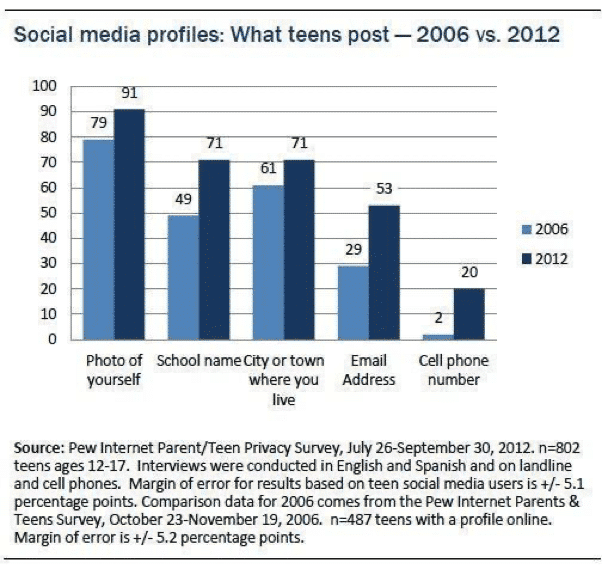
According to Pew Research Center, 71% of teens post their school name, 71% post the name of the city or town they live in, and 20% post their phone number.[1] Further, 36% of older teen’s Facebook friends are people they have never met in person.[2]
Although teens understand that oversharing can be dangerous, few have the life experience to understand exactly how it can be dangerous. When I was a teenager, the more “likes” I got on a photo or the more “friends” or “followers” I had on social media, the better I felt about myself and my online presence. I accepted friend requests from mutual friends who I had never met before, along with accepting requests from strangers. In my teenage mind, there wasn’t any harm in letting strangers see my online profiles. I felt that I would be okay as long as I wasn’t sending them my address. It didn’t occur to me that this data could be used to predict my location or even that anyone could have that kind of predatory intent.
Dr. Bennett shared a story with us where she worked on the production of the Lifetime TV show, I Catfished My Kid. In the show, producers created a poster board map (like detectives do) with yarn connecting the teens’ movements throughout the day for a week. With this data, they were able to predict daily habits like location, activities, and even who they hang out with.
How is Location Data Shared?
Instagram
One way location is shared on social media is through geotagged photos. A geotag is an electronic tag that assigns a geographical location to a photo or video posted on social media or other websites.[3] Geotags are commonly used to share what restaurant or city someone is in and are very popular on Instagram.
If your teen has a public profile and decides to post a photo on Instagram with a geotag, not only will their friends be able to see where they are, but users around the world can too. By simply clicking on that location’s tag, your teen’s photo will pop up as a current or recent visitor.
Another way location is shared on Instagram is by the use of hashtags. If your teen has a public profile and adds hashtags to their posts, their photos will show up as recent users of whatever hashtag they use, similar to the geotag feature. Hashtags are commonly used to have other users find their posts quicker and potentially gain more followers and traffic on their profile. However, that could be a privacy concern for younger users.
Facebook
The check-in feature on Facebook is similar to geotags. Facebook users “check-in” as an announcement to friends that they are visiting a particular location. Once checked-in, it appears on the user’s Facebook profile.
Snapchat
The SnapMap feature on Snapchat can also be a location risk. SnapMap allows your teen to share their location with their Snapchat friends every time they open the app. The SnapMap feature is a default, meaning it is automatically on so your teen might not even know that they are sharing their location. This is another privacy issue and may be a safety concern if your child accepts friend requests from strangers.[4]
Helpful Tips and Tools to Protect Your Child on Social Media
Set up a digital contact like our free Connected Family Screen Agreement and have ongoing, informative conversations with your kids about online safety. Our GKIS blog offers credible, interesting topics that will feed an ongoing agenda. Register for our Connected Family Screen Agreement to get on our weekly email list!
Set up your home to optimize best-use screen practices using our Connected Family Course for school-age kids.
Limit location sharing in Settings. On an iPhone, go to Settings and remove the location by clicking on the social media name > Location > select Never, Ask Next Time, While Using the App, or Always. You also have the option to turn off “Precise Location” meaning apps can only determine your approximate location
Don’t allow your child to have social media accounts until they are ready (we recommend after 13 years old or late middle school).
Require that your child set social media to private and only accept friend requests from family and friends they know in real life
Have your child change to the “Ghost Mode” on Snapchat (their location will no longer be viewable on SnapMap)
Thanks to CSUCI intern, Remi Ali Khan for researching common ways teens overshare on social media for this article.
I’m the mom psychologist who will help you GetKidsInternetSafe.
Onward to More Awesome Parenting,
Tracy S. Bennett, Ph.D.
Mom, Clinical Psychologist, CSUCI Adjunct Faculty
Photo Credits
Photo by Cottonbro from Pexels
Photo by Pixabay from Pexles
Photo by Pew Research Center
Works Cited
Deahl, D. (2017, June 23). Snapchat’s newest feature is also its biggest privacy threat. Retrieved November 04, 2020, from https://www.theverge.com/2017/6/23/15864552/snapchat-snap-map-privacy-threat
Dove, J. (2020, October 07). How to Remove Location Data From Your iPhone Photos in iOS 13. Retrieved November 04, 2020, from https://www.digitaltrends.com/mobile/how-to-remove-location-data-from-iphone-photos-in-ios-13/
Madden, M., Lenhart, A., Cortesi, S., Gasser, U., Duggan, M., Smith, A., & Beaton, M. (2020, August 17). Teens, Social Media, and Privacy. Retrieved November 04, 2020, from https://www.pewresearch.org/internet/2013/05/21/teens-social-media-and-privacy/
Oxford Languages and Google – English. (n.d.). Retrieved November 04, 2020, from https://languages.oup.com/google-dictionary-en/