
Need peaceful screen time negotiations?

Get your FREE GKIS Connected Family Screen Agreement

Internet safety

The GKIS Sensible Parent’s Guide to BeReal 

If you’re a parent, you know how much kids use social media. Apps are everywhere, and they’re becoming more popular. BeReal is a social media app that aims to “spotlight someone who’s living in the moment, going for it, celebrating life and all its weird/wonderful chaotic energy.”[1] Teens and tweens are falling in love with BeReal and its positive message. In this article, we’re covering what you need to know about BeReal. Does it allow harmful content? Are we ready to handle the risks that may come with it? Learning about social media can be tricky, but the GKIS Social Media Readiness Course helps teens and tweens learn the risks of social media and practice good psychological wellness. Read on for more info on this new popular app.

What is BeReal?

BeReal is a French social media app released in 2020 by Alexis Barreyat and Kevin Perreau that allows users to post real-time photos taken from the front and back phone cameras at the same time.[2]

BeReal’s mission is to “create an authentic world that keeps you connected with the people you really care about.”[3] It encourages users to live in the moment and stay away from harmful filters and trends. BeReal currently has over 6 million users a day.[4] It became popular in 2020 when teens on TikTok started posting their BeReals with celebrities and influencers.

How to Use BeReal

BeReal is easy to use. Users receive alerts at random times during the day to take a photo of what they’re doing.

Once alerted, users have two minutes to take their photo and post it. If they post on time, they can take two more BeReals that day. If they post late, they only get one photo op that day.

Although BeReal users can’t upload images from their photo albums, they can react and comment on friends’ photos or save their reaction photos to be re-used on their friends’ future BeReals.

Benefits of Using BeReal

No Filters

BeReal’s main benefit is that its layout forces users to post with no slimming, skin-lightening, or makeup filters. Social media filters have been found to lead to insecurity, depression, and more harmful effects. Check out our GKIS articles Influencers Hurt Child Self-Esteem by Overusing Filters” and “Beauty Filters Don’t Embrace Brown Beauty: The Rise of Colorism” to learn more about the dangers of filters.

No Likes

On BeReal, there is no “Like” button. Other apps like Instagram, Twitter, and TikTok show the amount of likes someone gets on their post. It’s no secret that most children think how many likes they get contributes to how cool they are. BeReal takes away this feature, making it less of a popularity contest.

Private Accounts

When you make your BeReal account, it automatically makes your profile private. Users must approve friend requests for you to see their posts.

Risks of Using BeReal

Location and Time Sharing

Like any app, there are some risks to using BeReal. BeReal posts include the city in which the user took the photo. It also includes a timestamp of when they took the photo.

Public Photos

Another risk is that you have the option to make your individual BeReals public for friends of friends to see. Friends of friends will not see your account, but an individual BeReal you posted may show up on their feed.

Other Risks

Other risks to using BeReal include:

  • Being or feeling pressured to share
  • Viewing inappropriate content
  • Experiencing unwanted contact
  • Oversharing

Privacy and Safety Options

Account Privacy

BeReal automatically makes your profile private when you sign up. Friendships must be approved by each user, so users can deny anyone access to their profile.

Photo Sharing

You can make an individual BeReal post public or private. To make it private, take a photo and click “My friends only” before posting.

To make it public, take a photo and click “My friends + their friends.” This allows friends of your friends to see your BeReals.

Location Privacy

BeReal shares the location of each photo when posted, but we can fix that. Users can turn off the location feature by taking a photo, clicking on “location,” and then selecting “location off” before posting.

Report and Block Inappropriate Users and Posts

If you see a post you don’t like, click on the three dots in the corner of the photo and click “Report this BeReal.” This means BeReal will no longer show you that post or any other posts from that person.

If you see a lot of inappropriate posts from a user, you can remove them as a friend or block their account. This stops you from seeing their posts and stops them from seeing yours.

GKIS Safety Ideas

Thanks to CSUCI intern Samantha Sanchez for researching BeReal and preparing this article.

I’m the mom psychologist who will help you GetKidsInternetSafe.

Onward to More Awesome Parenting

Tracy S. Bennett, Ph. D.
Mom, Clinical Psychologist, CSUCI Adjunct Faculty
GetKidsInternetSafe.com

Works Cited  

[1] BeReal Realest Person Announcement

[2] BeReal   

[3] BeReal – Our Mission and Values 

[4] BeReal Revenue and Usage Statistics (2023) 


Photo Credits

Photo by Ottr Dan (https://unsplash.com/photos/0EFrV9Pgvb8)

Photo by Nathan Dumlao (https://unsplash.com/photos/ItsW7gT8iR0)

Photo by Bruno Gomiero (https://unsplash.com/photos/jp7J14W9sSg) 

Teens Are Using New AI Software “ChatGPT” to Write Their Essays for Them

Advancements in artificial intelligence technology have transformed the media we consume. These highly intelligent computer programs can create realistic-looking images from a few words, hold entire conversations, and even write cited essays. While programs like ChatGPT can give us simple answers to our questions, they can also hinder our children’s learning when they outsource their brainwork to an all-knowing robot. If you worry that your child is relying on technology a little too much, our Screen Safety Toolkit offers a resource guide so you can tighten up screen time supervision and management.

What is ChatGPT?

ChatGPT is a language processing tool that is powered by artificial intelligence (AI) technology, allowing you to have human-like conversations.[1] ChatGPT can answer one’s questions and complete various tasks from essays, to editing code, to writing emails. This software is open to the public for free, although there is also a paid subscription version with additional features.[1] Notable celebrities in technology like Elon Musk have commented on the strength of ChatGPT, stating “ChatGPT is scary good. We are not far from dangerously strong AI.”[1]

ChatGPT gets its data from textbooks, websites, and various articles which it simultaneously uses to model its language to seem more human-like.[2] This AI is well-trained on biased and unbiased data and can reproduce data with reliability, something that many other similar AI systems lack.[2]

When asked to write a sentence for this article, ChatGPT responded with, “ChatGPT is an artificial intelligence language model developed by OpenAI, based on the GPT-3 architecture. It is designed to generate natural language responses to a wide variety of prompts and questions. ChatGPT uses advanced machine learning algorithms to understand the nuances of language and generate context-sensitive responses that are often indistinguishable from those written by a human. It has a wide range of potential applications, from customer service and education to creative writing and more.”[3] How’s that for a definition?!

How are kids using ChatGPT to cheat?

While ChatGPT’s design of being able to generate natural responses to various questions and prompts can make it a helpful tool for educational and informational purposes, it also opens it up to exploitation for other purposes. A quick Google search will turn up dozens of articles on how to get ChatGPT to write your essay for you. A student at Cardiff University in Wales shared his experience with turning in two papers, one written by himself and the other written by ChatGPT.[4] The essay from ChatGPT earned him the highest grade he had ever received on an essay in his entire time in undergraduate school.[4]

College professor and TikTok user Lilmaverick3 received an essay from one of her students that had been flagged by TurnItIn.com as being 100% written by AI technology, proving that students have already started taking advantage of the AI’s skills and ability to create human-like speech.[5] The technology is still relatively new but stories just like this will likely continue.

Cheating robs children of the satisfaction of completing their own assignments and the learning experience that comes with research. It also offers a dishonest view of academic ability, which can quickly get out of hand when teachers ratchet up expectations in response.

What Parents and Educators Can Do to Prevent Cheating

  • Research various forms of AI detectors and run your child’s papers through flagging software, this way you can see if the paper has any elements that have been plagiarized.
    • Some popular flagging software includes Writer’s AI Content Detector and Content at Scale’s AI Detector. For educators, we recommend having students turn in assignments through TurnItIn.com, this checks for plagiarism as well as how much of the assignment is AI-generated content.
  • Communicate your expectations surrounding homework and plagiarism from the start using our GKIS Connected Families Screen Agreement.
  • Sit with your child while they work on assignments to offer support as they need it, and be there before they decide to turn to AIs.
  • Manage smart devices during homework time using resources from our GKIS Screen Safety Toolkit.
  • Utilize ChatGPT in ways that allow it to be an educational tool, like writing ideas, creating to-do lists, and finding resources.
    • ChatGPT is a helpful tool for educational purposes when used properly. As a prompt-based language bot, it can be used to spruce up resumes or cover letters based on inputted job description data, help create outlines for papers based on inputted prompt data, and even provide recipes for weekly meals.
    • Promoting ChatGPT as an educational tool rather than a homework robot can prevent your child from creating an unhealthy dependence on AI software to do their work for them.

Like what you read? Check out our GKIS article “Siri and Alexa Help Kids Cheat on Homework”.

Thanks to CSUCI intern, Katherine Carroll for researching ChatGPT.

I’m the mom psychologist who will help you GetKidsInternetSafe.

Onward to More Awesome Parenting,

Tracy S. Bennett, Ph.D.
Mom, Clinical Psychologist, CSUCI Adjunct Faculty
GetKidsInternetSafe.com

Works Cited

[1] Ortiz, S. (2023). What is ChatGPT and why does it matter? Here’s what you need to know. ZDNET. https://www.zdnet.com/article/what-is-chatgpt-and-why-does-it-matter-heres-everything-you-need-to-know/

[2] Pocock, K. (2023). What Is ChatGPT? – what is it used for? PCguide. https://www.pcguide.com/apps/what-is-chat-gpt/

[3] ChatGPT. (2023, May 3). Write a few sentences on what ChatGPT is. Response to user question. Retrieved from https://chat.openai.com/

[4] Wehner, G. (2023). UK college student uses AI to write high-scoring essay, earns high grade: report. Fox Business. https://www.foxbusiness.com/technology/uk-college-student-ai-write-high-scoring-essay-report

[5] LilmaverickProf [@lilmaverick3]. (2023). AI detection now automated for educators #professor #Ai #chatgpt [Video]. TikTok. https://www.tiktok.com/t/ZTRwx4R8f/

Photo Credits

Photo by Shantanu Kumar (https://unsplash.com/photos/_CquNNr1744)

Photo by Levart_Photographer (https://unsplash.com/photos/drwpcjkvxuU)

Photo by freestocks (https://unsplash.com/photos/I_pOqP6kCOI)

Photo by sofatutor (https://unsplash.com/photos/4r5Hogjbgkw)

What “Going Viral” Does to Your Brain and Self-Esteem

Before the internet, “going viral” was not something positive much less something people actively sought out. “Going viral” has become a new age epidemic, with people doing whatever they can for their 60 seconds of fame. But what does “going viral” actually mean, and how does it affect our brains and our self-esteem? Today’s GKIS article will break down “going viral” and its effects. For help raising your child to be digitally smart, check out our GKIS Screen Safety Essentials Course. This course includes all GKIS parenting courses, agreements, and supplements, ensuring you are well-equipped to fight off digital injury and keep your child safe from harm.

What does it mean to “go viral”?

Going viral means sharing something via social media that spreads quickly to thousands, even millions of people. The term viral video was first used in 2009 to describe the video “David After Dentist.”[1]

One viral video or post can turn people into internet celebrities overnight and garner thousands of followers, resulting in brand deals and monetized content. Once a video goes viral, there is no limit to the number of people it will reach or even what platform they will see the video on. It is very common to see posts shared from one platform to the next, whether it be a TikTok on Twitter or a Tweet going viral on Instagram.

The number of views to be considered going viral also varies from platform to platform. One hundred thousand views on TikTok is pretty successful, whereas even a couple hundred thousand views on YouTube is a relatively low number.[2]

The number of likes is also an important factor. Many videos have a high number of views but a relatively low number of likes. These videos are not considered to be going viral because they are not well-received by the general public.[2] Engagement drives up the virality of the content through shares and comments that stimulate the algorithm to continue placing that content on people’s feeds.[2] Another important factor in going viral is the immediacy of response, meaning that the views, likes, and comments must be received within a few hours to days rather than over several months or years.[2]

How does “going viral” affect our brains?

When your video, post, or other content “goes viral,” you receive likes, comments, reposts, shares, and bookmarks. These response notifications prompt the reward systems in our brains.[3] Many fast notifications results in dopamine release. To keep that feel-good feeling going, we keep checking, acting in a way similar to gambling addictions.[3]

Algorithms also take advantage of a variable-reward system because they are programmed to recognize when to take advantage of our reward system and desire for dopamine.[3] This often results in a stockpile of notifications that get delayed until a good amount of time since the last check has passed or a large amount of engagement has accumulated.

For a personal insight into going viral, I interviewed a college student who had recently experienced the sensation of going viral. They said, “I recently had a video go viral on TikTok. It was a video of the Indie-Rock band Boygenius and one of their members, singer Phoebe Bridgers, singing a verse from their song ‘Cool About It.’ I had taken the video at a concert I had recently attended and decided to post it on TikTok since I was lucky enough to be pretty close to the stage. Over the next few days after I posted it, it got 118k views, 32k likes, and 500 comments, and was saved by more than 4000 people. Once it started picking up traction, I became obsessed with checking my notifications and seeing all the new comments. I would constantly look to see how many views I was at each hour. I even got a like from a TikTok creator who I really enjoy so that was very exciting for me.”

Although going viral is thrilling, notifications can be harmful when they are overly distracting.[4] To compensate for smartphone interruptions, studies have shown that people often work faster, resulting in more stress, frustration, time pressure, and effort.[4] Research has linked daily notifications and their interruptions to depression, anxiety, and even symptoms associated with ADHD.[5]

Our interview also revealed that the euphoria of going viral is short-lived and needs constant “re-upping.” Our subject elaborated, “Once the video started to die down though, I got annoyed by the notifications. They were distracting because they were so far and few in-between and nothing quite as exciting as the start. I got kinda sad that my viral moment was dying down. It made me want to post another video to see if it would get the same kind of attention.”

What does “going viral” do to our self-esteem?

Studies have shown that social media can be both detrimental to our self-esteem and boost it at the same time, but how does going viral change that?

Social media usage can add stress to daily life and encourage people to constantly evaluate and compare themselves to others.[6] When someone goes viral, they open themselves up to being judged by thousands of people, some of whom can be cruel, feeling emboldened by the veil of anonymity. While many would agree that the likes and views one receives on a viral post boosts their self-esteem and makes one feel good about themselves, it also allows for internet trolls to make their way into the comment section to bait others into an argument or provoke an emotional reaction.[7]

One-in-five internet users that have been victims of harassment online reported that it happened in the comment section of a website.[8] Reading negative comments can lessen confidence, reduce self-esteem, and depending on the severity, can even provoke suicidal thoughts.[9]

Our GKIS interviewee unfortunately also had experience with the negative side of going viral. They reported, “Before my video went super viral, I had posted another video that didn’t get as many views but still got a couple thousand views, a few hundred likes, and a good amount of comments. The video was clips of my girlfriend and me in celebration of our second anniversary. For the most part, the comments were really nice, with people calling us cute and being supportive. But after a little while of it being up, it got to the wrong side of TikTok. As a queer couple, we’re used to people being rude or staring at us, but to get negative comments just hurt more for some reason. This was a few months ago, but I still think about the comments from time to time. It honestly made me want to delete the whole video even though it was just a few comments out of a bunch of nice ones.”

How Parents Can Help

  • Understand that what you and your child post has the potential to go viral, even if you don’t want it to.
  • Set the privacy settings on posts to control who gets to see the content you share.
  • Prevent a digital injury to your child’s self-esteem before it occurs with our GKIS Screen Safety Toolkit for parents of kids of all ages.
  • To help facilitate difficult conversations about online content and who should see it, try out our free GKIS Connected Family Screen Agreement.

Like what you read? Check out our GKIS articles “Showcasing Child Talent Online Leads to Exploitation and Scams” and “Influencers Hurt Child Self Esteem by Overusing Filters”.

Thanks to CSUCI intern, Katherine Carroll for researching “going viral” and its effect on the brain and self-esteem.

I’m the mom psychologist who will help you GetKidsInternetSafe.

Onward to More Awesome Parenting,

Tracy S. Bennett, Ph.D.
Mom, Clinical Psychologist, CSUCI Adjunct Faculty
GetKidsInternetSafe.com

Works Cited

[1] Wonderopolis. (2022). What Does It Mean To Go Viral? Wonderopolis. https://www.wonderopolis.org/wonder/what-does-it-mean-to-go-viral

[2] Pigeon Studio. (2022). How many views is viral? What makes a video viral? Pigeon Studio. https://studiopigeon.com/blog/how-many-views-is-viral-what-makes-a-video-viral/

[3] Haynes, T. (2018). Dopamine, Smartphones & You: A battle for your time. Science in the News. https://sitn.hms.harvard.edu/flash/2018/dopamine-smartphones-battle-time/

[4] Pandey, N (2022). Constant Distraction And Stress, App Notifications Affect Minds Negatively: Study. NDTV. https://www.ndtv.com/world-news/constant-distraction-and-stress-app-notifications-affect-minds-negatively-study-3595177#:~:text=According%20to%20a%20study%2C%20these,shown%20to%20damage%20task%20performance.

[5] Glick, M. (2022). Phone Notifications Are Messing With Your Brain. Discover. https://www.discovermagazine.com/technology/phone-notifications-are-messing-with-your-brain

[6] Bergman, M. (2023). Social Media’s Effects on Self-Esteem. Social Media Victims Law Center. https://socialmediavictims.org/mental-health/self-esteem/

[7] Australian Government. (2022). Trolling. eSafety Commissioner. https://www.esafety.gov.au/young-people/trolling#:~:text=Something%20has%20happened-,What%20is%20trolling%3F,believe%2C%20just%20to%20cause%20drama.

[7] Australian Government. (2022). Trolling. eSafety Commissioner. https://www.esafety.gov.au/young-people/trolling#:~:text=Something%20has%20happened-,What%20is%20trolling%3F,believe%2C%20just%20to%20cause%20drama

[8] Aleksandra. (2016). How reading online comments affects us. Social Media Psychology. https://socialmediapsychology.eu/2016/10/05/onlineandsocialmediacomments/

[9] Cuncic, A. (2022). Mental Health Effects of Reading Negative Comments Online. VeryWellMind. https://www.verywellmind.com/mental-health-effects-of-reading-negative-comments-online-5090287#:~:text=If%20you%20end%20up%20reading,and%20after%20reading%20comments%20online

Photo Credits

Photo by Good Faces (https://unsplash.com/photos/Lv2lW5ImegQ)

Photo by Christian Wiediger (https://unsplash.com/photos/NmGzVG5Wsg8)

Photo by Robina Weermeijer (https://unsplash.com/photos/3KGF9R_0oHs)

Photo by Cristina Zaragoza (https://unsplash.com/photos/cMVRsfY8R3Q)

Photo by Levi Perchik (https://unsplash.com/photos/5gHdYqpALTY)

The GKIS Sensible Parent’s Guide to Reddit

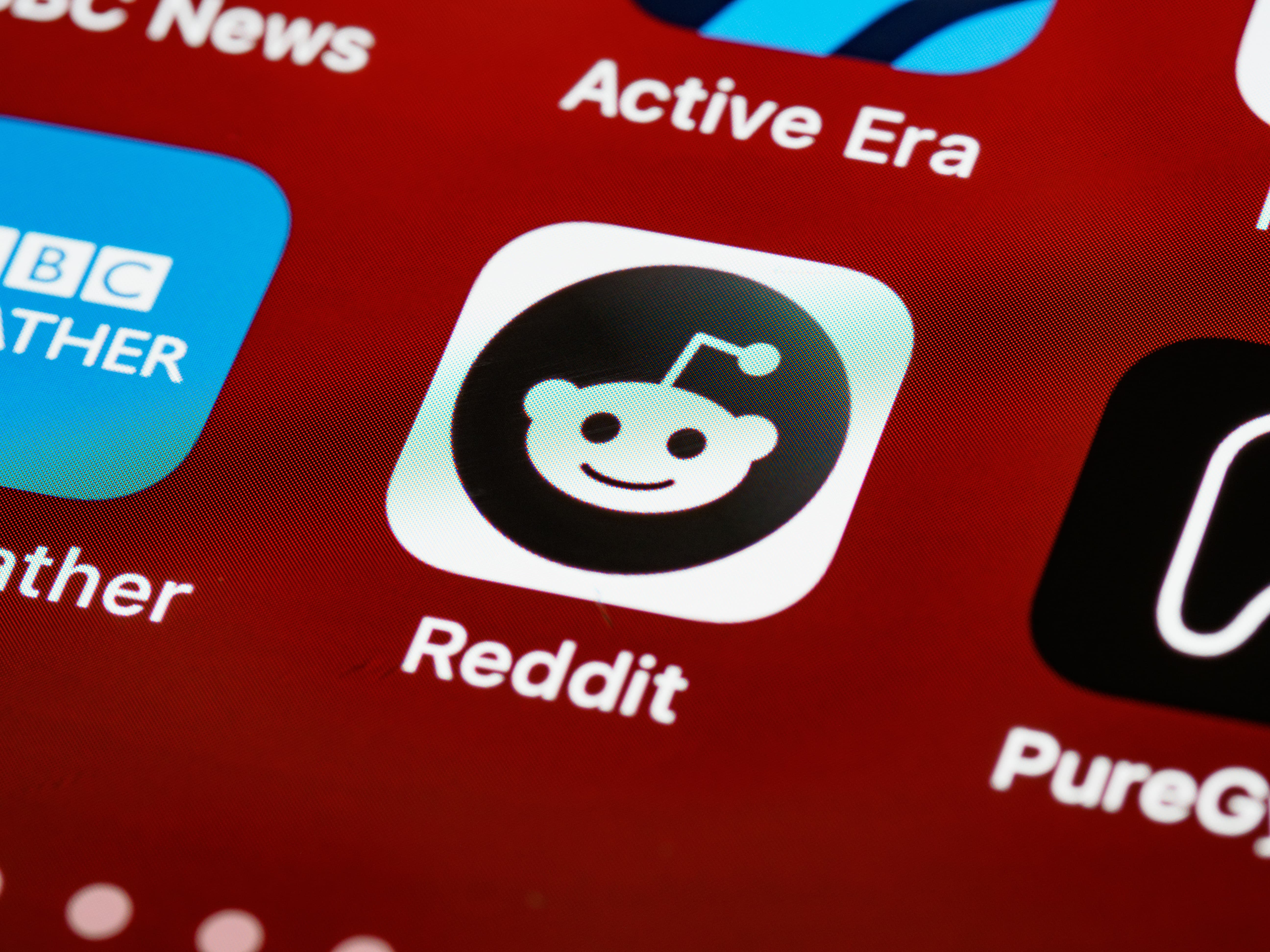
Reddit is a popular social media website with millions of users worldwide and has a controversial reputation due to its content moderation policies. This GKIS Sensible Parent’s Guide will provide what a parent needs to know about Reddit and offer some suggestions to help keep your children safe while using the website. We also recommend checking out the GKIS Social Media Readiness Training Course, which can help you teach your kids how to safely interact with any social media website.

How long has Reddit been around how popular is it?

Reddit is a hybrid internet forum and social news media website where users can post images, videos, and links to other websites, and other users can leave comments on the original post. As of February 2023, it’s the tenth most visited website on the internet with 4.8 billion monthly visits.[1] It was founded in 2005 by Steve Huffman, Alexis Ohanian, and Aaron Swartz as a bulletin board-style website that would act as “the front page of the internet.”[2] In 2006, the website was acquired by the mass media company Condé Nast Publications, also known for magazine and news companies such as Vogue, The New Yorker, and Vanity Fair.[3]

The website is divided into thousands of subreddits that organize posts by topic. Some subreddits cover broad topics, such as r/gaming for anything video game related, while others are more specific like r/minecraft or r/fortnite for those specific games. There are subreddits for news, relationship advice, political discussion, different hobbies, and nearly anything else you might expect to find on the internet. There are many subreddits dedicated to community support, like r/TwoXChromosomes for women’s rights and r/lgbt for LGBT issues.

Posts and comments on Reddit can be given upvotes and downvotes, which are similar to likes on Twitter or Facebook. Recent posts with multiple upvotes will be displayed at the top of the subreddit it was posted in. Posts with multiple downvotes are less likely to appear and will often be tagged as “controversial” by the website’s filter settings. 

Getting Started with Reddit

The only thing Reddit requires to create an account is a valid email address. Reddit’s user agreement states that users need to be over the age of 13, but there is no age verification requirement besides a check box agreeing to the terms and conditions during account creation. Reddit has a mobile app that can be downloaded from the Google Play store or Apple App store, and can also be accessed from any web browser.

Benefits and Popular Features of Reddit

Custom Home Page

By default, the home page of Reddit shows the subreddit r/popular, which displays a variety of posts from a list of the most popular subreddits, with some restrictions related to political and adult-oriented subreddits.[4] Reddit users can also sort by r/all, which displays the top results from all subreddits on the website.

Reddit users can subscribe to specific subreddits they like, causing those subreddits to appear on their home page. Users can also subscribe to other user profiles so that they can see what another user posts no matter what subreddit it’s posted in. By doing so they can create a curated feed of content that relates to their interests. 

Subreddits are mostly created by Reddit users and act as community forums for discussion and sharing media. They are run by moderators, who are users that set and enforce rules within each subreddit but are not paid employees of Reddit.[5] Reddit employees known as administrators only get involved in a subreddit if there are violations of the website’s terms of service and content policies.[6]

Community Events

Reddit is also known for having large community events on April Fools’ Day every year. In 2015, the subreddit r/thebutton was created, where a sitewide countdown clock could be reset by pushing a button, but each user could only push the button once.[7] In 2017 and 2022, Reddit ran an event called r/place where its community members could collaborate to create pixel artwork on a canvas where each user could only edit a single pixel every five minutes.[8]

Reddit’s Privacy and Safety Options

Reddit’s user settings and account creation process offer several options to protect yourself and your information while you use the website.

  • Anonymity

    • Reddit does not require any personal information besides an email address to create an account.
    • In its Safety & Privacy Settings, you can choose whether you want your profile to appear in search engine results from websites like Google or Bing.
    • Users can delete their posts, comments, or their entire account from their profile settings at any time.
  • Personal Information

    • Reddit collects personal information about its users but allows users to restrict what information is collected and how it is used in its Safety & Privacy Settings.
    • Reddit users can file a data request form to receive a copy of the data that has been collected from their account. 
    • When an account is deleted, the username is removed from all posts and comments made by that account. However, the posts will still be publicly visible unless they are deleted before the account.
  • Chat and Private Messages

    • Users can choose whether they want to receive chat requests and private messages in their Chat Settings and can restrict messages from accounts less than 30 days old. 
    • Users can also block individual user profiles, preventing that user from messaging them or sending chat requests.

Risks of Reddit

Adult-Oriented Content

Reddit has many subreddits dedicated to easily accessible adult content like pornography and graphic violence. Posts from these subreddits are marked as NSFW (internet slang for ‘Not Safe for Work’ or ‘Not Suitable for Workplace’) and excluded from r/popular and r/all.[4] Despite this, directly searching for adult content is only restricted by a check box below the search bar asking if you would like to include NSFW search results. Those results still appear if you select to hide NSFW posts in your user settings.

Additionally, the process for tagging NSFW content is only enforced by moderators, not site administrators. Inappropriate posts that contain nudity are automatically tagged, but ones that do not show explicit nudity can slip through the filtering process. Posts containing graphic violence are also often poorly moderated, and content from subreddits like r/fightporn (videos of street fights) and r/CombatFootage (GoPro videos of military conflicts) often make it to Reddit’s r/all page even if they show severe injuries or death. 

Political Content and Hate Speech

Reddit has had many controversies surrounding the political subreddits on its website. In 2015, five popular hate speech subreddits targeting ethnic and gender minorities were banned for violating Reddit’s anti-harassment policies.[9] It banned the subreddit r/altright in 2017 after posts were made which called for the harassment of and leaked the personal information of a man who punched right-wing personality Richard Spencer.[10]  Multiple political subreddits such as r/The_Donald, R/DonaldTrump, r/GenderCritical, and r/ChapoTrapHouse were banned under new policies designed to reduce hate speech in 2020.[11] 

Despite these efforts, Reddit continues to have problems with hate speech and politically motivated harassment on its platform. While these bans remove the offending subreddits and all posts within them, the users who subscribed and made posts in those subreddits are rarely banned unless they directly violate terms of service. Users from the banned subreddits will often continue posting in other subreddits with similarly relaxed rules about hate speech and discrimination until it is banned as well.

Cyberbullying and Harassment

Reddit is a social media website with a high risk of cyberbullying and harassment. Because Reddit users are anonymous, there are few repercussions for directly sending another user harmful messages or unwanted explicit images. A user’s posts and comments are also publicly visible to all other users, which enables internet stalking behavior. While Reddit does have anti-harassment policies that can result in an offender’s account being banned, there’s little to prevent a banned user from creating another account to continue their harassment.[12]  

GKIS Suggestions to Keep Your Kids Safe on Reddit

  • You can sign up for the GKIS Connect Family Screen Agreement, a free course that covers the basics of internet safety and keeping open communication between you and your kids about their internet use.
  • You can check out the GKIS Social Media Readiness Training course, which contains 10 lessons to help your teens and tweens get ready to responsibly use social media. It also provides access to the private GKIS Connected Family Facebook group, with tips and feedback from Dr. Bennett and other families who have taken the course.
  • There’s also the GKIS Screen Safety Toolkit, which is a parent’s guide to setting up parental controls, screen time management, social media & text monitoring, and other technological tools to keep an eye on how your kids use the internet. 

Thanks to CSUCI intern Brandon Bishop for researching Reddit and preparing this GKIS Sensible Parent’s Guide.

I’m the mom psychologist who will help you GetKidsInternetSafe.

Onward to More Awesome Parenting, 

Tracy S. Bennett, Ph.D.
Mom, Clinical Psychologist, CSUCI Adjunct Faculty
GetKidsInternetSafe.com


Works Cited

[1] Free Website Traffic Checker from Semrush

[2] <Live Episode! Reddit: Alexis Ohanian & Steve Huffman by National Public Radio

[3] Condé Nast from Wikipedia

[4] Reddit is eliminating explicit content from its public homepage by Saqib Shah

[5] What’s a moderator? from Reddit

[6] What is an admin? from Reddit

[7] The button: the fascinating social experiment driving Reddit crazy by Timothy B. Lee

[8] Reddit is bringing back r/Place for April Fools’ Day – here’s how to participate by José Adorno

[9] These are the 5 subreddits Reddit banned under its game-changing anti-harassment policy – and why it banned them by Caitlin Dewey

[10] Reddit shuts down ‘alt-right’ subreddit by Luke Lancaster

[11] Reddit bans r/The_Donald and r/ChapoTrapHouse as part of a major expansion of its rules by Casey Newton

[12] Reddit Content Policy

Photo Credits

Photo by Brett Jordan from Pexels: https://www.pexels.com/photo/red-white-and-black-labeled-box-5437588/

Photo by Designecologist from Pexels: https://www.pexels.com/photo/silver-imac-displaying-collage-photos-1779487/

Photo by Pixabay from Pexels: https://www.pexels.com/photo/settings-android-tab-270700/

Are TikTok Users Exposing Kids to Fetish Content?

Sexual content on a social media platform with millions of young children should never be allowed, but lines become blurred when TikTok users find subversive ways to share fetish content with others. Behind seemingly innocent videos lay adults seeking to arouse one another, uncaring that it may be occurring right in front of your child. Protect your child from inappropriate online content and prevent digital injury with our GKIS Screen Safety Toolkit.

What is a “Fetish” or “Kink”? 

A fetish refers to sexual arousal resulting from objects or a specific body part that is not typically seen as sexual.[1] Fetish objects or body parts could include feet, hair, food, or even balloons. For those with a fetish, sex may be less pleasurable or even impossible without the presence of the fetish object.

In contrast, kink refers to unconventional or bizarre sexual activity with self or others.[2] While fetishes can become sexual disorders, kinks typically do not progress to that level. More specifically, Fetishistic Disorder occurs when a person’s fetish escalates to the point of being persistent and distressing.[3] To meet the conditions for this disorder, an individual must experience sexual urges that meet the definition of a fetish, these fetishes must cause distress or impairment in functioning, and the object they fetishize must not be used in cross-dressing or sexual stimulation.[4] 

Fetishistic Disorders are typically seen in males and emerge during puberty.[4] Fetishistic Disorder can make it hard for individuals to develop intimate relationships and can cause sexual dysfunction.[4] Studies have also found that fetishism is often correlated with other mental health issues, substance abuse, criminal justice involvement, and an increased risk of sexually transmitted infections.[4]

How are TikTok Users Posting This Content?

Most social media websites have content filters and bots that flag any content that can be considered inappropriate or of a sexual nature. However, most of the fetish content on TikTok does not contain nudity, instead appealing to fetishes that utilize implied sexual behavior.

Popular TikTok user Lena Rae (@lenarae.lh), who has over 230k followers, has created a collection of videos titled, “Is This Fetish Content?” that identifies this type of content and calls out the users to post it.

In a video with almost 18 million views, Lena Rae reacts to a seemingly innocent video from user “putinnu” (a not-so-thinly veiled attempt at sexual innuendo “put it in you”). The video shows a woman in a wedding dress shoving a glass vase into a multi-tiered cake and then proceeding to pour multi-colored, runny frosting inside the vase. Lena Rae points out the vase is a phallic shape. She also comments on the consistency of the frosting and how the person is spilling it as they pour. The woman in the video explains that the frosting is going to run all over the cake, a reference that Lena Rae says is to appeal to those with a “sploshing” fetish. Lena Rae points out that the actions in the video are purposely repetitive and aim to appeal to a fetishistic audience.[5]

While these videos may not be expressly sexual like other content on TikTok, the hidden fetish content videos are flooded with comments from adults who are taking pleasure in the content being suggested to them. This creates a dangerous combination of adults with sexual fetishes consuming content that is “safe” enough to also show up on the For You Page of young kids.

How Viewing This Content Can Affect Kids 

Viewing sexual content at any age can be harmful to one’s mental health, but when viewed during a time of development, it can have lasting effects into adulthood.

Experts have found that young children who view pornographic content frequently become isolated, withdrawn, anxious, or depressed.[6] Consumption of online sexual content at a young age can lead to premature sexual experimentation as well as other high-risk behaviors, dating violence, cannabis abuse, or the development of harmful fetishes.[7]

What Parents Can Do

Open communication about sexual content can save your child from digital injury and stunted development. Some experts even recommend talking to your child as young as 9 years old about the difference between “good” and “bad” pictures.[8] Experts believe that in doing so, children will be better able to identify groomers or online predators and be less susceptible to them.

There are also various protective factors that one can turn to to prevent early exposure to sex. Creating an environment where a child feels connected to their parents and family can help them feel more comfortable communicating about the content they consume. To help facilitate difficult conversations about online content, try out our free GKIS Connected Family Screen Agreement. Fostering healthy conversations and helping your child create positive self-perception can help kids to seek validation from family and peers rather than online strangers. 

Like what you read? Check out our GKIS articles “Are TikTok Users Using Kids’ Games to Share Inappropriate Reddit Content?” and “Sextortion Scammers Targeting the LGBTQ+ Community”.

Thanks to CSUCI intern, Katherine Carroll for researching fetish content on TikTok.

I’m the mom psychologist who will help you GetKidsInternetSafe.

Onward to More Awesome Parenting,

Tracy S. Bennett, Ph.D.
Mom, Clinical Psychologist, CSUCI Adjunct Faculty
GetKidsInternetSafe.com

Works Cited

[1] Collins, S. What Is a Sexual Fetish? (2015). WebMD. https://www.webmd.com/sex-relationships/features/sexual-fetish

[2] PureWow Editors. Kink vs. Fetish: A Sex Therapist Lays Out the Difference.

(2021). PureWow Wellness. https://www.purewow.com/wellness/kink-vs-fetish

[3] Martin, S. & Levine, S. Fetishistic Disorder. (2023). UpToDate. https://www.uptodate.com/contents/fetishistic-disorder/print#:~:text=Fetishistic%20disorder%20is%20characterized%20by,or%20specific%2C%20nongenital%20body%20parts.

[4] Porter, D. Fetishistic Disorder DSM-5 302.81 (F65.0). (2023). Theravive. https://www.theravive.com/therapedia/fetishistic-disorder-dsm–5-302.81-(f65.0)

[5] Lena Rae [@lenarae.lh]. (2022). #duet with [@putinnu] RIP my algorithm #food #hand [Video]. TikTok. https://www.tiktok.com/t/ZTR3L9f9W/

[6] Daniels, J. Children’s Early Exposure To Porn: What You Need To Know. (2022). EverAccountable. https://everaccountable.com/blog/effects-of-early-sexualization-on-children/

[7] Pistoia, J. Growing Up Too Fast: Early Exposure to Sex. (2022) PsychCentral. https://psychcentral.com/health/growing-up-too-fast-early-exposure-to-sex 

Photo Credits

Photo by Solen Feyissa (https://unsplash.com/photos/qa2IMwBGP1E)

Photo by Markus Winkler (https://unsplash.com/photos/3rBybHmYEsg)

Photo by Deon Black (https://unsplash.com/photos/UTVSee4LLLA)

Photo by Gaelle Marcel (https://unsplash.com/photos/FLdK5N-YGf4)

Does Social Media Promote Serial Killer Obsessions Through Murderer Fan Accounts?

Through their quickly consumable content, TikTok, Instagram, and Twitter have made it increasingly easy to connect with people who have similar interests to you. While this helps people to find those like them, it may become dangerous when those interests are morbid. All over social media, you can find fan accounts and fan edits for the world’s most deadly serial killers. By connecting true-crime fans all over the world, social media has caused an emergence of teens who have a cult-like obsession with killers like Dahmer, Bundy, and Manson. Today’s article covers social media’s obsession with serial killers and how you can keep your child safe from digital injury with our GKIS Screen Safety Toolkit.

Fandoms and The Rise of the “Stan”

A fandom is a group built around the shared interest or enjoyment of something in popular culture.[1] Since before the creation of the internet, people have gathered to meet and obsess over their common interests. The internet has simply made it easier to do so.

Fandoms provide a space for people to be themselves without judgment, leading to higher levels of self-esteem.[2] There is a term for those who are particularly obsessed, called “Stans.” A Stan is someone who is a mix between a stalker and a fan, someone who shows extreme fandom behavior to the point of excessiveness.[3]

Typically online, you can expect to see fandoms for pop culture groups like movies, TV shows, and musicians. However, with the rise in true crime popularity, a new subgroup has formed of “Stans” with a particular interest in serial killers and their victims. These Stans continually post videos of serial killer interviews edited to music, create fan accounts, and even write serial killer self-insert fanfiction where they are the victims.[4]

Social Media’s Role in Obsession

Social media thrives on content that can get lots of views and produce lots of likes, meaning that the more scandalous and salacious content is, the more likely it is to do well. The notifications from social media likes and comments trigger the reward center of our brain, releasing dopamine and making us feel good all over.[5] When users post content that is related to their fandoms, they get a rush of dopamine and that connection between fandom content and happiness causes them to post more and interact with the content more.

Social media has also created a world where content is readily available for consumption, meaning that people can see posts specifically tailored to their interests 24/7. This allows people to go from fans to superfans, spending their waking moments scouring the internet for posts related to their fandom. One Quora user shared their experience as an obsessive fan, “I’ve been addicted to a fandom for 7 years, and I haven’t been able to stop thinking about it for that long. As per my personal experience, I got sucked into several fandoms due to over-engaging in social media. I over-identified with the idols and associated my own ego with that of their public image.”[6] This idolization of celebrities creates dangerous parasocial relationships that are only made further dangerous when one’s idol is a serial killer. To learn more about parasocial relationships, check out the GKIS article, “The Dangers of Online Parasocial Celebrity Relationships”.

When Does Harmless Become Harmful

It’s easy to brush off fandom behavior as nothing more than a phase one will grow out of. But when the obsession turns into something more it can become dangerous. Cody Ackland was a 24-year-old who grew up obsessed with Ted Bundy, an interest that no one paid much attention to until he attacked and murdered 18-year-old Bobbi Anne McLeod. Just hours before attacking McLeod, Ackland had searched for “Ted Bundy dead victim’s bodies” and “Ukrainian serial killer bodies” on the internet.[7]

Teens have become more and more desensitized to serial killers and true crime content, going so far as to make fan accounts as part of a big internet joke. When 23-year-old Peter Manfredonia was on the run from the police following a double murder he committed, teens on TikTok and Instagram began making fan accounts and posting meme comments to the killer’s personal Instagram page.[8] While the people running these accounts chalk up their actions to being a big joke, there is a large community of people who genuinely run fan accounts for notable serial killers.

Reddit user IkariMonster shared screenshots of several accounts from Twitter to a sub-Reddit, stating, “These teenagers worship and treat serial killers and school shooters like e-boys.”[9] In the screenshots, you can see several fan accounts treating serial killers Ted Bundy, Jeffrey Dahmer, and the Columbine Shooters Eric Harris and Dylan Klebold as though they were celebrities. In one post a teenage girl shares a selfie next to her bedroom wall, which is covered in photos of Dahmer with the caption, “I just thought I’d share cause I think my wall looks pretty [face with hearts emoji].” These accounts and posts are just one example of content and cult-like obsessive behavior that exists across multiple social media platforms.

The victims of these killers were people with friends and family and the pain they endured it absolutely horrendous. There is no reason that serial killers and mass murderers should be praised or celebrated for their actions. The creation of fan accounts and fandom content perpetrates further violence against the families of the victims and serves as a constant reminder of the pain they suffered. GKIS does not endorse this behavior. We are mortified by it and think it is destructive to kids and teens to be so callous and to celebrate violence in this way.

What Parents Can Do

  • Installing management tools for social media can help you in monitoring their internet behavior. If you would like help with this process, check out our GKIS Screen Safety Toolkit made to help empower and provide parents with smart tech tools to filter, monitor, and manage online behavior.
  • Co-view the content your child interacts with; you can scroll together to choose what content they view and enjoy.
  • Make it known from the beginning the type of content that is acceptable for your child to view. We can help facilitate this healthy conversation with our Connected Families Screen Agreement to help you work with your child to create a collaborative, living document.

Like what you read? Check out our GKIS articles “Do Netflix Serial Killer Exposés Cause Kids to Romanticize Murderers?” and “Is Your Child Following True Crime?

Thanks to CSUCI intern, Katherine Carroll for researching social media and serial killer obsession. 

I’m the mom psychologist who will help you GetKidsInternetSafe.

Onward to More Awesome Parenting,

Tracy S. Bennett, Ph.D.
Mom, Clinical Psychologist, CSUCI Adjunct Faculty
GetKidsInternetSafe.com

 Works Cited

[1] Subcultures and sociology. (2022) Grinnell College. https://haenfler.sites.grinnell.edu/subcultural-theory-and-theorists/fandom-and-participatory-culture/

[3] Blistein, J. Eminem-Inspired Use of ‘Stan’ Added to Merriam-Webster’s Dictionary (2019). Rolling Stone. https://www.rollingstone.com/music/music-news/eminem-stan-merriam-websters-dictionary-entry-826557/

[3] Radzicki McManus, M. Where’s the Line Between Fandom and Obsession? (2018) HowStuffWorks. https://science.howstuffworks.com/life/inside-the-mind/human-brain/fan-superfan-why-some-people-go-too-far.htm

[4] Septin. Serial Killers Fandom Wiki (2013). Fanfiction Wiki. https://fanfiction.fandom.com/wiki/Serial_Killer

[5] Thalin, G. Too few social media ‘likes’ can lead to increases in teen depression (2020). Painted Brain. https://www.rollingstone.com/music/music-news/eminem-stan-merriam-websters-dictionary-entry-826557/

[6] Bose, Emily. I’ve been addicted to a fandom for 7 years (2020). Quora. https://www.quora.com/Ive-been-addicted-to-a-fandom-for-7-years-and-I-havent-been-able-to-stop-thinking-about-it-for-that-long-How-do-I-stop-this-unhealthy-obsession

[7] Eve, C., Matthews, C., and Wade-Palmer, C. Ted Bundy-obsessed guitarist who beat teen to death at bus stop jailed for life (2022) Daily Star. https://www.dailystar.co.uk/news/latest-news/breaking-serial-killer-fan-murdered-27005203

[8] Tenbarge, K. Teens on Instagram are making dark fan pages for a 23-year-old suspected of double murder (2020) Insider. https://www.insider.com/peter-manfredonia-connecticut-instagram-teens-fan-pages-suspected-murder-2020-5

[9] IkariMonster. r/AwfulEverything (2020). Reddit. https://www.reddit.com/r/awfuleverything/comments/hfl06e/these_teenagers_who_worship_and_treat_serial/

Photo Credits

Photo by Kyle Johnson (https://unsplash.com/photos/yXAXya621Po)

Photo by Kashawn Hernandez (https://unsplash.com/photos/aLmK7pF3s7M)

Photo by Hassan Rafhaan (https://unsplash.com/photos/DHZAZRWxuQQ)