We were hunters and gatherers for 90% of human existence. That means our brains are still wired to prioritize the things that kept us alive when we were living on the land, before the domestication of animals and the construction of cities. One thing that kept us alive was living in a tribe and cooperating. Attracting a tribe and fitting in was a requirement of life. That is why kids and teens are hyper-focused on doing what their friends do and working to be cool and accepted. Online influencers count on this drive to maintain their income streams. One way to attract kids online is to be a kid doing what kids love to do, playing with toys and video games, opening new packages, and hanging out with friends acting goofy. Netflix’s Bad Influencer offers a glimpse of the kid influencer “scene,” and the lengths that some parents will go to attract and keep a following.
What is Bad Influence about?
The limited documentary series has gone viral for good reason. It’s definitely entertaining, but also deeply unsettling. It is a perfect way to raise awareness about how scary a life all about social media can be. Bad Influencer is a documentary that focuses on a tween who becomes an overnight social media star and brings her friends to stardom with her. What started out as a fun hobby quickly turned into a living nightmare. It may seem glamorous to be famous online, until you learn that the child influencers spent the majority of their childhoods working long hours acting out video ideas, risky stunts, and performing pranks that sometimes went too far—all under the pressure of adult producers/parents hungry for views. Check out Intimacy With Minors Encouraged at the Hype House for a similar story of underage exploitation.
SPOILER ALERT: The show takes a chilling turn when the mother of the main character is accused of, and videotaped, sexually exploiting these kids on set by positioning herself as one of the only adults supervising them to control them. Some survived the battle with only a few scars, while the main character is stuck living this nightmare over and over again. It may be funny, exaggerated, and attention-grabbing, but it also paints a dark picture of a digital world where clout matters more than character and children are left to pay the price.
Psychology Behind the Fame Obsession
From a psychological point of view, being an influencer is cool to children because they have a natural need for validation, attention, and social connection.[1] Although the minimum age on most social media platforms is 13, it is reported that children ranging from 8-17 are found scrolling through online platforms soaking up content too mature for their ages.[2] Sadly, unlike real-world relationships, social media platforms offer fast, unfiltered dopamine hits through likes, shares, and views. Without proper guidance, this can make kids tie their self-worth to online numbers, which can result in low self-esteem, fear of missing out (FOMO), performance anxiety, and digital addiction.[3] As a result of social unlimited social media usage, kids can also experience anxiety, depression, and even poor quality of sleep.[4] Counteract this monster and help your child build emotional resilience, red flag awareness, and digital literacy by taking our GKIS Social Media Readiness Training Course. Geared for teens or tweens, it’s the perfect giftbefore that new device or video game.
What You Can Do to Help
Bad Influencer is not just a show; it’s a cautionary tale that shares the pressures kids face online every day. It is easy to get off topic and want to pull the plug on all electronics just to protect your child from their dangers, but that is not always possible. Technology and online platforms are all around us, and it is better to set your child up for success than to try to keep them out of the loop. Connecting with your child over what they find interesting can help create a trusting relationship where you can notice if things start to become a little off. Our free Connected Family Screen Agreement can help you and your child co-create rules around how to safely navigate online platforms. This way your child can thrive in the digital age without losing themselves in it.
Thanks to CSUCI intern, Elaha Qudratulla for researching and co-writing this article.
I’m the mom psychologist who will help you GetKidsInternetSafe. Onward to More Awesome Parenting,
For Xgens and millennials, the internet has been a place for people to overshare through Facebook location “check-ins” and Instagram posts chronicling every detail of their latest vacations. Some Gen Z’s, in contrast, have turned casual oversharing into something much darker – publicly sharing stories of trauma for internet clout. To monitor and ensure your child is not sharing their deepest, darkest secrets on TikTok, check out our GKIS Screen Safety Essentials Course. This course provides you access to all GKIS parenting courses, agreements, and supplements to teach your kids independent resilience and good coping skills, all of which work to build a positive parent-child partnership and avoid a digital injury.
What is “trauma dumping”?
Trauma dumping is when a person overshares difficult information with another person without their consent.[1] Trauma dumping for content is done when a person constantly talks about a traumatic experience, even sometimes going so far as to recreate or reenact the traumatic incident online.[2]
Tramadumpers typically do not consider their impact on viewers and are not seeking advice.[1] The sharing often occurs in inappropriate places and times to someone who cannot understand and process someone else’s trauma.[3]
How does trauma dumping differ from venting?
Trauma dumping differs from venting because venting is the release of pent-up emotions rather than details of traumatic experiences.[2] When venting, a person is more mindful of the other person’s boundaries and how much they should share. Venting is an ordinary action people take to blow off steam, while trauma dumping is a potentially harmful action.
Why is sharing trauma for views and likes problematic?
Sharing or posting about a personal experience is not inherently wrong. But when you are sharing about it on social media often, it can become a maladaptive coping mechanism, meaning that instead of reducing the effect of a traumatic event on one’s mental health, you instead cause more harm and increase long-term stress.[4]
How Viewing Trauma Dumping Affects Viewers
The TikTok hashtags #trauma and #traumatok have a combined total of more than 22.5 billion views. As of 2023, Tiktok has 1.53 billion users, meaning that videos with the aforementioned hashtags have been viewed more times than there are users on the app.[5]
I asked a frequent TikTok user to recount her experience viewing a #traumatok video. She shared, “I was scrolling through my TikTok For You Page and saw a video a girl shared of her last conversation with her mother before her mother passed away from Covid-19. It made me feel sad, and I thought about it pretty often throughout the day. I told my friend about it later, and she said she had seen it too and it made her cry. Her dad passed away from Covid-19, and it hit home for her and reminded her of her dad’s passing. I can’t imagine seeing that kind of content as an 11-year-old or something.”
Viewers of trauma content can also inadvertently desensitize themselves. By viewing a trauma dump video and then scrolling to a happy or neutral video, they can prevent themselves from feeling the full impact of the content and thus are conditioning themselves to not adequately process traumatic content.[6] Through viewing traumatic content, viewers may inadvertently open themselves up to their own traumas. To learn more about doom-scrolling, see our GKIS article, “Doom-Scrolling: How Much Bad News Can We Take?”
What Parents Can Do
Preventing children from viewing #traumatok content is critical to ensure your child does not suffer from a digital injury.
Keep your child safe by:
Limiting and monitoring your child’s only content using our GKIS Screen Safety Toolkit. This resource helps you set parental controls and smart tools created to filter content and manage online behavior.
Keep the conversation going using our free GKIS Connected Family Agreement. By having regular discussions and co-viewing your child’s content, the learning continues both ways.
Preparing your children for social media usage through our GKIS Social Media Readiness Course. This course will help your child stay safe from digital injury and prepare them to “get social.”
Reddit is a popular social media website with millions of users worldwide and has a controversial reputation due to its content moderation policies. This GKIS Sensible Parent’s Guide will provide what a parent needs to know about Reddit and offer some suggestions to help keep your children safe while using the website. We also recommend checking out the GKIS Social Media Readiness Training Course, which can help you teach your kids how to safely interact with any social media website.
How long has Reddit been around how popular is it?
Reddit is a hybrid internet forum and social news media website where users can post images, videos, and links to other websites, and other users can leave comments on the original post. As of February 2023, it’s the tenth most visited website on the internet with 4.8 billion monthly visits.[1] It was founded in 2005 by Steve Huffman, Alexis Ohanian, and Aaron Swartz as a bulletin board-style website that would act as “the front page of the internet.”[2] In 2006, the website was acquired by the mass media company Condé Nast Publications, also known for magazine and news companies such as Vogue, The New Yorker, and Vanity Fair.[3]
The website is divided into thousands of subreddits that organize posts by topic. Some subreddits cover broad topics, such as r/gaming for anything video game related, while others are more specific like r/minecraft or r/fortnite for those specific games. There are subreddits for news, relationship advice, political discussion, different hobbies, and nearly anything else you might expect to find on the internet. There are many subreddits dedicated to community support, like r/TwoXChromosomes for women’s rights and r/lgbt for LGBT issues.
Posts and comments on Reddit can be given upvotes and downvotes, which are similar to likes on Twitter or Facebook. Recent posts with multiple upvotes will be displayed at the top of the subreddit it was posted in. Posts with multiple downvotes are less likely to appear and will often be tagged as “controversial” by the website’s filter settings.
Getting Started with Reddit
The only thing Reddit requires to create an account is a valid email address. Reddit’s user agreement states that users need to be over the age of 13, but there is no age verification requirement besides a check box agreeing to the terms and conditions during account creation. Reddit has a mobile app that can be downloaded from the Google Play store or Apple App store, and can also be accessed from any web browser.
Benefits and Popular Features of Reddit
Custom Home Page
By default, the home page of Reddit shows the subreddit r/popular, which displays a variety of posts from a list of the most popular subreddits, with some restrictions related to political and adult-oriented subreddits.[4] Reddit users can also sort by r/all, which displays the top results from all subreddits on the website.
Reddit users can subscribe to specific subreddits they like, causing those subreddits to appear on their home page. Users can also subscribe to other user profiles so that they can see what another user posts no matter what subreddit it’s posted in. By doing so they can create a curated feed of content that relates to their interests.
Subreddits are mostly created by Reddit users and act as community forums for discussion and sharing media. They are run by moderators, who are users that set and enforce rules within each subreddit but are not paid employees of Reddit.[5] Reddit employees known as administrators only get involved in a subreddit if there are violations of the website’s terms of service and content policies.[6]
Community Events
Reddit is also known for having large community events on April Fools’ Day every year. In 2015, the subreddit r/thebutton was created, where a sitewide countdown clock could be reset by pushing a button, but each user could only push the button once.[7] In 2017 and 2022, Reddit ran an event called r/place where its community members could collaborate to create pixel artwork on a canvas where each user could only edit a single pixel every five minutes.[8]
Reddit’s Privacy and Safety Options
Reddit’s user settings and account creation process offer several options to protect yourself and your information while you use the website.
Anonymity
Reddit does not require any personal information besides an email address to create an account.
In its Safety & Privacy Settings, you can choose whether you want your profile to appear in search engine results from websites like Google or Bing.
Users can delete their posts, comments, or their entire account from their profile settings at any time.
Personal Information
Reddit collects personal information about its users but allows users to restrict what information is collected and how it is used in its Safety & Privacy Settings.
Reddit users can file a data request form to receive a copy of the data that has been collected from their account.
When an account is deleted, the username is removed from all posts and comments made by that account. However, the posts will still be publicly visible unless they are deleted before the account.
Chat and Private Messages
Users can choose whether they want to receive chat requests and private messages in their Chat Settings and can restrict messages from accounts less than 30 days old.
Users can also block individual user profiles, preventing that user from messaging them or sending chat requests.
Risks of Reddit
Adult-Oriented Content
Reddit has many subreddits dedicated to easily accessible adult content like pornography and graphic violence. Posts from these subreddits are marked as NSFW (internet slang for ‘Not Safe for Work’ or ‘Not Suitable for Workplace’) and excluded from r/popular and r/all.[4] Despite this, directly searching for adult content is only restricted by a check box below the search bar asking if you would like to include NSFW search results. Those results still appear if you select to hide NSFW posts in your user settings.
Additionally, the process for tagging NSFW content is only enforced by moderators, not site administrators. Inappropriate posts that contain nudity are automatically tagged, but ones that do not show explicit nudity can slip through the filtering process. Posts containing graphic violence are also often poorly moderated, and content from subreddits like r/fightporn (videos of street fights) and r/CombatFootage (GoPro videos of military conflicts) often make it to Reddit’s r/all page even if they show severe injuries or death.
Political Content and Hate Speech
Reddit has had many controversies surrounding the political subreddits on its website. In 2015, five popular hate speech subreddits targeting ethnic and gender minorities were banned for violating Reddit’s anti-harassment policies.[9] It banned the subreddit r/altright in 2017 after posts were made which called for the harassment of and leaked the personal information of a man who punched right-wing personality Richard Spencer.[10] Multiple political subreddits such as r/The_Donald, R/DonaldTrump, r/GenderCritical, and r/ChapoTrapHouse were banned under new policies designed to reduce hate speech in 2020.[11]
Despite these efforts, Reddit continues to have problems with hate speech and politically motivated harassment on its platform. While these bans remove the offending subreddits and all posts within them, the users who subscribed and made posts in those subreddits are rarely banned unless they directly violate terms of service. Users from the banned subreddits will often continue posting in other subreddits with similarly relaxed rules about hate speech and discrimination until it is banned as well.
Cyberbullying and Harassment
Reddit is a social media website with a high risk of cyberbullying and harassment. Because Reddit users are anonymous, there are few repercussions for directly sending another user harmful messages or unwanted explicit images. A user’s posts and comments are also publicly visible to all other users, which enables internet stalking behavior. While Reddit does have anti-harassment policies that can result in an offender’s account being banned, there’s little to prevent a banned user from creating another account to continue their harassment.[12]
GKIS Suggestions to Keep Your Kids Safe on Reddit
You can sign up for the GKIS Connect Family Screen Agreement, a free course that covers the basics of internet safety and keeping open communication between you and your kids about their internet use.
You can check out the GKIS Social Media Readiness Training course, which contains 10 lessons to help your teens and tweens get ready to responsibly use social media. It also provides access to the private GKIS Connected Family Facebook group, with tips and feedback from Dr. Bennett and other families who have taken the course.
There’s also the GKIS Screen Safety Toolkit, which is a parent’s guide to setting up parental controls, screen time management, social media & text monitoring, and other technological tools to keep an eye on how your kids use the internet.
Thanks to CSUCI intern Brandon Bishop for researching Reddit and preparing this GKIS Sensible Parent’s Guide.
I’m the mom psychologist who will help you GetKidsInternetSafe.
Through their quickly consumable content, TikTok, Instagram, and Twitter have made it increasingly easy to connect with people who have similar interests to you. While this helps people to find those like them, it may become dangerous when those interests are morbid. All over social media, you can find fan accounts and fan edits for the world’s most deadly serial killers. By connecting true-crime fans all over the world, social media has caused an emergence of teens who have a cult-like obsession with killers like Dahmer, Bundy, and Manson. Today’s article covers social media’s obsession with serial killers and how you can keep your child safe from digital injury with our GKISScreen Safety Toolkit.
Fandoms and The Rise of the “Stan”
A fandom is a group built around the shared interest or enjoyment of something in popular culture.[1] Since before the creation of the internet, people have gathered to meet and obsess over their common interests. The internet has simply made it easier to do so.
Fandoms provide a space for people to be themselves without judgment, leading to higher levels of self-esteem.[2] There is a term for those who are particularly obsessed, called “Stans.” A Stan is someone who is a mix between a stalker and a fan, someone who shows extreme fandom behavior to the point of excessiveness.[3]
Typically online, you can expect to see fandoms for pop culture groups like movies, TV shows, and musicians. However, with the rise in true crime popularity, a new subgroup has formed of “Stans” with a particular interest in serial killers and their victims. These Stans continually post videos of serial killer interviews edited to music, create fan accounts, and even write serial killer self-insert fanfiction where they are the victims.[4]
Social Media’s Role in Obsession
Social media thrives on content that can get lots of views and produce lots of likes, meaning that the more scandalous and salacious content is, the more likely it is to do well. The notifications from social media likes and comments trigger the reward center of our brain, releasing dopamine and making us feel good all over.[5] When users post content that is related to their fandoms, they get a rush of dopamine and that connection between fandom content and happiness causes them to post more and interact with the content more.
Social media has also created a world where content is readily available for consumption, meaning that people can see posts specifically tailored to their interests 24/7. This allows people to go from fans to superfans, spending their waking moments scouring the internet for posts related to their fandom. One Quora user shared their experience as an obsessive fan, “I’ve been addicted to a fandom for 7 years, and I haven’t been able to stop thinking about it for that long. As per my personal experience, I got sucked into several fandoms due to over-engaging in social media. I over-identified with the idols and associated my own ego with that of their public image.”[6] This idolization of celebrities creates dangerous parasocial relationships that are only made further dangerous when one’s idol is a serial killer. To learn more about parasocial relationships, check out the GKIS article, “The Dangers of Online Parasocial Celebrity Relationships”.
When Does Harmless Become Harmful
It’s easy to brush off fandom behavior as nothing more than a phase one will grow out of. But when the obsession turns into something more it can become dangerous. Cody Ackland was a 24-year-old who grew up obsessed with Ted Bundy, an interest that no one paid much attention to until he attacked and murdered 18-year-old Bobbi Anne McLeod. Just hours before attacking McLeod, Ackland had searched for “Ted Bundy dead victim’s bodies” and “Ukrainian serial killer bodies” on the internet.[7]
Teens have become more and more desensitized to serial killers and true crime content, going so far as to make fan accounts as part of a big internet joke. When 23-year-old Peter Manfredonia was on the run from the police following a double murder he committed, teens on TikTok and Instagram began making fan accounts and posting meme comments to the killer’s personal Instagram page.[8] While the people running these accounts chalk up their actions to being a big joke, there is a large community of people who genuinely run fan accounts for notable serial killers.
Reddit user IkariMonster shared screenshots of several accounts from Twitter to a sub-Reddit, stating, “These teenagers worship and treat serial killers and school shooters like e-boys.”[9] In the screenshots, you can see several fan accounts treating serial killers Ted Bundy, Jeffrey Dahmer, and the Columbine Shooters Eric Harris and Dylan Klebold as though they were celebrities. In one post a teenage girl shares a selfie next to her bedroom wall, which is covered in photos of Dahmer with the caption, “I just thought I’d share cause I think my wall looks pretty [face with hearts emoji].” These accounts and posts are just one example of content and cult-like obsessive behavior that exists across multiple social media platforms.
The victims of these killers were people with friends and family and the pain they endured it absolutely horrendous. There is no reason that serial killers and mass murderers should be praised or celebrated for their actions. The creation of fan accounts and fandom content perpetrates further violence against the families of the victims and serves as a constant reminder of the pain they suffered. GKIS does not endorse this behavior. We are mortified by it and think it is destructive to kids and teens to be so callous and to celebrate violence in this way.
What Parents Can Do
Installing management tools for social media can help you in monitoring their internet behavior. If you would like help with this process, check out our GKISScreen Safety Toolkit made to help empower and provide parents with smart tech tools to filter, monitor, and manage online behavior.
Co-view the content your child interacts with; you can scroll together to choose what content they view and enjoy.
Make it known from the beginning the type of content that is acceptable for your child to view. We can help facilitate this healthy conversation with ourConnected Families Screen Agreement to help you work with your child to create a collaborative, living document.
Fast, entertaining content seems to be the only way to hold the attention span of today’s children and teens. This becomes an issue when virality becomes more important than the content being put out or the audience who will receive it. TikTok users have realized that they can quickly create a viral video by taking Reddit stories and resharing them over clips from popular video games like Minecraft, Roblox, and Subway Surfers. Today’s article covers why this content is dangerous and how you can keep your child safe from digital injury with ourScreen Safety Toolkit.
The Popularity of Minecraft, Roblox, and Subway Surfers
Minecraft
Between 2016 and 2021, Minecraft users have risen from 40 million to 93 million with a peak of 131 million users in 2020.[1] Surveys have found that up to 54% of boys and 46% of girls aged 3 to 12 play Minecraft.[2] The popularity of Minecraft is undeniable. Take a look down any aisle of children’s clothing and you will find item after item filled with popular references from the game. Covid-19 only increased the popularity of the online game accessible on most gaming consoles, with users increasing by 14 million from 2020 to 2021.[2]
Roblox
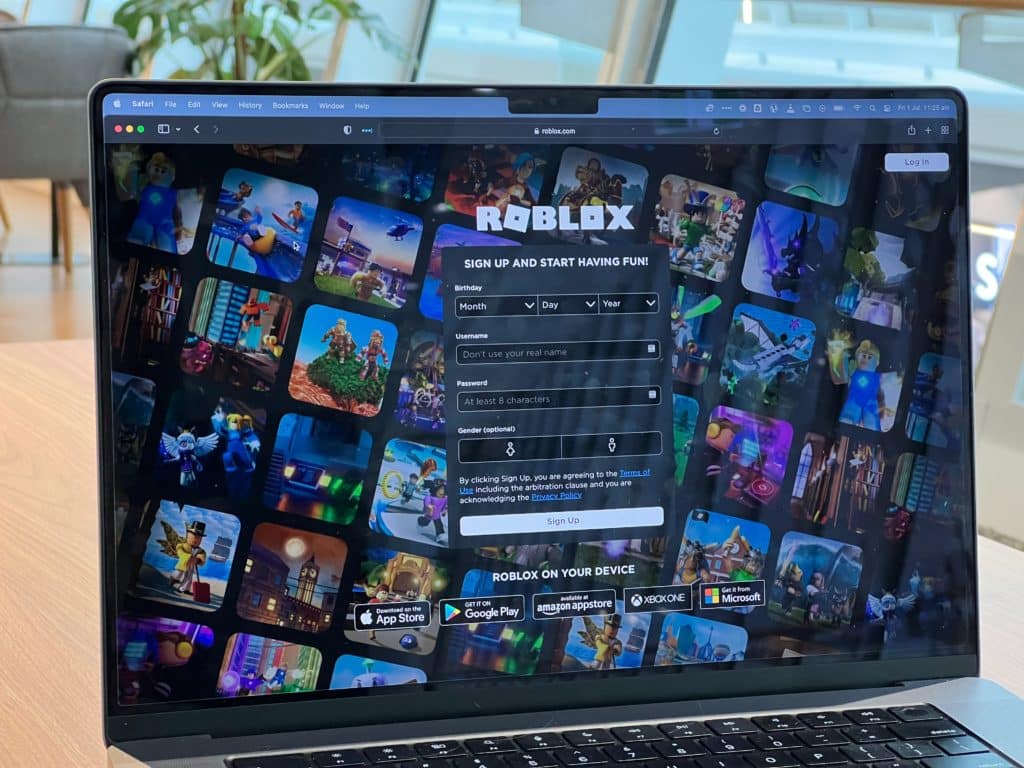
Roblox is another popular children’s game that has bankrolled off the pandemic and increased in users over the past few years. Between 2021 and 2020, the platform added more than 146 million users to its servers. In 2016, Roblox had 30+ million users. Today they have more than 202 million monthly active users.[3]
While the average user of Minecraft is 24 years old, only 14% of Roblox users are over 25 years old. 67% of Roblox users are under 16 years old, and 54.86% of users are under 13 years old.[3] The popularity of Roblox is reflected on TikTok through a large number of Roblox fan accounts owned by young users. In fact, there have been many audio trends on the platform that are accredited to edits by Roblox users.
Subway Surfers
While less popular than Minecraft and Roblox, Subway Surfers is still the most downloaded and most-played mobile game in the app store. Between 2021 and 2022, Subway Surfers saw more than 2 times the number of downloads with 5.43 million daily users.[4] These numbers are impressive, as, unlike Minecraft and Roblox, Subway Surfers is only available for download on mobile smartphones. It is not available on any other gaming platform. While there is no available data for the average age of Subway Surfer players, the game is recommended for ages 9 and up.
All three of these games are different in their gameplay but similar in their popularity and appeal to younger audiences. Videos made with clips from these games are sure to catch the attention of a younger audience who is trying to view content related to their interests.
Harmful Reddit Content and How They Use Kids’ Games
Reddit claims on its website to be “a network of communities where people can dive into their interests, hobbies, and passions.”[5] Users post on so-called “subreddits” dedicated to topics from the general to much more specific niches.
Today there are over 2.8 million subreddits and Reddit has 52 million users daily.[6] Of their monthly users, 79% are between the ages of 18 to 34 and almost 64% of those users are men.[7] When children encounter posts from Reddit, they are viewing material often made for and by adult men, leading to some very inappropriate content.
A simple search for “Reddit stories” on TikTok will show you video after video of Reddit threads overlaid with a video of someone playing a kid’s game and read by a voiceover. The threads contain content from various subreddits like “/AmITheAsshole” but most contain inappropriate “NSFW” (Not Safe for Work) content. A scroll down the search shows video after video of content with titles like, “My mom keeps having sex with my boyfriend…” or “What do you tell your partner when you’re horny?” or “What did you not know about sex until you lost your virginity?” The last question is from a Subway Surfers video with 1.6 million likes and 13.5 million views from a user with similar content and over 55.4 thousand followers.
The creators of these videos use the popularity of these kids’ games to bring more viewers to their content and help their virality. In doing so, they are promoting sex, adult situations, and overall unsafe content. Each of these videos is followed up by hundreds or thousands of comments from young kids and teens adding their own answers to the question proposed. A quick look at commenters’ profiles revealed that half were between the ages of 13 to 17, and each was commenting on their own sexual experiences to millions of viewers.
Set up content preferences and block out video keywords or put the account on restricted mode in the settings and privacy section of TikTok.
View an account’s watch and comment history and see what content your child is consuming and interacting with.
For younger children, consider waiting before allowing them to have their own TikTok account.
When they do adopt a TikTok account, scroll together to choose what content they view and influence the algorithm that will offer content automatically.
As your child gets older, work with them to establish what they are doing and looking at on social media. Preparing them for the possibility of adult content can help them in discovering it on their own and possibly suffering a digital injury.
If you fear your child may be watching inappropriate Reddit content without your knowledge and permission, check out our GKISScreen Safety Toolkit. This toolkit helps to empower parents and provides them with smart tech tools to filter, monitor, and manage online behavior.
To protect your child, prevent digital injury, and prepare them for social media use check out our GKIS Social Media Readiness Course.
Thanks to CSUCI intern, Katherine Carroll for researching how TikTok users use Reddit content and kids’ games for views.
I’m the mom psychologist who will help you GetKidsInternetSafe.
True crime is a popular trend that plays off our fascination with the morbid. As popular streaming services produce documentaries and dramatizations to meet the demand for true crime content, these crimes become less of a horrific event and more of a meme or something to live tweet. These exposés also tend to be led by actors who are well known for their looks, like Evan Peters, Zac Efron, and Ross Lynch, adding more to the romanticization of serial killers like Jeffrey Dahmer and Ted Bundy. Today’s article covers why this romanticization is dangerous and how you can keep your child safe from digital injury with our GKIS Screen Safety Toolkit.
Why has true crime skyrocketed in popularity?
Netflix’s recent limited-run Dahmer series has been viewed by 56 million households for a total of 701.37 million hours, putting it as their second most-viewed English Netflix series of all time.[1] In fact, true crime documentaries have covered the Netflix top 10 trending list for a combined total of 232 days, meaning that if your child is logging into Netflix, chances are they will be suggested one of these exposés.[2] There is no denying that true crime is hot content, and it does not seem to be declining in popularity anytime soon. This begs the question of why our society and humans, in general, are so obsessed with the morbid acts of our fellow human beings.
Evolutionary scientists have attributed this obsession to the fact that murder, rape, and theft have been part of our society for as long as humanity has existed. We are fascinated with learning about the facts of true crime as a form of human preservation and how we can protect ourselves and our families from the same fate.[3]
Psychologists agree and add that we also feel a sort of elation at these stories, glad that we are not the victims of such a crime. They also believe that we feel elated that we are not the perpetrator of the crime either.[4] This suggests on some level that we can relate to the perpetrator, a feeling that adds to the romanticization of criminals.
Psychology and Social Effects of Romanticizing Criminals
Movie violence as shown in true crime documentaries and dramatizations has been shown to have real lasting effects on viewers, including overall desensitization to real-life violence. A study found that youth with medium levels of exposure to TV/movie violence had much lower blood pressure when viewing violent media compared to those with low exposure.[5] These results show that sustained exposure to violent media leads to emotional numbing when presented with violence.
Following the release of the 2019 film Extremely Wicked, Shockingly Evil and Vile, in which Ted Bundy is played by Zac Efron, a concerning TikTok trend began of young girls dressing up as Bundy’s victims using makeup to create blood, bruising, and bite marks on their skin.[6]
These exposés create an impression on children and teens that they are not real events, but rather just make-believe, a trend, or a meme. The use of conventionally attractive actors to play these criminals leads to the romanticization of their crimes. This delusion creates hardships for the families of these crimes who watch as the atrocities their family faced are reduced to trends and memes online.
Mother of Dahmer victim Tony Hughes, Shirley Hughes, shared that learning about the series and its content brought her to tears. She told The Guardian, “I shed tears. They’re not tears of sorrow, and it’s not disbelief in the Lord. The tears [are] tears of hurt because it hurts. It hurts real bad.”[7] Not only do these exposés hurt our children, but they hurt the families of these violent crimes and cause them to relieve their trauma publicly over and over.
What Parents Can Do
If your child is interested in true crime, it is important to express to them that is okay and understandable. Notable psychologists believe that interest in crime is healthy and something that is natural, so long as that interest is confined to health habits.[8] Express to your child that these true crime stories are more than just a “limited-run show” but something that has real-life effects on people. Perhaps even share with them the thoughts and feelings of the families of these crimes as an empathy-building exercise.
Another important action you can take is to look at parental guides online for the media your child is consuming so that you can understand exactly what is in it. Also, sit and watch the show together so that you can fast forward through anything inappropriate and have a conversation about it.
To help guide you in these healthy conversations, check out our GKIS Connected Families Screen Agreement to work with your child to create a collaborative, living document.
If you fear your child may be watching these true crime exposés without your knowledge and permission, check out our GKIS Screen Safety Toolkit. This toolkit helps to empower parents and provides them with smart tech tools to filter, monitor, and manage online behavior.
Thanks to CSUCI intern, Katherine Carroll for researching true crime exposés and the romanticization of serial killers. To learn more about true crime and its consequences check out our article, “Is Your Child Following True Crime?”.
I’m the mom psychologist who will help you GetKidsInternetSafe.








 Thanks to CSUCI intern, Katherine Carroll for Trauma Dumping and its harmful effects.