Need peaceful screen time negotiations?

Get your FREE GKIS Connected Family Screen Agreement

wellness

Off the Phone and On the Soccer Field: My Cure for Digital Disconnection

Kids crave connection. Face-to-face interaction and emotional closeness are vital for healthy development—particularly for adolescents.[1] Screen time offers shallow connections and distracts kids from those unpleasant cravings. It also keeps kids so busy that they don’t seek the connection they so desperately need. What if they didn’t have to be so lonely? What if there was a way they could be off their screens, doing something good for their health, and making friends at the same time?  For me, that was playing sports.

The Seed Was Planted

As a child, I was most excited to hang out with my friends, be on my phone, watch TV, or eat sweets, in that order. That was until I joined a team sport.

It all started when my mother asked me if I wanted to join the local soccer team. I was nine years old and against the idea because I didn’t want it to cut into cartoon time on the weekends, and had we gone through the Screen Safety Essentials Course, we wouldn’t have worried so much about the impact of screens on us. But she insisted. I only agreed because my favorite cousins were on the team.

I learned from the first practice that I loved the intense physical activity of soccer, and after a while, I began to really get the hang of it. I felt proud and accomplished. I made great friends on the team. We loved team bonding activities and even began to hang out outside of practice. I loved it so much, I gave it my all and looked forward to it all week.

By high school, I had won medals and genuinely felt like I was good at the sport. I received praise and encouragement for all of my efforts and hard work. It also inspired me to work hard in other aspects of my life. I tried harder in school, was friendlier with classmates, more obedient in class, and more eager to participate in the learning process. According to Project Play, high school athletes are more likely to further their education and even receive higher grades in college.[2] I started seeing everything in the world as a skill waiting to be attained, something that required courage, effort, and training.

Having that view of the world helped me when I sprained my ankle right before the start of my freshman season. While recovering, I could have easily scrolled through Snapchat and Instagram endlessly. But I wanted to make sure I continued to build the bond with my teammates for when I returned. It taught me to wait my turn, keep a positive attitude, remain patient, and support others as they shine. As soon as I recovered, my teammates were more than happy to catch me up to speed, and I rebuilt my strength.

Core Memories That Last

One of my most memorable moments taught me something I will never forget. It was my junior year; we were tied 0-0, with a minute left in the game. My team was exhausted, but as captain, I knew this is where my job was most important. I dribbled the ball up the center, dodging two midfielders and one defender, set it up for my left forward, and yelled, “SHOOT!” She shot and sent it straight into the upper right corner of the goal. Everyone who was there to support us was on their feet, our coaches were throwing their clipboards in the air and hugging each other, and our teammates ran to us for a celebratory hug and a jump around. We spent the last 15 seconds of that game with tears in our eyes and joy in our hearts. We had just beaten a 40-year record for our school!

This is when I realized this would have a lifelong impact on me. It was one of those moments that I’ll look back on happily. It was a lifetime of preparation to become someone people could rely on when things got tough and hope felt lost. It was the moment I truly understood what being a leader meant to me and the impact it had on others.

I hugged and thanked my mother for signing me up for soccer at nine years old. She introduced me to the first love of my life, and I would forever be grateful for that. From then on, I never doubted my abilities to get something done, never lost confidence in myself, and never hurt someone without apologizing or broke something without trying to replace it.

The Impact of The Beautiful Game

Project Play reports that sports, in particular, can positively impact aspects of personal development among young people, keep them away from harmful substances, and encourage cognitive, educational, and mental health benefits.[2] I believe my experience of playing soccer was so much more than just a fun sport or a way to stay active, although both are tried and true. It was a refinement of my character, it was a positive shift in how I viewed the world and myself in it, it was what taught me that rejection was just redirection, and it was a way to build and maintain connections with people I am still close to, at 27 years old.

Why Everyone Should Play Sports

Participation in sports can protect against the development of mental health disorders.[4] These benefits include lowering stress levels, rates of anxiety and depression.[5]Lifelong participation in sports leads to improved mental health outcomes and even immediate psychological benefits which continue long after participation is over with. The improve self-confidence, encourage creativity, and nurture a higher self-esteem. Statistically, adolescents who play sports are eight times more likely to be physically active at age 24.[3]


Thanks to CSUCI intern, Elaha Qudratulla, for sharing an important story about how beneficial playing sports were for her then and how it still helps her today.

I’m the mom psychologist who will help you GetKidsInternetSafe.

Onward to More Awesome Parenting,

Tracy S. Bennett, Ph.D.
Mom, Clinical Psychologist, CSUCI Adjunct Faculty
GetKidsInternetSafe.com


Works Cited:

[1] https://www.uvpediatrics.com/topics/alone-together-how-smartphones-and-social-media-contribute-to-social-deprivation-in-youth

[2] https://projectplay.org/youth-sports/facts/benefits

[3] https://odphp.health.gov/sites/default/files/2020-09/YSS_Report_OnePager_2020-08-31_web.pdf

[4] https://baca.org/blog/does-playing-organized-youth-sports-have-an-impact-on-adult-mental-health/

[5] https://pce.sandiego.edu/child-development-through-sports/

Photos Cited:

[Header] Eva Wahyuni on UnSplash

[2] Olivia Hibbins on UnSplash

[3] Elaha Qudratulla

[4] Jeffrey F Lin on UnSplash

[5] Elaha Qudratulla

https://unsplash.com/

Netflix Documentary, Bad Influencer, Exposes Parent Producer Abusing Child Influencers

We were hunters and gatherers for 90% of human existence. That means our brains are still wired to prioritize the things that kept us alive when we were living on the land, before the domestication of animals and the construction of cities. One thing that kept us alive was living in a tribe and cooperating. Attracting a tribe and fitting in was a requirement of life. That is why kids and teens are hyper-focused on doing what their friends do and working to be cool and accepted. Online influencers count on this drive to maintain their income streams. One way to attract kids online is to be a kid doing what kids love to do, playing with toys and video games, opening new packages, and hanging out with friends acting goofy. Netflix’s Bad Influencer offers a glimpse of the kid influencer “scene,” and the lengths that some parents will go to attract and keep a following.

What is Bad Influence about?

The limited documentary series has gone viral for good reason. It’s definitely entertaining, but also deeply unsettling. It is a perfect way to raise awareness about how scary a life all about social media can be. Bad Influencer is a documentary that focuses on a tween who becomes an overnight social media star and brings her friends to stardom with her. What started out as a fun hobby quickly turned into a living nightmare. It may seem glamorous to be famous online, until you learn that the child influencers spent the majority of their childhoods working long hours acting out video ideas, risky stunts, and performing pranks that sometimes went too far—all under the pressure of adult producers/parents hungry for views. Check out Intimacy With Minors Encouraged at the Hype House for a similar story of underage exploitation.

SPOILER ALERT: The show takes a chilling turn when the mother of the main character is accused of, and videotaped, sexually exploiting these kids on set by positioning herself as one of the only adults supervising them to control them. Some survived the battle with only a few scars, while the main character is stuck living this nightmare over and over again. It may be funny, exaggerated, and attention-grabbing, but it also paints a dark picture of a digital world where clout matters more than character and children are left to pay the price.

Psychology Behind the Fame Obsession

From a psychological point of view, being an influencer is cool to children because they have a natural need for validation, attention, and social connection.[1] Although the minimum age on most social media platforms is 13, it is reported that children ranging from 8-17 are found scrolling through online platforms soaking up content too mature for their ages.[2] Sadly, unlike real-world relationships, social media platforms offer fast, unfiltered dopamine hits through likes, shares, and views. Without proper guidance, this can make kids tie their self-worth to online numbers, which can result in low self-esteem, fear of missing out (FOMO), performance anxiety, and digital addiction.[3] As a result of social unlimited social media usage, kids can also experience anxiety, depression, and even poor quality of sleep.[4] Counteract this monster and help your child build emotional resilience, red flag awareness, and digital literacy by taking our GKIS Social Media Readiness Training Course. Geared for teens or tweens, it’s the perfect giftbefore that new device or video game.

What You Can Do to Help

Bad Influencer is not just a show; it’s a cautionary tale that shares the pressures kids face online every day. It is easy to get off topic and want to pull the plug on all electronics just to protect your child from their dangers, but that is not always possible. Technology and online platforms are all around us, and it is better to set your child up for success than to try to keep them out of the loop. Connecting with your child over what they find interesting can help create a trusting relationship where you can notice if things start to become a little off. Our free Connected Family Screen Agreement can help you and your child co-create rules around how to safely navigate online platforms. This way your child can thrive in the digital age without losing themselves in it.


Thanks to CSUCI intern, Elaha Qudratulla for researching and co-writing this article.

I’m the mom psychologist who will help you GetKidsInternetSafe. Onward to More Awesome Parenting,

Tracy S. Bennett, Ph.D.
Mom, Clinical Psychologist, CSUCI Adjunct Faculty
GetKidsInternetSafe.com

Works Cited

[1] https://genomind.com/patients/the-social-media-dilemma-how-childrens-mental-health-may-be-affected/
[2] https://pubmed.ncbi.nlm.nih.gov/37721985/
[3] https://startmywellness.com/2025/02/how-social-media-affects-mental-health/
[4] https://pmc.ncbi.nlm.nih.gov/articles/PMC11641642/

Photo Credits

[Header] freestock on Unsplash
[2] Leonardo David on Unsplash
[3] Sanket Mishra on Unsplash
[4] Cande Westh on Unsplash
https://unsplash.com/

The GKIS Sensible Parent’s Guide to BeReal 

If you’re a parent, you know how much kids use social media. Apps are everywhere, and they’re becoming more popular. BeReal is a social media app that aims to “spotlight someone who’s living in the moment, going for it, celebrating life and all its weird/wonderful chaotic energy.”[1] Teens and tweens are falling in love with BeReal and its positive message. In this article, we’re covering what you need to know about BeReal. Does it allow harmful content? Are we ready to handle the risks that may come with it? Learning about social media can be tricky, but the GKIS Social Media Readiness Course helps teens and tweens learn the risks of social media and practice good psychological wellness. Read on for more info on this new popular app.

What is BeReal?

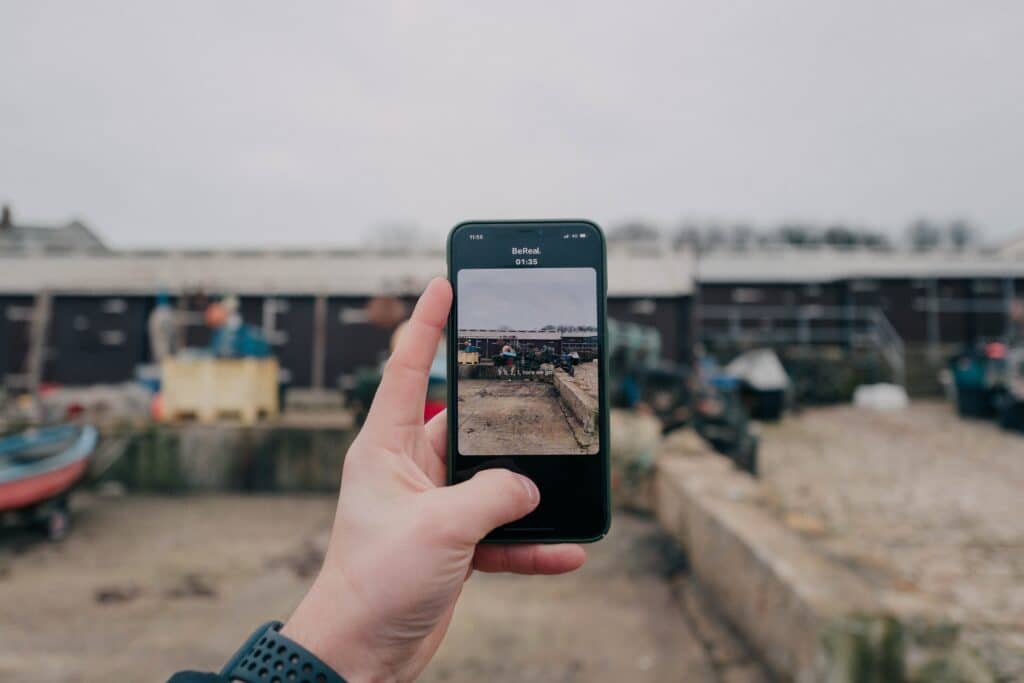
BeReal is a French social media app released in 2020 by Alexis Barreyat and Kevin Perreau that allows users to post real-time photos taken from the front and back phone cameras at the same time.[2]

BeReal’s mission is to “create an authentic world that keeps you connected with the people you really care about.”[3] It encourages users to live in the moment and stay away from harmful filters and trends. BeReal currently has over 6 million users a day.[4] It became popular in 2020 when teens on TikTok started posting their BeReals with celebrities and influencers.

How to Use BeReal

BeReal is easy to use. Users receive alerts at random times during the day to take a photo of what they’re doing.

Once alerted, users have two minutes to take their photo and post it. If they post on time, they can take two more BeReals that day. If they post late, they only get one photo op that day.

Although BeReal users can’t upload images from their photo albums, they can react and comment on friends’ photos or save their reaction photos to be re-used on their friends’ future BeReals.

Benefits of Using BeReal

No Filters

BeReal’s main benefit is that its layout forces users to post with no slimming, skin-lightening, or makeup filters. Social media filters have been found to lead to insecurity, depression, and more harmful effects. Check out our GKIS articles Influencers Hurt Child Self-Esteem by Overusing Filters” and “Beauty Filters Don’t Embrace Brown Beauty: The Rise of Colorism” to learn more about the dangers of filters.

No Likes

On BeReal, there is no “Like” button. Other apps like Instagram, Twitter, and TikTok show the amount of likes someone gets on their post. It’s no secret that most children think how many likes they get contributes to how cool they are. BeReal takes away this feature, making it less of a popularity contest.

Private Accounts

When you make your BeReal account, it automatically makes your profile private. Users must approve friend requests for you to see their posts.

Risks of Using BeReal

Location and Time Sharing

Like any app, there are some risks to using BeReal. BeReal posts include the city in which the user took the photo. It also includes a timestamp of when they took the photo.

Public Photos

Another risk is that you have the option to make your individual BeReals public for friends of friends to see. Friends of friends will not see your account, but an individual BeReal you posted may show up on their feed.

Other Risks

Other risks to using BeReal include:

  • Being or feeling pressured to share
  • Viewing inappropriate content
  • Experiencing unwanted contact
  • Oversharing

Privacy and Safety Options

Account Privacy

BeReal automatically makes your profile private when you sign up. Friendships must be approved by each user, so users can deny anyone access to their profile.

Photo Sharing

You can make an individual BeReal post public or private. To make it private, take a photo and click “My friends only” before posting.

To make it public, take a photo and click “My friends + their friends.” This allows friends of your friends to see your BeReals.

Location Privacy

BeReal shares the location of each photo when posted, but we can fix that. Users can turn off the location feature by taking a photo, clicking on “location,” and then selecting “location off” before posting.

Report and Block Inappropriate Users and Posts

If you see a post you don’t like, click on the three dots in the corner of the photo and click “Report this BeReal.” This means BeReal will no longer show you that post or any other posts from that person.

If you see a lot of inappropriate posts from a user, you can remove them as a friend or block their account. This stops you from seeing their posts and stops them from seeing yours.

GKIS Safety Ideas

Thanks to CSUCI intern Samantha Sanchez for researching BeReal and preparing this article.


I’m the mom psychologist who will help you GetKidsInternetSafe.

Onward to More Awesome Parenting

Tracy S. Bennett, Ph. D.
Mom, Clinical Psychologist, CSUCI Adjunct Faculty
GetKidsInternetSafe.com

Works Cited  

[1] BeReal Realest Person Announcement

[2] BeReal   

[3] BeReal – Our Mission and Values 

[4] BeReal Revenue and Usage Statistics (2023) 


Photo Credits

Photo by Ottr Dan (https://unsplash.com/photos/0EFrV9Pgvb8)

Photo by Nathan Dumlao (https://unsplash.com/photos/ItsW7gT8iR0)

Photo by Bruno Gomiero (https://unsplash.com/photos/jp7J14W9sSg) 

What “Going Viral” Does to Your Brain and Self-Esteem

Before the internet, “going viral” was not something positive much less something people actively sought out. “Going viral” has become a new age epidemic, with people doing whatever they can for their 60 seconds of fame. But what does “going viral” actually mean, and how does it affect our brains and our self-esteem? Today’s GKIS article will break down “going viral” and its effects. For help raising your child to be digitally smart, check out our GKIS Screen Safety Essentials Course. This course includes all GKIS parenting courses, agreements, and supplements, ensuring you are well-equipped to fight off digital injury and keep your child safe from harm.

What does it mean to “go viral”?

Going viral means sharing something via social media that spreads quickly to thousands, even millions of people. The term viral video was first used in 2009 to describe the video “David After Dentist.”[1]

One viral video or post can turn people into internet celebrities overnight and garner thousands of followers, resulting in brand deals and monetized content. Once a video goes viral, there is no limit to the number of people it will reach or even what platform they will see the video on. It is very common to see posts shared from one platform to the next, whether it be a TikTok on Twitter or a Tweet going viral on Instagram.

The number of views to be considered going viral also varies from platform to platform. One hundred thousand views on TikTok is pretty successful, whereas even a couple hundred thousand views on YouTube is a relatively low number.[2]

The number of likes is also an important factor. Many videos have a high number of views but a relatively low number of likes. These videos are not considered to be going viral because they are not well-received by the general public.[2] Engagement drives up the virality of the content through shares and comments that stimulate the algorithm to continue placing that content on people’s feeds.[2] Another important factor in going viral is the immediacy of response, meaning that the views, likes, and comments must be received within a few hours to days rather than over several months or years.[2]

How does “going viral” affect our brains?

When your video, post, or other content “goes viral,” you receive likes, comments, reposts, shares, and bookmarks. These response notifications prompt the reward systems in our brains.[3] Many fast notifications results in dopamine release. To keep that feel-good feeling going, we keep checking, acting in a way similar to gambling addictions.[3]

Algorithms also take advantage of a variable-reward system because they are programmed to recognize when to take advantage of our reward system and desire for dopamine.[3] This often results in a stockpile of notifications that get delayed until a good amount of time since the last check has passed or a large amount of engagement has accumulated.

For a personal insight into going viral, I interviewed a college student who had recently experienced the sensation of going viral. They said, “I recently had a video go viral on TikTok. It was a video of the Indie-Rock band Boygenius and one of their members, singer Phoebe Bridgers, singing a verse from their song ‘Cool About It.’ I had taken the video at a concert I had recently attended and decided to post it on TikTok since I was lucky enough to be pretty close to the stage. Over the next few days after I posted it, it got 118k views, 32k likes, and 500 comments, and was saved by more than 4000 people. Once it started picking up traction, I became obsessed with checking my notifications and seeing all the new comments. I would constantly look to see how many views I was at each hour. I even got a like from a TikTok creator who I really enjoy so that was very exciting for me.”

Although going viral is thrilling, notifications can be harmful when they are overly distracting.[4] To compensate for smartphone interruptions, studies have shown that people often work faster, resulting in more stress, frustration, time pressure, and effort.[4] Research has linked daily notifications and their interruptions to depression, anxiety, and even symptoms associated with ADHD.[5]

Our interview also revealed that the euphoria of going viral is short-lived and needs constant “re-upping.” Our subject elaborated, “Once the video started to die down though, I got annoyed by the notifications. They were distracting because they were so far and few in-between and nothing quite as exciting as the start. I got kinda sad that my viral moment was dying down. It made me want to post another video to see if it would get the same kind of attention.”

What does “going viral” do to our self-esteem?

Studies have shown that social media can be both detrimental to our self-esteem and boost it at the same time, but how does going viral change that?

Social media usage can add stress to daily life and encourage people to constantly evaluate and compare themselves to others.[6] When someone goes viral, they open themselves up to being judged by thousands of people, some of whom can be cruel, feeling emboldened by the veil of anonymity. While many would agree that the likes and views one receives on a viral post boosts their self-esteem and makes one feel good about themselves, it also allows for internet trolls to make their way into the comment section to bait others into an argument or provoke an emotional reaction.[7]

One-in-five internet users that have been victims of harassment online reported that it happened in the comment section of a website.[8] Reading negative comments can lessen confidence, reduce self-esteem, and depending on the severity, can even provoke suicidal thoughts.[9]

Our GKIS interviewee unfortunately also had experience with the negative side of going viral. They reported, “Before my video went super viral, I had posted another video that didn’t get as many views but still got a couple thousand views, a few hundred likes, and a good amount of comments. The video was clips of my girlfriend and me in celebration of our second anniversary. For the most part, the comments were really nice, with people calling us cute and being supportive. But after a little while of it being up, it got to the wrong side of TikTok. As a queer couple, we’re used to people being rude or staring at us, but to get negative comments just hurt more for some reason. This was a few months ago, but I still think about the comments from time to time. It honestly made me want to delete the whole video even though it was just a few comments out of a bunch of nice ones.”

How Parents Can Help

  • Understand that what you and your child post has the potential to go viral, even if you don’t want it to.
  • Set the privacy settings on posts to control who gets to see the content you share.
  • Prevent a digital injury to your child’s self-esteem before it occurs with our GKIS Screen Safety Toolkit for parents of kids of all ages.
  • To help facilitate difficult conversations about online content and who should see it, try out our free GKIS Connected Family Screen Agreement.

Like what you read? Check out our GKIS articles “Showcasing Child Talent Online Leads to Exploitation and Scams” and “Influencers Hurt Child Self Esteem by Overusing Filters”.

Thanks to CSUCI intern, Katherine Carroll for researching “going viral” and its effect on the brain and self-esteem.



I’m the mom psychologist who will help you GetKidsInternetSafe.

Onward to More Awesome Parenting,

Tracy S. Bennett, Ph.D.
Mom, Clinical Psychologist, CSUCI Adjunct Faculty
GetKidsInternetSafe.com

Works Cited

[1] Wonderopolis. (2022). What Does It Mean To Go Viral? Wonderopolis. https://www.wonderopolis.org/wonder/what-does-it-mean-to-go-viral

[2] Pigeon Studio. (2022). How many views is viral? What makes a video viral? Pigeon Studio. https://studiopigeon.com/blog/how-many-views-is-viral-what-makes-a-video-viral/

[3] Haynes, T. (2018). Dopamine, Smartphones & You: A battle for your time. Science in the News. https://sitn.hms.harvard.edu/flash/2018/dopamine-smartphones-battle-time/

[4] Pandey, N (2022). Constant Distraction And Stress, App Notifications Affect Minds Negatively: Study. NDTV. https://www.ndtv.com/world-news/constant-distraction-and-stress-app-notifications-affect-minds-negatively-study-3595177#:~:text=According%20to%20a%20study%2C%20these,shown%20to%20damage%20task%20performance.

[5] Glick, M. (2022). Phone Notifications Are Messing With Your Brain. Discover. https://www.discovermagazine.com/technology/phone-notifications-are-messing-with-your-brain

[6] Bergman, M. (2023). Social Media’s Effects on Self-Esteem. Social Media Victims Law Center. https://socialmediavictims.org/mental-health/self-esteem/

[7] Australian Government. (2022). Trolling. eSafety Commissioner. https://www.esafety.gov.au/young-people/trolling#:~:text=Something%20has%20happened-,What%20is%20trolling%3F,believe%2C%20just%20to%20cause%20drama.

[7] Australian Government. (2022). Trolling. eSafety Commissioner. https://www.esafety.gov.au/young-people/trolling#:~:text=Something%20has%20happened-,What%20is%20trolling%3F,believe%2C%20just%20to%20cause%20drama

[8] Aleksandra. (2016). How reading online comments affects us. Social Media Psychology. https://socialmediapsychology.eu/2016/10/05/onlineandsocialmediacomments/

[9] Cuncic, A. (2022). Mental Health Effects of Reading Negative Comments Online. VeryWellMind. https://www.verywellmind.com/mental-health-effects-of-reading-negative-comments-online-5090287#:~:text=If%20you%20end%20up%20reading,and%20after%20reading%20comments%20online

Photo Credits

Photo by Good Faces (https://unsplash.com/photos/Lv2lW5ImegQ)

Photo by Christian Wiediger (https://unsplash.com/photos/NmGzVG5Wsg8)

Photo by Robina Weermeijer (https://unsplash.com/photos/3KGF9R_0oHs)

Photo by Cristina Zaragoza (https://unsplash.com/photos/cMVRsfY8R3Q)

Photo by Levi Perchik (https://unsplash.com/photos/5gHdYqpALTY)

Trauma Dumping 101: Is the Internet Gen-Z’s Alternative to Therapy?

For Xgens and millennials, the internet has been a place for people to overshare through Facebook location “check-ins” and Instagram posts chronicling every detail of their latest vacations. Some Gen Z’s, in contrast, have turned casual oversharing into something much darker – publicly sharing stories of trauma for internet clout. To monitor and ensure your child is not sharing their deepest, darkest secrets on TikTok, check out our GKIS Screen Safety Essentials Course. This course provides you access to all GKIS parenting courses, agreements, and supplements to teach your kids independent resilience and good coping skills, all of which work to build a positive parent-child partnership and avoid a digital injury.

What is “trauma dumping”?

Trauma dumping is when a person overshares difficult information with another person without their consent.[1] Trauma dumping for content is done when a person constantly talks about a traumatic experience, even sometimes going so far as to recreate or reenact the traumatic incident online.[2]

Tramadumpers typically do not consider their impact on viewers and are not seeking advice.[1] The sharing often occurs in inappropriate places and times to someone who cannot understand and process someone else’s trauma.[3]

How does trauma dumping differ from venting?

Trauma dumping differs from venting because venting is the release of pent-up emotions rather than details of traumatic experiences.[2] When venting, a person is more mindful of the other person’s boundaries and how much they should share. Venting is an ordinary action people take to blow off steam, while trauma dumping is a potentially harmful action.

Why is sharing trauma for views and likes problematic?

Sharing or posting about a personal experience is not inherently wrong. But when you are sharing about it on social media often, it can become a maladaptive coping mechanism, meaning that instead of reducing the effect of a traumatic event on one’s mental health, you instead cause more harm and increase long-term stress.[4]

How Viewing Trauma Dumping Affects Viewers

The TikTok hashtags #trauma and #traumatok have a combined total of more than 22.5 billion views. As of 2023, Tiktok has 1.53 billion users, meaning that videos with the aforementioned hashtags have been viewed more times than there are users on the app.[5]

I asked a frequent TikTok user to recount her experience viewing a #traumatok video. She shared, “I was scrolling through my TikTok For You Page and saw a video a girl shared of her last conversation with her mother before her mother passed away from Covid-19. It made me feel sad, and I thought about it pretty often throughout the day. I told my friend about it later, and she said she had seen it too and it made her cry. Her dad passed away from Covid-19, and it hit home for her and reminded her of her dad’s passing. I can’t imagine seeing that kind of content as an 11-year-old or something.”

Constantly consuming distressing online content and news is called doom-scrolling. This phenomenon causes despair in the viewer and can lead to feelings of stress and anxiety. Some studies have found that watching trauma content on social media (especially violent content) can cause viewers to experience post-traumatic stress disorder symptoms.[6] If your child may have consumed violent content on social media and is struggling to cope, please check our GKIS article, “Helping Your Children Cope with Stress and Tragedy” for help.

Viewers of trauma content can also inadvertently desensitize themselves. By viewing a trauma dump video and then scrolling to a happy or neutral video, they can prevent themselves from feeling the full impact of the content and thus are conditioning themselves to not adequately process traumatic content.[6] Through viewing traumatic content, viewers may inadvertently open themselves up to their own traumas. To learn more about doom-scrolling, see our GKIS article, “Doom-Scrolling: How Much Bad News Can We Take?

What Parents Can Do

Preventing children from viewing #traumatok content is critical to ensure your child does not suffer from a digital injury.

Keep your child safe by:

  • Limiting and monitoring your child’s only content using our GKIS Screen Safety Toolkit. This resource helps you set parental controls and smart tools created to filter content and manage online behavior.
  • Keep the conversation going using our free GKIS Connected Family Agreement. By having regular discussions and co-viewing your child’s content, the learning continues both ways.
  • Preparing your children for social media usage through our GKIS Social Media Readiness Course. This course will help your child stay safe from digital injury and prepare them to “get social.”

Like what you read? Check out our GKIS articles “Our Youth Mental Health Emergency” and “Millennials, Gen Z, and the Internet: Generational Divides”.

Thanks to CSUCI intern, Katherine Carroll for Trauma Dumping and its harmful effects.

I’m the mom psychologist who will help you GetKidsInternetSafe.

Onward to More Awesome Parenting,

Tracy S. Bennett, Ph.D.
Mom, Clinical Psychologist, CSUCI Adjunct Faculty
GetKidsInternetSafe.com

Works Cited

[1] Thurrott, S. You Think You’re Venting, but You Might Be Trauma Dumping. (2022). Banner Health. https://www.bannerhealth.com/healthcareblog/teach-me/venting-or-trauma-dumping

[2] Molina, O. Trauma Dumping: The Signs & Effects of Oversharing Trauma. (2023). Talk Space. https://www.talkspace.com/blog/trauma-dumping/

[3] Trauma Dumping 101: What It Is, and Why It Hurts. (2023). Family Zone. https://www.familyzone.com/anz/families/blog/trauma-dumping-and-why-it-hurts

[4] DeWitt, H. What are unhealthy coping mechanisms, and how do they affect me? (2022). ThriveWorks. https://thriveworks.com/help-with/coping-skills/unhealthy-coping-mechanisms/#:~:text=Maladaptive%2C%20or%20unhealthy%2C%20coping%20mechanisms,stress%20in%20the%20long%20term.

[5] Ruby, D. TikTok Statistics 2023 — (Users, Revenue and Trends). (2023). Demand Sage. https://www.demandsage.com/tiktok-user-statistics/#:~:text=TikTok%20Statistics%202023%20

[6] Revell, J. How Seeing War and Disaster Unfold in Real-Time Across Social Media Impacts Our Mental Health. (2022). The Latch.
https://thelatch.com.au/watching-violent-content-online-social-media/#:~:text=One%202015%20study%20found%20that,who%20are%20exposed%20to%20it

Photo Credits

Photo by Danie Franco (https://unsplash.com/photos/7KHCNCddn2U)

Photo by Claudia Wolff (https://unsplash.com/photos/owBcefxgrIE)

Photo by Jonas Leupe (https://unsplash.com/photos/7KHCNCddn2U)

Photo by Sofatutor (https://unsplash.com/photos/ec3SJoypVKM)

Are TikTok Users Exposing Kids to Fetish Content?

Sexual content on a social media platform with millions of young children should never be allowed, but lines become blurred when TikTok users find subversive ways to share fetish content with others. Behind seemingly innocent videos lay adults seeking to arouse one another, uncaring that it may be occurring right in front of your child. Protect your child from inappropriate online content and prevent digital injury with our GKIS Screen Safety Toolkit.

What is a “Fetish” or “Kink”? 

A fetish refers to sexual arousal resulting from objects or a specific body part that is not typically seen as sexual.[1] Fetish objects or body parts could include feet, hair, food, or even balloons. For those with a fetish, sex may be less pleasurable or even impossible without the presence of the fetish object.

In contrast, kink refers to unconventional or bizarre sexual activity with self or others.[2] While fetishes can become sexual disorders, kinks typically do not progress to that level. More specifically, Fetishistic Disorder occurs when a person’s fetish escalates to the point of being persistent and distressing.[3] To meet the conditions for this disorder, an individual must experience sexual urges that meet the definition of a fetish, these fetishes must cause distress or impairment in functioning, and the object they fetishize must not be used in cross-dressing or sexual stimulation.[4] 

Fetishistic Disorders are typically seen in males and emerge during puberty.[4] Fetishistic Disorder can make it hard for individuals to develop intimate relationships and can cause sexual dysfunction.[4] Studies have also found that fetishism is often correlated with other mental health issues, substance abuse, criminal justice involvement, and an increased risk of sexually transmitted infections.[4]

How are TikTok Users Posting This Content?

Most social media websites have content filters and bots that flag any content that can be considered inappropriate or of a sexual nature. However, most of the fetish content on TikTok does not contain nudity, instead appealing to fetishes that utilize implied sexual behavior.

Popular TikTok user Lena Rae (@lenarae.lh), who has over 230k followers, has created a collection of videos titled, “Is This Fetish Content?” that identifies this type of content and calls out the users to post it.

In a video with almost 18 million views, Lena Rae reacts to a seemingly innocent video from user “putinnu” (a not-so-thinly veiled attempt at sexual innuendo “put it in you”). The video shows a woman in a wedding dress shoving a glass vase into a multi-tiered cake and then proceeding to pour multi-colored, runny frosting inside the vase. Lena Rae points out the vase is a phallic shape. She also comments on the consistency of the frosting and how the person is spilling it as they pour. The woman in the video explains that the frosting is going to run all over the cake, a reference that Lena Rae says is to appeal to those with a “sploshing” fetish. Lena Rae points out that the actions in the video are purposely repetitive and aim to appeal to a fetishistic audience.[5]

While these videos may not be expressly sexual like other content on TikTok, the hidden fetish content videos are flooded with comments from adults who are taking pleasure in the content being suggested to them. This creates a dangerous combination of adults with sexual fetishes consuming content that is “safe” enough to also show up on the For You Page of young kids.

How Viewing This Content Can Affect Kids 

Viewing sexual content at any age can be harmful to one’s mental health, but when viewed during a time of development, it can have lasting effects into adulthood.

Experts have found that young children who view pornographic content frequently become isolated, withdrawn, anxious, or depressed.[6] Consumption of online sexual content at a young age can lead to premature sexual experimentation as well as other high-risk behaviors, dating violence, cannabis abuse, or the development of harmful fetishes.[7]

What Parents Can Do

Open communication about sexual content can save your child from digital injury and stunted development. Some experts even recommend talking to your child as young as 9 years old about the difference between “good” and “bad” pictures.[8] Experts believe that in doing so, children will be better able to identify groomers or online predators and be less susceptible to them.

There are also various protective factors that one can turn to to prevent early exposure to sex. Creating an environment where a child feels connected to their parents and family can help them feel more comfortable communicating about the content they consume. To help facilitate difficult conversations about online content, try out our free GKIS Connected Family Screen Agreement. Fostering healthy conversations and helping your child create positive self-perception can help kids to seek validation from family and peers rather than online strangers. 

Like what you read? Check out our GKIS articles “Are TikTok Users Using Kids’ Games to Share Inappropriate Reddit Content?” and “Sextortion Scammers Targeting the LGBTQ+ Community”.

Thanks to CSUCI intern, Katherine Carroll for researching fetish content on TikTok.

I’m the mom psychologist who will help you GetKidsInternetSafe.

Onward to More Awesome Parenting,

Tracy S. Bennett, Ph.D.
Mom, Clinical Psychologist, CSUCI Adjunct Faculty
GetKidsInternetSafe.com

Works Cited

[1] Collins, S. What Is a Sexual Fetish? (2015). WebMD. https://www.webmd.com/sex-relationships/features/sexual-fetish

[2] PureWow Editors. Kink vs. Fetish: A Sex Therapist Lays Out the Difference.

(2021). PureWow Wellness. https://www.purewow.com/wellness/kink-vs-fetish

[3] Martin, S. & Levine, S. Fetishistic Disorder. (2023). UpToDate. https://www.uptodate.com/contents/fetishistic-disorder/print#:~:text=Fetishistic%20disorder%20is%20characterized%20by,or%20specific%2C%20nongenital%20body%20parts.

[4] Porter, D. Fetishistic Disorder DSM-5 302.81 (F65.0). (2023). Theravive. https://www.theravive.com/therapedia/fetishistic-disorder-dsm–5-302.81-(f65.0)

[5] Lena Rae [@lenarae.lh]. (2022). #duet with [@putinnu] RIP my algorithm #food #hand [Video]. TikTok. https://www.tiktok.com/t/ZTR3L9f9W/

[6] Daniels, J. Children’s Early Exposure To Porn: What You Need To Know. (2022). EverAccountable. https://everaccountable.com/blog/effects-of-early-sexualization-on-children/

[7] Pistoia, J. Growing Up Too Fast: Early Exposure to Sex. (2022) PsychCentral. https://psychcentral.com/health/growing-up-too-fast-early-exposure-to-sex 

Photo Credits

Photo by Solen Feyissa (https://unsplash.com/photos/qa2IMwBGP1E)

Photo by Markus Winkler (https://unsplash.com/photos/3rBybHmYEsg)

Photo by Deon Black (https://unsplash.com/photos/UTVSee4LLLA)

Photo by Gaelle Marcel (https://unsplash.com/photos/FLdK5N-YGf4)