Need peaceful screen time negotiations?

Get your FREE GKIS Connected Family Screen Agreement

teens

6 Reasons to Subscribe to GetKidsInternetSafe


Dear Parents,

Do you worry that you allow too much, or too little, screen time for your kids?

Have you read about digital injuries, like interaction with Internet predators, screen addiction, and neck and spine deformities, and worry you don’t know enough to spot risk in time to intervene?

Do you yell, punish, and lecture too often trying to keep them from doing what they beg to do online?

I did too! That’s why I started GetKidsInternetSafe 7 years ago. Yes, even psychologists find parenting challenging – especially nowadays with teens. When I started this legacy project, I was heartbroken and overwhelmed when my dad died and my mom succumbed to dementia. To get everything done and keep my kids happy, I was relying too much on Minecraft. The parents in my practice were doing the same…at the expense of the kids. I started to get freaked out.

But when I looked for digital safety tools and parenting strategies online for support, the best I could find was Dr. Phil saying to supervise all child screen use – as in, sit with them every time they were on screen. Because we all know that can’t happen, I did a deep-dive in the research, created my own screen safety parenting programs based on my 25+ years of momming and working with families, pooled resources of friends and colleagues, and founded GetKidsInternetSafe. Every day, I hear from families just like ours  telling me how much they needed it and how much they appreciate it! A feel-good project, indeed.

If you who have been with me from the beginning, THANK YOU! I’ve appreciated your support more than you know. And for those who are new to GKIS or considering subscribing, you’ll want to know what’s happening with GKIS these days!

As a subscriber,

1. You receive your free Connected Family Screen Agreement, designed to inform and inspire you to cooperatively connect as a family and set reasonable and sensible online safety guidelines for kids and teens. It’s delivered in 4 weekly chunks so you don’t get overloaded. Slow, steady, and fun is the goal.


2.  You get a free quick-read article once a week with fun resources, parenting tips, and valuable info about screen use risks to look out for. Please comment and share when inspired. so we can build as a community! (If you prefer emails less often, just let me know).


3. You are the first to know when I publish content through third parties (like Facebook’s parent portal, Healthy Living Magazine, The Good Men Project), interview on the radio or on podcasts, or appear on national and local news and entertainment channels.


4. You are the first to learn about new offers, like books, workbooks, online parenting courses, screen agreement supplementsworkshops, and coaching! All different depths and price-points so you can build a GKIS mastery level that fits you best!


5. You can track where I am speaking so you can attend an Internet safety or parenting presentation!


6. Not only do I offer individual and group coaching, but I often answer questions and post content on my GetKidsInternetSafe Facebook page and my DrTracyBennett Instagram page!

And of course, I never share your information with anyone. Please let me know if there’s anything you want to learn more about (or just to say hi!) by emailing me at DrTracy@DrTracyBennett.com.


Thanks again for being part of the GKIS community!

I’m the mom psychologist who will help you GetKidsInternetSafe.

Onward to More Awesome Parenting,

Tracy S. Bennett, Ph.D.
Mom, Clinical Psychologist, CSUCI Adjunct Faculty

Gaming Together Increases Family Bonding

Although a lot of parents let their kids play video games, not many co-play. Parents are busy! And for many, video games are unknown territory. Trust me, I’ve seen my mom try to play new video games, and she was beyond lost. But as a kid’s interest in video games increases, your relationship with them may seem to decrease, as if screen time replaces relationship-building. And with newer games like Fortnight, God of War, and Call of Duty, the complexities can drive a wedge between digital immigrants and digital natives. But it doesn’t mean they should! Many games offer teamwork and cooperation and can be fun for the whole family. Gaming might not be as scary as you think. Using hobbies your kids already enjoy is a great start to strengthening family bonds. Check out Dr. Bennett’s Connected Family Course for a guide on balancing screen time, like gaming, with family time. Read on to learn what co-playing has to offer, and why you might want to start gaming with your kids.

What makes co-play important?

The “fear of the unknown” can cause parents to separate themselves from their children’s virtual activities. As a result, kids can become isolated. Parents see this and either reprimand the kid for playing too much or guiltily allow the distance.

When I grew up, my mom provided me with interactive video games that offered entertainment and learning experiences. As a digital native, I started playing more and more online games and would even search some out in hopes that my parents would play with me. But because they were digital immigrants, they never did.

In 2013, researchers Hayes and Siyahhan found that “parents miss a huge opportunity when they walk away from playing video games with their kids.” They elaborated that parents don’t realize that there are many games designed to teach problem-solving, science, or literature. Not only can you learn alongside them, gaming with your kids can also offer countless ways to interact and have teaching moments. Gaming together offers new lines of communication and give them a reason to want to bond with you.[1]

Teaching and Bonding

In 2018, Bingqing Wang’s research on video games and family cooperation showed that family members who play video games together have better family satisfaction and family closeness. They also showed that families with poor family communication can benefit from co-playing.[2]

One benefit of co-play is the opportunity to work together to achieve a common goal. Strategizing and reflecting on executed choices encourages sportsmanship and the value of failure. Rather than the child walking away from a failure disheartened, parents can teach them to analyze the loss and improve on strategy with enthusiasm rather than defeat. Co-play also allows parents to set good examples for setting limits. Ending a gaming session together seems better than being “forced” or “made” to stop playing.[3] Shared experiences are more fun, wins are more fulfilling, and cooperation is much better than isolation.

You may be concerned that, even with effort, you’ll look stupid and won’t “get it.” But if you both played and had fun, they’ll recognize you took the effort to get close to them and better understand why they love to play. You’re not just an outsider trying to limit something they enjoy. Growing up, I had multiple friends who got to play with their parents and bond over the games they liked. They loved talking about it and became even closer, something I missed out on.

What to Play

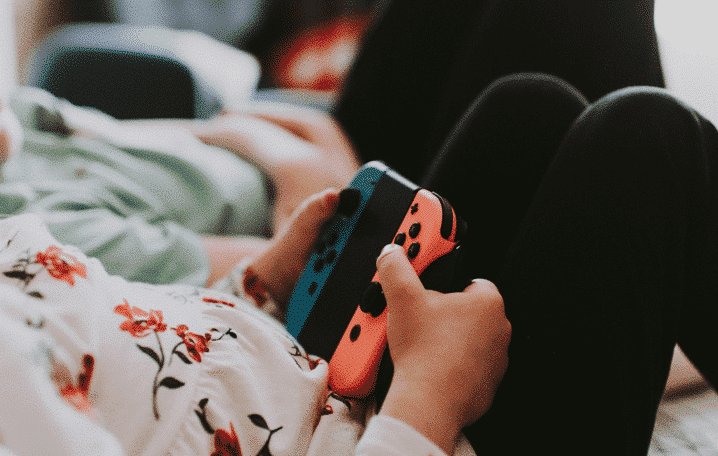
Which games are family-friendly? Dr. Bennett said her kids asked for a Nintendo Switch so they could return to games they used to play together on the Wii. There are many options that are rated E(for everyone). It also offers parent controls and time limits that allow parents to manage what and how much their kids are playing.

Some fun and family games we at GKIS recommend are:

Mario Kart is a competitive driving game with lots of cute levels, fun characters, and a ton of quality. Race against friends and family in different beloved Mario worlds. Dr. Bennett cautions to start with the cow land…she says she’s spent many hours screeching in agony trying to stay on the slippery Rainbow Road while her kids roared. She says kids can’t get trusted to pick the level…

Just Dance is another Nintendo Switch game that Dr. B says provided hours of fun family co-play. With many popular and even old hits, everybody finds their favorite games to competitively dance to. She says her youngest was delighted by this game, because even when he was little, he could out score her and his older sisters! Plus, everybody worked up a sweat and got a little exercise. No pain, all gain.

Super Mario Party is a game designed for group play and loads of fun. With 80 mini-games, like Bumper Brawl and Croosin’ for a Broosin’, everybody has a favorite. Play with or against your kids with the large board game style platform.

Yoshi’s Island is an fun and simple game for the whole family. Jump around as the adorable Yoshi solving creative puzzles and collecting all the hidden items.

Snipperclips has great games for the whole family don’t have to cost an arm and a leg. This game is designed for communicating and working together to snip your cute little paper characters into the perfect shape for each unique and entertaining puzzle.

Knock ‘Em Down Bowling is a fun one with many game modes like split screen, team matches, and no gutters. With a variety of traditional bowling games and party modes, team work is always a fun possibility.

Forza Motorsport Games for Xbox offers lots of options for fun family car racing in professional-style track racing events.

Scribblenaughts for the Nintendo DS is a fun, emergent puzzle action video game where the players must solve puzzles in order to collect Starlites. Warner Bros. Active Entertainment published this game with the goal of promoting emergent game play by challenging the player through systematically more difficult puzzles.

I’m Jack Riley a GKIS intern. I hope you find the courage to carve the time and try co-play now that you see the pros in family gaming. My parents were never able to do any of this with me and as my interest in games increased, I felt as if our family relationship decreased. Interested in learning about other benefits of video game play? Check out the GKIS article Is Your Child a “Professional Gamer”?

I’m the mom psychologist who will help you GetKidsInternetSafe.

Onward to More Awesome Parenting,
Tracy S. Bennett, Ph.D.
Mom, Clinical Psychologist, CSUCI Adjunct Faculty
Works Cited

[1] (July 2013). Move over, Monopoly: ASU researchers find families bond over video game play, Arizona State University.edu

[2]Wang, B. (April 2018). Families that play together stay together: Investigating family bonding through video games. Sage Journals.com

[3]Shapiro J.( December 2014). Research Says Parents And Kids Should Play Video Games Together. Forbes.com

Photo Credits

Photo By Kelly Sikkema

“My mini on our PS4” photo by Samantha Sophia

“Two people playing Sony PS4 game console” photo by JESHOOTS

“Nintendo Switch Joy-Cons” photo by Aleks Dorohovich

What Age Should We Allow Smartphones?

Move over debutante balls and high school dances, unboxing a brand new smartphone is the new coming-of-age ritual for today’s teens.[6] Teenagers born in 1995 and after are the first generation to live their entire adolescence with a smartphone.[5] In 2017, ten years old was the national average for receiving a smartphone.[6] This profound and sudden cultural shift has fundamentally changed childhood and parenting. Smartphones are a new-found necessity and parents are scrambling to provide one as soon as possible.

“What’s the WiFi password?”

Technology is an important part of our modern culture. In comparison to the rest of the world, the United States provides cell phones to the youngest kids.[8] Everywhere you go there’s a child or teen glued to a screen. There are babies listening to “Baby Shark” in their strollers during morning walks with mom, toddlers playing Candy Crush in their restaurant booster seats, and teenagers scrolling their Instagram feeds while blindly following their parents around Costco. It shouldn’t be surprising that adults and kids alike spend more than half of their days staring at a smartphone screen.[6]

With a smartphone in every hand, parents are peer pressured by their friends and begged by their children to provide one. Parents feel guilty for withholding one for too long because they see their children socially isolated.[11] Yet, giving a smartphone to a ten-year-old today is fundamentally different than when parents gave sixteen-year-olds flip phones in the 90s.[4]

Nokia Flip Phone vs. iPhone

Down to the basics, the main function of a cell phone is to call and send text messages wirelessly with no data. Smartphones such as iPhones, Androids, Google Pixels, and so forth have transformed those basic necessities.[7] They need data and WiFi to power infinite applications and endless Internet access. Basically, it’s a mini-computer that is more powerful than all of NASA’s computing power in 1969…in the palm of your hand!

Innovative or Addictive?

Unlike phones in the 70s, there are thousands of engineers and tech designers updating smartphones every day.[5] Their job is to make sure that smartphones and applications consume all our attention. They dazzle us with colorful visuals, sound effects, and seamless switching between applications. Studies have shown that children exposed at a young age to these stimulating effects become wired to crave easy dopamine release.[12] Instead of going outside and playing with their friends, they turn to their screens for pleasure

Sean Parker confessed to taking advantage of the human psyche when developing Facebook.[1] The former president of Facebook explained their objectives were, “How do we consume as much of your time and conscious attention as possible?”[1] He and Mark Zuckerberg knew that small hits of dopamine from notifications would hook everyone.[1] Parker reflects, “I don’t know if I really understood the consequences…God only knows what it’s doing to our children’s brains.”[1]

It’s true. Silicon Valley’s tech executives have become wary of their own creations. They’ve noticed the negative effects on their own children.[11] For example, Apple’s co-founder Steve Jobs limits his children’s tech time. He even kept the iPad away from them when it was first released.[10]

Smartphone Dependency

With all this power comes responsibility. Former Apple designer Tony Fadell struggles with whether his apple products have helped or hurt society.[2] In his own children he has seen smartphone dependency:

“They literally feel like you’re tearing a piece of their person away from them — They get emotional about it, very emotional…They go through withdrawal for two to three days.”[2]

Dr. Bennett details in her book, Screen Time in the Mean Time: A Parenting Guide to Get Kids and Teens Internet Safe, how smartphone dependency is like that of drug and alcohol addictions. Whenever teens hear a notification or see new content, dopamine is released and pleasure is felt. If too much time is spent apart, the smartphone-dependent gets agitated. There’s even evidence that we get distracted just by having a smartphone near us, even if it’s turned off as if we are in a state of chronic hypervigilance for notification. She chooses to have a screen-free classroom, stating that the research demonstrates that, not only is the screen users distracted from the lecture, but so are those around them.

Notifications on smartphones can be so addicting they cause phantom buzzing or ringxiety. Daniel Kruger researched cell phone dependency at the University of Michigan. His study found that “if your phone is rubbing in your pocket or if you hear a similar tone, you might experience it as your phone vibrating or ringing, especially if your phone messages are highly rewarding to you.”[3] That’s how adept our attention has become to our smartphones. 

“Best” Age

Many studies have tried to determine which age would be best for a smartphone. Recently, the World Health Organization (WHO) came out with guidelines recommending no screen use for infants under one year of age and only an hour a day for kids under 5. Dr. Bennett’s GKIS guidelines, which are offered in her must-have Connected Family Online Course, are consistent with this recommendation as well. The American Academy of Pediatrics and the Canadian Pediatric Society also recommend no screen time for toddlers younger than two years old.[12]

Many parents are under the false impression that virtual reality can replace real-life lessons for toddlers. But the psychological research shows that the skills don’t transfer over. For example, toddlers who play building block games don’t know how to build the same blocks when presented the toys in real life.[5] This is because the toddlers didn’t develop the skills before seeing it on the Internet.

Furthermore, Dr. Bennett states in her keynote lectures that some kids are less likely to try a task after seeing performed on YouTube. It’s as if watching “scratches the itch” of wanting to do it themselves. How-to videos often demonstrate an effortless learning curve, as the practice and messy sessions are edited out – leaving a quick and perfectly executed trial to view. When a child tries out the task themselves, they can fall into “compare and despair,” feeling that their very normal imperfect trial was a failure rather than a healthy try.

Dr. Bennett recommends that, from two to twelve years old, children shouldn’t have Internet-enabled smartphones. A normal flip phone that only allows for calling and texting will suffice for any safety concerns. Some starter phones even have GPS tracking.

Those are a general rule of thumb since all children vary in maturity. Age doesn’t qualify a child to use a smartphone well but instead impulse control, social awareness, and true comprehension of what technology does.[5] Bill Gates’ household requires at least one of the following to be met before a smartphone is given[6]:

  • Must be 14 years old
  • Demonstrate behavioral restraint
  • Comprehend the value of face-to-face communication

Dr. Bennett further points out that, even at 14 years old, kids don’t have the brain development to anticipate consequences and engage in high-order thinking. Just telling them what not to do will not keep them from making unwise, impulsive decisions online. In fact, kids are neurologically programmed to copy some of the cruel and vulgar behaviors they will invariably run across online, even with parental controls. Be prepared to calmly coach them through a variety of online mistakes. No child escapes it.

Wait Until 8th Campaign

If you’re looking for a place to start, GKIS recommends Wait Until 8th. As of March 2019, 20,000 families across the entire nation have signed the Wait Until 8th pledge.[9] These families have pledged not to give their children smartphones until at least the 8th grade. They emphasize that it isn’t the only path, but a path that offers a safe space for parents with the same concerns. Professionals in law, psychology, education, healthcare, business, and social work created the non-profit pledge.[10] They’re parents who have seen the negative effects of premature smartphone usage in classrooms, court systems, private practices, communities, and households. By spreading the pledge, the Wait Until 8th Campaign hopes to:

  1. Increase engagement in education
  2. Encourage parents to set screen time boundaries
  3. Change society’s view on technology so children can live authentic childhoods

“Can I have one now?”

Your teens will eventually get a smartphone, like everyone else. We don’t want to restrict them for so long that they go wild once given access. But first, we have to coach them to make good decisions on their own. This way, we can better trust them to be mature when facing issues like cyberbullying and age-inappropriate content. As simple as they seem, smartphones are very powerful. With that power comes great responsibility for parents to make sure that smartphones are a tool we use, not a tool that uses us.

Already given them a smartphone or getting ready to start? It’s never too late to make some adjustments. Dr. Bennett has put together a reliable Screen Safety Toolkit to help you get started. This resource offers links and explanations of parental control options on devices, through your Internet service provider, and through third party products so you can match your child’s use patterns with the right toolkit. She also offers a bonus of great learning apps and websites to help your child build their joy of tech-assisted learning!

Thank you to our GKIS intern Hanna Dangiapo for writing about this topic! (She admits that she still reminisces about her Motorola Razr).

I’m the mom psychologist who will help you GetKidsInternetSafe.

Onward to More Awesome Parenting,

Tracy S. Bennett, Ph.D.
Mom, Clinical Psychologist, CSUCI Adjunct Faculty
GetKidsInternetSafe.com

Works Cited

[1]Allen, Mike. “Sean Parker unloads on Facebook: ‘God only knows what it’s doing to our children’s brains.” Axios, 2019.

[2]Baer, Drake. “The Designer of The iPhone Says He Worries About The ‘Nuclear Bomb’ He Brought Into The World.” Thrive Global, 12 July 2017.

[3]Baer, Drake. “The Science Behind Your Phantom Cell Phone Buzzes.” Thrive Global, 22 March 2017.

[4]Cohen, Danielle. “When Should You Get Your Kid a Phone?” Child Mind Institute, 2019.

[5]Cooper, Anderson. “Groundbreaking Study Examines Effects of Screen Time on Kids.” 60 Minutes, 9 December 2018.

[6]Curtin, Melanie. “Bill Gates Says This Is the ‘Safest’ Age to Give a Child a Smartphone.” Inc, 10 May 2017.

[7]“Frequently Asked Questions.” Wait Until 8th, 2019.

[8]Howard, Jacqueline. “When kids get their first cell phones around the world.” CNN Health, 11 December 2017.

[9] [10]“Our Team.” Wait Until 8th, 2019.

[11]Shannon, Brooke & Freed, Dr. Richard. “Parent Like A Tech Exec.” Wait Until 8th, 2019.

[12]Stein, Stacy. “An age-by-age guide to kids and smartphones.” Today’s Parent, 21 March 2018.

[13]“Why Wait?”.Wait Until 8th, 2019.

Photos

Photo byBianca CastilloonUnsplash

Photo byAlex KotliarskyionUnsplash

Photo byKelly SikkemaonUnsplash

Photo byPatrick BuckonUnsplash

Photo byBlake BarlowonUnsplash

YouTuber Marketing Strategies

Gambling was ruined for me after I took Psychology 101 in college. Learning that slot machines were programmed on the same ratio of reinforcement that makes rats ask for cheese made me feel controlled and conned. I mean, who wants to give hard-earned money to somebody who’s training you like a rat? Now our screen devices are jumping us through hoops, with addictive features and profitable scams. If your kids are on YouTube, then they’re ready to learn about the “business side” of social media.

Buyer Beware

The Internet is a “buyer beware” environment. That means it is up to us to discover where the tricks and scams are.

There are regulations about collecting information and marketing to children because they do not yet have the sophistication to make sound, informed financial decisions. However, marketers online can’t be sure who is watching their content.

That means they can create marketing funnels that kids can fall into. Publicly, YouTube celebrities would insist they are only marketing to adults. But if that’s the case, why are so many kids and teens spending money online?

Celebrity Endorsement

When celebrities endorse a product, they lend their credibility to it. Viewers think, “I trust them. If they like it, I like it.” Viewers can spot celebrity-endorsed products when Youtubers say they are sponsored, affiliated, or teamed up with a company.

For example, Tana Mongeau (2.8M subscribers), Gabbie Hanna (6.5M subscribers), and plenty of others[2] were paid by Kenza Cosmetics[3] or Bermona[4] to advertise “great deals” to their subscribers. To maintain credibility with their fans, celebrities must be honest about their support of a product. However, YouTube influencers who are out for quick cash with little regard for their credibility and reputation scam their fans with inflated prices and hidden shipping costs.[5]

Scarcity

Scarcity is a classic marketing technique that refers to the “buy now before you miss out on a one-time limited offer.” The urgency drives consumers to impulsively buy. YouTubers commonly say three things that reflect scarcity.

They will say:

  • the product is amazing and insist you’re getting a great deal.
  • the product is in short supply, or the deal is a limited-time offer.
  • “I don’t want you to miss out on this”.

Beauty guru Jeffree Star (13.9M subscribers) used scarcity to sell his collection of eyeshadow palettes priced around $80 each in only three minutes.[6] No wonder he’s worth $50 million!

Pester Power

Ask any child what they want to be when they grow up, and they’ll say “YouTuber.” Many kids believe that all they have to do is post a video, and in a few months, they’ll be raking in the cash. To prepare, they hang onto every word of their favorite influencer, imagining that they too will one day be rich and famous. They adopt their lingo, accents, and interests, and want to buy what they have. This leads kids to pester their parents for online products or even use their parent’s credit cards without asking.[8]

Provoking Minions by Creating Conflict with Other Celebrities

Creating large-scale competitions or beef (having a grudge or dislike for another person) is one technique influencers use to increase subscriber rates. Spurring online fans into promoting your “win” creates drama with dollar signs. Superfans promote content for you, sweeping their friends into the frenzy with them. Free of charge!

Superfans who become radicalized to show support for their ingroup is a process social psychologists call deindividuation. Deindividuation is a psychological state where people get so caught up in their cause, they become disinhibited and fail to self-evaluate. It’s an intense state of belonging where one seems to lose oneself in the service of their chosen tribe. Famous examples are usually negative, like mob violence, but positive behaviors can occur as well. Teens and young adults are particularly susceptible as they are innately motivated to find and enthusiastically support their tribe.

An example of this type of marketing campaign is YouTube Red’s 2018 Boxing Match between YouTube Influencers KSI (20M subscribers) and Logan Paul (18.8M subscribers). The finale of their feud was a pay-to-view event where the two “boxed” for around 20 minutes, bringing in 13 million viewers and 7 million dollars of profit.[1]

The Apology Video

Wondering how YouTubers survive unfair marketing techniques directed at their subscribers? More marketing and PR. Here are some tactics we identified that seem to clean up celebrity marketing mishaps.

Delete the Evidence

Although celebrities delete the videos that got them into trouble in the first place, we all know that anything that appears on the Internet is there to stay. If the video promises to draw further attention, drama vlogs (YouTube videos about YouTube drama) will rebroadcast the offending video while criticizing the decision. Not only does the new vlogger gain subscribers from spilling tea, but it also drives new subscribers to the screwup’s site!

Get Ahead of the Narrative and Focus on the Fans

By making an apology right out the gate, the celebrity attracts more view time and takes control of the narrative.[9] By also showing dramatic concern for those hurt by the mishap, they may humanize themselves, making it seem that their fans are more important than fame.

Logan Paul (18.8M subscribers) is an example. In 2018, he released a video of him and his friends laughing as a suicide victim in Japan’s infamous Suicide Forest.[14] Media, including Dr. Bennett who was appearing as a parenting expert on Access Hollywood Live, expressed grave concern over his lack of discretion and empathy. In his apology video, he spent the first 30 seconds quickly going over what he had done and then focused primarily on his followers and all those who were affected by his actions.

Tears and Relatability

When a YouTuber makes an apology, they change up their appearance to seem more personal and relatable. Placing themselves in a lower position than the camera, wearing neutral colors, and choosing casual loungewear make the celebrity look less threatening.

Next, they get sad…really sad. Laura Lee, for example, apologized for racist remarks using every tactic talked about in this article, including dramatic crying and brushing away nonexistent tears.[15] Although it seemed effective for some, others remarked that the evident lack of sincerity was a show in itself.

Provocative Victim

One method of gaining fan support is sparking conflict and then crying about it for the next few weeks. Dr. B calls this the provocative victim technique. Trisha Paytas (4.8M subscribers) is famous for making over a dozen 15-minute videos of tearful breakdowns. Viewers don’t even care about what the topic or apology is about. They just come to see the spectacle.

Project Blame

Some YouTubers will try to blame other celebrities or even their own subscribers. For example, Gabbie Hanna made an apology for scamming her audience with Kenza Cosmetics, claiming that her fans should’ve done their research before purchasing.[13]

How to Prevent Marketing Manipulation

Even with education, children don’t have the experience or brain wiring to identify slick marketing techniques. But it shouldn’t stop you from educating them anyway. Here are some helpful tips to stay Internet safe.

YouTubers are not our friends.

Recognizing that YouTubers are strangers with no particular skill set or expert training is the first step to a healthy approach to viewing content. No matter how much they try to sell the idea they’re your “close friends,” they don’t know you nor do they care about your particular vulnerabilities.[16]

Don’t turn a blind eye.

Dr. Bennett believes the most important aspect of screen safety is forming a fun, cooperative alliance with your kids. By adopting our free GKIS Connected Family Agreement and reading and sharing our weekly GKIS blog articles, you’ll have lots of ideas for important and challenging family discussions. Just as parents teach their kids about screen issues along the way, kids also teach their parents.

Raise a smart consumer.

Taking the time to teach your kids how to be clever, savvy, and assertive is far more important than encouraging blind obedience. Help your kids build resilience and protect them from the unpleasant aspects of the online culture. Use discretion, yes, but don’t allow complacency and ignorance.

Use supportive resources.

GKIS helps families become smarter and more connected. Want some easy-to-use, affordable tools to get started? Here are some options for you:

OUR FREE GKIS CONNECTED FAMILY AGREEMENT AND WEEKLY BLOG ARTICLES: Once you enter your name and address at GetKidsInternetSafe.com, you are scheduled to receive your agreement and weekly articles. Snuggle in for a cup of tea and a quick read once a week to set your teaching agenda and build a closer, empowering parent-child alliance.

CYBERSECURITY & RED FLAG SUPPLEMENT: Don’t miss your Cybersecurity and Red Flag Supplement for your Connected Family Agreement. Not only will my cybersecurity tips improve your family’s privacy and security, but your kids will benefit BIG from knowing what kind of red flags to look out for online to avoid danger. You’ll also love the red flags you should look out for in your children’s behavior that may signal they need your help. Early intervention can make a big difference between making a mistake versus suffering from serious digital injury.

Dr. B’s SCREEN TIME IN THE MEAN TIME PARENTING BOOK: If you’re looking for a comprehensive source about screen benefits, screen risks, and parenting strategies, check out my book, Screen Time in the Mean Time: A Parenting Guide to Get Kids and Teens Internet Safe. Available on Amazon in e-book or print.

GKIS SCREEN SAFETY TOOLKIT: Ready to dial in safety at the device level but too overwhelmed to know where to start? We’ve got your back with our Screen Safety Toolkit. Start building your family’s custom digital toolkit with the tried-and-true recommendations from our guide. Have you wondered how to check their browser history, filter and block inappropriate sites, and monitor use? You won’t want to miss what we offer in this super low-priced, comprehensive guide.

GKIS CONNECTED FAMILY ONLINE COURSE: Early on, I realized that many avenues feed fun family connections and screen safety. My Connected Family Course offers ten quick steps to create a happier, healthier home. Filled with creative and fun tips that are family-tested and outcome-based, these are far more fun and effective than the free parenting tips offered on safety websites.

COACHING WITH DR B: Feeling like you need a little support and shame-free TLC? I have reserved office hours to coach you through the most challenging issues. Whether you love the privacy of 1:1 coaching or the vibrant energy of a motivated parenting group, I’ve got easy-to-schedule coaching options ready to go!

Thanks to Jack Riley, GKIS intern, for watching hours of YouTube for the research on this article and his clever insights.

Onward to More Awesome Parenting,
Tracy S. Bennett, Ph.D.
Mom, Clinical Psychologist, CSUCI Adjunct Faculty

 

Works Cited

[1] Hale, J (2018, August) How Much Did Logan Paul And KSI Make From Their ‘Youtube World Boxing Championship’? A lot. tubefilter.com

[2] Tea Spill, BEAUTY GURU’S ARE LYING TO YOU!?, YouTube.com
[3] kenzacosmetic.com

[4] bermona.com

[6] JEFFREE STAR SOLD OUT MAKEUP IN 3 MINUTES

Rich Lux., YouTube.com

[7] Mansson, E (2018, December) Sister Stocked? Not A Chance. The James Charles x Morphe Palette Has Sold Out For A Second Time, thetalko.com

[8] Dr. Bennetts Marketing Manipulation advice

[9] Forbes Communications Council, Seven Tips To Improve Apologies During A PR Crisis, forbes.com

[10] Morris, C (2018, December), Popular YouTube Streamer promotes Channel that publishes Anti-Semitic Content, Fortune.com

[11] Aja, R (Feburary,2017), The controversy over YouTube star PewDiePie and his anti-Semitic “jokes,” explained, Vox.com

[12] PewDiePie’s Teammate gets killed, he says it with a hard R out of frustration, Livestream Fails, YouTube.com

[13] Cancelled, gabbie hanna kenza cosmetics scam, YouTube.com

[14] Logan Paul Vlogs, I’m Sorry., YouTube.com

[15] Deceased Laura Lee apology with original captions, YouTube.com

[16] Oldford, S (2018, October) Manipulation in Marketing: How It’s Used, and How to Use It Ethically, entrepreneur.com

Photo Credits

“YouTube” photo by Esther Vargas

Photo Taken fromFreeStocks

“Serious Woman with Laptop Photo” photo by Matthew Henry

“Man Crying” photo by Christian Erfurt

YouTube Celebrity Scams


Kids and teens love YouTube’s colorful celebrities who cater to their specific interests. But many influencers use their celebrity status to lead fans into harmful situations. In today’s GKIS article, find out how these YouTube celebrities promised big earnings from online gambling, offered poorly planned conventions, attacked other influencers, and encouraged fans to harass other online competitors. Using unethical tactics and no disclosure, many of these profit-making schemes succeed unchallenged.

What’s a YouTube influencer?

A YouTube influencer is a person with a YouTube profile that has a large number of followers and can influence trends, products, and purchasing habits. Their content is typically videos of product recommendations or reviews. Other times, it’s a video (vlog) with influencers talking to their audience about anything that strikes their fancy. Most vlogs include colorful opinions, vulgar language, and provocative topics.

Most influencers are trained marketers who profit from ads, partnerships, and paid sponsorships. Although some provide harmless entertainment, others intentionally mislead or introduce content that can harm their followers.

“Oops, I didn’t mean it.”

One-time mistakes are getting increasingly rare among YouTube celebrities. For some, a string of mistakes results in more fame and profit. For instance, PewDiePie is one of the world’s most famous YouTube celebrities with 91 million subscribers. In 2108, he was criticized for promoting an Anti-Semitic YouTube channel [1], delivering Anti-Semitic jokes [2], and using the hard N-word to thousands of viewers in a live stream video [3].

In 2019, PewDiePie stoked fan fires by encouraging “a fight” with a YouTube channel T-Series and Indian production house. Competing for subscribers, PewDiePie fanned a competition between American YouTube culture versus Indian YouTube Culture. The rallying cry resulted in hacking printers and Google homes, a vandalized World War II memorial in Brooklyn (“subscribe to Pewdiepie”), and, most horrifying, a Christchurch mass murderer yelling “subscribe to PewDiePie” during the live stream of his shooting.

YouTube Influencers Encourage Gambling

CSGOLotto: In 2016, YouTubers TmarTn and ProSyndicate promoted and advertised a site called CSGOLotto. On this site, players bought in-game items that were placed into an online pot alongside other people’s purchased merchandise. The goal was to gamble to win the biggest pot of merchandise.

Video ads for the GSGOLotto showed TmarTn and ProSyndicate having fun gambling large amounts of money trying to win big. Most times, they did win BIG – up to three times the amount they started with up to $20,000 worth of merchandise!

Based on our research, at no point in the ads or written copy did either influencer mention to their collective audience of 13.5 million that they owned this site and were profiting directly. We found the ads to be misleading, looking like the celebrities were simply players rather than profiteers.

Mystery Brand: In 2018, Jake Paul and RiceGum created a similar gambling site called Mystery Brand. In this game, players purchase $5 to $100 virtual boxes that would contain a mystery item worth either less or more than the amount paid. The promised a chance to win a $250 million house with only a $15 buy-in.

The influencers were reportedly paid $100,000 for promotion to their collective 30 million subscribers. In their videos, they narrated how they “teamed up” with Mystery Brand to show how “dope” it was to play.

After demonstrating the easy signup process, the two spent big. Once a player buys in, their money stays in. Players can’t cash out. They can only earn sponsored prizes shown on the site, like a virtual shopping mall. For example, in one video RiceGum shows off his $15,000 profit after only spending $3,000. Neither RiceGum nor Jake Paul refers to the site as “gambling,” but instead call it a “game” with “good value,” promising “there is no losing in this.” Based on our research, no place on the site states the players’ chances of winning.

A Poorly Planned Convention

Tana Mongeau is a content creator with 3.7 million subscribers. In 2018, 5,000 people showed up at a hotel in Anaheim to attend her convention, advertised to be a cheaper and more accessible version of Vidcon (which is a large-scale event hosted by YouTube to meet your favorite YouTuber). Due to poor planning, over 4,000 people waited for over four hours in the sweltering heat outside of the hotel. There were little shade, food, or water available, and many attendees got sunburned, passed out, and rioted due to poor accommodations and security.

Although promised to be free, it wasn’t. While 4,000 waited outside, the 1,000 inside were greeted with a $60 “VIP” pass, with a lack of entertainment, overcrowding, and almost the same issues as those outside the hotel. The videos of this event are upsetting to watch.

Using Their Platform to Attack People

When some YouTube influencers don’t like other content creators or other people in general, they sometimes rant with name-calling and unfair accusations. This cyberbullying can result in a cyber flash mob of dedicated fans that cyber attack through doxing (showing private information), pranking, and cyber-harassment.

False Accusations Against a Competitive Influencer

Jackie Aina is a popular beauty guru who creates and shares videos of makeup applications with 2.9 million subscribers. In 2018, she made a video accusing another YouTuber, Petty Paige (128 thousand subscribers), of stealing $1,500 from her personal bank account.

This accusation appeared to have no proof of legitimacy. Although she never stated Petty Paige’s name in the video, she put up a picture of a video Paige had made, making it easy for her subscribers to identify the accused perpetrator. Jackie Aina’s fans took to social media to harass Paige for weeks. Paige even stated that many business and job opportunities were canceled because of harassment.

Targeting Their Audience

The Gabbie show (6.4 million subscribers) is one of many YouTubers who have targeted everyday people with no regard to how the fan base would react to it. When a young girl in her audience made a negative comment on one of Gabbie’s tweets, Gabbie screenshotted it along with the girl’s account and posted it on her Twitter (2.7 million followers). This led fans to spam and harass the girl, flooding her inbox with hateful messages.

Are there legal consequences?

Too often, when malicious or unethical online behavior is identified, the scandal is fleeting. For example, in the case of TmarTns and ProSyndicate’s gambling scam, the Federal Trade Commission (FTC) filed a case for lying about ownership of a product. Yet somehow, both influencers avoided legal prosecution, only suffering a mild loss in subscribers and yearly income due to a damaged reputation. They still have a net worth of around $5 million.

For Jake Paul and RiceGum, absolutely nothing happened. RiceGum created a video justifying his behavior as the same as what others do. Jake Paul made a joke about the situation. When asked, “You loved being called out for selling a gambling scam to underage kids?” He responded, “Yes, love it.”

Of the influencers covered in this article, Tana Monogue probably received the biggest consequences. After months of backlash and hate from fans and YouTubers, Tana made multiple apologies. But she still suffered no legal consequences. And as for what Jackie Aina and Gabby Shows did, many just see it as insignificant errors in judgment.

What can be learned?

  • Influencers are not your friends and most often cannot be trusted.
  • Fanning follower anger is often fake and staged.
  • On the internet, bad behavior makes influencers money and often goes unpunished.
  • If you believe the hype, you’re gullible. It’s probably not worth the drama. Think for yourself instead of following blindly.

Thanks to GKIS intern Jack Riley for researching and writing this article. If you learned from this article, stay tuned for part 2, which details the irresponsibility and scams that YouTube influencers continue to feed their audience as well as the marketing and social manipulations used to make sure viewers keep coming back.

Onward to More Awesome Parenting,
Tracy S. Bennett, Ph.D.
Mom, Clinical Psychologist, CSUCI Adjunct Faculty
Works Cited

YouTube Influencers Encourage Gambling

  • Fluff, TMARTN GAMBLING ON CSGO LOTTO & DECEIVING OWNERSHIP (Full Video Reupload), YouTube.com

  • (2016, July) YouTube gamers caught in gambling row, bbc.com

  • FTC

-HonorTheCall, CSGO Lotto Update ft. Tmartn & Prosyndicate (HonorTheCall Show), YouTube

  • Jake Paul’s Tweet

  • Jake Paul, I Spent $5,000 ON MYSTERY BOXES & You WONT Believe WHAT I GOT… (insane), YouTube

  • MysteryBrand.net

  • RiceGum, How I Got AirPods For $4, YouTube

  • RiceGum, This Dude Calls Me Out For Mystery Unboxing…, YouTube

 A Poorly Planned Convention

-Dishwashinglickwid, Intentions: The Good, the Bad, and the Just Plain Stupid (Tana, James Charles, Huda Beauty), YouTube.com

-Farokhmanesh, M. (2018, June) YouTuber’s anti-VidCon convention -TanaCon was such a disaster that fans are comparing it to Fyre Fest, theverge.com

-Kircher, M. M. (2018, June) A Mouth to Hell Opened This Weekend at Tanacon, a Fyre Festival for the YouTube Set, nymag.com

  • Shane Dawson, The Real Truth About Tanacon, YouTube.com

Targeting Their Audience

  • Dishwashlickwid, Influencers acting stupid (protect your brain cells), YouTube.com

  • TeaSpill,JACKIE AINA MAKES SERIOUS ALLEGATIONS AGAINST PETTY PAIGE, YouTube

Photo Credits

“man sitting on chair in front of condenser microphone” Photo by Gianandrea Villa

“man holding black Android smartphone” Photo by Rachit Tank

“black and white skull printcrew neck shirt” Photo by Todd Trapani

The Future of Gender: Gender Fluidity

As a clinical psychologist who works with kids and teens, I’ve seen the landscape of their lives change in a rainbow of ways. These changes provide opportunities for growth and connection with self and others but can also lead them into unhealthy relationships in online and offline communities. For parents to educate and connect (rather than disconnect) with their kids over these issues, we need to know the basics. Today’s GKIS articles allows us to take a look into what sociologists predict to be a “genderless future,” where we will no longer be defining ourselves as “female” or “male.”[9] Newly created identifiers and the generic “they” will replace pronouns “she” and “he.”[9] And major businesses like Amazon, Target, Walmart, and Disney will remove gender from the labels of their products.[12]

Gender Fluidity

Welcome to 2019, where millennials and generation Zers have created “Gender Fluidity.”[3] Being “gender fluid” means that the individual exists on a spectrum between male and female and may shift gender several times a day or throughout their lives with different intensities.[8] A millennial poll of 1,000 people revealed that half believe that gender exists on a fluid spectrum or “outside conventional categories.”[14]

Celebrities like Will Smith’s son Jaden Smith, rapper Young Thug, actress Ruby Rose, and superstar Miley Cyrus have identified themselves as gender fluid.[10] Young Thug and Jaden Smith are known for pushing the boundaries of fashion with crop tops and skirts.[10] Ruby Rose varies in masculinity in photoshoots and TV shows like “Orange Is The New Black.”[10] Miley Cyrus has explained her gender fluidity during interviews, “It’s weird that I’m a girl, because I just don’t feel like a girl, and I don’t feel like a boy.”[4]

The Break Down

Gender and sexuality concepts are difficult to understand. They seem muddled in some way or another. Here’s some clarification:

  • Gender is biological sex and its cultural associations: male, female, transgender.[1]
  • Gender Identity is what someone perceives their gender to be: biologically a female but identifies as male.[1]
  • Gender Expression is how someone shows their gender whether it be through clothing choices, hair style, makeup, and the like.[1]
  • Sexual Orientation explains what gender someone is attracted to and would like to have sexual relations with (differs from gender identity).[1]
  • Romantic Orientation explains what gender someone would like to be emotionally and romantically involved with (differs from sexual orientation sometimes).[11]

Gender Stereotypes

With the traditional labels of gender came their stereotypes, with females being sexual objects and males being macho knuckleheads.[5] These stereotypes link to online gender specific characteristics. Women tend to fulfill their sexual stereotype by posting provocative photos. In captions and comments their words are more positive, supportive, emotional, and personal.[5] Men express their masculinity online by posting content related to violence, sex, and alcohol. Their online engagement is more aggressive, negative, and authoritative.[5]

Gender Expression Online

Modern society advocates for the freedom to be yourself no matter what gender you are or what the color of your skin is. Millennials and generation Zers have countered stigmatic barriers (such as stereotypes) that prevent the LGBTQIA (lesbian, gay, bisexual, transgender, queer or question, intersex, or allied) community from thriving.[13]

The internet has granted many a voice to speak their truths as well as a receptive audience who’ll listen. That power is a great confidence booster for those who feel powerless against parent authority and social judgement.

It also makes the gender journey feel less lonely for kids and teens. Social media provides a private place to relate with others, vent about being misunderstood, and express themselves unapologetically. On their own terms, they can gradually reveal discovered parts of themselves.

For example, some may feel comfortable cross dressing online but not walking out the door that way.[7] This is because coming out to strangers online is more manageable than coming out at school or home.[6] According to the LGBT Helpline, more people feel hopeful and positive about coming out online, because they know they’ll get plenty of positive support.[6]

Being Anonymous

Another great benefit of online gender expression is the freedom that anonymity provides. Kids and teens are allowed to explore their identity on their own terms. The ability to stay anonymous gives them control over who they come out to. You can choose to use an actual picture of yourself or an avatar, virtually anything to be your default picture. Usernames have the same range in reality or fantasy. Social media allows you to pick and choose who has access to your content. A powerful tool is the ability to block specific users from having access entirely. These tools allow teens to choose whether they want to interact with specific people in their inner circle or complete strangers. It also reduces the chances of cyber bullying.

The combination of anonymity and a knowledgeable online community creates an accepting venue. There’s less chance for criticism invalidating a teen’s gender identity.[7] When coming out online to strangers, a user’s gender and sexual orientation isn’t judged by their past.[7] Peers tend to think they know where someone is on the spectrum. This is because they refer to stereotypes. They judge this based on someone’s dating and sexual history. What they know about the person’s interests and hobbies, again, gender is fluid. It’s a personal journey that one can only define for themselves.

Online Safety

As explained before on GetKidsInternetSafe, “gender-awareness is one aspect, but sexual awareness is another.”[2] Unfiltered chat rooms for things like webcomics, fandoms, and role-playing games expose children to age inappropriate themes of sex and violence.[2] Predators have the opportunity to manipulate naive and vulnerable kids and teens with explicit content or groom them for exploitive relationships.[2]

If you worry that your kids aren’t quite ready to delve deep into online communities that may put them at risk, you’ll want to check out our GKIS Screen Safety Toolkit. With our family-tested, outcome-based recommendations, you can build your customized digital toolbox for each device your child uses. That translates to filtering and blocking age-inappropriate content and offer parental management tools like location tracking and monitoring. Why wouldn’t you use the free and/or subscription parental controls available to you to help? You don’t even have to waste time and energy figuring out which will fit for you. We did the research for you!

In addition to GKIS products like our free Connected Family Agreement, Screen Safety Toolkit, and Connected Family Online Course, websites like 7 cups can detour dangerous influence. 7 cups offers free 24/7 support chat rooms by volunteers trained to deal with adolescent issues like “depression, anxiety, relationships, LGBTQ+ and more.”[15] Teens can anonymously join monitored chat rooms to relate with others in the community.[15] The website is a great stepping stone for teens who feel like their parents don’t understand. If all of this is overwhelming already, book a coaching session with Dr. B so she can guide you through it. It really is as easy as that.

What else can you do?

  • Reflect on your ideas and beliefs about gender. It’s important to understand how you truly feel about these issues. Identify what makes you feel or think this way. Is it healthy and supportive for a child emotionally, mentally, and physically struggling to find themselves?[2]
  • Educate Start the dialogue about sexual education as early as you can. Answer the questions that are commonly answered with, “I’ll tell you when you’re older.” Be the person they turn to when they have questions. Keep an open dialogue. This helps deter any negative influence age inappropriate content may provide.[2]

Still wondering how to start “the talk”? Lucky for you, Dr. Bennett makes the awkward conversation easier with these tips:

Thank you to our GKIS intern Hanna Dangiapo for untangling the ever-evolving definition of gender. Have you had experiences with gender fluidity in your house or community? Let us know what you think about it in the comments below.

I’m the mom psychologist who will help you GetKidsInternetSafe.

Onward to More Awesome Parenting,

Tracy S. Bennett, Ph.D.
Mom, Clinical Psychologist, CSUCI Adjunct Faculty
GetKidsInternetSafe.com

Works Cited

[1]“Gender Identity & Expression.” Smart Sex Resource, 2016.

[2]Bennet, Tracy. “A Genderqueer Polyromantic Bisexual Teen Formerly Known as Miley Cyrus Walked Into My Office.” GetKidsInternetSafe, 5 February 2015.         

[3]Cieslik, Anna. “The future is fluid: Generation Z’s approach to gender and sexuality is indeed revolutionary.” The Daily Dot, 18 October 2017.

[4]Damshena, Sam. “Miley Cyrus opens up about identifying as ‘gender neutral’”. Gaytimes, 10 December 2018.

[5]Herring, Susan & Kapidzic, Sanja. “Teens, Gender, and Self-Presentation in Social Media.” Indiana University, 2015.

[6]Magliocco, Sarah. “Social media has a positive impact on LGBT people hoping to come out.” SheMazing, 2017.

[7]Maidment, Adam. “How Social Media Is Aiding In The Expression Of Gender Identity.” Elite Daily, 5 August 2015.

[8]Marsh, Sarah. “The gender-fluid generation: young people on being male, female or non-binary.” The Guardian, 23 March 2016.

[9]Raskoff, Sally. “The Future of Gender?”. Everyday Sociology Blog, 4 June 2018.

[10]Ritchie, Tabitha. “Music and Gender Fluidity: The Millenials.” Music: Beyond the Binary, 2019.

[11]SexEdPlusDan. “What The Love Is A Romantic Orientation?” Medium, 12 November 2018.

[12]Tabuchi, Hiroko. “Sweeping Away Gender-Specific Toys and Labels.” The New York Times, 27 October 2015.

[13]Tressoldi, Nicole. “Teens and Gender on Social Media Sites: Evaluating Online Behavior.” Decoded = Science, 6 May 2014.

[14]Wong, Curtis M. “50 Percent Of Millennials Believe Gender Is A Spectrum, Fusion’s Massive Millennial Poll Finds.” Huffpost, 5 February 2015.

[15]7 Cups: Online Therapy & Free Counseling, Someone to Talk to

Photo Credits

Photo byTim Mossholder on Unsplash

Photo byNeONBRAND on Unsplash

Photo byJason Leung on Unsplash

Photo byFilip Mroz on Unsplash