
Need peaceful screen time negotiations?

Get your FREE GKIS Connected Family Screen Agreement

teens

YouTube Celebrity Burnout, Is It Viral? Part 2 of a 2-part series.

Most parents are baffled by the YouTube celebrity phenomenon so popular with kids and teens. To keep us in-know, our last GKIS article, Why are YouTube Celebrities Popular?, explained why YouTube celebrities are so popular. It looks easy, but the truth is attracting and keeping viewers is not as easy as it looks. Recently, YouTube celebrities have been coming out in droves talking about their struggles with mental health issues. Is this a fad topic intended to attract more viewers? Is it a valuable community service, because it offers mental health information? Or are YouTube celebrities actually stressed out and overextended to maintain earnings? Find out what’s behind the curtain of YouTube celebritydom and how practicing tried-and-true self-care methods is the answer for staying healthy and successful. 

The Breakdown Video

In 2016, top YouTube celebrity PewDiePie reached his breaking point. In a video titled “I QUIT (for now),” he announced that he couldn’t keep up the pace of uploading videos daily. Even the wildly successful veteran PewDiePie was crumbling under the stress and anxiety of a daily vlog. 

Elle Mills is a more recent celebtrity who became an overnight sensation last year with her coming out video, increasing her subscriber count to 1.2 million. Soon after, she posted her burnout video. In her seven-minute emotional video, she explains:

“This is all I ever wanted. And why the fuck am I so unfucking unhappy? It- It doesn’t make any sense. You know what I mean? Because, like this is literally my fucking dream. And I’m fucking so unfucking happy. It doesn’t make any sense. It’s so stupid. It is so stupid.”

Because of the fast changes in her life and the effect YouTube was having on her, she decided to take a break to recuperate and find her love for creating content again. 

Bobby Burns gained almost a million subscribers in less than two weeks after working with celebrity Shane Dawson. Shortly after, Burn abruptly decided to move to Los Angeles and change his content. Sadly, Burn received a lot of backlash from Shane fans and his subscriber numbers ultimately declined under accusations of selling out and changing content for Shane. Eventually this led to his video explaining his breakdown, saying:

“I didn’t make videos, I did- I literally didn’t do anything. I tried- I tried incredibly hard but I couldn’t. I would go to touch my camera or touch premiere and I would just have a full-blown anxiety attack. When this was first happening I was so confused, I was like why? I love making videos so why the fuck is this happening? And the reason that was happening is because I completely burnt myself out and I lost myself in YouTube.”

Common Elements Behind YouTube Celebrity Breakdowns

AdSense:When YouTubers are first starting out, they receive their money through Google AdSense. The amount of money received depend on two key factors, the types of ads and the pricing of ads appearing in your videos. So, whenever a viewer clicks on an ad on your YouTube channel, you get paid a certain amount of money. This creates a pressure to upload daily among YouTubers, so they can maintain their status as a YouTube celebrity and have a consistent flow of income. 

Always-Changing YouTube Algorithms:An algorithm is a set of rules created to solve a class of problems. When we speak of YouTube algorithms, we are referring to the specifications that get one’s video offered up to viewers. There is big competition. Every minute there are over 400 hours of videos uploaded to YouTube, making it necessary to have a way to make content easier to find.[1] According to YouTube, the point of having the search and discovery system are to help viewers find videos they want. 

Initially, the algorithm was fairly simple, rewarding the most clicked videos. Now videos are rewarded by the number of minutes the video is viewed, among other factors. Staying relevant creates a lot of pressure to produce fresh, new, and creative content each upload.

Currently, the six ways the algorithm can affect where YouTuber’s videos appear are through search results, suggested video stream, recommended viewing, trending stream, the viewer’s subscriptions, and any notifications the viewer has set up. [1]

Demonetization:Another concern is the fear and frustration of having your video demonetized. Demonetization means that the video is not suitable for monetization (making money from ads), since it does not comply with YouTube guidelines. However, this continues to be a frustrating and confusing topic for YouTubers since YouTube’s software decides if the video is advertiser-friendly. Software occasionally messes up ad revenue by incorrectly putting it in the ‘demonetization’ category. This can have a costly financial impact.

Brand Ambassadorships & Product Lines: Not only must YouTube celebrities manage their own brands, but they often partner with others. Typically that means partnering with somebody with a similar platform (number of subscribers). Other times, there’s pressure to earn the attention of a bigger celebrity. In order to be marketable, one must create and test content to build an attractive business portfolio. Another way to increase profits and expand influence is to create a personal product line. One business quickly leads to others… 

Is YouTube doing enough to support YouTube celebrities?

YouTube Creator Academy launched in 2013 for the purpose of providing free educational videos on starting a YouTube channel or helping your channel be successful. Creator Academy courses include foundation, production, growing your channel, earning money and building your business on YouTube, and YouTube content categories. [2]

The course “Staying well and avoiding burnout” was added in June, 2018. Polygon writer, Julia Alexander, writes:

 “There is no concrete answer for how YouTube executives and employees can tackle burnout. They can offer more transparency around monetization and copyright rules…but it’s going to take a lot of experimenting and communication. Tools like the community tab, which offer creators a chance to hang out and talk to fans without needing to work on a video is just one step.” [3]

Avoiding Burnout

YouTuber celebrity and vlogger, Casey Neistat, offers, the following suggestions for preventing YouTube burnout:
Take a break.

It’s important to give yourself a break from the fast pace of YouTube. Letting your viewers know that you are taking time to recuperate and take care of yourself shows an openness and bond as a creator. Go on that long-awaited vacation without feeling guilty. 

Spend time with family and friends.

Usually a YouTuber’s time consists of long hours of planning, filming, and editing. Having a balance of work and play are crucial for one’s mental health. When you spend time with family and friends it can be a time to unwind and not focus on YouTube. Remember, you still have a life outside of YouTube, and it doesn’t always need to be publicized to millions of viewers in the world.

Don’t be afraid to ask for help.

This can mean many things. Hiring more hands-on deck to film the content, edit videos, manage social media outlets, and create a balance on work and life can remove those added pressures and creative blockage. For impairing mental health issues, seek professional help.

Diversify your income.

YouTube ad revenue isn’t the only way to make money. The membership site, Patreon,is an outlet for YouTubers to create a page so subscribers can pay to get bonus creator content. Forming a direct relationship with sponsors can also help funding. Being a part of events that hold Q&A panels, conferences, or platforms for YouTubers also help. Production deals with media companies like Netflix or Disney can offer lucrative revenue. Finding ways to diversify your income is important to weather dips in one revenue source.

At the end of the day, YouTube businesses are like other entrepreneurial ventures. Staying centered, learning how to tolerate risk, build support for wearing multiple hats and ultimately outsource, and learning how to manage teams and finances are critical for success. Want to learn more about YouTube’s impact on kids? Checkout YouTube Beauty Gurus Suck Money and Teen Confidence and GetKidsInternetSafe Tips for YouTube.

Thank you to CSUCI Intern, Sasha Mejia for taking the initiative to research and write this article in response to your insights!

I’m the mom psychologist who will help you GetKidsInternetSafe.

Onward to More Awesome Parenting,

Tracy S. Bennett, Ph.D.
Mom, Clinical Psychologist, CSUCI Adjunct Faculty
GetKidsInternetSafe.com

Works Cited

[1] YouTube. “Lesson: Search and Discovery on Youtube.” Youtube Creator Academy, 2018.

[2] Google. “Learn with the YouTube Creator Academy.” YouTube Help, 2018.

[3] Alexander, Julian. “YouTube exec addresses burnout epidemic: ‘We should be the thought leaders in the space’.” Polygon,18 September 2018.

Photo Credits

Photo by Darius Bashar on Unsplash

Photo by Claudia on Unsplash

Photo by MARK ADRIANE on Unsplash
Why are YouTube Celebrities Popular? Part 1 of a 2-part series

Child fantasy jobs used to be astronaut, doctor, or professional athlete. Nowadays, kids all dream of being a YouTube Celebrity. In the GKIS article, GetKidsInternetSafe Tips for YouTube, we touched on why kids love these celebrities and the appeal of the let’s play video. In this article, you’ll find out how YouTube celebrities build their brands and maintain popularity. You may be surprised to learn it isn’t as easy as it looks.

What is a YouTube celebrity?

In the ‘social media era,’ children and adolescents are consumed by screen time. While TV, Blockbuster, cable, CD’s, and iPods reigned in the 1990’s, YouTube, Snapchat, Instagram, Spotify, Netflix, and Amazon Prime rule today. According to Pew Research Center’s recent report on teens, social media, and technology, 95% of teens have smartphone access, and 45% claim that they are online ‘almost constantly’. [1]

YouTube is the most popular social media platform in the world. Valued at $100 billion, this wildly successful platform allows people to create careers by uploading videos and serving followers.

With the evolution of online marketing, the concept of “celebrity” and “influencer” has shifted. Instead of a celebrity ruled by stylists, publicists, and managers, now “everyday people” can build their individual brand. Many YouTube celebrities attract millions of view and earn the loyalty of obsessed subscribers. Big money can be made with brand deals, ad sponsorships, award shows, product lines, and conferences. 

Why are YouTube celebrities so popular?

Successful YouTube celebrities know their audience. Through fad tracking, affiliate marketing, and frequent interaction and surveys with subscribers, they find out what their audience wants…and they give it to them. YouTube celebrity videos range from makeup tutorials, do-it-yourself (DIY) crafts, let’s play videos (playing video games on camera with reactions and tips), pimple popping, and dangerous pranks. You name it, YouTube most likely has it. YouTube celebrities work hard to drive subscribers to their site, building a platform so they can make millions of dollars annually. Why are YouTube celebrities so popular among youth?

YouTube celebrities are better at creating relationships.

Unlike highly-produced mainstream celebrities, YouTube celebrities seem relatable to kids. They are not afraid to be themselves and tend to share personal experiences about sensitive topics like sex, drugs, mental health, dating, and abuse. They are like the crazy aunts and uncles we used to seek out at family reunions. More outlandish than parents, they make fun mentors.

YouTube celebrities are accessible.

Available on demand, YouTube celebrities make deliberate efforts to acknowledge and talk directly to their viewers. They are accessible through social media, answer questions in Q&A panels, and regularly respond on comments with their viewers. The relationship YouTube celebrities develop with their fan base leads to quality engagement. A study commissioned by Google has shown that 70% of teenage YouTube subscribers relate to YouTubers more than the traditional celebrity. [2]

Kids are lonely, depressed, and anxious.

As parent fear has increased, child exploration range has decreased. This leaves kids indoors for hours a day with nothing to do. Playdates no longer happen riding bikes in a pack around town. Now they happen online through social media and gaming platforms. Although somewhat entertaining and satisfying, long hours online canleave kids fatigued and depleted. They get some contact with friends, but not the kind that feeds the soul. Dr. Bennett and other researchers believe screen time is a big contributor to rising child and adolescent mental health disorder rates.

Production is cheap.

Starting a YouTube channel can be as simple as having a phone camera, webcam, GoPro, or professional camera. What makes YouTube so appealing is not the equipment needed to make a video, but the voice and techniques used to build an audience and draw them in. A set, expensive cameras, actors, or directors are not needed for a quality YouTube video. 

One example is YouTuber celebrity, Trisha Paytas, who started her channel in 2007 as a daily vlogger(video blogging) with a camera in hand and room as her set. Since then, she has created two successful YouTube channels that have millions of subscribers and billions of views. 

She discusses overly candid, explicit topics like sex toy reviews, when she dated a serial killer, and the time she had sex with a whole football team at once. She also films Mukbang videos (eating large amounts of food while interacting in front of the camera), discusses her multiple plastic surgeries, and makes music videos. She’s so funny and charming, you just can’t look away. Her net worth is between $3-$4 million.

Discussion topics are edgy, controversial, sensational, and juicy.

Dr. Bennett shared during our last intern meeting that her son and kids in her practice are currently obsessed with Shane Dawson’s documentary-type analysis of Jake Paul. Providing evidence for the hypothesis that Jake Paul has sociopathy, this series provokes controversy, raises ethical questions (is it bullying?), and heightens competition. Dr. Bennett’s analysis of the situation provides interesting content to launch conversations about social dynamics, business concepts, and online morality. For instance, he was very concerned if Shane Dawson is qualified to publicly diagnose another celebrity with mental illness. Is that bullying with questionable credibility? Or is it a savvy YouTube celebrity feud staged to pit  each celebrity’s fan base against each other and drive more traffic to their sites? Dr. Bennett’s comments have me wondering, are other parents using these learning opportunities like she is? Or do most kids keep their viewing ideas private from family members?

Wondering how to protect your kids from Paytas-like YouTube content? Buy our online GKIS Connected Family Course and start ten easy pro-steps for screen sanity and fun cooperation.

Thank you to CSUCI Intern, Sasha Mejia for her awesome research and for writing this article.

I’m the mom psychologist who will help you GetKidsInternetSafe.

Onward to More Awesome Parenting,

Tracy S. Bennett, Ph.D.
Mom, Clinical Psychologist, CSUCI Adjunct Faculty
GetKidsInternetSafe.com

Works Cited

[1] Anderson, Monica and Jiang, Jinjing. “Teens, Social Media & Technology 2018.” Pew Research Center, 31 March 2018.

[2] O’Neil-Hart, Celie and Blumenstein, Howard. “Why YouTube stars are more influential than traditional celebrities.” Think with Google, July 2016.

Photo Credits

Photo by Christian Wiediger on Unsplash

Photo by NordWood Themes on Unsplash

Celebrity Big Brother Summer 2017-BigBrother JunkieCC by 2.0

The Social Media Teen Résumé. How to Expertly Stylize Your Cyber Footprint to Attract College and Employment Opportunities


Does your teen know how to safeguard their future by cleaning up their social media? I was recently invited to present at a local National Charity League meeting with high school seniors on the topic, “The Cyber Footprint.” Typically, I speak to parents rather than teens about screen safety. But for this group, I went the extra mile. Today’s GetKidsInternetSafe article is a blueprint for how teens can turn a social media footprint from devastating to standout for college and summer or internship employment opportunities.

A digital footprint can make you look good!

Most of us are aware that social media content can have long-lasting negative effects on reputation. That’s why parents monitor child posts. But what many people don’t realize is that having no digital footprint or a dull virtual self can also be a liability (work against you).

In the professional and college worlds, it is widely assumed that having no cyber footprint reflects a lack of productivity and know-how. Not only is it important to have a positive online presence to avoid being screened out of opportunity, but you must also stand out to be selected.

Do employers and colleges care what you post online?

Yes, they do! Not only do employers recruit via social media, but they also screen out potential hires based on your posts and comments.

A 2016 survey conducted by the Society for Human Resource Management revealed:

  • Recruiting via social media is growing, with 84% of corporations using it currently and 9% planning to use it.
  • 44% of HR professionals agreed that a job candidate’s public social media profile can provide information about work-related performance.
  • 36% of organizations have disqualified a job candidate in the past year because of concerning information (e.g., an illegal activity or a discrepancy with an application) found on a public social media profile or through an online search.

When should you start stylizing your cyber footprint?

as soon as you’re old enough to care about post-high school education and employment – if not sooner! It’s never too early to consider who you don’t and do want to be online and offline. Using social media to showcase special talents, like art, dancing, modeling, and acting can work for you.

Before using social media for publicity, here are some critical points to consider for safety.

STEP ONE: Cleanse your social media profiles and cyber footprint of content that doesn’t make you look good.

Google yourself and track down and delete unwanted content.

If you’re lucky, you don’t have years of unflattering comments or images to track down, but you won’t know what employers may find until you Google your name first.

Back up your old profile data before you delete your account.

Expect that it may take a few weeks for your chosen social media platform to delete your old profile and allow you to create a new one.

Cleanse all social media profiles, even those set to private.

In some states, it’s legal for employers and college application counselors to ask for social media usernames and passwords. Refusing to do so may cost you. That means it’s necessary to delete inappropriate images, comments, and shares such as those involving drugs, alcohol, sexuality, profanity, cyberbullying, poor spelling/grammar, political affiliations, and off-color jokes.

Social media platforms purposely make it difficult to have more than one personal account or delete your old accounts and start over. Not only does Facebook require you to use a new email address and phone number to create a new profile, but you will lose all of your friends, favorites, photos, messages, comments, and games.

They don’t want you to delete your old profile because they lose ownership over your content. The more metadata they collect about your online activities such as likes and dislikes, the more profit they can make saturating your online time with targeted ads. Since we now select what we want to view rather than being captive television and commercial watchers, advertisers are hungry to capture every opportunity to get our attention. That means we are blitzed with 5,000 ads a day in contrast to 500 ads in the 1970s.

Are you ready to reveal an impressive school or job candidate who is searchable for the right people? Recreating your best virtual self isn’t easy!

STEP TWO: Create an irresistible virtual you!

Choose two or three popular social media platforms.

Quality is more important than quantity. Rather than do a poor job on several platforms, focus on doing a great job with a few.

LinkedIn, Instagram, and Twitter are currently the most popular social media platforms. Get familiar with them to take advantage of useful features. For example, set appropriate privacy settings and avoid default responses in favor of your own words.

Visualize your perfect virtual self and plan before you tackle the project.

Search out those who are doing it right and create a swipe file (think Pinterest). A swipe file is a digital folder where you store your favorite examples of content and style. Keep your eyes open for catchy headlines and titles, image ideas, and potential networking connections. Incorporating multimedia, like colorful and unique images and videos, attracts attention and effectively communicates concepts.

Be strategic, concise, and innovative.

Your online profile is not as formal as a résumé. Be fun and creative while displaying your ideas, research, products, and activities. Proofread. Delete any extra words and avoid big blocks of text by using bullet points and breaking up content into titled sections. Include keywords for search engine optimization.

Blogs can be highly effective, as storytelling is an awesome way to stand out and show rather than tell. Become an author and illustrator. Be the clever, positive, well-rounded person you’d want to work with.

Friend and join influential others.

Every opportunity I’ve ever gotten was the result of good relationships. Not only are your productivity skills critical to success, but so is networking.

Use social media as it’s intended, to connect with like-minded others who fuel and enrich your creativity and protect your confidence. That includes clubs, organizations, special interest groups, and corporations as well as impressive individuals. Don’t friend people you don’t know or haven’t reached out to personally.

Stimulate online engagement and stay active.

Attracting interesting others is one thing but keeping them warmly engaged with valuable content is key to longevity. Just as you do with your friends, be available and share interesting articles you know your online contacts will like. Creating reciprocity will keep others interested in you and generous with potentially valuable invitations and introductions.

6 WAYS TO MAKE YOUR ONLINE PROFILE A COLLEGE/EMPLOYER MAGNET

Switch from teen personal to adult professional with a first-person tone that is warm and welcoming. Make certain any content that a future employer may see as inappropriate or silly has been deleted.

Write a mission statement detailing what opportunities you are looking for. Avoid buzzwords and lingo. Stick to what’s relevant.

Keep your connections education- and employment-focused. Don’t get frivolous and network with everybody. Be selective and seek out those who may lead to mutual opportunity.

Include an attractive headshot.

Include contact information, an email link, and custom URLs for your website or other social media profiles.

Highlight impressive activities/achievements related to education, employment, & community service. Testimonials and endorsements are powerful. Make sure your online profiles are consistent with the content on your résumé.

My best friend’s mother always said, “It’s just as easy to fall in love with a successful man as a loser.” The same can be said about landing your dream job rather than settling for what’s convenient. On the other hand, you’ve got to start somewhere!

As a teen, I worked for a drug store and learned how to be a responsible employee, cashier, organize and stock, and deal with difficult customers. I also learned this position was not for me long-term. From there I landed jobs in accounting, research, and administration, each providing me with business skills that are still paying off today.

Don’t pressure yourself into thinking today’s profile will immediately lead to your dream job. This is scaffolding. One job will lead to another and so on, ultimately building the very best you. Enjoy the creativity of the journey. Take time to daydream about design elements and all of the ways you can blossom.

Have good ideas of your own to improve a digital footprint? Please share with us in the comment section below.

Onward to More Awesome Parenting,

Tracy S. Bennett, Ph.D.
Mom, Clinical Psychologist, CSUCI Adjunct Faculty
GetKidsInternetSafe.com

Works Cited

Society for Human Resource Management

http://www.ncsl.org/research/telecommunications-and-information-technology/employer-access-to-social-media-passwords-2013.aspx

Photo Credits

Woman and Young Girl In Kitchen With Laptop Smiling by GSCSNJ, CC BY-NC 2.0

Passed Out Sean by Tim Williams, CC by 2.0

Photo by rawpixel on Unsplash

San Francisco State by Lui2014-SFSU-435, CC BY-NC-ND 2.0

The FOMO EFFECT: How Fun Friend Posts Can Lead to Clinical Anxiety

We’ve all been there. Stuck at work, school, or home. We pick up our phones and click on Instagram. There’s BFF Julie on her amazing trip to Japan – 150 likes in 42 minutes. Then check out Twitter. There’s co-worker Andrew’s fun video of an amazing concert at the coolest venue in town. His text post fetched 27 comments. “Wow! That looks so fun!” “I’m so glad I ran into you last night!” “Did you get the pictures I sent you?” You put your phone down and instantly get hit with a wave of sadness. Everybody seems to be having more fun than you. Are you going about life all wrong?

FOMO

FOMO or “fear of missing out” is a form of social anxiety in response to seeing activities streamed on social media. These feelings can blossom into immediate disappointment or long-term feelings of inadequacy. You know you should be happy. You’re ashamed of it. But still … people who experience FOMO the most tend to be extremely active on social media sites like Instagram, Snapchat, and Facebook.[1]

Who suffers from FOMO?

Although FOMO adversely affects all ages, recent studies conclude that FOMO is most common among teens. Nearly 60% of teenagers experience anxiety when they become aware of plans being made without them or can’t get ahold of their friends. Another 63% are upset when they have to cancel plans with friends.[2] Among the other age groups, an overwhelming 61% of subjects aged 18-34 state they have more than one social media account, while 27% state they check their Facebook feeds immediately upon awakening.[3]

FOMO Risks

  • Compulsive social media checking that gets in the way of everyday activities and leads to texting and driving, like “snap and drive” which is careless driving while Snapchatting.
  • The inability to prioritize important responsibilities over fun social media posting.
  • Posting shocking activities like binge drinking and drug use.
  • Spending lots of money to post expensive designer items.[4]
  • The constant need to feed is a surefire way to develop feelings of inadequacy and anxiety. FOMO makes us feel lonelier, inferior, and less successful.[5]

Reducing FOMO Anxiety

Get real.

A fun post here and there is not reflective of the “perfect” life. Everybody hurts sometimes, even the pretty ones.

Cop to it.

Once you admit to it, it’s easier to control it and create a plan of action to work through it.[6]

Be in the present.

Practice mindfulness techniques like anchoring – attending to your current surroundings, what you see, feel, hear, smell, and your breathing.[7]

Recommit to your nonvirtual life.

Pet that dog you always see on your way to school or work. Stop and smell the flowers. Read a book in the park. Give yourself ample time to finally finish that term paper or work project. Commit to doing one of those today, right now!

Temporarily detox.

If momentary disconnection is a struggle, delete apps off your phone and use psychological wellness app support. Cool detox apps include MomentFlipd, and Forest. Detox apps offer fun and clever incentives to get off your phone. For instance, Forest incites you to not open social media by illustrating breaks with forest growth and how large and lush and large you can grow your forest.[8]

Seek counseling.

If all else fails, talk it out. Since FOMO is seen as a cognitive distortion, cognitive behavioral therapy has been shown to be highly effective by offering thought-reconstructing tools. In other words, identifying stinking thinking and replacing it with can-do thinking can greatly improve mood and feelings of well-being.[9] Fewer social media posts may mean a fulfilling life is being lived off-camera rather than no life happening at all.

Thank you to Tammy Castaneda for contributing to this GKIS article. Fomo is becoming an increasing problem for kids and adolescents. If your child is still in elementary school, hold off until middle school before you allow their first social media app. If your teen showing problematic behavior, take action. To prevent clinical symptoms related to screen use, check out our  GKIS Connected Family Online Course. In 10 easy steps, you can learn how to encourage healthy screen habits and a happier household.

I’m the mom psychologist who will help you GetKidsInternetSafe.

Onward to More Awesome Parenting,

Tracy S. Bennett, Ph.D.
Mom, Clinical Psychologist, CSUCI Adjunct Faculty
GetKidsInternetSafe.com

Works Cited

[1] Barker, E. (2016, June 07). How to Overcome FOMO: Fear of Missing Out. Retrieved September 12, 2018, from http://time.com/4358140/overcome-fomo/

[2]Teens suffer highest rates of FOMO. (n.d.). Retrieved September 14, 2018, from https://www.psychology.org.au/news/media_releases/8Nov2015-fomo/

[3]Murphy, S. (2013, July 09). Report: 56% of Social Media Users Suffer From FOMO. Retrieved September 12, 2018, from https://mashable.com/2013/07/09/fear-of-missing-   out/#Rq7CGeSlYiqb

[4]What is FOMO? (And How the Fear of Missing Out Limits Your Personal Success). (2018,   July 27). Retrieved September 14, 2018, from https://www.developgoodhabits.com/fear-of-missing-out/

[5]The Fomo Health Factor. (n.d.). Retrieved September 12, 2018, from https://www.psychoogytoday.com/us/blog/media-spotlight/201611/the-fomo-health-factor

[6]Tips to Get Over Your FOMO, or Fear of Missing Out. (n.d.). Retrieved September 16, 2018, from https://adaa.org/learn-from-us/from-the-experts/blog-posts/consumer/tips-get-over- your-fomo-or-fear-missing-out

[7]Guerra, J. (2018, August 24). Science Says Some People Struggle With FOMO More Than    Others, So Here’s How To Cope. Retrieved September 18, 2018, from      https://www.elitedaily.com/p/how-to-deal-with-fomo-if-youre-someone-whos-easily-affected-by-it-according-to-science-8880093

[8]Forest. (n.d.). Retrieved September 17, 2018, from https://www.forestapp.cc/en/

[9Staff, G. (2016, April 14). Overcoming FOMO: What Fuels Your Fear of Missing Out? Retrieved September 17, 2018, from https://www.goodtherapy.org/blog/overcoming-fomo-what-fuels-your-fear-of-missing-out-0418167

                                                            Photo Credits

photo by Daria Nepriakhina on Unsplash

Photo by Gaelle Marcel on Unsplash

Photo by Jessica Castro on Unsplash

Photo by Maid Milinkic on Unsplash

Photo by Priscilla Du Preez on Unsplash

Is Your Child Screen Addicted? How to Avoid Screen Rehab

Screen addiction is officially a thing. As a mom and clinical psychologist for over 25 years, I recognized and identified it in 2014 when I founded GetKidsInternetSafe from treating hundreds of families in my private practice. Teaching addiction studies at CSUCI also highlighted the similarities between drugs and screen behaviors for me. Like everybody else, I too was having a hard time chasing my kids off our screens. Honestly, even I was getting lost in my research and on Facebook, losing the ability to chill and read a novel. I started to worry about my family. From there, I wrote my book Screen Time in the Mean Time, offered keynotes and presentations, consulted with tech companies, coached families, built and tested my online courses, and created a weekly blog. And, after all that, the World Health Organization finally confirmed what I’ve been screaming from the rooftops. Big tech creates screen products that are manipulatively designed to trigger the pleasure centers of our brains, and we are, in fact, clinically addicted.

Gaming Addiction

Nearly 60% of parents think their teens are addicted to their mobile devices. In 2018, the World Health Organization (WHO) classified gaming addiction (IGD) as a mental health disorder. In the last twenty years, the tech revolution has affected every aspect of our lives. Studies have shown that, for some subjects, compulsive screen use impacts the reward and pleasure areas of the brain in the same ways that alcohol, drugs, and other behavioral addictions do. Screen addiction treatment centers have been popping up in Asia for the last decade and are starting to be in the United States as well. Do you worry your child may be showing signs of screen addiction?

——————-

“Remember, when Betty Ford first admitted she was an alcoholic, we didn’t have people believing it was actually a problem until she came around and talked about her own problems with it. This is a place for people to go for help, and that we hope will help everyone around them stop taking Internet addiction so lightly.”

Kimberly Young (founder of The Center for Internet Addiction in 1995)

            ————————

Who is to blame?

Parents

Of course, we have some accountability for what happens under our roofs. Pester power breaks us down, and we allow too much screen use even though we know better. We need a break in our overtasked, screen-saturated lives. We can’t entertain our rug rats 24-7.

Kids

They are so persistent! They CRAVE screen use and are master manipulators. Children are vulnerable to screen addiction because their brains are not fully developed, particularly in the prefrontal cortex, which is responsible for impulse control and decision-making. Children who suffer from trauma like bullying, divorce, and abuse, as well as from psychological vulnerabilities like ADHD, anxiety and mood disorders, and autism are particularly vulnerable.

Schools

Schools are increasingly adopting curriculums that require screen use and Internet access during classroom and homework time. Without digital literacy, our kids academically falter. If you are reading this as part of your Social Media Readiness Course, then either your parents or your school are doing an awesome job prepping you to avoid addiction issues down the line.

Big Tech

Screens are programmed to addict us. Big tech, like Google, Amazon, and Facebook, are experts in how to keep us coming back for more. Using secret computer algorithms, our online behavior is studied, collected, and aggregated. This data is used to create and deliver content in the ways our brains will effortlessly absorb it. That translates to targeted ads for clicks and money leaving our bank accounts. Big profit indeed.

The Gaming Industry

The gaming industry made 183 billion dollars last year. Multi-level, high-sensory games, like Fortnite, are intentionally programmed for addictive use. Players are rewarded for staying on and punished for getting off. This keeps kids on-screen, vulnerable to hours of autonomic overarousal. That means they burn too much brain fuel and are left fatigued and in mental brown-out.

The Government

Where is the regulation to protect kids? Are civil liberties really that strong that legislators can’t step in to help parents protect their kids against known harm like online pornography? Or is it that research and treatment organizations can’t compete with rich lobbyists who get direct access to our legislators?  Did you know that the advertising budget for Budweiser alone exceeds the entire budget for research on alcoholism and all drugs of addiction?

How common is Internet Gaming Addiction?

Recent studies claim that around 1 – 5% of the US population could be classified as Internet game addicts. It is most common among single young males. Male Internet addiction most typically involves video gaming, cyber-pornography, and online gambling. Women are more likely to show addictive use patterns with social media, texting, and online shopping. IGD commonly cooccurs with depression, anxiety, AD/HD, self-harm, obsessive-compulsive disorder, oppositionality, suicidality, and personality disorders.

Other risk factors include living in the city, not living with a biological parent, low parent involvement, parent unemployment, and not having a reliable friend.

Consequences of IGD include skipping school, lower grades, family conflicts, lack of offline sociality, sleep problems, and unresolved developmental problems. These factors, along with emotional problems, often result in the addict lacking the very resources necessary to break out of the addictive cycle.

What do brain studies say?

Brain imaging studies have found brain changes like those seen in subjects with drug addictions. In other words, the more we play video games, the more our brains change and adapt.

Activation pattern changes that result in brain tissue changes are called adaptive neuroplasticity.

More specifically, subjects with video game addiction show a reduction in gray and white brain matter and reduced cortical thickness in various areas of the brain. The more the gamer plays, the more brain changes. Studies have also found evidence of dopamine release and higher activity in the brain’s pleasure center when playing video games. Heavy gamers have significantly more difficulty calming their emotions and making sound decisions than nongamers.

Thank you to CSUCI Intern, Katherine Bryan for contributing to this article. Screen addiction is real and now universally recognized. If you worry you are seeing red flags in your home, remember that screen addiction is preventable!

I’m the mom psychologist who will help you GetKidsInternetSafe.

Onward to More Awesome Parenting,

Tracy S. Bennett, Ph.D.
Mom, Clinical Psychologist, CSUCI Adjunct Faculty
GetKidsInternetSafe.com

Photo Credits

Everyone is really looking for the Z-generation’s grace Digital HungaryCC 2.o

It’s been such a long day Pat Charles CC 2.0

Gaming in the dark Jochem HerremansCC 2.0

Xbox ChapendraCC 2.0

Online Teen Slang: Should We Worry?

I’m curled up on a weathered leather couch in a beautiful loft barn we rented for the weekend. A last of summer cozy couples’ retreat in the rolling hills of wine country. We are waking up to soft braying of ponies, early morning foggy walks in vineyards ripe for harvest, and a leisurely breakfast of fresh eggs, hot mint tea, fresh squeezed watermelon and orange juice, and buttery warm banana bread left by our generous hosts. Later we are meeting our friends for a delicious farm to table lunch from local farms and orchards. Best of all…a weekend of fun with old and new friends before a busy school year starts. Crazy grateful for the rejuvenation from the sunshine and laze of summer.

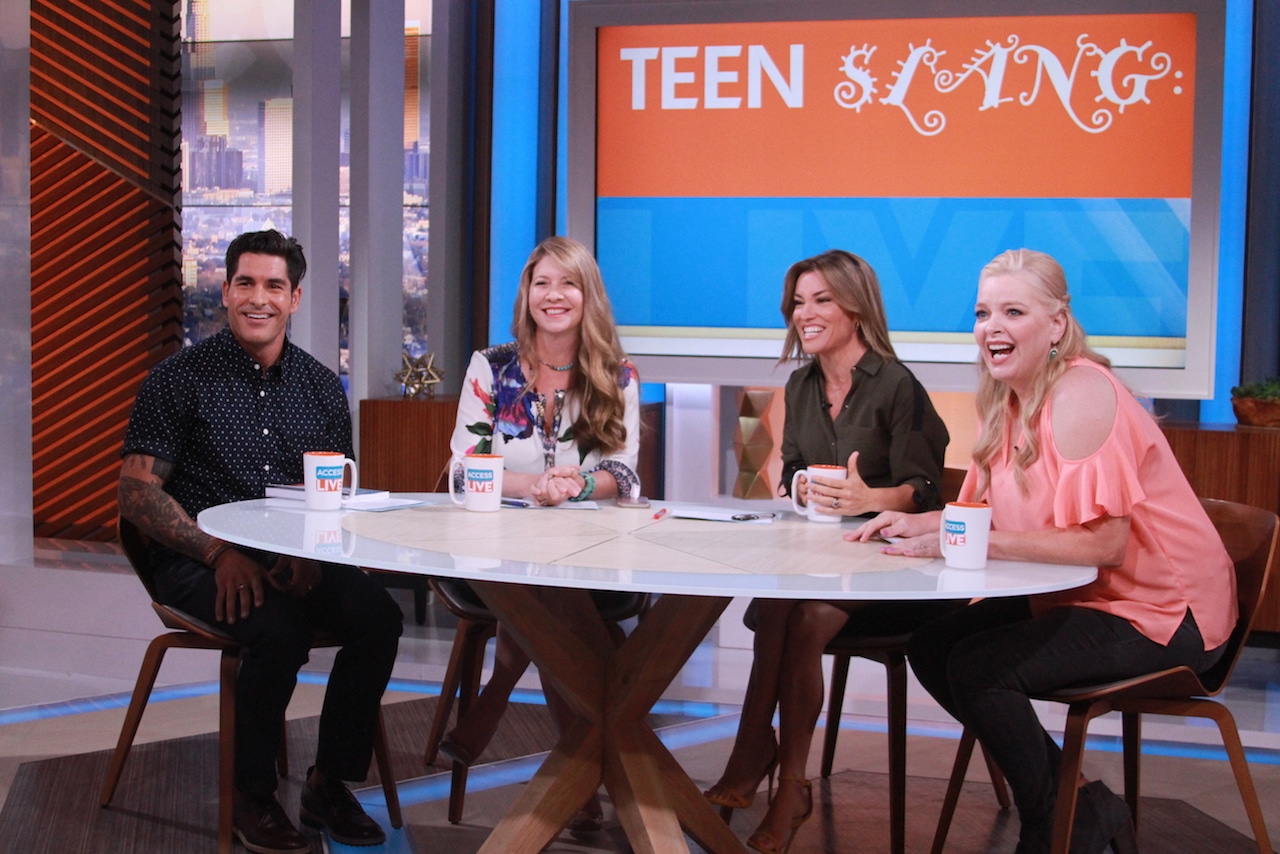
Now that my kids are teens, we are able to sneak away sometimes, guilt-free. If you have little ones and can’t seem to sneak off for weekends yet, don’t despair. It’s coming one day. And when you do, you’ll spend much of it fondly remembering being frazzled and sleep-deprived with your little ones. Each phase of parenting has its challenges and its pleasures. In the spirit of sharing and friendship, I’m taking fifteen minutes out in this sweet little farm kitchen to share the fun content producers of Access Hollywood Live helped me develop for my segment Monday on Online Teen Slang: Should We Worry? I hope you’ve set aside time each week to curl up with steaming hot tea for a moment of solitude to read your GKIS article. They are written to gently pepper you with useful information about tech, parenting, and safety so you can teach during screen-free dinners with you and yours. ❤️ Now on to the basics of teen online slang.

Why is slang always changing? Is it to be ‘cool’ with friends?

Slang is an expression of culture. Youth culture changes rapidly and is based on popular memes, songs, and movies. Part of the excitement is that you have to be an integral part of the culture to keep up. No parents!

Teen Slang: The Bad News

Often reflects and teaches concepts you may not want your child to know.

Can be used to hide from parents and plan secret and even dangerous activities

Can be vulgar, offensive, or cruel.

Teen Slang: The Good News

Young people who use slang are striving to form their own, independent, adult identities.

Sharing slang provides a sense of belonging, and being ‘in-the-know’with friends.

Using slang is a celebration of being young and having fun.

Every generation creates its own slang, but why does it seem so different now? Has it evolved in the age of social media and smartphones?

Slang is not new. But with the web, kids have a bigger, private, more versatile playgroundto live in. They juggle lots of virtual identities, each with its own characteristics, slang, activities, and community on demand with thousands of members of their tribe connected at once. We had our neighborhood buddies and the telephone. Big difference.

Should parents attempt to use their teens’ slang as a way to try to relate to their kids, or is that getting into majorly uncool territory?

If you want them to roll around in agony and openly insult you, you should totally use their slang.

Should parents be worried about the slang their teens are using now, or is it no different than if they think back to when they were younger?

It’s different. It’s more dark and vulgar for sure.But the teens I see in practice and the ones I’m raising are still good people. They’ve just habituated to a more troubling slang culture overall. Parents should be worried if their kids are too “thirsty”to belong, because that would result in being too eager to join in and take risks. They should be worried if they’re too secretive. They should be worried if there’s evidence of sneaking and dangerous defiance. Otherwise, have fun with it. Of course, correct them when they cross over the line, but stay engaged. Allowing them some privacy is also important.

Another topic we want to touch on is the cultural sensitivity issue of using slang — many of the terms originate in African American or LGBTQ communities — how mindful should people of other communities be of this before being quick to just use any term?

In-groups are delicate. If a person intrusively hijacks slang from a group they haven’t earned a place in, it can look aggressive or demeaning. Slang provides information about boundaries and belonging.

How can people make sure it’s appropriate to use a term before they start using it?

Do your research before using slang, like observe and ask others, Google it, err on the side of caution.Teens brutally police each other to follow social morè’s, which may even slip into bullying. Let your teen know you have their back 100%, even when they make stupid mistakes. Even better, teach them that mistakes are part of learning and you expect them often. Rather than shame them when they’re hurting with a lecture, take them for a smoothly, show deep compassion, and share stories about how common and healthy mistakes are. Sometimes providing a fun distraction while it passes is what they need.

How to Spot Red Flags in Teen Slang Use & What to do About it:

  • Talk to your teen often. Let them DJ in the car and share funny videos to stay connected. Keep up on their friends and interests. Be you but with humor. Encourage their independence but reassure them you are being them 100%.
  • Keep an eye out for concerning behavioral changes like increased isolation, poor hygiene, reckless behavior, or darkened moods are things that may signal trouble.
  • Block dangerous websites and monitor screen use.
  • Bookmark helpful websites, like Urban Dictionary, and set google alerts.
  • Look out for defensiveness and changing the browser quickly or erasing it.
  • If you’re worried and they won’t talk to you, consider psychotherapy. It’s shocking the influence I have with teens as they blatantly reject their parents with the same advice. It can really turn the situation around.

Want to know which slang terms to pay attention to and if slang use leads to teens having sex? Check out my earlier article Online Slang That Parents Need to Know.

I’m the mom psychologist who helps you GetKidsInternetSafe.

Onward to More Awesome Parenting,

Dr. Tracy Bennett