According to the International Labor Organization, there are an estimated 40.3 million victims of human trafficking globally, with 25% of those victims being children.[1] All youth are vulnerable to human trafficking. However, youth that are in foster care, identify as LGBTQ+, have run away, and are from abusive households are at the highest risk.[2] With online recruitment on the rise, grooming can take place right under our noses. This GKIS article covers what you need to know about human trafficking to keep your family safe from online predators.
Human Trafficking and Grooming
Human trafficking is “the acquisition of people by improper means such as force, fraud, or deception, with the aim of exploiting them.”[3] Often traffickers groom their victims online for days and even months before asking to meet in real life. Grooming is the act of building a relationship and trust, with the intent to manipulate and exploit the other person.[4]
As devices become more accessible to younger generations, their chances of encountering an online predator increases as well. With this in mind, we must take proper precautions when granting children screen-time. Let us help you with our free Connected Family Screen Agreement, a step-by-step digital contract that will help you clarify expectations, implement an expert action plan, and create a connection for safety and resilience. You can find the opt-in box in the right-hand corner of the GetKidsInternetSafe home page.
Recent Findings
According to the U.S National Human Trafficking Hotline, the number of trafficking crisis cases increased by more than 40% following shelter-in-place orders.[5]Crisis cases are defined as cases that require assistance with transportation, shelter, and law enforcement involvement within twenty-four hours of the report. Because of stay-at-home orders and mandated quarantines, the captivity of victims is being reinforced. The pandemic has also cut off economic opportunities, leaving people to become vulnerable to exploitation in exchange for basic needs.
A 2019 data report from the Polaris Project found that the three most common trafficking situations include sex trafficking (escort services, illicit massage businesses, pornography), labor trafficking (domestic work, agriculture, traveling sales crews), and a combination of the two.[6] In addition, this report indicated the average age of victims of sex trafficking as seventeen and labor trafficking as twenty-two.
In a 2016 survey conducted by Thorn, 260 survivors of domestic minor sex trafficking reported that technology is increasingly being used as a means of making contact for recruitment. 55% of those survivors reported meeting their trafficker via text, websites, and apps.[7] Further, findings show that traffickers weaponize virtual communication to contact and groom multiple victims at a time.
Grooming Tactics and Testimony
Online recruitment comes in different forms, including boyfriending through dating apps, fake job listings, and online marketplaces.[8]Boyfriending is defined as feigned romantic interests in order to form a trusting relationship with the victim. Trafficking recruiters use this tactic to lure their victims with intimacy, security, and sweet nothings.
Rebecca Bender shared her experience with boyfriending and human trafficking in her 2020 YouTube video with Anthony Padilla. A single mother at 18, all she wanted was to get herself and her daughter to a better place. She met a man online that promised her security. After six months of dating, she took a leap of faith to be with him.
One night when they went out, the man turned the car around to a strip of buildings without lights. He told her that she needed to pay him back (for moving expenses to Las Vegas), by participating in escort services. He used fear and physical abuse to get Rebecca to comply. Little did she know that she would become enslaved for the next six years with three different traffickers.
Since her escape, she has become an advocate in the fight against human trafficking. She offers the advice, “If anyone is forcing you to do something you are not comfortable with, it doesn’t just have to feel like this big, giant word of human trafficking.”[9] She elaborated that secretive jobs, frequent traveling, and hypersexuality (beyond your boundaries) within a relationship could be signs of exploitation. If you or someone you know is a victim of human trafficking, the National Human Trafficking Hotline is fully operational at 1-888-373-7888.
Psychological Manipulation
According to Psychology Today, three psychological staples behind grooming include instilling fear, manipulation, and coercion.[10]
Fear
Fear, aggression, and anger are emotions that trigger the amygdala within our brains.[11] The amygdala is like our smoke detector, in that it helps us determine how to respond to a threat.
Because the amygdala develops before our prefrontal cortex (our calm reasoning center), teens often make decisions based on an emotional response rather than experience-informed logical reasoning.
Predators are adept at identifying vulnerable targets who demonstrate immaturity, blind obedience, or those who have a social and economic vulnerability (e.g. youth living in unstable households, living in poverty, or participating in early drug/alcohol use).[12]
Manipulation and Coercion
Coercion and manipulation in the context of human trafficking typically come in the form of ultimatums and threats to maintain control over their victims. Because kids do not have the cognitive development or experience to reason through complex situations, they often fall back on obeying authority when faced with conflict. Predators exploit this vulnerability to reinforce control.
Everyday Real-Time Accessibility
According to a report from January 2015 to December 2017, data from the Polaris Project shows that common internet platforms used for recruitment include Facebook, dating sites, Instagram, and websites like Craigslist and online chatrooms.[13] Increasing, child screen access offers accessibility and opportunity.
Earlier this year, a video of a 37-year-old mother going undercover as an 11-year-old girl on social media went viral.[14] Within hours of creating the Instagram account and being clear that she was underage, an influx of explicit messages from strangers flooded the inbox. From there, the undercover team arranged to meet the predator and he was arrested. Videos like this one demonstrate that kids can be easy targets online. For more information on accessibility and sensible tips, check out Dr. Bennett’s GKIS article on sex trafficking.
Oversharing on Social Media
Victims are often identified as targets based on their willingness to overshare online. Different platforms provide opportunities for oversharing, including locations identified with geotagged photos, the Snap Map on Snapchat, and the Check-In feature on Facebook. Some platforms even require your location on your phone to be turned on to gain access to specific filters. To learn more about the dangers of these location features, check out this GKIS article about oversharing.
Online Gaming
Kids can also be readily groomed by predators on gaming platforms. A relative of mine told a story of how she received a message when she was fifteen years old from another gamer she met in the game’s online public lobby. He sent her a message asking for pictures, demographic details, and her home address (even after clarifying that she was only fifteen). He told her, “It’s okay that you’re fifteen, I’m eighteen, it doesn’t matter.” After being denied, he confessed he was twenty-two years old.
With the help of information and insight she’d gained from open, informative family conversations, she knew that his behavior was dangerous. She instantly blocked him and has not heard from him since. What might have happened if her parents hadn’t been proactive in offering education and support?
Among Us is a game that is currently popular among youth. I recently investigated this game for risk. Sure enough, in the public lobby of the game, it was common to see minors exchanging ages and Snapchat handles. I have even seen children as young as nine playing this game (one being my cousin), and streamers as old as thirty playing as well.
Although your message may be directed towards one person in that online lobby, the chat feature is open for 5+ other strangers to see. There is an option to censor the chat for inappropriate comments, but the unmoderated chat cannot be turned off completely. The game does provide the opportunity to play in a private lobby that requires a code. If your child plays this game, I suggest this option for friends and family. For more information about the dangers of games containing chat features, check out this GKIS article about the dangers of online multiplayer games.
Social Media Readiness Course
With all of this in mind, our children must understand the bigger picture of screen safety and online accounts. It is our responsibility as parents to do everything in our power to protect our children, but you don’t have to do it alone. GKIS offers our Social Media Readiness Course. Tailored for kids, our Social Media Readiness Course helps tweens & teens get educated about the risks of digital injury as well as Dr. B’s tested psychological wellness techniques. Using modules and mastery quizzes, this online course offers expertise to parents and kids, so they can maintain a healthy alliance against digital injuries and online predators.
Thanks to CSUCI intern Kaylen Sanchez for researching the digital age of human trafficking for this GKIS article.
I’m the mom psychologist who will help you GetKidsInternetSafe.
[9] Padilla, A. [AnthonyPadilla]. (2020, Nov 10). I spent a day with HUMAN TRAFFICKING SURVIVORS. [Video File]. Retrieved from: https://youtu.be/KGE_CUj0f1s
In last week’s GKIS article, “How Teens Overshare,” we covered the ways kids intentionally and unintentionally share location information on social media and how to prevent this safety risk. In today’s article, we detail how cybercriminals victimize teens and offer more helpful information on how to get your kids internet safe.
Cyberstalkers
Cyberstalkers are predators who track online information to extort or harass, create cybercrimes like hacking or identity theft, or intercept a victim offline. Cyberstalkers can be complete strangers or people your teen may already be acquainted with.
Hackers
Hackers are predators who steal usernames, passwords, and personal information to gain access to a victim’s screen device. Once they can access, they can still further data, change or destroy information, install malware, and even take over the device’s camera.[1] Data can then be sold to other criminals on the dark web or be used for identity theft to take out loans and credit cards in your name.
Phishing
Phishing is a cybercrime in which a victim is contacted by email, telephone, or text message by someone posing as a legitimate institution to lure individuals into providing sensitive data. Phishing can also occur through websites and social media.[2] Dr. Bennett notes in her book, Screen Time in the Mean Time that the sensitive information obtained by phishing is often used for online login information such as usernames and passwords, bank account and credit card information, and even identity theft.
The most common example of phishing is email phishing. To email phish, the cybercriminal creates a fake domain that looks trustworthy and legitimate, then sends emails to potential victims asking them to click a link, download an attachment, or “update” their passwords.
To prevent your child from falling victim to online phishing, encourage them to only open emails, online messages, and text messages from trusted individuals and advise them to never click on any links or download attachments from an unusual or suspicious-looking email or message.
Identity Theft
According to The United States Department of Justice, “Identity theft and identity fraud are terms used to refer to all types of crime in which someone wrongfully obtains and uses another person’s personal data in some way that involves fraud or deception, typically for economic gain.”[5]
Cybercriminals often target younger individuals because children do not have bad credit (which is great for cybercriminals) and it is easy to keep it from being noticed until the child is older. In Dr. Bennett’s book, Screen Time in the Mean Time, she writes about a couple of children who were victims of identity theft.
Here are a few ways to protect your child from identity theft:
Install cybersecurity safeguards on phones, laptops, iPads, and any other device that need protection
Have family conversations about being wary of posting or sharing personal information online
Set up a virtual private network (VPN) to ensure the safety of your device(s)
Update passwords at least once a year and be sure that the new password does not include any information that may already be public such as, your teen’s name, age, pet’s name, or anything that could be easily guessed
Social Media Quizzes
Cybercriminals can also phish for information through social media by reviewing posts, asking questions, or offering an online quiz with targeted questions. Quiz questions to avoid include any that ask for your (or your mother’s) maiden name, your favorite color, the street you grew up on, your pets’ names, the first car you owned, or your best friend’s name.
The answers to these questions are often security answers on websites. With security information, personal accounts can be accessed for malicious intent. To prevent cybercrimes, ask your teen to refrain from taking online quizzes or you can encourage them to only take online quizzes from a legitimate source. Teaching your teen to withhold sharing personal information that could pose a security risk is vital to ensure their online safety.
Cyber Blackmail
Once a cybercriminal obtains sensitive information, they may use it to coerce a victim further. According to the BBC, “Cyber-blackmail is the act of threatening to share information about a person to the public, their friends or family unless a demand is met or money is paid.”[3] Cyber blackmail can take many forms and the cybercriminals who commit this crime use different tactics to take advantage of their victims.
Cybercriminals may even say that they have explicit photographs, access to their victim’s phone and computer’s webcam, or even recordings of them from their personal devices. Some of those claims may be true or false, but either way, the cybercriminal uses fear and shame to get what they want.[4]
To help prevent your teen from becoming a victim of cyber-blackmail;
advise them to never share sexual images of themselves (the images can end up anywhere)
advise them to not accept friend requests from strangers
advise them to be wary of things they post, share, or message others online (what they say can very well be used against them in the future)
require your teen to have private social media accounts
For more information and safety tips, we highly recommend parents to purchase our Cybersecurity & Red Flags Supplement. Dr. B created this tool because parents in her clinical and coaching practices frequently asked her to teach their kids the red flags that may alert them to the tricks of online predators, hate groups, and cyberbullies. In this Supplement, she offers her clinical teaching list so you can educate your kids. Knowledge and assertiveness coaching are key elements of child resilience and good judgment online.
Also included in the supplement is Dr. B’s Online Safety Red Flags for Parents. This tool teaches parents what child behaviors to look for that may signal they are at risk – a tool she created from 25+ years of clinical practice. Being able to recognize behavioral red flags in your child may be the difference between stopping risk after one exposure versus not recognizing dangerous relationships and exposures until it’s too late.
Thanks to CSUCI intern, Remi Ali Khan for researching cybercrimes and cybersecurity for this article.
I’m the mom psychologist who will help you GetKidsInternetSafe.
Onward to More Awesome Parenting,
Tracy S. Bennett, Ph.D.
Mom, Clinical Psychologist, CSUCI Adjunct Faculty
Photo Credits
Photo by Gerd Altmann from Pixabay
Photo by B_A from Pixabay
Photo by Pixabay from Pexles
Photo by Tracy Leblanc
Works Cited
Bennett, T. (2017). Screen Time in the Mean Time: How to Get Kids and Teens Internet Safe.
Brant, E., & Butterly, A. (2013, September 20). Cyber-blackmail: How to keep safe and deal with it. BBC Newsbeat. http://www.bbc.co.uk/newsbeat/article/23724703/cyber-blackmail-how-to-keep-safe-and-deal-with-it.
Cyber Extortion: Ransomware vs Extortionware. Alpine Security. (2020, August 2). https://alpinesecurity.com/blog/cyber-extortion-ransomware-vs-extortionware/.
The Dangers of Hacking and What a Hacker. https://www.webroot.com/us/en/resources/tips-articles/computer-security-threats-hackers.
Identity Theft. The United States Department of Justice. (2017, February 7). https://www.justice.gov/criminal-fraud/identity-theft/identity-theft-and-identity-fraud.
KnowBe4. What Is Phishing? Phishing. https://www.phishing.org/what-is-phishing.
Is your child sharing their location with hundreds of “friends” online? Are they unwillingly giving away personal information that can put their privacy in danger? Our GKIS tools can help with that. In this article, we cover the ways kids overshare online and provide insightful tips and strategies to keep your child safe.
The GKIS Mission
GKIS helps families achieve screen sanity, prevent digital injury, and form deeper, more meaningful relationships. We don’t have to give up screens to be safe. GKIS offers tools and strategies that keep the joys of childhood discovery alive for all of us in today’s overtasked world.
Oversharing
Teenagers love to share what they are doing online, whether it’s posting what they’re eating, uploading selfies, or posting pictures of their pet. Sharing daily life online is fairly common; we adults are guilty of it too. But sharing location data can be particularly dangerous for teens because it offers a bridge from online contacts meeting them online to meeting them offline.
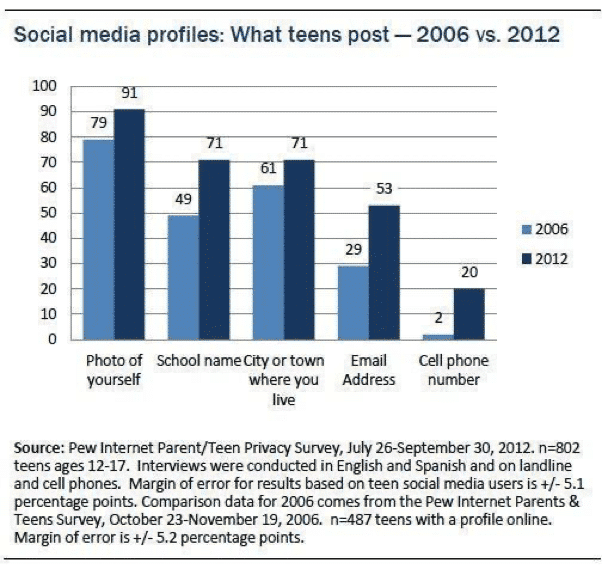
According to Pew Research Center, 71% of teens post their school name, 71% post the name of the city or town they live in, and 20% post their phone number.[1] Further, 36% of older teen’s Facebook friends are people they have never met in person.[2]
Although teens understand that oversharing can be dangerous, few have the life experience to understand exactly how it can be dangerous. When I was a teenager, the more “likes” I got on a photo or the more “friends” or “followers” I had on social media, the better I felt about myself and my online presence. I accepted friend requests from mutual friends who I had never met before, along with accepting requests from strangers. In my teenage mind, there wasn’t any harm in letting strangers see my online profiles. I felt that I would be okay as long as I wasn’t sending them my address. It didn’t occur to me that this data could be used to predict my location or even that anyone could have that kind of predatory intent.
Dr. Bennett shared a story with us where she worked on the production of the Lifetime TV show, I Catfished My Kid. In the show, producers created a poster board map (like detectives do) with yarn connecting the teens’ movements throughout the day for a week. With this data, they were able to predict daily habits like location, activities, and even who they hang out with.
How is Location Data Shared?
Instagram
One way location is shared on social media is through geotagged photos. A geotag is an electronic tag that assigns a geographical location to a photo or video posted on social media or other websites.[3] Geotags are commonly used to share what restaurant or city someone is in and are very popular on Instagram.
If your teen has a public profile and decides to post a photo on Instagram with a geotag, not only will their friends be able to see where they are, but users around the world can too. By simply clicking on that location’s tag, your teen’s photo will pop up as a current or recent visitor.
Another way location is shared on Instagram is by the use of hashtags. If your teen has a public profile and adds hashtags to their posts, their photos will show up as recent users of whatever hashtag they use, similar to the geotag feature. Hashtags are commonly used to have other users find their posts quicker and potentially gain more followers and traffic on their profile. However, that could be a privacy concern for younger users.
Facebook
The check-in feature on Facebook is similar to geotags. Facebook users “check-in” as an announcement to friends that they are visiting a particular location. Once checked-in, it appears on the user’s Facebook profile.
Snapchat
The SnapMap feature on Snapchat can also be a location risk. SnapMap allows your teen to share their location with their Snapchat friends every time they open the app. The SnapMap feature is a default, meaning it is automatically on so your teen might not even know that they are sharing their location. This is another privacy issue and may be a safety concern if your child accepts friend requests from strangers.[4]
Helpful Tips and Tools to Protect Your Child on Social Media
Set up a digital contact like our free Connected Family Screen Agreement and have ongoing, informative conversations with your kids about online safety. Our GKIS blog offers credible, interesting topics that will feed an ongoing agenda. Register for our Connected Family Screen Agreement to get on our weekly email list!
Set up your home to optimize best-use screen practices using our Connected Family Course for school-age kids.
Limit location sharing in Settings. On an iPhone, go to Settings and remove the location by clicking on the social media name > Location > select Never, Ask Next Time, While Using the App, or Always. You also have the option to turn off “Precise Location” meaning apps can only determine your approximate location
Don’t allow your child to have social media accounts until they are ready (we recommend after 13 years old or late middle school).
Require that your child set social media to private and only accept friend requests from family and friends they know in real life
Have your child change to the “Ghost Mode” on Snapchat (their location will no longer be viewable on SnapMap)
Thanks to CSUCI intern, Remi Ali Khan for researching common ways teens overshare on social media for this article.
I’m the mom psychologist who will help you GetKidsInternetSafe.
Onward to More Awesome Parenting,
Tracy S. Bennett, Ph.D.
Mom, Clinical Psychologist, CSUCI Adjunct Faculty
Photo Credits
Photo by Cottonbro from Pexels
Photo by Pixabay from Pexles
Photo by Pew Research Center
Works Cited
Deahl, D. (2017, June 23). Snapchat’s newest feature is also its biggest privacy threat. Retrieved November 04, 2020, from https://www.theverge.com/2017/6/23/15864552/snapchat-snap-map-privacy-threat
Dove, J. (2020, October 07). How to Remove Location Data From Your iPhone Photos in iOS 13. Retrieved November 04, 2020, from https://www.digitaltrends.com/mobile/how-to-remove-location-data-from-iphone-photos-in-ios-13/
Madden, M., Lenhart, A., Cortesi, S., Gasser, U., Duggan, M., Smith, A., & Beaton, M. (2020, August 17). Teens, Social Media, and Privacy. Retrieved November 04, 2020, from https://www.pewresearch.org/internet/2013/05/21/teens-social-media-and-privacy/
Oxford Languages and Google – English. (n.d.). Retrieved November 04, 2020, from https://languages.oup.com/google-dictionary-en/
Is your teen on Snapchat and Instagram? If so, they may be using what is popularly called, ‘plastic surgery’ filters. These filters may be altering your teen’s image of themselves and could be harmful to their mental health. I have been using filters on Instagram, Snapchat, and other social media platforms since I was a teen. Over the years these filters have become more face-altering than ever before. For more tips and guidance on social media, check out Dr. Bennett’s Social Media Readiness Course.
What Are ‘Plastic Surgery’ Filters?
Plastic surgery filters are filters that make users look like they have different types of cosmetic surgery. These filters give the users bigger lips, smoother skin, smaller noses, sharper cheekbones, and even different colored eyes. They are popularly used by celebrities, influencers, teens, and young adults.
Unrealistic Beauty Standards
‘Plastic surgery’ filters can be harmful because they promote unrealistic beauty standards by erasing imperfections and enhancing certain features. Teenagers view thousands of ‘perfect’ images daily on social media shared by peers, idols, and even themselves. This can cause self-esteem problems because beauty standards become less and less realistic.
Attention from Followers
Many celebrities and people I know refuse to post an unedited or unfiltered image of themselves, which is sad and scary. Attention from followers contributes to this problem. If a teenager posts filtered selfies and they get positive comments from their followers, they may depend on using those filters because they feel that they will not get the same attention without one. This can cause people to become obsessed with the filtered images of themselves and unhappy with their appearance without a filter.
Snapchat Dysmorphia
Along with lowering self-esteem, filters like these are inspiring more young people to get cosmetic surgeries because they prefer the edited version of themselves. Cosmetic doctors are noticing that filters might be leading to a new type of body dysmorphia. Body dysmorphia is a mental disorder where a person obsesses over a minor flaw in their appearance.
Dr. Esho, a cosmetic doctor, claims that an increasing number of individuals are bringing pictures of themselves with filters to plastic surgeons and asking to look like that. Doctors are calling this new type of body dysmorphia, ‘Snapchat Dysmorphia.’
My Personal Experience Using Filters
I have used filters that make my lips fuller, skin smoother, and face slimmer. When I was using them, I did not fully realize how often I was using them until my boyfriend once told me, “Why do you always use filters? You are beautiful without them.” He wasn’t telling me to stop using them, he simply asked me why.
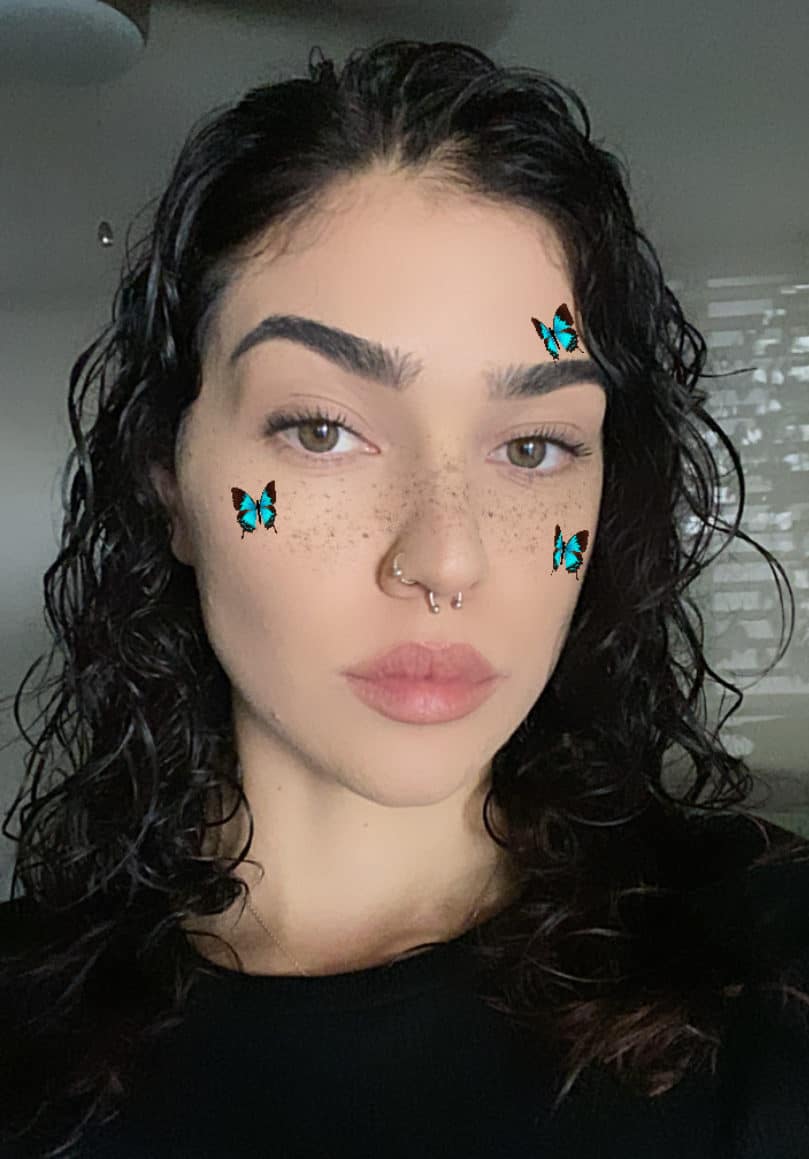
I realized that he was right, that I was relying on filters to feel beautiful. Since then, I limit my use of filters and embrace my imperfections. I want to share an authentic version of me. For this article, I decided to do a before and after using a few Instagram filters, so you can see how different they make me look.
(No Filter) Filter 1 Filter 2 Filter 3
What can you do if your teen is using filters on social media?
Just because your teen uses filters does not mean that they will develop a disorder or develop self-esteem problems. Everyone is different. But it is important to be aware of the potential risks of this social trend.
If you notice that your teenager is on social media and using filters here are some things you can do:
Have a conversation with your teen.
Talk to your teenager about what they see on social media. Remind them that most of the photos that they see on Instagram or any other platform are not 100% real because of filters or photo editing. This is something that they most likely are aware of, but I oftentimes have to remind myself of this when I am scrolling through Instagram.
In this generation where many teenagers and adults rely on likes and comments for self-worth, it is important to remind your teenager that there are more qualities in life that matter than their looks. Point out their other qualities and strengths like work ethic, intelligence, and kindness.
Don’t forget to remind them that they are beautiful without a filter!
Practice positive affirmations.
Teach your teenager positive affirmations and practice them together. Affirmations are positive statements that you say out loud to yourself. 7 Mindsets provide helpful affirmations for teens, here are a few:
“I embrace my flaws because I know that nobody is perfect”
Best, S. (2020, January 28). Instagram still has several ‘plastic surgery’ filters despite ban last year. mirror. https://www.mirror.co.uk/tech/instagram-still-several-plastic-surgery-21369194.
Cavanagh, E. (2020, January 11). ‘Snapchat dysmorphia’ is leading teens to get plastic surgery based on unrealistic filters. Here’s how parents can help. Insider. https://www.insider.com/snapchat-dysmorphia-low-self-esteem-teenagers-2020-1.
Hosie, R. (2018, February 6). People want to look like versions of themselves with filters rather than celebrities, cosmetic doctor says. The Independent. https://www.independent.co.uk/life-style/cosmetic-surgery-snapchat-instagram-filters-demand-celebrities-doctor-dr-esho-london-a8197001.html.
Kelly, S. M. (2020, February 10). Plastic surgery inspired by filters and photo editing apps isn’t going away. https://www.cnn.com/2020/02/08/tech/snapchat-dysmorphia-plastic-surgery/index.html.
Rodulfo, K. (2020, August 13). It’s Easier Than Ever To Make A New Face On Social Media. But Is It Killing Your Confidence? Women’s Health. https://www.womenshealthmag.com/beauty/a33264141/face-filters-mental-health-effect/.
Manavis, S. (2019, October 29). How Instagram’s plastic surgery filters are warping the way we see our faces. https://www.newstatesman.com/science-tech/social-media/2019/10/how-instagram-plastic-surgery-filter-ban-are-destroying-how-we-see-our-faces.
Yang, L. (2018, August 10). People are seeking plastic surgery to look like their edited selfies in real life – here’s why doctors think the trend is ‘alarming’. Insider. https://www.insider.com/plastic-surgery-selfie-filters-2018-8.
Do you find yourself becoming bored or fatigued by your daily intake of social media? Do you feel trapped in a constant cycle of monotony? You may be caught in a filter bubble. Due to the ongoing pandemic, families and children have looked to technology for sources of happiness, news, and leisure. Quarantines have limited social interaction, forcing society to indulge in more screen-time. Not all screen-time is detrimental, but we must acquaint ourselves with the concept of filter bubbles. Today’s article covers what filter bubbles are, the harms of filter bubbles, and how you can keep your family safe from the strings attached to algorithms with the help of our sensible GKIS tips.
What is a “filter bubble” and how are they formed?
Coined by Eli Pariser, a filter bubble is a tailored universe of information built through algorithm filters.[1] Social media algorithms process and gather information (data), with the task of predicting what the user would like to see.[2] Despite the use of free products and services (like Facebook), your family’s personal information (like browsing and buying behaviors) is collected and sold to advertisers (this is how platforms grow). Filter bubbles form through data gathered during your recurring use of social media, apps, and websites. In fact, as you browse through the internet, you are being followed by trackers you pick up from websites that gather this data. The trackers that invisibly follow you as you visit various virtual neighborhoods is referred to as virtual exhaust.
With your personal information, these algorithms can then retarget you by showing you ads about the things you seemed interested in during previous browsing. An example of these algorithms at work includes a story about a girl who was targeted with baby ads before knowing she was pregnant! The young woman did not outright give herself away by looking at cribs or diapers; however, her subscription and purchase history led to data collection that pointed to the direction of pregnancy.[3]
If algorithms could go as far as attempting to predict sensitive information such as pregnancy, imagine the different directions the algorithms will predict with each of your family members. Although we give our permission for marketers to track us by using certain platforms (because we love that free, delicious content), it’s useful to be educated about the ways of marketers. To help you recognize the red flags of marketing so you can teach them to your kids, GKIS offers ways to keep your family internet safe. Take the first step by signing up for our How to Spot Marketing Red Flags Supplement. It’s the perfect addition to our free Connected Family Screen Agreement available at GetKidsInternetSafe.com.
Everyday Examples
Everyday examples of tools that form filter bubbles include Facebook news feeds, Twitter timelines, and any kind of “For You” feature. Because these pages are tailored to your liking (based on personal data), a filter bubble is compiled through media similarities, leading to a customized but limited online experience.
Other examples of tools that form filter bubbles are the checkboxes to “get to know you better” or “Suggested Pages.” I love to indulge in following online influencers that offer fashion and makeup inspiration, but at the same time, I realize that it’s a bubble of advertisements that are trying to get me to swipe my card. These days, almost every influencer post includes a paid promotion. Because we love the convenience of buying off the internet, it reinforces the idea that you can easily shop in the comfort of your own home. You can see where this constant cycle of exposure can be detrimental, not just to the reward system in our brains (instant gratification) but also to our financial stability.
What are the harms of filter bubbles?
Narcissism and Herd Mentality
It has been proposed that filter bubbles may lead to narcissistic tendencies, as the filter bubble ricochets one’s preferences. Narcissism in the digital age includes preoccupation with self-image, which is evident in a filter bubble when your beliefs and opinions are reinforced.[4]
In psychology, the herd mentality is the notion that people tend to make decisions to fit in with the majority. This mentality can be especially harmful in a filter bubble, as your family members may blindly follow an idea or group without considering opposing viewpoints or repercussions of their actions. Sometimes a filter bubble gives the impression of a majority preference when it’s actually just a small part of the overall picture.
Exposure to Fake News
Searching the internet makes it very easy to fall victim to a confirmation bias, which is the notion that people prefer sources that confirm their beliefs, negating opposing viewpoints. This bias can put you at risk of digital injury by exposing your family to fake news and misinformation, leading you to believe in (and even share) false conclusions about important topics.
Consider the following thought experiment. Imagine disagreeing with someone so much so that you resort to searching the internet for backup. You might feel tempted to click on the first source that confirms your stance, and then a second, and so on… As you search for information, algorithms are tailoring your search results to your search history, filtering out beneficial information that would be useful to know to form an unbiased opinion.
Voting is a prime example of this dilemma, as politics in this digital age are nearly impossible to evade. Filter bubbles have not only intensified our stance on the current presidential election between President Trump and former Vice President Biden, but they have also affected the way we engage in politics with family members, friends, and even strangers.
No matter where you stand, it is clear to see the effects of confirmation bias on political polarization. Polarized opinions and interactions are just a few of many examples of digital injury and toxic online behavior. To learn more about the repercussions and psychology behind misinformation, check out this in-depth GKIS article about fake news.
Isolationand Narrow-Mindedness
Eli Pariser suggests that we can think of the filter bubble as a “party of one.”[5] Without exposure to information that will challenge our way of thinking, our outlook on the world around us will inevitably become one-dimensional.[6] Dr. Tracy Bennett, founder of GetKidsInternetSafe, says she sees evidence of this emotional isolation every day in practice. By feeling more and more confident in their belief systems, many of us increasingly feel frustrated and angry. As we seek sources to increase our confidence, we fall into a cycle of fear, confirmation, anger, and isolation. “Worst case scenario,” she says, “we give up and sink into depression and apathy.”
Hate Groups and Radicalization
Kids can fall into filter bubbles just like adults can. To keep kids from accessing hate group and cult information and potentially becoming radicalized, parents need to access parental controls like those offered in our GKIS Screen Safety Toolkit. To learn more about how these harmful communities could be targeting your family, check out this GKIS article about hate groups and cults.
Thanks to CSUCI intern Kaylen Sanchez for researching filter bubbles for this GKIS article.
I’m the mom psychologist who will help you GetKidsInternetSafe.
Four out of five GKIS interns this semester admit to visiting dangerous video chat sites as middle schoolers despite parent warnings. Could that mean it’s common these days? After surveying friends, we think so. Parents have no idea what kids are actually seeing and doing during these online chats. Today’s GKIS article is the real story from the mouth of a millennial, where I discuss how we worked around parent supervision and what actually happens in popular chat rooms. Learn what video chat rooms are, the dangers associated with them, red flags to look out for, and just how simple it is for your child to access them. With this information, you can parent smarter and prevent digital injury … our GetKidsInternetSafe mission.
Video Chat Rooms, Sites, and Apps
Video chat is a way to interact face-to-face with anyone around the world through webcams. Video chat rooms are on multiple platforms including online websites and apps on your child’s smartphone, computer, gaming system, or tablet.
To place a video chat call, all your child needs are internet access and a webcam. Video chat sites and apps can also include alternative ways of communication such as instant messaging and chatting through sharing photos. Video chat sites and apps randomly pair your child with another user.
The Most Popular Video Chat Websites and Apps
There are hundreds of video chat websites and apps that are easily accessible. Many video chat sites and apps are free, while others require purchase. The most popular sites include; Omegle.com, DirtyRoulette.com, ChatRandom.com, and Chatroullette.com.
Video chat sites accumulate millions of users a month, with the most popular being Omegle.com with a whopping 34,000,000 monthly visitors.[1] The most popular video chat apps for Android and IOS devices include Badoo, Telegram, and Azar. Similar to video chat websites, these apps are used by millions of people. The most popular video chat app is Badoo, with over 460 million users.
Why We Did It
Kids love discovery and novelty. Just as they would visit random neighborhoods in town if they could drive, they love to browse random neighborhoods on the internet if they have access. Get them with their friends and they’re even more reckless and bold. That is why we offer our GKIS Screen Safety Toolkit. Parents told us they felt overwhelmed by the number of parent-management tech options, so we made it easy for you. The GKIS Screen Safety Toolkit is a family-tested, outcome-based resource guide with our best recommendations, how-to information, and links to our favorite easy-to-onboard parental control systems. With the toolkit, you’ll be set to create the custom screen safety toolkit for your unique child. Managing your child’s access is a first step toward protecting them from dangerous choices.
Our parents didn’t have these resources. That’s why we were video chatting with strangers by middle school. When I was thirteen years old, using Omegle and Chatroulette was the fun thing to do. My friends and I would go on during sleepovers and after school hangouts. Occasionally, I would even access it late at night when I was alone in my bedroom.
We did it because it was funny and exciting. We were kids having face-to-face conversations with complete strangers; it was interesting to us. We felt like we were the ones in control, and we always felt relatively safe. Disgustingly, a majority of the random connections would connect us to older males masturbating in front of the webcam. They would continue touching themselves even when they could clearly see just how young we were.
In my personal experiences, whenever a creepy man would be touching himself, my friends and I would quickly hit the skip button in hopes to be connected with a clothed person we could talk to. But there were also times when we would chat with one of those perverts and let them know how disgusting it was.
Now that I’m in my 20s, I realize just how dangerous and repulsive our online experiences were. Luckily, nothing horrible happened to us. But if I or a friend would have shared enough information or decided to meet up with someone we met from Omegle or Chatroulette, it could have been devastating.
Dangers of Video Chatting with Predators
Psychological injury can result from children viewing sexual behaviors or being groomed by predators online. It’s not uncommon for kids to be coerced to reveal identifying information like where they live, where they go to school, and who their friends are. From there, some predators will persuade their victims to meet up in person, which can lead to a number of dangerous possibilities.
Red Flags That May Signal Risk
Your child interacting with a predator may go unnoticed, but there are a few red flags that you can look out for. For example, your child may be at risk if they
become secretive about what they were doing online or change screens the minute you walk into the room,
regularly deletes their browser history or their browser is typically on private browse,
spend a lot of time on the phone or computer, or
seem nervous when asked if the parent can check their history or search their phone.
For a more comprehensive list of child red flags, check out our Cybersecurity Red Flag Supplement. Three-tools-in-one, this supplement to your free Connected Family Agreement offers:
Our GKIS CYBERSECURITY SUPPLEMENT – Did you know that kids are the #1 targeted population for identity theft? That’s because the cybercriminal can benefit from fraudulent charges for years before the victim discovers it. Protect your family from hacking, scamming, malware, and phishing with our cybersecurity setup guide and best practices checklist (at home and while traveling).
PLUS
Our GKIS ONLINE SAFETY RED FLAGS FOR KIDS & TEENS – Parents in my clinical and coaching practices frequently ask me to teach their kids the red flags that may alert them to the tricks of online predators, hate groups, and cyberbullies. I offer you my clinical teaching list so you can educate your kids. Knowledge and assertiveness coaching are key elements of child resilience and good judgment online.
PLUS
Our GKIS ONLINE SAFETY RED FLAGS FOR PARENTS – Parents need to know the behavioral red flags that may signal their child is suffering a digital injury. This tool teaches parents what child behaviors to look for that may signal they are at risk – a tool I created from 25+ years of clinical practice. Being able to recognize behavioral red flags in your child may be the difference between stopping risk after one exposure versus not recognizing dangerous relationships and exposures until it’s too late.
With parent management tech tools, cybersecurity awareness, child education, and parenting tools to recognize risk, you are far better equipped to block anonymous strangers from predating on your kids.
Thanks to CSUCI intern, Remi Ali Khan for researching video chat websites and apps for this article.
I’m the mom psychologist who will help you GetKidsInternetSafe.
Onward to More Awesome Parenting,
Tracy S. Bennett, Ph.D.
Mom, Clinical Psychologist, CSUCI Adjunct Faculty
GetKidsInternetSafe.com
Photo Credits
Photo by Andrea Piacquido from Pexels
Photo by Julia Cameron from Pexels
Works Cited
[1] ChatHub. (2020, February 13). Top 12 Sites Like Omegle in 2020 (Ordered by popularity). Retrieved September 29, 2020, from https://blog.chathub.cam/top-12-sites-like-omegle/