We know there are dangerous sites on the internet. But most of us have never accessed the dark web, where visitors are anonymous and access to the unthinkable is possible. Recently I visited and discovered that kids and teens easily access it to purchase illegal goods such as fake ids and drugs. Find out what is on the dark web, how easy it is for kids to access it, and what you can do to prevent it in today’s GKIS article. Caution: this article contains graphic descriptions of illegal activities, sex, and violence.
What is the dark web?
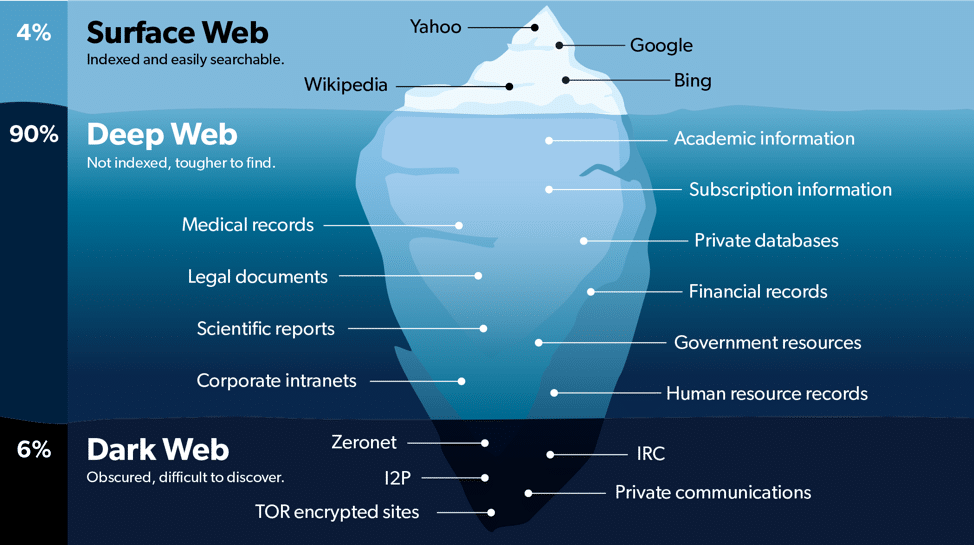
The dark web is the part of the internet that is not visible to regular search engines (like Google or Chrome) and requires the use of a special browser named Tor. Once Tor is downloaded and opened, you have arrived at what many call “Onionland.” Tor uses the onion router hidden service protocol, meaning that the Tor servers derived from the onion router offer users complete anonymity. Also, every website ends with .onion instead of .com, .org, or .gov.
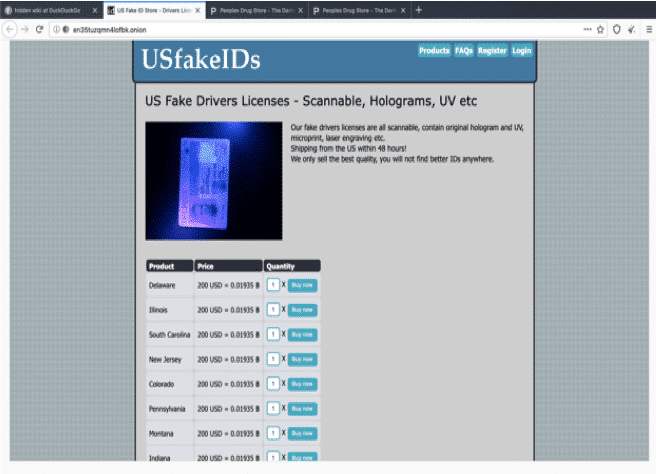
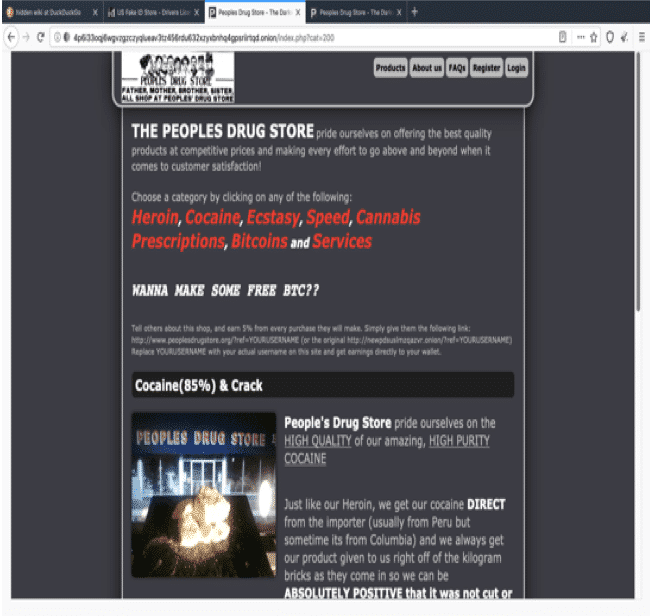
The dark web is a criminal underworld where bad actors online sell and purchase illegal goods like drugs, weapons, counterfeit money, bank accounts, passports and ID’s, and much more. Dark web online shops are set up with customer reviews very much like Amazon which gives users the confidence to purchase from specific vendors. There is even a darker side to the dark web which consists of images and videos of gore, pornography, child sexual abuse, bestiality, and even live murder shows called red rooms where paying customers can tell the person torturing the victim what to inflict on the victim next or how they would like to see the victim killed.
Clear Web Versus Deep Web
The clear web is the part of the internet that can be accessed from any browser. It’s the smallest part of the web, which is astonishing because it seems that the content there is infinite but in actuality, it only accounts for about 4% of the content on the web. Some browsers, like Google, will censor certain websites. The search engine used by Tor, Duck Duck Go, does not censor and will not save your search history.
Then there is the deep web which is not to be confused with the dark web. The deep web is the largest part of the web. It consists of all the content that is not indexed and will not appear on regular search engines. Many government and private company websites exist there, where you would need an exact address to access them. Accessing without permission is illegal.
Is it easy to access the Dark Web?
It is very easy to access the dark web. I’ve included the steps here so you can recognize them if you ever come across these searches on your child’s browser.
To access the dark web, all you have to do is:
Purchase a VPN for extra security and anonymity (optional)
Download Tor
Access Hidden Wiki Links
Use the links on Hidden Wiki to help guide you through the dark web
Create an anonymous email
Purchase bitcoin (which is an online currency)
Find an online store through the hidden wiki that carries the products or services you are looking for
Using the hidden wiki as a guide, you can follow the steps above by merely clicking links and it will guide you through. You can easily find the hidden wiki by typing “hidden wiki” on the search bar in the Tor app.
Dark Web Dangers
Fake IDs and Drugs
So, as a GKIS intern, how do I know that teens are accessing the dark web? I became interested when high school students that I worked with all had fake IDs and were getting into L.A. clubs. I asked how they got them, and they told me from the dark web using bitcoin. They also disclosed that they illegally purchase study drugs like Adderall and Modafinil as well as club drugs like cocaine and molly. I was shocked yet intrigued, so I followed these directions on how to get onto the dark web. I couldn’t believe how easy it was to access.
When I brought up my idea about writing about the dark web at our intern meeting, Dr. B worried we’d be publishing a how-to article. But I argued, and the other interns agreed, that there are plenty of YouTube videos showing the step-by-step process of accessing the dark web. Parents need to know about this!
It is mind-boggling how dangerous access to the dark web can be. As if purchasing illegal drugs from anonymous criminal vendors isn’t enough, consider that purity is not guaranteed. Drugs like cocaine and heroin have been known to be laced with fentanyl, an extremely powerful opiate that kills even the most severe addicts. And consider the risks teens take in 21-and-older clubs. Interaction with adults on the dark web can lead to any type of exploitive situation online and offline.
Violence and Pornography
Consider what watching violence and pornographic material can do to a child’s developing brain. For some kids, watching explicit material can lead to stress symptoms characteristic of clinical disorders such as acute stress disorder and PTSD. For others, they may become desensitized to shocking online content which may lead to craving and seeking increasingly dangerous content to experience that same rush. This type of explicit material can have a similar effect as addictive drugs due to the release of dopamine and endorphins.
Dopamine helps the brain recognize incentive salience. Incentive salience is the desiring attribute that includes a motivational component to a rewarding stimulus. In other words, dopamine is released when a reward is anticipated, and it motivates us to keep seeking that anticipated reward.
When shocking material is viewed, the opiate system in our brains begins to activate by releasing endorphins. Endorphins gives a sense of euphoria and eases pain, which is what heroin does. So, more and more shocking material may be craved due to dopamine released from the anticipation of viewing the shocking stimulus – and endorphins help ease the pain that the shocking stimulus caused. Endorphins are also what causes the “runners high” that people talk about after a good amount of cardiovascular exercise. So when we experience pain, endorphins are released to help ease the pain.
Hate Groups
An extremist group discussed in the media recently, the “Proud Boys,” is a group that is known for supporting President Trump and for their extremist chauvinist beliefs. If you search for their website on Google, you will likely not be able to find it. But if you use the search engine Duck Duck Go, it shows up right at the top.
Hate groups design their content to radicalize vulnerable adults and youth to their agenda. There have been many incidences where radical Islamic groups have radicalized western youth to fight for their cause. They do this on the clear web too. But when they need to be more discreet, they can use the deep web by creating a .onion site.
Facebook and other social media sites are on the deep web and their web address is www.facebookcorewwwi.onion. It is important to talk about these issues and set rules with your kids. because if they do not learn it from you they will learn from someone else who may not have the best intentions.
Without parent management tools, like those we recommend in our GKIS Screen Safety Toolkit, kids can spend hours over months interacting with extremists. These interactions can be moved offline and can result in child and teen trafficking as well as other crimes.
How You Can Keep Your Kids Safe From the Dark Web
If your kids have open access to the internet, GetKidsInternetSafe has an entire toolkit to get safety dialed in. Check out our GKIS Course Bundle in the plus and deluxe package options, which offers all of our GKIS courses plus bonuses for families with kids of all ages. Our course bundle option offers parent and teen education, communication tools, parenting tools, and tech tool recommendations. Our course summary page with the details can be found HERE.
Thanks to Andres Thunstrom for contributing to this GKIS article. Andres has been advised to never visit the dark web again. J
I’m the mom psychologist who will help you GetKidsInternetSafe.
Is your child sharing their location with hundreds of “friends” online? Are they unwillingly giving away personal information that can put their privacy in danger? Our GKIS tools can help with that. In this article, we cover the ways kids overshare online and provide insightful tips and strategies to keep your child safe.
The GKIS Mission
GKIS helps families achieve screen sanity, prevent digital injury, and form deeper, more meaningful relationships. We don’t have to give up screens to be safe. GKIS offers tools and strategies that keep the joys of childhood discovery alive for all of us in today’s overtasked world.
Oversharing
Teenagers love to share what they are doing online, whether it’s posting what they’re eating, uploading selfies, or posting pictures of their pet. Sharing daily life online is fairly common; we adults are guilty of it too. But sharing location data can be particularly dangerous for teens because it offers a bridge from online contacts meeting them online to meeting them offline.
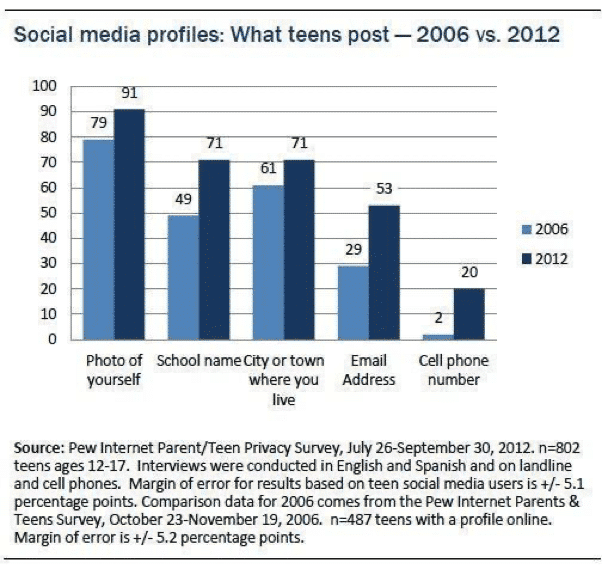
According to Pew Research Center, 71% of teens post their school name, 71% post the name of the city or town they live in, and 20% post their phone number.[1] Further, 36% of older teen’s Facebook friends are people they have never met in person.[2]
Although teens understand that oversharing can be dangerous, few have the life experience to understand exactly how it can be dangerous. When I was a teenager, the more “likes” I got on a photo or the more “friends” or “followers” I had on social media, the better I felt about myself and my online presence. I accepted friend requests from mutual friends who I had never met before, along with accepting requests from strangers. In my teenage mind, there wasn’t any harm in letting strangers see my online profiles. I felt that I would be okay as long as I wasn’t sending them my address. It didn’t occur to me that this data could be used to predict my location or even that anyone could have that kind of predatory intent.
Dr. Bennett shared a story with us where she worked on the production of the Lifetime TV show, I Catfished My Kid. In the show, producers created a poster board map (like detectives do) with yarn connecting the teens’ movements throughout the day for a week. With this data, they were able to predict daily habits like location, activities, and even who they hang out with.
How is Location Data Shared?
Instagram
One way location is shared on social media is through geotagged photos. A geotag is an electronic tag that assigns a geographical location to a photo or video posted on social media or other websites.[3] Geotags are commonly used to share what restaurant or city someone is in and are very popular on Instagram.
If your teen has a public profile and decides to post a photo on Instagram with a geotag, not only will their friends be able to see where they are, but users around the world can too. By simply clicking on that location’s tag, your teen’s photo will pop up as a current or recent visitor.
Another way location is shared on Instagram is by the use of hashtags. If your teen has a public profile and adds hashtags to their posts, their photos will show up as recent users of whatever hashtag they use, similar to the geotag feature. Hashtags are commonly used to have other users find their posts quicker and potentially gain more followers and traffic on their profile. However, that could be a privacy concern for younger users.
Facebook
The check-in feature on Facebook is similar to geotags. Facebook users “check-in” as an announcement to friends that they are visiting a particular location. Once checked-in, it appears on the user’s Facebook profile.
Snapchat
The SnapMap feature on Snapchat can also be a location risk. SnapMap allows your teen to share their location with their Snapchat friends every time they open the app. The SnapMap feature is a default, meaning it is automatically on so your teen might not even know that they are sharing their location. This is another privacy issue and may be a safety concern if your child accepts friend requests from strangers.[4]
Helpful Tips and Tools to Protect Your Child on Social Media
Set up a digital contact like our free Connected Family Screen Agreement and have ongoing, informative conversations with your kids about online safety. Our GKIS blog offers credible, interesting topics that will feed an ongoing agenda. Register for our Connected Family Screen Agreement to get on our weekly email list!
Set up your home to optimize best-use screen practices using our Connected Family Course for school-age kids.
Limit location sharing in Settings. On an iPhone, go to Settings and remove the location by clicking on the social media name > Location > select Never, Ask Next Time, While Using the App, or Always. You also have the option to turn off “Precise Location” meaning apps can only determine your approximate location
Don’t allow your child to have social media accounts until they are ready (we recommend after 13 years old or late middle school).
Require that your child set social media to private and only accept friend requests from family and friends they know in real life
Have your child change to the “Ghost Mode” on Snapchat (their location will no longer be viewable on SnapMap)
Thanks to CSUCI intern, Remi Ali Khan for researching common ways teens overshare on social media for this article.
I’m the mom psychologist who will help you GetKidsInternetSafe.
Onward to More Awesome Parenting,
Tracy S. Bennett, Ph.D.
Mom, Clinical Psychologist, CSUCI Adjunct Faculty
Photo Credits
Photo by Cottonbro from Pexels
Photo by Pixabay from Pexles
Photo by Pew Research Center
Works Cited
Deahl, D. (2017, June 23). Snapchat’s newest feature is also its biggest privacy threat. Retrieved November 04, 2020, from https://www.theverge.com/2017/6/23/15864552/snapchat-snap-map-privacy-threat
Dove, J. (2020, October 07). How to Remove Location Data From Your iPhone Photos in iOS 13. Retrieved November 04, 2020, from https://www.digitaltrends.com/mobile/how-to-remove-location-data-from-iphone-photos-in-ios-13/
Madden, M., Lenhart, A., Cortesi, S., Gasser, U., Duggan, M., Smith, A., & Beaton, M. (2020, August 17). Teens, Social Media, and Privacy. Retrieved November 04, 2020, from https://www.pewresearch.org/internet/2013/05/21/teens-social-media-and-privacy/
Oxford Languages and Google – English. (n.d.). Retrieved November 04, 2020, from https://languages.oup.com/google-dictionary-en/
Fun trends on the YouTube Explore page attract audience attention and vet the best online content and influencers. To build child resilience and teach problem-solving and good judgment, we at GKIS encourage parents to carve out the time to share online interests and co-view YouTube channels with their kids. To help you get started (or continue) having fun online as a family, we’ve found some fun trends and creators that may be a great source of inspiration for developing new interests and hobbies. Having fun together and building digital fluency and an awareness of what’s hot and what’s not will help you build credibility with your kids. Even better, they will start to teach you about what’s out there, and, ultimately, work with you to make difficult online decisions. Our goal isn’t to shut your kids off from online discovery. Instead, we believe in family togetherness, online learning and discovery, and building child resiliency and safety – and having fun while you’re at it!
**CAUTION: GKIS has chosen these creators because of their family-friendly content and the variety of communities that they represent. Although we are excited to share these amazing creators, please keep in mind that some of them are more suitable for older teenagers due to their language and the nature of their content. Further, many of these creators have hours of videos that we did not sample. Please watch and decide for yourself the appropriateness of each channel for your unique child.
Mukbangs
A kind of video trend that has been popular in recent years has been Mukbang videos. Mukbangs, a trend originally popularized in South Korea, are videos where people eat large quantities of food while interacting with their audience [1].
These kinds of videos are popular with young people because they can be enjoyed as entertainment, to satisfy cravings, or to enjoy the creator’s style, humor, and personality.
We recommend you check out YouTuber Zach Choi. Zach, with almost 8 million subscribers, takes his viewers through his process of preparing for his mukbangs, consuming the food, and collaborates with other popular YouTube creators, both in and out of the Mukbang community.
In his videos, Zach silently eats large amounts of food with occasional captions that describe the foods or promotes the creators he features on his channel. Zach will often do a combination of a mukbang and an ASMR video. ASMR, or autonomous sensory meridian response, videos are videos that utilize audio and visuals in order to produce a tingling sensation that moves down the back and upper spine [2]. There are only certain people that get this “ASMR feeling”, and for them, videos like these can be very enjoyable to watch. Zach doesn’t seem to use inappropriate language, as he does not speak in his videos, or do sponsored content.
Technology Reviews
In the world of technology, YouTuber Marques Brownlee has made a name for himself with his thorough and unbiased technology reviews.
Marques is a creator who often trends on the YouTube Explore page and has over 10 million subscribers. For people interested in technology, watching Marques can be a good way to learn about the various features that go into different devices or simply get a professional opinion on what electronics to consider buying.
While Marques reviews technology, he does not promote buying the most recent devices or show bias towards certain brands. He simply reviews the newest technology on the market and gives his opinion on its features and performance.
For teens going into high school or college who need new devices for their academics, interested in creating content, or interested in studying technology, this is a great creator to watch. Marques very rarely does sponsored content and does not seem to use inappropriate language.
Food
In the food community, the brand Bon Appetit has created a popular platform on YouTube with a variety of series, all based on cooking.
Chefs from Bon Appetit post videos from their company test kitchen showing how to cook recipes from many different cuisines. What makes Bon Appetit different from your average Food Network cooking video are the chefs. While Bon Appetit’s crew of chefs provide detailed instructions on their recipes, they do so in a fun, humorous manner, letting their personalities naturally shine through and interacting with their fellow chefs in the test kitchen. This makes for some entertaining videos that have gained the attention of many young followers.
With fun and detailed videos, Bon Appetit has inspired this new generation to think twice about dining out and instead try something new in the kitchen. Two very popular series to check out are Gourmet Makes by chef Claire Saffitz and It’s Alive by chef Brad Leone. Bon Appetit does not seem to do sponsored content. This channel is recommended for an older audience, as some videos may contain explicit language.
Music
For people interested in music, the National Public Radio created a popular YouTube series called Tiny Desk Concert, dedicated to live performances from some of the most talented artists.
This YouTube series, which is on the NPR Music YouTube channel, posts new performances every month, with artists from varying genres and languages. These concerts differ from live performances, as they are played live with no prerecorded tracks or lip-syncing. Artists sing their songs live with either a band or by themselves with their preferred instrument in a small space that resembles an office desk, hence the name “Tiny Desk”, with a small studio audience.
This channel is great for young fans and music enthusiasts because it allows you to discover new artists every month, plus you can see your favorite artists perform their songs in new styles and see the different instruments and vocals it takes to best perform their music. NPR is careful with putting disclaimers in their videos for the artists that use explicit language, either in their songs or when speaking. This series does not do sponsorships, as they rely on donations from the public to keep the series going.
Charity
If you want to watch videos while contributing to a charitable cause, check out the YouTube channel Grandpa Kitchen.
This channel, with over 7 million subscribers, is a cooking channel created by a family in India to raise money for the local orphanage that they work for. The videos posted by this channel originally starred an older Indian gentleman lovingly referred to as “Grandpa” by subscribers. Grandpa would greet his subscribers and explain the meal he would be preparing for the orphans that day.
Grandpa cooked large quantities of food for all the orphans at his organization with the help of his grandsons. After Grandpa passed away, his grandsons took over the channel in order to continue the good work Grandpa started. Many families and fans from around the world have shared their support after Grandpa’s passing, and you can truly see how fans young and old were able to bond over watching Grandpa every week.
Although Grandpa is no longer with us, his grandsons continue to create videos with a similar format to Grandpa’s videos and continue to use the money earned from the channel to support the orphans with food, supplies, etc. These videos are in English, and the creators do not do sponsored content or use inappropriate language.
Discover Together
As we share these creators and communities, we encourage you and your children to discover new favorite communities and content to inspire you to create and discover beyond the screen. There are family-friendly creators in every community waiting to be discovered, all it takes is some time and patience.
Thanks to Alexandra Rosas-Ruiz for her research and help with writing this article. If you have questions about what your child is interested in on YouTube, try coaching sessions with Dr. B. These sessions, also offered online, can answer any specific questions on online safety and parenting in general. Sign up and receive special bonus products with your purchase.
I’m the mom psychologist who will help you GetKidsInternetSafe.
Instagram is one of the most popular social media apps among teens. It’s entertaining, easy to use, and offers different ways to create content to share with friends and family. Instagram is a great way to stay connected to others and share about your life. But besides following friends and family, there are many popular creators that can give your teens positive and inspirational content while scrolling through their Instagram feed.
What’s on Instagram
Instagram pages can either have dedicated themes or can be a mix of personal and themed content. Many popular Instagram users use their platform to keep fans updated on their personal lives and share positive and educational content. Because not all content is appropriate for kids and teens, we’re sharing seven (six plus a bonus) positive and influential Instagram pages that are safe for teens to enjoy. Although we’ve done our best to choose from the most family-friendly popular creators, check them out and decide for yourself whether they are a good fit for your teen.
Meet Our Favorite Creators
Entertainment
In entertainment, the Instagram page zachking creates entertaining and mesmerizing videos using special effects and editing.
Zach and his team choose and edit their videos in a way that makes his actions seem magical. Whether its defying the laws of physics, conjuring celebrities, or making things disappear or multiply, Zach’s content is entertaining and leaves you wondering how he does the different tricks in his posts.
Zach King is entertaining and inspiring for those interested in learning about video editing as a skill or even a career. Zach also posts about life with his wife and two sons. He’s done many collaborations with celebrities and fellow influencers and occasionally does sponsored content, marking sponsored videos with the hashtag “ad”. Zach does not seem to use explicit language or explicit images in his videos.
Design/Organization
In design and organization, author and TV personality mariekondo (Marie Kondo) is best known for her organizational methods and lifestyle tips. Marie’s page is full of beautiful photos and videos made to inspire people to declutter their spaces.
This page can be useful for young teens to see how they can best make use of their space and easily keep organized. Plus, it can be really beautiful and satisfying to see clean, organized, and well-decorated spaces.
Marie is a firm believer that your space, as well as the things in it, should “spark joy.”After scrolling her page, you’ll feel inspired to clear out the unnecessary clutter in your life to live happier and more stress-free.
Aside from her design and organizational content, Marie shares photos from her fans on how they’ve decluttered and decorated their spaces and also posts videos about her two children. Marie does not seem to use explicit language or do sponsored content. The content she promotes is of her own products and projects.
Journalism
In writing and journalism, the Instagram page humansofny is dedicated to sharing photos and stories from New York residents. This page publishes stories and interviews from different individuals, whether it be about their current situation in life or an impactful story that helped shape who they are.
This page does a great job displaying the joys and struggles of contributing New Yorkers. It also does a good job of representing diversity in race, gender, religion, and political ideologies. For teens, this page can be a way to learn from different people’s experiences. By combining the images of the residents and their stories, this page also serves as a reminder to not judge others based on their outward appearance.
Caution: humansofny is recommended for older teens, since it talks about heavy topics like assault, addiction, abuse, etc. This page does not seem to use explicit language or do sponsored content.
Food
In nutrition and food, the Instagram page pickuplimes, run by licensed dietician and YouTuber Sadia Badiei, is a popular page full of vegan recipes. Food pictures have long been popular on Instagram. On Sadia’s page, you can find her beautiful food pictures and her easy recipes, perfect for people who want to go vegan or simply have a desire to start eating a more plant-based diet.
As plant-based food becomes trendier, this page is great for teens to get recipe ideas and get inspired to cook healthy foods to try and live a healthier lifestyle. Besides recipes, Sadia’s page contains posts about her hobbies, her partner, and positive messages towards her fans. Sadia does not seem to do sponsored content or use explicit language. She mainly promotes her YouTube channel on her page with links to her YouTube videos in her posts and bio.
Travel/Nature
In nature and travel, the official National Geographic Instagram page, natgeo, posts pictures and stories from different countries and cultures around the world.
Like food pictures, travel and nature have also been a popular form of content on Instagram. The National Geographic’s page contains beautiful photographs and descriptions of the people and places depicted, educating their followers about different traditions, environments, plants, and animals around the world. Their posts often reflect the different events and news stories happening in our world today.
This page is full of interesting stories and beautiful imagery that can inspire your teens to research different countries and cultures, maybe even sparking an interest in traveling. It can also serve simply as a way to relax and read about different people and places. This page does not seem to do sponsored content or use explicit language.
Business/Nonprofits
Lastly, in business and nonprofits, the official Instagram page for the nonprofit organization Kiva, kiva.org, promotes the work of the organization and shares the true stories of the people this charity benefits.
Kiva is an organization that gives small loans and provides aid in accessing loans to individuals and small businesses around the world. Similar to the Humans of New York Instagram page, Kiva shares stories from these individuals and small businesses, specifically about their work starting their business, and how the aid from Kiva allowed them to grow and become more successful.
This is an inspirational page that shows the impact nonprofits can make in the lives of others and how the hard work and perseverance of these individuals helped them become successful business owners. This page does not seem to use explicit language or sponsored content, the page only promotes their organization.
Bonus Instagram Page for Parents
While your teen is enjoying the content from these creators, parents can enjoy the content from our new official GKIS Instagram Page. Get updates and notifications about our newest blog posts and catch up with Dr. B and our team of GKIS interns. Our Instagram page is a great resource for parenting tips and effective ways to keep your family safe online.
Thanks to Alexandra Rosas-Ruiz for her research and help with writing this article. To learn more about Instagram and how to best protect your teen on the app, check out our GKIS Sensible Parent’s Guide to Instagram. Learn about how to access Instagram’s different privacy options, trends, language, and our tips for keeping your teen safe on the app.
I’m the mom psychologist who will help you GetKidsInternetSafe.
Imagine that you’re running late to a new class where everyone has yet to meet each other. You sit down and note that the class is already full. But something else is weird with so many people in the room…the silence. This silence has become surprisingly normal due to our generation’s favorite accessory, headphones. These days it’s common to see most people out and about plugged in and tuned out. Is this a cool convenience or a problematic habit? Check out today’s GKIS article and see what you decide.
Excessive Headphone Use
In the university that I attend, most students have headphones in place until the moment the instructor says their first word of the lecture. The only people that are talking before that are the few people who’ve already established a friend group. The truth is, I’m so in the habit of wearing my headphones the idea of joining in on a conversation is stressful. My headphones are a sort of safety blanket that saves me from feeling awkward in new social situations.
My friends agree with me. We even admit that sometimes our headphones aren’t even on when we have them in! We keep them in to discourage people from talking to us or expecting us to respond. Sometimes it’s also a cover while we listen in on other people’s conversations. Headphone use is commonly a tool to socially distance.
We at GKIS aren’t the only ones who’ve noticed this phenomenon. BloggerClaire Hubble shared her story of being a self-proclaimed “headphone addict” in a blog post. In her post, she mentions the dangers of constantly keeping your headphones in, such as not being able to hear an oncoming vehicle or people calling for you. Hubble also brings up an important guilty pleasure we’re familiar with here at GKIS, podcasts.
For those of you who are not yet addicted, podcasts are like radio shows with multiple episodes that usually follow a theme or tell a story. Fans can subscribe to a podcast and follow their favorite podcaster personalities. Hubble said she loves podcasts as a way to avoid forced small talk. She goes on to share that without her headphones, she feels anxiously disconnected and even bored. She posits that headphone may be and up-and-coming addiction.1
Dangers of Excessive Headphone Use
Psychological
In a 1994 study on the psychological effects of Walkman use, researchers predicted that portable listening devices could potentially grow to be silencing technology. Silencing technology is the social and psychological separation of individuals. This study interviewed 36 individuals and concluded an impaired ability to interact socially with prolonged device use.2
A later 2005 study measured the use of headphones and portable audio use on college students using several self-administered scales and surveys. The 2005 study also found that frequent headphones use leads to social isolation and feelings of loneliness.3
Physical
Physical damage from increased headphone use has also become a growing concern. Potential health risks include:
Ear infections
Hearing loss
Tinnitus (ringing in the ear)
Headaches
Dizziness
Pain in ear
Hyperacusis
Excessive ear wax 4
Recommended Headphone Use
How much headphone use is excessive? According to the World Health Organization (WHO), anything over an hour a day is excessive for all listening devices.[5] Rather than eliminating the accessory altogether, steps can be taken to implement safe and healthy listening for your kid on-the-go.
How to Manage Headphone Use
In her book, Screen Time in the Meantime, Dr. B offers the following recommendations to help your family unplug:
Teach netiquette skills.
Introduce screen-free zones at the dinner table and other areas where a family conversation is common.
Decide on tech blackout times, like mornings before school and bedtime.
Start a conversation on safety with our free Connected Family Screen Agreement.
Safe Kid-Friendly Alternatives
Have you heard of noise limiting headphones? Noise limiting headphones are headphones that can be set to a specific volume the consumer decides.6 Researchers have concluded that noise-limiting headphones pass the “safe” listening range set by the World Health Organization (85 decibels) and were the favorite among the kids and teens in the study who tried them out.5 This is a quick solution if you know you won’t always be able to monitor headphone use but want to limit possible hearing or distraction injuries.
Special thanks to Aroni Garcia for researching and co-writing this article. If you liked the article, and you’re interested in learning more tips on how to break this trending habit, go over to 5 Back to School Tips for the Digitally Overtasked and Disorganized Parent to learn more about how you can keep on track with managing device and media time.
Were you the kid with a mohawk in the 70s or pegged pants in the 80s? Maybe you were goth, a skater, or straight-edge. Teens of every era love to experiment with creative expression and explore new philosophical ideas. The internet offers boundless opportunities to follow cool influencers andchat with like-minded others in online forums. Visiting random virtual neighborhoods can be mind-expanding and fun, but it can also be dangerous. Today’s GKIS article explores the world of online counterculture. Being in-the-know is a critical element to great parenting in the digital age.
New Age Counterculture
As adolescents begin to form their unique adult identity, they look to their peer community for ideas for current, creative interests, how they want to come across, and what they want to look like. Especially attractive to teens is anything that their parents ARE NOT. Trends that are new, fresh, and totally different from parents or social norms are aptly named counterculture.[1]
The concept of countercultures isn’t new. From the anarchists in ancient Greece to the punks of the 1970s, countercultures have always influenced trends and fashion. Because kids today form multiple identities in their real world and in various virtual worlds, they love to explore constantly-evolving countercultures.
Fun Curated Online Platforms
These days, online influencers define counterculture for kids and teens. Sometimes that results in harmless fun. Other times, influencers post sexualized and edgy content designed to shock and titillate, engaging their audience in active discussions and
sharing.
To help you become familiar with counterculture online content, we’ve selected some content creators for you to check out and explore. Please keep in mind that because we don’t monitor these sites, we can’t vouch for their choices or the choices of their followers. Only you can best decide what makes sense for your family.
Kathryn Loo, Youtube username@hellobatty, posts videos about crafts, outfits, vlogs, and more. Her gothic Lolita style and love for all things Halloween inspires her viewers to embrace their interests and gives viewers ideas on how to get creative in her own spooky aesthetic.
Alex Weaver, Instagram username@thegothicalice, posts artwork, fashion, and for-sale creations in her goth/punk style. She frequently posts about books she’s interested in, artistic projects she’s working on, and creative outfits she puts together.
Aurel Nelson, Instagram username @phonyghost,is a skilled costume creator who makes amazing images of her cosplays (meaning dressing up and portraying a specific character). Some of her costumes include superheroes. She frequently collaborates with other costume makers to make a spin-off of our favorite Disney princesses as punk rock girls.
Tae-Seon Hall, Tik Tok username@tae.seonrise,posts videos on funny reactions to how her style is perceived by the public, videos of her cat, and quick makeup looks.
Mary Rose, Blog @TheEveryday Goth, creates fun posts relating to counterculture events, fun reads, fashion posts, and references to goth classics such as The Addams Family. She also links goth themed stores and songs she loves.
Pros to Trendy Counterculture Sites
Opportunities to meet and interact with like-minded fans
Exposure to creative ideas and unique ideas that may not be reflected in your community
Encourage your child to develop independent thinking
Help to build self-confidence
Their participation reflects that your child knows your home is a safe place for expression and communication
Cons to Trendy Counterculture Sites
Unregulated, unmonitored messaging boards
Exposure to inappropriate content like sexuality, vulgarity, and cyberbullying
Exposure to hate groups, radicalization, fake news, and conspiracy theories
Conversations of that may encourage serious mental health-related behaviors like depression, anxiety, eating disorders, self-harm, and suicide
Pop up ads and marketing
Tips to Navigating Counterculture Sites
Dr. B offers the following tips to protect your child from inappropriate counterculture sites
Tell your child you’ll be monitoring their online activity and explain why you think that is important.
Have an ongoing, fun, cooperative dialogue to stay current with their interests, challenge their ideas, and teach family values.
Monitor sites your child is interested in by creating a bookmark and following the creators. Be alert for subtle messaging and links to other sites and music.
Insist on having your child’s login credentials to their devices
Review browser searches
Do not save your credit card information on sites you share with your child.
GKIS Parenting & Safety Tools
If you feel overwhelmed when it comes to keeping your kids safe online, we got you covered. Our GKISScreen Safety Toolkit offers tried-and-true tech tools to help with filtering, monitoring, and managing your child’s screen activities. We also share links to apps and social media safety guides for platforms popularly used by influencers. This parenting step is what Dr. B calls protectionism in her bookScreen Time in the Mean Time, an important part of parenting in the digital age.
If you’d love a more comprehensive parenting course to help understand not only how to manage your child’s media, but how to optimize creativity and learning potential, check out our GKIS Connected Family Course. Dr. Tracy Bennett, can even personally guide you through this process during a personalizedworkshop orin-person coaching. Our GKIS CEO is passionate about assisting families with these confusing moments and is available to you at a click of a button. Coaching is an efficient, cost-efficient alternative to in-person psychotherapy. Prevention is always better than treatment.
The Overall Verdict?
The GKIS mission is to help families achieve screen sanity, prevent digital injury, and form deeper, more meaningful relationships. That includes joining them where they’re at in experimenting with identity formation. Just like punk in the 1970s and new wave in the 1980s, online counterculture helps today’s kids discover all that this crazy world has to offer.
Special thanks to Aroni Garcia for researching and co-writing this article. If you want to learn more about the mentioned social media platforms of the GKIS approved counterculture influencers, check out the GKIS parents sensible guides to Instagram and Tik Tok.
[1] CrashCourse. (2017). Cultures, Subcultures, and Countercultures: Crash Course Sociology #11. Retrieved from https://www.youtube.com/watch?v=RV50AV7-Iwc&feature=emb_title
[2]Daschuk, M. (2010). Messageboard Confessional: Online Discourse and the Production of the “Emo Kid”. Berkeley Journal of Sociology,54, 84-107. Retrieved February 6, 2020, from www.jstor.org/stable/40999937
[3] Hawkes, N. (2015). Young goths may be more vulnerable to depression and self-harm, study finds. BMJ: British Medical Journal,351. Retrieved January 31, 2020, from www.jstor.org/stable/26521636