Did you know that a robot has been given legal citizenship and personhood? People are obsessed with lifelike robots and dolls. What makes us so fascinated with objects that resemble us? In this GKIS article, we will be exploring several types of lifelike automatons and dolls as well as the psychology behind our obsession with them. If you are unsure of how to protect your tweens’ and teens’ growing reliance on technology and obsession with online presence, Dr. Bennett’s Social Media Readiness Online Course will give you the answers you are looking for and help you to navigate through these ever-changing waters!
What is the difference between an automaton and a doll?
While some may use the words interchangeably, there is a huge difference between an automaton and a doll. Most importantly, automatons are mechanized robots, while dolls do not move by themselves. Another important difference is the trend to integrate artificial intelligence (AI) into lifelike automatons. Artificial intelligence is a program that allows a computer to mimic the human mind, which allows it to make changes to itself. The advancement of artificial intelligence has stoked new interest and debate about morality and personhood. After all, the more advanced artificial intelligence gets, the more these robots resemble actual humans. It may not be too far off until we see a robot that possesses an actual consciousness.
Sophia
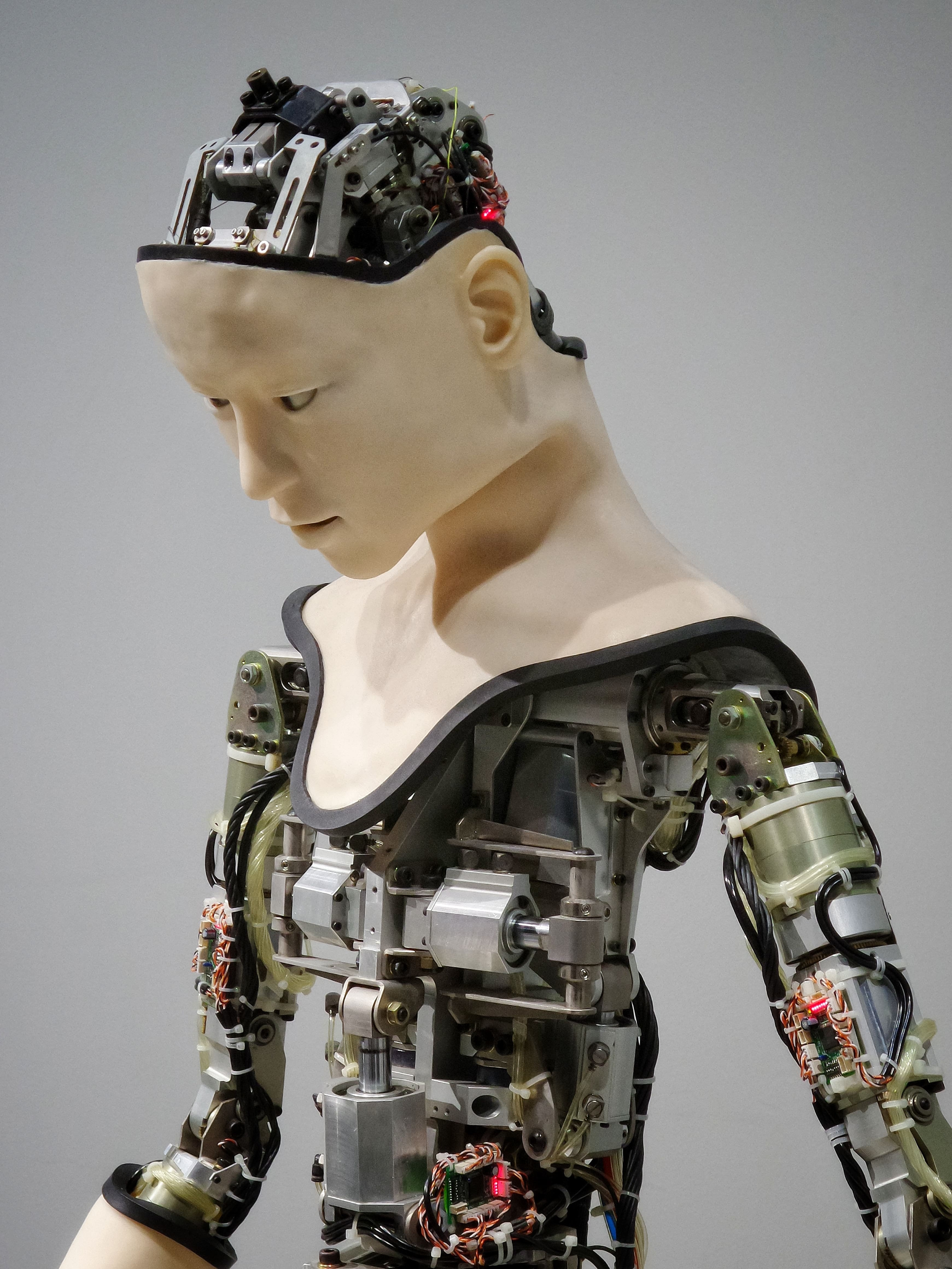
Sophia is one of the most famous lifelike robots in the world. She is an ultra-realistic humanoid robot with advanced artificial intelligence. She can hold conversations with people and has been on several press tours and has done numerous interviews where she converses with people and discusses what it is like to be her. She has even been on the Tonight Show with Jimmy Fallon. Honestly, it is pretty trippy to watch.
While the fact that she can hold intelligible conversations with people is impressive, it is even more monumental that she has citizenship. In 2017, Saudi Arabia gave Sophia citizenship, making her the first AI to be given legal personhood and human rights.[1] While this may be more of a marketing strategy for Hanson Robotics and positive publicity for Saudi Arabia, the fact remains that a robot has been given legal autonomy.
Erica
Lifelike robots are also being considered as labor options. Erica is a robot developed by roboticist, Hiroshi Ishiguro. She has lifelike skin, hair, and facial expressions. Like Sophia, she also utilizes AI to hold conversations, read, and recognize human faces. She currently has her own YouTube channel and appears on television in Japan as a news anchor.[2] While she can not move her limbs, she can move her neck and waist to turn toward people. Erica’s lifelike facial movements and ability to read and recite the news have given her a bit of celebrity status in Japan.
Sex Robots
Did you know there is a huge market for sex robots? Sex robots are lifelike, anatomically correct androids that are built for pleasure. These robots can be ordered to look and sound however the buyer wants. They can also be programmed to say specific phrases and respond in specific ways. They can also run different scenarios to simulate realistic experiences. Unfortunately, rape scenarios are available. If you are curious about sex robots, look out for my upcoming article here on GKIS.
Reborn Dolls
Reborn dolls are lifelike dolls made by artists, that usually resemble babies or toddlers. These dolls are extremely realistic and have garnered an entire subculture of fans who are dedicated to them. While they do not move, speak, or communicate in any way, the people that own them treat them as if they were real children.
Some people use these dolls for therapeutic purposes. There have been instances where mothers who have lost their babies have had lifelike dolls made in their child’s likeness to deal with their grief. They have also been used to deal with infertility, miscarriages, and depression.
Super Dollfie
Volks is an action figure/doll company that makes anatomically correct, hyper-realistic figures. If you are having a hard time imagining this, think Barbie with all the naughty bits. These figures are highly sought after by collectors and go for exorbitant prices. They are extremely customizable, and you can even buy clothing for them that is more finely detailed than most of the stuff in the average person’s closet. The attention to detail on these things is insane. All the clothing, hair, and body parts can be changed out to make the doll look however you want it to.
Possible Reasons Why People are Obsessed with Lifelike Robots and Dolls
People are curious by nature
People get lonely
People look for connection and meaning everywhere
There is no risk of rejection
Some people have social anxiety
Staying Informed and Keeping Your Family Safe
Dr. B is in a unique position to help you to learn more about the potential dangers that your family could face when engaging with the internet and technology. As a practicing psychologist, university professor, and mother, she can help you and your family safely traverse the digital world we live in.
In Dr. B’s book, Screen Time in the Mean Time, she discusses and attacks the issue of raising a family while safely integrating technology rather than fearing it. Also, you can download the free GKIS Connected Family Agreement simply by creating a GKIS account on our website home page. If you are looking for other fun and informative stories, check out the GKIS Blog. For other useful tips about how to make the internet a safer place for your family, you can get parenting and family coaching information, support, and other valuable information from the GKIS Screen Safety Essentials Course.
Thanks to CSUCI intern, Michael Watson for researching lifelike automatons and dolls.
I’m the mom psychologist who will help you GetKidsInternetSafe.
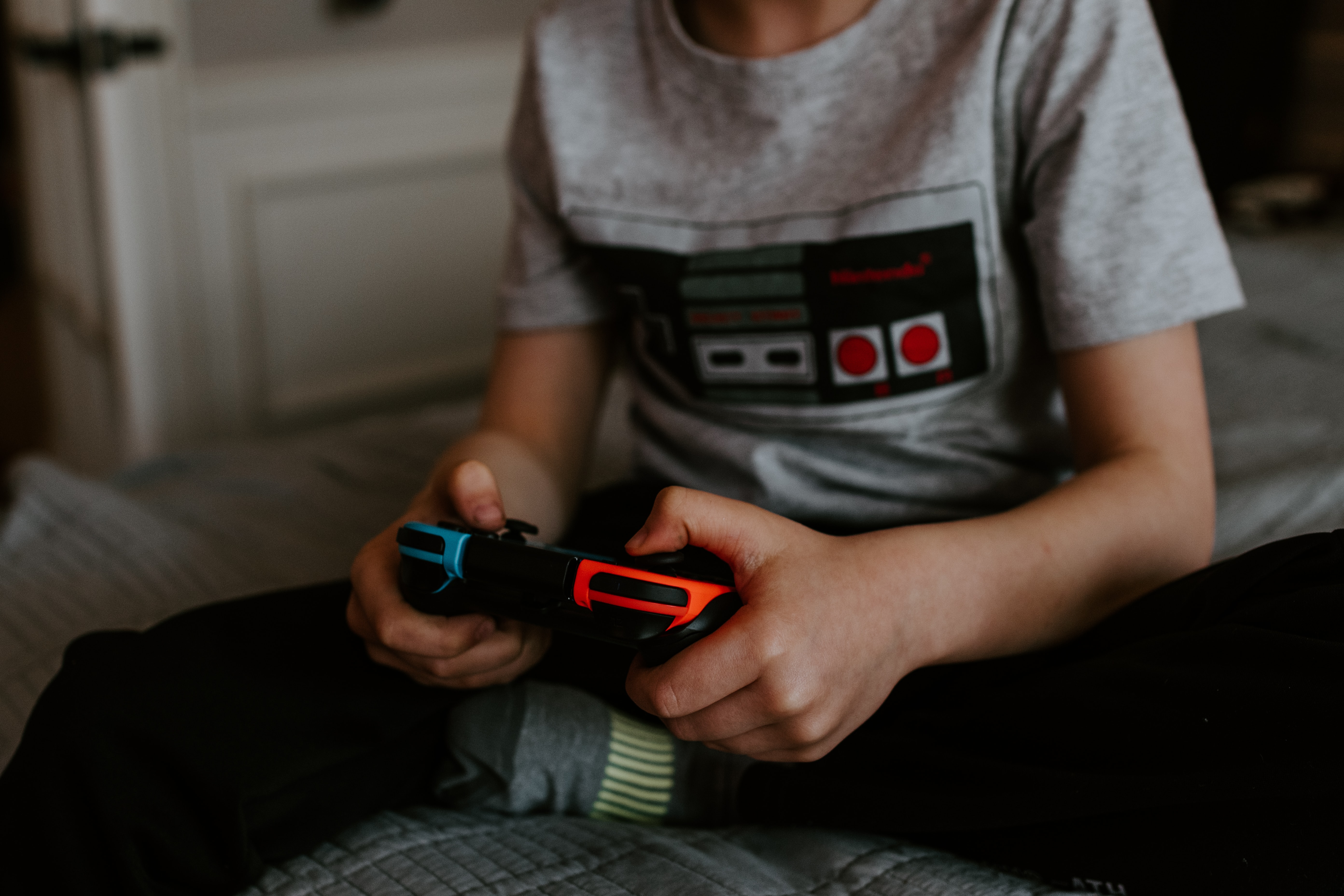
Spending time together and sharing experiences is extremely important when it comes to developing close family bonds and a sense of connectedness. While many of us think of playing board and card games to develop connectedness, many children would disagree. These days, they would generally rather play video games than spend time with their parents. While we at GKIS recommend that real-world activities should be prioritized, video games can be utilized both as a reward and a convenient way of connecting with your child. You don’t have to wait for connection until you’ve found time to plan a lavish camping trip. For every day, a video game could be just what Dr. B ordered. Today’s GKIS article covers the pros and cons of the Nintendo Switch, recommendations for games to play as a family, suggestions for appropriate games that your kid can play alone and unsupervised, and some brief tips to keep your kids safe and connected when it comes to gaming.
What is the Nintendo Switch?
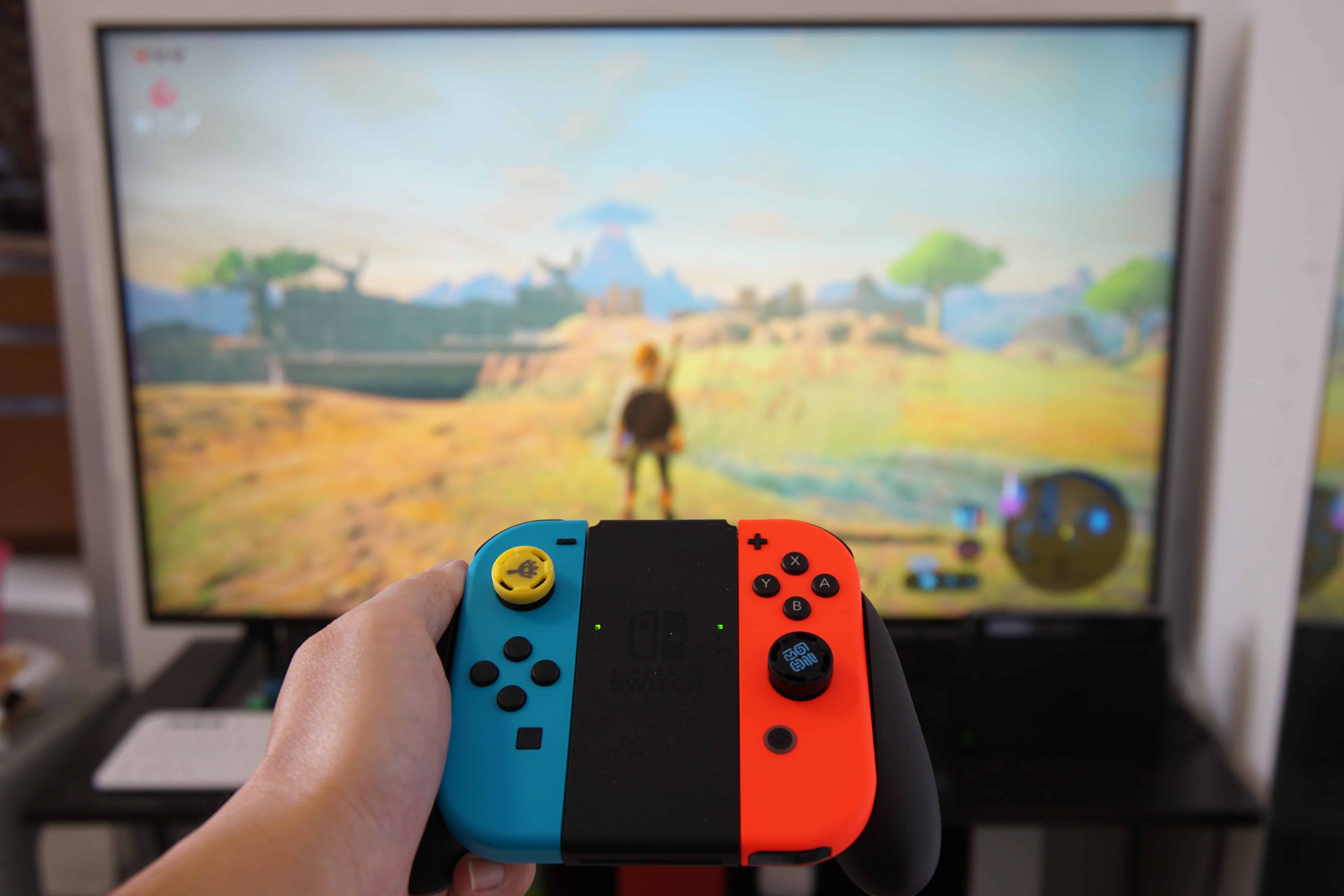
The Nintendo Switch is a video game system that was launched in 2017. The Switch is unique in that it is considered a hybrid system where the console itself can work as a tablet and the controllers can attach to the sides to be used as a portable game system. It is extremely popular and has sold over 89 million consoles worldwide.[1]
The Pros and Cons of the Nintendo Switch
Pros
The biggest advantage of the Nintendo Switch is its portability. Unlike the PlayStation and Xbox consoles, the Switch can be taken on long trips and utilized just about anywhere. Also, Nintendo heavily markets its console to families and children. Many of the games are family-friendly, perfect for family game night or for your children to play by themselves. Another big bonus is the price-point. At $299, which is at the low end for current generation consoles. In comparison, new PlayStation and Xbox consoles sell for about $1000.
Cons
The Nintendo Switch is not as technologically advanced as the current PlayStation or Xbox consoles. The graphics are not as jaw-droppingly realistic and the processing speed is not as quick. Yet, the differences are not so great that they will affect the overall gaming experience.
Nintendo Switch Games to Play as a Family
Playing video games as a family could be a great, interactive way to connect with your children. The Connected Family Course gives expert advice and strategies to create a connected home environment without having to disconnect from the internet. Here are 3 fantastic choices for Nintendo Switch multiplayer games.
Mario Kart 8 Deluxe
Super Mario Party
Super Smash Brothers Ultimate
Mario Kart 8 Deluxe
Mario Kart is an iconic series that has been around since the early 1990s, and they have not changed the formula that much. The reason that they haven’t changed the formula is because it works! It is ridiculously fun to race against your family and friends as your favorite Nintendo characters. Plus, there is a luck-based element to the game that evens out the playing field for younger less experienced players. It doesn’t matter how good someone is if they can get knocked out of first place when someone else gets the perfect power-up.
This game has an ESRB rating of “E.” meaning it has been approved for all age groups or “everyone.” Up to 4 players can play on a single Nintendo Switch. But if you have two consoles, there can be a total of 8 players at once. This is perfect for slumber parties, holidays, and other occasions where you might have a bunch of kids at home. We think this game is well designed, and the controls are intuitive making it just as fun for the parents as it is for the kids.
Super Mario Party
Super Mario Party is the ultimate family party game. Four people can play Super Mario Party on a single Nintendo Switch console. The great thing about Super Mario Party is the diversity of gameplay and modes of play. Players can play board games consisting of mini-games, which are short games that usually last under a minute. There is a total of 80 minigames that are chosen at random as characters move around the board. Because each minigame is short, kids don’t get bored easily.
On Super Mario Party, everyone competes against each other, as teams, or you can all play on the same team against the computer. Super Mario Party has an ESRB rating of E so it has been deemed appropriate for children of all age groups. This game is also great for parties and family game nights.
Super Smash Brothers Ultimate
Super Smash Brothers Ultimate can get extremely competitive, but we think it is crazy fun to play together. This game is a fighting game where everyone picks their favorite Nintendo character from a large selection of choices. The point of the game is to knock out the other players’ characters. The best part is that each character has a unique set of moves and plays completely differently than the others, so strategies for winning are almost endless.
Super Smash Brothers Ultimate has an ESRB rating of E10, so it has been approved for everyone ages 10 and up. It may not be appropriate for young children due to the cartoonish violence. As far as fighting games go, this is one of the most family-friendly options out there.
Nintendo Switch Games Your Kids Can Play Alone
There are many Nintendo Switch games to choose from. However, many have excessive violence, sexual themes, drugs, and other material that you don’t want your kids to be exposed to. If you are looking for a game for a younger child, it can be difficult to find something age-appropriate. Here are 3 games to kids can play on their own.
Luigi’s Mansion
The Legend of Zelda: Breath of the Wild
Splatoon 2
Luigi’s Mansion
Luigi’s Mansion is a fantastic single-player game that is great for all age groups and has an ESRB rating of E for Everyone. In Luigi’s Mansion, you wander around a haunted hotel sucking up goofy ghosts with a vacuum cleaner. Although there are ghosts, we don’t think they are very scary. It has a story mode made for a single player but could be played by two players (with one player playing as Luigi’s doppelganger, Gooigi). There are other online multiplayer modes to play as well.
The Legend of Zelda: Breath of the Wild
We at GKIS think Breath of the Wild is one of the best single-player Nintendo Switch games out there. In this game, your character explores an expansive and elaborately detailed world filled with almost never-ending things to do and places to explore.
This game has an ESRB rating of E10 for everyone age 10 and up due to the violence against animated monsters. The violence is very mild when compared to other games, and there is no blood or guts. For a single-player game, it has an incredible amount of replay value due to the vast number of things to do in its virtual world.
Splatoon 2
Splatoon is Nintendo’s answer to shooter-type games where none of the characters get hurt. In Splatoon 2, you play as human/squid hybrid characters and run around spraying each other with ink. Splatoon is probably the safest series of games to choose from if your kids are trying to get you to buy them a shooter.
Splatoon 2 has been rated E10 (for everyone 10 and up) due to cartoon violence, even though you are basically hitting each other’s squid characters with ink bombs, paint guns, and paint rollers. As a warning, even though Splatoon has taken out the blood and guts it still involves cartoonish gunplay. Though it is a single-player game, up to 10 players can play at the same time in one location. The downside is that each player needs their own Nintendo Switch console to play together, which would be expensive.
How To Keep Your Kids Safe Playing Video Games
Research the games before buying them
Check the ESRB ratings
Play with your children or check in on them
Talk to your children and maintain a close family bond.
To stay in the know about how to keep your kids and teens safe online, check out the Screen Safety Essentials Course. Through weekly coaching videos and other valuable resources, this program will keep you in the loop with ways to keep your family connected and safe while engaging with the internet, social media, video games, and more. The goal of this course is to provide families with the knowledge and tools to help prevent digital injury before it occurs.
Thanks to CSUCI intern, Michael Watson for researching family-friendly games for the Nintendo Switch.
I’m the mom psychologist who will help you GetKidsInternetSafe.
Imagine that you’re running late to a new class where everyone has yet to meet each other. You sit down and note that the class is already full. But something else is weird with so many people in the room…the silence. This silence has become surprisingly normal due to our generation’s favorite accessory, headphones. These days it’s common to see most people out and about plugged in and tuned out. Is this a cool convenience or a problematic habit? Check out today’s GKIS article and see what you decide.
Excessive Headphone Use
In the university that I attend, most students have headphones in place until the moment the instructor says their first word of the lecture. The only people that are talking before that are the few people who’ve already established a friend group. The truth is, I’m so in the habit of wearing my headphones the idea of joining in on a conversation is stressful. My headphones are a sort of safety blanket that saves me from feeling awkward in new social situations.
My friends agree with me. We even admit that sometimes our headphones aren’t even on when we have them in! We keep them in to discourage people from talking to us or expecting us to respond. Sometimes it’s also a cover while we listen in on other people’s conversations. Headphone use is commonly a tool to socially distance.
We at GKIS aren’t the only ones who’ve noticed this phenomenon. BloggerClaire Hubble shared her story of being a self-proclaimed “headphone addict” in a blog post. In her post, she mentions the dangers of constantly keeping your headphones in, such as not being able to hear an oncoming vehicle or people calling for you. Hubble also brings up an important guilty pleasure we’re familiar with here at GKIS, podcasts.
For those of you who are not yet addicted, podcasts are like radio shows with multiple episodes that usually follow a theme or tell a story. Fans can subscribe to a podcast and follow their favorite podcaster personalities. Hubble said she loves podcasts as a way to avoid forced small talk. She goes on to share that without her headphones, she feels anxiously disconnected and even bored. She posits that headphone may be and up-and-coming addiction.1
Dangers of Excessive Headphone Use
Psychological
In a 1994 study on the psychological effects of Walkman use, researchers predicted that portable listening devices could potentially grow to be silencing technology. Silencing technology is the social and psychological separation of individuals. This study interviewed 36 individuals and concluded an impaired ability to interact socially with prolonged device use.2
A later 2005 study measured the use of headphones and portable audio use on college students using several self-administered scales and surveys. The 2005 study also found that frequent headphones use leads to social isolation and feelings of loneliness.3
Physical
Physical damage from increased headphone use has also become a growing concern. Potential health risks include:
Ear infections
Hearing loss
Tinnitus (ringing in the ear)
Headaches
Dizziness
Pain in ear
Hyperacusis
Excessive ear wax 4
Recommended Headphone Use
How much headphone use is excessive? According to the World Health Organization (WHO), anything over an hour a day is excessive for all listening devices.[5] Rather than eliminating the accessory altogether, steps can be taken to implement safe and healthy listening for your kid on-the-go.
How to Manage Headphone Use
In her book, Screen Time in the Meantime, Dr. B offers the following recommendations to help your family unplug:
Teach netiquette skills.
Introduce screen-free zones at the dinner table and other areas where a family conversation is common.
Decide on tech blackout times, like mornings before school and bedtime.
Start a conversation on safety with our free Connected Family Screen Agreement.
Safe Kid-Friendly Alternatives
Have you heard of noise limiting headphones? Noise limiting headphones are headphones that can be set to a specific volume the consumer decides.6 Researchers have concluded that noise-limiting headphones pass the “safe” listening range set by the World Health Organization (85 decibels) and were the favorite among the kids and teens in the study who tried them out.5 This is a quick solution if you know you won’t always be able to monitor headphone use but want to limit possible hearing or distraction injuries.
Special thanks to Aroni Garcia for researching and co-writing this article. If you liked the article, and you’re interested in learning more tips on how to break this trending habit, go over to 5 Back to School Tips for the Digitally Overtasked and Disorganized Parent to learn more about how you can keep on track with managing device and media time.