Advancements in artificial intelligence technology have transformed the media we consume. These highly intelligent computer programs can create realistic-looking images from a few words, hold entire conversations, and even write cited essays. While programs like ChatGPT can give us simple answers to our questions, they can also hinder our children’s learning when they outsource their brainwork to an all-knowing robot. If you worry that your child is relying on technology a little too much, our Screen Safety Toolkit offers a resource guide so you can tighten up screen time supervision and management.
What is ChatGPT?
ChatGPT is a language processing tool that is powered by artificial intelligence (AI) technology, allowing you to have human-like conversations.[1] ChatGPT can answer one’s questions and complete various tasks from essays, to editing code, to writing emails. This software is open to the public for free, although there is also a paid subscription version with additional features.[1] Notable celebrities in technology like Elon Musk have commented on the strength of ChatGPT, stating “ChatGPT is scary good. We are not far from dangerously strong AI.”[1]
ChatGPT gets its data from textbooks, websites, and various articles which it simultaneously uses to model its language to seem more human-like.[2] This AI is well-trained on biased and unbiased data and can reproduce data with reliability, something that many other similar AI systems lack.[2]
When asked to write a sentence for this article, ChatGPT responded with, “ChatGPT is an artificial intelligence language model developed by OpenAI, based on the GPT-3 architecture. It is designed to generate natural language responses to a wide variety of prompts and questions. ChatGPT uses advanced machine learning algorithms to understand the nuances of language and generate context-sensitive responses that are often indistinguishable from those written by a human. It has a wide range of potential applications, from customer service and education to creative writing and more.”[3] How’s that for a definition?!
How are kids using ChatGPT to cheat?
While ChatGPT’s design of being able to generate natural responses to various questions and prompts can make it a helpful tool for educational and informational purposes, it also opens it up to exploitation for other purposes. A quick Google search will turn up dozens of articles on how to get ChatGPT to write your essay for you. A student at Cardiff University in Wales shared his experience with turning in two papers, one written by himself and the other written by ChatGPT.[4] The essay from ChatGPT earned him the highest grade he had ever received on an essay in his entire time in undergraduate school.[4]
College professor and TikTok user Lilmaverick3 received an essay from one of her students that had been flagged by TurnItIn.com as being 100% written by AI technology, proving that students have already started taking advantage of the AI’s skills and ability to create human-like speech.[5] The technology is still relatively new but stories just like this will likely continue.
Cheating robs children of the satisfaction of completing their own assignments and the learning experience that comes with research. It also offers a dishonest view of academic ability, which can quickly get out of hand when teachers ratchet up expectations in response.
What Parents and Educators Can Do to Prevent Cheating
Research various forms of AI detectors and run your child’s papers through flagging software, this way you can see if the paper has any elements that have been plagiarized.
Some popular flagging software includes Writer’s AI Content Detector and Content at Scale’s AI Detector. For educators, we recommend having students turn in assignments through TurnItIn.com, this checks for plagiarism as well as how much of the assignment is AI-generated content.
Sit with your child while they work on assignments to offer support as they need it, and be there before they decide to turn to AIs.
Manage smart devices during homework time using resources from our GKIS Screen Safety Toolkit.
Utilize ChatGPT in ways that allow it to be an educational tool, like writing ideas, creating to-do lists, and finding resources.
ChatGPT is a helpful tool for educational purposes when used properly. As a prompt-based language bot, it can be used to spruce up resumes or cover letters based on inputted job description data, help create outlines for papers based on inputted prompt data, and even provide recipes for weekly meals.
Promoting ChatGPT as an educational tool rather than a homework robot can prevent your child from creating an unhealthy dependence on AI software to do their work for them.
For Xgens and millennials, the internet has been a place for people to overshare through Facebook location “check-ins” and Instagram posts chronicling every detail of their latest vacations. Some Gen Z’s, in contrast, have turned casual oversharing into something much darker – publicly sharing stories of trauma for internet clout. To monitor and ensure your child is not sharing their deepest, darkest secrets on TikTok, check out our GKIS Screen Safety Essentials Course. This course provides you access to all GKIS parenting courses, agreements, and supplements to teach your kids independent resilience and good coping skills, all of which work to build a positive parent-child partnership and avoid a digital injury.
What is “trauma dumping”?
Trauma dumping is when a person overshares difficult information with another person without their consent.[1] Trauma dumping for content is done when a person constantly talks about a traumatic experience, even sometimes going so far as to recreate or reenact the traumatic incident online.[2]
Tramadumpers typically do not consider their impact on viewers and are not seeking advice.[1] The sharing often occurs in inappropriate places and times to someone who cannot understand and process someone else’s trauma.[3]
How does trauma dumping differ from venting?
Trauma dumping differs from venting because venting is the release of pent-up emotions rather than details of traumatic experiences.[2] When venting, a person is more mindful of the other person’s boundaries and how much they should share. Venting is an ordinary action people take to blow off steam, while trauma dumping is a potentially harmful action.
Why is sharing trauma for views and likes problematic?
Sharing or posting about a personal experience is not inherently wrong. But when you are sharing about it on social media often, it can become a maladaptive coping mechanism, meaning that instead of reducing the effect of a traumatic event on one’s mental health, you instead cause more harm and increase long-term stress.[4]
How Viewing Trauma Dumping Affects Viewers
The TikTok hashtags #trauma and #traumatok have a combined total of more than 22.5 billion views. As of 2023, Tiktok has 1.53 billion users, meaning that videos with the aforementioned hashtags have been viewed more times than there are users on the app.[5]
I asked a frequent TikTok user to recount her experience viewing a #traumatok video. She shared, “I was scrolling through my TikTok For You Page and saw a video a girl shared of her last conversation with her mother before her mother passed away from Covid-19. It made me feel sad, and I thought about it pretty often throughout the day. I told my friend about it later, and she said she had seen it too and it made her cry. Her dad passed away from Covid-19, and it hit home for her and reminded her of her dad’s passing. I can’t imagine seeing that kind of content as an 11-year-old or something.”
Viewers of trauma content can also inadvertently desensitize themselves. By viewing a trauma dump video and then scrolling to a happy or neutral video, they can prevent themselves from feeling the full impact of the content and thus are conditioning themselves to not adequately process traumatic content.[6] Through viewing traumatic content, viewers may inadvertently open themselves up to their own traumas. To learn more about doom-scrolling, see our GKIS article, “Doom-Scrolling: How Much Bad News Can We Take?”
What Parents Can Do
Preventing children from viewing #traumatok content is critical to ensure your child does not suffer from a digital injury.
Keep your child safe by:
Limiting and monitoring your child’s only content using our GKIS Screen Safety Toolkit. This resource helps you set parental controls and smart tools created to filter content and manage online behavior.
Keep the conversation going using our free GKIS Connected Family Agreement. By having regular discussions and co-viewing your child’s content, the learning continues both ways.
Preparing your children for social media usage through our GKIS Social Media Readiness Course. This course will help your child stay safe from digital injury and prepare them to “get social.”
Social media has forever been a hookup culture. But recently, older men are approaching young girls, for a “sugar arrangement,” a little time for a little gift. The promises of new shoes, purses, and money for a conversation can be very tempting. Once a relationship is initiated it typically gets sexual from there. Could your daughter be getting approached online by sugar daddies? To help deter your child from falling victim to this look into Social Media Readiness Training to help kids be more online aware.
What are a “sugar daddy” and a “sugar baby?”
A sugar daddy is typically an adult male who finances the lifestyle of his younger companion. The average sugar daddy is 38 years old and earns $250,000 annually.[1] His younger companion is referred to as his “sugar baby.” The sugar baby is typically expected to give up their time and sexual activities in exchange for gifts like clothes, shoes, jewelry, and a weekly allowance. Our Screen Safety Toolkit can help you track people who may unknowingly approach your child online.
Sugar Baby Cindy says she’s happy with her arrangement.
I interviewed a 26-year-old sugar baby named Cindy. She said “Not all sugar arrangements are sexual. Sometimes they just want to have someone to talk to.” Cindy says she prefers a sugar daddy-sugar baby arrangement because it takes out the guessing game for her. She said “Knowing someone wants to take care of me is a good feeling. It also takes work. You have to keep up your looks, be diverse in a lot of topics and make sure your sugar daddy is happy in return.”
How do you find your sugar daddy or sugar baby?
There are a variety of websites for two consenting adults to find this style of relationship. One of the more popular sites is SeekingArrangement. This site is for consenting adults to find someone that may be interested in a sugar arrangement. It’s much like any other dating site but specifically for sugar daddies and sugar babies. Onlyfans have also made it easier for girls to sell personal content. This is a way for sugar daddies to get an idea of who may be interested in being a sugar baby.
Unfortunately, adults use social media to proposition adolescents, persuading them to talk in exchange for money. A high school student I spoke with elaborated. “One guy offered me five hundred dollars just to talk to him.” She said she ignored his request and blocked him. Imagine how tempting money and gift offers may be to lonely or bold teens.
Cindy Details the Dangers She’s Encountered Online
Cindy said that a prospect once tried to scare her after she refused him by doxing her. He discovered who she was, her family members, and where they lived. Then he created a fake online profile and tried to out her to her family. She said that was really scary her family would respond to such intimate and potentially embarrassing information,
Cindy also shared that once while working as a camgirl on Onlyfans, a customer convinced her to do a private show in exchange for gifts from her Amazon wish list. After the show, she realized he had only screenshotted the gifts in his cart. He vanished without paying for the promised gifts.
Finally, Cindy said some men will say they want to verify you are honest and not a scam by having you send a small amount of money to their cash app with promises to make it up by paying for your services later. She said that most girls will do this thinking five dollars is a small ask in return for a big payout later. But often, the men will take the money and run.
How to Protect Your Child from Being Approached by a Sugar Daddy Online
Practice common sense parenting as we teach within our GetKidsInternetSafe Safety Essentials Course. Our four-module online course helps guide you and your family to form a closer, more cooperative relationship that facilitates safer screen use and overall psychological wellness.
Make sure your kids don’t have hidden apps and secret social media profiles using our Screen Safety Toolkit. This is a great resource for services to help you monitor apps, give you better parental control, and much more.
Make sure you and your kids know how to navigate social media safely with our Social Media Readiness Course. This easy 10-part lesson plan will not only make you feel safe but also make your kids feel more empowered.
Encourage your kids to keep their social media profiles private.
Tell your kids if money comes up in an online conversation, be wary. The person likely has sexual motives.
Trust your gut. If it doesn’t feel right it probably isn’t.
Thanks to CSUCI intern Keith Ferries for researching sugar daddies and sugar babies and authoring this article.
[1] Matthew Henry https://burst.shopify.com/photos/search?button=&q=man+at+laptop
[2] Tim Douglas https://www.pexels.com/photo/delighted-young-woman-with-bright-gift-bags-after-shopping-6567285/
[3] https://www.pexels.com/photo/a-girl-in-a-city-using-smart-phone-3768921/
[4] Andrea Piacquadio https://www.pexels.com/photo/woman-in-red-t-shirt-looking-at-her-laptop-3755761/
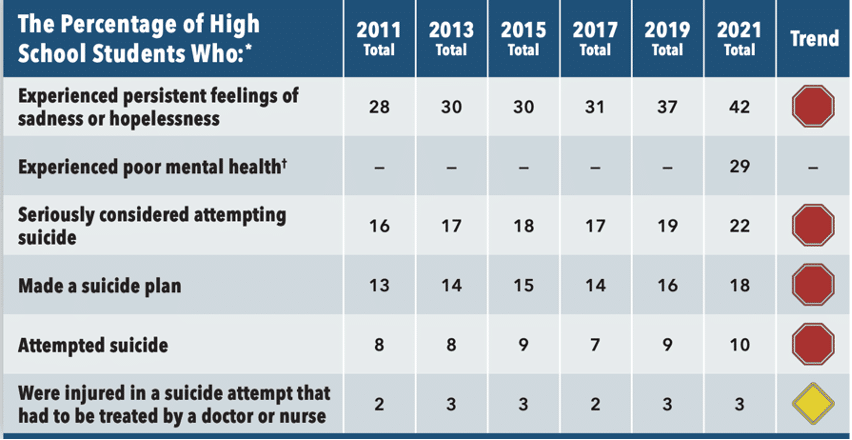
The CDC recently released its Youth Risk Behavior Survey reporting that an alarmingly high percentage of American teens, particularly girls and LGBQ+ youth, are suffering from distressing mental health symptoms. With stressors like isolation from the COVID-19 lockdowns, too much screen use, frightening news reports, increasing college pressures, increasing financial strains on families, and the compare and despair dynamics that arise from social media, kids are feeling the pressure. Child experts and advocates have called for the Biden administration to declare a youth mental health emergency and are begging schools to adopt better trauma-informed health and sex education. What are the contributors, and how can we help?
The Highlights
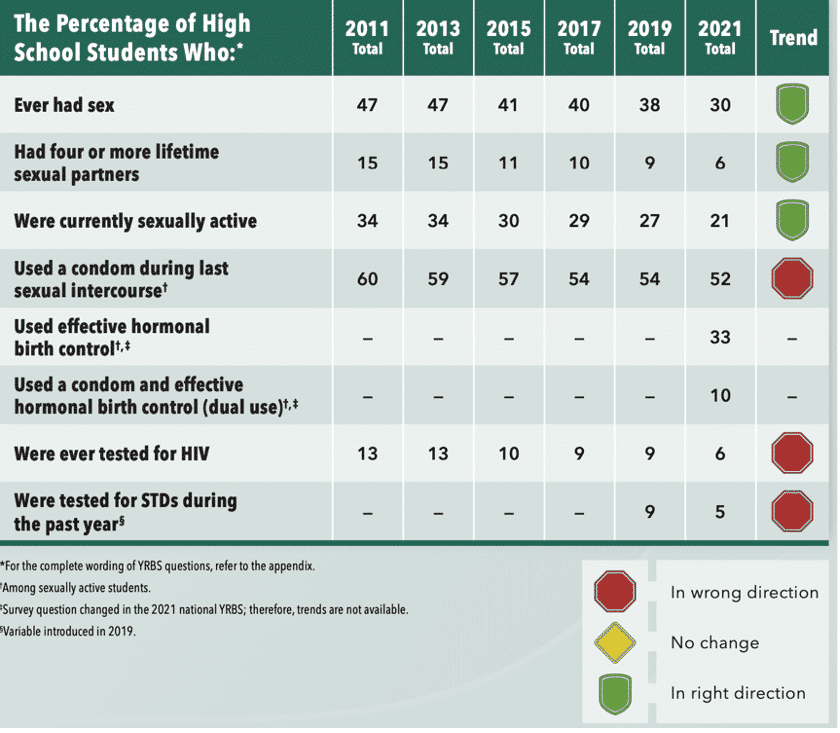
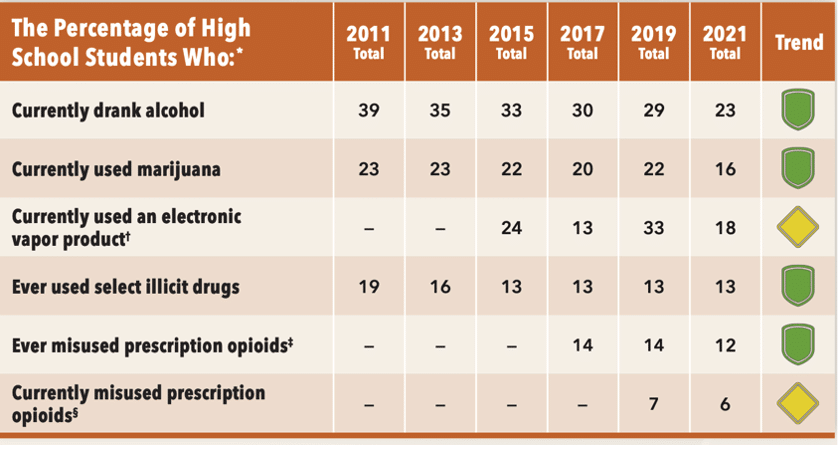
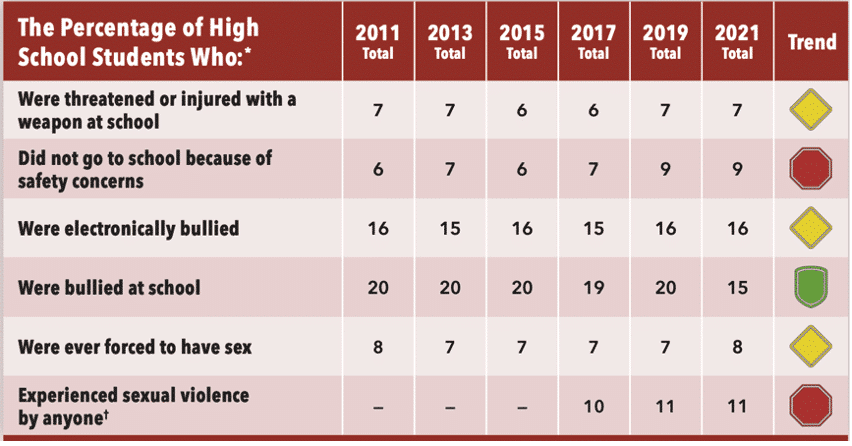
The CDC report data comes from 17,000 U.S. high school students who were surveyed in the fall of 2021 when most schools returned to in-person teaching. The good news is that overall sexual activity, substance abuse, and in-school bullying are down. The bad news is that teen safety concerns due to violence, sadness, hopelessness, and suicidality are up, especially among girls and LGBQ+ students (trans students were not identified for this survey).
Here is the Summary of Findings from The Youth Risk Behavior Survey Data Summary & Trends Report: 2011–2021
Sexual Behavior
Substance Abuse
Experiencing Violence
Mental Health and Suicidality
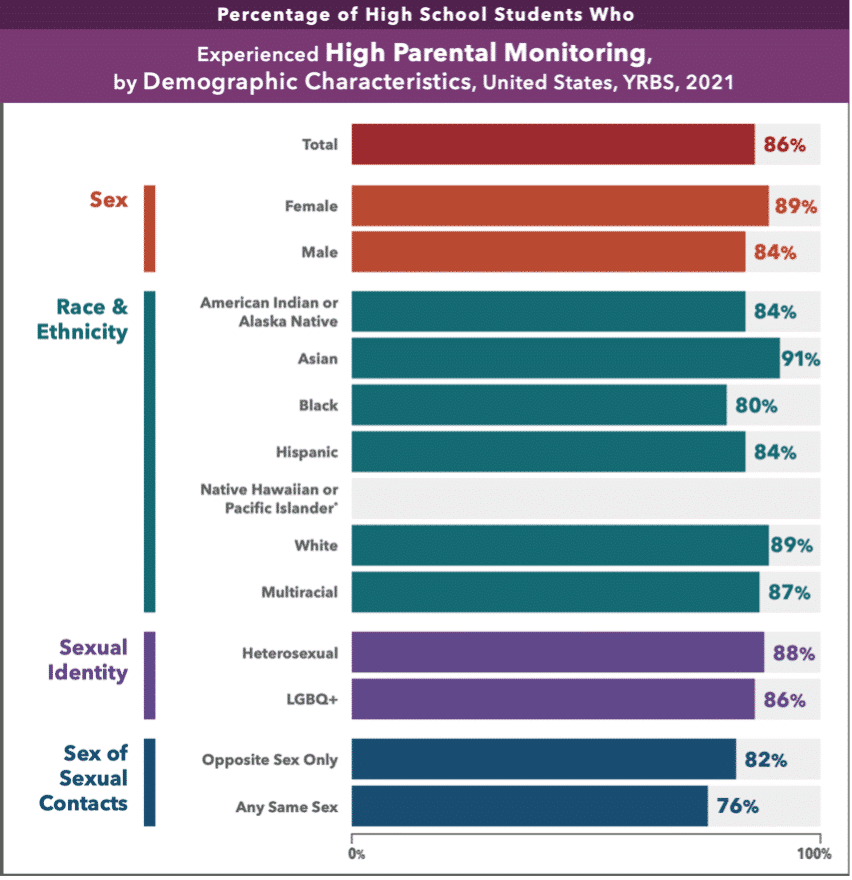
Parental Monitoring
Teen Girls
The survey suggests that nearly 3 in 5 (57%) U.S. teen girls felt so sad or hopeless that they couldn’t engage in regular activities for two weeks or more. Nearly 1 in 3 (30%) seriously considered attempting suicide—up nearly 60% from a decade ago. And 1 in 5 (18%) experienced sexual violence in the past year—up 20% since 2017.
LGBQ+ Youth
Almost 70% of LGBQ+ students said they felt persistently sad or hopeless, and 20% reported attempting suicide. Fifty-two percent of LGBQ+ teens had poor mental health symptoms in the past 30 days compared to 29% of all teens.
Possible Contributors?
It’s important to consider that the survey occurred at the end of the isolation from COVID-19. Although I am still
seeing significant fallout among kids, tweens, and teens, they have recovered somewhat from that dark and frightening time.
We must also consider that this is a survey. Without experiments where we expose one group of teens to possible causal variables (e.g., social media or isolation) and don’t expose a control group, we can’t determine what is causing the distress.
Surveys simply state and analyze subject report. It’s impossible to tell the causes from this type of data. We are left to guess with our observations and experience, forming hypotheses and looking for evidence to support them. As the Founder of GetKidsInternetSafe, a mother, university faculty member, author, and clinician who has treated kids, teens, and families for over 25 years, I have some ideas.
PHONELY: Our kids are phonely. Because we were hunters and gatherers for 90% of human existence, our brains are wired to thrive with face-to-face tribalism. Online relationships just don’t do it for us long-term.
ISOLATION: With the isolation of COVID-19, kids lost friends and confidence and regressed in their social skills.
SOCIAL MEDIA: Social media and the internet offers a constant onslaught of online ads and marketing influencers for kids and teens. This unfiltered exposure can lead to chronic fears of being judged and ridiculed as well as feelings of inadequacy and exclusion. The CDC report demonstrates that there is an epidemic of online bullying and cybersexual violence, especially toward girls and LGBTQ youth.
PARENTING: Parenting strategies have become overly protective based on anxiety and fear resulting in less child independence and more fear of failure. Plus, they spend more time online than with us. It is difficult for parents to overcome the influence of strangers and taking away all screen activities has become nearly impossible.
NEWS: Sensational and divisive news expertly and manipulatively communicates fear-inducing trends like mass shootings, climate change, and inflation. This has got most of us rattled, especially the most vulnerable among us.
FINGER-POINTING: We have tolerated and participated in an ugly, divisive climate of entitlement, bullying, and blame rather than accountability and positive action.
GROUP-THINK: The internet speaks the language of mental health – but this may result in a group-think phenomenon of looping on mental health suffering instead of increasing agency and growth.
LACK OF APPLICABLE EDUCATION: Trauma-informed, evidence-based health and sex education isn’t being offered equitably among out schools. Parents don’t want to leave this important job to schools, but they’re also not doing a great job themselves in many instances.
NOT ENOUGH MENTAL HEALTH SERVICES: There aren’t enough mental health services available to our youth.
LACK OF FAITH AND COMMUNITY: Pulling together as a loving, cooperative team is critical for kids to feel a sense of belonging and community. As our families get smaller and we have fewer extended family to offer support, our kids are left to fend for themselves.
Of course, this is not an exhaustive list. But it does summarize much of the research findings and conjecture that has surrounded these issues. There are more ideas for the list. But for the purpose of solving the problem, how can we take these stressors into consideration as we discuss possible solutions?
Considering the complexity of the question, what can we do to improve the situation? Reverse Engineer!
Reverse engineering refers to the process of looking at possible outcomes (like the causes posited above) and slowly working backward for a solution. Although this is clearly a messy mission, I watch kids regain the mental health ground they lost every day in practice. Despite what some may think, effective psychotherapy isn’t simply listening and reflecting feelings of despair. As a cognitive-behavioral therapist, I employ techniques specifically designed to facilitate positive movement forward. I’ve found that, if I set the tone and get everybody started, parents can take it from there.
Here are some tips for improving mental health and well-being at home:
As a family, negotiate a set of measurable goals and revisit them often for direction and motivation. Praise and reward movement forward and maintain and warm and encouraging tone along the way.
Use storytelling and a sense of humor to normalize failure and encourage curiosity and confidence.
Turn off the news and divisive influencers who are selling toxic ideas and products.
Reassure kids that they are capable and loved and that grit is what matters the most, far more than being attractive or innate skills.
Encourage kids to detox off their phones occasionally and engage more in real-life exploration and socialization.
Stay moderate. Avoid shaming lectures and demoralizing consequences.
Offer mindfulness, problem-solving, and communication strategies to help kids gain independence and confidence.
Offer outcome- and science-based education that empowers informed action rather than create fear.
Support parents in not personalizing child behaviors and help them set fair and reasonable limits with warmth, encouragement, and love.
Lead our kids toward post-traumatic growth rather than feelings of helplessness, hopelessness, and fear with expert mentorship, fun, and opportunity.
How can GetKidsInternetSafe help?
I founded GetKidsInternetSafe so I could be part of the prevention effort – rather than just the treatment effort. If you’re not sure where to get started, we have a comprehensive suite of tools for parents, tweens and teens, educators, paraprofessionals, and professionals who work with families and kids.
Dr. Bennett’s book, Screen Time in the Mean Time, is a comprehensive and easy-to-read parenting guide for families with kids of all ages. Available on Amazon in print, e-book, and audible!
Tighten up parental controls and monitoring with the help of our GKIS Screen Safety Toolkit. This toolkit helps to empower parents and provides them with a resource list of smart tech tools to filter, monitor, and manage online behavior.
For families with younger kids, our home setup Connected Family Course is an awesome place to start.
To help your tween or teen get prepared for safer internet use and social media, help prevent digital injury, and optimize wellness, check out our most popular course, the Social Media Readiness Course.
Want to work for screen safety as a community? We’ve thought of that too! Dr. Bennett offers live presentations and webinars for adults and kids from schools, churches, corporations, and conferences.
If you want all of our supplements and courses at a low cost for parents and kids, tweens, and teens, you’ll want our mega Screen Safety Essentials Course! This online course offers a set of four modules that will help you walk your kids through the essentials of screen safety.
I’m the mom psychologist who will help you GetKidsInternetSafe.
Fast, entertaining content seems to be the only way to hold the attention span of today’s children and teens. This becomes an issue when virality becomes more important than the content being put out or the audience who will receive it. TikTok users have realized that they can quickly create a viral video by taking Reddit stories and resharing them over clips from popular video games like Minecraft, Roblox, and Subway Surfers. Today’s article covers why this content is dangerous and how you can keep your child safe from digital injury with ourScreen Safety Toolkit.
The Popularity of Minecraft, Roblox, and Subway Surfers
Minecraft
Between 2016 and 2021, Minecraft users have risen from 40 million to 93 million with a peak of 131 million users in 2020.[1] Surveys have found that up to 54% of boys and 46% of girls aged 3 to 12 play Minecraft.[2] The popularity of Minecraft is undeniable. Take a look down any aisle of children’s clothing and you will find item after item filled with popular references from the game. Covid-19 only increased the popularity of the online game accessible on most gaming consoles, with users increasing by 14 million from 2020 to 2021.[2]
Roblox
Roblox is another popular children’s game that has bankrolled off the pandemic and increased in users over the past few years. Between 2021 and 2020, the platform added more than 146 million users to its servers. In 2016, Roblox had 30+ million users. Today they have more than 202 million monthly active users.[3]
While the average user of Minecraft is 24 years old, only 14% of Roblox users are over 25 years old. 67% of Roblox users are under 16 years old, and 54.86% of users are under 13 years old.[3] The popularity of Roblox is reflected on TikTok through a large number of Roblox fan accounts owned by young users. In fact, there have been many audio trends on the platform that are accredited to edits by Roblox users.
Subway Surfers
While less popular than Minecraft and Roblox, Subway Surfers is still the most downloaded and most-played mobile game in the app store. Between 2021 and 2022, Subway Surfers saw more than 2 times the number of downloads with 5.43 million daily users.[4] These numbers are impressive, as, unlike Minecraft and Roblox, Subway Surfers is only available for download on mobile smartphones. It is not available on any other gaming platform. While there is no available data for the average age of Subway Surfer players, the game is recommended for ages 9 and up.
All three of these games are different in their gameplay but similar in their popularity and appeal to younger audiences. Videos made with clips from these games are sure to catch the attention of a younger audience who is trying to view content related to their interests.
Harmful Reddit Content and How They Use Kids’ Games
Reddit claims on its website to be “a network of communities where people can dive into their interests, hobbies, and passions.”[5] Users post on so-called “subreddits” dedicated to topics from the general to much more specific niches.
Today there are over 2.8 million subreddits and Reddit has 52 million users daily.[6] Of their monthly users, 79% are between the ages of 18 to 34 and almost 64% of those users are men.[7] When children encounter posts from Reddit, they are viewing material often made for and by adult men, leading to some very inappropriate content.
A simple search for “Reddit stories” on TikTok will show you video after video of Reddit threads overlaid with a video of someone playing a kid’s game and read by a voiceover. The threads contain content from various subreddits like “/AmITheAsshole” but most contain inappropriate “NSFW” (Not Safe for Work) content. A scroll down the search shows video after video of content with titles like, “My mom keeps having sex with my boyfriend…” or “What do you tell your partner when you’re horny?” or “What did you not know about sex until you lost your virginity?” The last question is from a Subway Surfers video with 1.6 million likes and 13.5 million views from a user with similar content and over 55.4 thousand followers.
The creators of these videos use the popularity of these kids’ games to bring more viewers to their content and help their virality. In doing so, they are promoting sex, adult situations, and overall unsafe content. Each of these videos is followed up by hundreds or thousands of comments from young kids and teens adding their own answers to the question proposed. A quick look at commenters’ profiles revealed that half were between the ages of 13 to 17, and each was commenting on their own sexual experiences to millions of viewers.
Set up content preferences and block out video keywords or put the account on restricted mode in the settings and privacy section of TikTok.
View an account’s watch and comment history and see what content your child is consuming and interacting with.
For younger children, consider waiting before allowing them to have their own TikTok account.
When they do adopt a TikTok account, scroll together to choose what content they view and influence the algorithm that will offer content automatically.
As your child gets older, work with them to establish what they are doing and looking at on social media. Preparing them for the possibility of adult content can help them in discovering it on their own and possibly suffering a digital injury.
If you fear your child may be watching inappropriate Reddit content without your knowledge and permission, check out our GKISScreen Safety Toolkit. This toolkit helps to empower parents and provides them with smart tech tools to filter, monitor, and manage online behavior.
To protect your child, prevent digital injury, and prepare them for social media use check out our GKIS Social Media Readiness Course.
Thanks to CSUCI intern, Katherine Carroll for researching how TikTok users use Reddit content and kids’ games for views.
I’m the mom psychologist who will help you GetKidsInternetSafe.
Beauty and fashion trends have always changed with the season. But with social media, the pressures to conform have increased among adults and impact younger and younger kids. At what point do we intervene to minimize the dangerous effects that arbitrary beauty standards have on kids and teens? How do we discourage the consumption of damaging content surrounding body image? If you are concerned about the damaging content your family could be exposed to, check out our Screen Safety Essentials Course. This course provides you with the tools necessary to navigate the Internet more safely and avoid digital injury. Even better, it will bring you closer to your kids! Today’s GKIS article covers the controversies of trending body types, the damage they can do to young people, and creative ideas to keep your family safe.
Heroin chic is back!
Popularized in the early 1990s, heroin chic refers to the ideal female body type with defining features that include a very thin frame and an emaciated appearance.
In November 2022, the New York Post published an article titled ‘Bye-bye booty: Heroin chic is back,’ and it immediately sparked controversy online. The article claimed that the much thinner physique was “trendy” and celebrities like Bella Hadid and Kim Kardashian who have publicized radical weight loss sparked the recent shift in body trends.
The Shortened Lifespan of Online Trends
Media has a major impact on how we perceive ourselves and the world around us.[3] With the increasing use of social media, the lifespan of trends has drastically shortened. Instead of trends lasting for a couple of years, they now last for a couple of months. That means many women whiplash between fashion fads, radical diets, and costly beauty regimens. Just when it seems that we are making progress with body positivity, the return of heroin chic only proves that within industrialized countries such as the U.S., slender women tend to be seen as more attractive.[2]
Trends have fluctuated throughout the years, coming and going and coming back again. Before the most recent return of heroin chic was the ‘slim thick’ trend from the late 2010s. Slim thick means very curvy. It’s often only achieved through plastic surgery like breast and buttock enhancement surgery. Recently social media sites have also promoted filters that make one’s face fit the trending beauty standard. A small, upturned nose, full lips, and “fox eye” eye makeup are what are considered most attractive recently on apps such as TikTok and Instagram. Another GKIS article, Influencers Hurt Child Self-Esteem by Overusing Filters, touches on how filters that dramatically alter your face can have similar effects. Check it out to learn more.
What is the damage?
Body dissatisfaction is a major source of suffering among women of all ages.[1] The intense fluctuation of beauty standards and trends can lead to self-esteem issues, lack of motivation, depression, body dysmorphia and other eating disorders, and thoughts of suicide. All genders are at risk of becoming insecure about their physical appearance. However, the risk is higher for young girls because of rapid pubertal body change and because society has deemed a woman’s attractiveness to be integral to her self-worth and value.[1]
To avoid the potential development of body image insecurities, check out our Social Media Readiness Course. This course can help prepare your tween or teen to more safely navigate the Internet and avoid damaging content.
How can we protect our teens?
Talking with your children is one way to protect them against internalizing unrealistic trends and developing insecurities. Creating a safe space to hold conversations surrounding confidence and self-esteem can help. To help guide you through these sometimes difficult conversations, we’ve developed our free Connected Family Screen Agreement. Offered in short, easy chunks, our agreement will help you become your child’s ally when it comes to screen media and family safety.
Setting smart and justifiable parameters is also key for protection. If you are lost as to how to set up the rules and maintain cooperation, our Screen Safety Essentials Course has everything you need to be your family’s go-to expert.
Social media requires a whole new set of tools for child safety. For smart management, our Screen Safety Toolkit can help.
And for tweens and teens, our Social Media Readiness Course offers the red flags of digital injury and the psychological wellness tools that Dr. Bennett teaches in her practice. With a mastery quiz at the end of each module, you can be sure that the GKIS certification your teen earns at the end really means sometimes.
[1] Stapleton, P., Crighton, G. J., Carter, B., & Pidgeon, A. (2017). Self-esteem and body image in females: The mediating role of self-compassion and appearance contingent self-worth. The Humanistic Psychologist, 45(3), 238–257. https://doi-org.ezproxy.csuci.edu/10.1037/hum0000059
[3] Monks, H., Costello, L., Dare, J., & Reid Boyd, E. (2021). ‘We’re continually comparing ourselves to something’: Navigating body image, media, and social media ideals at the nexus of appearance, health, and wellness. Sex Roles: A Journal of Research, 84(3–4), 221–237. https://doi-org.ezproxy.csuci.edu/10.1007/s11199-020-01162-w





 Thanks to CSUCI intern, Katherine Carroll for researching ChatGPT.