Too much screen time can be harmful to our health. Findings suggest that, along with unhealthy diet and lack of exercise, increased screen time is a contributor to epidemic obesity among Americans. According to the CDC, 40% of adults and 18.5% of children in the United States are obese. Obesity increases the risk of developing other health conditions like diabetes, cancer, high blood pressure, heart disease, and stroke. But screen time isn’t all bad and can even help us get more active and track important health data. Today’s GKIS article offers recommendations for some awesome exercise apps that can help get you off the couch and on your feet for more healthy and fun fitness.
The Benefits of Exercise
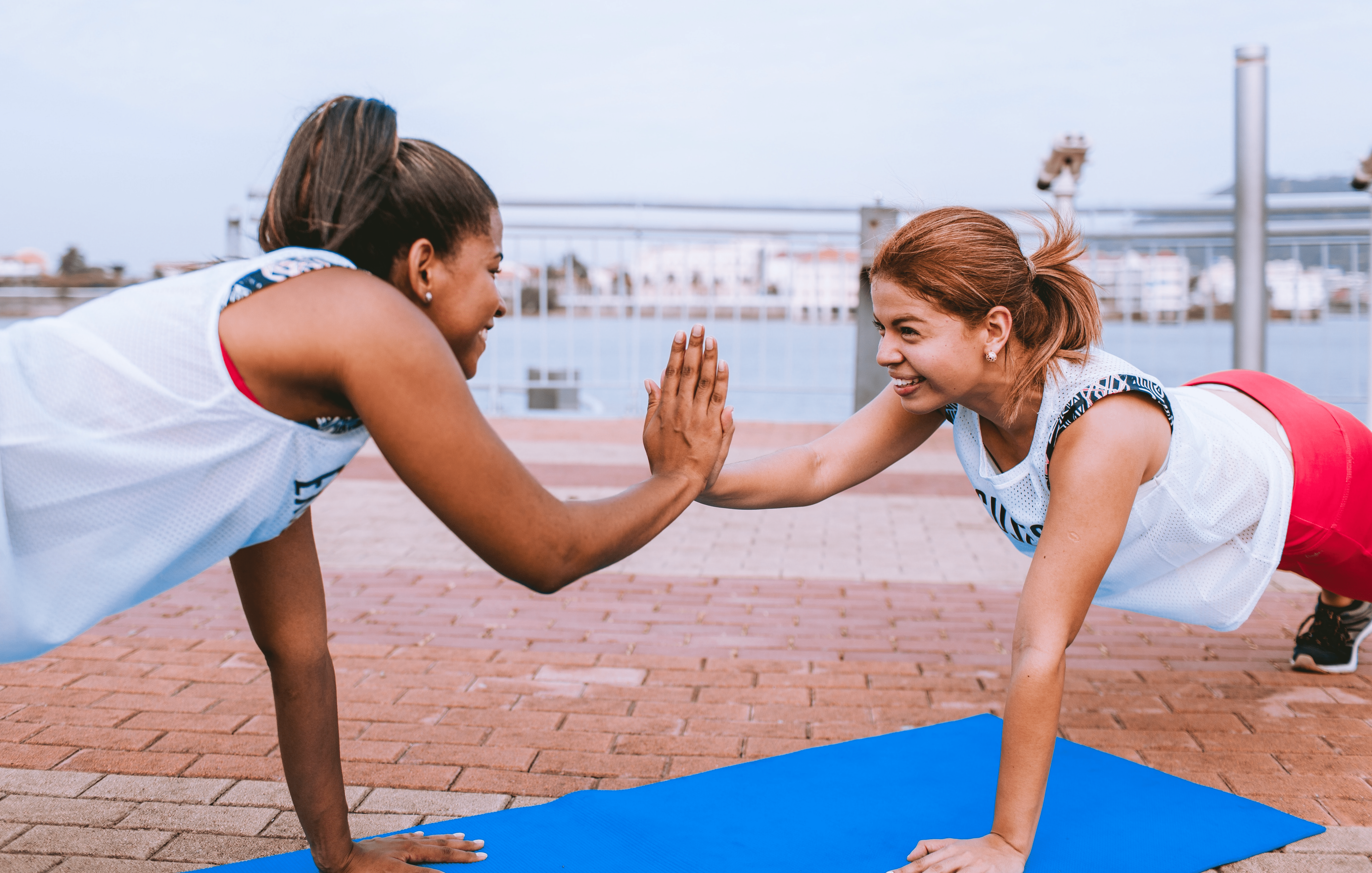
Physical fitness is proven to have many physical health and mental health benefits. Exercise can improve sleep, reduce anxiety, and lift your mood, ultimately reducing the risk of depression. With busy schedules and limited access to gyms, we too often go without exercise. Luckily, there are hundreds of apps on our smart devices that make exercise enjoyable and easier, even on a tight schedule. Also, exercising with your family is a great way to teach kids important life skills and bond and stay connected!
Trending Exercise Apps that you (and we at GKIS) Love
Nike Training Club
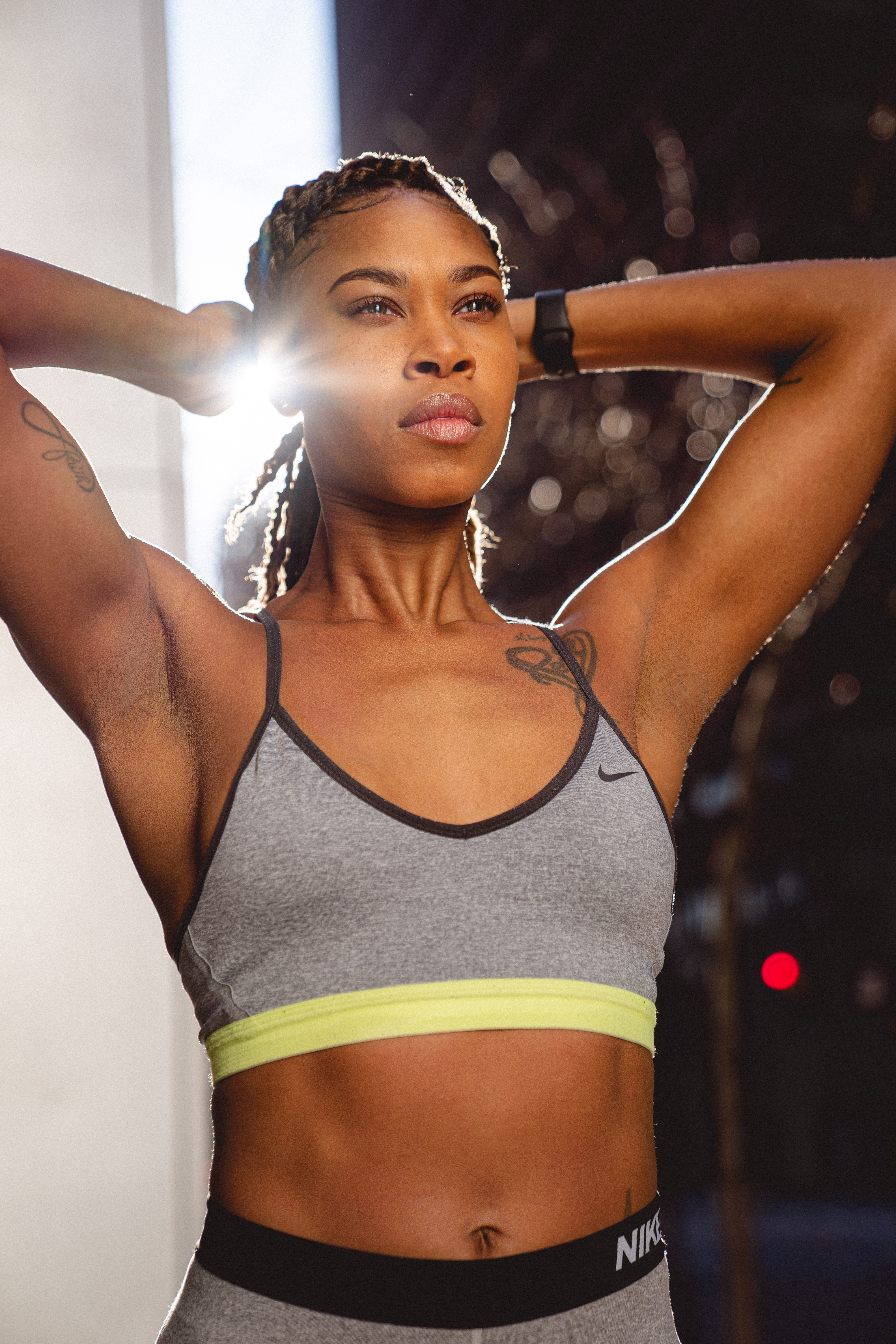
A favorite of Dr. B’s, the Nike Training Club is a great free app that you and your family can enjoy at home. This app contains over 185 workouts for all levels including high-intensity training, yoga classes, and bodyweight workouts. Little to no equipment is required for most of the workouts, so you don’t have to stress about spending money on weights.
Here are some of the collections that are great for home:
Big Workouts for Small Spaces
For the Whole Family
Boost Your Mood
Rejuvenate with Yoga
Elevate Your Game
Other Features
In addition to the free workouts, Nike Training Club offers tips for nutrition, sleep, recovery, mindset, and wellness.
I have personally used this app, and I love it. Not only is it great because it is free, but the quality of what is being offered is fantastic. This app would be a perfect addition to your families’ devices and your daily routines!
Workouts and Exercises at Home
This fitness app is perfect for families with busy schedules because the workouts take only seven minutes. The app features a cute “Lazy Monster” character that guides you through up to 30 different exercises that require no equipment. All you have to do is set aside seven minutes of your day to try it out.
Other Features
Workouts and Exercises at Home allows you to create personalized workouts and track your progress. It currently costs $3.99 a week, but it is less than a gym membership and all of the workouts are planned for you. All you have to do is open the app. Workouts and Exercises at Home is an app that will make exercising fun for you and your family.
Gymondo: Fitness and Yoga
Gymondo is a fun fitness app that contains workouts under 30 minutes long. There are a variety of workouts to choose from like yoga, strength training, HIIT, mobility, and body weight. These workouts are available at any fitness level, so this would be perfect for anyone in your family.
Other Features
Gymondo is a free app, but the premium version gives you access to over 200 workouts, healthy recipes, and a nutrition plan. The premium version is only $7 a month, which is a good deal for all that is being offered. Get your family together and try this app out for free!
Seven
Seven is a high-quality fitness app that contains seven-minute workouts. This app is family-friendly and requires no equipment. All you need is seven minutes and some open space for a great, quick workout.
Other Features
Seven features daily challenges to keep you motivated to exercise every day. You can choose between 12 different instructors that will motivate you during your workout. You can also create workouts that are personalized for you and your family.
If you join The 7 Club, you get access to all the workouts and features on the app. One month costs $10, and one year costs $60. Seven is perfect for a quick workout in the morning, afternoon between zoom classes/meetings, or in the evening. All you have to do is set aside seven minutes for you and your family to get a good workout in.
A special thank you to Alisa Araiza for researching and co-writing this article. I hope that trying these apps will bring you closer to your family and make exercising enjoyable. For other ways to stay connected with your family, take a look at Dr. Bennett’s #TogetherAtHome Family-Friendly Activity Ideas on the GKIS website.
I’m the mom psychologist who will help you GetKidsInternetSafe.
We all want easy money, especially teenagers. The website OnlyFans.com promises huge profit just by selling their uncovered bodies to men and women prowlers of the internet. This has become a phenomenon to young people all across every social media platform with advertisements to their personal accounts.
What is “OnlyFans.com?”
Onlyfans.com is a social media platform built for sharing nudes, displaying sexual actions live on a webcam, and share private calls with a person who is willing to pay extra[i]. Launched in 2016, it has sky rocketed within the last year, exceeded over 20 million registered users. This website states in terms and agreement that it is marketed for 18+ users, although users of all ages have been seen to be on this website. This website is gloried across twitter where people, young to old, gather and share tweets. It has become a popular topic amongst twitter often being marketed by users leaving their links on their profiles to get directly to their OnlyFans page.
Why create an OnlyFans account?
Money
Social media culture caters to the wealth addicted. We want to show off our nice shoes and fancy cars to prove we are somebody important. Everyone wants to get the next best thing as easy and fast as possible. The way OnlyFans has been marketed makes aspiring users believe they will become wealthy over night.
Fame
Social media influencers have become bigger than many movie stars to the younger generation. Young people crave the idea of becoming an influencer, trying to gain fame any way possible. OnlyFans offers this opportunity to users for their chance to go viral.
Sense of Empowerment
On OnlyFans, account owners charge consumers for services such as sexual actions performed, speaking sexual, and even taking nude photos of themselves to later sell all while being broadcasted live on the webcam. He/she will have to pay a fee according to the account owner’s expense. People who also own an OnlyFans account can gain a false sense of reassurance from other people by getting sucked into this idea that they are better undressed which can be harmful to a young teen who is barely developing their idea of what makes them feel confident.
Is OnlyFans.com safe?
Leaked Information
Many young girls have gotten their what was said to be confidential content leaked to the outside world by hackers who were able to get into their profiles and leak their videos [ii].
This can also help the viewers find out more information about OnlyFans webstars.
Stalking
OnlyFans.com is marketed as a safe pornographic website that has a lot of unsafe precautions when using it. There has been many cases where consumers have obsessively stalked OnlyFans account owners by directly messaging them abusive sexual content, as well as finding out where they live by stalking the specific user, searching their Twitter and Instagram to pin point exactly where they live.
Dangerous
Not only could this be a dangerous website for the user to use it could also be dangerous for the users family. There is a possibility your whole family could be put at risk if a viewer were to reveal where you lived,
Job at Risk
By using OnlyFans you could also be putting your job at risk. If your employer finds out about your use of this website they may not want their company to be represented in such way.
Family Separation
Your family may not be fond of the actions you take when using this website. This can cause there to be tension within the family which can lead to family separation.
While conducting my research on the web, I attempted to start a profile and it did not ask me for much verification regarding my age just a simple email, name, and password to create your account. I navigated through the website to get an insight on what the website looks like.
Why should parents be afraid of this website if typically its an 18+ user website?
Teens are especially prone to the appeal of looking sexy, sophisticated, and in control. OnlyFans preys on this vulnerability by glorifying this type of sex appeal which later down the line this can have a negative affect on a young teens well being by having these videos be linked to them for the rest of their time.
An eighteen year-old OnlyFan member, @xgabyv on twitter whose account is now suspended, reportedly earned $3,000 after having a profile live for only two days. Comments praising her photos included how “sexy she looked with her clothes off.”
While browsing around some more I came across a young girl, Alyssa Scott, age 18 charging for “1 on 1 screen time.” This 1 on 1 screen time meant that Alyssa Scott would be giving her services to one singular customer. She priced this at a much higher rate than her monthly subscription services doubling what she would gain from one monthly subscription.
How do I block sites like OnlyFans.com?
Our GKIS Screen Safety Toolkit [iii] offers easy navigation to parental control settings. It explains how to set up screen time management, filtering and blocking so that way your teen won’t have the ability to come across these when navigating through the web. You’ll be able to learn how to block certain social media platforms and set up alerts just in case your child does venture off into these unwanted websites. You can gain this knowledge and more all for the low cost of $37.
I would like young teens and parents to be more aware of this website and its purpose. I do not in any way have any judgement towards users who are on OnlyFans, but I do want to bring it to the attention of parents and their teenagers that this is not the only way to make money, feel confident, and have stardom. There are more teen friendly ways of doing so and I would hope that this article was able to help guide you into that direction.
A special thank you to Danielle Rivera for researching and co-writing this article. If you liked the article and you’re interested in learning more tips on how to be more aware of new websites developing that your child may be tapping into, check out our Screen Safety Toolkit on GKIS where you can learn what to look out for.
[ii] Harris, Margot (2020) Terabytes of Stolen Porn from ‘OnlyFans’ Was Leaked Online, and Creators Say It Represents a Larger Problem That Could Put Them in Danger
Psychologists have successfully treated phobias for decades. Starting with education about what anxiety is, they then offer calming tools in preparation for exposure therapy. Exposure therapy is a form of therapy where the client and therapist focus on a specific fear and attempts to relax and gain control of the situation.[1] Initially, psychologists recommend imagining the thing their client is most afraid of. Then, over time, they work toward exposures of the event in real life. This can be difficult in situations where the real-life object can’t be found (like airplanes, spiders, and injection needles). Technology now has a solution for us. It’s called Virtual Reality Exposure.
Imagine being terrified of riding in an elevator. You sit in your therapist’s office with a headset and you are virtually walking into and riding an elevator. After several sessions with your therapist and the headset, you can walk into an elevator and ride it up several stories. Virtual reality is giving people the opportunity to overcome their phobias in the comfort and safety of their therapist’s office.
What is virtual reality?
Virtual reality projects an environment that feels real, but is not. Users wear a headset that resembles large goggles that have screens instead of lenses. Once the headset is on, users can only see what is being shown on the screens. They can no longer see anything around them. There are sensors in the headset that can tell when users move their heads. The screen view moves along with users heads to make it feel real.[2]
Top 10 Phobias
Phobias are extreme reactions to certain situations. Below are the 10 most common phobias among people
Arachnophobia: Fear of spiders
Ophidiophobia: Fear of snakes
Acrophobia: Fear of heights
Aerophobia: Fear of flying
Cynophobia: Fear of dogs
Astraphobia: Fear of thunder and lightening
Trypanophobia: Fear of injections
Social Phobia: Fear of social situations
Agoraphobia: Fear of being alone in a situation or place where escape is difficult
Virtual reality (VR) exposure therapy allows the client to face the object of their phobia through the headset while being in the safety of their therapist’s office. The therapist then coaches the client to manage anxiety during virtual reality exposure.
Benefits of VR Exposure Therapy
Gradual Exposure is More Tolerable
VR exposure is less triggering than real-life exposure. It’s an awesome second step, after imaginal exposure, to get them where they need to be before direct exposures.
Saves Time and Money
Real-life exposure therapy typically requires time and money to travel to different locations to treat the phobia. With virtual reality exposure therapy, travel is not needed since the therapy takes place in the therapist’s office – convenient, inexpensive, quick, and effective.
More Confidential
Any emotion elicited from the exposures will not occur in front of anyone besides their therapist.
Therapist Has More Control
The therapist can stop the simulation if necessary for the client. The therapist could also repeat the same simulation multiple times if the client needs it.
Less Risk
The simulation can end whenever the client needs to. For example, the client can easily get off the airplane in VR but in real life, the client would have to stay on the airplane once it has started taking off.[4]
I’m the mom psychologist who will help you GetKidsInternetSafe.
Onward to more awesome parenting,
Tracy S. Bennett, Ph.D.
Mom, Clinical Psychologist, CSUCI Adjunct Faculty
GetKidsInternetSafe.com
Works Cited
[1] exposure therapy. (n.d.). Retrieved from https://medical-dictionary.thefreedictionary.com/exposure therapy
[2] Emspak, J. (2016, March 22). What Is Virtual Reality? Retrieved from https://www.livescience.com/54116-virtual-reality.html
[3] Cherry, K. (2020, January 20). How Are the Most Common Phobias or Fears Treated? Retrieved from https://www.verywellmind.com/most-common-phobias-4136563
[4] Posted by Dr. Andrew Rosen, Rosen, D. A., & Anderson, J. (2017, April 7). Virtual Reality Therapy for Phobias. Retrieved from https://centerforanxietydisorders.com/virtual-reality-therapy-for-phobias/
Surveys reveal that depression and anxiety have increased for adults, teens, and kids. It’s unclear what is causing these increases, but longer workdays and overtasked lives may be strong contributors. Increased screen time on video games, social media, video and movie streaming, texts, and emails can be super fun and even improve productivity. But too much screen time can also lead to a mental brownout, a type of anxious fatigue that we may not even recognize until it leads to mental illness. Giving up screens to avoid it simply isn’t possible for most of us. But the good news is we don’t have to! Learn how smartphone health and wellness apps can benefit you without having to give up screen time!
Mental Health
Did you know that anxiety, depression, self-harm, and suicide is up 78% among teens?[1] In fact, by some estimates 1 in 6 children between the ages of 2 and 8 have a mental, behavioral, or developmental disorder. Left untreated, child symptoms may lead to more issues in adulthood.
Among children ages 3 to 17:
4% or 6.1 million have been diagnosed with ADHD
4% or 4.5 million have been diagnosed with a behavior problem
1% or 4.4 million have been diagnosed with anxiety and
2% or 1.9 million have diagnosed with depression.
Boys are more likely than girls to experience a mental, behavioral, or developmental disorder.[2]
Social Media Impacts on Children’s Mental Health
Sleep Deprivation
Social media has various effects on mental health, especially in children. Dr. Bennett writes in her book, Screen Time in the Mean Time, says that she feels sleep deprivation is the most common contributor to mental health problems today. The blue light on devices interrupts the sleep pattern and makes it more difficult to fall asleep. Many people also develop a compulsive impulse to check notifications which can also delay sleep.[3] Teens with sleep deprivation demonstrate lower achievement motivation, more teacher-child relationship problems, a poorer academic self-concept, and poorer school performance.
Self-Comparison
Too often, we see the best sides of our friends on social media. After all, nobody wants to read about the doom and gloom of a breakup or the fight someone just had with their mother-in-law. Positive posting can lead to friends feeling left out and generally bad about how their lives don’t compare. The GKIS article The FOMO EFFECT: How Fun Friend Posts Can Lead to Clinical Anxiety provides more information on self-comparison.
Distraction
Social media poses a major risk of distractibility. We tend to go on an endless cycle of content on one social media app or we cycle between multiple social media apps. This causes us to spend a longer amount of time on social media and forget about what we are supposed to do in the “real world”.
Mental Health Apps
Dr. Bennett recommends mental health apps to her clients all of the time. Free and convenient, they can be a great addition to psychotherapy. Even for people who aren’t in treatment, mental health apps can help us get to where we want to be by offering mood-enhancing toolkits, mood monitoring, and breathing and meditation ideas.
Mental health apps are awesome in that they are convenient, inexpensive, and even free, and available. They can be a comfortable first-step to wellness prior to (or even while) seeking out help from a mental health professional.
CAUTION: Keep in mind possible privacy issues due to the risk of data breaching and the release of private information to third parties. Many psychologists also agree that the apps are not as effective as seeing a mental health professional.[4]
Here are some mental health apps that GKIS is happy to share with you:
Sanvello
Sanvello is an app that aims to help you relieve symptoms of depression or anxiety by providing a complex toolkit of strategies and resources. It allows you to record your mood and health activities in order to track patterns.
There is also a Sanvello peer community that allows users to share stories, encouragement, and personal insights on any topic. The Terms of Service state “You must be over 13 years of age to use the Services, and children under the age of 13 cannot use or register for the Services.”[5]
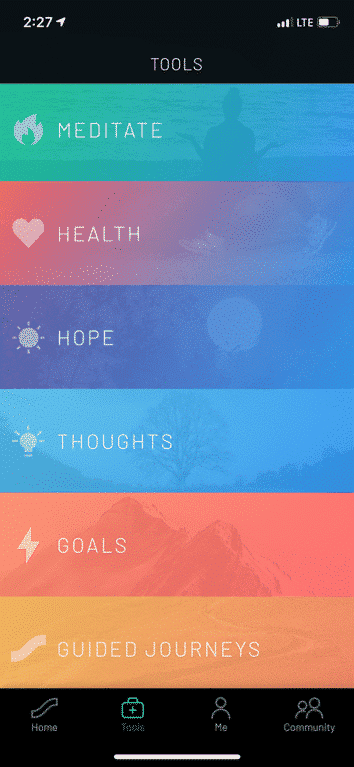
The toolkit provided by Sanvello includes:
Meditation: Lessons focus on specific topics like relaxing, mindfulness, stressful situations, and calm down.
Health: Helps you track health habits that may be affecting your moods such as exercise, drug use, and water or caffeine consumption.
Hope: This tool provides the user with a space to save photos, quotes, activities, and community content.
Thoughts: Provides a place for journaling, analyzing events that have occurred, or discovering characteristics that have contributed to a feeling.
Goals: Allows users to select a challenge such as reconnecting with a friend or saying hello to a stranger.
Guided Journeys: A series of journeys that encourage a user to accomplish something they have never done before.
Porchlight: Being There
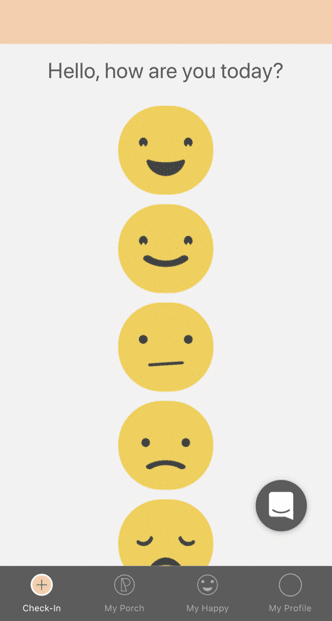
Porchlight is an app that is designed to allow loved ones to easily check in on each other’s mental health. The app prompts you to “check-in” once you enter the app where you can share your emotions using emoji. Users can connect with others which will send daily check-in notifications to the connected users. Porchlight provides prompts to check in with the connected users depending on what emotion they check in as.
Porchlight’s Terms of Service states “you must be 13 or older to register as a user or to use the app. If you are a minor, you must have your parents’ permission to donate through the App.”[6]
Headspace
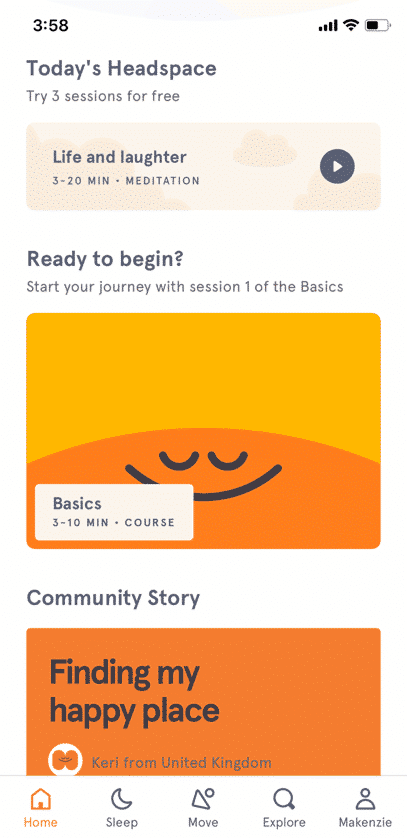
Headspace is an app that provides guided meditation exercises to help the user become healthier and happier. Headspace claims that it can increase happiness by 16% with just 10 days of use. It is also a popular app with over 60 million active users.
There are 4 main guides to mindfulness within the app:
The Wake Up: Daily short stories and small meditations to help you start your morning on a good start
Move Mode: Exercises to help strengthen mental and physical well-being
Sleep: Sleepcasts, music, and audio experiences to aid a restful night of sleep
Meditation: Teaches everyday mindfulness to help at any time of the day[7]
According to the Terms of Service for Headspace, “You must be 18 years of age, or the age of majority in your province, territory or country, to sign up as a registered user of the Products. Individuals under the age of 18, or the applicable age of majority, may utilize the Products only with the involvement and consent of a parent or legal guardian, under such person’s account and otherwise subject to these Terms.”[8]
Calm
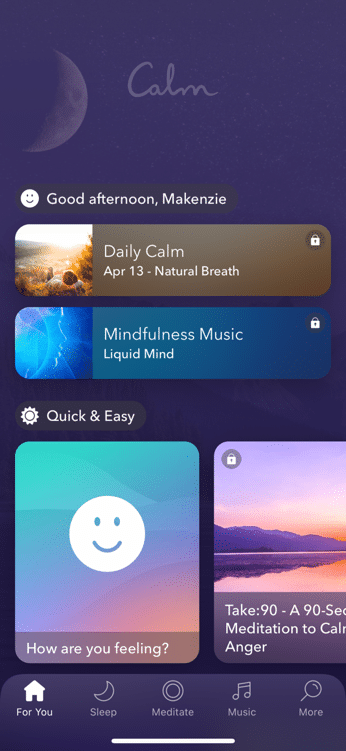
Calm is an app designed to assist users to develop healthy mental fitness, relax, and good sleep habits. The goal of the app is to introduce people to the benefits of mindfulness through meditation.
There are 6 different items of focus in the app:
Meditate: Teaches the skills of meditation
Sleep: Tools to have a restful sleep
Music: To help you relax, focus, or sleep
Body: Demonstrates mindful movement and stretching
Masterclass: Audio programs taught by experts
Scenes: Nature scenes and sounds to help relax and focus[9]
Calm’s Terms of Service state “you may only use the Services only if you are 13 years or older. To make a purchase via the Services, you must be 18 years or older and capable of forming a binding contract.”[10]
Thank you to CSUCI Intern, Makenzie Stancliff for providing insight on mental health apps. For more information about how electronics can impact our health, check out Dr. Bennett’s GKIS article, Is Wi-Fi Dangerous to Our Health?
I’m the mom psychologist who will help you GetKidsInternetSafe.
[1](n.d.). Retrieved from https://www.ajmc.com/focus-of-the-week/mental-health-issues-on-the-rise-among-adolescents-young-adults
[2]Data and Statistics on Children’s Mental Health. (2019, April 19). Retrieved from https://www.cdc.gov/childrensmentalhealth/data.html
[3] How does social media impact the mental health of young people? (2019, October 28). Retrieved from https://www.internetmatters.org/blog/2017/04/12/social-media-impact-mental-health-young-people/
[4]Technology and the Future of Mental Health Treatment. (n.d.). Retrieved from https://www.nimh.nih.gov/health/topics/technology-and-the-future-of-mental-health-treatment/index.shtml
[5]Home. (n.d.). Retrieved from https://www.sanvello.com/
[6]Being There. (n.d.). Retrieved from https://www.porchlightapp.io/
Imagine that you’re running late to a new class where everyone has yet to meet each other. You sit down and note that the class is already full. But something else is weird with so many people in the room…the silence. This silence has become surprisingly normal due to our generation’s favorite accessory, headphones. These days it’s common to see most people out and about plugged in and tuned out. Is this a cool convenience or a problematic habit? Check out today’s GKIS article and see what you decide.
Excessive Headphone Use
In the university that I attend, most students have headphones in place until the moment the instructor says their first word of the lecture. The only people that are talking before that are the few people who’ve already established a friend group. The truth is, I’m so in the habit of wearing my headphones the idea of joining in on a conversation is stressful. My headphones are a sort of safety blanket that saves me from feeling awkward in new social situations.
My friends agree with me. We even admit that sometimes our headphones aren’t even on when we have them in! We keep them in to discourage people from talking to us or expecting us to respond. Sometimes it’s also a cover while we listen in on other people’s conversations. Headphone use is commonly a tool to socially distance.
We at GKIS aren’t the only ones who’ve noticed this phenomenon. BloggerClaire Hubble shared her story of being a self-proclaimed “headphone addict” in a blog post. In her post, she mentions the dangers of constantly keeping your headphones in, such as not being able to hear an oncoming vehicle or people calling for you. Hubble also brings up an important guilty pleasure we’re familiar with here at GKIS, podcasts.
For those of you who are not yet addicted, podcasts are like radio shows with multiple episodes that usually follow a theme or tell a story. Fans can subscribe to a podcast and follow their favorite podcaster personalities. Hubble said she loves podcasts as a way to avoid forced small talk. She goes on to share that without her headphones, she feels anxiously disconnected and even bored. She posits that headphone may be and up-and-coming addiction.1
Dangers of Excessive Headphone Use
Psychological
In a 1994 study on the psychological effects of Walkman use, researchers predicted that portable listening devices could potentially grow to be silencing technology. Silencing technology is the social and psychological separation of individuals. This study interviewed 36 individuals and concluded an impaired ability to interact socially with prolonged device use.2
A later 2005 study measured the use of headphones and portable audio use on college students using several self-administered scales and surveys. The 2005 study also found that frequent headphones use leads to social isolation and feelings of loneliness.3
Physical
Physical damage from increased headphone use has also become a growing concern. Potential health risks include:
Ear infections
Hearing loss
Tinnitus (ringing in the ear)
Headaches
Dizziness
Pain in ear
Hyperacusis
Excessive ear wax 4
Recommended Headphone Use
How much headphone use is excessive? According to the World Health Organization (WHO), anything over an hour a day is excessive for all listening devices.[5] Rather than eliminating the accessory altogether, steps can be taken to implement safe and healthy listening for your kid on-the-go.
How to Manage Headphone Use
In her book, Screen Time in the Meantime, Dr. B offers the following recommendations to help your family unplug:
Teach netiquette skills.
Introduce screen-free zones at the dinner table and other areas where a family conversation is common.
Decide on tech blackout times, like mornings before school and bedtime.
Start a conversation on safety with our free Connected Family Screen Agreement.
Safe Kid-Friendly Alternatives
Have you heard of noise limiting headphones? Noise limiting headphones are headphones that can be set to a specific volume the consumer decides.6 Researchers have concluded that noise-limiting headphones pass the “safe” listening range set by the World Health Organization (85 decibels) and were the favorite among the kids and teens in the study who tried them out.5 This is a quick solution if you know you won’t always be able to monitor headphone use but want to limit possible hearing or distraction injuries.
Special thanks to Aroni Garcia for researching and co-writing this article. If you liked the article, and you’re interested in learning more tips on how to break this trending habit, go over to 5 Back to School Tips for the Digitally Overtasked and Disorganized Parent to learn more about how you can keep on track with managing device and media time.
Were you the kid with a mohawk in the 70s or pegged pants in the 80s? Maybe you were goth, a skater, or straight-edge. Teens of every era love to experiment with creative expression and explore new philosophical ideas. The internet offers boundless opportunities to follow cool influencers andchat with like-minded others in online forums. Visiting random virtual neighborhoods can be mind-expanding and fun, but it can also be dangerous. Today’s GKIS article explores the world of online counterculture. Being in-the-know is a critical element to great parenting in the digital age.
New Age Counterculture
As adolescents begin to form their unique adult identity, they look to their peer community for ideas for current, creative interests, how they want to come across, and what they want to look like. Especially attractive to teens is anything that their parents ARE NOT. Trends that are new, fresh, and totally different from parents or social norms are aptly named counterculture.[1]
The concept of countercultures isn’t new. From the anarchists in ancient Greece to the punks of the 1970s, countercultures have always influenced trends and fashion. Because kids today form multiple identities in their real world and in various virtual worlds, they love to explore constantly-evolving countercultures.
Fun Curated Online Platforms
These days, online influencers define counterculture for kids and teens. Sometimes that results in harmless fun. Other times, influencers post sexualized and edgy content designed to shock and titillate, engaging their audience in active discussions and
sharing.
To help you become familiar with counterculture online content, we’ve selected some content creators for you to check out and explore. Please keep in mind that because we don’t monitor these sites, we can’t vouch for their choices or the choices of their followers. Only you can best decide what makes sense for your family.
Kathryn Loo, Youtube username@hellobatty, posts videos about crafts, outfits, vlogs, and more. Her gothic Lolita style and love for all things Halloween inspires her viewers to embrace their interests and gives viewers ideas on how to get creative in her own spooky aesthetic.
Alex Weaver, Instagram username@thegothicalice, posts artwork, fashion, and for-sale creations in her goth/punk style. She frequently posts about books she’s interested in, artistic projects she’s working on, and creative outfits she puts together.
Aurel Nelson, Instagram username @phonyghost,is a skilled costume creator who makes amazing images of her cosplays (meaning dressing up and portraying a specific character). Some of her costumes include superheroes. She frequently collaborates with other costume makers to make a spin-off of our favorite Disney princesses as punk rock girls.
Tae-Seon Hall, Tik Tok username@tae.seonrise,posts videos on funny reactions to how her style is perceived by the public, videos of her cat, and quick makeup looks.
Mary Rose, Blog @TheEveryday Goth, creates fun posts relating to counterculture events, fun reads, fashion posts, and references to goth classics such as The Addams Family. She also links goth themed stores and songs she loves.
Pros to Trendy Counterculture Sites
Opportunities to meet and interact with like-minded fans
Exposure to creative ideas and unique ideas that may not be reflected in your community
Encourage your child to develop independent thinking
Help to build self-confidence
Their participation reflects that your child knows your home is a safe place for expression and communication
Cons to Trendy Counterculture Sites
Unregulated, unmonitored messaging boards
Exposure to inappropriate content like sexuality, vulgarity, and cyberbullying
Exposure to hate groups, radicalization, fake news, and conspiracy theories
Conversations of that may encourage serious mental health-related behaviors like depression, anxiety, eating disorders, self-harm, and suicide
Pop up ads and marketing
Tips to Navigating Counterculture Sites
Dr. B offers the following tips to protect your child from inappropriate counterculture sites
Tell your child you’ll be monitoring their online activity and explain why you think that is important.
Have an ongoing, fun, cooperative dialogue to stay current with their interests, challenge their ideas, and teach family values.
Monitor sites your child is interested in by creating a bookmark and following the creators. Be alert for subtle messaging and links to other sites and music.
Insist on having your child’s login credentials to their devices
Review browser searches
Do not save your credit card information on sites you share with your child.
GKIS Parenting & Safety Tools
If you feel overwhelmed when it comes to keeping your kids safe online, we got you covered. Our GKISScreen Safety Toolkit offers tried-and-true tech tools to help with filtering, monitoring, and managing your child’s screen activities. We also share links to apps and social media safety guides for platforms popularly used by influencers. This parenting step is what Dr. B calls protectionism in her bookScreen Time in the Mean Time, an important part of parenting in the digital age.
If you’d love a more comprehensive parenting course to help understand not only how to manage your child’s media, but how to optimize creativity and learning potential, check out our GKIS Connected Family Course. Dr. Tracy Bennett, can even personally guide you through this process during a personalizedworkshop orin-person coaching. Our GKIS CEO is passionate about assisting families with these confusing moments and is available to you at a click of a button. Coaching is an efficient, cost-efficient alternative to in-person psychotherapy. Prevention is always better than treatment.
The Overall Verdict?
The GKIS mission is to help families achieve screen sanity, prevent digital injury, and form deeper, more meaningful relationships. That includes joining them where they’re at in experimenting with identity formation. Just like punk in the 1970s and new wave in the 1980s, online counterculture helps today’s kids discover all that this crazy world has to offer.
Special thanks to Aroni Garcia for researching and co-writing this article. If you want to learn more about the mentioned social media platforms of the GKIS approved counterculture influencers, check out the GKIS parents sensible guides to Instagram and Tik Tok.
[1] CrashCourse. (2017). Cultures, Subcultures, and Countercultures: Crash Course Sociology #11. Retrieved from https://www.youtube.com/watch?v=RV50AV7-Iwc&feature=emb_title
[2]Daschuk, M. (2010). Messageboard Confessional: Online Discourse and the Production of the “Emo Kid”. Berkeley Journal of Sociology,54, 84-107. Retrieved February 6, 2020, from www.jstor.org/stable/40999937
[3] Hawkes, N. (2015). Young goths may be more vulnerable to depression and self-harm, study finds. BMJ: British Medical Journal,351. Retrieved January 31, 2020, from www.jstor.org/stable/26521636
 Nike Training Club