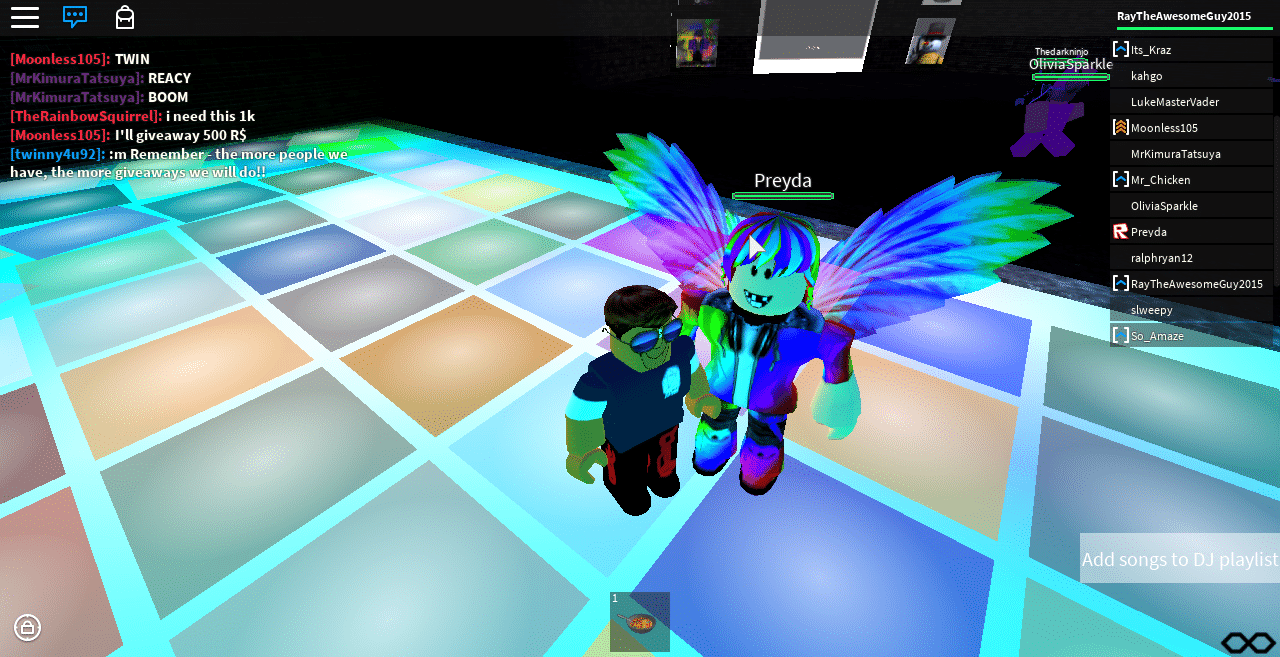
Roblox is a multiplayer entertainment platform where users can create their own 3D environments and game modes. There are literally millions of games on Roblox. Players are able to explore different worlds and interact with other players. The possibilities on Roblox are only limited by the player’s imagination, but this can also leave room for questionable activity. Roblox shares many similarities with other videogames in the same category, namely Minecraft, but there are some very distinct differences. This GKIS Sensible guide will provide you with the information you need to decide if Roblox is right for your child.
How long has Roblox been around and how popular is it?
Roblox was developed by David Baszucki and Erick Cassel and was released in 2006.[1] Through the years the popularity of Roblox has steadily been increasing. It currently boasts more than 100 million monthly players![2] There are no signs of Roblox losing popularity anytime soon.
Getting Started on Roblox
Roblox is free to download on PC, Mobile Phones, and Xbox One
Requires age of 13 or adult to help child sign up
Parental controls may be set to restrict the ways a child may play
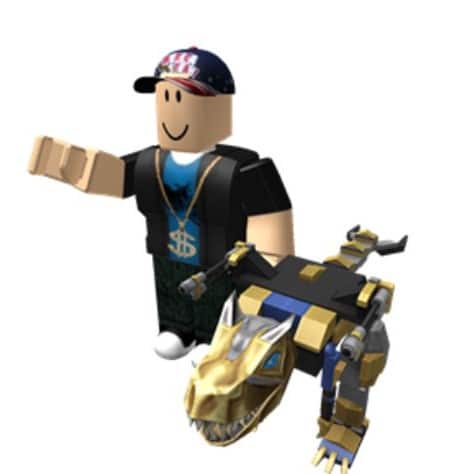
You may purchase in-game currency with real-world currency to buy in-game clothing and hairstyles for your avatar.
Features of Roblox
Roblox is always an online multiplayer game with many different game modes, most of which are created by players. The game modes on Roblox are nearly endless, so we will elaborate on some of the most popular.
Meep City
Players are given an empty house and they choose how they want to furnish it.
Players can work to earn in-game currency in order to choose how to furnish the house.
Other players can visit your house and see how you decorated it.
Murder Mystery
You’re put in a game with up to 10 different players.
One person is given the role of the murderer and is given a knife.
One person is given the role of the sheriff and is given a gun.
The sheriff must find out who the murderer is before he murders all of the other players.
Work at a Pizza Place
Players work at a pizza place.
Pizza orders come into the pizza place and the player must fulfill the order.
Once the player has fulfilled enough orders and accumulated enough money.
The player may choose to expand their pizza business and hire non-player employees to fulfill orders.
Jailbreak
You’re put into a prison with other players.
You must work together with other players to break out of prison.
The players must escape the other players who are police officers that have to chase them around the prison.
After escaping the prison, players can enter a city and continue to hide from the police officers.
Obby
Player created platformer style map.
Players must avoid obstacles and jump from one platform to another.
The objective is to reach the end of the map without dying.
After reaching the end, the player is awarded different types of items that can be utilized in that specific obby.
The Benefits of Roblox
Communication Skills
Children can build communication skills, as they are required to interact and collaborate with their fellow players.
Creativity
Players are also encouraged to showcase their creativity by putting together custom maps.
Financial Responsibility
Children may also learn a bit about financial responsibility as they must manage their in-game currency to buy items.
Parental Control
Parents have the ability to moderate how much their child plays. With the parental controls, parents can limit who can message the child, who can chat with them in the app, and who can chat with them in the games. Click Settings > Privacy to adjust parental controls. There is no voice chat, and text chat is set up so inappropriate language is not allowed.
The Risks of Roblox
Distraction
Roblox has relatively few risks involved with it. One of the main risks of Roblox is that children may choose to play it for extended periods of time.
Violence
Roblox also has some instances of violence within it such as
Shooting a player with a gun
Stabbing a player with a knife
Stranger Danger
Another noteworthy risk of Roblox is the risk of interacting with malicious strangers in-game.
Cyberbullying
Some players may choose to cyberbully others through the in-game text chat. Some of the players may be much older in real life, and it is important that children do not share personal information in-game. For further information, please take a look at the GKIS article about The Dangers of Online Multiplayer Video Games.
Roblox Safety Ideas
Stay nearby for supervision.
Play Roblox with your child.
Read and discuss Roblox’s Community Rules.
Use parental controls.
Teach your child about blocking and reporting features.
Track child playing time.
GetKidsInternetSafe rates Roblox as a yellow-light app, because while it is an amazing creative outlet for kids, the online interactions they have with strangers should be closely monitored. Team games like Roblox can be really fun, but they have their risks. If you think your tween or teen is ready to play Roblox or if they are on it and you want to optimize safety and good judgment, YOU WILL LOVE OUR GKIS Social Media Readiness Training Course. It covers social media and gaming risks to digital injury and teaches tweens and teens the psychological wellness tools they need to thrive!
Thanks to CSUCI intern, Jess Sherchan for researching robots/blocks and co-authoring this article. If you would like to learn about other games that promote creativity in kids please check out the GKIS article on The Sims!
I’m the mom psychologist who will help you GetKidsInternetSafe.
[1] Dredge, Stuart (2019) All you need to know about Roblox https://www.theguardian.com/games/2019/sep/28/roblox-guide-children-gaming-platform-developer-minecraft-fortnite
[2] Alexander, Julia (2019) Roblox surpasses Minecraft with 100 million monthly players https://www.theverge.com/2019/8/2/20752225/roblox-100-million-users-minecraft-youtube-twitch-pewdiepie-keemstar
We all want easy money, especially teenagers. The website OnlyFans.com promises huge profit just by selling their uncovered bodies to men and women prowlers of the internet. This has become a phenomenon to young people all across every social media platform with advertisements to their personal accounts.
What is “OnlyFans.com?”
Onlyfans.com is a social media platform built for sharing nudes, displaying sexual actions live on a webcam, and share private calls with a person who is willing to pay extra[i]. Launched in 2016, it has sky rocketed within the last year, exceeded over 20 million registered users. This website states in terms and agreement that it is marketed for 18+ users, although users of all ages have been seen to be on this website. This website is gloried across twitter where people, young to old, gather and share tweets. It has become a popular topic amongst twitter often being marketed by users leaving their links on their profiles to get directly to their OnlyFans page.
Why create an OnlyFans account?
Money
Social media culture caters to the wealth addicted. We want to show off our nice shoes and fancy cars to prove we are somebody important. Everyone wants to get the next best thing as easy and fast as possible. The way OnlyFans has been marketed makes aspiring users believe they will become wealthy over night.
Fame
Social media influencers have become bigger than many movie stars to the younger generation. Young people crave the idea of becoming an influencer, trying to gain fame any way possible. OnlyFans offers this opportunity to users for their chance to go viral.
Sense of Empowerment
On OnlyFans, account owners charge consumers for services such as sexual actions performed, speaking sexual, and even taking nude photos of themselves to later sell all while being broadcasted live on the webcam. He/she will have to pay a fee according to the account owner’s expense. People who also own an OnlyFans account can gain a false sense of reassurance from other people by getting sucked into this idea that they are better undressed which can be harmful to a young teen who is barely developing their idea of what makes them feel confident.
Is OnlyFans.com safe?
Leaked Information
Many young girls have gotten their what was said to be confidential content leaked to the outside world by hackers who were able to get into their profiles and leak their videos [ii].
This can also help the viewers find out more information about OnlyFans webstars.
Stalking
OnlyFans.com is marketed as a safe pornographic website that has a lot of unsafe precautions when using it. There has been many cases where consumers have obsessively stalked OnlyFans account owners by directly messaging them abusive sexual content, as well as finding out where they live by stalking the specific user, searching their Twitter and Instagram to pin point exactly where they live.
Dangerous
Not only could this be a dangerous website for the user to use it could also be dangerous for the users family. There is a possibility your whole family could be put at risk if a viewer were to reveal where you lived,
Job at Risk
By using OnlyFans you could also be putting your job at risk. If your employer finds out about your use of this website they may not want their company to be represented in such way.
Family Separation
Your family may not be fond of the actions you take when using this website. This can cause there to be tension within the family which can lead to family separation.
While conducting my research on the web, I attempted to start a profile and it did not ask me for much verification regarding my age just a simple email, name, and password to create your account. I navigated through the website to get an insight on what the website looks like.
Why should parents be afraid of this website if typically its an 18+ user website?
Teens are especially prone to the appeal of looking sexy, sophisticated, and in control. OnlyFans preys on this vulnerability by glorifying this type of sex appeal which later down the line this can have a negative affect on a young teens well being by having these videos be linked to them for the rest of their time.
An eighteen year-old OnlyFan member, @xgabyv on twitter whose account is now suspended, reportedly earned $3,000 after having a profile live for only two days. Comments praising her photos included how “sexy she looked with her clothes off.”
While browsing around some more I came across a young girl, Alyssa Scott, age 18 charging for “1 on 1 screen time.” This 1 on 1 screen time meant that Alyssa Scott would be giving her services to one singular customer. She priced this at a much higher rate than her monthly subscription services doubling what she would gain from one monthly subscription.
How do I block sites like OnlyFans.com?
Our GKIS Screen Safety Toolkit [iii] offers easy navigation to parental control settings. It explains how to set up screen time management, filtering and blocking so that way your teen won’t have the ability to come across these when navigating through the web. You’ll be able to learn how to block certain social media platforms and set up alerts just in case your child does venture off into these unwanted websites. You can gain this knowledge and more all for the low cost of $37.
I would like young teens and parents to be more aware of this website and its purpose. I do not in any way have any judgement towards users who are on OnlyFans, but I do want to bring it to the attention of parents and their teenagers that this is not the only way to make money, feel confident, and have stardom. There are more teen friendly ways of doing so and I would hope that this article was able to help guide you into that direction.
A special thank you to Danielle Rivera for researching and co-writing this article. If you liked the article and you’re interested in learning more tips on how to be more aware of new websites developing that your child may be tapping into, check out our Screen Safety Toolkit on GKIS where you can learn what to look out for.
[ii] Harris, Margot (2020) Terabytes of Stolen Porn from ‘OnlyFans’ Was Leaked Online, and Creators Say It Represents a Larger Problem That Could Put Them in Danger
Shallow and manipulative influencers, the toxic culture of materialism and vanity, vulgarity, pranks, and violence have earned YouTube a mixed reputation when it comes to acting in the best interest of young users. Parents talk of wanting to ban it, but they also recognize the benefits it can have on their kids. Plus, kids LOVE it! Beyond the questionable content, the platform offers opportunities for creativity, education, socialization, and entertainment that is safe for young audiences. Many popular influencers create content with their younger audience in mind, censoring their language and actively selecting appropriate topics. Join us in this exploration of some child-and-teen-friendly YouTube creators and their potential to inspire children to explore the world beyond their screens.
YouTube as a Source of Educational Inspiration
With channels featuring art, technology, beauty, music, or the environment, YouTube offers millions of opportunities to explore. Many online communities have gained popularity over the last few years, including those centered around makeup, comedy, cooking, DIY projects, dance, and video games. Shows like Bill Nye the Science Guy and Sesame Street produce videos to educate children about the wonders of the world. Many even inspire kids to explore their interests and experience the potential in the offscreen world around them.
If you haven’t yet allowed your kids access to a browser or haven’t yet put solid safe screen parameters in place, Dr. B is here to help. For help with home setup and sensible rules, you’ll love our GKIS Connected Family Course. For tech tool tips and referrals, our GKIS Screen Safety Toolkit is the course you need. If online courses are still new to you or you just can’t find the time to take one, Dr. B also offers one-to-one coaching for effortless implementation. At the click of a button, she can set up a video or phone call to help you get started. You’re not in this alone anymore. GKIS and Dr B are here to help.
Child-Friendly YouTube Influencers Your Whole Family Can Enjoy
Baking on YouTube
Like the Food Network, a large food-focused community on YouTube has become popular. One popular creator in this community is YouTuber Rosanna Pansino, a creator known for her baking videos. With over 11 million subscribers, Rosanna has the largest baking channel on YouTube and rose to fame with her recipes for making baked goods with various themes based on pop culture. Rosanna has a charming, energetic, and bubbly personality, and provides detailed instructions for her videos. Her content is classified as safe for children and teens. She does not use inappropriate language and is transparent about advertised products that sponsor her content.
Beauty on YouTube
In the beauty community, makeup artist Tati Westbrook is well known for her makeup looks and makeup reviews. Westbrook’s channel, with over 9 million subscribers, publishes videos mainly reviewing various makeup brands and products. Tati has a calm, soft personality and gives detailed and honest reviews and recommendations on the products she discusses. Tati makes sure to put disclaimers in her videos if a personal bias is present in reviews to be as transparent as she can to her viewers. Her content is suggested for older viewers, as there may occasionally be language and topics not suited for young children. Westbrook does promote her personal brand of beauty and wellness products on her channel.
Education through YouTube
In the educational community, the YouTube channel Crash Course, with over 10 million subscribers, has been used by students and teachers as an educational aid to learning different academic subjects. This channel, created by brothers John and Hank Green, produces videos covering various topics in subjects such as math, science, history, psychology, chemistry, and more. Videos are designed to be entertaining and educational and to help new learners better understand the subjects covered. Due to the topics they cover, some of the videos could discuss sexual or violent information not suitable for all ages.
Sports and Humor
YouTube team Dude Perfect, with almost 50 million subscribers, are best known for trick shot videos, or videos where they attempt challenging sports moves that require significant skill and luck to achieve. We at GKIS love how they inspire children to go play outside to reproduce incredible sports tricks of their own. We didn’t see evidence of inappropriate language, and they appear to disclose which of their videos are sponsored.
Gaming and Education
The Game Theorists YouTube channel is unique for creating content discussing different video game theories using research and reasoning. The creator of this channel, who goes by MatPat, has gained over 12 million subscribers by discussing his video game theories using humorous narrations, quality graphics, and his energetic and animated personality. Many of the games covered are popular among kids, such as Minecraft, Five Nights at Freddy’s, Pokémon, and Super Mario Brothers. This creator does occasionally use offensive language. Also, some of the games covered by this channel may have violent and frightening plots not suitable for children. This channel appears to disclose which content is sponsored.
Wilderness Survival on YouTube
YouTube channel Primitive Technology produces videos on how to build in nature for survival without utilizing modern technology. This channel, with over 10 million subscribers, is unique in the sense that it does not provide verbal narration. All instructions and commentary are provided in the closed captions of the video. The videos on this channel are characterized by still frames showing the environment around the creator, with audio of calm nature sounds. The closed captions give detailed descriptions of the materials used, such as the different plant species shown in videos, and give easy instructions for how to build the materials shown. Given that there is no narration in these videos, there is no explicit language or content on this channel. There are currently no identified sponsors, only advertisements for the creator’s book shown after videos.
Dr. Bennett’s Current Fav YouTube Channel
When I presented my idea for this article to our GKIS intern team, Dr. Bennett raved about her current favorite YouTube channel Liziqi. With over 8.96 million subscribers, this 29-year-old Chinese YouTube celebrity is known for creating fascinating food and handicraft preparation videos. Beautifully shot to soothing music, incredibly hardworking and talented Liziqi can be viewed wandering gracefully through the forests and countryside of Pingwu, Mianyang, Sichuan planting and harvesting corn, rice, and cotton (among other things), making handicrafts like colorful weaved clothing and baskets, and creating expertly staged traditional Chinese food. Once you get started watching, it’s easy to be mesmerized.
Although we are excited to share our awesome child-friendly YouTube finds, many of these creators have hours of videos that we did not sample. Please watch and decide for yourself the appropriateness of the creators on this list for your unique child.
How Can You Select and Curate Content for Your Child?
To further protect your child against harmful videos, especially for young children, consider downloading the YouTube Kids app. This version of YouTube was created to show the most family-friendly content offered on YouTube [i]. The app allows parents to have more control over what kind of videos they want to be suggested to their child and gives more options to block certain videos, creators, turn off the search options, and more to protect your child from inappropriate content [1].
If you decide to continue using the regular YouTube app, there are certain settings that can help protect your child from harmful content. In YouTube’s settings, there is a “Restricted Mode” option, which helps hide inappropriate content flagged by users [2]. You can also turn off the “Search” option for YouTube so your child cannot search for inappropriate videos, and can only view content suggested to them or posted by creators they have subscribed to.
With a little time, cooperation, and creativity, you too can explore and discover family-friendly YouTube channels to share. While there are good reasons to be vigilant of the dangers of YouTube, it’s important to remember the positive aspects too.
Thanks to Alexandra Rosas-Ruiz for her research and help with writing this article. Along with the creators listed above, there are many new creators and communities rising to fame on YouTube. Want to know what makes them so popular? Check out GKIS article, “Why Are YouTube Celebrities So Popular?”
I’m the mom psychologist who will help you GetKidsInternetSafe.
Imagine that you’re running late to a new class where everyone has yet to meet each other. You sit down and note that the class is already full. But something else is weird with so many people in the room…the silence. This silence has become surprisingly normal due to our generation’s favorite accessory, headphones. These days it’s common to see most people out and about plugged in and tuned out. Is this a cool convenience or a problematic habit? Check out today’s GKIS article and see what you decide.
Excessive Headphone Use
In the university that I attend, most students have headphones in place until the moment the instructor says their first word of the lecture. The only people that are talking before that are the few people who’ve already established a friend group. The truth is, I’m so in the habit of wearing my headphones the idea of joining in on a conversation is stressful. My headphones are a sort of safety blanket that saves me from feeling awkward in new social situations.
My friends agree with me. We even admit that sometimes our headphones aren’t even on when we have them in! We keep them in to discourage people from talking to us or expecting us to respond. Sometimes it’s also a cover while we listen in on other people’s conversations. Headphone use is commonly a tool to socially distance.
We at GKIS aren’t the only ones who’ve noticed this phenomenon. BloggerClaire Hubble shared her story of being a self-proclaimed “headphone addict” in a blog post. In her post, she mentions the dangers of constantly keeping your headphones in, such as not being able to hear an oncoming vehicle or people calling for you. Hubble also brings up an important guilty pleasure we’re familiar with here at GKIS, podcasts.
For those of you who are not yet addicted, podcasts are like radio shows with multiple episodes that usually follow a theme or tell a story. Fans can subscribe to a podcast and follow their favorite podcaster personalities. Hubble said she loves podcasts as a way to avoid forced small talk. She goes on to share that without her headphones, she feels anxiously disconnected and even bored. She posits that headphone may be and up-and-coming addiction.1
Dangers of Excessive Headphone Use
Psychological
In a 1994 study on the psychological effects of Walkman use, researchers predicted that portable listening devices could potentially grow to be silencing technology. Silencing technology is the social and psychological separation of individuals. This study interviewed 36 individuals and concluded an impaired ability to interact socially with prolonged device use.2
A later 2005 study measured the use of headphones and portable audio use on college students using several self-administered scales and surveys. The 2005 study also found that frequent headphones use leads to social isolation and feelings of loneliness.3
Physical
Physical damage from increased headphone use has also become a growing concern. Potential health risks include:
Ear infections
Hearing loss
Tinnitus (ringing in the ear)
Headaches
Dizziness
Pain in ear
Hyperacusis
Excessive ear wax 4
Recommended Headphone Use
How much headphone use is excessive? According to the World Health Organization (WHO), anything over an hour a day is excessive for all listening devices.[5] Rather than eliminating the accessory altogether, steps can be taken to implement safe and healthy listening for your kid on-the-go.
How to Manage Headphone Use
In her book, Screen Time in the Meantime, Dr. B offers the following recommendations to help your family unplug:
Teach netiquette skills.
Introduce screen-free zones at the dinner table and other areas where a family conversation is common.
Decide on tech blackout times, like mornings before school and bedtime.
Start a conversation on safety with our free Connected Family Screen Agreement.
Safe Kid-Friendly Alternatives
Have you heard of noise limiting headphones? Noise limiting headphones are headphones that can be set to a specific volume the consumer decides.6 Researchers have concluded that noise-limiting headphones pass the “safe” listening range set by the World Health Organization (85 decibels) and were the favorite among the kids and teens in the study who tried them out.5 This is a quick solution if you know you won’t always be able to monitor headphone use but want to limit possible hearing or distraction injuries.
Special thanks to Aroni Garcia for researching and co-writing this article. If you liked the article, and you’re interested in learning more tips on how to break this trending habit, go over to 5 Back to School Tips for the Digitally Overtasked and Disorganized Parent to learn more about how you can keep on track with managing device and media time.
Full disclosure, when Facebook’s Messenger Kids (MK) first came out in 2017, I was skeptical. As a GKIS screen safety expert, I published an article accusing Facebook of branding our kids and introducing them to the world of social media too young. Soon after, Facebook’s Head of Global Safety contacted me to let me in on some things I hadn’t thought about. She said that they’d done the research and found that kids were already using their parents’ messaging apps whether we liked it or not. To increase safety and offer parent management and kid-friendly features, they decided to trial Messenger Kids. They also offered me a volunteer spot on their Youth Advisory Committee for ongoing input. Since I joined in 2017, I’ve enjoyed a monthly collaborative call with about 25 other child development experts from over the world. Messenger Kids has benefitted from some of the most respected experts in the business, including Sesame Street, The Fred Rogers Institute, and the Yale Center for Emotional Intelligence, among many others. Do you want a safe way for your child to message and video chat with friends and family? This GKIS Sensible Guide offers you the information you need to make a competent decision about whether Messenger Kids makes sense for your family.
What is Messenger Kids?
Messenger Kids is a video conferencing app for kids that was released by Facebook in 2017. It was created as a safe alternative to Facebook’s Instant Message.
How old is old enough for adoption?
Messenger Kids is designed for kids ages 6 to 12 as a safe, parent-managed way for children to video chat and message with friends and family.
After downloading the app, you will be prompted to complete the following:
Log into your Facebook account
Once logged in, you will be prompted to enter your child’s name and their birth date.
After the account is created, you will be shown a list of other Messenger Kids accounts, as well as Facebook accounts to add to your child’s friend list.
Add a second parent or guardian who would be able to manage the account as well.
Set a code that your child can give out to their friends which would request your permission to be a contact.
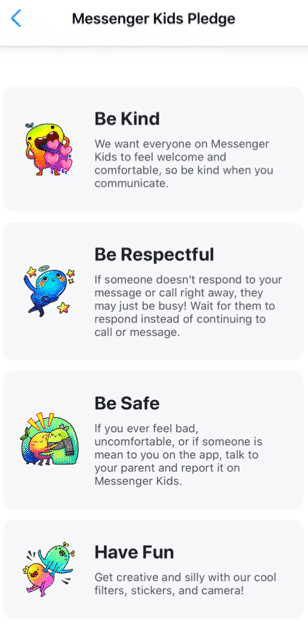
After you have completed all the above steps, your child will be prompted to add a photo of themselves, set a color to decorate the app, and complete “missions” to get to know the functions of the app. Your child will be prompted to read the Messenger Kids Pledge to be kind, be respectful, be safe, and have fun.[i]
What are the main features?
A parent dashboard that displays your child’s activities, contacts, and controls
Provide education to the child about new control features
Blocking a user allows the user to remain in the contact list, but the child will not be able to have individual conversations with that user
The child can use photo filters to send images to their contacts and to video chat
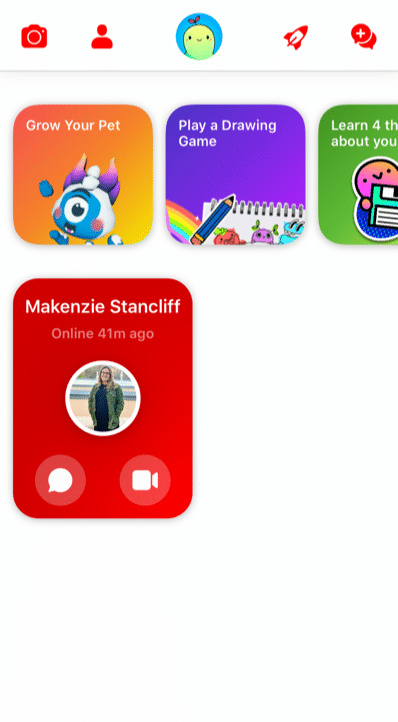
There are several “missions” the child can complete
Grow a pet
Play a drawing game
Learn 4 things about your information
Add a friend
Take a funny photo
Create a group
The Parent Dashboard
Because Facebook gets feedback from kids, parents, and child development experts, Messenger Kids is always changing for the better. For example, the updated parent dashboard is where you can see all of your child’s latest activities, contacts, and controls at a glance in one place. It also shows you
who and what content your child has reported or blocked and why,
a list of recent chats and calls (including how frequently your child is chatting/calling and with whom),
an image gallery of all the images and videos exchanged by your child and their contacts (including whether exchanged in a group).
User Education for Kids
Facebook has also thought through Kids’ digital literacy and privacy needs by notifying child users of the new parental control features in a Data Transparency Flow. Kids are prompted to go through this education with a push notification. It’s also available in the “mission” section of the app for kids. New users engage with this education during the registration process. They’ll get important basic information about how their personal data is used and shared when they use Messenger Kids – a great first step to cyber awareness and privacy issues in general.
Because child friendships need a healthy pause here and there, Facebook has also made blocking easier to use and less permanent. Before, if a child blocked someone, they were automatically removed as a contact. Now when a kid blocks someone, they won’t be able to communicate in a 1:1 chat, but they’ll remain contacts and still be able to be in group chats together. This allows kids to leave or stop individual interactions they no longer want while not having to leave group environments they may share with that contact. The child is always warned when they return to or start a group chat that contains a blocked contact that they have the option to continue to the chat, leave the group, or cancel joining the chat.
What are the privacy and safety options?
There is no minimum age of use outlined in the apps privacy policy. Facebook has a detailed list of what features they collect while using the app on their privacy policy. Here are a few of the features collected while using the app:
Facebook has recently added more controls. In the controls tab, you can see which device your child is logged into on MK, when your child last used MK on those devices and enables you to log your child out of selected devices. Parents also have the ability to remove and report any of these images and videos from the same Dashboard (doing so will remove that content from the child’s thread and notify them that you removed it).
As long as parents stay on top of who’s being friended and the information that is being exchanged, there are few risks associated with using Messenger Kids. The parent has the ability to control what the child can and cannot do as well as who they contact. Parents can also see what has been shared (and deleted).
However, any messaging app has its risks, especially when kids are involved. Here are a few we at GKIS thought you may want to consider
Your child and their friends may post inappropriately or impulsively
Cyberbullying between known contacts, like exclusion.
Too much access to friends and screens (of course, parents can schedule the use and use the sleep feature).
Your child is exposed to the Facebook brand, just as they are other popular American brands like Coca-Cola, Harley Davidson, and Budweiser.
Because parents have so much management opportunity and kids love the socializing, GetKidsInternetSafe rates Messenger Kids as a green-light app. We also love that Messenger Kids offers educational information that helps kids make better decisions with friends onscreen.
Thank you to CSUCI intern Makenzie Stancliff for co-authoring this article. For more information on keeping your child safe on social media, check out the Get Kids Internet Safe Screen Safety Toolkit. Be sure to add Messenger Kids on to the free GKIS Connected Family Agreement as “appropriate.”
I’m the mom psychologist who will help you GetKidsInternetSafe.
[i] Introducing Messenger Kids, a New App For Families to Connect. (2019, November 7). Retrieved from https://about.fb.com/news/2017/12/introducing-messenger-kids-a-new-app-for-families-to-connect/
[ii] (n.d.). Retrieved from https://www.facebook.com/legal/messengerkids/privacypolicy?version=2020
TikTok is a trendy, popular social media app that is controversial amongst parents. On the one hand, explicit language, attention-seeking trends, and cyberbullying on the app give TikTok the potential to be harmful. But kids and teens love it, anxious to join and follow the latest trends, memes, and creators. Like every app, it is important to consider the potential benefits TikTok can offer, not just the dangers. Many TikTok creators take advantage of the app’s popularity to provide inspiration and education to its adolescent audience. If you’ve decided to allow your teens access to TikTok, GKIS has identified some influencers your family may enjoy.
Who’s on TikTok?
Like YouTube and other social media platforms, TikTok users form communities based on popular trends like cooking, makeup, education, and wildlife. While we don’t think of apps like TikTok as a learning resource, many TikTok creators have dedicated their page to making teen-friendly, educational videos that can help your teen learn new things in a fun, accessible way.
Before You Start
As we mentioned in our GKIS Sensible Parents Guide to Tik Tok, it is recommended that kids be over the age of 13 before using TikTok due to its explicit language and content. Also, we strongly advise that you implement our free GKIS Connected Family Agreement before you allow your child a mobile device. With two versions available for kids and teens, our agreement spells out just what you should cover to help keep you family members safer online. All you have to do to get your free agreement delivered directly to your email by entering your name and email address on the GKIS home page. No purchase necessary and, if it’s not for you, you can unsubscribe at any time.
Meet Our Favorite Creators
For this article, we tried to find creators who have a relatively clean act for a teen audience. Please review these creators and decide for yourself whether they are good fits for your family.
Cooking
In the cooking community, creator @salt_to_taste has amassed over 1 million followers with his cooking videos and recipes. With easy recipes made with everyday ingredients and simple directions, this page is a great place for teens to get inspired to start experimenting in the kitchen. Salt to Taste makes a variety of foods, from snacks to smoothies to simple American and East Asian dishes. This creator has been active for almost a year and has been recently nominated for a Shorty Award in the food category. This creator does not seem to use inappropriate language and does not seem to do sponsorships.
Makeup
In the makeup community, creator @mariasgoldenmakeup is known for her bold eye looks and makeup tutorials. Though fairly new to TikTok, Maria has already gained over 61,000 followers with videos showing how she achieves her beautiful makeup looks as well as the products she uses to achieve them. Maria’s page can offer inspiration for teens who want to try their hand at makeup and achieve specific looks. Her looks can be used for everyday makeup and special occasions. She has done some sponsored posts but is transparent about what products are being advertised, using the hashtag #ad to indicate a sponsorship.
Nutrition
In the educational community, there are a few creators who have gained popularity for their educational TikToks in various subjects. In nutritional education, creator @sarahgracemeck, with over 149,000 followers, creates educational TikToks correcting various health myths and promoting tips on healthy eating. In our culture, we are obsessed with being thin and restricting what we eat, and this message unfortunately gets pushed on teens the most. Sarah does a great job using her background as a dietician to spread the message of healthy eating in a nonjudgmental, positive way. Sarah is passionate about spreading accurate information and debunking various unhealthy dieting trends and myths. It does not seem that Sarah offers sponsored content.
Science
In science education, creator @chemteacherphil is a popular user with a background as a high school chemistry teacher. Phillip has amassed over 1.3 million followers on TikTok with his videos exhibiting different chemical reactions and explaining their processes. The reactions he creates in his videos are fascinating to watch, and the information he gives can be useful to any high school student taking a chemistry class. Phillip does not seem to use explicit language or audios in his videos or do sponsorships.
Language
In language education, creator @fresajapomex is a popular multilingual creator who publishes videos in Spanish. With over 2.5 million followers, this creator does a variety of content from vlogs to comedy skits to food reviews. This creator, who goes by Sony on TikTok, has an energetic and kind personality and has a great sense of humor. Her parents are Mexican and Japanese, and therefore she speaks both languages as well as English. As a former Spanish student, one of the ways I improved my Spanish skills was consuming media in my target language. Sony’s content can be a great tool to help your teens improve their skills in a different language in a fun way. Sony does not seem to do sponsored content.
Wildlife
In the wildlife community, The Urban Rescue Ranch, the organization behind the page @ostrichplug, recently joined TikTok in an effort to show the work they do raising animals in an urban area. Their content shows their workers handling a variety of animals like frogs, possums, ostriches, pigs, and most recently, chickens. The creators often include their animals in fun, comedic skits and do frequent updates on the development of a few of their younger animals. This is a fun page for teens to view the different responsibilities of owning animals, and may even be inspired to go volunteer for an organization like the Urban Rescue Ranch themselves. This page does not seem to use any explicit language or audios and also does not seem to do sponsorships.
Fun with Coffee
Lastly, a popular creator among GKIS interns is @morgandrinkscoffee. Morgan is a college student who works as a barista for her local coffee shop, and she has gained over 2.2 million followers since joining in 2019. Her content mainly consists of the work she does as a barista, showing how she makes certain drinks, her day to day responsibilities, and some funny skits on her experience in the food industries. For teens who may be experiencing their first jobs in food services, Morgan’s content can show that it’s possible to enjoy the work that you do, but it also lets teens have a laugh at some of the shared struggles most of us have faced while working in customer services. Morgan is transparent in her sponsorships, labeling her sponsored content with the hashtag #ad.
Making TikTok Safer
As discussed in our previous TikTok article, it can be difficult to control the content suggested by the TikTok algorithm. But with careful decisions on who you allow your teen to follow, TikTok will suggest better, safer content that teens will love and parents can trust. Though it’s important to be cautious of the dangers of TikTok, with a little research, finding teen-friendly creators can help make the app safer and more fun for everyone.
Thanks to Alexandra Rosas-Ruiz for her research and help with writing this article. Want to learn more about how to manage the risks of the internet for your teen? Check out Dr. Bennett’s latest book, “Screen Time in the Meantime.” With a quick read (or listen because it is also offered in audio), you can learn creative, sensible, and family-tested parenting strategies to help protect your teen both online and offline.
I’m the mom psychologist who will help you GetKidsInternetSafe.
Onward to More Awesome Parenting,
Tracy S. Bennett, Ph.D.
Mom, Clinical Psychologist, CSUCI Adjunct Faculty