Now that I’m an “older” working mom, I love to share offline and online organization hacks and efficiency grabs that have saved me through the years. These organizational techniques were the difference between frazzled and peaceful at our house. With the overtasked lives we lead, most of us are guilty of brain fades and frantic searches while yelling and scolding overwhelmed kids. Even if you set up only one or two of these ideas, it may be the difference between fun family mornings versus a school day launched with tears and resentment.
Unclutter study spaces by setting up customized, distraction-free workspaces in niches and corners for each kid.
Kids in my practice often complain that the kitchen table is too distracting to get homework done quickly and neatly. The psychological research agrees. Studies reveal that fractured attention leads to irritability, wasted time, and poor grades. To optimize learning, set up a quiet corner office for each child. All it takes is a willingness and clever organization ideas and fresh accessories. Check out my GKIS Connected Family Online Course for a detailed blueprint for creating award-winning maker spaces with awesome Pinterest DIY ideas. A customized works station is a compelling magnet to get your kids creating in 3-dimensional space as a complement to screen learning. Ergonomic, body-healthy setups in the place of slouching on beds and couches avoid repetitive stress injuries to the neck, back, wrists, and hands.
Avoid missed soccer practices and study deadlines by setting up a digital family calendar.
Family schedules are chaos! Streamline communication and scheduling by color-coding child activities and setting up Family Share on Apple’s Family Calendar, Google’s Calendar, or Microsoft’s Outlook. Each member can share calendared activities and set up automatic reminders. Shared organization at a glance!
Just as you throw out old clothes your kids have grown out of, it’s also important to declutter digital spaces.
Schedule a fresh-start fall family meeting where everybody gathers with their mobile screen devices to trash apps and games they have grown out of.
Revisit (or grab) your free GKIS Connected Family Screen Agreement at GetKidsInternetSafe.com. This will help you set sensible rules like a digital curfew and create screen-free zones – including bedrooms and bathrooms.
Finally, teach cybersecurity measures from my Cybersecurity Red Flags Supplement. New this fall, you and your family members can tweak bad habits so don’t fall victim to bad actors online.
Cleanse social media profiles with an eye toward future reputation.
If your tween or teen is on social media already, you know the time-suck risks during school time. Help them sort out the necessary from the unnecessary by helping them avoid the bio-hack elements designed to capture their attention.
Consider limiting teens to only one or two social media apps to decrease wasted time due to mindless browsing and compulsive checking.
Insist that apps with visual notifications be on the second swipe screen on smartphones. That way they won’t get distracted by little red notifications and, instead, can batch their check-in times as research suggests is best.
And finally, delete old posted photos and unnecessary personal information from social media history. Sharing real-time with friends on a private profile is fun, but do you really want somebody lurking through your past photo-by-photo? Point out that other parents, relatives, teachers, coaches, future employers, and even college app administrators may be forming impressions based on your digital footprint. So instead of having an online resume populated by off-color jokes and sexualized photos, create a flattering stream of artistic works, philanthropic activities, sports activities, and fun friend and family time. A progressive, balanced, healthy life looks beautiful online – and may help you get a college placement or dream job instead of hinder it!
Reboot your Screen Safety Toolkit.
Each developmental stage offers unique online safety challenges. For example, little kids are best accommodated in a walled digital garden like YouTube Kids, and older kids need a little more digital space to explore and create. To parent well in the digital age, you need specially-selected free and third-party software tools to help you filter and block inappropriate content, set time-limits, monitor online activity use, remotely pause or offer rewards, and even locate and track the driving activities of your teen. If you get overwhelmed or need help figuring it all out, check out my GKIS Screen Safety Toolkit for tips, product recommendations, links to ISP and social media app safety guides, and free digital learning tools for best academic performance.
There you have it! Five quick and easy parenting hacks that will launch the school year with fun and success. Just as I recommend shoes live by the front door so you are not always searching, digital folders and organization tools will keep you dialed-in in your virtual life. Most importantly, set a peaceful intention with a six-second exhale for positivity and fun each morning before you enter the family’s living space. Parents must actively define the heart of the home. If we start the morning with a smile and warmth, our kids emotionally synch and return the joy. Soak in every chaotic and blissful moment!
I’m the mom psychologist who will help you GetKidsInternetSafe.
Also, if you are a local Southern Californian and need a little TLC to get started on your screen safety/fun parenting plan, join me for a morning of pampering and friendship.
Yesterday in response to the El Paso and Dayton mass shootings, President Trump stated, “We must stop the glorification of violence in our society. This includes the gruesome and grisly video games that are now commonplace. It is too easy today for troubled youth to surround themselves with a culture that celebrates violence. We must stop or substantially reduce this and it has to begin immediately.” In response, #videogamesarenottoblame started trending on social media. Talk show hosts came out in force stating that there are no research studies linking video games to mass shootings and youth in other countries play video games, yet they do not have mass shootings like America. Consistent with their argument, as video game playing has gone up, juvenile delinquency has gone down. Even Trump’s own 2018 school safety commission produced recommendations that do not support yesterday’s statement. But as founder of GetKidsInternetSafe, I’m behind the President on this one that the on-demand violent entertainment that proliferates American culture deserves serious discussion. Of course, video games are not the sole cause of hate crimes, nor is the research clean about video games causing violence. But that doesn’t mean it isn’t a contributing factor (among many) to making troubled people vulnerable to radicalization online.
In the wake of 31 additional innocent lives lost to senseless gun violence at the hands of extremists, we can all agree that we have reached a crisis point in the United States. The horrific violence of recent hate crimes demand that our leaders act with moral clarity and urgency of action. But they need our support to get this done. They cannot act decisively if everybody gets hysterical and arm-chair quarterbacks every statement of action. Instead of emotional one-sided arguments, let’s think through some of his points about violent entertainment and video games. After all, our kids are at virtual war several hours a day. It is common sense to consider that this may have negative impact on some of them…especially the psychologically vulnerable.
Violence for Profit: Passive Viewing of Television and Video
The United States has long been criticized as the dominant creator and celebrator of violent entertainment. Chalk it up to our fierce protection of the right to bear arms or our thirst for thrilling content, more and more Americans are fans of violent sports, television, movies, and video games. As adults gobble up violent content for entertainment, our children are too often exposed to violence early and often with little regard to the damage it may cause. Everybody is doing it. Right? Right. Yet it has been widely demonstrated that viewing screen violence, passively and interactively, causes aggressive and hostile behavior in children and adults. However, not everybody who watches violent TV or plays violent video games acts aggressively. How much is too much for children who are vulnerable due to immature brains?
First, we must accept that not all screen time is equal. Screen viewing can be passive (watching television and videos) or interactive (screen touch and video games). In regard to passive viewing of violent screen content, the American Psychological Association Council Policy Manual on Violence in Mass Media (1994) concludes from decades of research that there is correlative and causal risk. It specifically states:
On the basis of over 30 years of research and a sizeable number of experimental and field investigations, viewing mass media violence leads to increases in aggressive attitudes, values, and behavior, particularly in children, and has a long-lasting effect on behavior and personality, including criminal behavior;[i],[ii],[iii]
Viewing violence desensitizes the viewer to violence, resulting in calloused attitudes regarding violence toward others and a decreased likelihood to take action on behalf of a victim when violence occurs;[iv]
Viewing violence increases viewers’ tendencies for becoming involved with, or exposing themselves to, violence;
Viewing violence increases fear of becoming a victim of violence, with a resultant increase in self-protective behaviors and mistrust of others; and
Many children’s television programs and films contain some form of violence, and children’s access to adult-oriented media violence is increasing as a result of new technological advances.
These conclusions are particularly troubling when one considers that, despite these findings existing for decades, the Internet and screen technology has exploded access to on demand violent content for all ages. The younger the child, the more time viewed, and the intensity and applicability of the content, the more potential developmental impact. Research demonstrates that children who have not yet started talking are affected by screen viewing in ways parents cannot recognize and that impact changes month-to-month, year-to-year. Furthermore, even kids as young as infants who view alongside an older sibling or a parent may still be negatively affected by inappropriate content.
Violence for Profit: Gaming and Interactive Screen Use
All parents want their children to succeed and live happy lives. We’ve generally accepted that screens are part of it. But parents often wonder, how much impact does violent gaming content have on psychological process? Too often we are seeing school shooters reference violent video games in their pre-attack manifestos. Do we have anything to worry about?
The five main video game play genres include action, role-playing, simulation, strategy, and sports. Gaming ranges in content and interactivity from simple puzzle games to complex massive multiplayer online role-playing games (MMORPGs). In MMORPGs, a large number of people play online together as developed characters in complex, online lands with shared goals in real time. Platforms for gaming include smartphones, tablets, handheld gaming devices, computers, gaming consoles, and the developing market of virtual reality (wearable devices with sensors like a helmet, goggles, and gloves where users can “interact” with a three-dimensional environment) and augmented reality (computer-generated images superimposed on the player’s view of the real world, resulting in a realistic composite of real and virtual life).
Other new, immersive auditory and visual adjunct technologies include transmedia storytelling (story content presented across multiple platforms and formats using digital technology), mini-games (video games contained within video games), chrono- and geolocation (identifying the time and location of players), and object linking (embedded links that lead the player to sequential digital locations). With multibillions of dollars earned each year from the gaming market, gamevertising has also become increasingly prevalent. This means that games are being expertly designed for product placement and with manipulative neuropsychological principals built in to ensure that gamers stay online and spend more money.
Beyond education and entertainment, benefits that can be gained from playing video games include improvements in visual-spatial capabilities, reaction times, attention span, ability to process multiple target objects, and detail orientation,[v] as well as improved visual short-term memory, mental rotation, tracking, and toggling between tasks.[vi] Video games can also help with anxiety and mood and improve relaxation and improve problem solving, strategy building, goal setting, and cooperation with others.
Video games also have vocational applicability and can be customized for specific tasks, such as orienting and motivating employees, providing health care benefits like exercise or illness care, or teaching specialized skills like performing surgery or sporting ability.[vii] Some gamers compete in profitable e-sport tournaments in person and online, while others learn computer programming skills that can be marketable as a career specialty. Mastery of video games provides opportunity for increased confidence, social connection and networking, and self-esteem. Social benefits are particularly valuable for players who may be isolated by geographic remoteness or physical or mental disability.
Along with benefits come risks. Ninety-seven percent of teens play video games, and more than 85% of video games have violent content.[viii] As with all complex psychological phenomena, different effects happen in different situations with different people. Thus, issues like content, time spent playing, and player vulnerabilities due to family life or mental health must be taken into account when considering effect.[ix]This makes for messy factors to control for quality research and controversial opinions about the risks of violent video games.
Meta-analytic reviews of research have found that violent video games can cause aggressive behavior, aggressive thinking styles, and aggressive mood, as well as decreased empathy and prosocial behavior. In regard to the effect of violent video games on children, teens, and adults, the American Psychological Association Council Policy Manual Resolution on Violent Video Games (2015) concludes:
A convergence of research findings across multiple methods and multiple samples with multiple types of measurements demonstrates the association between violent video game use and both increases in aggressive behavior, aggressive affect, aggressive cognitions and decreases in prosocial behavior, empathy, and moral engagement;
All existing quantitative reviews of the violent video game literature have found a direct association between violent video game use and aggressive outcomes;
This body of research, including laboratory experiments that examine effects over short time spans following experimental manipulations and observational longitudinal studies lasting more than two years, demonstrates that these effects persist over at least some time spans;
Research suggests that the relation between violent video game use and increased aggressive outcomes remains after considering other known risk factors associated with aggressive outcomes;
Although the number of studies directly examining the association between the amount of violent video game use and amount of change in adverse outcomes is still limited, existing research suggests that higher amounts of exposure are associated with higher levels of aggression and other adverse outcomes;
Research demonstrates these effects are for children older than 10 years, adolescents, and young adults, but very little research has included children younger than 10 years;
Research has not adequately examined whether the association between violent video game use and aggressive outcomes differs for males and females;
Research has not adequately included samples representative of the current population demographics;
Research has not sufficiently examined the potential moderator effects of ethnicity, socioeconomic status, or culture; and
Many factors are known to be risk factors for increased aggressive behavior, aggressive cognition and aggressive affect, and reduced prosocial behavior, empathy and moral engagement, and violent video game use is one such risk factor.[x}
Not only do video games affect gamers in the immediate, but they can also lead to increased aggressive behavior later in life.[xi] Furthermore, some players become desensitized to their environment,[xii] increasingly spend more time gaming, and ultimately feel more connected to their virtual world than the real world around them. With new immersive technologies being introduced to younger and younger children every day, one can’t even imagine true cognitive and psychological impact over time.
Thus far, attempts to regulate and block violent video game content from minors have largely been unsuccessful. Since the 1972 release of the first popular video arcade game, Pong, parents have worried about the impact of video gaming on their children. Just like our kids, we have largely become desensitized to its impact. From 1976, when parents succeeded in getting the video game Death Race pulled from the shelf due to the little gravestone that appeared when a character was killed, to now, we’ve come a long way baby. Or have we?
In response to video game players committing violence, several lawsuits have been filed by private citizens and class actions claiming that video game manufacturers were negligent by selling violent content that is harmful to children. However, few have succeeded due to first amendment rights claims and insufficient evidence related to flawed research methodology or correlational rather than causal research. City ordinances attempting to limit violent gameplay by unaccompanied minors in public places have also largely failed. Law professors and psychologists continue to argue that the evidence is too flimsy to make solid claims that video games cause violence, particularly considering the fact that despite widespread gameplay, the rate of juvenile violent crime is at a thirty-year low.
A particularly impactful blow against state regulation was the United States Supreme Court ruling in Brown v. Entertainment Merchants Association (2011), which concluded by a seven to two opinion that the California law restricting the sale and distribution of violent video games to minors was unconstitutional. The ruling was based on first amendment rights, stating that “speech about violence is not obscene” and is “as much entitled to the protection of free speech as the best in literature.”
***
So, there you have it. Violent video games and entertainment are not turning us into gun-hungry zombies. Our avid gamers have friends, go to school, and love their families. We are not being infected en masse through our video consoles. But that doesn’t mean hours of violent play isn’t impacting us negatively, especially those vulnerable with growing brains or childhood trauma. Rather than arguing extreme positions and attacking issues of concern, let’s consider the idea that we can all do better. Four commonalities have been found among shooters; a history of childhood trauma, a situational crisis point, the study of previous shooters and searching for validation for their motives, and the means to carry out the hate crime.[xii] That leaves us with many potential entry points for intervention. Our first step is calm, generous, and intelligent dialogue. Let’s start acting like a community and make positive change. The finger-pointing is only a distraction.
I’m the mom psychologist who will help you GetKidsInternetSafe.
[i]Huston, A., Donnerstein, E., Fairchild, H., Feshbach, N., Katz, P., Murray, J., Rubinstein, E., Wilcox, B. & Zuckerman, D. (1992). Big World, Small Screen: The Role of Television in American Society. Lincoln, NE: University of Nebraska Press.
[ii]National Institute of Mental Health – NIMH (1982). Television & Behavior: Ten Years of Scientific Progress & Implications for the Eighties, Vol. 1. Rockville, MD: U.S. Department of Health & Human Services.
[iii]Murray, J. P. (1973). Television & violence: Implications of the Surgeon General’s research program. American Psychologist, Vol. 28, pp. 472-478.
[iv]Krahe, B., Moller, I., Kirwil, L., Huesmann, L., Felber, J., & Berger, A. (2011). Desensitization to Media Violence: Links with Habitual Media Violence Exposure, Aggressive Cognitions, & Aggressive Behavior. Journal of Personality & Social Psychology, Vol. 100, No. 4.
[v]Taylor, J. (2012, December 4). How Technology is Changing the Way Children Think & Focus. Retrieved October 18, 2012, from http://wwpsychologytoday.com/glog/the-power-prime/201212/how-technology-is-changing-the-say-children-think-and-focus
[vi]Holfeld, B., Cicha, J. & Ferraro, F. (2014). “Executive Function & Action Gaming among College Students.” Current Psychology Curr Psychol34.2: 376-88. Web.
[vii]Brown, S., Liebermann, D., Gemeny, B., Fan, Y., Wilson, D., & Pasta, D. (2009). Educational video game for juvenile diabetes: Results of a controlled trial. Vol. 22 (Issue 1), p. 77-89. Doi:10.3109/14639239709089835
[viii]NPD Group (2011). Kids & gaming, 2011. Port Washington, NY: The NPD Group, Inc.
[ix]Ferguson, C. (2011). Video Games & Youth Violence: A Prospective Analysis in Adolescents. Journal of Youth & Adolescence, Vol. 40, No. 4.
[x]Anderson, C., Ihori, Nobuko, Bushman, B., Rothstein, H., Shibuya, A., Swing, E., Sakamoto, A., & Saleem, M. (2010). Violent Video Game Effects on Aggression, Empathy, & Prosocial Behavior in Eastern & Western Countries: A Meta-Analytic Review. Psychological Bulletin, Vo. 126, No. 2.
[xi]Norcia, M. (2014, June 1). The Impact of Video Games. Retrieved October 26, 2014, from http://www.pamf.org/parenting-teens/general/media-web/videogames.html
Move over debutante balls and high school dances, unboxing a brand new smartphone is the new coming-of-age ritual for today’s teens.[6] Teenagers born in 1995 and after are the first generation to live their entire adolescence with a smartphone.[5] In 2017, ten years old was the national average for receiving a smartphone.[6] This profound and sudden cultural shift has fundamentally changed childhood and parenting. Smartphones are a new-found necessity and parents are scrambling to provide one as soon as possible.
“What’s the WiFi password?”
Technology is an important part of our modern culture. In comparison to the rest of the world, the United States provides cell phones to the youngest kids.[8] Everywhere you go there’s a child or teen glued to a screen. There are babies listening to “Baby Shark” in their strollers during morning walks with mom, toddlers playing Candy Crush in their restaurant booster seats, and teenagers scrolling their Instagram feeds while blindly following their parents around Costco. It shouldn’t be surprising that adults and kids alike spend more than half of their days staring at a smartphone screen.[6]
With a smartphone in every hand, parents are peer pressured by their friends and begged by their children to provide one. Parents feel guilty for withholding one for too long because they see their children socially isolated.[11] Yet, giving a smartphone to a ten-year-old today is fundamentally different than when parents gave sixteen-year-olds flip phones in the 90s.[4]
Nokia Flip Phone vs. iPhone
Down to the basics, the main function of a cell phone is to call and send text messages wirelessly with no data. Smartphones such as iPhones, Androids, Google Pixels, and so forth have transformed those basic necessities.[7] They need data and WiFi to power infinite applications and endless Internet access. Basically, it’s a mini-computer that is more powerful than all of NASA’s computing power in 1969…in the palm of your hand!
Innovative or Addictive?
Unlike phones in the 70s, there are thousands of engineers and tech designers updating smartphones every day.[5] Their job is to make sure that smartphones and applications consume all our attention. They dazzle us with colorful visuals, sound effects, and seamless switching between applications. Studies have shown that children exposed at a young age to these stimulating effects become wired to crave easy dopamine release.[12] Instead of going outside and playing with their friends, they turn to their screens for pleasure
Sean Parker confessed to taking advantage of the human psyche when developing Facebook.[1] The former president of Facebook explained their objectives were, “How do we consume as much of your time and conscious attention as possible?”[1] He and Mark Zuckerberg knew that small hits of dopamine from notifications would hook everyone.[1] Parker reflects, “I don’t know if I really understood the consequences…God only knows what it’s doing to our children’s brains.”[1]
It’s true. Silicon Valley’s tech executives have become wary of their own creations. They’ve noticed the negative effects on their own children.[11] For example, Apple’s co-founder Steve Jobs limits his children’s tech time. He even kept the iPad away from them when it was first released.[10]
Smartphone Dependency
With all this power comes responsibility. Former Apple designer Tony Fadell struggles with whether his apple products have helped or hurt society.[2] In his own children he has seen smartphone dependency:
“They literally feel like you’re tearing a piece of their person away from them — They get emotional about it, very emotional…They go through withdrawal for two to three days.”[2]
Dr. Bennett details in her book, Screen Time in the Mean Time: A Parenting Guide to Get Kids and Teens Internet Safe, how smartphone dependency is like that of drug and alcohol addictions. Whenever teens hear a notification or see new content, dopamine is released and pleasure is felt. If too much time is spent apart, the smartphone-dependent gets agitated. There’s even evidence that we get distracted just by having a smartphone near us, even if it’s turned off as if we are in a state of chronic hypervigilance for notification. She chooses to have a screen-free classroom, stating that the research demonstrates that, not only is the screen users distracted from the lecture, but so are those around them.
Notifications on smartphones can be so addicting they cause phantom buzzing or ringxiety. Daniel Kruger researched cell phone dependency at the University of Michigan. His study found that “if your phone is rubbing in your pocket or if you hear a similar tone, you might experience it as your phone vibrating or ringing, especially if your phone messages are highly rewarding to you.”[3] That’s how adept our attention has become to our smartphones.
“Best” Age
Many studies have tried to determine which age would be best for a smartphone. Recently, the World Health Organization (WHO) came out with guidelines recommending no screen use for infants under one year of age and only an hour a day for kids under 5. Dr. Bennett’s GKIS guidelines, which are offered in her must-have Connected Family Online Course, are consistent with this recommendation as well. The American Academy of Pediatrics and the Canadian Pediatric Society also recommend no screen time for toddlers younger than two years old.[12]
Many parents are under the false impression that virtual reality can replace real-life lessons for toddlers. But the psychological research shows that the skills don’t transfer over. For example, toddlers who play building block games don’t know how to build the same blocks when presented the toys in real life.[5] This is because the toddlers didn’t develop the skills before seeing it on the Internet.
Furthermore, Dr. Bennett states in her keynote lectures that some kids are less likely to try a task after seeing performed on YouTube. It’s as if watching “scratches the itch” of wanting to do it themselves. How-to videos often demonstrate an effortless learning curve, as the practice and messy sessions are edited out – leaving a quick and perfectly executed trial to view. When a child tries out the task themselves, they can fall into “compare and despair,” feeling that their very normal imperfect trial was a failure rather than a healthy try.
Dr. Bennett recommends that, from two to twelve years old, children shouldn’t have Internet-enabled smartphones. A normal flip phone that only allows for calling and texting will suffice for any safety concerns. Some starter phones even have GPS tracking.
Those are a general rule of thumb since all children vary in maturity. Age doesn’t qualify a child to use a smartphone well but instead impulse control, social awareness, and true comprehension of what technology does.[5] Bill Gates’ household requires at least one of the following to be met before a smartphone is given[6]:
Must be 14 years old
Demonstrate behavioral restraint
Comprehend the value of face-to-face communication
Dr. Bennett further points out that, even at 14 years old, kids don’t have the brain development to anticipate consequences and engage in high-order thinking. Just telling them what not to do will not keep them from making unwise, impulsive decisions online. In fact, kids are neurologically programmed to copy some of the cruel and vulgar behaviors they will invariably run across online, even with parental controls. Be prepared to calmly coach them through a variety of online mistakes. No child escapes it.
Wait Until 8th Campaign
If you’re looking for a place to start, GKIS recommends Wait Until 8th. As of March 2019, 20,000 families across the entire nation have signed the Wait Until 8th pledge.[9] These families have pledged not to give their children smartphones until at least the 8th grade. They emphasize that it isn’t the only path, but a path that offers a safe space for parents with the same concerns. Professionals in law, psychology, education, healthcare, business, and social work created the non-profit pledge.[10] They’re parents who have seen the negative effects of premature smartphone usage in classrooms, court systems, private practices, communities, and households. By spreading the pledge, the Wait Until 8th Campaign hopes to:
Increase engagement in education
Encourage parents to set screen time boundaries
Change society’s view on technology so children can live authentic childhoods
“Can I have one now?”
Your teens will eventually get a smartphone, like everyone else. We don’t want to restrict them for so long that they go wild once given access. But first, we have to coach them to make good decisions on their own. This way, we can better trust them to be mature when facing issues like cyberbullying and age-inappropriate content. As simple as they seem, smartphones are very powerful. With that power comes great responsibility for parents to make sure that smartphones are a tool we use, not a tool that uses us.
Already given them a smartphone or getting ready to start? It’s never too late to make some adjustments. Dr. Bennett has put together a reliable Screen Safety Toolkit to help you get started. This resource offers links and explanations of parental control options on devices, through your Internet service provider, and through third party products so you can match your child’s use patterns with the right toolkit. She also offers a bonus of great learning apps and websites to help your child build their joy of tech-assisted learning!
Thank you to our GKIS intern Hanna Dangiapo for writing about this topic! (She admits that she still reminisces about her Motorola Razr).
I’m the mom psychologist who will help you GetKidsInternetSafe.
Raising kids in the digital age is tough. Not only are kids going through baffling developmental stages and life crises, so are their parents. Plus, each family member has a unique personality, belief system, and behavioral history that lead to varying “fits” between members at varying times. Throw that in a blender and you have a family. To make it more complicated, divorce peaks during trying times, upending everything even more. Divorce conflict, shared custody, and blended family issues can lead to exploitative and manipulative opportunities, especially with powerful mobile devices in-hand. My clients have benefitted from both using our free CONNECTED FAMILY SCREEN AGREEMENT. This digital contract gives both households sensible rules and strategies so kids have consistency and cooperative guidance. To align on parenting strategies and get more confident with setting rules and adopting parental controls, our weekly parent and family coaching videos delivered on the GETKIDSINTERNETSAFE APP is for you. Quick 5-minute videos a week allow you to tweak screen safety and positive parenting in your home in doable chunks. Demonstrating that you are consistently addressing screen safety looks great in court! Another option to help your tweens and teens directly build knowledge and psychological wellness with our SOCIAL MEDIA READINESS COURSE FOR TWEENS & TEENS. It’s like driver’s training but for the Internet.
In my twenty-six+ years as a clinical psychologist with a specialty in family transitions, I have run across practically every family situation you can imagine. Not only can divorce strain parent-child alliances, but fear can muddy parent judgment as they jockey to win child favor and aim to achieve parenting perfection in less-than-perfect times. With everybody distracted by their own emotional processes, consistency, and communication too often slip leaving kids vulnerable for risk.
Here are three fictional family stories that resemble actual situations to illustrate the complex factors that divorced families face.
Safety, Parental Alienation, & Home Privacy
Sally and Joe were married for fourteen years. They have two daughters, 13-year-old Maggie and 10-year-old Jacqueline. The marriage dissolved when Joe was discovered having an affair with Pamela. Sally shared too much information with the girls during her heartbreak, blaming Pamela for the breakup and begging Joe to make the marriage work even after discovery. Pamela and Joe married six months after the divorce was final and were granted shared custody of Maggie and Jacqueline as well as Pamela’s son and daughter.
Sally didn’t trust Joe and Pamela to take good enough care of the girls. She constantly worried about Joe not checking the girls’ homework, believed Joe and Pam drank too much, thought Pamela favored her own children and became particularly angry if Joe socialized with old friends. The girls felt protective of their mom and felt guilty leaving her during dad’s custodial time. They also wondered if mom’s fears were true and they were being unfairly treated and not adequately attended to.
Sally bought both girls mobile phones outfitted with the social media they wanted and encouraged them to call, text, and send images frequently with the hopes of gathering evidence she could use in family law court. She also posted accusatory memes about Joe and Pamela on her Facebook. If Joe set limits with the mobile phones, Sally argued the restriction prevented the girls from seeking appropriate help in an emergency situation, which further demonstrated to the girls that Joe was not protecting them.
In her cloud of grief, fear, and anger, Sally was committing parental alienation. Parental alienation is a pattern of psychological abuse toward a child by creating fear, disrespect, or hostility toward the other parent with the ultimate goal of parent-child estrangement. Parental alienation has been demonstrated to be detrimental to child mental and physical health and parent-child attachment. When caught in the destructive dynamic, family members are nearly incapable of post-traumatic growth, spinning helplessly for sometimes years in the eye of the storm.
Illegal Surveillance
John is a twelve-year-old who’s divorced parents have conflicting views on-screen use. John’s father allows him to use his phone and
other screen devices as much as he likes with no filtering or monitoring. His mother, on the other hand, does not allow him to use ANY screen devices. What John does not know is that his father secretly installed spyware on his mother’s devices during their divorce in order to gain information against her and has a history of domestic violence and pornography addiction. John’s mother has a restraining order against her ex-husband. She does not feel safe having mobile devices in her house that her ex-husband has purchased in case of spyware. She also worries about the online content her son has access to for fear of him becoming addicted like his father. John prefers to be at his father’s house because of the more permissive screen access and accuses his mom of being too uptight and paranoid. His dad laughs with him and agrees.
Consequating Dangerous Child Behavior
Dave and Laura have been divorced for two months and have two sons, 16-year-old Chad and 14-year-old Ian. After the divorce, both boys were living with their mother with weekends and certain holidays spent with their father. Chad has AD/HD and an anxiety disorder; Ian is in independent study due to oppositionality and defiance.
After suspecting Chad was using drugs, Dave demanded to see Chad’s phone. When Chad refused, Dave grabbed the phone and found photos of Chad smoking marijuana at a house party. A screaming conflict resulted. Chad stormed out the house and walked several miles back to his mother’s house where she then called Child Protective Services. Dave insisted that Laura take Chad’s screen devices away as a form of punishment. Laura disagreed thinking it would isolate Chad from his friends at a time he needed them most and bought Chad a new phone with no filtering or monitoring. Chad has chosen to live full time with Laura and refuses to talk to Dave. Ian feels caught in the middle.
Co-Parenting Strategies
Co-parenting can be difficult in all family types, but shared custody poses particularly ripe opportunities for exploitation and manipulation during a time when parents need to be particularly astute about the prevention of digital injury due to unchecked screen use. To launch a healthy and safe relationship with screen media, kids need warm, encouraging guidance from their parents.
Parents who set standards and praise without being overly critical have well-adjusted kids. Theorists call this authoritative parenting. Evidence demonstrates it is better than uninvolved, permissive, (overly accepting), or authoritarian (overly controlling) parenting styles.
Authoritative parents are proactive rather than reactive. They set the stage for success and respond calmly rather than ignoring or being overly punishing in response to destructive child behaviors. Children from authoritative home environments not only achieve more in school, but they also demonstrate a stronger willingness to seek out and master challenges for personal satisfaction.
In the stories above, the parents let their divorce conflicts interfere with their parenting judgment and slipped into authoritarian or permissive styles. While authoritarian parenting promotes a form of structure for the child, the harshness and rigidity can lead to parent and child aggression and can cause the child to have low self-esteem and minimized self-worth (Paul, 2011).
On the other hand, permissive parents are kind and accepting but don’t implement safety measures or uphold rules. Thus, children can become entitled, depressed, or anxious (Paul, 2011). Even parents who were once authoritative will sometimes escalate their tendencies in order to counterbalance the strategies used in the other custodial home. This leaves kids ping-ponging between sometimes hostile perspectives and varying rules for conduct. They will often choose the more permissive parent due to their inability to recognize the long-term implications of their behaviors.
In response to these challenges, family law courts often refer or order parents to use educational resources like co-parenting classes, schedule sessions with supportive professionals like child psychologists, therapeutic and legal mediators; or even order minor’s counsel to represent the children’s best interests. Parents may also be ordered into individual or reunification therapy which can lead to positive change.
When working with co-parents, I strive to empathize with the very real challenges of single parents and working through issues that make kids hard to handle. I remind them the situation is usually temporary. In most circumstances, grudges heal and parents recognize that parenting must take priority over vindictiveness. Kids will eventually see manipulation, often resulting in delayed insight. Nobody wins. Patience, empathy, grace, and kindness help kids heal. Sometimes we all need lots of nudges and gentle reminders, whether it comes from family, friends, lawyers, judges, or mental health professionals. Kids come first.
Thank you to Ventura family law lawyer extraordinaire Joel Bryant for the valuable information he contributed to this GKIS article and to CSUCI intern Allie Mattina for her research. To best understand the complex developmental factors of family life and learn effective screen safety strategies, check out Screen Time in the Mean Time: A Parenting Guide to Get Kids and Teens Internet Safe. Full of developmental brain facts and helpful tips and information, setting structure and sensible teaching conversations is a great start to family safety and stability.
I’m the mom psychologist who will help you GetKidsInternetSafe.
We love our Wi-Fi hotspots for Internet connectivity practically everywhere we go. But do you ever wonder if Wi-Fi radio wave exposure is dangerous? Here’s a quick and dirty GKIS crash course on the magic that is Wi-Fi, and its possible impact on the brain and body.
How Often Are We Exposed to Wi-Fi?
The average American spends eight hours and forty-one minutes a day on screen devices, with Wi-Fi-dependent mobile devices making up most of that time.[1] The demand for increased Wi-Fi availability and speed has caused nations to vastly increase production, which will ultimately increase mobile device use for all ages.
In India, for example, the government is working on a 1,050 hotspot Wi-Fi program that is estimated to cost $62 billion.[2]
What is Wi-Fi?
Wi-Fi, or wireless fidelity, is a wireless technology that uses radio waves to transmit information across a two-way wireless network, information received from the Internet, and from the Wi-Fi-enabled electronic device. Smartphones have adapters that translate data into a radio signal, which is then sent to a decoder, called a router.
Every router has a unique IP address. Once the data is decoded by the router, it is first sent to the Internet through a wired Ethernet connection. Returning data from the Internet will pass through the router a second time for decoding, then on to the smartphone’s wireless adapter.[3] Wi-Fi-enabled devices include smartphones, gaming devices, tablets, printers, appliances, toys, cars, and computers.
Low- and High-Intensity Radiation
There are two kinds of radiation, ionizing and non-ionizing. Ionizing radiation is the high-intensity radiation that is emitted from x-rays and nuclear bombs that is strong enough to penetrate our cells and damage our DNA.
The radiation emitted by Wi-Fi-enabled devices is non-ionizing radiation. It is the same low-intensity radiation that is emitted by the sun. Cancer research has clearly shown that the radiation from the sun can harm you. However, the sun’s radiation is at a vastly higher level than the radiation emitted from our Wi-Fi devices.
Old smartphones used 2G, 3G, and 4G technology (ranging from 800 megahertz (MHz) to 27 gigahertz (GHz). 5G technology ranges from 600 MHz to 39 GHz. Lower radio frequencies penetrate the body more than higher radio frequencies. Current safety standards limit smartphones to a maximum of 1.6 watts per kg, which is not enough to warm the body.[4] If your smartphone gets hot, it’s the battery heating up, not the radiofrequency.
Are Wi-Fi Radio Waves Dangerous?
The World Health Organization (WHO) has classified mobile phones as a “possible carcinogen,” meaning that current research is not conclusive enough to show that cell phone radiation does or does not cause cancer.[5]
A study conducted in 2015 revealed that rats who were exposed to high levels of cell phone radiation were at higher risk for developing brain and heart tumors. However, it’s important to realize that the radiation used in this rat study was much higher than the radiation experienced when on the phone or using Wi-Fi.[6]
Other studies have shown that high levels of Wi-Fi exposure cause hormonal shifts and oxidative stress, which can promote cancer and brain diseases.[6] High exposure to Wi-Fi has also been hypothesized to cause neurodevelopmental issues and reproductive harm in humans, especially among the vulnerable like pregnant women and children.[5]
Security Risks
The ability to connect your device to the Internet via Wi-Fi has allowed us to be more productive on the go. However, utilizing unsecured Wi-Fi sources exposes us to hacking dangers.
If there are a username and password on the network, then you are using a secured network. This network can be hacked but requires more work.
An unsecured network that is free to access without a password, as you would find at your local coffee shop, is riskier. When you connect to an unsecured Wi-Fi network your device’s IP address can be seen, which is how hackers infiltrate your device. Once the hacker has infiltrated your device, they can add malware or steal personal information.
How to Limit Wi-Fi Risk
Employ common-sense safety measures like not sleeping with your phone by your bed, not storing your phone in pockets near your heart or reproductive organs, and keeping routers out of the bedroom. Also, use your headphones or a Bluetooth device if you spend many hours on your mobile phone.
Track and set limits on how many hours you spend using Wi-Fi (time management apps can help).
Use filtering, monitoring, and control apps with kids, especially to turn off phone activity while driving as we suggest in our GKIS Screen Safety Toolkit.
Develop screen-free skills by setting time and blackout day limits, like GKIS #NoTechTuesday and #NoTechThursday as we suggest in our GKIS Connect Family Course.
Only sign on to secure Wi-Fi sources.
Avoid screen fatigue by limiting multitasking.
Turn off Wi-Fi when not in use.
Most of all, disconnect and spend time with the people you love doing things that are fun and rejuvenating.
Thank you to CSUCI Intern, Dylan Smithson for tackling this challenging issue of Wi-Fi dangers. For more information about the specific risks of multitasking, check out Dr. Bennett’s GKIS article, Smartphones During Homework, Multitasking Do’s and Don’ts.
I’m the mom psychologist who will help you GetKidsInternetSafe.
[1] Madlen D. (2015) Average person now spends more time on their phone and laptop than sleeping, study claims
[2] Matthew H. (2017) The Indian government is spending $62 billion on Wi-Fi hotspots http://www.businessinsider.com/the-indian-government-is-spending-62-billion-on-wi-fi-hotspots-2017-1
[3] What is Wi-Fi and How Does it Work? (Sept. 2017) CCM. http://ccm.net/faq/298-what-is-wifi-and-how-does-it-workAmanda L. (2015) Teens, Social Media & Technology Overview 2015
[6] Yüksel M, Nazıroğlu M, Özkaya MO. (2015) Long-term exposure to electromagnetic radiation from mobile phones and Wi-Fi devices decreases plasma prolactin, progesterone, and estrogen levels but increases uterine oxidative stress in pregnant rats and their offspring. Endocrine. 2015 Nov 14.
Rob W. (2012) Internet addiction can cause physical damage to the brain, just like drugs, says researchers http://www.dailymail.co.uk/sciencetech/article-2085369/Internet-addiction-cause-physical-damage-brain-just-like-drugs-say-researchers.html
Weng, Chuan-Bo et al. (2013) Gray matter and white matter abnormalities in online game addiction European Journal of Radiology , Volume 82, Issue 8, 1308 – 1312
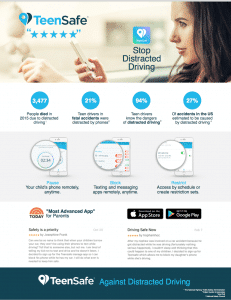
Are you so attached to your smartphone that you can’t ignore a notification while driving? As hard as it is for parents, imagine how impossible it is for your teen! Their virtual identities are even more developed than ours. Teens need their phones to communicate with friends, look up activities, watch on-demand entertainment, and complete school assignments. Teens are more cyborg (part human, part machine) than parents. They are more dependent on screens and more practiced. With less impulse control, they are also at higher risk for distracted driving. One of my favorite things about being Global Ambassador for TeenSafe was helping parents can better help teens concentrate on the road rather than their screens. Although there are phone options and apps that help, nothing works as well as starting healthy habits before they get their driver’s licenses. Today’s GKIS article may help save your life or the life of your child!
Distracted Driving
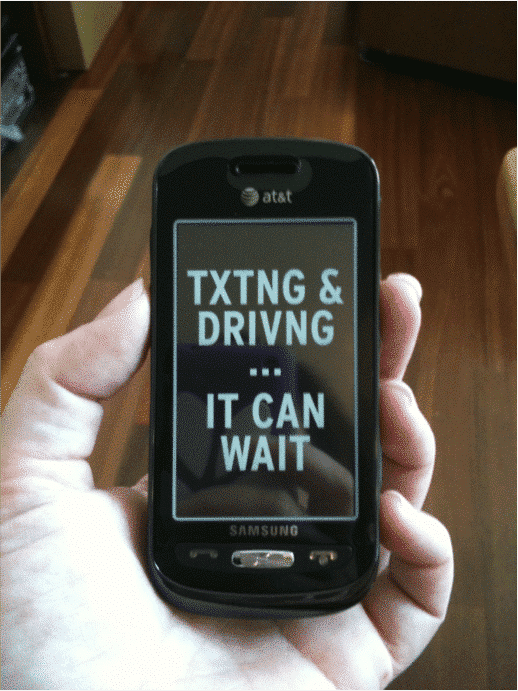
Motor vehicle accidents are the leading cause of death for children. Texting while driving is the cause of 25% of all driving accidents.[1,2] Texting while driving has become a 6x bigger hazard than drinking while driving. Ninety-five percent of drivers disapprove of distracted driving, yet 71% admit to doing it.[3] In the five seconds it takes to respond to a text while driving 55 mph, one travels the entire length of a football field.[4] Not only does texting take your eyes off the road, but it also takes your hands off the wheel and your concentration off safe driving.
Teenagers are the guiltiest of distracted driving. A 2012 AAA Foundation in-car study found that teens are distracted for up to one-fourth of their time behind the wheel. Screen activities like texting, navigating, taking photos, checking social media, and selecting and downloading music are common distractors.
The compelling urge to multitask combined with the dire need for more hours in the day compulsively condition us to be on our screens 24/7. There has also been a large increase in smartphone apps available for download. Not only are teens texting, but many are also using social media and gaming apps like TikTok, Instagram, Facebook, Twitter, and Pokémon Go and even taking “selfies” with apps like Snapchat while driving.
Monkey See, Monkey Do
Every parent has told their teen not to use their phone and drive, yet, “according to 77% of teens, adults tell kids not to text while driving—while texting themselves while driving “all the time.”[5] They notice, and they copy what we do. Why should our teens listen to us when we remind them not to use their phones and drive if we don’t take our own advice?
Peer Influence
To make matters more difficult, our driving habits aren’t the only influence on our teens. 75% say texting while driving is common among their friends.[6]
Start the Conversation
The National Safety Council reports that smartphone use while driving leads to 1.6 million motor vehicle accidents each year. That translates to nearly 390,000 injuries and 15,341 drivers involved in fatal crashes. One out of every four car accidents in the United States are caused by texting while driving.[7]
If your teen is driving, talk with them about specific ways to reduce their distractions while on the road. Being a positive role model for safe driving and promoting open communication will not only benefit your teen but hopefully, your teen will follow your lead and become a role model for their friends. In our crazy busy lives, we all could use some reminders. Even teens agree; “62% of teens feel that getting reminders from their parents not to text and drive would be effective in getting them or their friends to stop texting and driving.”[6]
GKIS Tips for Distraction-Free Driving
Because teen drivers are inexperienced and tend to overlook risk, draw up a safe-driving contract with the help of your free GetKidsInternetSafe Connected Family Screen Agreement so they are aware of distracted driving risks and agree to safe driving practices. Make sure they recognize that texting while driving is illegal and may result in fines, license restrictions, a rise in auto insurance rates, and even prison time. Critical safety measures include setting a good example, limiting the number of passengers, investing in a safe-driving course, and using a parent-controlled tech tool like a pause button that freezes smartphone capacity.
Enable “do not disturb while driving” options on your smartphone.
Stash your phone away when driving. Even when disabled, it’s still too tempting to grab it for nav or music.
If you’re the kind of person that can’t stand radio commercials, create a music playlist on your phone so you don’t have to go searching through your phone for a song while you drive.
If you need to take an important phone call, pull over to the side of the road.
Use Bluetooth. While it is still mentally distracting to be talking on the phone if you can’t pull over, Bluetooth keeps your hands on the wheel and your eyes on the road.
Plan ahead and look up directions before starting the car.
While there are days when running late is unavoidable, do your best to be ready before you get in the car. That means makeup, hair, and breakfast are already taken care of rather than dining while dashing.
Finally, regularly remind your teens that using their smartphones while driving is not worth losing their life. Remind them that driving is a huge responsibility, and their car is a 2-ton weapon.
With this information and these tips, I hope you and your teen can support each other in working towards becoming screen media-safe behind the wheel. Thanks to CSUCI Intern, Brooke Vandenbosch for reminding us that texting and driving just aren’t worth the risk. For a reminder about why a constant connection to their friends is so compelling to teens, brush up on your developmental psychology with my GKIS crash course about teens!
I’m the mom psychologist who will help you GetKidsInternetSafe.
[5] Atchley, P., Atwood, S., Boulton, A. (2011). The Choice to Text and Drive In Young Drivers: Behavior May Shape Attitude. Accident Analysis & Prevention, Vol 43. Retrieved from
[6] U.S. Newswire [Washington] (2012). 43% of Teens Say They Text & Drive; 77% Say Adults Warn Against Risks, but Text & Drive ‘All The Time’: With Prom, Graduation, Summer, May Starts ‘100 Deadliest Days’ On the Road for Teen Drivers; AT&T Kicks Off Nationwide Car Simulator Tour