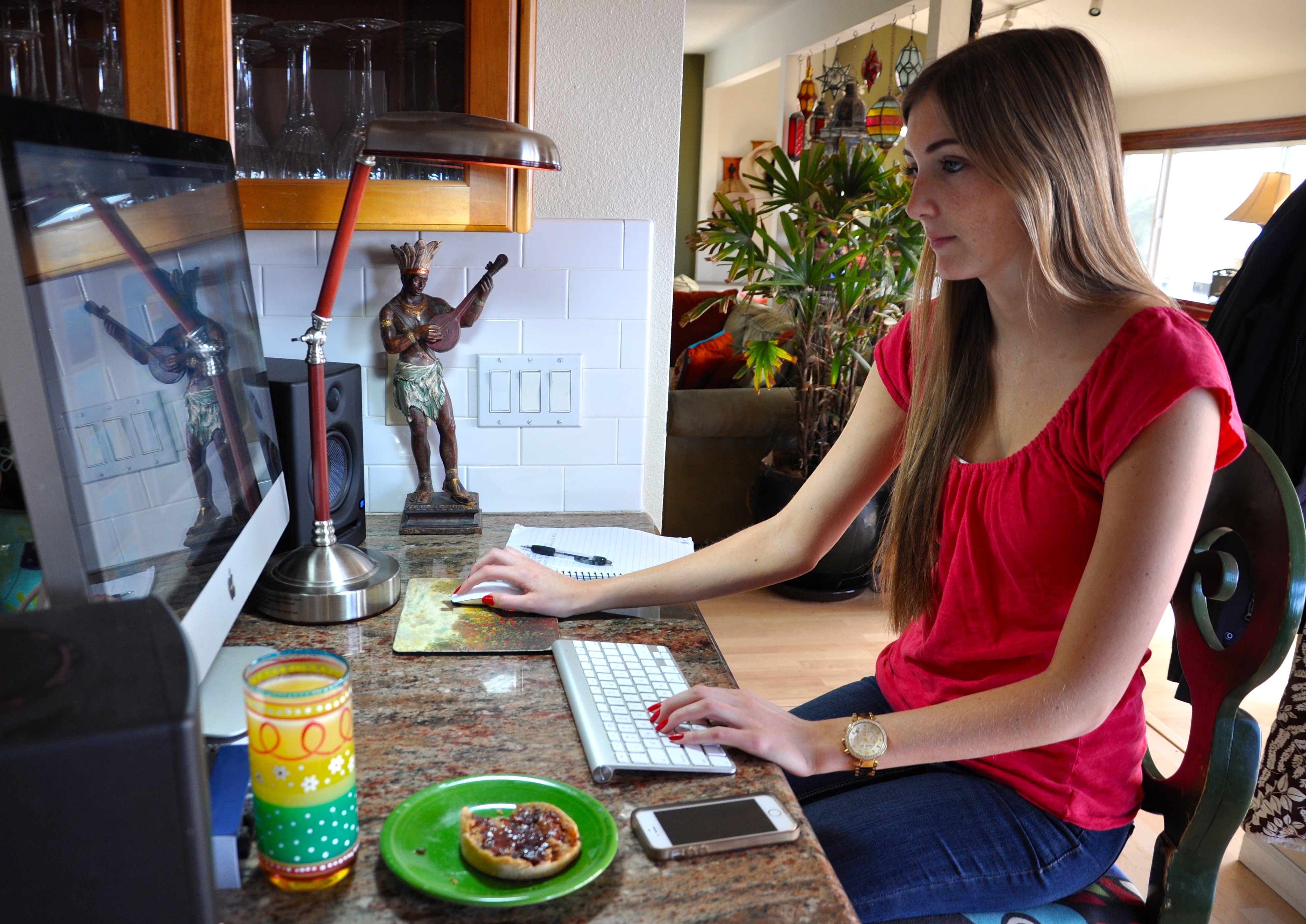
Now that I’m an “older” working mom, I love to share offline and online organization hacks and efficiency grabs that have saved me through the years. These organizational techniques were the difference between frazzled and peaceful at our house. With the overtasked lives we lead, most of us are guilty of brain fades and frantic searches while yelling and scolding overwhelmed kids. Even if you set up only one or two of these ideas, it may be the difference between fun family mornings versus a school day launched with tears and resentment.
Unclutter study spaces by setting up customized, distraction-free workspaces in niches and corners for each kid.
Kids in my practice often complain that the kitchen table is too distracting to get homework done quickly and neatly. The psychological research agrees. Studies reveal that fractured attention leads to irritability, wasted time, and poor grades. To optimize learning, set up a quiet corner office for each child. All it takes is a willingness and clever organization ideas and fresh accessories. Check out my GKIS Connected Family Online Course for a detailed blueprint for creating award-winning maker spaces with awesome Pinterest DIY ideas. A customized works station is a compelling magnet to get your kids creating in 3-dimensional space as a complement to screen learning. Ergonomic, body-healthy setups in the place of slouching on beds and couches avoid repetitive stress injuries to the neck, back, wrists, and hands.
Avoid missed soccer practices and study deadlines by setting up a digital family calendar.
Family schedules are chaos! Streamline communication and scheduling by color-coding child activities and setting up Family Share on Apple’s Family Calendar, Google’s Calendar, or Microsoft’s Outlook. Each member can share calendared activities and set up automatic reminders. Shared organization at a glance!
Just as you throw out old clothes your kids have grown out of, it’s also important to declutter digital spaces.
Schedule a fresh-start fall family meeting where everybody gathers with their mobile screen devices to trash apps and games they have grown out of.
Revisit (or grab) your free GKIS Connected Family Screen Agreement at GetKidsInternetSafe.com. This will help you set sensible rules like a digital curfew and create screen-free zones – including bedrooms and bathrooms.
Finally, teach cybersecurity measures from my Cybersecurity Red Flags Supplement. New this fall, you and your family members can tweak bad habits so don’t fall victim to bad actors online.
Cleanse social media profiles with an eye toward future reputation.
If your tween or teen is on social media already, you know the time-suck risks during school time. Help them sort out the necessary from the unnecessary by helping them avoid the bio-hack elements designed to capture their attention.
Consider limiting teens to only one or two social media apps to decrease wasted time due to mindless browsing and compulsive checking.
Insist that apps with visual notifications be on the second swipe screen on smartphones. That way they won’t get distracted by little red notifications and, instead, can batch their check-in times as research suggests is best.
And finally, delete old posted photos and unnecessary personal information from social media history. Sharing real-time with friends on a private profile is fun, but do you really want somebody lurking through your past photo-by-photo? Point out that other parents, relatives, teachers, coaches, future employers, and even college app administrators may be forming impressions based on your digital footprint. So instead of having an online resume populated by off-color jokes and sexualized photos, create a flattering stream of artistic works, philanthropic activities, sports activities, and fun friend and family time. A progressive, balanced, healthy life looks beautiful online – and may help you get a college placement or dream job instead of hinder it!
Reboot your Screen Safety Toolkit.
Each developmental stage offers unique online safety challenges. For example, little kids are best accommodated in a walled digital garden like YouTube Kids, and older kids need a little more digital space to explore and create. To parent well in the digital age, you need specially-selected free and third-party software tools to help you filter and block inappropriate content, set time-limits, monitor online activity use, remotely pause or offer rewards, and even locate and track the driving activities of your teen. If you get overwhelmed or need help figuring it all out, check out my GKIS Screen Safety Toolkit for tips, product recommendations, links to ISP and social media app safety guides, and free digital learning tools for best academic performance.
There you have it! Five quick and easy parenting hacks that will launch the school year with fun and success. Just as I recommend shoes live by the front door so you are not always searching, digital folders and organization tools will keep you dialed-in in your virtual life. Most importantly, set a peaceful intention with a six-second exhale for positivity and fun each morning before you enter the family’s living space. Parents must actively define the heart of the home. If we start the morning with a smile and warmth, our kids emotionally synch and return the joy. Soak in every chaotic and blissful moment!
I’m the mom psychologist who will help you GetKidsInternetSafe.
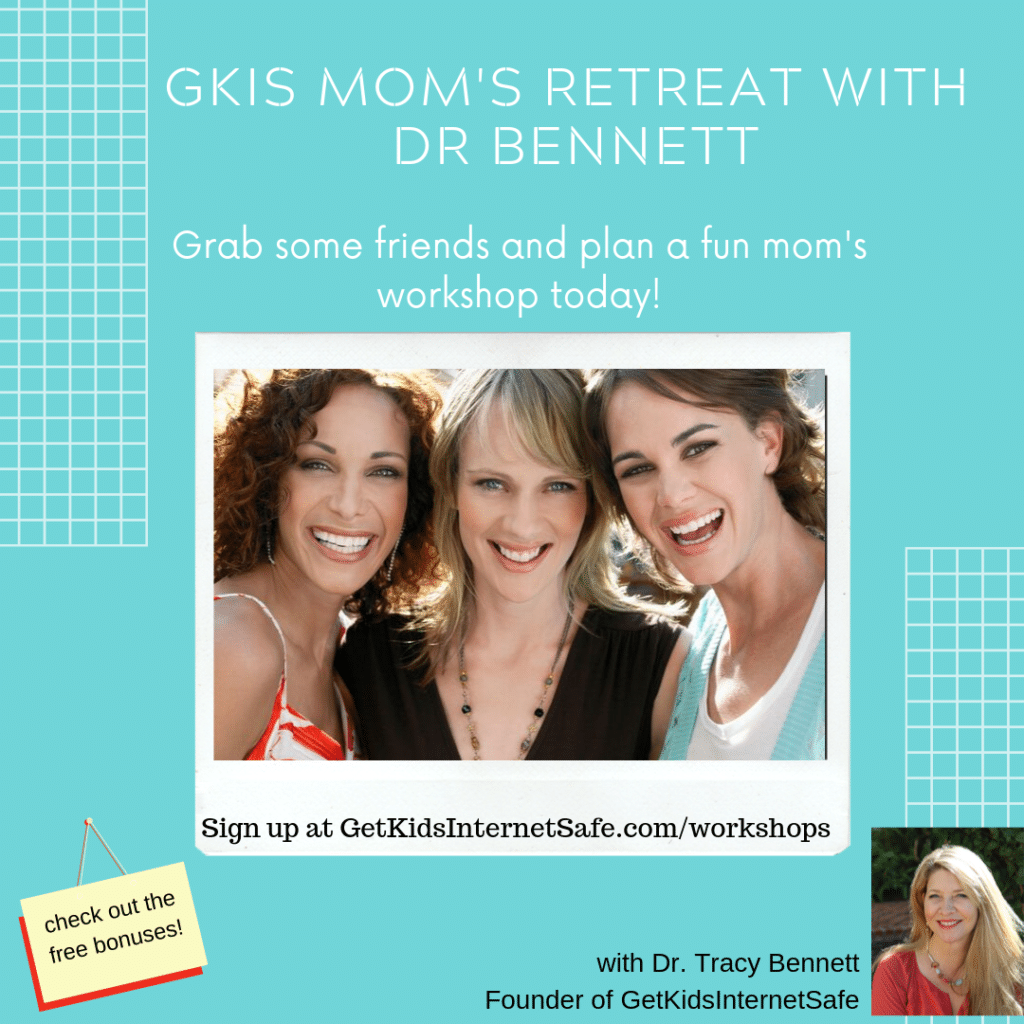
Also, if you are a local Southern Californian and need a little TLC to get started on your screen safety/fun parenting plan, join me for a morning of pampering and friendship.
Do you suffer from digital amnesia? How many phone numbers can you recite offhand? Can you name three movies that are out? Does anybody have paper maps in their cars anymore? Most of us, particularly the digital natives, Google to search out random facts and figures rather than relying on memory. Researchers call this the Google effect, meaning that fewer of us bother to memorize things if we believe they are online.
Google was introduced to the Internet in 1998. It is a search engine that calculates and ranks the web pages that receive the most attention. Google not only serves up delicious content, but it also determines what we see first on our search list. Google works to filter out useless, scam-like, or explicit information and images from our search list.
Websites that rank the highest load quickly, do not use flashy animation, and have a coherent list of relevant search terms. Google weeds through the bad web pages to provide us with the best, which makes the scary world of the Internet a lot safer and easier to navigate. Google provides users with convenience, comfort, and trust.
What is the Google effect?
As Albert Einstein said, “Never memorize what you can look up in books.” Did I remember this line? No, I opened my Google Chrome web browser, proceeded to Google.com, and searched “famous quotes about memory.” We are moving to a future of memory decline and an over-reliance on technology that’s always at our fingertips.
Dr. Maria Wimber, Professor at the University of Birmingham’s School of Psychology, said the Google effect “makes us good at remembering where to find a given bit of information but not necessarily what the information was. It is likely to be true that we don’t attempt to store information in our memory to the same degree that we used to because we know the Internet knows everything.”
Betsy Sparrow from Columbia University explained, “Our brains rely on the Internet for memory in much the same way they rely on the memory of a friend, family member, or co-worker. We remember less through knowing information itself than by knowing where the information can be found.” We are more likely to commit keywords to memory than the facts they lead us to.
How powerful is the Google effect?
It’s been estimated that 90% of us have undergone digital amnesia. Over 70% of parents have not memorized their children’s phone numbers.[3] We are even less likely to remember an experience if we snapped a photo of it.
In her study, Dr. Maria Wimber assigned one group to go around the museum taking pictures, while the other group was told not to take pictures and just to enjoy the experience. Those who took pictures were found to remember significantly fewer details than those who did not use their smartphone.[3] Dr. Wimber elaborated, “One could speculate that this extends to personal memories, as constantly looking at the world through the lens of our smartphone camera may result in us trusting our smartphones to store our memories for us. This way, we pay less attention to life itself and become worse at remembering events from our own lives.”
As a millennial accustomed to heavy smartphone use, I would go as far as to say we rely on the “likes” from our social media posts to determine the worth of an event. If we get lots of likes, we must have had a great time; fewer likes and it was a bust.
Is the Google effect bettering us for the future?
Anthropologist Genevieve Bell thinks that the Google effect is not as detrimental as others think. She reports that technology “helps us live smarter.” Creating good search words is how knowledge is conforming to the technological future. There is such a thing as a good or bad question. If you type in a random mess of words into Google’s search bar, it’s likely you won’t find an answer that fits your needs. But being able to write a short, competent question that produces a concrete answer is a form of intelligence.
Bell gave an example of new parents worried that their child is not sleeping well. Her theory is that a smart parent would be able to comprise all the symptoms into a great Google search, while others might rely on others’ feedback. Google can find legitimate websites to back up the diagnosis of the child, while feedback from friends is just a matter of opinion.
What can you do to optimize Google’s benefits and minimize the risks?
Decide if you’re pro-integrated technology or if the commitment to technology has a negative impact on our future.
Emphasize to your kids that worth is more than skin deep. Provide opportunities for intellectual, spiritual, and character growth. Value substance.
Be a good role model. Watch your GTS ratio.
Educate your children about the risks and benefits of trusting the Internet.
Monitor and limit how often your teens use the Internet when studying with screen time management apps. Encourage them to build the scaffolding for memory with less reliance on Google.
Teach how to balance healthy and fun activities like interacting often with family members face-to-face, riding bikes, or reading books.
Thanks, Wendy Goolsby, CSUCI Intern, for this great article about Google’s effect on our learning. It is because of these factors that I have changed my teaching style at CSUCI. No longer do I give in-class exams that cover several factors at once. I found that my students just procrastinated and crammed, which didn’t lead to quality learning. Now I offer an online timed multiple-choice quiz after each lecture. They are telling me that this forces them to keep current and they’re remembering and applying material better. Even we digital immigrants must adapt. 🙂 For more parenting support on educating about the effects of the Internet, check out the GKIS article Youtube Beauty Gurus Suck Money and Teen Confidence.
Are you fighting the homework wars? Wondering if screens during homework are helping or hurting grades? We can’t take screens away during homework time anymore. So much of it is online! Kids insist that tech helps them learn better. But does it? Today’s GKIS article covers who tech can help with learning and how it can interfere.
How We Learn
We have to have a good memory to earn good grades. To learn, we must encode, or anchor, that information into brain memory storage. This type of learning happens as we engage with the material over and over. Memories also encode while we sleep. Changing short-term memories into long-term memories happens through biochemical and electrical processes called consolidation.
Different types of memories store in different parts of the brain. Memorizing factual information (required to perform well on tests) primarily involves the part of the brain called the temporal cortex. Intentionally learning facts is called explicit memory.
Memorizing how to do something, like tie your shoes, is called procedural learning. It is stored in the areas of the brain that involve motor control. This kind of learning is called implicit memory.
Emotional memories (like those that occur in traumatic situations) are stored in multiple brain areas including our emotional center, the amygdala.
Research suggests that kids studying while watching TV may encode that information as procedural rather than factual data. Encoding in the wrong brain region makes fact retrieval at test time more difficult. How and where you study also makes a difference.
How to Facilitate Learning
To learn well, we must start with great brain health, get motivated, set up a good workstation, and follow best learning practices. Are you practicing these learning techniques?
Good self-care, brain health, and cognitive fitness are the foundations of learning engagement (like sleep, nutrition, exercise, and a positive mood)
A distraction-free study environment
Efforts toward mental engagement: attention and motivation
Putting the learning content in a variety of different formats (listening to a lecture, reading notes, writing notes, re-writing notes, watching videos, engaging in discussion, etc.)
Memorizing material in a variety of study environments
Making unique meaning of the material, such as generalizing and applying the concepts, especially with emotional connections
Repetition and practice
Avoid doing two tasks at once that require the same cognitive resources (don’t multitask)
Uninterrupted brain rest after each study session (mindfulness, meditation, time out in nature)
The Benefits of Screen Time for Learning
Screen devices can be amazing learning aids. Not only do they help us put the material in different formats, but they are fun and convenient to use! Here are some of the ways screen time benefits our learning.
With our screen devices, we have immediate, easy access to massive stores of information.
The biohacks built into our devices make learning fun. We are captured and motivated.
Online quizzes and testing help us immediately assess where we are with our learning.
Learning programs dish out progressively challenging content at a pace that matches our performance.
Screens give us access to others for group discussions and crowdsourcing problems.
Screens offer cool and create learning formats, like project management and brain mapping systems.
Gamifying content helps us learn and have fun!
Best Learning Strategies
1. Learn from the get-go.
Don’t waste a moment of studying. Be an active learner the minute you come into contact with the material. Actively engage with the content while you read the textbook, take notes in class, and watch the videos. Participating in class also helps deep processing of the material!
2. Learn while you format study materials.
Outline the text and rewrite and highlight your notes. Attend to and connect the main concepts. Leave out illustrative details so you have only essential material (fewer pages) to memorize.
3. Set the stage to study.
Block out sufficient study time over several days using a block-scheduling download from the Internet. Prepare yourself and your study space to optimize learning. Make sure you are comfortable and fit (fed, hydrated, rested) with a positive attitude about studying. Find a comfortable, non-distracting study location. Turn off your phone and other notifications and commit to studying only, no social media or Internet surfing.
4. Engage with content, don’t kill and drill.
For a student to learn effectively, they must engage with the content and integrate it into a meaningful framework. Students often make the mistake of mindlessly rehearsing isolated facts, thinking time spent is evidence of learning. Kill and drill is a waste of time and mind-numbingly punishing. Deeply processing information is the best way to learn.
5. Create learning pathways.
Each time we encode a fact into the hippocampal area (memory center) of our brain, we create a learning pathway to that content that can later be traveled for retrieval at test time. Increasing the number of pathways to that encoded fact is the process of effective learning.
In items 2 and 3 of this list, you already paved the initial pathways! The first pathways include when you listened to the lecture, wrote notes, read the textbook, answered the teacher’s questions, and formatted study materials.
To pave additional pathways to test content, find creative ways to further engage with and elaborate on the material while you study. The more emotionally and cognitively meaningful the material is for you, the easier it will be to learn. For example, use the Internet to view the study material in a variety of vivid formats, such as illustrative maps, diagrams, pictures, speeches, or videos. Link the information to emotionally meaningful memories or associated topics. Study from a variety of locations. Form a study group and talk with others about the content.
6. Rehearse the information and practice retrieving it and applying it just like you would at test time.
If the test is multiple-choice, make up questions that would lead to memorized facts. If the test is an essay, practice outlining and writing essays on that material.
7. Study small chunks of material at a time over several days, eventually linking the chunks together.
Don’t cram at the last minute. Your brain needs time to deeply process newly learned material. It will even process when you’re not actively studying, even in your sleep! That means it’s best to learn and rehearse chunks of material over several days. By test time, the chunks will come together for easy, A+ retrieval.
Fostering the love of learning is the best thing we can do with our kids, that means helping them learn better and achieve a healthy balance on- and off-screen. For more learning tips, view my free video, “How to Study Effectively: Metacognition in Action.”
I’m the mom psychologist who will help you GetYourKidsInternetSafe.