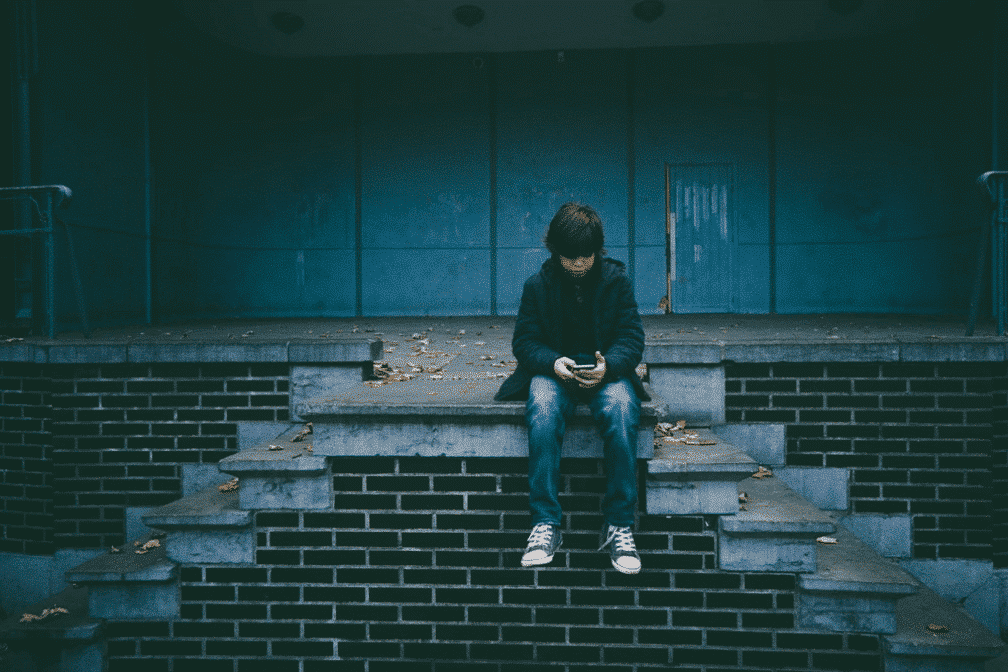
We’ve all been there. Stuck at work, school, or home. We pick up our phones and click on Instagram. There’s BFF Julie on her amazing trip to Japan – 150 likes in 42 minutes. Then check out Twitter. There’s co-worker Andrew’s fun video of an amazing concert at the coolest venue in town. His text post fetched 27 comments. “Wow! That looks so fun!” “I’m so glad I ran into you last night!” “Did you get the pictures I sent you?” You put your phone down and instantly get hit with a wave of sadness. Everybody seems to be having more fun than you. Are you going about life all wrong?
FOMO
FOMO or “fear of missing out” is a form of social anxiety in response to seeing activities streamed on social media. These feelings can blossom into immediate disappointment or long-term feelings of inadequacy. You know you should be happy. You’re ashamed of it. But still … people who experience FOMO the most tend to be extremely active on social media sites like Instagram, Snapchat, and Facebook.[1]
Who suffers from FOMO?
Although FOMO adversely affects all ages, recent studies conclude that FOMO is most common among teens. Nearly 60% of teenagers experience anxiety when they become aware of plans being made without them or can’t get ahold of their friends. Another 63% are upset when they have to cancel plans with friends.[2] Among the other age groups, an overwhelming 61% of subjects aged 18-34 state they have more than one social media account, while 27% state they check their Facebook feeds immediately upon awakening.[3]
FOMO Risks
Compulsive social media checking that gets in the way of everyday activities and leads to texting and driving, like “snap and drive” which is careless driving while Snapchatting.
The inability to prioritize important responsibilities over fun social media posting.
Posting shocking activities like binge drinking and drug use.
Spending lots of money to post expensive designer items.[4]
The constant need to feed is a surefire way to develop feelings of inadequacy and anxiety. FOMO makes us feel lonelier, inferior, and less successful.[5]
Reducing FOMO Anxiety
Get real.
A fun post here and there is not reflective of the “perfect” life. Everybody hurts sometimes, even the pretty ones.
Cop to it.
Once you admit to it, it’s easier to control it and create a plan of action to work through it.[6]
Be in the present.
Practice mindfulness techniques like anchoring – attending to your current surroundings, what you see, feel, hear, smell, and your breathing.[7]
Recommit to your nonvirtual life.
Pet that dog you always see on your way to school or work. Stop and smell the flowers. Read a book in the park. Give yourself ample time to finally finish that term paper or work project. Commit to doing one of those today, right now!
Temporarily detox.
If momentary disconnection is a struggle, delete apps off your phone and use psychological wellness app support. Cool detox apps include Moment, Flipd, and Forest. Detox apps offer fun and clever incentives to get off your phone. For instance, Forest incites you to not open social media by illustrating breaks with forest growth and how large and lush and large you can grow your forest.[8]
Seek counseling.
If all else fails, talk it out. Since FOMO is seen as a cognitive distortion, cognitive behavioral therapy has been shown to be highly effective by offering thought-reconstructing tools. In other words, identifying stinking thinking and replacing it with can-do thinking can greatly improve mood and feelings of well-being.[9] Fewer social media posts may mean a fulfilling life is being lived off-camera rather than no life happening at all.
Thank you to Tammy Castaneda for contributing to this GKIS article. Fomo is becoming an increasing problem for kids and adolescents. If your child is still in elementary school, hold off until middle school before you allow their first social media app. If your teen showing problematic behavior, take action. To prevent clinical symptoms related to screen use, check out our GKIS Connected Family Online Course. In 10 easy steps, you can learn how to encourage healthy screen habits and a happier household.
I’m the mom psychologist who will help you GetKidsInternetSafe.
Raising kids in the digital age is tough. Not only are kids going through baffling developmental stages and life crises, so are their parents. Plus, each family member has a unique personality, belief system, and behavioral history that lead to varying “fits” between members at varying times. Throw that in a blender and you have a family. To make it more complicated, divorce peaks during trying times, upending everything even more. Divorce conflict, shared custody, and blended family issues can lead to exploitative and manipulative opportunities, especially with powerful mobile devices in-hand. My clients have benefitted from both using our free CONNECTED FAMILY SCREEN AGREEMENT. This digital contract gives both households sensible rules and strategies so kids have consistency and cooperative guidance. To align on parenting strategies and get more confident with setting rules and adopting parental controls, our weekly parent and family coaching videos delivered on the GETKIDSINTERNETSAFE APP is for you. Quick 5-minute videos a week allow you to tweak screen safety and positive parenting in your home in doable chunks. Demonstrating that you are consistently addressing screen safety looks great in court! Another option to help your tweens and teens directly build knowledge and psychological wellness with our SOCIAL MEDIA READINESS COURSE FOR TWEENS & TEENS. It’s like driver’s training but for the Internet.
In my twenty-six+ years as a clinical psychologist with a specialty in family transitions, I have run across practically every family situation you can imagine. Not only can divorce strain parent-child alliances, but fear can muddy parent judgment as they jockey to win child favor and aim to achieve parenting perfection in less-than-perfect times. With everybody distracted by their own emotional processes, consistency, and communication too often slip leaving kids vulnerable for risk.
Here are three fictional family stories that resemble actual situations to illustrate the complex factors that divorced families face.
Safety, Parental Alienation, & Home Privacy
Sally and Joe were married for fourteen years. They have two daughters, 13-year-old Maggie and 10-year-old Jacqueline. The marriage dissolved when Joe was discovered having an affair with Pamela. Sally shared too much information with the girls during her heartbreak, blaming Pamela for the breakup and begging Joe to make the marriage work even after discovery. Pamela and Joe married six months after the divorce was final and were granted shared custody of Maggie and Jacqueline as well as Pamela’s son and daughter.
Sally didn’t trust Joe and Pamela to take good enough care of the girls. She constantly worried about Joe not checking the girls’ homework, believed Joe and Pam drank too much, thought Pamela favored her own children and became particularly angry if Joe socialized with old friends. The girls felt protective of their mom and felt guilty leaving her during dad’s custodial time. They also wondered if mom’s fears were true and they were being unfairly treated and not adequately attended to.
Sally bought both girls mobile phones outfitted with the social media they wanted and encouraged them to call, text, and send images frequently with the hopes of gathering evidence she could use in family law court. She also posted accusatory memes about Joe and Pamela on her Facebook. If Joe set limits with the mobile phones, Sally argued the restriction prevented the girls from seeking appropriate help in an emergency situation, which further demonstrated to the girls that Joe was not protecting them.
In her cloud of grief, fear, and anger, Sally was committing parental alienation. Parental alienation is a pattern of psychological abuse toward a child by creating fear, disrespect, or hostility toward the other parent with the ultimate goal of parent-child estrangement. Parental alienation has been demonstrated to be detrimental to child mental and physical health and parent-child attachment. When caught in the destructive dynamic, family members are nearly incapable of post-traumatic growth, spinning helplessly for sometimes years in the eye of the storm.
Illegal Surveillance
John is a twelve-year-old who’s divorced parents have conflicting views on-screen use. John’s father allows him to use his phone and
other screen devices as much as he likes with no filtering or monitoring. His mother, on the other hand, does not allow him to use ANY screen devices. What John does not know is that his father secretly installed spyware on his mother’s devices during their divorce in order to gain information against her and has a history of domestic violence and pornography addiction. John’s mother has a restraining order against her ex-husband. She does not feel safe having mobile devices in her house that her ex-husband has purchased in case of spyware. She also worries about the online content her son has access to for fear of him becoming addicted like his father. John prefers to be at his father’s house because of the more permissive screen access and accuses his mom of being too uptight and paranoid. His dad laughs with him and agrees.
Consequating Dangerous Child Behavior
Dave and Laura have been divorced for two months and have two sons, 16-year-old Chad and 14-year-old Ian. After the divorce, both boys were living with their mother with weekends and certain holidays spent with their father. Chad has AD/HD and an anxiety disorder; Ian is in independent study due to oppositionality and defiance.
After suspecting Chad was using drugs, Dave demanded to see Chad’s phone. When Chad refused, Dave grabbed the phone and found photos of Chad smoking marijuana at a house party. A screaming conflict resulted. Chad stormed out the house and walked several miles back to his mother’s house where she then called Child Protective Services. Dave insisted that Laura take Chad’s screen devices away as a form of punishment. Laura disagreed thinking it would isolate Chad from his friends at a time he needed them most and bought Chad a new phone with no filtering or monitoring. Chad has chosen to live full time with Laura and refuses to talk to Dave. Ian feels caught in the middle.
Co-Parenting Strategies
Co-parenting can be difficult in all family types, but shared custody poses particularly ripe opportunities for exploitation and manipulation during a time when parents need to be particularly astute about the prevention of digital injury due to unchecked screen use. To launch a healthy and safe relationship with screen media, kids need warm, encouraging guidance from their parents.
Parents who set standards and praise without being overly critical have well-adjusted kids. Theorists call this authoritative parenting. Evidence demonstrates it is better than uninvolved, permissive, (overly accepting), or authoritarian (overly controlling) parenting styles.
Authoritative parents are proactive rather than reactive. They set the stage for success and respond calmly rather than ignoring or being overly punishing in response to destructive child behaviors. Children from authoritative home environments not only achieve more in school, but they also demonstrate a stronger willingness to seek out and master challenges for personal satisfaction.
In the stories above, the parents let their divorce conflicts interfere with their parenting judgment and slipped into authoritarian or permissive styles. While authoritarian parenting promotes a form of structure for the child, the harshness and rigidity can lead to parent and child aggression and can cause the child to have low self-esteem and minimized self-worth (Paul, 2011).
On the other hand, permissive parents are kind and accepting but don’t implement safety measures or uphold rules. Thus, children can become entitled, depressed, or anxious (Paul, 2011). Even parents who were once authoritative will sometimes escalate their tendencies in order to counterbalance the strategies used in the other custodial home. This leaves kids ping-ponging between sometimes hostile perspectives and varying rules for conduct. They will often choose the more permissive parent due to their inability to recognize the long-term implications of their behaviors.
In response to these challenges, family law courts often refer or order parents to use educational resources like co-parenting classes, schedule sessions with supportive professionals like child psychologists, therapeutic and legal mediators; or even order minor’s counsel to represent the children’s best interests. Parents may also be ordered into individual or reunification therapy which can lead to positive change.
When working with co-parents, I strive to empathize with the very real challenges of single parents and working through issues that make kids hard to handle. I remind them the situation is usually temporary. In most circumstances, grudges heal and parents recognize that parenting must take priority over vindictiveness. Kids will eventually see manipulation, often resulting in delayed insight. Nobody wins. Patience, empathy, grace, and kindness help kids heal. Sometimes we all need lots of nudges and gentle reminders, whether it comes from family, friends, lawyers, judges, or mental health professionals. Kids come first.
Thank you to Ventura family law lawyer extraordinaire Joel Bryant for the valuable information he contributed to this GKIS article and to CSUCI intern Allie Mattina for her research. To best understand the complex developmental factors of family life and learn effective screen safety strategies, check out Screen Time in the Mean Time: A Parenting Guide to Get Kids and Teens Internet Safe. Full of developmental brain facts and helpful tips and information, setting structure and sensible teaching conversations is a great start to family safety and stability.
I’m the mom psychologist who will help you GetKidsInternetSafe.
Screen technology provides amazing entertainment, convenience, and communication as well as a wide range of problems, particularly for kids and teens. Parents and professionals complain they can’t find the perfect tech toolbox to help. There are a lot of costly third-party solutions out there, but where do parents start? None seem to cover all the bases! Apple may have helped us by launching the Screen Time setting in the new iOS 12 update. Promising more speed, the ability to FaceTime up to 32 people at once, new personal animojis, stickers, and filters, augmented realities, easily sharable photos, searching, and shortcuts, Apple is committing to more “power” overall. Features that promise to help us control our use include auto turn-off Do Not Disturb, Instant Tuning to selectively turn off notifications, advanced shortcut and privacy features, and Screen Time tracking. Find out what you need to know in today’s GKIS article.
Tracking Your Usage
This update offers Screen Time, which will allow you to see which apps you use most often and how much time you spend on each activity with an easy-to-read bar graph and data count. Screen Time also allows parents to see which of your kids is the Twitter addict and which is up past their bedtime watching YouTube videos. You can monitor multiple devices linked to your iCloud account.
The Screen Time feature also tracks how many notifications you receive and from which apps they are coming from. Screen Time even tells you how many times you picked up your phone, a number that may surprise you.
Setting Limits
There are several limits that you will find with this update. If you see that social media is taking up a majority of your child’s day, you can set a timer on that category and for the entire day they will only have a set time to use their phones for that specific purpose. If your concern is about a certain app, like Snapchat, then you can just set a limit on that app alone.
Another useful tool is the Content and Privacy Restrictions, which allows you to monitor your child’s internet usage and their app store purchases. This is a simple way to ensure that your child is not viewing graphic or inappropriate internet content.
The last major setting that can be utilized by this new update is called Downtime. Downtime allows for you to schedule time for yourself or your family to disconnect from the distractions of your apps. This may sound a lot like Airplane mode, however the difference with Downtime is the ability to allow certain apps to continue to be used. Calls and texts come in automatically with Downtime, but if you can’t be without your emails you can allow that to remain active during this scheduled break.
Opportunity to Start Important Screen Time Conversations with Your Family
With the new Screen Time feature, your kids may feel like their privacy is being infringed upon, and you aren’t giving them enough space. However, we at GKIS feel that filtering inappropriate content and monitoring screen use is an important aspect of parenting, especially for younger kids and teens.
Rather than avoid the discussion and lock their screen use down, negotiate what seems reasonable for your family. Have spirited conversations. Share important facts about risk and benefits that you learned from GKIS articles. Team work builds stronger relationships.
There is no more influential tool for screen safety than a healthy parent-child relationship. Trust is earned on both sides. As stated in Dr. Bennett’s book, Screen Time in the Mean Time, your attachment to your child is a relationship built upon communication, negotiation, and fun. It’s important to ensure that your children’s privacy is something that is as important to you as it is to them, and that seeing where their time on their phones is spent is a way to look after their digital health and social well-being.
Recap
You can see which apps are the most used and for how long
You can set limits to specific apps and categories of apps
You can set content restrictions for internet and iTunes usage
You can set a bedtime for yourself and your children
Thanks to GKIS intern Adam Ramos for keeping us up on the latest! We at GKIS are big fans of Apple’s new Screen Time innovation. It is worth carving the time out of your chaotic parenting schedule to check this one out. It’s easy to use, free, and a giant step toward personal screen time accountability. Need support how to start these important family conversations, set your home up for safe screen use with handy tech tools, and get your family behind sensible rules? Check out the GKIS Home Starter Kit. In 10 easy steps and in as little as two hours, you can make several giant steps toward a closer relationship and better screen safety in your home.
I’m the mom psychologist who will help you GetKidsInternetSafe.
Do you worry your teen has a Finsta? Based on recent surveys, most parents have a considerable concern that our kids’ digital selves aren’t making kind or safe choices. After all, experimentation, taking social risks, and creative self-expression is healthy for teens. The problem is that social media can blast innocent mistakes to thousands of people at once. Fortunately, teens aren’t stupid. They usually “get” that trust is earned. To protect themselves, they form several virtual social groups from more intimate to the public, much like they do in their nonvirtual lives. Is having a Finstagram dangerous? Or is it simply a smart caution to minimize social fallout from impulsive or questionable judgment? When a parent does uncover concerning content, is it worth the risk to confront the teen? How can a parent spot a Finsta?
Cybersecurity safety starts at home. Feel empowered to talk to your kids about what is appropriate to post online. Dr. Bennett’s Cybersecurity and Red Flags Supplement has easy to implement strategies for how to keep your kid’s information secure without the risk of them oversharing online while keeping your parent-teen relationship intact.
What is a Finstagram?
As of June 2018, Instagram reached over 1 billion active users, the highest number of bloggers in the history of the wildly popular social media app.[1] As Instagram grows and expands, so too does the pressure to create the “perfect profile,” resulting in an unspoken set of rules and expectations dictating what you can post, when you can post, and how you can post. To “keep it real,” young Instagram users often create Finstagramsor Finstas, which are fake private Instagram accounts exempt from the strict posting-rules of real Instagram profiles (Rinstas). Finstagram is a mashing of the words “fake” and “Instagram. Finstas are almost always a secondary account and only close friends are allowed to follow, thus excluding acquaintances, love interests, and the prying eyes of parents.[2]
Posts in a Finsta are usually funny and embarrassing “behind-the-scenes” photos, like awkward candid faces, silly activities, or pictures that are not deemed ‘artsy’ enough for the Rinsta. Teens use their Finsta to express more intimate thoughts and feelings. Posts are often accompanied by long-winded captions explaining daily events or opinionated ranting – like how mean and unfair parents are. In general, Finstas can be considered a form of blogging where people ditch the superficial and fake façade of Rinstagrams and post uncensored photos to only a select few followers.[3]
Because Finstas are “private,” teens can get reckless with their posting choices. Under this false sense of security, kids will post pictures of themselves and friends participating in demeaning, offensive, and sometimes even criminal behavior. Typical posts include party behavior like alcohol, e-cigarettes or vape pen use or revealing or sensual poses. Cruel commentary about fights and cyberbully-like exclusion are also typical Finsta content.
Consequences of Careless Finstagram Posting
One example of the effects of thoughtless Finsta posting is Sophie* and her family. Sophie posted a photo on her Finsta featuring herself and a friend vaping at the beach. The picture was seen by a parent and family friend of Sophie’s family, who spotted it on the Instagram feed of her daughter. The parent shared what she had seen with Sophie’s parents, knowing that if Sophie was familiar with e-cigarettes, it was likely that she was also experimenting with alcohol and other substances. Sophie’s parents were put in the complicated position of debating whether to confront Sophie about her actions or to remain silent to preserve their relationship with their daughter.
A similar story is that of Lindsay*, who posted a revealing photo of herself seductively posing in a bodysuit and holding an unlit cigarette. She posted it on her Finstagram because she knew it was a suggestive photo and did not want her parents or other adults to see it on her primary account. Unfortunately, someone brought the photo to the attention of her swim coach, whose concern for Lindsay’s action prompted her to ask to speak to Lindsay privately. Her coach expressed her disappointment over the photo and told Lindsay that “[she was] better than that.” Lindsay felt an overwhelming sense of shame and humiliation at having let down her coach, a young woman who she respected and whose opinion she valued. Not only was Lindsay devastated by the shame of her swim coach thinking less of her, but she was left wondering who betrayed her. The remainder of her swim season was spent scrutinizing each of her teammates and guessing at who might have ratted her out.
In both of these scenarios, the adults chose to confront the kids out of concern for their safety and potential future consequences, including professional relationships with employers, advisors, and coaches. Also, in each case, the discovery of the Finsta posts compromised the trust between adult and child. The truth is, the consequences could have been far worse.
The Dilemma Parents Face
Parenting teens is tough. It’s too easy to get caught up in emotional swings and crises, resulting in worried and freaked out parents and angry teens. Choosing which hill to die on can be confusing. Here are some issues to think about when deciding whether to confront your teen about unwise Finsta posts.
Humiliating your child. Although teenagers like to act aloof and indifferent, the truth is that they crave the approval of prominent adults in their lives. No parent wants to humiliate their child, but sometimes facing the disappointment of respected mentors is the most effective way to get teens to quit their Finsta-ing ways.
Dealing with punishment.There are times when the hassle of creating a punishment worthy of the crime seems like more work than it is worth. Do you ground them, or let them off with just a warning? Do you take their phone away, or do you also go through it to see what other activities they are keeping secret? And then there’s the fear that you might see something worse than the initial incriminating photo. Consequences are necessary to teach a lesson but don’t compromise your own sanity in the process. A compassionate conversation is probably enough for first-time and understandable slips. Remember, they are supposed to be making mistakes in order to learn.
Inadvertently causing your child to be even more sneaky Kids who have been caught posting risky Finsta photos in the past may take greater measures to make sure they are not caught again. Firm and effective confrontation can help foster a sense of trust between adults and kids, while angry scolding will only push them farther away.
How to Spot a Finsta
Ask your child. In the two stories above, the main cause of the lack of trust after the discovery of a Finsta resulted not from the uncovering of the secret account, but from the seemingly sneaky way the adults came across it. No one likes to feel like they are being spied on, and kids are more likely to try harder to keep secrets if they feel like their parents are constantly sleuthing their social media. By asking your kid face-to-face if they have any other Instagram accounts, you give them the chance to tell the truth, show you trust them, and create the opportunity to better get to know your child.
Check tagged photos. Instagram has a feature where you can look at all the photos someone has been tagged in on their profile. Scroll to see all photos your child was tagged in.
Look for silly Instagram handles. Finstagram account handles are usually nicknames or an inside joke. If you recognize a nickname in the account name as something your child has referred to, it might be their Finsta.
Let’s face it: in a world where we are constantly surrounded and exposed to technology, there is no way to truly prevent kids from being active on social media. All we can do as parents is educate ourselves on the consequences and potential dangers of reckless Finsta posting and steer our kids in the right direction. Thanks to Claire Therriault for teaching us all about Finstagrams. To learn more about safe Instagramming, check out The GKIS Sensible Parent’s Guide to Instagram.
I’m the mom psychologist who will help you GetKidsInternetSafe.
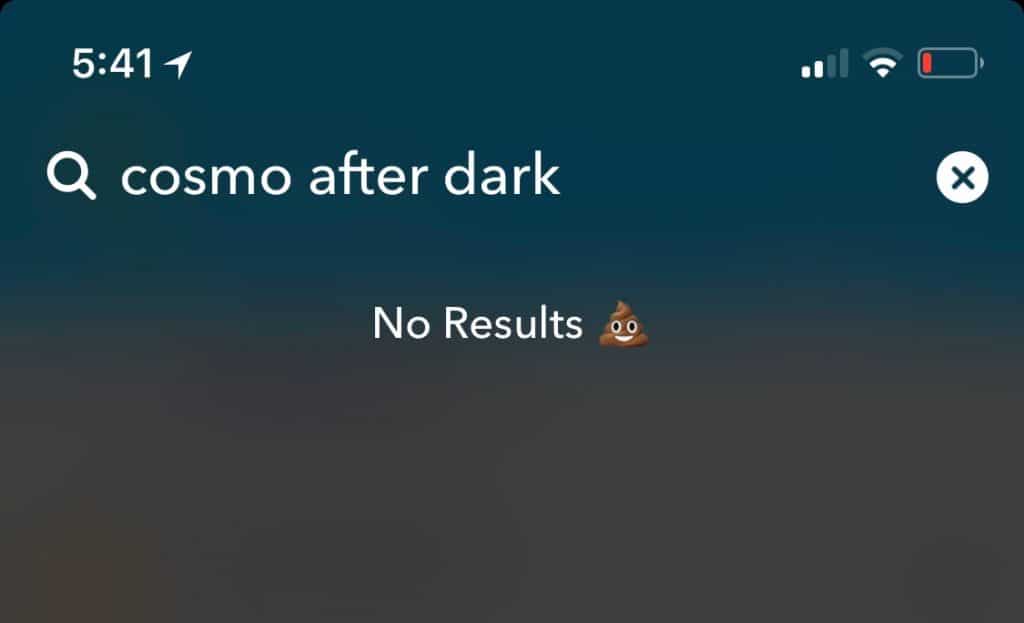
Now that consumers are getting more educated about online content, could the tide be turning in favor of more accountability and better online child safety? Earlier today I got a phone call from an FBI agent friend alerting me to the new Snapchat channel, “Cosmo After Dark,” after a parent called him with concern. This channel is searchable in the Discover feature of Snapchat. The issue became public knowledge when my friend at Protect Young Eyes, Chris McKenna, published his whistleblowing article, “Snapchat Introduces Cosmo After Dark (It’s P*RN).” Todays quick read explores why this is an issue GKIS parents need to know about.
Cosmo After Dark advertises that it is “an X-rated weekly edition that goes live every Friday at 6 p.m. and is exclusively dedicated to all things hot and h*rny.” Not only might your child access this content, they might even be able to subscribe to it! Although Snopes points out that Snapchat has age-gating tools that block “adult” content from users under 18 years old, Chris argues that Snapchat may be getting more desperate and allowing more lascivious content in order to maintain more marketshare. As Snapchat gets more worried about the bottom line, the worry is they may slip in corporate responsibility.
Another issue raised is if this content is Cosmo’s traditional sexy fare or is it actually pornography? You be the judge. Cosmo After Dark articles include:
“The 19 Best Sites to Binge-Watch Porn On”
“12 Songs You Should Have Sex to Right Now”
“The Steamiest Most X-Rated Sex Party Confessions”
Just sexy articles, right? I would argue that our kids and teens are harmed by hypersexual content. Are you comfortable with your teen son or daughter getting instructions for more satisfying anal sex? I didn’t think so.
After a busy day of watching this story evolve between clients, I am happy to say there is a happy ending. Due to parent outcry, Cosmopolitan magazine just pulled Cosmo After Dark. It turns out that our voices matter. As parents get more educated, we are becoming increasingly effective advocates with real influence. Thank you Chris for keeping an eye out for us. Unfortunately, this won’t be the last risk trap on social media.
WHAT CAN YOU DO TO PROTECT YOUR KIDS FROM ADULT ONLINE CONTENT?
If your teen has Snapchat, make sure their birthdate is accurate within the app. According to Snapchat, this will give some protection from inappropriate content.
If you’re worried your child may edit his or her birthday in order to access adult content, Protect Young Eyes reports that you can lock the edit feature by changing the birthdate on your child’s phone until you reach max attempts.
Avoid the whole issue altogether by following the Terms of Agreement on social media apps due to COPPA. If your child is younger than 13 years old, don’t allow them social media yet. Messenging apps and texting is risk enough.
Use sound digital parenting tools like Ourpact, Unglue, and Bark. Filtering content, tracking use, encouraging accountability, and monitoring content not only teaches kids important skills, it also puts parents in the screen driver’s seat so they can stay involved and offer teaching and support along the way.
Get informed about risk and best screen sanity parenting practices with Screen Time in the Mean Time: A Parenting Guide to Get Kids and Teens Internet Safe. It’s not just what you do that matters, how you do it counts too. Although safety strategies are important, forming a fun, cooperative relationship with your kids is key to a happy, healthy, screen safe family.
I’m the mom psychologist who will help you GetKidsInternetSafe.
The Internet can bring out the worst in people. Some say millennials have empathy deficits due to screen communications replacing face-to-face experiences. If that’s the case, what about the younger iGen’s who were born with screens in their hands? Are they doomed? Are we destined to turn into robots with poor empathy skills? Today’s article tells us what empathy is, how it’s learned, and how screen use is impacting its development.
What is empathy?
Empathy is the capacity to understand and share another person’s perspective and emotions. It is the sadness you feel when someone you love is in pain or the joy of watching new parents hold their baby for the first time. Empathy is at the heart of human connection and is key to preventing cruel actions against others.
How do we learn it?
Kids learn empathy by watching their parents. We are prewired to learn it with specialized learning cells in the brain, called mirror neurons. Mirror neuronsare part of a motor neuron that allows us to move facial muscles when expressing emotions. In Dr. Bennett’s book, Screen Time in the Mean Time: A Parent Guide to Get Kids and Teens Internet Safe, she says:
Our biology sets us up for success. In the 1980s, Giacomo Rizzolatti and his team of Italian researchers discovered that when macaque monkeys observed the behavior of other monkeys, the same neurons in their brains fired as if they themselves were performing the behavior (Pellegrino, 1992). In other words, the monkeys had specialized brain cells (called mirror neurons) ready to fire by observational learning. They learn and get practice by watching as well as doing.
Researchers now have evidence of similar mirror neurons in humans younger than twelve months old and hypothesize that mirror neurons are not only key in learning specific chains of motor behaviors but may also be what’s behind complex emotional learning like empathy and attachment (Falck, 2006). This genetic advantage means we are neurologically prewired to understand the intentions of others and unconsciously respond (Rizzolatti, 2006). We not only recognize logically what others are doing and feeling, but we also experience it with them. We are prewired to mimic, learn, and connect with each other.
Other factors necessary for the learning of empathy include:
the brain chemical oxytocin that sets us up to bond,
physical contact and nurture between parent and child,
parent-child fit,
warmth,
consistency, and
gently guiding communication.
Kids learn empathy better when it is modeled rather than when it is taught in the classroom.[2] They learn by interacting and watching how their parents respond to the cashier at a retail store or the server at a restaurant.
Empathy is also learned from how parents treat their children. If a parent is kind to their child, then the child will learn to be kind. Skilled caregivers reinforce empathic behavior when they provide an ongoing narrative about activities, validate emotion (confirm that they see and understand the child’s emotion), and praise children for prosocial behaviors like sharing and helping. The more practice and positive feedback kids get, the stronger their empathy skills. Of course, some kids are born with a natural talent to develop empathy based on genetics and personality. But with practice, all kids become less and less egocentric and more and more people-centered.
The Importance of Empathy
Teaching empathy is important because empathy helps us build relationships and adapt to stressful situations and setbacks. Doing a job well not only requires technical skills, but it requires empathy also.
In the professional sphere, empathy helps with negotiations, teamwork, interviews, and customer service.
On the playground, empathic children are good at making friends, keeping friends, and making others feel welcomed and cared for. They make the playground a safer place.
How Screen Time Interferes with Child Empathy
With all of us distracted by the cheaper version of connection from screen time, we are getting less practice with true empathy. Some experts believe that the rate at which young people and children express empathy has declined by as much as 25% in the past 10 years. [3]
Another way screen use interferes with empathy is by encouraging self-centeredness. Social media is believed to promote the obsession with self by allowing the user to edit and correct their image to the point of false perfection.[3] With the “perfect” virtual self to live up to, our nonvirtual selves often fall short of expectations. This can cause us to avoid real-life interactions and prefer screen interactions. We are more “connected” than ever with more and more people, yet we are getting more lonely, anxious, and depressed.
Ways Parents Can Promote Child Empathy
Narrate everyday activities while your kids watch and participate.
Make sure you include “feeling” words and challenge the child to imagine how other people might be feeling. For example, “Ooh this dinner is going to be good! It makes me happy to imagine the smiles on everybody’s faces when they take their first bite!”
Take the time to truly engage with eye contact, hugs, kisses, and tickles. Quiet snuggles count too.
Be sensitive to your child’s needs and let them know you “see” what they’re feeling. For example, “Oh honey, I can see you are getting tired and need a little break because you are frowning and rubbing your eyes. Let’s relax now and read a story.”
Set your child up for success by setting up a variety of playdates with all different ages of kids and adults.
Kids learn empathy by being nurtured, but also by nurturing themselves. Taking care of younger kids and following the instruction of older mentors offers various nuances for socioemotional skill-building.
Monkey see, monkey do.
Keep in mind that your behavior will be scrutinized and mimicked every second. Stay in the present, and practice a well-balanced online and offline activity diet.
Teach your children to “love and protect.”
Teaching your children to nurture animals and younger children is a great practice of empathy. Community service is also an awesome way to bring the family closer and teach kids philanthropy and gratitude.
Opt for interactive screen activities over passive screen time.
[1] Bennett, T. (2017). Screen Time in the Mean Time: A Parent Guide to Get Kids and Teens Internet Safe.
[2] Upright, R. L. (2002). To Tell a Tale: The Use of Moral Dilemmas to Increase Empathy in the Elementary School Child. Early Childhood Education Journal, 30(1), 15-20.
[3] Bonnette, R. (2014). Rethinking Technology’s Impact on Empathy. Loyola University Chicago, School of Law.https://www.luc.edu/media/lucedu/law/centers/childlaw/childed/pdfs/2014studentpapers/Bonnette.pdf.
Falck-Ytter, T., Gredebäck, G. & Von Hofsten, C. (2006). “Infants Predict Other People’s Action Goals.” Nature Neuroscience Nat Neurosci9.7: 878-79. Web.How Parents Can Cultivate Empathy in Children, https://mcc.gse.harvard.edu/files/gse-mcc/files/empathy.pdf
Pellegrino, G., Di, L., Fadiga, L., Fogassi, V., Gallese, & Rizzolatti, G., (1992). “Understanding Motor Events: A Neurophysiological Study.” Exp Brain Res Experimental Brain Research91.1: 176-80. Web.Uhls, Y. T., et al. Five days at outdoor education camp without screens improves preteen skills with nonverbal emotion cues. Computers in Human Behavior (2014), http://dx.doi.org/10.1016/j.chb.2014.05.036
Rizzolatti, G., Fogassi, L., & Gallese, V. “Mirrors in the Mind.” Scientific American295(5) (2006): 54-61 SPECIAL SECTION: NEUROSCIENCE