
Need peaceful screen time negotiations?

Get your FREE GKIS Connected Family Screen Agreement

parenting

Gaming Together Increases Family Bonding

Although a lot of parents let their kids play video games, not many co-play. Parents are busy! And for many, video games are unknown territory. Trust me, I’ve seen my mom try to play new video games, and she was beyond lost. But as a kid’s interest in video games increases, your relationship with them may seem to decrease, as if screen time replaces relationship-building. And with newer games like Fortnight, God of War, and Call of Duty, the complexities can drive a wedge between digital immigrants and digital natives. But it doesn’t mean they should! Many games offer teamwork and cooperation and can be fun for the whole family. Gaming might not be as scary as you think. Using hobbies your kids already enjoy is a great start to strengthening family bonds. Check out Dr. Bennett’s Connected Family Course for a guide on balancing screen time, like gaming, with family time. Read on to learn what co-playing has to offer, and why you might want to start gaming with your kids.

What makes co-play important?

The “fear of the unknown” can cause parents to separate themselves from their children’s virtual activities. As a result, kids can become isolated. Parents see this and either reprimand the kid for playing too much or guiltily allow the distance.

When I grew up, my mom provided me with interactive video games that offered entertainment and learning experiences. As a digital native, I started playing more and more online games and would even search some out in hopes that my parents would play with me. But because they were digital immigrants, they never did.

In 2013, researchers Hayes and Siyahhan found that “parents miss a huge opportunity when they walk away from playing video games with their kids.” They elaborated that parents don’t realize that there are many games designed to teach problem-solving, science, or literature. Not only can you learn alongside them, gaming with your kids can also offer countless ways to interact and have teaching moments. Gaming together offers new lines of communication and give them a reason to want to bond with you.[1]

Teaching and Bonding

In 2018, Bingqing Wang’s research on video games and family cooperation showed that family members who play video games together have better family satisfaction and family closeness. They also showed that families with poor family communication can benefit from co-playing.[2]

One benefit of co-play is the opportunity to work together to achieve a common goal. Strategizing and reflecting on executed choices encourages sportsmanship and the value of failure. Rather than the child walking away from a failure disheartened, parents can teach them to analyze the loss and improve on strategy with enthusiasm rather than defeat. Co-play also allows parents to set good examples for setting limits. Ending a gaming session together seems better than being “forced” or “made” to stop playing.[3] Shared experiences are more fun, wins are more fulfilling, and cooperation is much better than isolation.

You may be concerned that, even with effort, you’ll look stupid and won’t “get it.” But if you both played and had fun, they’ll recognize you took the effort to get close to them and better understand why they love to play. You’re not just an outsider trying to limit something they enjoy. Growing up, I had multiple friends who got to play with their parents and bond over the games they liked. They loved talking about it and became even closer, something I missed out on.

What to Play

Which games are family-friendly? Dr. Bennett said her kids asked for a Nintendo Switch so they could return to games they used to play together on the Wii. There are many options that are rated E(for everyone). It also offers parent controls and time limits that allow parents to manage what and how much their kids are playing.

Some fun and family games we at GKIS recommend are:

Mario Kart is a competitive driving game with lots of cute levels, fun characters, and a ton of quality. Race against friends and family in different beloved Mario worlds. Dr. Bennett cautions to start with the cow land…she says she’s spent many hours screeching in agony trying to stay on the slippery Rainbow Road while her kids roared. She says kids can’t get trusted to pick the level…

Just Dance is another Nintendo Switch game that Dr. B says provided hours of fun family co-play. With many popular and even old hits, everybody finds their favorite games to competitively dance to. She says her youngest was delighted by this game, because even when he was little, he could out score her and his older sisters! Plus, everybody worked up a sweat and got a little exercise. No pain, all gain.

Super Mario Party is a game designed for group play and loads of fun. With 80 mini-games, like Bumper Brawl and Croosin’ for a Broosin’, everybody has a favorite. Play with or against your kids with the large board game style platform.

Yoshi’s Island is an fun and simple game for the whole family. Jump around as the adorable Yoshi solving creative puzzles and collecting all the hidden items.

Snipperclips has great games for the whole family don’t have to cost an arm and a leg. This game is designed for communicating and working together to snip your cute little paper characters into the perfect shape for each unique and entertaining puzzle.

Knock ‘Em Down Bowling is a fun one with many game modes like split screen, team matches, and no gutters. With a variety of traditional bowling games and party modes, team work is always a fun possibility.

Forza Motorsport Games for Xbox offers lots of options for fun family car racing in professional-style track racing events.

Scribblenaughts for the Nintendo DS is a fun, emergent puzzle action video game where the players must solve puzzles in order to collect Starlites. Warner Bros. Active Entertainment published this game with the goal of promoting emergent game play by challenging the player through systematically more difficult puzzles.

I’m Jack Riley a GKIS intern. I hope you find the courage to carve the time and try co-play now that you see the pros in family gaming. My parents were never able to do any of this with me and as my interest in games increased, I felt as if our family relationship decreased. Interested in learning about other benefits of video game play? Check out the GKIS article Is Your Child a “Professional Gamer”?

I’m the mom psychologist who will help you GetKidsInternetSafe.

Onward to More Awesome Parenting,
Tracy S. Bennett, Ph.D.
Mom, Clinical Psychologist, CSUCI Adjunct Faculty

Works Cited

[1] (July 2013). Move over, Monopoly: ASU researchers find families bond over video game play, Arizona State University.edu

[2]Wang, B. (April 2018). Families that play together stay together: Investigating family bonding through video games. Sage Journals.com

[3]Shapiro J.( December 2014). Research Says Parents And Kids Should Play Video Games Together. Forbes.com

Photo Credits

Photo By Kelly Sikkema

“My mini on our PS4” photo by Samantha Sophia

“Two people playing Sony PS4 game console” photo by JESHOOTS

“Nintendo Switch Joy-Cons” photo by Aleks Dorohovich

How to Become a Meme Lord

Memes are addictive and trashy, but that doesn’t stop an entire generation of people using and abusing them at any given time. The number of times I have tried to have a conversation over text with my brother and only received memes as answers is ridiculous. In fact, if I had a dollar for every meme that was sent my way, I’d be a debt-free woman. While memes appear pointless and mindless, parents can use them to manipulate their kids into doing homework and chores around the house. How you ask? All it takes is some knowledge about the dankest of memes, and you too shall become a meme lord.

What is a meme?

A meme is a highly shareabledigital image with a witty tagline. They are appealing, because they can be funny, clever, sarcastic, or simply tap into an unspoken but relatable concept. For example, some of my favorite memes are the ones that reference what it is like to have siblings, like the meme of a guy with an arrow through his head, captioned, “I’m sorry, you’re fine, please don’t tell mom.” Every time this tired meme pops up on Instagram, I have to share it. Memes not only offer personal entertainment, they are also a proven way to connect effortlessly to others.

The History of Memes

Believe it or not, memes were not birthed from the Internet! According to Britannica (2019), Richard Dawkins, a British evolutionary biologist, was the first to propose the concept of “memes” in his 1976 work The Selfish Gene. In a recentinterview with Vice (2018), Dawkins defined a meme as “the cultural equivalent of a gene,” meaning that, in the same way genes are passed down from person to person, memes culturally spread through the population. By his definition, cultural phenomena like fashion, slang, and fads can all be considered memes, as well as the traditional image with a caption that we see circulating social media today.

Dawkins’ ideas are elegantly illustrated with today’s dank memes(memes that are overused and overhyped) — for example the “free real estate” and the “salt bae” meme.

Salt bae: CNBC (2018) reported that the man behind the salt bae meme is Nusret Gokce, a chef and restaurant owner who became a viral sensation for the way he dramatically sprinkles salt on the steaks he’s prepared for guests. Since an Instagram video of him performing this action went viral, Gokce’s salt bae has become a dank meme and gets used for anything that is perceived as extra or snobbish.

Check out Gokce performing this amazing meme here.

Free real estate: This meme originated from the TV show, Tim and Eric Awesome Show, Great Job!which aired on Cartoon Network’s late night TV Adult Swim. This hilarious sketch is in the form of a commercial in which Tim and Eric are desperately trying to convince a man named Jim to move into a free house. It ends with a close up shot of Tim whispering the timeless line, “It’s free real estate.”

Check out the hilarious video here.

How Memes go Viral

In his YouTube video, “What makes a meme go viral?” Hank Green (2017) attributes the popularity of memes to the bandwagon effect. The bandwagon effectis when people join in on a trend or belief simply because others have told them to. Social media is a great way to increase the popularity of a meme, because it enables us to share them with the world. When someone finds a meme that they adore, they share it with anyone who will find it funny, usually with a caption like, “OMG you have to see this!”

Hank (2017) elaborates that a meme going viral depends on how extreme of an emotion it elicits in us. The more outrageous a meme, the more likely we are to share it. In my opinion, this also has to do with how nostalgic a meme’s content is. For example,the popular meme that features a clenched fist from the popular TV show Arthur can be used for a plethora of situations but is mainly used to elicit subtle levels of frustration and anger.

In my opinion, the reason this meme became such a viral sensation is the feelings of nostalgia it brought to millennials. I adored the TV show Arthur as a child, and every time this meme pops up on my Instagram discover page, it brings back memories from when I was small and cute.

The Most Insane Viral Memes

To become a meme lord, you must be familiar with these iconic memes.

Success Kid: In 2010, an image of a cute little baby at the beach clenching his fist began circulating the Internet. This image is usually used when something awesome happens that was unexpected. Check out its history here.

Distracted Boyfriend: The distracted boyfriend meme was discovered on Shutterstock, a site that houses royalty free images. Its appeal is self-explanatory.

check out these A++ memes here.

World Record Egg: This is by far one of the most ridiculous things to have happened at the beginning of 2019. It all began when an account on Instagram wanted to see if a photo of an egg could
gain more likes than one of Kylie Jenner’s photos, which had 18 million likes. As of today, the great egg on Instagram has over 53 million likes and 9.9 million followers. This then sparked a series of memes with the captions, “Can this meme get more likes than the Kylie Jenner baby pic?”

Check out their Instagram to keep up-to-date on the hunt for the egg! @world_record_egg. Check out these amazing memes here.

Need more memes, because that just doesn’t feel like enough? Frequentknowyourmeme.com to maintain your newly-acquired meme lord status. You won’t be sorry.

 How GKIS Parents Can Become Meme Lords

As the popularity of memes has rapidly risen over the last few years, it’s evident that memes are here to stay. Many people and workplaces are now using them to their advantage. Teachers are using them as motivational tools when they’re grading papers, and workplace managers post them in employee break rooms as funny motivational tools.

Mom, Dad – you too can be a meme lord! Not only can you bring humor into your everyday chore assignments, but you can mortify your kids for being quicker in-the-know than they are!

For example, use them as motivational and study tools when helping kids with homework. There is an entire genre of memes dedicated to random facts. These are known as WTF facts and include some fantastic information that you usually wouldn’t learn in a classroom. Of course, fact check. You can’t believe everything you read on the Internet. Kids love them! My younger brother will spend hours looking at these memes, especially the history ones.

What sites will help GKIS parents become meme kings and queens?

  • Facebook
  • Instagram: @memzar
  • Google search
  • Imgur
  • Pinterest
  • Reddit
  • Tumblr

If you can’t find what you’re looking for, make one! Believe it or not, making memes is as simple as pulling up free design sites/apps like Canva or Imgur. Remember, if it doesn’t cause immediate laughs, then it’s probably not a meme!

Dr. Bennett founded GKIS as a service for parents looking to have more fun with their kids, which means joining them where they’re at. Become a meme lord to lighten up, have fun, and encourage mutual meme sharing with your goofy brood. If your kids are younger than eleven, they’ll be in awe of you. If their tweens or teens, you’ll get a mortified eye roll – which Dr. Bennett says is “the best you’re gonna get outta teens.” haha.

Thank you to CSUCI intern, Kassidy Simpson for providing parents with information they need to help become as meme savvy as their kids. Need more support to get Internet savvy and partner with your kids instead of lecture them? You’ll love our GKIS Connected Family Online Course. Designed to help parents lighten up and have fun with their kids while improving screen safety, you’ll see why Dr. B’s kids say she’s “the fun mom.”

I’m the mom psychologist who will help you GetKidsInternetSafe.

Onward to More Awesome Parenting,

Tracy S. Bennett, Ph.D.
Mom, Clinical Psychologist, CSUCI Adjunct Faculty
GetKidsInternetSafe.com

Works Cited

Fazal, M. (2018, May 08). Richard Dawkins Told Us What He Thinks About Memes. Retrieved from https://www.vice.com/en_us/article/d35ana/richard-dawkins-told-us-what-he-thinks-about-memes

Green, Hank [SciShow Psych]. (2017, July 24). What makes a Meme Go Viral? [Video file]. Retrieved from https://www.youtube.com/watch?v=sANg0NyvVnk

Rogers, K. (2019, January 10). Meme. Retrieved March 1, 2019, from https://www.britannica.com/topic/meme

Skid, N. (2018, January 27). Salt Bae: How a butcher’s apprentice turned a sprinkle of salt into worldwide fame. Retrieved from https://www.cnbc.com/2018/01/26/this-is-how-salt-bae-became-the-most-famous-butcher-on-instagram-in-the-world.html

Photo Credits

Photo by Daniele Levis Pelusion Unsplash

Photo by Liudmyla Denysiukon Unsplash

Photo by NeONBRANDon Unsplash

Photo by Braydon Anderson on Unsplash

YouTube

Free real estate https://www.youtube.com/watch?v=cd4-UnU8lWY

Salt Bae https://www.youtube.com/watch?v=J5GGG0PaSe4

Memes

https://knowyourmeme.com/memes/success-kid-i-hate-sandcastles

https://knowyourmeme.com/memes/distracted-boyfriend

https://knowyourmeme.com/memes/world-record-egg

What Age Should We Allow Smartphones?

Move over debutante balls and high school dances, unboxing a brand new smartphone is the new coming-of-age ritual for today’s teens.[6] Teenagers born in 1995 and after are the first generation to live their entire adolescence with a smartphone.[5] In 2017, ten years old was the national average for receiving a smartphone.[6] This profound and sudden cultural shift has fundamentally changed childhood and parenting. Smartphones are a new-found necessity and parents are scrambling to provide one as soon as possible.

“What’s the WiFi password?”

Technology is an important part of our modern culture. In comparison to the rest of the world, the United States provides cell phones to the youngest kids.[8] Everywhere you go there’s a child or teen glued to a screen. There are babies listening to “Baby Shark” in their strollers during morning walks with mom, toddlers playing Candy Crush in their restaurant booster seats, and teenagers scrolling their Instagram feeds while blindly following their parents around Costco. It shouldn’t be surprising that adults and kids alike spend more than half of their days staring at a smartphone screen.[6]

With a smartphone in every hand, parents are peer pressured by their friends and begged by their children to provide one. Parents feel guilty for withholding one for too long because they see their children socially isolated.[11] Yet, giving a smartphone to a ten-year-old today is fundamentally different than when parents gave sixteen-year-olds flip phones in the 90s.[4]

Nokia Flip Phone vs. iPhone

Down to the basics, the main function of a cell phone is to call and send text messages wirelessly with no data. Smartphones such as iPhones, Androids, Google Pixels, and so forth have transformed those basic necessities.[7] They need data and WiFi to power infinite applications and endless Internet access. Basically, it’s a mini-computer that is more powerful than all of NASA’s computing power in 1969…in the palm of your hand!

Innovative or Addictive?

Unlike phones in the 70s, there are thousands of engineers and tech designers updating smartphones every day.[5] Their job is to make sure that smartphones and applications consume all our attention. They dazzle us with colorful visuals, sound effects, and seamless switching between applications. Studies have shown that children exposed at a young age to these stimulating effects become wired to crave easy dopamine release.[12] Instead of going outside and playing with their friends, they turn to their screens for pleasure

Sean Parker confessed to taking advantage of the human psyche when developing Facebook.[1] The former president of Facebook explained their objectives were, “How do we consume as much of your time and conscious attention as possible?”[1] He and Mark Zuckerberg knew that small hits of dopamine from notifications would hook everyone.[1] Parker reflects, “I don’t know if I really understood the consequences…God only knows what it’s doing to our children’s brains.”[1]

It’s true. Silicon Valley’s tech executives have become wary of their own creations. They’ve noticed the negative effects on their own children.[11] For example, Apple’s co-founder Steve Jobs limits his children’s tech time. He even kept the iPad away from them when it was first released.[10]

Smartphone Dependency

With all this power comes responsibility. Former Apple designer Tony Fadell struggles with whether his apple products have helped or hurt society.[2] In his own children he has seen smartphone dependency:

“They literally feel like you’re tearing a piece of their person away from them — They get emotional about it, very emotional…They go through withdrawal for two to three days.”[2]

Dr. Bennett details in her book, Screen Time in the Mean Time: A Parenting Guide to Get Kids and Teens Internet Safe, how smartphone dependency is like that of drug and alcohol addictions. Whenever teens hear a notification or see new content, dopamine is released and pleasure is felt. If too much time is spent apart, the smartphone-dependent gets agitated. There’s even evidence that we get distracted just by having a smartphone near us, even if it’s turned off as if we are in a state of chronic hypervigilance for notification. She chooses to have a screen-free classroom, stating that the research demonstrates that, not only is the screen users distracted from the lecture, but so are those around them.

Notifications on smartphones can be so addicting they cause phantom buzzing or ringxiety. Daniel Kruger researched cell phone dependency at the University of Michigan. His study found that “if your phone is rubbing in your pocket or if you hear a similar tone, you might experience it as your phone vibrating or ringing, especially if your phone messages are highly rewarding to you.”[3] That’s how adept our attention has become to our smartphones. 

“Best” Age

Many studies have tried to determine which age would be best for a smartphone. Recently, the World Health Organization (WHO) came out with guidelines recommending no screen use for infants under one year of age and only an hour a day for kids under 5. Dr. Bennett’s GKIS guidelines, which are offered in her must-have Connected Family Online Course, are consistent with this recommendation as well. The American Academy of Pediatrics and the Canadian Pediatric Society also recommend no screen time for toddlers younger than two years old.[12]

Many parents are under the false impression that virtual reality can replace real-life lessons for toddlers. But the psychological research shows that the skills don’t transfer over. For example, toddlers who play building block games don’t know how to build the same blocks when presented the toys in real life.[5] This is because the toddlers didn’t develop the skills before seeing it on the Internet.

Furthermore, Dr. Bennett states in her keynote lectures that some kids are less likely to try a task after seeing performed on YouTube. It’s as if watching “scratches the itch” of wanting to do it themselves. How-to videos often demonstrate an effortless learning curve, as the practice and messy sessions are edited out – leaving a quick and perfectly executed trial to view. When a child tries out the task themselves, they can fall into “compare and despair,” feeling that their very normal imperfect trial was a failure rather than a healthy try.

Dr. Bennett recommends that, from two to twelve years old, children shouldn’t have Internet-enabled smartphones. A normal flip phone that only allows for calling and texting will suffice for any safety concerns. Some starter phones even have GPS tracking.

Those are a general rule of thumb since all children vary in maturity. Age doesn’t qualify a child to use a smartphone well but instead impulse control, social awareness, and true comprehension of what technology does.[5] Bill Gates’ household requires at least one of the following to be met before a smartphone is given[6]:

  • Must be 14 years old
  • Demonstrate behavioral restraint
  • Comprehend the value of face-to-face communication

Dr. Bennett further points out that, even at 14 years old, kids don’t have the brain development to anticipate consequences and engage in high-order thinking. Just telling them what not to do will not keep them from making unwise, impulsive decisions online. In fact, kids are neurologically programmed to copy some of the cruel and vulgar behaviors they will invariably run across online, even with parental controls. Be prepared to calmly coach them through a variety of online mistakes. No child escapes it.

Wait Until 8th Campaign

If you’re looking for a place to start, GKIS recommends Wait Until 8th. As of March 2019, 20,000 families across the entire nation have signed the Wait Until 8th pledge.[9] These families have pledged not to give their children smartphones until at least the 8th grade. They emphasize that it isn’t the only path, but a path that offers a safe space for parents with the same concerns. Professionals in law, psychology, education, healthcare, business, and social work created the non-profit pledge.[10] They’re parents who have seen the negative effects of premature smartphone usage in classrooms, court systems, private practices, communities, and households. By spreading the pledge, the Wait Until 8th Campaign hopes to:

  1. Increase engagement in education
  2. Encourage parents to set screen time boundaries
  3. Change society’s view on technology so children can live authentic childhoods

“Can I have one now?”

Your teens will eventually get a smartphone, like everyone else. We don’t want to restrict them for so long that they go wild once given access. But first, we have to coach them to make good decisions on their own. This way, we can better trust them to be mature when facing issues like cyberbullying and age-inappropriate content. As simple as they seem, smartphones are very powerful. With that power comes great responsibility for parents to make sure that smartphones are a tool we use, not a tool that uses us.

Already given them a smartphone or getting ready to start? It’s never too late to make some adjustments. Dr. Bennett has put together a reliable Screen Safety Toolkit to help you get started. This resource offers links and explanations of parental control options on devices, through your Internet service provider, and through third party products so you can match your child’s use patterns with the right toolkit. She also offers a bonus of great learning apps and websites to help your child build their joy of tech-assisted learning!

Thank you to our GKIS intern Hanna Dangiapo for writing about this topic! (She admits that she still reminisces about her Motorola Razr).

I’m the mom psychologist who will help you GetKidsInternetSafe.

Onward to More Awesome Parenting,

Tracy S. Bennett, Ph.D.
Mom, Clinical Psychologist, CSUCI Adjunct Faculty
GetKidsInternetSafe.com

Works Cited

[1]Allen, Mike. “Sean Parker unloads on Facebook: ‘God only knows what it’s doing to our children’s brains.” Axios, 2019.

[2]Baer, Drake. “The Designer of The iPhone Says He Worries About The ‘Nuclear Bomb’ He Brought Into The World.” Thrive Global, 12 July 2017.

[3]Baer, Drake. “The Science Behind Your Phantom Cell Phone Buzzes.” Thrive Global, 22 March 2017.

[4]Cohen, Danielle. “When Should You Get Your Kid a Phone?” Child Mind Institute, 2019.

[5]Cooper, Anderson. “Groundbreaking Study Examines Effects of Screen Time on Kids.” 60 Minutes, 9 December 2018.

[6]Curtin, Melanie. “Bill Gates Says This Is the ‘Safest’ Age to Give a Child a Smartphone.” Inc, 10 May 2017.

[7]“Frequently Asked Questions.” Wait Until 8th, 2019.

[8]Howard, Jacqueline. “When kids get their first cell phones around the world.” CNN Health, 11 December 2017.

[9] [10]“Our Team.” Wait Until 8th, 2019.

[11]Shannon, Brooke & Freed, Dr. Richard. “Parent Like A Tech Exec.” Wait Until 8th, 2019.

[12]Stein, Stacy. “An age-by-age guide to kids and smartphones.” Today’s Parent, 21 March 2018.

[13]“Why Wait?”.Wait Until 8th, 2019.

Photos

Photo byBianca CastilloonUnsplash

Photo byAlex KotliarskyionUnsplash

Photo byKelly SikkemaonUnsplash

Photo byPatrick BuckonUnsplash

Photo byBlake BarlowonUnsplash

The Future of Gender: Gender Fluidity

As a clinical psychologist who works with kids and teens, I’ve seen the landscape of their lives change in a rainbow of ways. These changes provide opportunities for growth and connection with self and others but can also lead them into unhealthy relationships in online and offline communities. For parents to educate and connect (rather than disconnect) with their kids over these issues, we need to know the basics. Today’s GKIS articles allows us to take a look into what sociologists predict to be a “genderless future,” where we will no longer be defining ourselves as “female” or “male.”[9] Newly created identifiers and the generic “they” will replace pronouns “she” and “he.”[9] And major businesses like Amazon, Target, Walmart, and Disney will remove gender from the labels of their products.[12]

Gender Fluidity

Welcome to 2019, where millennials and generation Zers have created “Gender Fluidity.”[3] Being “gender fluid” means that the individual exists on a spectrum between male and female and may shift gender several times a day or throughout their lives with different intensities.[8] A millennial poll of 1,000 people revealed that half believe that gender exists on a fluid spectrum or “outside conventional categories.”[14]

Celebrities like Will Smith’s son Jaden Smith, rapper Young Thug, actress Ruby Rose, and superstar Miley Cyrus have identified themselves as gender fluid.[10] Young Thug and Jaden Smith are known for pushing the boundaries of fashion with crop tops and skirts.[10] Ruby Rose varies in masculinity in photoshoots and TV shows like “Orange Is The New Black.”[10] Miley Cyrus has explained her gender fluidity during interviews, “It’s weird that I’m a girl, because I just don’t feel like a girl, and I don’t feel like a boy.”[4]

The Break Down

Gender and sexuality concepts are difficult to understand. They seem muddled in some way or another. Here’s some clarification:

  • Gender is biological sex and its cultural associations: male, female, transgender.[1]
  • Gender Identity is what someone perceives their gender to be: biologically a female but identifies as male.[1]
  • Gender Expression is how someone shows their gender whether it be through clothing choices, hair style, makeup, and the like.[1]
  • Sexual Orientation explains what gender someone is attracted to and would like to have sexual relations with (differs from gender identity).[1]
  • Romantic Orientation explains what gender someone would like to be emotionally and romantically involved with (differs from sexual orientation sometimes).[11]

Gender Stereotypes

With the traditional labels of gender came their stereotypes, with females being sexual objects and males being macho knuckleheads.[5] These stereotypes link to online gender specific characteristics. Women tend to fulfill their sexual stereotype by posting provocative photos. In captions and comments their words are more positive, supportive, emotional, and personal.[5] Men express their masculinity online by posting content related to violence, sex, and alcohol. Their online engagement is more aggressive, negative, and authoritative.[5]

Gender Expression Online

Modern society advocates for the freedom to be yourself no matter what gender you are or what the color of your skin is. Millennials and generation Zers have countered stigmatic barriers (such as stereotypes) that prevent the LGBTQIA (lesbian, gay, bisexual, transgender, queer or question, intersex, or allied) community from thriving.[13]

The internet has granted many a voice to speak their truths as well as a receptive audience who’ll listen. That power is a great confidence booster for those who feel powerless against parent authority and social judgement.

It also makes the gender journey feel less lonely for kids and teens. Social media provides a private place to relate with others, vent about being misunderstood, and express themselves unapologetically. On their own terms, they can gradually reveal discovered parts of themselves.

For example, some may feel comfortable cross dressing online but not walking out the door that way.[7] This is because coming out to strangers online is more manageable than coming out at school or home.[6] According to the LGBT Helpline, more people feel hopeful and positive about coming out online, because they know they’ll get plenty of positive support.[6]

Being Anonymous

Another great benefit of online gender expression is the freedom that anonymity provides. Kids and teens are allowed to explore their identity on their own terms. The ability to stay anonymous gives them control over who they come out to. You can choose to use an actual picture of yourself or an avatar, virtually anything to be your default picture. Usernames have the same range in reality or fantasy. Social media allows you to pick and choose who has access to your content. A powerful tool is the ability to block specific users from having access entirely. These tools allow teens to choose whether they want to interact with specific people in their inner circle or complete strangers. It also reduces the chances of cyber bullying.

The combination of anonymity and a knowledgeable online community creates an accepting venue. There’s less chance for criticism invalidating a teen’s gender identity.[7] When coming out online to strangers, a user’s gender and sexual orientation isn’t judged by their past.[7] Peers tend to think they know where someone is on the spectrum. This is because they refer to stereotypes. They judge this based on someone’s dating and sexual history. What they know about the person’s interests and hobbies, again, gender is fluid. It’s a personal journey that one can only define for themselves.

Online Safety

As explained before on GetKidsInternetSafe, “gender-awareness is one aspect, but sexual awareness is another.”[2] Unfiltered chat rooms for things like webcomics, fandoms, and role-playing games expose children to age inappropriate themes of sex and violence.[2] Predators have the opportunity to manipulate naive and vulnerable kids and teens with explicit content or groom them for exploitive relationships.[2]

If you worry that your kids aren’t quite ready to delve deep into online communities that may put them at risk, you’ll want to check out our GKIS Screen Safety Toolkit. With our family-tested, outcome-based recommendations, you can build your customized digital toolbox for each device your child uses. That translates to filtering and blocking age-inappropriate content and offer parental management tools like location tracking and monitoring. Why wouldn’t you use the free and/or subscription parental controls available to you to help? You don’t even have to waste time and energy figuring out which will fit for you. We did the research for you!

In addition to GKIS products like our free Connected Family Agreement, Screen Safety Toolkit, and Connected Family Online Course, websites like 7 cups can detour dangerous influence. 7 cups offers free 24/7 support chat rooms by volunteers trained to deal with adolescent issues like “depression, anxiety, relationships, LGBTQ+ and more.”[15] Teens can anonymously join monitored chat rooms to relate with others in the community.[15] The website is a great stepping stone for teens who feel like their parents don’t understand. If all of this is overwhelming already, book a coaching session with Dr. B so she can guide you through it. It really is as easy as that.

What else can you do?

  • Reflect on your ideas and beliefs about gender. It’s important to understand how you truly feel about these issues. Identify what makes you feel or think this way. Is it healthy and supportive for a child emotionally, mentally, and physically struggling to find themselves?[2]
  • Educate Start the dialogue about sexual education as early as you can. Answer the questions that are commonly answered with, “I’ll tell you when you’re older.” Be the person they turn to when they have questions. Keep an open dialogue. This helps deter any negative influence age inappropriate content may provide.[2]

Still wondering how to start “the talk”? Lucky for you, Dr. Bennett makes the awkward conversation easier with these tips:

Thank you to our GKIS intern Hanna Dangiapo for untangling the ever-evolving definition of gender. Have you had experiences with gender fluidity in your house or community? Let us know what you think about it in the comments below.

I’m the mom psychologist who will help you GetKidsInternetSafe.

Onward to More Awesome Parenting,

Tracy S. Bennett, Ph.D.
Mom, Clinical Psychologist, CSUCI Adjunct Faculty
GetKidsInternetSafe.com

Works Cited

[1]“Gender Identity & Expression.” Smart Sex Resource, 2016.

[2]Bennet, Tracy. “A Genderqueer Polyromantic Bisexual Teen Formerly Known as Miley Cyrus Walked Into My Office.” GetKidsInternetSafe, 5 February 2015.         

[3]Cieslik, Anna. “The future is fluid: Generation Z’s approach to gender and sexuality is indeed revolutionary.” The Daily Dot, 18 October 2017.

[4]Damshena, Sam. “Miley Cyrus opens up about identifying as ‘gender neutral’”. Gaytimes, 10 December 2018.

[5]Herring, Susan & Kapidzic, Sanja. “Teens, Gender, and Self-Presentation in Social Media.” Indiana University, 2015.

[6]Magliocco, Sarah. “Social media has a positive impact on LGBT people hoping to come out.” SheMazing, 2017.

[7]Maidment, Adam. “How Social Media Is Aiding In The Expression Of Gender Identity.” Elite Daily, 5 August 2015.

[8]Marsh, Sarah. “The gender-fluid generation: young people on being male, female or non-binary.” The Guardian, 23 March 2016.

[9]Raskoff, Sally. “The Future of Gender?”. Everyday Sociology Blog, 4 June 2018.

[10]Ritchie, Tabitha. “Music and Gender Fluidity: The Millenials.” Music: Beyond the Binary, 2019.

[11]SexEdPlusDan. “What The Love Is A Romantic Orientation?” Medium, 12 November 2018.

[12]Tabuchi, Hiroko. “Sweeping Away Gender-Specific Toys and Labels.” The New York Times, 27 October 2015.

[13]Tressoldi, Nicole. “Teens and Gender on Social Media Sites: Evaluating Online Behavior.” Decoded = Science, 6 May 2014.

[14]Wong, Curtis M. “50 Percent Of Millennials Believe Gender Is A Spectrum, Fusion’s Massive Millennial Poll Finds.” Huffpost, 5 February 2015.

[15]7 Cups: Online Therapy & Free Counseling, Someone to Talk to

Photo Credits

Photo byTim Mossholder on Unsplash

Photo byNeONBRAND on Unsplash

Photo byJason Leung on Unsplash

Photo byFilip Mroz on Unsplash

Why are YouTube Celebrities Popular? Part 1 of a 2-part series

Child fantasy jobs used to be astronaut, doctor, or professional athlete. Nowadays, kids all dream of being a YouTube Celebrity. In the GKIS article, GetKidsInternetSafe Tips for YouTube, we touched on why kids love these celebrities and the appeal of the let’s play video. In this article, you’ll find out how YouTube celebrities build their brands and maintain popularity. You may be surprised to learn it isn’t as easy as it looks.

What is a YouTube celebrity?

In the ‘social media era,’ children and adolescents are consumed by screen time. While TV, Blockbuster, cable, CD’s, and iPods reigned in the 1990’s, YouTube, Snapchat, Instagram, Spotify, Netflix, and Amazon Prime rule today. According to Pew Research Center’s recent report on teens, social media, and technology, 95% of teens have smartphone access, and 45% claim that they are online ‘almost constantly’. [1]

YouTube is the most popular social media platform in the world. Valued at $100 billion, this wildly successful platform allows people to create careers by uploading videos and serving followers.

With the evolution of online marketing, the concept of “celebrity” and “influencer” has shifted. Instead of a celebrity ruled by stylists, publicists, and managers, now “everyday people” can build their individual brand. Many YouTube celebrities attract millions of view and earn the loyalty of obsessed subscribers. Big money can be made with brand deals, ad sponsorships, award shows, product lines, and conferences. 

Why are YouTube celebrities so popular?

Successful YouTube celebrities know their audience. Through fad tracking, affiliate marketing, and frequent interaction and surveys with subscribers, they find out what their audience wants…and they give it to them. YouTube celebrity videos range from makeup tutorials, do-it-yourself (DIY) crafts, let’s play videos (playing video games on camera with reactions and tips), pimple popping, and dangerous pranks. You name it, YouTube most likely has it. YouTube celebrities work hard to drive subscribers to their site, building a platform so they can make millions of dollars annually. Why are YouTube celebrities so popular among youth?

YouTube celebrities are better at creating relationships.

Unlike highly-produced mainstream celebrities, YouTube celebrities seem relatable to kids. They are not afraid to be themselves and tend to share personal experiences about sensitive topics like sex, drugs, mental health, dating, and abuse. They are like the crazy aunts and uncles we used to seek out at family reunions. More outlandish than parents, they make fun mentors.

YouTube celebrities are accessible.

Available on demand, YouTube celebrities make deliberate efforts to acknowledge and talk directly to their viewers. They are accessible through social media, answer questions in Q&A panels, and regularly respond on comments with their viewers. The relationship YouTube celebrities develop with their fan base leads to quality engagement. A study commissioned by Google has shown that 70% of teenage YouTube subscribers relate to YouTubers more than the traditional celebrity. [2]

Kids are lonely, depressed, and anxious.

As parent fear has increased, child exploration range has decreased. This leaves kids indoors for hours a day with nothing to do. Playdates no longer happen riding bikes in a pack around town. Now they happen online through social media and gaming platforms. Although somewhat entertaining and satisfying, long hours online canleave kids fatigued and depleted. They get some contact with friends, but not the kind that feeds the soul. Dr. Bennett and other researchers believe screen time is a big contributor to rising child and adolescent mental health disorder rates.

Production is cheap.

Starting a YouTube channel can be as simple as having a phone camera, webcam, GoPro, or professional camera. What makes YouTube so appealing is not the equipment needed to make a video, but the voice and techniques used to build an audience and draw them in. A set, expensive cameras, actors, or directors are not needed for a quality YouTube video. 

One example is YouTuber celebrity, Trisha Paytas, who started her channel in 2007 as a daily vlogger(video blogging) with a camera in hand and room as her set. Since then, she has created two successful YouTube channels that have millions of subscribers and billions of views. 

She discusses overly candid, explicit topics like sex toy reviews, when she dated a serial killer, and the time she had sex with a whole football team at once. She also films Mukbang videos (eating large amounts of food while interacting in front of the camera), discusses her multiple plastic surgeries, and makes music videos. She’s so funny and charming, you just can’t look away. Her net worth is between $3-$4 million.

Discussion topics are edgy, controversial, sensational, and juicy.

Dr. Bennett shared during our last intern meeting that her son and kids in her practice are currently obsessed with Shane Dawson’s documentary-type analysis of Jake Paul. Providing evidence for the hypothesis that Jake Paul has sociopathy, this series provokes controversy, raises ethical questions (is it bullying?), and heightens competition. Dr. Bennett’s analysis of the situation provides interesting content to launch conversations about social dynamics, business concepts, and online morality. For instance, he was very concerned if Shane Dawson is qualified to publicly diagnose another celebrity with mental illness. Is that bullying with questionable credibility? Or is it a savvy YouTube celebrity feud staged to pit  each celebrity’s fan base against each other and drive more traffic to their sites? Dr. Bennett’s comments have me wondering, are other parents using these learning opportunities like she is? Or do most kids keep their viewing ideas private from family members?

Wondering how to protect your kids from Paytas-like YouTube content? Buy our online GKIS Connected Family Course and start ten easy pro-steps for screen sanity and fun cooperation.

Thank you to CSUCI Intern, Sasha Mejia for her awesome research and for writing this article.

I’m the mom psychologist who will help you GetKidsInternetSafe.

Onward to More Awesome Parenting,

Tracy S. Bennett, Ph.D.
Mom, Clinical Psychologist, CSUCI Adjunct Faculty
GetKidsInternetSafe.com

Works Cited

[1] Anderson, Monica and Jiang, Jinjing. “Teens, Social Media & Technology 2018.” Pew Research Center, 31 March 2018.

[2] O’Neil-Hart, Celie and Blumenstein, Howard. “Why YouTube stars are more influential than traditional celebrities.” Think with Google, July 2016.

Photo Credits

Photo by Christian Wiediger on Unsplash

Photo by NordWood Themes on Unsplash

Celebrity Big Brother Summer 2017-BigBrother JunkieCC by 2.0

The Ah-ha! Behind GKIS

In my private practice life, I maintain a fairly private existence. My focus in session is on my client, not on getting my social needs met. Coaching is the same – although it’s more directive and less intimate and uncovering. But with back and forth discussion, clients get to know me pretty well. They don’t learn the details about my life but do gather a lot from my sense of humor, occasional stories, and encouragement. I want us to get to know each other too. For GKIS to be useful for you, you need to be confident that I share your values and that my sources are credible. I need to know what questions you want answered and topics that you’d like to hear about. It doesn’t escape me that your time is very valuable. If you take the time to open articles, I want to make sure you get as much value and applicability as possible. Same with my books and online parenting courses. In today’s article, I’m going to tell you why I love GKIS so much – and why so many people tell me they love the message.

I’m at a transitional point in my life. I’m 50 years old, my dad is gone and my mom has severe dementia; I’m two years post-divorce, newly in love, and my oldest is engaged and my youngest is officially a teen. I’m at a stopping place where I’m finding myself again and deciding who I want to be when I grow up. It’s a time of new-found stillness and opportunity. I’m old enough to have the wisdom of experience and young enough to plan more adventures and re-create aspects of the woman I really want to be.

My kids still mostly accept my influence, and I’m no longer overtasked to the point of feeling buried. I’m traveling and exploring and openly celebrating without the self-consciousness I had in my younger years. I feel free and curious and energized. I’ve created a business that I’m proud of, with a unique balance of doing things I love as a healer and a teacher. GetKidsInternetSafe is my legacy-building project for helping families achieve true connection and screen safety. It’s about prevention more than treatment. It’s been eye-opening in ways I didn’t expect. Today I’d like to share with you the profound “Ah-ha” I uncovered during a group coaching session. I’m hoping it might move you to create magic moments of stillness in the coming days to help you create more meaning and have more fun in your life, as an individual and a parent. Who do you want to be when you grow up, or are you already there?

Last Saturday I was a creative branding workshop geared to make my business more vital, energizing, and meaningful. Our coach presented two exercises that really got me thinking. The first was to describe the last moment I was in true bliss.

Here’s what I came up with:

Late morning game drive. Perfect 68-degree weather, light breeze on our faces cruising down a red dirt road. Swaying waist-high golden blonde grass as far as the eye could see, a termite mound or a crop of gray rocks here and there. The hum of the engine and tiny jolts from a rocky road. Brad, our two companions from Salt Lake City, and I were on high alert scanning for animals. Our Masai warrior in his hot pink beanie had the windshield down scanning, always quietly scanning. Our jeep had no windows or doors, so it felt like we were flying with few obstructions blocking our view. Scanning, scanning, occasionally switching our internal lense from looking for the grey boulders in the distance that were elephants to the swaying kill in a tree for leopards to the black ears and cunning eyes from the head of a lion or hyena. 

The anticipation we all felt seemed to sizzle between us…like somehow our joint efforts were combining into the thrill of patient discovery. We knew after days of tracking that our efforts would definitely payoff. Maybe it would take hours, maybe seconds. We might be treated with a sleek cheetah mom hunting with her two pouncing cubs. Or maybe we’d get to sit and coo at the adorable baby elephant rolling a log with her back foot. Maybe we’d see the gruesome site of a partially-eaten zebra hanging from a tree or the violence of a lion pack stalking and taking down an old water buffalo. The thrill of the beauty of Africa was absolutely intoxicating. I was in true meditative bliss. Hours of meditation spiked with the shock of powerful violence or the lazy relaxation of grazing zebras and wildebeest. I’ve never felt anything quite like that. I was as happy as I get.

Time up, exercise over. Brain shock.

We all looked up from our pens and paper, still kind of stoned from our blissful moment. Waiting with patient curiosity what our coach was going to do with this content…what this could possibly have to do with our businesses and well-honed mission statements.

Then she asked us to write down three things we loved to do as children.

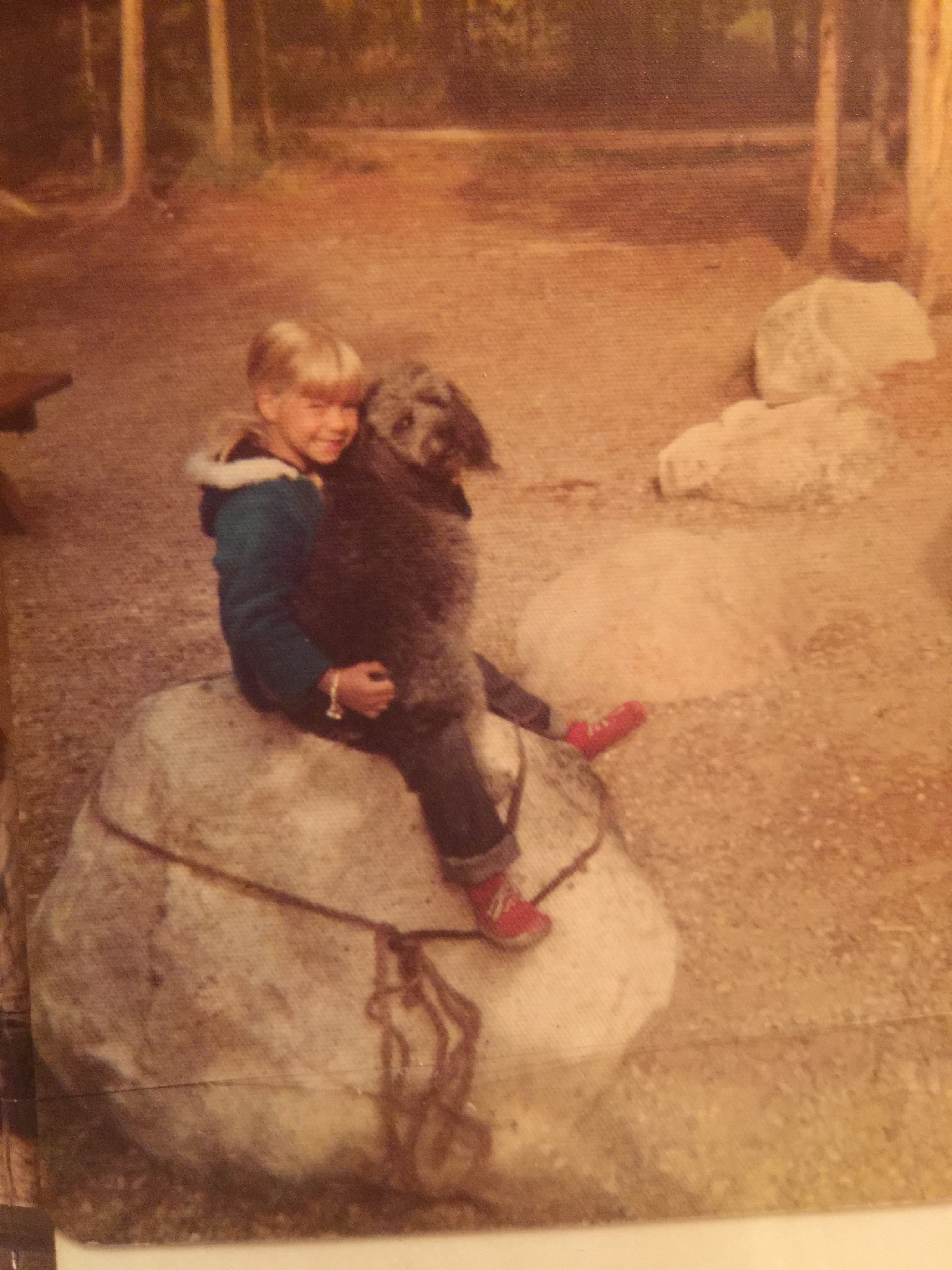
I wrote: take long drives after dinner, play speed games, and climb rocks camping with my BFF standard poodle, Ty.

Then she asked us to compare our bliss now and as kids to what we do in our businesses every day.

Blink.

I mean really, what does the miracle of the African savannah and childhood antics have to do with GKIS?

Blink. Blink.

You can tell me if I’ve lost my mind, because our coach Zhena makes us feel like that sometimes. But with her suggestion, I was struck all at once. My bliss in Tanzania was about the anticipation of thrilling discovery. Thrilling discovery is what childhood is all about. Discovery is why kids tear apart the house, ask incessant questions, and beg for screen time. Watching kids geek out over lady bugs and Mexican Train and Minecraft and Snapchat and Fortnight – that is what parenting is about. Watching our children play and joining them in it is about Discovery.

My work as a psychologist, teacher, writer, and researcher is the same type of discovery I loved on my after-dinner drives with my family. Imaginary mountain climbing on rocks while camping was about adventure. And speed games is pure connection and delight. Parenting and my work as a psychologist is not about this all day, every day. But all of those elements are woven into my job. I get the privilege of watching people discover the pathways from dark places to the light.

Since that blissful midmorning in sunny Africa, I have described that scene to clients in my office while I teach imagery and mindfulness – clients ranging from 6 years old to 76. Then they tell me a scene that is special to them. It’s a moment of connection in the therapy office. A moment where we share our bliss. It’s intimate and fun and connecting, not unlike how it feels to hang out and be truly present with your child. It’s what we are born to do…connect.

The truth is, the reason why screen time is so compelling is because it is ALL about discovery and connection. We can’t turn away from the stimulating, on-demand content. It’s intoxicating. It distracts us from everything and everybody. We get high on it.

That’s not all bad. Learning and discovery is amazing. But research also tells us that learning and discovery in the three-dimensional world outside of screen time is also necessary for balanced health and happiness. GKIS is about connection, discovery, and balance. It’s about supporting each other with strategies and tools to help us guide our kids through this maze of temptations on- and offline.

So, there it is. GKIS is my later-in-life adoption that allows me and my subscribers true discovery. And from my recent inner reflections, I’m reminded that kids hijack peace and quiet, organization, and self-care. Parenting is chaos in motion. It captures us in ways that no other activity does. For me, memories of taking care of my toddlers brings me gently delicious images of bedtime snuggles and kitchen dances. The impossible moments of trying to keep the house clean and stepping on llegos are far dimmer in my memory. Special moments are what you too will remember.

I hope you are inspired to take a moment and write about your recent moment of bliss. Maybe it was a steamy cup of tea early in the morning, or a walk with your best friend, or a snuggle with your child. Or maybe it was an exotic adventure like mine. Whatever your bliss, please take the time to notice it. Even better, create a magic 20 minutes of stillness once a week to curl up on the coach and read your weekly GKIS article. Reflect on how your family is growing and the gaps that GKIS ideas can help with. Journal. Make a gentle plan for progress. Screen safety certainly, but far more delicious are the magic moments of connection that you will have with your family.

I can’t wait to hear what you think of GKIS ideas in the comments of the blog, on FB and Instagram, or email me directly at DrTracy@DrTracyBennett.com.

I’m the mom psychologist who will help you GetKidsInternetSafe.

Onward to More Awesome Parenting,

Tracy S. Bennett, Ph.D.
Mom, Clinical Psychologist, CSUCI Adjunct Faculty
GetKidsInternetSafe.com