In the fast-paced world that we live in, it can feel downright impossible to get the entire family together in the same room. Trying to find an activity that everyone can enjoy together is an even more improbable task. Yet, sharing experiences as a family and spending time together is necessary for creating close family bonds and maintaining a sense of connection. Today’s GKIS article covers the pros and cons of the PlayStation 4 and the PlayStation 5, recommendations for games to play as a family, suggestions for appropriate games that your kid can play alone, and some brief tips to keep your kids safe and connected when it comes to gaming.
Yesterday versus Today
In today’s digital landscape, there is a generational divide when it comes to what is fun. While you may reminisce on the fun you had playing Chutes and Ladders and Monopoly with your family when you were a child, your memories are probably being affected by that funhouse mirror known as nostalgia. Even if those games were fun when we were kids (I am not so sure they were), your children are used to a much more technically advanced world where entertainment comes in the form of video games, social media, and streaming services. Therefore, adaptation may be needed to have a successful family night where everyone has fun.
Here are some reasons why video games are a great way to connect with your kids:
Can be accessed at any time
Can fit into the most restrictive of work schedules
No need for planning
Do not have to worry about losing game pieces
Do not have to explain a complex set of rules
Most games are highly intuitive requiring little explanation
Creating family cohesion and safely navigating the technological world we live in can be difficult at times. Our Connected Family Course gives expert advice and strategies to create a connected home environment without having to disconnect from the internet.
What is the PlayStation?
The PlayStation is a series of video game systems created by Sony. For this article, the focus will be on the PlayStation 4 and the PlayStation 5, which are the current production models. The PlayStation 4 was released in 2013 and has sold over 114.9 million units worldwide, making it one of the most successful gaming consoles ever released.[1] The PlayStation 5 is the newest of Sony’s consoles, released in 2020, and is wildly popular and highly sought after. The PlayStation 5 has already sold over 10 million units and sells for a substantial mark up in the secondary market.[2]
The Pros and Cons of the Sony PlayStation
Pros
The biggest advantage of the PlayStation is that it is the most technologically advanced series of consoles on the market. Also, the PlayStation has a huge userbase so there will always be people to play with online. The PlayStation 4 and 5 are not solely game consoles. They have brilliant interfaces allowing the user to stream movies, television, and music from different apps, making them great choices for a one-stop entertainment hub.
Additionally, the PlayStation 5 is mostly backward compatible with the PlayStation 4. So, if you buy a game on the PlayStation 4 and later upgrade to the PlayStation 5, you can play most of your PlayStation 4 games on the new console. With a gigantic catalog of games, many of the games are family-friendly.
Cons
The PlayStation 5 is in such high demand that it is nearly impossible to get your hands on one. While you may be able to find some models of the PlayStation 4 for under $300, the retail price of the PlayStation 5 is close to $1000. But they sell for much more on the secondary market due to the high demand. Due to Covid, there is a huge supply shortage making these things harder to get than a Tickle Me Elmo back in the day.
Many parents don’t realize that kids can browse the internet through their PlayStation consoles. That means they can access anything or anybody through that browser. That means you MUST program parental controls if you don’t want your child exploring inappropriate online neighborhoods.
PlayStation Games to Play as a Family
With the PlayStation, there are a variety of interactive ways to connect with your family. You can play games together or use the console as a multimedia hub to stream a movie through your favorite streaming service.
Here are 4 fantastic PlayStation games for you and your kids to play together:
Just Dance 2021
Rock Band 4
Little Big Planet 3
Just Dance 2021
Just Dance is a motion-based rhythm game, which is a fancy way of saying that you dance to the beat of the music and try to perform choreographed moves. This game is a brilliant choice as it is a great way to exercise as a family. There are plenty of songs to choose from ranging from Lady Gaga to Billie Eilish. Each song has its own choreography and poses to learn as well.
This game has an ESRB rating of “E10,” meaning it has been approved for everyone ages 10 and up. The reason for the 10 and up age rating is that some of the songs have crude lyrics, though it is no worse than anything that they will hear on the radio. If you don’t want your children to hear these songs, there is a “kids mode” with songs that are more tailored for young children, like “You’ve Got a Friend in Me” from Toy Story 3.
This game is perfect for slumber parties and family reunions, as well as for any other occasions where you or your kids want to be active. We think this game is well designed, and the controls are intuitive making it a fun way to exercise and get your groove on.
Rock Band 4
Have you ever wanted to start a family band or be the Partridge Family? Rock Band is a game where you physically interact with video game controller versions of instruments. Up to 4 people can play at once, as there are drums, bass, guitar, and a microphone to choose from. The cool thing about this game is that it is very interactive and some of the skills learned from playing this game can be carried over to real-life when it comes to the drums and vocals. Like the previous game on the list, Rock Band 4 is also a great way to get some exercise in.
This game has an ESRB rating of T for Teen due to some of the song lyrics. Yet, like Just Dance 2021, there is nothing in this game that your kids won’t hear on the radio. Also, you can customize which songs come up in the playlist to avoid any songs that you find problematic.
Rock Band can be a great choice for parties and sleepovers as well. Kids can take turns on the different instruments and switch out after each song. It is also fun to be a spectator watching others play as well, so kids won’t get too frustrated waiting for their turn.
Little Big Planet 3
Little Big Planet 3 is an action platformer at its core. Up to 4 players can work together to take on each stage as an obnoxiously cute sack person. Browse “Little Big Planet images” to see what the cute little dude looks like. The game is massive and there are an immense number of levels to play through. On top of that, players can create their own levels and share them with other players. Having a huge creative community has made the replay value for this game limitless as players have created a ridiculous number of unique experiences.
Little Big Planet 3 has an ESRB rating of E, meaning it has been approved for children of all ages. This game also allows your children to utilize their creativity in a way that they will not get anywhere else. You and your kids can take the role of game creators and make your own levels and experiences to play, share, and show off to your friends and family.
PlayStation Games Your Kids Can Play Alone
Video games make great rewards for when your kid does something wonderful. There are an immense number of games to choose from. However, it can be overwhelming to find a game for your child that is age-appropriate. There are plenty of games out there that are excessively violent, have strong language, and have sexual situations in them.
Here is a list of 3 games that we recommend as rewards for your child:
Tearaway Unfolded
Rayman Legends
Ratchet & Clank
Tearaway Unfolded
Imagine this game scene, your face is the sun observing and interacting with a paper doll character. You explore vast paper environments and manipulate objects to solve puzzles to help your paper character throughout the adventure. This game design allows for a level of empathy and emotion rarely seen in video games, as the characters directly interact with you.
Tearaway Unfolded is rated E for everyone and has been deemed acceptable for all ages. There is little in this creative game that could offend or be seen in a negative light.
The most brilliant part of this game is the bonus stuff that allows the player to interact with the characters in the real world. There are templates that can be printed out and constructed so that your kid can have a physical version of his character to play with. The creativity and uniqueness involved in this experience of bringing the game characters to life and interacting with them offers a shared activity between you and your kid that is unlike any other and utterly priceless.
Rayman Legends
Here at GKIS, we think that the music levels in Rayman Legends are some of the most wonderful levels ever made in the history of video games. Rayman Legends is undoubtedly one of the greatest platformers ever made. The controls are extremely smooth, and the gameplay is spotless.
In this game, you play as the titular character and make your way through the many levels and challenges throughout the game. The game has a very playful art style and is very satisfying to play.
This game has an ESRB rating of E10 for everyone age 10 and up due to cartoon violence and comic mischief. The violence is very mild when compared to other games, and there is no blood or guts. For a single-player game, it has an incredible amount of replay value due to the vast number of things to do in its virtual world.
Ratchet & Clank
Ratchet & Clank is an action-adventure game where the main characters are a “lombax” and his robot companion. In the game Ratchet and Clank, the goal is to navigate the world with the fox/human hybrid character and the robot to find new weapons and gadgets that will help to save the universe.
Ratchet & Clank has been rated E10 (for everyone 10 and up) due to the violence against animated monsters. Yet, the weapons used in the game are ridiculous and outlandish. There is little chance that your kid is going to get their hands on a “groovinator” or a “sheepinator” in real life unless they’re future genius inventors.
How To Keep Your Kids Safe Playing Video Games
Research the games before buying them
Check the ESRB ratings
Play with your children or check in on them
Talk to your children and maintain a close family bond.
To stay in the know about how to keep your kids and teens safe online, check out our weekly parenting and family coaching videos provided through the Screen Safety Essentials Course. This comprehensive program will help families to become informed by providing you with the tools and expertise to keep your family connected and safe while engaging online.
Doctor B’s parenting guide, Screen Time in the Mean Time, is a wealth of knowledge about screen safety and keeping your kids safe from the numerous dangers inherent in the world we live in.
Thanks to CSUCI intern, Michael Watson for researching family-friendly games for the PlayStation 4 and 5.
I’m the mom psychologist who will help you GetKidsInternetSafe.
Spending time together and sharing experiences is extremely important when it comes to developing close family bonds and a sense of connectedness. While many of us think of playing board and card games to develop connectedness, many children would disagree. These days, they would generally rather play video games than spend time with their parents. While we at GKIS recommend that real-world activities should be prioritized, video games can be utilized both as a reward and a convenient way of connecting with your child. You don’t have to wait for connection until you’ve found time to plan a lavish camping trip. For every day, a video game could be just what Dr. B ordered. Today’s GKIS article covers the pros and cons of the Nintendo Switch, recommendations for games to play as a family, suggestions for appropriate games that your kid can play alone and unsupervised, and some brief tips to keep your kids safe and connected when it comes to gaming.
What is the Nintendo Switch?
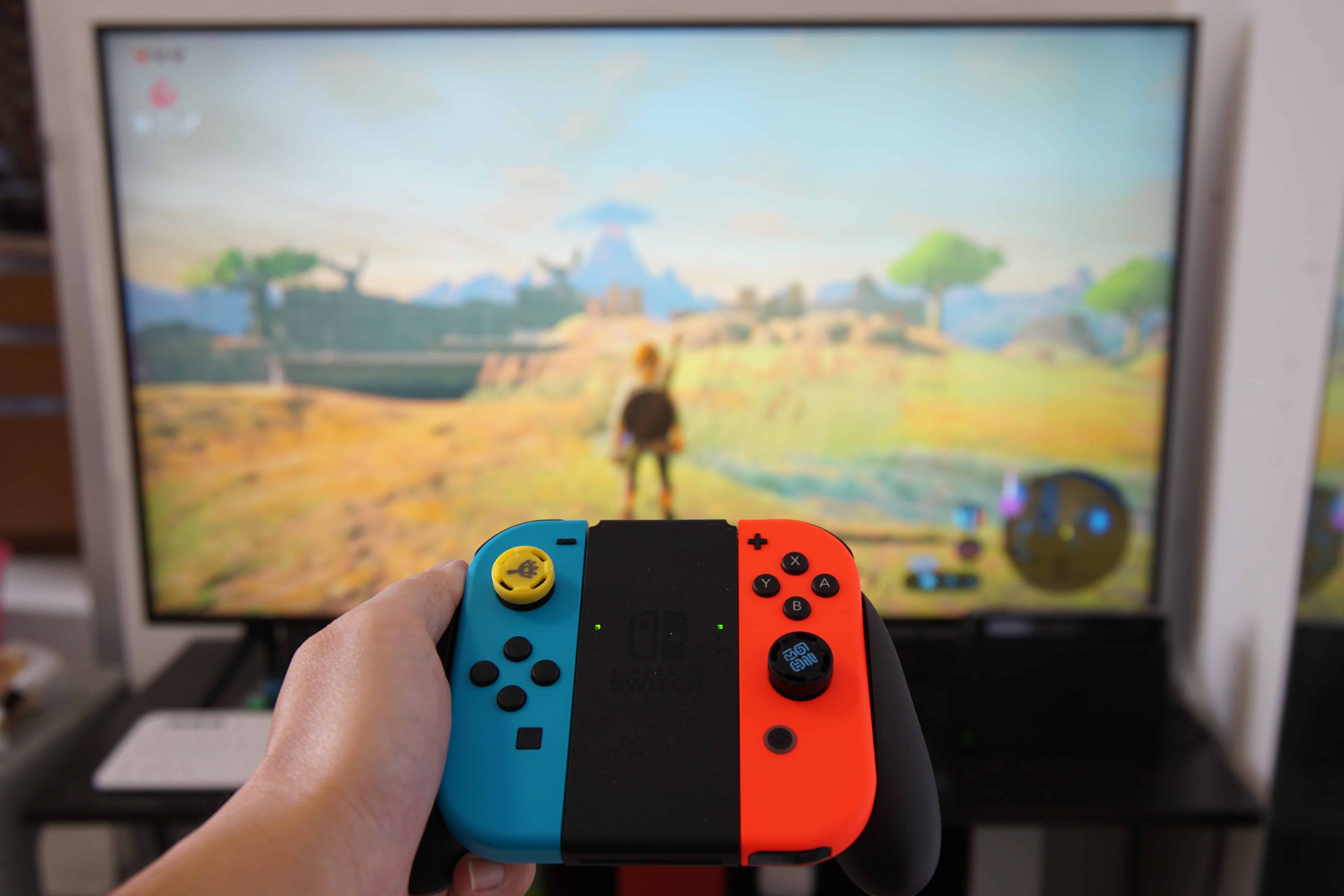
The Nintendo Switch is a video game system that was launched in 2017. The Switch is unique in that it is considered a hybrid system where the console itself can work as a tablet and the controllers can attach to the sides to be used as a portable game system. It is extremely popular and has sold over 89 million consoles worldwide.[1]
The Pros and Cons of the Nintendo Switch
Pros
The biggest advantage of the Nintendo Switch is its portability. Unlike the PlayStation and Xbox consoles, the Switch can be taken on long trips and utilized just about anywhere. Also, Nintendo heavily markets its console to families and children. Many of the games are family-friendly, perfect for family game night or for your children to play by themselves. Another big bonus is the price-point. At $299, which is at the low end for current generation consoles. In comparison, new PlayStation and Xbox consoles sell for about $1000.
Cons
The Nintendo Switch is not as technologically advanced as the current PlayStation or Xbox consoles. The graphics are not as jaw-droppingly realistic and the processing speed is not as quick. Yet, the differences are not so great that they will affect the overall gaming experience.
Nintendo Switch Games to Play as a Family
Playing video games as a family could be a great, interactive way to connect with your children. The Connected Family Course gives expert advice and strategies to create a connected home environment without having to disconnect from the internet. Here are 3 fantastic choices for Nintendo Switch multiplayer games.
Mario Kart 8 Deluxe
Super Mario Party
Super Smash Brothers Ultimate
Mario Kart 8 Deluxe
Mario Kart is an iconic series that has been around since the early 1990s, and they have not changed the formula that much. The reason that they haven’t changed the formula is because it works! It is ridiculously fun to race against your family and friends as your favorite Nintendo characters. Plus, there is a luck-based element to the game that evens out the playing field for younger less experienced players. It doesn’t matter how good someone is if they can get knocked out of first place when someone else gets the perfect power-up.
This game has an ESRB rating of “E.” meaning it has been approved for all age groups or “everyone.” Up to 4 players can play on a single Nintendo Switch. But if you have two consoles, there can be a total of 8 players at once. This is perfect for slumber parties, holidays, and other occasions where you might have a bunch of kids at home. We think this game is well designed, and the controls are intuitive making it just as fun for the parents as it is for the kids.
Super Mario Party
Super Mario Party is the ultimate family party game. Four people can play Super Mario Party on a single Nintendo Switch console. The great thing about Super Mario Party is the diversity of gameplay and modes of play. Players can play board games consisting of mini-games, which are short games that usually last under a minute. There is a total of 80 minigames that are chosen at random as characters move around the board. Because each minigame is short, kids don’t get bored easily.
On Super Mario Party, everyone competes against each other, as teams, or you can all play on the same team against the computer. Super Mario Party has an ESRB rating of E so it has been deemed appropriate for children of all age groups. This game is also great for parties and family game nights.
Super Smash Brothers Ultimate
Super Smash Brothers Ultimate can get extremely competitive, but we think it is crazy fun to play together. This game is a fighting game where everyone picks their favorite Nintendo character from a large selection of choices. The point of the game is to knock out the other players’ characters. The best part is that each character has a unique set of moves and plays completely differently than the others, so strategies for winning are almost endless.
Super Smash Brothers Ultimate has an ESRB rating of E10, so it has been approved for everyone ages 10 and up. It may not be appropriate for young children due to the cartoonish violence. As far as fighting games go, this is one of the most family-friendly options out there.
Nintendo Switch Games Your Kids Can Play Alone
There are many Nintendo Switch games to choose from. However, many have excessive violence, sexual themes, drugs, and other material that you don’t want your kids to be exposed to. If you are looking for a game for a younger child, it can be difficult to find something age-appropriate. Here are 3 games to kids can play on their own.
Luigi’s Mansion
The Legend of Zelda: Breath of the Wild
Splatoon 2
Luigi’s Mansion
Luigi’s Mansion is a fantastic single-player game that is great for all age groups and has an ESRB rating of E for Everyone. In Luigi’s Mansion, you wander around a haunted hotel sucking up goofy ghosts with a vacuum cleaner. Although there are ghosts, we don’t think they are very scary. It has a story mode made for a single player but could be played by two players (with one player playing as Luigi’s doppelganger, Gooigi). There are other online multiplayer modes to play as well.
The Legend of Zelda: Breath of the Wild
We at GKIS think Breath of the Wild is one of the best single-player Nintendo Switch games out there. In this game, your character explores an expansive and elaborately detailed world filled with almost never-ending things to do and places to explore.
This game has an ESRB rating of E10 for everyone age 10 and up due to the violence against animated monsters. The violence is very mild when compared to other games, and there is no blood or guts. For a single-player game, it has an incredible amount of replay value due to the vast number of things to do in its virtual world.
Splatoon 2
Splatoon is Nintendo’s answer to shooter-type games where none of the characters get hurt. In Splatoon 2, you play as human/squid hybrid characters and run around spraying each other with ink. Splatoon is probably the safest series of games to choose from if your kids are trying to get you to buy them a shooter.
Splatoon 2 has been rated E10 (for everyone 10 and up) due to cartoon violence, even though you are basically hitting each other’s squid characters with ink bombs, paint guns, and paint rollers. As a warning, even though Splatoon has taken out the blood and guts it still involves cartoonish gunplay. Though it is a single-player game, up to 10 players can play at the same time in one location. The downside is that each player needs their own Nintendo Switch console to play together, which would be expensive.
How To Keep Your Kids Safe Playing Video Games
Research the games before buying them
Check the ESRB ratings
Play with your children or check in on them
Talk to your children and maintain a close family bond.
To stay in the know about how to keep your kids and teens safe online, check out the Screen Safety Essentials Course. Through weekly coaching videos and other valuable resources, this program will keep you in the loop with ways to keep your family connected and safe while engaging with the internet, social media, video games, and more. The goal of this course is to provide families with the knowledge and tools to help prevent digital injury before it occurs.
Thanks to CSUCI intern, Michael Watson for researching family-friendly games for the Nintendo Switch.
I’m the mom psychologist who will help you GetKidsInternetSafe.
Almost everyone has experienced a zombie-like feeling after a night of poor-quality sleep. Research shows that a single night of sleep deprivation can have a negative result on cognition and behavior.[1]Sleep deprivation for children can be particularly costly. Good quality sleep helps children with healthy brain development. That is why Dr. Bennett includes a whole lesson on how to protect your child’s sleep in her Connected Family Online Course. By following research-backed guidelines, setting sensible rules, and setting up your house to optimize learning and safety, your family can avoid costly digital injuries. If you are interested in learning about how to create a safe screen environment at home while discovering ways to promote open and honest communication within your family then check out our GKIS Screen Safety Essentials Course. In today’s GKIS article, you’ll discover how a child’s learning can be negatively affected by lack of sleep and how to avoid it.
How does lack of sleep impact a child’s learning?
Attention and Concentration
A child needs an average of 9 to 11 hours of sleep each night for optimal health and learning performance.[2]Poor sleep affects the functional connectivity of the prefrontal cortex. This means that a sleepy child will experience problems in their ability to focus and sustain attention in a learning environment. Further, a 2009 study demonstrated that sleep may cause the child to become overly sensitized to reward stimuli.[3] An overly sensitized person craves rewards so much that if they can’t get the desired activity immediately, they may resort to acting out and tantrums. To understand more about this process, check out Dr. B’s whiteboard video GetKidsInternetSafe from Sensory Overload on the Dr. Tracy Bennett YouTube Channel.
Memory
Mental lapse refers to a moment of unexplained forgetting, like walking into a room and forgetting what you came in for. A sleepless night slows down brain cell activity, sometimes resulting in impairing daytime mental lapses. A 2017 UCLA study demonstrated that lack of sleep disrupts the brain cells’ ability to communicate with one another, resulting in a mental lapse that negatively affects the way we perceive and react to things around us.[4]
Learning and Information Processing
In Dr. Bennett’s book Screen Time in the Mean Time, she explains that when we don’t get enough sleep our brain’s housekeeping and memory consolidation tasks remain undone, leaving us unable to efficiently acquire or retrieve information. Without good focus, attention, and memory, kids are unable to process information and understand and learn new concepts.
Creativity
Sleep deprivation can also limit planning, creativity, and the ability to think outside of the box. According to a study from the University of Loughborough, sleep deprivation can negatively impact a person’s creativity by impairing one’s ability to create new ideas and change strategies.[5]
How does a lack of sleep impact mood and behavior?
Sleepy Throughout the Day
If your child chronically gets insufficient sleep at night, their body may compensate by falling into a pattern of daytime hypersomnia. This is a condition when someone repeatedly is falling asleep throughout the day.[6]
Mood Swings
Lack of sleep can be a main contributing factor in mood swings.[7] Moodiness and irritability can negatively affect relationships, leading to deeper problems and feelings of hopelessness. If sleep deprivation is habitual, it can contribute to clinical conditions like anxiety, depression, and even psychosis!
Decision-Making
Little to no sleep can also affect how well we make decisions.[8] That means that kids who have sleep deprivation will have a difficult time prioritizing tasks like when to brush their teeth or do homework. If your child seems to get stuck on even the smallest of choices, consider if sleep may be the issue.
How can lack of sleep affect learning in children of different ages?
Teenagers tend to have more sleepless nights than younger children. Not only do parents allow later bedtimes for teens, but they also stay up chatting with friends and playing video games. Without the right amount of sleep, teens have more trouble focusing and learning in class compared to younger children. According to the CDC Healthy Schools, teens ages 13-18 need 8-10 hours of sleep.[9]
How can parents help their children get better sleep and improve their learning?
Ten percent of American children are estimated to have Attention-Deficit/Hyperactivity Disorder (ADHD). Children with ADHD often struggle in school because they get distracted and have difficulty following through. Kids with ADHD also tend to LOVE screen technology. Not only do screens offer them a world of on-demand discovery, but they can also gain expertise over time and earn much-needed social capital that they may have difficulty earning in real life. To help your family make their way through the world with a fun, positive connection and better screen safety, access Dr. Tracy Bennett’s expert parent and family coaching videos through our GKIS Screen Safety Essentials Course. In today’s GKIS article, we will discuss the benefits of technology and app recommendation for children with ADHD.
What is ADHD?
Attention-Deficit/Hyperactivity Disorder (ADHD) is one of the most common neurodevelopmental disorders of childhood. Children with ADHD have trouble paying attention, controlling their behavior, and can be very active as if driven by a motor.[1] ADHD can impact emotions, behaviors, and the ability to learn new things. It is usually diagnosed in childhood and often lasts into adulthood. About 60% to 85% of the children diagnosed with ADHD at a young age continue to have it as teens, although symptoms might change with age.[2]
The Three Types of ADHD
Inattentive Type
ADHD, Predominantly Inattentive Type is characterized by a daydreamer who has difficulty paying attention, listening, and following through with tasks. Children with this type of ADHD are often overlooked until late grade school because they are quiet and not disruptive. However, their ability to function to their true ability is impaired in all contexts of their lives. It has been shown that more girls are diagnosed with inattentive ADHD than boys.[3]
Symptoms of ADHD, Predominantly Inattentive Type
Often has trouble giving close attention to details and makes careless mistakes
Has difficulty sustaining attention to certain tasks or play activities
Frequently distracted and doesn’t seem to pay attention to those speaking directly to them
Often does not follow instructions and fails to complete tasks
Has difficulties organizing tasks and activities
Doesn’t enjoy and avoids activities that require them to use mental effort
Hyperactive-Impulsive Type
ADHD, Predominantly Hyperactive-Impulsive Type is characterized by a child who fidgets, has trouble staying in their seat, and talks a lot. It is hard for them to stay still for long. They tend to be impulsive and interrupt others. It is more common for a child with hyperactivity to have more accidents and sustain frequent injuries. They also tend to be identified at younger ages because of their acting out potential.
Symptoms of ADHD, Predominantly Hyperactive-Impulsive Type
Frequently fidgets with or taps hands or feet
Leaves the seat in situations when remaining seated is expected
Runs or climbs in situations where it is inappropriate
Is “on the go” and doesn’t seem to get tired
Talks excessively
Answers questions before the person has time to finish it
ADHD Combined Type
ADHD, Combined Type is characterized by a child that has trouble paying attention and difficulty sitting still and staying quiet. This is the most common type of ADHD. It is characterized by the symptoms from both the inattentive criteria list and the hyperactive-impulsive criteria list.
How Technology Helps Children With ADHD
Children with ADHD commonly struggle with time management, organization, and failure to focus. Technology and apps can help children with ADHD stay organized, reach their goals, and fight the urge to get distracted.
GKIS-Recommended Apps for Kids With ADHD
Rescue Time
Rescue Time is a web-based time management and analytics tool that helps children be more efficient and productive. One of the symptoms of ADHD is “distraction.” This app aims to prevent distractions and any possibilities of children getting scattered. It allows you to rate each activity from “very distractive” to “very productive” and sets goals for children while tracking progress. With all of that rescued time, be sure to plan fun family activities. For great ideas, check out Dr. B’s GKIS article, #TogetherAtHome Family-Friendly Activity Ideas
Roblox
Roblox is available for iOS and Android. It is a video game that is reported to strengthen planning skills, organization, and working memory as children learn as they go. Roblox is a game where people come together to create and imagine as they play. It is a fun game where the whole family can have fun. To learn more about the risks and benefits of Roblox, check out our The GKIS Sensible Parent’s Guide to Roblox.
News-O-Matic
News-O-Matic is available for iOS. It is a captivating app that delivers news in small chunks which is useful for older children with ADHD. The stories vary from funny to serious and have a read-aloud option for kids who struggle with reading.
Mindnode
Mindnode is available for iOS and it is designed to help children focus and be organized. It is an app that uses mind maps to help children visualize their thoughts. The map can be color-coded and contains images. Children with ADHD tend to be energetic; this app can help make sure that they stay concentrated.
Relaxation and Mindfulness Apps
Headspace
Headspace is a mindfulness app that helps children exercise, meditate, and visualize. This is beneficial because it helps them take a moment to focus and stay calm.
Toonia Colorbook
Toonia Colorbook is an app where children use coloring activities to help them relax. It can help children concentrate, calm down, and keep their minds balanced. Keeping the brain busy with something simple as coloring can have a relaxing effect.
I joined Kate Cagle with Spectrum 1 News the other day to talk about what I’ve been seeing and hearing from clients.
Here are some of the things I think are impacting us now that we are getting out:
People haven’t had conversation and relationship practice because of social isolation, and they are a bit rusty.
Kids, teens, and adults in my practice admit that their social anxiety has spiked since they’ve been isolated so long. Plus, many of us are so eager to get out we’re acting a bit unhinged, as if we don’t get everything out now it might be taken away from us again.
All of that social media posting, chat room commenting, and gaming chat behaviors have spilled into our face-to-face lives.
When we are online, we mostly post at people instead of with people. That means that we can take our time to respond or even not respond at all. Also, we don’t have to invite our friends to participate – it’s just assumed they will. These habits are very different from healthy social skills. We’ve seen online skills spill into real life before. For example, I wrote in my book Screen Time in the Mean Time my belief that the role playing and skin-changing on social media and in video games impacted cosplay and identity experimentation for teens in real life. It makes sense that, in that same way, adults are starting to talk like we post. In real life, that looks like an announcement of a series of black-and-white opinions rather than a curious, interactive conversation.
With scary news and questionable data (which we’ve had a lot of in the past year), people tend to look to the loudest voice in the room – that’s usually that person who is aggressively defending an extreme opinion. Not a great setup for a friendly, gracious exchange of ideas.
For too many of us, unhealthy coping mechanisms for stress have snuck in like too much drinking and addiction to conspiracy theories. Neither of these work well in healthy relationships.
Finally, with all of us on Zoom and wearing masks we are missing out on nonverbal cues that help us put the brakes on!
What can we do to get back on track with our social skills?
Before you go out, set a deliberate intention to ask “What do you think?” and commit to taking turns with conversation.
Have some friendly topics prepared to talk about, and stay away from controversial topics like politics and religion!
Give yourself and others some grace as we gradually settle back in to our old “normal.” If we’ve ever needed a time for kindness and patiences, it’s now!
I’m the mom psychologist who will help you GetKidsInternetSafe.
Onward to More Awesome Parenting,
Tracy S. Bennett, Ph. D.
Mom, Clinical Psychologist, CSUCI Adjunct Faculty
GetKidsInternetSafe
Most of us use our screens hours every day, whether it’s our phones, tablets, mobile gaming devices, televisions, or computers. Usually, when we’re using screens, we’re sitting and being inactive. With the rise of technology and remote work stations, more people are working at desks or home, going to school online, and using screens recreationally. Because of this, adults and children are more inactive than ever, putting them at risk of digital injuries and potentially life-threatening medical conditions. Today’s GKIS article alerts you to the American epidemic of the sitting disease, how it can contribute to medical illness, and how to reduce those risks and become more active as a family.
The Sitting Disease
According to the CDC, 25% of Americans spend eight or more hours sitting per day.[1]As a result, the U.S. is experiencing an epidemic of the potentially deadly sitting disease. The sitting disease refers to the harmful effects of a sedentary or an inactive lifestyle. Research shows that sitting for long periods can be bad for your health.
Cardiovascular Disease
For example, prolonged sitting is bad for your heart and can lead to cardiovascular disease. A study conducted by Tatiana Warren and colleagues measured the association between hours of sedentary behaviors (riding in a car and watching television) and heart disease. The researchers found that men who reported over 23 hours of sedentary activity had a 60% greater risk of dying from heart disease than men who reported only 11 hours of sedentary activity.[2]
Obesity and Type-Two Diabetes
People who spend more time sitting are also at greater risk of gaining body fat and developing obesity. This is because the number of calories burned while sitting is very low and excessive body fat results from consuming more calories than are burned throughout the day. Prolonged sitting can also put you at risk for type-two diabetes.[3]
Cancer
Those who sit for long periods daily also have an increased risk of developing certain cancers. One study conducted by the REGARDS team asked 8,000 middle-aged Americans to wear a tracking device every day for 5 years. Researchers found that the most inactive people had an 80% higher risk of dying from cancer than those who were more active.[4]
Other Physical Conditions
Migraines, back and neck problems, as well as carpal tunnel syndrome are other physical conditions that can arise from repetitive screen use. To read more about these digital injuries, check out the GKIS article Repetitive Strain, and Distraction Injuries from Screen Use.
Dr. Bennett’s book Screen Time in the Mean Time offers even more detail about repetitive screen use injuries and offers strategies on how to reduce the risk of digital injury and get closer to your kids.
Reduce the Risks of Medical Illness
Not only are repetitive screen use injuries preventable, so is the sitting disease. Small changes can make a big difference! The goal is to move more throughout the day, offering critical blood flow and stretching to stiffening muscles. It can be as simple as:
Taking the stairs instead of the elevator
Walking around while taking a phone call
Doing chores around the house
Stand up and sit down several times a day or do a few quick squat exercises
Drinking lots of water so you have to get up and go to the restroom often
Be More Active with the Family
It’s not just adults that suffer medical risk from too much sitting. Strengthen family relationships while encouraging good habits with some of these fun suggestions:
Morning walks are a great way to start the day and get moving.
Engage in active hobbies that you and the family enjoy like riding bikes, playing sports, or hiking.
Invest in a fitness tracker or a pedometer. Seeing how many steps you take throughout the day can help you determine if you are moving enough. I use an Apple Watch. Some of the many features of the Apple Watch is tracking movement, calories burned, and it even sends reminders to stand up. You can share your data with family or friends, and you can even compete with each other! To read about the pros and cons of fitness trackers check out our GKIS article Is Your Health Declining Due to Wearable Tech?.
Home workouts are also a great way to be active with the family. For a list of some great at-home workout apps, check out our article GKIS Recommended Exercise Apps for Families.
Limit Screen Time
Cutting downtime spent watching television or playing video games can be beneficial for your health. It’s just too easy to spend hours on the couch binge-watching your favorite show. But if you have no choice but to work online, Dr. Bennett suggests keeping a yoga mat next to your computer and practicing yoga stretches to break up sitting time.
She recommends subscribing to the SarahBethYoga on Youtube for a variety of high-quality, free yoga classes. Once you learn some stretches, you can practice them during breaks and even try them with your family to encourage them to move with you.