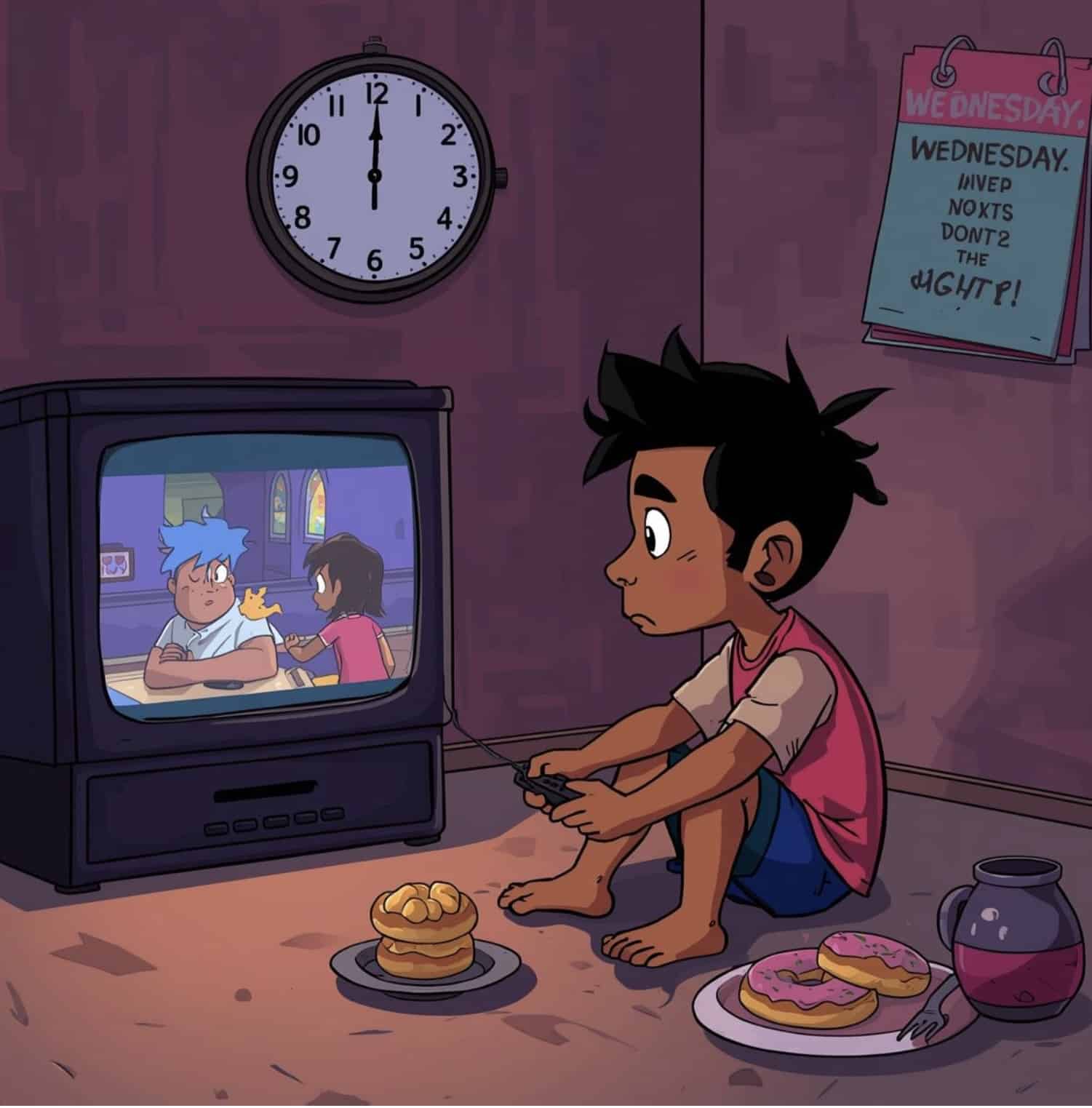
Every night around bedtime, millions of children enter a silent battle between biology and technology. On one side: the brain’s need for restful sleep. On the other side: a screen designed to keep them awake. Parents are aware of how important sleep is but may fail to realize how much screens affect their children on a nightly basis. 98% of American homes with children 7 years old and above have at least one screen.[1] That one screen may be standing in the way of your child’s best self.
Sleep: The Hero
Sleep is as essential as food and water. Food fuels the body, and sleep restores it. Sleep supports healthy brain functions. This includes forming and maintaining critical brain pathways for learning, creating new memories, building stronger concentration, and developing faster response times.
For your child to be at their best, they need about 9.5 hours of sleep each night. This reset is also necessary for proper maintenance of the the brain, heart, lungs, metabolism, immune function, mood, energy, and disease resistance.[2] Without a consistent good night’s rest, the mind and body will not have the chance to clear out toxins that may lead to illnesses.
When sleep is disrupted, the mind and body start to malfunction. The CDC reports that about 31% of adolescents aged 13-17 years old sleep less than the recommended amount for their age group. That number jumps to 40% for children 4 months to 17 years old. This means that one-third of school-aged children are missing out on one of the biggest necessities for overall good health.
Chronic or poor quality of sleep can also lead to an increased risk of injuries, obesity, type 2 diabetes, poor mental health, attention and behavior problems, and poor cognitive development.[3] These long-term issues can affect the quality of their life well past childhood.
Screens: The Enemy
Before bedtime, screens begin their battle against sleep by using their blue light to suppress melatonin release. Their weapon: stimulation of the brain with arousing content that keeps it alert. This causes children to delay their bedtimes, begging for “5 more minutes,” which can result in bad sleeping habits.
Melatonin is a hormone in our brains that manages our sleep-wake cycle.[4] Blue light or blue wavelengths naturally occur in the daytime and are beneficial for attention, reaction times, and mood. But at night, they are disruptive to a good night’s rest.
While any kind of light can suppress the release of melatonin, blue light is the most powerful at disrupting sleep.[5] Delays in bedtime can lead kids to have shorter fuses, act out, or just leave them too tired to do their best.
For school-aged children, over a decade’s worth of reviewed studies support that screen exposure is correlated with delayed bedtimes and a shortened duration of sleep. Screen time includes watching television, computer use, playing video games, and using mobile devices.
Passive television viewing was associated with negative sleep outcomes in 76% of those studies, whereas computer usage showed a significant adverse association in 94% of those studies.[6] That’s not all. According to teachers in America, 88% report that their experience with students’ learning challenges heightened as their screen time usage increased, and 80% believe their students’ behaviors worsened with added screen time.[7]
While the effects of screen time on sleep can feel overwhelming, the good news is that parents are not powerless in this battle. In fact, small, consistent changes at home can dramatically improve a child’s sleep quality and overall well-being.
Your 5-Step Battle Plan
Awareness: Knowledge is power. Properly prepare everyone in the family with our Screen Safety Essentials Course. Our course teaches you everything you need to know to set up your home and rules safely and build a fun, cooperative alliance with your kids.
Priorities: For the tools to streamline safety, check out our supercharged informational course, the Screen Safety Toolkit. With your tools in place, you can incorporate critical habits, like physical activity, into your family’s daily routine to promote better sleep. Try not to include exercise too close to bedtime, though, as your body must have time to unwind properly.
Consistency: Our brains and bodies respond best to habit. For ongoing success, you must choose and implement a consistent sleep schedule. This means that going to sleep and waking up as close to the same time as possible, every day of the week.
Strategy: Be mindful of what you eat and drink, especially before bed. Try not to eat within 1-3 hours of bedtime, and be mindful of food and beverages that include caffeine or too much sugar, as this can cause sleep disturbances.[8]
Intention: Make sure the bedroom is cool, dark, and quiet. Turn off all screens at least 30-60 minutes before bed so that blue light is minimized for at least 30-60 minutes.[9]
Keep In Mind
Change does not happen overnight. Some steps will lead to fast results; others may take some time. Just remember, consistency is key. Staying informed and trying your best will be your greatest weapon in the battle against screens.
And if you have tweens and teens in your family, it’s time for them to take accountability for safe habits as well. Our Social Media Readiness Course is like driver’s training, but for the internet!
Thanks to CSUCI intern, Elaha Qudratulla, for researching and writing this article.
I’m the mom psychologist who will help you GetKidsInternetSafe.
Almost everyone has experienced a zombie-like feeling after a night of poor-quality sleep. Research shows that a single night of sleep deprivation can have a negative result on cognition and behavior.[1]Sleep deprivation for children can be particularly costly. Good quality sleep helps children with healthy brain development. That is why Dr. Bennett includes a whole lesson on how to protect your child’s sleep in her Connected Family Online Course. By following research-backed guidelines, setting sensible rules, and setting up your house to optimize learning and safety, your family can avoid costly digital injuries. If you are interested in learning about how to create a safe screen environment at home while discovering ways to promote open and honest communication within your family then check out our GKIS Screen Safety Essentials Course. In today’s GKIS article, you’ll discover how a child’s learning can be negatively affected by lack of sleep and how to avoid it.
How does lack of sleep impact a child’s learning?
Attention and Concentration
A child needs an average of 9 to 11 hours of sleep each night for optimal health and learning performance.[2]Poor sleep affects the functional connectivity of the prefrontal cortex. This means that a sleepy child will experience problems in their ability to focus and sustain attention in a learning environment. Further, a 2009 study demonstrated that sleep may cause the child to become overly sensitized to reward stimuli.[3] An overly sensitized person craves rewards so much that if they can’t get the desired activity immediately, they may resort to acting out and tantrums. To understand more about this process, check out Dr. B’s whiteboard video GetKidsInternetSafe from Sensory Overload on the Dr. Tracy Bennett YouTube Channel.
Memory
Mental lapse refers to a moment of unexplained forgetting, like walking into a room and forgetting what you came in for. A sleepless night slows down brain cell activity, sometimes resulting in impairing daytime mental lapses. A 2017 UCLA study demonstrated that lack of sleep disrupts the brain cells’ ability to communicate with one another, resulting in a mental lapse that negatively affects the way we perceive and react to things around us.[4]
Learning and Information Processing
In Dr. Bennett’s book Screen Time in the Mean Time, she explains that when we don’t get enough sleep our brain’s housekeeping and memory consolidation tasks remain undone, leaving us unable to efficiently acquire or retrieve information. Without good focus, attention, and memory, kids are unable to process information and understand and learn new concepts.
Creativity
Sleep deprivation can also limit planning, creativity, and the ability to think outside of the box. According to a study from the University of Loughborough, sleep deprivation can negatively impact a person’s creativity by impairing one’s ability to create new ideas and change strategies.[5]
How does a lack of sleep impact mood and behavior?
Sleepy Throughout the Day
If your child chronically gets insufficient sleep at night, their body may compensate by falling into a pattern of daytime hypersomnia. This is a condition when someone repeatedly is falling asleep throughout the day.[6]
Mood Swings
Lack of sleep can be a main contributing factor in mood swings.[7] Moodiness and irritability can negatively affect relationships, leading to deeper problems and feelings of hopelessness. If sleep deprivation is habitual, it can contribute to clinical conditions like anxiety, depression, and even psychosis!
Decision-Making
Little to no sleep can also affect how well we make decisions.[8] That means that kids who have sleep deprivation will have a difficult time prioritizing tasks like when to brush their teeth or do homework. If your child seems to get stuck on even the smallest of choices, consider if sleep may be the issue.
How can lack of sleep affect learning in children of different ages?
Teenagers tend to have more sleepless nights than younger children. Not only do parents allow later bedtimes for teens, but they also stay up chatting with friends and playing video games. Without the right amount of sleep, teens have more trouble focusing and learning in class compared to younger children. According to the CDC Healthy Schools, teens ages 13-18 need 8-10 hours of sleep.[9]
How can parents help their children get better sleep and improve their learning?