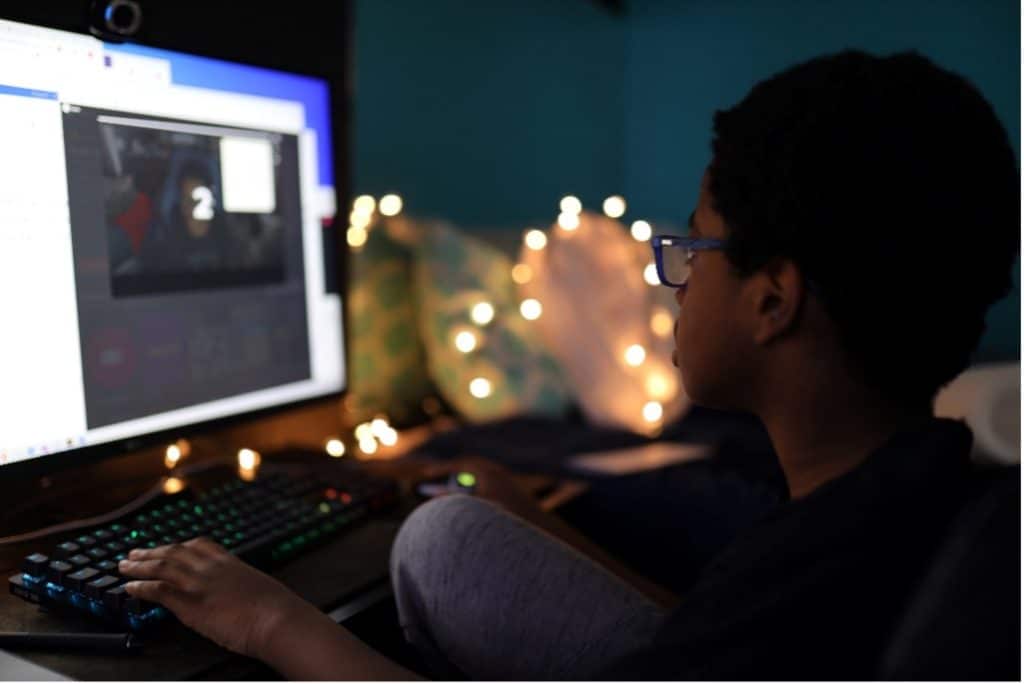
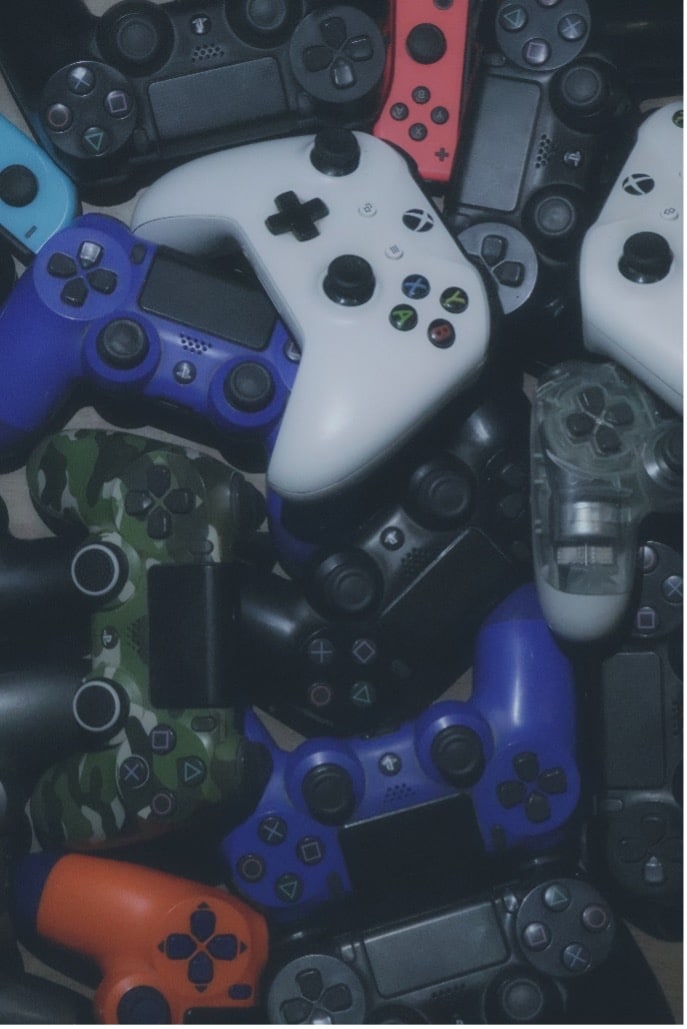
Video game addiction is a growing concern among professionals, parents, and gamers themselves. As technology becomes more advanced and the games become more lifelike, the potential for children to become addicted and use video games to escape from the real world increases dramatically. In today’s GKIS article, we cover how gamers are offering a solution that is being blocked from public use. You won’t want to miss this one. If you’re concerned about the effects video games are having on your child, Dr. Bennett’s Social Media Readiness Online Course will give you the answers you are looking for!
What is Skyrim?
Skyrim is the fifth installment of the Elder Scrolls series of games. This game is considered an “Action RPG,” which is a fancy way of saying that participants spend a really long time creating and building a character who maneuvers through an almost never-ending adventure in an extremely large, detailed virtual world. The creator of Skyrim, Bethesda Game Studios, has recently been purchased by Microsoft.
Bethesda has reportedly sold over 30 million copies of Skyrim in 2021, making it one of the most successful games ever created.[1] Skyrim has a rating of “mature” and is not recommended for younger children due to the blood and gore, sexual themes, use of alcohol, and intense violence.[2] Skyrim is so captivating for some gamers that they are falling into the trap of gaming addiction.
The Negative Consequences of Gaming Addiction
Internet Gaming Disorder (IGD) is a mental illness that affects and alters our natural endorphins (our feel-good hormones). Endorphins are released when we do something exciting like exercise, gaming, or using addictive drugs. Also, when we get hooked on endorphins we often skip behaviors we need for healthy functioning like nutrition and rejuvenating sleep. In Dr. B’s Connected Family Online Course, she explains the huge role that sleep plays in staying healthy and happy and offers solutions. Without rejuvenating sleep, it is difficult to maintain balance and can lead to other problems.
Other negative consequences to gaming include clinically impairing:
Not only are there behavioral and psychological consequences to IGD, neuroimaging studies have found evidence of distinct neurobiological changes similar to those seen in subjects with substance addictions.[11, 12] More specifically, IGD subjects show gray and white matter atrophy (loss of tissue volume) and reduced cortical thickness in various areas of the brain as well as changes to the brain’s pleasure center – like excessive dopamine release and less dopamine receptor availability.[13, 14, 15] The patterns of brain activity while playing reflects how heavy-use players process rewards and losses differently than nonplayers, which may lead to riskier or more cautious decision-making overall.[16]
A Cool New Gamer-Created Solution to Addiction
As games get more and more addictive, gamers are starting to share their experiences and crowdsource for solutions.
Recently, gamer ThatLittleCommie created a solution to help addicted players quit Skyrim using a mod. Mods are game modifications that are created by players and offered on gaming sites for free download. Usually, mods extend the player’s experience. But NoSkyrim (the name of ThatLittleCommie’s mod) does the opposite. It makes the game unplayable so that addicted players can cut off their supply at the source. With the help of NoSkyrim, addicted players can force themselves to quit cold turkey.
Nexus Mods Banned NoSkyrim
Here’s the problem for NoSkyrim. If people stop playing addictive games, then they stop visiting mod websites. Therefore, by helping people to cure their addiction, the NoSkyrim mod is potentially affecting the website’s profit. We suspect that loss of profit is the reason that Nexus Mods, the website where players go to download mods, banned NoSkyrim.
This has not been a popular move for Nexus Mods customers. In the eyes of gamers, the website was putting money ahead of the health of their fellow gamers. This led to several petitions and Reddit forums set up to spread awareness of the dangers of video game addiction. Smaller websites have begun to make NoSkyrim available to players, but the larger websites like Nexus Mods refuse to budge.
How to Protect Your Children from Online Addiction
Leaving kids to regulate on their own is not an effective strategy in most families. Big tech’s manipulative design for devices and games makes management challenging. Here are some ways you can support your kids for healthier gaming:
Provide your kids with real-world activities to maintain an offline/online balance.
Spend more time as a family on- and offline.
Research games and online activities that your child is interested in before you allow a probationary period.
Dr. B is in a unique position to help you to learn more about the dangers that children face when engaging in online activities and to help you to navigate safely throughout your journey as a practicing psychologist, university professor, and mother. In Dr. B’s book, Screen Time in the Mean Time, she discusses and attacks the issue of video game and online addiction and gives advice on how to protect your children from all things screen-related in a productive manner. Also, you can download the free GKIS Connected Family Agreement and get weekly blog articles simply by making a GKIS account on our website home page.
Thanks to CSUCI intern, Michael Watson for researching video game addiction and the ways in which gamers are solving the problem themselves.
I’m the mom psychologist who will help you GetKidsInternetSafe.
[1] Christian Gaca. (2016). Skyrim has sold 30 million copies worldwide. Gamereactor. https://www.gamereactor.eu/skyrim-has-sold-30-million-copies-worldwide/
[2] Entertainment Software Association. (2021). Elder Scroll V: Skyrim. ESRB. https://www.esrb.org/ratings/31575/The+Elder+Scrolls+V%3A+Skyrim/
[3] Black, D., Belsare, G., & Schlosser, S. (1999). Clinical features, psychiatric comorbidity, & health-related quality of life in persons reporting compulsive computer use behavior. J Clin Psychiatry 60(12):839–844.
[4] Ha, J., Yoo, H., Cho, I., Chin, B., Shin, D., & Kim, J. (2006). Psychiatric comorbidity assessed in Korean children & adolescents who screen positive for Internet addiction. J Clin Psychiatry 67(5):821–826.
[5] Kaess, M., Durkee, T., Brunner, R., Carli, V., Parzer, P., & Wasserman, C. (2014). Pathological Internet use among European adolescents: psychopathology & self-destructive behaviours. Eur Child Adolesc Psychiatry 23(11):1093–1102.
[6] Ko, C., Yen, J., Chen, C., Yeh, Y., & Yen, C. (2009). Predictive values of psychiatric symptoms for internet addiction in adolescents: a 2-year prospective study. Arch Pediatr Adolesc Med 163(10): 937–943.
[7] Lin, I., Ko, C., Chang, Y., Liu, T., Wang, P., & Lin, H. (2014). The association between suicidality & Internet addiction & activities in Taiwanese adolescents. Compr Psychiatry 55(3): 504–510.
[8] Liu, M., Ming, Q., Yi, J., Wang, X., Yao, S. (2016). Screen time on school days & risks for psychiatric symptoms & self-harm in mainland Chinese adolescents. Frontiers In Psychology [serial online]. April 25, 2016;7Available from: PsycINFO, Ipswich, MA. Accessed June 11, 2017.
[9] Mehroof, M. & Griffiths, M.D. (2010). Online gaming addiction: the role of sensation seeking, self-control, neuroticism, aggression, state anxiety, & trait anxiety. Cyberpsychol Behav Soc Netw 13(3): 313–316.
[10] Shapira, N., Goldsmith, T., Keck, P., Khosla, U., & McElroy, S. (2000). Psychiatric features of individuals with problematic internet use. J Affect Disord 57(1–3): 267–272.
[11] Fauth-Buhler, M., & Mann, K. (2017). Neurobiological Correlates of Internet Gaming Disorder: Similarities to Pathological Gambling. Addictive Behaviors, vol. 64, 349–356.
[12] Yuan, K., Qin, W., Wang, G., Zeng, F., Zhao, L., & Yang, X. (2011). Microstructure Abnormalities in Adolescents with Internet Addiction Disorder. PLoS ONE 6(6): e20708.
[13] Kim, S., Baik, S., Park, C., Kim, S., Choi, S. & Kim, S. (2011). Reduced Striatal Dopamine D2 Receptors in People with Internet Addiction. NeuroReport 22.8: 407-11. Web.
[14] Koepp, M., Gunn, R., Lawrence, A., Cunningham, V., Dagher, A., Jones, T., Brooks, D., Bench, C., & Grasby, P. (1998). Evidence for striatal dopamine release during a video game. Nature 393: 266-268.
[15] Kühn, S., Romanowski, A., Schilling, C., Lorenz, R., Mörsen, C., Seiferth, N., & Banaschewski, T. (2011). The Neural Basis of Video Gaming. Translational Psychiatry 1: e53.
[16] Dong, G. Hu, Y., & Lin, X. (2013). Reward/punishment sensitivities among internet addicts: Implications for their addictive behaviors. Progress in Neuro-Psychopharmacology & Biological Psychiatry, 46, 139–145.
Socialization is a critical aspect to good health for kids and adults.[1][2] That’s why constant connection through social media, chatrooms, texting, and online gaming has become irresistible to us. For help managing in the online world and avoiding costly digital injuries, check out Dr. Bennett’s positive parenting and family coaching videos in our Screen Safety Essentials Course. We all need each other online and off. Afterall, the early people of our species were hunters and gatherers. Having a tribe was critical for our survival. In modern times, with many families living away from extended families and our lives as busy as ever, it’s often hard for adults to make friends. Today’s GKIS article covers the costly results of loneliness and offers suggestions for how to break out of our loneliness and enter the realm of meaningful connectedness.
The Prevalence of Loneliness
Higher rates of loneliness are found among young adults, seniors, those who are visually impaired, victims of abuse, and the unemployed.[3] Due to its prevalence, numerous outlets including Time, Forbes, US News, Cigna Insurance, and the Health Resources & Services Administration have referred to loneliness as an epidemic in the last decade.
Feelings of loneliness can result from a lack of friendships, intimacy, or emotional connection.[4] The long-term impacts of loneliness include poor sleep, depression, suicidal ideation, increases in cortisol (a stress hormone), compromised immune responses, and inflammation. Chronic loneliness has also been linked to the progression of Alzheimer’s, cardiovascular disease, and other chronic diseases. Further, loneliness is associated with poor lifestyle habits which include sedentariness and smoking.[5]
To avoid unfortunate outcomes, we must carve out the time to hang out with friends and family. For kids and teens, school is an easy resource to draw from. But for adults, social resources can be hard to find. To help you reach out and find more connection and community in your life, we’ve uncovered some novel ideas and resources!
Finding Community in Person
Volunteer
Volunteering is a fantastic way to meet friends, give back, and cultivate a sense of belonging. Research has found that volunteering is particularly helpful for those who have recently lost a loved one. In a study by Dawn Carr and colleagues observing over 5,000 recently widowed spouses, subjects who volunteered two or more hours per week had lower rates of loneliness than those who did not volunteer at all.[6]
Volunteering also has benefits for the whole family. The University of Nebraska-Lincoln Extension notes that youth volunteerism can help with the development of identity, empathy, skill-building, self-esteem, and relationships with like-minded people.[7] A study by Sandi Nenga from Southwestern University notes similar improvements in youth volunteerism. But Nenga also emphasizes that volunteering can connect multiple, diverse communities, creating better outcomes in future civic roles for youth volunteers.[8]
Join a gym
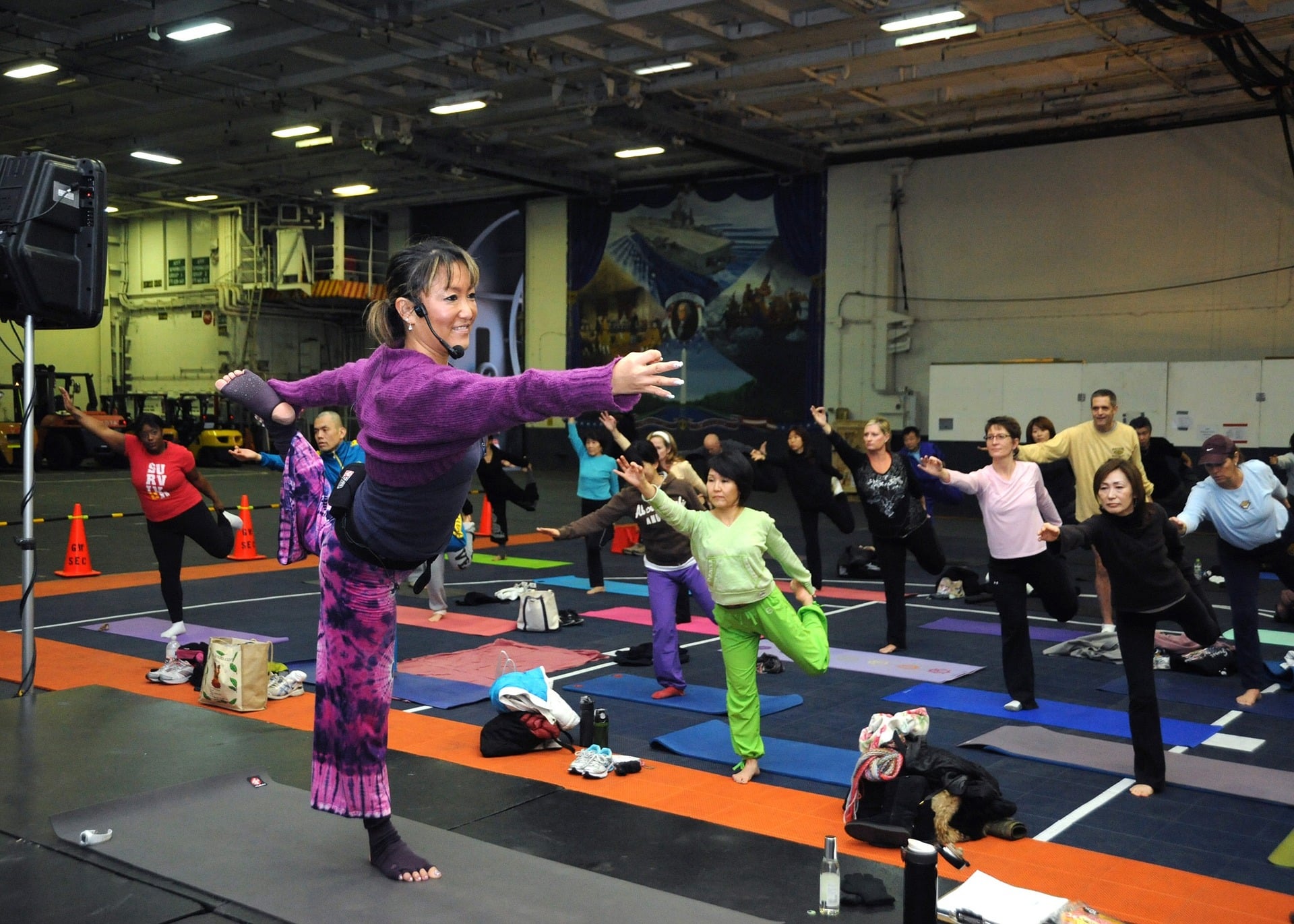
Many gyms offer classes like Zumba, pilates, yoga, kickboxing, and barre. Attending exercise classes provides opportunities to talk with others and explore your workout journeys together!
Exercise is associated with decreases in stress hormones including cortisol and adrenaline, and promotes the production of mood-enhancing endorphins.[9] For those who have social anxiety, these feel-good-feelings can help you gain confidence in seeking and maintaining new relationships.
Join a club or team
Clubs and teams offer great opportunities to make new friends and work together. Bulletins for clubs and teams may be found at your local college campus or community recreation center. A study by Scott Graupensperger and colleagues notes that being on a club sports team results in greater prosocial behaviors. Additionally, being on a team creates a strong sense of community and bonds, thus enhancing identification with others. A greater sense of identification can improve one’s mental health, social life, and well-being.[10]
Find Community Online
Online resources have made meeting like-minded people easier than ever. Today’s platforms allow us to connect with a host of individuals and groups that offer various forms of entertainment whether it is sushi classes, book clubs, or family potlucks! Of course, proper cautions are necessary when meeting people online. To help tweens and teens prepare for the potential hazards that await them on social media, we recommend they take our Social Media Readiness Course. This online course not only offers the information they need to stay safe, Dr. Bennett also shares critical wellness strategies she’s developed in over 25 years of clinical practice! Here are 4 GKIS recommended online platforms to help you connect with others
Meetup
Meetup.com is a great website to start your search for like-minded people. The groups available are diverse and range from substance abuse support groups to groups for beginner hikers! Some groups are also geared towards entire families and may host events to bring families together. You can also create your own group, however, a monthly charge to Meetup is needed to keep your group active.
Hey! VINA
Hey! VINA is a free new app with a design similar to the dating app Tinder. Hey! Vina is geared toward women and nonbinary people looking to make friends with other women and nonbinary people. The VIP membership gives users special access to certain features including faster matches, seeing who swiped right on (liked) your profile, and more.
The Dinner Party
The Dinner Party is an organization founded in 2018. The purpose of this organization is to bring grieving individuals who are between the ages 20 to 39 together. The intent is to connect and provide support for each other over dinner. They also expanded to create dinner parties for a wider audience of individuals who may be dealing with a different type of issue and would like a companion to talk to. To accommodate the recent COVID-19 guidelines, individuals are currently hosting Zoom dinner parties as a safer way to get together.
Eventbrite
Eventbrite is a popular platform used to get tickets for live events ranging from stadium concerts to yoga meetups at the park. While the service is free, the organizer of the event may require a small fee to attend while others offer their events for free.
Thanks to CSUCI intern, Avery Flower for researching ways to battle loneliness, and for co-authoring this article.
I’m the mom psychologist who will help you GetKidsInternetSafe.
[1] Williams, C. Y. K., Townson, A. T., Kapur, M., Ferreira, A. F., Nunn, R., Galante, J., Phillips, V., Gentry, S., & Usher-Smith, J. A. (2021). Interventions to reduce social isolation and loneliness during COVID-19 physical distancing measures: A rapid systematic review. PLoS ONE, 16(2). https://doi-org.ezproxy.csuci.edu/10.1371/journal.pone.0247139
[2] Lun, V. M.-C., & Bond, M. H. (2016). Achieving subjective well-being around the world: The moderating influence of gender, age and national goals for socializing children. Journal of Happiness Studies: An Interdisciplinary Forum on Subjective Well-Being, 17(2), 587–608. https://doi-org.ezproxy.csuci.edu/10.1007/s10902-015-9614-z
[3]Brunes, A., Hansen, M. B., & Heir, T. (2019). Loneliness among adults with visual impairment: Prevalence, associated factors, and relationship to life satisfaction. Health and Quality of Life Outcomes, 17. https://doi-org.ezproxy.csuci.edu/10.1186/s12955-019-1096-y
[4] Tiwari, S. (2013). Loneliness: A disease? Indian Journal of Psychiatry,55(4), 320. doi:10.4103/0019-5545.120536
[5] Beutel, M. E., Klein, E. M., Brähler, E., Reiner, I., Jünger, C., Michal, M., Wiltink, J., Wild, P. S., Münzel, T., Lackner, K. J., & Tibubos, A. N. (2017). Loneliness in the general population: Prevalence, determinants and relations to mental health. BMC Psychiatry, 17.
[6]Carr, D. C., Kail, B. L., Matz-Costa, C., & Shavit, Y. Z. (2018). Does becoming a volunteer attenuate loneliness among recently widowed older adults? The Journals of Gerontology: Series B: Psychological Sciences and Social Sciences, 73(3), 501–510. https://doi-org.ezproxy.csuci.edu/10.1093/geronb/gbx092
[10]Graupensperger, S., Panza, M., & Evans, M. B. (2020). Network centrality, group density, and strength of social identification in college club sport teams. Group Dynamics: Theory, Research, and Practice, 24(2), 59–73. https://doi-org.ezproxy.csuci.edu/10.1037/gdn0000106
Ask anybody what they need more of – and they’ll say SLEEP! Surveys report that sleep deprivation among Americans is rampant. As a psychologist who treats kids, teens, and adults, I see that those who suffer the most are teens! Teens are burdened with a ton of schoolwork and the temptations of social media, video gaming, and binge-watching YouTube, TikTok, and Netflix. With crazy busy work weeks, we crave “me-time,” especially during those precious moments when we’ve settled in for bed without interruptions and distractions. Unfortunately, most people don’t know why sleep is so important. Without enough sleep, we are at risk for mental illness and overall performance decline. Today’s GKIS article goes over the reasons why sleep is so important and how to preserve your mental health and learning capacity by protecting much-needed restorative sleep.
Why is sleep so important?
During sleep, our brains conduct general housekeeping and memory-strengthening duties. Housekeeping tasks necessary for brain health include the pruning, repair, and new growth of neurons and the removal of toxins.
Memory strengthening, called memory consolidation, occurs by stabilizing memory traces that were collected while awake. Memory consolidation occurs with both declarative (fact-based) and procedural (how-to) information. Rapid-eye-movement (REM) sleep is particularly important for stabilizing complex or emotionally charged memories.[i]When we don’t get enough sleep, our brain’s housekeeping and memory consolidation tasks remain undone, leaving us unable to efficiently acquire (onboard) or retrieve information.
Sleep deprivation not only stunts learning, but it can also cause:
mood swings,
negative mood states like depression, irritability, and anxiety,
If people regularly sleep fewer than six hours a night, research has found that they may have:
a higher risk of developing Alzheimer’s Disease,
a 200% increased chance of having a heart attack or stroke,
a 70% reduction in cancer-fighting T-cells, and
disrupted melatonin and cortisol which can lead to weight gain and Type 2 diabetes.
For those who stay awake 16 hours straight, they may lower their overall functioning to resemble somebody who is legally drunk. Furthermore, sleep-deprived individuals often fail to recognize impairment. In other words, they don’t realize the costs and keep burning the candle at both ends.
Vamping
Missing out on much-needed sleep and staying up all night on screens is called vamping.
Teens with chronic sleep deprivation have been found to demonstrate:
How might you decrease the risk of vamping and encourage healthy sleep?
Stage the room to be restful.
I know it’s nearly impossible to motivate kids to unclutter their rooms. But a soothing environment contributes to a soothed mind. Offer your support by helping your child create a more restful environment with a fresh bedroom makeover. Light paint colors, soft textures, organized closets and bedside tables, soft lighting, white noise makers, and yummy smells can turn a chaotic hovel into a relaxing paradise.
Recognize that nutrition, exercise, and screen content impact the quality of sleep.
Research has demonstrated that young children who watch violent television content have more sleep problems, particularly delayed onset of sleep, than children who view age-appropriate content.[iv] Furthermore, kids who get adequate nutrition and exercise, especially outdoor exercise because of sunlight setting your circadian rhythm, also get better quality sleep. In practice, I find that teens, in particular, benefit from the mood benefits of regular cardio and cooperative team play.
No screens in the bedroom.
Why? Because screens wake up our brains! The blue LED light from the screen stimulates the photosensors in the retina that signal the brain to suppress melatonin production (our sleep-regulating hormone) and makes us more alert. Less melatonin disrupts our natural circadian rhythms, which can lead to sleep during the day and wakefulness during the night.
Using screens before bedtime has been found to cause people to:
go to bed later,
prolong the time it takes to fall asleep,
delay the timing of REM sleep, reduce the amount of REM sleep and sleep overall,
Screens also condition us to be awake in bed. If we are often awake in bed, our bodies will automatically be conditioned to cue, or believe that the bed is an “awake-only” zone.
Alternatively, if we only rest and sleep in bed, our bodies will be conditioned that the bed is a “sleep-only” zone.
In psychology, we call this type of cued learning classical conditioning. By these principles, we must resist the urge to do anything in bed but sleep to develop good expectations and habits.
Make the No Screens in the Bedroom Rule BEFORE it’s necessary. It’s asking a lot to say no TV, video games, tablets, or smartphones in the bedroom, but vamping leads to sleep deprivation. Sleep deprivation leads to impulsivity and risk-taking.[vi] Impulsivity while in intimate spaces leads to intimate gestures like sexting and viewing inappropriate online content.
Also, use alarm clocks with red-lighted numbers in bedrooms rather than screens for timekeeping.
Encourage a soothing nighttime ritual.
We are creatures of habit. Habitual activity during the thirty-minute bedtime wind-down signals the body to anticipate rest. Components of a soothing ritual may include soft lighting; quiet, repetitive, or white noise sounds; and comforting activities. Sticking to a consistent bedtime schedule is also important.
Screens off thirty minutes before lights out.
As our brains sort through our memory caches, information is prioritized to either forget or remember. Because experiences that trigger emotion are typically important, evolution has shaped our brains to prioritize memories infused with emotion. Based on cognitive science theories, looping on a troubling experience is thought to be the cause of nightmares.
Just like the response to fright when we’re awake, stress hormones like cortisol and adrenaline dump into our bloodstream when we have nightmares. If we are troubled upon falling asleep, agitated dreaming and tossing and turning may result, leaving us tired, irritable, and cognitively scrambled the next day. Over time, this can seriously impair mental health.
Although emotionally triggering and arousing screen activities like gaming, texting, or viewing activating content aren’t as troubling as real-life trauma, they still stimulate the same brain regions activated with chronic stress, often for hours at a time. The hangover from chronic stress has been referred to as mental brownout. Limiting activating screen activities at night and giving your children time to soothe prior to bedtime will result in better quality sleep overall and pave the way for healthy learning during the day. Particularly, avoid eating, triggering discussions, video gaming, and intense exercise before bed.
Teach sophisticated self-soothing strategies.
The opportunity to spend time with a relaxed parent is another factor critical to self-soothing. From birth, a child’s brain synchronizes with a responsive parent. Eye contact, narrative moment-to-moment comments with emotion words, and general conversation teach kids what emotions are and how to deal with them.
We cannot provide this kind of synching and teaching if we are focused on screens instead of each other. Also, if you don’t sleep well one night, don’t stress about it. Getting anxious or angry will wake you up more, and most of us get poor sleep here and there and simply make it up later.
If you are reading this because you are taking our Social Media Readiness Course, you’re about to learn cognitive-behavioral exercises like diaphragmatic breathing, progressive muscle relaxation, mindfulness, imagery, and meditation. These skills can prevent even the most persistent sleep disorders.
Exercising one’s mind to relax is critical to self-soothing. Another option for overcoming some of the negative effects of sleep deprivation is napping.
A full cycle of sleep takes about ninety minutes and provides cognitive rejuvenation that improves procedural memory and creativity with no sleep inertia (grogginess). Sixty to thirty minutes is good for slow-wave sleep, which helps with fact memory and retrieval but may still result in grogginess. Twenty to ten-minute power naps are shown to increase alertness and energy. If you have time to nap, it’s best to spend ninety minutes to complete a sleep cycle or just a power nap for ten.
[i] Xie, L., Kang, H., Xu, Q., Chen, M., Liao, Y., Thiyagarajan, M., O’Donnell, J., Christensen, D., Nicholson, C., Iliff, J., Takano, T., Deane, R., &
Nedergaard, M. (2013). Sleep Drives Metabolite Clearance from the Adult Brain. Science 342.6156: 373-77. Web.
[ii] Goel, N., Rao, H., Durmer, J., & Dinges, D. (2009). Neurocognitive Consequences of Sleep Deprivation. Seminars in Neurology 29.04: 320-39. Web.
[iii] Dewald-Kaufmann, J., Oort, F., Bogels, S., & Meijer, A. (2013). “Why Sleep Matters: Differences in Daytime Functioning Between Adolescents with Low & High Chronic Sleep Reduction & Short & Long Sleep Durations.” Journal of Cognitive & Behavioral Psychotherapies, 13, 171-182.
[iv] Garrison, M. & Christakis, D. (2012). The impact of a healthy media use intervention on sleep in preschool children. Pediatrics, 2011-3153; DOI: 10.1542/peds.2011-3153
[v] Chang, A., Aeschbach, D, Duffy, J., & Czeisler, C. (2014). Evening Use of Light-emitting EReaders Negatively Affects Sleep, Circadian Timing, & Next-morning Alertness. Proceedings of the National Academy of Sciences 112.4: 1232-237. Web.
[vi] Killgore, W., Kamimori, G., & Balkin, T. Caffeine Protects Against Increased Risk-taking Propensity During Severe Sleep Deprivation. Journal of Sleep Research 20.3 (2010): 395-403. Web.
Surveys reveal that depression and anxiety have increased for adults, teens, and kids. It’s unclear what is causing these increases, but longer workdays and overtasked lives may be strong contributors. Increased screen time on video games, social media, video and movie streaming, texts, and emails can be super fun and even improve productivity. But too much screen time can also lead to a mental brownout, a type of anxious fatigue that we may not even recognize until it leads to mental illness. Giving up screens to avoid it simply isn’t possible for most of us. But the good news is we don’t have to! Learn how smartphone health and wellness apps can benefit you without having to give up screen time!
Mental Health
Did you know that anxiety, depression, self-harm, and suicide is up 78% among teens?[1] In fact, by some estimates 1 in 6 children between the ages of 2 and 8 have a mental, behavioral, or developmental disorder. Left untreated, child symptoms may lead to more issues in adulthood.
Among children ages 3 to 17:
4% or 6.1 million have been diagnosed with ADHD
4% or 4.5 million have been diagnosed with a behavior problem
1% or 4.4 million have been diagnosed with anxiety and
2% or 1.9 million have diagnosed with depression.
Boys are more likely than girls to experience a mental, behavioral, or developmental disorder.[2]
Social Media Impacts on Children’s Mental Health
Sleep Deprivation
Social media has various effects on mental health, especially in children. Dr. Bennett writes in her book, Screen Time in the Mean Time, says that she feels sleep deprivation is the most common contributor to mental health problems today. The blue light on devices interrupts the sleep pattern and makes it more difficult to fall asleep. Many people also develop a compulsive impulse to check notifications which can also delay sleep.[3] Teens with sleep deprivation demonstrate lower achievement motivation, more teacher-child relationship problems, a poorer academic self-concept, and poorer school performance.
Self-Comparison
Too often, we see the best sides of our friends on social media. After all, nobody wants to read about the doom and gloom of a breakup or the fight someone just had with their mother-in-law. Positive posting can lead to friends feeling left out and generally bad about how their lives don’t compare. The GKIS article The FOMO EFFECT: How Fun Friend Posts Can Lead to Clinical Anxiety provides more information on self-comparison.
Distraction
Social media poses a major risk of distractibility. We tend to go on an endless cycle of content on one social media app or we cycle between multiple social media apps. This causes us to spend a longer amount of time on social media and forget about what we are supposed to do in the “real world”.
Mental Health Apps
Dr. Bennett recommends mental health apps to her clients all of the time. Free and convenient, they can be a great addition to psychotherapy. Even for people who aren’t in treatment, mental health apps can help us get to where we want to be by offering mood-enhancing toolkits, mood monitoring, and breathing and meditation ideas.
Mental health apps are awesome in that they are convenient, inexpensive, and even free, and available. They can be a comfortable first-step to wellness prior to (or even while) seeking out help from a mental health professional.
CAUTION: Keep in mind possible privacy issues due to the risk of data breaching and the release of private information to third parties. Many psychologists also agree that the apps are not as effective as seeing a mental health professional.[4]
Here are some mental health apps that GKIS is happy to share with you:
Sanvello
Sanvello is an app that aims to help you relieve symptoms of depression or anxiety by providing a complex toolkit of strategies and resources. It allows you to record your mood and health activities in order to track patterns.
There is also a Sanvello peer community that allows users to share stories, encouragement, and personal insights on any topic. The Terms of Service state “You must be over 13 years of age to use the Services, and children under the age of 13 cannot use or register for the Services.”[5]
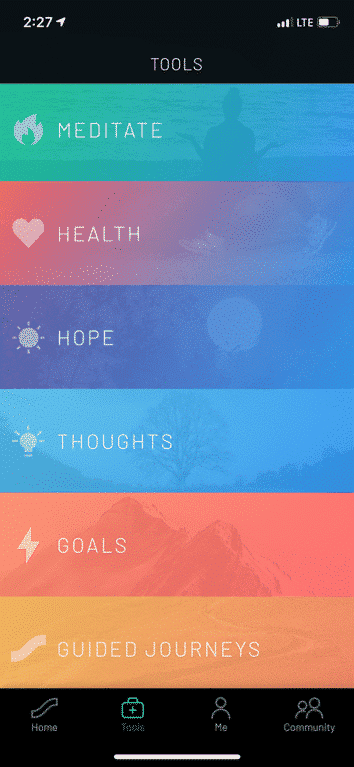
The toolkit provided by Sanvello includes:
Meditation: Lessons focus on specific topics like relaxing, mindfulness, stressful situations, and calm down.
Health: Helps you track health habits that may be affecting your moods such as exercise, drug use, and water or caffeine consumption.
Hope: This tool provides the user with a space to save photos, quotes, activities, and community content.
Thoughts: Provides a place for journaling, analyzing events that have occurred, or discovering characteristics that have contributed to a feeling.
Goals: Allows users to select a challenge such as reconnecting with a friend or saying hello to a stranger.
Guided Journeys: A series of journeys that encourage a user to accomplish something they have never done before.
Porchlight: Being There
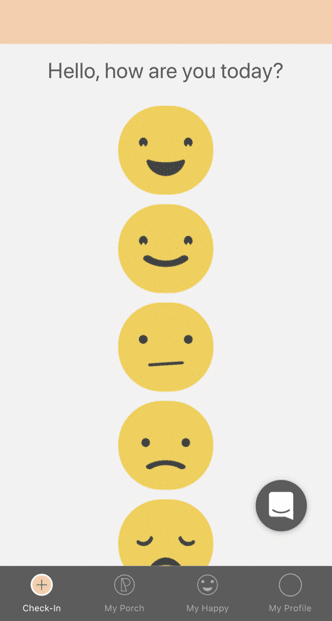
Porchlight is an app that is designed to allow loved ones to easily check in on each other’s mental health. The app prompts you to “check-in” once you enter the app where you can share your emotions using emoji. Users can connect with others which will send daily check-in notifications to the connected users. Porchlight provides prompts to check in with the connected users depending on what emotion they check in as.
Porchlight’s Terms of Service states “you must be 13 or older to register as a user or to use the app. If you are a minor, you must have your parents’ permission to donate through the App.”[6]
Headspace
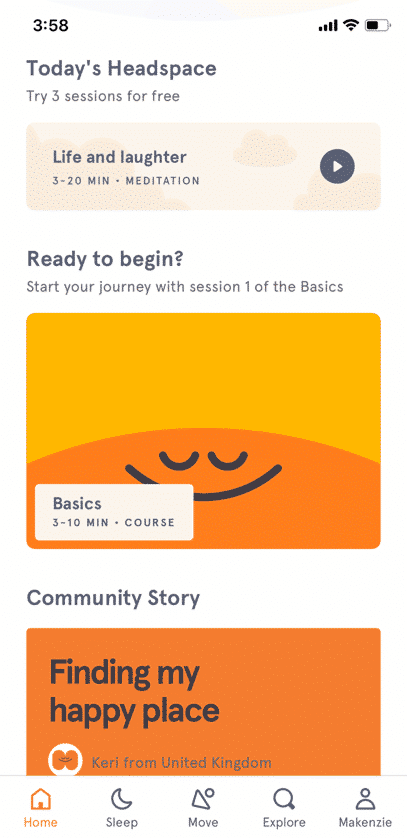
Headspace is an app that provides guided meditation exercises to help the user become healthier and happier. Headspace claims that it can increase happiness by 16% with just 10 days of use. It is also a popular app with over 60 million active users.
There are 4 main guides to mindfulness within the app:
The Wake Up: Daily short stories and small meditations to help you start your morning on a good start
Move Mode: Exercises to help strengthen mental and physical well-being
Sleep: Sleepcasts, music, and audio experiences to aid a restful night of sleep
Meditation: Teaches everyday mindfulness to help at any time of the day[7]
According to the Terms of Service for Headspace, “You must be 18 years of age, or the age of majority in your province, territory or country, to sign up as a registered user of the Products. Individuals under the age of 18, or the applicable age of majority, may utilize the Products only with the involvement and consent of a parent or legal guardian, under such person’s account and otherwise subject to these Terms.”[8]
Calm
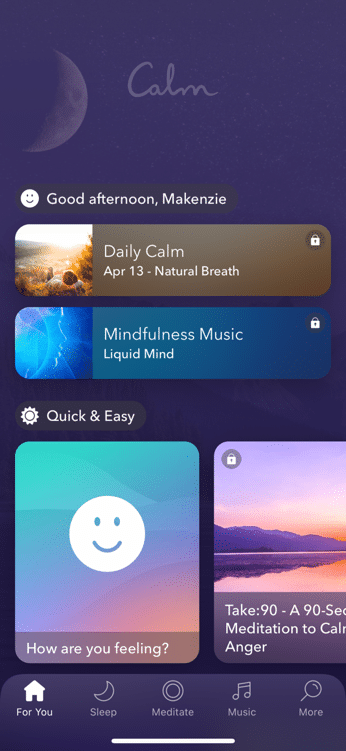
Calm is an app designed to assist users to develop healthy mental fitness, relax, and good sleep habits. The goal of the app is to introduce people to the benefits of mindfulness through meditation.
There are 6 different items of focus in the app:
Meditate: Teaches the skills of meditation
Sleep: Tools to have a restful sleep
Music: To help you relax, focus, or sleep
Body: Demonstrates mindful movement and stretching
Masterclass: Audio programs taught by experts
Scenes: Nature scenes and sounds to help relax and focus[9]
Calm’s Terms of Service state “you may only use the Services only if you are 13 years or older. To make a purchase via the Services, you must be 18 years or older and capable of forming a binding contract.”[10]
Thank you to CSUCI Intern, Makenzie Stancliff for providing insight on mental health apps. For more information about how electronics can impact our health, check out Dr. Bennett’s GKIS article, Is Wi-Fi Dangerous to Our Health?
I’m the mom psychologist who will help you GetKidsInternetSafe.
[1](n.d.). Retrieved from https://www.ajmc.com/focus-of-the-week/mental-health-issues-on-the-rise-among-adolescents-young-adults
[2]Data and Statistics on Children’s Mental Health. (2019, April 19). Retrieved from https://www.cdc.gov/childrensmentalhealth/data.html
[3] How does social media impact the mental health of young people? (2019, October 28). Retrieved from https://www.internetmatters.org/blog/2017/04/12/social-media-impact-mental-health-young-people/
[4]Technology and the Future of Mental Health Treatment. (n.d.). Retrieved from https://www.nimh.nih.gov/health/topics/technology-and-the-future-of-mental-health-treatment/index.shtml
[5]Home. (n.d.). Retrieved from https://www.sanvello.com/
[6]Being There. (n.d.). Retrieved from https://www.porchlightapp.io/
We are all under one of a variety of different directives due to COVID-19. The news is full of videos of people wearing masks and gloves and others panic buying at grocery stores. At a time when we need our wits about us, we feel overwhelmed and anxious. Our fight, flight, freeze, or fold responses are on hair-trigger standby. We are all freaked out and definitely all in this together.
That’s where psychology comes in. Our anxiety is guiding the ship and clogging the pipes when it comes to concentration and problem-solving. How we respond to this threat will make all the difference for how we feel for the next coming weeks.
For today’s GKIS article, I’m going to focus on YOU, helping you recognize where you’re at in regard to mental health and how to bring yourself down a notch. After all, the people around you are syncing with your heart rate and mood. If you are calm, they too will settle in better for the long stay-at-home haul. So let’s start with how you’re feeling right now . . .
If you’re like me and trying hard to keep busy, you may notice that intrusive, unwanted anxieties pierce your veil of concentration more often than you’re comfortable with. Maybe you are panic browsing the Internet or watching television for the most accurate and up-to-date news. Or you’re hitting the overstressed grocery stores to make sure you have two weeks’ worth of food just in case. Maybe you’re feeling irritable and angry and tempted to blame the politicians for underreacting or overreacting or annoyed with panic shoppers who once again bought up the last roll of toilet paper. Or maybe you’re pulling fighting kids apart and trying to figure out how to keep them busy so they’re not climbing the walls. However you’re coping, please know that a variety of stress responses are expected right now. Although uncomfortable, anxiety about COVID-19 is “normal” and “healthy.” Those feelings alert us that something new is underfoot, and it’s the right time to peek your head up from normal daily activities to make sure you’re equipped for whatever is coming your way.
Of course, not all responses are staying in the healthy coping category. Red flags that your moods or anxiety may be tipping into the “impaired” category include reduced or increased appetite, trouble sleeping, panic attacks, or excessive use of addictive substances to numb out like carbs, sugar, tobacco, alcohol, and marijuana.
Whether you’re a little bit anxious or a lotta bit anxious, here are some wellness and coping tips to help you through the COVID-19 crisis:
Wake up with an intention for independent psychological health.
That means facing the problems of the day with your thinking brain rather than your crisis-driven nervous system. My favorite tool for keeping my psychological stability is the 6-second exhale. Simply said, that means filling your belly with a deep cleansing breath and breathing out for 6 seconds. Repeat several more times with an easy breath and always a 6-second exhale. For extra calmness, imagine gathering up your stress with each breath and releasing it into the sky with each exhale.
Create best-coping language.
I’ve been speaking to a lot of clients this week about stress and fear. Rather than focusing on how scary and difficult things are right now, I focus on the language of empowerment. That means reminding people about how their safety measures are putting some control into their hands. Focusing on choice, smarts, strength, and love gets us into a far better place than focusing on vulnerability or fear.
Protect yourself from information overload.
Limit news to once in the morning and once in the evening and avoid constant COVID chatter amongst colleagues, friends, and family. A check-in is important but then change the subject. Endless conjecture about the what-ifs moves you too far away from empowerment.
Balance on-screen activities with off-screen activities.
Our brains need a variety of activities to stay healthy. To do this, stage your home for success. GKIS offers two great tools to help with this. First, use our GKIS Screen Safety Toolkit Course to implement tech tools that filter and manage technology. Second, implement out free digital contract (Connected Family Agreement) to avoid an exhausting and damaging habit of asking > pleading > yelling > threatening > fighting with your kids. A negotiated agreement saves you from all of that. Third, create a block schedule with balanced activities in the work and play categories. Following a routine helps. And finally, if you need help getting your kids to get creative with healthy activities on- and off-screen without the fight, implement our Connected Family Course.
Schedule opportunities for connection.
Schedule a morning digital coffee hour with a chosen group of friends and family. Ask people to join you for a walk or a hike. Reach out to friends, family, and neighbors who may need help with grocery delivery or animal care. Schedule an evening digital happy hour with a chosen group of friends and family. Game night!
Remember, this is temporary, and we will get through it.
Stay in the moment and recognize this is a temporary time, not a permanent one. That will help you distance from the current fear and shelf your anxieties while you focus on other things throughout the day.
Exercise your mind with productive, creative activities.
Touch the earth. Dig into projects you’ve been putting off, whether it’s digitizing your photos, making sense of the DNA genealogy test you got for Christmas, or mending fences (literally and figuratively). Journal your feelings once a day with words or art. Feed your brain something delicious, like that novel you’ve been dying to get to or that craft or building project that sounded so fun (jewelry making, an owl box, trivets out of corks – whatever, Pintrest is your friend).
Exercise your body with nurturing, health-promoting activities.
Take a run. Incorporate meditative and yoga practice (we love the free NIKE Training app for all things fitness).
Sleep well.
Practice good sleep hygiene practices like setting your room up to be cozy for all the senses, avoiding caffeine and alcohol, and practicing imagery to set yourself up for good dreams. (We love the apps Headspace or Calm for meditative and mindfulness practice).
Most of all, lower your expectations of yourself and others. Perfection is not the goal right now. Instead, set an intention to be good to yourself. Intentions allow you the slips without guilt and approximations for perfection without shame. It simply means that you commit to going in the direction of self-compassion right now and a lot of love and togetherness.
I’m the mom psychologist who will help you GetKidsInternetSafe.
More information and resources for managing anxiety and stress:
If you need some TLC and some real coping skills from an experienced clinical psychologist, schedule a telepsychology session with me at DrTracyBennett.com
If you’d like some great ideas about how to positively parent during this overwhelming time, schedule a coaching session with me at GetKidsInternetSafe.com.
NAMI (National Alliance for the mentally ill) is offering a “warmline,” a confidential, noncrisis emotional support telephone hotline staffed by peer volunteers who are in recovery at 800-950-NAMI (6264) and has a great list of COVID-19 (CORONAVIRUS) INFORMATION AND RESOURCES
For more information about stress and coping check out these articles:
Click on YouTube and the first video trending is “Million Dollar Home Tour.” The next recommended video is “My Multi-Country Vacation” followed by “Upgrading my Lambo (short for Lamborghini).” You’ve fallen into the rabbit hole of people flashing their wealth and the expensive items they have. Next thing you know, three hours have passed, and you catch yourself thinking about how nice it would be to afford the huge homes, nice cars, and expensive vacations. Could you be falling victim to wealth addiction?
Wealth Addiction
In Dr. Bennett’s CSUCI Addiction Studies course, we learned that addiction is often characterized by three factors, compulsive use, loss of control, and continued use despite the presence of consequences. Typically, these result from drug addiction. However, they are also seen in the behavioral addictions of gambling and video gaming. If you compulsively seek get-rich-quick schemes, can’t stop watching online flex videos, and make rash decisions in your quest for wealth, you might be wealth addicted!
Wealth addictionor money addiction is a fairly old concept that is currently being fueled by new social media trends. Philip Slater’s 1983 book, “Wealth Addiction” illustrated how Americans are addicted to money.[1] Thirty-six years later, more and more people seem wealth addicted than ever.
In his 1999 research, economist Romesh Diwan compared wealth to the general quality of life. He discovered that the overconsumption of materialistic items promotes wealth addiction. Diwan said that people believe that if they buy the material item they’ve been longing for, they’d be happy. However, his research surprisingly demonstrated that purchasing those items did not fulfill the need and want, instead leaving the consumer anxious and dissatisfied.[2]
Key Influencers
Many YouTube stars flaunt their wealth and material possessions in their videos. For example, YouTuber Jake Paul has 19.6 million subscribers on his channel.[3] As of 2018, his net worth was nearly $19 million.[4] Paul shows off how much money he has by posting videos such as, “I Spent $1 Million Dollars On This Vacation” where he documented an expensive vacation with his brother and friends.[3] In another video called, “I Spent $100,000 in 56 Minutes,” Paul created a competition where he and five of his friends had to spend $10,000 cash in less than an hour.[3]
Jeffree Star is another popular YouTuber who shows off how much money he has. With 15.9 million subscribers as of 2018, Star’s net worth is almost $75 million.[4] Star also posts videos that flaunt his wealth such as, “My Pink VAULT Closet Tour,” where he gave a tour of his dream closet in his home that is full of designer clothes.[5] In another video titled, “Surprising my Boyfriend with His Dream Car,” Star bought his boyfriend an Aston Martin Vantage worth roughly $150,000.[5]
The Benefits of Wealth Addiction
Not all aspects of longing for wealth are negative. For instance, if a watcher is encouraged to pursue higher education to get into a higher-paying career, one might argue that the dream is worthwhile.
Another positive aspect of wealth addiction is sparking the desire to give back with philanthropic gestures. Despite his obscene displays of wealth, Jeffree Star donates money to several charities including victims of gun violence and LGBTQ organizations.[6]
The Risks of Wealth Addiction
Teaching kids that wealth is the highest priority may lead them to seek wealth from opportunistic marketers. For instance, several years ago in Camarillo, a get-rich-quick scheme was introduced to popular high school and college students causing a rash of school dropouts. The product called Vemma Nutrition promised riches in exchange for selling their energy drinks and protein shakes. To get in on the action, the seller had to purchase the products themselves.[7]
Another risk is kids seeking wealth in place of healthier activities like academics, sports, and socializing. After binge-watching videos, they may get duped into believing that money will solve all their problems and make them happy. Of course, this may not be true, instead luring them into false hope with pressure to show off wealth instead of saving or investing in their future.
For some, the first goal of earning is never enough. They chase wealth in a quest to find true happiness. That could translate into depression and anxiety. Addiction studies tell us that living to chase a high is a dead-end scenario. If wealth is the goal, will you ever reach it?
Thank you to GKIS intern, Makenzie Stancliff for alerting us about the risks of wealth addiction. If you learned something about this article, please join us on our DrTracyBennett Instagram page so you won’t miss out on other fun GKIS opportunities.
I’m the mom psychologist who will help you GetKidsInternetSafe.
[1] Peele, S. (2015, February 8). Addicted to Wealth – A National Trait? Retrieved from https://www.psychologytoday.com/us/blog/addiction-in-society/201402/addicted-wealth-national-trait
[2] Diwan, Romesh. (2000). Relational wealth and the quality of life. Journal of Socio-Economics, 29(4), 305. https://doi-org.summit.csuci.edu/10.1016/S1053-5357(00)00073-1
[3] JakePaulProductions. (n.d.). Jake Paul. Retrieved from https://www.youtube.com/channel/UCcgVECVN4OKV6DH1jLkqmcA
[4] Chakrabarti, R. (2019, September 15). The Highest-Paid Stars on YouTube. Retrieved from https://moneywise.com/a/the-highest-paid-youtube-stars
[5] jeffreestar. (n.d.). jeffreestar. Retrieved from https://www.youtube.com/channel/UCkvK_5omS-42Ovgah8KRKtg
[6] Diply. (2018, October 24). 15 Facts About Controversial YouTuber Jeffree Star. Retrieved from https://diply.com/11366/15-facts-about-controversial-youtuber-jeffree-star
[7] Press, T. A. (2015, August 26). FTC: Vemma temporarily shut down for running pyramid scheme. Retrieved from https://www.ksl.com/article/36179492/ftc-vemma-temporarily-shut-down-for-running-pyramid-scheme.