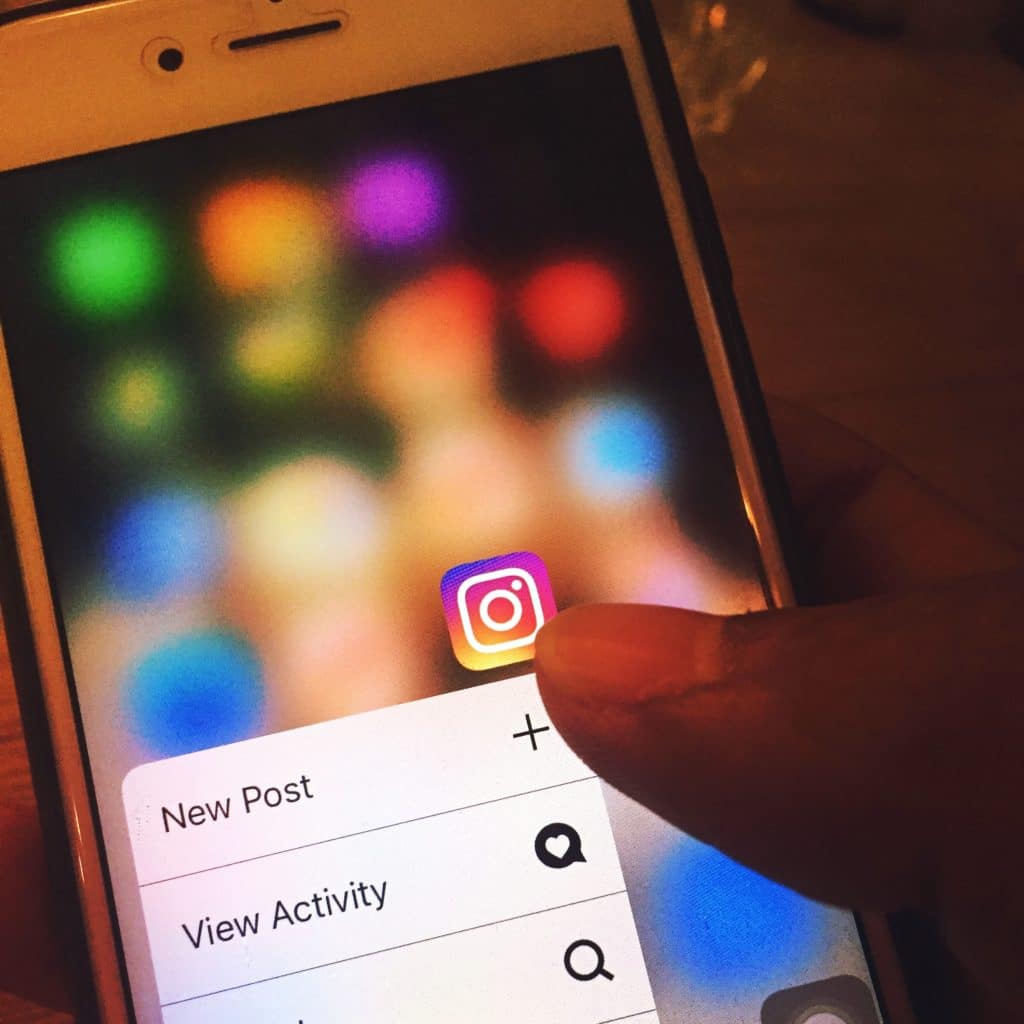
Instagram reports 1 billion monthly active users and more than 500 million daily users.[1] Most teens use social media for more than 6 hours per day.[2] Many social media users have shifted in intention, placing the highest importance on becoming insta-famous rather than sharing information with close friends. Insta-famousrefers to a person who is well-known on Instagram, reflected by thousands of followers and likes. Teens can become consumed in this virtual competition for internet popularity, sometimes leading to a destructive pattern described in my book, Screen Time in the Mean Time: A Parenting Guide to Get Kids and Teens Internet Safe, as compare and despair.
Insta-worthy? Self-Presentation Theory and Impression Management
Many Instagram users lurk profiles, consumed by other people’s lives and perfecting their virtual selves. According toself-presentation theory, people are motivated to present themselves to show off an ideal self and please their audience.[3]
Our frontis our best-stylized image. Our backstage is our true selves. Maintaining too many fronts can be overwhelming. Being great at impression management can be the difference between social media success or failure.
Shout Out for Shout Out
A SFS (Shout out For Shout out) is a branding strategy for optimal self-presentation on Instagram. It refers to teens posting someone else’s account to theirs and vice versa. The goal is to cooperatively promote their pages so both people gain more followers.
As self-presentation trends change in pop culture, so do trends online. In 2008, graphic t-shirts were the cool thing to wear to school. In 2015, hipsters ruled the school. And in 2019, the VSCO look was in. VSCOis the name of the popular app used to create fun colorful edits.
A “VSCO girl” has beach-wavy hair, carries around a hydro flask, has a scrunchie around their wrist, and shops at thrift stores and Urban Outfitters. My 13-year-old cousin shares, “Everyone wears skirts, Doc Martens, and scrunchies now. It’s so VSCO.”
Evolution and Optimal Distinctiveness
With popular editing apps such as VSCO or FaceTune, many social media users have unrealistic expectations for how attractive they should look in posts. Humans are social beings. We work best collaboratively. Social rewards like compliments, words of appreciation, affection, or being with a friend, are major behavioral motivators for young people.[3]
Seeking social reward and trying to achieve optimal distinctiveness (being unique but still super stylish) can be traced back to our ancestors. Belonging to a community meant being socially accepted and supported by a group of others. Many times, this meant life or death.
For teens today, that means walking a razor’s edge trying to look unique while still fitting in with peers. In this impossible quest, teens may be juggling several virtual and nonvirtual selves. Being too unique or too the same invites criticism and cyberbullying.
Getting social media likes rewards the brain with dopamine, the neurotransmitter released in the pleasure center.[2] Instagram programmers know it and bake it in so they can make more money.
Social media influencers are experts at achieving optimal distinctiveness. Viewers spend a lot of time and money trying to do the same. Views and likes result in millions of dollars in profit. This biological hack of social acceptance and connection makes the brand more profitable.
Risks of Social Media
Insta-Anxiety
The constant pressure to stay up to date with trends can cause compulsive online browsing and anxiety. Most teenagers do not have jobs to maintain the lifestyle that many YouTubers do. Social anxiety and the fear of being judged by peers can be overwhelming alongside daily social obstacles that teens face like bullying, hormonal changes, and self-judgment. Instead of fun, spontaneous sharing, teens can get caught up in compulsively second-guessing their posts or avoid sharing altogether.
According to recent studies, social media use has contributed to an increasing number of cases of social anxiety disorders in adolescents.[2] Untreated, anxiety can contribute to other mental health issues including depression, eating disorders, substance abuse, and even thoughts of suicide.
Social Anxiety Disorder Symptoms include:
Lack of desire to socialize
Being withdrawn
Feeling embarrassed or a deep fear of being judged by others
Low Self-Esteem
Forty-six percent of teen girls admit that social media makes them feel bad about themselves due to unrealistic standards.[2] Self-esteem is elevated when individuals are deemed popular by others. For example, having Facebook friends who are more responsive can satisfy psychological needs above and beyond the number of Facebook friends one has.[4]
Seeking Positive Feedback
We all like to know that people find us attractive. Social media, however, can impact us in ways we aren’t even aware of. For example, a 2018 study found that when young women received likes for sexy selfies, they were more likely to post similar photos again.[3]
Lack of Privacy
Teens don’t have the prefrontal brain development to anticipate consequences and engage in high order thinking. Subsequently, teens may not think ahead, instead focusing on the instant gratification of someone liking or commenting on their post. This can cause a habit of oversharing online. Eighty percent of people who commit crimes have taken information from social media sites.[5]
Ways to Improve Your Teen’s Emotional Reliance & Achieve Better Online Safety
To avoid triggering insta-anxiety, make sure your kids are neurologically, socially, and emotionally mature enough to manage risk. Although she says it depends on the child, Dr. Bennett recommends avoiding social media until the second semester of middle school.
Experts agree that Social Media Readiness Training is critical to help kids recognize risk, know how to ask for help, and self-manage use.
Use our free Connected Family Screen Agreement to set parameters and create a screen-friendly, cooperative dialogue. Just enter your email and name on our website, and it will be delivered directly to your email.
Create a customized filtering, tracking, and monitoring toolkit with the GKIS Screen Safety Toolkit. This course also offers smart parenting strategies, like making sure you have social media login information for back-end access.
Thank you to GKIS intern, Isabel Campos for alerting us about the risks of insta-anxiety. If you learned something, please share GKIS articles and tools with friends and family!
I’m the mom psychologist who will help you GetKidsInternetSafe.
[1] “Our Story.” Instagram, 26 Mar. 2019, instagram-press.com/our-story/.
[2] Granet, R. (2016, September 19). Living In Live Time: Social Media’s Impact On Girls. Retrieved from https://newyork.cbslocal.com/2016/09/19/social-media-use-teens/
[3] Bell, Beth T., Cassarly, Jennifer A., & Dunbar, Lucy. “Selfie-objectification: Self objectification and positive feedback (‘likes’) are associated with frequency of posting sexually objectifying self-images on social media.” Body Image, 26, 83–89. September 2018. https://doiorg.summit.csuci.edu/10.1016/j.bodyim.2018.06.005
[4] Burrow, A. L., & Rainone, N. (2016). How many likes did I get?: Purpose moderates links between positive social media feedback and self-esteem Journal of Experimental Social Psychology, 69, 232-236 https://doi.org/10.1016/j.jesp.2016.09.005
[5] Law Enforcement, Social Media and Your Privacy: How Your Data is Used to Solve Crimes. (2018, May 16). Retrieved from https://www.nextadvisor.com/law-enforcement-social-media-and-your- privacy-how-your-data-is-used-to-solve-crimes/
As a clinical psychologist who works with kids and teens, I’ve seen the landscape of their lives change in a rainbow of ways. These changes provide opportunities for growth and connection with self and others but can also lead them into unhealthy relationships in online and offline communities. For parents to educate and connect (rather than disconnect) with their kids over these issues, we need to know the basics. Today’s GKIS articles allows us to take a look into what sociologists predict to be a “genderless future,” where we will no longer be defining ourselves as “female” or “male.”[9] Newly created identifiers and the generic “they” will replace pronouns “she” and “he.”[9] And major businesses like Amazon, Target, Walmart, and Disney will remove gender from the labels of their products.[12]
Gender Fluidity
Welcome to 2019, where millennials and generation Zers have created “Gender Fluidity.”[3] Being “gender fluid” means that the individual exists on a spectrum between male and female and may shift gender several times a day or throughout their lives with different intensities.[8] A millennial poll of 1,000 people revealed that half believe that gender exists on a fluid spectrum or “outside conventional categories.”[14]
Celebrities like Will Smith’s son Jaden Smith, rapper Young Thug, actress Ruby Rose, and superstar Miley Cyrus have identified themselves as gender fluid.[10] Young Thug and Jaden Smith are known for pushing the boundaries of fashion with crop tops and skirts.[10] Ruby Rose varies in masculinity in photoshoots and TV shows like “Orange Is The New Black.”[10] Miley Cyrus has explained her gender fluidity during interviews, “It’s weird that I’m a girl, because I just don’t feel like a girl, and I don’t feel like a boy.”[4]
The Break Down
Gender and sexuality concepts are difficult to understand. They seem muddled in some way or another. Here’s some clarification:
Gender is biological sex and its cultural associations: male, female, transgender.[1]
Gender Identity is what someone perceives their gender to be: biologically a female but identifies as male.[1]
Gender Expression is how someone shows their gender whether it be through clothing choices, hair style, makeup, and the like.[1]
Sexual Orientation explains what gender someone is attracted to and would like to have sexual relations with (differs from gender identity).[1]
Romantic Orientation explains what gender someone would like to be emotionally and romantically involved with (differs from sexual orientation sometimes).[11]
Gender Stereotypes
With the traditional labels of gender came their stereotypes, with females being sexual objects and males being macho knuckleheads.[5] These stereotypes link to online gender specific characteristics. Women tend to fulfill their sexual stereotype by posting provocative photos. In captions and comments their words are more positive, supportive, emotional, and personal.[5] Men express their masculinity online by posting content related to violence, sex, and alcohol. Their online engagement is more aggressive, negative, and authoritative.[5]
Gender Expression Online
Modern society advocates for the freedom to be yourself no matter what gender you are or what the color of your skin is. Millennials and generation Zers have countered stigmatic barriers (such as stereotypes) that prevent the LGBTQIA (lesbian, gay, bisexual, transgender, queer or question, intersex, or allied) community from thriving.[13]
The internet has granted many a voice to speak their truths as well as a receptive audience who’ll listen. That power is a great confidence booster for those who feel powerless against parent authority and social judgement.
It also makes the gender journey feel less lonely for kids and teens. Social media provides a private place to relate with others, vent about being misunderstood, and express themselves unapologetically. On their own terms, they can gradually reveal discovered parts of themselves.
For example, some may feel comfortable cross dressing online but not walking out the door that way.[7] This is because coming out to strangers online is more manageable than coming out at school or home.[6] According to the LGBT Helpline, more people feel hopeful and positive about coming out online, because they know they’ll get plenty of positive support.[6]
Being Anonymous
Another great benefit of online gender expression is the freedom that anonymity provides. Kids and teens are allowed to explore their identity on their own terms. The ability to stay anonymous gives them control over who they come out to. You can choose to use an actual picture of yourself or an avatar, virtually anything to be your default picture. Usernames have the same range in reality or fantasy. Social media allows you to pick and choose who has access to your content. A powerful tool is the ability to block specific users from having access entirely. These tools allow teens to choose whether they want to interact with specific people in their inner circle or complete strangers. It also reduces the chances of cyber bullying.
The combination of anonymity and a knowledgeable online community creates an accepting venue. There’s less chance for criticism invalidating a teen’s gender identity.[7] When coming out online to strangers, a user’s gender and sexual orientation isn’t judged by their past.[7] Peers tend to think they know where someone is on the spectrum. This is because they refer to stereotypes. They judge this based on someone’s dating and sexual history. What they know about the person’s interests and hobbies, again, gender is fluid. It’s a personal journey that one can only define for themselves.
Online Safety
As explained before on GetKidsInternetSafe, “gender-awareness is one aspect, but sexual awareness is another.”[2] Unfiltered chat rooms for things like webcomics, fandoms, and role-playing games expose children to age inappropriate themes of sex and violence.[2] Predators have the opportunity to manipulate naive and vulnerable kids and teens with explicit content or groom them for exploitive relationships.[2]
If you worry that your kids aren’t quite ready to delve deep into online communities that may put them at risk, you’ll want to check out our GKIS Screen Safety Toolkit. With our family-tested, outcome-based recommendations, you can build your customized digital toolbox for each device your child uses. That translates to filtering and blocking age-inappropriate content and offer parental management tools like location tracking and monitoring. Why wouldn’t you use the free and/or subscription parental controls available to you to help? You don’t even have to waste time and energy figuring out which will fit for you. We did the research for you!
In addition to GKIS products like our free Connected Family Agreement, Screen Safety Toolkit, and Connected Family Online Course, websites like 7 cups can detour dangerous influence. 7 cups offers free 24/7 support chat rooms by volunteers trained to deal with adolescent issues like “depression, anxiety, relationships, LGBTQ+ and more.”[15] Teens can anonymously join monitored chat rooms to relate with others in the community.[15] The website is a great stepping stone for teens who feel like their parents don’t understand. If all of this is overwhelming already, book a coaching session with Dr. B so she can guide you through it. It really is as easy as that.
What else can you do?
Reflect on your ideas and beliefs about gender. It’s important to understand how you truly feel about these issues. Identify what makes you feel or think this way. Is it healthy and supportive for a child emotionally, mentally, and physically struggling to find themselves?[2]
Educate Start the dialogue about sexual education as early as you can. Answer the questions that are commonly answered with, “I’ll tell you when you’re older.” Be the person they turn to when they have questions. Keep an open dialogue. This helps deter any negative influence age inappropriate content may provide.[2]
Still wondering how to start “the talk”? Lucky for you, Dr. Bennett makes the awkward conversation easier with these tips:
Thank you to our GKIS intern Hanna Dangiapo for untangling the ever-evolving definition of gender. Have you had experiences with gender fluidity in your house or community? Let us know what you think about it in the comments below.
I’m the mom psychologist who will help you GetKidsInternetSafe.
There is a YouTube/TikTok trend of parents pulling pranks on their kids for viral shares. Some appear to be innocent jokes. Others are recordings of parents screaming at their children while the kids cry. Debates fill comment sections on how wrong it is to capitalize on “bullying” a vulnerable child. Professionals argue that this “comedy” violates trust and traumatizes children. It has even been argued that sharing milder pranks is still harmful, exposing children to the cruelty of internet trolls. In contrast, fans of the pranking videos complain that people need to lighten up. After all, we survived similarly harmless pranks when we were kids. Read this article and ask yourself, “When is the line crossed between comedic relief to child abuse?”
YouTube’s Response
YouTube videos go viral, fast. The comedy of pranking gives videos an extra boost in popularity. Yet, they got so out of hand that YouTube clarified their child safety policies in January 2019. They added that the mere perception of endangerment or vulnerability is unacceptable:
“We’ve made it clear that our policies prohibiting harmful and dangerous content also extend to pranks with a perceived danger of serious physical injury. We don’t allow pranks that make victims believe they’re in serious physical danger – for example, a home invasion prank or a drive-by shooting prank. We also don’t allow pranks that cause children to experience severe emotional distress, meaning something so bad that it could leave the child traumatized for life.”[1]
The Invisibility Prank
The invisibility prank was a fad for some time. In these pranks, families were videoed as they deceived children into believing that a magic chant made them disappear.[4]
Here’s how it worked:
First, the main pranksters let family members in on the joke so they can play along. Then the pranksters volunteer the child for a “disappearing magic trick.” The child sits on a chair in the middle of the room while the audience surrounds him. The magician covers the child with a blanket, and says three magic words, then ta-da! This is the audience’s cue to act completely surprised that the trick worked. Some get angry saying, “This isn’t funny! Bring him back!” Others gasp in astonishment. Whenever the child touches someone, they pretend to be spooked by this unseen force. The biggest part of this prank takes place when the pranksters ask the child to take a picture. The child doesn’t know the pranksters staged the picture beforehand. The fake picture shows the prankster’s arm hugging nothing. That empty space is where the child was supposed to be. The child sobs at this point because they’re desperate for acknowledgment.[2]
The Martin Case
An infamous case of YouTube pranking is that of the YouTube channel “DaddyoFive.” After their local county received several citizen complaints, the YouTube couple lost custody of two children in 2017. A county judge sentenced Michael and Heather Martin to five years of probation on child neglect charges. A neuropsychologist determined that the children experienced “observable, identifiable, and substantial impairments of their mental or psychological ability to function.”
The Martins had over 300 videos of them verbally, mentally, and or physically abusing their children for “pranks.” The Martins pleaded that the pranks supported their family with thousands of dollars of YouTube ad profit.[8]
Where the Line Is Crossed
At GetKidsInternetSafe we put children first, always. We believe that supporting child mental health and a strong, positive parent-child alliance is extremely important.
Pranking, which takes the form of bullying, may traumatize children if it repeatedly creates emotional, mental, and or physical duress.[5][7] Victims of pranking may suffer chronic anxiety, as they remain hypervigilant for the next prank will occur. Once pranked, they may no longer trust their parents or their surroundings. Surprise pranks may contribute to social issues, defiance, cyclic bullying, depression, and aggression.[7] Children with pre-existing behavioral and mental health issues are particularly vulnerable.[7]
Before the Internet, family pranks were private and lost their sparkle quickly in favor of empathetic support and good judgment. YouTube, TikTok, Twitter, Instagram, and Snapchat broadcast private moments to thousands and sometimes millions of strangers.[5] Strangers in the community and friends at school get to see a child pee their pants from being so scared. While the world laughs at their fragility, the loss of privacy magnifies their insecurity.[6] This embarrassment extends at-home bullying to the public causing cyberbullying or public harassment.[7]
YouTubers, like Logan Paul, increasingly push the boundaries to increase viewers and keep people entertained. These prank-based YouTube channels push the same boundaries but for the sake of their children’s health and safety.
The Balance
Not all parents maliciously prank their children to the extremes. For some families, jokes and ongoing pranks are traditions that bond everyone together.[9] In our family, we yell “123 not it” at the end of our meals at restaurants. Whoever is last has to carry the leftovers out and put them in the fridge when we get home.
When children are mature and the jokes are gentle, pranks can be positive lessons in trust.[9] According to sociologist Gary Alan Fine, “We can play these games with each other and we trust each other sufficiently that we won’t get angry, that we will be friends afterward, despite this momentary uncomfortableness.”[9] Pranks also help people develop a sense of humor, which is a useful coping skill.[5]
Arguably, parents tricking their children into believing that the Tooth Fairy and Santa Claus exist are good examples of appropriate pranks. The jokes gently play with the child’s innocence. These videos are memories cherished with laughter as our children grow older. They exhibit pure-hearted children living happy childhoods.
Things to Consider Before Posting a Prank Video
Trust your gut.
Every child’s temperament varies. Cultures, ethnicities, and family dynamics all differ. How a child will react to a prank is best known by their parent. Parental instinct and listening to our guts are our best courses of action.
Ask your child before posting.
Part of the GKIS Connected Family Screen Agreement explains that family members will not post images or videos of each other without permission. This is a critical step to building important dialogue for negotiation and trust. This applies to pranking as well.
Anticipate how that video will be received by other adults and peers.
It’s easy to get caught by the urge to instantly share hilarious moments with the internet. But take a moment before hitting “post” to consider how your child will feel in a year or two with the video still online. Think about who has access to your content. Follow the GKIS Grandma Test: “Would grandma have a problem seeing this?”
Will it target your child for further bullying?
For example, imagine a group of fifth graders seeing your family’s prank. Will they be laughing with your child or at them? Will they give your child a demeaning nickname?
Will copycat behaviors be unkind or cruel?
Anticipating the consequences of these videos is essential before posting.
Thanks to Hanna Dangiapo for covering this important, sensitive issue. If you’re ready to start a more positive, cooperative connection with your family and increase screen sanity, check out our GKIS Connected Family Online Course. With 10 easy steps, you can bring the fun back into family life.
I’m the mom psychologist who will help you GetKidsInternetSafe.
Most parents are baffled by the YouTube celebrity phenomenon so popular with kids and teens. To keep us in-know, our last GKIS article, Why are YouTube Celebrities Popular?, explained why YouTube celebrities are so popular. It looks easy, but the truth is attracting and keeping viewers is not as easy as it looks. Recently, YouTube celebrities have been coming out in droves talking about their struggles with mental health issues. Is this a fad topic intended to attract more viewers? Is it a valuable community service, because it offers mental health information? Or are YouTube celebrities actually stressed out and overextended to maintain earnings? Find out what’s behind the curtain of YouTube celebritydom and how practicing tried-and-true self-care methods is the answer for staying healthy and successful.
The Breakdown Video
In 2016, top YouTube celebrity PewDiePie reached his breaking point. In a video titled “I QUIT (for now),” he announced that he couldn’t keep up the pace of uploading videos daily. Even the wildly successful veteran PewDiePie was crumbling under the stress and anxiety of a daily vlog.
Elle Mills is a more recent celebtrity who became an overnight sensation last year with her coming out video, increasing her subscriber count to 1.2 million. Soon after, she posted her burnout video. In her seven-minute emotional video, she explains:
“This is all I ever wanted. And why the fuck am I so unfucking unhappy? It- It doesn’t make any sense. You know what I mean? Because, like this is literally my fucking dream. And I’m fucking so unfucking happy. It doesn’t make any sense. It’s so stupid. It is so stupid.”
Because of the fast changes in her life and the effect YouTube was having on her, she decided to take a break to recuperate and find her love for creating content again.
Bobby Burns gained almost a million subscribers in less than two weeks after working with celebrity Shane Dawson. Shortly after, Burn abruptly decided to move to Los Angeles and change his content. Sadly, Burn received a lot of backlash from Shane fans and his subscriber numbers ultimately declined under accusations of selling out and changing content for Shane. Eventually this led to his video explaining his breakdown, saying:
“I didn’t make videos, I did- I literally didn’t do anything. I tried- I tried incredibly hard but I couldn’t. I would go to touch my camera or touch premiere and I would just have a full-blown anxiety attack. When this was first happening I was so confused, I was like why? I love making videos so why the fuck is this happening? And the reason that was happening is because I completely burnt myself out and I lost myself in YouTube.”
Common Elements Behind YouTube Celebrity Breakdowns
AdSense:When YouTubers are first starting out, they receive their money through Google AdSense. The amount of money received depend on two key factors, the types of ads and the pricing of ads appearing in your videos. So, whenever a viewer clicks on an ad on your YouTube channel, you get paid a certain amount of money. This creates a pressure to upload daily among YouTubers, so they can maintain their status as a YouTube celebrity and have a consistent flow of income.
Always-Changing YouTube Algorithms:An algorithm is a set of rules created to solve a class of problems. When we speak of YouTube algorithms, we are referring to the specifications that get one’s video offered up to viewers. There is big competition. Every minute there are over 400 hours of videos uploaded to YouTube, making it necessary to have a way to make content easier to find.[1] According to YouTube, the point of having the search and discovery system are to help viewers find videos they want.
Initially, the algorithm was fairly simple, rewarding the most clicked videos. Now videos are rewarded by the number of minutes the video is viewed, among other factors. Staying relevant creates a lot of pressure to produce fresh, new, and creative content each upload.
Currently, the six ways the algorithm can affect where YouTuber’s videos appear are through search results, suggested video stream, recommended viewing, trending stream, the viewer’s subscriptions, and any notifications the viewer has set up. [1]
Demonetization:Another concern is the fear and frustration of having your video demonetized. Demonetization means that the video is not suitable for monetization (making money from ads), since it does not comply with YouTube guidelines. However, this continues to be a frustrating and confusing topic for YouTubers since YouTube’s software decides if the video is advertiser-friendly. Software occasionally messes up ad revenue by incorrectly putting it in the ‘demonetization’ category. This can have a costly financial impact.
Brand Ambassadorships & Product Lines: Not only must YouTube celebrities manage their own brands, but they often partner with others. Typically that means partnering with somebody with a similar platform (number of subscribers). Other times, there’s pressure to earn the attention of a bigger celebrity. In order to be marketable, one must create and test content to build an attractive business portfolio. Another way to increase profits and expand influence is to create a personal product line. One business quickly leads to others…
Is YouTube doing enough to support YouTube celebrities?
YouTube Creator Academy launched in 2013 for the purpose of providing free educational videos on starting a YouTube channel or helping your channel be successful. Creator Academy courses include foundation, production, growing your channel, earning money and building your business on YouTube, and YouTube content categories. [2]
The course “Staying well and avoiding burnout” was added in June, 2018. Polygon writer, Julia Alexander, writes:
“There is no concrete answer for how YouTube executives and employees can tackle burnout. They can offer more transparency around monetization and copyright rules…but it’s going to take a lot of experimenting and communication. Tools like the community tab, which offer creators a chance to hang out and talk to fans without needing to work on a video is just one step.” [3]
Avoiding Burnout
YouTuber celebrity and vlogger, Casey Neistat, offers, the following suggestions for preventing YouTube burnout:
Take a break.
It’s important to give yourself a break from the fast pace of YouTube. Letting your viewers know that you are taking time to recuperate and take care of yourself shows an openness and bond as a creator. Go on that long-awaited vacation without feeling guilty.
Spend time with family and friends.
Usually a YouTuber’s time consists of long hours of planning, filming, and editing. Having a balance of work and play are crucial for one’s mental health. When you spend time with family and friends it can be a time to unwind and not focus on YouTube. Remember, you still have a life outside of YouTube, and it doesn’t always need to be publicized to millions of viewers in the world.
Don’t be afraid to ask for help.
This can mean many things. Hiring more hands-on deck to film the content, edit videos, manage social media outlets, and create a balance on work and life can remove those added pressures and creative blockage. For impairing mental health issues, seek professional help.
Diversify your income.
YouTube ad revenue isn’t the only way to make money. The membership site, Patreon,is an outlet for YouTubers to create a page so subscribers can pay to get bonus creator content. Forming a direct relationship with sponsors can also help funding. Being a part of events that hold Q&A panels, conferences, or platforms for YouTubers also help. Production deals with media companies like Netflix or Disney can offer lucrative revenue. Finding ways to diversify your income is important to weather dips in one revenue source.
At the end of the day, YouTube businesses are like other entrepreneurial ventures. Staying centered, learning how to tolerate risk, build support for wearing multiple hats and ultimately outsource, and learning how to manage teams and finances are critical for success. Want to learn more about YouTube’s impact on kids? Checkout YouTube Beauty Gurus Suck Money and Teen Confidence and GetKidsInternetSafe Tips for YouTube.
Thank you to CSUCI Intern, Sasha Mejia for taking the initiative to research and write this article in response to your insights!
I’m the mom psychologist who will help you GetKidsInternetSafe.
In our last GKIS article, Is Your Child Screen Addicted? we discussed the definitions of screen addiction, who’s to blame, who is commonly afflicted, and what the brain studies say. Our next question is, OK then what? It turns out that inpatient treatment facilities for screen addiction are popping up all over Asia. We are starting to see the same here in the United States. When should you get help and what does help look like?
When to Get Help
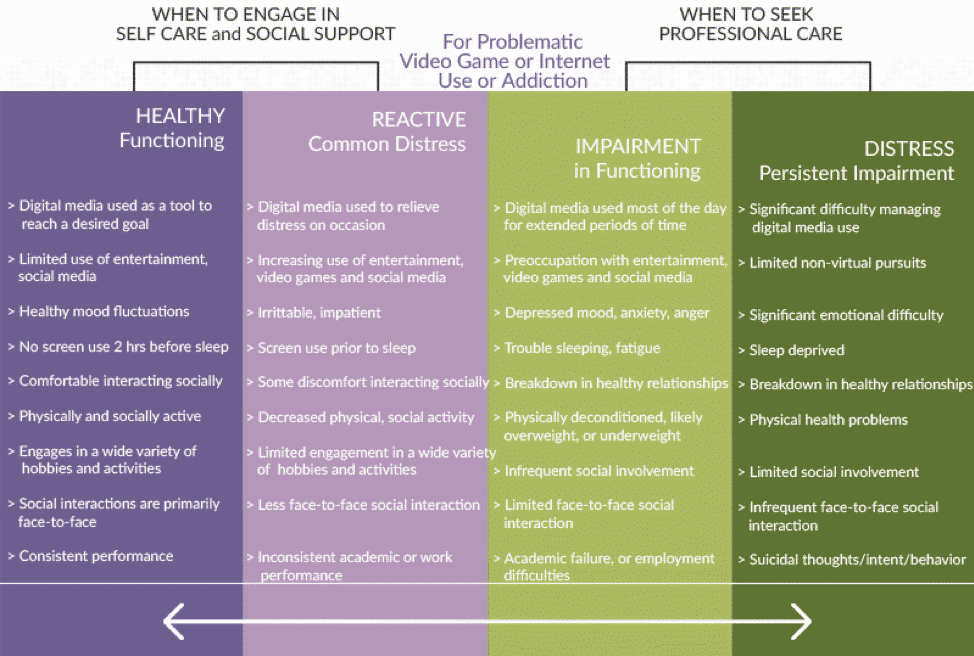
GKIS supports parents to set family rules and promote healthy screen use before digital injury and addictive use occur. If you are concerned about your child’s relationship with their screens, the chart below is a great place to start. Read through each level of functioning and determine which best describes your loved ones.
Fortunately, most kids fall under the reactive category for screen use. To avoid progression into Impairment or Distress, GKIS offers tools like our Screen Safety Essentials Course. If you think you’d like to get outside help as well, here are some facts that will help you navigate as you find the specific help you need.
Where can people with screen addiction go for treatment?
Outpatient Treatment
“Outpatient” simply means treatment from an office or clinic rather than admission to a hospital. Youth inpatient treatment programs are more expensive than outpatient and do not typically admit clients until they are at least 12 years old. If your child is young, and it’s early enough that the problem seems resolvable, outpatient services are the best place to start. Find an experienced professional like Dr. Bennett that will work with you and help family members implement follow-up care and make appropriate changes in the home.
Outpatient treatment starts with a comprehensive individual and family evaluation. They will then propose a treatment plan rich in cognitive behavioral coping skills (like those we offer in our Social Media Readiness Course). Usually, the practitioner will see you and your child once a week or twice a week in crisis situations. If your child needs more support, their mental health professional will refer you to extra resources or a partial outpatient or inpatient program. Partial outpatient typically refers to a program with multiple services available more than once a week.
Inpatient Treatment
Inpatient treatment usually involves an overnight stay away from home. Programs are typically offered in timeframes lasting 30, 45, or 90 days and include problem-focused, goal-directed therapies to address the symptoms of the individual’s problematic tech use. Clinicians guide clients through the process of “disconnecting and finding themselves.”
For a long-term stay, you may want to look into programs with accredited education so that your youngster can stay on track in school during treatment. Programs work to encourage a healthy balanced lifestyle while addressing underlying issues contributing to emotional factors (depression, anxiety, ADHD, ASD). Each client’s treatment plan should be individualized and created collectively by the client, their clinicians, and the family. All programs except aftercare should require their clients to be 100% tech-free while in treatment.
The following services have been shown to successfully treat behavioral addiction:
During inpatient treatment, professionals will work to better understand the complex nature of the individual’s digital media abuse and how it is affecting their development, as well as address the underlying medical and mental health conditions. Patients spend time examining their close interpersonal relationships and how their thoughts, feelings, and behaviors are connected. By exploring patterns of thinking that lead to self-destructive actions and the beliefs that direct these thoughts, patients can modify their patterns of thinking to improve coping skills. Redirecting negative thinking is imperative for self-change, and, due to the immature neural networks in young people, they need more support to achieve lasting cognitive restructuring. Negative thinking patterns also exacerbate anxiety, depression, and compulsive behaviors.
It is important to shop around for quality and fit. Make sure that all treating professionals share an open line of communication with one another, the patient, and the family. As a team, they should help employ a balanced life plan for the client during and post-treatment. They will also go over the risks and benefits of use, potential relapse obstacles and triggers, and help the patient build familial and community connections which are imperative in maintaining a healthy sustainable lifestyle.
Who does the treatment?
Counselors
Counselors focus on overcoming substance abuse and maintaining sobriety. They tend to focus on the here and now and are typically not trained to work with mental health issues directly. Counseling activities include facilitating group therapy and support groups, family counseling for rebuilding and support, and individual counseling to manage symptoms, cravings, and triggers. Counselors work in outpatient and inpatient rehabilitative programs as well as transitional living environments like sober living homes.
Specific types of counselors:
Substance abuse and behavioral disorder counselors provide treatment and support for those struggling with addiction. Education and licensing requirements vary by state. However, they typically have an associate degree and a substance abuse counselor certification. Some additionally seek a bachelor’s or master’s degree.
School counselors typically have a bachelor’s degree, a teaching credential, and a two-year master’s degree. They specialize in front-line identification of student problems and individual and group counseling about broader issues, like academic and family issues.
Therapists
Therapists focus on mental and emotional health over time, of which substance abuse may be a part. Therefore, they treat mental health issues that co-occur with addiction, including mood and anxiety disorders. Therapists train with a variety of techniques. However, when working with addiction issues they primarily focus on cognitive behavioral therapy, contingency management, motivational enhancement, and individual and family behavioral therapy. Therapists typically work in private practices and outpatient and inpatient rehabilitative programs.
Specific types of therapists:
Licensed marriage and family therapists (LMFT) and licensed professional clinical counselors (LPCC) have bachelor’s and master’s degrees. LPCC’s treat a broader scope of mental health issues, while LMFT’s focus on issues that stem from marriage and family relationships.
Licensed clinical social workers (LCSW) are part of the mental health counseling branch of social work. They are required to get extra accreditation and training after receiving their master’s in social work (MSW) degree. MSW and LCSW therapies are designed to work with the client to discover what strong natural skills and talents they possess that can be used as a launching point to tackle the issues the client is facing. This process begins with an assessment phase that inventories the strengths and perceived challenges as well as the client’s environment. Then the LCSW works with the client to make and work toward realistic goals (immediate & long term) as well as work to improve the client’s relationship with others and themselves. Social workers can diagnose and provide therapy but cannot prescribe meds.
Licensed Clinical Psychologists
Psychologists typically have a Ph.D. (5-year degree) or PsyD (4-year degree) and are trained for testing and treatment. They have the training to deal with more serious mental illnesses than other treatment providers. Psychologists are often in supervisor and program development and management roles.
Psychiatrists
Psychiatrists are medical doctors that specialize in the diagnosis and treatment referrals for individuals with mental illness. They earn their medical degree and then attend five years of residency specialty training with clients with mental illness. They can prescribe medication and monitor/make dosage adjustments as needed.
Physicians
Physicians with a specialty in addiction medicine are medical practitioners that specialize in chemical and behavioral dependency.
Quick Tips for Parents and Kids in Recovery
Many things will undermine a child’s rehabilitation. One is being too ambitious at the start. Don’t overly focus on each little thing or just the end result. This can lead them to feel defeated from the beginning. Instead, focus on the process one day at a time and acknowledge effort along the way.
Remember that they are doing something important and challenging! Kids making it through childhood and adults doing their best to parent…these are life’s hardest tasks. Blame is not useful, but courage, hope, and love are where it’s at.
“Rehab didn’t cure me of my disorder, but I do consider it to be the cornerstone of my recovery. It gave me a toolbox of coping mechanisms, others to relate to, a safe and open environment, and most importantly, the training to help me understand my specific plight and reframe my thinking. It was the starting point for the long and rigorous process of reclaiming my brain and thought patterns. It still took years after discharge for me to get truly healthy, but I do not believe without serious intervention I would not be where I am today. My disorder robbed me of my ability to connect with the world around me or manage stress without acting out. Today I can say I never imagined my brain to be released from those chains that tethered me to my addiction for so long…. and I owe much of it to the intense work I started in rehabilitation.”
Thank you to CSUCI Intern, Katherine Bryan for informing parents about screen addiction and where families can go for help. If you want to take steps TODAY to prevent digital injury and addiction, check out our GKIS Screen Safety Toolkit, designed to show parents how to create real preventative change in easy steps.
I’m the mom psychologist who will help you GetKidsInternetSafe.
Screen addiction is officially a thing. As a mom and clinical psychologist for over 25 years, I recognized and identified it in 2014 when I founded GetKidsInternetSafe from treating hundreds of families in my private practice. Teaching addiction studies at CSUCI also highlighted the similarities between drugs and screen behaviors for me. Like everybody else, I too was having a hard time chasing my kids off our screens. Honestly, even I was getting lost in my research and on Facebook, losing the ability to chill and read a novel. I started to worry about my family. From there, I wrote my book Screen Time in the Mean Time, offered keynotes and presentations, consulted with tech companies, coached families, built and tested my online courses, and created a weekly blog. And, after all that, the World Health Organization finally confirmed what I’ve been screaming from the rooftops. Big tech creates screen products that are manipulatively designed to trigger the pleasure centers of our brains, and we are, in fact, clinically addicted.
Gaming Addiction
Nearly 60% of parents think their teens are addicted to their mobile devices. In 2018, the World Health Organization (WHO) classified gaming addiction (IGD)as a mental health disorder. In the last twenty years, the tech revolution has affected every aspect of our lives. Studies have shown that, for some subjects, compulsive screen use impacts the reward and pleasure areas of the brain in the same ways that alcohol, drugs, and other behavioral addictions do. Screen addiction treatment centers have been popping up in Asia for the last decade and are starting to be in the United States as well. Do you worry your child may be showing signs of screen addiction?
——————-
“Remember, when Betty Ford first admitted she was an alcoholic, we didn’t have people believing it was actually a problem until she came around and talked about her own problems with it. This is a place for people to go for help, and that we hope will help everyone around them stop taking Internet addiction so lightly.”
Kimberly Young (founder of The Center for Internet Addiction in 1995)
————————
Who is to blame?
Parents
Of course, we have some accountability for what happens under our roofs. Pester power breaks us down, and we allow too much screen use even though we know better. We need a break in our overtasked, screen-saturated lives. We can’t entertain our rug rats 24-7.
Kids
They are so persistent! They CRAVE screen use and are master manipulators. Children are vulnerable to screen addiction because their brains are not fully developed, particularly in the prefrontal cortex, which is responsible for impulse control and decision-making. Children who suffer from trauma like bullying, divorce, and abuse, as well as from psychological vulnerabilities like ADHD, anxiety and mood disorders, and autism are particularly vulnerable.
Schools
Schools are increasingly adopting curriculums that require screen use and Internet access during classroom and homework time. Without digital literacy, our kids academically falter. If you are reading this as part of your Social Media Readiness Course, then either your parents or your school are doing an awesome job prepping you to avoid addiction issues down the line.
Big Tech
Screens are programmed to addict us. Big tech, like Google, Amazon, and Facebook, are experts in how to keep us coming back for more. Using secret computer algorithms, our online behavior is studied, collected, and aggregated. This data is used to create and deliver content in the ways our brains will effortlessly absorb it. That translates to targeted ads for clicks and money leaving our bank accounts. Big profit indeed.
The Gaming Industry
The gaming industry made 183 billion dollars last year. Multi-level, high-sensory games, like Fortnite, are intentionally programmed for addictive use. Players are rewarded for staying on and punished for getting off. This keeps kids on-screen, vulnerable to hours of autonomic overarousal. That means they burn too much brain fuel and are left fatigued and in mental brown-out.
The Government
Where is the regulation to protect kids? Are civil liberties really that strong that legislators can’t step in to help parents protect their kids against known harm like online pornography? Or is it that research and treatment organizations can’t compete with rich lobbyists who get direct access to our legislators? Did you know that the advertising budget for Budweiser alone exceeds the entire budget for research on alcoholism and all drugs of addiction?
How common is Internet Gaming Addiction?
Recent studies claim that around 1 – 5% of the US population could be classified as Internet game addicts. It is most common among single young males. Male Internet addiction most typically involves video gaming, cyber-pornography, and online gambling. Women are more likely to show addictive use patterns with social media, texting, and online shopping. IGD commonly cooccurs with depression, anxiety, AD/HD, self-harm, obsessive-compulsive disorder, oppositionality, suicidality, and personality disorders.
Other risk factors include living in the city, not living with a biological parent, low parent involvement, parent unemployment, and not having a reliable friend.
Consequences of IGD include skipping school, lower grades, family conflicts, lack of offline sociality, sleep problems, and unresolved developmental problems. These factors, along with emotional problems, often result in the addict lacking the very resources necessary to break out of the addictive cycle.
What do brain studies say?
Brain imaging studies have found brain changes like those seen in subjects with drug addictions. In other words, the more we play video games, the more our brains change and adapt.
Activation pattern changes that result in brain tissue changes are called adaptive neuroplasticity.
More specifically, subjects with video game addiction show a reduction in gray and white brain matter and reduced cortical thickness in various areas of the brain. The more the gamer plays, the more brain changes. Studies have also found evidence of dopamine release and higher activity in the brain’s pleasure center when playing video games. Heavy gamers have significantly more difficulty calming their emotions and making sound decisions than nongamers.
Thank you to CSUCI Intern, Katherine Bryan for contributing to this article. Screen addiction is real and now universally recognized. If you worry you are seeing red flags in your home, remember that screen addiction is preventable!
I’m the mom psychologist who will help you GetKidsInternetSafe.