Need peaceful screen time negotiations?

Get your FREE GKIS Connected Family Screen Agreement

depression

Kids Use Social Media for Mental Health Information and Help

Suffering in silence can be a terrible experience, especially for tweens and teens. It can also make depression and anxiety worse. But sometimes finding help can be difficult. Although social media has its risks, it is also a portal to factual health information and support. Might your child be reaching out online for help?

Social Media and Mental Health

74% of Americans visit social media sites daily. 97% of organizations that promote public health have social media profiles.[1] According to studies, websites with a “mental health focus attracted the highest number of fans.”[2]

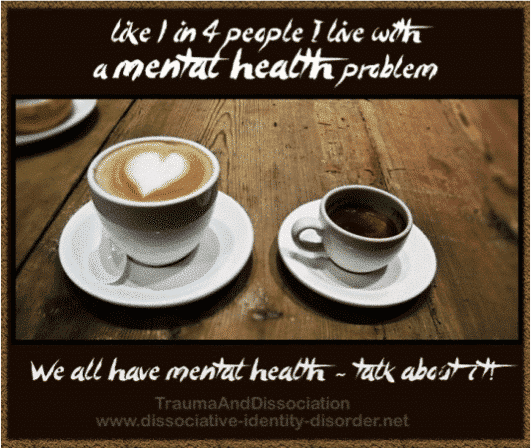
Stigma refers to negative and unfair beliefs about something like mental health. Social media is useful to help people overcome stigma by providing education and awareness. Typical public health activities include sharing informational articles, memes (a picture with a message typed on it), videos, and people’s personal stories with the intent of reshaping the way we view health and well-being.

A study was conducted to test a social media mental health awareness campaign on youth.[3] As expected, the results found that the campaign worked. Youth who viewed the campaign had an increased awareness of self-identified depression and suicide risk. They also showed more willingness and a better ability to seek help. Those who share their mental health journeys can also serve as role models for young viewers.[3]
Social Media and Autism

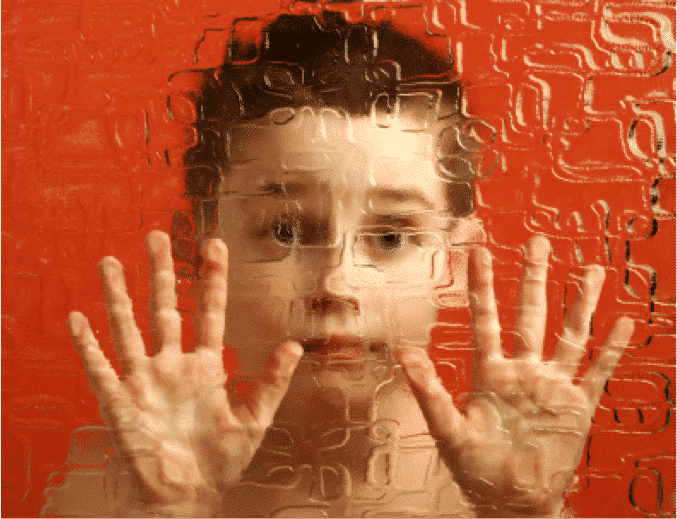
Autistic Spectrum Disorder (ASD) is diagnosed in 1 in 68 American children, and that number is rapidly growing. More than $241 billion is spent each year on services.[1] However, there is still a lot of misunderstanding about ASD.

Facebook group pages like Autism Speaks, Autism Awareness, and AutismTalk are filled with emotional videos, memes, tips for parents, and inspirational stories from families with autistic children. Social media brings people together, provides support for families who deal with ASD, and lets them know that they aren’t alone.

For example, Autism Speak’s Facebook page shared an article about a seventeen-year-old boy with ASD who was his high school’s valedictorian.

Social Media and Public Health

Another issue social media tackles is health and wellness. “Facebook, the most widely used social media platform, has been adopted by public health organizations for health promotion and behavior change campaigns.”[2] Popular public health issues searched include the risks of alcohol use and smoking and the issues of exercise, nutrition, and sexual health.

Shocking and emotional videos tend to get more views and inspire behavior change. For example, a video by the U.S. Food and Drug Administration (FDA) shows a teen who tears off a piece of her skin to pay for her cigarettes.
Discussions to Have with Your Children

While there is an endless amount of information available at the touch of a screen, we must remind kids that they can’t believe everything they see online. Because they have not yet developed the ability to judge the accuracy of information, they can be too gullible.

Here are some things parents can cover with their kids to help them benefit from Internet information rather than be duped by it:

    • Urge teens to get a second opinion about what they read online, either by researching further or seeking out an adult or expert on the topic. The best option, talk about it around the dinner table.
    • Assess the credibility (factual nature) of the source.
    • Remind them that .gov websites are typically more credible than .com websites because they are government-sponsored.
    • Remind them that Wikipedia is not a credible source, because it is written by anonymous online volunteers.
    • Use the website Snopes to search out the veracity of an online claim.

Thanks CSUCI Intern, Brooke Vandenbosch for her work on this article. With all of the hubbub about fake news these days, even adults need a brush up about how to discriminate between fake and real information. Check out my article, Is it a Scientific Finding or a Sensational Headline? The Demise of American Democracy. #FakeNews #YellowJournalism for a more in-depth discussion about assessing informational credibility.

I’m the mom psychologist who will help you GetKidsInternetSafe.

Onward to More Awesome Parenting,

Tracy S. Bennett, Ph.D.
Mom, Clinical Psychologist, CSUCI Adjunct Faculty
GetKidsInternetSafe.com

Photo Credits

Autism, CC BY-SA 2.0
Wiki Ad Mental Health Stigma Lets Talk, CC BY-ND 2.0
Happy, CC BY-NC 2.0

Works Cited

1 -Bail, C. (2016). Emotional feedback and the viral spread of social media messages about autism spectrum disorders. American Journal of Public Health, 106(7), 1173.

2 -Kite, J. , Foley, B. , Grunseit, A. , & Freeman, B. (2016). Please like me: Facebook and public health communication. PloS One, 11(9), e0162765

3 -Wright, A. , McGorry, P. , Harris, M. , Jorm, A. , & Pennell, K. (2006). Development and evaluation of a youth mental health community awareness campaign – the compass strategy. BMC Public Health, 6, 215.

Help, Public Shooting Massacres are Dangerously Messing With My Head Space

BC80sad We are all reeling from yet another public shooting massacre, this one being the deadliest shooting since Sandy Hook. The San Bernadino couple killed fourteen and wounded fourteen more at Inland Regional Center where the husband worked. The shooters were a mom and a dad of a six-month old infant. Huh? How could two young parents nurturing a baby plot to kill colleagues who help the developmentally disabled? Shouldn’t they be drunk on love, hope, and yummy baby giggles? How could they, instead, be plotting mass murder?

This is the third mass shooting article I have written. Like everybody, I am sickened, scared, and angry! Everywhere I look blame ensues. It’s immigrants! It’s guns! It’s parenting! It’s religion! It’s violent media! We sit in front of the television news paralyzed and rant extreme politics on Facebook. We fantasize about stricter gun laws or getting licensed to carry. We start to stay more to ourselves. We buy more guns. We spend more time being afraid.

Increasing numbers of people are asking if the world is becoming more dangerous. Statistics reveal that, although violent gun crime has decreased since 1993 and now remains relatively stable in the U.S. (BJS; Pew Social Trends), mass public shootings have become more common (Harvard School of Public Health). And unlike any time in history, information technology provides minute-to-minute, constant updates about headline news. Coverage is immediate, vivid, and perfectly crafted to keep our rapt attention. Screens are everywhere all the time. A people captivated on images and conjecture about inexplicable slaughter lose their sense of security.

As a clinician of twenty years, I know what chronic fear can do to people. We feel vulnerable, afraid, and enraged. It drains us of the life force we need to get up in the morning; to scramble eggs; to give hugs and tell jokes. It interferes with our ability to trust and love. Fear coaxes us away from the very best parts of ourselves. It changes us over time.

When fear wins it expresses itself as isolation, paranoia, anxiety, numbness, and depression. We get stupid. We give up. We hate. It manifests as piercing dread the moment our eyes open in the morning; as crippling heaviness when it’s time to pull ourselves out of bed; as the tug of dread when we must speak to somebody or produce something. Our brains get sluggish and hope dwindles. We feel beaten and helpless. We simply give up and stop caring.

If it’s not numbing depression then it’s burning anger that may take us over. We want to take vengeance and make threats. We want blood. We are at risk for becoming a people we don’t want to be.

BC80gunHow do we hold on to the best parts of ourselves when we so often see the devastation of senseless violence?

  • Compassion. It’s our choice what to focus on when tragedy strikes, the perpetrators or the victims.
    • Mister Rogers has been quoted to have said, “”When I was a boy and I would see scary things in the news, my mother would say to me, ‘Look for the helpers. You will always find people who are helping.” As a psychologist I’ve logged many hours with people in their darkest states, and I truly believe that our most primitive state is love. When we are hurting, lean into the love rather than the hate. Love has built America, and we will continue to prevail.
  • Mindfulness. Turn off the news and soak in the gifts that surround you.
    • Staying informed is important, but sunshine, the people we love, and our inner peace is even more precious. Attend to those things most often so they thrive. Listen to the birds, smell the flowers, dance, taste chocolate, snuggle a baby. Sensational reports coax our attention from healing mindful and meditative states. Protect that fiercely.

BC80chalkboard

  • Activity Scheduling. Keep moving and stay productive.
    • You know what murders the spirit? Having nothing to be passionate about. Get out there and dig a hole, build a wall, take a walk, compliment a stranger. Create something. It’s not the outcome that matters; it’s the process. If it stretches your muscles and accelerates your heart rate, even better. Get busy and get your hands dirty.
  • Spend less time on the “what. It’s the “what’s next” that matters most.
    • Instead of ruminating on what motivated these killers, let’s concentrate on becoming better humans. Getting insight is an important step to recovery, but so is moving forward. Locking ourselves away from each other arguing and hating will make things worse. We need to reach out to each other and love. It’s all about relationships. It always has been, it always will be.
  • Can-Do Thinking. Select the BEST FRIEND GENRE for your inner voice.
    • When you feel down and call your favorite person, do they ever tell you you’re a loser and the situation is hopeless? Like ever? No. Yet so many of us are in the habit of motivating ourselves through stinking thinking (psychologists call this negative reinforcement).

We listen to our inner voice more than any other in our lives. Motivating ourselves with, “If you don’t ___, then <bad thing> will happen,” fills us with chronic shame and dread. Change the channel from silent self-nagging to self-encouragement. Fill your head space with, “That failure taught me a ton, so happy to be moving forward…” Regret drains emotional resources, while hope and inspiration rejuvenates. Be your own best friend. If it doesn’t come easily at first, fake it ‘til you make it. Emotional fitness sometimes starts with boot camp.

  • Gratefulness. Opening your heart and mind to what you already have will invite more of the good stuff.
    • You know that person at the party who trashes others and tells you all the ways the worlds going to end? Nobody wants to hang out with them. Become who you most want to hang out with by focusing on the good stuff. Can’t think of anything at the moment? Then deliver an authentic compliment and watch that spark take hold as it’s received with a warm smile. Get good at gratefulness and you will actually feel your heart space expand.

BC80zen

  • Surround yourself with beauty.
    • Light a delicious candle, read a beautiful passage, put on your softest t-shirt. Spend an hour with the friend that makes you belly laugh. Write. Drink a beer. Whatever you think is beautiful, make that happen.
  • Have faith. Whether it’s in your God or your humanity, throwing your hopes to the universe is the secret to making it happen.
    • Human beings are genius problem-solvers. When we put our minds to it, we can perform miracles. If you really feel passionate, dare to dream and start something. Make change! 
  • Ask for help. If you reach out to others, you won’t be alone long
    • Whether you find comfort in friends, family, clergy, or mental health professionals, we are all in this together. Locking our emotions in will exacerbate problems. Find a safe place to open up and work it through. If your neural circuits just aren’t responding, medication may give you the lift you need to take a step in the right direction. Depression is a legitimate illness. Don’t let stigma keep you from moving forward.

I know this list seems obvious, but is it? Ask yourself honestly if you set time aside to work on each of these things every day. If not, get out the Post-it Notes or set a reminder with Siri. If you want to do more about violence, patient and respectful discourse is how ideas lead to solutions, not contemptuous retorts and humiliating witticisms. Black and white thinking makes for easy discussion, but it’s a laziness that has real cost. The truth is, each violent situation is a unique case with complex and nuanced components. Intervention for change must take place on many levels. The bottom line is you can’t be part of the solution unless you’re committed to maintaining your emotional fitness.

I’m the mom psychologist who will help you GetYourKidsInternetSafe.

Onward to More Awesome Parenting,

Tracy S. Bennett, Ph.D.
Mom, Clinical Psychologist, CSUCI Adjunct Faculty
GetKidsInternetSafe.com