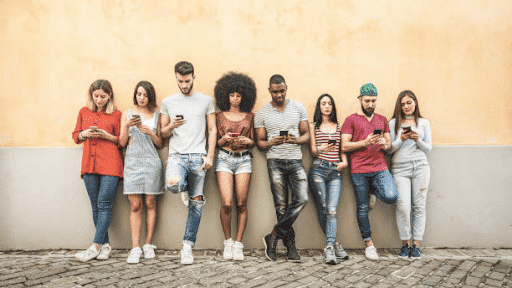
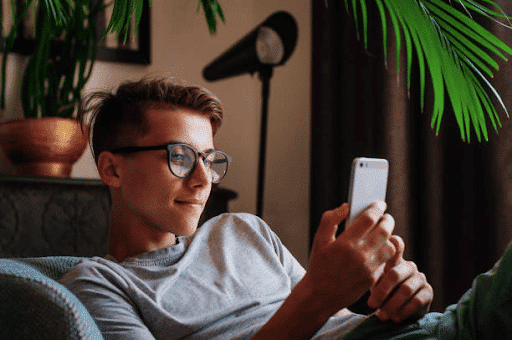
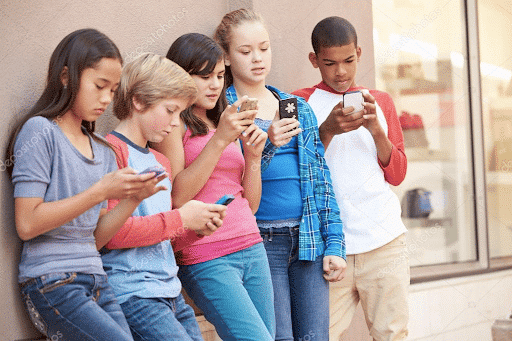
The creation of the Internet has transformed society in every way imaginable, and 84% of us use it every day.[1] The two generations that grew up with the Internet are millennials and generation Z. You may be surprised at how differently these two groups use it, and how it’s affected them as human beings overall. Today’s GKIS article highlights the difference between teens and young adults and those who are 25 and older. If you’d like to help prepare your gen Z’s for healthy Internet media consumption by building good habits and communication, check out our Screen Safety Essentials Course.
What defines a generation?
A generation refers to all people born and living around the same time. The average period of a generation is 20 to 30 years, and the cutoffs are defined by when people become adults and start having children of their own. Although the specific years that group a generation is often up for debate, for our purposes we define millennials to be anyone born between 1981 and 1996 and generation Z to be anyone born between 1997 and 2012. That means millennials are currently between the ages of 26 and 41, and Gen Zs are between the ages of 10 and 25. Millennials were in their teen years when they first started using social media and gen Z’s were still children when they ventured into online neighborhoods independently.
Millennials and the Internet: Jackie’s POV
To gather better insight into how millennials view and interact with the internet, I interviewed Jackie (age 25).
Jackie started using Instagram and Facebook when she was 16 years old. She considers the biggest impact social media had on her was the comparison. Comparing her social media posts to others’ posts was the biggest issue she thinks she faced. It’s an issue for her because when she would compare posts, insecurities often arose. She said that constantly seeing others’ posts of selfies, vacation pictures, and pictures with significant others and friends made her feel inadequate, especially when she was much younger. She overcame those issues by no longer using social media as often.
Gen Z and the Internet: Sophia’s POV
To better understand gen Z’s views and interactions with the internet, I interviewed Sophia (age 12) about her experiences.
Sophia started using social media when she was 10 years old, specifically Snapchat and TikTok. She feels that the biggest impact social media had on her was the concern of appearing ‘cringe’ online and in front of others in real life. Micro-managing one’s appearance and mannerisms is another problem many gen Zs face. Snapchat and TikTok often contain videos of people recording others doing things, sometimes without their knowledge. Certain behaviors are labeled as ‘cringe’ or ‘embarrassing’ by others in comment sections. Nowadays, she says she still uses social media often but not as much as she used to, claiming she used to be glued to her screen 24/7 when she first started.
Compare and Despair
The biggest similarity between the two is the micro-management of what is shared online. Many are concerned with how they’re perceived on social media in addition to comparing their lives to others. Curating the perfect image or life is something that seems to be an issue for many social media users regardless of age.
The negativity and insecurities that come from social media aren’t age-restricted. However, it can have a particularly heavy effect on tweens and teens. Our Social Media Readiness Course can help with that. By teaching kids the red flags of digital injury and clinically tested psychological wellness tools, we can help prepare your kids for safer screen use and prevent feelings of inadequacy, low self-esteem, and the desire to compare online.
More Access and More Influence on Self-Identity
Taking both interviews and research into consideration, it seems that there are both similarities and differences in how both generations interact with the Internet. The biggest difference is that gen Z has been exposed to social media much younger than millennials before they solidly formed self-identity. Further, more social media platforms and sophisticated personal mobile devices were available to them – giving them almost constant, on-demand, mutual contact with peers and strangers.
Parent Replacement
In addition, more parents were inclined to help introduce technology to gen Z children. Smartphones became a sort of transitional object assigned by parents as their substitute.[2] This is something millennial children never experienced because smartphones weren’t around when they were toddlers and young children.
More Competence and Confidence Online
Those exposed to the Internet at younger ages tend to be more savvy and aware of online dangers. Research demonstrates that gen Zs tend to have more confidence protecting themselves online than people who are 25 and older.[1].
Self-Guided Learning Opportunities
Those who love to self-direct their learning argue that early browsing offered opportunities that older generations didn’t have. They say that the internet offered them a tremendous breadth of opportunity and a depth of learning as they directed themselves into deeper and deeper learning.[3]
However, from a developmental stance, gen Z kids who use such advanced technology to assist them in critical thinking and comprehension can have downsides. One is known as the Google Effect, also known as digital amnesia. By using the Internet, we end up storing less information in our biological memory, becoming less knowledgeable overall.[4] Another problem is that gen Zs use advanced search engines and smartphones to cheat by looking up answers to homework and quizzes. Learn more in our GKIS articles, The Google Effect. Because Memorizing is So Yesterday andSiri and Alexa Help Kids Cheat on Homework.
Social Impacts
Internet access at young ages can have developmental effects on social development as well. Positive aspects include convenient social management tools during interpersonal conflicts, like pause or block options for regulation and impulse control, and the creation of virtual identities for experimentation and practice.[2]
Potential negative effects include feelings of social inadequacy and exclusion, increased risk of body dysmorphic disorders, and exposure to cyberbullying and interpersonal exploitation. Insta-Famous Brings Insta-Anxiety is a GKIS blog article that touches on the risks that can arise from using social media.
GKIS Tools That Can Help
Our free GKIS blog articles are an excellent source of information, from parenting tips to media headlines, child development, and much more.
Our Screen Safety Toolkit offers a great resource guide so you can find the tools necessary to implement proper management, monitoring, and supervision to navigate the Internet more safely.
[1] Jiang, M., Tsai, H. S., Cotten, S. R., Rifon, N. J., LaRose, R., & Alhabash, S. (2016). Generational differences in online safety perceptions, knowledge, and practices. Educational Gerontology, 42(9), 621–634. https://doi-org.ezproxy.csuci.edu/10.1080/03601277.2016.1205408
[3] Ransdell, S., Kent, B., Gaillard, K. S., & Long, J. (2011). Digital immigrants fare better than digital natives due to social reliance. British Journal of Educational Technology, 42(6), 931–938. https://doi-org.ezproxy.csuci.edu/10.1111/j.1467-8535.2010.01137.x
[4] Heersmink, R. (2016). The Internet, cognitive enhancement, and the values of cognition. Minds and Machines: Journal for Artificial Intelligence, Philosophy and Cognitive Science, 26(4), 389–407. https://doi-org.ezproxy.csuci.edu/10.1007/s11023-016-9404-3
Instagram reports 1 billion monthly active users and more than 500 million daily users.[1] Most teens use social media for more than 6 hours per day.[2] Many social media users have shifted in intention, placing the highest importance on becoming insta-famous rather than sharing information with close friends. Insta-famousrefers to a person who is well-known on Instagram, reflected by thousands of followers and likes. Teens can become consumed in this virtual competition for internet popularity, sometimes leading to a destructive pattern described in my book, Screen Time in the Mean Time: A Parenting Guide to Get Kids and Teens Internet Safe, as compare and despair.
Insta-worthy? Self-Presentation Theory and Impression Management
Many Instagram users lurk profiles, consumed by other people’s lives and perfecting their virtual selves. According toself-presentation theory, people are motivated to present themselves to show off an ideal self and please their audience.[3]
Our frontis our best-stylized image. Our backstage is our true selves. Maintaining too many fronts can be overwhelming. Being great at impression management can be the difference between social media success or failure.
Shout Out for Shout Out
A SFS (Shout out For Shout out) is a branding strategy for optimal self-presentation on Instagram. It refers to teens posting someone else’s account to theirs and vice versa. The goal is to cooperatively promote their pages so both people gain more followers.
As self-presentation trends change in pop culture, so do trends online. In 2008, graphic t-shirts were the cool thing to wear to school. In 2015, hipsters ruled the school. And in 2019, the VSCO look was in. VSCOis the name of the popular app used to create fun colorful edits.
A “VSCO girl” has beach-wavy hair, carries around a hydro flask, has a scrunchie around their wrist, and shops at thrift stores and Urban Outfitters. My 13-year-old cousin shares, “Everyone wears skirts, Doc Martens, and scrunchies now. It’s so VSCO.”
Evolution and Optimal Distinctiveness
With popular editing apps such as VSCO or FaceTune, many social media users have unrealistic expectations for how attractive they should look in posts. Humans are social beings. We work best collaboratively. Social rewards like compliments, words of appreciation, affection, or being with a friend, are major behavioral motivators for young people.[3]
Seeking social reward and trying to achieve optimal distinctiveness (being unique but still super stylish) can be traced back to our ancestors. Belonging to a community meant being socially accepted and supported by a group of others. Many times, this meant life or death.
For teens today, that means walking a razor’s edge trying to look unique while still fitting in with peers. In this impossible quest, teens may be juggling several virtual and nonvirtual selves. Being too unique or too the same invites criticism and cyberbullying.
Getting social media likes rewards the brain with dopamine, the neurotransmitter released in the pleasure center.[2] Instagram programmers know it and bake it in so they can make more money.
Social media influencers are experts at achieving optimal distinctiveness. Viewers spend a lot of time and money trying to do the same. Views and likes result in millions of dollars in profit. This biological hack of social acceptance and connection makes the brand more profitable.
Risks of Social Media
Insta-Anxiety
The constant pressure to stay up to date with trends can cause compulsive online browsing and anxiety. Most teenagers do not have jobs to maintain the lifestyle that many YouTubers do. Social anxiety and the fear of being judged by peers can be overwhelming alongside daily social obstacles that teens face like bullying, hormonal changes, and self-judgment. Instead of fun, spontaneous sharing, teens can get caught up in compulsively second-guessing their posts or avoid sharing altogether.
According to recent studies, social media use has contributed to an increasing number of cases of social anxiety disorders in adolescents.[2] Untreated, anxiety can contribute to other mental health issues including depression, eating disorders, substance abuse, and even thoughts of suicide.
Social Anxiety Disorder Symptoms include:
Lack of desire to socialize
Being withdrawn
Feeling embarrassed or a deep fear of being judged by others
Low Self-Esteem
Forty-six percent of teen girls admit that social media makes them feel bad about themselves due to unrealistic standards.[2] Self-esteem is elevated when individuals are deemed popular by others. For example, having Facebook friends who are more responsive can satisfy psychological needs above and beyond the number of Facebook friends one has.[4]
Seeking Positive Feedback
We all like to know that people find us attractive. Social media, however, can impact us in ways we aren’t even aware of. For example, a 2018 study found that when young women received likes for sexy selfies, they were more likely to post similar photos again.[3]
Lack of Privacy
Teens don’t have the prefrontal brain development to anticipate consequences and engage in high order thinking. Subsequently, teens may not think ahead, instead focusing on the instant gratification of someone liking or commenting on their post. This can cause a habit of oversharing online. Eighty percent of people who commit crimes have taken information from social media sites.[5]
Ways to Improve Your Teen’s Emotional Reliance & Achieve Better Online Safety
To avoid triggering insta-anxiety, make sure your kids are neurologically, socially, and emotionally mature enough to manage risk. Although she says it depends on the child, Dr. Bennett recommends avoiding social media until the second semester of middle school.
Experts agree that Social Media Readiness Training is critical to help kids recognize risk, know how to ask for help, and self-manage use.
Use our free Connected Family Screen Agreement to set parameters and create a screen-friendly, cooperative dialogue. Just enter your email and name on our website, and it will be delivered directly to your email.
Create a customized filtering, tracking, and monitoring toolkit with the GKIS Screen Safety Toolkit. This course also offers smart parenting strategies, like making sure you have social media login information for back-end access.
Thank you to GKIS intern, Isabel Campos for alerting us about the risks of insta-anxiety. If you learned something, please share GKIS articles and tools with friends and family!
I’m the mom psychologist who will help you GetKidsInternetSafe.
[1] “Our Story.” Instagram, 26 Mar. 2019, instagram-press.com/our-story/.
[2] Granet, R. (2016, September 19). Living In Live Time: Social Media’s Impact On Girls. Retrieved from https://newyork.cbslocal.com/2016/09/19/social-media-use-teens/
[3] Bell, Beth T., Cassarly, Jennifer A., & Dunbar, Lucy. “Selfie-objectification: Self objectification and positive feedback (‘likes’) are associated with frequency of posting sexually objectifying self-images on social media.” Body Image, 26, 83–89. September 2018. https://doiorg.summit.csuci.edu/10.1016/j.bodyim.2018.06.005
[4] Burrow, A. L., & Rainone, N. (2016). How many likes did I get?: Purpose moderates links between positive social media feedback and self-esteem Journal of Experimental Social Psychology, 69, 232-236 https://doi.org/10.1016/j.jesp.2016.09.005
[5] Law Enforcement, Social Media and Your Privacy: How Your Data is Used to Solve Crimes. (2018, May 16). Retrieved from https://www.nextadvisor.com/law-enforcement-social-media-and-your- privacy-how-your-data-is-used-to-solve-crimes/