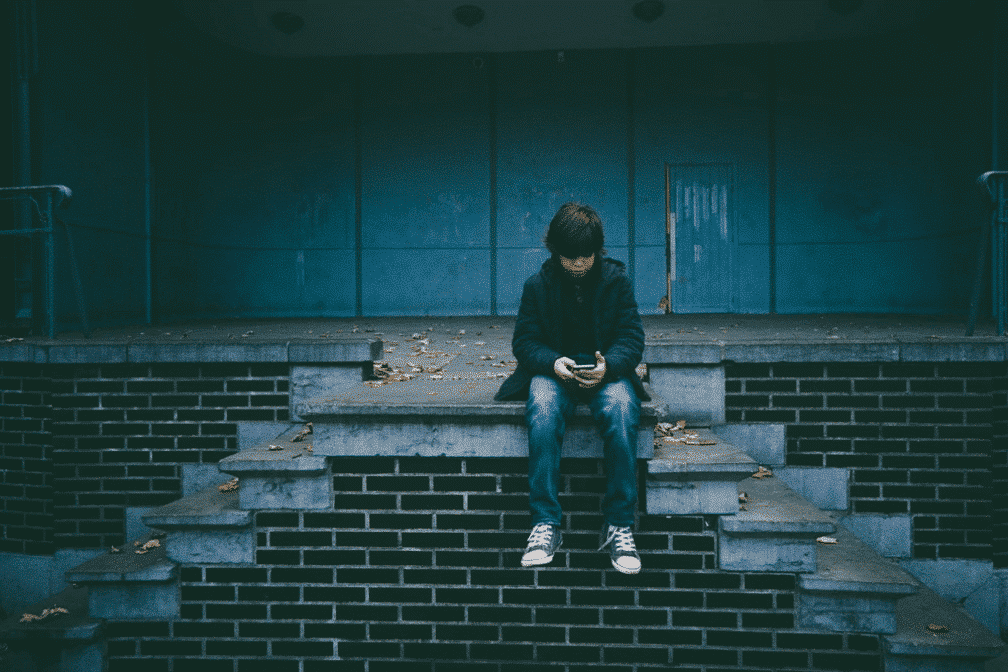
Does your teen know how to safeguard their future by cleaning up their social media? I was recently invited to present at a local National Charity League meeting with high school seniors on the topic, “The Cyber Footprint.” Typically, I speak to parents rather than teens about screen safety. But for this group, I went the extra mile. Today’s GetKidsInternetSafe article is a blueprint for how teens can turn a social media footprint from devastating to standout for college and summer or internship employment opportunities.
A digital footprint can make you look good!
Most of us are aware that social media content can have long-lasting negative effects on reputation. That’s why parents monitor child posts. But what many people don’t realize is that having no digital footprint or a dull virtual self can also be a liability (work against you).
In the professional and college worlds, it is widely assumed that having no cyber footprint reflects a lack of productivity and know-how. Not only is it important to have a positive online presence to avoid being screened out of opportunity, but you must also stand out to be selected.
Do employers and colleges care what you post online?
Yes, they do! Not only do employers recruit via social media, but they also screen out potential hires based on your posts and comments.
A 2016 survey conducted by the Society for Human Resource Management revealed:
Recruiting via social media is growing, with 84% of corporations using it currently and 9% planning to use it.
44% of HR professionals agreed that a job candidate’s public social media profile can provide information about work-related performance.
36% of organizations have disqualified a job candidate in the past year because of concerning information (e.g., an illegal activity or a discrepancy with an application) found on a public social media profile or through an online search.
When should you start stylizing your cyber footprint?
…as soon as you’re old enough to care about post-high school education and employment – if not sooner! It’s never too early to consider who you don’t and do want to be online and offline. Using social media to showcase special talents, like art, dancing, modeling, and acting can work for you.
Before using social media for publicity, here are some critical points to consider for safety.
STEP ONE: Cleanse your social media profiles and cyber footprint of content that doesn’t make you look good.
Google yourself and track down and delete unwanted content.
If you’re lucky, you don’t have years of unflattering comments or images to track down, but you won’t know what employers may find until you Google your name first.
Back up your old profile data before you delete your account.
Expect that it may take a few weeks for your chosen social media platform to delete your old profile and allow you to create a new one.
Cleanse all social media profiles, even those set to private.
In some states, it’s legal for employers and college application counselors to ask for social media usernames and passwords. Refusing to do so may cost you. That means it’s necessary to delete inappropriate images, comments, and shares such as those involving drugs, alcohol, sexuality, profanity, cyberbullying, poor spelling/grammar, political affiliations, and off-color jokes.
Social media platforms purposely make it difficult to have more than one personal account or delete your old accounts and start over. Not only does Facebook require you to use a new email address and phone number to create a new profile, but you will lose all of your friends, favorites, photos, messages, comments, and games.
They don’t want you to delete your old profile because they lose ownership over your content. The more metadata they collect about your online activities such as likes and dislikes, the more profit they can make saturating your online time with targeted ads. Since we now select what we want to view rather than being captive television and commercial watchers, advertisers are hungry to capture every opportunity to get our attention. That means we are blitzed with 5,000 ads a day in contrast to 500 ads in the 1970s.
Are you ready to reveal an impressive school or job candidate who is searchable for the right people? Recreating your best virtual self isn’t easy!
STEP TWO: Create an irresistible virtual you!
Choose two or three popular social media platforms.
Quality is more important than quantity. Rather than do a poor job on several platforms, focus on doing a great job with a few.
LinkedIn, Instagram, and Twitter are currently the most popular social media platforms. Get familiar with them to take advantage of useful features. For example, set appropriate privacy settings and avoid default responses in favor of your own words.
Visualize your perfect virtual self and plan before you tackle the project.
Search out those who are doing it right and create a swipe file (think Pinterest). A swipe file is a digital folder where you store your favorite examples of content and style. Keep your eyes open for catchy headlines and titles, image ideas, and potential networking connections. Incorporating multimedia, like colorful and unique images and videos, attracts attention and effectively communicates concepts.
Be strategic, concise, and innovative.
Your online profile is not as formal as a résumé. Be fun and creative while displaying your ideas, research, products, and activities. Proofread. Delete any extra words and avoid big blocks of text by using bullet points and breaking up content into titled sections. Include keywords for search engine optimization.
Blogs can be highly effective, as storytelling is an awesome way to stand out and show rather than tell. Become an author and illustrator. Be the clever, positive, well-rounded person you’d want to work with.
Friend and join influential others.
Every opportunity I’ve ever gotten was the result of good relationships. Not only are your productivity skills critical to success, but so is networking.
Use social media as it’s intended, to connect with like-minded others who fuel and enrich your creativity and protect your confidence. That includes clubs, organizations, special interest groups, and corporations as well as impressive individuals. Don’t friend people you don’t know or haven’t reached out to personally.
Stimulate online engagement and stay active.
Attracting interesting others is one thing but keeping them warmly engaged with valuable content is key to longevity. Just as you do with your friends, be available and share interesting articles you know your online contacts will like. Creating reciprocity will keep others interested in you and generous with potentially valuable invitations and introductions.
6 WAYS TO MAKE YOUR ONLINE PROFILE A COLLEGE/EMPLOYER MAGNET
Switch from teen personal to adult professional with a first-person tone that is warm and welcoming. Make certain any content that a future employer may see as inappropriate or silly has been deleted.
Write a mission statement detailing what opportunities you are looking for. Avoid buzzwords and lingo. Stick to what’s relevant.
Keep your connections education- and employment-focused. Don’t get frivolous and network with everybody. Be selective and seek out those who may lead to mutual opportunity.
Include an attractive headshot.
Include contact information, an email link, and custom URLs for your website or other social media profiles.
Highlight impressive activities/achievements related to education, employment, & community service. Testimonials and endorsements are powerful. Make sure your online profiles are consistent with the content on your résumé.
My best friend’s mother always said, “It’s just as easy to fall in love with a successful man as a loser.” The same can be said about landing your dream job rather than settling for what’s convenient. On the other hand, you’ve got to start somewhere!
As a teen, I worked for a drug store and learned how to be a responsible employee, cashier, organize and stock, and deal with difficult customers. I also learned this position was not for me long-term. From there I landed jobs in accounting, research, and administration, each providing me with business skills that are still paying off today.
Don’t pressure yourself into thinking today’s profile will immediately lead to your dream job. This is scaffolding. One job will lead to another and so on, ultimately building the very best you. Enjoy the creativity of the journey. Take time to daydream about design elements and all of the ways you can blossom.
Have good ideas of your own to improve a digital footprint? Please share with us in the comment section below.
In my private practice life, I maintain a fairly private existence. My focus in session is on my client, not on getting my social needs met. Coaching is the same – although it’s more directive and less intimate and uncovering. But with back and forth discussion, clients get to know me pretty well. They don’t learn the details about my life but do gather a lot from my sense of humor, occasional stories, and encouragement. I want us to get to know each other too. For GKIS to be useful for you, you need to be confident that I share your values and that my sources are credible. I need to know what questions you want answered and topics that you’d like to hear about. It doesn’t escape me that your time is very valuable. If you take the time to open articles, I want to make sure you get as much value and applicability as possible. Same with my books and online parenting courses. In today’s article, I’m going to tell you why I love GKIS so much – and why so many people tell me they love the message.
I’m at a transitional point in my life. I’m 50 years old, my dad is gone and my mom has severe dementia; I’m two years post-divorce, newly in love, and my oldest is engaged and my youngest is officially a teen. I’m at a stopping place where I’m finding myself again and deciding who I want to be when I grow up. It’s a time of new-found stillness and opportunity. I’m old enough to have the wisdom of experience and young enough to plan more adventures and re-create aspects of the woman I really want to be.
My kids still mostly accept my influence, and I’m no longer overtasked to the point of feeling buried. I’m traveling and exploring and openly celebrating without the self-consciousness I had in my younger years. I feel free and curious and energized. I’ve created a business that I’m proud of, with a unique balance of doing things I love as a healer and a teacher. GetKidsInternetSafe is my legacy-building project for helping families achieve true connection and screen safety. It’s about prevention more than treatment. It’s been eye-opening in ways I didn’t expect. Today I’d like to share with you the profound “Ah-ha” I uncovered during a group coaching session. I’m hoping it might move you to create magic moments of stillness in the coming days to help you create more meaning and have more fun in your life, as an individual and a parent. Who do you want to be when you grow up, or are you already there?
Last Saturday I was a creative branding workshop geared to make my business more vital, energizing, and meaningful. Our coach presented two exercises that really got me thinking. The first was to describe the last moment I was in true bliss.
Here’s what I came up with:
Late morning game drive. Perfect 68-degree weather, light breeze on our faces cruising down a red dirt road. Swaying waist-high golden blonde grass as far as the eye could see, a termite mound or a crop of gray rocks here and there. The hum of the engine and tiny jolts from a rocky road. Brad, our two companions from Salt Lake City, and I were on high alert scanning for animals. Our Masai warrior in his hot pink beanie had the windshield down scanning, always quietly scanning. Our jeep had no windows or doors, so it felt like we were flying with few obstructions blocking our view. Scanning, scanning, occasionally switching our internal lense from looking for the grey boulders in the distance that were elephants to the swaying kill in a tree for leopards to the black ears and cunning eyes from the head of a lion or hyena.
The anticipation we all felt seemed to sizzle between us…like somehow our joint efforts were combining into the thrill of patient discovery. We knew after days of tracking that our efforts would definitely payoff. Maybe it would take hours, maybe seconds. We might be treated with a sleek cheetah mom hunting with her two pouncing cubs. Or maybe we’d get to sit and coo at the adorable baby elephant rolling a log with her back foot. Maybe we’d see the gruesome site of a partially-eaten zebra hanging from a tree or the violence of a lion pack stalking and taking down an old water buffalo. The thrill of the beauty of Africa was absolutely intoxicating. I was in true meditative bliss. Hours of meditation spiked with the shock of powerful violence or the lazy relaxation of grazing zebras and wildebeest. I’ve never felt anything quite like that. I was as happy as I get.
Time up, exercise over. Brain shock.
We all looked up from our pens and paper, still kind of stoned from our blissful moment. Waiting with patient curiosity what our coach was going to do with this content…what this could possibly have to do with our businesses and well-honed mission statements.
Then she asked us to write down three things we loved to do as children.
I wrote: take long drives after dinner, play speed games, and climb rocks camping with my BFF standard poodle, Ty.
Then she asked us to compare our bliss now and as kids to what we do in our businesses every day.
Blink.
I mean really, what does the miracle of the African savannah and childhood antics have to do with GKIS?
Blink. Blink.
You can tell me if I’ve lost my mind, because our coach Zhena makes us feel like that sometimes. But with her suggestion, I was struck all at once. My bliss in Tanzania was about the anticipation of thrilling discovery. Thrilling discovery is what childhood is all about. Discovery is why kids tear apart the house, ask incessant questions, and beg for screen time. Watching kids geek out over lady bugs and Mexican Train and Minecraft and Snapchat and Fortnight – that is what parenting is about. Watching our children play and joining them in it is about Discovery.
My work as a psychologist, teacher, writer, and researcher is the same type of discovery I loved on my after-dinner drives with my family. Imaginary mountain climbing on rocks while camping was about adventure. And speed games is pure connection and delight. Parenting and my work as a psychologist is not about this all day, every day. But all of those elements are woven into my job. I get the privilege of watching people discover the pathways from dark places to the light.
Since that blissful midmorning in sunny Africa, I have described that scene to clients in my office while I teach imagery and mindfulness – clients ranging from 6 years old to 76. Then they tell me a scene that is special to them. It’s a moment of connection in the therapy office. A moment where we share our bliss. It’s intimate and fun and connecting, not unlike how it feels to hang out and be truly present with your child. It’s what we are born to do…connect.
The truth is, the reason why screen time is so compelling is because it is ALL about discovery and connection. We can’t turn away from the stimulating, on-demand content. It’s intoxicating. It distracts us from everything and everybody. We get high on it.
That’s not all bad. Learning and discovery is amazing. But research also tells us that learning and discovery in the three-dimensional world outside of screen time is also necessary for balanced health and happiness. GKIS is about connection, discovery, and balance. It’s about supporting each other with strategies and tools to help us guide our kids through this maze of temptations on- and offline.
So, there it is. GKIS is my later-in-life adoption that allows me and my subscribers true discovery. And from my recent inner reflections, I’m reminded that kids hijack peace and quiet, organization, and self-care. Parenting is chaos in motion. It captures us in ways that no other activity does. For me, memories of taking care of my toddlers brings me gently delicious images of bedtime snuggles and kitchen dances. The impossible moments of trying to keep the house clean and stepping on llegos are far dimmer in my memory. Special moments are what you too will remember.
I hope you are inspired to take a moment and write about your recent moment of bliss. Maybe it was a steamy cup of tea early in the morning, or a walk with your best friend, or a snuggle with your child. Or maybe it was an exotic adventure like mine. Whatever your bliss, please take the time to notice it. Even better, create a magic 20 minutes of stillness once a week to curl up on the coach and read your weekly GKIS article. Reflect on how your family is growing and the gaps that GKIS ideas can help with. Journal. Make a gentle plan for progress. Screen safety certainly, but far more delicious are the magic moments of connection that you will have with your family.
I can’t wait to hear what you think of GKIS ideas in the comments of the blog, on FB and Instagram, or email me directly at DrTracy@DrTracyBennett.com.
I’m the mom psychologist who will help you GetKidsInternetSafe.
We’ve all been there. Stuck at work, school, or home. We pick up our phones and click on Instagram. There’s BFF Julie on her amazing trip to Japan – 150 likes in 42 minutes. Then check out Twitter. There’s co-worker Andrew’s fun video of an amazing concert at the coolest venue in town. His text post fetched 27 comments. “Wow! That looks so fun!” “I’m so glad I ran into you last night!” “Did you get the pictures I sent you?” You put your phone down and instantly get hit with a wave of sadness. Everybody seems to be having more fun than you. Are you going about life all wrong?
FOMO
FOMO or “fear of missing out” is a form of social anxiety in response to seeing activities streamed on social media. These feelings can blossom into immediate disappointment or long-term feelings of inadequacy. You know you should be happy. You’re ashamed of it. But still … people who experience FOMO the most tend to be extremely active on social media sites like Instagram, Snapchat, and Facebook.[1]
Who suffers from FOMO?
Although FOMO adversely affects all ages, recent studies conclude that FOMO is most common among teens. Nearly 60% of teenagers experience anxiety when they become aware of plans being made without them or can’t get ahold of their friends. Another 63% are upset when they have to cancel plans with friends.[2] Among the other age groups, an overwhelming 61% of subjects aged 18-34 state they have more than one social media account, while 27% state they check their Facebook feeds immediately upon awakening.[3]
FOMO Risks
Compulsive social media checking that gets in the way of everyday activities and leads to texting and driving, like “snap and drive” which is careless driving while Snapchatting.
The inability to prioritize important responsibilities over fun social media posting.
Posting shocking activities like binge drinking and drug use.
Spending lots of money to post expensive designer items.[4]
The constant need to feed is a surefire way to develop feelings of inadequacy and anxiety. FOMO makes us feel lonelier, inferior, and less successful.[5]
Reducing FOMO Anxiety
Get real.
A fun post here and there is not reflective of the “perfect” life. Everybody hurts sometimes, even the pretty ones.
Cop to it.
Once you admit to it, it’s easier to control it and create a plan of action to work through it.[6]
Be in the present.
Practice mindfulness techniques like anchoring – attending to your current surroundings, what you see, feel, hear, smell, and your breathing.[7]
Recommit to your nonvirtual life.
Pet that dog you always see on your way to school or work. Stop and smell the flowers. Read a book in the park. Give yourself ample time to finally finish that term paper or work project. Commit to doing one of those today, right now!
Temporarily detox.
If momentary disconnection is a struggle, delete apps off your phone and use psychological wellness app support. Cool detox apps include Moment, Flipd, and Forest. Detox apps offer fun and clever incentives to get off your phone. For instance, Forest incites you to not open social media by illustrating breaks with forest growth and how large and lush and large you can grow your forest.[8]
Seek counseling.
If all else fails, talk it out. Since FOMO is seen as a cognitive distortion, cognitive behavioral therapy has been shown to be highly effective by offering thought-reconstructing tools. In other words, identifying stinking thinking and replacing it with can-do thinking can greatly improve mood and feelings of well-being.[9] Fewer social media posts may mean a fulfilling life is being lived off-camera rather than no life happening at all.
Thank you to Tammy Castaneda for contributing to this GKIS article. Fomo is becoming an increasing problem for kids and adolescents. If your child is still in elementary school, hold off until middle school before you allow their first social media app. If your teen showing problematic behavior, take action. To prevent clinical symptoms related to screen use, check out our GKIS Connected Family Online Course. In 10 easy steps, you can learn how to encourage healthy screen habits and a happier household.
I’m the mom psychologist who will help you GetKidsInternetSafe.
[4]What is FOMO? (And How the Fear of Missing Out Limits Your Personal Success). (2018, July 27). Retrieved September 14, 2018, from https://www.developgoodhabits.com/fear-of-missing-out/
[9Staff, G. (2016, April 14). Overcoming FOMO: What Fuels Your Fear of Missing Out? Retrieved September 17, 2018, from https://www.goodtherapy.org/blog/overcoming-fomo-what-fuels-your-fear-of-missing-out-0418167
Raising kids in the digital age is tough. Not only are kids going through baffling developmental stages and life crises, so are their parents. Plus, each family member has a unique personality, belief system, and behavioral history that lead to varying “fits” between members at varying times. Throw that in a blender and you have a family. To make it more complicated, divorce peaks during trying times, upending everything even more. Divorce conflict, shared custody, and blended family issues can lead to exploitative and manipulative opportunities, especially with powerful mobile devices in-hand. My clients have benefitted from both using our free CONNECTED FAMILY SCREEN AGREEMENT. This digital contract gives both households sensible rules and strategies so kids have consistency and cooperative guidance. To align on parenting strategies and get more confident with setting rules and adopting parental controls, our weekly parent and family coaching videos delivered on the GETKIDSINTERNETSAFE APP is for you. Quick 5-minute videos a week allow you to tweak screen safety and positive parenting in your home in doable chunks. Demonstrating that you are consistently addressing screen safety looks great in court! Another option to help your tweens and teens directly build knowledge and psychological wellness with our SOCIAL MEDIA READINESS COURSE FOR TWEENS & TEENS. It’s like driver’s training but for the Internet.
In my twenty-six+ years as a clinical psychologist with a specialty in family transitions, I have run across practically every family situation you can imagine. Not only can divorce strain parent-child alliances, but fear can muddy parent judgment as they jockey to win child favor and aim to achieve parenting perfection in less-than-perfect times. With everybody distracted by their own emotional processes, consistency, and communication too often slip leaving kids vulnerable for risk.
Here are three fictional family stories that resemble actual situations to illustrate the complex factors that divorced families face.
Safety, Parental Alienation, & Home Privacy
Sally and Joe were married for fourteen years. They have two daughters, 13-year-old Maggie and 10-year-old Jacqueline. The marriage dissolved when Joe was discovered having an affair with Pamela. Sally shared too much information with the girls during her heartbreak, blaming Pamela for the breakup and begging Joe to make the marriage work even after discovery. Pamela and Joe married six months after the divorce was final and were granted shared custody of Maggie and Jacqueline as well as Pamela’s son and daughter.
Sally didn’t trust Joe and Pamela to take good enough care of the girls. She constantly worried about Joe not checking the girls’ homework, believed Joe and Pam drank too much, thought Pamela favored her own children and became particularly angry if Joe socialized with old friends. The girls felt protective of their mom and felt guilty leaving her during dad’s custodial time. They also wondered if mom’s fears were true and they were being unfairly treated and not adequately attended to.
Sally bought both girls mobile phones outfitted with the social media they wanted and encouraged them to call, text, and send images frequently with the hopes of gathering evidence she could use in family law court. She also posted accusatory memes about Joe and Pamela on her Facebook. If Joe set limits with the mobile phones, Sally argued the restriction prevented the girls from seeking appropriate help in an emergency situation, which further demonstrated to the girls that Joe was not protecting them.
In her cloud of grief, fear, and anger, Sally was committing parental alienation. Parental alienation is a pattern of psychological abuse toward a child by creating fear, disrespect, or hostility toward the other parent with the ultimate goal of parent-child estrangement. Parental alienation has been demonstrated to be detrimental to child mental and physical health and parent-child attachment. When caught in the destructive dynamic, family members are nearly incapable of post-traumatic growth, spinning helplessly for sometimes years in the eye of the storm.
Illegal Surveillance
John is a twelve-year-old who’s divorced parents have conflicting views on-screen use. John’s father allows him to use his phone and
other screen devices as much as he likes with no filtering or monitoring. His mother, on the other hand, does not allow him to use ANY screen devices. What John does not know is that his father secretly installed spyware on his mother’s devices during their divorce in order to gain information against her and has a history of domestic violence and pornography addiction. John’s mother has a restraining order against her ex-husband. She does not feel safe having mobile devices in her house that her ex-husband has purchased in case of spyware. She also worries about the online content her son has access to for fear of him becoming addicted like his father. John prefers to be at his father’s house because of the more permissive screen access and accuses his mom of being too uptight and paranoid. His dad laughs with him and agrees.
Consequating Dangerous Child Behavior
Dave and Laura have been divorced for two months and have two sons, 16-year-old Chad and 14-year-old Ian. After the divorce, both boys were living with their mother with weekends and certain holidays spent with their father. Chad has AD/HD and an anxiety disorder; Ian is in independent study due to oppositionality and defiance.
After suspecting Chad was using drugs, Dave demanded to see Chad’s phone. When Chad refused, Dave grabbed the phone and found photos of Chad smoking marijuana at a house party. A screaming conflict resulted. Chad stormed out the house and walked several miles back to his mother’s house where she then called Child Protective Services. Dave insisted that Laura take Chad’s screen devices away as a form of punishment. Laura disagreed thinking it would isolate Chad from his friends at a time he needed them most and bought Chad a new phone with no filtering or monitoring. Chad has chosen to live full time with Laura and refuses to talk to Dave. Ian feels caught in the middle.
Co-Parenting Strategies
Co-parenting can be difficult in all family types, but shared custody poses particularly ripe opportunities for exploitation and manipulation during a time when parents need to be particularly astute about the prevention of digital injury due to unchecked screen use. To launch a healthy and safe relationship with screen media, kids need warm, encouraging guidance from their parents.
Parents who set standards and praise without being overly critical have well-adjusted kids. Theorists call this authoritative parenting. Evidence demonstrates it is better than uninvolved, permissive, (overly accepting), or authoritarian (overly controlling) parenting styles.
Authoritative parents are proactive rather than reactive. They set the stage for success and respond calmly rather than ignoring or being overly punishing in response to destructive child behaviors. Children from authoritative home environments not only achieve more in school, but they also demonstrate a stronger willingness to seek out and master challenges for personal satisfaction.
In the stories above, the parents let their divorce conflicts interfere with their parenting judgment and slipped into authoritarian or permissive styles. While authoritarian parenting promotes a form of structure for the child, the harshness and rigidity can lead to parent and child aggression and can cause the child to have low self-esteem and minimized self-worth (Paul, 2011).
On the other hand, permissive parents are kind and accepting but don’t implement safety measures or uphold rules. Thus, children can become entitled, depressed, or anxious (Paul, 2011). Even parents who were once authoritative will sometimes escalate their tendencies in order to counterbalance the strategies used in the other custodial home. This leaves kids ping-ponging between sometimes hostile perspectives and varying rules for conduct. They will often choose the more permissive parent due to their inability to recognize the long-term implications of their behaviors.
In response to these challenges, family law courts often refer or order parents to use educational resources like co-parenting classes, schedule sessions with supportive professionals like child psychologists, therapeutic and legal mediators; or even order minor’s counsel to represent the children’s best interests. Parents may also be ordered into individual or reunification therapy which can lead to positive change.
When working with co-parents, I strive to empathize with the very real challenges of single parents and working through issues that make kids hard to handle. I remind them the situation is usually temporary. In most circumstances, grudges heal and parents recognize that parenting must take priority over vindictiveness. Kids will eventually see manipulation, often resulting in delayed insight. Nobody wins. Patience, empathy, grace, and kindness help kids heal. Sometimes we all need lots of nudges and gentle reminders, whether it comes from family, friends, lawyers, judges, or mental health professionals. Kids come first.
Thank you to Ventura family law lawyer extraordinaire Joel Bryant for the valuable information he contributed to this GKIS article and to CSUCI intern Allie Mattina for her research. To best understand the complex developmental factors of family life and learn effective screen safety strategies, check out Screen Time in the Mean Time: A Parenting Guide to Get Kids and Teens Internet Safe. Full of developmental brain facts and helpful tips and information, setting structure and sensible teaching conversations is a great start to family safety and stability.
I’m the mom psychologist who will help you GetKidsInternetSafe.
Screen technology provides amazing entertainment, convenience, and communication as well as a wide range of problems, particularly for kids and teens. Parents and professionals complain they can’t find the perfect tech toolbox to help. There are a lot of costly third-party solutions out there, but where do parents start? None seem to cover all the bases! Apple may have helped us by launching the Screen Time setting in the new iOS 12 update. Promising more speed, the ability to FaceTime up to 32 people at once, new personal animojis, stickers, and filters, augmented realities, easily sharable photos, searching, and shortcuts, Apple is committing to more “power” overall. Features that promise to help us control our use include auto turn-off Do Not Disturb, Instant Tuning to selectively turn off notifications, advanced shortcut and privacy features, and Screen Time tracking. Find out what you need to know in today’s GKIS article.
Tracking Your Usage
This update offers Screen Time, which will allow you to see which apps you use most often and how much time you spend on each activity with an easy-to-read bar graph and data count. Screen Time also allows parents to see which of your kids is the Twitter addict and which is up past their bedtime watching YouTube videos. You can monitor multiple devices linked to your iCloud account.
The Screen Time feature also tracks how many notifications you receive and from which apps they are coming from. Screen Time even tells you how many times you picked up your phone, a number that may surprise you.
Setting Limits
There are several limits that you will find with this update. If you see that social media is taking up a majority of your child’s day, you can set a timer on that category and for the entire day they will only have a set time to use their phones for that specific purpose. If your concern is about a certain app, like Snapchat, then you can just set a limit on that app alone.
Another useful tool is the Content and Privacy Restrictions, which allows you to monitor your child’s internet usage and their app store purchases. This is a simple way to ensure that your child is not viewing graphic or inappropriate internet content.
The last major setting that can be utilized by this new update is called Downtime. Downtime allows for you to schedule time for yourself or your family to disconnect from the distractions of your apps. This may sound a lot like Airplane mode, however the difference with Downtime is the ability to allow certain apps to continue to be used. Calls and texts come in automatically with Downtime, but if you can’t be without your emails you can allow that to remain active during this scheduled break.
Opportunity to Start Important Screen Time Conversations with Your Family
With the new Screen Time feature, your kids may feel like their privacy is being infringed upon, and you aren’t giving them enough space. However, we at GKIS feel that filtering inappropriate content and monitoring screen use is an important aspect of parenting, especially for younger kids and teens.
Rather than avoid the discussion and lock their screen use down, negotiate what seems reasonable for your family. Have spirited conversations. Share important facts about risk and benefits that you learned from GKIS articles. Team work builds stronger relationships.
There is no more influential tool for screen safety than a healthy parent-child relationship. Trust is earned on both sides. As stated in Dr. Bennett’s book, Screen Time in the Mean Time, your attachment to your child is a relationship built upon communication, negotiation, and fun. It’s important to ensure that your children’s privacy is something that is as important to you as it is to them, and that seeing where their time on their phones is spent is a way to look after their digital health and social well-being.
Recap
You can see which apps are the most used and for how long
You can set limits to specific apps and categories of apps
You can set content restrictions for internet and iTunes usage
You can set a bedtime for yourself and your children
Thanks to GKIS intern Adam Ramos for keeping us up on the latest! We at GKIS are big fans of Apple’s new Screen Time innovation. It is worth carving the time out of your chaotic parenting schedule to check this one out. It’s easy to use, free, and a giant step toward personal screen time accountability. Need support how to start these important family conversations, set your home up for safe screen use with handy tech tools, and get your family behind sensible rules? Check out the GKIS Home Starter Kit. In 10 easy steps and in as little as two hours, you can make several giant steps toward a closer relationship and better screen safety in your home.
I’m the mom psychologist who will help you GetKidsInternetSafe.