Does Lil Tay sound like a nine-year-old your child knows? The “youngest flexer of the century” was an internet sensation before her materialistic persona dragged her and her family down. With two million followers, Lil Tay didn’t shy away from using profanity to call other people broke or kick a Rolls-Royce. Accessories in her posts included wads of cash and million-dollar homes.[7] She isn’t the first or only young one showing off money and what it can buy. What is this social media trend?
Flexing on the Gram
Flexing (showing off wealth) on the Gram(Instagram) is a popular social media trend.[3] Upcoming celebrities like “Gucci Gang” rapper Lil Pump flex on the gram to prove they’ve made it to the top.[4] His image is particularly known for flashing Gucci threads head to toe. When critics say he’s inadequate, Lil Pump argues his expensive clothing makes him worthy.
Other social media celebrities flex to build their brand in the same way. Rubber bands of cash and expensive goods bring millions of followers. Riches reflect success and outrageous posts attract engagement.
Internet personality RiceGum is a perfect example. His YouTube diss tracks are notorious for bragging about his money, cars, and a million-dollar home. His lyrics talk about how all those things make him better than other YouTube stars.[3]
Instagram Envy Leads to Compare and Despair
With a continuous stream of real-time, unfiltered, unedited, and freshly published posts, fans have an on-demand, front-row seat to the rich and famous.[1] The compare and despair of watching friends, celebrities, and idols live lavish lifestyles makes them believe they too need cars, houses, and clothes to succeed in life.[3] Ariana Grande promotes the idea in her hit single “7 Rings,” “Whoever said money can’t solve your problems must not have had enough money to solve ’em.” [6]
Social psychologists call this new phenomenon Instagram Envy.[1] Child psychologist, Allen Kanner, states that children believe, “If I could have this product that’s associated with all of this success, then I’m going to be able to join this world. I’ll feel better about myself.”[4]
Provoking envy and anxiety make fans want to spend, leading a generation too willing to go into impulsive buying and higher levels of debt.[8] A 2017 analysis discovered a rise in credit card debt for young adults 18 – 20 years old where the average amount owed was $611.[1]
Studies have found that materialism (holding material things as too important) among children may cause them to become overly focused on what they can gain from friends and family and contribute to more self-centeredness and aggression.[8]
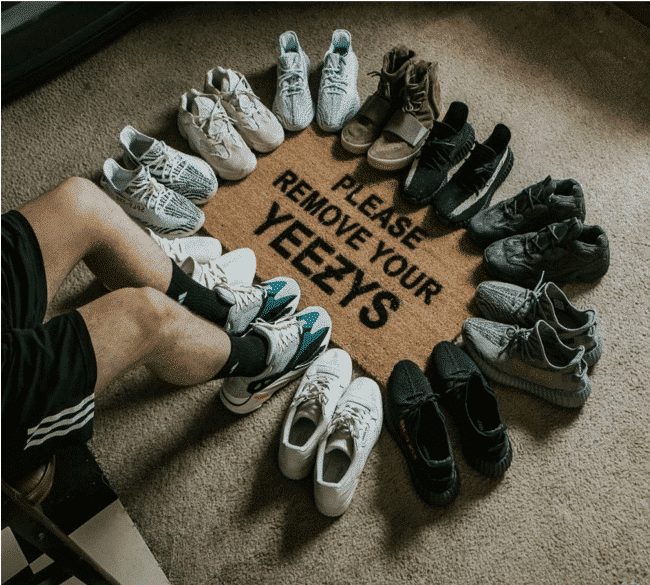
In extreme cases, children blame their parents for not providing the wealth they desire. When their parents can’t help them, children buy high fashion knockoffs. For example, replicas of Kanye West’s designer sneakers called “Yeezys” are highly sought after.[5]
Profits made from these fake designer goods fund illegal organizations. These organizations take part in “terrorism and the trafficking of drugs, people, sex, and wildlife.”[5]
It’s difficult to explain to children that not everything that glitters is gold. Studies have shown that being rich and famous are top priorities for today’s generation.[1]
Social media has given a false idea that such a lifestyle is easily achieved overnight. However, most of the money shown off on social media doesn’t really belong to the person who’s posting about it.[7] Children forget that social media is a staged reality.[8] For instance, the cars and mansions Lil Tay posed in actually belonged to the homes that her mother represented as a realtor.[7]
Why do people show off on social media?
Some show off on social media to make a statement to the world.[3] They feeling driven to prove they’ve made it to the top.[3] But instead of feeling happy once they buy the thing they’ve longed for, research demonstrates that they end ups feeling anxious and dissatisfied.[9]
Others show off “to arouse jealousy, envy, or other negative emotions” in others.[2] They create Instagram Envy to prove that they can’t be overshadowed.[2]
Some people believe that showing off their money will bring them more friends.[3] Teens are particularly vulnerable to the need for attention and validation.
Ideas About How to Start a Fun Conversation with Your Kids
Here at GetKidsInternetSafe, we want your children to dream big and accomplish their aspirations. Social media takes down walls to show that all-star athletes and pop artists were once normal kids too. They did their homework and helped their mother with the groceries. Be wary of the messages that Instagram Envy and Flexing tell our children. Counter the social media culture by having in-depth conversations on concepts your kids have yet to think about. For example:
Showing off material wealth on social media brings fans, not friends.
Teaching your kids that, rather than bringing more friends, studies have shown that people prefer to be friends with someone with a simpler lifestyle.[3] These fake friends often have ulterior motives.[2]
How does wealth affect relationships with friends? Genuine friends will always be by your side whether you’re rich or poor.
Can you have quality relationships if you’re breaking others down to build yourself up?
Wealth comes from a good work ethic.
Children are brainwashed into thinking that being disrespectful and obscene on the internet can easily roll in cash. Doing dangerous pranks, making hurtful comments, and participating in age-inappropriate activities are just a few examples. Start a discussion about how wealth actually comes about.
What is a good work ethic?
What is perseverance, and what do people learn from it? Making a sustainable income doesn’t happen overnight. Most successful people put in hours of hard work before making it to the top. Some fail a few times before catching their big break. Enduring the journey toward success will teach you more about yourself than the shortcut.
Follow uplifting social media sites created to inspire with positivity and stories of hope.
Some posts give advice or insight to encourage others.[2] That’s why impoverished children idolize the Instagram profiles of famous rappers who came from the same projects.[4] They see someone from the same struggling upbringing break the barriers for a better life.[4]
Your values define your definition of “wealth.”
People value different things, and what we value forms our idea of what wealth is. These values change throughout our lives as we learn through our experiences. As children grow through their personal journeys, help them become the best versions of themselves.
What are your dreams?
What kind of image do you want for yourself?
Do you want to help make the world a better place?
Is passion for your career worth more than money in your pocket?
Is working countless hours of overtime worth it for a fancy car?
In what ways does it benefit family life or take away from it?
These examples will help you start a mutual, complex conversation with your children so they can think further than celebrating a Rolls Royce. You’ll be able to pass on your wisdom, navigate their confusion, and give them the confidence to aim higher.
Thanks to Hanna Dangiapo for covering this modern topic! Want to learn more ways to protect your child from RiceGum-like content? Check out Dr. Bennett’s GKIS Connected Family Online Course
I’m the mom psychologist who will help you GetKidsInternetSafe.
There is a YouTube/TikTok trend of parents pulling pranks on their kids for viral shares. Some appear to be innocent jokes. Others are recordings of parents screaming at their children while the kids cry. Debates fill comment sections on how wrong it is to capitalize on “bullying” a vulnerable child. Professionals argue that this “comedy” violates trust and traumatizes children. It has even been argued that sharing milder pranks is still harmful, exposing children to the cruelty of internet trolls. In contrast, fans of the pranking videos complain that people need to lighten up. After all, we survived similarly harmless pranks when we were kids. Read this article and ask yourself, “When is the line crossed between comedic relief to child abuse?”
YouTube’s Response
YouTube videos go viral, fast. The comedy of pranking gives videos an extra boost in popularity. Yet, they got so out of hand that YouTube clarified their child safety policies in January 2019. They added that the mere perception of endangerment or vulnerability is unacceptable:
“We’ve made it clear that our policies prohibiting harmful and dangerous content also extend to pranks with a perceived danger of serious physical injury. We don’t allow pranks that make victims believe they’re in serious physical danger – for example, a home invasion prank or a drive-by shooting prank. We also don’t allow pranks that cause children to experience severe emotional distress, meaning something so bad that it could leave the child traumatized for life.”[1]
The Invisibility Prank
The invisibility prank was a fad for some time. In these pranks, families were videoed as they deceived children into believing that a magic chant made them disappear.[4]
Here’s how it worked:
First, the main pranksters let family members in on the joke so they can play along. Then the pranksters volunteer the child for a “disappearing magic trick.” The child sits on a chair in the middle of the room while the audience surrounds him. The magician covers the child with a blanket, and says three magic words, then ta-da! This is the audience’s cue to act completely surprised that the trick worked. Some get angry saying, “This isn’t funny! Bring him back!” Others gasp in astonishment. Whenever the child touches someone, they pretend to be spooked by this unseen force. The biggest part of this prank takes place when the pranksters ask the child to take a picture. The child doesn’t know the pranksters staged the picture beforehand. The fake picture shows the prankster’s arm hugging nothing. That empty space is where the child was supposed to be. The child sobs at this point because they’re desperate for acknowledgment.[2]
The Martin Case
An infamous case of YouTube pranking is that of the YouTube channel “DaddyoFive.” After their local county received several citizen complaints, the YouTube couple lost custody of two children in 2017. A county judge sentenced Michael and Heather Martin to five years of probation on child neglect charges. A neuropsychologist determined that the children experienced “observable, identifiable, and substantial impairments of their mental or psychological ability to function.”
The Martins had over 300 videos of them verbally, mentally, and or physically abusing their children for “pranks.” The Martins pleaded that the pranks supported their family with thousands of dollars of YouTube ad profit.[8]
Where the Line Is Crossed
At GetKidsInternetSafe we put children first, always. We believe that supporting child mental health and a strong, positive parent-child alliance is extremely important.
Pranking, which takes the form of bullying, may traumatize children if it repeatedly creates emotional, mental, and or physical duress.[5][7] Victims of pranking may suffer chronic anxiety, as they remain hypervigilant for the next prank will occur. Once pranked, they may no longer trust their parents or their surroundings. Surprise pranks may contribute to social issues, defiance, cyclic bullying, depression, and aggression.[7] Children with pre-existing behavioral and mental health issues are particularly vulnerable.[7]
Before the Internet, family pranks were private and lost their sparkle quickly in favor of empathetic support and good judgment. YouTube, TikTok, Twitter, Instagram, and Snapchat broadcast private moments to thousands and sometimes millions of strangers.[5] Strangers in the community and friends at school get to see a child pee their pants from being so scared. While the world laughs at their fragility, the loss of privacy magnifies their insecurity.[6] This embarrassment extends at-home bullying to the public causing cyberbullying or public harassment.[7]
YouTubers, like Logan Paul, increasingly push the boundaries to increase viewers and keep people entertained. These prank-based YouTube channels push the same boundaries but for the sake of their children’s health and safety.
The Balance
Not all parents maliciously prank their children to the extremes. For some families, jokes and ongoing pranks are traditions that bond everyone together.[9] In our family, we yell “123 not it” at the end of our meals at restaurants. Whoever is last has to carry the leftovers out and put them in the fridge when we get home.
When children are mature and the jokes are gentle, pranks can be positive lessons in trust.[9] According to sociologist Gary Alan Fine, “We can play these games with each other and we trust each other sufficiently that we won’t get angry, that we will be friends afterward, despite this momentary uncomfortableness.”[9] Pranks also help people develop a sense of humor, which is a useful coping skill.[5]
Arguably, parents tricking their children into believing that the Tooth Fairy and Santa Claus exist are good examples of appropriate pranks. The jokes gently play with the child’s innocence. These videos are memories cherished with laughter as our children grow older. They exhibit pure-hearted children living happy childhoods.
Things to Consider Before Posting a Prank Video
Trust your gut.
Every child’s temperament varies. Cultures, ethnicities, and family dynamics all differ. How a child will react to a prank is best known by their parent. Parental instinct and listening to our guts are our best courses of action.
Ask your child before posting.
Part of the GKIS Connected Family Screen Agreement explains that family members will not post images or videos of each other without permission. This is a critical step to building important dialogue for negotiation and trust. This applies to pranking as well.
Anticipate how that video will be received by other adults and peers.
It’s easy to get caught by the urge to instantly share hilarious moments with the internet. But take a moment before hitting “post” to consider how your child will feel in a year or two with the video still online. Think about who has access to your content. Follow the GKIS Grandma Test: “Would grandma have a problem seeing this?”
Will it target your child for further bullying?
For example, imagine a group of fifth graders seeing your family’s prank. Will they be laughing with your child or at them? Will they give your child a demeaning nickname?
Will copycat behaviors be unkind or cruel?
Anticipating the consequences of these videos is essential before posting.
Thanks to Hanna Dangiapo for covering this important, sensitive issue. If you’re ready to start a more positive, cooperative connection with your family and increase screen sanity, check out our GKIS Connected Family Online Course. With 10 easy steps, you can bring the fun back into family life.
I’m the mom psychologist who will help you GetKidsInternetSafe.
Child fantasy jobs used to be astronaut, doctor, or professional athlete. Nowadays, kids all dream of being a YouTube Celebrity. In the GKIS article, GetKidsInternetSafe Tips for YouTube, we touched on why kids love these celebrities and the appeal of the let’s play video. In this article, you’ll find out how YouTube celebrities build their brands and maintain popularity. You may be surprised to learn it isn’t as easy as it looks.
What is a YouTube celebrity?
In the ‘social media era,’ children and adolescents are consumed by screen time. While TV, Blockbuster, cable, CD’s, and iPods reigned in the 1990’s, YouTube, Snapchat, Instagram, Spotify, Netflix, and Amazon Prime rule today. According to Pew Research Center’s recent report on teens, social media, and technology, 95% of teens have smartphone access, and 45% claim that they are online ‘almost constantly’. [1]
YouTube is the most popular social media platform in the world. Valued at $100 billion, this wildly successful platform allows people to create careers by uploading videos and serving followers.
With the evolution of online marketing, the concept of “celebrity” and “influencer” has shifted. Instead of a celebrity ruled by stylists, publicists, and managers, now “everyday people” can build their individual brand. Many YouTube celebrities attract millions of view and earn the loyalty of obsessed subscribers. Big money can be made with brand deals, ad sponsorships, award shows, product lines, and conferences.
Why are YouTube celebrities so popular?
Successful YouTube celebrities know their audience. Through fad tracking, affiliate marketing, and frequent interaction and surveys with subscribers, they find out what their audience wants…and they give it to them. YouTube celebrity videos range from makeup tutorials, do-it-yourself (DIY) crafts, let’s play videos (playing video games on camera with reactions and tips), pimple popping, and dangerous pranks. You name it, YouTube most likely has it. YouTube celebrities work hard to drive subscribers to their site, building a platform so they can make millions of dollars annually. Why are YouTube celebrities so popular among youth?
YouTube celebrities are better at creating relationships.
Unlike highly-produced mainstream celebrities, YouTube celebrities seem relatable to kids. They are not afraid to be themselves and tend to share personal experiences about sensitive topics like sex, drugs, mental health, dating, and abuse. They are like the crazy aunts and uncles we used to seek out at family reunions. More outlandish than parents, they make fun mentors.
YouTube celebrities are accessible.
Available on demand, YouTube celebrities make deliberate efforts to acknowledge and talk directly to their viewers. They are accessible through social media, answer questions in Q&A panels, and regularly respond on comments with their viewers. The relationship YouTube celebrities develop with their fan base leads to quality engagement. A study commissioned by Google has shown that 70% of teenage YouTube subscribers relate to YouTubers more than the traditional celebrity. [2]
Kids are lonely, depressed, and anxious.
As parent fear has increased, child exploration range has decreased. This leaves kids indoors for hours a day with nothing to do. Playdates no longer happen riding bikes in a pack around town. Now they happen online through social media and gaming platforms. Although somewhat entertaining and satisfying, long hours online canleave kids fatigued and depleted. They get some contact with friends, but not the kind that feeds the soul. Dr. Bennett and other researchers believe screen time is a big contributor to rising child and adolescent mental health disorder rates.
Production is cheap.
Starting a YouTube channel can be as simple as having a phone camera, webcam, GoPro, or professional camera. What makes YouTube so appealing is not the equipment needed to make a video, but the voice and techniques used to build an audience and draw them in. A set, expensive cameras, actors, or directors are not needed for a quality YouTube video.
One example is YouTuber celebrity, Trisha Paytas, who started her channel in 2007 as a daily vlogger(video blogging) with a camera in hand and room as her set. Since then, she has created two successful YouTube channels that have millions of subscribers and billions of views.
She discusses overly candid, explicit topics like sex toy reviews, when she dated a serial killer, and the time she had sex with a whole football team at once. She also films Mukbang videos (eating large amounts of food while interacting in front of the camera), discusses her multiple plastic surgeries, and makes music videos. She’s so funny and charming, you just can’t look away. Her net worth is between $3-$4 million.
Discussion topics are edgy, controversial, sensational, and juicy.
Dr. Bennett shared during our last intern meeting that her son and kids in her practice are currently obsessed with Shane Dawson’s documentary-type analysis of Jake Paul. Providing evidence for the hypothesis that Jake Paul has sociopathy, this series provokes controversy, raises ethical questions (is it bullying?), and heightens competition. Dr. Bennett’s analysis of the situation provides interesting content to launch conversations about social dynamics, business concepts, and online morality. For instance, he was very concerned if Shane Dawson is qualified to publicly diagnose another celebrity with mental illness. Is that bullying with questionable credibility? Or is it a savvy YouTube celebrity feud staged to pit each celebrity’s fan base against each other and drive more traffic to their sites? Dr. Bennett’s comments have me wondering, are other parents using these learning opportunities like she is? Or do most kids keep their viewing ideas private from family members?
Wondering how to protect your kids from Paytas-like YouTube content? Buy our online GKIS Connected Family Course and start ten easy pro-steps for screen sanity and fun cooperation.
Thank you to CSUCI Intern, Sasha Mejia for her awesome research and for writing this article.
I’m the mom psychologist who will help you GetKidsInternetSafe.
Does your teen know how to safeguard their future by cleaning up their social media? I was recently invited to present at a local National Charity League meeting with high school seniors on the topic, “The Cyber Footprint.” Typically, I speak to parents rather than teens about screen safety. But for this group, I went the extra mile. Today’s GetKidsInternetSafe article is a blueprint for how teens can turn a social media footprint from devastating to standout for college and summer or internship employment opportunities.
A digital footprint can make you look good!
Most of us are aware that social media content can have long-lasting negative effects on reputation. That’s why parents monitor child posts. But what many people don’t realize is that having no digital footprint or a dull virtual self can also be a liability (work against you).
In the professional and college worlds, it is widely assumed that having no cyber footprint reflects a lack of productivity and know-how. Not only is it important to have a positive online presence to avoid being screened out of opportunity, but you must also stand out to be selected.
Do employers and colleges care what you post online?
Yes, they do! Not only do employers recruit via social media, but they also screen out potential hires based on your posts and comments.
A 2016 survey conducted by the Society for Human Resource Management revealed:
Recruiting via social media is growing, with 84% of corporations using it currently and 9% planning to use it.
44% of HR professionals agreed that a job candidate’s public social media profile can provide information about work-related performance.
36% of organizations have disqualified a job candidate in the past year because of concerning information (e.g., an illegal activity or a discrepancy with an application) found on a public social media profile or through an online search.
When should you start stylizing your cyber footprint?
…as soon as you’re old enough to care about post-high school education and employment – if not sooner! It’s never too early to consider who you don’t and do want to be online and offline. Using social media to showcase special talents, like art, dancing, modeling, and acting can work for you.
Before using social media for publicity, here are some critical points to consider for safety.
STEP ONE: Cleanse your social media profiles and cyber footprint of content that doesn’t make you look good.
Google yourself and track down and delete unwanted content.
If you’re lucky, you don’t have years of unflattering comments or images to track down, but you won’t know what employers may find until you Google your name first.
Back up your old profile data before you delete your account.
Expect that it may take a few weeks for your chosen social media platform to delete your old profile and allow you to create a new one.
Cleanse all social media profiles, even those set to private.
In some states, it’s legal for employers and college application counselors to ask for social media usernames and passwords. Refusing to do so may cost you. That means it’s necessary to delete inappropriate images, comments, and shares such as those involving drugs, alcohol, sexuality, profanity, cyberbullying, poor spelling/grammar, political affiliations, and off-color jokes.
Social media platforms purposely make it difficult to have more than one personal account or delete your old accounts and start over. Not only does Facebook require you to use a new email address and phone number to create a new profile, but you will lose all of your friends, favorites, photos, messages, comments, and games.
They don’t want you to delete your old profile because they lose ownership over your content. The more metadata they collect about your online activities such as likes and dislikes, the more profit they can make saturating your online time with targeted ads. Since we now select what we want to view rather than being captive television and commercial watchers, advertisers are hungry to capture every opportunity to get our attention. That means we are blitzed with 5,000 ads a day in contrast to 500 ads in the 1970s.
Are you ready to reveal an impressive school or job candidate who is searchable for the right people? Recreating your best virtual self isn’t easy!
STEP TWO: Create an irresistible virtual you!
Choose two or three popular social media platforms.
Quality is more important than quantity. Rather than do a poor job on several platforms, focus on doing a great job with a few.
LinkedIn, Instagram, and Twitter are currently the most popular social media platforms. Get familiar with them to take advantage of useful features. For example, set appropriate privacy settings and avoid default responses in favor of your own words.
Visualize your perfect virtual self and plan before you tackle the project.
Search out those who are doing it right and create a swipe file (think Pinterest). A swipe file is a digital folder where you store your favorite examples of content and style. Keep your eyes open for catchy headlines and titles, image ideas, and potential networking connections. Incorporating multimedia, like colorful and unique images and videos, attracts attention and effectively communicates concepts.
Be strategic, concise, and innovative.
Your online profile is not as formal as a résumé. Be fun and creative while displaying your ideas, research, products, and activities. Proofread. Delete any extra words and avoid big blocks of text by using bullet points and breaking up content into titled sections. Include keywords for search engine optimization.
Blogs can be highly effective, as storytelling is an awesome way to stand out and show rather than tell. Become an author and illustrator. Be the clever, positive, well-rounded person you’d want to work with.
Friend and join influential others.
Every opportunity I’ve ever gotten was the result of good relationships. Not only are your productivity skills critical to success, but so is networking.
Use social media as it’s intended, to connect with like-minded others who fuel and enrich your creativity and protect your confidence. That includes clubs, organizations, special interest groups, and corporations as well as impressive individuals. Don’t friend people you don’t know or haven’t reached out to personally.
Stimulate online engagement and stay active.
Attracting interesting others is one thing but keeping them warmly engaged with valuable content is key to longevity. Just as you do with your friends, be available and share interesting articles you know your online contacts will like. Creating reciprocity will keep others interested in you and generous with potentially valuable invitations and introductions.
6 WAYS TO MAKE YOUR ONLINE PROFILE A COLLEGE/EMPLOYER MAGNET
Switch from teen personal to adult professional with a first-person tone that is warm and welcoming. Make certain any content that a future employer may see as inappropriate or silly has been deleted.
Write a mission statement detailing what opportunities you are looking for. Avoid buzzwords and lingo. Stick to what’s relevant.
Keep your connections education- and employment-focused. Don’t get frivolous and network with everybody. Be selective and seek out those who may lead to mutual opportunity.
Include an attractive headshot.
Include contact information, an email link, and custom URLs for your website or other social media profiles.
Highlight impressive activities/achievements related to education, employment, & community service. Testimonials and endorsements are powerful. Make sure your online profiles are consistent with the content on your résumé.
My best friend’s mother always said, “It’s just as easy to fall in love with a successful man as a loser.” The same can be said about landing your dream job rather than settling for what’s convenient. On the other hand, you’ve got to start somewhere!
As a teen, I worked for a drug store and learned how to be a responsible employee, cashier, organize and stock, and deal with difficult customers. I also learned this position was not for me long-term. From there I landed jobs in accounting, research, and administration, each providing me with business skills that are still paying off today.
Don’t pressure yourself into thinking today’s profile will immediately lead to your dream job. This is scaffolding. One job will lead to another and so on, ultimately building the very best you. Enjoy the creativity of the journey. Take time to daydream about design elements and all of the ways you can blossom.
Have good ideas of your own to improve a digital footprint? Please share with us in the comment section below.
In my private practice life, I maintain a fairly private existence. My focus in session is on my client, not on getting my social needs met. Coaching is the same – although it’s more directive and less intimate and uncovering. But with back and forth discussion, clients get to know me pretty well. They don’t learn the details about my life but do gather a lot from my sense of humor, occasional stories, and encouragement. I want us to get to know each other too. For GKIS to be useful for you, you need to be confident that I share your values and that my sources are credible. I need to know what questions you want answered and topics that you’d like to hear about. It doesn’t escape me that your time is very valuable. If you take the time to open articles, I want to make sure you get as much value and applicability as possible. Same with my books and online parenting courses. In today’s article, I’m going to tell you why I love GKIS so much – and why so many people tell me they love the message.
I’m at a transitional point in my life. I’m 50 years old, my dad is gone and my mom has severe dementia; I’m two years post-divorce, newly in love, and my oldest is engaged and my youngest is officially a teen. I’m at a stopping place where I’m finding myself again and deciding who I want to be when I grow up. It’s a time of new-found stillness and opportunity. I’m old enough to have the wisdom of experience and young enough to plan more adventures and re-create aspects of the woman I really want to be.
My kids still mostly accept my influence, and I’m no longer overtasked to the point of feeling buried. I’m traveling and exploring and openly celebrating without the self-consciousness I had in my younger years. I feel free and curious and energized. I’ve created a business that I’m proud of, with a unique balance of doing things I love as a healer and a teacher. GetKidsInternetSafe is my legacy-building project for helping families achieve true connection and screen safety. It’s about prevention more than treatment. It’s been eye-opening in ways I didn’t expect. Today I’d like to share with you the profound “Ah-ha” I uncovered during a group coaching session. I’m hoping it might move you to create magic moments of stillness in the coming days to help you create more meaning and have more fun in your life, as an individual and a parent. Who do you want to be when you grow up, or are you already there?
Last Saturday I was a creative branding workshop geared to make my business more vital, energizing, and meaningful. Our coach presented two exercises that really got me thinking. The first was to describe the last moment I was in true bliss.
Here’s what I came up with:
Late morning game drive. Perfect 68-degree weather, light breeze on our faces cruising down a red dirt road. Swaying waist-high golden blonde grass as far as the eye could see, a termite mound or a crop of gray rocks here and there. The hum of the engine and tiny jolts from a rocky road. Brad, our two companions from Salt Lake City, and I were on high alert scanning for animals. Our Masai warrior in his hot pink beanie had the windshield down scanning, always quietly scanning. Our jeep had no windows or doors, so it felt like we were flying with few obstructions blocking our view. Scanning, scanning, occasionally switching our internal lense from looking for the grey boulders in the distance that were elephants to the swaying kill in a tree for leopards to the black ears and cunning eyes from the head of a lion or hyena.
The anticipation we all felt seemed to sizzle between us…like somehow our joint efforts were combining into the thrill of patient discovery. We knew after days of tracking that our efforts would definitely payoff. Maybe it would take hours, maybe seconds. We might be treated with a sleek cheetah mom hunting with her two pouncing cubs. Or maybe we’d get to sit and coo at the adorable baby elephant rolling a log with her back foot. Maybe we’d see the gruesome site of a partially-eaten zebra hanging from a tree or the violence of a lion pack stalking and taking down an old water buffalo. The thrill of the beauty of Africa was absolutely intoxicating. I was in true meditative bliss. Hours of meditation spiked with the shock of powerful violence or the lazy relaxation of grazing zebras and wildebeest. I’ve never felt anything quite like that. I was as happy as I get.
Time up, exercise over. Brain shock.
We all looked up from our pens and paper, still kind of stoned from our blissful moment. Waiting with patient curiosity what our coach was going to do with this content…what this could possibly have to do with our businesses and well-honed mission statements.
Then she asked us to write down three things we loved to do as children.
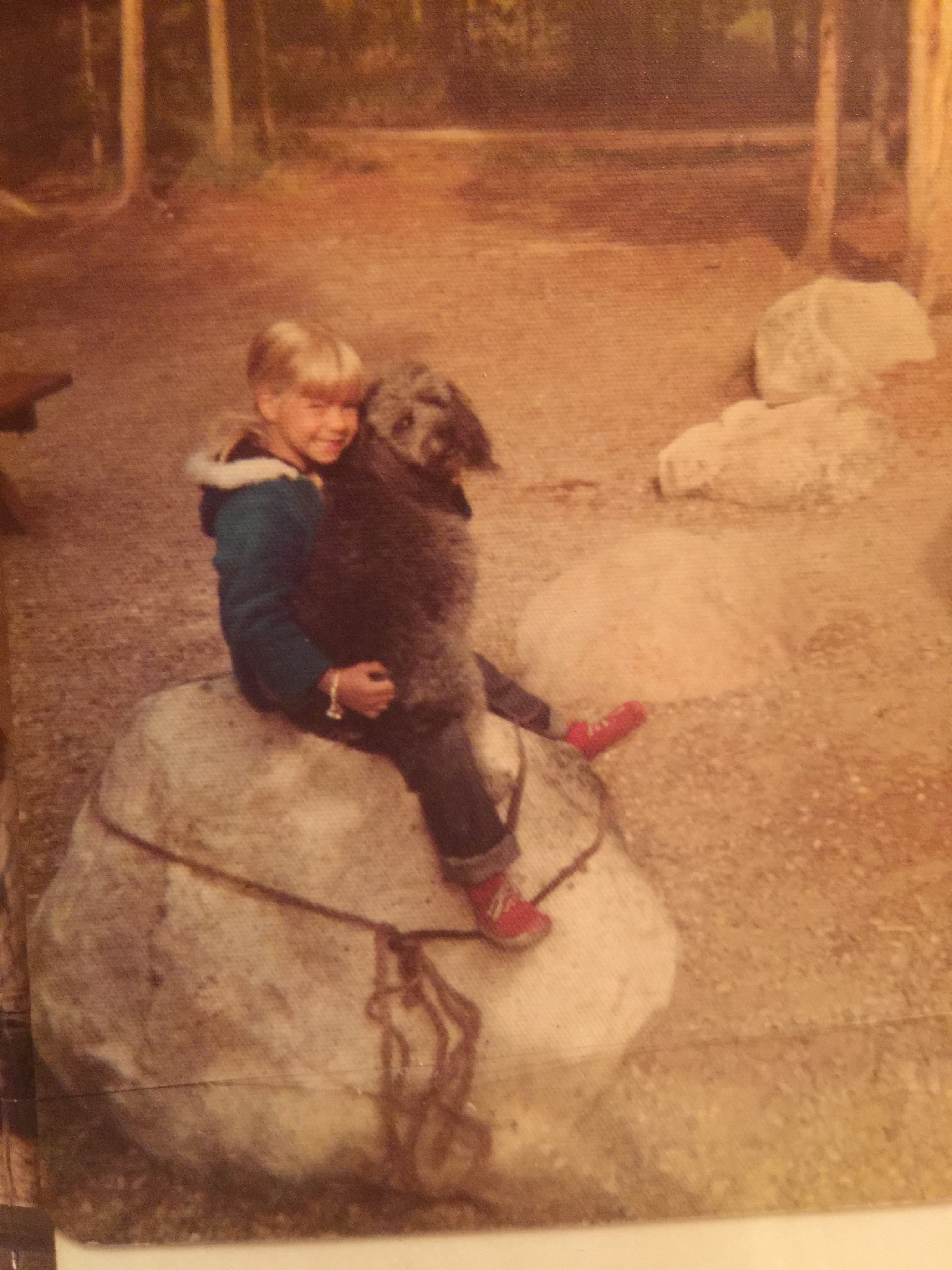
I wrote: take long drives after dinner, play speed games, and climb rocks camping with my BFF standard poodle, Ty.
Then she asked us to compare our bliss now and as kids to what we do in our businesses every day.
Blink.
I mean really, what does the miracle of the African savannah and childhood antics have to do with GKIS?
Blink. Blink.
You can tell me if I’ve lost my mind, because our coach Zhena makes us feel like that sometimes. But with her suggestion, I was struck all at once. My bliss in Tanzania was about the anticipation of thrilling discovery. Thrilling discovery is what childhood is all about. Discovery is why kids tear apart the house, ask incessant questions, and beg for screen time. Watching kids geek out over lady bugs and Mexican Train and Minecraft and Snapchat and Fortnight – that is what parenting is about. Watching our children play and joining them in it is about Discovery.
My work as a psychologist, teacher, writer, and researcher is the same type of discovery I loved on my after-dinner drives with my family. Imaginary mountain climbing on rocks while camping was about adventure. And speed games is pure connection and delight. Parenting and my work as a psychologist is not about this all day, every day. But all of those elements are woven into my job. I get the privilege of watching people discover the pathways from dark places to the light.
Since that blissful midmorning in sunny Africa, I have described that scene to clients in my office while I teach imagery and mindfulness – clients ranging from 6 years old to 76. Then they tell me a scene that is special to them. It’s a moment of connection in the therapy office. A moment where we share our bliss. It’s intimate and fun and connecting, not unlike how it feels to hang out and be truly present with your child. It’s what we are born to do…connect.
The truth is, the reason why screen time is so compelling is because it is ALL about discovery and connection. We can’t turn away from the stimulating, on-demand content. It’s intoxicating. It distracts us from everything and everybody. We get high on it.
That’s not all bad. Learning and discovery is amazing. But research also tells us that learning and discovery in the three-dimensional world outside of screen time is also necessary for balanced health and happiness. GKIS is about connection, discovery, and balance. It’s about supporting each other with strategies and tools to help us guide our kids through this maze of temptations on- and offline.
So, there it is. GKIS is my later-in-life adoption that allows me and my subscribers true discovery. And from my recent inner reflections, I’m reminded that kids hijack peace and quiet, organization, and self-care. Parenting is chaos in motion. It captures us in ways that no other activity does. For me, memories of taking care of my toddlers brings me gently delicious images of bedtime snuggles and kitchen dances. The impossible moments of trying to keep the house clean and stepping on llegos are far dimmer in my memory. Special moments are what you too will remember.
I hope you are inspired to take a moment and write about your recent moment of bliss. Maybe it was a steamy cup of tea early in the morning, or a walk with your best friend, or a snuggle with your child. Or maybe it was an exotic adventure like mine. Whatever your bliss, please take the time to notice it. Even better, create a magic 20 minutes of stillness once a week to curl up on the coach and read your weekly GKIS article. Reflect on how your family is growing and the gaps that GKIS ideas can help with. Journal. Make a gentle plan for progress. Screen safety certainly, but far more delicious are the magic moments of connection that you will have with your family.
I can’t wait to hear what you think of GKIS ideas in the comments of the blog, on FB and Instagram, or email me directly at DrTracy@DrTracyBennett.com.
I’m the mom psychologist who will help you GetKidsInternetSafe.
We’ve all been there. Stuck at work, school, or home. We pick up our phones and click on Instagram. There’s BFF Julie on her amazing trip to Japan – 150 likes in 42 minutes. Then check out Twitter. There’s co-worker Andrew’s fun video of an amazing concert at the coolest venue in town. His text post fetched 27 comments. “Wow! That looks so fun!” “I’m so glad I ran into you last night!” “Did you get the pictures I sent you?” You put your phone down and instantly get hit with a wave of sadness. Everybody seems to be having more fun than you. Are you going about life all wrong?
FOMO
FOMO or “fear of missing out” is a form of social anxiety in response to seeing activities streamed on social media. These feelings can blossom into immediate disappointment or long-term feelings of inadequacy. You know you should be happy. You’re ashamed of it. But still … people who experience FOMO the most tend to be extremely active on social media sites like Instagram, Snapchat, and Facebook.[1]
Who suffers from FOMO?
Although FOMO adversely affects all ages, recent studies conclude that FOMO is most common among teens. Nearly 60% of teenagers experience anxiety when they become aware of plans being made without them or can’t get ahold of their friends. Another 63% are upset when they have to cancel plans with friends.[2] Among the other age groups, an overwhelming 61% of subjects aged 18-34 state they have more than one social media account, while 27% state they check their Facebook feeds immediately upon awakening.[3]
FOMO Risks
Compulsive social media checking that gets in the way of everyday activities and leads to texting and driving, like “snap and drive” which is careless driving while Snapchatting.
The inability to prioritize important responsibilities over fun social media posting.
Posting shocking activities like binge drinking and drug use.
Spending lots of money to post expensive designer items.[4]
The constant need to feed is a surefire way to develop feelings of inadequacy and anxiety. FOMO makes us feel lonelier, inferior, and less successful.[5]
Reducing FOMO Anxiety
Get real.
A fun post here and there is not reflective of the “perfect” life. Everybody hurts sometimes, even the pretty ones.
Cop to it.
Once you admit to it, it’s easier to control it and create a plan of action to work through it.[6]
Be in the present.
Practice mindfulness techniques like anchoring – attending to your current surroundings, what you see, feel, hear, smell, and your breathing.[7]
Recommit to your nonvirtual life.
Pet that dog you always see on your way to school or work. Stop and smell the flowers. Read a book in the park. Give yourself ample time to finally finish that term paper or work project. Commit to doing one of those today, right now!
Temporarily detox.
If momentary disconnection is a struggle, delete apps off your phone and use psychological wellness app support. Cool detox apps include Moment, Flipd, and Forest. Detox apps offer fun and clever incentives to get off your phone. For instance, Forest incites you to not open social media by illustrating breaks with forest growth and how large and lush and large you can grow your forest.[8]
Seek counseling.
If all else fails, talk it out. Since FOMO is seen as a cognitive distortion, cognitive behavioral therapy has been shown to be highly effective by offering thought-reconstructing tools. In other words, identifying stinking thinking and replacing it with can-do thinking can greatly improve mood and feelings of well-being.[9] Fewer social media posts may mean a fulfilling life is being lived off-camera rather than no life happening at all.
Thank you to Tammy Castaneda for contributing to this GKIS article. Fomo is becoming an increasing problem for kids and adolescents. If your child is still in elementary school, hold off until middle school before you allow their first social media app. If your teen showing problematic behavior, take action. To prevent clinical symptoms related to screen use, check out our GKIS Connected Family Online Course. In 10 easy steps, you can learn how to encourage healthy screen habits and a happier household.
I’m the mom psychologist who will help you GetKidsInternetSafe.
[4]What is FOMO? (And How the Fear of Missing Out Limits Your Personal Success). (2018, July 27). Retrieved September 14, 2018, from https://www.developgoodhabits.com/fear-of-missing-out/
[9Staff, G. (2016, April 14). Overcoming FOMO: What Fuels Your Fear of Missing Out? Retrieved September 17, 2018, from https://www.goodtherapy.org/blog/overcoming-fomo-what-fuels-your-fear-of-missing-out-0418167