Fast, entertaining content seems to be the only way to hold the attention span of today’s children and teens. This becomes an issue when virality becomes more important than the content being put out or the audience who will receive it. TikTok users have realized that they can quickly create a viral video by taking Reddit stories and resharing them over clips from popular video games like Minecraft, Roblox, and Subway Surfers. Today’s article covers why this content is dangerous and how you can keep your child safe from digital injury with ourScreen Safety Toolkit.
The Popularity of Minecraft, Roblox, and Subway Surfers
Minecraft
Between 2016 and 2021, Minecraft users have risen from 40 million to 93 million with a peak of 131 million users in 2020.[1] Surveys have found that up to 54% of boys and 46% of girls aged 3 to 12 play Minecraft.[2] The popularity of Minecraft is undeniable. Take a look down any aisle of children’s clothing and you will find item after item filled with popular references from the game. Covid-19 only increased the popularity of the online game accessible on most gaming consoles, with users increasing by 14 million from 2020 to 2021.[2]
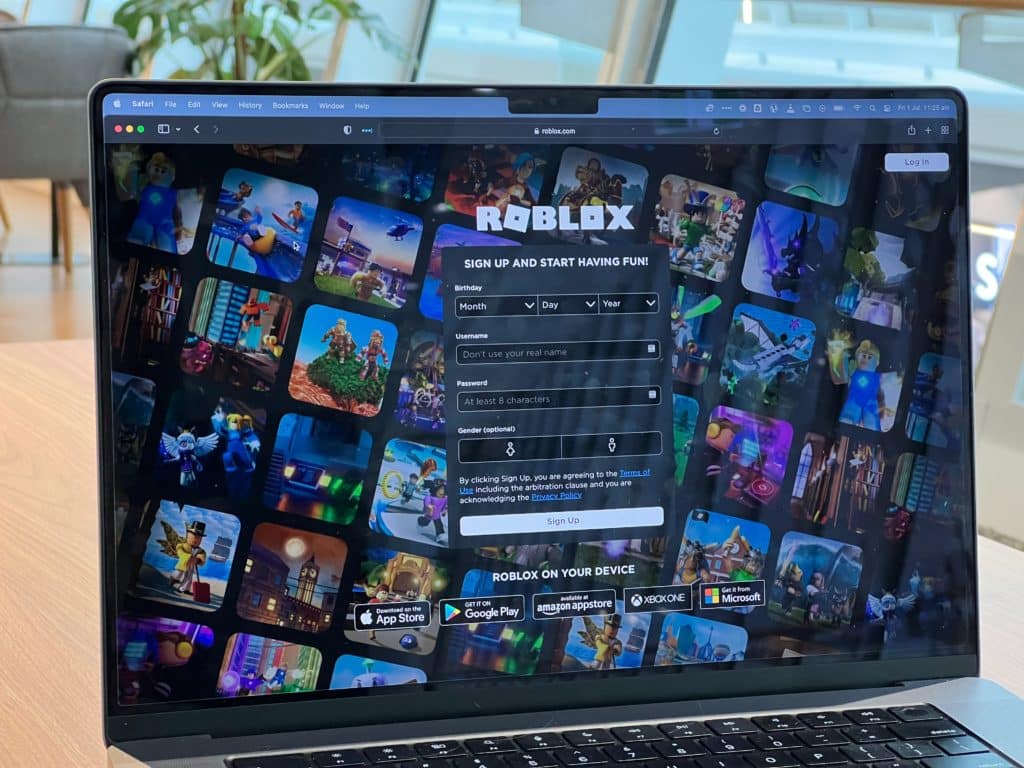
Roblox
Roblox is another popular children’s game that has bankrolled off the pandemic and increased in users over the past few years. Between 2021 and 2020, the platform added more than 146 million users to its servers. In 2016, Roblox had 30+ million users. Today they have more than 202 million monthly active users.[3]
While the average user of Minecraft is 24 years old, only 14% of Roblox users are over 25 years old. 67% of Roblox users are under 16 years old, and 54.86% of users are under 13 years old.[3] The popularity of Roblox is reflected on TikTok through a large number of Roblox fan accounts owned by young users. In fact, there have been many audio trends on the platform that are accredited to edits by Roblox users.
Subway Surfers
While less popular than Minecraft and Roblox, Subway Surfers is still the most downloaded and most-played mobile game in the app store. Between 2021 and 2022, Subway Surfers saw more than 2 times the number of downloads with 5.43 million daily users.[4] These numbers are impressive, as, unlike Minecraft and Roblox, Subway Surfers is only available for download on mobile smartphones. It is not available on any other gaming platform. While there is no available data for the average age of Subway Surfer players, the game is recommended for ages 9 and up.
All three of these games are different in their gameplay but similar in their popularity and appeal to younger audiences. Videos made with clips from these games are sure to catch the attention of a younger audience who is trying to view content related to their interests.
Harmful Reddit Content and How They Use Kids’ Games
Reddit claims on its website to be “a network of communities where people can dive into their interests, hobbies, and passions.”[5] Users post on so-called “subreddits” dedicated to topics from the general to much more specific niches.
Today there are over 2.8 million subreddits and Reddit has 52 million users daily.[6] Of their monthly users, 79% are between the ages of 18 to 34 and almost 64% of those users are men.[7] When children encounter posts from Reddit, they are viewing material often made for and by adult men, leading to some very inappropriate content.
A simple search for “Reddit stories” on TikTok will show you video after video of Reddit threads overlaid with a video of someone playing a kid’s game and read by a voiceover. The threads contain content from various subreddits like “/AmITheAsshole” but most contain inappropriate “NSFW” (Not Safe for Work) content. A scroll down the search shows video after video of content with titles like, “My mom keeps having sex with my boyfriend…” or “What do you tell your partner when you’re horny?” or “What did you not know about sex until you lost your virginity?” The last question is from a Subway Surfers video with 1.6 million likes and 13.5 million views from a user with similar content and over 55.4 thousand followers.
The creators of these videos use the popularity of these kids’ games to bring more viewers to their content and help their virality. In doing so, they are promoting sex, adult situations, and overall unsafe content. Each of these videos is followed up by hundreds or thousands of comments from young kids and teens adding their own answers to the question proposed. A quick look at commenters’ profiles revealed that half were between the ages of 13 to 17, and each was commenting on their own sexual experiences to millions of viewers.
Set up content preferences and block out video keywords or put the account on restricted mode in the settings and privacy section of TikTok.
View an account’s watch and comment history and see what content your child is consuming and interacting with.
For younger children, consider waiting before allowing them to have their own TikTok account.
When they do adopt a TikTok account, scroll together to choose what content they view and influence the algorithm that will offer content automatically.
As your child gets older, work with them to establish what they are doing and looking at on social media. Preparing them for the possibility of adult content can help them in discovering it on their own and possibly suffering a digital injury.
If you fear your child may be watching inappropriate Reddit content without your knowledge and permission, check out our GKISScreen Safety Toolkit. This toolkit helps to empower parents and provides them with smart tech tools to filter, monitor, and manage online behavior.
To protect your child, prevent digital injury, and prepare them for social media use check out our GKIS Social Media Readiness Course.
Thanks to CSUCI intern, Katherine Carroll for researching how TikTok users use Reddit content and kids’ games for views.
I’m the mom psychologist who will help you GetKidsInternetSafe.
Beauty and fashion trends have always changed with the season. But with social media, the pressures to conform have increased among adults and impact younger and younger kids. At what point do we intervene to minimize the dangerous effects that arbitrary beauty standards have on kids and teens? How do we discourage the consumption of damaging content surrounding body image? If you are concerned about the damaging content your family could be exposed to, check out our Screen Safety Essentials Course. This course provides you with the tools necessary to navigate the Internet more safely and avoid digital injury. Even better, it will bring you closer to your kids! Today’s GKIS article covers the controversies of trending body types, the damage they can do to young people, and creative ideas to keep your family safe.
Heroin chic is back!
Popularized in the early 1990s, heroin chic refers to the ideal female body type with defining features that include a very thin frame and an emaciated appearance.
In November 2022, the New York Post published an article titled ‘Bye-bye booty: Heroin chic is back,’ and it immediately sparked controversy online. The article claimed that the much thinner physique was “trendy” and celebrities like Bella Hadid and Kim Kardashian who have publicized radical weight loss sparked the recent shift in body trends.
The Shortened Lifespan of Online Trends
Media has a major impact on how we perceive ourselves and the world around us.[3] With the increasing use of social media, the lifespan of trends has drastically shortened. Instead of trends lasting for a couple of years, they now last for a couple of months. That means many women whiplash between fashion fads, radical diets, and costly beauty regimens. Just when it seems that we are making progress with body positivity, the return of heroin chic only proves that within industrialized countries such as the U.S., slender women tend to be seen as more attractive.[2]
Trends have fluctuated throughout the years, coming and going and coming back again. Before the most recent return of heroin chic was the ‘slim thick’ trend from the late 2010s. Slim thick means very curvy. It’s often only achieved through plastic surgery like breast and buttock enhancement surgery. Recently social media sites have also promoted filters that make one’s face fit the trending beauty standard. A small, upturned nose, full lips, and “fox eye” eye makeup are what are considered most attractive recently on apps such as TikTok and Instagram. Another GKIS article, Influencers Hurt Child Self-Esteem by Overusing Filters, touches on how filters that dramatically alter your face can have similar effects. Check it out to learn more.
What is the damage?
Body dissatisfaction is a major source of suffering among women of all ages.[1] The intense fluctuation of beauty standards and trends can lead to self-esteem issues, lack of motivation, depression, body dysmorphia and other eating disorders, and thoughts of suicide. All genders are at risk of becoming insecure about their physical appearance. However, the risk is higher for young girls because of rapid pubertal body change and because society has deemed a woman’s attractiveness to be integral to her self-worth and value.[1]
To avoid the potential development of body image insecurities, check out our Social Media Readiness Course. This course can help prepare your tween or teen to more safely navigate the Internet and avoid damaging content.
How can we protect our teens?
Talking with your children is one way to protect them against internalizing unrealistic trends and developing insecurities. Creating a safe space to hold conversations surrounding confidence and self-esteem can help. To help guide you through these sometimes difficult conversations, we’ve developed our free Connected Family Screen Agreement. Offered in short, easy chunks, our agreement will help you become your child’s ally when it comes to screen media and family safety.
Setting smart and justifiable parameters is also key for protection. If you are lost as to how to set up the rules and maintain cooperation, our Screen Safety Essentials Course has everything you need to be your family’s go-to expert.
Social media requires a whole new set of tools for child safety. For smart management, our Screen Safety Toolkit can help.
And for tweens and teens, our Social Media Readiness Course offers the red flags of digital injury and the psychological wellness tools that Dr. Bennett teaches in her practice. With a mastery quiz at the end of each module, you can be sure that the GKIS certification your teen earns at the end really means sometimes.
[1] Stapleton, P., Crighton, G. J., Carter, B., & Pidgeon, A. (2017). Self-esteem and body image in females: The mediating role of self-compassion and appearance contingent self-worth. The Humanistic Psychologist, 45(3), 238–257. https://doi-org.ezproxy.csuci.edu/10.1037/hum0000059
[3] Monks, H., Costello, L., Dare, J., & Reid Boyd, E. (2021). ‘We’re continually comparing ourselves to something’: Navigating body image, media, and social media ideals at the nexus of appearance, health, and wellness. Sex Roles: A Journal of Research, 84(3–4), 221–237. https://doi-org.ezproxy.csuci.edu/10.1007/s11199-020-01162-w
So many of us follow our favorite celebrities on social media hoping to get small glimpses of their private lives. But have you ever wondered, where’s the line between fandom and obsession? Tweens and teens are especially vulnerable to developing parasocial relationships with celebrities they love online. Because of their fame, celebs can influence followers in some of the worst ways. To prevent your child from being negatively influenced by others online and to create a strong digital foundation, check out our Screen Safety Essentials Course. Today’s GKIS article covers what online parasocial relationships are and how to prevent their negative influence on kids and teens.
What is a ‘Parasocial’ Relationship?
A parasocial relationship is a one-way relationship with a person of higher status who you know intimately but who hardly knows you at all.[1] Social media is the perfect vehicle to develop parasocial relationships. Younger tweens and teens are especially susceptible due to a powerful social drive fed by adolescent identity formation. Not only are teens looking for mentorship, but they also easily form an attachment to idealized versions of their favorite celebs.[2]
Social media features that readily fuel parasocial relationships include the attraction of stylized and beautifully edited posts, branding relationships between celebrities, produced dramas between celebrities designed to bring in more followers, fan comments and forums, and even the ability to send private messages. Studies show that adolescents that have a weaker sense of self-identity often participate in celebrity worship as they are more easily influenced by others.[2]
‘Stan Culture’
Fans aim to achieve closer relations with their favorite celebs through various consumption activities.[1] Twitter is the social media site with the largest number of users who participate in celebrity worship, which is also known as a stan. A Stan is an overzealous or obsessive fan of a particular celebrity. Primarily a term used to define a fan of a particular musical artist, there are Stans for just about any popular current artist you can think of. Stan culture on Twitter consists of individuals sharing fanmade videos and pictures and consuming as much of the artist’s content as possible.
There is also a dark side to Twitter’s Stan culture. Arguments between Stans of different celebrities frequently appear in comment sections, which eventually turn into cases of cyberbullying. Studies have found that intense celebrity worship can be linked to tendencies toward addiction and stalking behaviors.[3] What seems like innocent fan engagement could potentially lead to something more negative and even illegal.
Defending Harmful Messages
Well-known celebs have the freedom to post whatever they want on the Internet, just like the rest of us. Although they aren’t obligated to maintain a certain image, sometimes they promote harmful ideologies that influence fans who’ve developed parasocial relationships with them.
The most recent example is rapper Kanye West, who has been at the forefront of recent celeb controversy. In October 2022, Kanye made some anti-Semitic remarks based on conspiracy theories and harmful stereotypes in interviews and Instagram posts. This resulted in groups of people in Los Angeles standing with signs over freeways saying harmful anti-Semitic things shortly after the comments circulated on the Internet. One of the signs said that Kanye was “right” about what he said about Jewish individuals. Amongst the backlash that he received, there were die-hard fans that stood their ground and continued to defend his actions. This led some fans to adopt his conspiracy theories and ideals at worst and turn a blind eye to such ignorance at best.
Impressionable Teens and Tweens
Other celebrities have also promoted problematic ideas with the support of fans who adore them. This is a problem primarily for young tweens and teens due to their lack of real-world experiences and their evolving views of the world around them. Being negatively influenced by celebrities online can have serious risks.
How to Discourage Parasocial Relationships
There is a difference between being a fan of someone’s work and developing an obsessive parasocial relationship with them online. Having conversations with your kids about the importance of navigating the Internet safely is a good place to start. Our Connected Family Course can help with that. It includes the tools necessary to monitor and promote healthy screen engagement while still maintaining a positive environment at home.
Young teens and tweens who are still learning about the world could be exposed to ignorant comments from their favorite celebrities and could potentially become influenced by them. In the worst case, teens become radicalized in their thinking without their parents even knowing. To prevent your tweens and teens from engaging in ignorant and harmful content online, check out our Social Media Readiness Course. Our course provides you and your child with the knowledge necessary to safely browse the Internet and avoid ignorant and harmful content, as well as how to make healthy digital decisions.
Learning the ways of the Internet doesn’t have to be a daunting task. Dr. Bennett’s book Screen Time in the Mean Timeis another great tool for parents to use to become more knowledgeable about the unpredictable online realm. This book can further prepare you for establishing a safe environment for your tweens and teens to express their love for their favorite celebrities/artists online.
Thanks to CSUCI intern Tracy Pizano for researching the risks of forming parasocial relationships and for co-authoring this article.
I’m the mom psychologist who will help you GetKidsInternetSafe.
[1] Derbaix, M., & Korchia, M. (2019). Individual celebration of pop music icons: A study of music fans’ relationships with their object of fandom and associated practices. Journal of Consumer Behaviour, 18(2), 109–119. https://doi-org.ezproxy.csuci.edu/10.1002/cb.1751
[2] Ang, C.-S., & Chan, N.-N. (2018). Adolescents’ views on celebrity worship: A qualitative study. Current Psychology: A Journal for Diverse Perspectives on Diverse Psychological Issues, 37(1), 139–148. https://doi-org.ezproxy.csuci.edu/10.1007/s12144-016-9497-0
[3] Sansone, R. A., & Sansone, L. A. (2014). ‘I’m your number one fan’—A clinical look at celebrity worship. Innovations in Clinical Neuroscience, 11(1–2), 39–43.
The creation of the Internet has transformed society in every way imaginable, and 84% of us use it every day.[1] The two generations that grew up with the Internet are millennials and generation Z. You may be surprised at how differently these two groups use it, and how it’s affected them as human beings overall. Today’s GKIS article highlights the difference between teens and young adults and those who are 25 and older. If you’d like to help prepare your gen Z’s for healthy Internet media consumption by building good habits and communication, check out our Screen Safety Essentials Course.
What defines a generation?
A generation refers to all people born and living around the same time. The average period of a generation is 20 to 30 years, and the cutoffs are defined by when people become adults and start having children of their own. Although the specific years that group a generation is often up for debate, for our purposes we define millennials to be anyone born between 1981 and 1996 and generation Z to be anyone born between 1997 and 2012. That means millennials are currently between the ages of 26 and 41, and Gen Zs are between the ages of 10 and 25. Millennials were in their teen years when they first started using social media and gen Z’s were still children when they ventured into online neighborhoods independently.
Millennials and the Internet: Jackie’s POV
To gather better insight into how millennials view and interact with the internet, I interviewed Jackie (age 25).
Jackie started using Instagram and Facebook when she was 16 years old. She considers the biggest impact social media had on her was the comparison. Comparing her social media posts to others’ posts was the biggest issue she thinks she faced. It’s an issue for her because when she would compare posts, insecurities often arose. She said that constantly seeing others’ posts of selfies, vacation pictures, and pictures with significant others and friends made her feel inadequate, especially when she was much younger. She overcame those issues by no longer using social media as often.
Gen Z and the Internet: Sophia’s POV
To better understand gen Z’s views and interactions with the internet, I interviewed Sophia (age 12) about her experiences.
Sophia started using social media when she was 10 years old, specifically Snapchat and TikTok. She feels that the biggest impact social media had on her was the concern of appearing ‘cringe’ online and in front of others in real life. Micro-managing one’s appearance and mannerisms is another problem many gen Zs face. Snapchat and TikTok often contain videos of people recording others doing things, sometimes without their knowledge. Certain behaviors are labeled as ‘cringe’ or ‘embarrassing’ by others in comment sections. Nowadays, she says she still uses social media often but not as much as she used to, claiming she used to be glued to her screen 24/7 when she first started.
Compare and Despair
The biggest similarity between the two is the micro-management of what is shared online. Many are concerned with how they’re perceived on social media in addition to comparing their lives to others. Curating the perfect image or life is something that seems to be an issue for many social media users regardless of age.
The negativity and insecurities that come from social media aren’t age-restricted. However, it can have a particularly heavy effect on tweens and teens. Our Social Media Readiness Course can help with that. By teaching kids the red flags of digital injury and clinically tested psychological wellness tools, we can help prepare your kids for safer screen use and prevent feelings of inadequacy, low self-esteem, and the desire to compare online.
More Access and More Influence on Self-Identity
Taking both interviews and research into consideration, it seems that there are both similarities and differences in how both generations interact with the Internet. The biggest difference is that gen Z has been exposed to social media much younger than millennials before they solidly formed self-identity. Further, more social media platforms and sophisticated personal mobile devices were available to them – giving them almost constant, on-demand, mutual contact with peers and strangers.
Parent Replacement
In addition, more parents were inclined to help introduce technology to gen Z children. Smartphones became a sort of transitional object assigned by parents as their substitute.[2] This is something millennial children never experienced because smartphones weren’t around when they were toddlers and young children.
More Competence and Confidence Online
Those exposed to the Internet at younger ages tend to be more savvy and aware of online dangers. Research demonstrates that gen Zs tend to have more confidence protecting themselves online than people who are 25 and older.[1].
Self-Guided Learning Opportunities
Those who love to self-direct their learning argue that early browsing offered opportunities that older generations didn’t have. They say that the internet offered them a tremendous breadth of opportunity and a depth of learning as they directed themselves into deeper and deeper learning.[3]
However, from a developmental stance, gen Z kids who use such advanced technology to assist them in critical thinking and comprehension can have downsides. One is known as the Google Effect, also known as digital amnesia. By using the Internet, we end up storing less information in our biological memory, becoming less knowledgeable overall.[4] Another problem is that gen Zs use advanced search engines and smartphones to cheat by looking up answers to homework and quizzes. Learn more in our GKIS articles, The Google Effect. Because Memorizing is So Yesterday andSiri and Alexa Help Kids Cheat on Homework.
Social Impacts
Internet access at young ages can have developmental effects on social development as well. Positive aspects include convenient social management tools during interpersonal conflicts, like pause or block options for regulation and impulse control, and the creation of virtual identities for experimentation and practice.[2]
Potential negative effects include feelings of social inadequacy and exclusion, increased risk of body dysmorphic disorders, and exposure to cyberbullying and interpersonal exploitation. Insta-Famous Brings Insta-Anxiety is a GKIS blog article that touches on the risks that can arise from using social media.
GKIS Tools That Can Help
Our free GKIS blog articles are an excellent source of information, from parenting tips to media headlines, child development, and much more.
Our Screen Safety Toolkit offers a great resource guide so you can find the tools necessary to implement proper management, monitoring, and supervision to navigate the Internet more safely.
[1] Jiang, M., Tsai, H. S., Cotten, S. R., Rifon, N. J., LaRose, R., & Alhabash, S. (2016). Generational differences in online safety perceptions, knowledge, and practices. Educational Gerontology, 42(9), 621–634. https://doi-org.ezproxy.csuci.edu/10.1080/03601277.2016.1205408
[3] Ransdell, S., Kent, B., Gaillard, K. S., & Long, J. (2011). Digital immigrants fare better than digital natives due to social reliance. British Journal of Educational Technology, 42(6), 931–938. https://doi-org.ezproxy.csuci.edu/10.1111/j.1467-8535.2010.01137.x
[4] Heersmink, R. (2016). The Internet, cognitive enhancement, and the values of cognition. Minds and Machines: Journal for Artificial Intelligence, Philosophy and Cognitive Science, 26(4), 389–407. https://doi-org.ezproxy.csuci.edu/10.1007/s11023-016-9404-3
Since its inception and popularization in the early 2010’s, virtual reality technology has been used for a vast array of applications from education and art to engineering, entertainment, and beyond. Recently, immersive VR technology is also being used to address the issue of domestic abuse and violence in a series of experimental studies. The goal is to enhance emotional recognition skills and subsequently foster an increased capacity for empathy among domestic violence offenders. While this is clearly a deserving cause and noble goal, the question is does this application truly work or are we overestimating the power of virtual reality?
Domestic Abuse
Domestic abuse, also referred to as domestic violence or intimate partner violence, is characterized as a pattern of behavior in any relationship that is used to gain or maintain power and control over an intimate partner. This includes physical, emotional, sexual, psychological, or economic actions designed to manipulate, coerce, frighten, intimidate, humiliate, injure, or terrorize someone. Domestic abuse can occur in any relationship and affects people of all backgrounds, socioeconomic statuses, and education levels.[1]
According to statistics published by the National Coalition Against Domestic Violence, 1 in 4 women and 1 in 9 men have been physically, sexually, or emotionally abused by an intimate partner in the United States. Various negative mental, physical, sexual, and reproductive health effects have been linked to domestic violence and studies suggest that there is a direct relationship between domestic abuse, depression, and suicidal behavior.[2] Domestic abuse is a pervasive issue that leads to distressing outcomes and justifiably deserves extensive research into ways to combat and prevent its occurrence. Recently, researchers across the globe have been searching for a possible answer to this dilemma using virtual reality immersion.
Empathy and Emotional Recognition
The role of empathy and perspective-taking abilities in mediating aggressive behaviors has been a well-documented theory behind the occurrence of interpersonal violence. Theories of aggression have suggested that the perpetration of violence against others is linked to a lack of cognitive empathy or the ability of offenders to put themselves in the perspective of their victims and understand their emotions.
The ability to recognize emotions in the facial expressions of others is a key component of effective interpersonal communication.[3] Studies have shown that domestic abuse offenders have a significantly lower capacity for recognizing and understanding the emotions expressed in the faces of others and even tend to misclassify emotional expressions.
The VR Experiments
Researchers have come up with the idea of using immersive VR technology to give male offenders the sensation of experiencing an episode of domestic abuse from the perspective of a female victim. The researchers hypothesized that the virtual reality experience may foster cognitive empathy in violent offenders by having them “physically” embody the victim’s perspective, an ability that they clinically lack. The overall goal is to investigate how the difference in perspective during a violent interaction impacts empathy and an individual’s ability to recognize emotional facial cues in others.[3]
In one experiment, a group of male offenders who had been convicted of domestic violence against women were assessed on measures of their emotional recognition capacity and compared to a control group of men without any histories of violent offenses. The results showed that the men had a significantly lower ability to recognize fear in female faces. Not only did they typically fail to recognize emotions, but they also tended to mistakenly classify fearful expressions as appearing happy.
The men were then exposed to an immersive VR program that was designed to induce the illusion of full-body ownership over their female-bodied avatar thus allowing them to have a first-person experience as a female victim of domestic abuse. The avatars’ movements were perfectly synchronized with the movements of the participants’ bodies. The participants first underwent a process called embodiment designed to strengthen the illusion of being the avatar where they looked at themselves in a mirror and interacted with various objects in the virtual space.
Following this process, a male VR character enters the space and begins verbally abusing the participant. The male character proceeds to invade the participants’ personal space and throw objects such as a telephone onto the floor. If the participant spoke up, the male character commanded them to “shut up.” If they looked away, the male character shouted to them, “look at me!” After completing the virtual encounter, the offenders were again assessed on measures of their emotional recognition capacity. The results indicated that after being embodied in a female victim, the offenders showed an improved ability to recognize fearful female faces and reduced their tendency to misclassify fearful expressions as happy.[3]
Does this truly work?
Research has suggested that virtual reality can elicit strong emotional responses in the user, especially those linked to anxiety, stress, and fear. Other studies have found that some virtual reality programs can promote pro-social behavior among users, but only to a limited extent.[4]
While the results of this study indicated that VR may have promising applications for decreasing re-offenses among perpetrators of domestic abuse, similar studies have reached different conclusions. For example, studies have been published that show that virtual reality is not effective in generating long-term cognitive empathy that allows an individual to identify, understand, and relate to the emotions of others in various contexts. Other studies regarding VR and domestic violence have reported successful results in promoting cognitive empathy.[4] Further extensive, empirical, and peer-reviewed studies must be conducted to fully conclude if VR is a viable tool for addressing violent behaviors among domestic abuse offenders and if so, to what extent it works and how.
GKIS Resources
If you enjoyed reading this article, check out the GKIS Blog for many other articles on a wide array of interesting topics such as gaming, GKIS recommendations, impacts of social media, news-worthy stories, screen safety, popular apps, and so much more. You can also check out Dr. Tracy Bennett’s book, Screen Time in the Mean Time: A Parenting Guide to Get Kids and Teens Internet Safe for family-tested parenting strategies that will help you build the tools you need to help your family navigate today’s technological pitfalls.
Thanks to CSUCI intern, Mackenzie Morrow for researching the use of VR for combatting domestic violence and co-authoring this article.
I’m the mom psychologist who will help you GetKidsInternetSafe. Onward to More Awesome Parenting,
Is it possible that your child is being encouraged to fake a mental health illness because of YouTube celebrities? It is no secret that today’s children and teens practically live their lives through the internet. Social media platforms and entertainment sites like YouTube are where our kids go to seek out information, make friends, and build their budding identities. One aspect that makes these sites so attractive is that they provide a space for kids and teens to experiment with their identities by trying on different personas in accordance with what is trending online. This phenomenon gives the content creators of platforms like YouTube enormous influence over what our kids see as socially desirable traits and behaviors. The reality is that these content creators are some of our kids’ biggest role models and some of the biggest content creators on YouTube are featuring videos about their mental health disorders. To help ensure your family has the tools to safely navigate the online world, check out our Screen Safety Essentials Course.
So, what is trending online?
Mental health issues and disorders are far less stigmatizing among today’s children and teens than they were in previous generations. This is due to increased awareness, social progressiveness, and a cultural shift that embraces individualism. In other words, being different is now something to be celebrated rather than something to be avoided at all costs.
As a result, popularity today looks a lot different than it used to. Cheerleaders and football jocks are no longer the end-all-be-all of popularity and coolness. For our kids, to be seen as fundamentally different from everyone else or misunderstood by their peers is to be seen as unique and uniqueness is the ultimate attention attracter. Oddly enough, teens today must stand out to fit in. This trend can be seen online by the enormous popularity of YouTube channels that feature content related to mental health disorders.
YouTubers Are Sensationalizing Mental Illness for Views
It is inappropriate for an unqualified person to make judgment calls regarding the validity of someone’s mental health diagnosis. Exercising informed and critical thinking when evaluating claims made by people online is important. Especially, when it is your child who is being exposed to these claims.
Content creators on YouTube get paid to make videos that attract attention from viewers. One way these content creators ensure that their videos are viewed out of thousands of others is to make them as sensational as possible. Frequently, truth is secondary to entertainment which is incredibly dangerous in this context because the implications of serious mental health disorders are far too significant to be trivialized.[1] Currently, content creators who purport to have multiple personality disorders (also referred to as dissociative identity disorder or DID) are skyrocketing as YouTube channel celebrities.
What Is multiple personality disorder?
Multiple personality disorder is a type of dissociative disorder characterized by the presence of multiple personalities or identities that coexist within one person’s mind. The personalities are distinct, completely separate from, and unaware of one another. Each personality has its own identity, complete life history, personal traits, preferences, attitudes, etc., and exerts control over the individual at different times.
The cause of this disorder is usually related to severe trauma and can be seen as a coping mechanism that protects a person from facing painful memories. The original personality is called the host and is often the most dominant identity. Additional identities are called alters. People with DID switch between personalities, with the current personality taking control over the body (referred to as “fronting”) and thus shielding the person from distressful or alarming situations.[2]
Multiple personality disorder is an incredibly rare diagnosis affecting only .01 to 1% of the population.[3] Additionally, there is considerable debate among psychologists as to whether or not the disorder truly exists.[4] Unfortunately, there is a lot of misinformation about the disorder being broadcast by YouTubers who claim to have it.
Who Are These DID Content Creators?
Some of the most popular YouTube channels whose creators purport to have multiple personality disorder include MultiplicityAndMe, The Entropy system, Fragmented Psyche, Trisha Paytas, and DissociaDID. Each of these channels is enormously popular with DissociaDID having over 1.9 million subscribers.
These content creators capitalize on the mystery surrounding the disorder and typically play the role of educating their viewers. Each of these channels has videos with clickbait-worthy titles such as “Switching Caught on Camera” and “Meet the Alters.” These content creators have branded themselves as leaders of the DID community and have created a culture of exclusivity.
Us Vs. Them
For kids who may have difficulties making friends, belonging to this kind of exclusive community is very attractive. As I mentioned earlier, kids today have to stand out to fit in. Belonging to such an exclusive group allows them to feel unique while also being accepted by others. The comments sections under these videos are filled with DID-related memes, inside jokes, and special insight-fueled communication that fosters an “us versus them” mentality.
The Dangers of The Mental Illness Trend on YouTube
While having a mental disorder is nothing to be ashamed of, the act of faking a mental illness or claiming to have one when one doesn’t is dangerous. First and foremost, living with a dissociative disorder such as DID is not as glamorous as it is portrayed to be by these YouTube content creators. It is distressing, impairing, and often overwhelming with far-reaching implications across a variety of aspects of a person’s life. Here are some dangers:
Kids who claim to have the disorder as a means of making friends online can ultimately end up isolating themselves from others in real life even further.
People who fake a mental disorder can become convinced that they genuinely do have the disorder.[5]
People who claim to have a mental health disorder that they really do not have may end up taking away valuable resources that people with true diagnoses desperately need.
What Parents Can Do to Protect Their Kids
Parental oversight regarding their kids’ exposure to content online is the most important thing. One way to do this is by monitoring your kid’s online activity such as the sites they visit, the content they feature, and how much time they spend online. Thankfully, Dr. B has a variety of useful strategies designed to help families navigate the various pitfalls of internet exposure and prevent digital injury.
The GKIS Social Media Readiness Training is a valuable tool that teaches teens about the inherent risks of social media and ways to be prepared when encountering them.
The Screen Safety Toolkit is a family-tested, outcome-based resource guide with our best recommendations, how-to information, and links to our favorite easy-to-onboard parental control systems.
The GKIS Connected Family Course will provide parents and families with tips for creating a safe screen home environment through fun parenting techniques that are designed to guide sensible screen management.
The Screen Safety Essentials Course provides weekly parenting and family coaching videos, engaging family activities, and other valuable information such as selected readings from our GKIS blog articles and Dr. Bennett’s expert book, Screen Time in the Mean Time.
Thanks to CSUCI intern, Mackenzie Morrow for researching the risk of digital injury to kids who are exposed to sensationalized mental health content on YouTube and co-authoring this article.
I’m the mom psychologist who will help you GetKidsInternetSafe.
[1] Mayo Clinic. (2019). Factitious disorder. Mayo Clinic. https://www.mayoclinic.org/diseases-conditions/factitious-disorder/symptoms-causes/syc-20356028
[2] Waugaman, R. M., & Korn, M. (2012). Review of Understanding and treating dissociative identity disorder: A relational approach. Journal of the American Psychoanalytic Association, 60(3), 626–631. https://doi-org.ezproxy.csuci.edu/10.1177/0003065112447105
[3] Brand, B. L., Sar, V., Stavropoulos, P., Krüger, C., Korzekwa, M., Martínez-Taboas, A., & Middleton, W. (2016). Separating fact from fiction: An empirical examination of six myths about Dissociative Identity Disorder. Harvard review of psychiatry, 24(4), 257–270. https://doi.org/10.1097/HRP.0000000000000100
[4] Dorahy, M. J., Brand, B. L., Sar, V., Krüger, C., Stavropoulos, P., Martínez-Taboas, A., Lewis-Fernández, R., & Middleton, W. (2014). Dissociative identity disorder: An empirical overview. The Australian and New Zealand journal of psychiatry, 48(5), 402–417. https://doi.org/10.1177/0004867414527523
[5] Merckelbach, H., Jelicic, M., & Pieters, M. (2011). The residual effect of feigning: how intentional faking may evolve into a less conscious form of symptom reporting. Journal of clinical and experimental neuropsychology, 33(1), 131–139


 Thanks to CSUCI intern, Katherine Carroll for researching how TikTok users use Reddit content and kids’ games for views.