

Need peaceful screen time negotiations?

Get your FREE GKIS Connected Family Screen Agreement

parenting

5 Myths About Internet Safety


bigstock-child-using-laptop-16872

Originally published by AdmireMoms

I’m a psychologist, a university lecturer, and a mom. Guess which job is the hardest? I’m not going to say that establishing screen safety in your home is easy. But I will say that, with support like GetKidsInternetSafe and plans like those in my Screen Safety Toolkit it’s totally doable and mega important. The fallout I see in my clinical office from poor safety planning is truly tragic. If you’re telling yourself one of these 5 myths, I encourage you to take some time and flush out an effective screen safety plan. You will rest so much easier once you do. On to the 5 myths I too often hear about Internet safety.


I SURVIVED IT, SO WILL THEY

When I think back about my childhood I grimace about the seven shades of peril I was often in. As latch key kids roaming the neighborhood in hoards, we were mostly in danger of falling out of trees and talking to strangers. Yes abduction was a concern, but neighbors were ever watchful and quick to reprimand us and tell our parents when we stepped out of line. (Sorry about the ding-dong ditching and prank calls Mr. and Mrs. Wong).

As an Internet safety expert and clinical psychologist, the online peril kids face today is far more insidious than that of yesteryear. Online predators don’t drive up and grab kids off the street. Instead they stalk them virtually on social media and chat rooms. With slow, steady contact they can gather a shocking amount of personal information that they utilize to form a relationship. They don’t need to grab them, the kids are coerced to come to them. Sprinkle in other risks like cybersecurity, exposure to inappropriate violent and sexual content, and cyberbullying and one can easily see online risks are real. This isn’t falling out of trees and reading your cousin’s Playboy magazine anymore.


WE TALKED ABOUT IT, SO NOW THEY KNOW BETTER

Education is an awesome first step to good online problem solving and resilience. But it isn’t enough. Kids may seem wise with their bravado and impressive technology expertise, but they’re not great at recognizing future consequence.

There’s a good reason for that. In the first 25 years of life the brain is undergoing massive remodeling. Brain cells that aren’t being used are dying off while others grow in synchronized and preplanned patterns among various brain regions. As a result, specialized skills emerge with each developmental phase.

The prefrontal region of the brain, the seat of judgment and problem solving, is among the last to mature. That means that kids don’t have the brain wiring to reason through complex online social situations, even if they’ve been told of the risks. Parents need to be present and alert every day to make up for those deficits and help them build resiliency skills throughout childhood. It’s a process rather than a one-time intervention.


IF I DON’T ALLOW IT, THEY’LL SNEAK IT ANYWAY

Let’s be honest, that’s a cop out. Yes it’s intimidating to program parental controls on screen devices and set up screen safety rules and structure, but the risk of letting this go is simply too high. I treat middle schoolers addicted to porn and high schoolers flunking out due to sleep deprivation from gaming and social media, among other serious problems. GetKidsInternetSafeis my way of supporting families preventively rather than treating issues after the fact. If done right, sneaking and hacking won’t undo the benefits. Parents need to do their jobs well to protect kids effectively. With support, screen safety is not as hard as most parents think.


EVERYBODY’S DOING IT, IT’S JUST THE TIMES

It does seem like everybody’s doing it, but that doesn’t mean your kids should. Overly restricting technology will interfere with your children’s academic and social well being, and so will being too permissive with screen media. It’s worth being that parentwho commits to a strategy and negotiates it actively as your children grow. That kind of active, warm, fun engagement also strengthens the parent-child relationship. When they see how awesome your kids are doing, other parents will follow your lead. That means your children’s friends will also be less likely to browse into trouble.


PARENTAL CONTROLS FILTER ADEQUATELY, PLUS I CHECK THEIR BROWSER HISTORY. I’M GOOD ON SCREEN SAFETY.

Of man . . . if only. Tech is getting more sophisticated and user friendly for sure, but nothing beats old-fashioned human ingenuity to come up with work arounds. The truth is, inappropriate content will show up on your children’s screens. It just will. Recently a teacher friend told me a story that she was looking up “big mouth bass” with a bunch of first graders, and by some horrifying stroke of the key an explicit body part filled the screen. She mimed what it was like to slap at the keyboard while launching her body in front of the screen, all while trying not to scream hysterically. This followed by several uncomfortable telephone conversations with, thankfully, understanding parents.

So what can we do? Build a powerful parent-child relationship, set up filtering and monitoring tech, and develop innovative parenting strategies to keep screen use moderate and safe. No need to be overly restrictive or overly permissive. And as a mom and psychologist, I urge honesty and transparency. Don’t risk losing your credibility by spying and ambushing your kids with online discoveries. Let them know from the beginning that you love them enough to be engaged with their nonvirtual AND virtual selves.

I’m the mom psychologist who will help you GetYourKidsInternetSafe.

Onward to More Awesome Parenting,

Tracy S. Bennett, Ph.D.
Mom, Clinical Psychologist, CSUCI Adjunct Faculty
GetKidsInternetSafe.com


GetKidsInternetSafe Sheds Light on the Dark Net: Drug Traffickers, Child Pornographers, and Nude Selfies

Screenshot-2016-03-17-16.03.47

Along with being a mother of three and clinical psychologist in private practice for twenty years, I’m adjunct faculty at California State University Channel Islands. This semester I’m teaching the courses Addiction Studies and Parenting. Over the summer I read an incredibly interesting book, The Dark Net by Jamie Bartlett. I was so fascinated by what he had to say, I assigned the book to my class along with a reaction paper. I asked them to identify with and support one extremist position or the other, the techno-optimists or the techno-pessimists. Who would you side with?

What is the dark net and how does it relate to GKIS?

The dark net is a hidden, encrypted overlay Internet network with over 50,000 websites that can only be accessed by the Tor Hidden Services browser. It’s the online underground. To get on the dark net, anybody with Internet can download the free Tor browser. From the Tor browser, your search request gets bounced around via several computers encrypting and decrypting your request as it goes, ultimately making your search untraceable. That means anonymous users can browse and interact with websites that cannot be regulated or censored.

Interestingly, the Tor browser was originally invented in the 1970s by the United States Department of Defense (Advanced Research Projects Agency Network – ARPANET) so they could browse the net without being recognized. The same technology used for national security is the very software being utilized by users of the dark net, the criminals and those using it for social benefit.

As you may suspect, the dark net is populated largely by those who have something to hide. In his book, Jamie Bartlett interviews dark net frequenters, including trolls, pornographers, child pornographers, self harm chatters, political and social movement extremists, and those who participate in black market drug sales (referred to as the Silk Road).

The Silk Road

The Silk Road is an ecommerce site that specializes in the sale of illegal drugs. To shop on the Silk Road, one simply needs to browse for products (marijuana, cocaine, methamphetamine, hallucinogens, heroin, you name it) that are displayed like any ecommerce site, such as Ebay or Amazon, with thousands of products offered by hundreds of vendors. One can see a photo and description of the product, read customer reviews to assure quality, contact the vendor, place an order with your delivery address, and pay with bitcoin, which is cryptocurrency designed to keep your identity secret. Once ordered, your money is held in a secure account until the product is on its way, then it is released to the seller and you’re left to wait for your product to be delivered to your nonvirtual mailbox.

Of course, there is not full safety, privacy, and anonymity on the dark net. The clever encryption makes it very difficult to locate the server for the website…and thus the creator. But there are arrests made from dark net activity. For example, the founder of the first Silk Road website, 31 year-old Ross Ulbricht, was sentenced to life in federal prison in May, 2015. The federal judge was quoted to say, “What you did with Silk Road was terribly destructive to our social fabric.” Silk Road cashed in over a billion dollars in sales between 2011 and 2013. Destructive indeed. However, even in the high profile case of Silk Road 1 being taken down by the FBI; within a month, the Silk Road 2 site popped up on its place. And the illicit online drug trade was reborn.

Perhaps what is most concerning for GetKidsInternetSafe (GKIS) is the large number of child pornography images available on the dark net. GKIS prefers the term online child sexual abuse to child pornography. However, one of the big problems identified by Jamie Bartlett is that up to one-third of child pornography images are self-produced. This means that children and teens, sometimes coerced, take and share their own partially nude and nude photos. As a result, eradication of these images becomes nearly impossible.

Why in the world would a child or teen publish their own photos and interact online with strangers?

In order to understand a child’s motives, one must consider what tweens and teens are trying to accomplish socially at this developmental stage. They are trying to form their self identity independent from their family of origin. They are trying to create their “brand.” And what models do they have for branding? Nude selfies experts like Kim Kardassian. No only are they mimicking their favorite Internet celebrities, but they’re also trying to build their confidence and street cred among their peers.

Just like trolls on the Internet, teens practice thickening their skin by boldly brushing up against risk. What is too scary to do in real life is more possible in virtual life. The harmless end of the spectrum for online skin thickening is talking smack to same-age friends (e.g., cyberbullying on Twitter) and the dangerous end of the spectrum is engaging with an adult stranger on the Internet (e.g., opening oneself up to grooming by an online predator).

Scary right? Yes! The truth is, telling your tween a scary story isn’t enough to stop them from experimenting with their social power and sexuality online. They will engage in conversation with an online “creeper” as a kind of dare. The kids think they’re in control and enjoy the banter . . . until they get titillated or start to trust the guy and ultimately lose control. That’s when it gets dangerous. Because in the chess game of pedophilia, creepers are well practiced and use extremely sophisticated grooming methods to manipulate children. Overly confident teens with immature prefrontal brain regions (the seat of problem solving and judgment) are easy pickings for sinister adults.

I recently saw a disturbing playing out of this very dynamic when I was investigating the new video streaming social media app, Periscope. A very popular stream with lots of floating hearts revealed what looked like a 12 year-old girl playing truth or dare with a hoard of flirting anonymous strangers. She had the demeanor of a hardened flirt, but her vulnerability was dangerously evident. Talking to men who were daring her to take off her clothes soon revealed she was in way over her head. But not only did she not realize she was in peril, she was becoming more and more determined to demonstrate she could handle it. As a mother and psychologist, it was distressing in the least. And yet it is playing out everyday, all the time. Parents are the last to know.

What can parents do to keep their kids off the dark net and from self-promoting sexualized images?

I’m sorry to say there is no magic shortcut to this question. The GKIS short answer is, you have to parent.

Not only must you stage your home appropriately with a good monitoring and filtering techkit and techniques like I offer in the GKIS Connected Family Online Course, but you also must teach your kids good judgment and digital skills. One scary story won’t get the job done. Skill building is a gradual process that takes root from a strong parent-child alliance. That powerful connection can only occur with quality, fun family time and engaging, informed conversation.

Start your digital parenting with deliberate restriction of content (e.g., no social media apps in elementary school). As your child gains experience and judgment, slowly loosen up and allow more digital freedoms, with tech monitoring and frequent check-in discussions. Avoid dishonest spying that can lead to a hurtful ambush that will blow your credibility. If you’re straight with them that you will check their online content, they’ll post with better judgment and accountability from the beginning. Ongoing digital conversations not only offer bi-directional teaching opportunities between kids and parents, but it also builds a cooperative relationship and teaches family values.

Consistent with my article last year Hey Dad, Your Twelve Year-Old Daughter Has a Nude Out, Jim McDonnell the Sherriff of Los Angeles County recently penned an open letter to parents cautioning them about the perils of self-published nude selfies and human trafficking. Check out my NBCLA interview for details.

I’m the mom psychologist who will help you GetYourKidsInternetSafe.

Onward to More Awesome Parenting,

Tracy S. Bennett, Ph.D.
Mom, Clinical Psychologist, CSUCI Adjunct Faculty
GetKidsInternetSafe.com
Screen Media Guidelines for Children Ages 12-18 Years: Learning and Academics


blog

Teen life is complicated! And just like adult life, it is difficult to stay in healthy balance. My GKIS teen screen media series breaks the balance into three primary areas: learning and academics, friends and fun, and rest, rejuvenation, and self-care. Maybe you hoped that as your teens gained more independence, your parenting responsibilities would decline? Think again! Parenting a teen is perhaps the most emotionally taxing phase thus far. Not only must you learn to compromise and negotiate, but teaching, modeling, and supporting complex skill building is what separates the successful teen from the unsuccessful.

Adolescents live busy lives. Along with big changes to their bodies and brains, this generation is more overtasked than ever before with academics becoming increasingly important for launch. Teens must increasingly transition from middle school to high school, class to class, activity to activity, screen to screen. In my practice, I have seen overtasking increasingly take a concerning toll on teen mental health. Outsourcing tasks to screen media helps with day-to-day activities, like using social media to maintain friendships, calendars to schedule, texting and email to communicate, the Internet to seek new information, and word processing to store and produce classroom assignments. However, they still need our help with overall organization and self care. Parents can support their success by helping teens with big picture skills by setting up, teaching, and supporting organization, project management, and study tools.

Valuable organization, learning, and education tools for any family with teens include:

  • A FAMILY COMMAND CENTER. In our house this revolves around the kitchen computer. Not only is this where we calendar activities that automatically synch on all of our phones, but we have a basket that serves as an inbox. This helps stage regular planning sessions and organize papers that need signed and deadlines that must be met. Scheduling and post-it notes can be completed by keyboard, others with old fashioned pen and paper. Calendar and to-do list apps include iCal, Google Calendar, Outlook, and Cozi.
  • SPECIFIED DOCKING STATIONS. This sounds obvious, but organization takes preplanning. Assign a filing-not-piling area for important items like screen media, backpacks, keys, and shoes. If kids get in the habit of storing items in one space, it avoids a lot of frantic searching and last-minute scolding. At night, I suggest a docking station in the parent’s bedroom for screen media devices. Otherwise, you will be unable to check for compliance and sneaking WILL happen.
  • STOCKPILE COLOR-CODED SCHOOL SUPPLIES. It doesn’t take long for folders to rip and paper to run low. By getting your teen’s school supplies organized from the beginning and staging backpack checks, you can help them stay organized and avoid missed assignments. Setting up folders on-screen media is also helpful for digital organization and efficiency. With the right support and materials, teens will become increasingly independent with their academics.
  • ONLINE CLOUD STORAGE TOOLS. Apps like Google Drive, Dropbox, and Picasa are an extremely helpful way to get organized and stay organized. I personally store all of my university materials on Dropbox so I can effortlessly pull them up for use at the beginning of class. No more heavy book bags, lost flash drives, and aching shoulders. Cloud backup services are particularly important for security. My friends at Cloudwards provided me with this comparison chart to help with smart selection.
  • PROJECT MANAGEMENT SYSTEMS. Apps like Evernote and Trello are excellent systems to track projects and prioritize tasks. You can even share projects so group partners and parents can see progress and help keep track of deadlines.
  • ONLINE EDUCATIONAL TOOLS. There are so many online educational tools being developed every day I can’t possibly offer the best and the greatest. However, longtime favorites include the Skype so kids can form study groups and share homework information, Khan Academy or Learning Bird for online lessons and homework help, iTunes University for a library of free educational resources, StudyBlue for user-created flashcards and study guides, XMind or Coggle for mind mapping and project collaboration, and Cold Turkey to block apps, websites, or even the entire Internet until your work is done. Your teen’s school will likely suggest a variety of tools at the beginning of the year to optimize parent communication and support. Set it up and use it!

Most of us learn organization and efficiency through the school of hard knocks. However, tanking your grades in high school during this learning period can have serious consequences when it comes to college opportunity. Instead of abandoning your child to digital overwhelm and long-term academic consequence, I suggest you start off the school year with a setup day for online tools and encouraging instruction. By teaching winning learning, organization, and study strategies, your teens will not only feel loved and supported with a strong parent-child alliance, but they will also start a trajectory of learning success that sets the stage for excellence. That’s a feel-good parenting job that will pay off for a lifetime.

I’m the mom psychologist who will help you GetYourKidsInternetSafe.

Onward to More Awesome Parenting,

Tracy S. Bennett, Ph.D.
Mom, Clinical Psychologist, CSUCI Adjunct Faculty
GetKidsInternetSafe.com

Dr. Bennett’s Developmental Psychology Crash Course (Ages 12-18 Years)

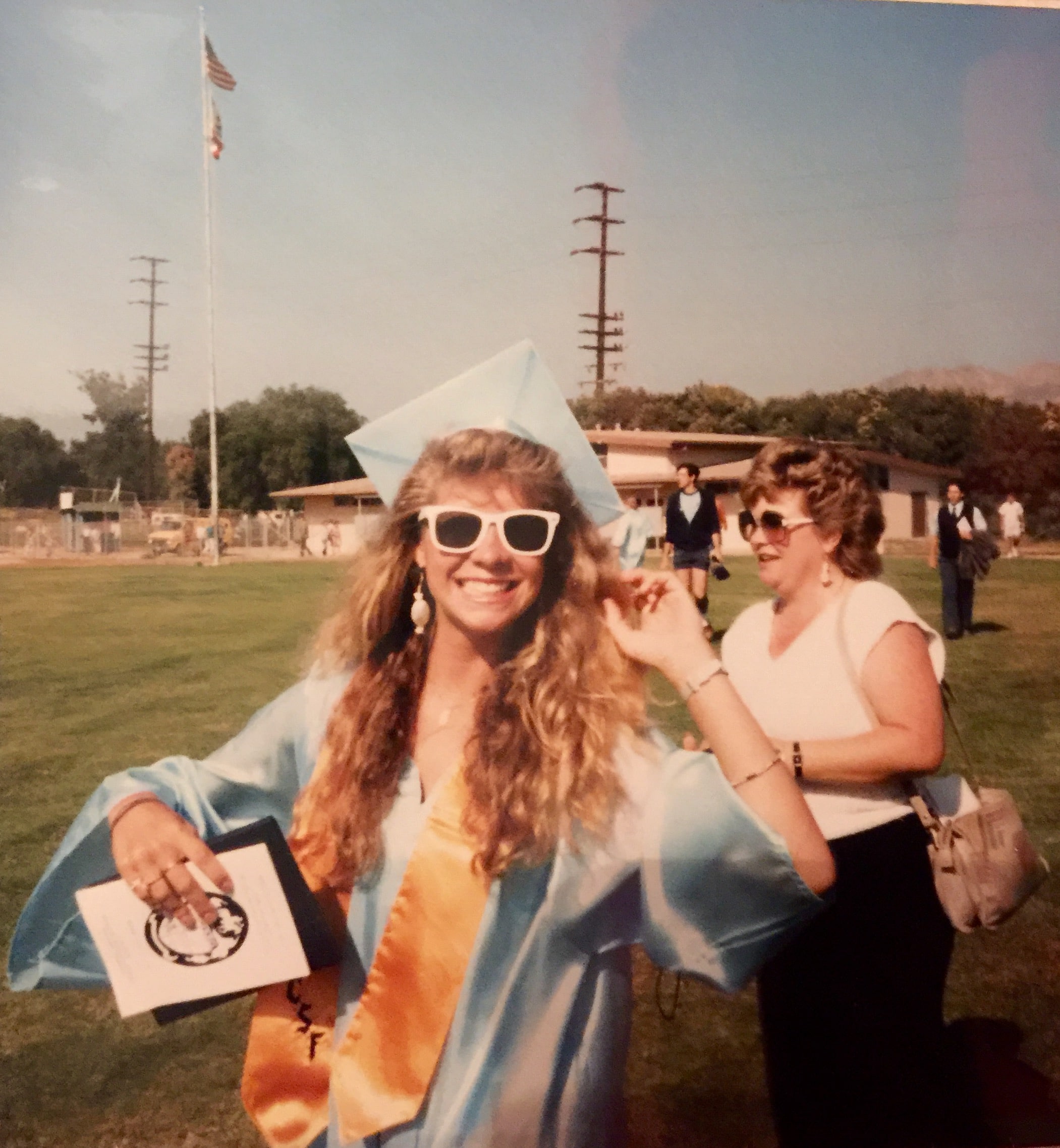
teenager graduating high school The developmental phase of 12-18 years old marks the progression from forming attachment to family to a new focus on peer relationships, experimentation, personal autonomy, and self-exploration and expression. Traditionally adolescence has been viewed as a turbulent time. However, now it is widely recognized that most teens weather this developmental phase without significant problems. The challenge for parents is to alter parenting strategies from stringent management to persuasion and negotiation, all without losing your sanity. These challenges typically result in a more complex pattern of conflict than before. But speaking as a mom of teens, their clever wit and boundless scheming can be really fun and keeps one on her toes. Their independence even allows parents some personal time. They are growing up quickly and will be launching soon enough. Soak it in!

Brain Development

  • During adolescence, teens demonstrate a two to three year growth spurt that rivals the one that occurred during infancy. Boys may grow as much as 9 inches taller and girls as much as 7 inches taller, reaching on average 98 percent of their adult height (Tanner, 1978). Not only are teens taller, but they also develop secondary sexual characteristics like breasts and hips for the girls and more musculature with wider shoulders for the boys.
  • Temporal lobe cortical gray matter peaks at 16.7 years in girls and 16.2 years in boys (Lenroot, 2006).
  • During adolescence, we see another surge in synaptic pruning. This process involves the retraction of the neuron from the synapse (the space between connected neurons). By late adolescence nearly half of synapses that were not used or damaged are eliminated, which is believed to make brain functioning more efficient (Chechik, 2004). With fewer unnecessary wiring tangles, brain circuitry is regulated and childhood structures are replaced with the complex fibers necessary for adulthood. The major aspects of experience-dependent brain remodeling, with its use it or lose it process, is now largely complete resulting in more refined cognitive and emotional capacities. By twenty years old, the cortex begins to decrease in area, which continues through adulthood (Brown, 2012).
  • The synaptic pruning spike of adolescence seems to reveal genetically or experientally vulnerable circuits that may be related to the onset of psychiatric disorders and addiction. Late adolescence and early adulthood is the developmental period when most chronic mental illnesses, like schizophrenia and mood and anxiety disorders, first emerge. It is also a time when we seek and are particularly sensitive to stress and novel experiences. It is hypothesized that stress (and drug use) may alter grey matter pruning in a pattern that contributes to the emergence of severe mental illness like schizophrenia. Furthermore, some teens will move from drug experimentation to the launch of life-long addiction patterns.
  • Impulsivity and high emotionality is particularly obvious during this time, partly due to the fact that the prefrontal region (the seat of problem solving and judgment) and the limbic system (responsible for emotional self regulation) are the last brain areas to mature.
  • The spikes of hormones characteristic of adolescence affect the raphe nucleus (the area responsible for arousal and mood), typically resetting sleep-wake cycles. As a result, we see teens wanting to live more like vampires…staying awake late into the night and sleeping in late into the morning.
  • Just as the brain is pruning, we also see continued myelination (the laying down of fatty sheaths that insulate the neuron and allow it to work with more coordination and speed). The corpus callosum (which connects the left and right hemispheres of the brain) is largely made up of this white matter.
  • Brain functioning from childhood and adolescence move us from critical windows ripe for open learning potential to skill specialization. With more sophisticated neurological integration, teens start to demonstrate higher order thinking ability characterized by better emotional stabilization, abstract thinking, and increased capacity for insight and planning. It is with these new abilities that they aggressively, and sometimes recklessly, seek to gain experience that will ultimately lead to the wisdom of adulthood. Genetic predisposition not only provides the blueprint for brain development, but it also affects what environmental stimulation that teens will seek. Brain hardware motivates behavior, and behavior motivates brain development. Psychologists call this bi-directional effect nature via nurture.

Cognitive & Motor Development

Here are some highlights of core psychological theories about development during the adolescent years:

  • Sigmund Freud characterized the genital stage of development during adolescence in which sexual intercourse becomes the dominant motive of behavior. He theorized that the emotional storminess of this time is due to the psychological struggle between the id (reawakened primitive instinct), the ego (the mediator), and the superego (societies rules and values).
  • Margaret Mead concluded that adolescence is not a universally volatile time. She believed that cultural and social factors contributed to this belief rather than biology.
  • Jean Piaget theorized that by 12 years old, kids are entering the stage of formal operations. This more complex method of thinking allows teens to hold ideas in mind to operate on and reason more systematically, making it possible to better imagine and plan into the future.
  • Erik Erikson characterized adolescence as a crisis of identity versus identity confusion. In other words, he believed adolescents begin to develop a personal identity by reconciling beliefs, abilities, and desires with adult norms.
  • Today’s adolescents endure a multitude of stressors. More specifically, they transition from elementary to middle school, then middle school to high school. This means more teachers, increasing academic expectations, and transitioning from being the oldest, most capable kids at school to newbies who must adapt to a larger social pool. And it’s not as if they socialize each other gently. Teens use humor, peer pressure, and often downright cruelty to coax each other to fit new social expectations. Teens are also expected to take on more responsibilities at home and school. For many, their parents also enter the age range where we see the highest divorce rates. Theorists suggest this is because parents go through transition pains of their own as their kids gain independence. The strain may lead to divorce, while others were intentionally waiting until coparenting responsibilities lifted. Teens undergoing family transitions along with increasing academic and social expectations have a lot to deal with indeed.

Language Development

  • With the development of metacognition (thinking about thinking), the ability to think about the past, present, and future emerges. Teen learning style becomes more versatile, with a consistent ability to make alterations to learning techniques in service of more efficiency and excellence.
  • While developing their new identity independent from parents, teens delight in developing their own unique subcultures characterized by iconic symbols, unique styles of dress and special interests (music), private jokes, and unique slang. Adults in the community often form strong options about teen “sex, love, and rock n roll” culture, some enjoying it with fun reflection of their own youth and others fearing the bold intensity of it all.
  • Teen virtual identity reflects these changes just as their nonvirtual identity does. Parents must balance supportive screen monitoring with a healthy respect for online privacy.

Social and Emotional Development

  • Developing teen girls are particularly sensitive to body image and maintaining the approval of others. As a result, adolescent girls often display a sizable drop in perceived self-worth and are at higher risk for clinical depression than boys. Other high risk mental health issues may develop during this time, including mood and anxiety disorders, eating disorders, and contagious, troubling behaviors like self harm.
  • During the teen years, interpersonal relationships have increasing influence on self-worth. For socially successful teens, this social feedback contributes to a global self-esteem. For less equipped or unlucky teens, this may mark a decline in their beliefs about competency and ability. The more warm, supportive, and clearly communicative their parental support system, the more likely the teen will demonstrate resilience. As teens push back, skilled parents begin to adopt a more democratic parenting style, allowing teens more of a voice in making decisions.
  • In clinical practice, I often see families struggle with the child-to-adolescent transition; especially if parents have been highly involved in their children’s overall decision making. As teens branch out in search of independent experiences, parents may naïvely perceive adolescent behaviors as intentional betrayal. When parents become too heavy handed with punishing consequence, the parent child alliance can be damaged with resentment, anger, and guilt. A strong alliance from childhood and real efforts to develop patience, faith, and a rich sense of humor are critical to successful coping. Social support for parent and teens is also important for positive outcome.
  • Adolescent peer groups often take on complex roles similar to those seen in families. This new sense of security from peer cliques in place of the traditional family and the “try-outs” and competition for these roles can become very complicated. Furthermore, as peer conflicts arise, parental suggestions become less and less helpful. For example, “just don’t hang out with them” or “go to the school administration” are rarely adequate solutions and often lead to more problems than they were intended to solve. Teen and parent frustration can lead to lack of obedience, blatant disregard, and overall strain on the parent-teen relationship.
  • By age 14, most adolescents have adopted a dramatic dependence on peers for support and approval. They are becoming increasingly sophisticated in their abilities to assess the complex psychological aspects of friendships, including dispositional similarities and dissimilarities as well as situational factors that may influence behavior (Damon & Hart, 1988). As a result, teen friendships become more intimate with an emphasis on loyalty and popularity. Competition for romantic partners also peak, leading to tearful drama and broken hearts. The first cut is the deepest becomes more evident with romance and breakups taking an increasing focus among teen groups.
  • Clinically, I see many middle- and high-schoolers struggle to find their best peer group. Feelings of loneliness, rejection, and envy often come into play as best friends split due to changing needs and interests. More complex conflicts and the resulting heightened emotion are often reflected in social media blogs and posts. Teens often promote their new “image” and peer attachments without regard to future consequences. In other words, teens may intentionally release racy photos and posts in order to look more sophisticated or sexually experienced. One moment of lapsed judgment can now be shared with thousands of friendly and rival peers, never to be recaptured or controlled.
  • Lawrence Kohlberg theorized that most teens assess “what is right” as living up to others’ expectations. For others, the more advanced moral development stage 4 consider “what is right” to be fulfilling one’s duties. It is precisely this sophistication that leads to the following burgeoning adolescent traits that conflict with parent rules and experienced wisdom:
    • Sexuality: “He’s hot!” “She’s hot!” Teens are now interested in attracting and being attracted to potential sexual partners. Lunchtime in middle school is a lesson on finding every excuse to hug or wrestle with all the awkward and giddy playfulness that entails.
    • Pseudostupidity: Teens often make things more complicated and dramatic than they need to be, overlooking the obvious while focusing on the extraneous. It seems like they’re being dense, but in reality they’re practicing developing cognitive skills. They tend to take absolute positions (always, never, everybody, nobody), which can spin into hopeless emotional states. Also, they’ll analyze every little bit of an interaction to the point of analysis paralysis. This can be very frustrating for parents, yet it is necessary for teens to overanalyze before they realize that complex analysis isn’t always necessary. They tend to overstep the mark before they settle into a more measured, moderate position. It takes a lot of practice and failure to achieve mastery. Besides, rehashing situations with great enthusiasm is an attachment exercise with similarly emotionally reactive friends. They typically have poor insight into their perceptual errors.
    • Idealism: Not only do teens often naively assume things will work out for the positive, but this perspective allows them to challenge entrenched ideas and think outside of the box. This trait is what motivates young people to courageously challenge and start social movements.
    • Imaginary audience: Teens can become very self-conscious, partly because they are actually convinced EVERYBODY is looking at them. This is a healthy factor that results from attachment transitioning from parents to peers. The truth is, there IS some intense social scrutiny going on during this phase of development. Forging a new self-identity means exploring different looks, behaviors, and perspectives. Sophisticated parents know not to sweat the small stuff. Most troubling teen behaviors are short-lived.
    • Omnipotence and invincibility: Without a fully developed executive control center (prefrontal brain region), teens are often unable to anticipate consequence. As a result, they are often impulsive and take risks they probably shouldn’t. It’s not unusual for teens to choose aggressive, passive, or passive-aggressive problem solving means while they master assertiveness.
    • Apparent hypocrisy: Another manifestation of teen egocentrism is their tendency to accuse others of misdeeds while blatantly dismissing their own. Maddening to parents, this means teens often criticize parents for selfishness while making selfish demands. Occasional correction with emotional neutrality or humor is critical to keep the parent-child alliance in balance.
  • Despite their intentional individuation efforts from their family of origin, teens tend to share their parents values and opinions more than you might think. And just as they push us away, they need us more than ever. It’s a mistake for parents to threaten abandonment in response to their kids’ normal efforts to become independent. The goal is to love them openly despite their protests. In general, teens DO NOT do well in families where the parents aren’t there consistently or have given up. They DO do well with parents who gradually allow them opportunity to grow and experiment instead of monitoring, intruding, or policing them too strictly.
  • Despite many teens dropping out of sports and extracurricular activities at this age, research demonstrates that ongoing participation contributes to positive outcomes in academic achievement, psychological health, and later involvement in political and social causes (Schafer, 579).
  • Risk issues to monitor include sleep deprivation due to vamping and caffeine or amphetamine abuse, unhealthy nutrition or inadequate or excessive exercise that may be related to body image, and unreasonable academic and activity scheduling.

I am one of those adults that thinks teens are hilarious, which is why it’s a speciality of my clinical psychology practice. Of course, having two at home now there are certainly times when their disdain for all that is rad about me strains my resilience. But overall, teens have the key to my heart. I admire their brash courage and quick-to-trigger vulnerabilities. As they strive for an independent identity and experiment with their power, we parents need clarity and a ton of loving support. GetKidsInternetSafe is here to provide it. If you have any specific challenges or questions about your teens, please make a comment and I’ll be sure to address them.

I’m the mom psychologist who will help you GetYourKidsInternetSafe.

Onward to More Awesome Parenting,

Tracy S. Bennett, Ph.D.
Mom, Clinical Psychologist, CSUCI Adjunct Faculty
GetKidsInternetSafe.com

Works Cited

Brown, Timothy T., and Terry L. Jernigan. “Brain Development During the Preschool Years.” Neuropsychology Review 22.4 (2012): 313-33. Web.

Chechik, Gal, Isaac Meilijson, and Eytan Ruppin. “Neuronal Regulation: A Mechanism for Synaptic Pruning During Brain Maturation.” Neural Computation 11.8 (1999): 2061-080. Web.Christakis, D. A., F. J. Zimmerman, D. L. Digiuseppe, and C. A. Mccarty. “Early Television Exposure and Subsequent Attentional Problems in Children.” Pediatrics 113.4 (2004): 708-13. Web.

Cole, Michael, and Sheila Cole. The Development of Children. New York, NY: Scientific American, 1993. Print.

Erikson, Erik H. Childhood and Society. New York: Norton, 1964. Print.

Hesketh, Kylie D., Trina Hinkley, and Karen J. Campbell. “Children′s Physical Activity and Screen Time: Qualitative Comparison of Views of Parents of Infants and Preschool Children.” International Journal of Behavioral Nutrition and Physical Activity 9.1 (2012): 152. Web.

Kohlberg, Lawrence. The Psychology of Moral Development: The Nature and Validity of Moral Stages. San Francisco: Harper & Row, 1984. Print.

Lenroot, Rhoshel K., and Jay N. Giedd. “Brain Development in Children and Adolescents: Insights from Anatomical Magnetic Resonance Imaging.” Neuroscience & Biobehavioral Reviews 30.6 (2006): 718-29. Web.

Maccoby, E. E. “Middle Childhood in the Context of Family.” Development during Middle Childhood: The Years from Six to Twelve. Washington D.C.: National Academy, 1984. Print.
Piaget, Jean. The Child’s Conception of Number. London: Routledge & Kegan Paul, 1952. Print.

Robinson, T. N. “Reducing Childrens Television Viewing to Prevent Obesity: A Randomized Controlled.” JAMA 282 (1999): 1561-567. Web.

Schmidt, Marie Evans, Jess Haines, Ashley O’brien, Julia Mcdonald, Sarah Price, Bettylou Sherry, and Elsie M. Taveras. “Systematic Review of Effective Strategies for Reducing Screen Time Among Young Children.” Obesity (2012). Web.

Sigman, A. “Time for a View on Screen Time.” Archives of Disease in Childhood 97.11 (2012): 935-42. Web.

Swing, E. L., D. A. Gentile, C. A. Anderson, and D. A. Walsh. “Television and Video Game Exposure and the Development of Attention Problems.” Pediatrics 126.2 (2010): 214-21. Web.

Child Identity Theft is on the Rise. Protect Your Family Against Cybercrime

Cybercrime concept with flag - United States

Kids are the number one target for identity theft due to the chances that the crime won’t be detected until the child reaches adulthood and seeks their first loan. This cybercrime involves the theft and fraudulent use of a child’s personal information (like name, social security number, address, and date of birth) to open lines of credit, take out loans, or access financial accounts. This scary issue is the drive behind developing our Cybersecurity and Red Flags Supplement, a comprehensive tool to detect online scams before the worst can happen. Find out more about cybercrime and what you can do to prevent it with this GKIS article.

Identity Theft

Identity theft can be used for many types of crimes, including:

  • taking out a loan
  • buying lines of credit
  • accessing the victim’s financial accounts
  • securing a driver’s license or employment or
  • seeking medical care.

Personal information can be stolen from virtual sources, like screen devices, websites, and email accounts, or in real life (IRL) from skimming information from your ATM card with a special device or stealing it from your home, wallet, trash, or mail.

Who is vulnerable?

Unsuspecting victims can be tricked into revealing private information by phishing scammers. These cybercriminals impersonate legitimate companies asking for passwords and credit information necessary to process a fake change of address form, application for credit, or to avoid an IRS tax lien or fake criminal charges.

Vulnerable populations include young people, the elderly, and immigrants or workers here on a visa.

Why is it important to check for identity theft?

Once discovered, it may take several costly months or even years to get credit and criminal records cleaned up and sorted out. Your child’s financial options may be blocked or delayed when deadlines, like college and employment, are most critical.

Can you imagine dealing with that in your overtasked, underfunded life? There are companies that offer cyber protective services and others that help you clean up the catastrophic results of cybercrime.

The Child Identity Theft Bill

In 2015, I received a phone call from Assemblymember Jacqui Irwin’s office asking for a statement about a Child Identity Theft bill (AB1553) that she is sponsoring. Asm. Irwin served as Chair of the Assembly Select Committee on Cybersecurity in Sacramento.

This bill served to “amend the Civil Code to require credit agencies to allow parents or guardians to create a new credit report for a minor child for the purpose of placing a security freeze on the child’s credit. Without a credit report to freeze, protection is difficult.” She was asking for my statement and support and wondering if I knew any child victims of identity theft.

After sending out an inquiry on my GetKidsInternetSafe Facebook page, it didn’t take long before I’d uncovered three victims who were willing to share their stories. Two involved child identity theft for financial cybercrime and the other involved identity theft on social media for cyberbullying. I’m sharing the financial theft stories to demonstrate how easy it is to become a victim and suggest steps you can take to protect your kids starting today.

Megan’s Story

My first respondent was a dad whose stepdaughter had recently graduated from nursing school. When the family went to their credit union in preparation for purchasing a car, they discovered that the stepdaughter’s credit report was pages and pages long with a sub-par (mid 5’s) credit rating.

It turned out that a criminal out of Phoenix had fraudulently opened several lines of credit with her social security number. From Sprint to multiple department stores, the crook had charged a debt of over $60,000. The family filed a police report to start the long process of calling creditors and clearing her name.

Although they had the criminal’s address, they elected not to press formal charges. When I spoke to the stepfather, he did not know whether the criminal was ever charged. He also said they never discovered how or when the fraud started, but it seemed to be a single party that may have gotten her personal information when she applied for a loan for nursing school.

The fraud seemed to stop once the credit agencies were notified, and an alert was placed on her account. Ultimately, it took the family over twenty hours of filing time plus another fifteen hours from a private credit fraud service to get her credit repaired. A year after the discovery, they had finally gotten her credit score back to the 700s with letters from the creditors with apologies. Nightmare!

Jose’s Story

The second identity fraud victim shared a truly tragic tale that has spanned over thirty years. Jose, who is 40 years old now, was 13 years old when he was first contacted by the IRS and told that he owed over $10,000 in back taxes. Despite all efforts to get clear of fraud, he still has issues like denied credit (including a first-time home buyer loan because it looked like he already owned properties) to two court-ordered paternity tests for mistaken-identity child support cases.

Jose also shared a story about being pulled over on an arrest warrant while he was on his way to becoming a priest. The officer said if it turned out he was lying about the fraud, he would arrest him and make him apologize directly to his lieutenant. He responded to the police officer that if HE was correct, the officer would have to go to church and apologize directly to his bishop. He laughed when he said the officer lived up to his promise.

Despite his resilient attitude, Jose has had to change phone numbers and bank accounts, can’t pay anything with checks, and has elected to put all property in his wife’s name. Considering the decades of victimization, he has had to endure, he goes to great lengths to protect his children’s personal information.

What can a parent do to avoid child identity theft?

    • Protect personal information at home with tools such as a locking mailbox, an in-home safe for storage, and a shredder for the disposal of personal documents.
    • Install cybersecurity safeguards on-screen media like passcodes and screensavers, firewalls, antivirus and encryption software, and secure passwords.
    • Educate your children about maintaining privacy and using discretion online. That means cautioning them about disclosing their name, address, school, date of birth, or any other personally identifying information in images (t-shirts with their school logo) or texting or posting. Geotagging on photos and social media should be turned off to hide location.
    • Setup up filtering and monitoring software and parent protection options like those from our Screen Safety Toolkit to block inappropriate contacts on the Internet and monitor your children’s activities, particularly in chat rooms, social media, texting, and instant messaging.
    • Teach your children about cybersecurity issues and skills to protect against hacking, phishing, and malware. Good habits include consistently downloading updates for security patches, using strong passwords and changing them often, and not clicking on embedded links or opening attachments from unknown sources.

If you are traveling…

    • Don’t post pictures that can reveal travel data, like boarding passes, passports, or travel or hotel vouchers. Not only can criminals benefit from knowing the details of your trip, but they may also read personal information from barcodes to steal your identity. The best option, wait until you’re home to post travel photos.
    • Avoid public WiFi. Hackers can access your private information using a man-in-the-middle attack (MITM). This means the criminal intercepts the link between your device and the server. This breach is like eavesdropping and can result in your private information being accessed and even altered. Malware can even be delivered to your device. A MITM attacker may set up a fake access point named similarly to the public network connection (called an “evil twin”) or engage in “packet sniffing” or “sidejacking,” which means using a tool to capture network traffic at the Ethernet frame level. Simple shoulder surfing at coffee shops or on airplanes can also result in privacy breaches. If you have to use public WiFi, practice situational awareness, and verify the WiFi name with staff at the public site. Avoid online tasks that involve private information like online banking or using private transaction information like date of birth, credit card numbers, tax IDs, or social security numbers. Always log out when using a hotspot to avoid the hacker continuing the session. Consider setting up a secure virtual private network (VPN) to encrypt inbound and outbound data. However, VPNs can decrease your bandwidth. Public WiFi may not be encrypted, but most major websites that use a password, like Amazon and PayPal, have encryption. If the URL has an “S” (for “secure”) at the end, as in HTTPS, then there’s some level of encryption.
    • Avoid using public computers for the same reasons it’s risky to use public WiFi. The software could be silently running in the background, thus capturing data from your online activities.
    • If your child is traveling with you, turn off location settings so criminals can’t intercept your location data and use it for targeted attacks. On Snapchat, this is called going “ghost mode.” Of course, if your child is on an independent walkabout, you may want to leave location services on so you can track them for safety.

Freeze your child’s credit.

Contact one of the three major credit card companies to see what kind of protection options they offer, like a credit freeze, which has been demonstrated to be one of the most effective strategies for preventing child identity theft. Each state has laws on how a credit freeze can be done. Remember, once a freeze has been implemented you must order a “thaw” on the account before applying for credit.

    • Equifax: This website explains what is needed to mail in the request. According to the person I spoke to there is no fee for minors.
    • Experian: This link explains what is needed to mail in the request. After 3 tries I gave up trying to upload the docs online. I couldn’t reach anybody, so I sent in a check for $10 plus 7.25% tax (Ventura County).
    • Transunion: I had better luck with Transunion when I called the number 888-909-8872. A polite and helpful representative informed me that neither of my minor children had credit files (a good start). He then offered the procedure necessary to get a free security freeze on my child’s account by mailing a letter with the following information:
      • Send in 2 pages: 1st page: Cover letter listing the minor info: full name, address, last four of social and file # (rep will give you) plus reason for security freeze (“Proactively protecting my child against fraud) plus requester info (parent): Full name, address, relationship. 2nd page: Official request in letter style format mentioning enclosure copy of minor’s social security card and birth certificate.

GetKidsInternetSafe was created to inform parents about proven preventative strategies before tragedy strikes. To get a head start today, check out my GKIS Connected Family Online Course.

I’m the mom psychologist who will help you GetYourKidsInternetSafe.

Onward to More Awesome Parenting,

Tracy S. Bennett, Ph.D.
Mom, Clinical Psychologist, CSUCI Adjunct Faculty
GetKidsInternetSafe.com

Body Shame and the Average American Male


BLOG79manangel

When did men become as fussy about their looks as women? Since marketers have scoped in on us as a buying audience, that’s when. The multi-billion dollar health and fitness industry found our vulnerable spots, and they’ve targeted us expertly. Men buy in for costly gym memberships and nutrition formulas, we get our eyebrows “done,” and we even pay for cosmetic surgery. Don’t get me started about specially conditioned beards and man buns. Marketers have successfully sold us thru body shame.

As much as the focus on body image marketing centers on teen girls, boys are increasingly effected. Dr. Bennett’s How to Spot Marketing: Red Flags Supplement is designed for parents of any child to recognize the signs of dangerous marketing. In media we often see images that insinuate how men should look and what products we need to buy in order to get the job, the fortune, or the girl. Every man wants to be a stallion. When other men threaten our image, we want to improve. How is the 2016 man affected by shame?

BLOG79_6pack

Six-Packs Everywhere

We are in the era of the six-pack. Abdominal bulging is everywhere; in supplement commercials, movies, toys, and advertisements. Consider the multi million-dollar movie, Twilight. Millions flocked to theaters to gawk at Taylor Lautner’s stellar abs (#TeamJacob). Let’s face it, it wasn’t his intellect or dazzling wolf battle strategies that made the ladies swoon. And I’m embarrassed to say that when I saw the movie, I felt extremely self-conscious about my baby belly.

I’m not alone. Research has demonstrated that muscular male figures in the media cause body dissatisfaction in men (Leit, 2002). The hundreds of images we see on our screens everyday of six-packed actors and models make us feel inferior. Despite the realization that those types of bodies are only attainable with digital enhancement, dietary supplements, or extraordinary fitness programs, we aspire to it and feel disheartened when we fail to measure up.

BLOG79weightlifter

“Do You Even Lift Bro?”

Sorry to break it to you ladies, men are not becoming sexier to impress you. It is often about, “Do you even lift Bro?” We are constantly competing with each other. No guy has ever said, “I am going to do an extra squat, because the ladies are digging tight butts.” It is all about the pressure to lift more than the guy next to you. And frankly, it doesn’t hurt that the ladies are attracted to the dominant male in the room. The best compliment is a beautiful woman purring about how strong we look.

BLOG79doping

You Too Can Look Like This

Unfortunately, our quest for strength and fitness does not always lead us to healthy choices. Many men use expensive and untested fitness supplements to speed up the muscle-building process. Some powder proteins already have enough ingredients that are bad for your body, and some men are using it in combination with steroids. When I go to the gym, I often see these steroid using pretty boys. I myself have used protein and been tempted to use steroids to gain faster results. Luckily I never have and never will, but the pressure is always there.

Increasing numbers of men are so concerned about their appearance that they develop a psychological condition called muscle dysmorphia (Mosley, 2009). This is when a man sees himself thinner and weaker than he actually is. He begins to hit the gym and use substances to gain more mass, but he will never get there because he sees a delusional result in the mirror. He focuses so much on attaining his ideal image that he begins to put everything aside to hit the gym. This disorder is fairly new and there are no clear estimates of how many men are affected (Choi, Pope, & Olivardia, 2002).

BLOG79bodybullyingMy Classmates Changed Me

Body shaming can start young but peaks during the vulnerable developmental period of adolescence. According to researchers Aslund, Starrin, Leppert, & Nilsson (2009), both males and females engage in body shaming, but they tend to do it differently. Males tend to be more directly aggressive, while females shame through passive aggressive means like gossip.

When I was in high school, I remember feeling shame because of the way I dressed and my physical appearance. I was smurf’s size and wore clothes out of fashion. Students would often attack me with bad remarks. In my senior year, I changed my appearance and grew a little more to become a larger smurf. People started to notice me and praise my better looks, and I even started to date girls. This made me care more about my appearance, because I did not want to be shamed again. My point is that shame can really change a man. Even though men want to appear tough, we are sensitive teddy bears on the inside.

How can we protect our sons from body shame?


  • Teach them to understand that we all have different body types. Obtaining a body that looks exactly like somebody else’s is impossible.

  • It is a good thing to want to be the best, but make sure that you are doing it for yourself and not for others.

  • Eating healthy and getting plenty of restorative sleep will earn the fastest and healthiest fitness results.

  • Before considering supplements, research their ingredients. Nothing beats a healthy diet and hard work.

  • Ensure you have a realistic understanding of what a “healthy” body actually looks like. That means a keen awareness that most images have been digitally enhanced.

  • Be vigilant not to body shame others with critical or hurtful comments.

  • Protect kids from frequent exposure to inappropriate images designed to sell products.

  • Set a healthy example of what is healthy and cool.

Remember, “SHAME IS LAME.” Because you are an extraordinary parent, you won’t want to miss, The Secrets to Happiness and the Creation of GetKidsInternetSafe, It’s an awesome personal blog written by Dr. Tracy Bennet. She is an extraordinary person willing to help those in need.

IMG_2923Congratulations and thank you to Cristian Garcia, CSUCI intern, for authoring this awesome GKIS article!

I’m the mom psychologist who will help you GetKidsInternetSafe.

Onward to More Awesome Parenting,

Tracy S. Bennett, Ph.D.
Mom, Clinical Psychologist, CSUCI Adjunct Faculty
GetKidsInternetSafe.com

Photo Credit

Angel by Samuele Cavadini, CC BY-NC-ND 2.0

Hulk by Claudio Montes, CC BY-NC 2.0

Ziggy Chima by Brett Jordan, CC BY 2.0

Self portrait- Got juice? By Mattys Flicks, CC BY 2.0

High school lockers by Daniel Scally, CC BY-NC-ND 2.0

References

Aslund, C. , Starrin, B. , Leppert, J. , & Nilsson, K. (2009). Social status and shaming experiences related to adolescent overt aggression at school. Aggressive Behavior, 35(1), 1-13.

Mosley, P. (2009). Bigorexia: Bodybuilding and muscle dysmorphia. European Eating Disorders Review : The Journal of the Eating Disorders Association, 17(3), 191-198.

Leit, R. , Gray, J. , & Pope, H. (2002). The media’s representation of the ideal male body: A cause for muscle dysmorphia?. International Journal of Eating Disorders, 31(3), 334-338.

Choi, P. , Pope, Jr, H. , & Olivardia, R. (2002). Muscle dysmorphia: A new syndrome in weightlifters. British Journal of Sports Medicine, 36(5), 375-377.