Need peaceful screen time negotiations?

Get your FREE GKIS Connected Family Screen Agreement

kids

GKIS Now More Than EVER!

In a time of online learning your child’s safety is vital, and GKIS is needed more than ever. Enjoy a highlight of Dr. B’s News Reels! With over 25 years in private practice, Dr. Bennett is seeing more families in crisis due to internet safety problems. To prevent digital injury, she developed GetKidsInternetSafe.com! When it’s your kids ON-the-LINE GetKidsInternetSafe.com

Link to Screen Safety Essentials Course 👇

https://getkidsinternetsafe.com/essentials-course/

Link to Website 👇

https://getkidsinternetsafe.com

Link to Book 👇

https://www.amazon.com/gp/product/099…

Follow Our Social Media:

Instagram: https://www.instagram.com/drtracybenn…

Facebook: https://www.facebook.com/GetKidsInter…

Twitter: https://twitter.com/drtracybennett?la…

Linkedin: https://www.linkedin.com/in/drtracybe…

The GKIS Sensible Parent’s Guide to Omegle

During the age of lockdowns and quarantines, many children have discovered a new way of finding someone new to talk to. A website known as Omegle, and other websites like it, have filled this social gap in many people’s lives. Omegle is considered a ‘roulette’ style website, where users may set interests and get matched with people with the same interest. This can be only a text chat, or it can be a video chat. If you find screen safety issues overwhelming in your family, you’ll benefit from Dr. Bennett’s weekly parenting and coaching videos on our Screen Safety Essentials Course. The most important thing that parents can do is be aware of the potential risks and promote an environment of open communication with your children. In this program, Dr. B offers a comprehensive family program for fostering this kind of communication in her Screen Safety Essentials Course. With this course, your family will learn tons of information about how to create a safer screen home environment while also connecting and having fun as a family. Armed with the right tools, you and your family can learn how to better thrive in today’s digital era. In this GKIS Sensible Guide, we will explain what you should know before letting your child chat away with complete strangers.

How long has Omegle been around, and how popular is it?

Omegle was created in March 2009. Omegle has recently seen over 54 million daily visits.[2] According to Google, searches for the site began to increase during March 2020, with the number of searches quadrupling the week before Christmas.[1] This surge in users isn’t much of a surprise. People were stuck inside their homes for almost a year due to the COVID-19 pandemic. Much of that time was spent on the computer, so why wouldn’t a website that allows someone to meet a new person be appealing? Teenagers have also created a ritual of hanging out together in person and going on Omegle as a group.

Omegle does state that to use the website, one must be over the age of 13. This is done with a simple pop-up box that can be clicked away. No date verification is required, so this is easy for children to bypass. As explained in the book Screen Time in the Mean Time, parents should use their best judgment to determine whether or not their child is ready to use a website like this. This GKIS Sensible Guide aims to help inform the parents so they are able to make the best decision possible.

Features of Omegle

Text-Chat

  • Individuals are prompted to enter optional interests to help match them. There are two options for the text chat: Text or Spy Mode
    • Text: Users are randomly matched in pairs, either based on their interests or completely at random if no interests were entered. Users are completely anonymous so there is no way to get someone’s information unless they offer it. Even if they offer it, they can (and likely will) lie. Either user may end the chat at any time.
    • Spy: Three users are matched together, two regular chatters and a spy. The spy prompts the other two with a previously entered question. The spy is unable to contribute to the conversation at all, they may only watch. The chatters focus on answering the question presented. Any user can end the conversation at any time.
  • There is no option for a ‘filtered’ text option. The website warns against profanity, sexual harassment, or violent threats, but there is no way to filter those statements out. If the user gets matched with someone who does any of these, the website simply says to ‘end the chat’.
  • The website itself warns that predators have been known to use text/video chat to groom or lure victims. It claims that it cannot control human behavior, and only the person committing these actions should be held accountable.

Video-Chat

  • Similar to text chat, users are randomly matched based on interests if possible. This can be in pairs or in groups. All user’s webcams will turn on while searching for a match.
  • This section has an option to report nudity, violent threats, and sexual content in addition to numerous other things one might encounter during chatting. This section does not allow any of these.
  • This section is aimed at users under the age of 18.
  • These filters to protect users don’t always work. Even the website itself warns that some things of inappropriate nature might be encountered.

“Unmonitored” Video-Chat

  • This is a carbon copy of the video-chat section with one crucial difference. No filter is used to prevent users from showing nudity or sexual imagery on their webcam chat.
  • This section is aimed at users who want a more ‘mature’ chatting experience, as long as they are over the age of 18.

Benefits of Omegle

  • When used correctly, and age-appropriately, it allows for individuals to talk with someone who has similar interests.
  • It can help an individual feel less alone and more connected in a quarantined world.

Risks of Omegle

  • The filters in place for the monitored section have inconsistent results. Some users still report encountering things that they shouldn’t several times in a row.
  • Children are more susceptible to believing an individual who may be lying. This may result in them giving information they shouldn’t to a complete stranger.
  • This website has the potential to expose children to sexual imagery, violent threats, phishing scams, and numerous other dangers.
  • None of the age checks are secure. Your child can easily access a section of the website that they shouldn’t with one simple click, no verification needed. This poses both a giant risk for the child and a giant temptation for them.

Throughout its lifetime Omegle has proven to be a constant source of controversy. This led GKIS to consider Omegle to be a red-light app, meaning that it is not recommended for anyone under the age of 18. The possible exposure to explicit material is too hard to control, and the fact that the website itself warns that predators do use this website to target victims were two of many factors that led us to this decision. If you think that your child may be using Omegle or other social media apps, consider our Social Media Readiness Course to help them stay safe.

Thanks to CSUCI intern, Dakota Byrne for researching Omegle and co-authoring this article.

I’m the mom psychologist who will help you GetKidsInternetSafe.

Onward to More Awesome Parenting,

Tracy S. Bennett, Ph.D.
Mom, Clinical Psychologist, CSUCI Adjunct Faculty
GetKidsInternetSafe.com

Works Cited

[1] https://trends.google.com/trends/explore?date=today%205-y&geo=US&q=omegle

[2]https://www.similarweb.com/website/omegle.com/

Photo Credits

  1. Photo by John Schnobrich (https://unsplash.com/photos/2FPjlAyMQTA)
  2. Photo by Annie Spratt (https://unsplash.com/photos/4A1pj4_vClA)

Trending YouTube Communities That Kids (and we at GKIS) Love

Fun trends on the YouTube Explore page attract audience attention and vet the best online content and influencers. To build child resilience and teach problem-solving and good judgment, we at GKIS encourage parents to carve out the time to share online interests and co-view YouTube channels with their kids. To help you get started (or continue) having fun online as a family, we’ve found some fun trends and creators that may be a great source of inspiration for developing new interests and hobbies. Having fun together and building digital fluency and an awareness of what’s hot and what’s not will help you build credibility with your kids. Even better, they will start to teach you about what’s out there, and, ultimately, work with you to make difficult online decisions. Our goal isn’t to shut your kids off from online discovery. Instead, we believe in family togetherness, online learning and discovery, and building child resiliency and safety – and having fun while you’re at it!

**CAUTION: GKIS has chosen these creators because of their family-friendly content and the variety of communities that they represent. Although we are excited to share these amazing creators, please keep in mind that some of them are more suitable for older teenagers due to their language and the nature of their content. Further, many of these creators have hours of videos that we did not sample. Please watch and decide for yourself the appropriateness of each channel for your unique child.

Mukbangs

A kind of video trend that has been popular in recent years has been Mukbang videos. Mukbangs, a trend originally popularized in South Korea, are videos where people eat large quantities of food while interacting with their audience [1].

These kinds of videos are popular with young people because they can be enjoyed as entertainment, to satisfy cravings, or to enjoy the creator’s style, humor, and personality.

We recommend you check out YouTuber Zach Choi.  Zach, with almost 8 million subscribers, takes his viewers through his process of preparing for his mukbangs, consuming the food, and collaborates with other popular YouTube creators, both in and out of the Mukbang community.

In his videos, Zach silently eats large amounts of food with occasional captions that describe the foods or promotes the creators he features on his channel. Zach will often do a combination of a mukbang and an ASMR video. ASMR, or autonomous sensory meridian response, videos are videos that utilize audio and visuals in order to produce a tingling sensation that moves down the back and upper spine [2]. There are only certain people that get this “ASMR feeling”, and for them, videos like these can be very enjoyable to watch. Zach doesn’t seem to use inappropriate language, as he does not speak in his videos, or do sponsored content.

Technology Reviews

In the world of technology, YouTuber Marques Brownlee has made a name for himself with his thorough and unbiased technology reviews.

Marques is a creator who often trends on the YouTube Explore page and has over 10 million subscribers. For people interested in technology, watching Marques can be a good way to learn about the various features that go into different devices or simply get a professional opinion on what electronics to consider buying.

While Marques reviews technology, he does not promote buying the most recent devices or show bias towards certain brands. He simply reviews the newest technology on the market and gives his opinion on its features and performance.

For teens going into high school or college who need new devices for their academics, interested in creating content, or interested in studying technology, this is a great creator to watch. Marques very rarely does sponsored content and does not seem to use inappropriate language.

Food

In the food community, the brand Bon Appetit has created a popular platform on YouTube with a variety of series, all based on cooking.

Chefs from Bon Appetit post videos from their company test kitchen showing how to cook recipes from many different cuisines. What makes Bon Appetit different from your average Food Network cooking video are the chefs. While Bon Appetit’s crew of chefs provide detailed instructions on their recipes, they do so in a fun, humorous manner, letting their personalities naturally shine through and interacting with their fellow chefs in the test kitchen. This makes for some entertaining videos that have gained the attention of many young followers.

With fun and detailed videos, Bon Appetit has inspired this new generation to think twice about dining out and instead try something new in the kitchen. Two very popular series to check out are Gourmet Makes by chef Claire Saffitz and It’s Alive by chef Brad Leone. Bon Appetit does not seem to do sponsored content. This channel is recommended for an older audience, as some videos may contain explicit language.

Music

For people interested in music, the National Public Radio created a popular YouTube series called Tiny Desk Concert, dedicated to live performances from some of the most talented artists.

This YouTube series, which is on the NPR Music YouTube channel, posts new performances every month, with artists from varying genres and languages. These concerts differ from live performances, as they are played live with no prerecorded tracks or lip-syncing. Artists sing their songs live with either a band or by themselves with their preferred instrument in a small space that resembles an office desk, hence the name “Tiny Desk”, with a small studio audience.

This channel is great for young fans and music enthusiasts because it allows you to discover new artists every month, plus you can see your favorite artists perform their songs in new styles and see the different instruments and vocals it takes to best perform their music. NPR is careful with putting disclaimers in their videos for the artists that use explicit language, either in their songs or when speaking. This series does not do sponsorships, as they rely on donations from the public to keep the series going.

Charity

If you want to watch videos while contributing to a charitable cause, check out the YouTube channel Grandpa Kitchen.

This channel, with over 7 million subscribers, is a cooking channel created by a family in India to raise money for the local orphanage that they work for. The videos posted by this channel originally starred an older Indian gentleman lovingly referred to as “Grandpa” by subscribers. Grandpa would greet his subscribers and explain the meal he would be preparing for the orphans that day.

Grandpa cooked large quantities of food for all the orphans at his organization with the help of his grandsons. After Grandpa passed away, his grandsons took over the channel in order to continue the good work Grandpa started. Many families and fans from around the world have shared their support after Grandpa’s passing, and you can truly see how fans young and old were able to bond over watching Grandpa every week.

Although Grandpa is no longer with us, his grandsons continue to create videos with a similar format to Grandpa’s videos and continue to use the money earned from the channel to support the orphans with food, supplies, etc. These videos are in English, and the creators do not do sponsored content or use inappropriate language.

Discover Together

As we share these creators and communities, we encourage you and your children to discover new favorite communities and content to inspire you to create and discover beyond the screen. There are family-friendly creators in every community waiting to be discovered, all it takes is some time and patience.

Thanks to Alexandra Rosas-Ruiz for her research and help with writing this article. If you have questions about what your child is interested in on YouTube, try coaching sessions with Dr. B. These sessions, also offered online, can answer any specific questions on online safety and parenting in general. Sign up and receive special bonus products with your purchase.

I’m the mom psychologist who will help you GetKidsInternetSafe.

Onward to More Awesome Parenting,

Tracy S. Bennett, Ph.D.
Mom, Clinical Psychologist, CSUCI Adjunct Faculty
GetKidsInternetSafe

Works Cited

[1] (2020) Mukbang https://en.wikipedia.org/wiki/Mukbang

[2] (2020) ASMR https://en.wikipedia.org/wiki/ASMR


Photo Credits:

By Andrea Piacquadio from Pexels

By Quang Nguyen Vinh from Pexels

By Free Creative Stuff from Pexels

By Lee from Canva

By Pedro Sandrini from Pexels

By Ishay Botbol from Pexels

The GKIS Sensible Parent’s Guide to Twitch

Kids love Twitch! Twitch is a streaming service where expert players play video games while their subscribers watch. It’s a mystery to most adults how this could be entertaining. But with 15 million viewers per day and a $970 million sell price, it has clearly plugged into what kids want. In this GKIS Sensible Guide, we cover what you’ll want to know before letting your kids opt-in.

How long has Twitch been around, and how popular is it?

Twitch was released in mid-2011 as a branch of another streaming service, Justin.tv. Twitch was intended to be the more video game focused platform. Soon Twitch’s popularity surpassed Justin.tv, and it was bought by Amazon for a staggering $970 million.[1] Today, Twitch has around 15 million viewers per day and hosts around 2.2 million streamers.

Getting Started on Twitch

In order to create an account on Twitch, you must be 13 years of age or older. As Dr. Bennett describes in her book, Screen Time in the Mean Time, this age isn’t based on child psychology, but rather the COPPA law which protects kids from having their personal information solicited for marketing reasons. Parents are the best authority to determine the best age of adoption. To sign up, you must also provide an e-mail address, a username, and a password. Once you’ve created your account, you may begin personalizing your profile. It should be noted that there is no way to make your Twitch profile private, so anyone can access it at any time.

Once your profile has been set up, you can decide which of the two roles you want to take in Twitch:

  • Streamer: You stream the game you are playing so others may join and watch you play.
  • Viewer: You sit back and watch someone play a game. You can choose to interact with the streamer or other viewers via the text chat. It should be noted that you can view streams without having a Twitch account, but when you do this you may not participate in the text chat. You may also donate money to streamers.

Benefits of Twitch

As a streamer:

  • It’s a perfect platform to showcase one’s creativity.
  • You can interact with others who share the same interests.
  • Being a streamer can become extremely lucrative. For many it becomes a full-time job.
  • Many times, streamers will land sponsorships from companies and sent free items to utilize in their streams.

As a viewer:

  • Interacting with streamers and other viewers who have similar interests
  • Learning new strategies and tips from streamers who are skilled at certain games
  • Winning in streamer-hosted giveaways

What are the risks of use?

As a streamer:

  • Doxing: One of the main risks that plague Twitch streamers. This is when individuals find out personal information about a streamer and disseminate it online. Information such as real name, phone number, address, and more may be revealed and used maliciously.
  • Swatting: This is when a viewer finds out a streamer’s home address and calls the police with a false emergency. If it plays out the way the person who initiated the swatting intends, the police will raid the streamer’s house, visible to viewers through their computer cam. Obviously, this can be very dangerous to the streamer and the law enforcement professionals involved.
  • Harassment: Many times, streamers will be harassed by their own viewers via the streams text chat. This can be alleviated slightly by having a moderator in the chat who can ban offenders.

As a viewer:

  • Violence is prominent in many of the games that are streamed on Twitch. This may not be suitable for younger children.
  • Profanity is frequently used by streamers and also present in most of the text chats.
  • Harassment and cyberbullying may also occur from other viewers in the text chat.
  • Distraction is also extremely common among young viewers. They may become so engrossed in the stream that they end up spending more time than they should. This may lead to the neglecting of other responsibilities.

GetKidsInternetSafe rates Twitch as a yellow-light app, due to the possibility of harassment and the ease of communication with strangers. It is recommended that you watch the streams from the content creator before allowing your child to tune into streams. Our How to Spot Marketing Supplement to our free Connected Family Screen Agreement contains valuable information to educate your child to be a smart, informed online consumer.

Thanks to CSUCI intern, Jess Sherchan co-authoring this article.  For further information on the possible career opportunities gaming and streaming can provide, please take a look at the GKIS article Is Your Child a “Professional Gamer.”?

I’m the mom psychologist who will help you GetKidsInternetSafe.

Onward to More Awesome Parenting,

Tracy S. Bennett, Ph.D.
Mom, Clinical Psychologist, CSUCI Adjunct Faculty
GetKidsInternetSafe.com

Works Cited

[1] Cook, James (2014) The Story of Video Game Streaming Site Twitch https://www.businessinsider.com/the-story-of-video-game-streaming-site-twitch-2014-10

Photo Credits

Photo by Ulricaloeb (Flickr)

Photo by Tim Bartel (Flickr)

Photo by Karl Hols (Flickr)

The GKIS Sensible Parent’s Guide to Animal Crossing

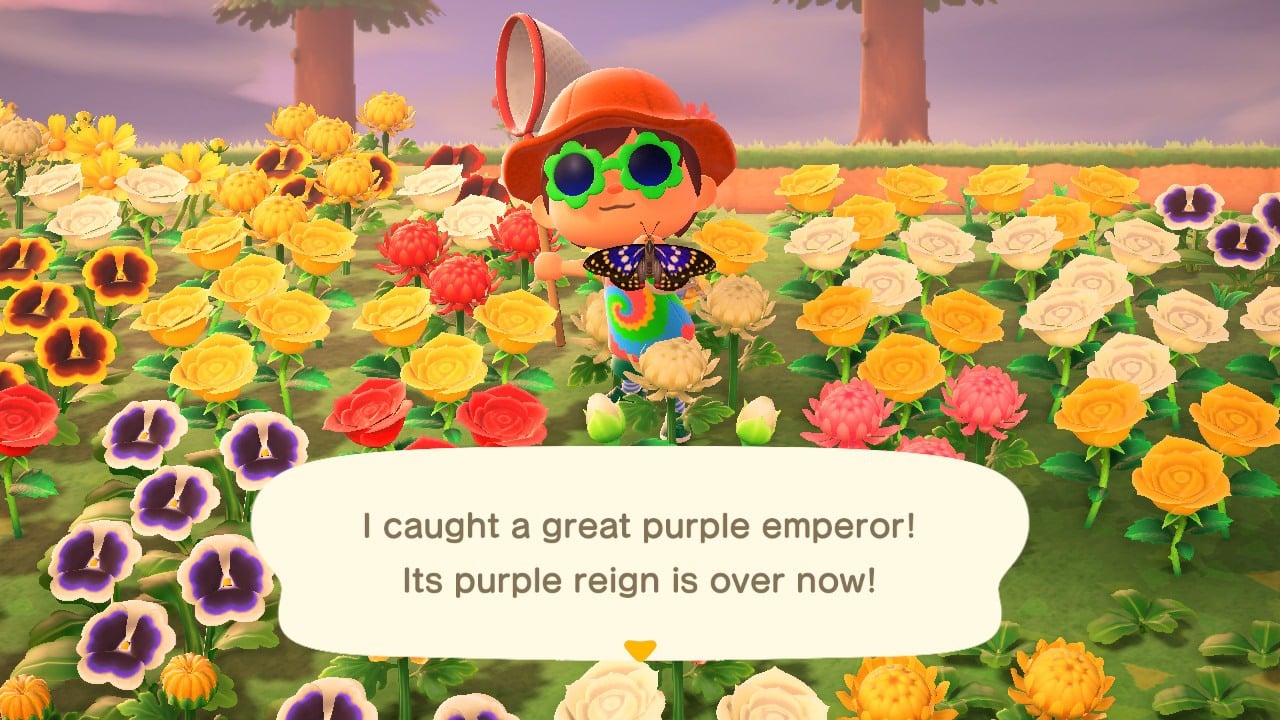
With the release of Animal Crossing for the Nintendo Switch, we have seen a large influx of videos related to the game flooding social media platforms. Nintendo categorizes Animal Crossing as a life simulation game. This genre of video games can best be described as games where the player is in charge of controlling an avatar and dictating the choices it makes in its life. This GKIS Sensible Guide delves into the details of the game to provide you with the information you need to decide if this menagerie of cute animals is right for your kids.

How long has Animal Crossing been around, and how popular is it?

The first iteration of Animal Crossing that was released in North America was introduced in 2001 for the Nintendo GameCube. The game met with critical acclaim and subsequent installments were made. The current installment is titled Animal Crossing: New Horizons and was released in March 2020 for the Nintendo Switch. New Horizons has been well received; it has already become the fastest-selling installment of the franchise. It sold five million digital copies in the month of March, breaking the record for most copies of a console game sold in a single month.[1]

Getting Started on Animal Crossing

Since Animal Crossing: New Horizons is exclusive to the Nintendo Switch, it must either be bought as a physical copy from a retailer or bought on the Nintendo eShop. Once the game has been purchased, start playing! Animal Crossing is rated PEGI-3, which means for players that are 3 years and older. However, Common Sense Media reviews from parents say it’s best for ages 8 years and older and the child reviews say for 6 years and older. Per the guidelines from Dr. Bennett’s book, Screen Time in the Mean Time, parents are the best judge of when their child is ready. As always, it’s prudent to research and play the game first to make your best-informed decision. Today’s GKIS Sensible Guide will help you in that department!


Features of Animal Crossing

Single-Player Mode

  • The player is taken to a deserted island where he must camp with 2 other campers. The player must then have a house built and build other structures around the island in order to entice other villagers to move in.
  • While there is no real set goal in the game, the player can decide what he/she wishes to accomplish.
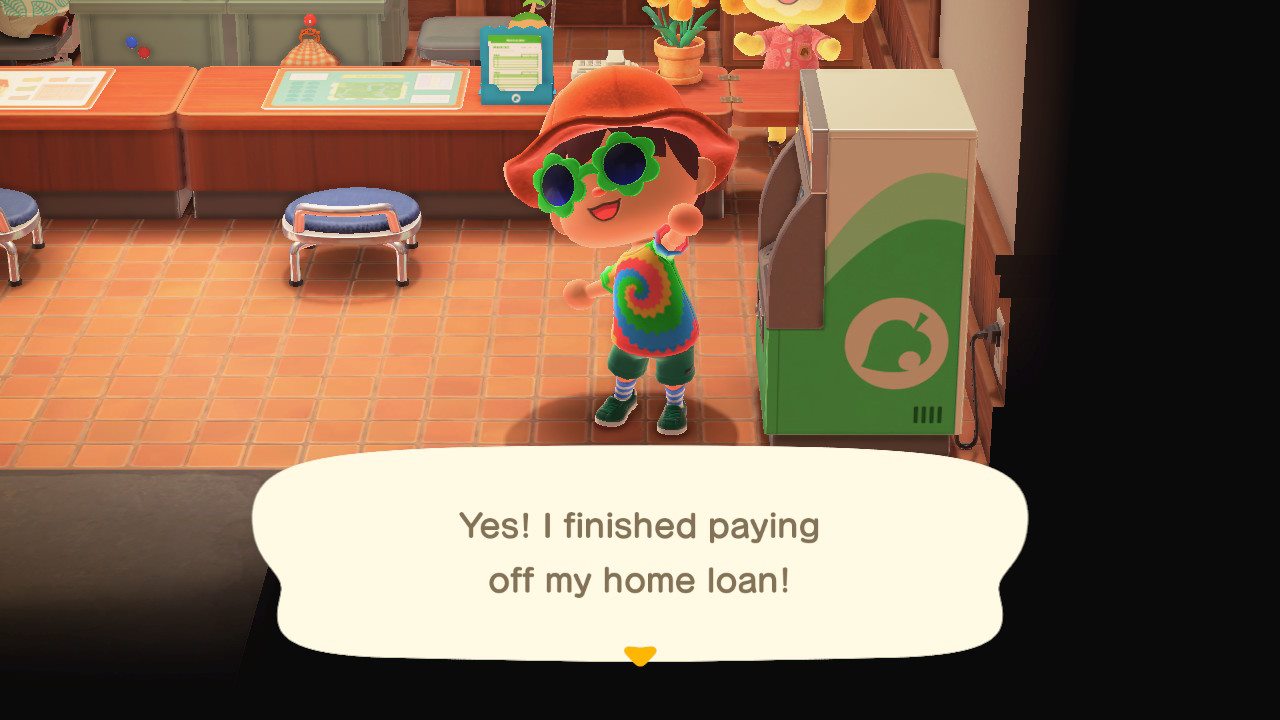
  • In order to expand the player’s house and other buildings around the island, the player must put himself in debt to a racoon named Tom Nook that oversees the construction projects. One could say he is the villain of the game.
  • In order to pay off their crippling debt, players can find many ways to make money such as:
    • Catch fish to sell.
    • Catch bugs to sell.
    • Plant fruit trees and then sell the fruit.
    • Dig up fossils
    • Run errands for islanders

Multiplayer Mode

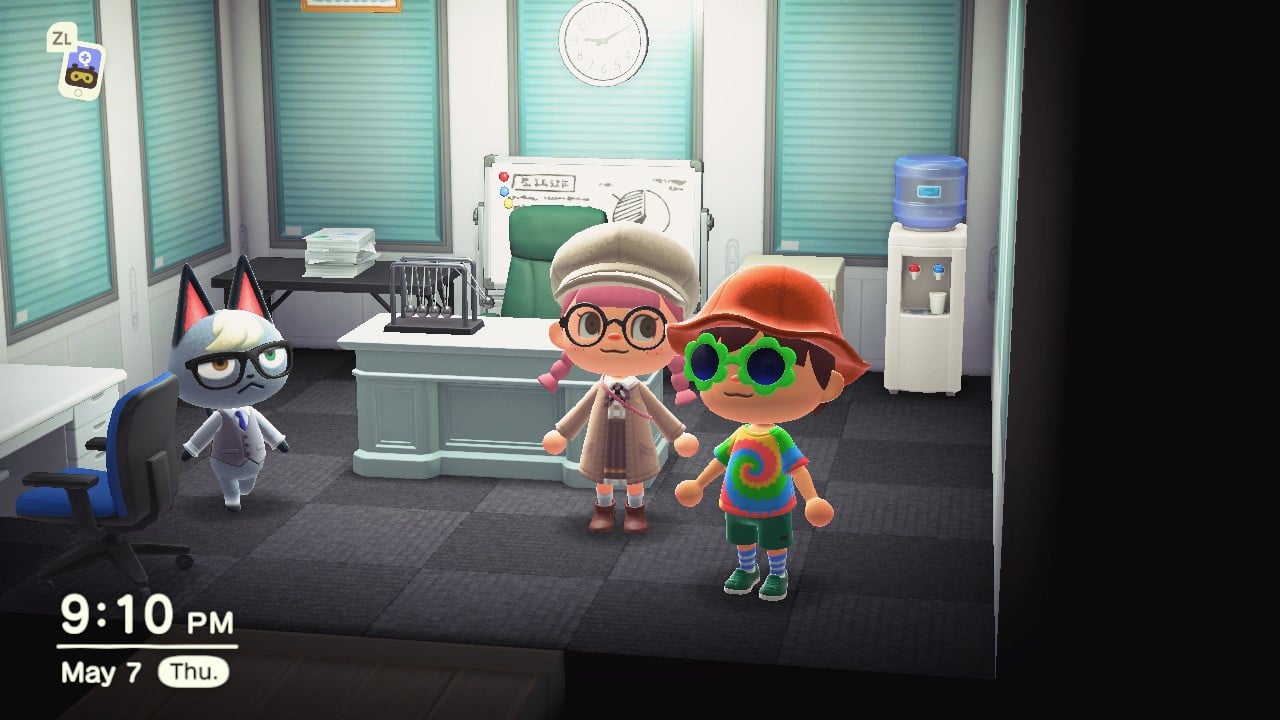
  • While there is no dedicated multiplayer mode, there are ways to play with your friends in Animal Crossing. This involves either inviting friends to visit your island or venturing out to their island.
  • To visit another player’s island, you must have added them to your friends list. This is done by inputting a unique 12-digit friend code. This means that you won’t have random strangers visiting your island.
  • Once you’re visiting a friend, you can explore and meet the islanders that inhabit the island.
  • You can visit their shops, museum, house and anything else the island has to offer.
  • Players can then do all the activities that they enjoy on their island with the company of their friend.

The Benefits of Animal Crossing

The benefits of Animal Crossing are plenty. It teaches kids how to manage money, as they have to pay off their debt and, at the same time, buy new things to wear, furnish their house, or send as gifts. Animal Crossing also allows players to display their creativity, as there are countless ways players can customize the interior of their house and the island itself. Another benefit of Animal Crossing is that it helps kids foster healthy friendships, as they must live in harmony with the other villagers on their island to keep them from moving away.

The Risks of Animal Crossing

Animal Crossing has relatively low risks. There are no real instances of violence in the game, unless being attacked by a swarm of wasps counts as one. Nintendo has also made it so it is very difficult to interact with strangers through the game, though the workaround is to post your friend code on social media or message boards and have strangers add you through that. The chances of a kid having inappropriate interaction with a stranger are much lower than in other games. The greatest risk of Animal Crossing comes from how enthralling the game can become, and, in turn, causing kids to spend extended amounts of time playing. This can begin to cut into a kid’s study time and real-life social interactions.

GetKidsInternetSafe rates Animal Crossing as a green-light app due to the low risks and moderate benefits it provides.

Thanks to CSUCI intern, Jess S herchan for researching island-dwelling animals and co-authoring this article. If you would like to learn how to develop a stronger bond with your kids through gaming, please check out the GKIS article on co-playing!

I’m the mom psychologist who will help you GetKidsInternetSafe.

Onward to More Awesome Parenting,

Tracy S. Bennett, Ph.D.
Mom, Clinical Psychologist, CSUCI Adjunct Faculty
GetKidsInternetSafe.com

Works Cited

[1] NE, Brian (2020) Animal Crossing: New Horizons sold five million copies digitally in March 2020, most for any console game ever in a single month https://nintendoeverything.com/animal-crossing-new-horizons-sold-five-million-copies-digitally-in-march-2020-most-for-any-console-game-ever-in-a-single-month/

Photo Credits

Photo by Jess Sherchan

Photo by Jess Sherchan

Photo by Jess Sherchan

Photo by Jess Sherchan

GKIS Tips for Safe and Healthy Headphone Use


Imagine that you’re running late to a new class where everyone has yet to meet each other. You sit down and note that the class is already full. But something else is weird with so many people in the room…the silence. This silence has become surprisingly normal due to our generation’s favorite accessory, headphones. These days it’s common to see most people out and about plugged in and tuned out. Is this a cool convenience or a problematic habit? Check out today’s GKIS article and see what you decide.  

Excessive Headphone Use 

In the university that I attend, most students have headphones in place until the moment the instructor says their first word of the lecture. The only people that are talking before that are the few people who’ve already established a friend group. The truth is, I’m so in the habit of wearing my headphones the idea of joining in on a conversation is stressful. My headphones are a sort of safety blanket that saves me from feeling awkward in new social situations. 

My friends agree with me. We even admit that sometimes our headphones aren’t even on when we have them in! We keep them in to discourage people from talking to us or expecting us to respond. Sometimes it’s also a cover while we listen in on other people’s conversations. Headphone use is commonly a tool to socially distance. 

We at GKIS aren’t the only ones who’ve noticed this phenomenon. Blogger Claire Hubble shared her story of being a self-proclaimed “headphone addict” in a blog post. In her post, she mentions the dangers of constantly keeping your headphones in, such as not being able to hear an oncoming vehicle or people calling for you. Hubble also brings up an important guilty pleasure we’re familiar with here at GKIS, podcasts.  

For those of you who are not yet addicted, podcasts are like radio shows with multiple episodes that usually follow a theme or tell a story. Fans can subscribe to a podcast and follow their favorite podcaster personalities. Hubble said she loves podcasts as a way to avoid forced small talk. She goes on to share that without her headphones, she feels anxiously disconnected and even bored. She posits that headphone may be and up-and-coming addiction.1 

Dangers of Excessive Headphone Use  

Psychological 

 In a 1994 study on the psychological effects of Walkman use, researchers predicted that portable listening devices could potentially grow to be silencing technology. Silencing technology is the social and psychological separation of individuals. This study interviewed 36 individuals and concluded an impaired ability to interact socially with prolonged device use.2 

A later 2005 study measured the use of headphones and portable audio use on college students using several self-administered scales and surveys. The 2005 study also found that frequent headphones use leads to social isolation and feelings of loneliness.3  

Physical 

Physical damage from increased headphone use has also become a growing concern. Potential health risks include:  

  • Ear infections 
  • Hearing loss 
  • Tinnitus (ringing in the ear) 
  • Headaches 
  • Dizziness 
  • Pain in ear 
  • Hyperacusis 
  • Excessive ear wax 4 

Recommended Headphone Use 

How much headphone use is excessive? According to the World Health Organization (WHO), anything over an hour a day is excessive for all listening devices.[5] Rather than eliminating the accessory altogether, steps can be taken to implement safe and healthy listening for your kid on-the-go. 

How to Manage Headphone Use 

In her book, Screen Time in the Meantime, Dr. B offers the following recommendations to help your family unplug: 

  • Teach netiquette skills.
  • Introduce screen-free zones at the dinner table and other areas where a family conversation is common.
  • Decide on tech blackout times, like mornings before school and bedtime.
  • Start a conversation on safety with our free Connected Family Screen Agreement.

Safe Kid-Friendly Alternatives  

Have you heard of noise limiting headphones? Noise limiting headphones are headphones that can be set to a specific volume the consumer decides.6 Researchers have concluded that noise-limiting headphones pass the “safe” listening range set by the World Health Organization (85 decibels) and were the favorite among the kids and teens in the study who tried them out.5 This is a quick solution if you know you won’t always be able to monitor headphone use but want to limit possible hearing or distraction injuries.   

Special thanks to Aroni Garcia for researching and co-writing this article. If you liked the article, and you’re interested in learning more tips on how to break this trending habit, go over to 5 Back to School Tips for the Digitally Overtasked and Disorganized Parent to learn more about how you can keep on track with managing device and media time. 

Onward to More Awesome Parenting, 

Tracy S. Bennett, Ph.D.
Mom, Clinical Psychologist, CSUCI Adjunct Faculty
GetKidsInternetSafe 

Works Cited 

[1] Hubble, C. (2019). I Stopped Wearing Headphones Everywhere To Battle My Anxiety With Amazing Results. Strength, Mind. Retrieved from https://www.whimn.com.au/strength/mind/i-stopped-wearing-headphones-everywhere-to-battle-my-anxiety-with-amazing-results/news-story/4f685a3d83bd7da58e49ed840a2abad7  

[2] Moebius, H., & Michel-Annen, B. (1994). Colouring the grey everyday: The psychology of the Walkman. Free Associations, 4(32, Pt 4), 570–576.  

[3] Crane,R. (2005). Social Distance and Loneliness as They Relate to Headphones Used With Portable Audio Technology. Humboldt University. Retrieved from http://humboldt-dspace.calstate.edu/bitstream/handle/2148/28/social%2520distance%2520and%2520loneliness%2520as%2520they%2520relate%2520to%2520headphones%2520used%2520with%2520portable%2520audio%2520technology.pdf?sequence=1&origin=publication_detail 

[4] ColumbiaAsia. (2019). Harmful Effects Of Listening Music With Earphones. Retrieved from https://www.columbiaindiahospitals.com/health-articles/harmful-effects-listening-music-earphones-headphones 

[5] Wirecutter. (2020). The Best Kids Headphones. Retrieved from https://thewirecutter.com/reviews/best-kids-headphones/

[6] WHO. (2105). Make Listening Safe. World Health Organization. Retrieved from https://www.who.int/pbd/deafness/activities/MLS_Brochure_English_lowres_for_web.pdf 

[7] WHO, Press Release. (2015). Make Listening Safe. World Health Organization. Retrieved from https://www.who.int/mediacentre/news/releases/2015/ear-care/en/ 

[8] Everrett, T. (2014). Ears Wide Shut: Headphones and Moral Design. Carleton University. Retrieved from https://curve.carleton.ca/system/files/etd/f866183a-7e5d-44f9-9dc0-2e70dc7f283a/etd_pdf/ced98bd25d5bdd0bb69b3696a6da32ad/everrett-earswideshutheadphonesandmoraldesign.pdf 

Photo Credits 

Photo by Plush Design Studios on Pexels 

Photo by Mircealancu on Pixabay 

Photo by Jplenio on Pixabay 

Photo by Counselling on Pixabay

Photo by Pexels on Pixabay 

Photo by Pixel heart on Pixabay