Has your child been manipulated and exploited online? Influencing people to send nudes is an example of sexual coercion, and it happens more than you think.[1] A survey found that 36% of participants reported experiencing digital sexual coercion.[2] And too often, it happens to young teens. Statistics say one in 33 kids is approached online, but many don’t report it.[3] Too often when kids come forward, they lose their screen privileges as a result. This punishes kids for seeking help, so they learn to keep scary online problems to themselves. This is my story of being the victim of digital sexual coercion when I was only 13 years old.
He was 17, I was 13
When I was in seventh grade, my PE class overlapped with eleven graders, and that’s where I met Dale. Dale was 17 and new at our school. I was 13, friendly, outgoing, and happy to introduce myself. Dale added me on Facebook, and we began to get close. My mom didn’t even know I had Facebook because I hid it. But honestly, if she had a resource like the GKIS Screen Safety Essentials Course, I wouldn’t have been able to hide it from her. I could have skipped this whole trauma. Nothing like GKIS was around back then. I was a sitting duck.
How We Got Close
Within two weeks, Dale and I were Skyping for hours every night. It was awesome. He’d say things like, “You’re so mature for your age,” “You look a lot older than you are,” and “I wish you were older so we could hang out in public.” He made me feel desired and special. Now I know that using flattery to manipulate younger kids makes them more vulnerable to coercion.[4] But then, Dale hyping me up so much gave me a big head. I felt like I was older, more sophisticated, and smarter than kids my age. I loved the attention. I already felt like a little adult.
Over the next few months, we grew closer and closer and started making plans to hang out. He wanted to meet at a “secret” spot across the street from our school. It was at an outdoor bench in a parking lot surrounded by trees which hid us from the view. He made sure we met at different times so we couldn’t get caught. I felt like he was ashamed to be seen with me, and it hurt my feelings so much. During these hang-outs, I discovered what first and second base were. We even talked about what it would be like to have sex. It was exciting for me.
How It Took a Turn for the Worst
Eventually, Dale coached me on how to pose for provocative pictures and convinced me to email them to him. He promised not to show the pictures to anyone and even sent me some of his own. I thought it was safe because he cared about me, and we loved each other.
Unfortunately, it wasn’t long until I found out that he showed my pictures to the boys in my class because they teased me about the colors they saw me wearing in the pictures. It was absolutely horrifying! I was embarrassed. I felt betrayed. I was so sad and angry. I didn’t know what to do, so I just denied it and worked hard to keep my composure. One guy bullied me about it the whole rest of the year. It never got easy.
I was afraid to lose our relationship, so I did not make it a big deal. But I did ask him not to show the photos to anyone ever again. Some of his friends cautioned him, recognizing the age difference. Most of them were nice to me. They acted like they knew I was a little girl with an almost-man. I think some of them felt sorry for me. That was his wake-up call to how wrong it was to be with me.
When I started to feel him pulling away, I sent more pictures to earn his attention. I was completely attached and “in love.” Inevitably, he broke up with me because he was turning 18 soon and did not want to catch a case. I was shattered. I felt unworthy, unwanted, less-than, and like I was not enough. To make matters worse, he began dating a girl who was 15 years old a month after we separated. Watching him grow close to her broke my heart and left knots in my stomach. I was constantly comparing myself to her thinking I was too fat, ugly, and young. I felt used and discarded. I had a hard time focusing on school, friends, or extracurricular activities. For the next four years, I felt like I’d never be in love again. It took a toll on me and made me feel so self-conscious.
My Why
At the time, I felt so alone and misunderstood. Now I see I needed resources like GKIS. Thirteen years later, I researched “digital sexual coercion” and finally felt seen. I feel better after understanding how common this is and inspired to share my story to help other kids and parents avoid what happened to me.
After reflecting on my experience, I realized that open conversations about online interactions could have equipped me with the awareness to recognize red flags. Had I gone through the GKIS Social Media Readiness Course, I would have understood the risks of social media even among my friends. I encourage all parents to empower their children to navigate the digital world safely. This way, you can prevent your child from reliving my worst experience.
Thanks to CSUCI intern Elaha Q for writing this article. Her courage and vulnerability are so impressive. She said writing the article was a healing experience. And crazily, her older “boyfriend” recently reached out to her and apologized. But she also said that she now recognized who he was still phishing for her affection, and it felt “weird.” It made me wonder, do we ever stop feeling vulnerable after experiences like this? Thanks Elaha for being bold and brave and sharing your story.
I’m the mom psychologist who will help you GetKidsInternetSafe.
We were hunters and gatherers for 90% of human existence. That means our brains are still wired to prioritize the things that kept us alive when we were living on the land, before the domestication of animals and the construction of cities. One thing that kept us alive was living in a tribe and cooperating. Attracting a tribe and fitting in was a requirement of life. That is why kids and teens are hyper-focused on doing what their friends do and working to be cool and accepted. Online influencers count on this drive to maintain their income streams. One way to attract kids online is to be a kid doing what kids love to do, playing with toys and video games, opening new packages, and hanging out with friends acting goofy. Netflix’s Bad Influencer offers a glimpse of the kid influencer “scene,” and the lengths that some parents will go to attract and keep a following.
What is Bad Influence about?
The limited documentary series has gone viral for good reason. It’s definitely entertaining, but also deeply unsettling. It is a perfect way to raise awareness about how scary a life all about social media can be. Bad Influencer is a documentary that focuses on a tween who becomes an overnight social media star and brings her friends to stardom with her. What started out as a fun hobby quickly turned into a living nightmare. It may seem glamorous to be famous online, until you learn that the child influencers spent the majority of their childhoods working long hours acting out video ideas, risky stunts, and performing pranks that sometimes went too far—all under the pressure of adult producers/parents hungry for views. Check out Intimacy With Minors Encouraged at the Hype House for a similar story of underage exploitation.
SPOILER ALERT: The show takes a chilling turn when the mother of the main character is accused of, and videotaped, sexually exploiting these kids on set by positioning herself as one of the only adults supervising them to control them. Some survived the battle with only a few scars, while the main character is stuck living this nightmare over and over again. It may be funny, exaggerated, and attention-grabbing, but it also paints a dark picture of a digital world where clout matters more than character and children are left to pay the price.
Psychology Behind the Fame Obsession
From a psychological point of view, being an influencer is cool to children because they have a natural need for validation, attention, and social connection.[1] Although the minimum age on most social media platforms is 13, it is reported that children ranging from 8-17 are found scrolling through online platforms soaking up content too mature for their ages.[2] Sadly, unlike real-world relationships, social media platforms offer fast, unfiltered dopamine hits through likes, shares, and views. Without proper guidance, this can make kids tie their self-worth to online numbers, which can result in low self-esteem, fear of missing out (FOMO), performance anxiety, and digital addiction.[3] As a result of social unlimited social media usage, kids can also experience anxiety, depression, and even poor quality of sleep.[4] Counteract this monster and help your child build emotional resilience, red flag awareness, and digital literacy by taking our GKIS Social Media Readiness Training Course. Geared for teens or tweens, it’s the perfect giftbefore that new device or video game.
What You Can Do to Help
Bad Influencer is not just a show; it’s a cautionary tale that shares the pressures kids face online every day. It is easy to get off topic and want to pull the plug on all electronics just to protect your child from their dangers, but that is not always possible. Technology and online platforms are all around us, and it is better to set your child up for success than to try to keep them out of the loop. Connecting with your child over what they find interesting can help create a trusting relationship where you can notice if things start to become a little off. Our free Connected Family Screen Agreement can help you and your child co-create rules around how to safely navigate online platforms. This way your child can thrive in the digital age without losing themselves in it.
Thanks to CSUCI intern, Elaha Qudratulla for researching and co-writing this article.
I’m the mom psychologist who will help you GetKidsInternetSafe. Onward to More Awesome Parenting,
Like movies, video games have contributed to a massive and diverse industry. The video game market place Steam has over thirty-thousand games available for sale and only 47% of developers sell their games using steam. This article will teach you what you need to know about the diversity in the gaming market, the games that came out of home projects, and what you need to know for you young gamers. Here at GKIS we care about the internet safety of your young gamers and we want to protect them from digital injuries. Check out the GKIS Social Media Readiness Course to prepare your tweens and teens for the dangers they will face while playing games and interacting on social media.
What is an indie game?
A video game can be classified into one of two groups based on who produced the game, AAA games and Indie games. AAAgames are produced by a major company that can back the game’s production with money, personnel, and any other resources the production may need. Indie games are produced by either a small team or a single developer with minimal resources at their disposal. An indie game developer is typically a single person with a good idea and access to game developing software.
A video game is a large time investment for any developer. Large game developers have teams of experts who each work on the pieces of the game resulting in a short production time. Indie developers, on the other hand, typically have minimal resources. They often crowd-fund projects and make sacrifices to release games in a reasonable amount of time. Indie developers tend to rely on social media for brand awareness and marketing.
Well Known Indie Games
Indie games may start out as small passion projects, but well-made games can gain popularity and become just as popular as AAA games. When an Indie game becomes popular enough, AAA publishers may buy the game from the original developer. This allows the publisher to put their formidable resources behind the project and then reap the rewards of the new and improved game. Here at GKIS, we put the formidable resource of Dr. Bennett’s years of knowledge and experience as a licensed clinical psychologist to work to create the Screen Safety Essentials Course. The Screen Safety Essentials Course provides parents and children with access to a comprehensive program that will help families to create safer screen-home environments and foster open communication.
Here are some Indie games you may recognize:
Minecraft
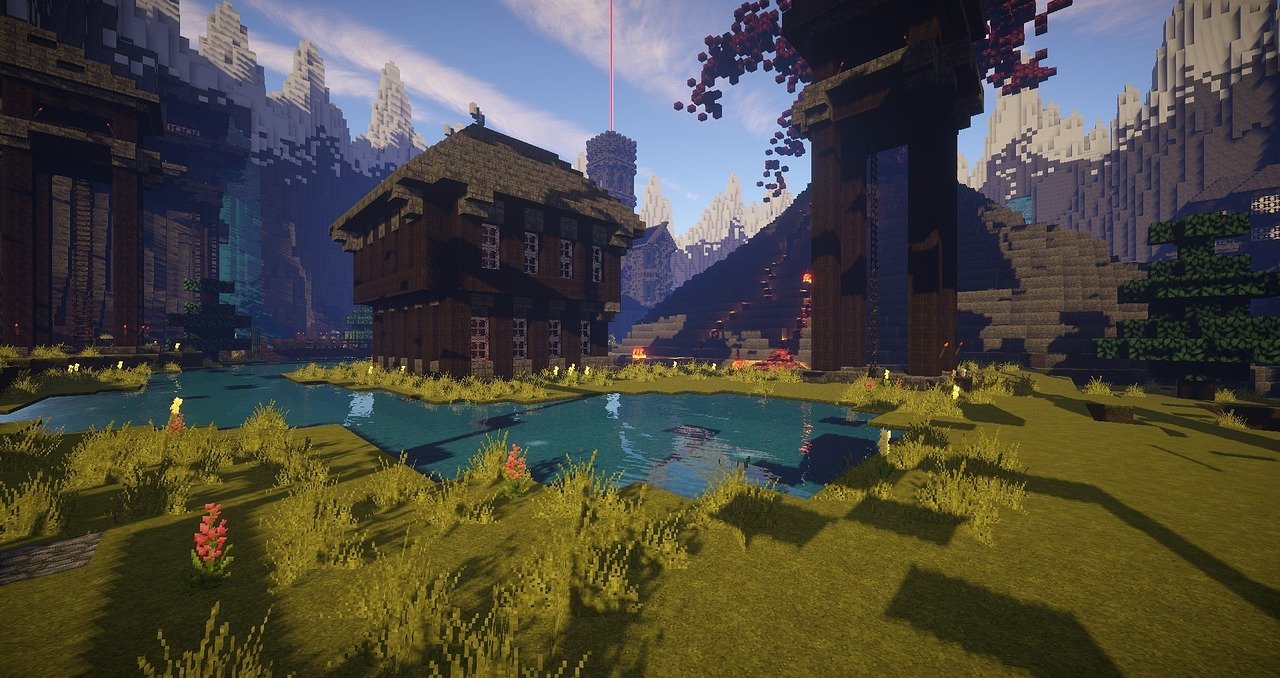
Minecraft is an incredibly popular Indie title, having sold over 200 million copies to date, and was sold to Microsoft the company behind the Xbox game console in 2014. Microsoft has since updated Minecraft with new content, released two more games under the Minecraft title, and expanded the game into other profitable areas such as toys.
Undertale
Undertale is a game that was crowd-funded and released in 2015 with an estimated 5.8 million users. Created by a single developer, this game has reached a level of acclaim that Nintendo licensed one of the characters to appear in one of their own games. The game also has its own line of merchandise and a much-anticipated sequel currently in development.
Among Us
Among Us is a more recent success story of a small social deception game that rocketed into the public eye, and boasted 60 million active users a day at the peak of its popularity. The game was very popular amongst YouTube and Twitch creators, which acted as a very successful marketing campaign. The game has become so popular that, during Halloween, kids were running around in inflatable costumes of the Among Us space suits.
The Benefits of Indie Games
Without a big corporation behind them forcing big decisions, indie developers can make any game they want. For example, Cup Head is an extremely difficult game with an art style designed to be an homage to the early era of hand-drawn cartoons. Some games are designed off of a single weird concept or a specific labor of love based upon an obscure passion.
Most indie developers try to get the funding they need to produce a game using crowd-funding. Crowd-funding is when a designer puts out a concept of a project online and gets funding from the potential fanbase to make the game through a mixture of donations, pre-purchasing the game before development begins, and additional benefits for backers of the game. Benefits can include anything from your name in the credits of the game as a backer to having input into a part of the game or a character in the game being named for the backer. Crowd-funding allows a developer to pool money for a passion project from people who are excited about the game. Crowd-funding success helps to attract investors because it reflects customer interest.
The Dangers of Indie Games
Indie games have been a source of some of the greatest titles of the last two decades, but that doesn’t mean that every Indie game is going to be like Minecraft. Indie games can be whatever the creator wants, and that’s not always a good thing. For example, some developers push the boundary of horror games and explore themes AAA horror would never touch. For example, The Binding of Isaac is one of the most popular Indie games of all time. The game explores themes of child abuse, religious extremism, and child suicide.
Indie games can explore any theme no matter how dark or twisted and the limit to what can be made is limited only by human imagination. That doesn’t mean all Indie games are horror games. But the range of themes available is significantly more diverse than the AAA scene for games.
What does this mean for your young gamers?
Within the gaming industry, Indie games are incredibly diverse. The diversity of genres and topics can create games that range from poorly made first attempts to truly frightening horror games and all the way to amazing successes like Minecraft.
So, what can you do for your young gamers online?
Read the summary.
If your child wants to get an Indie game it will often come from a website that allows developers to post and sell their games. There is a store page on Steam associated with a game that will give you a description of the plot, gameplay, pictures of the game, and reviews from people who have played the game. This will allow you to make an informed decision if this game is right for your child.
Our family course is designed to bring your family closer and get your kids working with you to stay safe on the internet. Our connected family course is outcome-based and will help you close screen risk gaps and increase family closeness and cooperation.
YouTube
You can often find YouTube creators that have recorded gameplay of popular new Indie games. If your child wants to play the new game their favorite YouTuber is playing, watch one of their videos with them. It’ll show you what kind of game your child is looking at, and you’ll get to hang out with your kid while you do it.
Thanks to CSUCI intern, Jason T. Stewart for researching advances in the video game industry and co-authoring this article.
I’m the mom psychologist who will help you GetKidsInternetSafe.
Coble, V. (2021, September 30). 10 most disturbing psychological horror indie games. CBR. Retrieved November 20, 2021, from https://www.cbr.com/indie-games-disturbing-psychological-horror/.
Curry, D. (2021, November 11). Among us revenue and usage statistics (2021). Business of Apps. Retrieved December 4, 2021, from https://www.businessofapps.com/data/among-us-statistics/.
Curry, D. (2021, November 11). Minecraft revenue and Usage Statistics (2021). Business of Apps. Retrieved December 4, 2021, from https://www.businessofapps.com/data/minecraft-statistics/.
Donnellan, J. (2021, June 8). 50 best indie games of all time. Cultured Vultures. Retrieved November 20, 2021, from https://culturedvultures.com/best-indie-games-all-time/.
G., D. (2021, November 1). 45+ video games industry statistics, facts, and trends for 2021. TechJury. Retrieved December 4, 2021, from https://techjury.net/blog/video-games-industry-statistics/.
Lowry, B. (2017, November 29). This is what sets ‘indie’ and ‘AAA’ video games apart. Windows Central. Retrieved November 20, 2021, from https://www.windowscentral.com/indie-vs-aaa-which-type-game-you.
Mikolić, M. (n.d.). Undertale stats by Playtracker Insight. stats by Playtracker Insight. Retrieved December 4, 2021, from https://playtracker.net/insight/game/1122.
Oddo, M. V. (2021, August 2). What’s an indie game anyway? Collider. Retrieved November 20, 2021, from https://collider.com/what-makes-an-indie-game/.
Video games have come a long way since Pong was first released in the 1970’s. Advances in gaming technology can enhance the experience for adults, but for children more realistic games are harder to distinguish from reality. At GKIS, our Social Media Readiness Course is designed to prepare your tweens and teens for the unexpected dangers of video games and social media sites. Our course is backed by Dr. Bennett’s years of experience helping tweens and teens who have already suffered digital injury from the unforeseen dangers found online. In this GKIS article we will cover the evolution of graphics and the steps gaming companies take to make games seem more real.
Video games Are Evolving
Video games are based in technology, and since players got their hands on Pong there has been a push to
advance that technology. Originally, video games were played using bulky arcade cabinets. The first home consoles were very restricted by their hardware. Games were flat and involved a character moving around the screen like a piece on a board. This all changed with the introduction of 3D graphics in the early 2000s. For the first time, video games had physical depth and the characters on screen moved more like a real person would.
Video games are striving every year to create a more realistic virtual environment. Games now have wind that moves individual leaves on tree branches, light that dances across the surface of the water, and characters that look real from a distance. Modern video games have advanced technology to foster a sense of extreme realism and maximize immersion. With such engaging digital experiences, it is important that children are provided with boundaries so as to prevent screen-time overload and digital injury. Our Screen Safety Essentials Course grants you access to weekly videos with parenting tips and coaching from Dr. Bennett that will help you pull your child out of their digital world and back into ours.
Motion Capture
It can be difficult to program a character to move in a realistic way. The awkward way early 3D characters moved unfortunately hampered immersion. Recently, the gaming industry began to use motion capture technology to solve this issue. Motion capture is a technique whereby a real human being is recorded in a studio as a program captures their motion and applies it to the game character to make the movement look as real as possible.
In a game called LA Noir, you are a 1940’s detective. One of the major objectives of the game is to interrogate suspects and solve crimes. For authenticity, developers created the characters with real facial expressions. The game used an advanced motion capture system to record the real facial expressions of the voice actors portraying the game characters. Players can tell what a character is feeling or if they’re lying based on facial expressions alone. The game uses very real human empathy and natural social cues as a part of the game, offering deeper immersion and better quality overall.
Real Game with Real Fear
Realistic graphics are fascinating when they’re used to make a character blink and breathe like a real person. Immersion is the goal, especially in horror games. Early horror games were limited in what they could create by the consoles of the time. However, as modern technology has evolved, new possibilities have opened for the horror genre.
Games can include motion-captured characters with realistic looks of fear and pain on their face. Horror games originally wanted to compete with the horror movie industry, but horror games now have the ability to do more than movies ever could.
For example, a game called Dead Space takes the classic zombie movie genre and sets it in a futuristic space station. An alien artifact mutates humans into nearly unkillable monsters. The game makes great use of body horror to drive home the alien nature of these dead humans. Body horror is a type of horror derived from twisting the human body into unnatural shapes creating nightmarish monsters. Our mind still sees that the monster is technically human, but is terrified by how wrong it has become. For example, in Dead Space, the zombie you are tasked to fight is a human with an open chest cavity and arms twisted in unnatural positions with sharpened bone where hands used to be. The key feature is that they still have a human face attached to the monstrous form to remind you that they used to be like you.
Immersion in horror games
The main thing horror games have over movies is the personal nature of the narrative and fear within. A zombie movie may be scary to watch as your favorite character fights for their life. However, an immersive game like Dead Space can make you feel like you’re the one fighting for your life. The immersive narrative attempts to draw you into the character’s shoes and, for the time you play, you can believe that you’re really in danger. The narrative takes on a whole new depth as suddenly you’re the one backed into a corner with only a handful of ammo and your wits.
Another dimension is that a game doesn’t guarantee a happy ending. When you run out of ammo, you know that you’re the one who’s going to die. Often when a gamer talks about an experience with a horror game, they speak in the first person. When I first played Dead Space, I remember the adrenaline rush I got when I had no ammo, because I knew I was going to have to fight my way out with my bare hands. The memory of playing a game differs from a movie because it stores itself as if the player had physically been there.
What does immersion mean for kids?
Realistic video games can be frightening and exciting to play. But at the end of the day, a player can still distinguish the game from reality. The same can’t be said for children exposed to the same things. Children have a harder time separating fantasy from reality.
As video games strive to be as close to reality as possible the task only gets harder. An adult who plays a particularly realistic horror game may have trouble sleeping for a night, but a child will suffer far worse than any adult.
Even outside of horror, we have shooter games that strive for realistic blood and death. Sniper Elite is a game that will follow the bullet fired from a sniper rifle through an enemy to show bones break and organs rupture as the bullet penetrates their body. These advances in immersion are great for taking a player into the world of a game, but only as long as that player has developed enough to pull themselves back out.
What can you do for your young gamer?
ESRB Ratings
Most video games come with an ESRB rating on the box to let players and parents know what type of audience the game is suitable for. If a game is rated for an audience older than your child, the game contains content inappropriate for their age group.
Our Connected Family Course is designed to help keep your family connected in a world separated by screens. Backed by years of psychological research our course is designed to keep your family connected and working together to prevent digital injury.
Play games with your kids
Make sure the game your child is playing is appropriate and get some fun bonding time in. You can learn what the game your kids are playing is really like by just spending time with them while they play. If a game is inappropriate, it’ll be hard to hide for long.
Thanks to CSUCI intern, Jason T. Stewart for researching advances in the video game industry and co-authoring this article.
I’m the mom psychologist who will help you GetKidsInternetSafe.
Walker, C. (2010, December 22). Video games and realism. Wake Forest News. Retrieved November 3, 2021, from https://news.wfu.edu/2010/12/22/video-games-and-realism/.
“First impressions are everything.” This once referred to tone, dress, and personality. Now, it also refers to your social media page. Teens rack up an average of 6 hours per day of social mediag.[1] They not only browse endlessly, but many also post impulsively. With immature prefrontal brain development, kids and teens are unable to anticipate consequences. Plus, the internet culture is vulgar, shocking, and celebrates pushing moral limits. Using profanity, sub-tweeting and cyberbullying are common. Using principles from Dr. Bennett’s book, Screen Time in the Mean Time: A Parenting Guide to Get Kids and Teens Internet Safe, this article covers how to best guide your teen through the social media dilemmas of cyberspace.
Social media is the perfect place to “out” your enemies.
My friend “Catherine” used to expose her ex-boyfriends on Facebook. Once she posted, “He says he’s over me, but he just came to my house and cried.” Often, she’d think twice and delete her post. Other times, her ex-boyfriends posted angry responses outing her bad behavior back.
My friend “Robert” also shared a personal story. This is one about Myspace going wrong. When he was in the eighth grade, his high school sophomore girlfriend sent him sexy selfies. Robert showed his friends the photos. Although he refused to text them directly, a friend hacked his phone and sent himself the photos. Within a few days, the girl’s family and the police were at Robert’s door. Her photos had been posted on Myspace. Although Robert did not directly post her photos, he was held responsible because they were initially on his phone.
Online Behavior Matters
We love our podcasts at GKIS. In one of our favorites called Hidden Brain. The “You Can’t Hit Unsend” episode tells the story of William, whose social media posts destroyed a golden opportunity with Harvard.[2]
William was a brilliant high school senior from Pennsylvania. He was a great student who played competitive golf and performed for the local symphony. Although he didn’t believe he was “Harvard material,” he applied anyway. He was accepted through the early admission process and was overcome with joy. In the excitement of his acceptance, Will quickly joined an online group chat to meet other incoming freshmen.
One chatroom that focused on sharing memes was particularly funny. As the chatroom friends grew closer, they exchanged increasingly “edgier” memes, riding the fence between funny and offensive. To be added to the subgroup chat, at least one edgy meme had to be shared in the main group chat. As time passed, the memes increased in explicitness, oftentimes referring to outrageous, violent, and sexual topics. Will states that members of the chat knew that their meme was good based on how many likes and fire emojis members commented afterward.
The admissions department at Harvard University learned of the private chatroom and investigated. Harvard withdrew admission offers from ten prospective students because of their participation.
Will shared that he will always remember the last sentence of the email, “Harvard can withdraw admission under various conditions, including if you engage or have engaged in behavior that brings into question your honesty, maturity, or moral character.” Now he recognizes how adults would be offended and regrets his posts. He apologized, “It is far too easy to act out of character behind a screen in a fast-paced setting and to say things I would never say or even think of in my everyday life.”
The Harvard student newspaper later published the story. Soon after, the story was everywhere, including CNN and Fox News. Will and his family were devastated.
He waited a year and applied to other schools, only to be rejected by all ivy league universities. Will’s voice broke with emotion as he spoke of the experience. Fortunately, his emotional honesty appealed to a physics department chair at a school he was waitlisted at, and he was ultimately granted admission.
College Recruiters and Managers Search Applicants Online
Social media posts can make or break a teen’s future. The relationship between your digital footprint and personality is about as constant as the relationship between personality and behavior, also known as “the personality coefficient.“[3] That means that your behavior on your social media profile is a reliable source of information about your personality.[4]
Many college admission officers and employers use online data to investigate prospective students or employees. While the internet is fun and creates a space for creativity and connection, adolescents can make dire mistakes online just as they do offline. Instead of those mistakes happening in front of a few close friends and family, they can be blasted out to millions. Social media profiles produce large amounts of user-generated data that may be used and sold in ways we cannot anticipate.[5]
As social media evolves, parenting tactics must evolve as well. That means educating yourself about the risks of posting and challenging your kids to explore online risk with ongoing empowering dialogue.
Here are a few ways you can prep them today:
Use our free GKIS Connected Family Screen Agreement to set parameters and create a screen-friendly, cooperative dialogue.
Engage in fun co-viewing, both with passive screen use (TV) and interactive screen use (browsing the internet). Fun projects may include researching a particular topic using various learning formats (articles, videos, images).
Find food recipes and cook a meal together.
Co-create a movie – complete with music, still-image slides, videos, and graphics.[6]
Work together to purposely stylize your family’s cyber footprint. Ensure that that footprint will work for you rather than against you.
Act as a role model on social media and encourage responsible posting.
Internet sites can collect and analyze large quantities of data from everyday devices.[7] This information provides more opportunities to use data in deceitful ways. With helpful GKIS tools, you can best prepare yourself and your teens.
Thanks to Isabel Campos for her research and help with writing this article. Interested in learning more about current cyberspace news? Signup for weekly GKIS articles by entering your name and email address at GetKidsInternetSafe.com!
I’m the mom psychologist who will help you GetKidsInternetSafe.
Now that I’m an “older” working mom, I love to share offline and online organization hacks and efficiency grabs that have saved me through the years. These organizational techniques were the difference between frazzled and peaceful at our house. With the overtasked lives we lead, most of us are guilty of brain fades and frantic searches while yelling and scolding overwhelmed kids. Even if you set up only one or two of these ideas, it may be the difference between fun family mornings versus a school day launched with tears and resentment.
Unclutter study spaces by setting up customized, distraction-free workspaces in niches and corners for each kid.
Kids in my practice often complain that the kitchen table is too distracting to get homework done quickly and neatly. The psychological research agrees. Studies reveal that fractured attention leads to irritability, wasted time, and poor grades. To optimize learning, set up a quiet corner office for each child. All it takes is a willingness and clever organization ideas and fresh accessories. Check out my GKIS Connected Family Online Course for a detailed blueprint for creating award-winning maker spaces with awesome Pinterest DIY ideas. A customized works station is a compelling magnet to get your kids creating in 3-dimensional space as a complement to screen learning. Ergonomic, body-healthy setups in the place of slouching on beds and couches avoid repetitive stress injuries to the neck, back, wrists, and hands.
Avoid missed soccer practices and study deadlines by setting up a digital family calendar.
Family schedules are chaos! Streamline communication and scheduling by color-coding child activities and setting up Family Share on Apple’s Family Calendar, Google’s Calendar, or Microsoft’s Outlook. Each member can share calendared activities and set up automatic reminders. Shared organization at a glance!
Just as you throw out old clothes your kids have grown out of, it’s also important to declutter digital spaces.
Schedule a fresh-start fall family meeting where everybody gathers with their mobile screen devices to trash apps and games they have grown out of.
Revisit (or grab) your free GKIS Connected Family Screen Agreement at GetKidsInternetSafe.com. This will help you set sensible rules like a digital curfew and create screen-free zones – including bedrooms and bathrooms.
Finally, teach cybersecurity measures from my Cybersecurity Red Flags Supplement. New this fall, you and your family members can tweak bad habits so don’t fall victim to bad actors online.
Cleanse social media profiles with an eye toward future reputation.
If your tween or teen is on social media already, you know the time-suck risks during school time. Help them sort out the necessary from the unnecessary by helping them avoid the bio-hack elements designed to capture their attention.
Consider limiting teens to only one or two social media apps to decrease wasted time due to mindless browsing and compulsive checking.
Insist that apps with visual notifications be on the second swipe screen on smartphones. That way they won’t get distracted by little red notifications and, instead, can batch their check-in times as research suggests is best.
And finally, delete old posted photos and unnecessary personal information from social media history. Sharing real-time with friends on a private profile is fun, but do you really want somebody lurking through your past photo-by-photo? Point out that other parents, relatives, teachers, coaches, future employers, and even college app administrators may be forming impressions based on your digital footprint. So instead of having an online resume populated by off-color jokes and sexualized photos, create a flattering stream of artistic works, philanthropic activities, sports activities, and fun friend and family time. A progressive, balanced, healthy life looks beautiful online – and may help you get a college placement or dream job instead of hinder it!
Reboot your Screen Safety Toolkit.
Each developmental stage offers unique online safety challenges. For example, little kids are best accommodated in a walled digital garden like YouTube Kids, and older kids need a little more digital space to explore and create. To parent well in the digital age, you need specially-selected free and third-party software tools to help you filter and block inappropriate content, set time-limits, monitor online activity use, remotely pause or offer rewards, and even locate and track the driving activities of your teen. If you get overwhelmed or need help figuring it all out, check out my GKIS Screen Safety Toolkit for tips, product recommendations, links to ISP and social media app safety guides, and free digital learning tools for best academic performance.
There you have it! Five quick and easy parenting hacks that will launch the school year with fun and success. Just as I recommend shoes live by the front door so you are not always searching, digital folders and organization tools will keep you dialed-in in your virtual life. Most importantly, set a peaceful intention with a six-second exhale for positivity and fun each morning before you enter the family’s living space. Parents must actively define the heart of the home. If we start the morning with a smile and warmth, our kids emotionally synch and return the joy. Soak in every chaotic and blissful moment!
I’m the mom psychologist who will help you GetKidsInternetSafe.
Also, if you are a local Southern Californian and need a little TLC to get started on your screen safety/fun parenting plan, join me for a morning of pampering and friendship.

 How We Got Close