Need peaceful screen time negotiations?

Get your FREE GKIS Connected Family Screen Agreement

Sensible Parent's Guides to Social Media

The Hidden Risks of Over-monitoring Kids Online

Parents feel a heavy burden to protect their kids from online harm. Threats such as cyber-bullying, predators, and unwanted content are real, and it’s understandable to want to put tight restrictions in place. But what if the very tools we use to protect our children are creating unintended consequences? Over-monitoring can undermine trust, limit children’s development of independence and online resilience, and even expose privacy vulnerabilities. Here’s what the research shows and how parents can find the perfect balance.

Where did we go wrong?

66% of parents surveyed say that parenting is harder today than 20 years ago, and digital technology is to blame.[1] Parents monitor in a variety of ways, including limiting screen time, checking websites, requiring password access, using GPS tracking, and checking social media following/friending.[1] Yes, tighter supervision sounds like a necessary solution in a world full of endless apps, social networks, and online risks, but is it?

A study conducted by the University of Central Florida found that parental-control apps, which allow for deep monitoring of children’s online activities, were associated with more, not fewer, online risks for teens. More specifically, the study found that teens whose parents used these apps reported unwanted explicit content, online harassment, and sexual solicitations. This doesn’t mean monitoring caused the risks; instead, parents often turn to these apps because their teens are already encountering online issues. The researchers concluded that instead of building digital competence and trust, many of these apps fostered a control-heavy and distrusting family environment.[2] So, instead of turning to these apps for help, try Dr. Bennett’s Connected Family Course.

Another study of children’s apps found that even “family-friendly” apps often include trackers, location permissions, or mislabeling of age ratings.[4] Further, children and teens with over-monitoring parents saw their parents as intrusive and were more likely to hide, deceive, and intentionally misbehave.[4] All in all, when monitoring feels oppressive, kids may respond by hiding and lying rather than being open and honest.

What does that mean for parents?

If the goal is safety, forced online surveillance may undermine the trust between parent and child and may hinder the open and honest communication we should be working to establish. As we teach in our Screen Safety Essentials Course for families, just implementing controls isn’t enough. One of the most damaging costs of over-monitoring is to trust and self-regulation. When children know they are constantly being watched, they may feel that their parents don’t believe they are capable of making responsible choices. That can lead to secrecy, feelings of giving up on communicating openly, and a lack of connection or engagement with parents.

“Why tell mom and dad if they won’t believe me anyway?”

I found myself asking this exact question at 12 years old when I made my first Facebook account and kept it a secret. I didn’t want to get in trouble, and I wanted to connect with my friends outside of school. I felt left out. But, when I asked my mom if I could open my own account, she said no. When I asked her why, she had no answer. So, I took it upon myself to create an account anyway.

I lied about my age so that I could create the account without parental supervision, and I kept it a secret. I would use it when she was not paying attention. My intentions were pure, and I did use it to connect with friends. But, of course, like with all online platforms, creepy older men would try to befriend me or message me.

GetKidsInternetSafe’s mission is to improve parent-child relationships AND screen safety. Had my mom and I had access to the GKIS Social Media Readiness Course, we would have been able to find a safer middle ground for me to connect to my friends. Not only would I have learned more about screen safety and been better equipped to solve online problems independently, but my parents and I would have engaged in healthier conversations and maybe even gotten closer. Ultimately, I would have been prepared to protect myself from getting into a relationship with a 17-year-old. Read The Hidden Dangers of Online Grooming: I Was Only 13, to find out how my lack of preparation for having social media resulted in me forming a premature physical relationship with a young man who was four years older than me at that time.

How Can We Do Better?
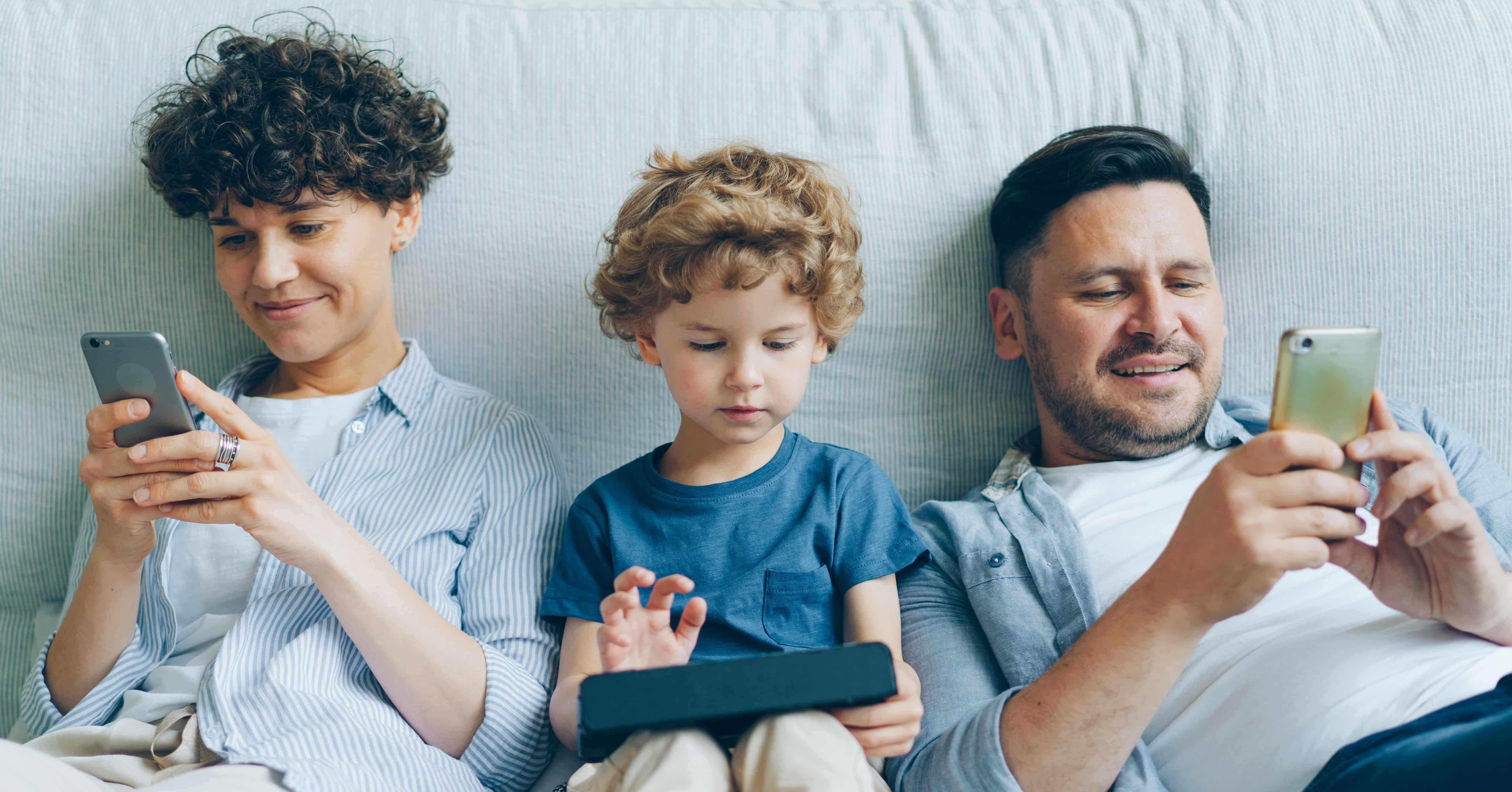
One of the most effective ways to guide children safely online isn’t through hidden surveillance, but through connection, conversation, and shared agreements. When parents begin by listening to their children about what worries them, what they enjoy, and what feels out of control, they build a foundation of trust. That trust becomes the launch pad for screen-time guidelines, digital boundaries, and the kind of autonomy children need to develop resilience. GKIS emphasizes this approach through its Connected Family Screen Agreement, a free tool designed to invite open dialogue instead of enforcing silence. It helps kids understand why parents have concerns and utilize safety tools and techniques.

Instead of solely relying on rigid controls, the path to healthier online habits includes tools, skill-building, and gradual transition. GKIS’s Screen Safety Toolkit isn’t a spy-kit; it’s a resource for families to use as practical checklists, conversational prompts, and strategies to empower children rather than just restricting them.

By investing in tools like this, parents can shift from pushing their kids to secrecy to creating a trusting relationship through honest communication. This way, your child knows that they are safe, supported, and ready to navigate the digital world with you by their side.


Thanks to CSUCI intern, Elaha Qudratulla, for researching and sharing an important story about how online safety is more important than online policing.

I’m the mom psychologist who will help you GetKidsInternetSafe.

Onward to More Awesome Parenting,

Tracy S. Bennett, Ph.D.
Mom, Clinical Psychologist, CSUCI Adjunct Faculty
GetKidsInternetSafe.com

Works Cited

[1] https://www.pewresearch.org/internet/2020/07/28/parenting-children-in-the-age-of-screens/

[2] https://www.ucf.edu/news/apps-keep-children-safe-online-may-counterproductive/

[3] https://arxiv.org/pdf/2303.09008

[4] https://www.sciencedirect.com/science/article/abs/pii/S0140197117302051


Photos Cited

[1] Rizki Kurniawan

[2] Marten Newhall

[3] Tasha Kostyuk

[4] Vitaly Gariev

https://unsplash.com/

Off the Phone and On the Soccer Field: My Cure for Digital Disconnection

Kids crave connection. Face-to-face interaction and emotional closeness are vital for healthy development—particularly for adolescents.[1] Screen time offers shallow connections and distracts kids from those unpleasant cravings. It also keeps kids so busy that they don’t seek the connection they so desperately need. What if they didn’t have to be so lonely? What if there was a way they could be off their screens, doing something good for their health, and making friends at the same time?  For me, that was playing sports.

The Seed Was Planted

As a child, I was most excited to hang out with my friends, be on my phone, watch TV, or eat sweets, in that order. That was until I joined a team sport.

It all started when my mother asked me if I wanted to join the local soccer team. I was nine years old and against the idea because I didn’t want it to cut into cartoon time on the weekends, and had we gone through the Screen Safety Essentials Course, we wouldn’t have worried so much about the impact of screens on us. But she insisted. I only agreed because my favorite cousins were on the team.

I learned from the first practice that I loved the intense physical activity of soccer, and after a while, I began to really get the hang of it. I felt proud and accomplished. I made great friends on the team. We loved team bonding activities and even began to hang out outside of practice. I loved it so much, I gave it my all and looked forward to it all week.

By high school, I had won medals and genuinely felt like I was good at the sport. I received praise and encouragement for all of my efforts and hard work. It also inspired me to work hard in other aspects of my life. I tried harder in school, was friendlier with classmates, more obedient in class, and more eager to participate in the learning process. According to Project Play, high school athletes are more likely to further their education and even receive higher grades in college.[2] I started seeing everything in the world as a skill waiting to be attained, something that required courage, effort, and training.

Having that view of the world helped me when I sprained my ankle right before the start of my freshman season. While recovering, I could have easily scrolled through Snapchat and Instagram endlessly. But I wanted to make sure I continued to build the bond with my teammates for when I returned. It taught me to wait my turn, keep a positive attitude, remain patient, and support others as they shine. As soon as I recovered, my teammates were more than happy to catch me up to speed, and I rebuilt my strength.

Core Memories That Last

One of my most memorable moments taught me something I will never forget. It was my junior year; we were tied 0-0, with a minute left in the game. My team was exhausted, but as captain, I knew this is where my job was most important. I dribbled the ball up the center, dodging two midfielders and one defender, set it up for my left forward, and yelled, “SHOOT!” She shot and sent it straight into the upper right corner of the goal. Everyone who was there to support us was on their feet, our coaches were throwing their clipboards in the air and hugging each other, and our teammates ran to us for a celebratory hug and a jump around. We spent the last 15 seconds of that game with tears in our eyes and joy in our hearts. We had just beaten a 40-year record for our school!

This is when I realized this would have a lifelong impact on me. It was one of those moments that I’ll look back on happily. It was a lifetime of preparation to become someone people could rely on when things got tough and hope felt lost. It was the moment I truly understood what being a leader meant to me and the impact it had on others.

I hugged and thanked my mother for signing me up for soccer at nine years old. She introduced me to the first love of my life, and I would forever be grateful for that. From then on, I never doubted my abilities to get something done, never lost confidence in myself, and never hurt someone without apologizing or broke something without trying to replace it.

The Impact of The Beautiful Game

Project Play reports that sports, in particular, can positively impact aspects of personal development among young people, keep them away from harmful substances, and encourage cognitive, educational, and mental health benefits.[2] I believe my experience of playing soccer was so much more than just a fun sport or a way to stay active, although both are tried and true. It was a refinement of my character, it was a positive shift in how I viewed the world and myself in it, it was what taught me that rejection was just redirection, and it was a way to build and maintain connections with people I am still close to, at 27 years old.

Why Everyone Should Play Sports

Participation in sports can protect against the development of mental health disorders.[4] These benefits include lowering stress levels, rates of anxiety and depression.[5]Lifelong participation in sports leads to improved mental health outcomes and even immediate psychological benefits which continue long after participation is over with. The improve self-confidence, encourage creativity, and nurture a higher self-esteem. Statistically, adolescents who play sports are eight times more likely to be physically active at age 24.[3]


Thanks to CSUCI intern, Elaha Qudratulla, for sharing an important story about how beneficial playing sports were for her then and how it still helps her today.

I’m the mom psychologist who will help you GetKidsInternetSafe.

Onward to More Awesome Parenting,

Tracy S. Bennett, Ph.D.
Mom, Clinical Psychologist, CSUCI Adjunct Faculty
GetKidsInternetSafe.com


Works Cited:

[1] https://www.uvpediatrics.com/topics/alone-together-how-smartphones-and-social-media-contribute-to-social-deprivation-in-youth

[2] https://projectplay.org/youth-sports/facts/benefits

[3] https://odphp.health.gov/sites/default/files/2020-09/YSS_Report_OnePager_2020-08-31_web.pdf

[4] https://baca.org/blog/does-playing-organized-youth-sports-have-an-impact-on-adult-mental-health/

[5] https://pce.sandiego.edu/child-development-through-sports/

Photos Cited:

[Header] Eva Wahyuni on UnSplash

[2] Olivia Hibbins on UnSplash

[3] Elaha Qudratulla

[4] Jeffrey F Lin on UnSplash

[5] Elaha Qudratulla

https://unsplash.com/

Likes and Lies: The Hidden Dangers of Your Child’s Feed

Your child’s social media feed knows more about them than you do. It knows when they’re sad, when they’re bored, and exactly what will keep them doom-scrolling. What started as a tool to share selfies is now a billion-dollar system designed to study their every click. It used to be strangers in parks, but now, it’s the threat in your child’s pocket. Instagram and Snapchat look like fun and harmless apps, but their design is all but innocent. Behind every selfie and snap streak is an algorithm trained to hijack your child’s attention, exploit their self-esteem, and guide their decisions. Today, this function serves as a 24/7 behavioral lab where your child is the test dummy. Every tap and swipe are testing what makes influences them or makes them click and buy.[1]

Before the Storm: When Social Media Felt Safe

When Instagram launched in 2010, its focus was to bring users together, show off talent, share good news, and discover something new. Snapchat followed shortly after, allowing people to share moments in real time, making it feel like you can never be too far away to keep up a connection.[2] For a while, both platforms served as exciting digital spaces for teens to express themselves, keep up with friends, and build their identity during a critical stage of development. That was before the algorithms took over.

Your Child, The Algorithms’ Prey

With time, social media platforms changed and added features to collect more user data and became more addictive. For example, Instagram is no longer a walled garden where users only view the content they search for. Now your child is offered content that their algorithm thinks will keep them hooked on scrolling.

According to the Google Dictionary, an algorithm is a process of calculations, which is usually followed by a computer, to generate problem-solving operations.[3]

Similar to gambling, teens get hooked not by the actual content, but by the mere possibility of upcoming content that can spike their interest for a few seconds longer.[4] Teenage brains are especially vulnerable to dopamine-driven design. Each like or snap streak triggers a small release of dopamine (the brain’s reward chemical).

These dopamine hits reinforce behavior, which grows the addiction to likes, snaps, and screen time. Studies show that likes on social media activate the brain’s reward center the same way winning money or eating chocolate does. The effect is often strongest in adolescents.[5] Check out a similar article on What “Going Viral” Does to Your Brain and Self-Esteem.

Snapchat’s “discover” and “spotlight” tabs work similarly, offering endless videos of curated, attention-grabbing content. These algorithms are powered by machine learning models trained on user data, so that every like, pause, screenshot, and swipe is noted and catered to. Eventually, all of this info is used to create a feed of things your child’s eyes and attention will be glued to for hours on end.

Also, Snapchat’s infamous “Snapsteaks” turn communication into an obligation. Teens often feel pressure to maintain streaks daily, even with people they barely know, just to avoid losing their digital relationships.

Social media has always been performative to some degree. But algorithms now reward exaggerated, filtered, and fake versions of life. Filters that alter facial features and bodies have made it harder for teens to see the difference between real and edited images. The compare and despair dynamic can lead to poor self-image and increasing dissatisfaction among vulnerable kids and teens. External validation through repeated use of social media is linked to increased anxiety, depression, and low self-esteem in adolescents.[6] Check out this GKIS article on how Beauty Filters Don’t Embrace Brown Beauty: The Rise of Colorism.

Take Back the Power

As tempting as it is to ban the use of these apps altogether, it can backfire. Overly punitive responses can promote child secrecy and risky behavior, especially as teens are coming into their own and learning to be more and more independent. Get ahead of it and be their ally by educating them about the hidden risks. Tackle this problem together by taking The GKIS Social Media Readiness Course. Our online course was created for tweens and teens to help them learn safer social media habits and practice better emotional wellness. With these skills, when they come in contact with harmful social media content, they will have their shields up.


Thanks to CSUCI intern, Elaha Qudratulla, for researching and co-writing this article. Check out more of her work here on GKIS:

The Hidden Dangers of Online Grooming: I Was Only 13

Netflix Documentary, Bad Influencer, Exposes Parent Producer Abusing Child Influencers


I’m the mom psychologist who will help you GetKidsInternetSafe.

Onward to More Awesome Parenting,

Tracy S. Bennett, Ph.D.
Mom, Clinical Psychologist, CSUCI Adjunct Faculty
GetKidsInternetSafe.com

Works Cited

[1]https://www.frontiersin.org/journals/sociology/articles/10.3389/fsoc.2020.599270/full

[2]https://doi.org/10.1080/1369118X.2015.1084349

[3]https://www.google.com/search?q=definition+of+an+algorithm&rlz=1C1GCEU_enUS947US947&oq=definition+of+an+algorithm+&aqs=chrome..69i57j0i512j0i22i30l8.10231j0j7&sourceid=chrome&ie=UTF-8

[4]https://doi.org/10.1016/j.tics.2015.09.004

[5]https://doi.org/10.1111/cdev.12838

[6]https://doi.org/10.1080/02673843.2019.1590851

Photos Cited

[Header] Gaspar Uhas on Unsplash

[2] Karsten Winegeart on Unsplash

[3] Soheb Zaidi on Unsplash

[4] Adrian Swancar on Unsplash

[5] Jeffery Kennan on Unsplash

https://unsplash.com/

Netflix Documentary, Bad Influencer, Exposes Parent Producer Abusing Child Influencers

We were hunters and gatherers for 90% of human existence. That means our brains are still wired to prioritize the things that kept us alive when we were living on the land, before the domestication of animals and the construction of cities. One thing that kept us alive was living in a tribe and cooperating. Attracting a tribe and fitting in was a requirement of life. That is why kids and teens are hyper-focused on doing what their friends do and working to be cool and accepted. Online influencers count on this drive to maintain their income streams. One way to attract kids online is to be a kid doing what kids love to do, playing with toys and video games, opening new packages, and hanging out with friends acting goofy. Netflix’s Bad Influencer offers a glimpse of the kid influencer “scene,” and the lengths that some parents will go to attract and keep a following.

What is Bad Influence about?

The limited documentary series has gone viral for good reason. It’s definitely entertaining, but also deeply unsettling. It is a perfect way to raise awareness about how scary a life all about social media can be. Bad Influencer is a documentary that focuses on a tween who becomes an overnight social media star and brings her friends to stardom with her. What started out as a fun hobby quickly turned into a living nightmare. It may seem glamorous to be famous online, until you learn that the child influencers spent the majority of their childhoods working long hours acting out video ideas, risky stunts, and performing pranks that sometimes went too far—all under the pressure of adult producers/parents hungry for views. Check out Intimacy With Minors Encouraged at the Hype House for a similar story of underage exploitation.

SPOILER ALERT: The show takes a chilling turn when the mother of the main character is accused of, and videotaped, sexually exploiting these kids on set by positioning herself as one of the only adults supervising them to control them. Some survived the battle with only a few scars, while the main character is stuck living this nightmare over and over again. It may be funny, exaggerated, and attention-grabbing, but it also paints a dark picture of a digital world where clout matters more than character and children are left to pay the price.

Psychology Behind the Fame Obsession

From a psychological point of view, being an influencer is cool to children because they have a natural need for validation, attention, and social connection.[1] Although the minimum age on most social media platforms is 13, it is reported that children ranging from 8-17 are found scrolling through online platforms soaking up content too mature for their ages.[2] Sadly, unlike real-world relationships, social media platforms offer fast, unfiltered dopamine hits through likes, shares, and views. Without proper guidance, this can make kids tie their self-worth to online numbers, which can result in low self-esteem, fear of missing out (FOMO), performance anxiety, and digital addiction.[3] As a result of social unlimited social media usage, kids can also experience anxiety, depression, and even poor quality of sleep.[4] Counteract this monster and help your child build emotional resilience, red flag awareness, and digital literacy by taking our GKIS Social Media Readiness Training Course. Geared for teens or tweens, it’s the perfect giftbefore that new device or video game.

What You Can Do to Help

Bad Influencer is not just a show; it’s a cautionary tale that shares the pressures kids face online every day. It is easy to get off topic and want to pull the plug on all electronics just to protect your child from their dangers, but that is not always possible. Technology and online platforms are all around us, and it is better to set your child up for success than to try to keep them out of the loop. Connecting with your child over what they find interesting can help create a trusting relationship where you can notice if things start to become a little off. Our free Connected Family Screen Agreement can help you and your child co-create rules around how to safely navigate online platforms. This way your child can thrive in the digital age without losing themselves in it.


Thanks to CSUCI intern, Elaha Qudratulla for researching and co-writing this article.

I’m the mom psychologist who will help you GetKidsInternetSafe. Onward to More Awesome Parenting,

Tracy S. Bennett, Ph.D.
Mom, Clinical Psychologist, CSUCI Adjunct Faculty
GetKidsInternetSafe.com

Works Cited

[1] https://genomind.com/patients/the-social-media-dilemma-how-childrens-mental-health-may-be-affected/
[2] https://pubmed.ncbi.nlm.nih.gov/37721985/
[3] https://startmywellness.com/2025/02/how-social-media-affects-mental-health/
[4] https://pmc.ncbi.nlm.nih.gov/articles/PMC11641642/

Photo Credits

[Header] freestock on Unsplash
[2] Leonardo David on Unsplash
[3] Sanket Mishra on Unsplash
[4] Cande Westh on Unsplash
https://unsplash.com/

The GKIS Sensible Parent’s Guide to BeReal 

If you’re a parent, you know how much kids use social media. Apps are everywhere, and they’re becoming more popular. BeReal is a social media app that aims to “spotlight someone who’s living in the moment, going for it, celebrating life and all its weird/wonderful chaotic energy.”[1] Teens and tweens are falling in love with BeReal and its positive message. In this article, we’re covering what you need to know about BeReal. Does it allow harmful content? Are we ready to handle the risks that may come with it? Learning about social media can be tricky, but the GKIS Social Media Readiness Course helps teens and tweens learn the risks of social media and practice good psychological wellness. Read on for more info on this new popular app.

What is BeReal?

BeReal is a French social media app released in 2020 by Alexis Barreyat and Kevin Perreau that allows users to post real-time photos taken from the front and back phone cameras at the same time.[2]

BeReal’s mission is to “create an authentic world that keeps you connected with the people you really care about.”[3] It encourages users to live in the moment and stay away from harmful filters and trends. BeReal currently has over 6 million users a day.[4] It became popular in 2020 when teens on TikTok started posting their BeReals with celebrities and influencers.

How to Use BeReal

BeReal is easy to use. Users receive alerts at random times during the day to take a photo of what they’re doing.

Once alerted, users have two minutes to take their photo and post it. If they post on time, they can take two more BeReals that day. If they post late, they only get one photo op that day.

Although BeReal users can’t upload images from their photo albums, they can react and comment on friends’ photos or save their reaction photos to be re-used on their friends’ future BeReals.

Benefits of Using BeReal

No Filters

BeReal’s main benefit is that its layout forces users to post with no slimming, skin-lightening, or makeup filters. Social media filters have been found to lead to insecurity, depression, and more harmful effects. Check out our GKIS articles Influencers Hurt Child Self-Esteem by Overusing Filters” and “Beauty Filters Don’t Embrace Brown Beauty: The Rise of Colorism” to learn more about the dangers of filters.

No Likes

On BeReal, there is no “Like” button. Other apps like Instagram, Twitter, and TikTok show the amount of likes someone gets on their post. It’s no secret that most children think how many likes they get contributes to how cool they are. BeReal takes away this feature, making it less of a popularity contest.

Private Accounts

When you make your BeReal account, it automatically makes your profile private. Users must approve friend requests for you to see their posts.

Risks of Using BeReal

Location and Time Sharing

Like any app, there are some risks to using BeReal. BeReal posts include the city in which the user took the photo. It also includes a timestamp of when they took the photo.

Public Photos

Another risk is that you have the option to make your individual BeReals public for friends of friends to see. Friends of friends will not see your account, but an individual BeReal you posted may show up on their feed.

Other Risks

Other risks to using BeReal include:

  • Being or feeling pressured to share
  • Viewing inappropriate content
  • Experiencing unwanted contact
  • Oversharing

Privacy and Safety Options

Account Privacy

BeReal automatically makes your profile private when you sign up. Friendships must be approved by each user, so users can deny anyone access to their profile.

Photo Sharing

You can make an individual BeReal post public or private. To make it private, take a photo and click “My friends only” before posting.

To make it public, take a photo and click “My friends + their friends.” This allows friends of your friends to see your BeReals.

Location Privacy

BeReal shares the location of each photo when posted, but we can fix that. Users can turn off the location feature by taking a photo, clicking on “location,” and then selecting “location off” before posting.

Report and Block Inappropriate Users and Posts

If you see a post you don’t like, click on the three dots in the corner of the photo and click “Report this BeReal.” This means BeReal will no longer show you that post or any other posts from that person.

If you see a lot of inappropriate posts from a user, you can remove them as a friend or block their account. This stops you from seeing their posts and stops them from seeing yours.

GKIS Safety Ideas

Thanks to CSUCI intern Samantha Sanchez for researching BeReal and preparing this article.

I’m the mom psychologist who will help you GetKidsInternetSafe.

Onward to More Awesome Parenting

Tracy S. Bennett, Ph. D.
Mom, Clinical Psychologist, CSUCI Adjunct Faculty
GetKidsInternetSafe.com

Works Cited  

[1] BeReal Realest Person Announcement

[2] BeReal   

[3] BeReal – Our Mission and Values 

[4] BeReal Revenue and Usage Statistics (2023) 


Photo Credits

Photo by Ottr Dan (https://unsplash.com/photos/0EFrV9Pgvb8)

Photo by Nathan Dumlao (https://unsplash.com/photos/ItsW7gT8iR0)

Photo by Bruno Gomiero (https://unsplash.com/photos/jp7J14W9sSg) 

The GKIS Sensible Parent’s Guide to Reddit

Reddit is a popular social media website with millions of users worldwide and has a controversial reputation due to its content moderation policies. This GKIS Sensible Parent’s Guide will provide what a parent needs to know about Reddit and offer some suggestions to help keep your children safe while using the website. We also recommend checking out the GKIS Social Media Readiness Training Course, which can help you teach your kids how to safely interact with any social media website.

How long has Reddit been around how popular is it?

Reddit is a hybrid internet forum and social news media website where users can post images, videos, and links to other websites, and other users can leave comments on the original post. As of February 2023, it’s the tenth most visited website on the internet with 4.8 billion monthly visits.[1] It was founded in 2005 by Steve Huffman, Alexis Ohanian, and Aaron Swartz as a bulletin board-style website that would act as “the front page of the internet.”[2] In 2006, the website was acquired by the mass media company Condé Nast Publications, also known for magazine and news companies such as Vogue, The New Yorker, and Vanity Fair.[3]

The website is divided into thousands of subreddits that organize posts by topic. Some subreddits cover broad topics, such as r/gaming for anything video game related, while others are more specific like r/minecraft or r/fortnite for those specific games. There are subreddits for news, relationship advice, political discussion, different hobbies, and nearly anything else you might expect to find on the internet. There are many subreddits dedicated to community support, like r/TwoXChromosomes for women’s rights and r/lgbt for LGBT issues.

Posts and comments on Reddit can be given upvotes and downvotes, which are similar to likes on Twitter or Facebook. Recent posts with multiple upvotes will be displayed at the top of the subreddit it was posted in. Posts with multiple downvotes are less likely to appear and will often be tagged as “controversial” by the website’s filter settings. 

Getting Started with Reddit

The only thing Reddit requires to create an account is a valid email address. Reddit’s user agreement states that users need to be over the age of 13, but there is no age verification requirement besides a check box agreeing to the terms and conditions during account creation. Reddit has a mobile app that can be downloaded from the Google Play store or Apple App store, and can also be accessed from any web browser.

Benefits and Popular Features of Reddit

Custom Home Page

By default, the home page of Reddit shows the subreddit r/popular, which displays a variety of posts from a list of the most popular subreddits, with some restrictions related to political and adult-oriented subreddits.[4] Reddit users can also sort by r/all, which displays the top results from all subreddits on the website.

Reddit users can subscribe to specific subreddits they like, causing those subreddits to appear on their home page. Users can also subscribe to other user profiles so that they can see what another user posts no matter what subreddit it’s posted in. By doing so they can create a curated feed of content that relates to their interests. 

Subreddits are mostly created by Reddit users and act as community forums for discussion and sharing media. They are run by moderators, who are users that set and enforce rules within each subreddit but are not paid employees of Reddit.[5] Reddit employees known as administrators only get involved in a subreddit if there are violations of the website’s terms of service and content policies.[6]

Community Events

Reddit is also known for having large community events on April Fools’ Day every year. In 2015, the subreddit r/thebutton was created, where a sitewide countdown clock could be reset by pushing a button, but each user could only push the button once.[7] In 2017 and 2022, Reddit ran an event called r/place where its community members could collaborate to create pixel artwork on a canvas where each user could only edit a single pixel every five minutes.[8]

Reddit’s Privacy and Safety Options

Reddit’s user settings and account creation process offer several options to protect yourself and your information while you use the website.

  • Anonymity

    • Reddit does not require any personal information besides an email address to create an account.
    • In its Safety & Privacy Settings, you can choose whether you want your profile to appear in search engine results from websites like Google or Bing.
    • Users can delete their posts, comments, or their entire account from their profile settings at any time.
  • Personal Information

    • Reddit collects personal information about its users but allows users to restrict what information is collected and how it is used in its Safety & Privacy Settings.
    • Reddit users can file a data request form to receive a copy of the data that has been collected from their account. 
    • When an account is deleted, the username is removed from all posts and comments made by that account. However, the posts will still be publicly visible unless they are deleted before the account.
  • Chat and Private Messages

    • Users can choose whether they want to receive chat requests and private messages in their Chat Settings and can restrict messages from accounts less than 30 days old. 
    • Users can also block individual user profiles, preventing that user from messaging them or sending chat requests.

Risks of Reddit

Adult-Oriented Content

Reddit has many subreddits dedicated to easily accessible adult content like pornography and graphic violence. Posts from these subreddits are marked as NSFW (internet slang for ‘Not Safe for Work’ or ‘Not Suitable for Workplace’) and excluded from r/popular and r/all.[4] Despite this, directly searching for adult content is only restricted by a check box below the search bar asking if you would like to include NSFW search results. Those results still appear if you select to hide NSFW posts in your user settings.

Additionally, the process for tagging NSFW content is only enforced by moderators, not site administrators. Inappropriate posts that contain nudity are automatically tagged, but ones that do not show explicit nudity can slip through the filtering process. Posts containing graphic violence are also often poorly moderated, and content from subreddits like r/fightporn (videos of street fights) and r/CombatFootage (GoPro videos of military conflicts) often make it to Reddit’s r/all page even if they show severe injuries or death. 

Political Content and Hate Speech

Reddit has had many controversies surrounding the political subreddits on its website. In 2015, five popular hate speech subreddits targeting ethnic and gender minorities were banned for violating Reddit’s anti-harassment policies.[9] It banned the subreddit r/altright in 2017 after posts were made which called for the harassment of and leaked the personal information of a man who punched right-wing personality Richard Spencer.[10]  Multiple political subreddits such as r/The_Donald, R/DonaldTrump, r/GenderCritical, and r/ChapoTrapHouse were banned under new policies designed to reduce hate speech in 2020.[11] 

Despite these efforts, Reddit continues to have problems with hate speech and politically motivated harassment on its platform. While these bans remove the offending subreddits and all posts within them, the users who subscribed and made posts in those subreddits are rarely banned unless they directly violate terms of service. Users from the banned subreddits will often continue posting in other subreddits with similarly relaxed rules about hate speech and discrimination until it is banned as well.

Cyberbullying and Harassment

Reddit is a social media website with a high risk of cyberbullying and harassment. Because Reddit users are anonymous, there are few repercussions for directly sending another user harmful messages or unwanted explicit images. A user’s posts and comments are also publicly visible to all other users, which enables internet stalking behavior. While Reddit does have anti-harassment policies that can result in an offender’s account being banned, there’s little to prevent a banned user from creating another account to continue their harassment.[12]  

GKIS Suggestions to Keep Your Kids Safe on Reddit

  • You can sign up for the GKIS Connect Family Screen Agreement, a free course that covers the basics of internet safety and keeping open communication between you and your kids about their internet use.
  • You can check out the GKIS Social Media Readiness Training course, which contains 10 lessons to help your teens and tweens get ready to responsibly use social media. It also provides access to the private GKIS Connected Family Facebook group, with tips and feedback from Dr. Bennett and other families who have taken the course.
  • There’s also the GKIS Screen Safety Toolkit, which is a parent’s guide to setting up parental controls, screen time management, social media & text monitoring, and other technological tools to keep an eye on how your kids use the internet. 

Thanks to CSUCI intern Brandon Bishop for researching Reddit and preparing this GKIS Sensible Parent’s Guide.

I’m the mom psychologist who will help you GetKidsInternetSafe.

Onward to More Awesome Parenting, 

Tracy S. Bennett, Ph.D.
Mom, Clinical Psychologist, CSUCI Adjunct Faculty
GetKidsInternetSafe.com


Works Cited

[1] Free Website Traffic Checker from Semrush

[2] <Live Episode! Reddit: Alexis Ohanian & Steve Huffman by National Public Radio

[3] Condé Nast from Wikipedia

[4] Reddit is eliminating explicit content from its public homepage by Saqib Shah

[5] What’s a moderator? from Reddit

[6] What is an admin? from Reddit

[7] The button: the fascinating social experiment driving Reddit crazy by Timothy B. Lee

[8] Reddit is bringing back r/Place for April Fools’ Day – here’s how to participate by José Adorno

[9] These are the 5 subreddits Reddit banned under its game-changing anti-harassment policy – and why it banned them by Caitlin Dewey

[10] Reddit shuts down ‘alt-right’ subreddit by Luke Lancaster

[11] Reddit bans r/The_Donald and r/ChapoTrapHouse as part of a major expansion of its rules by Casey Newton

[12] Reddit Content Policy

Photo Credits

Photo by Brett Jordan from Pexels: https://www.pexels.com/photo/red-white-and-black-labeled-box-5437588/

Photo by Designecologist from Pexels: https://www.pexels.com/photo/silver-imac-displaying-collage-photos-1779487/

Photo by Pixabay from Pexels: https://www.pexels.com/photo/settings-android-tab-270700/