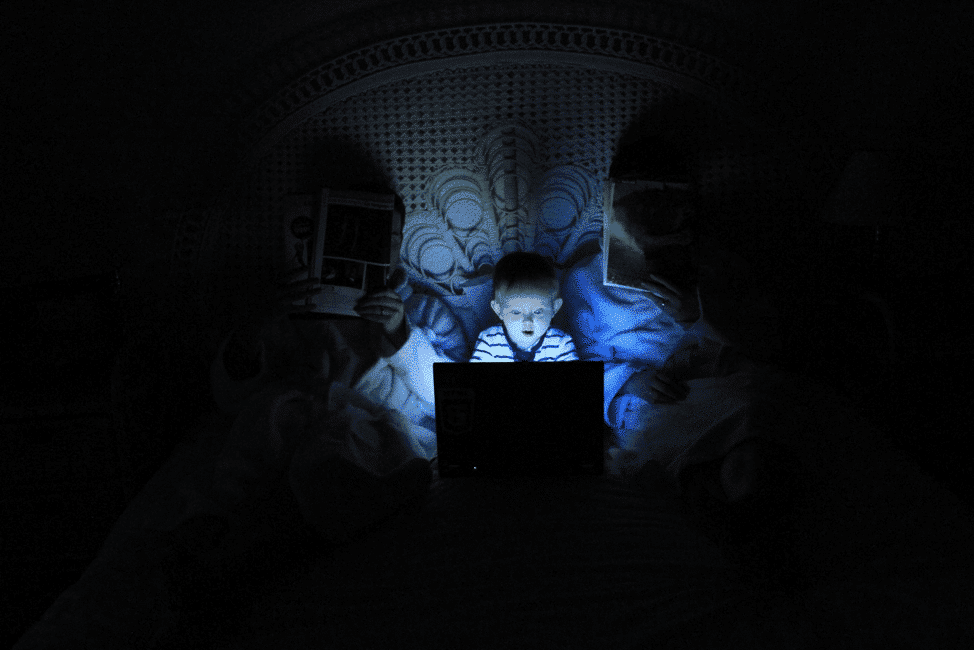
We love the constant, on-demand access to the Internet. Almost nothing can compete. But we all have those times when we wonder, is it too much? How does frequent access to tech impact our brains? Is there a detrimental effect when our brains are still maturing? Might it be negatively affecting our children’s mental health? Does what we view make a difference? Where is the line drawn between staying up to date on current events versus compulsively consuming distressing news? Ensure that your family is protected from excessive negativity online with our Screen Safety Essentials Course. This mega course offers all GKIS course content for parents and families to provide the tools necessary to navigate the internet safely and grow closer as a family. Today’s GKIS article covers the dangers of doom-scrolling and what can be done to prevent it.
What is ‘doom-scrolling’?
Doom-scrolling refers to the excessive consumption of distressing online news coverage. This phenomenon increased exponentially as people became more active on the internet in conjunction with the rise of concerning national and international news. On the one hand, staying informed may be a coping mechanism. Browsing opportunities allow people to “reassert control over the situation” by actively seeking knowledge about a novel context or threat.[1]
For example, during the height of the Covid-19 pandemic, many people became obsessed with news about variants, vaccines, and the number of cases around the world and within one’s local county.
Another example of doom-scrolling is the high viewer rate of news about the Black Lives Matter protests during the summer of 2020. It was too easy to become glued to our screens watching videos documenting police brutality and protester violence unfiltered and in real time on TV, Facebook, Twitter, YouTube, and TikTok. The desire to stay up to date on this hot topic social movement grew so intense that people commonly spent several hours a day watching violent videos.
Our Attention Has Been Commodified
In recent years, scary news items permeate the airwaves, with reports of mass shootings and alarming weather events due to climate change. The public’s trust in the government has reached an all-time low, with divisively high levels of partisanship and serious concerns about U.S. democracy. Sensationalistic and divisive programming that sparks outrage is intelligently designed to capture our attention and keep us watching. Media and social media companies recognize that more eyes on the story result in more profit.
Internalizing Negativity
Negative media and news coverage can affect our mood and hopes for the future. Anxiety, depression, and the adoption of a nihilistic outlook may result from doom-scrolling. Constant exposure to negative news content can lead to a low expectation for positive future outcomes which can lead to feelings of hopelessness – a primary precursor to suicidality.[3] For example, a doom-scrolling teenager may be led to wonder if applying for college is worth it if global warming is going to end the world by 2030, or even consider if it’s worth staying alive to witness the decline. Staying informed can come with a serious mental cost.[2]
Compulsive Use and Desensitization
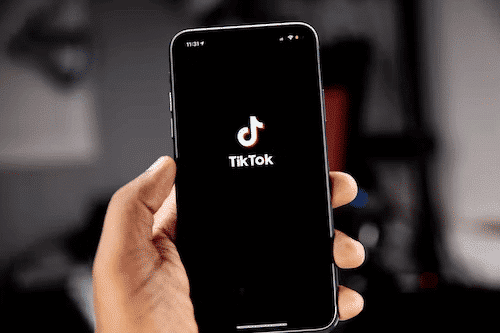
Twitter, YouTube, Facebook, and TikTok are popular social media sites that offer real-time footage of violence. From intense protests and desperate attempts to escape a mass shooting to families trying to escape the horrors of war. There’s no end to the horrific content you can consume.
Gen Z social media users (born between the years 1997-2013) particularly possess a collective passion for activism and justice paired with a prominent collective online presence. However, this drive seems to also come with an obsession with sharing, retweeting, and reblogging violent content to encourage others to stay up to date. While this may have the good intention of bringing attention to serious issues, the constant access to intense videos, photos, and articles desensitizes consumers. To read more about how Gen Z online users differ from Millenials, check out my GKIS article Millennials, Gen Z, and the Internet: Generational Divides.
Compare and Despair
A demanding social media presence may also lead to a more negative self-appraisal. Children, tweens, and teens are especially susceptible to compare and despair due to an immature personal identity and impoverished life experience. The more the individual relates to the influencer, the more impact the content may have. Our GKIS article, Is My Selfie Good Enough? How Screen Media Drives Beauty Pressures That Distress Kids and Teens, dives deeper into how social media can heighten comparison and feelings of inadequacy. Check it out to learn more.
PTSD
Post-traumatic stress disorder (PTSD) is a mental disorder in which a person struggles to recover from experiencing or witnessing a traumatic event. Our article, Live Streaming Can Cause PTSD in Adults and Children, discussed the different ways online violence can lead to PTSD. In Kids Watched a Facebook Live Suicide That Turned Into a Trending Meme, desensitization and the impact of watching shocking and violent content on the mind and body are discussed. And in Graphic Livestream Horrors, the dangers of watching violent events unfold in real-time and the tolerance of violence are discussed. This series provides additional information on what can happen to those who excessively consume violent content online, as well as how to protect your children from such possible outcomes.
Children with social media accounts unintentionally come across negative news coverage because social media algorithms suggest videos and posts after even the slightest interaction, which can expose them to increasingly inappropriate content. To help your tweens and teens avoid inappropriate content and avoid doom-scrolling and desensitization, check out our Social Media Readiness Course. This course can help prepare your kids for safer screen use and prevent psychological illness with emotional wellness tools.
How To Protect Your Children While Staying Informed
Parental Supervision
Children, tweens, and teens are particularly susceptible to distressing online content. Our Screen Safety Toolkit offers an outcome-based resource guide with recommendations and links to our favorite parental control systems necessary for effective parental supervision.
Stay Informed
Our free GKIS blog articles offer a great way to stay in the know on all topics surrounding internet culture and safety, which can help parents keep their children safe from digital injury.
Have Important Family Conversations
Our free Connected Family Screen Agreement provides tools to educate and empower families to set digital boundaries and expectations while building stronger family relationships. Having group discussions about tech, mental health, and current events offer an important way to educate kids and answer your child with openness and honesty at a developmental level they can understand.
Dr. Bennett believes that providing children and teens the skills necessary to navigate the internet responsibly is important for not only individual development but for family development, which is why the Connected Family Course can help families connect and avoid potential digital injury. Finding a middle ground between education and overexposure exists and it can be implemented safely.
Thanks to CSUCI intern Tracy Pizano for researching doom-scrolling online and its effects on the mental health of those who participate in the habit and for co-authoring this article.
I’m the mom psychologist who will help you GetKidsInternetSafe.
[1] Buchanan, K., Aknin, L. B., Lotun, S., & Sandstrom, G. M. (2021). Brief exposure to social media during the COVID-19 pandemic: Doom-scrolling has negative emotional consequences, but kindness-scrolling does not. PLoS ONE, 16(10). https://doi-org.ezproxy.csuci.edu/10.1371/journal.pone.0257728
[2] Price, M., Legrand, A. C., Brier, Z. M. F., van Stolk-Cooke, K., Peck, K., Dodds, P. S., Danforth, C. M., & Adams, Z. W. (2022). Doomscrolling during COVID-19: The negative association between daily social and traditional media consumption and mental health symptoms during the COVID-19 pandemic. Psychological Trauma: Theory, Research, Practice, and Policy. https://doi-org.ezproxy.csuci.edu/10.1037/tra0001202
[3] Hepburn, S. R., Barnhofer, T., & Williams, J. M. G. (2009). The future is bright? Effects of mood on perception of the future. Journal of Happiness Studies: An Interdisciplinary Forum on Subjective Well-Being, 10(4), 483–496. https://doi-org.ezproxy.csuci.edu/10.1007/s10902-008-9102-9
Has your child ever had an epic freakout because you demanded that they turn off their screen? Or completely went unhinged when you wouldn’t buy them a video game they wanted or allowed social media before you thought they were ready? It turns out that there is a neurological reason for that reaction beyond child entitlement and fragility. Too much screen time can result in overstimulation that results in short- and long-term effects in kids. To help manage your child’s screen time and avoid overstimulation, check out ourScreen Safety Essentials Course. This course will help your family achieve screen sanity with our weekly parenting and family coaching videos featuring research-based tools from Dr. Tracy Bennett. In this article, we discuss sensory overload, how it may be affecting your children, and how to avoid it.
Our Digital Babysitter
Raising kids is hard! And some kids are more difficult to entertain than others. Screen time can be a win-win – kids are happy, and parents can get things done. Dr. Bennett, Founder of GetKidsInternetSafe, says screen time can be a great thing, but it can also be a source for a host of digital injury. In her book Screen Time in the Mean Time, she describes screen injuries in the areas of health, interpersonal exploitation, and financial exploitation.[4]
She says that, although screen time matters, content matters too. Educational content with a calm, predictable, and sequential pace is easier for children to process than frenetic, fast-paced content. If your child melts down when you tell them to turn off screen time, you may need to be more aware of the content they are watching so they don’t suffer from sensory overload.
What is sensory overload?
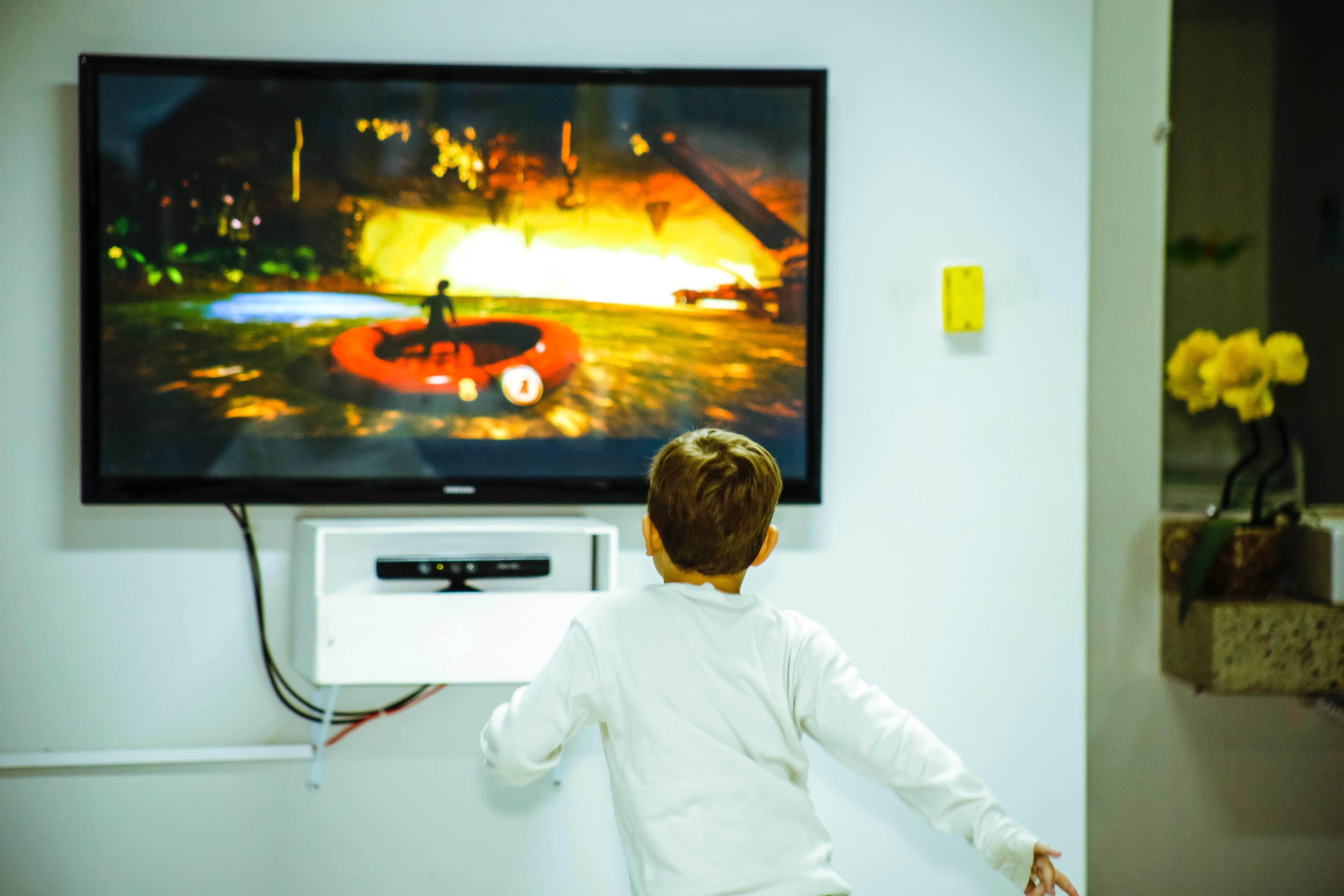
Sensory overload refers to overstimulation that occurs when sensations from the environment, like playing video games or watching fast-paced videos and television programming, can become overwhelming.[2] For young children with maturing brains and difficulty with emotional modulation, sensory overload from unmanaged screen time can result in irritability, temper outbursts, hyperactivity, and aggression. Children with disabilities, like autistic spectrum disorder or attention-deficit/hyperactivity disorder, are particularly vulnerable to sensory overload.[4]
What does frenetic, fast-paced content look like?
In 2006, YouTube launched the child educational program CoComelon. By September 2022, CoComelon had 144 million subscribers and over 139.24 billion views.[5] The demand and popularity of the CoComelon led to the creation of the TV show in 2021, which also became a hit sensation. CoComelon consistently ranks in the top ten most popular shows on Netflix.
CoComelon is known for its fast pace and bright animation. These aspects of the program are hypothesized to stimulate the release of the feel-good chemical, dopamine, in kids’ brains.[1] Dopamine also plays a key role in addiction. This rush of dopamine that kids experience while watching the show is what makes them want to watch it repeatedly.[3] Some exposure is likely harmless. However, some kids may have a vulnerability to such fast-paced content. Too much watching can lead to problems.
Passive television while doing homework can result in sensory overload.
Frenetic screen content isn’t the only thing that can lead to problems with sensory overload. In her book, Screen Time in the Mean Time,Dr. Bennett writes that passive television can also strain child cognitive resources.
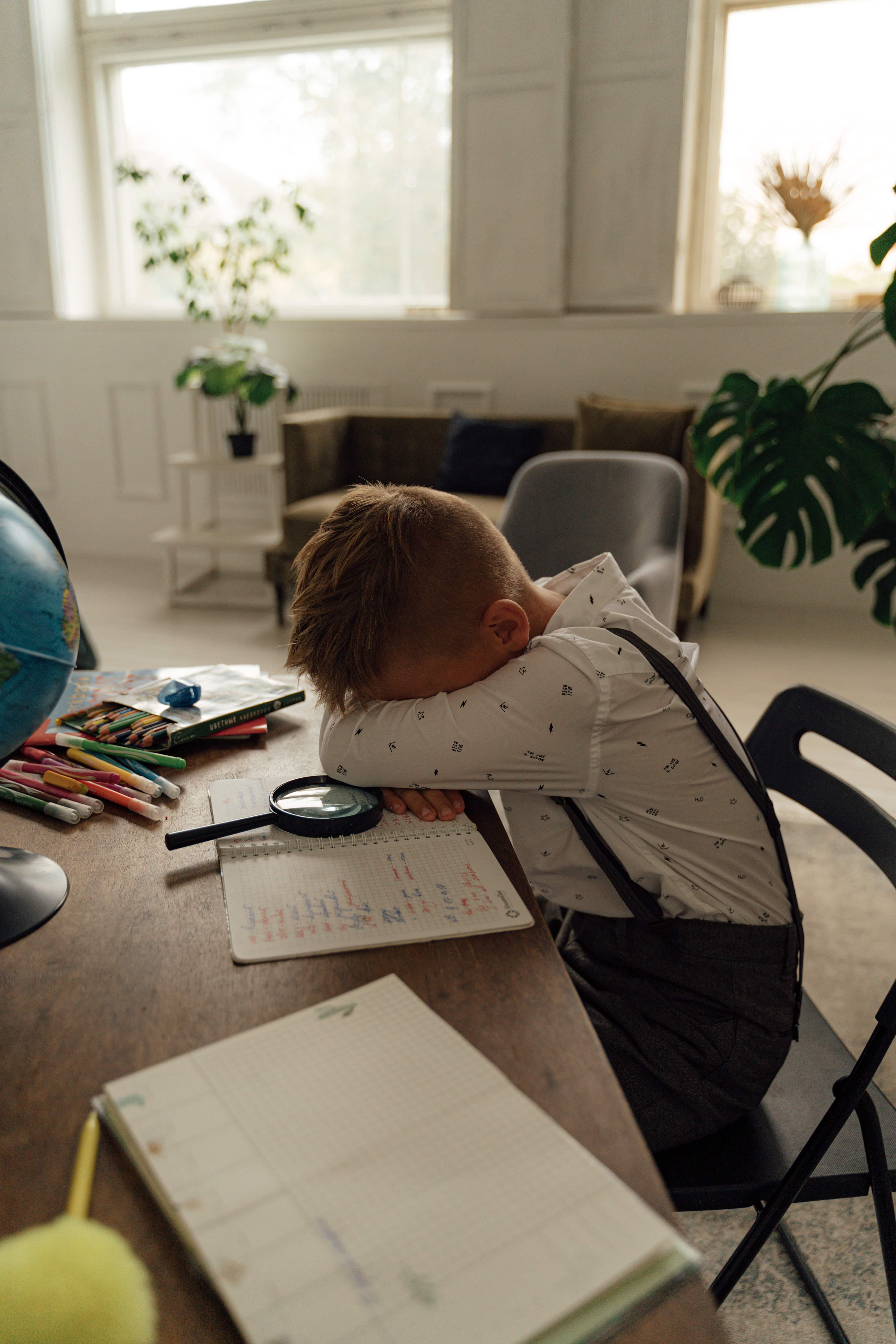
Passive television refers to the television playing in the background while we’re eating dinner, doing homework, or just for pleasure. Having the television on in the background while your kids do homework creates a battleground for your child’s attention. This can negatively affect their quality of learning and academic performance.
Dr. Tracy Bennett writes:
Watching TV and doing homework are both demanding tasks that compete for visual and verbal cognitive processing. As a result, the toggling required to attend to both tasks will impair learning and homework quality. Research studies have demonstrated that watching television, or even just having it on in the background, impairs reading performance, recall and recognition, and even your memory of what you’ve watched on TV.[4]
Entertainment and big tech havecommodified your child’s attention.
Because entertainment corporations recognize that their profit depends on our screentime, they’ve created manipulative technology to capture our attention. With features like autoplay, companies like Netflix, YouTube, and TikTok know how to keep us binge-watching. The autoplay feature automatically dishes up new content without user input to promote addictive watching habits. With features like autoplay, can you be confident that Netflix is prioritizing your child’s learning and mental health over its profit?
Signs That Your Child May be Suffering from Sensory Overload
Chronic moodiness and irritability
Fatigue and low energy
Difficulty making decisions
Temper outbursts, especially after a long screen time binge
Aggression
Headaches, including ocular headaches and migraines
Difficulty falling asleep and staying asleep
Nightmares[6]
How can you help your child avoid sensory overload?
Take initiative and manage what your children are able to access with help from ourScreen Safety Toolkit.
Set up sensible household rules (like screen-free zones) and amazing learning centers with help from our Connected Family Course.
Help your children learn how to recognize the red flags of digital injury and practice psychological wellness tools before they adopt social media with our Social Media Readiness Course.
Opt for the works with our megacourse the Screen Safety Essentials Course. This low-cost option offers all GKIS Courses and Agreements in one easy place. Parents-only videos and family videos from Dr. B offer 26 easy lessons that you can sprinkle in once a week to make sure you cover everything!
Share Dr. B’s important teachings by telling your school, church, or temple about her custom webinars!
If you need extra support, check out our GKIS Workshops and Dr. B’s Coaching options!
Thanks to CSUCI intern, Sarah Hernandez for researching and writing about sensory overload from screen time.
I’m the mom psychologist who will help you GetKidsInternetSafe.
When children use online search engines, their search results can contain anything one can imagine – the good, the bad, and the ugly. Social media platforms like TikTok, YouTube, Instagram, Snapchat, Facebook, and Twitter pose a particular threat, offering potentially dangerous data-sharing and location information to cyberbullies and predators. In 2022, the California Age Appropriate Design Code Bill (AB 2273) passed. This bill aims to protect our children’s online activity by requiring platforms to make changes.[1] With online activity dangers and increasing rates of digital injuries, psychologist Dr. Tracy Bennett saw the need to educate tweens and teens about social media in a fun and engaging way. To help, she created the GKIS Social Media Readiness Course. She also created the GKIS Screen Safety Toolkit for parents to be able to filter, monitor, and manage their kid’s internet activity. Check them out for help with your family’s online safety. Today’s GKIS article discusses California’s newest online child privacy protections bill.
Recent Child Safety Bills
The California Age Appropriate Design Code Bill
The California Age Appropriate Design Code Bill was introduced by California State Assembly members Buffy Wicks and Jordan Cunningham and unanimously approved by a 33-0 vote in 2022.[1] It’s modeled after the United Kingdom’s age-appropriate design code. It is the first legislation in the United States to impose restrictions and data protection obligations on businesses providing services to users under the age of 18. It also includes requirements that online sites conduct a data protection impact assessment before new services are offered.[3]
The Kids Online Safety Act of 2022
The Kids Online Safety Act of 2022 (KOSA) is a kid’s online safety act that aims to empower both parents and children to have control over their online activity.[5] It would provide children and parents with the right tools and safeguards by requiring that social media platforms have protective options regarding algorithms, product features, and information.[5] KOSA would require social media platforms to have a duty to prevent harm to minors in its many forms.[5] The KOSA bill requires that non-profit organizations and academic researchers get access to data from social media platforms to conduct research regarding harm to the well-being and safety of minors.[5]
The Children and Teens Online Privacy Protection Act
The Children and Teens Online Privacy Protection Act (COPPA 2.0) is legislation that also aims to strengthen minors’ online protections.[6] It would amend the original 1998 act and strengthen the online collection and disclosure of information of children up to the age of 16.[6]
Enforcing The California Age Appropriate Design Code Bill
This act could have significant consequences when businesses must amend data management starting July 1, 2024.[3] Enforcement of this act will be taken seriously as violations can result in the California Attorney General seeking an injunction and a civil penalty of up to $2,500.00 per affected child per each negligent violation or $7,500.00 per child for each intentional violation.[3]
It applies to for-profit organizations that do business in California and meet one of the following three requirements
they must have annual gross revenue of over $25 million
they must buy, receive, sell, or share the personal information of over 50,000 consumers, devices, and households
they must derive 50% or more of annual revenues from selling consumers’ personal information.[4]
Who will be impacted?
California is the only state implementing the act currently. Thus, only children in California will be protected. This act is a big deal because businesses subject to it are prohibited from taking actions like using the personal information of a child in a way that is materially detrimental to their well-being, using dark patterns to lead or encourage children to provide personal information, or profiling children by default.[3]
This act will ensure the highest possible privacy settings by default for users under 18. It will also bar data collection on precise locations of children under 18.
The creation of rules will be subjected to future rounds of rulemaking, and the Attorney General may look for recommendations from the Children’s Data Protection Working Group on issues addressing rulemaking.[4] The act will establish the Children’s Data Protection Working Group tasked with developing recommendations and best practices to address critical uncertainties of the bill.[4]
Predators can easily prey on children with social media geo-location features. The code would require that companies make the safety and privacy of children a priority in the design of all digital services and products that children will have access to.[2] The code will restrict the detrimental profiling of kids and data collection, minimizing the risk of risky connections and harmful content.[2]
The bill will also require that children get the highest privacy settings by default. The use of nudge techniques that encourage kids to weaken privacy protections will be prohibited, and geolocation will be switched off.[2] It is no secret that children’s data is often used to create algorithms and features that harm children.[3] This code would stop this by making the companies stop using data that will prevent potentially harmful content from reaching your child.[3]
Helping Parents Better Protect Their Children
Children now more than ever face the most sophisticated online social media platforms and search engines. As the ever-evolving internet platforms have changed, psychologist Dr. Tracy Bennett has seen firsthand the devastating effects of digital injuries on children and their families. To help parents and families prevent digital injuries, we created several online courses like the GKIS Screen Safety Toolkit for parents of kids of all ages, the GKIS Connected Family Course for parents with children of elementary school age, and the GKIS Social Media Readiness Training for tweens, teens, and their parents. She also offers private personal Coaching and Workshops to parents who have more questions or looking for additional help tailored for their unique child.
Thanks to CSUCI intern, Janette Jimenez for researching California’s Newest Child Online Privacy Protections and authoring this article.
I’m the mom psychologist who will help you GetKidsInternetSafe.
Even with parental oversight, children are often exposed to harmful and dangerous ideas on the internet. It’s too easy for an online influencer to gain a large platform to spread radical ideas and infect highly impressionable kids. Andrew Tate, a person who skyrocketed to internet fame in 2022, is one of these influencers. Tate is well-known for creating violent and sexist online content and has amassed billions of views. Children have unprecedented, unfiltered access to this information everywhere, particularly on social media platforms. But with Dr. Bennett’s Social Media Readiness Course, you can help your tween or teen learn to navigate social media more safely. Even one view is too many. Check out our Social Media Readiness Course today. Today’s GKIS article describes the wildly popular platform of Andrew Tate and details the risks that may be posed to your child online – and how to avoid them!
Who is Andrew Tate?
Andrew Tate is a hugely popular American-British social media personality who gives men and young boys dating, financial, and life advice. He was a four-time world champion kickboxer that appeared on the TV show Big Brother in 2016. This was short-lived as Tate was fired from the show due to a video that surfaced on the internet of him beating a woman with a belt.
Tate then founded a website called Hustler’s University where he offers online courses about how to make money from online business. You also get access to his private Discord server, where there is more information about making money through crypto, E-commerce, and stocks. Various reviews about Hustler’s University allege much of the information being sold can be found on other websites for free. Many people have also described it as a multi-level marketing scam.
Tate claims his financial success is from his webcam business and crypto. However, the ethics of how he gained his wealth is questionable. In April 2022, Tate and his brother Tristan were raided by the Romanian police due to a tip from the US embassy that a young American woman was being held hostage in their home in Romania. Authorities have stated that there is an ongoing investigation into human trafficking and rape allegations.
His Meteoric Rise (and Downfall) to Internet Fame
It is almost impossible to be on social media without seeing a clip of Andrew Tate voicing his controversial opinions. He started gaining popularity during the early summer of 2022. His popularity skyrocketed on various social media platforms such as Instagram, Tiktok, and Twitter. He has appeared on multiple popular podcasts and Twitch streams. He also has his own YouTube channel called Tate Speech.
Involuntary Celibates
The statements Tate has shared on social media follow the ideology of the involuntary celibate (incel) movement, an online subculture of self-identified involuntarily celibate men who express hateful attitudes towards other men who are successful with women and hold misogynistic beliefs. In the article, Could Your Son be an Incel in the Making?, we deep dive into the incel movement and explain how to protect your children from online hate groups.
In a clip discussing the #MeToo movement, Tate said, “If you put yourself in a position to be r***d, you must bear some responsibility.” In another viral TikTok video, he says, “It’s bang out the machete, boom in her face, and grip her by the neck. Shut up bitch” if a woman were to accuse him of cheating. He has gained 4.3 million Instagram followers with many of these videos reaching billions of views.
Rightfully so, Tate’s rhetoric has sparked enormous public outcry. Yet many people post support for his outrageous statements. Unfortunately, even bad attention is good attention on social media. Too often the loudest and most controversial influencers attract the biggest followings. Many social media platforms such as Tiktok, Twitter, Facebook, Instagram, and YouTube banned him.
Potential Risks Children May Face
Sadly, kids don’t have the cognitive skills or experience to successfully maneuver through the complex moral dilemmas posed on social media. Sometimes they emulate influencers because they see that it attracts attention. Teachers have been sharing their experiences of hearing young students repeating things Andrew Tate has said to other students and are alarmed about his influence.
Potential risks children may face when exposed to inappropriate online hate speech include:
a sense of inferiority and shame
hateful attitudes and beliefs about women that can have long-term impacts on the ability to develop healthy relationships
low self-esteem
desensitization to immoral ideas
exposure to scammers and those intending to exploit kids
mental health problems
Here’s What You Can Do
Andrew Tate is not the first and won’t be the last to spread dangerous rhetoric on the internet. Get equipped with the proper tools to help you and your children stay safe while surfing the wild web. Check out our most comprehensive parent and family course, our Screen Safety Essentials Course. This course provides you with parenting and family coaching videos, support, and other valuable information to help you build a safer screen home environment.
Thanks to CSUCI intern, Liliana Esquivel, for discussing the popular platform of Andrew Tate and detailing the risks that may be posed to children online.
I’m the mom psychologist who will help you GetKidsInternetSafe.
Drug addiction is on the rise with many drug dealers finding teen customers on social media.[1] Once engaged with the dealer, teens are vulnerable to drug use, solicitation for nude photos and videos, coercion, extortion, and even violence. Once hooked, dealers may also use their victims to recruit other teens. Improving their methods one teen at a time, dealers become experts at persuading kids to try that first pill, often lying about what it is and how it may affect them. Most parents would deny that their kids are at risk, insisting that they’ve spoken to them and know their kids would never be so foolish. But if you’re not tracking content on your kids’ devices because you believe they deserve digital privacy, can you be so sure? To help close risk gaps and set appropriate expectations, check out our Screen Safety Essentials Course. With weekly family and parenting videos, you can be confident that you are doing all you can to protect your kids from risks like these. Today’s GKIS article shares a true story about a 16-year-old girl who got caught up in this shocking series of tragic events driven by social media use. Learn about how she got started, the workarounds she used, and what her parents would recommend to help keep your teens safe.
Morgan’s Story
Tom recently shared a tragic story with us about his 16-year-old stepdaughter, Morgan. Morgan is like any high school sophomore. She loves fashion, her friends, and her 17-year-old boyfriend, Parker. She earns straight As and loves to ride horses. Tom and his wife Julie frequently have Morgan’s friends and boyfriend over to the house to hang out and occasionally Morgan and Parker would go out too. Parker seemed like a good kid, and they insisted on meeting his parents right from the beginning. They didn’t think twice when, over time, Morgan started mouthing off, rolling her eyes, and pushing back against the rules. They figured it was normal adolescent boundary-pushing. Besides, Julie and Morgan moved to this new community only a year ago before Tom and Julie got married. They figured there would be some growing pains as she figured out her new school and friend situation.
Over time, however, Morgan’s defiance escalated. She was constantly on her phone, isolating herself in her room, coming home past curfew, and eventually started sneaking out at odd times “to go for a walk.” Grounding her and taking her phone didn’t seem to help, and Julie was reticent to repeatedly punish her due to the screaming fights that would ensue when she tried to implement consequences. Julie felt like maintaining a cooperative alliance with Morgan was more effective than punishment. So, she worked hard to spend time with her daughter and felt that she’d grow out of the teen attitude.
More Than Teen Rebellion
Tom realized it was more than teen rebellion when his neighbor, who worked in law enforcement, came by and
reported that he’d seen Morgan buying drugs from different men that would drive up to her during her walks. Julie and Tom were shocked and terrified. They put Morgan into therapy and drug-tested her. When she came up positive for multiple drugs, they put her in intensive outpatient therapy for teens who abuse drugs. They tightened up on their rules and hoped that everything would sort out now that Morgan was getting professional help.
Over time, Morgan’s attitude got better, and she said she liked her therapists. Until one day Julie discovered fentanyl tablets in Morgan’s room and realized they needed to investigate further. Although Julie was still reticent to invade Morgan’s privacy, Tom insisted they confiscate Morgan’s phone and restrict social media and socializing privileges until they could better understand and control the situation.
Phone Content Reveals the “Real” Story
When they accessed Morgan’s phone, they discovered she was swept up in many dealings with multiple drug dealers, most of them adults and some in gangs. They also saw text exchanges that demonstrated that she and her boyfriend were offering nude photos and videos of them having sex in exchange for drugs. It was also clear that Morgan had sex with some of the dealers in exchange for drugs. Julie and Tom were heartbroken and reached out to law enforcement.
From the phone content, several arrests ensued and Morgan filed a restraining order against Parker. The videos revealed that both teens were under the influence during the sexual encounters and Parker may even be charged with a crime since Morgan is heard saying “no” in some of the videos.
Morgan was immediately enrolled in an online charter school and has been admitted to several inpatient drug rehabilitation programs. She takes the prescription drug, Suboxone, to help her avoid opioid withdrawal and stay off fentanyl. Tom and Julie deleted her social media profiles and don’t allow her any screen use except when she borrows her mom’s phone for browsing here and there. Despite these measures, she has found alternative ways to communicate with old friends by using and sneaking other people’s devices and using the computers at school. As she “unlearns” the manipulative, unhealthy behaviors typical of addiction, she has been kicked out of various schools, friend groups, extracurricular activities, treatment centers, and therapy groups. It will be a long road to healing for Morgan. Although Julie and Tom did the best they could, they wish they would have done more and sooner.
Tom’s Take-Away Advice
When we asked Tom what he wish he’d have done, he shared the following suggestions:
If I had known how rampant drug sales are among middle and high school students on social media platforms like Snapchat and Instagram, I would not have allowed any social media until the age of 16 minimum
I would have set up more stringent monitoring on all devices and computers, and I would have provided a talk-and-text-only phone with no way to add apps and no way to access the Internet until the age of 16.
I would have volunteered to be the pickup parent instead of the drop-off. Kids are smart. They knew I would catch them if they were under the influence when I picked them up.
I would have shut off our Wi-Fi network every night and checked which devices were using our Wifi. Morgan was able to sneak a “burner phone” at night until he realized that he could monitor WiFi use.
Finally, I would have set up random drug testing as a general policy. Parents who assume that they have no reason to drug test their kids because they’re athletes, straight-A students, or generally good kids still can’t be confident their kids are not being influenced by dangerous others. Drug testing is an insurance policy to help keep your kids alive.
If you want to get into smart parenting habits before your kids run into trouble:
Use our free Connected Family Screen Agreement (and weekly GKIS Blog articles) to set rules and expectations when your kids first get ownership over digital devices and social media platforms. The first rule is that nothing on your device is private, and parents get anytime access.
Purchase our Screen Safety Essentials Course to support the whole family and parenting team for better screen safety and a more honest and cooperative home life.
Check out Social Media Readiness Course for tweens and teens. This course offers 10 modules that teach screen safety issues and psychological wellness tools to optimize mental health in both real-life and digital landscapes. Each module offers a quiz to demonstrate mastery of content.
Finally, talk to your kids, be consistent with monitoring and screen use rules, and don’t assume they won’t experiment with dangerous situations. To learn more about which social media platforms are popular for drug deals and the emoticons they use, check out our article A Teen’s Addicts Confessions About Online Workarounds.
I’m the mom psychologist who will help you GetKidsInternetSafe.
Virtual reality (VR) has become increasingly popular in the gaming community. VR allows consumers to experience new environments and activities that push the boundaries of creativity and possibility. Although VR offers excitement, studies have shown that the extended use of VR can lead to an uncomfortable mental health symptom called dissociation. Find out about VR-induced dissociation and the pros and cons of VR in today’s GKIS article. If you are worried about your kids’ extended use of VR gaming, our GKIS Screen Safety Essentials for the family offers weekly videos and downloads so you can achieve a peaceful fun home with healthy screen time. With 26 quick, fun lessons, our Essentials Course offers tons of ideas to keep you connected and safe. Keep reading to learn how to maintain your kids’ safety while giving them access to virtual fun.
What is virtual reality?
Virtual reality is gaming technology that simulates real or fantasy worlds that the players can immerse themselves into for a variety of activities. Immersion into the 3D VR world is possible by stimulating many senses all at once like vision, hearing, and touching.[1]
The Pros and Cons of VR Use
Pros
It’s fun and therapeutic!
VR can be really fun and exciting. It can serve as a mental break or escape from day-to-day routines and is a great way to connect with friends and meet new people with similar interests.
Access to new worlds and experiences can also be beneficial for those suffering from physical disabilities because they can experience activities that they cannot in the real world.
People with neurodevelopmental disabilities, like autism, can also benefit from VR. For example, an individual may use VR to learn how to better socialize in an environment where mistakes won’t lead to risks like in the real world. For example, as a behavioral intervention that works to help kids with autism, one of my patients has a goal of learning how to cross the street. Practicing in real life can be nerve-wracking and even dangerous due to the possibility of being hit by a car if my patient runs into the street from overstimulation. By practicing VR, he can eliminate risk as he learns to master this new skill.[2,3]
Work Training
VR also has potential benefits in the professional world as a safe way for training in many fields of work. For example, during the COVID19 pandemic, health care workers could interact with patients in VR without being exposed to the virus. VR has also allowed students and professionals to perfect skills and procedures before risking with real patients, like practicing a surgical technique for example.[4]
Cons
Feelings of Withdrawal and Disappointment with the Real World
For some people, what goes up must come down. Many players report feelings of sadness after play and a growing disappointment with real-life experiences. Tobias Schneider, a user of VR described feeling detached from the real world because it lacks the ‘magic’ and excitement VR has to offer. As an oculus user (a VR gaming system) myself, I recently went to their online forum and found that many users reported these feelings.[5]
Dissociation
Studies and forums have shown that VR has the potential risk of dissociation such as derealization and depersonalization. Derealization is this mental state where a person will feel so detached from their surroundings including people and objects, that the world will feel unreal. Depersonalization is this feeling that you are floating outside yourself. These types of dissociation occur for a variety of reasons, most typical in response to panic attacks and generalized anxiety. Theorists have described these symptoms as a defense that our bodies mobilize to protect us from stress. Other conditions that can cause dissociation include sensory deprivation, trauma, seizure disorders, dementia, and the use of hallucinogens or marijuana. Some people are even genetically prone to demonstrating this psychological symptom. Once a person dissociates once, they are more likely to dissociate again.
Although most people who dissociate describe it as a passing feeling, once one dissociates once they are more likely to do it again. For a minority of people, dissociation can occur often out of the blue in a condition called Depersonalization/Derealization Disorder.
A 2006 study examined the effects of VR use and found that for some players, episodes of dissociation increase after VR use. Even a gamer developer describes a time when they had to touch things around their surroundings after finishing a VR demo just to erase any lingering skepticism from her brain. If you look at the oculus forum, you will read many users complaining that their hands don’t feel like their own even after taking off the VR headset.[6,7,8,9]
Tips To Avoid the Negative Effects Of VR
Read your VR system’s instruction manual and safety warnings.
Start off with baby steps and play at a comfortable level that is not overwhelming.
Take frequent breaks when using VR.
When To Seek Professional Help
Having feelings of depersonalization or derealization that occasionally pass is common and should not necessarily cause alarm. But if these feelings of depersonalization or derealization become persistent and severe, this can be a sign of a physical or mental health disorder. You should seek immediate help from a doctor if these feelings are:
disturbing you or becoming disruptive to your emotional well-being,
become persistent and seem to never go away or improve, or
interfere with personal relationships, work, or other daily activities.
GKIS Resources That Can Help You Build Healthy Relationships with The VR World
Want a peaceful, fun home with healthy screen time, but don’t want to spend on something that won’t work for? Check out our GKIS Screen Safety Essentials Course. We have a free two-week trial so you can determine if it’s the right resource for you before you spend a penny. Plus, it includes videos and downloads from all GKIS parent courses that are designed for weekly viewing, making the material digestible and easy.
If you are not sure your child is ready to experience the online world check out our GKIS Social Media Readiness training. This self-paced course will get your kids ready for VR or anything in the online world. It includes mastery quizzes after each lesson to ensure they are prepared for online fun while maintaining safety. Guaranteed to make happy teens and relieved parents.
Digital injury is real, and many users run to forums when trying to understand the negative feelings they experience from the overuse of technology. With our GKIS Online Safety Red Flags For Parents, parents will learn which behavioral red flags to look out for that may signal that their kid is suffering from digital injury.
Virtual reality is a hot topic. You can also check out our other GKIS articles to learn more about the benefits and risks VR has to offer:
Thanks to CSUCI intern Ashley Salazar for researching and co-authoring this article. Prevent digital injury after VR use and check out our GKIS resources. They will help you launch a fun screen-safety dialogue. If you or a loved one is suffering from severe and persistent dissociation, please contact your health insurance provider and see a doctor.
I’m the mom psychologist who will help you GetKidsInternetSafe.