Millennial parents are constantly looking for ways to “life-hack” their parenting and make parenthood a breeze. YouTube channel ‘Ms. Rachel’ is the newest of the tools parents are utilizing, and the results are astonishing. Parents all over social media are praising ‘Ms. Rachel’ for teaching their children to talk (along with teaching skills like sign language). Virtual learning tools are a great way to help supplement the education your child receives, but with screen time comes burnout. To prevent screen time burnout for your child, try our safe-screen home setup and management with our GKISConnected Family Course, suitable for parents with toddlers to teens.
Who is ‘Ms. Rachel’?
‘Ms. Rachel’ is a teacher who created “Songs for Littles,” a YouTube channel that has 3.03 million subscribers and 1.7 billion views despite only having 102 videos made since its creation in early 2019.[1] Rachel Griffin Accurso (Ms. Rachel) creates educational videos that are backed by research and learning standards important for babies, toddlers, and preschoolers with the help of a large team. Accurso has a masters degree in music education from NYU and is currently working on her second masters in early childhood education.[2]
Accurso was motivated to create the channel after her own son was diagnosed with a speech delay. Her son inspired her to create a show to encourage language development and help children reach important learning milestones.[3] Accurso employs psychological principles like mirroring and encourages viewers to follow along with her sign and body language to build speech and language skills. Mirroring involves the mimicry of reflecting speech or behavior to help children learn to develop skills on their own.[4]
Social Media Praise
Parents all over social media have sung high praise for Ms. Rachel, even crediting her for being the reason their children say their first words. Beyond just speaking, users have also shared videos of their kids expressing themselves using sign language.
TikTok user Cw1908 shared a video of her 2-year-old daughter signing and saying, “I want more milk, I want more.”[5] The comments of the video are filled with parents sharing their experiences with Ms. Rachel as well. TikTok user Yesys13 writes, “OMG! My daughter is almost 3 and has a speech delay. Mrs. Rachel has helped her communicate with us a lot easier without frustration!”[6] User Sweetness.103 writes, “I play Ms. Rachel and my baby can read for my grandbaby.”[7]
Even parents who are cautious about screen time in infanthood share their praise for Ms. Rachel and share that the benefits outweigh their anxieties. TikTok user Nataliaa_calles shared, “I was very hesitant to allow screen time with Ivy. I heard many kids’ shows become addictive. I researched a lot of different YouTubers to help my daughter’s brain development, and Ms. Rachel was the best. Ivyanah has now learned ‘momma’ (6 months old). She’s been saying it for weeks now.”[8]
Ms. Rachel’s videos seem to help both children who are just developing their language skills and those who are developmentally delayed. Comment by user Irisloc112 on the aforementioned video states, “My son has no word at almost 3. We started watching Ms. Rachel, and now he doesn’t stop talking 5 months later.”[9]
It is not just moms on TikTok who are praising Ms. Rachel. Jasmin, 27, shared with GKIS all about how her child has learned to talk with the help of Ms. Rachel’s videos. “I started playing Ms. Rachel for my son when he was about 3 months old. I heard good reviews about Ms. Rachel and how she teaches kids important skills such as speech, movements, and emotions. I thought it was a great way for my son to learn at an early stage. From watching Ms. Rachel’s videos my son has learned how to say ‘Mama’ and ‘Dada’. His first word was ‘Mama’ at 7 months old. He always laughs and talks while I have Ms. Rachel playing on the TV. I would recommend Ms. Rachel’s videos because I believe they can help many kids who are behind in speech development or any kids who are struggling to express their feelings and emotions.”
It turns out that grandparents are crazy for Ms. Rachel too! Dr. Bennett shared that she just returned from a weekend vacation with her first grandchild and said that is the one show that keeps his attention the whole time. She found herself singing along and repeating Ms. Rachel along with him. He too is signing as well as talking and singing.
Benefits of Teaching Language Early
Most infants begin babbling around 4 months of age and say their first recognizable word around 12 to 18 months old.[10] Babies learn speech through socialization and the world around them. They closely watch their parents’ reactions to sounds and conversations with others. Through this observation, babies begin to mimic and mirror the people around them.[11] The most effective way to help your child learn to speak is by spending time talking and interacting with them. However, all parents need a break, so having an occasional virtual “co-parent” can help a lot.
Delayed speech development is associated with developmental risks down the line such as academic difficulties, learning disabilities, social difficulties, anxiety, and behavioral problems.[12] By teaching your child to learn language early, you can help to avoid these risks and reap all the benefits of early language development. Research has shown that developing a large vocabulary increases creativity.[13] Language development also helps children understand and process their emotions, analyze ideas, develop critical thinking skills, and set the foundation for most future learning.[14]
If you are worried about your child developing a digital injury such as screen addiction while utilizing virtual learning tools, check out our GKISScreen Safety Essentials Course. Co-viewing the content your child is consuming and using to learn can help your child avoid burnout. When you’re tired of watching a screen, they probably are too!
[5] Watkins, C. [@cw1908]. (2023). Its time for songs for littlessss!! #MrsRachel #songsforlittles #signlanguage #Shadybaby @Ms Rachel [Video]. TikTok. https://www.tiktok.com/t/ZTRWNRVM4/
[6] Rico, Yesi. [@yesys13]. (2023). Re: Its time for songs for littlessss!! #MrsRachel #songsforlittles #signlanguage #Shadybaby @Ms Rachel [Video]. TikTok. https://www.tiktok.com/t/ZTRWNRVM4/ [7] Ronnie. [@sweetness.103]. (2023). Re: Its time for songs for littlessss!! #MrsRachel #songsforlittles #signlanguage #Shadybaby @Ms Rachel [Video]. TikTok. https://www.tiktok.com/t/ZTRWNRVM4/
Since the onset of Covid-19, many establishments have become credit card-only and no longer take cash. With this change, getting a cash allowance for doing chores or mowing the lawn is slowly becoming a thing of the past. However, it is still possible for parents to reward their children and teach financial literacy with debit cards specifically made for children. Greenlight advertises itself as a tool to help empower parents to raise financially-smart children, if you are interested in a tool to help empower you to raise digitally-smart children, check out our GKIS Screen Safety Toolkit.
What is Greenlight?
Greenlight is a debit card and money app for families that is managed by parents or legal guardians.[1] Parents are able to load money onto their child’s card and manage where, when, and how much their child spends.[1] Greenlight was first founded in 2014 and is worth 2.3 billion dollars.[2] CEO Tim Sheehan says that through Greenlight, he is teaching children financial literacy worldwide through the tools provided in his application.[2]
According to CNET, Greenlight is one of the most popular debit card apps for kids and the best choice for kids’ debit cards out of five similar cards.[3] Greenlight accumulated 10,000 users within its first five months of operation and has more than four million accounts today.[4] The Greenlight website mentions that three out of four teens do not feel knowledgeable about their personal finance, and that they were created with the mission of changing that.[5]
Features of Greenlight Debit Cards
One of the reasons Greenlight is the most popular choice among competitors is that there are a number of features that their competitors do not have.
Greenlight has three different plans that parents can choose from, each at a different monthly rate. The least expensive plan provides debit cards for up to five children and offers an educational app, core financial tools, parental controls, a one percent savings reward, fun money skill games, credit for parents, and a “lite” version of investing for parents.[6] The next plan has investing for parents, investing for kids, a two percent saving reward, one percent cash back, greenlight black card, priority customer support, and three-times protection (identity theft, purchase, and phone protection).[6] The final plan has all the aforementioned benefits plus a five percent savings reward, family location sharing, SOS alerts, and crash detection.[6]
Greenlight provides an app for both parents and kids. It is one app but allows for two different experiences.[7] Parents are able to turn cards on or off from the app, get real-time spending notifications, instantly transfer money, and control where their kids spend their money.[7] Kids using the app are able to “Level Up”, a game that teaches kids financial literacy and allows them to learn skills from budgeting to investing.[8] The games provided are full of minigames, videos, and questions that allow for learning to occur.[8]
Benefits
Financial literacy is the ability to comprehend and use various financial skills like budgeting and investing.[9] By creating strong financial literacy skills early in life, children can learn valuable life skills that will benefit them in the future. These skills include knowing how to save for retirement, purchase a home, select insurance, create budgets, invest, buy a car, save for big expenses, use credit cards, and reduce unnecessary expenses.[10]
Financial literacy empowers children and equips them with the knowledge needed to navigate unique financial situations they will undoubtedly encounter in the future. According to a national survey, of 1203 college undergraduate participants, 46.1% of respondents have credit card debt with 27% exceeding $2000.[11] More than 79% of respondents also did not know that a credit score measures your risk to banks and can have a negative impact on future financial endeavors.[11] Through financial literacy, your children can avoid these mistakes and understand how to properly manage their funds which will allow them to avoid getting into debt at a young age.
Risks & How to Mitigate Them
As with any online financial transaction, there are always risks to placing your money in the hands of a virtual bank. However, according to the Greenlight website their debit cards are federally insured for up to $250,000 and come with Mastercard’s Zero Liability Protection.[12]
Allowing your child financial freedom can be worrisome for some parents who are unsure where their child may be spending their savings. Luckily, the parental controls in the app also allow parents to know where their child is spending their money and what they are spending it on. Communicating with your child beforehand about where they can use their money helps to avoid being caught off guard if their card gets declined for a certain purchase. We can help facilitate this healthy conversation with your child through our GKIS Connected Family Screen Agreement.
Imagine being a teenager getting ready for the big game, whether it’s soccer, basketball, or football. Your anxiety is buzzing as you try to stay focused. Friends and family are in the stands and your coaches are lasered in on you. Now imagine that, in addition to your friends, family, and coaches watching, there are also the college scouts and your scholarship is on the line. The weight of the world is on your shoulders. One false move and the dream you have been working on for years may be dashed. Now let’s add one more layer and imagine that right before you head onto the field you check your phone one last time. You tweet about being pumped because your social media engagement impacts your future in BIG ways. Then, ping, a stranger tweets about how you suck and that you will never make it in college sports…
How to Play the Game on Twitter
Although athletics are highlighted on many social media platforms, Twitter leads the pack for athletes to showcase their talent. Unfortunately, it’s also a place for people to troll, vent, and attack an athlete’s performance. While the public discusses their opinions of statistics and abilities, those who may impact your future watch the fray silently.
Often college offers are announced and celebrated on Twitter, leaving those who were passed up feeling shocked and demoralized. To better understand what that is like to have your talent showcased on Twitter, I recently interviewed a college quarterback named John*.
John was a 3-star athlete, which translates into being in the top ten percent of high school quarterbacks in the nation.[1] In high school, many college coaches were competing to recruit him. Other quarterbacks were in the same boat, all on Twitter tracking stats and who was tweeting about whom. He told us that a range of emotions was at play, elaborating, “When you see the tweets on how good another quarterback is, how he is ranked higher than you, and how he got his scholarship, those tweets make you more hungry to win.”
How to Make Twitter Work for You
We asked John if, alongside motivation, he often felt despair, But John insisted that, in his case, he didn’t consider Twitter to be all that bad. “It was a great way for me to reach out to schools, to put up my stats, and to get positive feedback from prospective coaches in the off-season. If I had a good game, I made sure to send it to colleges the next day and post it for others to see.” He said that when he wants news, all he has to do is look to the internet. When I asked about what would happen if he had a bad game, he chuckled and said, “When you have a bad game, people will post it for you. No need to worry about that.” Unfortunately, not every child can always take the negative and turn it into a positive. Our Screen Safety Essentials Course is a great way for your teen to learn to help them think before they tweet.
Everyone’s a Critic
When speaking with John about Twitter and college, he said that things change from high school to college. “There isn’t too much negativity on a high school player when they have a bad game, but that all goes out the window when you get to college. Betters [people gambling on the game] will always have something to say when you don’t perform like they hoped you would.”
According to cbssports.com, in a single sports season up to eight billion dollars are wagered.[2] To give a perspective of what eight billion is, that is what Instacart was valued at in 2019.[3] The college football season is about four months long, with the regular season being 12 games per team.
John elaborated, “If I had a bad game, it wasn’t uncommon for me to delete the Twitter app because I was already beating myself up enough for the loss. I didn’t need to hear it from people that don’t play the game. Breaks off social media are great because you have to kinda get in check with your reality.” I asked about tweets in high school hurting him or anyone he knew at the time. He responded, “Most people are pretty forgiving to high school kids as long as it’s nothing really bad. Your coaches care about you and do help guide you. If you make a mistake and tweet something bad, your high school coach and any coach interested in you at the college level will usually talk to you. These things I have seen have usually been a learning experience. However, when you get to the college level, that all changes. They expect you to be an adult and act accordingly.” For example, in 2015, professional quarterback Josh Allen was projected to be the first draft pick of the NFL until an old Tweet of his from high school days resurfaced. His status dropped to seventh, translating into a lot of money lost. To help prepare your tween or teen on how to handle such situations, GKIS has a great Social Media Readiness Course.
Overall, the athlete we spoke to loved playing and everything about it. John said there were times that weren’t as much fun but he took what was given to him and made it work for him. He turned a mean tweet into motivation to work harder than the next guy. When asked what advice he’d give a young athlete, he said, “Don’t waste energy on something that is out of your control. It’s only going to bring you down.”
Other Tips for How to Avoid the Pitfalls
Before you allow your tween or teen to go on social media, require that they take our Social Media Ready Course. This information optimizes the chances that they’ll not fall victim to digital injuries and maintain the best psychological wellness practice.
Review with your teen how to promote themselves and build a positive brand and how to avoid negativity and online conflict. We offer these strategies in our Screen Safety Essentials Course.
Detox from social media on occasion to regroup and gain perspective.
Keep good company with coaches, friends, and family. Accept support from those who support you on and off the field
Reframe negativity online so it motivates you. Don’t let it take a negative hold on your attitude toward the same, your competitors, or yourself.
If you found this blog article interesting, please check out some of our other GKIS articles about Twitter.
*John is a fictional name to allow the athlete interviewed to remain anonymously
Work Cited
[1] Nusser, J. (2018, December 15). Seeing stars: 247Sports, Rivals, and ESPN star-rating systems explained. Coug Center. https://www.cougcenter.com/wsu-football-recruiting/2013/2/5/3956800/rivals-scout-espn-247-star-rating-system-national-signing-day
[2] Dodd. D. (2022, November 17). College sports’ overlooked gambling issue: Improprieties being ignored as betting soars nationwide. Cbssports.com. https://www.cbssports.com/college-football/news/college-sports-overlooked-gambling-issue-improprieties-being-ignored-as-betting-soars-nationwide/
[3] Gebel, M. (2022, November 17). 30 companies worth at least $1 billion that didn’t exist 10 years ago. Businessinsider.com. Retrieved December 3, 2019, from https://www.businessinsider.com/companies-unicorns-worth-1-billion-didnt-exist-10-years-ago-2019-11
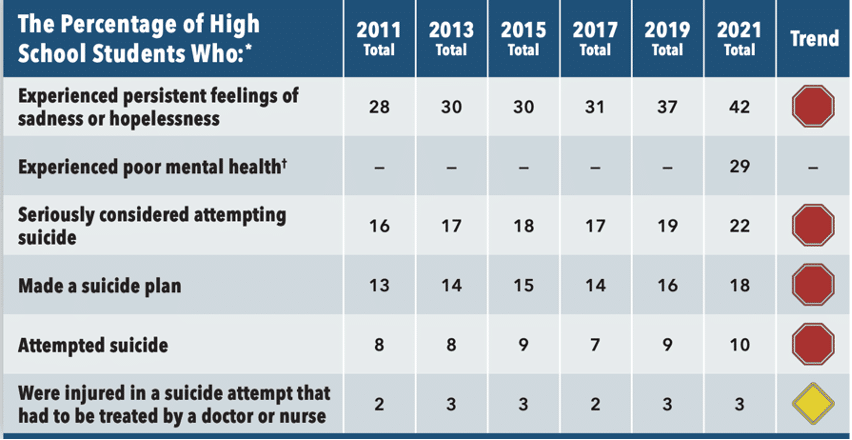
The CDC recently released its Youth Risk Behavior Survey reporting that an alarmingly high percentage of American teens, particularly girls and LGBQ+ youth, are suffering from distressing mental health symptoms. With stressors like isolation from the COVID-19 lockdowns, too much screen use, frightening news reports, increasing college pressures, increasing financial strains on families, and the compare and despair dynamics that arise from social media, kids are feeling the pressure. Child experts and advocates have called for the Biden administration to declare a youth mental health emergency and are begging schools to adopt better trauma-informed health and sex education. What are the contributors, and how can we help?
The Highlights
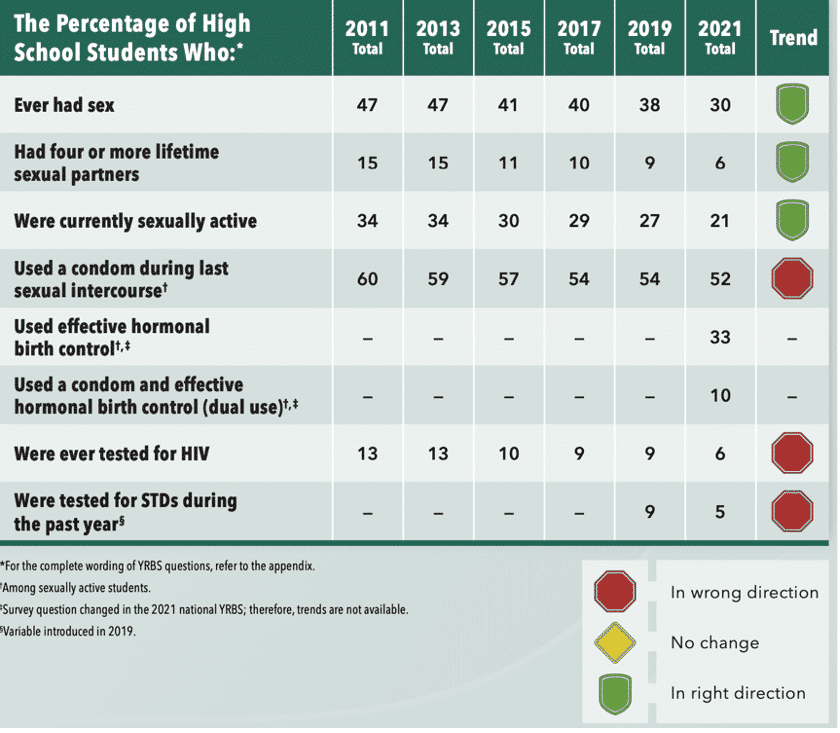
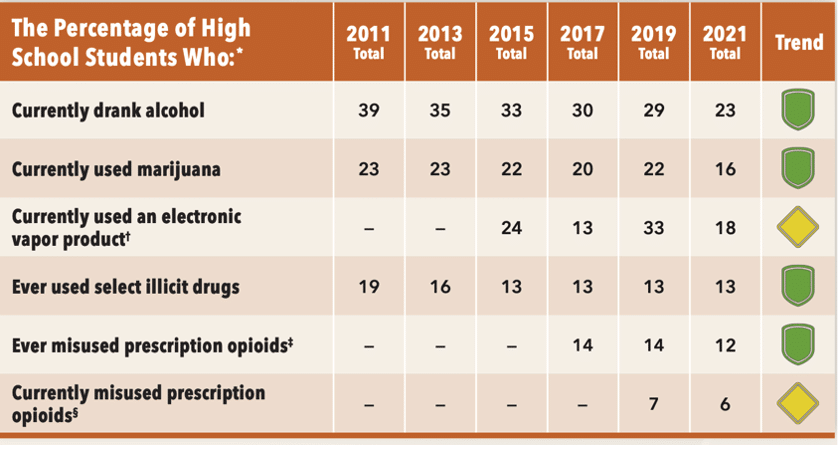
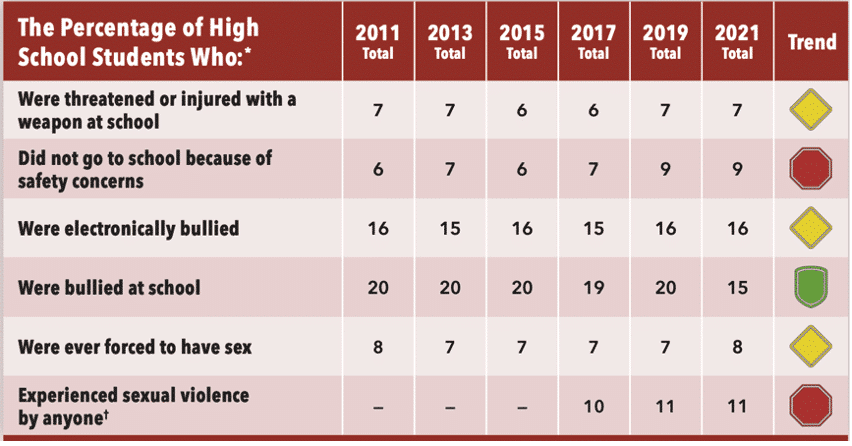
The CDC report data comes from 17,000 U.S. high school students who were surveyed in the fall of 2021 when most schools returned to in-person teaching. The good news is that overall sexual activity, substance abuse, and in-school bullying are down. The bad news is that teen safety concerns due to violence, sadness, hopelessness, and suicidality are up, especially among girls and LGBQ+ students (trans students were not identified for this survey).
Here is the Summary of Findings from The Youth Risk Behavior Survey Data Summary & Trends Report: 2011–2021
Sexual Behavior
Substance Abuse
Experiencing Violence
Mental Health and Suicidality
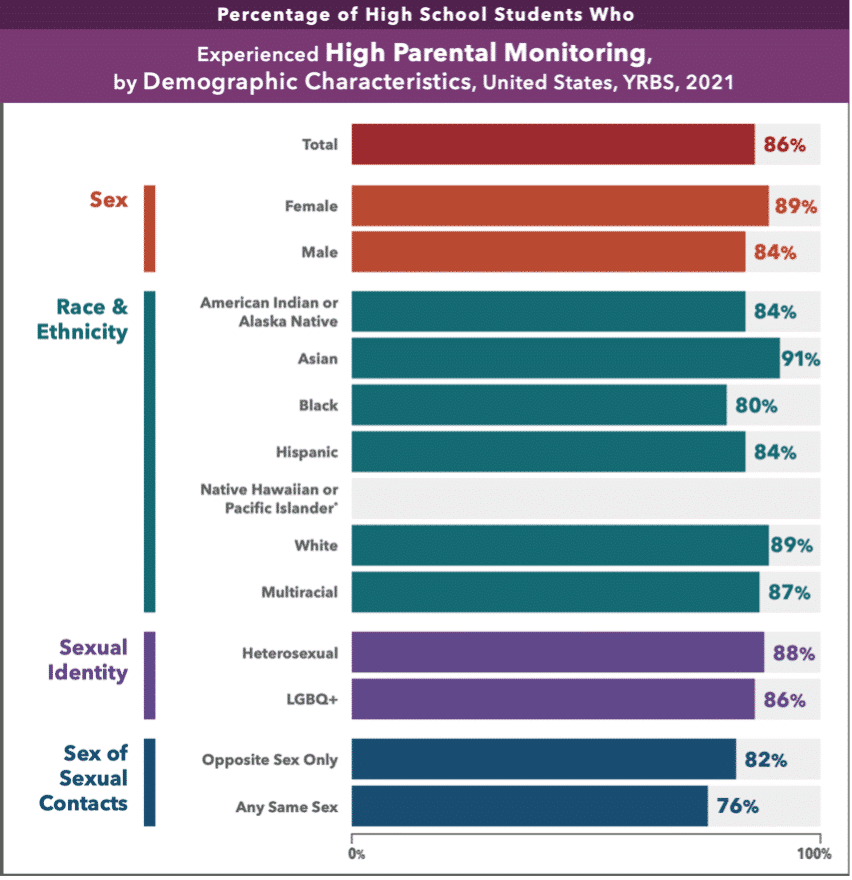
Parental Monitoring
Teen Girls
The survey suggests that nearly 3 in 5 (57%) U.S. teen girls felt so sad or hopeless that they couldn’t engage in regular activities for two weeks or more. Nearly 1 in 3 (30%) seriously considered attempting suicide—up nearly 60% from a decade ago. And 1 in 5 (18%) experienced sexual violence in the past year—up 20% since 2017.
LGBQ+ Youth
Almost 70% of LGBQ+ students said they felt persistently sad or hopeless, and 20% reported attempting suicide. Fifty-two percent of LGBQ+ teens had poor mental health symptoms in the past 30 days compared to 29% of all teens.
Possible Contributors?
It’s important to consider that the survey occurred at the end of the isolation from COVID-19. Although I am still
seeing significant fallout among kids, tweens, and teens, they have recovered somewhat from that dark and frightening time.
We must also consider that this is a survey. Without experiments where we expose one group of teens to possible causal variables (e.g., social media or isolation) and don’t expose a control group, we can’t determine what is causing the distress.
Surveys simply state and analyze subject report. It’s impossible to tell the causes from this type of data. We are left to guess with our observations and experience, forming hypotheses and looking for evidence to support them. As the Founder of GetKidsInternetSafe, a mother, university faculty member, author, and clinician who has treated kids, teens, and families for over 25 years, I have some ideas.
PHONELY: Our kids are phonely. Because we were hunters and gatherers for 90% of human existence, our brains are wired to thrive with face-to-face tribalism. Online relationships just don’t do it for us long-term.
ISOLATION: With the isolation of COVID-19, kids lost friends and confidence and regressed in their social skills.
SOCIAL MEDIA: Social media and the internet offers a constant onslaught of online ads and marketing influencers for kids and teens. This unfiltered exposure can lead to chronic fears of being judged and ridiculed as well as feelings of inadequacy and exclusion. The CDC report demonstrates that there is an epidemic of online bullying and cybersexual violence, especially toward girls and LGBTQ youth.
PARENTING: Parenting strategies have become overly protective based on anxiety and fear resulting in less child independence and more fear of failure. Plus, they spend more time online than with us. It is difficult for parents to overcome the influence of strangers and taking away all screen activities has become nearly impossible.
NEWS: Sensational and divisive news expertly and manipulatively communicates fear-inducing trends like mass shootings, climate change, and inflation. This has got most of us rattled, especially the most vulnerable among us.
FINGER-POINTING: We have tolerated and participated in an ugly, divisive climate of entitlement, bullying, and blame rather than accountability and positive action.
GROUP-THINK: The internet speaks the language of mental health – but this may result in a group-think phenomenon of looping on mental health suffering instead of increasing agency and growth.
LACK OF APPLICABLE EDUCATION: Trauma-informed, evidence-based health and sex education isn’t being offered equitably among out schools. Parents don’t want to leave this important job to schools, but they’re also not doing a great job themselves in many instances.
NOT ENOUGH MENTAL HEALTH SERVICES: There aren’t enough mental health services available to our youth.
LACK OF FAITH AND COMMUNITY: Pulling together as a loving, cooperative team is critical for kids to feel a sense of belonging and community. As our families get smaller and we have fewer extended family to offer support, our kids are left to fend for themselves.
Of course, this is not an exhaustive list. But it does summarize much of the research findings and conjecture that has surrounded these issues. There are more ideas for the list. But for the purpose of solving the problem, how can we take these stressors into consideration as we discuss possible solutions?
Considering the complexity of the question, what can we do to improve the situation? Reverse Engineer!
Reverse engineering refers to the process of looking at possible outcomes (like the causes posited above) and slowly working backward for a solution. Although this is clearly a messy mission, I watch kids regain the mental health ground they lost every day in practice. Despite what some may think, effective psychotherapy isn’t simply listening and reflecting feelings of despair. As a cognitive-behavioral therapist, I employ techniques specifically designed to facilitate positive movement forward. I’ve found that, if I set the tone and get everybody started, parents can take it from there.
Here are some tips for improving mental health and well-being at home:
As a family, negotiate a set of measurable goals and revisit them often for direction and motivation. Praise and reward movement forward and maintain and warm and encouraging tone along the way.
Use storytelling and a sense of humor to normalize failure and encourage curiosity and confidence.
Turn off the news and divisive influencers who are selling toxic ideas and products.
Reassure kids that they are capable and loved and that grit is what matters the most, far more than being attractive or innate skills.
Encourage kids to detox off their phones occasionally and engage more in real-life exploration and socialization.
Stay moderate. Avoid shaming lectures and demoralizing consequences.
Offer mindfulness, problem-solving, and communication strategies to help kids gain independence and confidence.
Offer outcome- and science-based education that empowers informed action rather than create fear.
Support parents in not personalizing child behaviors and help them set fair and reasonable limits with warmth, encouragement, and love.
Lead our kids toward post-traumatic growth rather than feelings of helplessness, hopelessness, and fear with expert mentorship, fun, and opportunity.
How can GetKidsInternetSafe help?
I founded GetKidsInternetSafe so I could be part of the prevention effort – rather than just the treatment effort. If you’re not sure where to get started, we have a comprehensive suite of tools for parents, tweens and teens, educators, paraprofessionals, and professionals who work with families and kids.
Dr. Bennett’s book, Screen Time in the Mean Time, is a comprehensive and easy-to-read parenting guide for families with kids of all ages. Available on Amazon in print, e-book, and audible!
Tighten up parental controls and monitoring with the help of our GKIS Screen Safety Toolkit. This toolkit helps to empower parents and provides them with a resource list of smart tech tools to filter, monitor, and manage online behavior.
For families with younger kids, our home setup Connected Family Course is an awesome place to start.
To help your tween or teen get prepared for safer internet use and social media, help prevent digital injury, and optimize wellness, check out our most popular course, the Social Media Readiness Course.
Want to work for screen safety as a community? We’ve thought of that too! Dr. Bennett offers live presentations and webinars for adults and kids from schools, churches, corporations, and conferences.
If you want all of our supplements and courses at a low cost for parents and kids, tweens, and teens, you’ll want our mega Screen Safety Essentials Course! This online course offers a set of four modules that will help you walk your kids through the essentials of screen safety.
I’m the mom psychologist who will help you GetKidsInternetSafe.
When was the last time you and your teen went on a walk? Or a camping trip? Or simply spent screen-free time in nature? On average, American children only spend 4 to 7 minutes per day outside compared to more than 7 hours per day in front of a screen device.[1] And with young people being more likely than ever to have mental health challenges, solutions to improve physical and mental health are critical. This is why we created the Screen Safety Essentials Course. This comprehensive mega course gives you everything you need to grow closer as a family and get screen safe. Luckily many studies have found that spending time in nature can promote peace and happiness. Today’s GKIS article shares the impacts of green time on teen mental health and explains how you can encourage your child to explore the outdoors!
The Consequences of Regular Screen Use
Compared to past generations, today’s youth spend less time outdoors. According to studies, young people start to spend less time outdoors and more time inside as they become older. As kids age, playing in the yard with neighbors is less enticing than socializing online with peers and playing video games. Kids also become more involved in time-consuming pursuits like homework, athletics, community service, and jobs. The combination of excessive screen time and little green time, along with the everyday pressures that teens face, have a large impact on mental health and overall well-being.
Many studies have examined the effects of adolescent screen use. One study found that excessive screen time was linked to:
Mental health problems
Increased anxiety symptoms
Depression/depressive symptoms
Depressed affect (in girls)
Health complaints
Lower academic accomplishment
Lower GPA
Poor language and math achievement[2]
Research has also found that playing video games was linked to poorer health, emotional functioning, and quality of life. For boys who played video games more frequently during the school year, it was also linked to unsatisfactory academic performance.[2]
The Effect of Nature on the Brain
In a survey conducted by BMC Public Health, young people felt that being in nature had a positive impact on their mental health, with 52% saying that it made them “feel calm when I am out in nature.” Twenty-two percent said that it reduced their anxiety. Seventeen percent reported that it had a positive impact on their physical health and made them “feel more active and in shape.” The majority of the teens surveyed also reported that they wished to spend more time in nature, yet 22% described difficulties that prevent them from doing so, including hectic schedules, the built environment, and COVID-19.[4]
Programs for outdoor education and hiking camps have been linked to higher levels of life satisfaction, mindfulness, and self-esteem. A schoolyard greening intervention was also correlated to lower stress and increased well-being. Outdoor learning has also been shown to increase math performance.[5]
Spending time in nature can encourage imagination and creativity as kids meaningfully engage with their surroundings through unrestricted styles of play. They have greater creative freedom of thought, the ability to plan their own schedules, and a fresh perspective on the world.[3]
What You Can Do
Although screen time is convenient and fun, to avoid the risks of digital injury it’s crucial to schedule time for outdoor play. Here are simple ways you can get your kids reconnected with nature and unplugged from the digital world:
Take walks in your neighborhood
Start a family garden in your backyard
Go on weekly hikes
Visit your local park
Bring nature indoors by buying houseplants
Plan a camping trip
Spend time at the beach
Participate in outdoor education programs
For more fun ideas for how to spend quality family time and set up your home for safe and productive screen time, check out our Connected Family Course.
Thanks to CSUCI intern, Liliana Esquivel, for researching the impact of green time on child mental health and overall well-being.
I’m the mom psychologist who will help you GetKidsInternetSafe.
{2] Oswald, T., et al. (2020). Psychological impacts of “screen time” and “green time” for children and adolescents: A systematic scoping review. PLOS ONE.
[5] Bikomeye JC, Balza J, Beyer KM. The Impact of Schoolyard Greening on Children’s Physical Activity and Socioemotional Health: A Systematic Review of Experimental Studies. Int J Environ Res Public Health. 2021 Jan 11;18(2):535. doi: 10.3390/ijerph18020535. PMID: 33561082; PMCID: PMC7827958.
Through their quickly consumable content, TikTok, Instagram, and Twitter have made it increasingly easy to connect with people who have similar interests to you. While this helps people to find those like them, it may become dangerous when those interests are morbid. All over social media, you can find fan accounts and fan edits for the world’s most deadly serial killers. By connecting true-crime fans all over the world, social media has caused an emergence of teens who have a cult-like obsession with killers like Dahmer, Bundy, and Manson. Today’s article covers social media’s obsession with serial killers and how you can keep your child safe from digital injury with our GKISScreen Safety Toolkit.
Fandoms and The Rise of the “Stan”
A fandom is a group built around the shared interest or enjoyment of something in popular culture.[1] Since before the creation of the internet, people have gathered to meet and obsess over their common interests. The internet has simply made it easier to do so.
Fandoms provide a space for people to be themselves without judgment, leading to higher levels of self-esteem.[2] There is a term for those who are particularly obsessed, called “Stans.” A Stan is someone who is a mix between a stalker and a fan, someone who shows extreme fandom behavior to the point of excessiveness.[3]
Typically online, you can expect to see fandoms for pop culture groups like movies, TV shows, and musicians. However, with the rise in true crime popularity, a new subgroup has formed of “Stans” with a particular interest in serial killers and their victims. These Stans continually post videos of serial killer interviews edited to music, create fan accounts, and even write serial killer self-insert fanfiction where they are the victims.[4]
Social Media’s Role in Obsession
Social media thrives on content that can get lots of views and produce lots of likes, meaning that the more scandalous and salacious content is, the more likely it is to do well. The notifications from social media likes and comments trigger the reward center of our brain, releasing dopamine and making us feel good all over.[5] When users post content that is related to their fandoms, they get a rush of dopamine and that connection between fandom content and happiness causes them to post more and interact with the content more.
Social media has also created a world where content is readily available for consumption, meaning that people can see posts specifically tailored to their interests 24/7. This allows people to go from fans to superfans, spending their waking moments scouring the internet for posts related to their fandom. One Quora user shared their experience as an obsessive fan, “I’ve been addicted to a fandom for 7 years, and I haven’t been able to stop thinking about it for that long. As per my personal experience, I got sucked into several fandoms due to over-engaging in social media. I over-identified with the idols and associated my own ego with that of their public image.”[6] This idolization of celebrities creates dangerous parasocial relationships that are only made further dangerous when one’s idol is a serial killer. To learn more about parasocial relationships, check out the GKIS article, “The Dangers of Online Parasocial Celebrity Relationships”.
When Does Harmless Become Harmful
It’s easy to brush off fandom behavior as nothing more than a phase one will grow out of. But when the obsession turns into something more it can become dangerous. Cody Ackland was a 24-year-old who grew up obsessed with Ted Bundy, an interest that no one paid much attention to until he attacked and murdered 18-year-old Bobbi Anne McLeod. Just hours before attacking McLeod, Ackland had searched for “Ted Bundy dead victim’s bodies” and “Ukrainian serial killer bodies” on the internet.[7]
Teens have become more and more desensitized to serial killers and true crime content, going so far as to make fan accounts as part of a big internet joke. When 23-year-old Peter Manfredonia was on the run from the police following a double murder he committed, teens on TikTok and Instagram began making fan accounts and posting meme comments to the killer’s personal Instagram page.[8] While the people running these accounts chalk up their actions to being a big joke, there is a large community of people who genuinely run fan accounts for notable serial killers.
Reddit user IkariMonster shared screenshots of several accounts from Twitter to a sub-Reddit, stating, “These teenagers worship and treat serial killers and school shooters like e-boys.”[9] In the screenshots, you can see several fan accounts treating serial killers Ted Bundy, Jeffrey Dahmer, and the Columbine Shooters Eric Harris and Dylan Klebold as though they were celebrities. In one post a teenage girl shares a selfie next to her bedroom wall, which is covered in photos of Dahmer with the caption, “I just thought I’d share cause I think my wall looks pretty [face with hearts emoji].” These accounts and posts are just one example of content and cult-like obsessive behavior that exists across multiple social media platforms.
The victims of these killers were people with friends and family and the pain they endured it absolutely horrendous. There is no reason that serial killers and mass murderers should be praised or celebrated for their actions. The creation of fan accounts and fandom content perpetrates further violence against the families of the victims and serves as a constant reminder of the pain they suffered. GKIS does not endorse this behavior. We are mortified by it and think it is destructive to kids and teens to be so callous and to celebrate violence in this way.
What Parents Can Do
Installing management tools for social media can help you in monitoring their internet behavior. If you would like help with this process, check out our GKISScreen Safety Toolkit made to help empower and provide parents with smart tech tools to filter, monitor, and manage online behavior.
Co-view the content your child interacts with; you can scroll together to choose what content they view and enjoy.
Make it known from the beginning the type of content that is acceptable for your child to view. We can help facilitate this healthy conversation with ourConnected Families Screen Agreement to help you work with your child to create a collaborative, living document.





 Thanks to CSUCI intern, Katherine Carroll for researching Ms. Rachel and language development.