
Need peaceful screen time negotiations?

Get your FREE GKIS Connected Family Screen Agreement

youtube

Is Your Child Following True Crime?

Have you ever witnessed the scene of a car accident and wondered why it was hard to look away? More often than not, you are left with more questions than answers. How did this happen? What events led up to that moment? Somehow learning the facts makes us feel more in control and less vulnerable. In the same way that a car accident catches our attention, true crime stories have become extremely popular. Murder mysteries are increasingly making their way to everyday platforms like YouTube, TikTok, and Apple Podcasts as well as streaming services like Netflix and Amazon Prime. With the push of a button, teens and tweens have unlimited access to gruesome content like crime scene photos, autopsy reports, and case reenactments. Today’s article covers the genre of true crime, the effects of constant exposure, and GKIS tips to keep your family safe from digital injury.

What is true crime?

True crime is a nonfiction genre that covers real-life events of crime and other acts of deviance. Depending on the medium, the delivery of the story can vary. Cable reserves several channels (Investigation Discovery, Oxygen) for true crime stories told through reenactments and interviews with the victim’s family.

Platforms like YouTube and TikTok typically have the user telling the story, sometimes supported with real crime scene photos or dispatch calls. Netflix has released documentaries like Night Stalker: The Hunt for a Serial Killer which recounts the horrifying murders committed by Richard Ramirez, a serial killer who lived in Los Angeles and San Francisco in 1985.[1]

While watching these types of true crime series, one episode may turn into two and before you know it, you can fall down a rabbit hole researching related information. While true crime stories may pique your child’s interest, it is important to note that the details embedded in these true crime cases are not age-appropriate for kids, tweens, or even teens.

It can be hard to pinpoint where to start with internet safety, which is why GetKidsInternetSafe has done the research for you. Our free Connected Family Agreement provides a 10-step plan that organizes screen time while maintaining a healthy alliance with your child(ren). In addition, our GKIS Screen Safety Toolkit is a family-tested, outcome-based resource guide that provides links and how-to information about parental controls, social media filtering, and blocking for safe browsing.

The Psychology Behind Indulging in True Crime

You might be wondering why anyone would spend their leisure time exposing themselves to such explicit content. According to Psychology Today, reasons for indulging in true crime are simple— adrenaline, fear, and mystery (figuring out the who, why, and how).[2]

When you experience fear, your sympathetic nervous system is stimulated with the same arousal that you’d experience during a state of emergency. When this system is at work, your body is releasing a stress hormone known as adrenaline.[3] Adrenaline can arouse feelings of fear or pleasure. Whether you’re watching a true-crime documentary or riding a rollercoaster, that same hormone is secreted throughout your body. Frequent reinforcement of that adrenaline can be just as addicting as taking drugs or alcohol.

Other explanations for indulging in true crime involve catharsis. Catharsis is a process of releasing repressed emotion, as one may do while identifying with the victim of a true crime story. Watching true crime allows you to experience fear and anxiety in a controlled environment, without actually being put into the situation at hand.[4] Catharsis is then remedied by feelings of safety, knowing that the suspect was caught, the case was solved, or that the case has left the viewer feeling more aware of what could happen. It’s the same fear/thrill and relief that drives some people to watch horror movies. Some viewers also join true crime communities where they feel a sense of camaraderie as they sleuth through the issues together, leading to feelings of satisfaction and accomplishment. Empowerment over seemingly hopeless situations is genuinely rewarding.

Effects of Constant Exposure

Desensitization

In psychology, desensitization refers to the decline in emotional response due to repeated exposure.[[5]] It makes sense that, just as research has found that playing violent video games causes desensitization to violence for some players, vulnerable kids and teens consuming gruesome details of true-life death, murder, and violent crime may be desensitized as well.[6] An example of kids already becoming desensitized to true crime is the viral TikTok of a live suicide that became embedded in other seemingly innocent videos.

While it may be interesting to learn about deviant behavior, constant exposure to this kind of content may also dull positive emotional responses like empathy and compassion. Research on desensitization has found that constant exposure to violence (even over a short period of time) may result in declines in empathy for victims.[7] This enables the true crime genre to become a source of entertainment, rather than a tribute to the victim and their families.

Cultivation Theory and Hypervigilance

Cultivation theory is a theory that suggests a relationship between media exposure/consumption and how it may alter one’s perception and behavior.[8] In the context of viewing true crime, constant exposure may lead someone to think that they are more susceptible to becoming a victim of a crime. There is a big connection between this theory and news outlets, as the news strives to cover deviant acts that plague the community like robberies, assaults, and police pursuits.

With laptops and cell phones readily available, this exposure is not limited to what the news is covering that day.
Teens and tweens can seek multiple sources for true crime content, which in turn, may increase susceptibility to hypervigilance in their day-to-day life. Hypervigilance is a state of constant alertness and fear, which causes someone to feel that they need to protect themselves from potential danger. Hypervigilance is commonly connected to generalized anxiety disorder and posttraumatic stress disorder.

To keep our children safe, we must take the steps to be proactive, not reactive. It can be tricky to virtually monitor their screen time without jeopardizing your parent-child relationship, which is why GKIS founder Dr. Tracy Bennett designed a Social Media Readiness Course. Specifically for teens and tweens, this social media training teaches kids and their parents about digital injuries through modules and mastery quizzes. Kids are also equipped with Dr. Bennett’s psychological wellness techniques to protect them from bad outcomes like depression, anxiety, and self-harm (as seen by many adolescents since the rise in screen time in the past year).

Thanks to GKIS volunteer Kaylen Sanchez for contributing to this GKIS article.

I’m the mom psychologist who will help you GetKidsInternetSafe.

Onward to More Awesome Parenting,

Tracy S. Bennett, Ph.D.
Mom, Clinical Psychologist, CSUCI Adjunct Faculty
GetKidsInternetSafe.com

Photo Credits

Photo by kat wilcox from Pexels

Photo by Firmbee.com on Unsplash

Photo by Martin Lopez from Pexels

Works Cited

[[1]] Night Stalker: The Hunt for a Serial Killer. (2021, January 13). Retrieved fromhttps://www.netflix.com/title/81025701

[[2]] Bonn, S. (2016, May 30). The Delightful, Guilty Pleasure of Watching True Crime TV. Retrieved from https://www.psychologytoday.com/us/blog/wicked-deeds/201605/the-delightful-guilty-pleasure-watching-true-crime-tv

[[3]] Griggs, R. A. (2014). Psychology: A concise introduction. Worth Publishers

[[4]] Ramsland, K. (2019, July 24). The Unique Allure of the Scene of a Crime. Retrieved from https://www.psychologytoday.com/us/blog/shadow-boxing/201907/the-unique-allure-the-scene-crime

[[5]] Fanti, K. A., Vanman, E., Henrich, C. C., & Avraamides, M. N. (2009). Desensitization to media violence over a short period of time. Aggressive Behavior35(2), 179–187. https://doi-org.ezproxy.csuci.edu/10.1002/ab.20295

[[6]] Fanti, K. A., Vanman, E., Henrich, C. C., & Avraamides, M. N. (2009). Desensitization to media violence over a short period of time. Aggressive Behavior35(2), 179–187. https://doi-org.ezproxy.csuci.edu/10.1002/ab.20295

[[7]] Fanti, K. A., Vanman, E., Henrich, C. C., & Avraamides, M. N. (2009). Desensitization to media violence over a short period of time. Aggressive Behavior35(2), 179–187. https://doi-org.ezproxy.csuci.edu/10.1002/ab.20295

[[8]] Potter, W. J. (1993). Cultivation theory and research: A conceptual critique. Human Communication Research19(4), 564–601. https://doi-org.ezproxy.csuci.edu/10.1111/j.1468-2958.1993.tb00313.x
GKIS Sensible Guide to a Social Media Cleanse

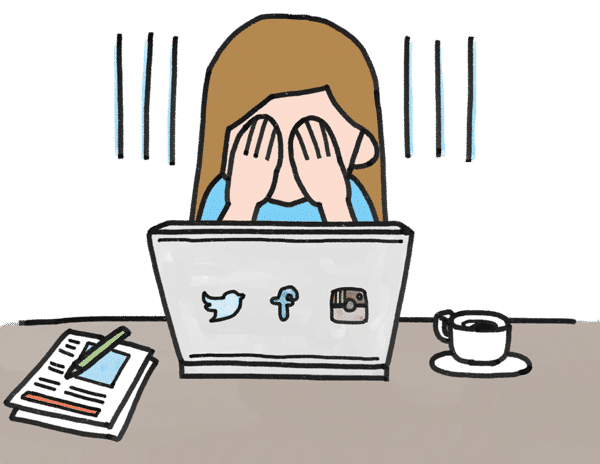
Feeling unproductive, unmotivated, and notice that you are wasting countless hours scrolling through social media? A social media cleanse may be a great decision to improve your well-being. In this week’s GKIS article, we will provide a step-by-step guide to putting down your phone and getting that much-needed break your mental health deserves. To help your tween or teen demonstrate they have the knowledge, problem solving ability, and judgment for social media, check out our Social Media Readiness Course. It’s an online course for tweens and teens that offers information about the risks of digital injury due to social media and psychological wellness tools. With a quiz for each module, they work their way through independently so their graduation certification demonstrates mastery of content. Of course, you can take it too if you’d like. It’s like driver’s training but for the internet!

According to pewresearch.org, 70% of Americans use social media.[1] For adults, the most popular social media platforms include YouTube (73%) and Facebook (68%). In contrast, 63% of teens use Instagram, making it the most popular social media platform amongst young users ages 15-25.[2]

According to the American Academy of Child & Adolescent Psychiatry, 90% of teens have used social media and teens spend an average of nine hours a day on social media.[3] Participants of a research study conducted by the Pew Research Center found that 74% of Facebook users visit Facebook daily. People of varying ages spend a lot of time on social media.

We use social media to view funny memes, stay connected to friends and family, meet new people, share opinions and information, show off passions and creative pursuits, advertise businesses, and even get news. Most of us find it extremely rewarding and feel we’ve got it under control. But for others, social media can negatively impact mental health.

Risks of Social Media Use

I’m a millennial who’s been using social media for 10 years. I’ve experienced a wide range of negative effects due to my social media use, including feelings of insecurity and not being good enough, anxiety, and the big one, fear of missing out (FOMO).

For years, I followed my friends’ and Instagram influencers’ profiles and wondered why I wasn’t as happy as them or why I couldn’t travel the world and have a life of fun and excitement. I often compared myself to others on social media and it hurt my mental health. In her book, Screen Time in the Mean Time, Dr. Bennett calls that “compare and despair” and believes it is a common contributor to teen anxiety and depression.

Social media can be a toxic place, especially during these unprecedented times. It’s too easy to spend hours on Google trying to figure out if you have COVID-19 and spend another 45 minutes scrolling through Facebook comments of people arguing over politics. Feelings are high and extreme opinions are rampant. According to helpguide.org, social risks include increased feelings of isolation, depression, anxiety, and insecurity.[4]

The Benefits of a Social Media Cleanse

To get away from negativity, a social media cleanse may be the answer. The benefits of a social media detox include:

  • More free time for other things, like research about a favorite topic
  • Improved self-esteem
  • Improved mood
  • Increased mindfulness and awareness
  • Improved sleep quality
  • Helping you overcome FOMO
  • Reconnecting with others offline[5]

To research this article, I deleted all of my social media apps including my all-time favorite, Instagram, about a month ago. I was concerned that I was averaging too much screen time (6 hours a day), and I wanted to be more productive and connect more with my boyfriend and family.

My first week of being social media free was by far the hardest. But it became much easier after that. I often felt the urge to redownload my Instagram app, but for the most part I have been able to stay away.

The benefits of staying offline have really paid off for me. Almost immediately, I felt it was easier to fall asleep at night (since I was not on Instagram or TikTok late). I’ve also felt a reduction in stress, anxiety, and anger. Now I don’t feel the need to check my friend’s social media just to see what they’re doing all the time. Instead, I reach out directly to friends to reconnect.

I worried that if I deleted my social media accounts, I would feel more disconnected from my friends. But instead, I’ve kept in touch with them more than before my social media cleanse. Relationships and connections are important to me, and I’m glad that I’ve been able to connect in a more meaningful and sincere way. Overall, I’m happy with the results. I feel more mindful and present in my everyday life, my sleep has improved, I’ve experienced less stress and anxiety, and I have more free time to get work done and spend time reconnecting with the people I love.

Do You Need a Social Media Break?

Here are some red flags that may signal that you are ready for a social media cleanse:

  • You spend most of your free time on social media.
  • You feel like you need to share or post often.
  • You find it hard to focus on schoolwork or other life responsibilities.
  • You feel an increase in anxiety and stress after spending time on social media.
  • You feel more lonely, unmotivated, and less creative.
  • You are experiencing feelings of low self-esteem or low self-confidence.
  • You feel anxious without your phone.
  • You feel guilty or ashamed about the amount of time spent on social media.

How to Get Started  

There are many ways to jump-start your social media cleanse. You can stop your phone use cold turkey, or you can delete one or two apps at a time. You can also cut down your friend list to only those you have a close, personal relationship with to cut out the less meaningful posts. Find whatever works best for you.

Here are some tips for getting started:

  • Deactivate or delete your social media accounts.
  • Delete social media apps from your phone.
  • Connect with family and friends in alternative ways.
  • Set a time limit on your phone to cut back on overall phone use.
  • Check your daily Screen Use and make adjustments if needed.
  • Set a specific “phone bedtime” before your actual bedtime (At least 3o minutes before you go to bed is recommended).
  • Make your bedroom a phone-free zone.
  • Turn your phone on “Night Mode” to decrease blue light emissions.[6]

Most importantly, remind yourself why you decided to go on a cleanse in the first place.  And remember, your cleanse doesn’t have to be a permanent decision, you can always go back.

Enriching Activities to Reconnect Offline 

There are endless possibilities for new enriching activities. You can practice meditation, pick up a new skill, or do that thing you’ve been meaning to do. Here are some fun ideas to reconnect with your loved ones:

  • Family game night
  • Family movie night
  • Cook a family dinner. Make it exciting by trying a new recipe or cooking an old family favorite.
  • Have a family yoga or workout session.
  • Practice meditation and deep breathing (alone or with family).

Using this extra time to reconnect and spend valuable time with your family is great, but it’s also important to spend time hanging out with yourself. Start by catching up on your sleep, creating a playlist, or reading a favorite book. Don’t feel pressured to constantly look for something to keep you busy unless that’s what you want to do. This is a well-deserved break. Do whatever you want with it and enjoy!

If you’re interested in learning more helpful tips about parenting in the digital age, check out the GKIS Connected Family Course. The GKIS Connected Family Course is family-tested and outcome-based and helps you close screen risk gaps and improve family cooperation and closeness.

Thanks to CSUCI intern, Remi Ali Khan for researching social media cleanses for this article.

I’m the mom psychologist who will help you GetKidsInternetSafe.

Onward to More Awesome Parenting,

Tracy S. Bennett, Ph.D.
Mom, Clinical Psychologist, CSUCI Adjunct Faculty
GetKidsInternetSafe

Photo Credits

Photo by ijmaki from Pixabay

Photo by ROMAN ODINTSOV from Pexels

Photo by Andrea Piacquadio from Pexels

Works Cited

[1] Demographics of Social Media Users and Adoption in the United States. (2020, June 5). https://www.pewresearch.org/internet/fact-sheet/social-media/.

[2] Clement, J. (2020, September 23). U.S. teens: most popular social media apps 2019. https://www.statista.com/statistics/199242/social-media-and-networking-sites-used-by-us-teenagers/.

[3] Aacap. https://www.aacap.org/AACAP/Families_and_Youth/Facts_for_Families/FFF-Guide/Social-Media-and-Teens-100.aspx.

[4] Robinson, L. Social Media and Mental Health. https://www.helpguide.org/articles/mental-health/social-media-and-mental-health.htm.

[5] Parenta, & *, N. (2017, May 8). 7 amazing benefits of doing a social media detox. Parenta.com. https://www.parenta.com/2017/05/05/7-amazing-benefits-of-doing-a-social-media-detox/.

[6] Pacheo, D. (2020, November 21). Can Electronics Affect Quality Sleep? Sleep Foundation. https://www.sleepfoundation.org/articles/why-electronics-may-stimulate-you-bed


Do Kids Need Driver’s Training … for the Internet?

Our Gracie got her first smartphone when she was ten years old. We wanted to wait, terrified of the creeps and porn and the rest of it. But she needed to contact us for pickup from dance, and that’s how her friends connected. Without a phone, she got left out of plans and private jokes. She was feeling more and more alone, and we worried she was depressed. We caved. We couldn’t take the begging and crying. We tried to do it smartly, starting with a phone and no social media. We read articles about risks and checked her phone regularly. We insisted she wait until she was 13-year-old for social media. We allowed only YouTube and TikTok to start. She’s loved it and quickly started feeling better. Two years later, it doesn’t seem unreasonable to allow Instagram. She’s 12 now, so it’s maybe a little early. We’ve talked to her about it a lot. She rolls her eyes, but I think she gets it. She’s smart and funny and social. We are confident she’ll be fine. At least we hope so…

And there it is, the way it happens for most families now. As a screen safety expert, mom, and psychologist, I get it. We all outsource to our phones: for memory, entertainment, navigation, design, communication. When’s the last time you memorized a phone number or planned a trip with a paper map? We are cyborgs and so are our kids. Digital fluency is part of life and a critical element to education, especially now. Screen restriction until high school may be wise, but it isn’t an option for most families. We survived running around town with our friends unsupervised.

Is screen time that big of a deal?

The short answer is . . . that it can be. Preventing screen-loving kids from wandering into a dangerous digital neighborhood isn’t always possible, especially at the beginning. We are too busy, and they are too clever for us to supervise everything they do online. Even the best tech tools have workarounds. But there is one step you cannot miss if you think they are ready for social media, teaching them judgment and accountability like we do before they are allowed to drive a car. Does driving city streets have anything in common with browsing the internets?

As a psychologist who treats digital injury (psychological harm resulting from internet use), I would argue it does. Like driving a car, browsing the internet can cause significant injury. But instead of a concussion, we see kids succumbing to anxiety, depression, and body image problems linked to cyberbullying, radicalization, and compare-and-despair.

Also like driving, kids browsing the internet can wander into any kind of digital neighborhood making friends from faraway places. Most of the places they visit are cool, with fun friends, creativity, and harmless excitement. But there are also digital neighborhoods that would horrify us. Dangerous people like predators and traffickers may be common there and so is intensely violent and explicit sexual content.

Kids who’ve learned the traffic laws from driver’s training and practiced for many hours with invested parents and trained experts are safer. They are so much safer than the government requires these prerequisites before getting a state-issued driver’s license. Doesn’t it make sense to offer the same support for screen use?

Yes, we could keep them off screens and avoid the issue altogether. Yet, also like a car, the internet offers access to learning opportunities that help us thrive. Despite the risk of accidents, we browse because we refuse to miss out on that great job, amazing discovery, and healthy social connections. Our kids feel the same way about their screen devices.

If allowed to browse with little training, more accidents seem certain. That is why my private practice is flourishing. Treatment doesn’t erase trauma; instead, it helps with coping. Once a child experiences danger on the internet, that memory never goes away. Our best options for child screen safety lie in prevention.

What can we do to help tweens and teens browse more safely with sound judgment and accountability?

We can require Internet training! Like driver’s training, our online Social Media Readiness Course offers education about digital risk as well as tools for psychological wellness.

Specifically, our GKIS subscribers get:

  • lots of verifiable facts and science-based information about online risk and screen use (no fake news),
  • expert strategies and techniques to optimize psychological health and judgment,
  • realistic exercises that illustrate typical online scenarios and help coach sensible resolutions,
  • trigger-topics to encourage smart parent-child discussions to further build a healthy alliance,
  • accountability quizzes so you know they are learning as they go, and
  • opportunity for the child to act independently and practice without parent guidance (although course access for parents who want to take it first or along with them is optimal).

I’m the mom psychologist who will help you GetKidsInternetSafe.

Onward to More Awesome Parenting,

Tracy S. Bennett, Ph.D.
Mom, Clinical Psychologist, CSUCI Adjunct Faculty
GetKidsInternetSafe.com

Photo Credits

Photo by Samuele Errico Piccarini on Unsplash

Trending YouTube Communities That Kids (and we at GKIS) Love

Fun trends on the YouTube Explore page attract audience attention and vet the best online content and influencers. To build child resilience and teach problem-solving and good judgment, we at GKIS encourage parents to carve out the time to share online interests and co-view YouTube channels with their kids. To help you get started (or continue) having fun online as a family, we’ve found some fun trends and creators that may be a great source of inspiration for developing new interests and hobbies. Having fun together and building digital fluency and an awareness of what’s hot and what’s not will help you build credibility with your kids. Even better, they will start to teach you about what’s out there, and, ultimately, work with you to make difficult online decisions. Our goal isn’t to shut your kids off from online discovery. Instead, we believe in family togetherness, online learning and discovery, and building child resiliency and safety – and having fun while you’re at it!

**CAUTION: GKIS has chosen these creators because of their family-friendly content and the variety of communities that they represent. Although we are excited to share these amazing creators, please keep in mind that some of them are more suitable for older teenagers due to their language and the nature of their content. Further, many of these creators have hours of videos that we did not sample. Please watch and decide for yourself the appropriateness of each channel for your unique child.

Mukbangs

A kind of video trend that has been popular in recent years has been Mukbang videos. Mukbangs, a trend originally popularized in South Korea, are videos where people eat large quantities of food while interacting with their audience [1].

These kinds of videos are popular with young people because they can be enjoyed as entertainment, to satisfy cravings, or to enjoy the creator’s style, humor, and personality.

We recommend you check out YouTuber Zach Choi.  Zach, with almost 8 million subscribers, takes his viewers through his process of preparing for his mukbangs, consuming the food, and collaborates with other popular YouTube creators, both in and out of the Mukbang community.

In his videos, Zach silently eats large amounts of food with occasional captions that describe the foods or promotes the creators he features on his channel. Zach will often do a combination of a mukbang and an ASMR video. ASMR, or autonomous sensory meridian response, videos are videos that utilize audio and visuals in order to produce a tingling sensation that moves down the back and upper spine [2]. There are only certain people that get this “ASMR feeling”, and for them, videos like these can be very enjoyable to watch. Zach doesn’t seem to use inappropriate language, as he does not speak in his videos, or do sponsored content.

Technology Reviews

In the world of technology, YouTuber Marques Brownlee has made a name for himself with his thorough and unbiased technology reviews.

Marques is a creator who often trends on the YouTube Explore page and has over 10 million subscribers. For people interested in technology, watching Marques can be a good way to learn about the various features that go into different devices or simply get a professional opinion on what electronics to consider buying.

While Marques reviews technology, he does not promote buying the most recent devices or show bias towards certain brands. He simply reviews the newest technology on the market and gives his opinion on its features and performance.

For teens going into high school or college who need new devices for their academics, interested in creating content, or interested in studying technology, this is a great creator to watch. Marques very rarely does sponsored content and does not seem to use inappropriate language.

Food

In the food community, the brand Bon Appetit has created a popular platform on YouTube with a variety of series, all based on cooking.

Chefs from Bon Appetit post videos from their company test kitchen showing how to cook recipes from many different cuisines. What makes Bon Appetit different from your average Food Network cooking video are the chefs. While Bon Appetit’s crew of chefs provide detailed instructions on their recipes, they do so in a fun, humorous manner, letting their personalities naturally shine through and interacting with their fellow chefs in the test kitchen. This makes for some entertaining videos that have gained the attention of many young followers.

With fun and detailed videos, Bon Appetit has inspired this new generation to think twice about dining out and instead try something new in the kitchen. Two very popular series to check out are Gourmet Makes by chef Claire Saffitz and It’s Alive by chef Brad Leone. Bon Appetit does not seem to do sponsored content. This channel is recommended for an older audience, as some videos may contain explicit language.

Music

For people interested in music, the National Public Radio created a popular YouTube series called Tiny Desk Concert, dedicated to live performances from some of the most talented artists.

This YouTube series, which is on the NPR Music YouTube channel, posts new performances every month, with artists from varying genres and languages. These concerts differ from live performances, as they are played live with no prerecorded tracks or lip-syncing. Artists sing their songs live with either a band or by themselves with their preferred instrument in a small space that resembles an office desk, hence the name “Tiny Desk”, with a small studio audience.

This channel is great for young fans and music enthusiasts because it allows you to discover new artists every month, plus you can see your favorite artists perform their songs in new styles and see the different instruments and vocals it takes to best perform their music. NPR is careful with putting disclaimers in their videos for the artists that use explicit language, either in their songs or when speaking. This series does not do sponsorships, as they rely on donations from the public to keep the series going.

Charity

If you want to watch videos while contributing to a charitable cause, check out the YouTube channel Grandpa Kitchen.

This channel, with over 7 million subscribers, is a cooking channel created by a family in India to raise money for the local orphanage that they work for. The videos posted by this channel originally starred an older Indian gentleman lovingly referred to as “Grandpa” by subscribers. Grandpa would greet his subscribers and explain the meal he would be preparing for the orphans that day.

Grandpa cooked large quantities of food for all the orphans at his organization with the help of his grandsons. After Grandpa passed away, his grandsons took over the channel in order to continue the good work Grandpa started. Many families and fans from around the world have shared their support after Grandpa’s passing, and you can truly see how fans young and old were able to bond over watching Grandpa every week.

Although Grandpa is no longer with us, his grandsons continue to create videos with a similar format to Grandpa’s videos and continue to use the money earned from the channel to support the orphans with food, supplies, etc. These videos are in English, and the creators do not do sponsored content or use inappropriate language.

Discover Together

As we share these creators and communities, we encourage you and your children to discover new favorite communities and content to inspire you to create and discover beyond the screen. There are family-friendly creators in every community waiting to be discovered, all it takes is some time and patience.

Thanks to Alexandra Rosas-Ruiz for her research and help with writing this article. If you have questions about what your child is interested in on YouTube, try coaching sessions with Dr. B. These sessions, also offered online, can answer any specific questions on online safety and parenting in general. Sign up and receive special bonus products with your purchase.

I’m the mom psychologist who will help you GetKidsInternetSafe.

Onward to More Awesome Parenting,

Tracy S. Bennett, Ph.D.
Mom, Clinical Psychologist, CSUCI Adjunct Faculty
GetKidsInternetSafe

Works Cited

[1] (2020) Mukbang https://en.wikipedia.org/wiki/Mukbang

[2] (2020) ASMR https://en.wikipedia.org/wiki/ASMR


Photo Credits:

By Andrea Piacquadio from Pexels

By Quang Nguyen Vinh from Pexels

By Free Creative Stuff from Pexels

By Lee from Canva

By Pedro Sandrini from Pexels

By Ishay Botbol from Pexels

Six Popular YouTube Channels Parents Can Trust

Shallow and manipulative influencers, the toxic culture of materialism and vanity, vulgarity, pranks, and violence have earned YouTube a mixed reputation when it comes to acting in the best interest of young users. Parents talk of wanting to ban it, but they also recognize the benefits it can have on their kids. Plus, kids LOVE it! Beyond the questionable content, the platform offers opportunities for creativity, education, socialization, and entertainment that is safe for young audiences. Many popular influencers create content with their younger audience in mind, censoring their language and actively selecting appropriate topics. Join us in this exploration of some child-and-teen-friendly YouTube creators and their potential to inspire children to explore the world beyond their screens.

YouTube as a Source of Educational Inspiration

With channels featuring art, technology, beauty, music, or the environment, YouTube offers millions of opportunities to explore. Many online communities have gained popularity over the last few years, including those centered around makeup, comedy, cooking, DIY projects, dance, and video games. Shows like Bill Nye the Science Guy and Sesame Street produce videos to educate children about the wonders of the world. Many even inspire kids to explore their interests and experience the potential in the offscreen world around them.

If you haven’t yet allowed your kids access to a browser or haven’t yet put solid safe screen parameters in place, Dr. B is here to help. For help with home setup and sensible rules, you’ll love our GKIS Connected Family Course. For tech tool tips and referrals, our GKIS Screen Safety Toolkit is the course you need. If online courses are still new to you or you just can’t find the time to take one, Dr. B also offers one-to-one coaching for effortless implementation. At the click of a button, she can set up a video or phone call to help you get started. You’re not in this alone anymore. GKIS and Dr B are here to help.

Child-Friendly YouTube Influencers Your Whole Family Can Enjoy

Baking on YouTube

Like the Food Network, a large food-focused community on YouTube has become popular. One popular creator in this community is YouTuber Rosanna Pansino, a creator known for her baking videos. With over 11 million subscribers, Rosanna has the largest baking channel on YouTube and rose to fame with her recipes for making baked goods with various themes based on pop culture. Rosanna has a charming, energetic, and bubbly personality, and provides detailed instructions for her videos. Her content is classified as safe for children and teens. She does not use inappropriate language and is transparent about advertised products that sponsor her content.

 Beauty on YouTube

In the beauty community, makeup artist Tati Westbrook is well known for her makeup looks and makeup reviews. Westbrook’s channel, with over 9 million subscribers, publishes videos mainly reviewing various makeup brands and products. Tati has a calm, soft personality and gives detailed and honest reviews and recommendations on the products she discusses. Tati makes sure to put disclaimers in her videos if a personal bias is present in reviews to be as transparent as she can to her viewers. Her content is suggested for older viewers, as there may occasionally be language and topics not suited for young children. Westbrook does promote her personal brand of beauty and wellness products on her channel.

Education through YouTube

In the educational community, the YouTube channel Crash Course, with over 10 million subscribers, has been used by students and teachers as an educational aid to learning different academic subjects. This channel, created by brothers John and Hank Green, produces videos covering various topics in subjects such as math, science, history, psychology, chemistry, and more. Videos are designed to be entertaining and educational and to help new learners better understand the subjects covered. Due to the topics they cover, some of the videos could discuss sexual or violent information not suitable for all ages.

Sports and Humor

YouTube team Dude Perfect, with almost 50 million subscribers, are best known for trick shot videos, or videos where they attempt challenging sports moves that require significant skill and luck to achieve. We at GKIS love how they inspire children to go play outside to reproduce incredible sports tricks of their own. We didn’t see evidence of inappropriate language, and they appear to disclose which of their videos are sponsored.

Gaming and Education

The Game Theorists YouTube channel is unique for creating content discussing different video game theories using research and reasoning. The creator of this channel, who goes by MatPat, has gained over 12 million subscribers by discussing his video game theories using humorous narrations, quality graphics, and his energetic and animated personality. Many of the games covered are popular among kids, such as Minecraft, Five Nights at Freddy’s, Pokémon, and Super Mario Brothers. This creator does occasionally use offensive language. Also, some of the games covered by this channel may have violent and frightening plots not suitable for children. This channel appears to disclose which content is sponsored.

Wilderness Survival on YouTube

YouTube channel Primitive Technology produces videos on how to build in nature for survival without utilizing modern technology. This channel, with over 10 million subscribers, is unique in the sense that it does not provide verbal narration. All instructions and commentary are provided in the closed captions of the video. The videos on this channel are characterized by still frames showing the environment around the creator, with audio of calm nature sounds. The closed captions give detailed descriptions of the materials used, such as the different plant species shown in videos, and give easy instructions for how to build the materials shown. Given that there is no narration in these videos, there is no explicit language or content on this channel. There are currently no identified sponsors, only advertisements for the creator’s book shown after videos.

Dr. Bennett’s Current Fav YouTube Channel

When I presented my idea for this article to our GKIS intern team, Dr. Bennett raved about her current favorite YouTube channel Liziqi. With over 8.96 million subscribers, this 29-year-old Chinese YouTube celebrity is known for creating fascinating food and handicraft preparation videos. Beautifully shot to soothing music, incredibly hardworking and talented Liziqi can be viewed wandering gracefully through the forests and countryside of Pingwu, Mianyang, Sichuan planting and harvesting corn, rice, and cotton (among other things), making handicrafts like colorful weaved clothing and baskets, and creating expertly staged traditional Chinese food. Once you get started watching, it’s easy to be mesmerized.

Although we are excited to share our awesome child-friendly YouTube finds, many of these creators have hours of videos that we did not sample. Please watch and decide for yourself the appropriateness of the creators on this list for your unique child.

How Can You Select and Curate Content for Your Child?

To further protect your child against harmful videos, especially for young children, consider downloading the YouTube Kids app. This version of YouTube was created to show the most family-friendly content offered on YouTube [i]. The app allows parents to have more control over what kind of videos they want to be suggested to their child and gives more options to block certain videos, creators, turn off the search options, and more to protect your child from inappropriate content [1].

If you decide to continue using the regular YouTube app, there are certain settings that can help protect your child from harmful content. In YouTube’s settings, there is a “Restricted Mode” option, which helps hide inappropriate content flagged by users [2]. You can also turn off the “Search” option for YouTube so your child cannot search for inappropriate videos, and can only view content suggested to them or posted by creators they have subscribed to.

With a little time, cooperation, and creativity, you too can explore and discover family-friendly YouTube channels to share. While there are good reasons to be vigilant of the dangers of YouTube, it’s important to remember the positive aspects too.

Thanks to Alexandra Rosas-Ruiz for her research and help with writing this article. Along with the creators listed above, there are many new creators and communities rising to fame on YouTube. Want to know what makes them so popular? Check out GKIS article, “Why Are YouTube Celebrities So Popular?”

I’m the mom psychologist who will help you GetKidsInternetSafe.

Onward to More Awesome Parenting,

Tracy S. Bennett, Ph.D.
Mom, Clinical Psychologist, CSUCI Adjunct Faculty
GetKidsInternetSafe.com

Works Cited

[1] (2020) Important information for grownups about YouTube Kids https://support.google.com/youtubekids/answer/6130561?hl=en

[2] (2018) Parental Control Guide: How to restrict kid’s YouTube Settings https://abcnews.go.com/Lifestyle/parental-control-guide-restrict-kids-youtube-settings/story?id=52135658

Photo Credits:

By Michael Morse from Pexels

By Walt Disney Television on Flickr

By Gage Skidmore on Flickr

By Campus Party Brasil on Flickr

By Brandon Montrone from Pexels