
Need peaceful screen time negotiations?

Get your FREE GKIS Connected Family Screen Agreement

violence

The GKIS Sensible Parent’s Guide to Minecraft

Minecraft is a virtual 3D game that allows users to create unlimited worlds using online building blocks while unlocking resources along the way. From cities to rollercoasters, the possibilities are nearly endless. We at GKIS are big fans of Minecraft because it fosters creativity, problem-solving, new skill development, and socialization opportunities. But like any online tool, there are also associated risks. This GKIS Sensible Guide provides information that parents need to optimize Minecraft’s benefits while keeping your children safe.

How long has Minecraft been around and how popular is it?

Minecraft was created in 2011 by Swedish game developer Markus Persson and purchased by Microsoft in 2014. Nearly 176 million copies were sold by late 2019. In 2019, Minecraft has over 112 million players every month and can be played on various platforms including smartphones, tablets, Xbox, and other gaming stations. It has evolved to include more elements and has a series of spin-off g

ames with different themes. Users also post Let’s Play videos YouTube to show how they build their worlds and different ways to create items.

Getting Started on Minecraft

 According to Minecraft’s Terms of Service, “If you are young and you are having trouble understanding these terms and conditions, please ask a responsible adult such as your parent or guardian.” Minecraft also insists that children under age 13 have their parents download and register for an account. However, children can easily change their age before signing up to go around that rule.

Minecraft varies in price depending on the type of platform. Signing up for an account is simple. Just create an account with a unique username and email address. Users are given one profile by default but have the option to make multiple profiles.

Features of Minecraft

 Minecraft allows users to collect resources and build their own worlds. Users can dig, build, and enchant items to transform their world into whatever they want. Users can also select different game modes, each with unique challenges and features.

Survival Mode

  • One of the main game modes
  • Players must collect resources, build structures, battle mobs, find food.
  • The goal is to survive and thrive.

Creative Mode

  • Players are able to build with an unlimited number of blocks.
  • Players are given all the items needed to build.
  • Mobs still exist, but there is no threat to survival.
  • Players are able to fly around the world.

Adventure Mode

  • Players use maps to navigate the world.
  • Depending on the device played on, blocks can either be destroyed or placed.
  • Hunger and dying is possible.

Spectator Mode

  • Users have the ability to fly around and observe the worlds without interacting with it
  • Players are invisible and can move through blocks and buildings.

Hardcore Mode

  • Available only on the online version.
  • The world is locked to hard difficulty and the player cannot respawn after they die.
  • Only specific worlds enable hardcore mode and not individual players.
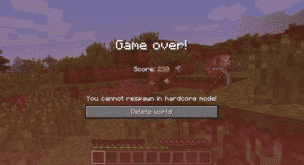
Minecraft has two different play modes, single-player and multiplayer. In single-player mode, a user only interacts with their own character and their own world. In multiplayer, users can join any game with any player, friends or strangers. Parents have the ability to sign their child up for a family-friendly multiplayer mode that is supervised and has restrictions on the chats and interactions.

The Benefits of Minecraft

Minecraft allows players to use their imagination and create what they desire. Users develop problem-solving skills while they are creating their world. Minecraft also helps users develop computer literacy skills, teamwork, and collaboration. For example, while in multiplayer mode, players are able to communicate and work together to build their worlds. Mathematics and spacial skills are also developed while playing the game. For example, it takes six planks to build one door. If players have 60 planks, they can calculate how many doors they are able to build.

Parents have the ability to limit their child to only single-player mode or a family-friendly version of multiplayer. There are several Minecraft servers that have been designed for children in mind. They are designed with a code of conduct and have full moderation. Parents are able to sign their children on to a family-friendly server where they will be safe from interacting with strangers in a negative way.

The Risks of Minecraft

There are relatively few risks for children playing Minecraft. With the exception of playing too often, for too long, or getting frustrated with gameplay, single-player mode is relatively safe because kids can be restricted from interacting with players they don’t know. However, violence can be easily found in the game. For example, there are multiple ways to kill users, mobs, or animals, such as:

  • setting another player on fire using lava or a torch
  • hanging an animal or another player
  • using canons and bombs
  • using sand to trap and suffocate mobs
  • using a zombie as a weapon to kill a villager
  • shooting with a gun or stabbing with a sword

There is also a chance for cyberbullying in multiplayer mode. It is not uncommon to come across a user who is intentionally irritating and harassing other users. They often use parts of the game in unintended ways. For example, they may curse, cheat, and kill without reason. Cyberbullying also includes players who deliberately kick players off the server and anger others for their own enjoyment.

Multiplayer mode carries the risk of children chatting with strangers. For example, in 2017 a Minecraft user was jailed for meeting two children on Minecraft and persuading them to carry out sexual acts. [i]

There is a potential for users to track down your IP address from playing Minecraft. An IP address is n unique number for an internet network. The IP address provides the location of where your network is coming from. If users are able to hack into the server, they can find another player’s IP address. This can lead the user to the location of the player within a couple of miles.

If your child wants to play Minecraft, GKIS recommends that you:

  • Add it to your free GKIS Connected Family Agreement (If you haven’t downloaded it yet, enter your name and email on our GetKidsInternetSafe home page and it will be emailed immediately)
  • Discuss the risks of chatting with strangers with your child. For ideas about how to do this, check out our GKIS Connected Family Course.
  • Add sensible filters and monitors on your devices with recommendations from our GKIS Screen Safety Toolkit.

GetKidsInternetSafe rates Minecraft as a green-light app due to the safety of the game and the benefits it can have on children’s development. Dr. Bennett has found that her kids and the kids in her practice love Minecraft when they are young and even return to it as teens! They tell her they appreciate the simplicity of it and especially love the relatively stress-free atmosphere with no in-game purchase requirements.

Thank you to CSUCI intern Makenzie Stancliff for writing this article. If you love to encourage creativity with your kids, you won’t want to miss the Makerspace ideas in our Connected Family Course.

I’m the mom psychologist who will help you GetKidsInternetSafe.

Onward to More Awesome Parenting

Tracy S. Bennett, Ph.D.
Mom, Clinical Psychologist, CSUCI Adjunct Faculty
GetKidsInternetSafe.com

Works Cited

[i] Herd, G. (2017, January 20). Minecraft: Grooming dangers for children gaming online. Retrieved from https://www.bbc.com/news/uk-wales-38284216.




Online Pornography’s Impact on Kids and Teens

Parents in my practice and GetKidsInternetSafe subscribers commonly ask me about the impact of pornography on kids. They comment on how different today’s world is from when we were young. Most people even assume that kids today are more promiscuous than we were. But here is what you may be surprised to learn: even though today’s teens demonstrate more acceptance of casual and what we used to consider deviant sexual practices (like oral sex, anal sex, same-gender sex, and polyamory), teens are more sexually responsible than previous generations. In fact, despite popular misconceptions that teens are hooking up casually, the truth is they are “talking” more than dating and having sex later and with fewer partners than previous generations. They are also more likely to use contraception, resulting in teen pregnancy rates being at an all-time low. That gives me hope that, because of American’s more casual attitude toward sex, we are doing a better job at sex education and supervision. To that end, I’ve included this section of my book, Screen Time in the Mean Time: A Parenting Guide to Get Kids and Teens Internet Safe, free for GKIS blog readers. Hang on to your hats parents, no matter how open-minded you are, you are likely to find some of this information concerning and IMPORTANT!

Online pornography is popular and easily available. We don’t know how popular it actually is though, because a large number of pornography websites are reticent to share traffic numbers. Best estimates are that 13% of web searches are for online pornography.[i] What we do know is that the number of viewers and time spent viewing is growing. A particularly popular single pornographic site, Pornhub’s 2018 Year in Review reported:

Visits to Pornhub totaled 33.5 billion over the course of 2018, an increase of 5 billion visits over 2017. That equates to a daily average of 92 million visitors and at the time of this writing, Pornhub’s daily visits now exceed 100 million. To put that into perspective, that’s as if the combined populations of Canada, Poland and Australia all visited Pornhub every day! …When they’re not busy watching videos, Pornhub’s users enjoy socializing, with nearly 64 million private messages sent and 7.9 million video comments left. … More than 141 million people took the time to vote for their favorite videos, which incidentally is more people than voted in the last U.S. presidential election.Once again, the United States continues to be the country with the highest daily traffic to Pornhub, followed by the United Kingdom, India, Japan, Canada, France, and Germany.[ii]

Furthermore, today’s online pornography is nothing like the images from our fathers’ Playboy magazines. Most pornographic videos are scripted to display fantastical versions of the sexual desires and prowess of men.[iii] Most often, that means scenes with women as sexual objects who are seemingly delighted to be the willing and passive victim of demeaning verbal and physical aggression, often by one or more men at a time. Porn content is rich with violent and fetish acts that bear little resemblance to loving intimacy. As customers satiate to milder versions of pornographic activity, clever content developers produce increasingly risqué content to keep their customers browsing. The top seven Pornhub searches for 2018 were lesbian, hentai, milf, stepmom, Japanese, mom, and teen.

With popularity and ease of access through mobile screens and gaming consoles, many kids and teens intentionally seek and are being accidentally exposed to, inappropriate sexual images and videos. Based on a set of EU studies, Kierkegaard (2008) states that children have access to Internet pornography at the average age of eleven years old.[iv] Not only are kids and teens seeking sexual content for titillation, but many kids are also relying on online pornography as their primary source of sexual education.[v] Alarmingly, I am seeing more and more kids intentionally seeking pornographic content and creating and exchanging nude images and videos. How often are children viewing porn, and, when they do, what kinds of harm may result from that exposure?

Estimates from research studies vary widely, most suggesting that a minority of adolescents actually access online pornography.[vi] However, in one study conducted in 2008 with 562 undergraduates, 93% of boys and 62% of girls reported that they were exposed to pornography during adolescence.[vii] In my clinical experience, it is quite common due to unfiltered smartphone and tablet use among younger children. Studies show that kids tend to consider what they see online as attractive, normative, and risk-free and may go as far as emulating it.[viii][ix] The online worlds of MMORPGs increasingly feature virtual sexual assault and pornographic behaviors, and popular television series deliver increasingly violent content and explicit themes.

Who is most at risk for online pornography consumption?

The typical adolescent online pornography user is a boy who is more pubertally advanced,  a sensation-seeker, and has weak or troubled family relations.[x] Boys are more likely to be exposed at an earlier age, to see more images, to see more extreme images (e.g., rape, child pornography), and to view pornography more often; while girls reported more involuntary exposure.[xi]Statistics demonstrate that female viewing is going up every year. Pornhub’s 2018 Year in Review report stated, “2018 saw the proportion of female visitors to Pornhub grow to 29%, an increase of 3 percentage points over 2017.”[xii] Depression and rule-breaking are also risk factors.[xiii][xiv]

What affects does viewing pornography have on kids?

Research demonstrates that pornography use among children, teens, or adults has been associated with:

  • Cynical attitudes about intimacy, fidelity, and love[xv]
  • Stronger gender-stereotypical sexual beliefs[xvi]
  • Desensitization and habituation with explicit content, meaning the user’s appetite changes over time from less extreme to more extreme forms of pornography to get the same intensity of enjoyment. This also validates deviant sex practices and potentially lowers inhibitions to engage in inappropriate sexual interactions online and offline[xvii]
  • Attitudes supporting violence against women[xviii]
  • More permissive sexual attitudes, especially in regard to the place of sex in relationships[xix][xx][xxi]
  • Greater experience with casual sexual behavior[xxii][xxiii]
  • Earlier sexual intercourse[xxiv]
  • More sexual aggression, both in terms of perpetration and victimization[xxv]
  • Three times more sexually aggressive behavior when exposed to nonviolent porn[xxvi]
  • Twenty-four times more sexually aggressive behavior when exposed to violent porn[xxvii]
  • A clinically impairing addiction, called Hypersexual Disorder.

Causal research would require purposely exposing children to pornographic content. Because that is not safe or ethical, all research studies about child exposure to online pornography are correlational. We cannot conclusively say whether online pornography causes certain attitudes or behaviors. Obviously, the correlation findings quoted above are concerning. Blocking kids from online pornography is common sense. Not only is viewing pornography an issue, but more active sexual role playing online also makes kids vulnerable to sexual predators. These attitudes and behaviors are impactful in the short term and may also lead to problematic life-long trauma and intimacy issues.[xxviii]

If this information is useful to you, please share it with friends and family. Too many of us bury our heads to the reality of online pornography and child access. There’s so much to know! If you are looking for a one-source guide to screen risk, benefit, and the parenting strategies that can strengthen your parent-child relationship while keeping them safer, pick up a copy of Screen Time in the Mean Time on Amazon. And for a step-by-step guide to setting up your home for enrichment and screen safety, you won’t want to miss my Connected Family Course. Parents tell me all the time how much they’ve appreciated having the information for prevention rather than hearing it AFTER they end up in my psychology office. Education matters!

I’m the mom psychologist who helps you GetKidsInternetSafe.

Onward to More Awesome Parenting,

Dr. Tracy Bennett

Works Cited

[i]http://www.forbes.com/sites/julieruvolo/2011/09/07/how-much-of-the-internet-is-actually-for-porn/#434a4de761f7

[ii]https://www.pornhub.com/insights/2018-year-in-review#us

[iii]Brown, J., & L’Engle, K. (2009). “X-Rated: Sexual Attitudes & Behaviors Associated with U.S. Early Adolescents’ Exposure to Sexually Explicit Media.” Communication Research36, 129, 133.

[iv]Kierkegaard, S. (2008). Cybering, online grooming & age-play. Computer Law & Security Report, 24(1), 41–55.

[v]Kanuga, M. & Rosenfeld, W. (2004). “Adolescent Sexuality & the Internet: The Good, the Bad, & the URL.” Journal of Pediatrics & Adolescent Gynecology17, 117, 120

[vi]Peter, J., & Valkenburg, P. (2016): Adolescents & Pornography: A Review of 20 Years of Research, The Journal of Sex Research, DOI: 10.1080/00224499.2016.1143441

[vii]Sabina, Chiara, et al. “The Nature and Dynamics of Internet Pornography Exposure for Youth.” CyberPsychology & Behavior, vol. 11, no. 6, 2008, pp. 691–693., doi:10.1089/cpb.2007.0179.

[viii]Rich, M. (2005). “Sex Screen: The Dilemma of Media Exposure & Sexual Behavior.” Pediatrics116, 329, 330.

[ix]Zillmann, D. (2000). “Influence of Unrestrained Access to Erotica on Adolescents’ & Young Adults’ Dispositions Towards Sexuality.”Journal of Adolescent Health27, 41, 42.

[x]Peter, J. & Valkenburg, P. (2016): Adolescents & Pornography: A Review of 20 Years of Research, The Journal of Sex Research,DOI: 10.1080/00224499.2016.1143441

[xi]Sabina, Chiara, et al. “The Nature and Dynamics of Internet Pornography Exposure for Youth.” CyberPsychology & Behavior, vol. 11, no. 6, 2008, pp. 691–693., doi:10.1089/cpb.2007.0179.

[xii]https://www.pornhub.com/insights/2018-year-in-review#us

[xiii]Wolak, J., Mitchell, K., & Finkelhor. D. (2007). “Unwanted & Wanted Exposure to Online Pornography in a National Sample of Youth Internet Users.” Pediatrics119.2: 247-57. Web.

[xiv]Ybarra, M., et al. (2011). “X-Rated Material & Perpetration of Sexually Aggressive Behavior Among Children & Adolescents: Is There a Link?” Aggressive Behavior37, 1, 3, 7.

[xv]Zillmann, D. (2000). “Influence of Unrestrained Access to Erotica on Adolescents’ & Young Adults’ Dispositions Towards Sexuality.”Journal of Adolescent Health27, 41, 42.

[xvi]Peter, J. & Valkenburg, P. (2016): Adolescents & Pornography: A Review of 20 Years of Research, The Journal of Sex Research, DOI: 10.1080/00224499.2016.1143441

[xvii]Zillmann, D. (2000). “Influence of Unrestrained Access to Erotica on Adolescents’ & Young Adults’ Dispositions Towards Sexuality.”Journal of Adolescent Health27, 41, 42.

[xviii]Hald, Gert, Martin, et al. (2009). “Pornography & Attitudes Supporting Violence Against Women: Revisiting the Relationship in Nonexperimental Studies.” Aggressive Behavior35, 1, 3, 5.

[xix]Peter, J., Valkenburg, P., & Schouten, A. (2006). Characteristics & motives of adolescents talking with strangers on the Internet. Cyberpsychology & Behavior, 9, 526–530.

[xx]Peter, J. & Valkenburg, P. (2016): Adolescents & Pornography: A Review of 20 Years of Research, The Journal of Sex Research, DOI: 10.1080/00224499.2016.1143441

[xxi]Zillmann, D. (2000). “Influence of Unrestrained Access to Erotica on Adolescents’ & Young Adults’ Dispositions Towards Sexuality.”Journal of Adolescent Health27, 41, 42.

[xxii]Peter, J. & Valkenburg, P. (2016): Adolescents & Pornography: A Review of 20 Years of Research, The Journal of Sex Research, DOI: 10.1080/00224499.2016.1143441

[xxiii]Zillmann, D. (2000). “Influence of Unrestrained Access to Erotica on Adolescents’ & Young Adults’ Dispositions Towards Sexuality.”Journal of Adolescent Health27, 41, 42.

[xxiv]Peter, J. & Valkenburg, P. (2016): Adolescents & Pornography: A Review of 20 Years of Research, The Journal of Sex Research, DOI: 10.1080/00224499.2016.1143441

[xxv]Peter, J. & Valkenburg, P. (2016): Adolescents & Pornography: A Review of 20 Years of Research, The Journal of Sex Research, DOI: 10.1080/00224499.2016.1143441

[xxvi]Ybarra, M., et al. (2011). “X-Rated Material & Perpetration of Sexually Aggressive Behavior Among Children & Adolescents: Is There a Link?” Aggressive Behavior37, 1, 3, 7.

[xxvii]Ybarra, M., et al. (2011). “X-Rated Material & Perpetration of Sexually Aggressive Behavior Among Children & Adolescents: Is There a Link?” Aggressive Behavior37, 1, 3, 7.

[xxviii]Villani, S. (2001). “Impact of Media on Children & Adolescents: A 10-Year Review of the Research.”Journal of the American Academy of Child & Adolescent Psychiatry40, 392, 399.

Photo Credits

Photo by pawel szvmanski on Unsplash

Photo by AC De Leon on Unsplash

Photo by Josh Hild on Unsplash

GetKidsInternetSafe Response to President Trump’s Comments Linking Violent Video Games to Hate Crimes

Yesterday in response to the El Paso and Dayton mass shootings, President Trump stated, “We must stop the glorification of violence in our society. This includes the gruesome and grisly video games that are now commonplace. It is too easy today for troubled youth to surround themselves with a culture that celebrates violence. We must stop or substantially reduce this and it has to begin immediately.” In response, #videogamesarenottoblame started trending on social media. Talk show hosts came out in force stating that there are no research studies linking video games to mass shootings and youth in other countries play video games, yet they do not have mass shootings like America. Consistent with their argument, as video game playing has gone up, juvenile delinquency has gone down. Even Trump’s own 2018 school safety commission produced recommendations that do not support yesterday’s statement. But as founder of GetKidsInternetSafe, I’m behind the President on this one that the on-demand violent entertainment that proliferates American culture deserves serious discussion. Of course, video games are not the sole cause of hate crimes, nor is the research clean about video games causing violence. But that doesn’t mean it isn’t a contributing factor (among many) to making troubled people vulnerable to radicalization online.

In the wake of 31 additional innocent lives lost to senseless gun violence at the hands of extremists, we can all agree that we have reached a crisis point in the United States. The horrific violence of recent hate crimes demand that our leaders act with moral clarity and urgency of action. But they need our support to get this done. They cannot act decisively if everybody gets hysterical and arm-chair quarterbacks every statement of action. Instead of emotional one-sided arguments, let’s think through some of his points about violent entertainment and video games. After all, our kids are at virtual war several hours a day. It is common sense to consider that this may have negative impact on some of them…especially the psychologically vulnerable.

Here are two applicable excerpts from my book, Screen Time in the Mean Time: A Parenting Guide to Get Kids and Teens Internet Safe, that address violent entertainment consumption in America:

***

Violence for Profit: Passive Viewing of Television and Video

The United States has long been criticized as the dominant creator and celebrator of violent entertainment. Chalk it up to our fierce protection of the right to bear arms or our thirst for thrilling content, more and more Americans are fans of violent sports, television, movies, and video games. As adults gobble up violent content for entertainment, our children are too often exposed to violence early and often with little regard to the damage it may cause. Everybody is doing it. Right? Right. Yet it has been widely demonstrated that viewing screen violence, passively and interactively, causes aggressive and hostile behavior in children and adults. However, not everybody who watches violent TV or plays violent video games acts aggressively. How much is too much for children who are vulnerable due to immature brains?

First, we must accept that not all screen time is equal. Screen viewing can be passive (watching television and videos) or interactive (screen touch and video games). In regard to passive viewing of violent screen content, the American Psychological Association Council Policy Manual on Violence in Mass Media (1994) concludes from decades of research that there is correlative and causal risk. It specifically states:

On the basis of over 30 years of research and a sizeable number of experimental and field investigations, viewing mass media violence leads to increases in aggressive attitudes, values, and behavior, particularly in children, and has a long-lasting effect on behavior and personality, including criminal behavior;[i],[ii],[iii]

Viewing violence desensitizes the viewer to violence, resulting in calloused attitudes regarding violence toward others and a decreased likelihood to take action on behalf of a victim when violence occurs;[iv]

Viewing violence increases viewers’ tendencies for becoming involved with, or exposing themselves to, violence;

Viewing violence increases fear of becoming a victim of violence, with a resultant increase in self-protective behaviors and mistrust of others; and

Many children’s television programs and films contain some form of violence, and children’s access to adult-oriented media violence is increasing as a result of new technological advances.

These conclusions are particularly troubling when one considers that, despite these findings existing for decades, the Internet and screen technology has exploded access to on demand violent content for all ages. The younger the child, the more time viewed, and the intensity and applicability of the content, the more potential developmental impact. Research demonstrates that children who have not yet started talking are affected by screen viewing in ways parents cannot recognize and that impact changes month-to-month, year-to-year. Furthermore, even kids as young as infants who view alongside an older sibling or a parent may still be negatively affected by inappropriate content.

Violence for Profit: Gaming and Interactive Screen Use

All parents want their children to succeed and live happy lives. We’ve generally accepted that screens are part of it. But parents often wonder, how much impact does violent gaming content have on psychological process? Too often we are seeing school shooters reference violent video games in their pre-attack manifestos. Do we have anything to worry about?

The five main video game play genres include action, role-playing, simulation, strategy, and sports. Gaming ranges in content and interactivity from simple puzzle games to complex massive multiplayer online role-playing games (MMORPGs). In MMORPGs, a large number of people play online together as developed characters in complex, online lands with shared goals in real time. Platforms for gaming include smartphones, tablets, handheld gaming devices, computers, gaming consoles, and the developing market of virtual reality (wearable devices with sensors like a helmet, goggles, and gloves where users can “interact” with a three-dimensional environment) and augmented reality (computer-generated images superimposed on the player’s view of the real world, resulting in a realistic composite of real and virtual life).

Other new, immersive auditory and visual adjunct technologies include transmedia storytelling (story content presented across multiple platforms and formats using digital technology), mini-games (video games contained within video games), chrono- and geolocation (identifying the time and location of players), and object linking (embedded links that lead the player to sequential digital locations). With multibillions of dollars earned each year from the gaming market, gamevertising has also become increasingly prevalent. This means that games are being expertly designed for product placement and with manipulative neuropsychological principals built in to ensure that gamers stay online and spend more money.

Beyond education and entertainment, benefits that can be gained from playing video games include improvements in visual-spatial capabilities, reaction times, attention span, ability to process multiple target objects, and detail orientation,[v] as well as improved visual short-term memory, mental rotation, tracking, and toggling between tasks.[vi] Video games can also help with anxiety and mood and improve relaxation and improve problem solving, strategy building, goal setting, and cooperation with others.

Video games also have vocational applicability and can be customized for specific tasks, such as orienting and motivating employees, providing health care benefits like exercise or illness care, or teaching specialized skills like performing surgery or sporting ability.[vii] Some gamers compete in profitable e-sport tournaments in person and online, while others learn computer programming skills that can be marketable as a career specialty. Mastery of video games provides opportunity for increased confidence, social connection and networking, and self-esteem. Social benefits are particularly valuable for players who may be isolated by geographic remoteness or physical or mental disability.

Along with benefits come risks. Ninety-seven percent of teens play video games, and more than 85% of video games have violent content.[viii] As with all complex psychological phenomena, different effects happen in different situations with different people. Thus, issues like content, time spent playing, and player vulnerabilities due to family life or mental health must be taken into account when considering effect.[ix]This makes for messy factors to control for quality research and controversial opinions about the risks of violent video games.

Meta-analytic reviews of research have found that violent video games can cause aggressive behavior, aggressive thinking styles, and aggressive mood, as well as decreased empathy and prosocial behavior. In regard to the effect of violent video games on children, teens, and adults, the American Psychological Association Council Policy Manual Resolution on Violent Video Games (2015) concludes:

A convergence of research findings across multiple methods and multiple samples with multiple types of measurements demonstrates the association between violent video game use and both increases in aggressive behavior, aggressive affect, aggressive cognitions and decreases in prosocial behavior, empathy, and moral engagement;

All existing quantitative reviews of the violent video game literature have found a direct association between violent video game use and aggressive outcomes;

This body of research, including laboratory experiments that examine effects over short time spans following experimental manipulations and observational longitudinal studies lasting more than two years, demonstrates that these effects persist over at least some time spans;

Research suggests that the relation between violent video game use and increased aggressive outcomes remains after considering other known risk factors associated with aggressive outcomes;

Although the number of studies directly examining the association between the amount of violent video game use and amount of change in adverse outcomes is still limited, existing research suggests that higher amounts of exposure are associated with higher levels of aggression and other adverse outcomes;

Research demonstrates these effects are for children older than 10 years, adolescents, and young adults, but very little research has included children younger than 10 years;

Research has not adequately examined whether the association between violent video game use and aggressive outcomes differs for males and females;

Research has not adequately included samples representative of the current population demographics;

Research has not sufficiently examined the potential moderator effects of ethnicity, socioeconomic status, or culture; and

Many factors are known to be risk factors for increased aggressive behavior, aggressive cognition and aggressive affect, and reduced prosocial behavior, empathy and moral engagement, and violent video game use is one such risk factor.[x}

Not only do video games affect gamers in the immediate, but they can also lead to increased aggressive behavior later in life.[xi] Furthermore, some players become desensitized to their environment,[xii] increasingly spend more time gaming, and ultimately feel more connected to their virtual world than the real world around them. With new immersive technologies being introduced to younger and younger children every day, one can’t even imagine true cognitive and psychological impact over time.

Thus far, attempts to regulate and block violent video game content from minors have largely been unsuccessful. Since the 1972 release of the first popular video arcade game, Pong, parents have worried about the impact of video gaming on their children. Just like our kids, we have largely become desensitized to its impact. From 1976, when parents succeeded in getting the video game Death Race pulled from the shelf due to the little gravestone that appeared when a character was killed, to now, we’ve come a long way baby. Or have we?

In response to video game players committing violence, several lawsuits have been filed by private citizens and class actions claiming that video game manufacturers were negligent by selling violent content that is harmful to children. However, few have succeeded due to first amendment rights claims and insufficient evidence related to flawed research methodology or correlational rather than causal research. City ordinances attempting to limit violent gameplay by unaccompanied minors in public places have also largely failed. Law professors and psychologists continue to argue that the evidence is too flimsy to make solid claims that video games cause violence, particularly considering the fact that despite widespread gameplay, the rate of juvenile violent crime is at a thirty-year low.

A particularly impactful blow against state regulation was the United States Supreme Court ruling in Brown v. Entertainment Merchants Association (2011), which concluded by a seven to two opinion that the California law restricting the sale and distribution of violent video games to minors was unconstitutional. The ruling was based on first amendment rights, stating that “speech about violence is not obscene” and is “as much entitled to the protection of free speech as the best in literature.”

***

So, there you have it. Violent video games and entertainment are not turning us into gun-hungry zombies. Our avid gamers have friends, go to school, and love their families. We are not being infected en masse through our video consoles. But that doesn’t mean hours of violent play isn’t impacting us negatively, especially those vulnerable with growing brains or childhood trauma. Rather than arguing extreme positions and attacking issues of concern, let’s consider the idea that we can all do better. Four commonalities have been found among shooters; a history of childhood trauma, a situational crisis point, the study of previous shooters and searching for validation for their motives, and the means to carry out the hate crime.[xii] That leaves us with many potential entry points for intervention. Our first step is calm, generous, and intelligent dialogue. Let’s start acting like a community and make positive change. The finger-pointing is only a distraction.

I’m the mom psychologist who will help you GetKidsInternetSafe.

Onward to More Awesome Parenting,

Tracy S. Bennett, Ph.D.
Mom, Clinical Psychologist, CSUCI Adjunct Faculty
GetKidsInternetSafe.com

Works Cited

[i]Huston, A., Donnerstein, E., Fairchild, H., Feshbach, N., Katz, P., Murray, J., Rubinstein, E., Wilcox, B. & Zuckerman, D. (1992). Big World, Small Screen: The Role of Television in American Society. Lincoln, NE: University of Nebraska Press.

[ii]National Institute of Mental Health – NIMH (1982). Television & Behavior: Ten Years of Scientific Progress & Implications for the Eighties, Vol. 1. Rockville, MD: U.S. Department of Health & Human Services.

[iii]Murray, J. P. (1973). Television & violence: Implications of the Surgeon General’s research program. American Psychologist, Vol. 28, pp. 472-478.

[iv]Krahe, B., Moller, I., Kirwil, L., Huesmann, L., Felber, J., & Berger, A. (2011). Desensitization to Media Violence: Links with Habitual Media Violence Exposure, Aggressive Cognitions, & Aggressive Behavior. Journal of Personality & Social Psychology, Vol. 100, No. 4.

[v]Taylor, J. (2012, December 4). How Technology is Changing the Way Children Think & Focus. Retrieved October 18, 2012, from http://wwpsychologytoday.com/glog/the-power-prime/201212/how-technology-is-changing-the-say-children-think-and-focus

[vi]Holfeld, B., Cicha, J. & Ferraro, F. (2014). “Executive Function & Action Gaming among College Students.” Current Psychology Curr Psychol34.2: 376-88. Web.

[vii]Brown, S., Liebermann, D., Gemeny, B., Fan, Y., Wilson, D., & Pasta, D. (2009). Educational video game for juvenile diabetes: Results of a controlled trial. Vol. 22 (Issue 1), p. 77-89. Doi:10.3109/14639239709089835

[viii]NPD Group (2011). Kids & gaming, 2011. Port Washington, NY: The NPD Group, Inc.

[ix]Ferguson, C. (2011). Video Games & Youth Violence: A Prospective Analysis in Adolescents. Journal of Youth & Adolescence, Vol. 40, No. 4.

[x]Anderson, C., Ihori, Nobuko, Bushman, B., Rothstein, H., Shibuya, A., Swing, E., Sakamoto, A., & Saleem, M. (2010). Violent Video Game Effects on Aggression, Empathy, & Prosocial Behavior in Eastern & Western Countries: A Meta-Analytic Review. Psychological Bulletin, Vo. 126, No. 2.

[xi]Norcia, M. (2014, June 1). The Impact of Video Games. Retrieved October 26, 2014, from http://www.pamf.org/parenting-teens/general/media-web/videogames.html

[xii]Weger, U., & Loughnan, S. (2014). Virtually numbed: Immersive video gaming alters real-life experience. Psychonomic Bulletin & Review, 21(2), 562-565. Doi:10.3758/s13423-013-0512-2

[xiii] https://www.latimes.com/opinion/story/2019-08-04/el-paso-dayton-gilroy-mass-shooters-data 

6 Reasons to Subscribe to GetKidsInternetSafe


Dear Parents,

Do you worry that you allow too much, or too little, screen time for your kids?

Have you read about digital injuries, like interaction with Internet predators, screen addiction, and neck and spine deformities, and worry you don’t know enough to spot risk in time to intervene?

Do you yell, punish, and lecture too often trying to keep them from doing what they beg to do online?

I did too! That’s why I started GetKidsInternetSafe 7 years ago. Yes, even psychologists find parenting challenging – especially nowadays with teens. When I started this legacy project, I was heartbroken and overwhelmed when my dad died and my mom succumbed to dementia. To get everything done and keep my kids happy, I was relying too much on Minecraft. The parents in my practice were doing the same…at the expense of the kids. I started to get freaked out.

But when I looked for digital safety tools and parenting strategies online for support, the best I could find was Dr. Phil saying to supervise all child screen use – as in, sit with them every time they were on screen. Because we all know that can’t happen, I did a deep-dive in the research, created my own screen safety parenting programs based on my 25+ years of momming and working with families, pooled resources of friends and colleagues, and founded GetKidsInternetSafe. Every day, I hear from families just like ours  telling me how much they needed it and how much they appreciate it! A feel-good project, indeed.

If you who have been with me from the beginning, THANK YOU! I’ve appreciated your support more than you know. And for those who are new to GKIS or considering subscribing, you’ll want to know what’s happening with GKIS these days!

As a subscriber,

1. You receive your free Connected Family Screen Agreement, designed to inform and inspire you to cooperatively connect as a family and set reasonable and sensible online safety guidelines for kids and teens. It’s delivered in 4 weekly chunks so you don’t get overloaded. Slow, steady, and fun is the goal.


2.  You get a free quick-read article once a week with fun resources, parenting tips, and valuable info about screen use risks to look out for. Please comment and share when inspired. so we can build as a community! (If you prefer emails less often, just let me know).


3. You are the first to know when I publish content through third parties (like Facebook’s parent portal, Healthy Living Magazine, The Good Men Project), interview on the radio or on podcasts, or appear on national and local news and entertainment channels.


4. You are the first to learn about new offers, like books, workbooks, online parenting courses, screen agreement supplementsworkshops, and coaching! All different depths and price-points so you can build a GKIS mastery level that fits you best!


5. You can track where I am speaking so you can attend an Internet safety or parenting presentation!


6. Not only do I offer individual and group coaching, but I often answer questions and post content on my GetKidsInternetSafe Facebook page and my DrTracyBennett Instagram page!

And of course, I never share your information with anyone. Please let me know if there’s anything you want to learn more about (or just to say hi!) by emailing me at DrTracy@DrTracyBennett.com.


Thanks again for being part of the GKIS community!

I’m the mom psychologist who will help you GetKidsInternetSafe.

Onward to More Awesome Parenting,

Tracy S. Bennett, Ph.D.
Mom, Clinical Psychologist, CSUCI Adjunct Faculty

Graphic Livestream Horrors

Popular livestream video platforms, like Facebook Live, Twitter, Instagram, and Periscope, can put viewers at psychological risk with graphic content that’s impossible to moderate or filter. Last week we learned the history of news coverage, including livestream during the recent Las Vegas shooting. Today’s article covers how quickly and dramatically easily-accessed video content has changed with a constantly increasing viewing audience. Is violent livestream video detrimental to our psychological wellbeing? #Vegasstrong

How is livestreaming different from news coverage?

We are all disheartened by the unprovoked mass murder of country concert attendees in Las Vegas recently. Constant bombardment with graphic news coverage left many of us reeling. No longer do news outlets need a reporter on-scene to get dramatic live coverage. Private citizens stream photos and videos from their smartphones real time on the Internet, while outlets choose and air the most dramatic content available.

Graphic news coverage is a relatively new phenomenon. Prior to smartphones, network executives edited out content that would upset viewers. Community standard determined the selection process, with ethics and consumer preference in mind. Livestreaming does not undergo this filtration process. It’s raw, authentic, and very real. Viewers can hear, see, and observe the terror of victims real-time without actually being there.

Livestream Horrors

Imagine the horror of watching a mass murder unfold real-time, helpless to do anything about it. This is exactly what happened to hundreds of Internet and television viewers of recent Las Vegas livestreams. As people livestreamed themselves enjoying the concert, the scene quickly changed. Viewers watched on in horror as the chilling events unveiled. This is not the only case of a tragic event captured on livestream.

In April 2017, Steven Stephens livestreamed himself shooting a 74 year old man on Facebook Live in Cleveland. In the video, Steven is seen in his car saying, “Found me somebody I’m going to kill — this guy right here, this old dude.”  Steven then exits the car and kills Robert Godwin Sr. on the spot. The video was on Facebook live for three hours with hundreds of viewers before it was finally taken down.

In a similarly disturbing incident, a man in Thailand livestreamed himself murdering his daughter.  The recording showed Wuttisan Wongtalay hanging his 11 month-old daughter by the neck from the rooftop of a building. The footage was on Facebook Live for twenty-four hours before it was taken down. Wongtalay later committed suicide off camera. Facebook called this “an appalling incident.”

In another criminal event, Obdulia Sanchez, 18, livestreamed herself on Instagram driving under the influence with two 14 year-old girls in the back seat.  After losing control of the vehicle, she shakes her sister, dead in a pool of blood, pleading, “Jacqueline, please wake up.”

Another particularly noteworthy livestreaming event occurred in January 2017, when four people broadcasted a 28-minute livestream video as they tortured a mentally disabled man. They taped his mouth shut and threatened him with a knife as they beat him, made him drink from the toilet, and cut off a part of his scalp. The first perpetrator to be tried, nineteen year-old Brittany Covington, pleaded guilty to the hate crime and received four years probation where she was ordered not to use social media.

Tolerance of Violence?

Information reaching us faster alerts us to a more accurate reality. This can be beneficial when considering the authenticity of news. But at the same time, instant access to unfiltered media may be desensitizing us to violent imagery. According to the World Health Organization, “Rules or expectations of behavior … within a cultural or social group can encourage violence.”

Children and adolescents who are curious and thrill-seeking seek out content to be shocked, scared, or more “in-the-know.” Other times viewers come across this content by accident. Each of us have our own complicated profile of risk. Perhaps the normalization of violent livestreams reduces our sense of safety, even sensationalizing issues like assault, murder, and suicide. Copycat behaviors seeking notice can also be a problem.

The fact that there are thousands of disturbing videos circulating the Internet at any time makes one question how it got this bad. As a nation, we are becoming more tolerant of viewing violence on-screen. Many argue that certain types of violent videos must be publicly available for informational and educational purposes. In response to this, most Internet platforms have specific rules for how violent videos are filtered.

For example, Facebook now has guidelines regarding which violent videos are permitted to stay on the website and which are removed. Videos of violent deaths are not always taken off the site, because they can help bring awareness to issues such as mental illness or war crimes. Videos in this category are instead marked as disturbing content and blocked from minors. Facebook also permits users to livestream themselves attempting suicide or committing acts of self-harm. The justification for doing so is because they do not want to censor freedom of expression or punish someone in distress. If a person does livestream a suicide attempt, the video documenting the incident may not be taken down if it is deemed newsworthy.


Youtube also has challenges filtering inappropriate content. Dr. Bennett was invited as a parenting expert on Access Hollywood Live to discuss the poor judgment of celebrity Youtube Logan Paul after he posted video of a suicide victim hanging in Japan’s notorious “suicide forest.” Although Logan took it down after receiving criticism, over six million of his followers, mostly young people, saw the footage and Logan’s poor taste of giggling uncomfortably throughout. People are increasingly willing to post scandalous content in order for it to go viral. After all, that mean’s BIG profits. Dr. Bennett called for parents to talk to their kids and advocate for better safety monitoring on video and livestream social media sites.

Find out how graphic livestreams may affect mental health in Mara Pober’s last article of her three-part series, “Live Streaming Can Cause PTSD in Adults and Children.”

I’m the mom psychologist who helps you GetKidsInternetSafe.

Onward to More Awesome Parenting,
Dr. Tracy Bennett

Works Cited

4 charged with hate crimes in Facebook Live beating of man with ‘mental health challenges’

How Facebook decides what violent and explicit content is allowed

Jailed woman says she livestreamed aftermath of deadly crash to raise funds for sister’s funeral

Las Vegas shooting FRONT ROW at country music concert live stream

Man livestreams murder of baby daughter on Facebook before committing suicide

Nationwide manhunt for suspect in Cleveland Facebook video murder

Post Traumatic stress disorder

Photo Credits

Eye By Richard Broderick

Girl on Computer Notebook

Gun

From Newspapers to Livestreaming: Is Instant Access to News Good for Americans?

Internet technology has brought us instantaneous access to global information. We see the latest news coverage in seconds with convenient notifications on our smartphones. Personal posts on Facebook delivers everything, including beheadings by ISIS and mass shootings like the tragedy in Las Vegas. Unregulated and increasingly pushing the boundaries of decorum, shocking information and violent images and videos constantly slice into our everyday lives. We at GKIS believe this comes at a grave price to our feelings of security and overall mental health, particularly for kids. Trigger warning: please beware that this post includes graphic news images.

Photojournalism: The First Graphic Images to Reach the Masses

Graphic popular news content is a relatively new phenomenon. Before the Internet, people primarily accessed news from newspapers. The first printed newspaper was written in Germany in 1605. The first newspaper photos in the 1850s were wood-engravings used for printing purposes rather than actual printed photographs. Though these images were not true to life, they still conveyed messages to the masses.

Roger Fenton, one of the first war photographers, captured images of the Crimean War in 1854. His photos revolutionized photojournalism. Due to the limited photo technology of the time, he could only capture stationary objects. As a result, his photos were often staged and depicted landscapes or posed people. He avoided taking pictures of dead bodies and bloodied soldiers.

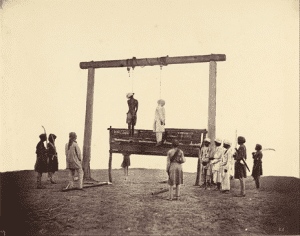
In 1857, photographer Felice Beato pushed the envelope further to more graphically expose the devastation of war. He captured what may be the first popularly published photograph of a human corpse.

In the late 1800s, newspapers developed a more efficient method of printing photos, called half-toning. These are the black and white images many of us are familiar with. By the 1920s this technology was very sophisticated and could produce high quality images which proved vital for eliciting public response.

A poignant example of graphic news coverage evoking public response was the Emmet Till incident in 1955. Emmet was a 14-year-old African-American boy who was senselessly lynched when a white woman claimed that he had disrespected her. Her husband and his brother abducted Emmet and beat and mutilated him before tossing his body into a river. When his body was discovered, Emmet’s mother allowed journalists to photograph his severely disfigured body. These disturbing images outraged the public and brought light to injustice in the South. Emmet became the face to The Civil Rights Movement.


News Video Coverage: A Revolutionary Medium

The introduction of film media added an even more sophisticated layer of interaction between news reports and the public. The first filmed news coverage, called Newsreel, was prominent from the 1910s to the 1960s, before Americans had televisions in their homes. Newsreels were short documentary-style films reporting on current events, most often shown before motion pictures in movie theaters. They tended to be informative and non-graphic in nature, often used as propaganda to influence public opinion on war and politics.

When televisions became common in American homes in the 1960s, TV stations began producing their own newsreels. Soon there would be entire programs dedicated to news, marking the beginning of nationwide news broadcasting stations like CBS.

In the 1970s, innovative technologies emerged that could record audio and video for television broadcasting, called electronic news gathering. With the onset of the unpopular Vietnam war, news broadcasters covered the battlefield in graphic detail. This exposed the world to raw and real depiction of the brutalities of war, fueling anti-war sentiments.

For example, on March 27, 1970, CBS News aired a graphic report with correspondent Richard Threlkeld. In the clip, Richard accompanies several soldiers patrolling the jungles of Vietnam. Suddenly shots fire, and Richard and the soldiers take cover. One of the soldiers, Kregg Jorgenson, is shot in both legs off camera. With gunfire sounds in the background, Richard briefly interviews the heroic soldier who earned his fourth Purple Heart that day.

In more recent memory, the graphic videos of 9/11 traumatized a nation. Millions of television viewers were entranced by the continuous hours of disturbing footage. Particularly horrifying were the images of victims jumping from the burning towers to their deaths. Richard Griffiths, the senior editorial director at CNN, ruminated with his colleges about whether or not to air “The Jumpers.” Ultimately, they decided to show a four-second clip of a person falling before impact. This decision was met with universal disapproval as audiences were shocked and deeply upset. How far is too far in television journalism?

Livestreaming: The New Frontier

With the advent of smartphones, we now have immediate, continuous access to the unregulated Internet. Not only can we conveniently view video coverage, but we also can take and share it real-time. Livestreaming is the ability to transmit live audio and video footage over the Internet. Popular livestream mediums are Facebook live, Twitter, Instagram, and Periscope.

The problem with livestreams is that it’s impossible to moderate and filter graphic content. It’s raw, authentic, and very real. Captured livestreaming incidents have included rape, torture, and murder. Most recently, the world looked on at the horrifying livestreaming videos of victims during the Las Vegas shooting. Viewing livestreamed events can feel like you’re actually there but helpless to do anything to aid victims. Just as we saw with 9/11 coverage, audience response has been emotional and, in some instances, symptomatic of secondary trauma.

Thank you Intern Mara Pober for giving us a great overview of photojournalism and how the tide has turned. Stay tuned for her article next week, “Graphic Livestream Horrors” to learn why  viewing graphic video content can contribute to clinical distress for all of us, particularly children.

I’m the mom psychologist who helps you GetKidsInternetSafe.

Onward to More Awesome Parenting,

Dr. Tracy Bennett

Works Cited

Felice Beato Biography

How “Electronic News Gathering” Came to Be

Newsreel archive

Vietnam War, 1970: CBS camera rolls as platoon comes under fire

https://www.youtube.com/watch?v=89_3DgW_7mg

9/11: ‘Jumpers’ from the World Trade Center still provoke impassioned debate

Photo Credits

Emmet till before and after the incident:

Before:

https://www.flickr.com/photos/11304375@N07/2534273093/in/photostream/

After:

https://www.flickr.com/photos/11304375@N07/2534273097/in/photostream/

Felice Beato

Twin Towers

Iraqi Girl