
Need peaceful screen time negotiations?

Get your FREE GKIS Connected Family Screen Agreement

teens

From Newspapers to Livestreaming: Is Instant Access to News Good for Americans?

Internet technology has brought us instantaneous access to global information. We see the latest news coverage in seconds with convenient notifications on our smartphones. Personal posts on Facebook delivers everything, including beheadings by ISIS and mass shootings like the tragedy in Las Vegas. Unregulated and increasingly pushing the boundaries of decorum, shocking information and violent images and videos constantly slice into our everyday lives. We at GKIS believe this comes at a grave price to our feelings of security and overall mental health, particularly for kids. Trigger warning: please beware that this post includes graphic news images.

Photojournalism: The First Graphic Images to Reach the Masses

Graphic popular news content is a relatively new phenomenon. Before the Internet, people primarily accessed news from newspapers. The first printed newspaper was written in Germany in 1605. The first newspaper photos in the 1850s were wood-engravings used for printing purposes rather than actual printed photographs. Though these images were not true to life, they still conveyed messages to the masses.

Roger Fenton, one of the first war photographers, captured images of the Crimean War in 1854. His photos revolutionized photojournalism. Due to the limited photo technology of the time, he could only capture stationary objects. As a result, his photos were often staged and depicted landscapes or posed people. He avoided taking pictures of dead bodies and bloodied soldiers.

In 1857, photographer Felice Beato pushed the envelope further to more graphically expose the devastation of war. He captured what may be the first popularly published photograph of a human corpse.

In the late 1800s, newspapers developed a more efficient method of printing photos, called half-toning. These are the black and white images many of us are familiar with. By the 1920s this technology was very sophisticated and could produce high quality images which proved vital for eliciting public response.

A poignant example of graphic news coverage evoking public response was the Emmet Till incident in 1955. Emmet was a 14-year-old African-American boy who was senselessly lynched when a white woman claimed that he had disrespected her. Her husband and his brother abducted Emmet and beat and mutilated him before tossing his body into a river. When his body was discovered, Emmet’s mother allowed journalists to photograph his severely disfigured body. These disturbing images outraged the public and brought light to injustice in the South. Emmet became the face to The Civil Rights Movement.




News Video Coverage: A Revolutionary Medium

The introduction of film media added an even more sophisticated layer of interaction between news reports and the public. The first filmed news coverage, called Newsreel, was prominent from the 1910s to the 1960s, before Americans had televisions in their homes. Newsreels were short documentary-style films reporting on current events, most often shown before motion pictures in movie theaters. They tended to be informative and non-graphic in nature, often used as propaganda to influence public opinion on war and politics.

When televisions became common in American homes in the 1960s, TV stations began producing their own newsreels. Soon there would be entire programs dedicated to news, marking the beginning of nationwide news broadcasting stations like CBS.

In the 1970s, innovative technologies emerged that could record audio and video for television broadcasting, called electronic news gathering. With the onset of the unpopular Vietnam war, news broadcasters covered the battlefield in graphic detail. This exposed the world to raw and real depiction of the brutalities of war, fueling anti-war sentiments.

For example, on March 27, 1970, CBS News aired a graphic report with correspondent Richard Threlkeld. In the clip, Richard accompanies several soldiers patrolling the jungles of Vietnam. Suddenly shots fire, and Richard and the soldiers take cover. One of the soldiers, Kregg Jorgenson, is shot in both legs off camera. With gunfire sounds in the background, Richard briefly interviews the heroic soldier who earned his fourth Purple Heart that day.

In more recent memory, the graphic videos of 9/11 traumatized a nation. Millions of television viewers were entranced by the continuous hours of disturbing footage. Particularly horrifying were the images of victims jumping from the burning towers to their deaths. Richard Griffiths, the senior editorial director at CNN, ruminated with his colleges about whether or not to air “The Jumpers.” Ultimately, they decided to show a four-second clip of a person falling before impact. This decision was met with universal disapproval as audiences were shocked and deeply upset. How far is too far in television journalism?

Livestreaming: The New Frontier

With the advent of smartphones, we now have immediate, continuous access to the unregulated Internet. Not only can we conveniently view video coverage, but we also can take and share it real-time. Livestreaming is the ability to transmit live audio and video footage over the Internet. Popular livestream mediums are Facebook live, Twitter, Instagram, and Periscope.

The problem with livestreams is that it’s impossible to moderate and filter graphic content. It’s raw, authentic, and very real. Captured livestreaming incidents have included rape, torture, and murder. Most recently, the world looked on at the horrifying livestreaming videos of victims during the Las Vegas shooting. Viewing livestreamed events can feel like you’re actually there but helpless to do anything to aid victims. Just as we saw with 9/11 coverage, audience response has been emotional and, in some instances, symptomatic of secondary trauma.

Thank you Intern Mara Pober for giving us a great overview of photojournalism and how the tide has turned. Stay tuned for her article next week, “Graphic Livestream Horrors” to learn why  viewing graphic video content can contribute to clinical distress for all of us, particularly children.

I’m the mom psychologist who helps you GetKidsInternetSafe.

Onward to More Awesome Parenting,

Dr. Tracy Bennett

Works Cited

Felice Beato Biography

How “Electronic News Gathering” Came to Be

Newsreel archive

Vietnam War, 1970: CBS camera rolls as platoon comes under fire

https://www.youtube.com/watch?v=89_3DgW_7mg

9/11: ‘Jumpers’ from the World Trade Center still provoke impassioned debate

Photo Credits

Emmet till before and after the incident:

Before:

https://www.flickr.com/photos/11304375@N07/2534273093/in/photostream/

After:

https://www.flickr.com/photos/11304375@N07/2534273097/in/photostream/

Felice Beato

Twin Towers

Iraqi Girl

YouTube Beauty Gurus Suck Money and Teen Confidence

With more pressures at school and with friends, middle school can be awkward, scary, and lonely. Middle school is also when many tweens and teens onboard social media. Although social media is a fun way to keep up with friends and follow special interests, it has also been proven to increase insecurities and make kids feel left out and excluded. Cyberbullying is not uncommon and can lead to depression and anxiety. Insecure about their looks, teenagers are the perfect target for online beauty gurus and product marketing. Are beauty videos innocent instructional fun or high-tech marketing? Today’s GKIS article covers the beauty guru craze on YouTube, Instagram, and TikTok and how they trick us into buying expensive and unnecessary beauty products.

What is a beauty guru?

Beauty gurus are social media celebrities who create images and videos that offer makeup and hairstyling tutorials, skincare reviews, and fashion advice. They are popular on YouTube, TikTok, Instagram, Snapchat, and Facebook.

Millennials (those born between 1980 and 1995) and Generation Z (those born between 1996 and 2015) are the targeted populations for beauty gurus.

  • Tweens, teens, and young adults spend an average of 11.3 hours on YouTube each week.
  • 60% of them follow YouTube celebrities on social media.
  • Nearly a third of teens ages 13 to 17 prefer YouTube celebrities over movie or TV celebrities.
  • As of 2015, there were approximately 45.3 billion views on YouTube for beauty videos alone. [1]
  • Each month, 50 million people watch over 1.6 billion minutes of beauty guru content. [2]

Why are beauty gurus so popular?

Developmental changes during adolescence make teens perfect targets for beauty marketing. As kids develop and mature, they are getting used to maturing bodies and also switch attachment focus from parents to peers.

To attract their tribe, teens focus on their looks and often believe that others frequently watch and judge them. Child psychologist David Elkind coined this developmental phenomenon imaginary audience.

Is a judging audience imaginary? After all, the hundreds of social media selfies and YouTube videos teens view each day fuel the idea that everybody is watching, scrutinizing, and judging.

Teens are also attracted to the fame and influence of YouTube celebrities. Fifty-six percent of teen subscribers aspire to be a YouTube star. [3] Beauty gurus are particularly admired because they are often more relatable than polished celebrities like Kylie Jenner or Angeline Jolie. They’re “normal girls” just like everyone else, right? 

Videos Shot for Profit

High subscriber numbers mean high profits. Although beauty videos appear to be spontaneously self-produced, informal chats into the camera, they aren’t. Most teens would be surprised to learn that these videos are expertly produced with scripting, expensive cameras and sound equipment, professional lighting, digital filtering and enhancements, and extensive editing. Newly created video editing software offers filters that enhance the skin and hide imperfections.

Beauty Box Video is an example of a digital enhancement software product. “This early-generation video plugin automatically identifies skin tones and creates a mask that limits the smoothing effect to just the skin areas…[It’s] Powerful, Easy, Real-time skin retouching for video” (website product description). With retouching software and filters, beauty gurus lead their audience to believe that their flawless skin is the result of a skincare item or a makeup product available for purchase rather than photography, video, and editing tricks. [4]

Some beauty Youtubers are not even amateurs. They are professional makeup artists or stylists. Some Youtuber celebrities may have started innocently making videos, but when subscriber numbers rise, advertisers offer attractive incentives to better sell. For example, Youtuber Michelle Phan was initially endorsed by Lancôme and now has her own makeup line called EM Cosmetics. Her brand makes millions of dollars a year.

Fake Friends and Confidants

YouTube beauty gurus intentionally create a false sense of intimacy in their videos that appeal to a lonely generation of young people who are captive audiences to their screens. Intimate video titles such as “Get ready with me” or “Storytime” offer the viewer a false sense of friendship with the Youtuber. [5]

Although teens may feel entertained and satisfied with learning, hours of watching may also contribute to their dissatisfaction and loneliness. Despite the teen’s best efforts, they will never be able to attain the professionally produced look of the beautiful Youtuber. The most popular beauty gurus are very attractive to begin with. Youtubers with average looks rarely get views and endorsement deals. The prettier the Youtuber, the more brand deals they get, and the more discouraged teens get sold on expectations they can’t achieve.

Compare and Despair

Many teens look to beauty gurus as role models. Unfortunately, beauty gurus rarely encourage their audience to explore interests outside of beauty and fashion.

Instructional beauty videos reinforce gender stereotypes that our worth is based on beauty, which requires time, skill, and money to achieve and maintain. These stereotypes are reflected in filter features that reflect Western beauty biases. We covered an example of this in our GKIS article, Beauty Filters Don’t Embrace Brown Beauty: The Rise of Colorism.

Also disturbing is how many beauty gurus discuss their plastic surgery and cosmetic procedures on camera. Browse “I got injections,” and you will see dozens of videos produced by surgically enhanced influencers with millions of views each.

In Xiaxue’s video titled, “Plastic surgery questions answered!” she discusses her nose job and double eyelid surgery as if it’s an everyday, simple get. Surgical transformation is a dangerous proposal to a lonely, self-conscious teen who has spent hours mesmerized by enhanced marketers slowly grooming her desperation to be reinvented. Anxieties inspired by this type of content can lead to mental illnesses like body dysmorphic disorder and eating disorders. [6]

Popular YouTube celebrities boast large followings, high influence, and big profits off of vulnerable teens. A top beauty influencer, Wayne Goss, blew the whistle on this misleading phenomenon in his video, “WARNING. YOU’RE BEING LIED TO.” In his illustration, Wayne shows his audience what his face looks like before and after using skin retouching software. But knowledge doesn’t always cut through compulsive video viewing habits. [7]

What you can do:

    • Recognize that worth is more than skin deep and emphasize this among friends and family. Provide opportunities for intellectual, spiritual, and character growth. Value substance.
    • Be a good role model. Makeup-free days and clean, natural living balance special, glitzy occasions.
    • Parents can filter streaming video content with screen safety management tools like those offered in our Screen Safety Toolkit. The more developed your child’s personality and self-concept, the more resilient they’ll be in the face of relentless marketing.
    • Educate kids about the risks and benefits of watching beauty guru videos. Make sure they understand that beauty videos are meticulously edited to make a profit from unsuspecting targets.
    • Help each other know that we don’t need to alter our appearance to be genuinely loved and accepted.
    • Monitor and limit how often you or the people you care about view beauty guru content. Take notice if you or those you care about are showing compulsive viewing habits or are negatively affected by the content they are consuming.
    • Teach balanced, healthy, and fun beauty activities like giving to others, gratefulness, kindness, a clean diet, and satisfying fitness. Beauty radiates from within, not from ten-minute ombré lips and $50 shimmer. Sometimes it’s important to dare to go bare.

Thank you to CSUCI Intern, Mara Pober for providing parents with information about the beauty gurus of Youtube. For more parenting support to dull the influence of high-earning, big-influence celebrities like Kim Kardashian, check out the GKIS article What Parents Need to Cover About Kim Kardashian’s Un-covering.

I’m the mom psychologist who helps you GetKidsInternetSafe.

Onward to More Awesome Parenting,

Tracy S. Bennett, Ph.D.
Mom, Clinical Psychologist, CSUCI Adjunct Faculty
GetKidsInternetSafe

Works Cited

[1] Beauty on youtube in 2015

[2] The Leading Role of Influencers in the YouTube Beauty Community

[3] DefyMedia Acument report

[4] Beauty Box Video

[5] Making Sense of Beauty Vlogging

[6] Plastic surgery questions answered!

[7] WARNING. YOU’RE BEING LIED TO.

Photo Credits

Decolored eye Pix from the Field, CC BY-NC-SA 2.0

creative commons Sharon Wesilds, CC BY 2.0

Shélin Graziela, CC BY-SA 2.0

Astrology junction creative commons Sharon Wesilds, CC BY 2.0

Is Social Media Behind the Spike in Child Suicide? Teens and The Blue Whale Challenge

blue whale

Recent reports of child and teen suicides have flooded the news recently. Too often social media and cyberbullying plays a role. The Blue Whale Challenge is the latest fad kids are talking about. Should parents worry?

Suicide risk

According to the Centers for Disease Control and Prevention there has been a recent spike in child and teen suicides. The rate for 10 to 14 year-olds doubled between 2007-2014. Suicide is the third leading cause of death among kids aged 10 to 14 and second among persons aged 15 to 34. Firearms is the most commonly used method for males, and poisoning is the most commonly used method for females. Because kids immerse themselves with their screens on average of 10 hours a day, there is often little escape from online peer pressures and conflict. Experts consider social media and Internet access to be major contributors to risk. The most recent sinister social media game tied to suicidal gestures is the Blue Whale Challenge.

What is The Blue Whale Challenge?

The Blue Whale Challenge is a game shared on social media that encourages players to complete a series of 50 challenges. Players are required to prove they are accomplishing these challenges by Skyping or instant messaging descriptions, images, and videos to a “whale,” who is typically an older person manipulating the younger subject. There is also a version where a Blue Whale Online Forum does the challenging. The name is reported to have come from the song Burn by the Russian rock band Lumen.

Blue whale challenges typically include a series of tasks with increasing risk that require subjects to “prove” obedience to the whale. These include various self-mutilation tasks, like poking, scratching, cutting, and carving words into one’s body, overcoming a fear, like climbing a crane or standing on a bridge, watching horror movies, and ultimately killing oneself on video. Gradual obedience training with social isolation and sleep deprivation gradually wears down a victim’s resolve and increases dependency. This type of psychological manipulation is a typical grooming technique used by online predators.

Descriptions of this challenge have been shared on Reddit and are rumored to have originated in Russia. A CNN article reported that 21 year-old Philip Budeikin was arrested in November 2016 with the charge “incitement of suicide” for encouraging 16 victims to kill themselves, and a 26 year-old postman was also detained by Russian authorities. An article by SkyNews stated, “Civil society groups in Russia believe that at least 130 young people have taken their lives while playing Blue Whale, while reports of incidents and fatalities in places such as Ukraine, Estonia, Kenya, Brazil and Argentina have also surfaced in recent months.”

Although it is unclear how pervasive this challenge is in the United States, at least two U.S. families have come forward to the media stating that it lead to the suicides of their children. Fifteen year-old Jorge Gonzalez of San Antonio was found hanging in his closet with his cell phone propped up to record. His parents told news media he had sent videos of challenges to friends after following the directives of a Blue Whale social media group. The parents of a sixteen year-old Georgia girl reported that their daughter killed herself, leaving behind paintings of blue whales, letters in Russian, and several clues linking her to this challenge. One clue was a sketch of 17 year-old Rina Palenkova, who killed herself in Russia in November 2015 and became an icon among online suicide fan communities.

What I have seen in clinical practice

So far I’ve not heard of the Blue Whale Challenge other than when my teenage son brought it up after seeing a cautionary video from famous YouTube star, Shane Dawson. However, I have treated many people with suicidal ideation since I started practice in the mid-1990s. My personal experience is that kids are speaking of suicidal ideation at younger ages and with higher prevalence. They often discuss suicide among strangers and peers online. Although it is argued that online communities provide support when kids are isolated or distressed, habitual discussion may also desensitize kids, causing them to lose sight that suicidal threats are very serious and devastating to those they love. For some, habitual discussion places them in a hopeless, one-solution mind space, distracting them from more productive and uplifting activities and relationships. Furthermore, comments like “Go die” or “Go drink bleach,” are too often delivered online with little regard to the potential consequences.

parents protecting kids

What can parents do to keep their kids safe?

Teach your kids the vocabulary necessary to talk about feelings while they’re young, gradually teaching more advanced problem solving strategies over time.

Rather than shrinking away from your kids when they are frustrated, sad, or angry, lean in and let them know you understand and consider their emotional well being your highest priority. If you see evidence that your child is being bullied, address the problem assertively with your child and seek support from school administrators and law enforcement. “Just ignore it” is not a reasonable solution.

Don’t allow your kids to flippantly make threats about hurting themselves.

Sometimes kids threaten to hurt themselves in order to express their pain and cry for help. Other times these threats are intended to express anger and manipulate others. Take any type of threat seriously and require a family discussion about every incident. You may want to let things calm down before you engage in the discussion, but don’t let a comment go unaddressed. Make sure your children understand that a consequence of such a threat is that they will have to talk it through to solution. If they won’t cooperate with you, offer adult alternatives like a trusted family member or a mental health professional.

Be alert for signs of emotional distress offline and online.

Mood and anxiety disorders and substance abuse often contribute to suicidality. Be on the lookout for depressed or agitated mood, an inability to have fun, a drop in initiative, sleeping often during the day, a change of appetite, low energy, a drastic change in behavior, social isolation, or expressions of inappropriate guilt or hopelessness. A drastic change in appearance, pulling away from friends, or giving away favorite items may also signal your child is in trouble.

If your child loses a friend or family member to suicide, be aware that he or she may be at increased risk. Keep in mind that not every suicidal individual is depressed and not every depressed individual is suicidal. Statistics show that only half of those who have killed themselves demonstrated depressive symptoms. Keep an eye out for hashtags that demonstrate dangerous themes on your child’s social media activity, like #bluewhalechallenge, #curatorfindme, or #sue.

If you have concern that your child is engaging in self-harm or has suicidal ideation, ask about it directly.

Parents often worry that mentioning suicide first may give their child ideas. But most people who attempt suicide show signs before the attempt. Asking directly is the best way to elicit critical information that can lead to prevention.

Be direct but avoid frequent, fearful questioning or shaming. Instead focus on validation, understanding, and problem solving. Suicide is often a consequence of feeling so hopeless the subject is unable to see a way to resolve their pain. Don’t stop at investigation and validation; help your child generate solutions. Praise positivity and resilience while discouraging blind obedience. Take every opportunity to authentically express your love and admiration for your child’s efforts, no matter how disappointing the ultimate performance. They need us to reveal our love for them in order to recognize that they are worthy of love just for being them.

Ensure that potentially lethal means are not available.

Lock firearms, razor blades, poisons, and dangerous medications in a safe, particularly if any family members have demonstrated suicidal ideation before.

Let go of your stigma toward mental illness and treatment.

Life is more difficult for some more than others, but few of us escape this life without hard times. Compassion is key. If your child is suffering, seek an expert who can help. Kids and teens will often accept the influence of other adults in a different way than they do with their parents. Don’t go it alone.

If you or someone you know expresses suicidal ideation, reach out to local mental health resources or call the National Suicide Prevention Lifeline at 1-800-273-8255. An online chat is also available, or you can text HOME to the National Suicide Hotline at 741741.

Worried about self harm and cutting? Check out my GetKidsInternetSafe article What Parents Need to Know About America’s Cutting Epidemic.

I’m the mom psychologist who will help you GetKidsInternetSafe.

Onward to More Awesome Parenting,

Tracy S. Bennett, Ph.D.
Mom, Clinical Psychologist, CSUCI Adjunct Faculty
GetKidsInternetSafe.com

Photo Credits

Half alive –  soo zzzz by I Love Playdough, CC by-ND 2.0

Family Travel by Roderick Eime, CC by 2.0

What Parents Need to Know About America’s Cutting Epidemic

Teenager About to Cut Arm with Razor
Pia was 13-years-old when she cut herself for the first time. She was confused, lonely, and hopeless. Self-harm provided a distraction from her emotional pain and anchored her to her physicality amongst the numbness. She started with a tiny cut, ultimately inflicting deeper and deeper cuts. Even the hours anticipating cutting brought her comfort. She found a community of cutters on an online forum who provided support and caring while also encouraging more dangerous behaviors. She wasn’t alone with her shameful secret. But she wasn’t stopping either … Could your child end up like Pia?

Cutting

Cutting refers to self-harming practice distinct from a suicide attempt. Cutters typically make small superficial cuts on their arms, legs, or parts of the body easily concealable by clothing. Cutting distracts the individual from emotional pain, releases endorphins which may trigger a mood boost, and is often a cry for help rather than an intent to inflict lethal harm (Davis, 2005).

Dr. Bennett often treats teens and adults who self harm. I’ve also seen several cutting incidents working as a paramedic. Because the cutting ritual can take on profound meaning, some injuries are uncomfortably creative. For instance, I’ve seen kids cut shapes, patterns, words, and even sentences into their skin. When I interviewed Pia for this article, she showed me her first “masterpiece,” the word “HATE” cut into her right thigh.

Why cut?

Pia: “I remember a painful time in my childhood when my dad didn’t come home at night. My mom told me he had troubles at work, and that I shouldn’t be worried. But then it started to become a habit, and my dad would be gone most days of the week. I was really attached to him. I missed having a male role model and friend who could tell me what to do when there seemed to be no way out for me. When my parents got a divorce my world fell apart. I felt lonely, hopeless, sad, and misunderstood. I withdrew more and more, lost most of my friends, and started to become depressed. Since I wasn’t able to soothe my emotional pain on my own, I looked for answers online. That was when I found out about cutting.”

***
The most common reasons teens give for cutting are that they’re trying to make themselves “feel alive” instead of the numbness, or they’re trying to distract themselves from intense or overwhelming emotions such as anger or hurt (McCoy, 2009).
***

That was true for Pia. She wanted to have the control and power of harnessing pain whenever she wanted. She said that sometimes when she woke up in the morning, she felt nothing but emptiness. Cutting helped her “feel” her body again rather than just feeling intense emotional pain.

The controversial Netflix show 13 Reasons Why addresses self-harming behavior, with the main character ultimately committing suicide, leaving behind her audio-recorded 13 reasons “why”. The show was a huge success, with children of all ages binge-watching it over spring break without their parents’ consent. I wondered, if this show could be a danger to teens already on the edge?

During an interview for I-heart radio, Dr. Bennett referred to the show and stated that a majority of people have suicidal fantasies at one time or another. She suggested that 13 Reasons Why could trigger vulnerable teens. She lectured in our psychology class that she has seen self-harming behavior be quite contagious in schools and inpatient treatment settings, spreading from teen to teen quickly. Now the Internet is a source of cutting contagion.

Who cuts, and how common is it?

Cutting is a fairly common practice in the United States. There are about two million cases reported annually with approximately 15% of teens reporting some form of self-injury. Studies show an even higher risk for self-injury among college students, with rates ranging from 17%-35% (Mental Health America, 2013). One in five females and one in seven males have engaged in self-injury practices (Gluck, 2016). Ninety percent of people who engage in self-harming techniques start during their teen or pre-adolescent years (Gluck, 2016).

Parent Researching Cutting Epidemic on Laptop

Did the Internet contribute to Pia’s cutting?

Pia: “I remember sitting at my desk. I was supposed to do homework but instead I Googled “how to deal with emotional pain.” Somehow I stumbled on a few websites which mentioned cutting. Pretty soon I was hooked, researching for hours and eventually finding a useful tutorial how to start my first cut.”

Experts say the Internet is the main contributor for teens to not only find out about the various methods of cutting but also to demonstrate or even glorify self-injury (Steinberg, 2014). Forums like “The Cutting-Board” encourage kids to share their concerns and questions about cutting and find useful expertise. Tips and tricks about how to hide their cuts, what do to if someone gets suspicious, or advice when cutting-goes wrong are popular posts. Furthermore, there are several YouTube tutorials of “how to cover up your scars after cutting,” like a video by 14-year-old Julia Ansell.

How to recognize that your child is cutting

Concealing clothes
If your child suddenly starts wearing long sleeves even during hot days, this could be a sign that she is hiding injuries or scars.

Behavioral changes
Social anxiety, depression, and low self-esteem are often comorbid with cutting (Davis, 2005). If your child starts isolating, eating more or eating less, sleeping more, acts lethargic, isn’t interested in his usual interests, or acts sad or irritable, keep an eye out for self mutilation practices.

Spending time browsing for information about self harm and visits on online forums
Kids often use secret terminology to hide their online activities from parents. Hashtag terms like #sue (a synonym for suicidal) or #secretsociety123 are popular code words to discreetly form online communities discussing self-harm (Yandoli, 2014). Sometimes pictures with these hashtags overlap with other self-harming techniques or mental disorders like anorexia (#ana) or depression (#deb).

Possession of cutting tools
Keep an eye out for sharp objects that may be used for cutting, piercing, or burning like razor blades, knives, paper clips, broken glass, scissors, needles, or lighters.

Cuts, bruises, burns, or scars
Kids will occasionally change methods or location if they fear detection. Escalation is rare but can become an issue. Dr. Bennett has treated clients with comorbid mental illness that went as far as breaking joints with a ball ping hammer or engaging in oddly ritualistic mutilation like the practice of suspension (piercing the skin with hooks and hanging from them).

What you can do for your child?

Be empathetic and sensitive
If you see evidence of intentional injury, ask about it in a straightforward, emotionally neutral manner. Of course share your concern, but be careful not to escalate the situation by panicking, threatening, or lecturing.

Be supportive and present for your child
Let your child know he or she can always come to you with any troubles, issues or concerns. Make yourself available and willing to talk when your child approaches, on her terms. Kids often avoid talking to their parents, because they’re afraid that they’ll lose their trust or add an additional stress factor to an already stressful situation, like going through a divorce or financial issues (Steinberg, 2014).

Express your emotions
Be authentic and present. Not only does this model appropriate communication strategies, but your child will recognize that he is loved and important. Tell him that you can get through this together.

Seek help and treatment
Cutting is often an expression of distress from mental disorders, like depression or anxiety. Consult a clinical psychologist who has specialized training with self harm behaviors. Not only can a clinician work with your child to achieve insight and build resilience by teaching emotional coping skills, but she can also provide much needed consult and support for family members. Often times kids will accept influence from a therapist even when they are dismissive of parenting support.

CSUCI Intern, Lisa Sommer Thank you to CSUCI Intern, Lisa Sommer for writing this important piece. Please share your thoughts in the comments below. Self harm forums are common on the dark net. To find out more about that, check out Dr. Bennett’s article, GetKidsInternetSafe Sheds Light on the Dark Net: Drug Traffickers, Child Pornographers, and Nude Selfies.

I’m the mom psychologist who will help you GetKidsInternetSafe.

Onward to More Awesome Parenting,

Tracy S. Bennett, Ph.D.
Mom, Clinical Psychologist, CSUCI Adjunct Faculty
GetKidsInternetSafe.com

*Due to professional discretion, Pia is a fictional name.

Works Cited

Davis, J.L. (2005). Cutting and Self-Harm: Warning Signs and Treatment. WebMD, Retrieved April 23rd, 2017 from: http://www.webmd.com/mental-health/features/cutting-self-harm-signs-treatment#1

Gluck, S. (2016). Self Injury, Self Harm Statistics and Facts. Healthy Place, retrieved April 24th, 2017 from: https://www.healthyplace.com/abuse/self-injury/self-injury-self-harm-statistics-and-facts/

McCoy, K. (2009). When Teenagers Cut Themselves. Everyday Health, retrieved April 23rd, 2017 from: http://www.everydayhealth.com/kids-health/when-teens-cut-themseleves.aspx

Steinberg, S., (2014). What to Do If Your Child Is Cutting. US News, retrieved April 24th, 2017 from: http://health.usnews.com/health-news/health-wellness/articles/2014/02/28/what-to-do-if-your-child-is-cutting

Krystie Lee Yandoli (2014). Inside The Secret World Of Teen Suicide Hashtags. For buzzfeed, retrieved April 30th, 2017 from https://www.buzzfeed.com/krystieyandoli/how-teens-are-using-social-media-to-talk-about-suicide?utm_term=.jtRrkE8Q9#.kpAzK8oX6

Photo Credits

Girl with a Razorblade, 2016 CC0 1.0

Girl on the Laptop, 2016 CC0 1.0

Hookup Apps: The GKIS Sensible Parent’s Guide to Tinder

Dr. Bennett recently told me a story about her friend Abby’s first experience using the dating app Tinder. Her first date sounded perfect for a middle-aged woman new to the dating scene. Like her friends told her, she met her “match” for a quick drink. She knew better than to get into his car or reveal where she lived. They had a few drinks and then walked to a nearby restaurant for dinner. He was a gentleman, handsome and professional. She couldn’t wait to get home to tell her friends about him.

When she called my professor that night, Abby was beside herself excited about this guy. Dr. Bennett, quietly wondering if it was too good to be true, suggested that she Google him. A person’s digital footprint can reveal a lot. So, Abby Googled. You will never believe what she found out…

It turns out that the man of her dreams was everything he said he was. He was recently overseas as a military officer and had gotten out of a serious relationship several years before. But she also found out that the relationship ended with stalking, an attempted kidnapping, and years in federal prison. Her night went from fantasy to nightmare in a few keystrokes.

Today’s GKIS article reveals what every parent needs to know about the famous hook-up app recently turned dating app, Tinder.

With the rise of screen technology in full effect, the dating game has changed forever. Instead of going out to meet people, many teens and adults rely on dating apps to potentially meet their future soul mates. Or are they just looking for a casual hook up? This new hook up culture revolves heavily around the dating app, Tinder.

What is Tinder?

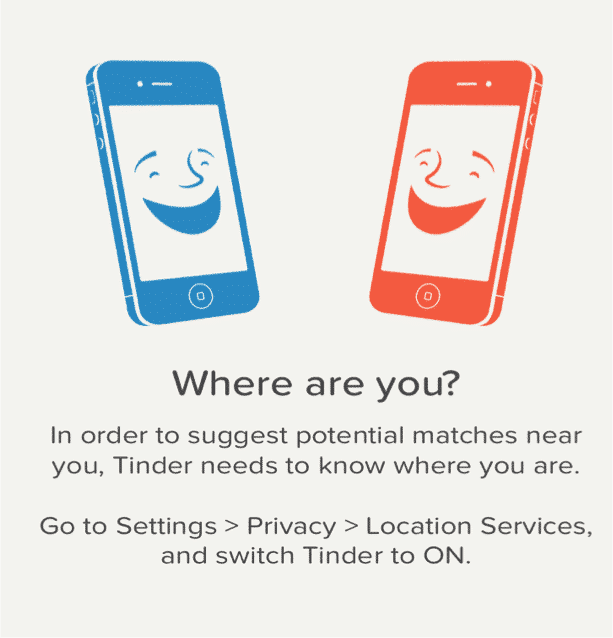
Tinder is a free dating app that you can use either on your mobile device or home computer. After signing up, you can connect with Facebook to merge your mutual friends, interests, and pictures with the Tinder app. There is a new feature to simply log in with a phone number. Tinder uses your location to match with other user’s close in proximity. If interested in one’s profile, users have the option to either “swipe right” which is a “go” or “swipe left” which indicates a “no.” In other words, play or pass. Once users are matched, meaning they both swiped right on each other’s profile, they can begin a conversation – whether it’s gifs (animated or static images) or messages.

What are Tinder’s popular features?

  • When linking Facebook to Tinder, you have access to a network of friends whom can potentially share similar interests.
  • The app works off of your geographic location, giving you an option to find matches within a specific radius. The user can match with people as close to 1 mile away and as far as 100 miles away. There is a setting where you can choose the maximum distance you prefer to swipe from.
  • Users can edit their profile and select certain photos, create a personal bio, and insert personal demographic information they would like to share.
  • In order to search for matches, users swipe through profiles until they are matched with another user. Once matched, users have the option to message or keep swiping through other profiles.
  • Users can exchange messages, reactions, and gif’s which disappear after 24 hours. Users also have the ability to like a message sent from another user. Sending a reaction to one of your matches is a new feature on snapchat. Reactions look like a bigger emoji that moves and takes up most of the screen. The reactions include sending a shooting heart, a constant laughing face, clapping hands, a jumping cocktail drink, and an eye roll. (They do add new reactions randomly).

What is included in the personal profile?

  • The first thing that appears on one’s personal profile is your photo. It also gives an option to swipe through the other photos posted on the account.
  • Underneath the photo, it shows the user’s name and age. Depending on the user’s privacy preferences, it may also show one’s gender, interests, photos from Instagram, education and job details, a chosen anthem from Spotify, and one’s distance from your location.

What are the privacy options?

  • Although Tinder is connected to Facebook, Tinder does not have authorization to post anything to one’s Facebook page.
  • The information entered to sign up for Tinder can be hidden from other users. This includes e-mail address, home address, phone number, and birthday.
  • When managing privacy options, users can opt to upgrade to Tinder Plus in order to hide their age and location to others.

How long has it been around and how popular is it?

Tinder was launched in 2012 by developer Sean Rad, Jonathan Badeen Justin Mateen, Joe Munoz, Whitney Wolfe and Chris Gylczynski. The app has been growing in numbers ever since. “Research shows there are 50 million active users who check their Tinder accounts up to 11 times per day (Claire, 2017).”

What are the risks for use?

Cyberbully potential:

  • Other Tinder users can send threatening/cruel messages or offensive pictures
  • Fake accounts and impersonation.
  • Users can become desperate for likes and matches, potentially affecting self-perception and self-esteem.

Making poor decisions:

  • There is a temptation to participate in casual hookups that can potentially lead to a unsafe sex and victimization.
  • Since location plays a huge role in this app, it is easy for online predators to target Tinder users.

What are the protection features?

  • If a user is sending inappropriate messages or images, there is an option to un-match with them and this disallows them to contact you.
  • You have the option to upgrade to Tinder Plus, which allows you to hide location and age.
  • There is also an option to turn-off the option to show your profile on Tinder.

Thank you to CSUCI student Nicole Hunnicutt for co-authoring this article. One thing no parent wants to think about is how predators use social media to target victims for sex trafficking. Most of us think this is the kind of thing that only happens to vulnerable youth in poor countries. Unfortunately, children and teens are victimized in most American towns with families in every income level. All it takes is a cunning predator and a kid with a screen. To take safety measures today to Get(your)KidsInternetSafe, check out this article on how sex traffickers use social media to recruit victims.

I’m the mom psychologist who will help you GetKidsInternetSafe.

Onward to More Awesome Parenting,

Tracy S. Bennett, Ph.D.
Mom, Clinical Psychologist, CSUCI Adjunct Faculty
GetKidsInternetSafe.com

Works Cited

Claire, M. (2017, February 21). Tinder: The Online Dating App Everyone’s Talking About. Retrieved March 02, 2017, from http://www.marieclaire.co.uk/life/sex-and-relationships/tinder-the-online-dating-app-that-everyone-s-talking-about-112522

What is Tinder? Parent App Guide (Video) – SafeSmartSocial. (2017, February 15). Retrieved February 22, 2017, from https://safesmartsocial.com/what-is-tinder-parent-guide/?utm_source=Safe%2BSmart%2BSocial%2BMailing%2BList&utm_campaign=57ce4c7f10-S3_Newsletter_3_Stars_2_23_17&utm_medium=email&utm_term=0_40b34a3ccb-57ce4c7f10-195659757

Vedantam, S., Klahr, R., Penman, M., Boyle, T., Schmidt, J., Connelly, C., & Cohen, R. (2017, February 14). Hookup Culture: The Unspoken Rules Of Sex On College Campuses. Retrieved February 26, 2017, from http://www.npr.org/2017/02/14/514578429/hookup-culture-the-unspoken-rules-of-sex-on-college-campuses

Is Your Tween Hooking Up?

couple hooking up

The first time I experienced the hookup culture was my first week of college. I was living in the dorms and everybody felt liberated, taking advantage of having no parents around, partying, drinking, smoking, and having sex. I remember watching freshman in their evening outfits make their walks of shame back to the dorms early in the morning. A friend told me how she woke up in an apartment she didn’t recognize. She was scared and left the apartment frantically. I felt sorry for her. I was shocked and confused about how my friends were treating sex so casually.

Hookup Culture

Hooking up is a term used by college students that has a wide variety of meanings. Some people use it to mean kissing, whereas others say it means sex. It turns out that college students themselves don’t really know what it means exactly (Currier, 2013). A survey by McHugh and colleagues (2012) found that 48% of male and 33% of female college students reported that hooking up means having sex.

Sociologist Lisa Wade wrote a book called American Hookup: The New Culture of Sex on Campus. Wade spent five years investigating hookup culture in universities. She explains that a hookup is “a meaningless, spontaneous act of either kissing or having sex with someone to win the approval of friends, bragging rights, and/or improve a college student’s status quo” (Vedantam, 2017).

Hooking up seems to be taking over traditional dating. In a recent survey, 58% of students surveyed from 19 universities reported that they had hooked up with someone by their senior year of college (Monto et al., 2014). Hooking up is particular popular at universities, because students are exploring their identities and having fun outside of their parents’ rules with no rush to get married; no shame, no consequences. Hookup culture fits like a puzzle piece for the college lifestyle. It may sound harmless, but I believe that hooking up can be detrimental.

Your Tween’s Love Life

Dr. Bennett’s article “Hey Dad, Your Twelve Year Old Daughter Has a Nude Out” revealed that the hookup culture often starts as early as middle school. She found that high school boys were grooming middle school girls on social media instant messaging and text to send the nude images of themselves. These nude images were then shared and posted without consent among unknown others locally and on the web. For the local teens, they were valued, collected, traded, and redistributed multiple times over years like Pokemon cards.

Although many young people argue that hooking up is a fun and a harmless way to learn about intimacy and relationships, there are downsides to casual sex. For instance, some teens find causal sex distressing and may feel embarrassed or weak for wanting a more meaningful connection with their partner (Vedantam, 2017).

It has been argued that men generally have an easier time with hooking up than women (McHugh, 2012). As a result, girls will work hard to “fit in” and please the cultural ideal of emotionless hookups, even though they secretly feel ashamed, unfulfilled, conflicted, and embarrassed. After all, sex is often an exercise in bonding and attachment, triggering the release of the neurotransmitter oxytocin, which is responsible for feelings of love, attachment, and even symptoms of obsessive-compulsive disorder. Trying to not bond while having sex with somebody can be very difficult for some people. Whether to hookup or not is a very personal and meaningful decision for college students. But for our tweens and teens, it can be physically and emotionally dangerous.

How can parents help?

Be a good listener and teach your teen your family’s values and beliefs about sex. Start early.

Bring up the topic often. Provide accurate sex education. Listen to your child. Get an idea about what they think. Don’t assume they have absorbed family values from thin air. Family values and sex education is best provided by the people whom love them the most, their parents.

Teach how intimacy differs from sex.

Unfortunately, many kids learn about sex from viewing Internet porn. Don’t let this artificial portrayal of sex go uncorrected. Having sex in order to carve a reputation or live up to demeaning portrayal of a meaningless physical act can be emotionally destructive, especially to a teenager. Teach your child that sex is a profoundly intimate act between mature, caring partners. That means it is best to wait and experience it with somebody you love and trust when you are mature enough to handle the complexities in the relationships that will follow. Intimacy requires a lot of maturity and communication.

Explain how social media differs from reality.

Social media is everywhere whether you like it or not. We love it, because it helps us connect with others during our overtasked lives. Connecting with peers is critical for healthy adolescent development. Explain how social media glamorizes and misrepresents a person’s actual life. Collaborate on how to avoid typical pitfalls. GKIS articles help with that!

Build your teen up by letting them know they are far more than a sexy image.

Self-esteem starts with how we treat ourselves. Keep a lookout for self-deprecating comments in your household (like “I’m so fat”). Kids learn these bad habits, which can be psychologically detrimental over the long term. Be generous with authentic compliments and encouragement. Remind them that every relationship has impact on one’s quality of life. That means taking the time to choose peers who treat us well and help us strive to be the best we can be. Include your teen’s friends in family activities so they feel supported in their friendships and so you maintain influence.

CSUCI Intern, Mahika Morin Thank you to CSUCI Intern, Mahika Morin for her work on this article. Lastly, check out, “The GKIS Parent Beginners Guide to Texting and Instant Messaging (IM),” “The GKIS Sensible Parent’s Guide to Snapchat,” and “The GKIS Sensible Parent’s Guide to Instagram,” to help you through social media and digital communications. Be ahead of the game and stay up to date on screen media for the benefit of you and your child.

I’m the mom psychologist who will help you GetKidsInternetSafe.
Onward to More Awesome Parenting,
Tracy S. Bennett, Ph.D.
Mom, Clinical Psychologist, CSUCI Adjunct Faculty
GetKidsInternetSafe.com

Works Cited

Currier, D. M. (2013). Strategic ambiguity: Protecting emphasized femininity and hegemonic masculinity in the hookup culture. Gender & Society, 27(5), 704-727. doi:10.1177/0891243213493960

McHugh, M. C., Pearlson, B., & Poet, A. (2012). Who needs to understand hook up culture?: Understanding hookup culture: What’s really happening on college campuses. Sex Roles, 67(5-6), 363-365. doi:10.1007/s11199-012- 0172-0

Monto, M. A., & Carey, A. G. (2014). A new standard of sexual behavior? Are claims associated with the ‘hookup culture’ supported by general social survey data?. Journal Of Sex Research, 51(6), 605-615. doi:10.1080/00224499.2014.906031

Vedantam, Shankar. (Host). (2017, February 14). Hookup Culture: The Unspoken Rules Of Sex On College Campuses [Radio broadcast episode]. http://www.npr.org/2017/02/14/514578429/hookup-culture-the- unspoken-rules-of-sex-on-college-campuses.

Photo Credits

Young Couple Undressing Each Other by PhotoMediaGroup, BY Shutterstock, Inc.