During the last couple of years, cryptocurrencies and NFTs were one of the biggest trends on social media. They represent a complicated form of financial technology that got the attention of mainstream news media and even had a commercial air during the 2022 Super Bowl. How does it all work? And is it something that I should worry about? We’re going to break down some of the questions you may have about this technology and highlight some of the controversial issues surrounding the social media craze.
What are cryptocurrencies and NFTs?
Cryptocurrencies are a form of digital currency created for use on the Internet. GetKidsInternetSafe previously published the article “What is Bitcoin anyways?” that goes in-depth on the subject, but we’ll cover some of the basics here as well.
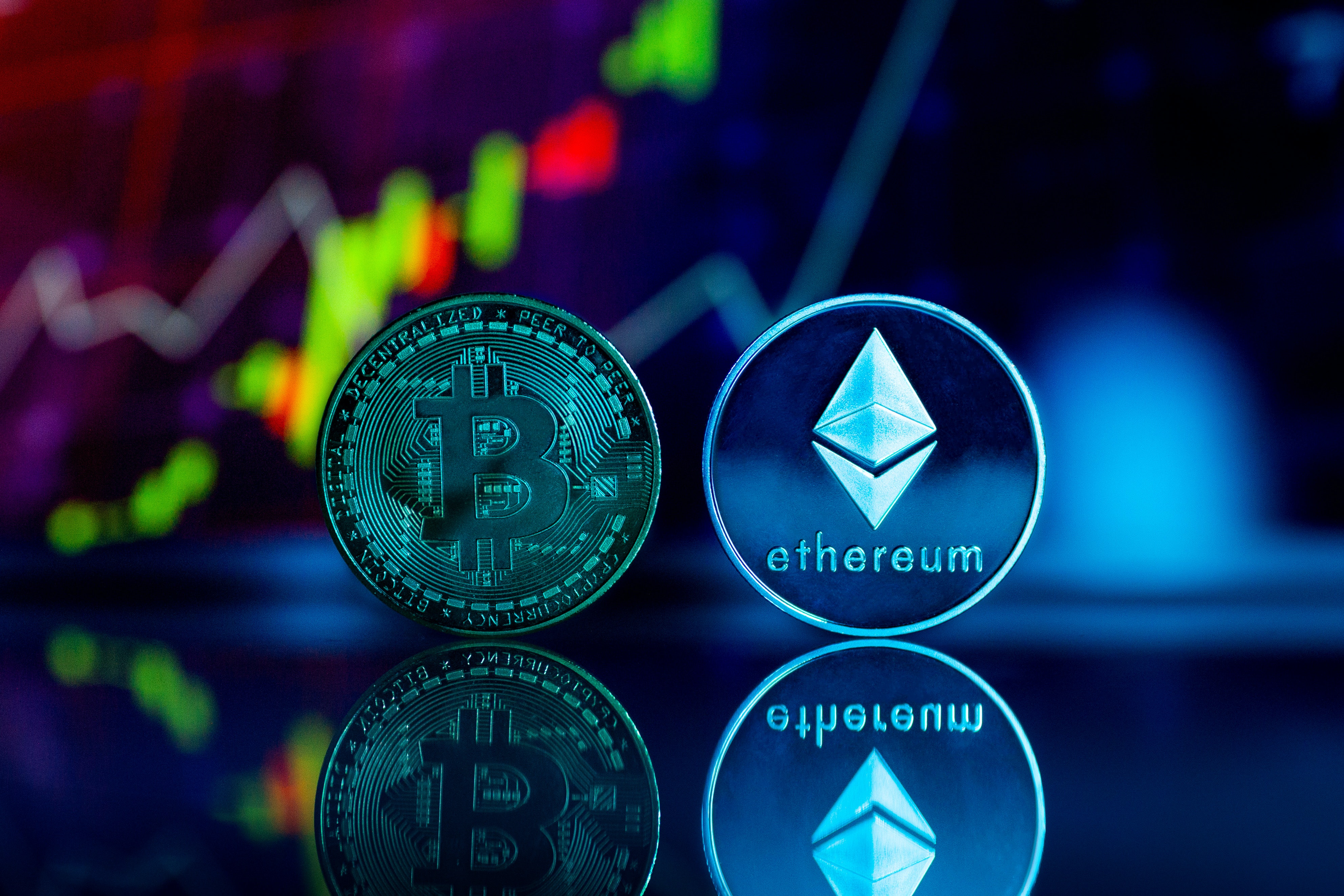
Bitcoin and other more recent cryptocurrencies like Ethereum and Dogecoin were created to have a decentralized form of currency that was not tied to banks or other financial institutions following the 2008 housing market crash.[1] Cryptocurrencies are not stocks but they are often traded in a similar way because of how much their value can fluctuate over time. All cryptocurrencies are managed using a type of program called a blockchain, which is a publicly viewable list of all transactions and activity done with a specific cryptocurrency. All transactions made on a blockchain are verified by the other users, which makes it impossible for anyone to make changes to old transactions without that change being corrected immediately.
Non-Fungible Tokens, more commonly referred to as NFTs, are another technology created using blockchains. NFTs function like serial numbers attached to virtual data and are used to show ownership and authenticity of that data similar to a deed or certificate. They cannot be copied, substituted, or subdivided, and they’re used to create a unique digital object. The most common form of NFTs is images, but the technology can be used for music, videos, documents, or anything else that can be stored digitally.
How did NFTs become so successful?
NFTs are a technology that has been around since 2014[2], but they were brought into the media spotlight in March 2021 when digital artist Beeple sold an NFT collage of his artwork for 69 million dollars.[3]
The trend exploded in popularity afterward, with the next series of major sales coming from original creators of various early internet viral memes selling their creations as NFTs for tens or hundreds of thousands of dollars[1]. In the digital art community, NFTs were also heavily marketed to artists as a solution for online copyright infringement and art theft.[2]
Major investors like Elon Musk[4] and Mark Cuban[5] began to invest in cryptocurrencies, and celebrities like Matt Damon[6] and Larry David[7] have acted in advertisements for the new technology, with one of them playing during the 2022 Superbowl. NFTs had become a lucrative business model in only a couple of months, but this surge in popularity did not last for long.
The Technical Problems with NFTs and Cryptocurrency
As NFTs and cryptocurrencies both began to receive mainstream attention and thousands of new users, various technical problems began to hamper their success. Despite the early successes in March, by June 2021 the market had already dropped by 90%.[1]
Slow speeds
Blockchain technology is not a quick or efficient system for handling monetary transactions, and if a user tried to use their cryptocurrency to make a purchase, they would face wait times of 30 minutes to several hours in a queue before their transaction would be approved[8].
Security Problems
Due to unaddressed security risks in their programming, NFTs became notorious for being stolen by hackers.[9][10] Because blockchains cannot have their history changed, and because they’re unregulated by the government, if your NFTs were stolen this way there was no way to recover them.[8] NFTs also don’t have any inherent connection to copyright or trademark law, so your digital ownership only extended to the NFT program itself, not the artwork that it was connected to.[2]
Another problem caused by the lack of regulation was that the artists who had been the target of early NFT marketing were facing more art theft problems than before. There were no protections to prevent somebody from creating NFTs using another person’s art, and many artists found that their art was already being sold on cryptocurrency apps without their approval or knowledge. In some cases, NFTs were created using artworks from deceased artists without consulting the artists’ families.[11]
Environmental Problems
NFTs and cryptocurrency are also horrible for the environment. Because the process of operating and interacting with a blockchain requires hundreds or thousands of computers to be operating all at once, they consume extreme amounts of electricity. Conservative estimates for the total amount of electrical energy consumed and CO2 emissions caused by cryptocurrency rival those of mid-sized European countries.[12]
The Financial Risks of Crypto
The largest problem with cryptocurrency and NFTs, however, is that most projects were intentionally made to scam people out of their money. These digital assets only have value because of the amount of real money that is inserted into them by investors, and unlike banks or the stock market, they don’t generate additional wealth over time.[13] To make a profit with cryptocurrency, it has to be sold to somebody willing to spend more money on it than what you originally purchased it for.
“Pump-and-dump” scams like this are not only common but encouraged in many cryptocurrency communities as a way to make quick profits.[1] Most artists who began selling their art as NFTs were selling at a loss after transaction fees and costs associated with creating the NFTs.[14] The cryptocurrency apps which handle these transactions are aware of these practices, and many of the security problems mentioned earlier were neglected because their creators profited off of the transactional fees.[10]
How to Protect Yourself and Your Family from Cryptocurrency Scams
While the trend of cryptocurrency and NFT projects being advertised has gone on the decline, there are still pushes for the technology to be used in other parts of the web.
Here are some things you can do to help protect your family from cryptocurrency and NFT-related scams:
Keep an eye on new internet products and services that talk about NFTs, Ethereum, Bitcoin, blockchains, and Web3.0. These are all buzzwords that are commonly associated with each other to help sell the idea of cryptocurrency on social media.
Sign up for the FREE GKIS Connected Family Screen Agreement, which covers the basics of preventing digital injuries and opens a forum of discussion for you and your family to discuss internet safety.
Take a look at the How to Spot Marketing and Cybersecurity & Red Flags Supplements for the GKIS Connected Family Screen Agreement, which can help you to stay safe against identity theft, hacking, and scamming strategies common on the internet.
Thanks to CSUCI intern Brandon Bishop for researching the history of cryptocurrency development and authoring this article.
I’m the mom psychologist who will help you GetKidsInternetSafe.
Through their quickly consumable content, TikTok, Instagram, and Twitter have made it increasingly easy to connect with people who have similar interests to you. While this helps people to find those like them, it may become dangerous when those interests are morbid. All over social media, you can find fan accounts and fan edits for the world’s most deadly serial killers. By connecting true-crime fans all over the world, social media has caused an emergence of teens who have a cult-like obsession with killers like Dahmer, Bundy, and Manson. Today’s article covers social media’s obsession with serial killers and how you can keep your child safe from digital injury with our GKISScreen Safety Toolkit.
Fandoms and The Rise of the “Stan”
A fandom is a group built around the shared interest or enjoyment of something in popular culture.[1] Since before the creation of the internet, people have gathered to meet and obsess over their common interests. The internet has simply made it easier to do so.
Fandoms provide a space for people to be themselves without judgment, leading to higher levels of self-esteem.[2] There is a term for those who are particularly obsessed, called “Stans.” A Stan is someone who is a mix between a stalker and a fan, someone who shows extreme fandom behavior to the point of excessiveness.[3]
Typically online, you can expect to see fandoms for pop culture groups like movies, TV shows, and musicians. However, with the rise in true crime popularity, a new subgroup has formed of “Stans” with a particular interest in serial killers and their victims. These Stans continually post videos of serial killer interviews edited to music, create fan accounts, and even write serial killer self-insert fanfiction where they are the victims.[4]
Social Media’s Role in Obsession
Social media thrives on content that can get lots of views and produce lots of likes, meaning that the more scandalous and salacious content is, the more likely it is to do well. The notifications from social media likes and comments trigger the reward center of our brain, releasing dopamine and making us feel good all over.[5] When users post content that is related to their fandoms, they get a rush of dopamine and that connection between fandom content and happiness causes them to post more and interact with the content more.
Social media has also created a world where content is readily available for consumption, meaning that people can see posts specifically tailored to their interests 24/7. This allows people to go from fans to superfans, spending their waking moments scouring the internet for posts related to their fandom. One Quora user shared their experience as an obsessive fan, “I’ve been addicted to a fandom for 7 years, and I haven’t been able to stop thinking about it for that long. As per my personal experience, I got sucked into several fandoms due to over-engaging in social media. I over-identified with the idols and associated my own ego with that of their public image.”[6] This idolization of celebrities creates dangerous parasocial relationships that are only made further dangerous when one’s idol is a serial killer. To learn more about parasocial relationships, check out the GKIS article, “The Dangers of Online Parasocial Celebrity Relationships”.
When Does Harmless Become Harmful
It’s easy to brush off fandom behavior as nothing more than a phase one will grow out of. But when the obsession turns into something more it can become dangerous. Cody Ackland was a 24-year-old who grew up obsessed with Ted Bundy, an interest that no one paid much attention to until he attacked and murdered 18-year-old Bobbi Anne McLeod. Just hours before attacking McLeod, Ackland had searched for “Ted Bundy dead victim’s bodies” and “Ukrainian serial killer bodies” on the internet.[7]
Teens have become more and more desensitized to serial killers and true crime content, going so far as to make fan accounts as part of a big internet joke. When 23-year-old Peter Manfredonia was on the run from the police following a double murder he committed, teens on TikTok and Instagram began making fan accounts and posting meme comments to the killer’s personal Instagram page.[8] While the people running these accounts chalk up their actions to being a big joke, there is a large community of people who genuinely run fan accounts for notable serial killers.
Reddit user IkariMonster shared screenshots of several accounts from Twitter to a sub-Reddit, stating, “These teenagers worship and treat serial killers and school shooters like e-boys.”[9] In the screenshots, you can see several fan accounts treating serial killers Ted Bundy, Jeffrey Dahmer, and the Columbine Shooters Eric Harris and Dylan Klebold as though they were celebrities. In one post a teenage girl shares a selfie next to her bedroom wall, which is covered in photos of Dahmer with the caption, “I just thought I’d share cause I think my wall looks pretty [face with hearts emoji].” These accounts and posts are just one example of content and cult-like obsessive behavior that exists across multiple social media platforms.
The victims of these killers were people with friends and family and the pain they endured it absolutely horrendous. There is no reason that serial killers and mass murderers should be praised or celebrated for their actions. The creation of fan accounts and fandom content perpetrates further violence against the families of the victims and serves as a constant reminder of the pain they suffered. GKIS does not endorse this behavior. We are mortified by it and think it is destructive to kids and teens to be so callous and to celebrate violence in this way.
What Parents Can Do
Installing management tools for social media can help you in monitoring their internet behavior. If you would like help with this process, check out our GKISScreen Safety Toolkit made to help empower and provide parents with smart tech tools to filter, monitor, and manage online behavior.
Co-view the content your child interacts with; you can scroll together to choose what content they view and enjoy.
Make it known from the beginning the type of content that is acceptable for your child to view. We can help facilitate this healthy conversation with ourConnected Families Screen Agreement to help you work with your child to create a collaborative, living document.
So many of us follow our favorite celebrities on social media hoping to get small glimpses of their private lives. But have you ever wondered, where’s the line between fandom and obsession? Tweens and teens are especially vulnerable to developing parasocial relationships with celebrities they love online. Because of their fame, celebs can influence followers in some of the worst ways. To prevent your child from being negatively influenced by others online and to create a strong digital foundation, check out our Screen Safety Essentials Course. Today’s GKIS article covers what online parasocial relationships are and how to prevent their negative influence on kids and teens.
What is a ‘Parasocial’ Relationship?
A parasocial relationship is a one-way relationship with a person of higher status who you know intimately but who hardly knows you at all.[1] Social media is the perfect vehicle to develop parasocial relationships. Younger tweens and teens are especially susceptible due to a powerful social drive fed by adolescent identity formation. Not only are teens looking for mentorship, but they also easily form an attachment to idealized versions of their favorite celebs.[2]
Social media features that readily fuel parasocial relationships include the attraction of stylized and beautifully edited posts, branding relationships between celebrities, produced dramas between celebrities designed to bring in more followers, fan comments and forums, and even the ability to send private messages. Studies show that adolescents that have a weaker sense of self-identity often participate in celebrity worship as they are more easily influenced by others.[2]
‘Stan Culture’
Fans aim to achieve closer relations with their favorite celebs through various consumption activities.[1] Twitter is the social media site with the largest number of users who participate in celebrity worship, which is also known as a stan. A Stan is an overzealous or obsessive fan of a particular celebrity. Primarily a term used to define a fan of a particular musical artist, there are Stans for just about any popular current artist you can think of. Stan culture on Twitter consists of individuals sharing fanmade videos and pictures and consuming as much of the artist’s content as possible.
There is also a dark side to Twitter’s Stan culture. Arguments between Stans of different celebrities frequently appear in comment sections, which eventually turn into cases of cyberbullying. Studies have found that intense celebrity worship can be linked to tendencies toward addiction and stalking behaviors.[3] What seems like innocent fan engagement could potentially lead to something more negative and even illegal.
Defending Harmful Messages
Well-known celebs have the freedom to post whatever they want on the Internet, just like the rest of us. Although they aren’t obligated to maintain a certain image, sometimes they promote harmful ideologies that influence fans who’ve developed parasocial relationships with them.
The most recent example is rapper Kanye West, who has been at the forefront of recent celeb controversy. In October 2022, Kanye made some anti-Semitic remarks based on conspiracy theories and harmful stereotypes in interviews and Instagram posts. This resulted in groups of people in Los Angeles standing with signs over freeways saying harmful anti-Semitic things shortly after the comments circulated on the Internet. One of the signs said that Kanye was “right” about what he said about Jewish individuals. Amongst the backlash that he received, there were die-hard fans that stood their ground and continued to defend his actions. This led some fans to adopt his conspiracy theories and ideals at worst and turn a blind eye to such ignorance at best.
Impressionable Teens and Tweens
Other celebrities have also promoted problematic ideas with the support of fans who adore them. This is a problem primarily for young tweens and teens due to their lack of real-world experiences and their evolving views of the world around them. Being negatively influenced by celebrities online can have serious risks.
How to Discourage Parasocial Relationships
There is a difference between being a fan of someone’s work and developing an obsessive parasocial relationship with them online. Having conversations with your kids about the importance of navigating the Internet safely is a good place to start. Our Connected Family Course can help with that. It includes the tools necessary to monitor and promote healthy screen engagement while still maintaining a positive environment at home.
Young teens and tweens who are still learning about the world could be exposed to ignorant comments from their favorite celebrities and could potentially become influenced by them. In the worst case, teens become radicalized in their thinking without their parents even knowing. To prevent your tweens and teens from engaging in ignorant and harmful content online, check out our Social Media Readiness Course. Our course provides you and your child with the knowledge necessary to safely browse the Internet and avoid ignorant and harmful content, as well as how to make healthy digital decisions.
Learning the ways of the Internet doesn’t have to be a daunting task. Dr. Bennett’s book Screen Time in the Mean Timeis another great tool for parents to use to become more knowledgeable about the unpredictable online realm. This book can further prepare you for establishing a safe environment for your tweens and teens to express their love for their favorite celebrities/artists online.
Thanks to CSUCI intern Tracy Pizano for researching the risks of forming parasocial relationships and for co-authoring this article.
I’m the mom psychologist who will help you GetKidsInternetSafe.
[1] Derbaix, M., & Korchia, M. (2019). Individual celebration of pop music icons: A study of music fans’ relationships with their object of fandom and associated practices. Journal of Consumer Behaviour, 18(2), 109–119. https://doi-org.ezproxy.csuci.edu/10.1002/cb.1751
[2] Ang, C.-S., & Chan, N.-N. (2018). Adolescents’ views on celebrity worship: A qualitative study. Current Psychology: A Journal for Diverse Perspectives on Diverse Psychological Issues, 37(1), 139–148. https://doi-org.ezproxy.csuci.edu/10.1007/s12144-016-9497-0
[3] Sansone, R. A., & Sansone, L. A. (2014). ‘I’m your number one fan’—A clinical look at celebrity worship. Innovations in Clinical Neuroscience, 11(1–2), 39–43.
With the Covid-19 pandemic creating an unexpected need for online school, tech has been forever integrated into our children’s everyday curriculum. Teachers recognize that kids benefit from tech tools, and schools now offer individual devices for kids as young as elementary age. We’ve become reliant on screen devices at home too. Smart assistants, like devices that support Alexa, Google Assistant, and Siri, get us fast answers to questions in seconds. But is it helpful to outsource the brainwork we should be doing ourselves? What if you’re a kid who hasn’t yet mastered independent reasoning? Does relying on a screen device impair learning rather than help us develop it? Are teachers aware of how much kids are outsourcing learning to their devices? If you worry that your child is using tech too much, our Screen Safety Toolkit offers a resource guide so you can tighten up screen time supervision and management.
What are smart assistants?
Smart assistants are tech devices, like phones, portable screens, watches, and speakers that use software to perform verbally requested tasks.[1] Among the most popular are Alexa, Google Assistant, and Siri.
As of 2021, about 47% of smartphone users in the United States are Siri-equipped iPhone users.[2] In 2020, close to 70% of smart speaker users in the United States used Alexa-equipped Amazon Echos.[3] The prevalence of these two smart assistants has created an encyclopedia of knowledge accessible just at the sound of our voices. In fact, Amazon promotes using Alexa for that very purpose.
Last year, Amazon ran an ad that showed a father asking Alexa what year Pompeii was destroyed. Once he receives his answer from Alexa, he shares it with his daughter who is clearly doing homework at the dining table. She then turns to ask him for the name of the volcano. He responds by turning back to the Alexa device. Although this ad intends to demonstrate a fun interaction between father and daughter, it also demonstrates how smart devices are being used to cheat on assignments and get easy answers.
Are kids using smart devices to cheat?
The modern generation of students is smart, and they know how to use the technological resources they are given. But they also know how to use them to cheat and get away with it.
A college student I interviewed recalls a run-in with a fellow classmate who had Siri turned on during a test in high school. “We were in the middle of a test in my AP European history class, and suddenly the iPhone of the girl sitting next to me begins speaking. You can hear Siri say, ‘The War of 1812 was…’ before she abruptly turned it off. The teacher immediately turned to her and said, ‘Make sure all phones are turned off please.’ The student turned bright red, so I think she definitely learned her lesson.”
This instance of cheating occurred in 2017. Since then, opportunities for cheating with smart devices are more common than ever. A recent high school graduate recalls taking tests during Covid-19. “The teachers would make us all have our cameras on, but they wouldn’t require us to be unmuted since it would be a distraction. Since they couldn’t hear us, anytime I would get stuck I would just ask the Alexa sitting in my room. Sometimes my friends and I would even Facetime each other and use my Alexa together whenever we felt confused. I honestly would never study for tests because I didn’t see a point when I could just get the information from Google so easily.”
For a student who is struggling, smart devices provide the perfect assistance for quick and easy answers to questions while simultaneously being practically untraceable. Other forms of cheating leave behind indicators or evidence, but smart assistants don’t.
It is a given that cheating is bad, but you may not know of the many downsides to cheating that go beyond academia. A recent study by a Harvard-Duke research team found that cheaters tended to engage in “self-deception,” meaning they would view their high performance as a sign of high intelligence, which may not actually be true. They see a high score, and even though they cheated, they believed that they are smart enough to have earned that score.[4] Another study found that when our kids cheat, they deprive themselves of the happiness that comes from independent accomplishment.[5] Smart devices are helpful tools, but when their assistance turns into dependence, kids begin to create a world where there actually at a disadvantage.
Take away or manage smart devices during class or homework time using resources from our Screen Safety Toolkit.
Advocate for your kids and communicate your preferences about tech integration with teachers and school administrators.
Offer valuable information and support for your learning community by suggesting a screen safety webinar from Dr. Bennett, our Screen Safety Expert, at your school and church.
Set up tech-free learning challenges for the whole family like a family game or trivia night.
Encourage creativity, curiosity, confidence, and a love of learning by offering a variety of fun educational materials and outings.
Optimize health tech integration for the whole family with the parents-only and family coaching videos from our Screen Safety Essentials Course.
Thanks to CSUCI intern, Katherine Carroll for researching kids cheating using smart assistant devices and co-authoring this article.
I’m the mom psychologist who will help you GetKidsInternetSafe.
Did you know that brothels filled with sex robots exist in the real world – not just in cheesy science fiction b-movies? These are not your granddad’s blow-up dolls. They are extremely life-like with medical-grade artificial skin that warms and lubricates, have pupils that dilate, and they can even hold a conversation. Sex robots are a growing industry with a market valuation estimated to be in the $30 billion range! In today’s GKIS article, we discuss arguments made for and against the use of sex robots as well as the ethical issues associated with them.
What is a sex robot?
A sex robot is anything that combines technology and sex for the purpose of pleasure. For this article, the term will be applied to anatomically correct, life-like androids. These androids can speak and come in all kinds of shapes, sizes, age ranges, and species, and can be made to look like whoever or whatever you want them to look like. Not only can they hold a conversation with you, but they can be programmed to simulate specific scenarios and make specific responses to actions and phrases.
If stories like these have you freaking out, imagine what your kids are reading! Start a critically-important family dialogue about screen safety and help them learn the risks of digital injury with our Social Media Readiness Course for tweens and teens. We give you the answers you are looking for and help you to avoid the quicksand in the electronic jungle!
Arguments Being Made for Sex Robots
If your mind is blown by what this might mean for the future of human society, you are not alone. Here are some arguments made that you may not have thought of yet.
The Capitalist Argument
There appears to be a niche market for sex robots. In simple terms, this means that the need for robot manufacturing would result in the creation of new jobs for people.
The Compassionate Argument
Some people have trouble finding a partner. For these people, it could be considered cruel to keep them from getting their physical and emotional needs met. Rather than leave them lonely, a robot partner may result in better life satisfaction and reduced mental illness rates.
The It’s Better than the Alternative Argument
One of the biggest arguments being made for the use of sex robots is that it could calm the urges of those who have socially abhorrent proclivities. They argue that sex robots may prevent pedophiles and rapists from harming other people or animals. There is also the argument that it could lead to less human trafficking and prostitution, thus less human suffering.
The Practice Makes Perfect Argument
With practice comes improvement in performance and increased confidence. For those filled with self-doubt or anxiety about pursuing healthy relationships, sex robots could fulfill a therapeutic need. Robot sensors and vocal feedback can provide much-need performance improvement instruction.
The All the Eggs in One Sex Robot Argument
There appears to be a population of people who are not keen on the idea of pursuing sexual relationships with other human beings. For these individuals, sex robots float their boat. If they don’t harm others, wouldn’t their private behaviors be acceptable? Some people like pepperoni on their pizza, while others like anchovies. In this case, it is just a matter of taste.
Arguments Being Made Against Sex Robots
The Operant Reinforcement Argument
The most concerning argument being made against sex robots is that providing people with androids that look like children and that have “rape settings” could increase the chance of sexual predators acting out their fantasies in real life. Sexual assault is often more about exerting dominance and power over another person than it is about sexual gratification. For these people, sex robots could reward pathological behavior and potentially increase the likelihood that people with androids harm others.
The Stereotypes and Objectification are Bad Argument
Another concerning argument of significance is that sex robots could lead to the further objectification of women and children. If one treats a robot object like a human, it’s not a far leap to then treat a human-like a robot.
The Population Decimation Argument
Some people say that this will lead to a sharp decrease in the human population due to a decline in pregnancy rates caused by a wide acceptance of sex robots.
The Social Isolation Argument
There is a valid argument that more time spent alone with technology could socially isolate people and further harm those who are suffering from psychological issues, such as depression, stemming from a lack of human contact.
The Use It or Lose It Argument
Some people argue that people will stop having sex with other people if sex robots become socially acceptable. After all, true intimacy is not about subservience and always being ready to be acted upon without having to give consent. Once we quit practicing relationship behaviors that lead to a mutual sharing and vulnerability that help us grow as emotional human beings, we may forget how to do it. Human beings are adaptable. By not having to do the hard things like express emotion, tolerate inconvenience and distress, and get consent for sexual advance, those skills may erode and leave us deficient in our very humanness. Not only may we treat others like robots, but we may become more robotic ourselves.
Ethics
Taking into account the arguments above, what do you think? Is interacting with sex robots right or wrong?
Because it is unlikely that legislators will be able to outlaw sex robots in favor of American civil rights, perhaps we should consider how robot manufacture, purchase, and use should be regulated. The UK already implemented a law forbidding child sex robots. By becoming informed and forming well-thought-out opinions and evidenced arguments, we are all best equipped to protect our families and ourselves. As our world becomes more and more technologically integrated, we will need to ask hard questions and adapt.
How to Stay Informed
Dr. B is in a unique position to help you to learn more about the potential dangers that your family could face when engaging with technology. She can help you to navigate safely throughout your journey as a practicing psychologist, university professor, and mother. You can download the free GKIS Connected Family Agreement simply by creating a GKIS account on our website home page. In Dr. B’s book, Screen Time in the Mean Time, she discusses and attacks the issue of raising a family while safely integrating technology rather than fearing it. Also, our Screen Safety Essentials Course provides useful tips about how to make the internet a safer place for your family, parenting and family coaching information, support, and other valuable information. It is our one-stop shop with fun teaching materials for parents and the whole family!
Thanks to CSUCI intern, Michael Watson for researching the ethical and economic arguments for and against sex robots.
I’m the mom psychologist who will help you GetKidsInternetSafe.
Virtual reality (VR) has become increasingly popular in the gaming community. VR allows consumers to experience new environments and activities that push the boundaries of creativity and possibility. Although VR offers excitement, studies have shown that the extended use of VR can lead to an uncomfortable mental health symptom called dissociation. Find out about VR-induced dissociation and the pros and cons of VR in today’s GKIS article. If you are worried about your kids’ extended use of VR gaming, our GKIS Screen Safety Essentials for the family offers weekly videos and downloads so you can achieve a peaceful fun home with healthy screen time. With 26 quick, fun lessons, our Essentials Course offers tons of ideas to keep you connected and safe. Keep reading to learn how to maintain your kids’ safety while giving them access to virtual fun.
What is virtual reality?
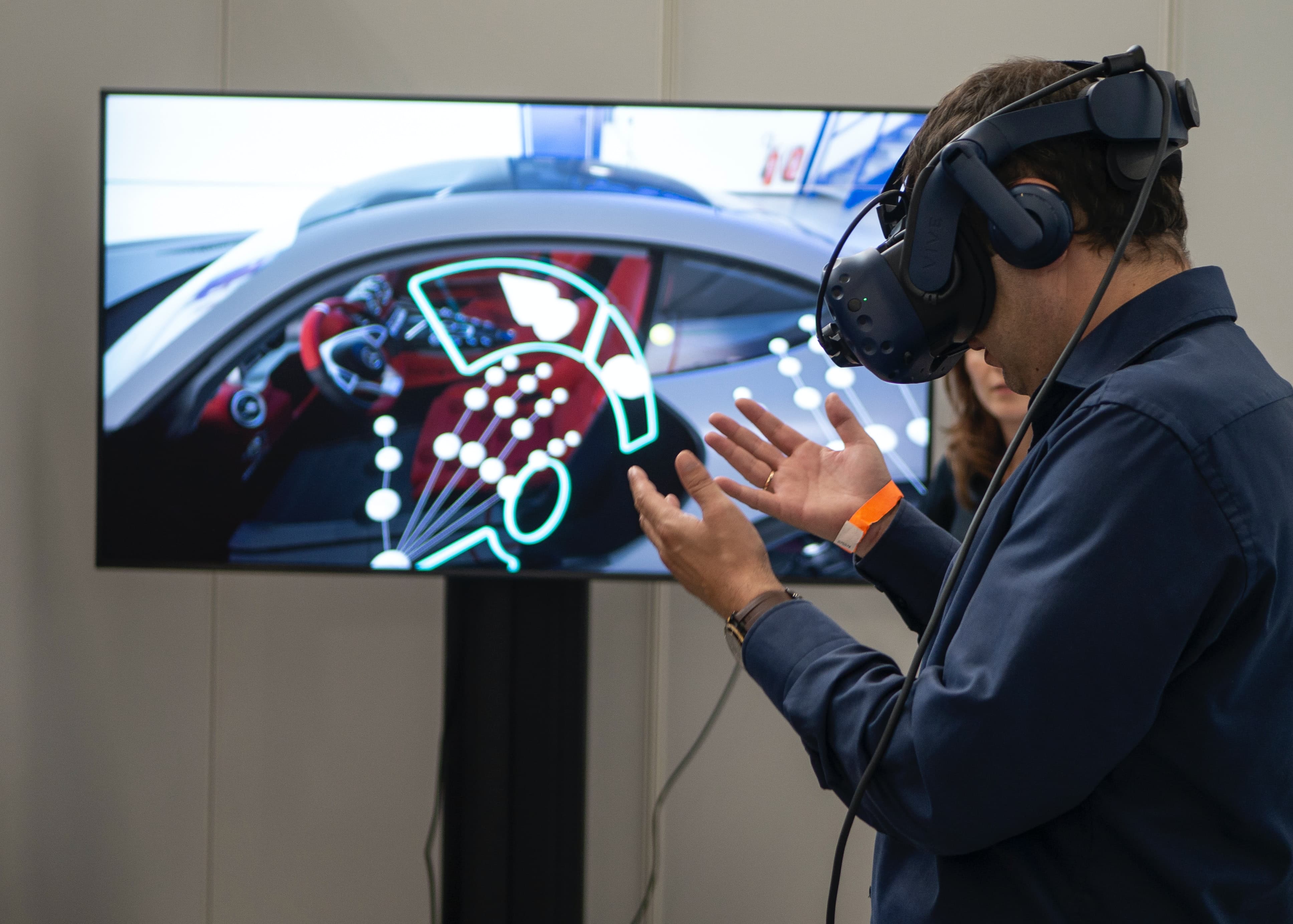
Virtual reality is gaming technology that simulates real or fantasy worlds that the players can immerse themselves into for a variety of activities. Immersion into the 3D VR world is possible by stimulating many senses all at once like vision, hearing, and touching.[1]
The Pros and Cons of VR Use
Pros
It’s fun and therapeutic!
VR can be really fun and exciting. It can serve as a mental break or escape from day-to-day routines and is a great way to connect with friends and meet new people with similar interests.
Access to new worlds and experiences can also be beneficial for those suffering from physical disabilities because they can experience activities that they cannot in the real world.
People with neurodevelopmental disabilities, like autism, can also benefit from VR. For example, an individual may use VR to learn how to better socialize in an environment where mistakes won’t lead to risks like in the real world. For example, as a behavioral intervention that works to help kids with autism, one of my patients has a goal of learning how to cross the street. Practicing in real life can be nerve-wracking and even dangerous due to the possibility of being hit by a car if my patient runs into the street from overstimulation. By practicing VR, he can eliminate risk as he learns to master this new skill.[2,3]
Work Training
VR also has potential benefits in the professional world as a safe way for training in many fields of work. For example, during the COVID19 pandemic, health care workers could interact with patients in VR without being exposed to the virus. VR has also allowed students and professionals to perfect skills and procedures before risking with real patients, like practicing a surgical technique for example.[4]
Cons
Feelings of Withdrawal and Disappointment with the Real World
For some people, what goes up must come down. Many players report feelings of sadness after play and a growing disappointment with real-life experiences. Tobias Schneider, a user of VR described feeling detached from the real world because it lacks the ‘magic’ and excitement VR has to offer. As an oculus user (a VR gaming system) myself, I recently went to their online forum and found that many users reported these feelings.[5]
Dissociation
Studies and forums have shown that VR has the potential risk of dissociation such as derealization and depersonalization. Derealization is this mental state where a person will feel so detached from their surroundings including people and objects, that the world will feel unreal. Depersonalization is this feeling that you are floating outside yourself. These types of dissociation occur for a variety of reasons, most typical in response to panic attacks and generalized anxiety. Theorists have described these symptoms as a defense that our bodies mobilize to protect us from stress. Other conditions that can cause dissociation include sensory deprivation, trauma, seizure disorders, dementia, and the use of hallucinogens or marijuana. Some people are even genetically prone to demonstrating this psychological symptom. Once a person dissociates once, they are more likely to dissociate again.
Although most people who dissociate describe it as a passing feeling, once one dissociates once they are more likely to do it again. For a minority of people, dissociation can occur often out of the blue in a condition called Depersonalization/Derealization Disorder.
A 2006 study examined the effects of VR use and found that for some players, episodes of dissociation increase after VR use. Even a gamer developer describes a time when they had to touch things around their surroundings after finishing a VR demo just to erase any lingering skepticism from her brain. If you look at the oculus forum, you will read many users complaining that their hands don’t feel like their own even after taking off the VR headset.[6,7,8,9]
Tips To Avoid the Negative Effects Of VR
Read your VR system’s instruction manual and safety warnings.
Start off with baby steps and play at a comfortable level that is not overwhelming.
Take frequent breaks when using VR.
When To Seek Professional Help
Having feelings of depersonalization or derealization that occasionally pass is common and should not necessarily cause alarm. But if these feelings of depersonalization or derealization become persistent and severe, this can be a sign of a physical or mental health disorder. You should seek immediate help from a doctor if these feelings are:
disturbing you or becoming disruptive to your emotional well-being,
become persistent and seem to never go away or improve, or
interfere with personal relationships, work, or other daily activities.
GKIS Resources That Can Help You Build Healthy Relationships with The VR World
Want a peaceful, fun home with healthy screen time, but don’t want to spend on something that won’t work for? Check out our GKIS Screen Safety Essentials Course. We have a free two-week trial so you can determine if it’s the right resource for you before you spend a penny. Plus, it includes videos and downloads from all GKIS parent courses that are designed for weekly viewing, making the material digestible and easy.
If you are not sure your child is ready to experience the online world check out our GKIS Social Media Readiness training. This self-paced course will get your kids ready for VR or anything in the online world. It includes mastery quizzes after each lesson to ensure they are prepared for online fun while maintaining safety. Guaranteed to make happy teens and relieved parents.
Digital injury is real, and many users run to forums when trying to understand the negative feelings they experience from the overuse of technology. With our GKIS Online Safety Red Flags For Parents, parents will learn which behavioral red flags to look out for that may signal that their kid is suffering from digital injury.
Virtual reality is a hot topic. You can also check out our other GKIS articles to learn more about the benefits and risks VR has to offer:
Thanks to CSUCI intern Ashley Salazar for researching and co-authoring this article. Prevent digital injury after VR use and check out our GKIS resources. They will help you launch a fun screen-safety dialogue. If you or a loved one is suffering from severe and persistent dissociation, please contact your health insurance provider and see a doctor.
I’m the mom psychologist who will help you GetKidsInternetSafe.








 Thanks to CSUCI intern, Katherine Carroll for researching social media and serial killer obsession.