
Need peaceful screen time negotiations?

Get your FREE GKIS Connected Family Screen Agreement

parenting

Staging: Sensible GetKidsInternetSafe Screen Media Guidelines for Children Ages 7-11 Years

BLOG32KIDS Now is the age your kids are no longer looking to you for online material…they are ready to explore on their own. Don’t think for a second they are incapable of surfing right into trouble. Even if they’re not exploring now, they will soon and you’ll likely be the last to know. Be proactive with your setup rather than reactive. And by the way, if you need to review the GKIS Guidelines for 3-6 year olds, search guidelines on www.GetKidsInternetSafe/blog/. Congratulations for striving to do your best and dealing with this today. Your children’s Internet safety is important and you’re awesome for making it a priority!

GKIS Internet Safety Checklist (Staging)

  • Check to make sure all cybersecurity measures are online and updated. 
    • At this age, it is reasonable to start a dialogue with your children about technology facts, such as malware, hacking, and phishing. As always, cater the sophistication of the discussion to your children’s developmental phase and interest. Be sure to specifically teach them not to share personal information (name, grade, school, city, etc.) online, nor to open emails with unknown attachments or offers for “free” programs which can make your computer vulnerable to malware.

blog32cybersecurity

        • Malware: any software that will attack or capture data on your computer; these include viruses, worms, Trojan horses (look like beneficial downloads but are actually malicious), spyware, adware, and other malicious programs.
        • Hacking: unauthorized computer access.
        • Phishing: a fraudulent attempt, usually through email, to gain personal information. Typically involves posing as a legitimate company or a distressed person in need of help.
  • Update parental controls on device operating systems, through your Internet service provider (ISP), from selected software programs and routers, and from kid-friendly browsers.

    • Ensure that you are the administrator on these systems and your children do not have your passwords or credit card information. It is essential that you authorize all system controls and new purchases.


    • Remember that television is screen media as well. Be sure the parent control features on your televisions block the channels that have mean-spirited, sexual, or violent programming. Co-viewing television and YouTube channels are an excellent way to set a baseline for good taste.


    • Provide commentary that includes your disapproval of cruel or violent solutions and challenge your children to identify or create prosocial problem-solving alternatives to increase their knowledge and overall resilience.
  • Update and check your home staging strategies such as screens in visible family areas only (never behind closed doors), timed routers, and family docking stations at night.

website_coverclose

  • Make a list of devices, apps, and games then schedule a weekly check-in to confirm consistent monitoring.
    • Inform your kids about these checks, even if you don’t tell them the exact dates and times. Maintaining a healthy relationship with trust and respect is critical while you fulfill your parental responsibilities of staying informed.


  • Do not allow personal ownership of hand-held medias with Internet access smaller than a tablet yet.
    • Why? Because even if you think you’ll monitor consistently, you probably won’t based on survey statistics. The average age for cell phone ownership is now eight years old; too young in my clinical opinion. But if there’s clear justification for phone ownership that young, at least limit Internet access. Even young children will explore sexual themes and the Internet is not a safe place for sexual education.
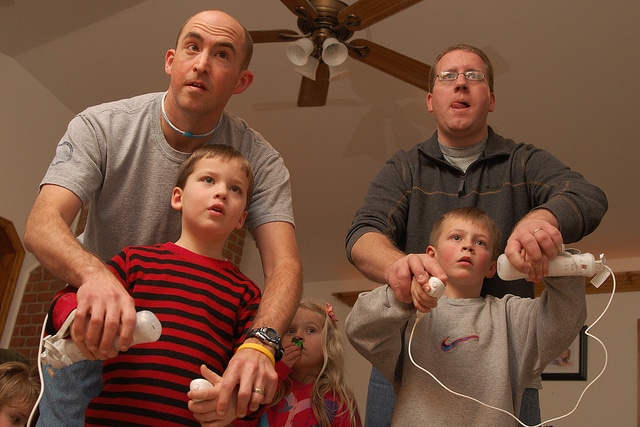
  • Encourage gaming.
    • Yay! Today you’re the good guy! Video games tend to get a bad rap, but the ones that spur kids to make cities out of virtual blocks, like Minecraft, are great for building spatial and engineering skills, creativity, and online social interaction in a moderated setting. (My kids sometimes play together as cooperative allies and other times sabotaging enemies. It’s really fun to watch them interact and get excited with their creations and accomplishments.)
blog32gaming

    • Make sure you assess game ratings and moderator/reporting features prior to purchase.
      • If you can’t find your answers online, go to a specialized gaming system store and ask questions.
  • Remind your children that the first several weeks of game or device ownership are probationary.
    • In other words, make sure your children understand that if any complications arise, you may choose to temporarily or permanently retire the new item.
      • Griefing is when a player in a multiplayer video game harasses other players as a gaming strategy. This can take the form of name-calling or actively sabotaging game play (through blocking, destroying or stealing virtual creations and property, or maiming or killing the player for example).Limit whom your children game with and keep checking. At what age are you going to cut them loose to play with the public and under what conditions (headset? text only?)? Hopefully not elementary school age where kids frequently fall victim to cyberbullying.
      • Trolling is when an individual intentionally provokes discord online by being tangential, argumentative, or inflammatory.


BLOG32troll

  • Do not allow Instant Messaging, chat rooms/forums, texting, or emailing with anyone other than adult family members.
    • Children 7-11 years old simply don’t yet have the complex reasoning abilities necessary to make appropriate choices or anticipate consequences. They’re still impulsive and easily influenced. Don’t overestimate their social reasoning. They still need your supervision and guidance.

Although none of us are perfect parents, our love for and commitment to our children inspire us to constantly grow and be our best. I hope today’s article provides fresh ideas and inspires you to tighten up on the strategies you already have in place. A few minutes of focused effort here and there can really make the difference.

I’m the mom psychologist who will help you GetYourKidsInternetSafe.

Onward to More Awesome Parenting,

Tracy S. Bennett, Ph.D.
Mom, Clinical Psychologist, CSUCI Adjunct Faculty
GetKidsInternetSafe.com

Photo Credits:

Kids, Gemteck1, CC by 2.0
Credit Card Theft, Dan Hankins, CC by 2.0
Whose Toys?, John Flinchbough, CC by 2.0
Cave Troll as Corporate Bully, Kevin Dooley, CC by 2.0

Is Your Child a Bystander or a Cyberbully? A GKIS Guide to Empowerment.

cyberbully (1)

We’ve all read about cyberbullying and know it’s a bad thing. But do you know that recent surveys report that more than half of teens have been cyberbullying victims? This week’s GKIS article is an awesome start to an important conversation – what should parents do to help their kids avoid being the victim of cyberbullying?

THE BYSTANDER EFFECT

blog31bystander The bystander effect refers to the phenomenon of how people are less likely to respond to a person in distress if others are present. The larger the number of bystanders, the less likely anybody will get involved. In other words, people tend to look to others for action instead of acting themselves. Another word for this psychological principle is the diffusion of responsibility,

The most common illustration of the bystander effect is the case of Catherine “Kitty” Geovese. Kitty was a young woman who was attacked and robbed in New York City in 1964. Although as many as 37 people witnessed the crime from their windows and heard Kitty screaming for help, nobody helped. One man, however, did yell, “Let that girl alone!” causing her attacker to flee and Kitty to crawl to her apartment.

Kitty’s attacker, Winston Moseley, then returned ten minutes later to kill her and steal $50. The attack took 30 minutes. A neighbor finally called the police after the final attack, resulting in an ambulance arriving 75 minutes after the first assault. This event suggests that if the neighbors weren’t aware of other onlookers, maybe somebody would have done more to help or intervened sooner.

How does this relate to cyberbullying?

blog31nobullies

For any single cyberbullying incident, there are various levels of participation. Many incidents involve an assessment of other online bystanders.

These include:

  • The perpetrator who posts the harmful content (with varying levels of malicious intent)
  • Those who encouragingly “like” or publicly comment on the post
  • Those who encouragingly comment via backchannel chat
  • Those who share or “favorite” the post
  • Those who repeatedly bring the content back via online sharing or in the form of gossip or face-to-face bullying. (Repeat sharing sometimes goes on for years!)
  • Those who view and “friend” or remain “friends” with the cyberbully online or offline
  • Those who copy the cyberbully’s technique
  • Those who view the cyberbullying incident without further action
  • Those who view the cyberbullying incident and comment their protest via backchannel chat
  • Those who view the cyberbullying incident and publicly comment their protest
  • Those who flag the content as inappropriate or request Web mediation
  • Those who request adult intervention through parents, academic staff, or law enforcement

Why do kids choose not to intervene?

So many possible responses! And it gets even more complicated from here. Not only are there many options to choose from about WHAT kind of response to make, but there are several reasons kids give WHY they make their decisions.

Robert Thornberg (2007) cites the following seven concepts associated with passive or non-intervention bystander behavior:

  • Trivialization: The child doesn’t consider the incident serious (often because cyberbullying is so common children are desensitized).
  • Dissociation: The child feels they are not involved in the situation or is not a friend of the cyberbully or the victim.
  • Embarrassment association: The child doesn’t want to make the victim more embarrassed or doesn’t want to get embarrassed themselves (stage fright).
  • Audience modeling: The child looks to bystanders for the social norm.
  • Busy working priority: The child considers doing other things that are a higher priority than helping.
  • Compliance with the competitive norm: The child considers social media etiquette or politeness more important than helping behavior.
  • Responsibility transfer: The child ascribes more responsibility to other bystanders than themselves (e.g., online peers who are more involved with the bully or victim or online viewers with more authority).

What should a parent do?

blog31daughter

Children need engaged parents to help them sort through these options to choose what’s right. That doesn’t mean parents should lecture about what’s right and what’s wrong, punish them, or take over. Kids need parents to help them work through complex problems to find the best solution. If the first choice doesn’t make a difference, try the second, the third, and so on. The important thing is to help each other through it.

What should parents encourage kids to do in a cyberbully situation?

blog31boyteen

  • Assess their influence potential on the cyberbully. If they are allies at school, it may be worth it to reach out and ask the friend to remove the post or lay off the negativity.
  • Assess their influence potential on the victim. Reaching out to help somebody who is hurting is a powerful maneuver. Even if the victim is not a friend, it helps to hear that you’re not alone.
  • Reach out for expert support. Simply flagging the content online may be enough. Reaching out to offline authorities is also an option. Educate your child about the opportunity for anonymous reports and making a real difference.
  • Never bully the bully or escalate the situation. Sometimes that’s just what the bully is looking for and then your child may become the victim.
  • Do SOMETHING. Being observant, knowledgeable, and willing to think through your options is powerful.

And most importantly of all…parents please remember, what works in your adult world does not always work in your children’s worlds. Ultimately, they are the experts on what may make a positive difference, you are simply the facilitator.

I’m the mom psychologist who will help you GetKidsInternetSafe.

Onward to More Awesome Parenting,

Tracy S. Bennett, Ph.D.
Mom, Clinical Psychologist, CSUCI Adjunct Faculty
GetKidsInternetSafe.com

Works Cited:

Thornberg, Robert. “A Classmate in Distress: Schoolchildren as Bystanders and Their Reasons for How They Act.” Social Psychology of Education 10.1 (2007): 5-28. Web.

Photo Credits:

Tween Cell Phone Texting, Carissa Rogers. CC by 2.0Tiles by José Sáez, CC by 2.0
Working Word, CC by 2.0
J.K. Califf, CC by 2.0
Smartphone Teen by Pabak Sakar, CC by 2.0

Reconnecting with Your Child in 3 Easy Steps


collage-768x768

I was lucky enough to have a Dad who was “my person.” In other words, I always went to him when I was happy, upset, confused, angry, or just wanted to feel loved. He’s been gone for over two years now and I still miss him everyday. That kind of parent-child connection makes a profound impact for generations. How would your rate your connection with your kids?

As a clinical psychologist, one of the most important things I do is help repair relationships between parents and kids. Connection can be broken or strained by a variety of factors, including stressful circumstance, conflict, substance abuse, developmental stages, distraction, or even personality variables. Once strained, a parent-child connection is not always easy to repair. But with consistent effort, it can be done.

Below are three easy strategies for repairing a strained or broken parent-child connection:

  1. Spend time:

I know this sounds obvious, but it isn’t always easy with competing schedules. It’s important to regularly carve out time to hang out and have fun. Sharing an activity like a meal or riding in the car is fine, but co-watching screen media isn’t ideal. Try to share activities where conversation and shared laughter is possible. Sitting together at the dinner table several times a week is the perfect scenario. Make sure however that ALL screen media is turned off at meal time.

  1. Stay mindful:

This simply means stay in the present and don’t let yourself get distracted from the task at hand – connecting with your child. No stressing about what you just did or what you need to do. Notice and feel everything as though it’s your last play date for the next year. Nothing will be as rejuvenating as soaking in this precious time with your babies, so take advantage of it. They will be off to college before you know it!

  1. Create mutually interesting conversation:

What should you talk about? Anything that your kid wants to talk about! The most powerful topics will be situations immediately present in your child’s world (e.g., friends, teachers, activities, events). Below are some conversation ideas to get you started:

Ask open ended questions to elicit light conversation. The more specific the questions, the better.

  • “So how was Tiffany today? Still difficult?”
  • “Was that history test as hard as you thought it would be?”
  • “Kick ball or hand ball today?”

Share a story or teach her about something you think she would like. The funnier the story the better.

  • “Once when I was 13 years old there was this kid…”
  • “Check out this hilarious cat video!”
  • “Watch this catchy dance move I made up!” (Eye-rolls are still attention!)

In the spirit of getting tech savvy, get involved in their digital worlds (remember to keep it light-hearted).

  • “Which penguin are you?”
  • “Show me this lava castle you’ve been working so hard on.”
  • “Honey, I can’t figure out my privacy settings, can you help?”

Thanks for staying connected to GKIS and cheers to being the most awesome parent you can be! Share your last favorite memory of connecting time in the comment section below!

I’m the mom psychologist who will help you GetKidsInternetSafe.

Onward to More Awesome Parenting,

Tracy S. Bennett, Ph.D.
Mom, Clinical Psychologist, CSUCI Adjunct Faculty
GetKidsInternetSafe.com

Want to get sucked into some perfectly timed photo viewing? Click here

10 Ways I Stay Lightning Efficient Despite My Very Full Life

website_coverclose

I once completed a personality test that corporate coaches use to help place their clients into “best fit” job positions. I don’t remember my whole profile, but I do remember that I wasn’t surprised to see learner and researcher on my list. Productivity is not a challenge for me, but time is! As a busy mom with three part-time jobs, I rely on good organization and efficiency skills more than the average person. Because of these strengths, a colleague asked me to write a blog article that unveils my personal efficiency strategies. I hope one or more of these help you squeeze in the work so you have more time for play!

  • I dedicated a back room as the playroom. This allows my kids to have a personal space for their play materials and to do their thing. This keeps them out of my hair while I’m working. We are lucky that they are BFFs and play really well together, sometimes for hours. I have consistently preached that we must “love and protect” each other, and we tolerate no aggression or name calling EVER. Of course the fight on occasion, but they prefer playing with each other to anything else and have grown to have similar skill levels at their play activities. Because they’re pretty independent and learned peace-making skills early, I get time to do my own thing often at home. This was NOT the case when I raised my oldest, who was an only child for eight years. I got little work done during that time. Ha-ha, true story. So if you are the parent of a single child, I suggest lots of play dates! Entertaining your child 24/7 with not time out to do what you want to do is not reasonable or sustainable.
  • I equip myself to the tools I need to work at every location. I use DropBox a ton and have a smartphone, a desktop computer home, and two laptops so I’m ready to work any spare moment. This way I can work on the same document any time I have free time and all of my computers sync effortlessly.
  • I color-code block scheduling on my iPhone calendar and practicing mindfulness. As you see in the lead image, I block schedule my activities throughout the day and stick to a schedule. And just like I stay committed to the present task at hand while doing work, when it’s play time I put screen media away and stay focused on friends and family. I’m a very fortunate woman to have a healthy family and thriving clinical practice. I can honestly say I love my job and my personal time. People often ask if it’s difficult to work with people in emotional pain, but what they don’t realize is I also get to see people getting better every day! Seeing people be amazing inspires me and gives me hope for the world. Love and laughter keep me balanced and fueled more than anything else, so when it’s happening I soak it in fully. #inthepresent #mindfulness.

blog29calendar page

  • I hired a great coach immediately and utilized him fully. If you’re working alone, you need help! Isolation is over-rated. When I was referred to a coach when I started GKIS, I trusted my instincts and sent him my action list immediately. In turn he immediately instructed how to get each item completed. I trusted him implicitly, because somebody I respected referred him. He lived up to the hype. He gave me financially insightful, immediately applicable advice. Then, since I awkwardly mouthed off all of the time (I happen to think I’m hilarious), we became friends. His generosity didn’t stop when our coach contract did. Poor guy will never shake me. Oh ya, and I give credit when credit is due. And I do it loudly (thanks Bill O’Hanlon!)
  • I only watch TV after 9 pm, and then only programs recorded on my DVR. My free time is spent outdoors, with kids, reading, listening to music, or creative development. And because my computer is in the kitchen, I’m still involved with everybody even when I’m doing my own thing. Of course, I get interrupted 8,000 times an hour, but whatever. It still gets done. It helps that I have a freakish ability to concentrate with tornadoes circling me. I can’t take credit for that, it’s genetics.
  • I am a junky for digital folders. My apps are put in folders on my iPhone screen. Every document I write is in a folder within a folder. I am ultra-organized. I spend little time looking for things, because I file-rather-than-pile immediately after the document is finished.

blog42folders

  • I seek and trust experts. If I don’t know how to do something, I ask. I surround myself with super smart, generous people that I want to be someday. As a result, they are always there to answer questions and I, in turn, am there for them always. Plus, I make sure they know how grateful I am and host lots of appreciation lunches and happy hours. I try to make all of it fun. My work partners turn into friends. Win-win. Also, I don’t hesitate to delegate and hire help if I don’t have the ability to do it myself.
  • I’m not afraid to fail or look stupid. I just expect I’ll suck when I’m learning something new. Then when I’m lame at things, I’m not disappointed. I patiently keep at it assuming I’ll get better. Most the time I do. If I don’t, I hire out for it or I bail and try something else.
  • I prep with an action list and outline. Prep is everything. I have an ongoing GKIS action list and move items from the TO DO to the COMPLETED sections religiously. Before I started writing the book, I had a detailed outline. Before I started blogging, I had 50 titles entered into a spreadsheet. If I come across a cool website or TED talk, I catalogue the link. Creating a vision helps guide my progress and communicate with those who help me with exactly what I need. Trello is awesome for project management! Good communication is critical.

Blog24oedipalcomplex

  • I have a husband who is a great partner. For the first ten years of our marriage I prided myself on doing too much inside the home as well as working outside the home. That was a foolish plan, because after ten years I burned out and semi-retired my cooking and child care monopoly. My husband once said, “I think we over-rode the pony in the coal mine,” and he was right. For the next several months of my domestic semi-retirement, I committed to being happy with grilled meat and bag o’ salad meals. Eventually he learned to be an equal, competent partner in all things. He is my rock. #Loveyoubaby
  • When someone asks me to do something, I DO IT, and I dual-purpose everything. Simply put, generosity feels good. This list, for instance, will now be a blog article. Blog articles are book material. Book material is online parenting course material. And when the head of my department at the university asks me to teach a new class, I choose a class that will feed into my other interests. In life, I believe everything is connected. In work it is too. I keep an eye on the gestalt as well as the details. And in service of generosity and gratitude, I’d like to thank my friend Marco Frezza for asking me to write this list. I recently met him at a conference and was attracted to his quiet brilliance and the love that filled his eyes when he spoke of his family. Now my ten year-old son is obsessed with his brilliant YouTubes of magic tricks. Check him out! I promise you’ll also be able to tell how amazing he is. Oh, and I’m the boss of me and rarely stop at 10.

I’m the mom psychologist who will help you GetKidsInternetSafe.

Onward to More Awesome Parenting,

Tracy S. Bennett, Ph.D.
Mom, Clinical Psychologist, CSUCI Adjunct Faculty
www.GetKidsInternetSafe.com

Marco’s Magic:


What Kids Will Never Tell Their Parents About Spanking

crying-boy

I work with children, teenagers, and families everyday as a clinical psychologist. One privilege this role affords me is hearing the truth from kids. The truth is children love their parents. They long for their parents’ approval, and when children are hit by the people who are supposed to protect them, it builds hurt and resentment. The complexity of these emotions is impossible for children to express and communicate openly to their parents. After all, kids love and protect their parents, even when they’re hurt and angry. In my opinion, it’s our job as parents to do the same for them.

While at UCLA in 1990, I wrote an honors thesis titled, “Inconsistent Maternal Discipline and It’s Effect on Child Behavior.” I designed a study and trained and supervised nine undergraduates to analyze and code hours of video tape footage of mothers playing with and instructing their children. After a thorough literature review and after crunching data, my conclusions were clear. It isn’t spanking that motivates good behavior in children, it’s clear communication, warmth, and consistency.

I invite you to reflect on the last time you disciplined your child. What inspired your technique? Was it a desperate, rushed attempt to get immediate compliance? Was it an execution of a well thought-out strategy? Or was it a parent temper tantrum?

If you chose option one or three, then you’re very likely a spanker. If you’re tempted to stop reading already and write me off as a self-righteous academic who doesn’t know squat about the real world, you’re only partly right. When it comes to child advocacy, I am admittedly self-righteous. I’m also somewhat academic. But I’m also the mother of three and, believe me, I’m not immune to the impulse to spank, scream, or otherwise act like a raving lunatic. I “get” how hard parenting is. I also work with families in the most challenging of circumstances everyday and have a true depth of compassion for how hard parents work to raise great kids.

But my objective here is not to judge or lecture. It’s to offer a perspective parents may not have had the opportunity to hear. And I’ll say it like I feel it, bluntly and passionately.

5 Things We Know About Spanking

REWARD WORKS BETTER THAN PUNISHMENT

Do you make your best decisions as an adult due to fear of punishment or because it makes you feel good to do the right thing? Kids are no different. Make your children feel good about putting thought and effort into something, and that’s exactly what they’ll do. Spank them, and they’ll simply take their bad behavior where you can’t see it. The research on this fact has been clear for more than 25 years. My clinical and personal observations demonstrate the same. And when I teach parents discipline strategies using reward, they work! Even with the most difficult children in the most challenging circumstances.

SCARING AND HURTING KIDS IS NO LONGER HOW WE TREAT CHILDREN

Do you subscribe to the “it’s how I was raised as well as my grandparents before me” rule of parenting? Throughout the centuries, children were beaten to death for infractions, mutilated to deny them sexuality, and worked 12-hour days to bring income to the family. This is the modern era. We don’t do that anymore. Modern families consider children developing human beings that deserve our respect and protection. There is no sense in spanking those we are charged to “love and protect.” Continuing a cycle of violence in the face of decades of data that demonstrate spanking simply doesn’t work is laziness. If you work hard to consistently implement parenting strategies that require forethought and anger management, you’ll realize that hitting your child because you’re angry isn’t really a strategy at all.

YOU WILL GET FAR MORE OUT OF BUILDING A LOVING RELATIONSHIP WITH YOUR CHILD THAN TEARING DOWN  TRUST BY HURTING AND SCARING THEM

Do you subscribe to the Golden Rule (“So whatever you wish that others would do to you, do also to them, for this is the Law and the Prophets”)? When’s the last time you were hit to encourage your compliance? And, more importantly, would it work? Of course not! As adults in the workplace, we are inspired by the promise of reward and the threat of losing reward; not by being hit. And we exhaustively labor for our family because of our love for them. Kids are no different. They long to please you and will work to avoid your disappointment. 

???????????????????????????

THE BEHAVIOR YOU’RE BEATING OUT OF YOUR CHILD SIMPLY GOES WHERE THE SPANKER ISN’T; AND IT OFTEN ESCALATES IN FREQUENCY

Have you seen that spanking gets immediate compliance? Well you’re right, it does. But it turns out that spanking doesn’t extinguish the behavior like you’d like. Instead, spanking sends the unwanted behavior underground and damages your relationship with your child in the process. A damaged parent-child relationship is not as inspiring. And frankly, it feels terrible to everybody involved.

FOLLOW YOUR CONSCIENCE

Do you think spanking will improve your parent-child alliance? Is it your best, well-reasoned discipline strategy? I’ve found that when the parents’ anger and shame is taken out of the picture, innovative and effective parenting strategies emerge. Providing affection and praise for the behavior you want and time-out/withdrawing privileges for the behavior you don’t want, are parenting strategies that work without harmful side effects. The truth is that good parenting is mostly about compassion, instruction, and love; it’s about taking the time to think things through before responding. Ignoring your children until it’s time to freak out on them isn’t your best use of time. These days time is a precious commodity. Make your child more precious than your time.

I’m the mom psychologist who will help you GetKidsInternetSafe.

Onward to More Awesome Parenting,

Tracy S. Bennett, Ph.D.
Mom, Clinical Psychologist, CSUCI Adjunct Faculty
GetKidsInternetSafe.com

photo credit: Joey Marasek, CC BY-ND 2.0

Here’s a perfect example of how children seek parent attention in any way they can. If a tantrum is the way to do it, they’ll make it happen. Gotta admire this little guy’s tenacity.  “Eyes on me? Then check out how upset I am!”

10 Fun Technology-Assisted Activities for Parents & Kids

blog26redfamily-768x515


Tired of parent #techpanic? There are situations that warrant concern, but let’s face it, technology is here to stay and has huge learning application. Retire the lectures already and take a few fun hours to join ‘em!

  1. Watch educational TV then co-surf the Internet for deeper learning in various learning formats (articles, videos, images).


  2. Google Earth somewhere fascinating and plan a #FakeVacay. Sky’s the limit!


  3. Find craft or decorating recipes then do them: coloring books, origami, paper airplanes! Pinterest is an awesome resource.


  4. Find food recipes: ice cream, decorating cookies, veggie snacks!


  5. Find science experiment recipes: bubble solution, playdough, milk/food coloring designs!


  6. Fun apps: Study space science fun facts and download a star-gazing app for a night hike!


  7. Nature: find a plant or a bug outside, then identify it online!


  8. Make a movie – complete with music, still-image slides, videos, and graphics.


  9. Build a family website with photos, illustrations, and funny stories (e.g., “Dad’s most embarrassing moment”).


  10. Google “fun internet activities for parents”.


Onward To More Awesome Parenting,

Tracy S. Bennett, Ph.D.
Mom, Clinical Psychologist, CSUCI Adjunct Faculty
GetKidsInternetSafe.com

For some awesome sites that promote creative tech activity, click here