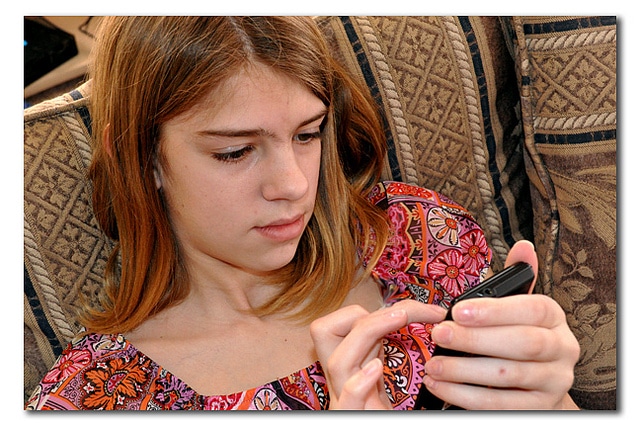
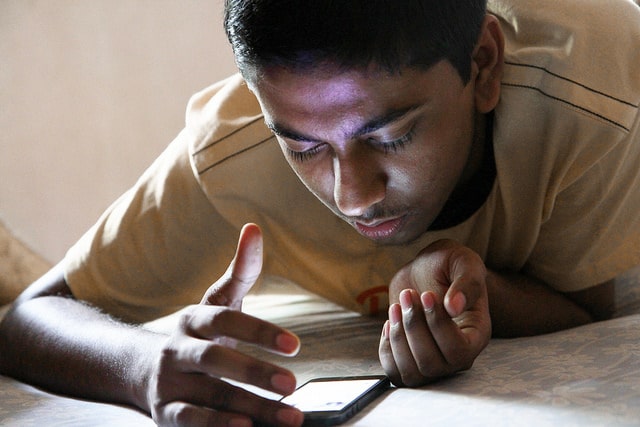
In recent months, speculation surrounding a significant increase among the number of teenage girls reporting the occurrence of Tourette’s-like symptoms has emerged. Concerned parents of children who are experiencing the onset of tics have sought the help of medical professionals. Surprisingly, these medical professionals have suggested that there appears to be a possible link between the onset of symptoms among these teenage girls and their use of the social media app called TikTok. It has been well documented that social media poses inherent risks and various pitfalls for kids. Dr. Bennett believes that preparing tweens and teens to navigate these problems before they arise by providing them with the necessary knowledge and skills is the key to avoiding digital injury. That is why we created the Social Media Readiness Course, designed to empower families to promote safe and responsible practices while avoiding harmful outcomes.
What is TikTok?
TikTok is a social media and video-sharing platform/app that is primarily marketed to kids and teens. Since its launch in 2016, it has become one of the most popular social media sites, attracting over 1 billion monthly users. TikTok is so popular among today’s kids and teens that it has become a part of the cultural zeitgeist. The social media app has also been the focus of several significant controversies. You can read about some of these stories in other GKIS blog articles here and here.
Tourette Syndrome vs. Functional Tic Disorder
Tourette Syndrome
Tourette Syndrome aka Tourette’s is a type of neurological disorder that involves the occurrence of uncontrollable movements and unwanted verbal outbursts referred to as tics.
Tourette Syndrome is typically diagnosed in children between the ages of 7 and 10, but symptoms can occur as early 2 years old or as late as 15 years old. Historically, boys are 3-4 times more likely to be diagnosed with the disorder than girls. Individuals with Tourette Syndrome reportedly benefit from treatments that include medication and psychological therapy.[1]
Functional Tic Disorder
Functional Tic Disorder is also a type of neurological disorder. It is characterized by issues with voluntary movement rather than automatic movement.
People with Functional Tic Disorder often experience the interruption of voluntary movements and vocalizations with uncontrollable tics. This disorder is diagnosed later in life than Tourette Syndrome, typically around 18 years old, and occurs more often in women than in men. Individuals with Functional Tic Disorder reportedly benefit from psychological therapy and do not respond to medication.[2]
Tics
The word tic is used to describe a vast array of symptoms that include sudden and repetitive twitches, jolts, and sounds or even complex motor movements and combinations of words. Tics range in severity from symptoms like repetitive eye-blinking, shoulder shrugs, or throat-clearing to more severe and even violent symptoms like punching, hair-pulling, or shouting obscene language.[3].
According to research, Tic Disorders appear to be somewhat heritable. Additionally, the tics seen in Tourette’s and Functional Tic Disorder share several similarities including appearance, suggestibility, distractibility, and increases during periods of stress and anxiety.[4]
Is TikTok really causing tic disorders among teen girls?
As previously mentioned, Tic Disorders like Tourette Syndrome are much more common in boys than in girls. So, many experts were surprised when a recent surge in teenage girls reporting the sudden onset of uncontrollable tics began seeking their help. After conducting extensive medical interviews, doctors started noticing that the patients all shared a common interest in watching Tourette-Syndrome-related content prior to the onset of their tics.
TikTok videos featuring the tag #tourettes have been viewed billions of times, with content creators offering a glimpse into how they navigate their daily lives with the disorder. Some Tourette’s-centered users have millions of followers.[5]
According to research, the number of cases linked to social media has jumped significantly. Interestingly, researchers studying this phenomenon have noticed a “phenomenological similarity” between the tics/tic-like behavior depicted on social media platforms like TikTok and the tic-like behavior demonstrated by this group of patients.[6]
The Role of the Pandemic
Many experts have also claimed that despite the correlation between TikTok use and the onset of symptoms, the true underlying cause is more complex. Research shows that stress and anxiety levels among kids and teens have drastically increased since the start of the pandemic. Since stress and anxiety levels play a significant role in the occurrence and severity of tics related to Tourette’s and other tic disorders, experts suggest that they are likely also playing a significant role in the recent surge of cases.[6]
Additionally, researchers have posited that increased social isolation, the widespread use of social media as an outlet for peer socialization, and consistent exposure to popular Tourette’s-themed TikTok content have primed some of these patients to believe that exhibiting “tics” may serve as a means of peer acceptance and popularity.[6] The similarities between the tics depicted on TikTok and the tics demonstrated in these new cases coupled with this theory regarding a desire for peer acceptance suggest that many of these teens might simply be manufacturing their symptoms. However, more research is needed to determine if a causal link between social media use and the onset of tic disorders truly exists and to what extent the pandemic plays a role in this phenomenon.
Treatment
Further evidence that points to the possible role of TikTok in the development of these new cases include how the patients have been treated. Behavioral treatment plans including personalized psychoeducation strategies that include avoiding triggering exposure to tic-related social media content have been successful. In many cases, patients were encouraged to refrain from using the app for several weeks and instead engage in physical activities that get the mind and body working together. Many of these patients experienced a significant reduction or a complete elimination of the uncontrollable tics that impacted them.[6]
What Parents Can Do
The most important thing that parents can do is be aware of the potential risks and promote an environment of open communication with your children. Dr. B offers a comprehensive family program for fostering this kind of communication in her Screen Safety Essentials Course. With this course, your family will learn tons of information about how to create a safer screen home environment while also connecting and having fun as a family. Armed with the right tools, you and your family can learn how to better thrive in today’s digital era.
Thanks to CSUCI intern, Mackenzie Morrow for researching the role of social media apps among the rise of tic-related disorders and co-authoring this article.
I’m the mom psychologist who will help you GetKidsInternetSafe.
How would you feel if you found out that your child is going to extreme and dangerous lengths to change their appearance? What if your child is putting themselves in potential harm to fit beauty standards set by beauty filters? Beauty filters can be a fun way to transform selfies, but they have failed to embrace the beauty of all skin tones, especially dark ones. This has led to the rise of colorism and extreme self-esteem issues. To help you recognize the dangers of social media on self-esteem, I interviewed Dr. Chavarria, CSUCI Assistant Professor of Sociology, to offer insight on how colorism affects minority communities and how to prevent it. If you are concerned for your child’s mental and physical well-being when they interact on social media, check out our Social Media Readiness Training for tweens and teens. Our guide prepares your children for safer screen use and prevents psychological illness with our expert emotional wellness tools. Today’s GKIS article shares the story of a young girl negatively affected by beauty filters and tips you can take to help protect your kids from colorism.
What are beauty filters?
Beauty filters are social media features that beautify and erase people’s imperfections and flaws by creating a modified version of themselves. Specific modifications can be anything, but the most popular filters alter the size of facial features, change eye color, and add effects like make-up or long eyelashes.[1]
The Negative Effects of Filters
Low Self-Esteem
Although filters can be fun, they can also be damaging to one’s self-esteem. Research demonstrates that the use of filters can lead to low self-esteem because filter users are more likely to hyper-focus on the features they dislike when using them. This can then lead to frequently comparing one’s real looks with filtered looks, changing our beauty “ideal” and recognizing (even obsessing on) our failure to live up to that ideal. Not being able to accomplish the same look with these filters can make someone feel less than or that they will always be below beauty standards. For others, it may motivate them to find a way to change their appearance to better match the beauty standards set by social media regardless of the risks these changes pose.[2]
The Rise of Colorism
It has been noted by many social media users that beautifying filters usually have a lightening or bleaching effect on the skin. In fact, according to skin color expert Ronald Hall, this effect is not an accident. He explains that it is a way to maintain and conform to historically Eurocentric beauty standards.
Beauty filters are promoting a rise in colorism. Colorism refers to prejudices or discrimination an individual may experience for having a darker skin tone. This phenomenon usually occurs among one’s own ethnic or racial group.[3,4]
A Young Teen Takes Drastic Measures to Change Appearance
Lise, a young teenager, shared her struggles with colorism. Her experience included being bullied for her darker skin tone. The bullying not only came from white girls at school but, to her surprise, also from those who looked similar to her in her same ethnic or racial group.
Seeing pictures of light-skinned women receive lots of likes and positive comments online also confirmed to Lise that she did not meet society’s standards of beauty, bringing her self-esteem down. To try to lighten her skin, Lise began to scrub her mom’s bleaching cream into her skin with a copper wire brush. Even without abrasion injuries, bleaching products can pose health risks.[4]
If you are concerned that your child is suffering from a digital injury like mood and anxiety disorders triggered by compare-and-despair, check out our GKIS Online Safety Red Flags For Parents. With this guide, you’ll learn the behavioral red flags to look out for that may signal your child is suffering from digital injury.
Colorism Affects Minority Communities on a Larger Scale
Colorism is an issue that not only affects self-esteem, but it has also been a problem for minority communities on a larger scale. Dr. Chavarria, CSUCI Assistant Professor of Sociology, explained in our interview that the emergence of colorism, particularly in the Latino society, has been a consequence of conquest and colonization of indigenous communities.
Colonizers constructed these ideas about indigenous communities so they would be perceived as inferior, uncivilized, having no knowledge, and being closer to evil. Whites or being light-skinned, in contrast, have historically been constructed to be perceived as better, good, and even closer to God.
This construction caused the devaluation of indigenous identity features such as brown skin, indigenous language, and ethnic practices leading to the destruction of indigenous communities. Many who managed to survive and succeed in the majority culture often did so by blending in and learning to assimilate. Ethnic roots were lost over generations, and minority communities lost a sense of pride in what they look like. Dr. Chavarria reported that research has demonstrated how individuals that align with beauty standards often get more career opportunities and higher pay.
How to Help Stop Colorism
Start with Family
Colorism needs to be stopped. A first step is addressing how colorism starts within the family. Dr. Chavarria stated that, although colorism often starts with the family, grandparents and parents are often not even aware they are engaging in it. They too have been socialized to believe these ideas about their indigenous roots and characteristics. Therefore, educating family members about what colorism is and how it can cause generational trauma can be the first important step to change.
As a Chicana who has also experienced colorism within my community and family, I recognize that change can be hard. Sometimes I didn’t know how to tell my grandmother that the “advice” she gave me was conforming to Eurocentric standards and colorism, and that it did more damage than help. For example, when family members told me that I should find a light-skinned man with colored eyes so my future children can inherit those features, they seemed to be telling me that, as a brown girl, I did not possess “beautiful” features.
Follow Body-Positive Campaigns
Dr. Chavarria also highly recommends that social media users check out campaigns directed to make positive changes. Cultural Survival on Facebook is a campaign that she tracks. It is an international organization that engages with indigenous communities across the globe. They address important issues like colorism by protecting indigenous women and challenging Eurocentric notions of beauty.
Practice Self-Awareness
If you find yourself contributing to colorism with comments and negative self-appraisals, challenge yourself for positive change.
Speak Out
As you become more self-aware, speak out to friends and post positive pro-beauty messages that demonstrate that beauty comes in many shades and colors. We must consistently challenge historical ideas to break biases and end discrimination. It starts with us, let’s get started!
Thanks to Dr. Chavarria for offering expert insight on colorism and how to prevent it. Thanks also to CSUCI intern Ashley Salazar for researching and co-authoring this article. Colorism is on a high rise due to beauty filters on social media. Check out our GKIS courses to learn to have easier dialogues with your children and protect them from digital injury.
I’m the mom psychologist who will help you GetKidsInternetSafe.
Recently, practices and policies enacted by social media companies have come under public scrutiny for their harmful effects on kids and teens. Many parents, public figures, and experts have expressed that screen addiction is a rampant issue being faced by kids, teens, and adults. Figuring out how to best protect your family in the online world can be tough. For some help in this area, check out Dr. Bennet’s Screen Safety Toolkit which comes with recommendations, how-to information, and links to easy-to-onboard parental control systems. To combat the issue in California, lawmakers are proposing a bill that would allow the parents of children who have become addicted to social media apps to sue the companies that own them.[1]
Social Media Platform Duty to Children Act
The Social Media Platform Duty to Children Act, formally known as Assembly Bill 2408, is the latest in a string of political endeavors to crack down on the exploitation of children by social media companies. The bill was introduced to the California State Assembly by two bipartisan lawmakers, Democrat Buffy Wicks of Oakland and Republican Jordan Cunningham of Paso Robles and with support from the University of San Diego School of Law Children’s Advocacy Institute.[1] Its creation is likely a response to internal documents leaked by whistleblowers from prominent social media companies. The documents leaked provide evidence that some social media companies have been aware of the harmful effects of some of their practices and policies on children, yet they continue to implement them without safeguards.
For more information about screen addiction, how to spot it in your kids, and ways to combat it, order Dr. Tracy Bennet’s book, Screen Time in the Mean Time: A Parenting Guide to Get Kids and Teens Internet Safe. Dr. Bennett understands that technology is a helpful tool that is here to stay, but also recognizes that it imposes risks like screen addiction due to effective manipulative designs that hack our brains’ reward systems. Using her decades of expertise as a clinical psychologist and mom, Dr. B’s developed family-tested parenting strategies that will help you build the tools you need to help your family navigate today’s technological pitfalls.
Details, Penalties, and Exemptions
Information provided by the Children’s Advocacy Institute explains that, if passed, the bill would first obligate social media companies to avoid engaging in any practices or policies that are harmful or injurious to child users. This may include forcing the companies to eliminate or change design features or data collection practices that contribute to or promote addictive behaviors. If the companies fail to comply with these standards, parents and guardians will be empowered to seek legal action in the form of a lawsuit on behalf of their children who were harmed by the companies’ products.
According to the Institute, damages may potentially include $1,000 or more per child in a class-action suit or up to $25,000 per child per year in a civil penalty. The legislatures who introduced the bill speculate that companies will adopt a varied range of potential compliance solutions that may include changes to certain algorithms or simply not allow kids to sign up anymore. Additionally, representatives of the Institute state that there will be a provision that prevents responsible companies who take basic steps to avoid implementing practices, features, or policies that contribute to children’s addictions to their platforms. Further, social media companies that make less than $1oo million per year will be exempt from penalties.[1]
The Argument for Introducing the Bill
The two lawmakers behind the bill expressed their reasoning for introducing it during the State Assembly. Rep. Jordan Cunningham stated that tech companies willfully design their social media platforms and products with features that make kids and teens want to spend more and more time engaging with them to the point that they begin exhibiting addictive behaviors. He argues that tech companies should stop profiting from child harm and instead share in the cost of treating screen-addicted kids. Rep. Cunningham also explained that social media should be regulated the same way that any other products consumed by children are regulated and for the same reason, to keep them safe.[1]
Facebook Whistleblower
The most prominent whistleblower is a former data scientist at Facebook, Frances Haugen, who leaked internal documents containing evidence about Facebook’s extensive knowledge of Instagram’s negative effects on young girls’ body images. Facebook, which also owns Instagram, had compiled studies with alarming statistics. One such study found that 32% of teens said they felt worse about their bodies after using Instagram.[2]
In 2021, Haugen presented the documents during a congressional hearing during which several members expressed deep dissatisfaction with Facebook’s practices. Subcommittee Chair Richard Blumenthal stated that, despite being aware of these statistics, “Facebook exploited teens using powerful algorithms that amplified their insecurities.”[2] Haugen argued that lawmakers must examine the algorithms that drive popular features as well as the data collecting practices used by Facebook and Instagram. Assembly Bill 2408 aims to sidestep Section 230 which protects social media platforms from being liable for third-party content.
Thanks to CSUCI intern, Mackenzie Morrow for researching The Social Media Platform Duty to Children Act and co-authoring this article.
I’m the mom psychologist who will help you GetKidsInternetSafe.
We’ve all read about cyberbullying and know it’s a bad thing. But do you know that recent surveys report that more than half of teens have been cyberbullying victims? This week’s GKIS article is an awesome start to an important conversation – what should parents do to help their kids avoid being the victim of cyberbullying?
THE BYSTANDER EFFECT
The bystander effect refers to the phenomenon of how people are less likely to respond to a person in distress if others are present. The larger the number of bystanders, the less likely anybody will get involved. In other words, people tend to look to others for action instead of acting themselves. Another word for this psychological principle is the diffusion of responsibility,
The most common illustration of the bystander effect is the case of Catherine “Kitty” Geovese. Kitty was a young woman who was attacked and robbed in New York City in 1964. Although as many as 37 people witnessed the crime from their windows and heard Kitty screaming for help, nobody helped. One man, however, did yell, “Let that girl alone!” causing her attacker to flee and Kitty to crawl to her apartment.
Kitty’s attacker, Winston Moseley, then returned ten minutes later to kill her and steal $50. The attack took 30 minutes. A neighbor finally called the police after the final attack, resulting in an ambulance arriving 75 minutes after the first assault. This event suggests that if the neighbors weren’t aware of other onlookers, maybe somebody would have done more to help or intervened sooner.
How does this relate to cyberbullying?
For any single cyberbullying incident, there are various levels of participation. Many incidents involve an assessment of other online bystanders.
These include:
The perpetrator who posts the harmful content (with varying levels of malicious intent)
Those who encouragingly “like” or publicly comment on the post
Those who encouragingly comment via backchannel chat
Those who share or “favorite” the post
Those who repeatedly bring the content back via online sharing or in the form of gossip or face-to-face bullying. (Repeat sharing sometimes goes on for years!)
Those who view and “friend” or remain “friends” with the cyberbully online or offline
Those who copy the cyberbully’s technique
Those who view the cyberbullying incident without further action
Those who view the cyberbullying incident and comment their protest via backchannel chat
Those who view the cyberbullying incident and publicly comment their protest
Those who flag the content as inappropriate or request Web mediation
Those who request adult intervention through parents, academic staff, or law enforcement
Why do kids choose not to intervene?
So many possible responses! And it gets even more complicated from here. Not only are there many options to choose from about WHAT kind of response to make, but there are several reasons kids give WHY they make their decisions.
Robert Thornberg (2007) cites the following seven concepts associated with passive or non-intervention bystander behavior:
Trivialization: The child doesn’t consider the incident serious (often because cyberbullying is so common children are desensitized).
Dissociation: The child feels they are not involved in the situation or is not a friend of the cyberbully or the victim.
Embarrassment association: The child doesn’t want to make the victim more embarrassed or doesn’t want to get embarrassed themselves (stage fright).
Audience modeling: The child looks to bystanders for the social norm.
Busy working priority: The child considers doing other things that are a higher priority than helping.
Compliance with the competitive norm: The child considers social media etiquette or politeness more important than helping behavior.
Responsibility transfer: The child ascribes more responsibility to other bystanders than themselves (e.g., online peers who are more involved with the bully or victim or online viewers with more authority).
What should a parent do?
Children need engaged parents to help them sort through these options to choose what’s right. That doesn’t mean parents should lecture about what’s right and what’s wrong, punish them, or take over. Kids need parents to help them work through complex problems to find the best solution. If the first choice doesn’t make a difference, try the second, the third, and so on. The important thing is to help each other through it.
What should parents encourage kids to do in a cyberbully situation?
Assess their influence potential on the cyberbully. If they are allies at school, it may be worth it to reach out and ask the friend to remove the post or lay off the negativity.
Assess their influence potential on the victim. Reaching out to help somebody who is hurting is a powerful maneuver. Even if the victim is not a friend, it helps to hear that you’re not alone.
Reach out for expert support. Simply flagging the content online may be enough. Reaching out to offline authorities is also an option. Educate your child about the opportunity for anonymous reports and making a real difference.
Never bully the bully or escalate the situation. Sometimes that’s just what the bully is looking for and then your child may become the victim.
Do SOMETHING. Being observant, knowledgeable, and willing to think through your options is powerful.
And most importantly of all…parents please remember, what works in your adult world does not always work in your children’s worlds. Ultimately, they are the experts on what may make a positive difference, you are simply the facilitator.
I’m the mom psychologist who will help you GetKidsInternetSafe.
Thornberg, Robert. “A Classmate in Distress: Schoolchildren as Bystanders and Their Reasons for How They Act.” Social Psychology of Education 10.1 (2007): 5-28. Web.
Parenting will probably be the hardest thing we ever do. If you don’t think that yet … buckle in it’s probably coming. With screens, parenting has gotten even harder. I also think it’s gotten more difficult to be a teen. Normal developmental mistakes are broadcast and shared among too many immediately and the sharing of dangerous “coping” methods happen too often. This article is about my oldest daughter, who graduated in 2012. This was even before the scary social media platforms came on-scene. Here’s a story about a road trip with a teen, texting, and a perimenopausal mother; what could possibly go wrong?
My oldest daughter, Carly, is amazing. She has always had the kind of vibrancy that makes everybody in her presence buzz. She’s smart, funny, and beautiful, and I’m beyond smitten with her. (I know, duh, I’m her mom). She and I have a close and complex relationship. She was my only for eight years and my mini-mom for her younger brother and sister after that. We complete each other’s sentences, yet have totally different ideas of “clean.” Nobody knows me better or gets to me quicker. Just as she puts sparkle in my soul, she can make me simmer with frustration.
During the summer between her sophomore and junior years, I panicked that she was not intending to pursue the future of my dreams. Yes, I said MY dreams. Since I loved her so much, I dreamed her future would be pre-paved by my hard-earned experience. No failures and frustrations for my child. She’d accept my wisdom and effortlessly make her way.
You’d think I’d know better being a shrink. Of course kids don’t accept parent influence like that. Once they become teens, it’s the healthy course for them to be hell-bent on stumbling into their own mistakes. As they hitch their own wagons, we can only look on wide-eyed and trembling. It is then that parents must grieve the children they expected (fantasy) and accept the children they got (reality).
Lucky for me, Carly’s true self is way better than my fantasy of who she would be. I had to learn that by coursing through many parenting challenges along the way. Don’t judge, you will too. 🙂
One of those challenges happened with my brilliant idea to inspire Carly’s academic goals with a college visit road trip. Well, technically it wasn’t all my idea. At the time, we were hanging with the coolest parents we know, at the coolest backstage concert venue we’ve ever been, when we were treated with the story of how their college road trip inspired their son into four-year university. Convinced at that moment I was failing to inspire as a parent, I rushed home and frantically mapped out a last minute, end-of-the-summer college road trip throughout Central and Northern California. Just Carly and I on a life adventure! It’s an understatement to say that Carly was NOT happy with my impulsive announcement. It was honestly nothing less than a cultish abduction inspired by maternal enthusiasm. I dismissed her pleas to let her spend the remaining two weeks of summer hanging with her friends and packed us up to go, snacks and sodas in the cooler, playlists on the iPod. Carly affectionately calls me BOSS LADY for a reason.
We launched on a beautiful sunny day; me at the wheel chirping excitedly with agenda in hand, Carly beside me rolling her eyes wearing a hoodie, earphones, and scowling contempt. At 15 years old, her love-hate for me ran deep and boiling, just as mine did for my mother when I was 15. I understood it completely and considered myself impervious, saintly if you will. After all, in my panic it was evident I had few opportunities left to land amazing feats of perfect mothering. And damn it we were going to go down ablaze tryin’!
Carly and I were no strangers to mother-daughter togetherness. As cheer mom of her high school cheer squad, I drove her and her friends to every home and away game for all football, basketball, and volleyball seasons for two years running; her little brother and sister clutching their Nintendo DS’s in tow. She and I were like a well-oiled machine fueled by smoothies and silver hair bows.
Upon pulling out of the driveway, Carly immediately hijacked the stereo for hip-hop, knowing that in an hour I’d pull rank to soak in my achingly sad singer-songwriter dirges. I was afire with anticipation.
It was as soon as the second hour of driving when my eager delight began to wane. At this point, I had exhausted my most inspired questions to entice her into conversation. She occasionally placated me with a forced nod or two-word response, most the time texting madly to her army of fascinating friends. When she did talk to me, she would give me that dead-eyed stare only teenage girls can give their mothers, then look with adoration at her iPhone, throwing her head back giggling at times with true delight. It was beyond annoying.
By the fifteenth dead-eyed stare, I was sulking and angry, or more accurately, self-righteously furious. How could she be so entitled when I had given up EVERYTHING to pave this path of college educational awesomeness? Kids these days and their entitlement…my head abuzz with indignation.
Now I could drag you through some entertaining tales about this road trip that would make you LOL and recoil in empathy for us both, but I won’t. Let’s just say she had little interest in navigating, and I had little interest in being compassionate. Overall, we rescued a pretty good trip.
Reflecting Back . . .
A credit to Carly’s innate kindness, she somehow forgave my epic tantrum stemming from my perceived rejection the first three hours. And over the next ten days we braved a historical B&B full of rose-colored wallpaper and creepy staring dolls, had a whirl through San Francisco with my two best college buddies in a convertible Mini Cooper, and hobnobbed with drag queens in the Castro district. We drove along beautiful pine mountain roads, ate lots of cheeseburgers, and splashed our feet in a gurgling stream. I even backed into a pole in a parking lot, which was awesome modeling in crisis management considering she was logging driving permit hours.
Oh and the college tours! Despite my efforts to entice her into the campus of my dreams, Carly soundly vetoed every campus visited, ultimately choosing what turned out to be the perfect local alternative. No pine woods and darling river guide co-eds for Carly. She opted for a slower academic transition closer to home with beaches and frat boys. True to our special connection, we ultimately negotiated a choice that honored her individuality while soothing my fears of academic slacking. She even saved us loads of cash along the way, while kicking tail to a bachelor’s degree earned in only four years! Unheard of in today’s impacted college campuses. She had an awesome college experience…and I learned that I should have listened to her better…and sooner.
On this riot of a road trip, I learned more from Carly than she will ever know. Not only did I recognize that she is worthy of profound trust, but also that my fears that she would no longer need me were only partly true. And that army of texters that kept her distracted from my neediness? They wanted what was best for her too. Ultimately I had to learn to trust them as well.
From the proud heartbreak of watching my little girl become her own woman, I gathered the serenity I needed to help other families negotiate the loaded landscape of adolescence. The truth is, no matter how much we want to rescue them from life’s tragedies, they must experience their own failures to find success.
As we hide our faces in fear, we must not forget to peek through and be impressed by their gritty adolescent ferocity, because that is exactly what is necessary to carve adult resilience. To preserve sanity during your occasionally terrifying parenting journey, keep your sense of humor and remember that each challenging phase passes. But the special memories live forever…especially those that involve hiphop, mountain passes, and too many cheeseburgers. Enjoy your frantic, panic-inspired road trips.