Has your child been manipulated and exploited online? Influencing people to send nudes is an example of sexual coercion, and it happens more than you think.[1] A survey found that 36% of participants reported experiencing digital sexual coercion.[2] And too often, it happens to young teens. Statistics say one in 33 kids is approached online, but many don’t report it.[3] Too often when kids come forward, they lose their screen privileges as a result. This punishes kids for seeking help, so they learn to keep scary online problems to themselves. This is my story of being the victim of digital sexual coercion when I was only 13 years old.
He was 17, I was 13
When I was in seventh grade, my PE class overlapped with eleven graders, and that’s where I met Dale. Dale was 17 and new at our school. I was 13, friendly, outgoing, and happy to introduce myself. Dale added me on Facebook, and we began to get close. My mom didn’t even know I had Facebook because I hid it. But honestly, if she had a resource like the GKIS Screen Safety Essentials Course, I wouldn’t have been able to hide it from her. I could have skipped this whole trauma. Nothing like GKIS was around back then. I was a sitting duck.
How We Got Close
Within two weeks, Dale and I were Skyping for hours every night. It was awesome. He’d say things like, “You’re so mature for your age,” “You look a lot older than you are,” and “I wish you were older so we could hang out in public.” He made me feel desired and special. Now I know that using flattery to manipulate younger kids makes them more vulnerable to coercion.[4] But then, Dale hyping me up so much gave me a big head. I felt like I was older, more sophisticated, and smarter than kids my age. I loved the attention. I already felt like a little adult.
Over the next few months, we grew closer and closer and started making plans to hang out. He wanted to meet at a “secret” spot across the street from our school. It was at an outdoor bench in a parking lot surrounded by trees which hid us from the view. He made sure we met at different times so we couldn’t get caught. I felt like he was ashamed to be seen with me, and it hurt my feelings so much. During these hang-outs, I discovered what first and second base were. We even talked about what it would be like to have sex. It was exciting for me.
How It Took a Turn for the Worst
Eventually, Dale coached me on how to pose for provocative pictures and convinced me to email them to him. He promised not to show the pictures to anyone and even sent me some of his own. I thought it was safe because he cared about me, and we loved each other.
Unfortunately, it wasn’t long until I found out that he showed my pictures to the boys in my class because they teased me about the colors they saw me wearing in the pictures. It was absolutely horrifying! I was embarrassed. I felt betrayed. I was so sad and angry. I didn’t know what to do, so I just denied it and worked hard to keep my composure. One guy bullied me about it the whole rest of the year. It never got easy.
I was afraid to lose our relationship, so I did not make it a big deal. But I did ask him not to show the photos to anyone ever again. Some of his friends cautioned him, recognizing the age difference. Most of them were nice to me. They acted like they knew I was a little girl with an almost-man. I think some of them felt sorry for me. That was his wake-up call to how wrong it was to be with me.
When I started to feel him pulling away, I sent more pictures to earn his attention. I was completely attached and “in love.” Inevitably, he broke up with me because he was turning 18 soon and did not want to catch a case. I was shattered. I felt unworthy, unwanted, less-than, and like I was not enough. To make matters worse, he began dating a girl who was 15 years old a month after we separated. Watching him grow close to her broke my heart and left knots in my stomach. I was constantly comparing myself to her thinking I was too fat, ugly, and young. I felt used and discarded. I had a hard time focusing on school, friends, or extracurricular activities. For the next four years, I felt like I’d never be in love again. It took a toll on me and made me feel so self-conscious.
My Why
At the time, I felt so alone and misunderstood. Now I see I needed resources like GKIS. Thirteen years later, I researched “digital sexual coercion” and finally felt seen. I feel better after understanding how common this is and inspired to share my story to help other kids and parents avoid what happened to me.
After reflecting on my experience, I realized that open conversations about online interactions could have equipped me with the awareness to recognize red flags. Had I gone through the GKIS Social Media Readiness Course, I would have understood the risks of social media even among my friends. I encourage all parents to empower their children to navigate the digital world safely. This way, you can prevent your child from reliving my worst experience.
Thanks to CSUCI intern Elaha Q for writing this article. Her courage and vulnerability are so impressive. She said writing the article was a healing experience. And crazily, her older “boyfriend” recently reached out to her and apologized. But she also said that she now recognized who he was still phishing for her affection, and it felt “weird.” It made me wonder, do we ever stop feeling vulnerable after experiences like this? Thanks Elaha for being bold and brave and sharing your story.
I’m the mom psychologist who will help you GetKidsInternetSafe.
When children use online search engines, their search results can contain anything one can imagine – the good, the bad, and the ugly. Social media platforms like TikTok, YouTube, Instagram, Snapchat, Facebook, and Twitter pose a particular threat, offering potentially dangerous data-sharing and location information to cyberbullies and predators. In 2022, the California Age Appropriate Design Code Bill (AB 2273) passed. This bill aims to protect our children’s online activity by requiring platforms to make changes.[1] With online activity dangers and increasing rates of digital injuries, psychologist Dr. Tracy Bennett saw the need to educate tweens and teens about social media in a fun and engaging way. To help, she created the GKIS Social Media Readiness Course. She also created the GKIS Screen Safety Toolkit for parents to be able to filter, monitor, and manage their kid’s internet activity. Check them out for help with your family’s online safety. Today’s GKIS article discusses California’s newest online child privacy protections bill.
Recent Child Safety Bills
The California Age Appropriate Design Code Bill
The California Age Appropriate Design Code Bill was introduced by California State Assembly members Buffy Wicks and Jordan Cunningham and unanimously approved by a 33-0 vote in 2022.[1] It’s modeled after the United Kingdom’s age-appropriate design code. It is the first legislation in the United States to impose restrictions and data protection obligations on businesses providing services to users under the age of 18. It also includes requirements that online sites conduct a data protection impact assessment before new services are offered.[3]
The Kids Online Safety Act of 2022
The Kids Online Safety Act of 2022 (KOSA) is a kid’s online safety act that aims to empower both parents and children to have control over their online activity.[5] It would provide children and parents with the right tools and safeguards by requiring that social media platforms have protective options regarding algorithms, product features, and information.[5] KOSA would require social media platforms to have a duty to prevent harm to minors in its many forms.[5] The KOSA bill requires that non-profit organizations and academic researchers get access to data from social media platforms to conduct research regarding harm to the well-being and safety of minors.[5]
The Children and Teens Online Privacy Protection Act
The Children and Teens Online Privacy Protection Act (COPPA 2.0) is legislation that also aims to strengthen minors’ online protections.[6] It would amend the original 1998 act and strengthen the online collection and disclosure of information of children up to the age of 16.[6]
Enforcing The California Age Appropriate Design Code Bill
This act could have significant consequences when businesses must amend data management starting July 1, 2024.[3] Enforcement of this act will be taken seriously as violations can result in the California Attorney General seeking an injunction and a civil penalty of up to $2,500.00 per affected child per each negligent violation or $7,500.00 per child for each intentional violation.[3]
It applies to for-profit organizations that do business in California and meet one of the following three requirements
they must have annual gross revenue of over $25 million
they must buy, receive, sell, or share the personal information of over 50,000 consumers, devices, and households
they must derive 50% or more of annual revenues from selling consumers’ personal information.[4]
Who will be impacted?
California is the only state implementing the act currently. Thus, only children in California will be protected. This act is a big deal because businesses subject to it are prohibited from taking actions like using the personal information of a child in a way that is materially detrimental to their well-being, using dark patterns to lead or encourage children to provide personal information, or profiling children by default.[3]
This act will ensure the highest possible privacy settings by default for users under 18. It will also bar data collection on precise locations of children under 18.
The creation of rules will be subjected to future rounds of rulemaking, and the Attorney General may look for recommendations from the Children’s Data Protection Working Group on issues addressing rulemaking.[4] The act will establish the Children’s Data Protection Working Group tasked with developing recommendations and best practices to address critical uncertainties of the bill.[4]
Predators can easily prey on children with social media geo-location features. The code would require that companies make the safety and privacy of children a priority in the design of all digital services and products that children will have access to.[2] The code will restrict the detrimental profiling of kids and data collection, minimizing the risk of risky connections and harmful content.[2]
The bill will also require that children get the highest privacy settings by default. The use of nudge techniques that encourage kids to weaken privacy protections will be prohibited, and geolocation will be switched off.[2] It is no secret that children’s data is often used to create algorithms and features that harm children.[3] This code would stop this by making the companies stop using data that will prevent potentially harmful content from reaching your child.[3]
Helping Parents Better Protect Their Children
Children now more than ever face the most sophisticated online social media platforms and search engines. As the ever-evolving internet platforms have changed, psychologist Dr. Tracy Bennett has seen firsthand the devastating effects of digital injuries on children and their families. To help parents and families prevent digital injuries, we created several online courses like the GKIS Screen Safety Toolkit for parents of kids of all ages, the GKIS Connected Family Course for parents with children of elementary school age, and the GKIS Social Media Readiness Training for tweens, teens, and their parents. She also offers private personal Coaching and Workshops to parents who have more questions or looking for additional help tailored for their unique child.
Thanks to CSUCI intern, Janette Jimenez for researching California’s Newest Child Online Privacy Protections and authoring this article.
I’m the mom psychologist who will help you GetKidsInternetSafe.
Virtual reality (VR) has become increasingly popular in the gaming community. VR allows consumers to experience new environments and activities that push the boundaries of creativity and possibility. Although VR offers excitement, studies have shown that the extended use of VR can lead to an uncomfortable mental health symptom called dissociation. Find out about VR-induced dissociation and the pros and cons of VR in today’s GKIS article. If you are worried about your kids’ extended use of VR gaming, our GKIS Screen Safety Essentials for the family offers weekly videos and downloads so you can achieve a peaceful fun home with healthy screen time. With 26 quick, fun lessons, our Essentials Course offers tons of ideas to keep you connected and safe. Keep reading to learn how to maintain your kids’ safety while giving them access to virtual fun.
What is virtual reality?
Virtual reality is gaming technology that simulates real or fantasy worlds that the players can immerse themselves into for a variety of activities. Immersion into the 3D VR world is possible by stimulating many senses all at once like vision, hearing, and touching.[1]
The Pros and Cons of VR Use
Pros
It’s fun and therapeutic!
VR can be really fun and exciting. It can serve as a mental break or escape from day-to-day routines and is a great way to connect with friends and meet new people with similar interests.
Access to new worlds and experiences can also be beneficial for those suffering from physical disabilities because they can experience activities that they cannot in the real world.
People with neurodevelopmental disabilities, like autism, can also benefit from VR. For example, an individual may use VR to learn how to better socialize in an environment where mistakes won’t lead to risks like in the real world. For example, as a behavioral intervention that works to help kids with autism, one of my patients has a goal of learning how to cross the street. Practicing in real life can be nerve-wracking and even dangerous due to the possibility of being hit by a car if my patient runs into the street from overstimulation. By practicing VR, he can eliminate risk as he learns to master this new skill.[2,3]
Work Training
VR also has potential benefits in the professional world as a safe way for training in many fields of work. For example, during the COVID19 pandemic, health care workers could interact with patients in VR without being exposed to the virus. VR has also allowed students and professionals to perfect skills and procedures before risking with real patients, like practicing a surgical technique for example.[4]
Cons
Feelings of Withdrawal and Disappointment with the Real World
For some people, what goes up must come down. Many players report feelings of sadness after play and a growing disappointment with real-life experiences. Tobias Schneider, a user of VR described feeling detached from the real world because it lacks the ‘magic’ and excitement VR has to offer. As an oculus user (a VR gaming system) myself, I recently went to their online forum and found that many users reported these feelings.[5]
Dissociation
Studies and forums have shown that VR has the potential risk of dissociation such as derealization and depersonalization. Derealization is this mental state where a person will feel so detached from their surroundings including people and objects, that the world will feel unreal. Depersonalization is this feeling that you are floating outside yourself. These types of dissociation occur for a variety of reasons, most typical in response to panic attacks and generalized anxiety. Theorists have described these symptoms as a defense that our bodies mobilize to protect us from stress. Other conditions that can cause dissociation include sensory deprivation, trauma, seizure disorders, dementia, and the use of hallucinogens or marijuana. Some people are even genetically prone to demonstrating this psychological symptom. Once a person dissociates once, they are more likely to dissociate again.
Although most people who dissociate describe it as a passing feeling, once one dissociates once they are more likely to do it again. For a minority of people, dissociation can occur often out of the blue in a condition called Depersonalization/Derealization Disorder.
A 2006 study examined the effects of VR use and found that for some players, episodes of dissociation increase after VR use. Even a gamer developer describes a time when they had to touch things around their surroundings after finishing a VR demo just to erase any lingering skepticism from her brain. If you look at the oculus forum, you will read many users complaining that their hands don’t feel like their own even after taking off the VR headset.[6,7,8,9]
Tips To Avoid the Negative Effects Of VR
Read your VR system’s instruction manual and safety warnings.
Start off with baby steps and play at a comfortable level that is not overwhelming.
Take frequent breaks when using VR.
When To Seek Professional Help
Having feelings of depersonalization or derealization that occasionally pass is common and should not necessarily cause alarm. But if these feelings of depersonalization or derealization become persistent and severe, this can be a sign of a physical or mental health disorder. You should seek immediate help from a doctor if these feelings are:
disturbing you or becoming disruptive to your emotional well-being,
become persistent and seem to never go away or improve, or
interfere with personal relationships, work, or other daily activities.
GKIS Resources That Can Help You Build Healthy Relationships with The VR World
Want a peaceful, fun home with healthy screen time, but don’t want to spend on something that won’t work for? Check out our GKIS Screen Safety Essentials Course. We have a free two-week trial so you can determine if it’s the right resource for you before you spend a penny. Plus, it includes videos and downloads from all GKIS parent courses that are designed for weekly viewing, making the material digestible and easy.
If you are not sure your child is ready to experience the online world check out our GKIS Social Media Readiness training. This self-paced course will get your kids ready for VR or anything in the online world. It includes mastery quizzes after each lesson to ensure they are prepared for online fun while maintaining safety. Guaranteed to make happy teens and relieved parents.
Digital injury is real, and many users run to forums when trying to understand the negative feelings they experience from the overuse of technology. With our GKIS Online Safety Red Flags For Parents, parents will learn which behavioral red flags to look out for that may signal that their kid is suffering from digital injury.
Virtual reality is a hot topic. You can also check out our other GKIS articles to learn more about the benefits and risks VR has to offer:
Thanks to CSUCI intern Ashley Salazar for researching and co-authoring this article. Prevent digital injury after VR use and check out our GKIS resources. They will help you launch a fun screen-safety dialogue. If you or a loved one is suffering from severe and persistent dissociation, please contact your health insurance provider and see a doctor.
I’m the mom psychologist who will help you GetKidsInternetSafe.
Scams can cause extreme financial and emotional distress to victims and their families. With technology, scammers have become more creative in accessing their victims by offering quick clicks and false credibility. Even young teens that navigate effortlessly online have a hard time distinguishing legitimate situations from scams. To help you and your family avoid becoming the victims of a scammer, I interviewed “William”* who shared his mother’s story. She was an educated professional that fell victim to multiple scams over five years. You won’t want to miss the true story about what happened to her. If your family hasn’t taken steps for increased awareness and cybersecurity, you’ll want to check out our Cybersecurity & Red Flags supplement. The perfect compliment to our free Connected Family Agreement, you can take the extra steps you need to protect your loved ones right now. Our guide offers tips to avoid hacking, scamming, malware, and phishing and is a must-have for today’s modern family. Today’s GKIS article shares the story of an elderly woman victimized by scammers, the types of scams to look out for, and tips on how to avoid becoming a victim yourself.[1]
*Names were changed to protect the privacy of the victims.
What are scams?
A scam is a dishonest scheme to cheat someone or steal money. With the help of technology, scammers have been able to target their victims in more creative, easier, and faster ways than ever before. According to an FBI report, 2020 scams resulted in a loss of over 4.2 billion dollars. With more baby boomers retiring and the pandemic resulting in more at-hone isolation, I suspect those losses rose in the last few years.[1,2]
Who Scammers Target
Although anyone can become a scam victim, research has shown that scammers tend to target kids, teens, and the elderly. A study conducted by the University of Iowa confirmed that a certain area of the prefrontal cortex of the brain is responsible for processing information and solving problems – tasks that help people consider whether information is true or not. Young people tend to be vulnerable to scams because this part of the brain is still developing, and older individuals are vulnerable when they demonstrate poor technological fluency, are isolated, or suffer from a decline in problem solving ability.[3]
The Story of William and His Mom
William is a middle-aged man who generously shared his story with us about his elderly mother, Mrs. Thorn, who was scammed out of tens of thousands of dollars over a five-year period. Despite his best efforts to protect and rescue her from the scammers, he struggled to keep her safe. Once one scammer got ahold of her and convinced her to send money, many other scammers started approaching her too. William suspects that the scams were somehow linked as if they shared her information with others. Below are some of the scams she fell victim to.
Different Types of Scams
Charity Scams
William described his mother as a generous individual. She was a nurse in Japan during the 1950s, and, after she retired, she continued helping others by volunteering at church and other organizations. As she got older, she would receive postcards in the mail from different charities, a common scam targeted at elders. Although her income from social security and savings was not a lot, she began “donating” money to those she perceived as less fortunate than herself.
Piecing together what happened with his mom’s checking and bank documents, William found that she initially sent small amounts of money ranging from $5-10. Once the scammers had her on the hook, however, they would groom her for larger and larger “charitable” donations.[4]
Lottery/Sweepstakes Scams
Another scam that William’s mother fell victim to was the lottery/sweepstakes scam, which also commonly targets elders. These types of scams claim that the victim has won a large amount of money or other prizes such as a new car. Once the victim is excited and eager to collect their prize, scammers require that they pay a fee or taxes. As the scammer reaches out with details, the victim often adopts an illusion of intimacy, meaning they feel they have a personal, caring relationship with the scammer. This false intimacy pulls the victim in deeper, often eliciting more and more personal information from the victim.
William confirmed that Mrs. Thorn spoke to the scammers about his efforts to block their access and protect her safety. Mrs. Thorn’s scammers not only instructed her not to tell anyone because it could be a nice surprise for her family, but they also offered specific suggestions on how to work around the safeguards her son put in place. They seemed to play on her wishes for independence and worked to create and escalate conflict between her and her son.
Our GKIS Connected Family Course can help you close screen risk gaps and improve family cooperation and closeness. If you have school-age children at home or love somebody who does, check it out. Not only does the course offer amazing safety home setup tips, but it helps parents create fun dialogues for better, healthier parent-child relationships.[4]
Government Impersonation Scams
William noticed that some of the scams his mom was involved with may be linked with others. For instance, to pay the taxes of her “prize,” the scammer would set Mrs. Thorn up to talk to an “IRS agent.” These types of scams are known as government impersonation scams which are types of very popular imposter scams. According to the FBI, government impersonation scams typically involve the scammer impersonating a government official who threatens to arrest or prosecute victims unless they pay a fee. William shared that they even tried to trick him with false threats of prosecution and arrest unless he agreed to cooperate.
Dr. Bennett shared that immigrants can easily be targeted with this type of scam as well. She shared a story of a colleague who was a Chinese immigrant who worked as a software engineer. This victim’s scammer posed as a member of the Chinese government and threatened the safety of her family if she didn’t pay overdue fines. The scammer demanded that she not tell her friends and family and immediately pay. She lost over $150,000 that was never recovered before she realized she’d been scammed.[4]
Phone Scams
William explains that although his mother’s scams initially started by mail, they soon turned into phone calls. He allowed me access to his mother’s journal which included notes on the people she spoke to and what they had asked her to do. Her notes reveal that she would talk to the same people over and over and eventually trusted them more than her own family and friends. The scammers were very persuasive and would instruct her how to wire funds to unfamiliar places and people, even going so far as giving her directions to wiring locations that her son had not blocked yet. William spent countless hours visiting banks, local wiring locations, and friends begging them to not help his mom transfer money or provide transportation. Although he spoke to his mom many times, he found that the scammers would get to her anyway with relentless pressure and creative arguments.
Scammers have no limits.
It was not until William caught his mom almost wire transferring $200,000 that he finally got the information he needed to gain conservatorship over Mrs. Thorn. By then, the scammers had even instructed her to how to send money from q reverse mortgage loan on her home to complete the transaction!
William said the scammers had no shame and would even help her find ways to continue participating in the scams even after he took steps to stop them. He shared that they would pressure her with false deadlines and threats, making her so anxious that she would rush into performing workaround instructions. Her journal reflects moments of intense anxiety as she tried to complete the complex transactions.
To emphasize how far scammers would go, he shared that, after he lowered his mom’s allowance to $25 a week and there was not much to get from her anymore, they still tried one last thing – the 976 phone scam. According to William, this is a scam where you call back a number with an area code of 976 and get charged a huge per-minute fee. The longer the scammer keeps the victim on the phone confused and anxious, the more money the scammer gets.
Avoid Being Next
William shared that his mom was scammed out of about $70,000 before it stopped. If it was not for her son’s compassionate and tireless commitment to protect her, it could have been far more. Other popular scams include shopping scams and job opportunity scams. If you are worried that bad actors can access your family members, check out our Screen Safety Toolkit. Our resource guide is perfect for those that need smart tech tools for filtering, monitoring, and management.
Tips to Outsmart the Scammers
Contact your phone carrier and internet service provider to research helpful tools for blocking unwanted and unknown calls, texts, and emails.
Remember, if it sounds too good to be true, it probably is.
Don’t act immediately, take a moment to research the situation and talk to someone who you trust.
Don’t give out personal information like your name, date of birth, social security number, address, or usernames or passwords. Legitimate organizations will not text, call, or email you to obtain private information.
Don’t complete forms from an email link. Instead, go directly to the website of the company you are dealing with and complete the business from there.
Call the company directly to confirm the request was legitimate before you offer information or complete forms. The IRS communicates through US mail, not by telephone or email. Call 800-366-4484 to report IRS-related phishing attempts and fraud.
Be sure to keep up with device updates for security patches, delete unused and unwanted apps, and change your passwords frequently.
Review your credit card statements regularly to catch unauthorized charges and periodically review your credit report.
Consider freezing your social security number for new financial transactions with Experian, Equifax, and TransUnion to escape identity theft.
Lastly, Google “scams” or a quote from any communication that may be a scam to learn more about the common scams that may target you.
Scams are no joke. Once you become a victim, serious damage can occur that can take years and years to repair. Check out our other GKIS article Child Identity Theft is on the Rise. Protect Your Family Against Cybercrime, to learn more about how fraudulent purchases made with your private information can change your life
Here are some other related articles offered on our GKIS website for more information on hacking, scamming, malware, and phishing. Learn more about the dangers of online to be prepared for anything that comes your way.
Is your child sharing their location with hundreds of “friends” online? Are they unwillingly giving away personal information that can put their privacy in danger? Our GKIS tools can help with that. In this article, we cover the ways kids overshare online and provide insightful tips and strategies to keep your child safe.
The GKIS Mission
GKIS helps families achieve screen sanity, prevent digital injury, and form deeper, more meaningful relationships. We don’t have to give up screens to be safe. GKIS offers tools and strategies that keep the joys of childhood discovery alive for all of us in today’s overtasked world.
Oversharing
Teenagers love to share what they are doing online, whether it’s posting what they’re eating, uploading selfies, or posting pictures of their pet. Sharing daily life online is fairly common; we adults are guilty of it too. But sharing location data can be particularly dangerous for teens because it offers a bridge from online contacts meeting them online to meeting them offline.
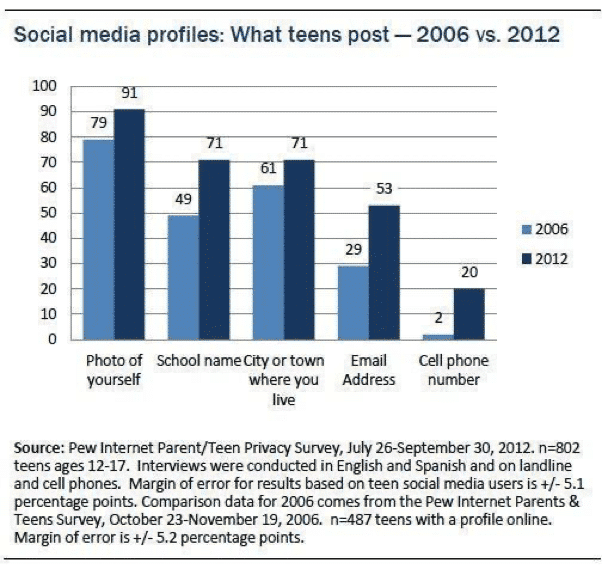
According to Pew Research Center, 71% of teens post their school name, 71% post the name of the city or town they live in, and 20% post their phone number.[1] Further, 36% of older teen’s Facebook friends are people they have never met in person.[2]
Although teens understand that oversharing can be dangerous, few have the life experience to understand exactly how it can be dangerous. When I was a teenager, the more “likes” I got on a photo or the more “friends” or “followers” I had on social media, the better I felt about myself and my online presence. I accepted friend requests from mutual friends who I had never met before, along with accepting requests from strangers. In my teenage mind, there wasn’t any harm in letting strangers see my online profiles. I felt that I would be okay as long as I wasn’t sending them my address. It didn’t occur to me that this data could be used to predict my location or even that anyone could have that kind of predatory intent.
Dr. Bennett shared a story with us where she worked on the production of the Lifetime TV show, I Catfished My Kid. In the show, producers created a poster board map (like detectives do) with yarn connecting the teens’ movements throughout the day for a week. With this data, they were able to predict daily habits like location, activities, and even who they hang out with.
How is Location Data Shared?
Instagram
One way location is shared on social media is through geotagged photos. A geotag is an electronic tag that assigns a geographical location to a photo or video posted on social media or other websites.[3] Geotags are commonly used to share what restaurant or city someone is in and are very popular on Instagram.
If your teen has a public profile and decides to post a photo on Instagram with a geotag, not only will their friends be able to see where they are, but users around the world can too. By simply clicking on that location’s tag, your teen’s photo will pop up as a current or recent visitor.
Another way location is shared on Instagram is by the use of hashtags. If your teen has a public profile and adds hashtags to their posts, their photos will show up as recent users of whatever hashtag they use, similar to the geotag feature. Hashtags are commonly used to have other users find their posts quicker and potentially gain more followers and traffic on their profile. However, that could be a privacy concern for younger users.
Facebook
The check-in feature on Facebook is similar to geotags. Facebook users “check-in” as an announcement to friends that they are visiting a particular location. Once checked-in, it appears on the user’s Facebook profile.
Snapchat
The SnapMap feature on Snapchat can also be a location risk. SnapMap allows your teen to share their location with their Snapchat friends every time they open the app. The SnapMap feature is a default, meaning it is automatically on so your teen might not even know that they are sharing their location. This is another privacy issue and may be a safety concern if your child accepts friend requests from strangers.[4]
Helpful Tips and Tools to Protect Your Child on Social Media
Set up a digital contact like our free Connected Family Screen Agreement and have ongoing, informative conversations with your kids about online safety. Our GKIS blog offers credible, interesting topics that will feed an ongoing agenda. Register for our Connected Family Screen Agreement to get on our weekly email list!
Set up your home to optimize best-use screen practices using our Connected Family Course for school-age kids.
Limit location sharing in Settings. On an iPhone, go to Settings and remove the location by clicking on the social media name > Location > select Never, Ask Next Time, While Using the App, or Always. You also have the option to turn off “Precise Location” meaning apps can only determine your approximate location
Don’t allow your child to have social media accounts until they are ready (we recommend after 13 years old or late middle school).
Require that your child set social media to private and only accept friend requests from family and friends they know in real life
Have your child change to the “Ghost Mode” on Snapchat (their location will no longer be viewable on SnapMap)
Thanks to CSUCI intern, Remi Ali Khan for researching common ways teens overshare on social media for this article.
I’m the mom psychologist who will help you GetKidsInternetSafe.
Onward to More Awesome Parenting,
Tracy S. Bennett, Ph.D.
Mom, Clinical Psychologist, CSUCI Adjunct Faculty
Photo Credits
Photo by Cottonbro from Pexels
Photo by Pixabay from Pexles
Photo by Pew Research Center
Works Cited
Deahl, D. (2017, June 23). Snapchat’s newest feature is also its biggest privacy threat. Retrieved November 04, 2020, from https://www.theverge.com/2017/6/23/15864552/snapchat-snap-map-privacy-threat
Dove, J. (2020, October 07). How to Remove Location Data From Your iPhone Photos in iOS 13. Retrieved November 04, 2020, from https://www.digitaltrends.com/mobile/how-to-remove-location-data-from-iphone-photos-in-ios-13/
Madden, M., Lenhart, A., Cortesi, S., Gasser, U., Duggan, M., Smith, A., & Beaton, M. (2020, August 17). Teens, Social Media, and Privacy. Retrieved November 04, 2020, from https://www.pewresearch.org/internet/2013/05/21/teens-social-media-and-privacy/
Oxford Languages and Google – English. (n.d.). Retrieved November 04, 2020, from https://languages.oup.com/google-dictionary-en/
A 33-year-old army veteran named Ronnie McNutt gruesomely killed himself in a Facebook Live video on August 31, 2020.[1] Soon after, memes and jump cuts to his suicide were floating around social media sites like TikTok, Twitter, and Instagram. From there, reaction videos between friends and siblings began trending. Unfortunately, this is not the first time an online suicide began trending and turned into a meme. This subculture of macabre shock humor not only desensitizes kids to violence, but it can also cause copycat behaviors and serious trauma symptoms.
How Kids Fall Victim to Traumatizing Shock Humor
The extremely popular TikTok has a customized feed called the “For You” page. The For You page shares trending videos that may be relevant to the user’s view history with a few random videos added in for variety. This is the reason disturbing videos may appear out of nowhere on a user’s page.
Users often save and forward the most gruesome content to their friends on a variety of social media platforms. That means that, despite being reported and removed by moderators, the images and videos live on and on. Users even troll each other by hiding a gruesome clip in the middle of a seemingly unrelated video for the GOTCHA effect. Whether your kids are on YouTube, TikTok, Instagram, Snapchat, or Facebook, they may have a difficult time avoiding gruesome content.
Why do kids troll with gruesome videos?
Reaction Formation
Kids are particularly susceptible to videos that make them feel interested, curious, and shocked. The more shocking the video, the more social cred kids get which helps them fit in, gain popularity, and seem cool and edgy.
Because processing this type of content is horrifying, kids often morph their uncomfortable feelings into humor as a way of coping. The father of psychology, Sigmund Freud, called the tendency for people to have an opposite emotional reaction than expected, reaction formation.
Modeling
Modeling is defined in psychology as a type of learning that results from watching behavior and replicating it. Kids are particularly wired for learning through modeling because it helps them grasp useful life strategies such as social cues and dealing with emotions. Seeing peers laughing at these videos or attempting to make funny reactions, makes this type of behavior seem okay and leads them to abandon their initial reaction of revulsion. As a result, the cycle of sharing gruesome videos is repeated.
An example of this is seen in a popular response video created by Jorobe on TikTok. This video highlights a clip between a girl sharing the McNutt video with another girl. The victim gets wide-eyed, leans away from the phone, looks at the camera and then back at the girl who is showing the video, lets out a nervous chuckle, then covers her face. Her raw response shows shock, revulsion, and an uncomfortable attempt to process what she has seen. As she struggles to make sense of her distress, the other girl laughs. She then laughs in response. The transformation from revulsion to humor is, all by itself, the joke.
Most adults tend to be upset at this kind of “gotcha” humor, but kids tend to love it. Without life experience, they do not yet have the empathy skills to pull back before somebody gets hurt. Kids simply get carried away. Powerful and even stressful emotions can release the neurotransmitter, dopamine, which can be interpreted as pleasurable to immature brains.
Viewing Violence Can Cause Psychological Stress: The Impacts on the Mind and Body
Some videos may cause extreme stress and may even be traumatizing for children. In an article published in 2017 by McFadden, it is noted that the brain areas that play a role in complex thought and emotion—the prefrontal cortex and amygdala—are affected by stress. When we are exposed to a threat, our amygdala (commonly called the smoke detector in our brain) determines whether we need to go in crisis mode or problem-solving mode. If we go in crisis mode, the signal is directed to our brain stem so we can fight, flee, freeze, or fold. If we go into problem-solving mode, the signal is directed to our prefrontal cortex to calmly work the problem out.
McFadden found that, with prolonged stress, the brain cells in the prefrontal cortex will begin to deteriorate, while the amygdala will begin to strengthen. This impact then affects other parts of the brain—and therefore, one’s headspace—like a domino effect.[2]
If a person is exposed to traumatic or threatening material often, the crisis pathway overdevelops and the subject panics too easily. They can also lose their problem-solving abilities when stressed.
Further, trauma memories encode in the brain differently than factual memories. Unlike factual memories where we can retrieve the information at will, trauma memories may intrusively come back into our awareness uninvited. In extreme cases, these memories can be very upsetting – like a flashback of the originally traumatizing event. Psychologists recognize these behaviors as symptoms of post-traumatic stress disorder (PTSD). PTSD is characterized by serious sleep problems, social isolation, anxiety, and mood disorders.
Desensitization
Desensitization in psychology is explained as a decline in emotional response due to repeated exposure.[3] This could be from something as simple as a joke becoming less and less funny when it is heard many times to something as serious as becoming more and more emotionally numb towards upsetting events. For example, psychological research has demonstrated that violent video games can desensitize children to violence due to frequent exposure to battery, weapons, blood, and death or murder. Similarly, exposure to videos of real-life gore and violence can cause desensitization and lack of empathy.
How to Protect Your Child
When shock videos are trending, it’s best to stay off social media apps until the trend dies down. For young children, your best resource for blocking, filtering, and management is the GKIS Screen Safety Toolkit. With this resource guide, we offer links to the best parental controls, safety centers, and third-party tools and apps to help you protect your family.
For school-age kids, tech tools are simply not enough. GKIS also offers a free digital contract called our Family Agreement. With this powerful tool, you can set rules and regulations, teach important problem-solving skills, and discuss family values. An informed sensible parent-child alliance pays off for years to come. Our Connected Family Course complements the agreement with 10 steps for best-learning and safety.
Finally, we created a tool for tweens and teens that encourages more independence and accountability: our GKIS Social Media Readiness Course. Like driver’s training but for the internet, this course offers 10 lessons for your kid to work through with matching mastery quizzes at the end of each lesson. Not only does this course teach the risks of digital injury and how to avoid it, but it also offers Dr. Tracy Bennett’s hand-picked, outcome-based psychology wellness tools to help with resilience and mental health. We cannot keep them away from screens entirely, so it’s important that we offer them tools to avoid trauma.
Thanks to CSUCI intern, Avery Flower for researching how traumatic videos can affect childhood development and co-authoring this article.
I’m the mom psychologist who will help you GetKidsInternetSafe.
Onward to More Awesome Parenting,
Tracy S. Bennett, Ph.D.
Mom, Clinical Psychologist, CSUCI Adjunct Faculty
[3] Krahé, B., Möller, I., Huesmann, L. R., Kirwil, L., Felber, J., & Berger, A. (2011). Desensitization to media violence: Links with habitual media violence exposure, aggressive cognitions, and aggressive behavior. Journal of Personality and Social Psychology, 100(4), 630–646. https://doi-org.summit.csuci.edu/10.1037/a0021711


 How We Got Close














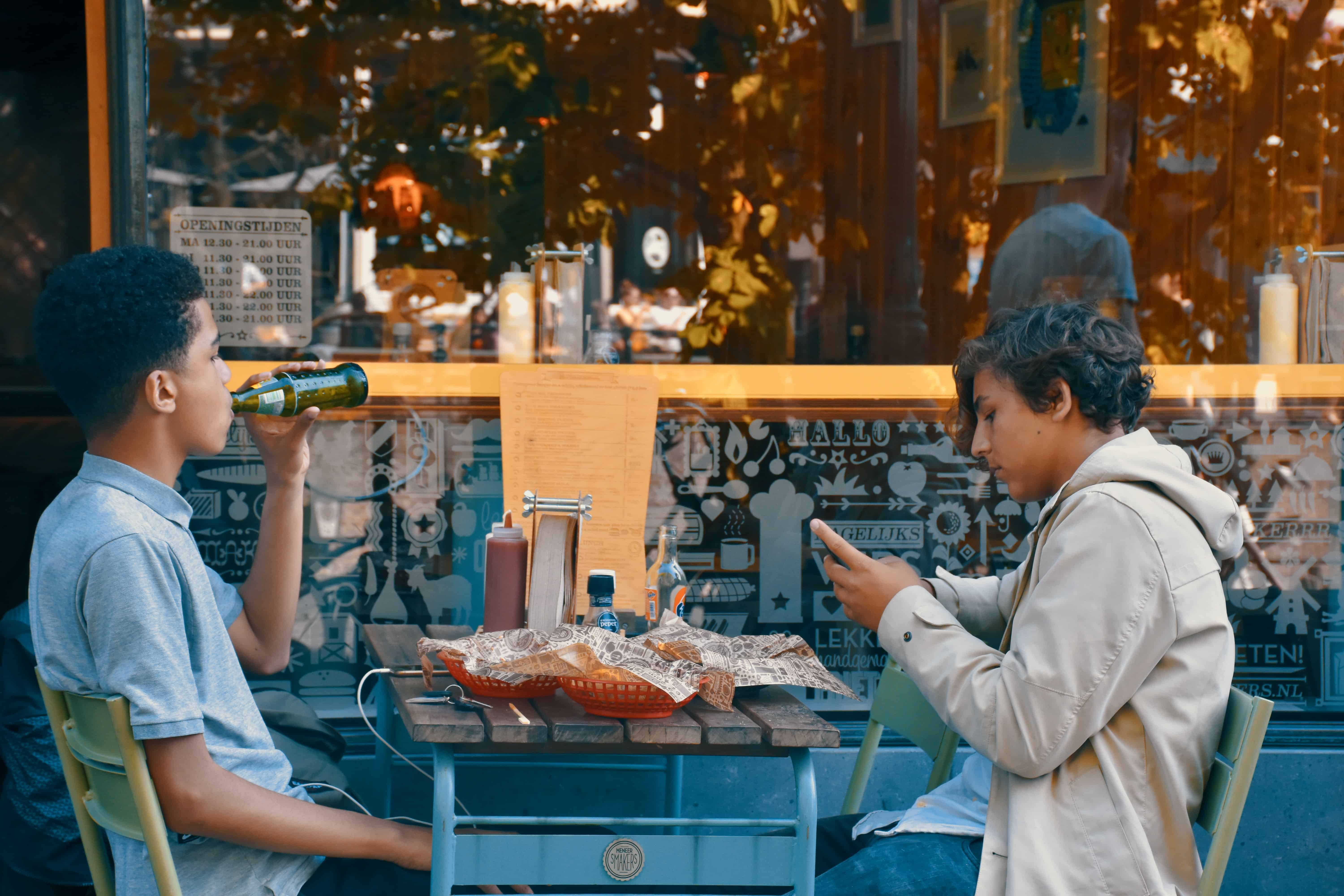

 An example of this is seen in a popular response video created by Jorobe on TikTok. This video highlights a clip between a girl sharing the McNutt video with another girl. The victim gets wide-eyed, leans away from the phone, looks at the camera and then back at the girl who is showing the video, lets out a nervous chuckle, then covers her face. Her raw response shows shock, revulsion, and an uncomfortable attempt to process what she has seen. As she struggles to make sense of her distress, the other girl laughs. She then laughs in response. The transformation from revulsion to humor is, all by itself, the joke.