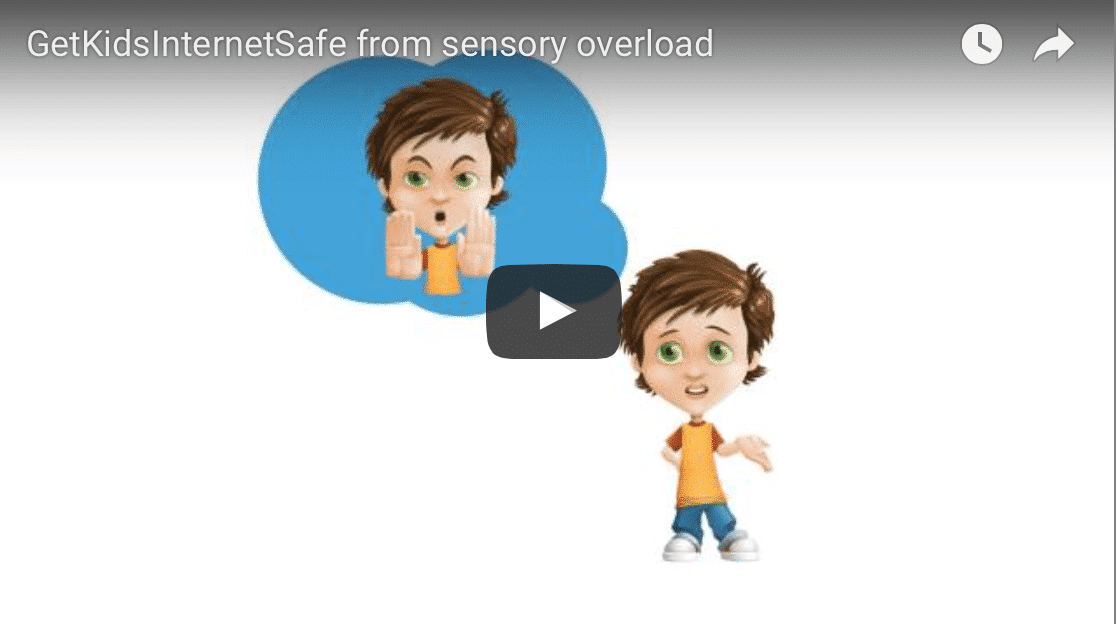
Parents don’t always realize that sensory
overload isn’t a regular tantrum.
GetKidsInternetSafe can help!


I’m a psychologist, a university lecturer, and a mom. Guess which job is the hardest? I’m not going to say that establishing screen safety in your home is easy. But I will say that, with support like GetKidsInternetSafe and plans like those in my Screen Safety Toolkit it’s totally doable and mega important. The fallout I see in my clinical office from poor safety planning is truly tragic. If you’re telling yourself one of these 5 myths, I encourage you to take some time and flush out an effective screen safety plan. You will rest so much easier once you do. On to the 5 myths I too often hear about Internet safety.
When I think back about my childhood I grimace about the seven shades of peril I was often in. As latch key kids roaming the neighborhood in hoards, we were mostly in danger of falling out of trees and talking to strangers. Yes abduction was a concern, but neighbors were ever watchful and quick to reprimand us and tell our parents when we stepped out of line. (Sorry about the ding-dong ditching and prank calls Mr. and Mrs. Wong).
As an Internet safety expert and clinical psychologist, the online peril kids face today is far more insidious than that of yesteryear. Online predators don’t drive up and grab kids off the street. Instead they stalk them virtually on social media and chat rooms. With slow, steady contact they can gather a shocking amount of personal information that they utilize to form a relationship. They don’t need to grab them, the kids are coerced to come to them. Sprinkle in other risks like cybersecurity, exposure to inappropriate violent and sexual content, and cyberbullying and one can easily see online risks are real. This isn’t falling out of trees and reading your cousin’s Playboy magazine anymore.
Education is an awesome first step to good online problem solving and resilience. But it isn’t enough. Kids may seem wise with their bravado and impressive technology expertise, but they’re not great at recognizing future consequence.
There’s a good reason for that. In the first 25 years of life the brain is undergoing massive remodeling. Brain cells that aren’t being used are dying off while others grow in synchronized and preplanned patterns among various brain regions. As a result, specialized skills emerge with each developmental phase.
The prefrontal region of the brain, the seat of judgment and problem solving, is among the last to mature. That means that kids don’t have the brain wiring to reason through complex online social situations, even if they’ve been told of the risks. Parents need to be present and alert every day to make up for those deficits and help them build resiliency skills throughout childhood. It’s a process rather than a one-time intervention.
Let’s be honest, that’s a cop out. Yes it’s intimidating to program parental controls on screen devices and set up screen safety rules and structure, but the risk of letting this go is simply too high. I treat middle schoolers addicted to porn and high schoolers flunking out due to sleep deprivation from gaming and social media, among other serious problems. GetKidsInternetSafeis my way of supporting families preventively rather than treating issues after the fact. If done right, sneaking and hacking won’t undo the benefits. Parents need to do their jobs well to protect kids effectively. With support, screen safety is not as hard as most parents think.
It does seem like everybody’s doing it, but that doesn’t mean your kids should. Overly restricting technology will interfere with your children’s academic and social well being, and so will being too permissive with screen media. It’s worth being that parentwho commits to a strategy and negotiates it actively as your children grow. That kind of active, warm, fun engagement also strengthens the parent-child relationship. When they see how awesome your kids are doing, other parents will follow your lead. That means your children’s friends will also be less likely to browse into trouble.
Of man . . . if only. Tech is getting more sophisticated and user friendly for sure, but nothing beats old-fashioned human ingenuity to come up with work arounds. The truth is, inappropriate content will show up on your children’s screens. It just will. Recently a teacher friend told me a story that she was looking up “big mouth bass” with a bunch of first graders, and by some horrifying stroke of the key an explicit body part filled the screen. She mimed what it was like to slap at the keyboard while launching her body in front of the screen, all while trying not to scream hysterically. This followed by several uncomfortable telephone conversations with, thankfully, understanding parents.
So what can we do? Build a powerful parent-child relationship, set up filtering and monitoring tech, and develop innovative parenting strategies to keep screen use moderate and safe. No need to be overly restrictive or overly permissive. And as a mom and psychologist, I urge honesty and transparency. Don’t risk losing your credibility by spying and ambushing your kids with online discoveries. Let them know from the beginning that you love them enough to be engaged with their nonvirtual AND virtual selves.
I’m the mom psychologist who will help you GetYourKidsInternetSafe.
Onward to More Awesome Parenting,
Tracy S. Bennett, Ph.D.
Mom, Clinical Psychologist, CSUCI Adjunct Faculty
GetKidsInternetSafe.com

In 2015, Mattel released the smart toy Hello Barbie. Hello Barbie looks like any other Barbie, but this one can carry on a conversation with your child. With Barbie’s artificial intelligence, she listens to (as in records and processes) your child’s voice when you push her belt buckle. Then she responds with one of 8,000 pre-recorded responses. What could possibly go wrong?
While your child is playing with Hello Barbie, not only is their voice recorded and stored in the cloud somewhere, but their content is being analyzed for a response. Kids babble about the weirdest and sometimes most embarrassing things. Do you want strangers to have access to hours of unfiltered babbling from your child?
Also, what exactly will Mattel do with that recorded information? Will it help them target their marketing toward your family? Will they be forced to turn the information over to law enforcement if your child reveals information suggestive of abuse or danger? Will the FBI end up at your door because your child said what sounded like “bomb” Tuesday after school?
We’ve come to accept that companies are allowed to view our spending habits from our Target cards…and on Facebook…but we must draw the line at our children’s bedrooms. Don’t we?
Maybe you consider Mattel trustworthy to have your private information. But once the information is saved on their servers, your child’s content and even speech pattern footprint are there for the taking.
Today a speech pattern may seem harmless to analyze. But we now know that ultrasound photos that were harmlessly posted online several years ago can now be analyzed to reveal far more information about an unborn baby than we once imagined. The same futuristic analysis with unknown impact may emerge from data gathered from your child.
One of the foundations of GetKidsInternetSafe is supporting a trusting, warm connection between parent and child. Even with online filtering and monitoring, kids will still need to independently deal with difficult online situations.
What will it mean to your child when they consider that mom or dad listened to every word said to their BFF Hello Barbie? Maybe it won’t mean much to them at 6 years old, but it may mean far more when they share the story at 16 years old. Spying sets an unhealthy precedent and undermines trust. Barbie has no business getting between you and your child.
Stephen Balkam, executive director of the Family Online Safety Institute (FOSI), once told me that his Hello Barbie remembered their conversation days earlier. He told her he considered becoming a doctor when he was younger. She then asked if he had considered working in the fashion industry! I was all, “That’s not OK!” Not that I have anything against the fashion industry, but I fail to see how Hello Barbie is qualified to give job advice to a vulnerable, Barbie-adoring child.
And what happens if Barbie mentions another toy or movie? Branding, that’s what happens. Imagine the dollars Mattel will bring in with that corner on your child’s pester power.
Barbie has been a significant contributor to body shame for women all over the world for decades. Her head is too large, her neck and legs are too long, her feet and wrists are too tiny, and her waist is freakishly slim. Where are her hips?
It turns out that if a woman had Barbie’s body, she’d have to give up some critical internal organs. If we can’t trust Mattel with our fragile daughters’ body images, do we want her modeling conversation and interests?
We long to be together from the day we are born. Our popular music, poetry, literature, movies, and television revolves around love and romance. Kids are no different. They thrive under the adoring eyes of their parents, family, and friends.
It is dangerous to farm that critically important job out to robots. Barbie’s blank-eyed stare is not what children need to learn important social skills like attentiveness and empathy or that the world is trustworthy and cares. Come to think of it, Hello Barbie’s eyes say the very opposite.
I’m the mom psychologist who will help you GetKidsInternetSafe.
Onward to More Awesome Parenting,
Tracy S. Bennett, Ph.D.
Mom, Clinical Psychologist, CSUCI Adjunct Faculty
GetKidsInternetSafe
Photo Credit
3042430-inline-s-1-hello-barbie-talking-toy-toytalk by POMAH Magician, CC by-NC 2.0

I’m snuggled into bed at our family’s mountain cabin waiting for snow with anxious anticipation of the holidays. I smile as I reminisce about each child’s favorite toys over the years. The Christmas Eve when my husband and I were up ‘til 3 am constructing an insanely complex train table, the battery-operated Jeeps that were abandoned quickly when we realized they couldn’t propel up our wildly steep driveway, the hours spent figuring out the parental controls on shiny new Apple products. In some ways I’m grateful my kids are no longer little ones. Tonight my oldest made a yummy taco dinner and the two little ones did the dishes. The days are gone where my husband and I were run ragged finding binkies and chasing toddlers. They were precious for certain, but tonight I consider the cyber challenges parents are currently facing with their kids.
To read more, click here. Thank you to GoGuardian for publishing this article.

For some teens, social media is the primary method of communication with friends and family. Everyday more than half of pre-teens and teens will log on to one or more on social media sites, and 22% of those will log on more than ten times per day. That’s approximately twenty three years of their life on the Internet, with ten of the years specifically spent on social media sites! With that amount of time spent on social media, it is not surprising that more than 1.8 billion photos and personal posts are uploaded to these sites daily. The photos and posts that adolescents upload have become a part of their normal daily life and development. Some of the posts can be beneficial, but some have risks and consequences associated with them (Gary, & Christiansen, 2009).
My eleven year old daughter is a perfect example of these statistics. She communicates with her friends mainly via Instagram. Even though her dad and I are one of her “followers” and we feel like we are in the loop about her online activity, research shows that:
As a busy parent, my days are hectic! It’s too easy to allow my daughter to spend time on the Internet while I get things done. Even though she uses screen media in my presence, I am not always looking directly at the computer screen, her smartphone gives her Internet access outside of home, and I am not up to date with the “lingo” and sites she and her friends use. For example, I just learned of two acronyms that I was unaware of, POS and PA911. They stand for “parents over shoulder” and “parent alert”. These are used by teens to alert someone they are communicating with online or via text to watch what they are saying so parents don’t see. I am now aware that I cannot be 100% sure of everything my daughter is doing online and am part of the statistics.
To help her make healthy online choices, I must be educated about the risks and benefits of online activity so I can share them with her.
Negative feedback refers to unkind comments on social media. Pre-teens and teens have the tendency to be preoccupied with how they are being perceived by their peers and highly sensitive to their opinions. Most of the time social media elicits healthy feedback within peer groups with responses such as “likes” and positive comments on posts and pictures. But 7% of teens report only receiving negative feedback on their online activity causing lowered self-esteem and feelings of insecurity (Koutamanis, Vossen, & Valkenburg, 2015).
Once something has been uploaded to the Internet, it is still searchable even if the person who uploaded later deleted it. Replicability happens if a post or picture is copied and pasted to someone’s personal computer for future or personal use. Copying and pasting is not always done by someone the “poster” knows. Social media sites have the option to “share” a picture or post giving access to thousands of people in a matter of seconds. Once the image or post is someone else’s hands, they are free to do what they want with it, including altering it and reposting it. Anything uploaded can fall into anybody’s possession. Once posted online, no post or photo is safe from copying, altering, or sharing (Moore, 2012).
Anyone who has ever used the Internet leaves behind a digital footprint. These footprints are an ongoing collection and recording of EVERYTHING an individual does online. Yes, that even includes websites that have been viewed and searched, accounts created, pictures that have been uploaded, deleted content, and comments left on sites.
Teens need to be aware that there may be future implications from their Internet activity, especially what is on their social media profiles and pages. For example, as many as 75% of employers use social media as part of a background check for potential employment and certain universities also use these platforms when deciding which applicants will be granted admission (McBride, 2011). Would your teen be prepared to turn over their social media accounts and passwords to the college of their choice?
Posting too much personal information can lead a predator right up to a teen’s front door. An astonishing 20% of teens feel it is safe to post personal information and public blogs and social media sites. According to the Pew Research Center, 92% use their real name, 71% share the school they go to, 91% show their full face in their profile picture, 71% say what city/town they live in, 20% post their phone number, and 82% share their birthday. When a teen shares too much personal information, it not only makes them an easy target for a predator to find, it also gives identity thieves the information they need to ruin a teens future credit. Once credit is harmed from identity theft, it is hard to turn it back around.
The Children’s Online Privacy Protection Act (COPPA) was put in place to prohibit websites from collecting personal information of kids under the age of thirteen without parental permission. This is why popular sites such Facebook and Instagram require users to be thirteen or older. Allowing children to join sites by falsifying their age, sends mixed messages about lying and online safety (O’Keefe, & Pearson, 2011).
Just as one maintains a positive identity offline, one must also attend to their online reputation. Teach your teen to think about possible future repercussions before they view or post online. Be prepared to have ongoing discussions about what pictures and comments could imply to others (e.g., might be seen as provocative, unkind, or unfavorable to their character) (Moore, S., 2012). Remember that grandma (and UCLA) are watching!
Having regular family meetings about issues pertaining to online activity can keep parents informed about what their teen is up to online and offline. Parental involvement and communication is key to promoting healthy internet activity. Family meetings shouldn’t be used as a time for punishing online misuse, but rather a time to mutually teach each other and share issues that may come up due to screen use.
For more specific parenting help on sensible rules and regs, check out the GKIS Connected Family Online Course.
Onward to more awesome parenting
 Thank you to Kathleen Gulden, CSUCI intern, for authoring this awesome GKIS article!
Onward to More Awesome Parenting,
Tracy S. Bennett, Ph.D.
Mom, Clinical Psychologist, CSUCI Adjunct Faculty
GetKidsInternetSafe.com
Works Cited
Gray, D. , & Christiansen, L. (2009). Protecting adolescents’ personal information online: Constraints and parameters. Journal of Information Privacy & Security, 5(4), 31.
Koutamanis, M. , Vossen, H. , & Valkenburg, P. (2015). Adolescents’ comments in social media: Why do adolescents receive negative feedback and who is most at risk?. Computers in Human Behavior, 53, 486-494.
McBride, D. (2011). Risks and benefits of social media for children and adolescents. Journal of Pediatric Nursing, 26(5), 498-499.
Moore, S. (2012). Digital footprints on the internet. International Journal of Childbirth Education, 27(3), 86.
O’Keeffe, G. , & Clarke-Pearson, K. (2011). The impact of social media on children, adolescents, and families. Pediatrics, 127(4), 800.
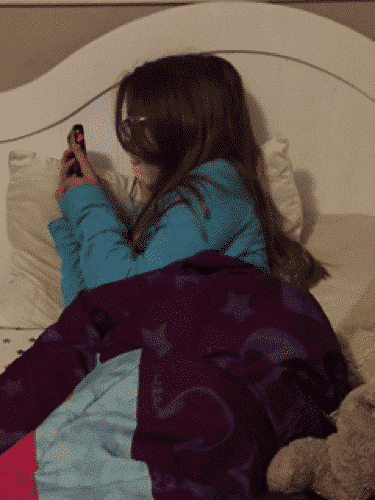
As the mother of an eleven year-old daughter who has her own smartphone and mainly communicates via texting, the thought of her participating in sexting is gut wrenching. Surveys reveal that 20% of teens between the ages of thirteen and nineteen have sent some type of sexually explicit message, with 38% reported having received a sexually explicit message as the intended or unintended recipient. Those who sext are associated with a higher risk of unsafe sexual behavior including having more sexual partners, not using protection during sexual intercourse, and drinking alcohol or some other substance before sexting/sex than those who have not (Judge, 2012).
If a teen has access to their smartphone in their bedroom and out of their parent’s sight, what starts off as innocent texting with their crush or friend, can slowly turn into something else. I was at a presentation given by Dr. Tracy Bennett, CEO of GetKidsInternetSafe, and she explained how texting could lead to sexting. She elaborated,
“One night your child may be texting at night with her crush. He asks, “What are you wearing?” Your child responds, “My jammies.” Her crush begs, “Let me see.” Innocent right? Well night after night, these pictures can start to show less and less of the jammies and more and more bare skin. Boom! Your child has just sent her first sext message.” Slowly manipulating a child’s online behavior this way is called grooming.

The social norm among the friends your teen hangs out with on-and off-line may also encourage sexting behavior. Recent surveys found that up to 40% of child pornography images (Dr. Bennett prefers to call these “images of child sexual assault”) are self-produced, partly due to the emergence of young teens viewing online pornography and gradually mimicking sexualized behavior. Not only are teens producing their own pornographic content, but it is also being shared widely on the World Wide Web by pedophiles.
It’s easy for teens to succumb to online peer pressure and sexual grooming, because their prefrontal cortexes are not fully developed yet. The prefrontal region of the brain does not finish developing until a person is about 25 years old. This is the part of the brain that is responsible for skills like decision making, impulse control, and understanding the consequences of one’s actions. With a poorly developed prefrontal region, sexual drives and interests peaking, and smartphones constantly in-hand, teens are well primed to sexually act out online (Judge, 2012 & Ouystel, et al, 2015).

One consequence of sending a sext is that consensual sexting can turn into coercion and aggravated sexting, commonly called sextortion. Once a teen has sent a sext, it may be impossible to get back or deleted. The once-trusted recipient can turn on the sender by using it as blackmail for extorting more explicit pictures from the sender. Common blackmail threats include telling parents or authority figures or sharing or uploading the images online where virtually anyone can gain access to it. This kind of behavior is called revenge porn.
You may also find it shocking that there are many revenge porn sites up and running. Online 26 states have revenge porn laws in place, and 11 others have laws pending. However, each state’s protection is different. For instance, California’s revenge porn laws are only enforceable when somebody other than the victim captured the image.
As you can imagine, sextortion can cause extreme emotional distress to the victim by arousing feelings of fear and anxiety that the blackmailer will follow through with their threats, or feelings of guilt for sending the photo in the first place. Furthermore, imagine being a teenager walking the main hall of high school wondering who has seen your images or commented among friends. The opportunity for cyberbullying and public shaming raises exponentially with nude and semi-nude images for the sharing.
Researchers report that sexting is being associated with high-risk sexual behaviors such as having unprotected sex with more partners than those who do not sext. A theory as to why this happens is sexting is viewed by some as a new way to flirt and gives the illusion that you “know” someone intimately, therefore making it easier to engage in sexual activity sooner than intended. Sexting can also serve as an icebreaker within the dating scene (Ouytset, et al., 2015 & Benotsch, 2010)
Some states view sexting as child pornography and even minor violators (browsers, sharers, and producers) are prosecuted. Ultimately that means the potential that a sexting teen could be included on a public sex offender list. Can you imagine your thirteen year old in that kind of jeopardy?
The most powerful methods of prevention continue to be a powerful collaborative and honest relationship between parents, educators, and kids and workaround- proof filtering and monitoring. Knowing what your children are viewing online, who they are talking to, and being aware of what they are sending and receiving is critical to decrease online risky behaviors. Not only must parents teach kids about online risk, but they must also teach problem solving and assertiveness skills to build the necessary resilience should online temptation arise. And most importantly, implement the kind of rules and regulations offered in the GKIS Connected Family Online Course. These suggestions are easy to implement and powerfully effective.
Thank you to Kathleen Gulden, CSUCI intern, for authoring this awesome GKIS article!
Onward to More Awesome Parenting,
Tracy S. Bennett, Ph.D.
Mom, Clinical Psychologist, CSUCI Adjunct Faculty
GetKidsInternetSafe.com
Works cited
Benotsch, E., Snipes. D., Martin, A., & Bull, S., (2013). Sexting, substance use, and sexual risk behavior is young adults. Journal of Adolescent Health, 52 (3), 307-313.
Judge, A., (2012).”Sexting” among US. Adolescents: Psychological and legal perspectives. Harvard Review of Psychiatry, 20 (2), 86-96
Van Ouytsel, J., Walrave,M., Ponnet, K., & Heirman, W. (2015). The association between adolescent sexting, psychosocial difficulties, nd risk behavior: Intergrative review. The Journal of School Nursing,31(1), 54-69.