
Need peaceful screen time negotiations?

Get your FREE GKIS Connected Family Screen Agreement

getkidsinternetsafe

Did Your Baby Take His First Digital Footprint Before He Started Crawling? 9 GKIS Social Media Tips For Young Parents

blog39instagramprofile

I just shared a post about face recognition technology that might have freaked you out a little. Maybe it got you wondering about your child’s digital footprint and if you want to be the one to start it?

Although some parents are concerned enough to not post ANY child pictures online, it is an unrealistic expectation for most families. The benefits of sharing your little one’s firsts with friends and family is just too awesome to pass up. Perhaps some thoughtful consideration prior to making social media decisions is a good starting point. Ultimately each family must determine online privacy rules of their own, and then communicate it to friends and family.

Here are some sensible GKIS tips on how to protect your child’s privacy online:

  1. Set your privacy settings to friends-only or tighter on any social media site where you’re posting child images.


  2. Don’t use your child’s image for social media profile pictures or cover photos. These are public regardless of your privacy settings.


  3. Only post your child’s online pictures with a nickname (e.g., “the boy” or “Teeny Tiny”).


  4. Never post nude shots or embarrassing activities. Consider how your child will feel about the image if it were shown at a middle school assembly when she is twelve years old.


  5. Be aware that face recognition technology can be used with even side profile pictures.


  6. Always ask permission from other parents before posting pictures of their children, like from parties or play-dates.


  7. Don’t use your child’s pictures for professional marketing purposes.


  8. Don’t give permission for schools and camps to use your child’s images for marketing purposes.


  9. Create a Google Alert with your child’s name so you’ll be alerted of an online mention.


For a vast majority of parents this ship has already sailed. However, online decisions should not be flip and uniformed. Finally don’t forget that friends and family can also tag or forward your posted images, so once posted the image will no longer be under your control. Please comment below and let me know what you think about the risk of digital footprints.

I’m the mom psychologist who will help you GetYourKidsInternetSafe.

Onward to More Awesome Parenting,

Tracy S. Bennett, Ph.D.
Mom, Clinical Psychologist, CSUCI Adjunct Faculty
GetKidsInternetSafe.com

Here Little Girl Have Some Candy…Facial Recognition Technology and the Threat to Your Family


blog38faces

Article originally published by The Good Men Project

I adore my kids, and I heart Facebook. As a result, these two passions met long ago and often! Posting images of my kids and their happenings was ancient history and still a current reality when I launched GetKidsInternetSafe. Do I feel uneasy after learning about rampant online victimizations and BigData capture? Well imagine this:

<Old Witch Voice> “Here little girl, would you like some candy?”

Scene change:

<Voice modulated to resemble her own grandmother (who’s on Facebook)>“Here Jenny, would you like a Butterfinger (your fav)/wrapped in sparkles (in your preferred colors)/handed to you by this Maltipoo puppy (the one from your last birthday party)/held by your favorite cartoon character (whom you watched just this morning)/to your favorite song (that’s been on repeat all week)?”

I mean OMG and shiver right? How can we possibly protect them enough? And it’s not just pedophiles that may creep on them, it’s big business! And governments too! Yes I meant that to be plural. Whether you believe identity tracking is a terrifying intrusion on your privacy or you are reassured to have these tools in place for your security, please turn off your social media notifications and read this article so you can be even more informed about important decisions about your family.

What do you think about face recognition technology? Are you concerned, comforted, or somewhere in between? Rate your opinion really quick:

(No concern) 0 to 10 (Extremely concerned)

blog39facebookcover

WHAT IS FACE RECOGNITION TECHNOLOGY?

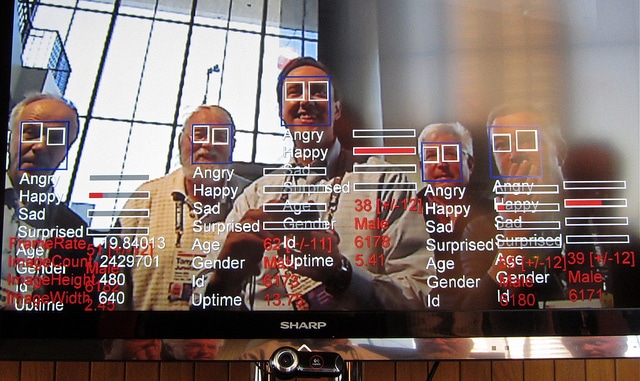
Face recognition technology is a computer application that collects data from an image of a face and compares it to a larger database, ultimately identifying the person. Older algorithms used data about distinctive facial features to make matches. The newer three-dimensional technology is modeled after the neural networking of the human brain and adds data about face shape and surface contours. As a result of these recent advances, accuracy has greatly increased with identification possible from even side-profiled pictures and even with different lighting. Some 3-D systems boast identification ability as good as a human’s at 97% accuracy!

WHO HAS IT?

Most big technology companies and law enforcement currently use face recognition. Examples include Apple’s iPhoto, Adobe System’s Photoshop, Google’s Picasa, and Microsoft’s Windows Live Photo Gallery.

The FBI database has been estimated to have private data on 4.3 million Americans who have not even been accused of a crime; data that can be pulled up immediately on handheld scanners, paired with other private information, and potentially shared with third parties.

What are you thinking now? Has your 0-10 rating changed at all? Rate again and then read on…

HOW IS FACE RECOGNITION TECHNOLOGY BEING USED?

We can’t be totally sure, as much of its use is confidential. Right Homeland Security? But we do know it’s commonly used in many applications, including photo apps for better focusing and photo organizing and on social media (e.g., tagging), mobile apps that require a selfie for login (e.g., computer access, ATMs, online test taking), or employer systems to track a worker’s computer face-time. Private companies also use it for security purposes, such as casinos in order to identify blacklisted customers.

Governments currently use this data to identify suspects (e.g., at public events or to monitor voter fraud), streamline border crossings (the US will roll it out this summer), and for visa processing and airport surveillance.

An important element to keep in mind is that, unlike with fingerprints and iris scans, this technology does not require the cooperation of the user. Therefore subjects may be unaware they are being identified.


HOW WILL IT BE USED IN THE FUTURE?

So far Facebook and Google are reticent to blatantly apply sophisticated 3-D face recognition software due to a fearful and vocal public. However, recent news reports suggest that Facebook will be utilizing their version of 3-D face recognition technology (DeepFace) on newly posted images in order to notify users their image was just posted. This allows that user the option of blurring their face on the image to preserve privacy. Some European governments have already forced Facebook to delete its face recognition data.

Google (with their social media platform Google +) is not far behind. However, they currently have refused to use facial recognition software for Google Glass or approve third party apps that use it. It has been speculated that Facebook and Google are waiting to apply the advanced technology until the public gets used to computers using face recognition for login. Wait for it…

The courts already obtain warrants to seize Facebook data about specific users, including images, posts, messages, locations, and activities. Facebook has argued that broad use of databases by the government is a violation of the Fourth Amendment freedom from unreasonable searches by the government. That battle continues.

OTHER RELATED DEVELOPMENTS

Big Data is also invested in analyzing text and posts to decipher mood and context as well as facial expression analysis technology. After all, logging viewer engagement and emotional response real-time allows the marketer to lead the potential buyer into a split-second purchase click, without the buyer even knowing he was neuro-marketed. Quick and profitable indeed!

Just this week news reports that Samsung’s SmartTV instructions read, “Please be aware that if your spoken words include personal or other sensitive information, that information will be among the data captured and transmitted to a third party through your use of Voice Recognition.” Yes, your SmartTV listens in to adapt to the spoken content of your private living room. You know this because a little microphone icon appears in the right hand corner. Right? And you can always turn it off, of course, but it will disable the voice command feature. I wonder what third parties think about the fight my husband and I had last night…

Perhaps you’ve noticed that it’s no coincidence that the very lamp you were shopping online yesterday shows up on your social media feed today. Your buying and browsing habits are already being collected and analyzed so advertisers can market directly to your interests. So generous of them and convenient! To thicken the plot further, consider that it’s not only you that marketers are targeting and tracking. Go to any popular children’s website and you’ll see that products are being blatantly and sophisticatedly pitched to your children. With this technology, that pitch will morph to be designed specifically for your individual child, her likes, her dislikes, all of it.

How is your rating faring now? 0 to 10

blog3buy

 WHAT SHOULD WE BE DOING TO ENSURE OUR PRIVACY?

This is where the controversy comes in. It seems people have settled into two camps, like the partygoers I mentioned earlier. One camp feels that people should not post anything; stay off social media and keep it old school. Others feel the ship has sailed. They’ve already got a digital footprint, the disappearance of privacy is the wave of the future. Accept it and don’t bother to swim against the current.

I don’t have a crystal ball that gives me enough information to offer you a concrete call-to-action. Maybe its no big deal that Google knows so much about us, starting at our image. And maybe it’s the beginning of something truly frightening for us. Because I use my image online for branding, my goose is surely cooked as far as face recognition technology goes. But I still have decisions to make about what to allow my kids to post online. There is data protection software out there, but I assure you it isn’t getting many buyers as most of us eat up the opportunity to exchange our private information for fun, free online content (thanks Facebook! Num-num-num). The Japanese recently developed privacy visors with infrared lights to protect facial recognition in public spaces…so there’s that.

I suppose if pressed I would encourage people to stay aware, educated, screen smart, and cautious. And teach your kids to do the same. Hold to strict age guidelines and monitor to prevent oversharing. My GetKidsInternetSafe 30 Days to Internet Safety online parenting course provides detailed suggestions of just how to do that in the most efficient ways possible, along with other ideas that fill Internet risk gaps. Ultimately, we must ask ourselves at many points along the way if the costs outweigh the benefits.

Does the risk of inaccurate face identification put us at high risk? What if other countries that don’t have our human rights protections get ahold of our data? Under what conditions is it acceptable and legal for private and governmental agencies to collect information about us without our knowledge? Furthermore, how is it that they are able to offer opportunities to some but not others based on that knowledge? Has there ever been a time in history where a government secretly collected private information about its citizens? And then treated those citizens differently because of that private information? Anybody? Ever?

Have you heard the allegory that if you put a frog in a pot of boiling water he’ll jump out, but if you put him in while the water’s still cold he’s certainly dinner?

Well I don’t know about you, but it’s feeling a little tepid in here…“Ribbit!”

blog38frog

Admittedly, it’s a bit of a leap from face recognition technology to covert data collection to hacking, behavioral manipulation, and discrimination or coercion. But being a frog myself (and a mom who worries about what kind of world we are handing to our kids), the evidence holds together tight enough for me to be worried.

What’s your 0-10 rating now?


I’m the mom psychologist who will help you GetYourKidsInternetSafe.

Onward to More Awesome Parenting,

Tracy S. Bennett, Ph.D.
Mom, Clinical Psychologist, CSUCI Adjunct Faculty
GetKidsInternetSafe.com

 

Photo Credits:

Fraunhofer Face Finder by Steve Jurvetson, CC by 2.0
Frog in a Pot 5 by James Lee, CC by 2.0


What will a future without secrets look like?

Can Your Phone Get a Virus From Texting? GKIS Parent Beginners Guide to Texting and Instant Messaging (IM)


blog-37-spaceinvaders I intended for today’s blog to be a quick one until I myself became confused about the differences between texting and instant messaging. Then I started wondering if my iPhone could contract a virus from texting! And the rest is included in today’s GKIS beginners guide to texting and instant messaging.

WHAT IS TEXTING?

Texting = brief, electronic messages sent between individuals or groups of people through portable screen media devices over a phone network. Your text contact handle is your mobile phone number.

  • Texting typically also allows transmission of images, videos, and sound content, also called MMS messages (multimedia messaging service).
  • You can text from your computer by installing an short message service (SMS) app.
  • The first commercial texting was offered in 1994. Today, 91% of adult Americans own a cell phone and 81% of those users text (Pew Research, 2013).
  • Currently, mobile phone viruses are rare (but on the rise) and occur almost exclusively from phones running the Symbian operating system.
    • Technically, a mobile phone can be infected by accepting maliciously baited texts, through Bluetooth connections, or from downloading from the Internet or connecting to a computer. Infected files are typically disguised as applications like games, security patches, and pornography.
    • Currently there are no reported viruses that auto-install, meaning you must agree to install program to be infected. Keep in mind they are disguised to be something you want!
    • To be safe, it’s best to only download apps from reputable sources. If you are concerned that you downloaded malware, there are antivirus scanning programs on the market.
    • Apple, Microsoft, and Research in Motion smartphones are less targeted.
  • Advertisers have figured out how to use bulk texting to attract buyers.
  • Medical offices now use texting to send reminders.
  • Texting can also be used to remotely control appliances.
  • Texting issues of concern include texting while driving or walking, sexting, cyberbullying, distraction, security, misrepresentation, and spamming.

WHAT IS INSTANT MESSAGING?

Instant Messaging (IM) = a service that allows real-time text-based messages (chatting) between an individual or groups of people over the Internet. Simply type and SEND. To send an instant message, you typically need a username and password.

  • Using “push technology”, advanced IMing allows a user to also transfer files (like images and videos), hyperlinks (links you click on to take you to a website), voice over Internet protocol using microphones (IP) (like Skype and Google Talk), video chat (using microphones and webcams), and web conferencing (video calling and instant messaging).
  • Instant messaging is different from email because both users are usually “logged on” to the instant messaging service. However, many systems allow users to communicate even when they are not logged on, making them very similar to email.
  • Developed in the 1980s, instant messaging became popular in the 1990s through America Online (AOL). In 2010 various social media (FaceBook chat, Twitter) started offering IM capability.
  • Most popular social media have IM capacity (e.g., FaceBook, Instagram, Snapchat, Google+, LinkedIn).
  • The most popular instant messaging apps are WhatsApp, China’s WeChat, Viber, and Japan’s LINE. Many of these have privacy protection concerns because they don’t offer end-to-end encryption.

  • Black hat hackers have often used IM networks for phishing and delivering malware like viruses, computer worms, Trojan horses, and spyware.
  • A typical ploy used by malicious hackers is to send a socially engineered text (from a friend on your contact list) that directs the recipient to a poisonous URL. Once the recipient arrives to at that site, the cycle begins again when the same text is sent to everybody in their contact list to claim more victims.
  • Corporations typically have log-in and security features installed in their IM systems that allow tracking, archiving, and content scanning.
  • Media has reported that the National Security Agency (NSA) is tracking and archiving email and instant messaging content using metadata collection methods.

Chat rooms = online sites where users who are typically unknown to each other communicate via multicast (one-to-many) transmission. Often chat rooms offer IMing between users on a “buddy list” so they can instant message privately as well. Instant messaging from chat rooms is either transmitted peer-to-peer or client-server (messages go to a central server which then re-transmits the message to the client).

HOW ARE TEXTING AND IM THE SAME?

  • Both allow you to type messages to an individual or group of people in real time on handheld screen media devices and your computer
  • Internet slang or textspeak is commonly used when texting and instant messaging (e.g., LOL, BRB)

HOW ARE TEXTING AND IM DIFFERENT?

  • Texting is typically done on smartphones using cellular data. You can also text through the computer by downloading an app that allows the use of short message service (SMS) data.
  • You can text anyone who has service. However, you can only IM people who have that IM service.
  • You pay your phone provider for texting, whereas most instant messaging services are free. However, you do pay for the data use with instant messaging.

I hope that quick tutorial helps you become the tech expert in your home and furthers your journey to get your kids Internet safe.

I’m the mom psychologist who will help you GetYourKidsInternetSafe.

Onward to More Awesome Parenting,

Tracy S. Bennett, Ph.D.
Mom, Clinical Psychologist, CSUCI Adjunct Faculty
GetKidsInternetSafe.com

Works Cited

http://www.pewinternet.org/2013/09/19/cell-phone-activities-2013/

Photo Credits

Still Images From Space Invaders Animation by Jeff Keyzer, CC by-SA 2.0

“New” Pot and Why It’s Dangerous for Teens


Teenager Offering Pot to Smoke Originally published by The Good Men Project

Is your child smoking pot? I hope not, but parents are the last to know. Within the last five years, kids are smoking pot sooner and at higher rates. As marijuana becomes increasingly available (and legal), kids perceive the drug to be less risky. With the increasing potency of this addictive drug, marijuana poses a significant risk to the developing brain. Educate your kids now before they try their first pot brownie. That means a heart-to-heart talk with the facts BEFORE middle school!

Marijuana use is UP and smokers are starting younger.

Just as I’m hearing in my suburban psychology practice, five-year trends reflect increasing marijuana use among tenth through twelfth graders, with kids starting to smoke at younger ages than ever before. We haven’t reached the peak use rates of the 1970s, but we may be getting there.

However, there is hope! Teaching kids the facts may hold off experimentation. For instance, when popular media covered the adverse effects of synthetic marijuana (spice, K2, or wax), use rates went down. Educating your kids about the easily available marijuana their friends are smoking optimizes the chance they’ll use good judgment. Here are the facts parents need to know!

Today’s pot is far more potent than pot from the 1970s-1980s.

The average marijuana today contains 20-30% THC versus 1980’s pot which averaged 4% THC. That means that old research conclusions barely apply to today’s pot. Furthermore, as THC potency increases the number of cannabinoids decrease. Cannabinoids are the chemical compounds in marijuana that is responsible for proposed medical benefits.

Cat Sitting Next to Pot Plant

Marijuana is physiologically and psychologically addicting.

Cannabinoids increase dopamine in the pleasure center of the brain. This is the same process that underlies the reinforcing effects of ALL addictive drugs. Because there is a high concentration of cannabinoid brain receptors in many different areas of the brain, marijuana has many effects on the user. This is why marijuana is in a drug class of its own with effects that qualify it as a hallucinogenic, sedative, or analgesic.

Similar to all drugs of abuse, there is clear and consistent evidence of tolerance, withdrawal, and craving resulting from marijuana use. For the benefit of three hours of a high, you have the cost of up to fourteen days of withdrawal. Withdrawal symptoms include irritability, stomach pain, anxiety, loss of appetite, and insomnia.

Starting young and smoking often makes you dumber.

Chronic marijuana smokers younger than 18 years old demonstrate an average IQ decline of eight points and other signs of impaired mental functioning by age 38 years.

Medical Marijuana Sign

Marijuana has legitimate applications for some medical conditions.

The marijuana effects of increased hunger and happiness have been found to be helpful for the nausea, anorexia, and wasting experienced by people with HIV (Bedi et al. 2005; Haney et al. 2007; Lutge et. al. 2013) and chronic neuropathic pain related to HIV, multiple sclerosis, and peripheral neuropathy (Lynch et al. 2011; Ware et al 2010). However, marijuana is rarely recommended as first-line treatment due to side effects. Most studies evaluate the oral forms of marijuana rather than smokable forms.

Marijuana obscures psychiatric presentation and generally makes mental illnesses worse rather than better.

  • Anxiety Disorders: Self-medicating with pot leads to cyclic withdrawal and heightened anxiety that is harder to treat with traditional therapies. Marijuana lowers GABA, natures calming neurotransmitter.
  • Mood Disorders & ADHD: Marijuana dysregulates serotonin, dopamine, and norepinephrine, the neurotransmitters related to mood and attention disorders. In other words, pot makes mood and ADHD symptoms worse.
  • Schizophrenia: Schizophrenia is a psychotic disorder characterized by hallucinations, delusions, and a lack of initiative. It is typically incurable and progressive, often seen among our homeless population.

Here is the most disturbing research outcome I have read in my twenty-year career. The use of marijuana increases the chances of developing schizophrenia by 600% for heavy smokers, 400% for regular smokers, and 200% for any smoking (Andréasson et al. 1987; Stefanis et al. 2013)! This does not mean marijuana causes schizophrenia, but it certainly increases the chances that it will occur. I caution my patients often, why take that kind of risk with your life and brain health just to get high?

Hello Marijuana, Good-bye Prozac button

You can’t be sure all you’re smoking is marijuana.

Marijuana is often laced with more addictive drugs like cocaine, heroin, or PCP to keep buyers buying. Although adulteration if far less of a risk for marijuana than other drugs, the heavier the drug the higher its price. As a result, adulterants like lead, silicone, Mountain dew, and Windex have been commonly discovered in pot samples. Marijuana is also often treated with pesticides to optimize profitable quantities. So much for organic.

Chronic marijuana use is particularly harmful to the developing brain, because it decreases Brain Derived Neurotrophic Factor (BDNF).

BDNF is a chemical that regulates the birth, survival, and repair of the cells that make up the brain. BDNF is responsible for what scientists call neuroplasticity, the adaptive processes underlying learning and memory.

Pot lowers BDNF levels. So if an adolescent’s brain is not developing normally, pot may make it worse (D’Souza et al. 2009; Zammit 2003). Clinically we have found that if we can get our client clean from marijuana after their first psychotic symptoms, they have a far better chance of recovery rather than suffering a progressive course.

Teen Smoking Pot from Glass Pipe

Chronic marijuana use has been found to have various negative health effects, including:

  • a suppressant effect on immune system (long-term unknown);
  • an adverse effect on the reproductive systems of men and women (lower testosterone and lower sperm count in males and lower LH secretion in females), but there is no evidence of a change in fertility;
  • no identified increase in birth defects, but may contribute to low birth rate and less maternal milk production;
  • problematic behavioral syndromes including lower GPA, more truancy, higher drop out rate, and more delinquency.
    Money and Drugs on Table
  • Marijuana has become BIG BUSINESS.

    Big tobacco money is investing in the marijuana industry. As a result, I anticipate the “mom and pop” head shops will be going bankrupt while even more slick marketing comes on the scene. There’s big money to be made at the expense of the public’s health…again (remember tobacco?).

    As marijuana gets more addictive and capable of generating profit, we are seeing a more diverse product line of smokables and edibles, some of which are packaged to be attractive to children. Although there are no reported cases of death by marijuana overdose, there are increasing numbers of emergency room visits due to marijuana use. Safety groups are advocating for potency limits, better labeling, bans of products packaged to appeal to children, and a regulatory structure for marijuana similar to those that exist with tobacco and alcohol.

    Regardless of your opinions about adult use of marijuana, I think we can all agree that marijuana is harmful for children and teens. I hope these facts inspire you to have a factual discussion with your kids. Although education isn’t all kids need to stay safe from drugs, I am frequently pleased to see my clients alter their course after a factual and reasonable discussion about the risks of marijuana on the developing brain.

    I’m the mom psychologist who will help you GetYourKidsInternetSafe.

    Onward to More Awesome Parenting,

    Tracy S. Bennett, Ph.D.
    Mom, Clinical Psychologist, CSUCI Adjunct Faculty
    GetKidsInternetSafe.com

Works Cited

Andréasson, Sven, Ann Engström, Peter Allebeck, and Ulf Rydberg. “CANNABIS AND SCHIZOPHRENIA A Longitudinal Study of Swedish Conscripts.” The Lancet 330.8574 (1987): 1483-486. Web.

Bedi, Gillinder, Richard W. Foltin, Erik W. Gunderson, Judith Rabkin, Carl L. Hart, Sandra D. Comer, Suzanne K. Vosburg, and Margaret Haney. “Efficacy and Tolerability of High-dose Dronabinol Maintenance in HIV-positive Marijuana Smokers: A Controlled Laboratory Study.” Psychopharmacology 212.4 (2010): 675-86. Web.

D’Souza, Deepak Cyril, Brian Pittman, Edward Perry, and Arthur Simen. “Preliminary Evidence of Cannabinoid Effects on Brain-derived Neurotrophic Factor (BDNF) Levels in Humans.” Psychopharmacology 202.4 (2009): 569-78. Web.

Haney M, Gunderson EW, Rabkin J, Hart CL, Vosburg SK, Comer SD, Foltin RW. “Dronabinol and Marijuana in HIV-Positive Marijuana Smokers: Caloric Intake, Mood and Sleep.” JAIDS 45 (2007): 545–554. [PubMed]

Lutge, Elizabeth E, Andy Gray, and Nandi Siegfied. “The Medical Use of Cannabis For Reducing Morbidity and Mortality in Patients With HIV/AIDS.” Database of Systematic Reviews (2013):4. Web. http://onlinelibrary.wiley.com/doi/10.1002/14651858.CD005175.pub3/abstract

Lynch, Mary E., and Fiona Campbell. “Cannabinoids for Treatment of Chronic Non-cancer Pain; a Systematic Review of Randomized Trials.” British Journal of Clinical Pharmacology 72.5 (2011): 735-44. Web.

“Marijuana.” Marijuana. N.p., n.d. Web. 02 Jan. 2015.

Meier, M. H., A. Caspi, A. Ambler, H. Harrington, R. Houts, R. S. E. Keefe, K. Mcdonald, A. Ward, R. Poulton, and T. E. Moffitt. “Persistent Cannabis Users Show Neuropsychological Decline from Childhood to Midlife.” Proceedings of the National Academy of Sciences 109.40 (2012): E2657-2664. Web.

Stefanis, N. C., M. Dragovic, B. D. Power, A. Jablensky, D. Castle, and V. A. Morgan. “Age at Initiation of Cannabis Use Predicts Age at Onset of Psychosis: The 7- to 8-Year Trend.” Schizophrenia Bulletin 39.2 (2013): 251-54. Web. http://schizophreniabulletin.oxfordjournals.org/content/early/2013/01/10/schbul.sbs188.abstra ct

Ware, M. A., T. Wang, S. Shapiro, A. Robinson, T. Ducruet, T. Huynh, A. Gamsa, G. J. Bennett, and J.-P. Collet. “Smoked Cannabis for Chronic Neuropathic Pain: A Randomized Controlled Trial.” Canadian Medical Association Journal 182.14 (2010): E694-701. Web.

Zammit, S. “Self Reported Cannabis Use as a Risk Factor for Schizophrenia in Swedish Conscripts of 1969: Historical Cohort Study.” Bmj 325.7374 (2002): 1199. Web.

Photo credits

Paff, paff, pass it! By Jon Richter, CC by-NC-SA 2.0

So Young. By Will Bryson, CC by-NC-SA 2.0

Medical Marijuana. By Chuck Coker, CC by-ND 2.0

Prozac Makes Better Christians But Marijuana Makes Better Brownies. By wackystuff, CC by-SA 2.0)

Denver 4/20 Marijuana Rally 2013. By Jonathan Piccolo, CC by-NC-SA 2.0

Money Money Money. By Filipe Garcia, CC by-NC-ND 2.0

Rules and Regs: Sensible GetKidsInternetSafe Screen Media Guidelines for Children Ages 7-11 Years

Blog33family-768x541

Home staging is complete, now for some rules and regulations! As your children develop complex reasoning abilities, you may begin to educate them about the intricacies of Internet safety. Of course, you will want to customize the information based on your individual child. The important thing to remember is that empowerment and education is the goal rather than issuing threats or inspiring fear. Most importantly, weave your GKIS dialogue into low-key fun conversations rather than serious lectures. The more thought you put into your approach, the more credibility and respect you’ll gain as a parent. The most important goal is to become the person they go to for information and help.

GKIS Internet Safety Checklist (Rules & Regs):

  • Schedule a fun and informal GKIS family meeting every week to reinforce rules like time limits.

Family celebration

  • I recommend no more than 2 hours/weekday & 3 hours/day weekends of screen time with blackout times. For example, reasonable blackout screen media times include in the morning before school, 90 minutes after school, and 30 minutes before bedtime.
  • Don’t cave to pester power and allow your children access to inappropriate screen media content, including movies or television programs. Young children have poorer television literacy than older children. In other words, they are less able to understand and interpret television programming accurately. Because of their inability to maintain consistent attention or interpret abstract connections, children younger than ten years old are unable to follow a storyline and instead may instead only remember a series of disconnected scenes. Unlike older kids and adults, younger children do not follow the arc of the story or the changing motivations of the characters and often accept situations portrayed on television as factual rather than fictional (Schaffer, 583). Research suggests that poor television literacy (i.e., the inability to recognize prosocial elements) accounts for children’s increased aggression when they watch aggressive programming.

blog33coview

  • Take some time to co-view what your kids want to watch. You may be shocked at the ever-increasing portrayal of sex, aggression, and social aggression that is weaved in even children’s programming. If you watch with a proactive eye and form a new awareness, you can make informed decisions about what is allowed in your home and what isn’t.
  • It is no longer controversial whether aggression on television is bad for children. Research over many years has clearly demonstrated that watching aggressive television increases aggression and children. Furthermore, kids become desensitized to violence over time and seek more and more aggressive content. They become more accepting of violence in others and more aggressive themselves. Increased aggression continues well into adulthood (Shaffer, 585).
  • Keep an eye out for the presence of gender and racial stereotypes in programming that may negatively affect your child’s view of the world and themselves. Body image is of particular concern for young women. If your daughter is watching actors who reinforce an unrealistic, thin ideal, her self-image may suffer.
  • Lead with screen media privileges and content; don’t follow. Set up a structure and dole out opportunities as they become appropriate rather than caving to your children’s begging, impulsively allowing access to inappropriate material, and then taking it away when you figured out it’s inappropriate. When parents are proactive and informed, kids better develop critical skills and learn problem-solving strategies. Furthermore, calmly giving justifiable consequences rather than abruptly yanking privileges avoids unfortunate damage to the parent-child alliance. By being informed and strategic, your kids won’t get the opportunity to develop dangerous habits like sneaking, deleting, and developing dishonest workarounds.
  • When you are choosing content, insist on a balanced media diet. Require that your children regularly use educational media to provide the foundational nutrition of the media diet. Then encourage the fun media for snacks and dessert. For example, e-books for children are an excellent entrée with complimentary videos as the fun and enriching treat.
  • While co-viewing screen media, educate your child about the superficiality of images and how they are used to sell products. Even in children’s television programming, profit drives airing decisions. Remember, children do not have an innate cognitive ability for television literacy, it must be taught to them. (Search with the term “marketing” on the GetKidsInternetSafe.com/blog/ to read more about specific marketing strategies).

blog33sharetablet

  • Give your kids the opportunity to earn trust with screen media over time. It’s a great idea to be emotionally neutral, patient, and nurturing the first time your children make a mistake on their screen media. Don’t sweat it when your child makes a first-time mistake; instead use it as a teaching opportunity. If they make the same mistake again, then it’s appropriate to turn up to volume on your disapproval and determine reasonable consequences. The primary goal is to help your children shape a self-perception of being honest, smart, and capable and working to maintain your children’s trust and respect. Joining in your children’s digital lives in a low-key, positive way helps with these strategies.
  • Make sure you praise and reward compliance along the way! Then they’ll work to please you rather than to avoid you.
    • In a study that illustrates how important it is to help shape your children’s self perception, Perry and colleagues (p 547) found that when children are told that they were clearly “the kind of child who both wanted to and were capable of doing a good job,” they were more likely to feel remorse and censure themselves for their mistake. This finding suggests it’s important to take the time to build your children up by stating your expectations that they will manage their screen media responsibly. Your kids won’t become arrogant; instead they’ll work to maintain a positive self image.

blog33drawing

  • Awesomely active parenting characterized by reasoning in a warm, supportive way with gentle probing questions has been demonstrated to be a positive contributor to moral growth (Walker, Hennig, & Kettenauer).
  • When your child does make a mistake, avoid the question, “Why did you do that?” Usually children aged 7-11 years don’t know how to answer and their attempts only lead to mutual frustration. A more productive question to ask is, “What could you have done instead?” This leads the child to generate solutions and sets you up as a helpful facilitator rather than a harsh interrogator.
  • Plan enriching activities outside of screen media time, like sports, clubs, play dates, and family adventures. We blackout screen media on “activity days,” which teaches restraint, prioritizing, and balance. Plus, it makes limit setting justifiable, simple, and straightforward.

blog33chess

Please join us on the GetKidsInternet Facebook page to share your comments and stories. I look forward to hearing from you!

I’m the mom psychologist who will help you GetYourKidsInternetSafe.

Onward to More Awesome Parenting,

Tracy S. Bennett, Ph.D.
Mom, Clinical Psychologist, CSUCI Adjunct Faculty
GetKidsInternetSafe.com

Works Cited

Perry, David G., Louise C. Perry, Kay Bussey, David English, and Gail Arnold. “Processes of Attribution and Children’s Self-Punishment Following Misbehavior.” Child Development 51.2 (1980): 545-51. Web.Piaget, Jean. The Child’s Conception of Number. London: Routledge & Kegan Paul, 1952. Print.

Shaffer, David R. Developmental Psychology: Childhood and Adolescence. 9th ed. Pacific Grove, CA: Brooks/Cole, 1989. Print.

Walker, Lawrence J., Karl H. Hennig, and Tobias Krettenauer. “Parent and Peer Contexts for Children’s Moral Reasoning Development.” Child Development 71.4 (2000): 1033-048. Web.

Wright, J. C., Huston, A. C., Reitz, A. L., & Piemyat, S. (1994). Young children’s perception of television reality: Determinants and developmental differences. Developmental Psychology, 30, 229–239.

Wright, J. C., Huston, A. C., Truglio, R., Fitch, M., Smith, E., & Piemyat, S. (1995). Occupational portrayals on television: Children’s role schemata, career aspirations, and perceptions of reality. Child Development, 66, 1706–1718.

 Photo Credits:

Staging: Sensible GetKidsInternetSafe Screen Media Guidelines for Children Ages 7-11 Years

BLOG32KIDS Now is the age your kids are no longer looking to you for online material…they are ready to explore on their own. Don’t think for a second they are incapable of surfing right into trouble. Even if they’re not exploring now, they will soon and you’ll likely be the last to know. Be proactive with your setup rather than reactive. And by the way, if you need to review the GKIS Guidelines for 3-6 year olds, search guidelines on www.GetKidsInternetSafe/blog/. Congratulations for striving to do your best and dealing with this today. Your children’s Internet safety is important and you’re awesome for making it a priority!

GKIS Internet Safety Checklist (Staging)

  • Check to make sure all cybersecurity measures are online and updated. 
    • At this age, it is reasonable to start a dialogue with your children about technology facts, such as malware, hacking, and phishing. As always, cater the sophistication of the discussion to your children’s developmental phase and interest. Be sure to specifically teach them not to share personal information (name, grade, school, city, etc.) online, nor to open emails with unknown attachments or offers for “free” programs which can make your computer vulnerable to malware.

blog32cybersecurity

        • Malware: any software that will attack or capture data on your computer; these include viruses, worms, Trojan horses (look like beneficial downloads but are actually malicious), spyware, adware, and other malicious programs.
        • Hacking: unauthorized computer access.
        • Phishing: a fraudulent attempt, usually through email, to gain personal information. Typically involves posing as a legitimate company or a distressed person in need of help.
  • Update parental controls on device operating systems, through your Internet service provider (ISP), from selected software programs and routers, and from kid-friendly browsers.

    • Ensure that you are the administrator on these systems and your children do not have your passwords or credit card information. It is essential that you authorize all system controls and new purchases.


    • Remember that television is screen media as well. Be sure the parent control features on your televisions block the channels that have mean-spirited, sexual, or violent programming. Co-viewing television and YouTube channels are an excellent way to set a baseline for good taste.


    • Provide commentary that includes your disapproval of cruel or violent solutions and challenge your children to identify or create prosocial problem-solving alternatives to increase their knowledge and overall resilience.
  • Update and check your home staging strategies such as screens in visible family areas only (never behind closed doors), timed routers, and family docking stations at night.

website_coverclose

  • Make a list of devices, apps, and games then schedule a weekly check-in to confirm consistent monitoring.
    • Inform your kids about these checks, even if you don’t tell them the exact dates and times. Maintaining a healthy relationship with trust and respect is critical while you fulfill your parental responsibilities of staying informed.


  • Do not allow personal ownership of hand-held medias with Internet access smaller than a tablet yet.
    • Why? Because even if you think you’ll monitor consistently, you probably won’t based on survey statistics. The average age for cell phone ownership is now eight years old; too young in my clinical opinion. But if there’s clear justification for phone ownership that young, at least limit Internet access. Even young children will explore sexual themes and the Internet is not a safe place for sexual education.
  • Encourage gaming.
    • Yay! Today you’re the good guy! Video games tend to get a bad rap, but the ones that spur kids to make cities out of virtual blocks, like Minecraft, are great for building spatial and engineering skills, creativity, and online social interaction in a moderated setting. (My kids sometimes play together as cooperative allies and other times sabotaging enemies. It’s really fun to watch them interact and get excited with their creations and accomplishments.)

blog32gaming

    • Make sure you assess game ratings and moderator/reporting features prior to purchase.
      • If you can’t find your answers online, go to a specialized gaming system store and ask questions.
  • Remind your children that the first several weeks of game or device ownership are probationary.
    • In other words, make sure your children understand that if any complications arise, you may choose to temporarily or permanently retire the new item.
      • Griefing is when a player in a multiplayer video game harasses other players as a gaming strategy. This can take the form of name-calling or actively sabotaging game play (through blocking, destroying or stealing virtual creations and property, or maiming or killing the player for example).Limit whom your children game with and keep checking. At what age are you going to cut them loose to play with the public and under what conditions (headset? text only?)? Hopefully not elementary school age where kids frequently fall victim to cyberbullying.
      • Trolling is when an individual intentionally provokes discord online by being tangential, argumentative, or inflammatory.


BLOG32troll

  • Do not allow Instant Messaging, chat rooms/forums, texting, or emailing with anyone other than adult family members.
    • Children 7-11 years old simply don’t yet have the complex reasoning abilities necessary to make appropriate choices or anticipate consequences. They’re still impulsive and easily influenced. Don’t overestimate their social reasoning. They still need your supervision and guidance.

Although none of us are perfect parents, our love for and commitment to our children inspire us to constantly grow and be our best. I hope today’s article provides fresh ideas and inspires you to tighten up on the strategies you already have in place. A few minutes of focused effort here and there can really make the difference.

I’m the mom psychologist who will help you GetYourKidsInternetSafe.

Onward to More Awesome Parenting,

Tracy S. Bennett, Ph.D.
Mom, Clinical Psychologist, CSUCI Adjunct Faculty
GetKidsInternetSafe.com

Photo Credits:

Kids, Gemteck1, CC by 2.0
Credit Card Theft, Dan Hankins, CC by 2.0
Whose Toys?, John Flinchbough, CC by 2.0
Cave Troll as Corporate Bully, Kevin Dooley, CC by 2.0