
Need peaceful screen time negotiations?

Get your FREE GKIS Connected Family Screen Agreement

getkidsinternetsafe

Beheadings, Shootings, and Lightning Strikes: What Every Parent Needs to Know

tv

School has started! And as a mother of three, I have to admit I’m delighted. Not just for my favorite fall weather, comfort food, and structured bedtime, but with the hope of a mellower trauma season on television news.

Cynical? Perhaps, but watch the news for a minute. Just four months ago, my daughter witnessed and lost a college friend in the senseless and terrifying Isla Vista shooting. Two months later, another close friend was freakishly struck by lightning and killed at Venice Beach. Even our sheltered suburban bliss was rocked to its core. It was so sad to watch my baby girl painfully grieve her losses, when her only worries should be about weekend plans and dorm decorating. Our family was only secondarily involved. My heart breaks for the families directly affected, leading me to fantasize about sanctuary from it all on a private island somewhere.

There seems to be a never-ending loop of tragedy on our television screens every day, not to mention the Internet. And the coverage doesn’t stop at a news report. Investigative coverage makes a 3-minute broadcast a week-long series! Just yesterday a friend shared his concern about how access to sensational Internet coverage may be affecting his teenage boys. Recently he had to force them to stop repetitively watching videos of the Isla Vista shooter’s sick rants, and then spent time helping the boys process what had happened and why. Imagine how even younger children without parent support are being affected, especially when the news reports are as graphic as motor vehicle accidents, fires, shootings, and beheadings!

Of course it is unrealistic to assume you can protect your children from all violence portrayed on screen media. However, as parents, we have an obligation to give it an ambitious try. The stress that results from watching or hearing about the trauma experience of another person is called secondary trauma. As a clinical psychologist, I can assure you that secondary trauma is a significant concern. And not just for young children, teenagers and adults as well!

Let’s talk turkey about how to protect your kids (and yourself) from secondary trauma that may result from screen media:

Ages 0-2: Simply don’t allow little ones to watch the news AT ALL. Educational programming only is acceptable, and even then only when the content is appropriate for toddlers and with severe time restrictions consistently imposed. Research is clear that babies benefit most from one-to-one human interaction and 3D play experiences. Furthermore, it has been demonstrated that children as young as a year-old are able to learn complex behavioral sequences from television. Don’t be so naïve as to think little ones are not emotionally triggered by frightening images…or that you would recognize it was happening and help them though it. Simply protect them from inappropriate programming. Period.

Ages 3-6: Preschoolers should also be blocked from violent programming. They simply do not have the cognitive or emotional skills in place yet to understand what a real threat is and what isn’t, even with your intervention. Feeling safe and secure is a far higher priority at this age than an accurate understanding of “the world out there.” As parents, it is your job to provide that security.

Ages 7-11: School age is when parental judgment becomes key. Every family and every child is unique. Based on the characteristics of your individual child, it is therefore critical that you educate yourself about what we know from psychological research and what you are comfortable with as a parent. My best advice here is USE DISCRETION. If you worry that your child may be frightened by screen media content, play it conservative and block it. There is no question that access to violent video games, for example, can change perception and behavior. School-aged kids still need to be protected and parents are the best sources for soothing and counsel. If your child is exposed to disturbing coverage, TAKE THE TIME to talk it out. Ask him about his opinions and emotional reactions. Self-disclose how the content made you feel and provide information about how to better understand and cope with situations that may be threatening or frightening. REASSURE HIS PERSONAL SAFETY. Relying on the “school of hard knocks” is not a reasonable strategy for parenting.

Ages 12-18: If you thought your job of filtering and protection is over now that your child is a teenager, you are wrong. Reasoning skills continue to develop all the way to our mid-20s! Just because your teen is sophisticated enough to talk you into a smoothie shop before you know what hit you, doesn’t mean she has the judgment to select reasonable screen media content. Trust me, I hear of screen media content traumatizing young people on a daily basis. And it’s not just predatory adults that seduce young people to participate in tragic activities, peers, websites, and videos are equally culpable. Connect, Filter, and Protect as long as your offspring are in your home.

Ages 19+: It’s all about B-A-L-A-N-C-E. Staying informed is important, but so is staying emotionally healthy. If you find something disturbing, limit your exposure and talk to somebody about how it makes you feel. Psychologists call this “debriefing, “and we employ it often to help us process particularly difficult therapy material. Watching frightening coverage is optional. I personally opt-out if viewing is going to upset me.

If your initial reaction to my suggestions is to debate or blow it off, I invite you to reflect why you aren’t printing up a banner and joining me in my GetKidsInternetSafe cause. If it’s fear, poor knowledge of technology, or simply a lack of time and energy, there are resources there to help (like my blog page at www.GetKidsInternetSafe.com/blog/). Nothing in your life will be as important as good parenting. Therefore your time and effort at being awesome will pay off for a long time to come.

I’m the mom psychologist who will help you GetKidsInternetSafe.

Onward to More Awesome Parenting,

Tracy S. Bennett, Ph.D.
Mom, Clinical Psychologist, CSUCI Adjunct Faculty
GetKidsInternetSafe.com

For a FREE ARTICLE “COPING SKILLS FOR PARENTS & CHILDREN IN RESPONSE TO TRAGEDY, click this link:
child coping skills

From Safe to Extraordinary—5 Most Excellent GKIS Tips for Preschoolers

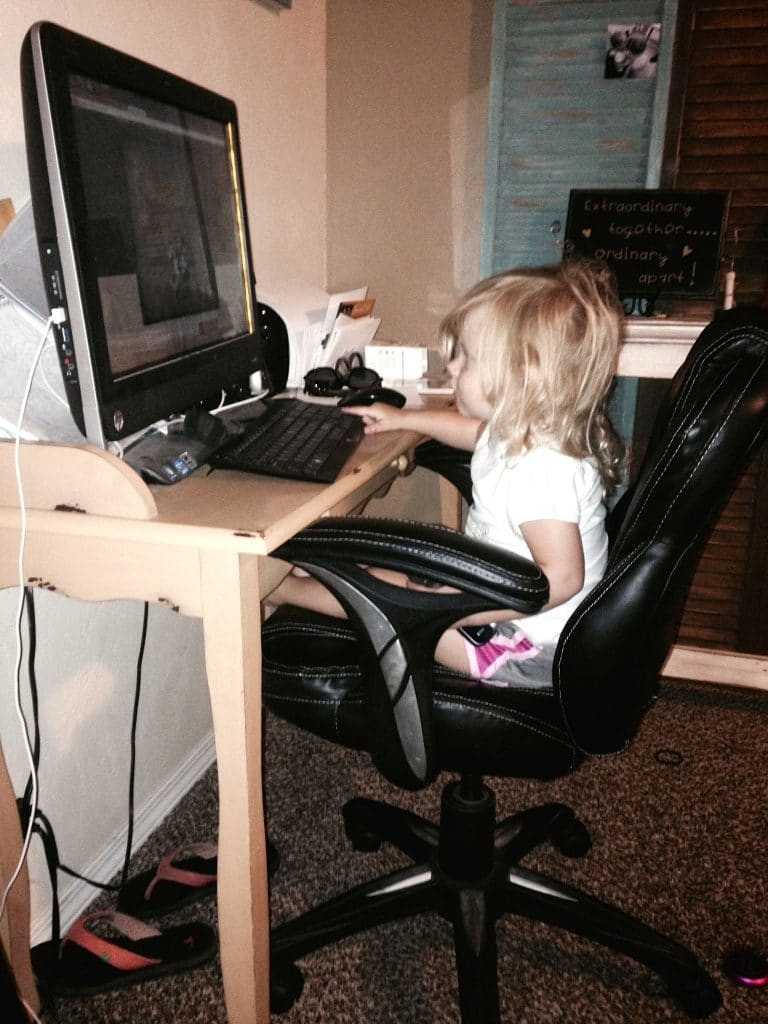
jaycee2-768x1024

#3 of a 3-Part Series  Sensible GetKidsInternetSafe Screen Media Guidelines for Children Ages 3 to 6 Years

In this GetKidsInternetSafe (GKIS) preschool series, we have covered setting the stage for safe use and launching smart and healthy use habits. Now it’s time to set a course for beginning brilliant technology mastery. Fun for the whole family, no matter what the ages!

OPTIMIZE THE POSITIVES:

  • Use technology to support and complement other avenues of creativity rather than as an isolated activity in and of itself.

    For example, take pictures of Lego and block creations, sculpture, and drawings and share them with loved ones and teachers. Build stories with images and videotape of dramatic play and karaoke.

  • Be amazing and create with them! Help your children create digital stories incorporating video, pictures, and auditory files. 

    Encourage your children to explore lots of roles including screenwriter, director, producer, camera operator, set narrator, and the “talent.” Lights! Camera! Action! A friend of mine even made a pretend movie camera with a workable red light!Introducing your preschooler to movie-making software for beginners will set the stage for the creation of more sophisticated video compilations popular with school-age kids.

  • Screen media provides access to the world your child may otherwise not have.

    Supplement discussion with images and video of new and historic places, people, animals, and objects. Multimodal learning has been well demonstrated to be more effective and more fun!

  • Encourage video conferencing with family and friends. 

    Your village no longer has to live in your town. The more humans delighted with everything your babies do, the better! Pair up with your child to create a family blog on a free site like http://www.blogger.com. And don’t forget to share their artwork and keep them in your personal folder. One day you’ll cherish them.

ASK DUMB QUESTIONS:

  • When in doubt, consult the experts.

    Real-life and online experts, such as your child (ha-ha), early childhood educators, psychologists, and pediatricians, are available on- and off-line to help guide your technology decisions. Don’t be afraid to ask; you’re not alone. And please share what you’ve learned with other parents (like www.GetKidsInternetSafe.com)!

Trying out any of these tips qualifies you as a GKIS awesome parent. I thank you, your kids thank you, and the world thanks you.

I’m the mom psychologist who will help you GetYourKidsInternetSafe.

Onward to More Awesome Parenting,

Tracy S. Bennett, Ph.D.
Mom, Clinical Psychologist, CSUCI Adjunct Faculty
GetKidsInternetSafe.com

GO-TO RESOURCES:

American Academy of Pediatrics Policy Statement: Children, Adolescents, Obesity, and the Media.
http://pediatrics.aappublications.org/content/128/1/201.full?sid=76ab%208514-4aef-4a0c-820f-5fc58436d50b

American Psychological Association Public Policy Update: Shaping Technology’s Impact.
http://www.apa.org/monitor

Commonsense Media Mission Statement: https://www.commonsensemedia.org/about-us/our-mission

Let’s Move.gov Let’s Move Child Care Initiative. 5 Simple Steps for Parents  http://www.letsmove.gov/reduce-screen-time-and-get-active

National Association for the Education of Young Children and the Fred Rogers Center for Early Learning and Children’s Media at Saint Vincent College joint position statement: Technology and Interactive Media as Tools in Early Childhood Programs Serving Children from Birth through Age 8.
http://www.naeyc.org/content/technology-and-young-children

Scholastic: Home of Parent & Child Magazine
http://www.scholastic.com/parents/life-and-learning/what-to-know/ages-6-7

All kids deserve love from all directions. Treasure the teachers who give it and spread yours to the kids who aren’t so easy to love. They need it the most.

6 Awesome GKIS Habits for Preschoolers

jacey-744x1024

2 of a 3-Part Series  Sensible GetKidsInternetSafe Screen Media Guidelines for Children Ages 3 to 6 Years

Now that last week’s article helped you set the stage for smart GetKidsInternetSafe parenting, the following tips will help you create safe use habits. It’s all about filtering, monitoring, participating, and healthy balance.

6 AWESOME GKIS HABITS:

  • Children should not be allowed to view unfiltered content unmonitored.

    Exposure to violent or sexualized images is harmful to children in ways that parents can’t imagine. It is our responsibility as parents to protect them just as we do with other environmental hazards. There is no replacement for supervision, although a child browser may be helpful.

  • Co-viewing and co-media engagement are excellent learning opportunities.

    Technology can provide an adaptive scaffold for your children’s learning and initiative. And, as an awesome parent, you can provide an adaptive scaffold for learning technology.

  • Observe your children’s use of the media for a probationary period before your mind is made up.

    Don’t forget to let your kids know “you’re just trying it out.” And don’t be afraid to make adaptations or discontinue use if you see something you don’t like (e.g., frustration, fatigue, or over-stimulation). Even if they have you convinced that disappointment is permanently disabling, it isn’t. Learning to cope with an unexpected change of plans is a critical life lesson. Remember, your GKIS plan is a living agreement. That means it changes as your family’s needs change.

  • An enriching, sensible balance between active play, interactive engagement with others, and time-limited, age-appropriate technology use is essential for healthy development.

    Say no to violent content, background television, and mature themes.
    Media material that includes slower-paced narratives with less intensity and novelty is better for the young brain.

    Opt for interactive and problem-solving games when possible.

    Don’t cave when your kids say “but everybody else is doing it.”

    Good parenting needs to start within your home and once you cave to pester power it’s a slippery slope. Kids learn quickly what will make you cave and will escalate to impressive heights when challenged. Don’t let them control the parenting playbook.

  • Children 3 to 6 years old still have immature judgment and are incapable of complex reasoning. Therefore it’s still too soon for them to own a smart phone or open their own social media accounts.


  • No more than 2 hours/day of screen media on weekdays.

How does it feel to be on the road to mastery rather than burying your head and crossing your fingers? Believe me, you are giving your kids a warm and brilliant start in a landscape fraught with peril! Thanks for being incredible.

I’m the mom psychologist who will help you GetYourKidsInternetSafe.

Onward to More Awesome Parenting,

Tracy S. Bennett, Ph.D.
Mom, Clinical Psychologist, CSUCI Adjunct Faculty
GetKidsInternetSafe.com

So cute AND a great lesson. Enjoy!

7 Set-the-Stage GKIS Tips.

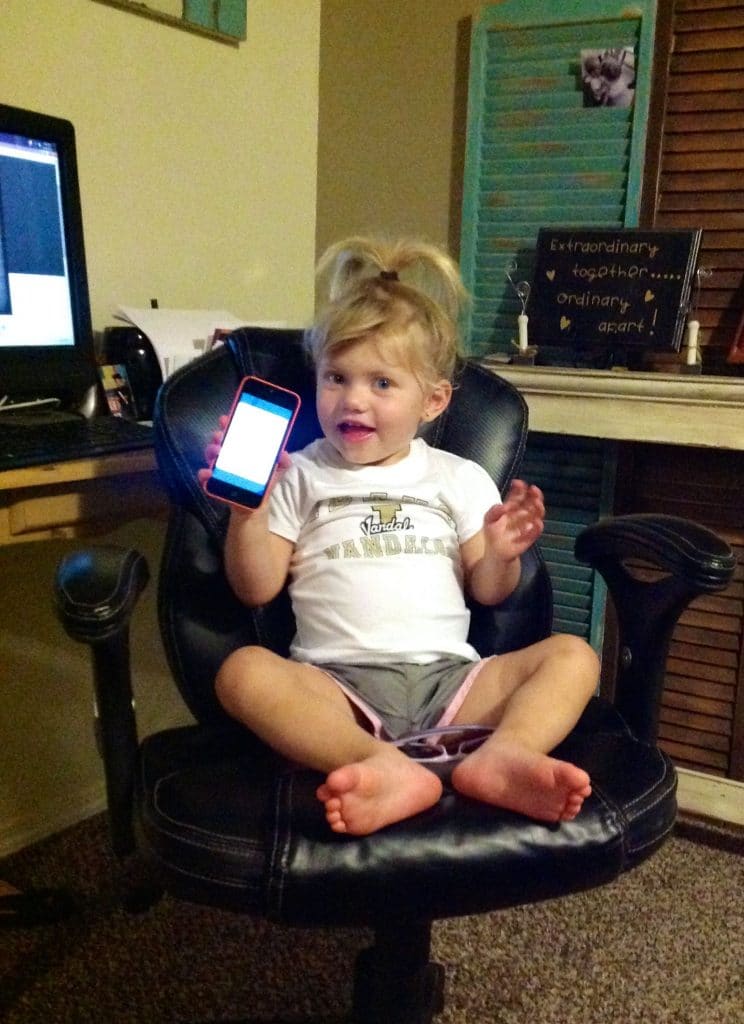
blog-13-jaycee-ipad-708x1024 (2)

  1 of a 3-Part Series  Sensible GetKidsInternetSafe (GKIS) Screen Media Guidelines for Children Ages 3 to 6 Years

Preschool is a good time for children to start to develop technology skills, digital literacy, and digital citizenship. From my three-pillar experience as a mother, clinical psychologist, and university professor, I believe these guidelines will help get your family started on the right path to awesome parenting in the digital age. Of course, these are simply suggestions. As a parent, you can use your judgment and alter these guidelines to best fit your children and family.

Congratulations for going the extra mile to be an awesome parent right from the beginning, rather than waiting until your children have been exposed to damaging material or have developed dangerous habits. As little ones, they will readily accept your guidance, and your thought-thru, safe guidelines will smoothly become a way of life. If you wait to change things after bad habits have formed, kids often resist and become sneaky, resentful, and defiant. Take a second to give yourself a heart-full-of-self-love pat on the back for taking the extra time and going the extra mile for your little ones.

SET THE STAGE:

  • Fine-tune your technology skills, use patterns, and opinions about technology before your babies ever lay eyes on a media screen. This will allow you to be confident from the start that you have a well thought-out plan and already serve as a good role model.*

For example, recognize that by posting your children’s pictures on social media you are creating their digital footprint thatis permanent on the world wide web. Consider what you think is appropriate to post, and with what privacy settings, particularly given your child’s inability to provide informed consent. Baby pictures are one thing, but as your children mature so does their digital footprint. I personally choose to post with strict privacy settings on social media and tend not to include my grown kids’ images on public forums like www.GetKidsInternetSafe.com. Each parent must determine his/her own comfort level.

  • Become your child’s go-to expert by maintaining a fun and supportive dialogue about technology. Then, put it in writing!

As you gain knowledge from your discussions and research, create a GetKidsInternetSafe Family Agreement during a weekly family fun night.* Commit to a weekly 10-minute check-in to keep everybody compliant and incorporate improvements as you go. If kids are raised with sensible guidelines and consistent (but chill) follow-thru, they adapt easily and are more likely to adopt positive viewpoints and values.

  • Become an educated buyer and do your research BEFORE you purchase devices or software. Be cautious of unverifiable claims, especially by marketers promoting a product.

If by using the software your child is incentivized to BUY MORE, do yourself a favor and don’t buy it. Avoid manipulative neuromarketing techniques that target your fears and your children’s wants as much as possible.Consider initial and upgrade costs and safety and durability issues prior to making a purchase.

  • Consider how technology will interact with your child (burgeoning developmental abilities, unique strengths and vulnerabilities, and moods).

Parents often think kids will seek out what they need for health, as if they are pre-programmed to know (Hesketh). They aren’t and need your active guidance!

Just as there’s research of academic and prosocial benefits to appropriate screen media programming, there is also mounting research evidence of social, language, and reading delays due to TOO MUCH screen media use.

There’s also concern that screen media demonstrates brain stimulation patterns typically seen in addiction, perhaps setting the stage for attention and addiction issues later (Christakis, Sigman). Think of your child’s current as well as future development as you make your selections.

The soon-to-be-posted GetKidsInternetSafe crash developmental psychology course for 3 to 6 year-olds will help with this, so keep an eye out for it!

FBcover

  • Stage your home and set sensible rules for smart technology use.

Place screens in family traffic areas, enforce a night-time docking station, no screen time before bed time, take breaks – 15 minute break after 45 minutes of screen viewing, and definitely no screens in the bedrooms.*

MOTIVATOR: Excessive screen media use by children has been linked to increased risk for obesity, increased sensitivity to stress, irritability, depression, impulsivity, aggression, decreased attention, motor problems, and sleep problems (Cristakis, Robinson, Schmidt, Swing).

  • Install protective software.

To prevent risk of viruses and hacking, install anti-virus, anti-spyware, and anti-spam security programs and a personal firewall. If you have no idea what I’m talking about, google it (e.g., “What is a firewall?”) I’ll have articles coming up on www. GetKidsInternetSafe.com with detailed instructions as well. Until then, there are excellent articles out there with reviews and recommendations. I say GO FOR IT!

Also install filtering and monitoring programs on any devices your child will be using.

IMPORTANT: Be honest with your child about your actions from the get-go.* Raising kids with a respectful and honest transparency about your efforts to keep them safe will go a long way in developing a cooperative and trusting alliance. If they know from the beginning that you are forever monitoring, they won’t feel stalked or ambushed later and be less likely to sneak. I tell my kids that I may check their media at any time for any reason (even though I don’t invade their privacy other than an occasional spot-check). If I see anything that concerns me, they are the first to know. Parents get into terrible violation of trust situations when they sneak peeks and hold secrets.

  • Provide age-appropriate devices and content and let your children experiment.

It’s best to provide warm support rather than micromanaging. Encourage mastery of technology basics (e.g., tech vocabulary and problem solving, essential commands, and how to use the browser), as well as fine motor skills (e.g., keyboarding, screen touch, and the mouse).

Don’t over do it, start out slow. There is little persuasive evidence that screen time will dramatically accelerate academic skills. Your kids will have plenty of time to develop those at school and with home reading and arithmetic activities integrated into the everyday. Be conservative and limit the screen media use. Face-to-face interaction and running in wide open spaces remains far superior for healthy development than hours of screen time.

I hope today’s article inspires you to proactively GetKidsInternetSafe in your home. GKIS articles are designed to give you the most essential technology and parenting information in a quick and easy-to-read format; and hopefully motivate you to think deeply, plan, reassess, and repair your technology plan along the way. Stay connected to GKIS and being your family’s expert will be easy! Please help me out and pass this information on to any friends or family you know with young children. Also, I would love for you to be generous with any genius stage-setting ideas you have stumbled upon in the comments section after this article.

To get the free article download “Three Things You Can Do to Get Your Kids Internet Safe,” click here.

I’m the mom psychologist who will help you GetYourKidsInternetSafe.

Onward to More Awesome Parenting,

Tracy S. Bennett, Ph.D.
Mom, Clinical Psychologist, CSUCI Adjunct Faculty
GetKidsInternetSafe.com

Works Cited

Christakis, D. A., F. J. Zimmerman, D. L. Digiuseppe, and C. A. McCarty. “Early Television Exposure and Subsequent Attentional Problems in Children.” Pediatrics 113.4 (2004): 708-13. Web.

Hesketh, Kylie D., Trina Hinkley, and Karen J. Campbell. “Children′s Physical Activity and Screen Time: Qualitative Comparison of Views of Parents of Infants and Preschool Children.” International Journal of Behavioral Nutrition and Physical Activity 9.1 (2012): 152. Web.

Robinson, T. N. “Reducing Childrens Television Viewing to Prevent Obesity: A Randomized Controlled.” JAMA 282 (1999): 1561-567. Web.

Schmidt, Marie Evans, Jess Haines, Ashley O’Brien, Julia McDonald, Sarah Price, Bettylou Sherry, and Elsie M. Taveras. “Systematic Review of Effective Strategies for Reducing Screen Time Among Young Children.” Obesity (2012). Web.

Sigman, A. “Time for a View on Screen Time.” Archives of Disease in Childhood 97.11 (2012): 935-42. Web.

Swing, E. L., D. A. Gentile, C. A. Anderson, and D. A. Walsh. “Television and Video Game Exposure and the Development of Attention Problems.” Pediatrics 126.2 (2010): 214-21. Web.

LOVING THESE TECHNOLOGY STATION IDEAS: http://www.pinterest.com/search/pins/?q=kids%20work%20stations

7 Important Research Findings About TV That Every Parent Needs to Know About

blog21_familytv-768x512

Parents often tell me that they struggle to regulate their children’s screen media use because it’s simply overwhelming. Research and regulations regarding children and television viewing have been firmly in place for many years. It makes sense that this well-traveled path is a good place to start with parenting in the digital age. Once you tackle and implement TV-watching rules, you have developed critical skills necessary to effectively tackle other screen media. Today’s article is designed to help you build mastery and confidence in actively parenting your family’s TV-viewing choices.

How often does your child watch television? If you answered that question with any response other than “never,” you must consider TV as your co-parent. Does that make you shiver? Well it should considering the proliferation of sex, violence, and just plain meanness that is included in even children’s television programming. The truth is, if your child is watching TV (or any screen media for that matter), then they are being affected and parented by what they are watching. The following research findings provide the pros and cons of child TV watching and will help you in your quest to becoming an even more awesome parent.

  • Parent guidance is necessary to lead kids to the best choices of TV programs.

Children’s programming is designed to attract viewers rather than provide education. As a result, broadcasters guided by profit aren’t great co-parents.

It doesn’t take long flipping through channels to recognize the amount of inappropriate programming available on even daytime TV. Programming channel availability on your television is a great first step to awesome parenting, followed by co-viewing and active guidance. Our family happens to have a kid TV as well as an adult TV. My husband and I deliberately selected the channels (and games) available on the kid TV for quality academic and prosocial content. The kids are only allowed access to the adult TV with permission or for family co-viewing.

Kids learn more when they are interested in the theme of the program and tend to prefer programs with social-emotional themes over programs with academic focus (Calvert, 289). When you are making parenting decisions about channel availability, I suggest you seek your children’s opinions and actively negotiate to reach a happy and productive outcome. And as always, this is a living agreement. In other words, you will need to revisit and renegotiate as your children get older and gain a larger variety of abilities and interests.

  • Regulation has made a difference in availability and quality of children’s television.

In 1990 the Federal Communications Commission (FCC) enacted the Children’s Television Act (CTA). CTA was designed to give parents better information, more clearly define core educational programming, and increase the amount of children’s television programming. Since CTA was implemented, access to quality children’s television programming in the US has improved with genuinely positive result (Calvert, 324). This regulation was developed due to a grass roots movement by concerned parents like us! This is a hopeful precedent considering the work we still need to do as the Internet continues to encroach unregulated into our children’s lives.

  • Children as young as a year old can learn to avoid dangerous things from simply watching actors on TV.

In a 2003 study by Mumme and Fernald, 32 12-month olds were recruited from a middle-class, predominantly white community. Four objects that they’d never played with before (a letter holder, a ball with weird bumps, a garden hose adapter, and a plastic valve) were shown on a TV screen along with an actor emotionally responding to those objects (neutral, happy, or fearful) with a simple verbal description (“look at it”). The infants’ parents sat next to them reading a magazine. When later given the objects to play with, it was discovered that the infants avoided the objects to which the actor responded fearfully. They approached the neutral and positive objects the same. Surprisingly, 10-month olds were not affected by what they’d seen on TV. Just two months of development seems to make a huge difference.

Even if your children are passively viewing adult TV shows, they are being affected by the show’s emotional content. Just because your child is young or viewing alongside a parent, doesn’t mean they’re not being negatively affected by inappropriate content.

  • Preschool children who watch educational TV are often better prepared for school (Wright, 1347) and even better students in high school (Anderson).

It’s not necessary to cut out TV completely to be an awesome parent. In fact, there are some great programs out there that will benefit your children’s overall academic success!

  • Children who watch prosocial TV programs demonstrate more kindness towards peers and animals.

 Not only will quality television make your kids more successful at school, but also with others!

  • When you’re making TV program selections, remember that age makes a difference in child choice of TV programs and the ability to understand complex plots.

Younger children choose and watch more educational and informational television programs whereas older children prefer entertainment programming. Because broadcasters know this, there is less educational content targeted at older kids. In regard to quality of viewing, older children learn more from all types of programming (Calvert, 318). As cognitive abilities develop, kids are increasingly able to identify factors relevant to the central plot, recognize order as the story scheme, draw inferences about the feelings and motivations of the characters, and recognize cause-effect relationships within the program.

Just as you stock your child’s reading shelf with kid’s books rather than adult novels, it’s important to shelf age-appropriate TV programs. Websites like https://www.commonsensemedia.org can be helpful when evaluating program content.

  • When parents discuss and support the lessons kids learned from TV viewing, kids are more likely to apply lessons in real life.

In regard to the kinds of lessons kids learn from TV, kids most often report learning social-emotional lessons, then information, physical well-being, and cognitive skills lessons (Calvert, 303).

Although our kids have a kid TV at their disposal, we still regulate viewing time and choice. The babies particularly clamor for “movie night,” because it’s their favorite thing to share a series or TV with us co-viewing. My husband and I like to reinforce the academic and social lessons weaved within what we’ve watched in later discussions. Not only is it a gift to provide enriching programming to your child, but it is particularly valuable to share your thoughts, values, and zany humor with them during family quality time. Our movie nights and later discussions help us really get to know our kids. When we see the kids amped up about certain themes and topics, we often head to the bookstore or library for books that they’ll be more likely to read. Win-win!

At this moment I’m flying to South Carolina with my 20 year-old to move her in for the fall semester. Believe me as I sit here with tears in my eyes marveling at the woman she has become, it’s important to soak in every precious parenting opportunity while you can. Some day sooner than you’d like, they’ll be spreading their wings in pursuit of their own wide open spaces.

I’m the mom psychologist who will help you GetKidsInternetSafe.

Onward to More Awesome Parenting,

Tracy S. Bennett, Ph.D.
Mom, Clinical Psychologist, CSUCI Adjunct Faculty
GetKidsInternetSafe.com

Works Cited

Anderson, D.R., Huston, A.C., Schmitt, K.L., Linebarger, D.L. , and Wright, J.C. “Early childhood television viewing and adolescent behavior”. Monographs of the Society for Research in Child Development 66 (2001) (1, Serial No. 264). Web.

Calvert, Sandra L., and Jennifer A. Kotler. “Lessons from Children’s Television: The Impact of the Children’s Television Act on Children’s Learning.” Journal of Applied Developmental Psychology 24.3 (2003): 275-335. Web.

Mumme, Donna L., and Anne Fernald. “The Infant as Onlooker: Learning From Emotional Reactions Observed in a Television Scenario.” Child Development 74.1 (2003): 221-37. Web.

Wright, J.C., Huston, A.C., Murphy, K.C., St. Peters, M., Pinon, M. Scantlin, R.M., and Kotler, J.A. “The relations of early television viewing to school readiness and vocabulary of children from low-income families: The early window project.” Child Development 72 (5) (2001): 1347–1366. Web.

CLICK HERE for some fun kids TV ideas!

Has Protective Parenting Put Your Child at Risk? Avatars 100 vs. Villagers 2

Blog20scoreboard-768x768

Good parenting can be overwhelming, and we need all the support we can get to do it well. Being pulled in all directions while trying to provide the safest home for our children is leading to problems like isolation and the overuse of screen media. It’s time to address the problems and build a better village. Less screen time, more active parenting, praise, and validation and facilitation are critical! I’ll show you how to get that done in this week’s GetKidsInternetSafe (GKIS) article.

Reflective Listening & Validation

Corbyn* is my ten-year-old son. Yesterday he woke up on a frantic mission to get a Play Station game he wanted. First thing in the morning he hopped out of bed, gathered up his wrinkled dollars and scattered quarters, and counted out $19. Thinking he had $36 saved, he was bitterly disappointed. So naturally, he turned to Sidney*, his 12-year-old sister and BFF, and accused her of stealing $17. Then, still frantic, he turned to the next nearest lightning rods, Mom and Dad, and accused us of not following through when we owe him chore money. He wasn’t attacking in a deliberate, organized way, but rather with a more pained and desperate tone.

I heard of this drama first when Sidney marched into the bathroom while I was putting on my makeup and staged an impressive protest dripping with indignation. When I told her to bring in the offender for a discussion, she sheepishly said, “No, Dad handled it.” (We really get on them for splitting between us when there’s an issue.)

Next, my husband arrived with Corbyn in a body lock trying to tickle the offender into submission. From the tears threatening in my son’s eyes, my heart knew this was not going to do the trick. I understand my son like a lime knows a lemon; we speak the same emotional language. So I broke the offender from his hug prison and attempted good parenting; validation and facilitation of problem-solving.

I know, stop with the shrink talk already. Essentially this means I let Corbyn know that I saw his feelings and heard his plea, then encouraged him to seek a better strategy than attacking his support system one by one. Although tempted, I didn’t yell and threaten, shame, or abandon him to his frenzy. I let my heart do the talking. And it worked.

It went something like this: “Corbyn, I hear you really want that PlayStation Game, and you are disappointed you only have $19. Attacking your best friend and us, your best supporters probably isn’t your best strategy. Maybe you should apologize and ask us for help instead.” Of course, this initially made him more emotional because he let down his guard. But it also gave him the hope and support he needed. Within a few minutes, Corbyn had the plan to collect his birthday money, pick up dog poop, and collect the cash he needed to get his prize. Crisis averted, everybody was happy, and my husband complimented me for being awesome. Most importantly, Corbyn learned an important lesson in problem-solving: chill out, seek your village, and get it done!

My parenting strategy in this instance isn’t groundbreaking, nor am I the perfect parent. But psychology research has demonstrated that validation and facilitation raise emotionally healthy kids. And the lack of it may lead to significant emotional issues.

blogsadgirl

In today’s frenzied digital age with parents working more hours than ever and distractions at every turn, we aren’t doing enough good parenting. When I was little, kids were set loose in the neighborhood until a porch light came on. There’s a useful debate to be had about if this was better for children or not. But that aside, what we are inarguably failing at is providing the “It takes a village” sentiment.

Our generation is so afraid of child predators that we have swaddled our children at home. They get bored and drift in front of screens for too many hours; ironically connecting to the very portal that child predators have expertly learned to exploit. YouTube, video games, social media, and the Internet cannot provide the critical parenting skills our kids need to thrive. Keeping them home with unlimited use of technology is neither protection nor providing parental guidance.

I embedded Margaret Heffernen’s brilliant TED talk “Dare to Disagree” at the end of this blog. Her inspiring message is that openly addressing conflict is critical to learning. That we must create an environment for our children that encourages open information, active problem-solving skills, and the moral courage to tackle challenges. That means being too permissive with our kids, or alternatively shutting them down because it takes too much time to parent will leave them vulnerable, without the affection and guidance they need.

As a clinician, I fully agree with Ms. Heffernen. Throughout my career, I have repeatedly seen that a common factor among my most distressed patients is an attachment disruption; a parent who, for a multitude of reasons, wasn’t present for the child. And among those without a strong parenting presence, those that were gifted an attachment from an extended family member, a coach, a teacher, or somebody in the village who cared about them and spent time were saved.

When I was a teenager my father would bait me into fierce debates by saying something mildly offensive. By the end of the discussion, he would skillfully slide into a moderate position on which we could both agree. It wasn’t until I was much older that I recognized he was coaching his sensitive, anxious daughter to confidently defend a position, a skill critical to my happiness and success. And, in an entirely different way, my mother served as a role model for developing important life skills like grit, ambition, and assertiveness. I didn’t get to spend a ton of time with my hard-working parents, but these quality moments were crucial to my development. And beyond my immediate family, I can identify many adults who provided meaningful guidance along the way.

Here are today’s GetKidsInternetSafe TIPS:

  • Spend time and listen:

    • Validate your child’s emotion (“I can see you’re feeling sad”)

    • Identify the problem (“What happened?” “What needs to be solved?”)

    • Facilitate problem-solving (“What’s your goal?” “What steps can get you to your goal?”)

    • Praise (“I love how you talked that through” “You really know how get things done!” “I love how you speak from your heart”)

  • Get your kids involved in activities and with other trusted adults who happily support them.

  • Limit screen media time.

I love the enthusiasm of GetKidsInternetSafe subscribers and can feel the GKIS Revolution building. Thanks for being courageous by facing these issues and taking the extra steps to be more awesome and, rather than pointing fingers at each other, coming together in a commitment to our best parenting. Ironically, the Internet is helping us find our village. Now go out and build it for the kids directly in your community! And don’t forget to forward this article to those who may share your passion.

I’m the mom psychologist who will help you GetKidsInternetSafe.

Onward to More Awesome Parenting,

Tracy S. Bennett, Ph.D.
Mom, Clinical Psychologist, CSUCI Adjunct Faculty
GetKidsInternetSafe.com

*name changed to protect child privacy

Photo Credit

Child of the pure, unclouded brow by Nick Kenrick, CC by-NC-SA 2.0