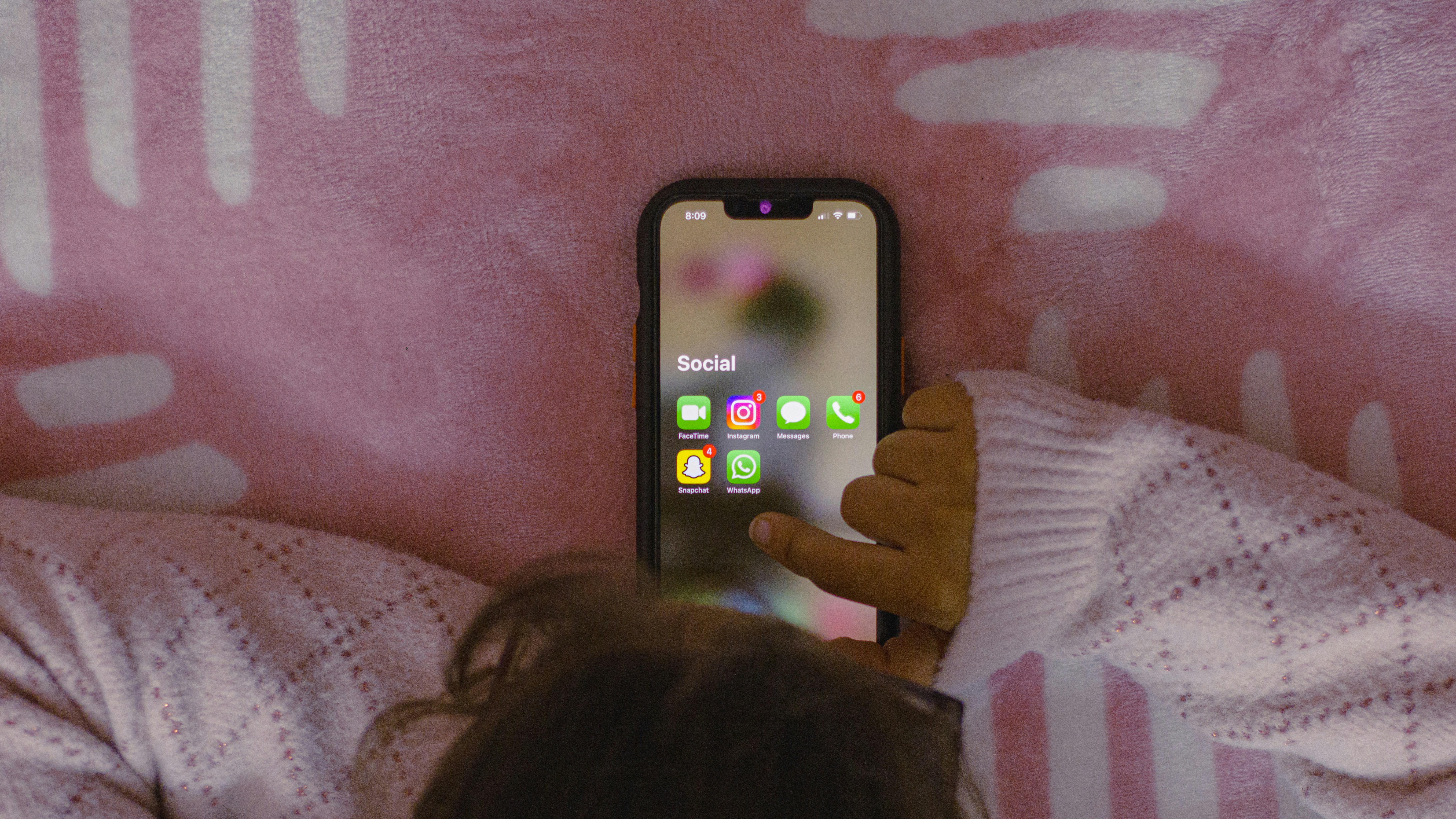
We were hunters and gatherers for 90% of human existence. That means our brains are still wired to prioritize the things that kept us alive when we were living on the land, before the domestication of animals and the construction of cities. One thing that kept us alive was living in a tribe and cooperating. Attracting a tribe and fitting in was a requirement of life. That is why kids and teens are hyper-focused on doing what their friends do and working to be cool and accepted. Online influencers count on this drive to maintain their income streams. One way to attract kids online is to be a kid doing what kids love to do, playing with toys and video games, opening new packages, and hanging out with friends acting goofy. Netflix’s Bad Influencer offers a glimpse of the kid influencer “scene,” and the lengths that some parents will go to attract and keep a following.
What is Bad Influence about?
The limited documentary series has gone viral for good reason. It’s definitely entertaining, but also deeply unsettling. It is a perfect way to raise awareness about how scary a life all about social media can be. Bad Influencer is a documentary that focuses on a tween who becomes an overnight social media star and brings her friends to stardom with her. What started out as a fun hobby quickly turned into a living nightmare. It may seem glamorous to be famous online, until you learn that the child influencers spent the majority of their childhoods working long hours acting out video ideas, risky stunts, and performing pranks that sometimes went too far—all under the pressure of adult producers/parents hungry for views. Check out Intimacy With Minors Encouraged at the Hype House for a similar story of underage exploitation.
SPOILER ALERT: The show takes a chilling turn when the mother of the main character is accused of, and videotaped, sexually exploiting these kids on set by positioning herself as one of the only adults supervising them to control them. Some survived the battle with only a few scars, while the main character is stuck living this nightmare over and over again. It may be funny, exaggerated, and attention-grabbing, but it also paints a dark picture of a digital world where clout matters more than character and children are left to pay the price.
Psychology Behind the Fame Obsession
From a psychological point of view, being an influencer is cool to children because they have a natural need for validation, attention, and social connection.[1] Although the minimum age on most social media platforms is 13, it is reported that children ranging from 8-17 are found scrolling through online platforms soaking up content too mature for their ages.[2] Sadly, unlike real-world relationships, social media platforms offer fast, unfiltered dopamine hits through likes, shares, and views. Without proper guidance, this can make kids tie their self-worth to online numbers, which can result in low self-esteem, fear of missing out (FOMO), performance anxiety, and digital addiction.[3] As a result of social unlimited social media usage, kids can also experience anxiety, depression, and even poor quality of sleep.[4] Counteract this monster and help your child build emotional resilience, red flag awareness, and digital literacy by taking our GKIS Social Media Readiness Training Course. Geared for teens or tweens, it’s the perfect giftbefore that new device or video game.
What You Can Do to Help
Bad Influencer is not just a show; it’s a cautionary tale that shares the pressures kids face online every day. It is easy to get off topic and want to pull the plug on all electronics just to protect your child from their dangers, but that is not always possible. Technology and online platforms are all around us, and it is better to set your child up for success than to try to keep them out of the loop. Connecting with your child over what they find interesting can help create a trusting relationship where you can notice if things start to become a little off. Our free Connected Family Screen Agreement can help you and your child co-create rules around how to safely navigate online platforms. This way your child can thrive in the digital age without losing themselves in it.
Thanks to CSUCI intern, Elaha Qudratulla for researching and co-writing this article.
I’m the mom psychologist who will help you GetKidsInternetSafe. Onward to More Awesome Parenting,
In our GKIS blog articles, we’ve talked before about how social media and smartphone use can be addicting for kids, and how phone addiction can have negative impacts on kids’ and teens’ mental health and social skills. But what GetKidsInternetSafe is passionate about is prevention. That is why Dr. Bennett created the Social Media Readiness Course for tweens and teens. In this best-selling course, she incorporated education about the red flags of risk for digital injury as well as the psychological wellness practices she’s developed in her psychology practice over 30 years. Many of these practices involve mindfulness, a mental health practice that has demonstrated great outcomes. In today’s GKIS article, we will discuss what mindfulness is exactly and whether it is something your family can use to help prevent the damage caused by smartphone addiction.
Defining Smartphone Addiction
As smartphones have become more popular, it can be difficult to determine whether one is using their phone “too much” or if they are addicted. Studies are finding that we are dependent on our phones and many people are developing separation anxiety from them.[1][2] Psychologists have been looking for ways to prevent smartphone addiction. One of the more promising findings has been mindfulness practice.
What is mindfulness?
Mindfulness is a type of mental practice that’s been gaining popularity. It has its roots in Buddhist philosophy, but it’s a non-religious form of meditation and mental awareness of the current moment.[3]
Mindfulness can be improved with exercises that focus on breathing and focusing on your thoughts, feelings, and body sensations.[4] The goal is to bring your attention to what’s happening in the present moment, instead of stressful thoughts about the past or future.[3]
Health benefits include improving cognitive ability and reducing stress, anxiety, and depression.[3]
How can mindfulness help with smartphone addiction?
A 2019 study found that mindfulness can lessen the impact of separation anxiety related to having a smartphone addiction. Students in the study who scored higher on a mindfulness rating were less likely to have depression and anxiety symptoms.[5]
It was also found in a 2017 study that low ratings of mindfulness were predictive of young adults having internet and screen addictions.[6]
Another study found that mindfulness was also able to lessen the impact of bullying and cyberbullying on student depression.[7] This suggests that mindfulness can help with the symptoms of common digital injuries, not just the internet and phone addiction itself.
What can I do if someone in my family has a phone addiction?
There are many easy mindfulness exercises available online. Most only take between five to ten minutes. A quick Google or YouTube search for “mindfulness exercises” can help you find one that works for you.
It’s also important to help make sure that your family doesn’t become addicted to their smartphones in the first place. Our GKIS Screen Safety Essentials Course is a set of four modules that will help walk your kids through the most important things they can do to keep themselves safe online.
For a more direct approach to your kids’ internet safety, The GKIS Screen Safety Toolkit will provide you with apps and guides on how to implement parental controls and keep an eye on what your kids are doing online, in a way that you and your family can both be happy with.
Thanks to CSUCI intern Brandon Bishop for doing research on smartphone addiction and mindfulness and authoring this article.
I’m the mom psychologist who will help you GetKidsInternetSafe.
In 2013, a 14-year-old girl in England named Hannah Smith committed suicide after being bullied and receiving hurtful comments on a social media website. When her father called for there to be accountability for the people who had left messages about his daughter before her death, it was revealed by the police that Hannah had most likely written the messages herself.[1] This was one of the first recognized incidents of digital self-harm, where a person leaves harmful messages, comments, or posts about themselves on the internet. We have written about physical self-harm in the GKIS article, “What Parents Need to Know About America’s Cutting Epidemic,” but today we’re going to examine the possible causes of digital self-harm, and how you can take steps to help your children if they’re experiencing this. To prevent digital self-harm, keeping open communication between you and your kids about their screen usage is essential. The GKIS Connected Family Screen Agreement is our free digital contract that helps create an open forum of communication between you and your kids and offers tips about the basics of internet safety.
What makes digital self-harm different?
Physical self-harm is when a person injures or puts themselves at risk without intent for committing suicide. Often this is done to numb emotional pain or cry for help. The most known forms of self-harm are cutting or burning yourself or skin-picking, but other risky behaviors like excessive drinking and drug use can become self-harm depending on the person’s motivation.[2] Physical self-harm can accompany or lead to suicidality.
Digital self-harm is similar to the physical forms of self-harm, but it takes place over the Internet. A teenager who’s self-harming this way may leave hateful comments and messages for themselves on social media, often in a publicly visible place. This is done anonymously on a fake account they’ve created.[3] By doing this to themselves, it can make it look like they’re being cyberbullied or harassed by others. Like physical self-harm, teenagers who digitally self-harm are at a much higher risk of suicidal thoughts or making a suicide attempt.[4]
Why do people engage in digital self-harm?
There are many reasons a teen may engage in digital self-harm, including:
to express overwhelming negative feelings about themselves.
to take control of peer relations where they’d otherwise feel out of control.
to look artsy, tough, or cool or better belong among others victimized by bullying or cyberbullying.
to numb out or punish themselves.[2][6]
to attract much-needed help and support.[5]
to elicit compliments and praise from others.
in hopes that friends will come to their defense and say positive things about them.[5]
to create a forum where they can engage in a public discourse and track responses.[5]
to phish to find out if other people see them in a similarly negative way.[6]
How common is this behavior?
A study in 2012 surveyed 617 college students and found that 9% of those students admitted to committing digital self-harm behavior while they were in high school.[7]
Another more recent 2017 study surveyed 5,593 middle-school and high-school students and found that about 5% admitted to digital self-harm, and 6% admitted to cyberbullying themselves.[3] They also found that teenagers who had digitally self-harmed were also more likely to have been bullied in the past than the students who hadn’t self-harmed.
The Role of Social Media in Self-Harm
As social media has gotten more popular, teenage mental health has been getting worse. One study found that adolescent suicide rates and depressive symptoms increased from 2010 to 2015, particularly among young girls.[8] Another found that students who checked social media 50-100 times a day were more likely to be distressed than their peers who checked less frequently, and that checking more than 100 times a day led to even higher distress.[9]
While self-harming behavior is usually done in private, social media opens the possibility of exposure to the negative emotions that cause self-harm. Social media allows kids and teens to communicate with others who self-harm and more easily find information about how to do different types of self-harm.[2]
What should I do if someone I know is digitally self-harming?
While digital self-harm is a new phenomenon in the worlds of social media and psychology, there are preventative measures that could help you monitor for digital self-harm in your family:
Take active steps to manage your children’s time online and monitor what kinds of websites your children are accessing. The GKIS Screen Safety Toolkit provides you with advice and app recommendations to set up parental controls, screen time management, and website filtering and blocking.
Recognize that self-harm is usually a symptom of other problems in your child’s life, and that they may be keeping it to themselves to avoid embarrassment or punishment. Respond with empathy in mind. This is a poorly thought-through coping mechanism that is fairly common among kids, tweens, and teens. Don’t respond harshly because you are disappointed or embarrassed. Instead, make this a teaching opportunity and gently validate their feelings and coach them through to better solutions. Kids make mistakes online just as they do offline. They’re still learning.
If the free Connected Family Agreement catches your interest and you want something more comprehensive, our megacourse for Screen Safety Essentials offers GKIS content for the whole family to form healthier screen use habits and encourage cooperation between you and your kids.
If you’re worried that your teen is self-harming or suicidal, contact a mental health professional as soon as possible. Typically, the earlier the intervention, the more effective it is.
Thanks to CSUCI intern Brandon Bishop for researching digital self-harm and its causes and authoring this article.
I’m the mom psychologist who will help you GetKidsInternetSafe.
Reddit is a popular social media website with millions of users worldwide and has a controversial reputation due to its content moderation policies. This GKIS Sensible Parent’s Guide will provide what a parent needs to know about Reddit and offer some suggestions to help keep your children safe while using the website. We also recommend checking out the GKIS Social Media Readiness Training Course, which can help you teach your kids how to safely interact with any social media website.
How long has Reddit been around how popular is it?
Reddit is a hybrid internet forum and social news media website where users can post images, videos, and links to other websites, and other users can leave comments on the original post. As of February 2023, it’s the tenth most visited website on the internet with 4.8 billion monthly visits.[1] It was founded in 2005 by Steve Huffman, Alexis Ohanian, and Aaron Swartz as a bulletin board-style website that would act as “the front page of the internet.”[2] In 2006, the website was acquired by the mass media company Condé Nast Publications, also known for magazine and news companies such as Vogue, The New Yorker, and Vanity Fair.[3]
The website is divided into thousands of subreddits that organize posts by topic. Some subreddits cover broad topics, such as r/gaming for anything video game related, while others are more specific like r/minecraft or r/fortnite for those specific games. There are subreddits for news, relationship advice, political discussion, different hobbies, and nearly anything else you might expect to find on the internet. There are many subreddits dedicated to community support, like r/TwoXChromosomes for women’s rights and r/lgbt for LGBT issues.
Posts and comments on Reddit can be given upvotes and downvotes, which are similar to likes on Twitter or Facebook. Recent posts with multiple upvotes will be displayed at the top of the subreddit it was posted in. Posts with multiple downvotes are less likely to appear and will often be tagged as “controversial” by the website’s filter settings.
Getting Started with Reddit
The only thing Reddit requires to create an account is a valid email address. Reddit’s user agreement states that users need to be over the age of 13, but there is no age verification requirement besides a check box agreeing to the terms and conditions during account creation. Reddit has a mobile app that can be downloaded from the Google Play store or Apple App store, and can also be accessed from any web browser.
Benefits and Popular Features of Reddit
Custom Home Page
By default, the home page of Reddit shows the subreddit r/popular, which displays a variety of posts from a list of the most popular subreddits, with some restrictions related to political and adult-oriented subreddits.[4] Reddit users can also sort by r/all, which displays the top results from all subreddits on the website.
Reddit users can subscribe to specific subreddits they like, causing those subreddits to appear on their home page. Users can also subscribe to other user profiles so that they can see what another user posts no matter what subreddit it’s posted in. By doing so they can create a curated feed of content that relates to their interests.
Subreddits are mostly created by Reddit users and act as community forums for discussion and sharing media. They are run by moderators, who are users that set and enforce rules within each subreddit but are not paid employees of Reddit.[5] Reddit employees known as administrators only get involved in a subreddit if there are violations of the website’s terms of service and content policies.[6]
Community Events
Reddit is also known for having large community events on April Fools’ Day every year. In 2015, the subreddit r/thebutton was created, where a sitewide countdown clock could be reset by pushing a button, but each user could only push the button once.[7] In 2017 and 2022, Reddit ran an event called r/place where its community members could collaborate to create pixel artwork on a canvas where each user could only edit a single pixel every five minutes.[8]
Reddit’s Privacy and Safety Options
Reddit’s user settings and account creation process offer several options to protect yourself and your information while you use the website.
Anonymity
Reddit does not require any personal information besides an email address to create an account.
In its Safety & Privacy Settings, you can choose whether you want your profile to appear in search engine results from websites like Google or Bing.
Users can delete their posts, comments, or their entire account from their profile settings at any time.
Personal Information
Reddit collects personal information about its users but allows users to restrict what information is collected and how it is used in its Safety & Privacy Settings.
Reddit users can file a data request form to receive a copy of the data that has been collected from their account.
When an account is deleted, the username is removed from all posts and comments made by that account. However, the posts will still be publicly visible unless they are deleted before the account.
Chat and Private Messages
Users can choose whether they want to receive chat requests and private messages in their Chat Settings and can restrict messages from accounts less than 30 days old.
Users can also block individual user profiles, preventing that user from messaging them or sending chat requests.
Risks of Reddit
Adult-Oriented Content
Reddit has many subreddits dedicated to easily accessible adult content like pornography and graphic violence. Posts from these subreddits are marked as NSFW (internet slang for ‘Not Safe for Work’ or ‘Not Suitable for Workplace’) and excluded from r/popular and r/all.[4] Despite this, directly searching for adult content is only restricted by a check box below the search bar asking if you would like to include NSFW search results. Those results still appear if you select to hide NSFW posts in your user settings.
Additionally, the process for tagging NSFW content is only enforced by moderators, not site administrators. Inappropriate posts that contain nudity are automatically tagged, but ones that do not show explicit nudity can slip through the filtering process. Posts containing graphic violence are also often poorly moderated, and content from subreddits like r/fightporn (videos of street fights) and r/CombatFootage (GoPro videos of military conflicts) often make it to Reddit’s r/all page even if they show severe injuries or death.
Political Content and Hate Speech
Reddit has had many controversies surrounding the political subreddits on its website. In 2015, five popular hate speech subreddits targeting ethnic and gender minorities were banned for violating Reddit’s anti-harassment policies.[9] It banned the subreddit r/altright in 2017 after posts were made which called for the harassment of and leaked the personal information of a man who punched right-wing personality Richard Spencer.[10] Multiple political subreddits such as r/The_Donald, R/DonaldTrump, r/GenderCritical, and r/ChapoTrapHouse were banned under new policies designed to reduce hate speech in 2020.[11]
Despite these efforts, Reddit continues to have problems with hate speech and politically motivated harassment on its platform. While these bans remove the offending subreddits and all posts within them, the users who subscribed and made posts in those subreddits are rarely banned unless they directly violate terms of service. Users from the banned subreddits will often continue posting in other subreddits with similarly relaxed rules about hate speech and discrimination until it is banned as well.
Cyberbullying and Harassment
Reddit is a social media website with a high risk of cyberbullying and harassment. Because Reddit users are anonymous, there are few repercussions for directly sending another user harmful messages or unwanted explicit images. A user’s posts and comments are also publicly visible to all other users, which enables internet stalking behavior. While Reddit does have anti-harassment policies that can result in an offender’s account being banned, there’s little to prevent a banned user from creating another account to continue their harassment.[12]
GKIS Suggestions to Keep Your Kids Safe on Reddit
You can sign up for the GKIS Connect Family Screen Agreement, a free course that covers the basics of internet safety and keeping open communication between you and your kids about their internet use.
You can check out the GKIS Social Media Readiness Training course, which contains 10 lessons to help your teens and tweens get ready to responsibly use social media. It also provides access to the private GKIS Connected Family Facebook group, with tips and feedback from Dr. Bennett and other families who have taken the course.
There’s also the GKIS Screen Safety Toolkit, which is a parent’s guide to setting up parental controls, screen time management, social media & text monitoring, and other technological tools to keep an eye on how your kids use the internet.
Thanks to CSUCI intern Brandon Bishop for researching Reddit and preparing this GKIS Sensible Parent’s Guide.
I’m the mom psychologist who will help you GetKidsInternetSafe.
How do you like to use the internet? To watch videos of puppies and kittens? Or posting pictures of your family and friends? Maybe to satisfy your shopping addiction on Amazon? Maybe your internet use has not been so innocent. Many use the internet to get a thrill or get their anger out. Online harassment is not uncommon, so much so that there are websites built to support it. Kiwi Farms, for example, is a forum website where users are encouraged to harass online personalities and communities. Today’s GKIS article details the targeted harassment done by Kiwi Farms users and how the website facilitates this behavior. If you’re concerned your kids may be victimized by harassment or overstep and do the harassing themselves, check out our Screen Safety Toolkit. With this online course and resource guide, you can learn how to protect your family online.
The Start of Kiwi Farms
Joshua Conner Moon, a former administrator of the 8chan message board, started Kiwi Farms in 2013. It was first established as a forum website to troll and harass a webcomic creator. Before the term “Kiwi Farms” was coined in 2014, Kiwi Farms was known as “CWCki Forums.”
Organized Harassment
The Kiwi Farms website targets a wide range of victims, including Internet celebrities, minorities, women, neurodivergent individuals, LGBTQ people, members of the far right, and people who Kiwi Farms users believe to be “mentally ill” or “sexually deviant.” Both Moon and the Kiwi Farms user base have been labeled as anti-Semitic.[1]
swatting (reporting crimes at their addresses to have police dispatched to their homes)
real-life attacks
People Who Have Fallen Victim
U.S. Representative Marjorie Taylor Greene claimed in an interview with NewsMax on August 24, 2022 that she had been swatted twice by someone posing as a Kiwi Farms moderator “AltisticRight.” She urged for the website to be taken down. In reaction, Cloudflare shut off a feature on the website that lets users modify error messages.
Clara Sorrenti, a transgender advocate and Twitch broadcaster who goes by the handle “Keffals,” was doxxed on Kiwi Farms as well. Users of the website shared both her personal information and those of her friends and relatives, including addresses and phone numbers. Users also threatened her life and leaked sexually explicit images of her. In August 2022, after someone hijacked her identity and sent false emails to local lawmakers threatening widespread violence, she was later swatted, imprisoned for more than ten hours, and arrested. She was ultimately exonerated of all charges, and authorities determined that the incident was a swatting effort.
Users also shared the address of a stranger who lives in the same city and has the same last name as Sorrenti. Police were subsequently dispatched to his home. Sorrenti claimed that she left her house and checked into a hotel for her protection following the swatting event. After she uploaded a picture of her cat lying on a hotel bed, Kiwi Farms members recognized the establishment from the bedsheets and sent several pizza orders to it using her dead name.
Later, Sorrenti left the country after her whereabouts were discovered, allegedly by someone who had hacked her Uber account. Sorrenti says that she intends to file a lawsuit and that the occurrences were being investigated as criminal harassment.
Suicide
A hate campaign against transgender game creator Chloe Sagal was started in 2013 by Kiwi Farm users. Sagal is well-known for creating the well-liked, independent horror game Homesick. After Sagal started raising funds for gender reassignment surgery, they began to attack her. Users hounded and harassed Sagal for years after they started a post specifically to target her. Sagal lit herself on fire in 2018 in a park in Portland and died at 31 years old.[3]
According to images of chat boards and videos published by DropKiwiFarms.net, an initiative was passed to shut down the website after Moon posted a live YouTube video celebrating Sagal’s passing while other Kiwi Farms users laughed and made fun of the game developer.
The Short End of Kiwi Farms
After the harassment effort by users of Kiwi Farms against Sorrenti, a movement to persuade Cloudflare to stop hosting the site was launched in August 2022. Cloudflare is a company that provides hosting and online security services. This, according to NBC News, was done to allow Kiwi Farms to be the target of “debilitating virtual attacks.”[2]
Although Cloudflare first defended its choice to continue working with Kiwi Farms, the company formally banned the website from utilizing its services on September 3, 2022. However, on September 6, VanwaTech supplied content delivery network services to the website, returning it online according to The Daily Dot.[4]
How to Protect Your Child
Unfortunately, many parts of the internet are unregulated. And when children have easy access to it, they can fall victim to being harassed online or fall down a dark path of harassing people themselves. Luckily, Dr. Bennett can help you protect yourself and your family from online harassment.
One helpful tip for parents is to make it a habit to hold GKIS Family Meetings with a teaching agenda that covers important online issues that your children will face. This provides opportunities for mutual education and skill building, and it also builds a close family alliance. Get ideas for your discussion with our GKIS Blog and learn parenting strategies with Dr. Bennett’s Screen Time in the Mean Time Parenting Guide.
Thanks to CSUCI intern, Liliana Esquivel, for detailing the targeted harassment done by Kiwi Farms users and how the website facilitates this behavior.
I’m the mom psychologist who will help you GetKidsInternetSafe.
So many of us follow our favorite celebrities on social media hoping to get small glimpses of their private lives. But have you ever wondered, where’s the line between fandom and obsession? Tweens and teens are especially vulnerable to developing parasocial relationships with celebrities they love online. Because of their fame, celebs can influence followers in some of the worst ways. To prevent your child from being negatively influenced by others online and to create a strong digital foundation, check out our Screen Safety Essentials Course. Today’s GKIS article covers what online parasocial relationships are and how to prevent their negative influence on kids and teens.
What is a ‘Parasocial’ Relationship?
A parasocial relationship is a one-way relationship with a person of higher status who you know intimately but who hardly knows you at all.[1] Social media is the perfect vehicle to develop parasocial relationships. Younger tweens and teens are especially susceptible due to a powerful social drive fed by adolescent identity formation. Not only are teens looking for mentorship, but they also easily form an attachment to idealized versions of their favorite celebs.[2]
Social media features that readily fuel parasocial relationships include the attraction of stylized and beautifully edited posts, branding relationships between celebrities, produced dramas between celebrities designed to bring in more followers, fan comments and forums, and even the ability to send private messages. Studies show that adolescents that have a weaker sense of self-identity often participate in celebrity worship as they are more easily influenced by others.[2]
‘Stan Culture’
Fans aim to achieve closer relations with their favorite celebs through various consumption activities.[1] Twitter is the social media site with the largest number of users who participate in celebrity worship, which is also known as a stan. A Stan is an overzealous or obsessive fan of a particular celebrity. Primarily a term used to define a fan of a particular musical artist, there are Stans for just about any popular current artist you can think of. Stan culture on Twitter consists of individuals sharing fanmade videos and pictures and consuming as much of the artist’s content as possible.
There is also a dark side to Twitter’s Stan culture. Arguments between Stans of different celebrities frequently appear in comment sections, which eventually turn into cases of cyberbullying. Studies have found that intense celebrity worship can be linked to tendencies toward addiction and stalking behaviors.[3] What seems like innocent fan engagement could potentially lead to something more negative and even illegal.
Defending Harmful Messages
Well-known celebs have the freedom to post whatever they want on the Internet, just like the rest of us. Although they aren’t obligated to maintain a certain image, sometimes they promote harmful ideologies that influence fans who’ve developed parasocial relationships with them.
The most recent example is rapper Kanye West, who has been at the forefront of recent celeb controversy. In October 2022, Kanye made some anti-Semitic remarks based on conspiracy theories and harmful stereotypes in interviews and Instagram posts. This resulted in groups of people in Los Angeles standing with signs over freeways saying harmful anti-Semitic things shortly after the comments circulated on the Internet. One of the signs said that Kanye was “right” about what he said about Jewish individuals. Amongst the backlash that he received, there were die-hard fans that stood their ground and continued to defend his actions. This led some fans to adopt his conspiracy theories and ideals at worst and turn a blind eye to such ignorance at best.
Impressionable Teens and Tweens
Other celebrities have also promoted problematic ideas with the support of fans who adore them. This is a problem primarily for young tweens and teens due to their lack of real-world experiences and their evolving views of the world around them. Being negatively influenced by celebrities online can have serious risks.
How to Discourage Parasocial Relationships
There is a difference between being a fan of someone’s work and developing an obsessive parasocial relationship with them online. Having conversations with your kids about the importance of navigating the Internet safely is a good place to start. Our Connected Family Course can help with that. It includes the tools necessary to monitor and promote healthy screen engagement while still maintaining a positive environment at home.
Young teens and tweens who are still learning about the world could be exposed to ignorant comments from their favorite celebrities and could potentially become influenced by them. In the worst case, teens become radicalized in their thinking without their parents even knowing. To prevent your tweens and teens from engaging in ignorant and harmful content online, check out our Social Media Readiness Course. Our course provides you and your child with the knowledge necessary to safely browse the Internet and avoid ignorant and harmful content, as well as how to make healthy digital decisions.
Learning the ways of the Internet doesn’t have to be a daunting task. Dr. Bennett’s book Screen Time in the Mean Timeis another great tool for parents to use to become more knowledgeable about the unpredictable online realm. This book can further prepare you for establishing a safe environment for your tweens and teens to express their love for their favorite celebrities/artists online.
Thanks to CSUCI intern Tracy Pizano for researching the risks of forming parasocial relationships and for co-authoring this article.
I’m the mom psychologist who will help you GetKidsInternetSafe.
[1] Derbaix, M., & Korchia, M. (2019). Individual celebration of pop music icons: A study of music fans’ relationships with their object of fandom and associated practices. Journal of Consumer Behaviour, 18(2), 109–119. https://doi-org.ezproxy.csuci.edu/10.1002/cb.1751
[2] Ang, C.-S., & Chan, N.-N. (2018). Adolescents’ views on celebrity worship: A qualitative study. Current Psychology: A Journal for Diverse Perspectives on Diverse Psychological Issues, 37(1), 139–148. https://doi-org.ezproxy.csuci.edu/10.1007/s12144-016-9497-0
[3] Sansone, R. A., & Sansone, L. A. (2014). ‘I’m your number one fan’—A clinical look at celebrity worship. Innovations in Clinical Neuroscience, 11(1–2), 39–43.