Need peaceful screen time negotiations?

Get your FREE GKIS Connected Family Screen Agreement

Gaming

Off the Phone and On the Soccer Field: My Cure for Digital Disconnection

Kids crave connection. Face-to-face interaction and emotional closeness are vital for healthy development—particularly for adolescents.[1] Screen time offers shallow connections and distracts kids from those unpleasant cravings. It also keeps kids so busy that they don’t seek the connection they so desperately need. What if they didn’t have to be so lonely? What if there was a way they could be off their screens, doing something good for their health, and making friends at the same time?  For me, that was playing sports.

The Seed Was Planted

As a child, I was most excited to hang out with my friends, be on my phone, watch TV, or eat sweets, in that order. That was until I joined a team sport.

It all started when my mother asked me if I wanted to join the local soccer team. I was nine years old and against the idea because I didn’t want it to cut into cartoon time on the weekends, and had we gone through the Screen Safety Essentials Course, we wouldn’t have worried so much about the impact of screens on us. But she insisted. I only agreed because my favorite cousins were on the team.

I learned from the first practice that I loved the intense physical activity of soccer, and after a while, I began to really get the hang of it. I felt proud and accomplished. I made great friends on the team. We loved team bonding activities and even began to hang out outside of practice. I loved it so much, I gave it my all and looked forward to it all week.

By high school, I had won medals and genuinely felt like I was good at the sport. I received praise and encouragement for all of my efforts and hard work. It also inspired me to work hard in other aspects of my life. I tried harder in school, was friendlier with classmates, more obedient in class, and more eager to participate in the learning process. According to Project Play, high school athletes are more likely to further their education and even receive higher grades in college.[2] I started seeing everything in the world as a skill waiting to be attained, something that required courage, effort, and training.

Having that view of the world helped me when I sprained my ankle right before the start of my freshman season. While recovering, I could have easily scrolled through Snapchat and Instagram endlessly. But I wanted to make sure I continued to build the bond with my teammates for when I returned. It taught me to wait my turn, keep a positive attitude, remain patient, and support others as they shine. As soon as I recovered, my teammates were more than happy to catch me up to speed, and I rebuilt my strength.

Core Memories That Last

One of my most memorable moments taught me something I will never forget. It was my junior year; we were tied 0-0, with a minute left in the game. My team was exhausted, but as captain, I knew this is where my job was most important. I dribbled the ball up the center, dodging two midfielders and one defender, set it up for my left forward, and yelled, “SHOOT!” She shot and sent it straight into the upper right corner of the goal. Everyone who was there to support us was on their feet, our coaches were throwing their clipboards in the air and hugging each other, and our teammates ran to us for a celebratory hug and a jump around. We spent the last 15 seconds of that game with tears in our eyes and joy in our hearts. We had just beaten a 40-year record for our school!

This is when I realized this would have a lifelong impact on me. It was one of those moments that I’ll look back on happily. It was a lifetime of preparation to become someone people could rely on when things got tough and hope felt lost. It was the moment I truly understood what being a leader meant to me and the impact it had on others.

I hugged and thanked my mother for signing me up for soccer at nine years old. She introduced me to the first love of my life, and I would forever be grateful for that. From then on, I never doubted my abilities to get something done, never lost confidence in myself, and never hurt someone without apologizing or broke something without trying to replace it.

The Impact of The Beautiful Game

Project Play reports that sports, in particular, can positively impact aspects of personal development among young people, keep them away from harmful substances, and encourage cognitive, educational, and mental health benefits.[2] I believe my experience of playing soccer was so much more than just a fun sport or a way to stay active, although both are tried and true. It was a refinement of my character, it was a positive shift in how I viewed the world and myself in it, it was what taught me that rejection was just redirection, and it was a way to build and maintain connections with people I am still close to, at 27 years old.

Why Everyone Should Play Sports

Participation in sports can protect against the development of mental health disorders.[4] These benefits include lowering stress levels, rates of anxiety and depression.[5]Lifelong participation in sports leads to improved mental health outcomes and even immediate psychological benefits which continue long after participation is over with. The improve self-confidence, encourage creativity, and nurture a higher self-esteem. Statistically, adolescents who play sports are eight times more likely to be physically active at age 24.[3]


Thanks to CSUCI intern, Elaha Qudratulla, for sharing an important story about how beneficial playing sports were for her then and how it still helps her today.

I’m the mom psychologist who will help you GetKidsInternetSafe.

Onward to More Awesome Parenting,

Tracy S. Bennett, Ph.D.
Mom, Clinical Psychologist, CSUCI Adjunct Faculty
GetKidsInternetSafe.com


Works Cited:

[1] https://www.uvpediatrics.com/topics/alone-together-how-smartphones-and-social-media-contribute-to-social-deprivation-in-youth

[2] https://projectplay.org/youth-sports/facts/benefits

[3] https://odphp.health.gov/sites/default/files/2020-09/YSS_Report_OnePager_2020-08-31_web.pdf

[4] https://baca.org/blog/does-playing-organized-youth-sports-have-an-impact-on-adult-mental-health/

[5] https://pce.sandiego.edu/child-development-through-sports/

Photos Cited:

[Header] Eva Wahyuni on UnSplash

[2] Olivia Hibbins on UnSplash

[3] Elaha Qudratulla

[4] Jeffrey F Lin on UnSplash

[5] Elaha Qudratulla

https://unsplash.com/

Are TikTok Users Using Kids’ Games to Share Inappropriate Reddit Content?

Fast, entertaining content seems to be the only way to hold the attention span of today’s children and teens. This becomes an issue when virality becomes more important than the content being put out or the audience who will receive it. TikTok users have realized that they can quickly create a viral video by taking Reddit stories and resharing them over clips from popular video games like Minecraft, Roblox, and Subway Surfers. Today’s article covers why this content is dangerous and how you can keep your child safe from digital injury with our Screen Safety Toolkit.

The Popularity of Minecraft, Roblox, and Subway Surfers

Minecraft

Between 2016 and 2021, Minecraft users have risen from 40 million to 93 million with a peak of 131 million users in 2020.[1] Surveys have found that up to 54% of boys and 46% of girls aged 3 to 12 play Minecraft.[2] The popularity of Minecraft is undeniable. Take a look down any aisle of children’s clothing and you will find item after item filled with popular references from the game. Covid-19 only increased the popularity of the online game accessible on most gaming consoles, with users increasing by 14 million from 2020 to 2021.[2]

Roblox

Roblox is another popular children’s game that has bankrolled off the pandemic and increased in users over the past few years. Between 2021 and 2020, the platform added more than 146 million users to its servers. In 2016, Roblox had 30+ million users. Today they have more than 202 million monthly active users.[3]

While the average user of Minecraft is 24 years old, only 14% of Roblox users are over 25 years old. 67% of Roblox users are under 16 years old, and 54.86% of users are under 13 years old.[3] The popularity of Roblox is reflected on TikTok through a large number of Roblox fan accounts owned by young users. In fact, there have been many audio trends on the platform that are accredited to edits by Roblox users.

Subway Surfers

While less popular than Minecraft and Roblox, Subway Surfers is still the most downloaded and most-played mobile game in the app store. Between 2021 and 2022, Subway Surfers saw more than 2 times the number of downloads with 5.43 million daily users.[4] These numbers are impressive, as, unlike Minecraft and Roblox, Subway Surfers is only available for download on mobile smartphones. It is not available on any other gaming platform. While there is no available data for the average age of Subway Surfer players, the game is recommended for ages 9 and up.

All three of these games are different in their gameplay but similar in their popularity and appeal to younger audiences. Videos made with clips from these games are sure to catch the attention of a younger audience who is trying to view content related to their interests.

Harmful Reddit Content and How They Use Kids’ Games

Reddit claims on its website to be “a network of communities where people can dive into their interests, hobbies, and passions.”[5] Users post on so-called “subreddits” dedicated to topics from the general to much more specific niches.

Today there are over 2.8 million subreddits and Reddit has 52 million users daily.[6] Of their monthly users, 79% are between the ages of 18 to 34 and almost 64% of those users are men.[7] When children encounter posts from Reddit, they are viewing material often made for and by adult men, leading to some very inappropriate content.

A simple search for “Reddit stories” on TikTok will show you video after video of Reddit threads overlaid with a video of someone playing a kid’s game and read by a voiceover. The threads contain content from various subreddits like “/AmITheAsshole” but most contain inappropriate “NSFW” (Not Safe for Work) content. A scroll down the search shows video after video of content with titles like, “My mom keeps having sex with my boyfriend…” or “What do you tell your partner when you’re horny?” or “What did you not know about sex until you lost your virginity?” The last question is from a Subway Surfers video with 1.6 million likes and 13.5 million views from a user with similar content and over 55.4 thousand followers.

The creators of these videos use the popularity of these kids’ games to bring more viewers to their content and help their virality. In doing so, they are promoting sex, adult situations, and overall unsafe content. Each of these videos is followed up by hundreds or thousands of comments from young kids and teens adding their own answers to the question proposed. A quick look at commenters’ profiles revealed that half were between the ages of 13 to 17, and each was commenting on their own sexual experiences to millions of viewers.

What Parents Can Do

  • Start healthy conversations about social media use using our GKIS Connected Families Screen Agreement.
  • Monitor your child’s TikTok (if they have one).
  • Set up content preferences and block out video keywords or put the account on restricted mode in the settings and privacy section of TikTok.
  • View an account’s watch and comment history and see what content your child is consuming and interacting with.
  • For younger children, consider waiting before allowing them to have their own TikTok account.
  • When they do adopt a TikTok account, scroll together to choose what content they view and influence the algorithm that will offer content automatically.
  • As your child gets older, work with them to establish what they are doing and looking at on social media. Preparing them for the possibility of adult content can help them in discovering it on their own and possibly suffering a digital injury.
  • If you fear your child may be watching inappropriate Reddit content without your knowledge and permission, check out our GKIS Screen Safety Toolkit. This toolkit helps to empower parents and provides them with smart tech tools to filter, monitor, and manage online behavior.
  • To protect your child, prevent digital injury, and prepare them for social media use check out our GKIS Social Media Readiness Course.

Thanks to CSUCI intern, Katherine Carroll for researching how TikTok users use Reddit content and kids’ games for views.

I’m the mom psychologist who will help you GetKidsInternetSafe.

Onward to More Awesome Parenting,

Tracy S. Bennett, Ph.D.
Mom, Clinical Psychologist, CSUCI Adjunct Faculty
GetKidsInternetSafe.com

Works Cited

[1] Curry, D. (2022). Minecraft Revenue and Usage Statistics (2022). Business of Apps. https://www.businessofapps.com/data/minecraft-statistics/

[2] Woodward, M. (2022). Minecraft User Statistics: How Many People Play Minecraft In 2022? MatthewWoodward.co.uk. https://www.matthewwoodward.co.uk/work/minecraft-user-statistics/#:~:text=Minecraft%20Key%20Statistics,-Minecraft’s%20growth%20made&text=Minecraft%20has%20140%20million%20active,of%20the%20total%20Minecraft%20revenue

[3] Dean, B (2022).  Roblox User and Growth Stats 2022. BackLinko. https://backlinko.com/roblox-users

[4] Robertson, M (2022). Subway Surfers Revenue and Usage Statistics (2022). Mobile Marketing Reads. https://mobilemarketingreads.com/subway-surfers-revenue-and-usage-statistics/#:~:text=Subway%20Surfers%20Usage%20Statistics%20(2022)&text=%2B%20In%20February%202022%2C%20Subway%20Surfers%20was%20among%20the%20most%20popular,in%20the%20Apple%20App%20Store.

[5] Reddit (2022). Reddit – Dive into anything. Reddit.com https://www.reddit.com/

[6] Bleu, N (2022). 23+ Reddit Statistics For 2022: Users, Revenue, And Growth. StartupBonsai. https://startupbonsai.com/reddit-statistics/#:~:text=52%20million%20users%20are%20active%20on%20Reddit%20everyday.&text=That%20is%2044%25%20more%20than,100%2C000%2B%20interest%2Dbased%20communities.

[7] Lin, Y (2022). 10 Reddit Statistics Every Marketer Should Know in 2023 [Infographic]. Oberlo. https://www.oberlo.com/blog/reddit-statistics

Photo Credits

Photo by Oberon Copeland (https://unsplash.com/photos/TWcT7gG59js)

Photo by Mika Baumeister (https://unsplash.com/photos/sWVAxoLmIzY)

Photo by Brett Jordan (https://unsplash.com/photos/0FytazjHhxs)

Grey Matter Differences Found Among Video Gamers

More than 164 million Americans play video games with computers, smartphones, mobile devices, and gaming consoles.[4] Gamers aren’t just kids. About 21 percent of gamers in the United States are over the age of 50.[4] With a wide variety of exciting choices and easy accessibility, gaming is a common pastime. With increasing rates of digital injuries, psychologist and GKIS founder Dr. Tracy Bennett saw the need to educate tweens and teens about social media in a fun and engaging way. To help, she created the GKIS Social Media Readiness Course. She also created the GKIS Screen Safety Toolkit for parents to be able to filter, monitor, and manage their kid’s screen activity. Today’s GKIS article discusses grey matter differences found in video gamers.

The Risks of Video Gaming

Excessive use of violent video games can be harmful. Dr. Tracy Bennett’s book  Screen Time in the Mean Time: A Parenting Guide to Get Kids and Teens Internet Safe, suggests young children should be allowed the opportunity to socialize in real-life school and groups first before allowing age-appropriate video games, smartphones, and social media.[8]

Video game ratings are also important to follow. Children have immature nervous systems. Exposure to violent video games has been demonstrated in psychology research to increase violence, decrease prosocial behaviors, and be over-stimulating – leading to tantrums, anxiety, and defiance.[8] Playing violent or sexualized video games can also spark child curiosity for other unsafe online activities.

The Benefits of Gaming

Playing video games can also be beneficial for kids. Benefits detailed in Screen Time in the Mean Time include:

  • improvements in visual-spatial capabilities, reaction times, attention span, the ability to process multiple target objects, and detail orientation
  • improved visual short-term memory, mental rotation, tracking, and toggling between tasks
  • helping with anxiety, relaxation, and mood 
  • improving problem-solving, strategy building, goal setting, and cooperation with others
  • vocational applicability and can be customized for specific tasks, such as orienting and motivating employees, providing health care benefits like exercise or illness care, and teaching specialized skills like performing surgery or sporting ability
  • competition in profitable e-sport tournaments
  • and opportunity for increased confidence, social connection and networking, and self-esteem, especially for players isolated by geographic remoteness or physical or mental disability.[8]

Video Gaming Impact on Brain Structure

Some video gamers also demonstrate changes in brain function and structure. In a 2011 study conducted at Charité University of Medicine, researchers examined the brain volume of 14-year-old video gamers using functional magnetic resonance imaging (fMRI).[1]  fMRI’s measure the small changes in blood flow that occur with brain activity.[9] fMRI’s are used to examine a brain’s functional anatomy, for example when determining which brain areas are handling critical functions.[9]  

Grey matter refers to the brain tissue that makes up 40% of the brain and plays a significant role in normal human functioning.[5] Grey matter helps us retain memories, control movements, process rewards, and regulate emotions, among other functions.[5] 

In the 2011 study, researchers found that frequent video game players had a larger volume of grey matter than infrequent video game players.[1] The higher grey matter volume in the ventral striatum area may have helped subjects with faster decision-making and higher brain activity during a rewarding task.[1]

The researchers cautioned that this doesn’t mean video games necessarily increase grey matter. Instead, larger grey matter volume may lead to more video gaming. For example, video gamers with higher grey matter volumes may experience gaming as more rewarding. The reward from play may make learning a habit, skill, or quality easier, leading to even more rewards from playing video games.[1] Notably, other studies by Chinese and Australian researchers have also found that gamers have more grey matter and better brain connectivity.[3] 

These research study conclusions appear to be consistent with what is described as neuroplasticity (the ability of the brain to change or adapt over time by creating new neurons and building new networks).[6] Consistently,  other studies have found that some games can improve the health of senior players diagnosed with Alzheimer’s disease and dementia.[4] 

What Parents Can Do

With ever-evolving video game platforms, psychologist Dr. Tracy Bennett has seen the devastating effects of digital injuries on children and their families firsthand. To help prevent digital injury, she created several online courses like the GKIS Screen Safety Toolkit for parents of kids of all ages, the GKIS Connected Family Course for parents with children of elementary school age, and the GKIS Social Media Readiness Training for tweens and teens. 

She also offers private personal Coaching and Workshops to parents who have more questions or looking for additional help tailored for their unique child.

Thanks to CSUCI intern Janette Jimenez for researching Grey Matter Differences Found Among Video Gamers

I’m the mom psychologist who will help you GetKidsInternetSafe. 

Onward to More Awesome Parenting, 

Tracy S. Bennett, Ph.D.
Mom, Clinical Psychologist, CSUCI Adjunct Faculty
GetKidsInternetSafe.com 

Works Cited

[1]Kühn, S., Romanowski, A., Schilling, C., Lorenz, R., Mörsen, C., Seiferth, N., Banaschewski, T., Barbot, A., Barker, G. J., Büchel, C., Conrod, P. J., Dalley, J. W., Flor, H., Garavan, H., Ittermann, B., Mann, K., Martinot, J-L., Paus, T., Rietschel, M., & Smolka, M. N. (2011). The neural basis of video gaming. Translational Psychiatry. 1(11), 53–53. https://doi.org/10.1038/tp.2011.53

[2] Hilpert, A., & Moynihan, Q. (2020). Playing video games may increase your brain’s gray matter and improve how it communicates. Business Insider. https://www.businessinsider.com/video-games-may-increase-your-brains-gray-matter-2018-12#:~:text=Gaming%20could%20possibly%20increase%20the

[3] Crew, B. (2018). Gamers Have More Grey Matter And Better Brain Connectivity, Research Suggests. ScienceAlert. https://www.sciencealert.com/gamers-have-more-grey-matter-and-better-brain-connectivity-study-suggests-2018

[4] LaSane, A. (2019). These video games can help mature gamers unwind — and increase their gray matter. Big Think. https://bigthink.com/health/video-games-for-older-players/

[5] Guy-Evans, O. (2021). Grey Matter in the Brain. SimplyPsychology. https://www.simplypsychology.org/what-is-grey-matter-in-the-brain.html

[6] Psychology Today. (n.d.). Neuroplasticity. Psychology Today. https://www.psychologytoday.com/us/basics/neuroplasticity

[7] Teh, C. (2021). Neuroplasticity and Video Games. The Scientific Teen. https://www.thescientificteen.org/post/neuroplasticity-and-video-games#:~:text=Video%20games%20rewire%20the%20brain

[8]  Bennett, T. (2019). Screen time in the meantime: A parenting guide to get kids and teens internet safe. GetKidsInternetSafe Books. https://getkidsinternetsafe.com/parenting-guide/

[9] RadiologyInfo.org. (2020). Functional MRI (fMRI). Radiologyinfo.org. https://www.radiologyinfo.org/en/info/fmribrain#:~:text=Functional%20magnetic%20resonance%20imaging%20(fMRI,that%20occur%20with%20brain%20activity.


Photo Credits

[1] Photo by Florian Olivo (https://unsplash.com/photos/Mf23RF8xArY?utm_source=unsplash&utm_medium=referral&utm_content=creditShareLink)

[2] Photo by Alex Haney (https://unsplash.com/photos/lfQyS-TnqEg?utm_source=unsplash&utm_medium=referral&utm_content=creditShareLink)

[3] Photo by National Cancer Institute (https://unsplash.com/photos/kCXvthZgtvA?utm_source=unsplash&utm_medium=referral&utm_content=creditShareLink)

[4] Photo by Liv Bruce (https://unsplash.com/photos/odIhQypCuUk?utm_source=unsplash&utm_medium=referral&utm_content=creditShareLink)

“Metaverse” VR Apps Allow Sexual Exploitation of Minors

Virtual reality (VR) software has become increasingly popular among young tech consumers. Users of the latest VR headset technology love to explore vast digital worlds and interact with other users. While there are many creative and exciting possibilities for this technology, intensive oversight is needed to ensure the safety of our kids in this brave new world of virtual reality. Unfortunately, recent reports have come forth detailing disturbing issues of sexual impropriety and exploitation of minors across virtual reality domains. It is important for parents to be aware of the possible risks of VR so that kids can be better protected while exploring its fun and creative applications. It’s also important for tweens and teens to be aware. That is why we created the Social Media Readiness Course. This course was designed to prepare kids and teens for the inherent risks of social media in order to prevent digital injuries and promote responsibility

What is the Metaverse?

The term metaverse appears to be one of those recent buzzwords that seemingly everyone has heard of yet understands very little about. People wonder if it’s a game, a new type of internet, or a singular virtual reality space inhabited by everyone who has a VR headset. As it exists right now, the metaverse refers to apps that use virtual reality technology. For example, someone can download a Jurassic-themed VR app that allows them to use their VR headsets to engage in a virtual space inhabited by dinosaurs. Or someone could download a different VR app that allows the user to virtually explore a museum. Although they are completely separate from one another, the virtual spaces provided by the two different apps collectively comprise the metaverse.

Kids may access adult-themed virtual domains.

The VR industry profits billions of dollars per year which has resulted in an enormous amount of VR apps being developed for consumer use. The expansion rate for app development is too fast for there to be comprehensive oversight of all the apps that children have access to download. This means that it is relatively easy for kids to download a VR app that may look innocent but end up being completely inappropriate for them. Additionally, some apps that should have stringent user-age restrictions simply don’t, allowing kids access to virtual strip clubs and other adult-themed spaces.

Children and Adults Mix

A researcher posing as a 13-year-old girl was given access to a virtual strip club while using a VR app that had a minimum user age agreement of 13. The researcher downloaded an app called VRChat which is characterized as an online virtual platform which users can navigate through as 3-D avatars. The app can be downloaded from an app store on Facebook’s Meta Quest VR headset, which only requires a Facebook account instead of an age verification. Inside of the app there are virtual rooms where users can meet and interact with one another. Some of these rooms are quite innocent such as popular fast-food restaurants whereas others are highly sexually explicit.

Upon entering the virtual strip club, the researcher was exposed to sex toys, condoms, and approached by adult male avatars who asked her to engage in erotic role play. The adult content is not restricted to a single room, rather it spans across multiple virtual rooms providing more points of access and exposure for young users. While pink flashing neon lights and booming music might signal sexual connotations to adults in the real world, to kids on a VR headset this might just look like an enticing feature of a fun video game.

Children using this app and others like it have reported being groomed by other users with adult avatars and forced to engage in virtual sex. The avatars on this app have the ability to get completely nude and simulate sex acts which may require the user wearing the headset to physically act out the motions themselves. The completely immersive nature of VR can make these experiences as traumatic and harmful as they would be in real life.

Parents Can Help

Parents can’t rely on tech companies and app developers to keep their children safe in a virtual reality space, especially with billions of dollars on the table. However, this doesn’t mean that kids should not be allowed to engage with this technology that also offers fun, creative, and educational experiences. Keep in mind that technology is like any other tool. The tool may be safe as long as it is being handled properly and wisely.

To optimize a safe and positive VR experience:

  • Research apps before allowing your kids to download them.
  • Take time to explore the virtual space yourself to sample what your kids will be seeing.
  • Periodically monitor the list of apps your kids have downloaded to ensure that no unapproved apps are being used.
  • Hold your children accountable to understand and guard against potential online risks that can lead to digital injury.
    • Check out our GKIS Social Media Readiness Course. Our course is a valuable tool that teaches tweens and teens about the inherent risks of social media and ways to be prepared when encountering them. We also cover critical psychological wellness tools to optimize mental health and overall satisfaction.
  • Verbally check in with your kids about what their experiences in the metaverse are like.
    • If you have school-age kids, you’ll want to check out Dr. B’s GKIS Connected Family Course which offers essential tips for fostering this kind of open communication.
  • Finally, remember to be kind, create an environment that allows for open dialogue between you and your kids, and rest assured that you have provided your family with the tools to facilitate safe and healthy internet practices. For ideas on what to talk about and to stay up to date on relevant internet/gaming topics, read our weekly free articles on the GKIS Blog by signing up for our free Connected Family Agreement.

Thanks to CSUCI intern, Mackenzie Morrow for researching some of the risks of virtual reality spaces for kids and co-authoring this article.

I’m the mom psychologist who will help you GetKidsInternetSafe.

Onward to More Awesome Parenting,

Tracy S. Bennett, Ph.D.
Mom, Clinical Psychologist, CSUCI Adjunct Faculty
GetKidsInternetSafe.com

Photo Credits

Photo by Julia M Cameron (https://www.pexels.com/photo/photo-of-boy-using-vr-headset-4145251/)

Photo by Setyaki Irham (https://unsplash.com/photos/QGDsM8qwkEA)

Photo by Julia M Cameron (https://www.pexels.com/photo/a-father-talking-to-his-son-8841296/)

What You Need To Know About Indie Games

Like movies, video games have contributed to a massive and diverse industry. The video game market place Steam has over thirty-thousand games available for sale and only 47% of developers sell their games using steam. This article will teach you what you need to know about the diversity in the gaming market, the games that came out of home projects, and what you need to know for you young gamers. Here at GKIS we care about the internet safety of your young gamers and we want to protect them from digital injuries. Check out the GKIS Social Media Readiness Course to prepare your tweens and teens for the dangers they will face while playing games and interacting on social media.

What is an indie game?

A video game can be classified into one of two groups based on who produced the game, AAA games and Indie games. AAA games are produced by a major company that can back the game’s production with money, personnel, and any other resources the production may need. Indie games are produced by either a small team or a single developer with minimal resources at their disposal. An indie game developer is typically a single person with a good idea and access to game developing software.

A video game is a large time investment for any developer. Large game developers have teams of experts who each work on the pieces of the game resulting in a short production time. Indie developers, on the other hand, typically have minimal resources. They often crowd-fund projects and make sacrifices to release games in a reasonable amount of time. Indie developers tend to rely on social media for brand awareness and marketing.

Well Known Indie Games

Indie games may start out as small passion projects, but well-made games can gain popularity and become just as popular as AAA games. When an Indie game becomes popular enough, AAA publishers may buy the game from the original developer. This allows the publisher to put their formidable resources behind the project and then reap the rewards of the new and improved game. Here at GKIS, we put the formidable resource of Dr. Bennett’s years of knowledge and experience as a licensed clinical psychologist to work to create the Screen Safety Essentials Course. The Screen Safety Essentials Course provides parents and children with access to a comprehensive program that will help families to create safer screen-home environments and foster open communication.

Here are some Indie games you may recognize:

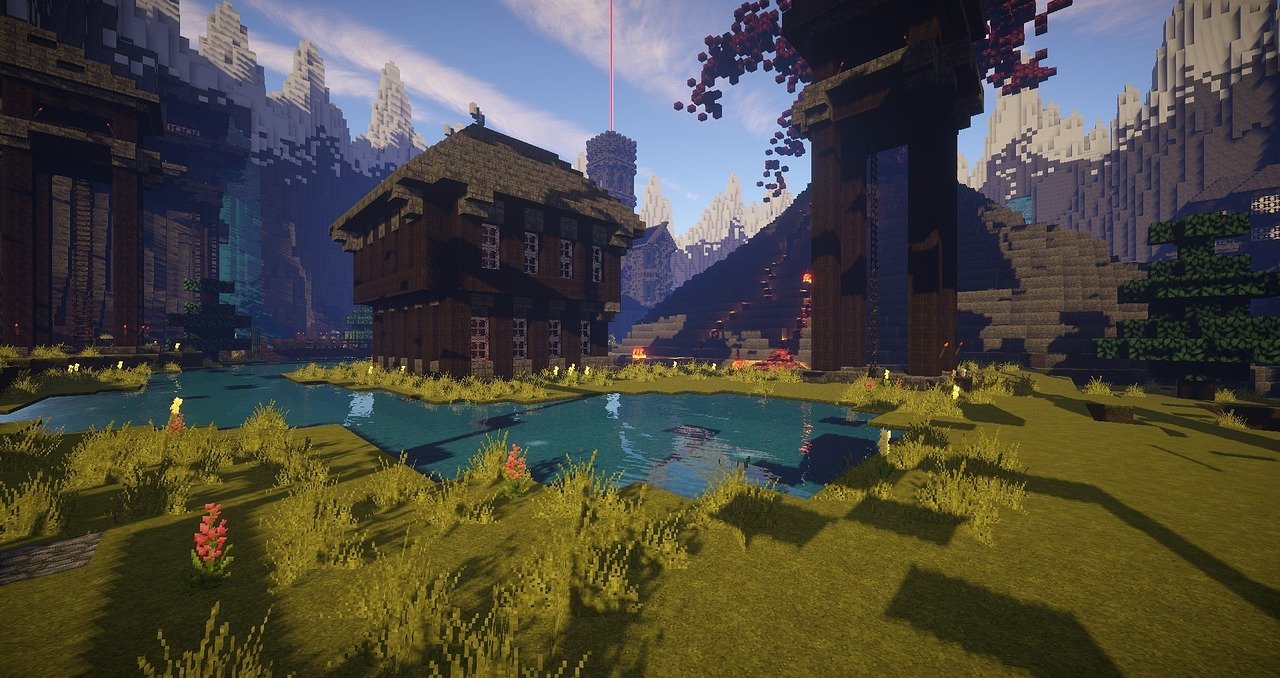
Minecraft

Minecraft is an incredibly popular Indie title, having sold over 200 million copies to date, and was sold to Microsoft the company behind the Xbox game console in 2014. Microsoft has since updated Minecraft with new content, released two more games under the Minecraft title, and expanded the game into other profitable areas such as toys.

Undertale

Undertale is a game that was crowd-funded and released in 2015 with an estimated 5.8 million users. Created by a single developer, this game has reached a level of acclaim that Nintendo licensed one of the characters to appear in one of their own games. The game also has its own line of merchandise and a much-anticipated sequel currently in development.

Among Us

Among Us is a more recent success story of a small social deception game that rocketed into the public eye, and boasted 60 million active users a day at the peak of its popularity. The game was very popular amongst YouTube and Twitch creators, which acted as a very successful marketing campaign. The game has become so popular that, during Halloween, kids were running around in inflatable costumes of the Among Us space suits.

The Benefits of Indie Games

Without a big corporation behind them forcing big decisions, indie developers can make any game they want. For example, Cup Head is an extremely difficult game with an art style designed to be an homage to the early era of hand-drawn cartoons. Some games are designed off of a single weird concept or a specific labor of love based upon an obscure passion.

Most indie developers try to get the funding they need to produce a game using crowd-funding. Crowd-funding is when a designer puts out a concept of a project online and gets funding from the potential fanbase to make the game through a mixture of donations, pre-purchasing the game before development begins, and additional benefits for backers of the game. Benefits can include anything from your name in the credits of the game as a backer to having input into a part of the game or a character in the game being named for the backer. Crowd-funding allows a developer to pool money for a passion project from people who are excited about the game. Crowd-funding success helps to attract investors because it reflects customer interest.

The Dangers of Indie Games

Indie games have been a source of some of the greatest titles of the last two decades, but that doesn’t mean that every Indie game is going to be like Minecraft. Indie games can be whatever the creator wants, and that’s not always a good thing. For example, some developers push the boundary of horror games and explore themes AAA horror would never touch. For example, The Binding of Isaac is one of the most popular Indie games of all time. The game explores themes of child abuse, religious extremism, and child suicide.

Indie games can explore any theme no matter how dark or twisted and the limit to what can be made is limited only by human imagination. That doesn’t mean all Indie games are horror games. But the range of themes available is significantly more diverse than the AAA scene for games.

What does this mean for your young gamers?

Within the gaming industry, Indie games are incredibly diverse. The diversity of genres and topics can create games that range from poorly made first attempts to truly frightening horror games and all the way to amazing successes like Minecraft.

So, what can you do for your young gamers online?

Read the summary.

If your child wants to get an Indie game it will often come from a website that allows developers to post and sell their games. There is a store page on Steam associated with a game that will give you a description of the plot, gameplay, pictures of the game, and reviews from people who have played the game. This will allow you to make an informed decision if this game is right for your child.

The GKIS Connected Family Course

Our family course is designed to bring your family closer and get your kids working with you to stay safe on the internet. Our connected family course is outcome-based and will help you close screen risk gaps and increase family closeness and cooperation.

YouTube

You can often find YouTube creators that have recorded gameplay of popular new Indie games. If your child wants to play the new game their favorite YouTuber is playing, watch one of their videos with them. It’ll show you what kind of game your child is looking at, and you’ll get to hang out with your kid while you do it.

Thanks to CSUCI intern, Jason T. Stewart for researching advances in the video game industry and co-authoring this article.

I’m the mom psychologist who will help you GetKidsInternetSafe.

Onward to More Awesome Parenting,

Tracy S. Bennett, Ph.D.
Mom, Clinical Psychologist, CSUCI Adjunct Faculty
GetKidsInternetSafe.com

Works Cited

Coble, V. (2021, September 30). 10 most disturbing psychological horror indie games. CBR. Retrieved November 20, 2021, from https://www.cbr.com/indie-games-disturbing-psychological-horror/.

Curry, D. (2021, November 11). Among us revenue and usage statistics (2021). Business of Apps. Retrieved December 4, 2021, from https://www.businessofapps.com/data/among-us-statistics/.

Curry, D. (2021, November 11). Minecraft revenue and Usage Statistics (2021). Business of Apps. Retrieved December 4, 2021, from https://www.businessofapps.com/data/minecraft-statistics/.

Donnellan, J. (2021, June 8). 50 best indie games of all time. Cultured Vultures. Retrieved November 20, 2021, from https://culturedvultures.com/best-indie-games-all-time/.

G., D. (2021, November 1). 45+ video games industry statistics, facts, and trends for 2021. TechJury. Retrieved December 4, 2021, from https://techjury.net/blog/video-games-industry-statistics/.

Lowry, B. (2017, November 29). This is what sets ‘indie’ and ‘AAA’ video games apart. Windows Central. Retrieved November 20, 2021, from https://www.windowscentral.com/indie-vs-aaa-which-type-game-you.

Mikolić, M. (n.d.). Undertale stats by Playtracker Insight. stats by Playtracker Insight. Retrieved December 4, 2021, from https://playtracker.net/insight/game/1122.

Oddo, M. V. (2021, August 2). What’s an indie game anyway? Collider. Retrieved November 20, 2021, from https://collider.com/what-makes-an-indie-game/.

Photo Credits

Photo By: 200 degrees (https://pixabay.com/vectors/programmer-programming-code-work-1653351/)

Photo By: Allinonemovie (https://pixabay.com/illustrations/minecraft-video-game-blocks-block-1106252/)

Photo By: aknologia6path (https://pixabay.com/photos/rollup-dark-close-mood-4639945/)

Photo By: Victoria_Borodinova (https://pixabay.com/photos/video-game-entertainment-boy-6578106/)

Are Video Games Too Real for Children?

Video games have come a long way since Pong was first released in the 1970’s. Advances in gaming technology can enhance the experience for adults, but for children more realistic games are harder to distinguish from reality. At GKIS, our Social Media Readiness Course is designed to prepare your tweens and teens for the unexpected dangers of video games and social media sites. Our course is backed by Dr. Bennett’s years of experience helping tweens and teens who have already suffered digital injury from the unforeseen dangers found online. In this GKIS article we will cover the evolution of graphics and the steps gaming companies take to make games seem more real.

Video games Are Evolving

Video games are based in technology, and since players got their hands on Pong there has been a push to

advance that technology. Originally, video games were played using bulky arcade cabinets. The first home consoles were very restricted by their hardware. Games were flat and involved a character moving around the screen like a piece on a board. This all changed with the introduction of 3D graphics in the early 2000s. For the first time, video games had physical depth and the characters on screen moved more like a real person would.

Video games are striving every year to create a more realistic virtual environment. Games now have wind that moves individual leaves on tree branches, light that dances across the surface of the water, and characters that look real from a distance. Modern video games have advanced technology to foster a sense of extreme realism and maximize immersion. With such engaging digital experiences, it is important that children are provided with boundaries so as to prevent screen-time overload and digital injury. Our Screen Safety Essentials Course grants you access to weekly videos with parenting tips and coaching from Dr. Bennett that will help you pull your child out of their digital world and back into ours.

Motion Capture

It can be difficult to program a character to move in a realistic way. The awkward way early 3D characters moved unfortunately hampered immersion. Recently, the gaming industry began to use motion capture technology to solve this issue. Motion capture is a technique whereby a real human being is recorded in a studio as a program captures their motion and applies it to the game character to make the movement look as real as possible.

In a game called LA Noir, you are a 1940’s detective. One of the major objectives of the game is to interrogate suspects and solve crimes. For authenticity, developers created the characters with real facial expressions. The game used an advanced motion capture system to record the real facial expressions of the voice actors portraying the game characters. Players can tell what a character is feeling or if they’re lying based on facial expressions alone. The game uses very real human empathy and natural social cues as a part of the game, offering deeper immersion and better quality overall.

Real Game with Real Fear

Realistic graphics are fascinating when they’re used to make a character blink and breathe like a real person. Immersion is the goal, especially in horror games. Early horror games were limited in what they could create by the consoles of the time. However, as modern technology has evolved, new possibilities have opened for the horror genre.

Games can include motion-captured characters with realistic looks of fear and pain on their face. Horror games originally wanted to compete with the horror movie industry, but horror games now have the ability to do more than movies ever could.

For example, a game called Dead Space takes the classic zombie movie genre and sets it in a futuristic space station. An alien artifact mutates humans into nearly unkillable monsters. The game makes great use of body horror to drive home the alien nature of these dead humans. Body horror is a type of horror derived from twisting the human body into unnatural shapes creating nightmarish monsters. Our mind still sees that the monster is technically human, but is terrified by how wrong it has become. For example, in Dead Space, the zombie you are tasked to fight is a human with an open chest cavity and arms twisted in unnatural positions with sharpened bone where hands used to be. The key feature is that they still have a human face attached to the monstrous form to remind you that they used to be like you.

Immersion in horror games

The main thing horror games have over movies is the personal nature of the narrative and fear within. A zombie movie may be scary to watch as your favorite character fights for their life. However, an immersive game like Dead Space can make you feel like you’re the one fighting for your life. The immersive narrative attempts to draw you into the character’s shoes and, for the time you play, you can believe that you’re really in danger. The narrative takes on a whole new depth as suddenly you’re the one backed into a corner with only a handful of ammo and your wits.

Another dimension is that a game doesn’t guarantee a happy ending. When you run out of ammo, you know that you’re the one who’s going to die. Often when a gamer talks about an experience with a horror game, they speak in the first person. When I first played Dead Space, I remember the adrenaline rush I got when I had no ammo, because I knew I was going to have to fight my way out with my bare hands. The memory of playing a game differs from a movie because it stores itself as if the player had physically been there.

What does immersion mean for kids?

Realistic video games can be frightening and exciting to play. But at the end of the day, a player can still distinguish the game from reality. The same can’t be said for children exposed to the same things. Children have a harder time separating fantasy from reality.

As video games strive to be as close to reality as possible the task only gets harder. An adult who plays a particularly realistic horror game may have trouble sleeping for a night, but a child will suffer far worse than any adult.

Even outside of horror, we have shooter games that strive for realistic blood and death. Sniper Elite is a game that will follow the bullet fired from a sniper rifle through an enemy to show bones break and organs rupture as the bullet penetrates their body. These advances in immersion are great for taking a player into the world of a game, but only as long as that player has developed enough to pull themselves back out.

What can you do for your young gamer?

ESRB Ratings

Most video games come with an ESRB rating on the box to let players and parents know what type of audience the game is suitable for. If a game is rated for an audience older than your child, the game contains content inappropriate for their age group.

The GKIS Connected Family Course

Our Connected Family Course is designed to help keep your family connected in a world separated by screens. Backed by years of psychological research our course is designed to keep your family connected and working together to prevent digital injury.

Play games with your kids

Make sure the game your child is playing is appropriate and get some fun bonding time in. You can learn what the game your kids are playing is really like by just spending time with them while they play. If a game is inappropriate, it’ll be hard to hide for long.

Thanks to CSUCI intern, Jason T. Stewart for researching advances in the video game industry and co-authoring this article.

I’m the mom psychologist who will help you GetKidsInternetSafe.

Onward to More Awesome Parenting,

Tracy S. Bennett, Ph.D.
Mom, Clinical Psychologist, CSUCI Adjunct Faculty
GetKidsInternetSafe.com

Works Cited

Clasen, M. (2015, July 6). How do horror video games work, and why do people play them? Research Digest. Retrieved November 3, 2021, from https://digest.bps.org.uk/2015/07/06/how-do-horror-video-games-work-and-why-do-people-play-them/.

Iowa State University. (2017, January 25). Video game ratings work, if you use them. ScienceDaily. Retrieved October 31, 2021 from www.sciencedaily.com/releases/2017/01/170125145805.htm

Milian, M. (2011, May 17). The ‘amazing’ facial capture technology behind ‘L.A. Noire’. CNN. Retrieved November 3, 2021, from http://www.cnn.com/2011/TECH/gaming.gadgets/05/17/la.noire/index.html.

The Logo Creative. (2021, March 3). The evolution of video game graphics. Medium. Retrieved November 3, 2021, from https://thelogocreative.medium.com/the-evolution-of-video-game-graphics-1263684f0e38.

Walker, C. (2010, December 22). Video games and realism. Wake Forest News. Retrieved November 3, 2021, from https://news.wfu.edu/2010/12/22/video-games-and-realism/.

Photo Credits

Photo by: Ronald Nikrandt (https://pixabay.com/photos/fighter-warrior-wall-castle-5369481/)

Photo by: Diego Alvarado (https://pixabay.com/vectors/mario-nintendo-retro-super-classic-6005703/)

Photo by: Alexas_Fotos (https://pixabay.com/illustrations/crow-night-gruesome-darkness-988218/)

Photo by: Syaifulptak57 (https://pixabay.com/illustrations/soldier-helmet-battle-pub-g-war-6127727/)

Photo by: ID 11333328 (https://pixabay.com/photos/fortnite-computer-game-game-gamer-4129124/)