Need peaceful screen time negotiations?

Get your FREE GKIS Connected Family Screen Agreement

Cyberbullying

Off the Phone and On the Soccer Field: My Cure for Digital Disconnection

Kids crave connection. Face-to-face interaction and emotional closeness are vital for healthy development—particularly for adolescents.[1] Screen time offers shallow connections and distracts kids from those unpleasant cravings. It also keeps kids so busy that they don’t seek the connection they so desperately need. What if they didn’t have to be so lonely? What if there was a way they could be off their screens, doing something good for their health, and making friends at the same time?  For me, that was playing sports.

The Seed Was Planted

As a child, I was most excited to hang out with my friends, be on my phone, watch TV, or eat sweets, in that order. That was until I joined a team sport.

It all started when my mother asked me if I wanted to join the local soccer team. I was nine years old and against the idea because I didn’t want it to cut into cartoon time on the weekends, and had we gone through the Screen Safety Essentials Course, we wouldn’t have worried so much about the impact of screens on us. But she insisted. I only agreed because my favorite cousins were on the team.

I learned from the first practice that I loved the intense physical activity of soccer, and after a while, I began to really get the hang of it. I felt proud and accomplished. I made great friends on the team. We loved team bonding activities and even began to hang out outside of practice. I loved it so much, I gave it my all and looked forward to it all week.

By high school, I had won medals and genuinely felt like I was good at the sport. I received praise and encouragement for all of my efforts and hard work. It also inspired me to work hard in other aspects of my life. I tried harder in school, was friendlier with classmates, more obedient in class, and more eager to participate in the learning process. According to Project Play, high school athletes are more likely to further their education and even receive higher grades in college.[2] I started seeing everything in the world as a skill waiting to be attained, something that required courage, effort, and training.

Having that view of the world helped me when I sprained my ankle right before the start of my freshman season. While recovering, I could have easily scrolled through Snapchat and Instagram endlessly. But I wanted to make sure I continued to build the bond with my teammates for when I returned. It taught me to wait my turn, keep a positive attitude, remain patient, and support others as they shine. As soon as I recovered, my teammates were more than happy to catch me up to speed, and I rebuilt my strength.

Core Memories That Last

One of my most memorable moments taught me something I will never forget. It was my junior year; we were tied 0-0, with a minute left in the game. My team was exhausted, but as captain, I knew this is where my job was most important. I dribbled the ball up the center, dodging two midfielders and one defender, set it up for my left forward, and yelled, “SHOOT!” She shot and sent it straight into the upper right corner of the goal. Everyone who was there to support us was on their feet, our coaches were throwing their clipboards in the air and hugging each other, and our teammates ran to us for a celebratory hug and a jump around. We spent the last 15 seconds of that game with tears in our eyes and joy in our hearts. We had just beaten a 40-year record for our school!

This is when I realized this would have a lifelong impact on me. It was one of those moments that I’ll look back on happily. It was a lifetime of preparation to become someone people could rely on when things got tough and hope felt lost. It was the moment I truly understood what being a leader meant to me and the impact it had on others.

I hugged and thanked my mother for signing me up for soccer at nine years old. She introduced me to the first love of my life, and I would forever be grateful for that. From then on, I never doubted my abilities to get something done, never lost confidence in myself, and never hurt someone without apologizing or broke something without trying to replace it.

The Impact of The Beautiful Game

Project Play reports that sports, in particular, can positively impact aspects of personal development among young people, keep them away from harmful substances, and encourage cognitive, educational, and mental health benefits.[2] I believe my experience of playing soccer was so much more than just a fun sport or a way to stay active, although both are tried and true. It was a refinement of my character, it was a positive shift in how I viewed the world and myself in it, it was what taught me that rejection was just redirection, and it was a way to build and maintain connections with people I am still close to, at 27 years old.

Why Everyone Should Play Sports

Participation in sports can protect against the development of mental health disorders.[4] These benefits include lowering stress levels, rates of anxiety and depression.[5]Lifelong participation in sports leads to improved mental health outcomes and even immediate psychological benefits which continue long after participation is over with. The improve self-confidence, encourage creativity, and nurture a higher self-esteem. Statistically, adolescents who play sports are eight times more likely to be physically active at age 24.[3]


Thanks to CSUCI intern, Elaha Qudratulla, for sharing an important story about how beneficial playing sports were for her then and how it still helps her today.

I’m the mom psychologist who will help you GetKidsInternetSafe.

Onward to More Awesome Parenting,

Tracy S. Bennett, Ph.D.
Mom, Clinical Psychologist, CSUCI Adjunct Faculty
GetKidsInternetSafe.com


Works Cited:

[1] https://www.uvpediatrics.com/topics/alone-together-how-smartphones-and-social-media-contribute-to-social-deprivation-in-youth

[2] https://projectplay.org/youth-sports/facts/benefits

[3] https://odphp.health.gov/sites/default/files/2020-09/YSS_Report_OnePager_2020-08-31_web.pdf

[4] https://baca.org/blog/does-playing-organized-youth-sports-have-an-impact-on-adult-mental-health/

[5] https://pce.sandiego.edu/child-development-through-sports/

Photos Cited:

[Header] Eva Wahyuni on UnSplash

[2] Olivia Hibbins on UnSplash

[3] Elaha Qudratulla

[4] Jeffrey F Lin on UnSplash

[5] Elaha Qudratulla

https://unsplash.com/
Netflix Documentary, Bad Influencer, Exposes Parent Producer Abusing Child Influencers

We were hunters and gatherers for 90% of human existence. That means our brains are still wired to prioritize the things that kept us alive when we were living on the land, before the domestication of animals and the construction of cities. One thing that kept us alive was living in a tribe and cooperating. Attracting a tribe and fitting in was a requirement of life. That is why kids and teens are hyper-focused on doing what their friends do and working to be cool and accepted. Online influencers count on this drive to maintain their income streams. One way to attract kids online is to be a kid doing what kids love to do, playing with toys and video games, opening new packages, and hanging out with friends acting goofy. Netflix’s Bad Influencer offers a glimpse of the kid influencer “scene,” and the lengths that some parents will go to attract and keep a following.

What is Bad Influence about?

The limited documentary series has gone viral for good reason. It’s definitely entertaining, but also deeply unsettling. It is a perfect way to raise awareness about how scary a life all about social media can be. Bad Influencer is a documentary that focuses on a tween who becomes an overnight social media star and brings her friends to stardom with her. What started out as a fun hobby quickly turned into a living nightmare. It may seem glamorous to be famous online, until you learn that the child influencers spent the majority of their childhoods working long hours acting out video ideas, risky stunts, and performing pranks that sometimes went too far—all under the pressure of adult producers/parents hungry for views. Check out Intimacy With Minors Encouraged at the Hype House for a similar story of underage exploitation.

SPOILER ALERT: The show takes a chilling turn when the mother of the main character is accused of, and videotaped, sexually exploiting these kids on set by positioning herself as one of the only adults supervising them to control them. Some survived the battle with only a few scars, while the main character is stuck living this nightmare over and over again. It may be funny, exaggerated, and attention-grabbing, but it also paints a dark picture of a digital world where clout matters more than character and children are left to pay the price.

Psychology Behind the Fame Obsession

From a psychological point of view, being an influencer is cool to children because they have a natural need for validation, attention, and social connection.[1] Although the minimum age on most social media platforms is 13, it is reported that children ranging from 8-17 are found scrolling through online platforms soaking up content too mature for their ages.[2] Sadly, unlike real-world relationships, social media platforms offer fast, unfiltered dopamine hits through likes, shares, and views. Without proper guidance, this can make kids tie their self-worth to online numbers, which can result in low self-esteem, fear of missing out (FOMO), performance anxiety, and digital addiction.[3] As a result of social unlimited social media usage, kids can also experience anxiety, depression, and even poor quality of sleep.[4] Counteract this monster and help your child build emotional resilience, red flag awareness, and digital literacy by taking our GKIS Social Media Readiness Training Course. Geared for teens or tweens, it’s the perfect giftbefore that new device or video game.

What You Can Do to Help

Bad Influencer is not just a show; it’s a cautionary tale that shares the pressures kids face online every day. It is easy to get off topic and want to pull the plug on all electronics just to protect your child from their dangers, but that is not always possible. Technology and online platforms are all around us, and it is better to set your child up for success than to try to keep them out of the loop. Connecting with your child over what they find interesting can help create a trusting relationship where you can notice if things start to become a little off. Our free Connected Family Screen Agreement can help you and your child co-create rules around how to safely navigate online platforms. This way your child can thrive in the digital age without losing themselves in it.


Thanks to CSUCI intern, Elaha Qudratulla for researching and co-writing this article.

I’m the mom psychologist who will help you GetKidsInternetSafe. Onward to More Awesome Parenting,

Tracy S. Bennett, Ph.D.
Mom, Clinical Psychologist, CSUCI Adjunct Faculty
GetKidsInternetSafe.com

Works Cited

[1] https://genomind.com/patients/the-social-media-dilemma-how-childrens-mental-health-may-be-affected/
[2] https://pubmed.ncbi.nlm.nih.gov/37721985/
[3] https://startmywellness.com/2025/02/how-social-media-affects-mental-health/
[4] https://pmc.ncbi.nlm.nih.gov/articles/PMC11641642/

Photo Credits

[Header] freestock on Unsplash
[2] Leonardo David on Unsplash
[3] Sanket Mishra on Unsplash
[4] Cande Westh on Unsplash
https://unsplash.com/
Forum Website Used to Stalk and Harass People Online and In Real Life

How do you like to use the internet? To watch videos of puppies and kittens? Or posting pictures of your family and friends? Maybe to satisfy your shopping addiction on Amazon? Maybe your internet use has not been so innocent. Many use the internet to get a thrill or get their anger out. Online harassment is not uncommon, so much so that there are websites built to support it. Kiwi Farms, for example, is a forum website where users are encouraged to harass online personalities and communities. Today’s GKIS article details the targeted harassment done by Kiwi Farms users and how the website facilitates this behavior. If you’re concerned your kids may be victimized by harassment or overstep and do the harassing themselves, check out our Screen Safety Toolkit. With this online course and resource guide, you can learn how to protect your family online.

The Start of Kiwi Farms

Joshua Conner Moon, a former administrator of the 8chan message board, started Kiwi Farms in 2013. It was first established as a forum website to troll and harass a webcomic creator. Before the term “Kiwi Farms” was coined in 2014, Kiwi Farms was known as “CWCki Forums.”

Organized Harassment

The Kiwi Farms website targets a wide range of victims, including Internet celebrities, minorities, women, neurodivergent individuals, LGBTQ people, members of the far right, and people who Kiwi Farms users believe to be “mentally ill” or “sexually deviant.” Both Moon and the Kiwi Farms user base have been labeled as anti-Semitic.[1]

Kiwi Farms members use tactics of harassment like

  • organized group trolling
  • stalking
  • doxxing (publishing someone’s private information)
  • harassing their family members and friends 
  • attempts to get them fired from their jobs 
  • swatting (reporting crimes at their addresses to have police dispatched to their homes)
  • real-life attacks

People Who Have Fallen Victim

U.S. Representative Marjorie Taylor Greene claimed in an interview with NewsMax on August 24, 2022 that she had been swatted twice by someone posing as a Kiwi Farms moderator “AltisticRight.” She urged for the website to be taken down. In reaction, Cloudflare shut off a feature on the website that lets users modify error messages.

Clara Sorrenti, a transgender advocate and Twitch broadcaster who goes by the handle “Keffals,” was doxxed on Kiwi Farms as well. Users of the website shared both her personal information and those of her friends and relatives, including addresses and phone numbers. Users also threatened her life and leaked sexually explicit images of her. In August 2022, after someone hijacked her identity and sent false emails to local lawmakers threatening widespread violence, she was later swatted, imprisoned for more than ten hours, and arrested. She was ultimately exonerated of all charges, and authorities determined that the incident was a swatting effort.

Users also shared the address of a stranger who lives in the same city and has the same last name as Sorrenti. Police were subsequently dispatched to his home. Sorrenti claimed that she left her house and checked into a hotel for her protection following the swatting event. After she uploaded a picture of her cat lying on a hotel bed, Kiwi Farms members recognized the establishment from the bedsheets and sent several pizza orders to it using her dead name. 

Later, Sorrenti left the country after her whereabouts were discovered, allegedly by someone who had hacked her Uber account. Sorrenti says that she intends to file a lawsuit and that the occurrences were being investigated as criminal harassment.

Suicide 

A hate campaign against transgender game creator Chloe Sagal was started in 2013 by Kiwi Farm users. Sagal is well-known for creating the well-liked, independent horror game Homesick. After Sagal started raising funds for gender reassignment surgery, they began to attack her. Users hounded and harassed Sagal for years after they started a post specifically to target her. Sagal lit herself on fire in 2018 in a park in Portland and died at 31 years old.[3]

According to images of chat boards and videos published by DropKiwiFarms.net, an initiative was passed to shut down the website after Moon posted a live YouTube video celebrating Sagal’s passing while other Kiwi Farms users laughed and made fun of the game developer.

The Short End of Kiwi Farms

After the harassment effort by users of Kiwi Farms against Sorrenti, a movement to persuade Cloudflare to stop hosting the site was launched in August 2022. Cloudflare is a company that provides hosting and online security services. This, according to NBC News, was done to allow Kiwi Farms to be the target of “debilitating virtual attacks.”[2] 

Although Cloudflare first defended its choice to continue working with Kiwi Farms, the company formally banned the website from utilizing its services on September 3, 2022. However, on September 6, VanwaTech supplied content delivery network services to the website, returning it online according to The Daily Dot.[4]

How to Protect Your Child

Unfortunately, many parts of the internet are unregulated. And when children have easy access to it, they can fall victim to being harassed online or fall down a dark path of harassing people themselves. Luckily, Dr. Bennett can help you protect yourself and your family from online harassment. 

One helpful tip for parents is to make it a habit to hold GKIS Family Meetings with a teaching agenda that covers important online issues that your children will face. This provides opportunities for mutual education and skill building, and it also builds a close family alliance. Get ideas for your discussion with our GKIS Blog and learn parenting strategies with Dr. Bennett’s Screen Time in the Mean Time Parenting Guide.

Thanks to CSUCI intern, Liliana Esquivel, for detailing the targeted harassment done by Kiwi Farms users and how the website facilitates this behavior.

I’m the mom psychologist who will help you GetKidsInternetSafe.

Onward to More Awesome Parenting,

Tracy S. Bennett, Ph.D.
Mom, Clinical Psychologist, CSUCI Adjunct Faculty
GetKidsInternetSafe.com

Works Cited

[1] (2022). Kiwi Farms. Wikipedia https://en.wikipedia.org/wiki/Kiwi_Farms 

[2] Collins, B., Tenbarge, K. (2022). Anti-trans stalkers at Kiwi Farms are chasing one victim around the world. Their list of targets is growing. NBC News. https://www.nbcnews.com/tech/internet/cloudflare-kiwi-farms-keffals-anti-trans-rcna44834 

[3] Dress, B. (2022). Why anti-trans web forum Kiwi Farms was erased from the internet. The Hill.

https://thehill.com/policy/technology/3642685-why-anti-trans-web-forum-kiwi-farms-was-erased-from-the-internet/ 

[4]Goforth, C. (2022). Kiwi Farms gets back online thanks to the same service that’s kept 8kun alive. Daily Dot. https://www.dailydot.com/debug/kiwi-farms-back-online-vanwatech/

Photo Credits

Photo by Victoria Heath (https://unsplash.com/photos/MAGAXAYq_NE)

Photo by Hugo Delauney (https://unsplash.com/photos/YicAtc9n7pU)

Photo by Carolina Heza (https://unsplash.com/photos/0lD4hF1fBv0) 

Sextortion Scammers Targeting the LGBTQ+ Community

People seeking companionship or romantic connections online are falling victim to internet predators. There has been a dramatic increase in recent reports claiming that LGBTQ+ individuals are being purposely targeted for malicious online sextortion crimes. These crimes have led to devastating and long-lasting repercussions for victims and their families. As a result, the Federal Trade Commission (FTC) issued a warning in response to complaints about dating sites geared towards LGBTQ+ community members being infiltrated by sextortion perpetrators.[1] To help ensure your family has the tools to safely navigate the online world, check out our Screen Safety Essentials Course.

What is Sextortion?

The term sextortion (sexual-extortion) falls under the broader category of sexual exploitation. In many cases, sextortion is a form of blackmail that involves the act of extorting things like money and sexual favors through means of manipulation and coercion. For example, a perpetrator may threaten to reveal or expose personal and sensitive information about the victim to others unless they agree to the perpetrator’s demands.

How are people being victimized?

Despite advancements in societal attitudes towards LGBTQ+ community rights, the world can sadly still be a hostile place. That’s why dating apps geared toward members of the LGBTQ+ community, like Grindr, Feeld, and Her, have become popular.

These sites were designed to provide a safe space for both openly queer and closeted people to meet and make connections with each other without fear of harassment or exposure. Unfortunately, recent reports have indicated that an increasing number of apps and websites marketed toward members of the LGBTQ+ community are being infiltrated by sextortion predators.

Blackmail

A typical sextortion scam begins with a perpetrator creating a fictitious account on a dating app or social media networking site using a fake identity and photos. The perpetrator poses as a potential partner or someone looking to make a connection online and attempts to establish contact with another person under the guise of starting a romantic relationship. This is a process referred to as catfishing.

The perpetrator cultivates the relationship with their target to gain their victim’s trust and make them feel comfortable. The process can last for days, weeks, or even months. After establishing rapport, the perp will send explicit messages, photos, and videos and ask for some in return. Once the target shares their personal images and information, the scammer threatens to release it to the victim’s friends, family, or co-workers, or post it online unless the victim does what they say.

The primary motivations behind these types of romance scams can be financial and sexual. Sextortion predators use various manipulation tactics to not only extort money from victims but also to access sexually explicit photographs and messages, for their own sexual gratification. Recent reports have revealed that minors using the app, despite there being minimum age of use requirements, were targeted specifically by pedophiles hoping to elicit child pornography. In both cases, similar methods of exploitation are used.[2]

The FBI has stated that most victims report that initial interactions with perpetrators are mutual and unsuspicious. However, after a brief period, the extortionist will attempt to transition the interaction away from the app and onto private messaging forums. Without exposing their true identities, these online predators will go to great lengths to convince targets that they are legitimate users of the app.

Scammers often use stolen or fake photographs and may even hire a video model to convince their victims that they are interacting with an authentic person. It is very common for perpetrators to befriend victims on social media to access a list of the victim’s followers which typically include family members, friends, and co-workers.[2]

Why are LGBTQ+ apps being targeted?

Experts suggest that individuals using these dating apps are being specifically targeted by predators for a few different reasons. Given the nature of the apps, which are primarily used to foster romantic connections, online predators have a much greater opportunity to collect private and sexually explicit information from their targets. Additionally, since these apps have been designed for LGBTQ+ community members, predators assume that their targets have an even greater incentive to keep quiet about their victimization and comply with demands.

Because these apps are marketed as a safe space, people who are not openly queer rely on them to make connections with others without fear of exposure. As the thought of public shaming and the potential outing of their sexual orientation or gender identity is so profound, these individuals are more easily subject to victimization.

The Fallout

According to the FBI, the number of these cases has been steadily increasing. Experts speculate that the onset of the COVID-19 pandemic and the emergence of hookup-culture has escalated this trend. As the dating world transitioned largely onto virtual platforms, sextortion predators took advantage of this change.

Last year, the federal agency reportedly received over 16,000 sextortion complaints with financial losses totaling over $8 million.[2] In reality, the repercussions of these crimes extend beyond financial ruin. Sadly, the effects of being targeted and exposed by sextortion predators were overwhelmingly devastating for some victims who felt driven to take their own lives.[1] As a result of the seriousness of these crimes, law enforcement officials have significantly increased their efforts to capture and charge perpetrators.

How to Protect Yourself

It is important to be aware of the potential dangers inherent online in order to prevent yourself and your loved ones from becoming victimized. Dr. Bennett believes that providing our kids and teens with the necessary knowledge and skills to navigate these pitfalls before they arise, is the key to avoiding digital injury. That is why we created the Social Media Readiness Course which is designed to empower families to promote safe and responsible practices while avoiding harmful outcomes online. The internet can be an exciting and helpful tool when we are equipped with the proper skills to use it.

T hanks to CSUCI interns, Mackenzie Morrow and Michael Watson for researching the targeting of LGBTQ+ community members in sextortion scams on popular dating apps and co-authoring this article.


I’m the mom psychologist who will help you GetKidsInternetSafe.

Onward to More Awesome Parenting,

Tracy S. Bennett, Ph.D.
Mom, Clinical Psychologist, CSUCI Adjunct Faculty
GetKidsInternetSafe.com

Works Cited

[1] Skiba, K. (2021). Sextortion plaguing LGBTQ+ dating apps. AARP. https://www.aarp.org/money/scams-fraud/info-2021/lgbtq-dating-apps.html

[2] Petkauskas, V. (2021). The shame game: how sextortion scammers prey on victims’ fear. Cybernews. https://cybernews.com/privacy/the-shame-game-how-sextortion-scammers-prey-on-victims-fears/

Photo Credits

Photo By Sharon McCutcheon (https://unsplash.com/photos/MW7ru0BdTFM)

Photo By Tima Miroshnichenko (https://www.pexels.com/photo/a-man-holding-a-letter-lightbox-6266500/)

Photo By Bruno Aguirre (https://unsplash.com/photos/xw_WBtNEqfg)

Hackers Can Access Your Computer’s Webcam Without Your Knowledge

Imagine finding out that a cybercriminal has been recording you in your bedroom for months and can do anything with that footage. Or what if you turn on your computer to find that you can’t access anything unless you pay a ransom to a hacker. What if a predator could view and speak to your child through a camera in their bedroom? You can help protect your family from becoming victims of cyber-attacks and ensure peace of mind by referring to our Screen Safety Toolkit, a resource guide with our best recommendations, how-to information, and links to our favorite easy-to-use parental control systems. This article will detail the risks and worst-case scenarios of webcam hacking as well as provide tips to help ensure your cybersecurity and safety.

How do cybercriminals hack webcams?

Hacking requires a specialized skillset that is increasingly accessible for the average tech user. In the sub-world of black hat computer hacking (hacking tech with bad intent), accessing private webcams is considered fairly easy. Further, there are several different methods utilized by black hat hackers to gain access to and take control over a computer’s web camera.

Spyware

One of the prominent methods employed by hackers to gain access to private computer webcams is through the use of spy software and remote administration tools (RATs). Webcam spyware is a type of computer application or program that allows the user to remotely take control over another user’s webcam. This enables the hacker to see whatever or whoever is in front of the computer’s web camera.

An alarming feature of this software is that it often allows the user to remotely turn the hacked computer on. Turning a computer off when it’s not being used is not enough to protect users from being spied on.

Spyware can be installed in webcam attachments and hard-wired webcams. The hacker can control audio and microphones, camera angles, zoom features, and focus. They can also record the footage so they can blackmail the victim later. Surprisingly, webcam spyware is freely available for download on the internet and can be installed on most operating systems.[1]

Internet Connection

Another common method of webcam hacking involves the use of web cameras that rely on remote access through WiFi. A common example of this type of web camera includes wireless security devices such as the popular Ring video doorbell.

Unfortunately, while these devices are intended to provide security for the user, they can also provide black hat hackers access to your home. If a camera is connected to a home WiFi router, it is vulnerable to hacking, especially if proper precautions aren’t taken to secure it. To avoid this, it is important to set secure network passwords for home WiFi routers. The default factory setting login information for routers can be accessed by anyone who is willing to look up the manufacturer’s startup support webpage. Failing to change your default router login can leave your wireless security cameras open to malicious hackers.[1]

Trojan Viruses

Perhaps the easiest way for cybercriminals to hack into your computer’s webcam is through the use of a Trojan computer virus. A Trojan virus is a type of malware deliberately designed to cause damage by infecting and subsequently taking control over your device. It is aptly named after the famous ancient Greek war story of the Trojan Horse because it is an attack disguised as a gift.

Trojan viruses are so effective because people mistakenly infect their own devices with them by downloading software that they believe is safe. This typically occurs when visiting a website that invites you to download a seemingly innocent file that actually contains malware instead of Adobe flash reader. The malware then infects the device, allowing the creator of the virus to gain complete control and access to your webcam and private files without your knowledge.[1,2]

Worst-Case Scenarios

Cassidy Wolf, Miss Teen USA

One of the most famous cases detailing the devastation caused by webcam hacking involves former Miss Teen USA, Cassidy Wolf. In 2012, Cassidy Wolf opened an email that she had received from someone whom she did not know. She was horrified to discover an attachment within the email containing several nude photos of her that were taken in the privacy of her bedroom. The photos were taken via the webcam installed on her computer.

The hacker attempted to blackmail Wolf into engaging in sexual acts with him through her webcam. If she refused, he threatened to share the nude photos with her friends and family.

The hacker turned out to be one of Wolf’s former classmates, Jared James Abrahams, who had installed Blackshades malware onto her laptop. The FBI was able to identify Abrahams who had victimized up to 150 women in his sextortion scheme and was subsequently sentenced to 18 months in federal prison.[3]

This event coincided with an FBI crackdown that led to the arrests of over 100 cybercriminals who created and used Blackshades, an inexpensive and easily utilized remote access tool primarily designed to hack webcams to facilitate sextortion crime. Blackshades was available for a mere $40 and sadly, countless people were victimized by the cybercriminals who maliciously employed it. [3,4]

Ring Cameras

In 2019, a mother installed a Ring security camera in the bedroom of her 8-year-old daughter for extra security. In a disturbing exchange caught on video, the 8-year-old girl walked into her room hearing strange music playing from an unknown source. The music abruptly stopped, and a man’s voice was heard saying “hello there.” This strange man had live video access of the young girl and was able to verbally communicate with her, a feature deliberately programmed into the Ring security camera. The man repeatedly used racial slurs when speaking to the girl and over several minutes, tried to get her to do various things. There have been similar Ring camera hacking incidents in recent years.[5]

Steps to Protect Your Privacy and Boost Cybersecurity

Technology is a powerful tool and with the advent of virtual learning and Zoom conferences as a result of the COVID-19 pandemic, web cameras have become an essential part of our academic and professional lives. Cases of webcam hacking are obviously terrifying, but there are simple steps that you can take to protect yourself and your family from attacks by cybercriminals.

Use Software Updates

Keep up with computer and software update alerts. They often contain patches For Weak Spots (points of entry easily exploited by hackers).

Secure Your WiFi with Password Protection

Once you have installed your router, create a new secure password to deter cybercriminals from being able to easily hack your devices.

Avoid Suspicious Downloads

Hackers can access your devices by getting you to unknowingly install malware, like Trojan viruses, through random links and downloads. Never click on links from websites that require you to download a file or program in order to access their site. Also, avoid downloading attachments and opening links sent via email from people you do not know and trust.

Invest in Security Software

While there are free security software services available, investing in subscription software will provide better cybersecurity. Approach your cybersecurity with the same regard as you do for your home security. Good security software will help protect you by blocking malware that would potentially give hackers access to your devices.

Use Legitimate Tech Support

Be careful of who you allow access to your devices. When IT support is needed, only use trusted and reputable services. Avoid using freelance computer technicians. There have been instances where freelance technicians who were hired to fix devices have instead installed malware onto the client’s computers for nefarious purposes.

Install a Physical Webcam Cover

The most surefire way to ensure that cybercriminals are not spying on you through your device’s camera is to install a physical covering over the lens. When most web cameras are on, a light next to the lens turns on signaling that the camera is in use. However, hackers can disable this light, so relying on that alone is not enough to ensure your privacy. There are products available specifically designed as device camera coverings that attach to your devices right over the camera lens. The covering can be slid open when you want to use your camera and closed when you do not. You can also just simply cover your web camera lens with a post-it note or a piece of opaque tape.

GKIS Screen Safety Toolkit

Our Screen Safety Toolkit is an invaluable resource for providing you and your family with enhanced cybersecurity. Researching digital safety tools can be an overwhelming process. But thankfully, we’ve done the work for you! If you have screen-loving kids or teens, sound parenting strategies are not enough for fostering online safety. You also need smart tech tools for filtering, monitoring, and management. The GKIS Screen Safety Toolkit is a family-tested, outcome-based resource guide with our best recommendations, how-to information, and links to our favorite easy-to-use parental control systems.

GKIS Cyber Security Supplement

Our Cybersecurity & Red Flags Supplement is comprised of three helpful tools in one service. You can protect your family from hacking, scamming, malware, and phishing with our cybersecurity and best practices checklist. Our GKIS online safety red flags for kids & teens provides parents with Dr. Bennett’s clinical teaching list that will help parents educate their kids about red flags to be aware of and alert them to the tricks that are often employed by online predators and other cybercriminals. Additionally, our GKIS online safety red flags for parents will provide parents with Dr. Bennett’s clinical expertise, which she’s developed over 25+ years as a clinical psychologist, in identifying behavioral red flags that may signal your child is suffering from digital injury.

Other helpful GKIS resources

You can find more valuable information regarding screen safety in Dr. Bennett’s parenting guide, Screen Time in the Mean Time. Additionally, you can check out this article How Cybercriminals Steal Sensitive Data to learn more about the potential risks to your cybersecurity so that you can be better equipped to protect yourself and your family.

Thanks to CSUCI intern, Mackenzie Morrow for researching the dangers of webcam hacking as well as cybersecurity measures to prevent it and co-authoring this article.

I’m the mom psychologist who will help you GetKidsInternetSafe.

Onward to More Awesome Parenting,

Tracy S. Bennett, Ph.D.
Mom, Clinical Psychologist, CSUCI Adjunct Faculty
GetKidsInternetSafe.com

Works Cited

[1] Batt, S. (2020). How easy is it for someone to hack your webcam? Make Use Of. https://www.makeuseof.com/tag/how-easy-is-it-for-someone-to-hack-your-webcam/

[2] Johansen, A. (2020). What is a Trojan? Is it a virus or is it malware? Norton. https://us.norton.com/internetsecurity-malware-what-is-a-trojan.html

[3] Daily Mail. (2014). More than 90 people arrested in ‘creepware’ hacker sting as victim Miss Teen USA describes ‘terror’ at being watched through her webcam for a year. Daily Mail. https://www.dailymail.co.uk/news/article-2638874/More-90-people-nabbed-creepware-hacker-sting-victim-Miss-Teen-USA-describes-terror-watched-webcam-YEAR.html

[4] Cooper, A. (2014). CNN Anderson 360 Cassidy Wolf Miss Teen USA. CNN. https://www.youtube.com/watch?v=sc3nG87OYW8

[5] Chiu, A. (2019). She installed a Ring camera in her children’s room for ‘peace of mind.’ A hacker accessed it and harassed her 8-year-old daughter. The Washington Post. https://www.washingtonpost.com/nation/2019/12/12/she-installed-ring-camera-her-childrens-room-peace-mind-hacker-accessed-it-harassed-her-year-old-daughter/

Photos Credited

Photo by Nikita Belokhonav (https://www.pexels.com/photo/anonymous-hacker-with-on-laptop-in-white-room-5829726/)

Photo by cottonbro (https://www.pexels.com/photo/people-woman-coffee-laptop-6964510/)

Photo by cottonbro (https://www.pexels.com/photo/laptop-with-cyber-security-text-on-the-screen-5483240/)

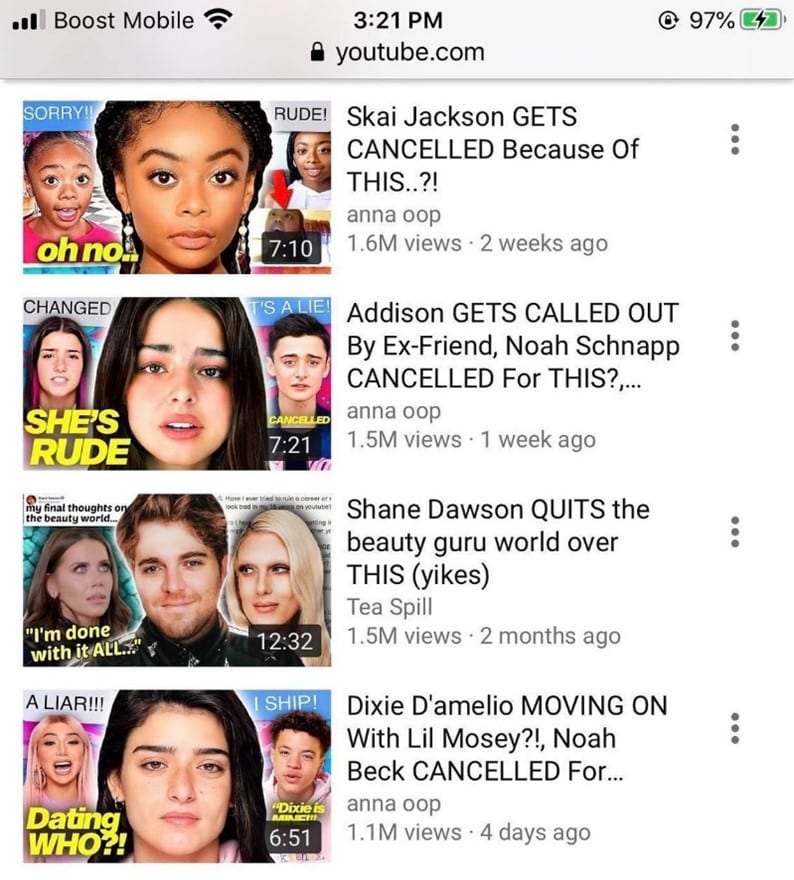
The Toxicity of Cancel Culture

Smartphones can be a gateway to public humiliation for kids and teens. Not only do they feel constantly scrutinized, but it’s difficult to predict your audience. One slip, and you can become the victim of cancel culture. Today’s article covers what cancel culture is, how influencers have been impacted, and how kids can fall victim to it. Find out how your family can avoid this digital nightmare with our sensible GKIS tips.

What is “Cancel Culture?”

According to Psychology Today, cancel culture is described as “the ending of (or attempt at ending) someone’s career or prominence to hold them accountable for immoral behavior.”[1] This notion of exclusion is masqueraded as a trendy new term yet is synonymous with what we already know as cyberbullying. So, what does it mean to be cancelled? When someone is cancelled, it means that their reputation has taken a severe hit from a mistake that is nearly impossible to come back from, justify, or apologize over.

Found predominantly among social media platforms, cancel culture involves relentless comments, posts, and sharing of the alleged immoral behavior. Intending to remove someone from a place of authority or popularity, these efforts go on indefinitely. Depending on the targeted person, people can be cancelled once, twice, or even more.

The complexity of cancel culture typically lies within the severity of the situation; however, the trend as a whole remains unmatched in the realm of cyberbullying— sometimes going as far as doxing or swatting. Doxing means publicly outing the victim’s private information with malicious intent. By making personal information public, other bad actors online can further stalk and harass the victim. Swatting occurs when a prank call dispatches armed law enforcement to the victim’s location under false pretenses, like saying the victim is holding a hostage and is armed. To learn about other need-to-know cyberbullying techniques, check out Dr. Bennett’s book, Screen Time in the Mean Time: A Parenting Guide to Get Kids and Teens Internet Safe. It’s available in paperback and audible on Amazon.

Cancel Culture is Trending

Anybody can say anything behind a screen. You can create a fake username and present a profile for any virtual self. Without a trace, people will be unable to decipher your true self from your virtual self, rendering you the power to say anything you want to say without real-life consequences. Thousands of fanbases (also known as “stans” or “armies”) have their phones readily available for battle with their eyes on the screen and the intent to voice their opinion with even the slightest invitation from their idols.

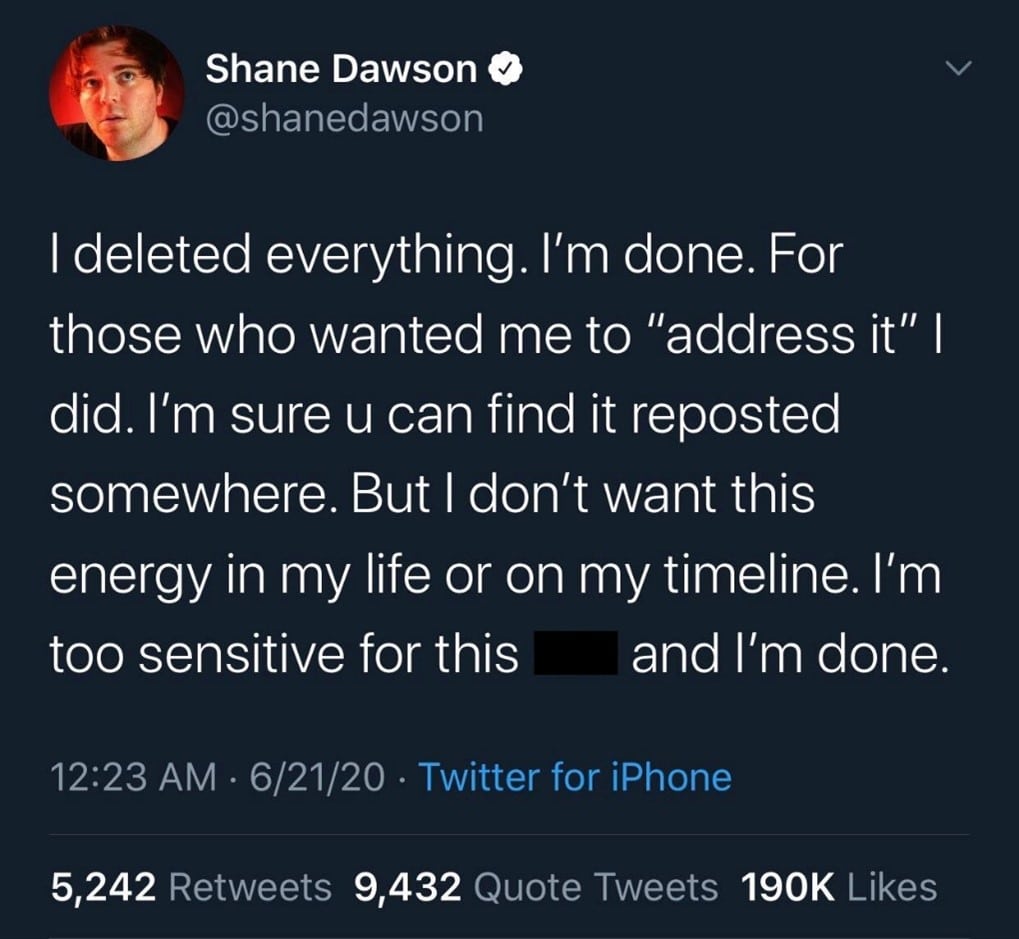
A classic example of cancel culture has been the fall of Shane Dawson in mid-2020, a YouTuber who was once famous for conspiracy theories, docu-series of other YouTubers, and other day-to-day vlogs. At his peak he had a total of 23.3 million subscribers but has since abandoned his channel, leaving video views and subscriber counts to plummet.[2]

Why was Shane Dawson cancelled? Following the 2020 rise of the Black Lives Matter movement, old videos (~10-year-old videos) from Shane Dawson’s channel resurfaced. Such content included racial slurs, inappropriate acts towards children, and even skits involving blackface. These videos spiraled throughout social media, leaving Shane Dawson to become #1 in trending for infamous reasons.

Gossip YouTubers took to these tweets, threads, and videos compiling incriminating evidence against Shane Dawson. Users across all social media platforms chastised him, using words like “pedophile,” “predator,” and “racist.” In a matter of three months, Shane Dawson lost over two million subscribers, was dropped as a brand ambassador of the makeup line Morphe, had all of his videos demonetized (he is no longer able to make any money off of views), and has since been silent since the end of June.

The Psychology Behind Cancel Culture

Research demonstrates that people invest in cancel culture because it offers them:

  • increased social status (one’s popularity in an online community),
  • an opportunity to show their commitment to their virtual community, and
  • instant gratification (enjoying the battle and voicing your opinion in real-time).[3]

This is detrimental on both ends of cancel culture, with one person becoming a victim of cyberbullying and the other succumbing to narcissistic tendencies. Narcissism in today’s online community involves becoming preoccupied with one’s self-image and projecting your flaws or mistakes onto other people to avoid becoming the outcast.[4] Likes, comments, and shares have become the token economy of the internet, driving people to continue their behaviors no matter how toxic they may be.

We are living in a time where saying nothing can be just as incriminating as saying something. Silence online insinuates compliance, leaving kids and teens vulnerable to cyberbullying even if they opt to stay out of it. Cancel culture flourishes at the expense of human error, with online communities waiting for the next person to slip up. Even though it is important for people to be held accountable for their actions, our children must understand that cancel culture is not the solution.

Cyberbullying Exposure and Prevention

Not only influencers fall victim to cyberbullying. Whether your child has succumbed to the giving or receiving end of cyberbullying, it’s never too late to have a conversation about the many issues involving our virtual selves. Social dynamics look different online compared to face-to-face interaction; however, a sense of humanity should not be among those differences.

Social media posts never completely vanish, as someone could easily take a screenshot of your mistake and share it among thousands of eager viewers to be released over and over. It is crucial that children, tweens, and teens understand the challenges of virtual vulnerability and accountability.

Here are our GKIS tools to avoid digital injury:

  • Start informing your kids about online risks by adopting our free Connected Family Agreement. Our agreement not only helps your family negotiate sensible rules, but it also covers online etiquette, empathy, and family values.
  • Follow our GKIS blog for hot topics to stay in-the-know for family discussion around a screen-free dinner table. You’ll receive an article a week in your email if you sign up for your free Connected Family Agreement. If it’s not for you, you can unsubscribe at any time.
  • Let us do the research for you with our Screen Safety Toolkit. Our toolkit is a family-tested, outcome-based resource guide with our best recommendations, how-to information, and links to our favorite easy-to-onboard parental control systems. You’ll be set to create the custom screen safety toolkit for your unique child. Help your kids stay accountable with the rules and regs included in our Connected Family Course. This course not only gives you what you need for safety, but it also offers fun home setup ideas to enrich online activities with offline play.
  • For kids only, our Social Media Readiness Course is particularly powerful in helping tweens & teens get educated about the risks of digital injury and offer Dr. B’s tested psychological wellness techniques. Using modules and mastery quizzes, this online course offers expertise to parents and kids, so they can form a warm and supportive alliance with kids who are vulnerable and relatively inexperienced.


Thanks to CSUCI intern Kaylen Sanchez for contributing to this GKIS article.

I’m the mom psychologist who will help you GetKidsInternetSafe.

Onward to More Awesome Parenting,

Tracy S. Bennett, Ph.D.
Mom, Clinical Psychologist, CSUCI Adjunct Faculty
GetKidsInternetSafe.com

Photo Credits

Photo by Prateek Katyal from Pexels

Photo by Kaylen Sanchez

Photo by Kaylen Sanchez

Photo by cottonbro from Pexels

Works Cited

[1] Henderson, R. (2020, March/April) What Propels Cancel Culture? Psychology Today, 53(2) 36-38.

[2] Urgo, J. (n.d.). Shane’s YouTube Stats (Summary Profile) – Social Blade Stats. Retrieved from https://socialblade.com/youtube/user/shane/monthly

[3]  Henderson, R. (2019, December 01). 5 Reasons Why People Love Cancel Culture. Retrieved from https://www.psychologytoday.com/us/blog/after-service/201912/5-reasons-why-people-love-cancel-culture

[4]  MacDonald, P. (2014). Narcissism in the modern world. Psychodynamic Practice: Individuals, Groups and Organisations, 20(2), 144–153. https://doi-org.summit.csuci.edu/10.1080/14753634.2014.894225