
Need peaceful screen time negotiations?

Get your FREE GKIS Connected Family Screen Agreement

social media

Is Social Media Behind the Spike in Child Suicide? Teens and The Blue Whale Challenge

blue whale

Recent reports of child and teen suicides have flooded the news recently. Too often social media and cyberbullying plays a role. The Blue Whale Challenge is the latest fad kids are talking about. Should parents worry?

Suicide risk

According to the Centers for Disease Control and Prevention there has been a recent spike in child and teen suicides. The rate for 10 to 14 year-olds doubled between 2007-2014. Suicide is the third leading cause of death among kids aged 10 to 14 and second among persons aged 15 to 34. Firearms is the most commonly used method for males, and poisoning is the most commonly used method for females. Because kids immerse themselves with their screens on average of 10 hours a day, there is often little escape from online peer pressures and conflict. Experts consider social media and Internet access to be major contributors to risk. The most recent sinister social media game tied to suicidal gestures is the Blue Whale Challenge.

What is The Blue Whale Challenge?

The Blue Whale Challenge is a game shared on social media that encourages players to complete a series of 50 challenges. Players are required to prove they are accomplishing these challenges by Skyping or instant messaging descriptions, images, and videos to a “whale,” who is typically an older person manipulating the younger subject. There is also a version where a Blue Whale Online Forum does the challenging. The name is reported to have come from the song Burn by the Russian rock band Lumen.

Blue whale challenges typically include a series of tasks with increasing risk that require subjects to “prove” obedience to the whale. These include various self-mutilation tasks, like poking, scratching, cutting, and carving words into one’s body, overcoming a fear, like climbing a crane or standing on a bridge, watching horror movies, and ultimately killing oneself on video. Gradual obedience training with social isolation and sleep deprivation gradually wears down a victim’s resolve and increases dependency. This type of psychological manipulation is a typical grooming technique used by online predators.

Descriptions of this challenge have been shared on Reddit and are rumored to have originated in Russia. A CNN article reported that 21 year-old Philip Budeikin was arrested in November 2016 with the charge “incitement of suicide” for encouraging 16 victims to kill themselves, and a 26 year-old postman was also detained by Russian authorities. An article by SkyNews stated, “Civil society groups in Russia believe that at least 130 young people have taken their lives while playing Blue Whale, while reports of incidents and fatalities in places such as Ukraine, Estonia, Kenya, Brazil and Argentina have also surfaced in recent months.”

Although it is unclear how pervasive this challenge is in the United States, at least two U.S. families have come forward to the media stating that it lead to the suicides of their children. Fifteen year-old Jorge Gonzalez of San Antonio was found hanging in his closet with his cell phone propped up to record. His parents told news media he had sent videos of challenges to friends after following the directives of a Blue Whale social media group. The parents of a sixteen year-old Georgia girl reported that their daughter killed herself, leaving behind paintings of blue whales, letters in Russian, and several clues linking her to this challenge. One clue was a sketch of 17 year-old Rina Palenkova, who killed herself in Russia in November 2015 and became an icon among online suicide fan communities.

What I have seen in clinical practice

So far I’ve not heard of the Blue Whale Challenge other than when my teenage son brought it up after seeing a cautionary video from famous YouTube star, Shane Dawson. However, I have treated many people with suicidal ideation since I started practice in the mid-1990s. My personal experience is that kids are speaking of suicidal ideation at younger ages and with higher prevalence. They often discuss suicide among strangers and peers online. Although it is argued that online communities provide support when kids are isolated or distressed, habitual discussion may also desensitize kids, causing them to lose sight that suicidal threats are very serious and devastating to those they love. For some, habitual discussion places them in a hopeless, one-solution mind space, distracting them from more productive and uplifting activities and relationships. Furthermore, comments like “Go die” or “Go drink bleach,” are too often delivered online with little regard to the potential consequences.

parents protecting kids

What can parents do to keep their kids safe?

Teach your kids the vocabulary necessary to talk about feelings while they’re young, gradually teaching more advanced problem solving strategies over time.

Rather than shrinking away from your kids when they are frustrated, sad, or angry, lean in and let them know you understand and consider their emotional well being your highest priority. If you see evidence that your child is being bullied, address the problem assertively with your child and seek support from school administrators and law enforcement. “Just ignore it” is not a reasonable solution.

Don’t allow your kids to flippantly make threats about hurting themselves.

Sometimes kids threaten to hurt themselves in order to express their pain and cry for help. Other times these threats are intended to express anger and manipulate others. Take any type of threat seriously and require a family discussion about every incident. You may want to let things calm down before you engage in the discussion, but don’t let a comment go unaddressed. Make sure your children understand that a consequence of such a threat is that they will have to talk it through to solution. If they won’t cooperate with you, offer adult alternatives like a trusted family member or a mental health professional.

Be alert for signs of emotional distress offline and online.

Mood and anxiety disorders and substance abuse often contribute to suicidality. Be on the lookout for depressed or agitated mood, an inability to have fun, a drop in initiative, sleeping often during the day, a change of appetite, low energy, a drastic change in behavior, social isolation, or expressions of inappropriate guilt or hopelessness. A drastic change in appearance, pulling away from friends, or giving away favorite items may also signal your child is in trouble.

If your child loses a friend or family member to suicide, be aware that he or she may be at increased risk. Keep in mind that not every suicidal individual is depressed and not every depressed individual is suicidal. Statistics show that only half of those who have killed themselves demonstrated depressive symptoms. Keep an eye out for hashtags that demonstrate dangerous themes on your child’s social media activity, like #bluewhalechallenge, #curatorfindme, or #sue.

If you have concern that your child is engaging in self-harm or has suicidal ideation, ask about it directly.

Parents often worry that mentioning suicide first may give their child ideas. But most people who attempt suicide show signs before the attempt. Asking directly is the best way to elicit critical information that can lead to prevention.

Be direct but avoid frequent, fearful questioning or shaming. Instead focus on validation, understanding, and problem solving. Suicide is often a consequence of feeling so hopeless the subject is unable to see a way to resolve their pain. Don’t stop at investigation and validation; help your child generate solutions. Praise positivity and resilience while discouraging blind obedience. Take every opportunity to authentically express your love and admiration for your child’s efforts, no matter how disappointing the ultimate performance. They need us to reveal our love for them in order to recognize that they are worthy of love just for being them.

Ensure that potentially lethal means are not available.

Lock firearms, razor blades, poisons, and dangerous medications in a safe, particularly if any family members have demonstrated suicidal ideation before.

Let go of your stigma toward mental illness and treatment.

Life is more difficult for some more than others, but few of us escape this life without hard times. Compassion is key. If your child is suffering, seek an expert who can help. Kids and teens will often accept the influence of other adults in a different way than they do with their parents. Don’t go it alone.

If you or someone you know expresses suicidal ideation, reach out to local mental health resources or call the National Suicide Prevention Lifeline at 1-800-273-8255. An online chat is also available, or you can text HOME to the National Suicide Hotline at 741741.

Worried about self harm and cutting? Check out my GetKidsInternetSafe article What Parents Need to Know About America’s Cutting Epidemic.

I’m the mom psychologist who will help you GetKidsInternetSafe.

Onward to More Awesome Parenting,

Tracy S. Bennett, Ph.D.
Mom, Clinical Psychologist, CSUCI Adjunct Faculty
GetKidsInternetSafe.com

Photo Credits
Half alive –  soo zzzz by I Love Playdough, CC by-ND 2.0

Family Travel by Roderick Eime, CC by 2.0

How to Help Your Teen Stop Texting and Driving!

Are you so attached to your smartphone that you can’t ignore a notification while driving? As hard as it is for parents, imagine how impossible it is for your teen! Their virtual identities are even more developed than ours. Teens need their phones to communicate with friends, look up activities, watch on-demand entertainment, and complete school assignments. Teens are more cyborg (part human, part machine) than parents. They are more dependent on screens and more practiced. With less impulse control, they are also at higher risk for distracted driving. One of my favorite things about being Global Ambassador for TeenSafe was helping parents can better help teens concentrate on the road rather than their screens. Although there are phone options and apps that help, nothing works as well as starting healthy habits before they get their driver’s licenses. Today’s GKIS article may help save your life or the life of your child!

Distracted Driving

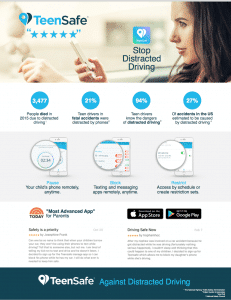
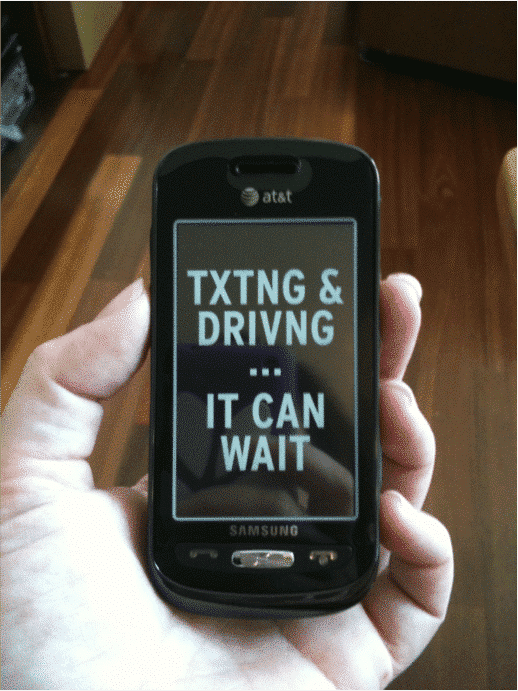
Motor vehicle accidents are the leading cause of death for children. Texting while driving is the cause of 25% of all driving accidents.[1,2] Texting while driving has become a 6x bigger hazard than drinking while driving. Ninety-five percent of drivers disapprove of distracted driving, yet 71% admit to doing it.[3] In the five seconds it takes to respond to a text while driving 55 mph, one travels the entire length of a football field.[4] Not only does texting take your eyes off the road, but it also takes your hands off the wheel and your concentration off safe driving.

Teenagers are the guiltiest of distracted driving. A 2012 AAA Foundation in-car study found that teens are distracted for up to one-fourth of their time behind the wheel. Screen activities like texting, navigating, taking photos, checking social media, and selecting and downloading music are common distractors.

The compelling urge to multitask combined with the dire need for more hours in the day compulsively condition us to be on our screens 24/7. There has also been a large increase in smartphone apps available for download. Not only are teens texting, but many are also using social media and gaming apps like TikTok, Instagram, Facebook, Twitter, and Pokémon Go and even taking “selfies” with apps like Snapchat while driving.

Monkey See, Monkey Do

Every parent has told their teen not to use their phone and drive, yet, “according to 77% of teens, adults tell kids not to text while driving—while texting themselves while driving “all the time.”[5] They notice, and they copy what we do. Why should our teens listen to us when we remind them not to use their phones and drive if we don’t take our own advice?

Peer Influence

To make matters more difficult, our driving habits aren’t the only influence on our teens. 75% say texting while driving is common among their friends.[6]

Start the Conversation

The National Safety Council reports that smartphone use while driving leads to 1.6 million motor vehicle accidents each year. That translates to nearly 390,000 injuries and 15,341 drivers involved in fatal crashes. One out of every four car accidents in the United States are caused by texting while driving.[7]

If your teen is driving, talk with them about specific ways to reduce their distractions while on the road. Being a positive role model for safe driving and promoting open communication will not only benefit your teen but hopefully, your teen will follow your lead and become a role model for their friends. In our crazy busy lives, we all could use some reminders. Even teens agree; “62% of teens feel that getting reminders from their parents not to text and drive would be effective in getting them or their friends to stop texting and driving.”[6]

GKIS Tips for Distraction-Free Driving

  • Because teen drivers are inexperienced and tend to overlook risk, draw up a safe-driving contract with the help of your free GetKidsInternetSafe Connected Family Screen Agreement so they are aware of distracted driving risks and agree to safe driving practices. Make sure they recognize that texting while driving is illegal and may result in fines, license restrictions, a rise in auto insurance rates, and even prison time. Critical safety measures include setting a good example, limiting the number of passengers, investing in a safe-driving course, and using a parent-controlled tech tool like a pause button that freezes smartphone capacity.
  • Enable “do not disturb while driving” options on your smartphone.
  • Stash your phone away when driving. Even when disabled, it’s still too tempting to grab it for nav or music.
  • If you’re the kind of person that can’t stand radio commercials, create a music playlist on your phone so you don’t have to go searching through your phone for a song while you drive.
  • If you need to take an important phone call, pull over to the side of the road.
  • Use Bluetooth. While it is still mentally distracting to be talking on the phone if you can’t pull over, Bluetooth keeps your hands on the wheel and your eyes on the road.
  • Plan ahead and look up directions before starting the car.
  • While there are days when running late is unavoidable, do your best to be ready before you get in the car. That means makeup, hair, and breakfast are already taken care of rather than dining while dashing.
  • Finally, regularly remind your teens that using their smartphones while driving is not worth losing their life. Remind them that driving is a huge responsibility, and their car is a 2-ton weapon.

With this information and these tips, I hope you and your teen can support each other in working towards becoming screen media-safe behind the wheel. Thanks to CSUCI Intern, Brooke Vandenbosch for reminding us that texting and driving just aren’t worth the risk. For a reminder about why a constant connection to their friends is so compelling to teens, brush up on your developmental psychology with my GKIS crash course about teens!

I’m the mom psychologist who will help you GetKidsInternetSafe.

Onward to More Awesome Parenting,

Tracy S. Bennett, Ph.D.
Mom, Clinical Psychologist, CSUCI Adjunct Faculty
GetKidsInternetSafe.com

TeenSafe & Distracted Driving

Photo Credits

Texting While Driving
Girl in Car
Driving

Works Cited

[1] https://www.cdc.gov/safechild/child_injury_data.html

[2] https://www.nhtsa.gov/risky-driving/distracted-driving

[3] AT&T, https://www.itcanwait.com/pledge

[4] DMV. https://www.dmv.org/distracted-driving/texting-and-driving.php

[5] Atchley, P., Atwood, S., Boulton, A. (2011). The Choice to Text and Drive In Young Drivers: Behavior May Shape Attitude. Accident Analysis & Prevention, Vol 43. Retrieved from

[6] U.S. Newswire [Washington] (2012). 43% of Teens Say They Text & Drive; 77% Say Adults Warn Against Risks, but Text & Drive ‘All The Time’: With Prom, Graduation, Summer, May Starts ‘100 Deadliest Days’ On the Road for Teen Drivers; AT&T Kicks Off Nationwide Car Simulator Tour

[7] https://www.aaafoundation.org/sites/default/files/research_reports/DistractedDrivingAmongNewlyLicensedTeenDrivers.pdf

The Underworld of Hashtags: Does Your Teen’s Hashtags Hide a Secret?


Since the 2010 launching of the mobile app, Instagram, users share pictures and videos with their peers like never before. While this social media app provides a fun and convenient way to show off family photos and adorable pets, it can also be a source of worry for parents. Do you worry about who is viewing their child’s photos and what they are posting? If so, you’ll be happy to learn about the possible dangers of hashtags.

What are hashtags?

Hashtags are “#” symbols in front of words or short phrases that drop them into a posting page with the same tag. Sorting content this way allows others to see your picture and any other pictures that use the same hashtag if your social media profile is not set on private. Click on a hashtag phrase like “#Monday”, you would be directed to a page of #Monday photo collections from all Instagram photos tagged with #Monday from various user profiles.

Hashtags seem harmless, should I worry?

Most hashtags are used for fun and harmless sharing (#MomGoals, #GKIS). However, as with any social media trend, teens often use this tool to find and contribute to pages with explicit material. One way to hide this activity from parents is to use vague or shortcut terms.

An unfortunate example of this secret language is for pictures depicting images of self-harm (#cutting) and eating disorders (#mia, #ana). While some profiles provide helpful information to help empower those in distress, others overtly encourage self-destructive behaviors. These online communities are commonly known to share detailed techniques and strategies, provide emotional support, and serve as a launch pad for online friendships. In my clinical practice, these relationships often spiral into emotionally dependent and frequently abusively manipulative pairings that remain hidden and are resistant to protective parent intervention.

Hashtags are used on most social media sites, including Instagram, Twitter, and Tumbler (Whitlock, 2009 & Nock, 2010, as cited in Moreno, 2015). Although many kids go looking for these forums after they’ve already experimented with concerning behaviors, others get started this way (Seko, 2011, as cited in Moreno, 2015).

Until social media sites improve the strength of their content advisory, parents must keep their children safe from viewing explicit content.

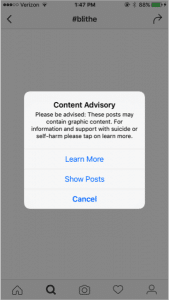
Instagram now has a content advisory that pops up and warns users of content that might be graphic and even provides resources for help with eating disorders and links to helplines. However, just as kids are great at creating sharable online resources, they are also great at staying hidden from parental interference. For example, in a 2015 study that identified similar hashtag meanings on multiple social media sites, vague and hard to identify hashtags including “#mysecretfamily”, “#blithe”, “#Bella” or “#Ben” (a term used for Borderline Personality Disorder), “#Ana” or “#Rex” (used to reference Anorexia), and “#Sue” or “#Dallas” (terms for suicide) (Moreno, 2015). Only a portion of these hashtag terms generated a content advisory warning.

GKIS TIPS for protecting your children from viewing destructive online content:

  • Check out social media site help centers for information. For example, Instagram’s help center provides downloadable privacy and safety guides for parents, teens, and gives information and resources for addressing abuse and eating disorders. 
  • Make sure that your child’s social media profiles are set on private.
  • Have open conversations about what your children view and post online. Remind them that they can talk to you if they do accidently view images, post, or receive something that makes them uncomfortable. No blame, no shame.

By opening up nonjudgmental conversations about what your child may view on social media and mental health issues, you model healthy communication skills, promote stigma free views on mental health, and most importantly, develop a positive and loving relationship between you and your child. If you feel they are too young for these discussions, then they’re too young for social media.

Parenting can be incredibly difficult at times. Parenting a teen struggling with painful psychological issues is particularly scary. In situations like these, many aren’t sure where to turn or what to do. As a psychologist and a mom, I want to remind you that you are not alone. Whether your concerns are about Internet safety or getting a better understanding of where your psychological issues your child may be dealing with, GetYourKidsInternetSafe is here as your resource.

Thank you to CSUCI Intern, Brooke Vandenbosch for teaching us about the #RisksofHashTags. If you’re looking to get a better understanding of issues your teen may be struggling with like suicidal ideation, check out my other article The Death of Robin Williams: Suicidal Impulse, the Media, and Your Obligation As a Compassionate Citizen of the Planet.

I’m the mom psychologist who will help you GetYourKidsInternetSafe.

Onward to More Awesome Parenting,
Tracy S. Bennett, Ph.D.
Mom, Clinical Psychologist, CSUCI Adjunct Faculty
GetKidsInternetSafe.com

Photo Credits

I Died So I Couldn’t Haunt You, CC BY-ND 2.0

Holding Hands, CC BY-NC 2.0

Works Cited

Moreno, A.M., Ton, A., Selkie, E., & Evans, Y. (2015). Secret Society 123: Understanding the Language of Self-Harm on Instagram. Journal of Adolescent Health, 58, 78-84

Is My Selfie Good Enough? How Screen Media Drives Beauty Pressures That Distress Kids and Teens

A selfie is a self-portrait shared on texts or social media for attention-seeking, communication, documenting one’s day, and entertainment.[1] The term was first seen in 2002, but didn’t become popular until 2012. By 2013 The Oxford English Dictionary named it “The Word of the Year.”[2] We’ve all been guilty of taking selfies. But it takes education and practice to use good judgment. Today’s GKIS article asks, “Are selfies bad for our mental health?”

Celebrity Selfies

With ads on social and print media, billboards, and television, kids and teens are exposed to thousands of images and videos every day. And, it isn’t obvious how filtered, lighted, contoured, surgically and cosmetically altered, and digitally enhanced the photos are. They aren’t a quick, natural snapshot. They are highly produced and stylized. Kim Kardashian proudly shared that she once took 6,000 selfies during a four-day vacation. Her celebrity sister, Kylie Jenner, also admitted that it sometimes takes up to 500 photos before she gets the right shot.

With such exposure, kids are encouraged to scrutinize their appearance, striving to develop and refine the “perfect” face and body.3 Hyper-sexualized selfies further serve as a negative influence. One can easily get roped into hyper focusing on looks and attracting “likes” and comments as a reflection of worth and popularity.

Selfie Editing Apps

Makeup and selfie editor apps are very commonly used and include features to:

  • Change eye color
  • “Slim and trim to selfie perfection”
  • Enlarge features
  • Shrink the nose
  • Plump the lips
  • Enhance facial contours
  • And even offer hundreds of pupil templates “to make your eyes look beautiful.”

Apps also offer combo features that turn your image into cartoon perfection. For example, the “fairy filter” on Snapchat can change your selfie in multiple ways at once, making your eyes larger and gleaming bright while also smoothing out the skin and whitening teeth.

The Beauty, Fashion, and Health and Fitness Industries

Selfie alteration isn’t motivated simply by entertainment. A far more sinister reason often lurks behind the manipulation of young minds, namely profit.

Each year the beauty industry boasts a profit of 42 billion dollars.[10] Add that to the 30 billion dollars brought in by fashion, health, and fitness and the big business of advertising on social media, and one can imagine the lengths corporations will go to manipulate buyers into buying.[4] The worse we feel about ourselves, the more we buy products to “fix” us.

Do we adopt unrealistic attractiveness standards?

In the past twenty years, anxiety and depression have been rising at an alarming rate. The rates of mental health issues among women have particularly jumped.[5] Social media and the pursuit of perfection are likely contributors.

Not only can media exposure lead to mood issues, but body distortion and eating disorder issues are also on the rise.[7] Forty to 60% of elementary school girls report having concerns about weight.[8]

Body shaming among peers starts young and peaks during adolescence. Both males and females engage in shaming, but they do it differently. Males tend to be more directly aggressive, while females shame through passive-aggressive means like gossip and cyberbullying.[9]

Body image issues can lead to excessive use of diet and exercise products and potentially lead to clinical eating disorders. In the United States alone, 20 million women and 10 million men suffer from a clinically significant eating disorder at some time in their life.[6] Even with awareness and education, prevalence numbers continue to rise.

How can we protect our kids from unhealthy self-perception and distorted body image?

  • Love and compliment your kids loudly and unapologetically for all they are! This includes their worthiness of love just for being the “perfect,” nondigitally enhanced them.
  • Reinforce that the self is made up of far more facets than a beautiful face. Likes, interests, skills, and traits make up what’s important about a person, not eye size and hair color.
  • Discuss the fact that we will be hanging out with our bodies for the long haul, which means we must treat our bodies as our best friends rather than our enemies.
  • Lead by example. Do you voice your disapproval about your face or body aloud to your kids? If you do, they too will follow suit about themselves. Instead, be loud and proud of the woman or man you are today. Value yourself just as you would like your daughter or son to value themselves.
  • Implement healthy eating, sleeping, and exercise habits and explain why that is so important for strength and health. I prefer to focus on words like “delicious” and “nourishing” for healthy food to highlight lifestyle factors and frame nutritious food options as a treat, rather than words like “diet,” “cleanse,” or “cheat” that focus on junk food as treats and healthy foods as punishment while aggrandizing shaming fads.
  • Remind your teen that what they see on social media and in ads isn’t always the real deal. Take an Internet browsing journey with them researching this topic by searching “photoshop hacks” or looking up Jean Kilbourne’s ground-breaking work in this area with her “Killing Us Softly” video series. A must-see!

Thank you to CSUCI Intern, Brooke Vandenbosch for her contributions to this important article! Wonder if only girls are susceptible to body image risk to mental health? Check out, “Body Shame and the Average American Male” for a discussion about how boys are increasingly affected as well.

I’m the mom psychologist who will help you GetKidsInternetSafe.

Onward to More Awesome Parenting,

Tracy S. Bennett, Ph.D.
Mom, Clinical Psychologist, CSUCI Adjunct Faculty
GetKidsInternetSafe.com

Works Cited

1 – Sung, Y. , Lee, J. , Kim, E. , & Choi, S. (2016). Why we post selfies: Understanding motivations for posting pictures of oneself. Personality and Individual Differences, 97, 260-265.

2 – https://en.oxforddictionaries.com/word-of-the-year/word-of-the-year-2013

3 – Boon, S. and Lomore, C. (2001), Admirer-celebrity relationships among young adults.. Human Communication Research, 27: 432–465.

4 – Cosmetic & Beauty Products manufacturing in the U.S: Market Research Report. (2016, September). Retrieved December 07, 2016, from http://www.ibisworld.com/industry/default.aspx?indid=499

5 -Press Association Newswire (2014). ‘Very High Rates of Anxiety and Depression for Young Women. Newsquest Media Group.

6 – Wade, T., Keski -Rahkonen A., & Hudson J. (2011). Epidemiology of eating disorders. In M. Tsuang and M. Tohen (Eds.), Textbook in Psychiatric Epidemiology (3rd ed.) (pp. 343 – 360). New York: Wiley.

7 – Leit, R. (2002). “The Media’s Representation of the Ideal Male Body: A Cause for Muscle Dysmorphia?” International Journal of Eating Disorders, vol. 31, no. 3, pp. 334–338., doi:10.1002/eat.10019.

8 – Smolak, L. (2011). Body image development in childhood. In T. Cash & L. Smolak (Ed s.),Body Image: A Handbook of Science, Practice, and Prevention (2nd ed.). New York: Guilford.

9 – Aslund, C., Starrin, B., Leppert, J., & Nilsson, K. (2009). “Social Status and Shaming Experiences Related to Adolescent Overt Aggression at School.” Aggressive Behavior 35.1: 1-13. Web.

10 – Gym, Health & Fitness Clubs in the U.S: Market Research Report. (2016, October). Retrieved December 07, 2016, from http://www.ibisworld.com/industry/default.aspx?indid=1655

Photo Credits

Mirror by Allen Sky, CC BY 2.0

Mirror by Tif Pic, CC BY-ND 2.0

This is a MUST WATCH with your daughters and your sons!

6 Experts Share Productive Screen Time Tips for Kids

screenshot-2016-12-02-13-36-52

On November 11, 2016 I was invited to participate in a panel discussion and present in a breakout session at the Safe Smart Social Conference at the Microsoft Corporate Headquarters in Los Angeles, CA. Here is a link to the panel presentation with thought leaders in child screen safety. My favorite takeaway?

***

How can we collaborate with technology to build a connection with our kids?

Strive to have a strong, fun, connection with your children that includes an ongoing dialogue; one of the best ways to achieve that connection is with tech. If children see us as a partner in tech, then we can keep the conversation open. Remember that the partnership between tech and your connection with your child is the most important. –Dr. Tracy Bennett, GetKidsInternetSafe

GetKidsInternetSafe Sheds Light on the Dark Net: Drug Traffickers, Child Pornographers, and Nude Selfies

Screenshot-2016-03-17-16.03.47

Along with being a mother of three and clinical psychologist in private practice for twenty years, I’m adjunct faculty at California State University Channel Islands. This semester I’m teaching the courses Addiction Studies and Parenting. Over the summer I read an incredibly interesting book, The Dark Net by Jamie Bartlett. I was so fascinated by what he had to say, I assigned the book to my class along with a reaction paper. I asked them to identify with and support one extremist position or the other, the techno-optimists or the techno-pessimists. Who would you side with?

What is the dark net and how does it relate to GKIS?

The dark net is a hidden, encrypted overlay Internet network with over 50,000 websites that can only be accessed by the Tor Hidden Services browser. It’s the online underground. To get on the dark net, anybody with Internet can download the free Tor browser. From the Tor browser, your search request gets bounced around via several computers encrypting and decrypting your request as it goes, ultimately making your search untraceable. That means anonymous users can browse and interact with websites that cannot be regulated or censored.

Interestingly, the Tor browser was originally invented in the 1970s by the United States Department of Defense (Advanced Research Projects Agency Network – ARPANET) so they could browse the net without being recognized. The same technology used for national security is the very software being utilized by users of the dark net, the criminals and those using it for social benefit.

As you may suspect, the dark net is populated largely by those who have something to hide. In his book, Jamie Bartlett interviews dark net frequenters, including trolls, pornographers, child pornographers, self harm chatters, political and social movement extremists, and those who participate in black market drug sales (referred to as the Silk Road).

The Silk Road

The Silk Road is an ecommerce site that specializes in the sale of illegal drugs. To shop on the Silk Road, one simply needs to browse for products (marijuana, cocaine, methamphetamine, hallucinogens, heroin, you name it) that are displayed like any ecommerce site, such as Ebay or Amazon, with thousands of products offered by hundreds of vendors. One can see a photo and description of the product, read customer reviews to assure quality, contact the vendor, place an order with your delivery address, and pay with bitcoin, which is cryptocurrency designed to keep your identity secret. Once ordered, your money is held in a secure account until the product is on its way, then it is released to the seller and you’re left to wait for your product to be delivered to your nonvirtual mailbox.

Of course, there is not full safety, privacy, and anonymity on the dark net. The clever encryption makes it very difficult to locate the server for the website…and thus the creator. But there are arrests made from dark net activity. For example, the founder of the first Silk Road website, 31 year-old Ross Ulbricht, was sentenced to life in federal prison in May, 2015. The federal judge was quoted to say, “What you did with Silk Road was terribly destructive to our social fabric.” Silk Road cashed in over a billion dollars in sales between 2011 and 2013. Destructive indeed. However, even in the high profile case of Silk Road 1 being taken down by the FBI; within a month, the Silk Road 2 site popped up on its place. And the illicit online drug trade was reborn.

Perhaps what is most concerning for GetKidsInternetSafe (GKIS) is the large number of child pornography images available on the dark net. GKIS prefers the term online child sexual abuse to child pornography. However, one of the big problems identified by Jamie Bartlett is that up to one-third of child pornography images are self-produced. This means that children and teens, sometimes coerced, take and share their own partially nude and nude photos. As a result, eradication of these images becomes nearly impossible.

Why in the world would a child or teen publish their own photos and interact online with strangers?

In order to understand a child’s motives, one must consider what tweens and teens are trying to accomplish socially at this developmental stage. They are trying to form their self identity independent from their family of origin. They are trying to create their “brand.” And what models do they have for branding? Nude selfies experts like Kim Kardassian. No only are they mimicking their favorite Internet celebrities, but they’re also trying to build their confidence and street cred among their peers.

Just like trolls on the Internet, teens practice thickening their skin by boldly brushing up against risk. What is too scary to do in real life is more possible in virtual life. The harmless end of the spectrum for online skin thickening is talking smack to same-age friends (e.g., cyberbullying on Twitter) and the dangerous end of the spectrum is engaging with an adult stranger on the Internet (e.g., opening oneself up to grooming by an online predator).

Scary right? Yes! The truth is, telling your tween a scary story isn’t enough to stop them from experimenting with their social power and sexuality online. They will engage in conversation with an online “creeper” as a kind of dare. The kids think they’re in control and enjoy the banter . . . until they get titillated or start to trust the guy and ultimately lose control. That’s when it gets dangerous. Because in the chess game of pedophilia, creepers are well practiced and use extremely sophisticated grooming methods to manipulate children. Overly confident teens with immature prefrontal brain regions (the seat of problem solving and judgment) are easy pickings for sinister adults.

I recently saw a disturbing playing out of this very dynamic when I was investigating the new video streaming social media app, Periscope. A very popular stream with lots of floating hearts revealed what looked like a 12 year-old girl playing truth or dare with a hoard of flirting anonymous strangers. She had the demeanor of a hardened flirt, but her vulnerability was dangerously evident. Talking to men who were daring her to take off her clothes soon revealed she was in way over her head. But not only did she not realize she was in peril, she was becoming more and more determined to demonstrate she could handle it. As a mother and psychologist, it was distressing in the least. And yet it is playing out everyday, all the time. Parents are the last to know.

What can parents do to keep their kids off the dark net and from self-promoting sexualized images?

I’m sorry to say there is no magic shortcut to this question. The GKIS short answer is, you have to parent.

Not only must you stage your home appropriately with a good monitoring and filtering techkit and techniques like I offer in the GKIS Connected Family Online Course, but you also must teach your kids good judgment and digital skills. One scary story won’t get the job done. Skill building is a gradual process that takes root from a strong parent-child alliance. That powerful connection can only occur with quality, fun family time and engaging, informed conversation.

Start your digital parenting with deliberate restriction of content (e.g., no social media apps in elementary school). As your child gains experience and judgment, slowly loosen up and allow more digital freedoms, with tech monitoring and frequent check-in discussions. Avoid dishonest spying that can lead to a hurtful ambush that will blow your credibility. If you’re straight with them that you will check their online content, they’ll post with better judgment and accountability from the beginning. Ongoing digital conversations not only offer bi-directional teaching opportunities between kids and parents, but it also builds a cooperative relationship and teaches family values.

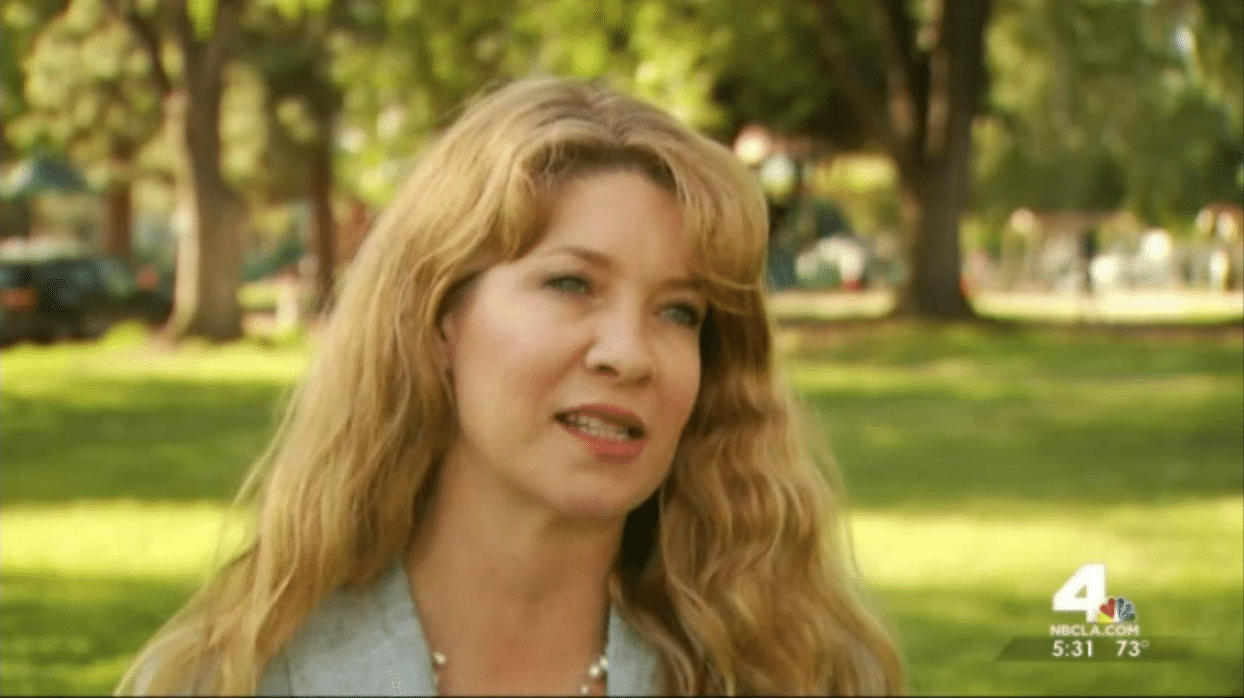
Consistent with my article last year Hey Dad, Your Twelve Year-Old Daughter Has a Nude Out, Jim McDonnell the Sherriff of Los Angeles County recently penned an open letter to parents cautioning them about the perils of self-published nude selfies and human trafficking. Check out my NBCLA interview for details.

I’m the mom psychologist who will help you GetYourKidsInternetSafe.

Onward to More Awesome Parenting,

Tracy S. Bennett, Ph.D.
Mom, Clinical Psychologist, CSUCI Adjunct Faculty
GetKidsInternetSafe.com