
Need peaceful screen time negotiations?

Get your FREE GKIS Connected Family Screen Agreement

parenting

The Texting Dead: 14 Ways We Are More Borg than Human

This-is-your-brain-on-crack

Originally published by The Good Men Project

You know why I LOVE The Walking Dead television series? Because I’m a nerd. I love to forever analyze how humans interact with nonhumans and how the nonvirtual interfaces with the virtual. But the confusing thing these days is that our virtual and nonvirtual worlds are so intertwined, it’s getting harder to tell them apart. I propose that the idea of zombies that lead us to the end of times is actually screen media.

My all time favorite novels are either fantasy or sci fi. I mostly love people, but I also love technology. I’m an introverted extrovert. Love to read. Love to surf the Internet and Facebook. Love to party. Most of all, I love to discuss apocalyptic, science fiction scenarios with real live humans (“If you could bring five people and five things on an island…”).

In regard to my opinions about technology, it turns out I’m a moderate. In other words, I’m not firmly in the techno-pessimist or techno-optimist camp. I realize we have reached the point of outsourcing so much to our screens that we are cyborg, yet we still crave one-to-one real time face contact more than anything else. After three years of intensive study about screen safety, I’m essentially an independent who loves her tech while helping clients manage through the very real perils of kids participating in screen activities too much too soon.

In regard to being cyborgs, our screens provide us powerful life tools. They are literally changing the structures of our brains. Specifically, scientists are identifying increased cortical thickness in commonly used neurological pathways among screen users. “ Use it or lose it” applies to brain development. Technology is changing us in ways we aren’t aware of, and in ways we don’t understand. Not only are we interacting with the world, and each other, differently, but we are absorbing nibbles of screen content like an amoeba absorbs nutrients. Sometimes we are active viewers, other times virtual images are flashing before us embedding messaging while we remain largely unaware of its impact. Some of these images are designed to brand and make us devoted paying customers, called neuromarketing.

It’s time we face it. Unless you go to extraordinary lengths for online privacy, you no longer have any. Every valuable mouse click you make is captured, categorized, and used for profit. If you online shop for a refrigerator today, you will be retargeted with refrigerator ads tomorrow. And if you refuse to click? No worries, your Samsung television will record your conversations and use those for retargeting. Facebook knows, and uses, everybody in your smartphone’s address book and your location to locate connectability and buy ability. Information about your habits is BIG business, and every move of your mouse is being collected to identify patterns and vulnerabilities. Rich corporations utilize powerful technology resources to get into your pocket in ways you haven’t even fathomed.

I recently went to see the fantasy/sci-fi thriller, Ex Machina. I left spooked, saying I felt like this is the first time my eye could not distinguish CGI from reality. I spent the movie looking for a distortion in how the robots looked or moved, and there wasn’t one! I panicked a little bit thinking, how are we going to tell fake news from real news if even video footage can be faked? Furthermore, machine learning is already a real thing. In other words, machines can now evolve based on their learning without human interface! Robots are here. They are patrolling parking lots collecting big data, including your license plate number, speed, time of arrival and departure, and giving directions when asked. They can even scan your face for identity and your body for weapons. As soon as you are identified, data about your habits populate the screen. Even mall billboards have this capacity now, identifying you and immediately displaying ads corporations are sure you’ll like. Privacy as we’ve known it is dead, dead, dead.

If you’re still in denial that we are irreversibly computer-dependent à la Jetsons, consider these 14 ways we are already more Borg than human:

  • We get speeding tickets from a camera and computer rather than a uniformed police officer.
  • Computer voices lead us through endless mazes of flowchart selections as the only option for “customer service.”
  • We order groceries with a button or a wand, and we pay with our thumbprint (see Amazon Dash and AmazonFresh).
  • We breakup on text and bully through online ratings and social media shaming, happy to escape that messy feeling when your hurtful missile hits its victim (psychologists call this the online disinhibition effect).
  • Our kids schedule online gaming playdates and text each other while hanging out.
  • We seek validation through social media and chat rooms. Computers have become our soothing tonic. ((hug))
  • Yesterday, you reached for the rewind button on your radio because you got distracted. And if it was a podcast, it actually worked.
  • We learn about gender roles from webcomic trolls and sex from online porn.
  • We can no longer remember things because our smartphone is our external hippocampal harddrive.
  • Bank tellers greet us with, “Good afternoon, please swipe your card and enter your pin.”
  • We are so exhausted from fractured attention and overload due to computer data, we have little energy left over for people. But we somehow scavenge enough for more screen media like TV or Facebook. (Please someone invent a can of wine-flavored oxygenated glucose.)
  • My new client who begged not to have ANY notation on my computer because of fear for government interference isn’t even psychotic.
  • Apple Watch
  • Google Glass
  • Virtual Reality

Am I right? Screen media is our drug. We are never satiated. We are too hungry for it to go to bed on time. We are so hungry for it it’s what we check first thing in the morning. As a clinical psychologist, it allows me to reach an audience of thousands at this very moment instead of a single individual. Bottom line, it lights up the same pleasure center part of our brains that every drug of addiction does.

Our greatest fear is that technology will end our planet and our greatest hope is that it will save it.

Name five people and five things you want on your post-apocalyptic island (genies and meatball sub sandwich factories aren’t allowed). If you didn’t say your laptop, you’re lying.

“Siri, add closing and send.”

I’m the mom psychologist who will help you GetYourKidsInternetSafe.

Onward to More Awesome Parenting,

Tracy S. Bennett, Ph.D.
Mom, Clinical Psychologist, CSUCI Adjunct Faculty
GetKidsInternetSafe.com

What We All Need to Remember About Public Shaming and Parenting the Suicidal Teen


Screenshot-2015-06-07-11.48.43

It’s happened again. Another hopeless teen chooses suicide possibly in response to cyber bullying, and this time it is tragically from her dad, a dad who posted a public-shaming video of Izzie Laxamana sitting defeated with her beautiful black hair blanketing the floor around her as he scolds her for “getting messed up.” What was she thinking jumping off the 48th Street Bridge? What was her dad thinking?

None of us will every know, but I suspect neither of them were thinking clearly. As a mother of three, psychologist, and creator of GetKidsInternetSafe I treat the suicidal teen and unthinking parent everyday. And before we rant self-righteously about what a monster this grieving father was, take a moment and reflect on your less-than-stellar parenting moments, those times you ranted, or humiliated, or hit. Recall your desperation, your fear, and your hope that this time your kids would actually listen. Because of this one impulsive intervention, maybe they’d steer clear of what was looking like a careless leap into the lake of entitlement, cruelty, or peril.

Let’s face it. Nothing makes us more crazed than our love for our babies, love that is tinged with shame and fear that we are not being our best parent, that we failed in our efforts to protect them from the dangerous things in the world. We let them watch that violent movie or allowed too much access to friends on social media who were poor influences. We did it because we wanted to make our kids happy. They begged and pleaded and it was a sweet opportunity to let them know we love them and listen to their feelings and desires. They told us to trust them, and we did. Or that time we went too far when they didn’t pick up their backpacks from the billionth time, threatening to retire as their parent or never let them do anything fun again, ever.

If you were really honest, can you say that you have the perfect formula of discipline and affectionate connection dialed in? Because if you can say yes, then your kid is either a robot or you are in deep denial. After all, the best way to teach our kids is to allow them, and ourselves, to fail – and recover, with humility, validation, and self-compassion.

The psychological research is squarely in favor of authoritative rather than authoritarian or permissive parenting. Being authoritative means being attentive, consistent, warm, strict, validating, and forgiving; not a tyrant demanding of blind obedience and not a friend accepting of all choices. Sometimes that means parenting with affection and humor. Other times it means laying down a consequence that your kids will be really angry about. But most often, it means gently guiding them through a protected path while letting them know you love them through it all, achievements AND mistakes. That includes sharing your own accomplishments and failures and limiting their exposure to content and people that pose risk or may come between you and your gullible child.

As I sit here, my heart aching from this beautiful lost child and her tortured father, I’d like to share my guess of the vulnerability this dad caved to that contributed to the loss of his daughter. Fear. In twenty years of practice I have learned to keep a keen eye out for the one thing that people seem determined to make happen, and that is to make their biggest fear come true.

I promise you it happens to all of us. Those who fear abandonment will challenge their loved ones to leave in the most ingenious of ways. Those who fear infidelity will accuse and threaten until their loved ones throw up their hands and stray. Those who fear disobedience will smother until survival depends on an epic reach for independence. Those who fear rejection will permissively allow until their loved ones to beg for boundaries.

If you are rolling your eyes in denial that you would fall victim to fear, I suspect you’re in the most danger. And if your wide-eyed and swallowing all that this article is offering, I suspect you may also need some support. Heck, if you’re breathing you deserve a hug today. Because life is hard and parenting well is even harder.

But rest assured that there is good news about fear. With patient reflection and an open heart, it doesn’t take much to identify the fears that threaten to take over the wheel. And from those insights, one can seek out the support they need to be better, do better. We can’t do this alone. If you worry you haven’t set a firm safety plan for screen use in your home, check out the GetKidsInternetSafe Screen Safety Toolkit to get started TODAY.

I’m the mom psychologist who will help you GetYourKidsInternetSafe.

Onward to More Awesome Parenting,

Tracy S. Bennett, Ph.D.
Mom, Clinical Psychologist, CSUCI Adjunct Faculty
GetKidsInternetSafe.com
This news report states Izzy wrote suicide notes on her iPod, including one to her dad saying she loves him very much and he is not responsible for her actions. Apparently her dad did not post the video. Izzy gave it to a friend who posted it on social media. An investigation revealed that there were several contributing stressors, including a history of bullying and embarrassment about sending a selfie in sports bra and leggings to a boy at school:

For my cautionary tale about selfies being passed among teens, check out http://goodmenproject.com/featured-content/hey-dad-your-twelve-year-old-daughter-has-a-nude-out-wcz/

Why Our Kids Struggle Not to Overuse Screen Media


Screenshot-2015-05-31-20.30.12

PLEASE SHARE OUR GKIS VIDEO by clicking on the share buttons on the left  🙂

Did you know that the prefrontal region of the brain, the part that involves impulsivity, complex reasoning, and problem solving, doesn’t fully mature until we are 23 years old? This is why kids don’t recognize future consequence and make unwise decisions.

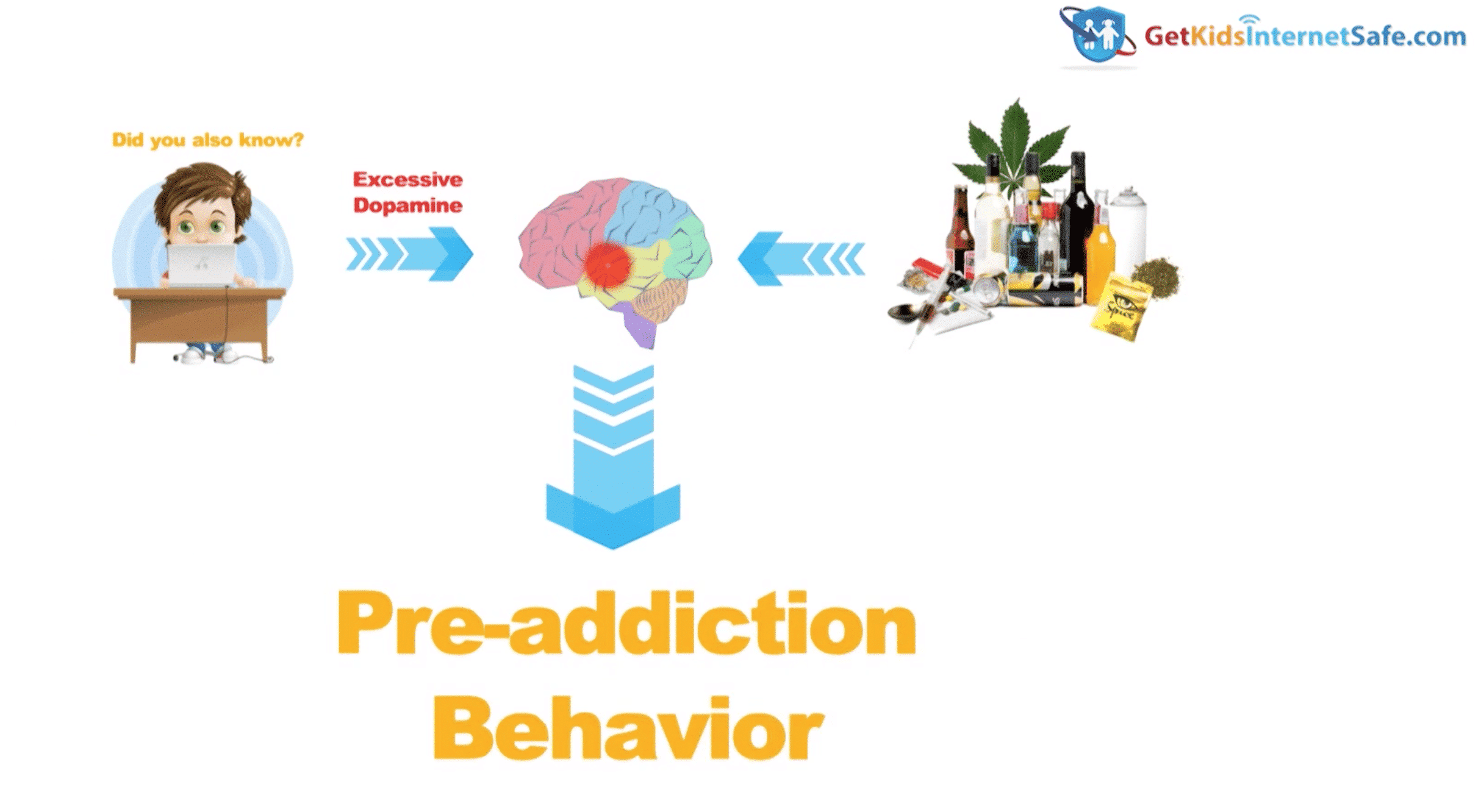
Did you also know that screen media may lead to excessive dopamine in the pleasure center of the brain in a similar way that all drugs of addiction do? That means some kids drift into pre-addiction behavior patterns, like “flow,” when video gaming or using social media.

Although every child’s different, boys tend to prefer gaming and girls tend to prefer social media.

Surging dopamine in the pleasure center quickly overpowers an immature frontal lobe. That means our kids need us to guide them well into what we consider “adulthood.”

Having Difficulties Teaching Your Teen Social Media Safety?


e790406d6b92be77b445d5413407805be91398eb Originally published on Mamapedia

I’ve had a successful private psychology practice for almost twenty years. Half of my clients are adults and half children and teens. It is not uncommon on the first visit to encounter a motivated parent and a resistant teen. And by “resistant” I mean sullen, unfriendly, and sometimes outright hostile.

My first goal is to ensure that both parents and teens open up and engage with the therapeutic process. Imagine how difficult this is. Each party in the room has different and often opposing agendas. But essentially each wants me to tell the other how wrong they are while assuring them they are right. It’s impossible really.

The teens assume that they are at a serious disadvantage. After all, I’m old and a mother myself. How can I possibly relate to the plight of teens? And consider that they have already accrued some painful experiences with adults in the community who often treat teens unfairly with self-righteous contempt about the “entitlement of kids these days.”

Please join me in a virtual representation of a typical psychotherapy session in my office. Of course this representation is not of an actual client due to confidentiality concerns. Janie is fictional. She is a mosaic of many clients I have seen over the years.

Janie is a 14 year-old girl who was referred for treatment by her pediatrician after her parents checked her texts and discovered that she had a new best friend. The friend is a same-aged girl who lives in another state. The friendship consists of hundreds of texts, images, and videos shared every day for the last two months. Sally, the new bestie, seems like a nice enough girl, except she struggles with some painful psychological issues including anorexia, depression, anxiety, and cutting.

Janie is a compassionate caretaker for Sally and has shared her own secrets over the two-month-long friendship. Janie’s secrets include how angry she is with her stupid parents, how she got drunk last Friday night, how much she wants to lose her virginity . . . and . . . and . . . and . . .

Janie’s parents are devastated. They’d noticed she had become sullen, lost weight, and was being uncharacteristically cruel to them and her little brother over the last month. As a result, they decided to check her texts for the first time, elaborating that they had never had reason to be concerned before. In desperation, they yanked all screen media from Janie immediately and demanded that Janie never speak to Sally again.

Now, they sit across from me pleading with me to tell them what to do.

Parent demand for directive advice often puts me in a rough spot. Unlike popular public perception (thanks Dr. Phil), good psychotherapy is less about advice and more about facilitation and empowerment. Furthermore, when a family presents with an issue like this, there are five potential clients in the room: the daughter, the mother, the father, the marriage, and the family. Everybody needs something from the session, and desperately.

Not only do they all need reassurance and understanding, but they also need strategies, tried and true research-based strategies that are sensible and immediately actionable. They also need hope and healing from shame and guilt.

Prior to creating GetKidsInternetSafe(GKIS), I sometimes found myself blinking at distraught families asking for screen media advice like a well-intentioned, but dense jersey cow. I mean I was fully loaded to help with the relationships, but screen media rules? Yikes!

Ultimately, epidemic screen media issues in my practice and the need for support with my own kids propelled me to launch GetKidsInternetSafe. I worked for a year and a half to develop a state-of-the-art screen media toolkit; a toolkit that my families sorely needed, just like yours might, if not today then definitely tomorrow.

You might still be dying to know, what is the one thing that will destroy your parent-child relationship? One of the most common mistakes parents are making today with their kids is allowing screen media without putting a screen media living agreement in place.

What is a screen media living agreement? It is a written contract that comprehensively addresses any issues that may arise as the result of screen media, including family values, netiquette, rules, and regulations. And it’s a living agreement, because it is designed to be renegotiated and altered over time as issues come up and kids get older.

But how is this possible to develop a contract early enough, since even infants are allowed screen media? Educating yourself BEFORE your children use their first screen is essential. Recognize the risks and benefits of screen media and lay out a plan that allows enrichment but minimizes danger. GetKidsInternetSafe provides lots of free material to get you started, but parents must initiate the process.

What if you blew it and your kids have already been using screen media for awhile, like Janie’s family? Here’s the quick version of the plan I offered for Janie’s family.

In order to untangle screen media risk, a family like Janie’s must cleanse the screen media environment and start over. Lucky for me, most families already come in having already stripped screen media from their teens because if they haven’t, then it’s my job to suggest it. I have to justify it to the teens and quick, or I’ll lose their “like” forever.

From there, I lead the family through a psychoeducation process about how to:

  • reconnect as a family,
  • setup appropriate tech for cybersecurity, filtering, and monitoring,
  • make a workable and comprehensive GKIS Living Agreement,
  • implement sound parenting strategies for maintenance, and
  • slowly re-introduce screen media privileges while isolating and containing risk factors, monitoring and filtering as appropriate for the child’s age and the family’s beliefs.

You’d think the teens would despise me for suggesting this lockdown of their screen media, right? To the contrary, I am frequently shocked and impressed with the teenagers’ abilities to accept reasonable limits and embrace a more honest, up-front screen media plan. No more fearing parental spying and ambush, no more guessing at rules, and no more disappointing the people they love the most. Teens typically love the cooperative negotiation process and the opportunity to use their screen media without constant threats and withdrawal of privileges. I am not exaggerating when I say it delights me to see families transform from utter estrangement and desperation to cooperation, kindness, and compassion.

Just as parents must recognize that teens need their privacy, teens must recognize that screen media is not the appropriate medium for private content. There are countless interception and reproduction points in screen media communication. The illusion of screen media privacy is a trap.

Teens have to learn (hopefully the easy way) that it’s a trap, because one is lured into thinking that the conversations they are having will stay private. It’s a trap because it’s so easy to carry your friend with you 24/7, constantly sharing every activity, feeling, and venti frappuccino. It’s a trap because constant contact leads to dependent, intimate friendships. It’s a trap because, once shared, you lose control over that content, not only in regard to who sees it but also how it may be shared. A text, post, or image now becomes a physical entity that represents who you are – the good, the bad, and the ugly; an entity that can be edited and reshared with unknown numbers of people without consent.

If you’re a parent or know one, please avoid family crisis by taking an hour and sketching out a screen media living agreement for your family. GetKidsInternetSafe is here to help. And heads up, I’ve seen these screen media traps snare even young children and their parents. Don’t wait.

I’m the mom psychologist who will help you GetKidsInternetSafe.

Onward to More Awesome Parenting,

Tracy S. Bennett, Ph.D.
Mom, Clinical Psychologist, CSUCI Adjunct Faculty
GetKidsInternetSafe.com

 

Do Your Kids Vamp? A GKIS Parent’s Guide to Good Sleep Hygiene

S
S

Originally published in Empowering Parents

I’m a psychologist married to a psychiatrist. Yes, I know how many of us it takes to screw in a light bulb . . . Between us, we treat people ages 2 to 92 and attempt to raise three of our own offspring. Ask us what we worry the most about with our clients (and offspring), and we’ll say sleep deprivation. Hands down, sleep deprivation is the most common and insidious threat to mental health in our practices.

With teens, we call staying up all night vamping, like a vampire but on screen media. And kids who stay up all night tend to sleep all day. Anybody who’s parented a teen during the summer knows this is a common state of being when a teen is left to their own devices. Then, when it’s time for school or other daytime activities it can be very difficult to reset a more reasonable sleep-wake schedule. I often see teens fall into anxious avoidance and depression as they try to make the switch.

Tips for How to Avoid the Slippery Slope of Vamping

NO SCREENS IN THE BEDROOM

Screens wake up our brains! Screen media stimulates the photosensors in the retina that signal the brain to suppress melatonin production (our sleep-regulating hormone). Less melatonin disrupts our natural circadian rhythms.

Pavlov & his dogScreens in the bedroom also train us to be awake in bed. If we are often awake in bed, our bodies will automatically believe that the bed is an awake-only zone. If we only rest and sleep in bed, our bodies will be cued that the bed is a sleep-only zone. Although it is a challenge to stop teens from living their full life cycle on their beds, this habit can create sleep problems with the principles of conditioned behavioral response (awake paired with bed and screen time is a hard conditioning to overcome).

Make the No Screens in the Bedroom Rule BEFORE it’s necessary. I know it’s asking a lot to say no TV, video games, tablets, or smartphones in the bedroom. But, believe me, intimate spaces eventually lead to intimate gestures like sexting and the viewing of inappropriate online content. Too late for you because you’ve already allowed it? Stage a discussion and go slow. Yanking their freedom abruptly may trigger a backlash that may damage your hard-earned parent-child connection. The best-case scenario is starting with this rule from the very beginning.


SCREENS OFF 30 MINUTES BEFORE LIGHTS OUT 

Psychologists have discovered that one of the most disabling features of post-traumatic stress disorder (PTSD), an impairing anxiety disorder that results from trauma, is sleep deprivation that results from nightmares. While sleeping, the brain tends to prioritize and loop on frightening memories as it sorts through its memory cache for sorting and storage. As it loops, frightening content will appear in our dreams.

Just like the response to fright when we’re awake, stress hormones like cortisol and adrenaline dump into our bloodstream when we have nightmares. If we are troubled upon falling asleep, poor sleep quality may result and we will be unable to awaken feeling refreshed or rejuvenated. This can seriously impair mental health.

Although emotionally triggering screen media activities like gaming, texting, or viewing activating content aren’t as troubling as real-life trauma, they still stimulate the same brain regions. Limiting activating screen media activities at night and giving your children time to soothe before bedtime will likely result in better quality sleep overall.

ENCOURAGE A SOOTHING NIGHTTIME RITUAL

We are creatures of habit. Habitual activity during the 30-minute bedtime wind-down signals the body to anticipate rest. Components of a soothing ritual may include soft lighting, quiet repetitive sounds, and comforting activities. Avoid eating, triggering discussions, and intense exercise. Sticking to a consistent bedtime schedule is also important.

STAGE THE ROOM TO BE RESTFUL 

I know it’s nearly impossible to motivate teens to unclutter their dens. However, research is clear that a soothing environment contributes to a soothed mind. Offer your support in creating a more grown-up environment with a fresh bedroom makeover that reflects rest and relaxation. Light paint colors, organized closets and bedside tables, subtle lighting, and crisp, cleansing smells can turn a chaotic hovel into a relaxing paradise.

TEACH SOPHISTICATED SELF-SOOTHING STRATEGIES

As a psychologist, I can attest by first-hand experience that cognitive-behavioral exercises like diaphragmatic breathing, progressive muscle relaxation, mindfulness, yoga, imagery, and cognitive restructuring can fend off even the most severe anxiety and mood disorders.

There’s preliminary evidence that screen media delays the onset of sleep, negatively affects sleep quality, and results in difficulty awakening and feeling refreshed. It also decreases REM (rapid eye movement) and sleep time.

Children and adolescents who use screen media at night go to bed later, get fewer hours of sleep, and report more daytime sleepiness. Sending texts or e-mails after initially going to bed increases daytime sleepiness among teens (even if it’s only once/week).

A full cycle of sleep takes 90 minutes. (A full cycle provides cognitive rejuvenation that improves procedural memory and creativity with no sleep inertia.) 10-20 minute power naps are shown to increase alertness and energy. 30 minutes will result in sleep inertia (grogginess). And 60 min is good for slow-wave sleep (helps remember facts but some grogginess).

I’m the mom psychologist who will help you GetYourKidsInternetSafe.

Onward to More Awesome Parenting,

Tracy S. Bennett, Ph.D.
Mom, Clinical Psychologist, CSUCI Adjunct Faculty
GetKidsInternetSafe.com

I’m Not the Mother Your Friends Warned You About

278303_2107639004317_7426435_o When I clean house I like to talk on the phone. It keeps me from grumbling resentfully about why I spend so many hours a week moving other people’s stuff from one room to the other…as if I’m their SERVANT!

Anyway during one of those phone conversations, my friend told me something that has stuck with me and I feel compelled to clear it up. She said, “You know Tracy that the parents who see GetKidsInternetSafe (GKIS) suspect that you are that hyper-perfect mom who refuses your kids screen technology completely.” I choked on my packaged rice crispy treat, and then we cracked up.

Perhaps the irony hasn’t escaped you that I preach screen media limits through my ONLINE business. Moreover, I have seven (yes seven!) customized social media channels to help me.

And I have three happy, normal kids. I want them to stay that way. I don’t require that they live in a chemical-free room built of moss and dried twigs, drawing with repurposed berry ink and reading only the classics. That is only for #TechFreeTuesdays and #TechFreeThursdays.

The reason I created GKIS is because when I err (which is hardly ever), it is in the direction of being too generous with them. I mean technically, I love them too much. I work tirelessly for their care and am a shameless sucker for their begging. Dudes, I’m actually writing this article in an ear-shatteringly loud, massive volleyball complex that I drove two hours to get to at 5:30 am on a Sunday. I’d post a pic of the game, but the girls’ shorts are too short for public media (not kidding). And for the record, it’s intermission. That’s how much I love my kids.

It’s my love for them and my deep concern for all kids that motivated me to take on this enormous but important GKIS task. I’m not a perfect woman, but I do have some skills motivating and caring for little people. It’s what has allowed me to maintain a busy psychology practice for almost 20 years. From my office, I get the heart-piercing inside view of what all of us are going through and how we are coping.

Frankly fellow parents, we are in over our overly-scheduled, sleep-deprived heads when it comes to the rapid development of screen media technology. We are over-capitulating to slick marketing and our kids’ desperate pleas for the newest electronic device so quickly, that we don’t really know what the heck we are doing! We simply cannot keep up.

Let me just give you a rundown of the issues I’ve seen in my psychology office just within the last few months (details changed to protect confidentiality):

  • A 12 year-old who is obsessively communicating (and sexting) with an anorexic peer she met on a video game who is cutting and intermittently suicidal
  • A 14 year-old boy whose grades have been declining because he is logging into too many hours of online porn
  • A 17 year-old who is healing after he finally reported that his brother had been molesting him with fetish methods learned from online pornography when he was only 9 and 10 years old
  • A teen who faces expulsion due to videos she posted threatening a peer
  • A 10 year-old girl who was caught on a porn site and then later discovered to have had a social media account with sexually provocative memes and inviting comments
  • A 20 year-old who still acts out the dependence she had on her Internet predator from 12 to 14 years old
  • And a 17 year-old who is seeking psychostimulants because he has already experimented with practically every other class of drug that he expertly shopped for and marketed from his iPhone 6

Of course, some of these ages, genders, and details were tweaked to protect the identity of my patients. But the stories are not exaggerated. These are real children with devoted and fearful parents seeking my reassurance and consult.

The truth is, we don’t even know what all of this technology and inappropriate exposure is doing to our kids’ development. I personally have resorted to the purchase of chaotic herds of bunnies, chickens, pigs, and baby goats to distract my beautiful and precocious 13 year-old (not kidding), not to mention soccer and volleyball…

I’d give my children a life with a variety of healthy activities simply because I deeply want for them to feel awesome. And to do that, I must be a good enough mom. I want everything for them that I can comfortably (and sometimes not so comfortably) muster. That includes healthy distraction, balanced with quiet family time and a well-planned, sensible GKIS toolkit expertly designed for screen media safety.

Let’s face it, until they’ve moved into a home of their own, we will all sometimes worry that there’s a hint of desperation in our parenting generosity, desperation partially motivated by the frenetic bubbles of text messaging and the soft sound of a computer keyboard.

I’m the mom psychologist who will help you GetYourKidsInternetSafe.

Onward to More Awesome Parenting,

Tracy S. Bennett, Ph.D.
Mom, Clinical Psychologist, CSUCI Adjunct Faculty
GetKidsInternetSafe.com