
Need peaceful screen time negotiations?

Get your FREE GKIS Connected Family Screen Agreement

parenting

Cyberbullies, RATs, and Online Predators. Two Things You Can Do To Protect Your Kids From Online Dirtbaggery


blog60family

Originally published by Kids in the House

The C.S. Mott Children’s Hospital National Poll on Children’s Health found that parents rank INTERNET SAFETY as number 4 (up from 8th in 2014) for biggest child health concern and SEXTING as number 6 (up from 13th). You know why parents are getting so concerned? Because they need to be!

Let’s be honest here. Kids want Internet access like a crack addict wants a hit. And so do we! Screen media is our favorite past time. Those elegant screens clutched in our greedy hands feed us delicious content that we gobble up too many minutes of our day. Kids love it too. And parents are conflicted about what to do about that.

If we disallow it, our kids are dependent on us for entertainment. Keeping them happy and busy without screens is exhausting! Our parents chased us outside to run with the neighborhood kids. When we reminisce about being latch key kids, we tell stories of the eight shades of happy peril we were regularly in. We don’t want our kids in any shade of peril. We want them tucked in the safety of our homes. As a result, we have agreed to be in their constant servitude. Poor us. Poor them.

We do the best we can to keep them busy. Then we worry they’re too busy! What do we rely on when we’ve run out of ideas? Screen media! My daughter’s first love, besides her parents and her poodle Buster, was her purple stuffed Barney. I guiltily admit she was so sold on that annoying talking dinosaur she was a successfully branded consumer by toddlerhood. Every morning while I made breakfast she sat in front of the TV in her expertly branded Disney princess feety jammies and Mickey Mouse toddler chair. I allowed Disney to have that kind of influence on my kid, because I didn’t consider it that harmful and television gave me a moment’s peace. Parents today have even a bigger dilemma with so many screen devices.

Consumer branding is the least of our worries these days. The Internet offers amazing vistas for education, but parents have a tough time managing it effectively. In response to the sad outcomes to poor screen management I was seeing in private practice, I created parenting programs like the GetKidsInternetSafe Screen Safety Toolkit to help families avoid online dangers. I’m aware that parents want to dismiss the GetKidsInternetSafe (GKIS) message as sanctimonious hysteria. If I could forget what I know, believe me I would too. You know what we moms want to read? We want snarky articles about the pleasures of red wine and celebrity bashing and to avoid scary information that makes us feel guilty and scare the crap out of us.

So, admittedly, here I am delivering today’s informational kale salad with a bit of fun snark. And the good news? I’m not going to leave it at the scary stuff. Here are some parenting maneuvers you can do today to prevent tragedy and build your child’s resilience, hopefully avoiding a trip to the psychologist’s office down the line.

  1. If your child is allowed Internet access, ongoing dialogue for education and skill-building is a must.

I know this kind of sucks for us. It takes time to research what to talk about so we don’t blow our credibility stringing together sensational media headlines like our parents did about pot. We also risk annihilating their sense of safety telling them about online predators and risk.

But it doesn’t have to be an awkward or terrifying one-time lecture. Skill building is important for little kids to teens. It just takes targeted conversation and lots of listening. With an eye on the news and an occasional follow of a free online safety blog like GetKidsInternetSafe, you have the information you need to introduce topics into family conversation that are cooperative and positive rather than threatening and exaggerated. The best part is that every conversation builds that important parent-child connection.

How can you get a conversation started? It can go something like this, “Did you hear about the dad that cyberbullied the cyberbully yesterday? He got fed up with a kid harassing his daughter on Snapchat so he posted a video talking about the kid’s dad. Do you think he did the right thing?” You can even show the video. By avoiding shaming lectures and staying curious and positive, it will become evident that you are their go-to person and have their backs online as well as offline.

What topics should you cover? The same kind of social skills you talk to them about in their offline world. How about start with digital citizenship. Introduce how to respond to cyberbullying and, if they’re older, the risks of sextortion. Dialogue provides opportunity for education and skill building. It’s not enough to just introduce the issues, tell your kids details, like how to recognize the manipulative techniques online predators use to groom their victims. With this information your kids will be that much more resilient should a predator get through your controls.

Even easy cybersecurity strategies, like a post-it note over your computer’s camera lense, may cripple a Remote Access Trojan’s (RAT) ability to take over your computer’s camera. Beyond educating and skill building, there’s another thing parents need to do to get their kids Internet safe.

2. Install filtering and monitoring apps and software.

One day of installation can prevent months of online risk. If your kids are little, that means installing filtering tools like child-safe browsers and setting parental controls. If your kids are older, manage their use of social media apps and add monitoring software. Let them know you’re supervising their screen use, because lying and sneaking may harm the very connection that your dialogue has nurtured.

Although kids will initially complain about monitoring strategies, it’s not a mystery to anybody why parents need to parent online as well as offline. You may not be the über mom servant of their dreams, but we are all just doing the best we can, aren’t we?

I’d love to hear how your screen media strategies are faring on the GetKidsInternetSafe Facebook page. If you’d like more suggestions on staging your home for screen safety success, check out the GKIS Connected Family Online Course.

I’m the mom psychologist who will help you GetYourKidsInternetSafe.

Onward to More Awesome Parenting,

Tracy S. Bennett, Ph.D.
Mom, Clinical Psychologist, CSUCI Adjunct Faculty

GetKidsInternetSafe

What Being a Pig Mom Taught Me About Raising Happy Kids

blog59pigsnout

For the last three years our family has raised 4H hogs for the county fair. What started out as a child activity has quickly become a much-anticipated family tradition. We are suburbanites who’ve graduated from bunny to barnyard, and we are a healthier, happier family for it. My friends tease me about my fake ranch lifestyle, but there are amazing reasons why we enthusiastically animal hoard. I’m taking a few minutes in the middle of fair week to share just a few reasons why I love 4H living. Here’s what being a pig mom has taught me about raising happy kids.


blog59boots

You’re gonna get dirty

Nothing reeks like pig poop. Literally nothing. A pin drops worth pollutes a room in 3.2 seconds and sends me hysterically sniffing shoes and jackets while barking threats. But honestly, if we’re tackling life there are times we’re going to be covered with it and so is our leather camel car interior. Life isn’t all about lemon verbena. Active kids bring stink.


blog59work

Rules matter and so does hard work

In 4H kids do the work. If parents help, the club loses competition points. This is perhaps the most astounding invention known to parenthood. The first day of pen cleaning my kids pathetically pleaded for instruction, awkwardly fondling and falling over their push brooms like stoned spider monkeys. But it turns out that they figured it out without me. I shrugged, they struggled. Once they found their rhythm they lit up with accomplishment and were going steady with that broom by nightfall. Do I hear a motion for a 4H charter in your kitchen?


blog59toddler

Mom, let the toddlers pet the pig. Hands wash.

I know it’s totally gross to see your Precious dripping in pig spit, but nurturing an animal teaches everything we need to know about love and protect. That giggling glee when your sticky stumbler gets to spray the pig with water (especially on THE BUTT) and then caresses his stinky hide lovingly, that’s parenting 101 at its finest. That’s what we did for them. Nurturing is a drug. Let them have a hit.


blog59ribbons

Hard work deserves recognition but only the hardest worker gets first place (and who you know makes a difference)

In the pig group there are three BIG days. There is the competition for the best market hog, the competition for the best showmanship, and there is auction day. These are sandwiched between the squealing delight of move-in day and the tearful goodbye of move-out day. Like many things in life, fair week is made up of important events between hours of waiting. But the one thing the events have in common? The kids who are there first thing in the morning mucking pens and working with their animals are also the ones who get the ribbons and the big money award at auction. There is one caveat, however. Kids who hand wrote an impressive buyer letter and those who are well known to the community pick up the extra spoils. Watching the way hard work and networking works prepares kids for their lives ahead. It doesn’t always happen fairly, but good preparation makes a huge difference.


blog59tribe

We are stronger as a tribe and fun matters

In 4H clubs form based on community. Older kids mentor little kids and seniors help novices. During competition we stick with our tribe, cheering each other and sharing resources. But when push comes to shove, we all work side-by-side and make good care of the kids and animals our highest priority. Judges place high value on intensity and fun. 4H does not tolerate meanness.


blog59buckle

Gender is irrelevant. Get tough and get dirty.

There is no gender discrimination at fair. My scrappy thirteen year-old daughter muscles in and makes it happen indistinguishable from the boys. Everybody throws in ideas, holds office, and works hard. I’ve been raising kids for 21 years and this is one of the healthiest, non-discriminating activities I’ve ever taken part in. Wrestling pigs and showing steer is not for the meek. The confidence these kids gain is impressive and hard-earned.


blog59sunset

Too much delicious gets old

It doesn’t seem possible but kids will beg for a home-cooked meal when it’s not readily available. This is a great argument about how restricting something may encourage desperate desire. A fifteen year old schooled me yesterday about letting my son have a pretzel for lunch after his donut at breakfast. “Mom! This is fair!” he said. I hung my head and surrendered. The next day my 11 year-old junk food junkie was begging for steamed vegetables. I lie, homemade chicken tacos, but still.


blog59cards

Boredom sparks magic

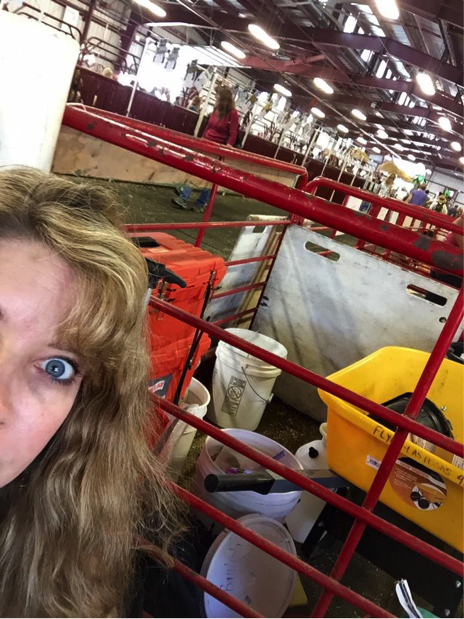
The first day my kids brought their iPads to the livestock barn and even got them out half-heartedly throughout a day of back-breaking work followed by hours of waiting. But it didn’t last. Bored kids visit baby goats, snuggle pigs, and play cards. Old timers stop by the barn and share their stories and kids answer the pig questions of picture-snapping visitors. 4H kids increasingly adopt a buzz of contentment and confidence. By day two they leave their screens at home. I swear that the livestock barn at the county fair is the last bastion of screen-free sanctuary. It’s only one of the reasons my husband and I take off the week without hesitation. It’s old-school family time, and we all delight in it.


blog59eyebarn

Sometimes you have to scream at stupid people

In the pig barn, things go from calm to dangerous in two seconds flat. At one moment the pig is sauntering calmly with a kid in dress whites at their heels. The next, Maple Bacon is hauling her 270-pound delicious rump through hordes of corn-gobbling fair-goers. That mom cowering in her path with her toddler at her knee? You’re going to have to screech, “PICK UP THAT BABY NOW!” while you throw yourself in front of them and slam a pig board in front of Maple. Both the pig and the stunned mom will cooperate, and you’ll both be laughing afterward. Fear makes all of us stupid. Fight or flight or stand there mouth agape. I think that’s how that goes.


blog59goatshow

Fairs attendies don’t care about modesty, but 4H parents do

Sorry about the body shaming but after witnessing the carnival horrors of overly-revealing fair outfits, my kids grow content with their dress whites. There is nothing more adorable than the functional garb of 4H kids hard at work.


blog59pancetta

Animal slaughter should spark vigorous, heart-felt, intelligent debate. Taking a life should not be minimized.

My hippy friends are horrified we raise 4H hogs for auction, and I don’t blame them a bit. My argument is that meat-eaters should have to raise a meat animal to slaughter to really understand the life sacrifices behind that carnitas burrito. Our pigs live happy but short lives. They live in a roomy pen and are walked daily in the sunshine by caring kids. We are aware they are raised for slaughter, and we don’t pretend it’s pretty. By a year old market pigs are crippled with arthritis from too much weight gained too quickly. We cry when we leave them behind on Sunday afternoon. It’s brutal.

In my experience, 4H families are the most loving, hard-working, and caring people I’ve run across. They love their children, their friends, and their community and they work hard to ensure those things are taken care of. Most agree that there is a powerful argument to sparing animal lives if you have the resources to and raising them humanely if you don’t. In our family the experience has led half of us to vegetarianism and the other half to less meat eating but with grateful awareness. Other families share the same story. Raising our animals gives us a true understanding of the meat aisles in the grocery store. We get it. We think reading a magazine about it may not be enough.


blog594hsign

And finally, there’s the 4H moto “Make the best better.”

This one speaks for itself.

If you’re ready to get back to good old-fashioned family bonding, cut down on screen time and get dirty. One way to launch a healthier family life is to stage your house for smarter, better managed screen use. My GKIS Connected Family Online Course details just how to make that happen.

I’m the mom psychologist who will help you GetYourKidsInternetSafe.

Onward to More Awesome Parenting,

Tracy S. Bennett, Ph.D.
Mom, Clinical Psychologist, CSUCI Adjunct Faculty
GetKidsInternetSafe.com

Photo credit:

Presidio of Monterey, CC by-NC-2.0

Snog by Tim Zin, CC by-NC-2.0

This post is dedicated to my Aunt Becky and Uncle Chuck for introducing me to a profound love for family and the barnyard, Chelle Smith for your laughing eyes, willing hugs, and awesome attitude. You teach our kids what true leadership is all about! And to Leverno, Sidney, S’moa, and Pensetta. We love you babies and thank you for your sacrifice.  xoxo


Coby Persin’s Viral Child Predator Social Experiment Begs Us to GetKidsInternetSafe

Screenshot-2015-08-14-22.28.25 Coby Persin, kudos to you for releasing The Dangers of Social Media (Child Predator Social Experiment) video that has gone viral this week. As a clinical psychologist, I have treated victims who were lured by online predators, some who carried on intimate online relationships under their parents’ noses and others who were raped by the predator. It happens more often than parents are willing to believe. It’s not that parents don’t recognize risk. They just think it’s other people’s children at risk. They overestimate their children’s judgment and fall short of the effective filtering, monitoring, and sophisticated parenting it takes to prevent online risk.

Consider these statistics:

Permissive Internet use is rampant among kids and teens. Children have access to screen media with Internet capacity at younger and younger ages. Parents tell me they simply can’t keep up with technology fast enough to implement effective protection. They say they talk to their kids, but feel incompetent to teach important issues and skills like assertiveness, safety, and sex education. And the discussions that parents do have with their kids about online risk? Telling them about scary outcomes isn’t enough. Kids need regularly coaching and skill-based learning to have any hope of avoiding the sophisticated grooming techniques of a cunning adult.

The most common mistake parents in my practice make with their kids regarding screen media use is overestimating their children’s ability to recognize risk, anticipate consequence, and control impulse.

Yes our kids are brilliant, but they don’t have the soft skills necessary to avoid online trouble. There’s an excellent neurological reason for this. The prefrontal region of the brain, the part responsible for these abilities, does not mature fully until we are 23 years old. That means that teens, even when taught about online risk, simply don’t have the wiring necessary to make sound decisions when maneuvering online. Place that against the dopamine surge in the brain’s pleasure center that sexy online interactions trigger, and you’ve got a curious teen flooded with fantasies of romance that take far higher priority over anxious caution; a losing battle indeed.

Furthermore, the developmental tendencies that are normal for the adolescent stage actually encourage risky behaviors. For example, consider the important impulse to launch. In order to gain the independence they need to become healthy adults, teens progressively venture away from parents (because that attachment is already firmly in place) and work to form stronger attachments with peers. This means they accept peer influence more readily than parental influence. Listen to Mom and Dad or text Billy? Billy is by far the sexier target. Mix this with the omnipotence, idealism, and egocentrism of youth, and you’ve got more ingredients for the recipe for genuine online risk.

Now let’s consider cultural influence. When our daughters tell us, “everyone’s doing it,” she’s telling the truth. Kids are using social media in massive numbers, often unsupervised and unrestricted by parents. That means teens feel falsely confident in their perceived anonymity among other risk-taking peers. Even though everybody’s doing it, many of these young women will go on to fall under the influence of an online predator. And nobody will find out when things go awry. Sad and scary outcomes quickly become buried in silent shame. Nobody needs to be bothered with that ugly reality other than the victim and those who work to help her heal.

So we’ve established that teen wiring, developmental tendencies, and cultural influences lead teens into dangerous online activities. What about family influence? Where are the parents?

Parents are up against lots of obstacles these days. It’s easy to judge. But let’s be honest, parenting is hard! Finding the time, the energy, and the expertise to lock down effective safety on a daily basis is a legitimate challenge. So often parents have real difficulty maintaining a quality connection with their teens. Keeping their attention and spending the time necessary to build skills and really connect is a tough go. We all hope that our kids know they can come to us anytime about anything. But walking the gauntlet between supervising enough while still allowing trust and independence is a tightrope walk.

In Coby’s viral video, he shows three families with daughters that are willingly lured to meet up with a Facebook contact who says he is fifteen years old. The parents are so mortified at their daughters’ dangerous naiveté that they panic, angrily shouting and in one instance trying to shake the sense into his daughter. I, like many viewers, were initially horrified at the fear these young girls were forced to endure. Social experiment, yes, but not one that would ever be allowed past the ethical hurdles a university study would require.

I’ll admit that initially I was angry with those parents for scaring those girls so much. My impulse was to rant that fear and shame is not an effective learning tool, but instead destructive to the trusting, warm parent-child connection necessary to protect. But then I watched it a second time, and then a third, and I realized I’d probably be freaking out just like that if it was my daughter scrambling into the van in a belly shirt. Instead of being destructively reactive like the parents in Coby’s video, we must be proactive and check out expert strategies like those offered in the GKIS Cybersecurity and Red Flags Supplement. Do it now, because we never know if tomorrow will be too late.

I’m the mom psychologist who will help you GetYourKidsInternetSafe.

Onward to More Awesome Parenting,

Tracy S. Bennett, Ph.D.
Mom, Clinical Psychologist, CSUCI Adjunct Faculty
GetKidsInternetSafe.com

Eye Rolls and Ear Buds: A Parent’s Guide to Surviving Teen Contempt

Teenage daughter looking messages in a smartphone and ignoring her furious mother. Bad family communication concept by new technologies

Originally published on Mamapedia

I’m terrified. My second daughter just turned 13 years old in every sense. I know what to expect. I’ve been through it. My oldest is 21 and can barely tolerate me still. There’s this tragic time when a mother morphs from hilarious to horrifying and all she has to do is…well nothing. It’s some weird neurological ignition that happens in every teen brain. One moment they’re snuggling you and hysterically giggling when you use stupid accents for random pet antics, and the next they’re rolling their eyes and sneering. In between the sneering, they glower silently with ear buds and hoodies. At first it’s kind of funny, but after several blunt-force attempts to oppress your civil liberties it gets old. Very old.

In my daughter’s defense, I am annoying fairly often. And she’s an amazing kid now adult. But it is evident to me after twenty years of helping teens and parents navigate this delicate time, that for most there are challenges. As the teen pumps with estrogen, the family system must shift to make room for adult feelings and opinions.

How does a mom cope with her daughter’s eye rolls and ear buds without being her daughter’s doormat?

Bark and threaten

Although this makes mom feel like she’s demanding respect, the drill sergeant routine rarely does much besides quiet the teen into passive aggressive defiance. Instead of overt behavior, she’ll give you a blank-eyed stare of simmering hostility and incessantly text her friends about how annoying you are. Expect only a short-term gain of quiet respite.

Humiliate and publicly shame

Like threatening, turning the tables by bullying back can be supremely satisfying. Some parents take it even further and change into a chicken suit and cluck at the school bus stop…until they notice that this counter-assault can be emotionally damaging to the child. Obviously the trigger-mortification hormone that seized her emotional system was not her choice and mostly outside of her control. Punching your daughter in her vulnerable spot is like kicking her when she’s down. Bullying is a betrayal, especially from those you look to for love and protection.

Guilt

An eye roll or a request to oppress your civil liberties may immediately trigger a whiney lecture about how much you do for her. Start with how much you hate your job, but you do it for her. Remind her that you built her inside your now-ruined body. And never forget to mention what your parents would have done if you deigned to disrespect them in the day. Boring her with your martyrdom will teach her a valuable lesson about compassion (not).

Hit

Slapping your smart-mouthed teen or feinting a take down will probably end up with a visit from Child Protective Services or you getting your butt kicked, if not today, then tomorrow. Obviously this is the worst of the options. But if we are all honest here, most of us have seriously considered it.

Ignore

Ignoring contemptuous behavior seems to work in the short-term, but it takes enormous self-discipline on the part of the parent. The ignoring strategy is the gold-standard, but isn’t enough by itself. If you overuse this technique and never push back, she will eventually escalate to entitled monstrosity.

Plead

Nothing gets a teen’s attention like whining and crying in immediate shocking response to her eye roll. Your tears may actually disgust her to the point of dry heaving. Show her your weakness, and, in most instances, she’ll escalation in a desperate attempt to coax you into setting appropriate limits. Not a pretty dynamic.

Act psychotic

When I was little and my sister bullied me, I would turn my head and whisper terrible insults about her to my imaginary friend. I’m not kidding. I actually did that. It would make her cataplectic with rage and, if I didn’t make it to my parent’s room and lock myself in fast enough, I’d suffer a swift pummeling. Just like old times, I’ve tried this as a desperate measure. But unlike my sister, my daughter failed to be irritated by it. She was more perplexed and dismissive. I’ve also tried copying her word for word, because it is a freakish skill of mine. Unfortunately though, she eventually learned to turn the tables by saying insulting things for me to copy or stringing word salads together at mock 3 speed. My daughter’s too smart for my childish retorts apparently, and it can look suspiciously like mean-spirited mocking. Like the other options, this strategy used too often may just escalate the situation. But used occasionally it can sometimes shock her into a giggle.

Empathize

Another option is to put on your big jewelry and Birkenstocks and nod a lot and say, “How does that make you feel when I do that?” “You’re magnificent, let’s hug that out.” Simper and smooth out your voice. Of all these options, this is the most likely to get you stabbed in the eye.

Advice from the peanut gallery:

I just asked my 13 year old, “What should a parent do when a kid rolls their eyes at them and says, “Sssttooopppp?” She replied, “Just stop.” “But what if she’s telling you to stop doing something you don’t want to stop?” She said, “Then just yell at her.” Then she rolled her eyes and flounced away.

My 11 year old son, who still thinks I’m hilarious and deserving of love, suggested two strategies. He said, “Punish them. No, maybe ask what’s wrong and why they’re acting like that. Maybe it’s a bad habit and they need help.” How sweet is he still? Swoon.

Finally, I asked my psychiatrist husband the same question. After he looked at me for several awkward seconds until it became evident I wasn’t going to rescue him from what was certainly a trap, he mumbled, “Beat them, ignore them, and promise them ice cream if they stop.” To which I lovingly said, “Oh really? That’s what you do really?” His eye twinkled and he said, “I say, look that’s contemptuous behavior and it’s not OK to talk to me like that. It’s disrespectful behavior and you have privileges. If you…” Then I rolled my eyes and put in my ear buds.

Closeup on sad teen daughter crying by problems in the shoulder of her mother. Mother embracing and consoling daughter.

My professional advice (for entertainment purposes only):

As your daughter blossoms into adulthood in front of your denying eyes, expect conflict. And while the testing is playing out, do your best to stay calm, maintain compassionate authority, and be smart. Mix it up. Ignore the eye roll at first. If she continues too many times consecutively, give a firm reprimand. If that doesn’t get through, remind your teen that you serve her at your pleasure. She’ll miss you if you temporarily retire your duties. If the disrespectful dissing still continues, have a sit down talk with authenticity, mutual speaking opportunity, and empathy.

When given the opportunity, teens will tell you this feeling of parent-triggered horror is as much a mystery to them as it is to you. They may agree that parents don’t deserve to be emotionally jailed by teen contempt, it’s just difficult to control when they are overwhelmed by it. Fortunately, teen intolerance for parents is temporary. The best option is to avoid escalating the situation with hurtful strategies. Risk silence rather than abuse. Adult brains have had a lot more driving experience than teen brains. For their sake and yours, it’s best to use and model the same behavior you are asking of them.

After all, it’s not like she’s contemptuous all the time. When you see a flicker of humanity, savor it. When she’s funny, laugh (but invisibly and silently like a cult follower). Most of all, fill your heart with compassion for the both of you. As you say goodbye to your baby and hello to your blossoming adult, there is a grief process. You’re going to make mistakes and often, just as she will. And despite what they she tells you at every opportunity, she needs you now more than ever.

What desperate strategies have your tried to cope, other than lots of red wine and 5k’s? Join me on my GetKidsInternetSafe FaceBook page for a rant. It helps us all to know we are not alone.

I’m the mom psychologist who will help you GetYourKidsInternetSafe.

Onward to More Awesome Parenting,


Tracy S. Bennett, Ph.D.

Mom, Clinical Psychologist, CSUCI Adjunct Faculty

GetKidsInternetSafe.com


The Third Baby Then…And Now. How a Blunt Soccer Mom’s Advice Lead to the Smartest Decisions I Ever Made

Young family of five people watching a movie

Originally published by Ten to Twenty

When I was pregnant with my third child, a stranger walked up to me on the soccer field and gave me the most compassionate, rudest, wisest advice I’ve ever received. She said, “I’m going to tell you something nobody else will tell you. Having a third child changes EVERYTHING. You’re going to have to get a new car, a new house, and people will stop inviting you over.” And before I could respond, she walked away.

That quickly I was left less glowy, stunned, and speechless, unable to tell if I’d just been insulted or nurtured. But considering my haze of pregnancy idealism, illustrated by the “I want it sassy!” moment of horrific judgment at the hair salon the day before, I had it coming. It turns out she was exactly right. Several months later after the blissful delivery of that third fat, fat baby (his nickname for the first two years), we quickly graduated to a midsize SUV, a bigger house, and became the lepers of family barbeques.

The fat, fat baby happened to be the easiest of all of my kids. It wasn’t his behavior that ousted us. It was the number “5” on the RSVP card. It did our social lives in. But we didn’t actually care, because the truth was, three kids also made even the simplest of outings completely exhausting. We now had a sulking tween, a giddy toddler that could run into the elevator and hit close before we could catch her, and a fat, fat baby that strained every caregiver’s back he every had. True story.

So now, I’m that mean stranger lady giving you unwanted but sage advice. Here it is. Unless you’re one of those magnificent manicured mothers that can effortlessly quiet a sobbing baby and frantic toddler throughout a plane flight and then rest without resentment in the hotel room during naptime while everybody else tastes the exotic delicacies of your most recent vacation destination, then this article is for you.

If you’re having your third baby, vacations as you once knew them are now gone. Plane flights will be chaotic, exhausting, and outrageously expensive. One hotel room will no longer cut it, doubling your vacation budget. And forget about pleasing everybody in the family. Somebody’s going to be miserable (like adults and tween), because you will be catering to the youngest child by necessity.

At nine months pregnant due to the inspiration from that blunt soccer mom, I had the foresight of a bedraggled not-sassy shaman. I detonated any hope of a near-future vacation budget and remodeled the kitchen and put in a pool. I painted the bathroom walls a soothing citrine and sprinkled the living room with China Pear scented tea lights. The master bedroom became a Moroccan-inspired Mommy escape and the backyard was swiftly littered with genius distractions like a trampoline, hoola hoops, and a zip line. During this frantic survivalist outfitting, I also surrendered my insistence of sorted pencil drawers and matching socks. In a sentence, I transitioned our home into a constantly cluttered and littered with fishy-crackers staycation paradise.

Now that my kids are older (21, 13, and 11 years old), we can occasionally venture out of the house for fun. And we do. But no longer does the pool and hoola hoops cut it in regard to keeping them happy at home. And, once again, I employed big home structural strategies to keep us balanced. In a sentence, I identified each child’s passion and exploited it!

What do I mean by “exploit?” I mean that in order to take respite from entertaining the kids myself or allowing them to vegetate in front of screen media for too many soul-killing hours, I deliberately sprinkle their passions throughout our home so they nourish themselves with a variety of healthy activities. Here are three examples from my three kids:

My oldest daughter lives away for college now. From a very early age, she was a chatty, social child and an only for her first eight years. Little could distract her from following me around chattering incessantly. Other than her telling the grocery store clerk our most embarrassing moments, repeatedly, her chirpy little prattle was adorable. But a mom needs a break on occasion.

My secret distractor for her was crafts. When her friends helped her sort through her room before she moved out (sob), they excavated 2.4 tons of half-complete crafts kits. These projects may have only distracted her for short moments, but they were necessary moments indeed. Although she doesn’t half-craft anymore, she is a senior in college and still talking to me. So that’s a good endorsement.

11349091_10207021108665312_1471667268_n

My middle daughter LOVES animals. She got this from me, although I’m not allowed to say that, because she will sassily say, “I’m my OWN person.” We have miraculously held off horse ownership despite weekly begs, because we don’t have those kinds of riches. But animals are the number one way to keep her happy and compliant with screen media restrictions.

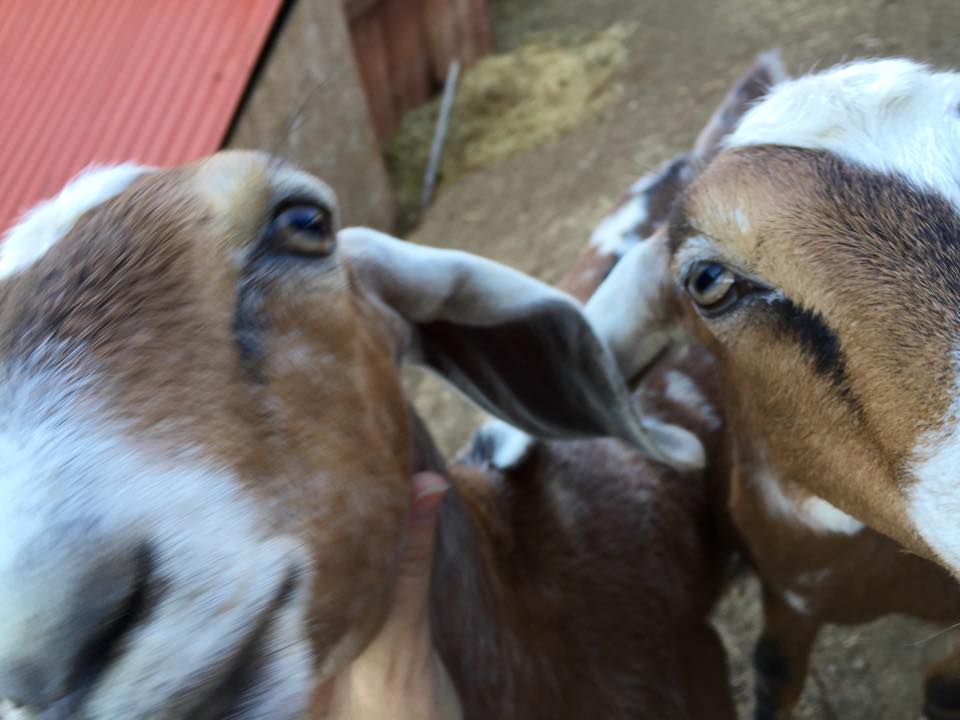
Our four-legged/two winged bribes have expanded into what apparently looks to others like animal hoarding. For us, it’s heaven. We now have two dogs, a cat, three bunnies, seven chickens, two pigs, and two goats that leisurely graze on top of a pet cemetery of critters long lost. I highly recommend this strategy. Although it may not be for you if you’re like my gal-pal Val with her self-described “OCD’s.” She never leaves my house without the comment, “I NEED to go home and take a Valium.” It’s the poop that takes her over the edge, so be sure to realistically assess your limitations.

My youngest son (aka fat, fat baby)…he’s the hardest to distract. He wants video games like his perimenopausal mother needs meds. We’ve had to patchwork his nonvirtual reality with a climbing tree, hip-hop, and his Golden doodle, Reggie. I wish I could show you videos of he and Reggie playing hide and seek. It’s adorable. He throws the ball as far as he can, then frantically runs giggling to some hidey-hole as Reggie tears around whining and frantically searching for his boy. Each reunion is a woofing squealing delight. They will play this for hours. Even though these two smelly, dirty, and now svelte beasts are catastrophically noisy and tail-waggingly destructive, it’s the cutest thing ever. He also swims, climbs trees, listens to loud hip hop, and follows me around whining.

The key to great parenting is obviously staying engaged and connected. But in order to sustain our homes and personal lives as adults outside of just parenting, we must encourage our children’s independence and unique journey to find who they truly are. The trick is staying engaged in a way that is sustainable in a warm, vibrant home, recognizing that a sense of humor and flexibility is the key to family harmony.

I’m the mom psychologist who will help you GetYourKidsInternetSafe.

Onward to More Awesome Parenting,

Tracy S. Bennett, Ph.D.
Mom, Clinical Psychologist, CSUCI Adjunct Faculty

GetKidsInternetSafe.com

How to Create an Open, Honest Screen Media Family Conversation Like a Boss


2261753548_9a9c551a28_z

Teaching kids what they need to know to be best prepared for Internet safety isn’t an easy task for parents. To start with, parents need to form that super-charged connection with their kids so they have BIG influence. One way to connect AND influence is to sprinkle hot tech topics into everyday conversation. My GetKidsInternetSafe blog conveniently serves up weekly information to fuel connecting conversation. Worried about Internet predators, cyberbullying, and online porn? Teach them the assertiveness and problem-solving skills during your chats. Fueling that connection while implementing powerful parenting strategies like those offered in the GKIS Connected Family Online Course create an effortless GKIS family culture. Wondering how to get them jazzed and engaged? Here are some quick tips on how to get the conversation started:

Create an open, honest, and positive family environment.

  • If your kids have a different opinion than yours, have a sense of humor and go with it. Don’t scold or shame them. Encourage them to try out different perspectives.

Play HIGH-LOW.

  • Each person shares the HIGH part of their day and the LOW part of the day. This is a tried-and-true conversation starter!

Start young but recognize it’s never too late to get started.

  • Consider the age of your child and simplify your language accordingly, but don’t be afraid to talk to little ones about hot topics. Sharing your values, opinions, and problem solving style is an awesome opportunity to connect and teach.

Get out there and get tech-savvy.

  • Before your child gets a social media app, test it out first so you know the in’s and out’s. Be eager to let them teach you.

Seek them out to share funny memes and videos.

  • This will quickly become a fun two-way street, an awesome opportunity to engage and stay engaged!

Initiate the conversation with the intention to listen.

  • Don’t lecture, shame, or threaten. If you start with “kids these days…” you’re headed in the wrong direction. Connect rather draw lines between you.

Inform them about hot topics.

Structure conversations about complex situations as a series of legitimate options.

  • Stress that there is rarely one “right” way to respond and that you celebrate mistakes and failures. That’s how we all learn.

Recognize that, in fact, “everybody” IS doing it even if you won’t let them.

  • Have empathy for their dilemma but still stay firm.

Praise.

  • Look for demonstrations of good moral reasoning, assertiveness, and leadership and be generous with worthy compliments.

Don’t scare them but share that people are often inappropriate and unsafe to talk to online.

  • Role-play how to assertively manage these situations. For example, teach them how flattery is used as a manipulation technique.

Can’t figure out how to bring up an uncomfortable topic?

  • Let your kids “overhear” a conversation with your partner at dinnertime. Yes, the walls do have ears.

Be patient.

  • Be prepared to have many small conversations over time rather than one big one.

And there you have it! Some actionable, easy ideas for how to be awesome, even at the end of the day when you feel like an overworked, bedraggled turnip. Please don’t forget to say hi to me on Facebook. I’ve been a little social media lonely lately.

I’m the mom psychologist who will help you GetYourKidsInternetSafe.

Onward to More Awesome Parenting,

Tracy S. Bennett, Ph.D.
Mom, Clinical Psychologist, CSUCI Adjunct Faculty
GetKidsInternetSafe.com


Photo Credit:

Mommy Sandwich by Theresa Martell, CC by-NC-ND 2.0