
Need peaceful screen time negotiations?

Get your FREE GKIS Connected Family Screen Agreement

Internet safety

GDPR, Utah, Facebook, and Google: What Do They Have in Common?

It seems we may have FINALLY reached the tipping point for Internet safety. Governments are paying attention (GDPR), states are paying attention (Utah’s free-range parenting law), and Silicon Valley is paying attention (Google’s Family Link and Facebook’s Parents Portal). Guess why they’re paying attention! Because parents are demanding help. Parents now care, A LOT, about online privacy and preventing digital injury, and we are using our voices to make real change for our families. Today’s post is a quick summary of several things that have happened in the last few weeks that mean BIG THINGS are on the way to achieving screen safety for our kids.

General Data Protection Regulation (GDPR)

Today is GDPR’s implementation date. The new mutually agreed General Data Protection Regulation was adopted by the European Parliament and European Council on April, 2016 after four years of negotiation. The two-year preparation period allowed businesses and public bodies opportunities to prepare for the changes. These new data protection laws were developed to replace the 1995 data protection directive with the objective to “harmonise” data privacy laws and give greater protection and rights to individuals.

After the slew of massive data breaches in the past six months with giants like Yahoo, MySpace, and LinkedIn, we at GetKidsInternetSafe believe this is a very positive move toward customer awareness and overall privacy protection. Under GDPR, the “destruction, loss, alteration, unauthorised disclosure of, or access to” personal data has to be reported to the country’s data protection regulator. Also, companies and organizations who collect customer data are required to document and inform customers about the details behind their data collection practices and systematically monitor processing. For some companies, this may mean hiring a data protection officer (DPO) and obtain consent in some situations. Noncompliance could result in fines. GDPR also gives customers more accessibility to the data collected about them and information about how it’s processed and what it’s used for.

What does this mean for American companies? For most, it means they’re scrambling to get compliant with GDPR. Giants like Facebook and Google have released statements committing to GDPR compliance, while others have gone dark as they block European customers from their sites until they’re confident with their compliance to avoid steep fines.

Utah’s Free-Range Kids

May 8thUtah Governor Gary Herbert signed bill SB65 that allows kids to have some independence from their helicopter parents to earn independent problem-solving skills. Controversial for certain, I commend Utah for taking a stand supporting kids to branch out and walk to school, hang out at the neighborhood park, and wait in the car while mom or dad runs errands. I like the idea of parents making decisions for their kids without fearing law enforcement sanctions. Obviously, safety must be considered, but our kids long for a chance to spend time running and biking outdoors. Let’s give it to them!

Facebook’s Messenger Kids, Youth Portal, and Parents Portal

Facebook has been on the well-deserved hot seat lately. But I also want to commend them for reaching out to the child development expert community for partnership in the development of their Messenger Kids messaging app. Even some of us on their Youth Advisory Council were openly and outspokenly suspect of the potential risks of this child product, yet they are correct in saying that kids are on their parent’s social media platforms and messaging sites already. By developing a platform with kids in mind, they have implemented much-needed parent controls and socioemotional and educational features that enrich development and connection. Their new Parents Portal and Youth Portal promises to provide much-needed information that can help many of us get back on track with safety measures.

It’s a work in process, with testing and tweaks. But now that the bridges have been built, I believe Facebook may open their doors to all types of facilitation for connection. I love that corporate is cooperating with the academic and clinical communities in support of kids and families. I, for one, will continue to be a fierce advocate for family connection and safety and welcome collaborative, creative opportunities.

Google’s Family Link and Apple’s Families Web Page

Google’s Family Link and Apple’s Families Web Page are also newly live. Although there are improvements to be made, the focus is shifting to the potential for digital injury with kids and how to prevent it. That is what I’ve been clamoring for many years now. Good news!

With all the expert portals up, parents are getting the information they need to set controls. However, I also think the main issue is getting missed. It’s not only a corporate issue, or government issue, parent issue, or a kid issue … it’s a family issue. We’ve been helicoptering away to keep our kids safe and too many of us have lost the fun in being a family. It’s possible to limit for safety, be on screens, and be close as a family. That’s what GetKidsInternetSafe is all about.

Thanks for spreading GKIS info to friends and family. Have an awesome Memorial Day Weekend! Mine starts right now!

I’m the mom psychologist who will help you GetKidsInternetSafe.

Onward to More Awesome Parenting,

Tracy S. Bennett, Ph.D.
Mom, Clinical Psychologist, CSUCI Adjunct Faculty
GetKidsInternetSafe.com

Photo Credits

Photo by rawpixel on Unsplash

Yes, Your Kids Can Buy Drugs Online

The United States is in an opioid crisis. No longer are illegal drugs like heroin, or its synthetic, more powerful cousin Fentanyl, only used by inner city addicts and rock stars like Michael Jackson and Tom Petty. Thanks to chronic pain and an overuse of prescription painkillers, Americans from all walks of life are addicted and turning to cheaper and illegal options on the street and online. After two thirteen-year-olds overdosed on fentanyl recently in Utah, the US sought its first indictment of Chinese drug traffickers.

The Opioid Crisis in Perspective

Highly addictive opioids include legally-available prescription pain medicine like Percoset and Oxycontin, as well as the more powerful, illegal drugs heroin and fentanyl. Opioids impact the brain stem, which regulates life-supportive functions like heart rate and breathing. There is little difference between the amount of the drug necessary to get high and the amount that results in overdose. As a result, overdose is common and results from gradual asphyxiation due to suppression of breathing. There has been a seven-fold increase in US overdose from opioids since 1999. In 2014, there were 30,000 opioid related deaths in America. By 2015 that number had increased to 55,000, rising to a staggering 64,000 in 2016. This is almost eight times more American deaths than the post-9/11 wars in Iraq and Afghanistan. 

What is fentanyl?                                        

Fentanyl is an extremely powerful opioid that was responsible for the death of Prince and, more recently, Tom Petty. It is far more addictive than heroin. It induces euphoria and relaxation by affecting the areas of the brain that regulate emotions and pain. Up to 100 times stronger than morphine and 50 times stronger than heroin, just coming into skin contact can result in overdose. It can be taken as a tablet, lozenge, lollipop, transdermal patch, nasal spray, powder that can be smoked, or injected. Although available by prescription, fentanyl is also being made in illegal labs in Mexico. Raw materials are commonly smuggled in from China.

Fentanyl is commonly diluted with other substances like heroin, rat poison, or baking soda for increased profit, thus purity varies from batch to batch. Fentanyl has experienced a growing popularity among heroin users who crave more purity. Only two milligrams of fentanyl (the size of four grains of salt) is enough to kill an average adult.

What is online drug trafficking?

People not only buy drugs on the street, they also buy it on the dark net. The dark net is a hidden underground network where sellers and buyers can evade law enforcement with anonymity and clever encryption. They pay with digital currency, called bitcoin, and the drugs are delivered in their mailbox.

  • There are currently over 20,000 listings for opioids and more than 4,000 for fentanyl being sold on just one of the leading dark net drug markets.

  • From 2004 – 2010, emergency room visits resulting from prescription opioid abuse in children younger than 20 years old rose by 45%.

  • In 2015, 55% of people who died from an overdose of fentanyl additionally tested positive for heroin or cocaine, compared to 42% between 2013 and 2014.

  • A supervised injection site in Canada found that 90% of the heroin used there tested positive for fentanyl. Drug users have become more tolerant to stronger substances, reinforcing demand and raising death rates.

Two Utah Teens Overdose


Grant Seaver and Ryan Ainsworth were 13-year-old best friends from Park City, Utah. They overdosed after older local teens ordered fentanyl from the Internet, also called U-47700, “pink,” or “pinky.” Investigators uncovered conversations about the drug through their social media accounts.

Grant’s father spoke out after the devastating incident saying, “It’s unimaginable that Grant could gain access to a drug like Pinky so easily and be gone so quickly, poof. The pain and brutality of this tragedy is crippling.” A 15-year-old teenager from their community has been identified and charged with distribution of a controlled substance and reckless endangerment in connection with the deaths of Grant and Ryan.

Chinese Drug Traffickers Charged with Criminal Indictments

In a precedent-setting move, the U.S. Justice Department held a press conference stating that two major Chinese drug traffickers have been identified and are up for indictment. The two men identified are Xiabing Yan, 40 and Jian Zhang, 38. Tracing the whereabouts and identifying men like Yan and Zhang is challenging because, like most online drug traffickers, they use multiple identities to conceal their activities, shipments, and profits. They take advantage of the fact that the fentanyl molecule can be distorted in a multitude of ways to create an analogue that is not listed as illegal under US and Chinese law. When regulators are able to identify the new drug and illegalize it, the manufacturers swiftly switch to a new unlisted fentanyl analogue.

The U.S. and China have no formal extradition treaty, thus getting the men here is difficult. Yan was previously charged in a Mississippi federal court with producing and selling illicit substances. The case was brought about by a routine traffic stop, which resulted in the unearthing of a “domestic drug ring that sold various synthetic cannabinoids, called “spice” or “bath salts.” According to Rosenstein, federal authorities “identified more than 100 distributors of synthetic opioids involved with Yan’s manufacturing and distribution networks.”

What You Can Do to Protect Your Kids from Online Drug Sales:

  • Educate: There are many educational programs such as Teen Challenge of California that provide youth with knowledge and skills to help them avoid drug misuse and abuse. Research what programs are available in your area and get your teen Volunteer opportunities can be a great addition to college or job applications.

  • Talk to your children about drugs: Teens who have talked to their parents about drug abuse are half as likely to abuse them as those who do not. Make sure they understand that prescription drugs are not considered safer than any other drug. Be accurate about benefits and dangers. Discuss reasons people choose or are tempted to abuse drugs and offer healthy alternatives.

  • Get specific about fentanyl: Do not leave out the details, be specific about the drug fentanyl and its associated risks. Let them know that it’s being sold as counterfeit OxyContin, Xanax, and other prescription drugs.

  • Set a good example: If you’re using prescription drugs, do so responsibly and explain the purpose for your prescription(s), as well as the risks.

  • Don’t keep your prescriptions easily accessible:

  • Be proactive: Ask your children questions. Know who their friends are, where your child is going, and what kind of activities they are participating in. Ask specifics like, if they have ever been around any drug use. Show sincere interest without being judgmental or overly protective.

  • Keep your teen active: Facilitate hobbies and extracurricular activities for your child that interests them and keeps them engaged.

  • Get them treatment sooner than later if needed & have all member of your family participate in the process.

Our hearts ache for the families of the victims. Dr. Bennett attended Tom Petty’s last concert and is still heartbroken over his death. We need to do better!

Thank you to CSUCI Intern, Katherine Bryan for informing parents about online drug trafficking and the threat it poses to young people. For those who are not familiar with the dark net or the underground drug trafficking site called the Silk Road, please read our previous article, GKIS Sheds Light on the Dark Net: Drug Traffickers, Child Pornographers and Nude Selfies.

I’m the mom psychologist who will help you GetKidsInternetSafe.

Onward to More Awesome Parenting,

Tracy S. Bennett, Ph.D.
Mom, Clinical Psychologist, CSUCI Adjunct Faculty
GetKidsInternetSafe.com

Works Cited

Deputy Attorney General Rod J. Rosenstein Delivers Remarks on Enforcement Actions to Stop Deadly Fentanyl and Other Opiate Substances from Entering the United States.

Fentanyl, Teens, and the Deadly Consequences by Brittany Tackett, MA.

Increases in Drug and Opioid Overdose Deaths in the US from 2000-2014— CDC Report United States, 2000–2014 by Rose A. Rudd, MSPH, Noah Aleshire, JD, Jon E. Zibbell, PhD and R. Matthew Gladden, PhD.

Opioid Dealers Embrace the Dark Web to Send Deadly Drugs by Mail by Nathaniel Popper.

Photo Credits

Photo by The Oily Guru on Flckr.

The Good, the Bad, the Ugly of Craigslist

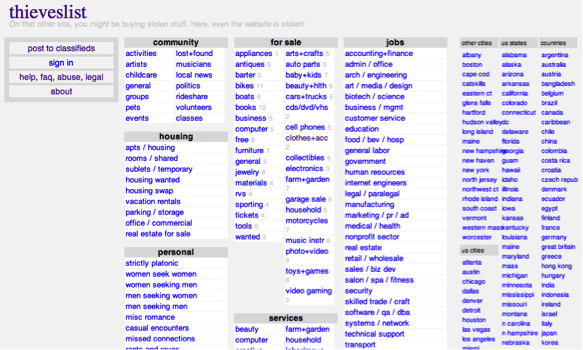
Craigslist is the website where Internet users can buy and sell anything. In just a few clicks of the mouse, one can browse advertisements for housing, items for sale, jobs, information forums, help for services, gigs, community events, and even people. Craigslist can be a highly useful tool, but it also has a dark side. I pulled together accounts from reputable publications to inform GKIS readers about Craigslist benefits and its risks. Then I offered some quick tips for staying safe when using Craigslist.

From Hobby to Fortune

In 1995, Craig Newmark started an email program as a hobby. This program allowed him to easily communicate social events to other San Francisco Internet developers. Word of the program grew quickly, and users began posting emails for other purposes like job searching. Due to popular demand, Craig quickly expanded the features of the program, and in only a year, the website, Craigslist, was created.
The website continued to rapidly expand, and in 1999 Craig’s hobby became a full-time job. In 2010, Craig’s net worth was estimated at a staggering 400 million dollars! His website is now available in over seventy countries and is visited over 20 billion times a month (Terynn, 2013).

So Easy, Your Child Can Do It

Craigslist is famously known as “the public online marketplace.” The website’s user-friendly system and free cost to advertise, draws in 55 million users every month, in the US alone (Usman, 2014). It’s now commonly used by the average American and is a staple for amateur buying and selling.

To access Craigslist, you do not need a user name, personal information, or a credit card. You are free to browse all the content on the website anonymously. If you see an advertisement you like, simply click on the ad, and you will be taken to a page with more detail of the item and a link to the owner.

Creating an ad on craigslist is also easy. Select a category you wish to make an ad for (items for sale, personals, jobs etc.). Then add a title for your ad, a description of what you are selling, and any personal information for those to reach you (email, phone number, social media, or a home address). Once you have posted the advertisement it is viewable to everybody on the site.

My Experience with Craigslist

I love using Craigslist. I have bought and sold many items using the site, and each transaction has gone smoothly. I have had many welcoming encounters, and I have even become friends with a few people I have met. The website is intuitive and easy to manage, and the free advertisement it provides is amazing. However, like with so many Internet sites, people have found ways to use Craigslist for unanticipated, illegal purposes.

The Dark Side: Scammers, Stalkers, and Setups

Scammers use Craigslist to steal money from unsuspecting victims by placing fraudulent advertisements with incredible deals. Buyers are asked to send money orders or checks online, and after making payment, never receive their item. Scammers also take advantage of those selling items. They do this by sending bad money orders or checks that bounce (Paul, 2013).

In Ohio a man tried to use Craigslist to sell his car. He was thrilled when a man responded to his advertisement wanting to purchase his vehicle. The man claimed to be from South Carolina but was unable to come and pick up the car in person. He asked if the car could be shipped to him, and he would send a check to cover the cost of shipping and the vehicle. The Ohio man agreed, and his customer sent $5,450. After receiving the money, he paid for the car to be shipped and told the man from South Carolina it was on its way. The next day he checked his bank account, and the funds he had received were no longer good. He tried to contact the man but was unable to and lost $2500 dollars due to the shipping charges (John, 2016).

Stalkers are also using Craigslist to set-up and harass victims. They do this by posting advertisements that may include the victim’s phone number, address, and even photos. The stalker can even pose as the victim through email and send messages to those who respond to the ad. Victims are then targeted by the harassment of unknown strangers.

A woman from Maryland, was horrified when she founds ads posted on craigslist that read, “Rape me and my daughters.” The ad included her address and photos of her and her daughters. She contacted police, and police found that her ex-husband was responsible for the ads (Justin, 2013).

A bizarre Craigslist story involved a soon-to-be-married couple and an ex-girlfriend (Kelley, 2017). The soon-to-be wife claimed that the ex-girlfriend created a Craigslist advertisement posing as her. In the ad people were asked to come to her house and forcibly rape her. The soon-to-be wife also called the police, claiming that a man had forcibly entered her garage and attempted to rape her. When police arrived, the woman had red marks around her neck and a ripped shirt. Police never found a suspect. However, investigators examined the Internet history of both women. They discovered that the soon-to-be wife had created the advertisement to frame the ex-girlfriend!

Robbery and Sexual Assault

Robberies and assaults are unfortunately quite common on Craigslist. Criminals know that victims are bringing valuable items to meetings and use this knowledge to plan locations where they can easily rob their targets. They also take advantage of trusting and unaccompanied victims.

In Seattle, a woman used the services section of Craigslist. She posted an advertisement asking for someone to fix her broken microwave. A man responded to her ad. When he arrived at her house, she was home alone. He sexually assaulted her and fled the premises (Levi, 2008).

Another story comes from a man who used the personals section of Craigslist. This is a highly controversial section of Craigslist due to its use for soliciting sexual acts. It is illegal to post advertisements soliciting sex on the website, and many are taken down. However, the use of code words has allowed many ads to go undetected (Ed, 2017). In this story the man arrived at an address he had received from the female he had been talking to online. He entered the house and was assaulted and robbed by two men (Levi, 2008).

Child Trafficking and Slavery

Criminals are using Craigslist to make victims sex slaves. One way they do this is by placing advertisements in the “rooms for rent” category. The ads have incredible deals which lure in unsuspecting victims. A woman from Wisconsin responded to an ad that offered free rent for cooking and cleaning. The apartment was in Brooklyn, and when the woman arrived, the man picked her up at the airport. Once at the apartment, the man handcuffed the woman to his radiator and forced her to be his sex slave. After eight days of enslavement she was released. Authorities were contacted and the man was arrested (Irin, 2011).

Children has also been victimized using Craigslist. A father from Texas was arrested and convicted for committing child prostitution and child trafficking. This creep placed ads on Craigslist offering to “come play with daddy’s little girl”. He also tried selling his daughter for one-thousand-dollars (Jeff, 2015).

How to be Craigslist Safe

    • If the buyer or seller won’t give you their name or phone number or the offer is too good to be true. Abort mission.


    • Deal with only local people and vet their authenticity by asking for their name and social media handles. Google them to investigate their digital footprint.Talk to the seller on the phone. Ask questions about the item to get a feel for the situation. How long have you had it? Are you the original buyer? Why are you selling it? If their information about the item is sketchy, so are they.


    • Never give personal information about yourself beyond your name and phone number. If they say they need information for a credit check, make sure the situation is legitimate before you agree to anything.


    • Only meet during daylight and have a buddy with you whether you’re buying or selling. A public meeting place is best.


    • Make sure your photos don’t contain meta data, like geotagged location of the photo (where predators can track your advertised merchandise to your home).


    • Cash only. Do not wire money or accept a check, cashier’s check, or money order. It is a common scam to ask you to cash a check that’s made out for more money than you are asking for. 


  • Trust your gut. If the situation doesn’t feel right, end the transaction. 

Thank you to CSUCI Intern, Dylan Smithson for informing parents of the potential dangers on Craigslist. The next time you visit the website, use the Craigslist safe tips. Don’t become a craigslist horror story. If you enjoyed reading this article, feel free to share with friends and family, and give us a like on our GetKidsInternetSafe Facebook page.

I’m the mom psychologist who will help you GetKidsInternetSafe.

Onward to More Awesome Parenting,
Tracy S. Bennett, Ph.D.
Mom, Clinical Psychologist, CSUCI Adjunct Faculty
GetKidsInternetSafe.com

Work Cited

Ed S. (2017) Craigslist Code Words: Do you Know What They Really Mean?
https://www.instantcheckmate.com/crimewire/post/code-words/

Irin C. (2011) The Disturbing Story of the Craigslist “Sex Slave”
http://jezebel.com/5762020/the-disturbing-story-of-the-craigslist-sex-slave

Jeff E. (2015) Shocking Details of Alleged Child Prostitution Case Make Court Onlookers Gasp
http://abc13.com/news/shocking-details-of-alleged-child-prostitution-case/1086504/

John M. (2016) Hamilton man loses $2,500 to Craigslist Scam
http://www.wcpo.com/money/consumer/dont-waste-your-money/hamilton-man-loses-2500-to-craigslist-scam

Justin J. (2013) Stalkers use online ads as weapons against victims
https://www.washingtonpost.com/local/i-live-in-fear-of-anyone-coming-to-my-door/2013/07/14/26c11442-e359-11e2-aef3-339619eab080_story.html?utm_term=.95a80f9fad30

Kelley P. (2017) Wife thought to be victim in “rape fantasy” Craigslist case now charged with framing husbands ex-girlfriend
http://www.ocregister.com/articles/diaz-740628-hadley-rape.html

Levi P. (2008) Free and Friendly Craigslist has its dark side
http://www.seattlepi.com/local/article/Free-and-friendly-Craigslist-has-its-dark-side-1271623.php

Paul M. (2013) 8 Vile Craigslist Scams to Watch Out For
http://www.wisebread.com/8-vile-Craigslist-scams-to-watch-out-for

Usman A. (2014) Top 10 Countries using Craigslist 2014
http://www.toptrendythings.com/2014/07/top-10-countries-using-Craigslist-2014/

Terynn B. (2013) Who is Craig From Craigslist

Who is Craig From Craigslist?

Photos Credits

Shady Characters Jason Rogers, CC BY 2.0

The dark sides Georgie Pauwels, CC BY 2.0

Come to the Dark Side Holley and Chris Melton, CC BY 2.0

Craig’s List Clone for Do It With Drupal Jeff Robbins, CC BY 2.0

Reese, Hacker. Donnie Ray Jones, CC BY 2.0

Is My Selfie Good Enough? How Screen Media Drives Beauty Pressures That Distress Kids and Teens

A selfie is a self-portrait shared on texts or social media for attention-seeking, communication, documenting one’s day, and entertainment.[1] The term was first seen in 2002, but didn’t become popular until 2012. By 2013 The Oxford English Dictionary named it “The Word of the Year.”[2] We’ve all been guilty of taking selfies. But it takes education and practice to use good judgment. Today’s GKIS article asks, “Are selfies bad for our mental health?”

Celebrity Selfies

With ads on social and print media, billboards, and television, kids and teens are exposed to thousands of images and videos every day. And, it isn’t obvious how filtered, lighted, contoured, surgically and cosmetically altered, and digitally enhanced the photos are. They aren’t a quick, natural snapshot. They are highly produced and stylized. Kim Kardashian proudly shared that she once took 6,000 selfies during a four-day vacation. Her celebrity sister, Kylie Jenner, also admitted that it sometimes takes up to 500 photos before she gets the right shot.

With such exposure, kids are encouraged to scrutinize their appearance, striving to develop and refine the “perfect” face and body.3 Hyper-sexualized selfies further serve as a negative influence. One can easily get roped into hyper focusing on looks and attracting “likes” and comments as a reflection of worth and popularity.

Selfie Editing Apps

Makeup and selfie editor apps are very commonly used and include features to:

  • Change eye color
  • “Slim and trim to selfie perfection”
  • Enlarge features
  • Shrink the nose
  • Plump the lips
  • Enhance facial contours
  • And even offer hundreds of pupil templates “to make your eyes look beautiful.”

Apps also offer combo features that turn your image into cartoon perfection. For example, the “fairy filter” on Snapchat can change your selfie in multiple ways at once, making your eyes larger and gleaming bright while also smoothing out the skin and whitening teeth.

The Beauty, Fashion, and Health and Fitness Industries

Selfie alteration isn’t motivated simply by entertainment. A far more sinister reason often lurks behind the manipulation of young minds, namely profit.

Each year the beauty industry boasts a profit of 42 billion dollars.[10] Add that to the 30 billion dollars brought in by fashion, health, and fitness and the big business of advertising on social media, and one can imagine the lengths corporations will go to manipulate buyers into buying.[4] The worse we feel about ourselves, the more we buy products to “fix” us.

Do we adopt unrealistic attractiveness standards?

In the past twenty years, anxiety and depression have been rising at an alarming rate. The rates of mental health issues among women have particularly jumped.[5] Social media and the pursuit of perfection are likely contributors.

Not only can media exposure lead to mood issues, but body distortion and eating disorder issues are also on the rise.[7] Forty to 60% of elementary school girls report having concerns about weight.[8]

Body shaming among peers starts young and peaks during adolescence. Both males and females engage in shaming, but they do it differently. Males tend to be more directly aggressive, while females shame through passive-aggressive means like gossip and cyberbullying.[9]

Body image issues can lead to excessive use of diet and exercise products and potentially lead to clinical eating disorders. In the United States alone, 20 million women and 10 million men suffer from a clinically significant eating disorder at some time in their life.[6] Even with awareness and education, prevalence numbers continue to rise.

How can we protect our kids from unhealthy self-perception and distorted body image?

  • Love and compliment your kids loudly and unapologetically for all they are! This includes their worthiness of love just for being the “perfect,” nondigitally enhanced them.
  • Reinforce that the self is made up of far more facets than a beautiful face. Likes, interests, skills, and traits make up what’s important about a person, not eye size and hair color.
  • Discuss the fact that we will be hanging out with our bodies for the long haul, which means we must treat our bodies as our best friends rather than our enemies.
  • Lead by example. Do you voice your disapproval about your face or body aloud to your kids? If you do, they too will follow suit about themselves. Instead, be loud and proud of the woman or man you are today. Value yourself just as you would like your daughter or son to value themselves.
  • Implement healthy eating, sleeping, and exercise habits and explain why that is so important for strength and health. I prefer to focus on words like “delicious” and “nourishing” for healthy food to highlight lifestyle factors and frame nutritious food options as a treat, rather than words like “diet,” “cleanse,” or “cheat” that focus on junk food as treats and healthy foods as punishment while aggrandizing shaming fads.
  • Remind your teen that what they see on social media and in ads isn’t always the real deal. Take an Internet browsing journey with them researching this topic by searching “photoshop hacks” or looking up Jean Kilbourne’s ground-breaking work in this area with her “Killing Us Softly” video series. A must-see!

Thank you to CSUCI Intern, Brooke Vandenbosch for her contributions to this important article! Wonder if only girls are susceptible to body image risk to mental health? Check out, “Body Shame and the Average American Male” for a discussion about how boys are increasingly affected as well.

I’m the mom psychologist who will help you GetKidsInternetSafe.

Onward to More Awesome Parenting,

Tracy S. Bennett, Ph.D.
Mom, Clinical Psychologist, CSUCI Adjunct Faculty
GetKidsInternetSafe.com

Works Cited

1 – Sung, Y. , Lee, J. , Kim, E. , & Choi, S. (2016). Why we post selfies: Understanding motivations for posting pictures of oneself. Personality and Individual Differences, 97, 260-265.

2 – https://en.oxforddictionaries.com/word-of-the-year/word-of-the-year-2013

3 – Boon, S. and Lomore, C. (2001), Admirer-celebrity relationships among young adults.. Human Communication Research, 27: 432–465.

4 – Cosmetic & Beauty Products manufacturing in the U.S: Market Research Report. (2016, September). Retrieved December 07, 2016, from http://www.ibisworld.com/industry/default.aspx?indid=499

5 -Press Association Newswire (2014). ‘Very High Rates of Anxiety and Depression for Young Women. Newsquest Media Group.

6 – Wade, T., Keski -Rahkonen A., & Hudson J. (2011). Epidemiology of eating disorders. In M. Tsuang and M. Tohen (Eds.), Textbook in Psychiatric Epidemiology (3rd ed.) (pp. 343 – 360). New York: Wiley.

7 – Leit, R. (2002). “The Media’s Representation of the Ideal Male Body: A Cause for Muscle Dysmorphia?” International Journal of Eating Disorders, vol. 31, no. 3, pp. 334–338., doi:10.1002/eat.10019.

8 – Smolak, L. (2011). Body image development in childhood. In T. Cash & L. Smolak (Ed s.),Body Image: A Handbook of Science, Practice, and Prevention (2nd ed.). New York: Guilford.

9 – Aslund, C., Starrin, B., Leppert, J., & Nilsson, K. (2009). “Social Status and Shaming Experiences Related to Adolescent Overt Aggression at School.” Aggressive Behavior 35.1: 1-13. Web.

10 – Gym, Health & Fitness Clubs in the U.S: Market Research Report. (2016, October). Retrieved December 07, 2016, from http://www.ibisworld.com/industry/default.aspx?indid=1655

Photo Credits

Mirror by Allen Sky, CC BY 2.0

Mirror by Tif Pic, CC BY-ND 2.0

This is a MUST WATCH with your daughters and your sons!

Screen Use by Infants and Toddlers. How to Optimize Learning and Minimize Risk. Part 3 of a 3-Part Series.


Parenting is seriously hard work, even in the digital age. After all, we not only have to supervise their offline worlds, we must monitor their online worlds as well. Prying little eyes off screens with delicious content is tough stuff. It’s impossible to attend to every tiny aspect of our children’s lives, including what they are exposed to on televisions, computers, smartphones, and tablets. Furthermore, it’s not only screens that interact with our kids. Today’s “connected” and “smart” toys provide data, gather data, and even learn data in order to offer customized, consumable content to keep your child playing (and buying). Fun cartoons, entertaining apps, and talking dinosaurs and Barbies are designed to keep kids happy. Sometimes these activities are so expertly designed kids will even choose these activities over one-to-one time with mom and dad. But we know from Part 2 of the series, sitting your child in front of a screen or smart toy for hours at a time can be detrimental to their intellectual and emotional development. How exactly should we “limit” exposure for “the individual child,” as the American Academy of Pediatrics (AAP) suggested? And what is the “right” way to expose our infants and toddlers to tech and screen media? Let’s take a look at what the experts have to say.

Suggestions from the AAP

Infants and toddlers require one-ton-one, bidirectional interaction with caregivers in order to develop cognitive, language, and social-emotional skills (Radesky & Christakis, 2016). Because their memory and attention skills have not completely developed, they are not able to learn through media in the same manner as they do through interactions with others. The AAP has confirmed that there is limited research on the benefits of media, and that excessive use has negative consequences. Therefore, limitation is key.

Here are some additional guidelines outlined by the AAP:

  • Create a family media plan, like our FREE GKIS Connected Family Screen Agreement. This interactive tool allows you to customize screen guidelines for every child in your household, starting as early as 18 months. The AAP discourages use for children under 18 months.
  • Avoid solo media use in children age 18-24 months.
  • Do not introduce technology early if it is not necessary. When children enter school, they will soon be introduced to the technological world and will adapt quickly.
  • Avoid fast-paced programs, apps with lots of distracting or violent content. Test out apps and games before using them with your child.
  • Encourage your child to share their feelings or interests when you use media-play together.
  • Turn off screens when they are not being used so your child is not able to consume media passively.
  • Keep bedrooms, mealtimes, and parent-child playtime screen free. You can even turn on a “Do Not Disturb” option on your iphone to avoid incoming calls or messages from popping up at inconvenient times (Radesky & Christakis, 2016).

Suggestions from the NAEYC

According to the National Association for the Education of Young Children (NAEYC), infant media exposure should be used to facilitate learning (2012). Because infants learn primarily through play with adults, children, and toys, technology tools must be used in the context of these interactions as well. Infants require tools that allow them to freely explore and manipulate their environment, which draws them to games that have buttons, switches, and controls. Tools should also be safe, sturdy, and not easily damaged (NAEYC, 2012).

Here are a few more suggestions and examples:

  • Allow your infant/toddler to explore digital materials with you or another adult as a mediator. Sharing technology with your child and interacting with them while doing so allows for increased vocabulary skills, observation of appropriate behaviors with media, literacy, and more.

GKIS Quicktip: Use video-chat to interact with your child to let them explore areas unknown to them (with another adult on the other end). Explain your surroundings to them and introduce them to new ideas.

  • Avoid passive screen time. Although some parents believe baby videos calm their child in times of turmoil, there is little research suggesting infants and toddlers learn from watching videos alone. If infants are upset, they need hugs and soothing, not technology.

GKIS Quicktip: Avoid using television programs like Baby Einstein to soothe your child and distract them from the problem. Instead, talk to them, identify the source of their distress, and physically provide your child with a sense of security.

  • When appropriate, use technology as an fun, active tool that provides your infant or toddler with access to images or videos of what they may or may not see in their own environment

GKIS Quicktip: Provide images or videos on a tablet of family, friends, animals, toys, or even other children from around the world to expose diversity. As your child looks through these images, explain the pictures to them. Talk to them about the people, animals, or objects   and create a story about what they see.

  • Incorporate assistive technologies for children with special needs and/or developmental delays.

GKIS Quicktip: For toddlers with Autism Spectrum Disorder, try using GoTalk Pocket. This assistive technology in the form of a remote, works as a communication device for children. Teach your toddler to press the buttons on the remote for what they need. This remote will then verbally project the word, allow for practice of communication skills.

  • Track your child’s progress.

GKIS Quicktip: Record your child’s progress with media use by audio or video on your phone or computer. You can even record the entire play-session to determine your child’s interests and abilities to build upon in future sessions (NAEYC, 2012).

Non-Media Alternatives

Although I’ve offered great tech options, it may be best to avoid screen use entirely for education purposes between the ages of 0 to 2.

Here are several universally known and time-withstanding conclusions that we as a concerned GKIS parenting community can agree on:

  • Reading to your toddler boosts language ability and strengthens parent-child attachment.
  • Talking to your baby throughout daily activities improves language and emotional development and overall intellectual functioning.
  • Singing, playing, and smiling are never discouraged when engaging with your child (Hoecker, 2014). Nothing in your life will translate into more precious dividends.

Thank you Alanna Daytona, CSUCI intern, for putting together these important tips for smart tech use. No matter the age of your child, it’s never too late to implement screen media strategies that enrich, rather than interfere with intellectual development. For step-by-step instruction on how to get started on the right foot, check out our GKIS Connected Family Online Course.

I’m the mom psychologist who will help you GetYourKidsInternetSafe.

Onward to More Awesome Parenting,

Tracy S. Bennett, Ph.D.
Mom, Clinical Psychologist, CSUCI Adjunct Faculty
GetKidsInternetSafe.com

Works Cited

GoTalk Pocket – Go Talk Pocket. (n.d.). Retrieved from http://www.autism-products.com/ProductDetails.asp?ProductCode=1298886&gclid=CNSUzq3K49ACFQ9EfgodvKsPyA

Hoecker, J. L., M.D. (2014, April 12). Infant and toddler health. Retrieved from http://www.mayoclinic.org/healthy-lifestyle/infant-and-toddler-health/expert-answers/baby-einstein/faq-20058099

NAEYC. (2012). Technology and Young Children. Retrieved from https://www.naeyc.org/content/technology-and-young-children/infants-and-toddlers

Radesky, J., & Christakis, D. (2016). Media and Young Minds COUNCIL ON COMMUNICATIONS AND MEDIA. Pediatrics, 138(5). doi:10.1542/peds.2016-2591

Photo Credits

A Boy and His Mac by Tom Carmony, BY CC 2.0

Concentrazione by Mbeo, BY CC 2.0

Happy Mother’s Day by Elvis Kennedy, BY CC 2.0

6 Experts Share Productive Screen Time Tips for Kids

screenshot-2016-12-02-13-36-52

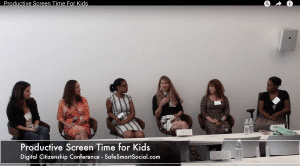
On November 11, 2016 I was invited to participate in a panel discussion and present in a breakout session at the Safe Smart Social Conference at the Microsoft Corporate Headquarters in Los Angeles, CA. Here is a link to the panel presentation with thought leaders in child screen safety. My favorite takeaway?

***

How can we collaborate with technology to build a connection with our kids?

Strive to have a strong, fun, connection with your children that includes an ongoing dialogue; one of the best ways to achieve that connection is with tech. If children see us as a partner in tech, then we can keep the conversation open. Remember that the partnership between tech and your connection with your child is the most important. –Dr. Tracy Bennett, GetKidsInternetSafe