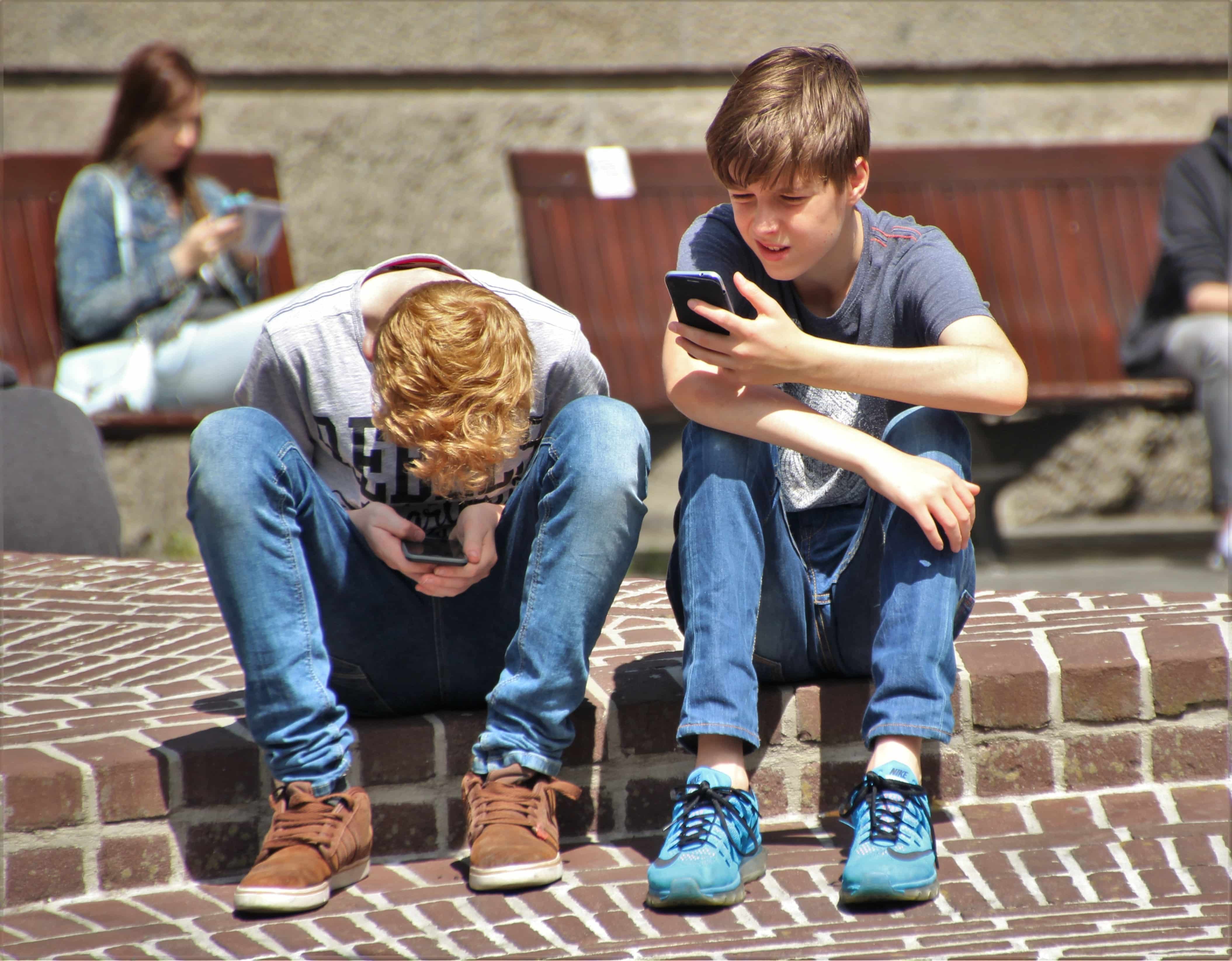
Feeling unproductive, unmotivated, and notice that you are wasting countless hours scrolling through social media? A social media cleanse may be a great decision to improve your well-being. In this week’s GKIS article, we will provide a step-by-step guide to putting down your phone and getting that much-needed break your mental health deserves. To help your tween or teen demonstrate they have the knowledge, problem solving ability, and judgment for social media, check out our Social Media Readiness Course. It’s an online course for tweens and teens that offers information about the risks of digital injury due to social media and psychological wellness tools. With a quiz for each module, they work their way through independently so their graduation certification demonstrates mastery of content. Of course, you can take it too if you’d like. It’s like driver’s training but for the internet!
According to pewresearch.org, 70% of Americans use social media.[1] For adults, the most popular social media platforms include YouTube (73%) and Facebook (68%). In contrast, 63% of teens use Instagram, making it the most popular social media platform amongst young users ages 15-25.[2]
According to the American Academy of Child & Adolescent Psychiatry, 90% of teens have used social media and teens spend an average of nine hours a day on social media.[3] Participants of a research study conducted by the Pew Research Center found that 74% of Facebook users visit Facebook daily. People of varying ages spend a lot of time on social media.
We use social media to view funny memes, stay connected to friends and family, meet new people, share opinions and information, show off passions and creative pursuits, advertise businesses, and even get news. Most of us find it extremely rewarding and feel we’ve got it under control. But for others, social media can negatively impact mental health.
Risks of Social Media Use
I’m a millennial who’s been using social media for 10 years. I’ve experienced a wide range of negative effects due to my social media use, including feelings of insecurity and not being good enough, anxiety, and the big one, fear of missing out (FOMO).
For years, I followed my friends’ and Instagram influencers’ profiles and wondered why I wasn’t as happy as them or why I couldn’t travel the world and have a life of fun and excitement. I often compared myself to others on social media and it hurt my mental health. In her book, Screen Time in the Mean Time, Dr. Bennett calls that “compare and despair” and believes it is a common contributor to teen anxiety and depression.
Social media can be a toxic place, especially during these unprecedented times. It’s too easy to spend hours on Google trying to figure out if you have COVID-19 and spend another 45 minutes scrolling through Facebook comments of people arguing over politics. Feelings are high and extreme opinions are rampant. According to helpguide.org, social risks include increased feelings of isolation, depression, anxiety, and insecurity.[4]
The Benefits of a Social Media Cleanse
To get away from negativity, a social media cleanse may be the answer. The benefits of a social media detox include:
More free time for other things, like research about a favorite topic
To research this article, I deleted all of my social media apps including my all-time favorite, Instagram, about a month ago. I was concerned that I was averaging too much screen time (6 hours a day), and I wanted to be more productive and connect more with my boyfriend and family.
My first week of being social media free was by far the hardest. But it became much easier after that. I often felt the urge to redownload my Instagram app, but for the most part I have been able to stay away.
The benefits of staying offline have really paid off for me. Almost immediately, I felt it was easier to fall asleep at night (since I was not on Instagram or TikTok late). I’ve also felt a reduction in stress, anxiety, and anger. Now I don’t feel the need to check my friend’s social media just to see what they’re doing all the time. Instead, I reach out directly to friends to reconnect.
I worried that if I deleted my social media accounts, I would feel more disconnected from my friends. But instead, I’ve kept in touch with them more than before my social media cleanse. Relationships and connections are important to me, and I’m glad that I’ve been able to connect in a more meaningful and sincere way. Overall, I’m happy with the results. I feel more mindful and present in my everyday life, my sleep has improved, I’ve experienced less stress and anxiety, and I have more free time to get work done and spend time reconnecting with the people I love.
Do You Need a Social Media Break?
Here are some red flags that may signal that you are ready for a social media cleanse:
You spend most of your free time on social media.
You feel like you need to share or post often.
You find it hard to focus on schoolwork or other life responsibilities.
You feel an increase in anxiety and stress after spending time on social media.
You feel more lonely, unmotivated, and less creative.
You are experiencing feelings of low self-esteem or low self-confidence.
You feel anxious without your phone.
You feel guilty or ashamed about the amount of time spent on social media.
How to Get Started
There are many ways to jump-start your social media cleanse. You can stop your phone use cold turkey, or you can delete one or two apps at a time. You can also cut down your friend list to only those you have a close, personal relationship with to cut out the less meaningful posts. Find whatever works best for you.
Here are some tips for getting started:
Deactivate or delete your social media accounts.
Delete social media apps from your phone.
Connect with family and friends in alternative ways.
Set a time limit on your phone to cut back on overall phone use.
Check your daily Screen Use and make adjustments if needed.
Set a specific “phone bedtime” before your actual bedtime (At least 3o minutes before you go to bed is recommended).
Make your bedroom a phone-free zone.
Turn your phone on “Night Mode” to decrease blue light emissions.[6]
Most importantly, remind yourself why you decided to go on a cleanse in the first place. And remember, your cleanse doesn’t have to be a permanent decision, you can always go back.
Enriching Activities to Reconnect Offline
There are endless possibilities for new enriching activities. You can practice meditation, pick up a new skill, or do that thing you’ve been meaning to do. Here are some fun ideas to reconnect with your loved ones:
Family game night
Family movie night
Cook a family dinner. Make it exciting by trying a new recipe or cooking an old family favorite.
Have a family yoga or workout session.
Practice meditation and deep breathing (alone or with family).
Using this extra time to reconnect and spend valuable time with your family is great, but it’s also important to spend time hanging out with yourself. Start by catching up on your sleep, creating a playlist, or reading a favorite book. Don’t feel pressured to constantly look for something to keep you busy unless that’s what you want to do. This is a well-deserved break. Do whatever you want with it and enjoy!
If you’re interested in learning more helpful tips about parenting in the digital age, check out the GKIS Connected Family Course. The GKIS Connected Family Course is family-tested and outcome-based and helps you close screen risk gaps and improve family cooperation and closeness.
Thanks to CSUCI intern, Remi Ali Khan for researching social media cleanses for this article.
I’m the mom psychologist who will help you GetKidsInternetSafe.
In 2014, the Founder of GetKidsInternetSafe Dr. Tracy Bennett wrote an article on artificial intelligence (AI) facial recognition and the potential dangers associated with such technology. Fast-forward 6 years to 2020 and many of her predictions have proven true plus more than could have been anticipated. AI facial recognition has boomed to an extent that many companies are using our social media data to increase profits. Big tech is willing to do to capitalize on us, even if it is not in our best interest. For a glimpse into the scary future possibilities of privacy invasion and trampling on our civil rights, check out what’s happening in China in today’s GKIS article.
Artificial intelligence (AI) facial recognition has come a long way in the past few years especially since engineers have been using artificial neural networks. These neural networks are similar to an actual human brain. They consist of a connection of nodes called artificial neurons and can transmit a signal to other nodes. Once a node receives a signal, it can process the signal and relay the information to the other nodes connected to it. When it comes to neural networks, a person can input any type of information. In face recognition technology, an image of the face is entered. AI marks each feature as a nodal point, collecting more data with each image.
Facebook uses neural networks and processes over 350 million new pictures daily. Amazon also has a service called recognition where customers can pay to acquire Clearview AI is a controversial service that many in Silicon Valley have opposed due to implications on privacy. Clearview AI searches social media platforms and has acquired over 3 billion pictures in their inventory. When someone searching Clearview gets a match, they get data AND a link to the social media accounts where the facial data was acquired. Many have concerns that this takes the privacy breach a step further.
Beneficial Ways Facial Intelligence is Being Used
AI has led to the recovery of many missing children that have been sex trafficked or sexually exploited.
Taylor Swift’s security team used facial recognition at her concerts to see if any of her stalkers were in the audience.
Law enforcement uses AI to identify people that cannot identify themselves, like people with severe mental illnesses, people high on drugs, or people that are refusing to identify themselves. With a three-minute turnaround time, law enforcement is saving a ton of money and time so they can focus on other crimes.
Controversial Ways Facial Intelligence is Being Used
A man seen stealing beer at a CVS in New York City looked a lot like Woody Harrelson. The police entered a picture of Woody Harrelson into facial recognition technology and found a match. Although police were able to locate and apprehend the suspect, this technology could implicate the wrong person with similar facial geometry.
People of color are more likely to be misidentified due to AI facial recognition not being as good at differentiating people with darker skin.
The government could enable continued surveillance of certain individuals like they are doing in China. China uses facial recognition to follow Uighurs, a largely Muslim minority, as well as monitor all Chinese citizens using a social credit score.
Dystopian Surveillance
AI advancements worry people due to fear of one day living in a dystopian surveillance taped society. Having this type of society would mean that all citizens would be tracked, and privacy would cease to exist. One might think that with the civil rights protections in the United States we are not at risk. I wonder if Chinese citizens have concerns…
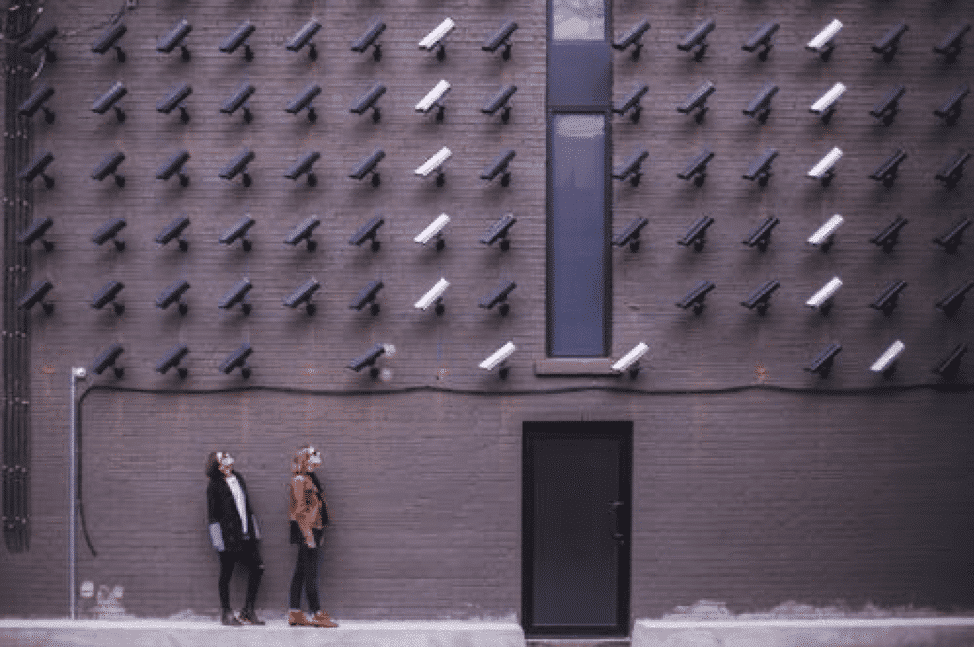
China has more AI facial recognition CCTV cameras than any other country in the world and is a prime example of dystopian surveillance. The Chinese government claims to use AI to lower crime and increase prosocial behavior using a social credit system by a company called Sesame Credit. They contend that this system encourages citizens to behave in a socially appropriate manner and if someone is a good citizen, then they have nothing to hide and the cameras should not be a concern.
Specifically, using Sesame Credit in China, if a Chinese citizen is caught on camera doing anything that is not considered “socially appropriate” like jaywalking, littering, smoking, or buying too much alcohol or too many video games, their social credit score will decrease. A low social credit score may result in the inability to purchase airline or train tickets or book at certain hotels, or they may be barred from certain schools and jobs. Citizens can also have their dog taken away if it isn’t walked on a leash or is a public disturbance. It is also mandatory for blacklisted citizens to register to a public blacklist which typically results in social stigmatization. Parent scores can affect other family members, like preventing kids from being accepted to private schools. Public shaming is a big part of the social credit system. Pictures of blacklisted and low scoring citizens are shown on TikTok, pictures and videos with names play on public LED screens, and addresses are shown on a map on WeChat.
People with good social credit scores appreciate the system since they get rewarded. Perks consist of discounts on hotels, entertainment, and energy bills and one can rent bikes without a deposit. High scorers also get into better schools and get access to better jobs. Users on dating apps are required to put in their social credit score; good scores get more dates.
Ways Citizens Can Raise Their Scores
Donating to college funds for poor students
Caring for elderly or disabled people
Repaying a loan even if the bank canceled it
How the United States is Implementing Social Credit
The U.S. has not implemented AI as comprehensively as China. However, it is used in some industries. For example, life insurance companies in New York are allowed to look at a person’s public social media account to see if they are engaging in risky behavior. They base a person’s premium on what they find. In fact, a 2020 survey found that 98% of professionals do a background check on new hires and 79% disqualified a job candidate due to unfavorable social media content.
There is also a company called PatronScan which was designed to help restaurants and bars manage customers. It can help spot fake IDs and troublemakers by scanning an ID upon entry. A public list is shown for all PatronScan customers. The problem is that judgment about what constitutes a “troublemaker” is subjected and may result in an unfair listing without the owner’s consent.
Rideshares like Uber and Lyft have reviews for both drivers and riders that may result in a customer being refused a ride. Airbnb also works by reviewing both hosts and renters. Many hosts refuse to rent to certain people based on their past reviews, and many hosts may not be booked based on renter reviews.
China is a prime example of the dangers of AI facial recognition and how it can affect our privacy and freedoms. There is not yet much legislation preventing AI from being used in the United States and there’s a need to push for it. Like the frog in the pot, people adapt so willingly to advancing technology that it’s difficult to recognize possible consequences.
For information and safety tips about how to keep you and your family safe, we highly recommend Dr. B’s Cybersecurity and Red Flags supplement. In an age where technology is advancing at such a fast rate, it is important to keep you and your family informed on current technological risks and how to prevent them.
Thank you to CSUCI intern Andres Thunstrom for co-authoring this article.
I’m the mom psychologist who will help you GetKidsInternetSafe.
Parler is a social network platform that has recently become popular due to public outrage over big tech censorship. Controversy swirls as to whether a powerful private entity, like Facebook or Twitter, should have the power to alter public access to information. Should it be up to the reader to determine the accuracy of information or is the proliferation of fake news into our news cycle a danger to us as individuals and to our democracy – thus making censorship necessary? In this article, we will be showing you why Parler appeals to certain users, the perceived benefits and potential dangers of the app, and why GKIS recommends that children not be allowed access.
Nearly the whole world relies on social media to market their business, get the news, network, or stay connected with friends and family. But recently it has been brought to light that social media platforms shadowban content that violates their terms of service. Shadowbanning is when a social media platform blocks a user’s content without notifying the user. So, instead of understanding their content has been blocked, the user believes that nobody is engaging with their content when in reality it cannot be seen or has been obscured to other users.
Some users who have experienced their content being taken down or shadowbanned by social media apps like Facebook and Twitter believe that it is a violation of their constitutional first amendment right to free speech and accuse big tech of politically-motivated censoring. In response, many have decided to jump ship and go to other apps known to be against censorship like Parler. Parler has become one of the most downloaded apps after Twitter flagged some of former President Donald Trump’s tweets.
What is Parler?
Parler is a social network platform that is similar to Twitter. It was founded by John Matze and Jared Thompson based out of Henderson, Nevada. The social media platform describes itself as a “free-speech platform” focused on protecting users’ rights. The content is focused on real user experiences and engagement without censorship, except for obscenity and pornographic material.
The guidelines on the platform state that the company aims to “uphold the rights of free speech according to the U.S. Constitution.” But many are criticizing it for being a far-right social media platform and calling Parler names such as Meinspace, Hicktock, and Fashbook.
Who is joining Parler?
The majority of Parler users have a more conservative ideology who joined during the 2020 presidential election when Twitter’s algorithms censored a New York Post story involving files and emails reportedly taken from Hunter Biden’s laptop. When Republican Senators questioned Jack Dorsey, the CEO of Twitter, about the censorship, he replied that it was a “mistake” and that Twitter policies would be amended. In response, conservatives claimed that the algorithms favored liberal news and unfairly targeted conservative content.
Many Saudi’s have also have left Twitter and joined Parler in response to news stating that several Twitter employees were charged by the U.S. Department of Justice for spying for Saudi Arabia. According to court papers, one of the people implicated in this scheme is an associate of the Saudi Crown Prince Mohammed Bin Salman who the CIA has concluded made the order of assassinating the journalist Jamal Khashoggi. Saudis feel that Twitter is protecting the Saudi government by spying on users that do not agree with the government.
Many non-political people also use the platform such as athletes, business owners, and people that just want fewer rules and a platform that welcomes all political views.
How do you sign up for Parler?
To sign up, go to the Parler website or download the app and submit your email address and phone number to confirm your identity. Agree to their terms of service and privacy rights and community guidelines. If you want to comment on user posts, verify your identity by taking a picture of a valid identification document such as a driver’s license or passport and a selfie and send it in.
How Parler Works
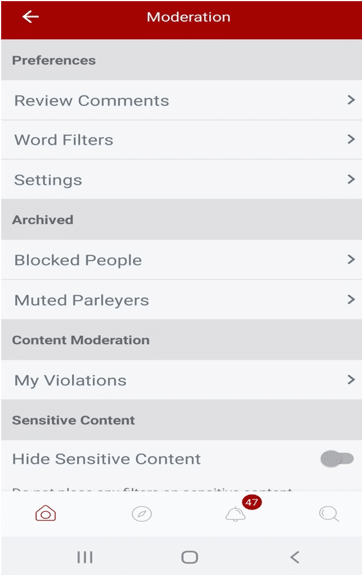
Users can moderate what kind of content they’d like to see as well as block or mute users. Additional features include entering word filters associated with content that you’d not like to see and the option to view your comments before anyone else can see them. Parler also has Community Guidelines violation points which allow a warning (20 points) prior to losing your Parler account.
In the main feed, there are different terms for certain content. For example, a parley is a post and an echo is a re-post similar to a retweet. Votes are similar to likes or dislikes. Parleys can only be upvoted and comments can either be upvoted or downvoted.
Despite Parler being credited as a free speech platform, users cannot post:
Terrorist threats or threats
Trolling
Spam
Pornography
Slander
Blackmail
Plagiarism
Bribery
Copyright infringement
Doxing
Impersonation
Libel
Obscenity
Privacy
Users can make an account public or private. You can also select an option where the only email you’ll receive from Parler is to inform you of critical updates.
How Hashtags Work on Parler
Parler is hashtag heavy. To search for content or post content, a user needs to be precise with hashtags and usernames more so than other social media platforms. This means that exact hashtags or usernames must be typed in with no spaces. Parler’s algorithms only search for usernames and hashtags. Twitter, on the other hand, uses all kinds of algorithms that search for more vague keywords. Their algorithms also curate a person’s feed to suit their interests in order to keep a user scrolling. Parler does not do this. Users that do not like an algorithm to decide what should be on the top of their newsfeed may prefer an app like Parler.
Is Parler appropriate for minors?
GKIS rates Parler as a red light app for kids and teens due to the commonality of extreme views and lack of censorship. For example, far-right groups like the Proud Boys post about destroying Antifa and promoting civil war. We at GKIS recognize that young people are particularly vulnerable to believing conspiracy theories and may become radicalized by extreme content. Kids on Parler may also be at risk for exploitation and abuse.
For more information on how to keep you and your tweens and teens safer on social media, check out our Social Media Readiness Course. It’s like driver’s training except for the internet!
Thank you to CSUCI intern Andres Thunstrom for co-authoring this article.
I’m the mom psychologist who will help you GetKidsInternetSafe.
Onward to More Awesome Parenting,
Is your child sharing their location with hundreds of “friends” online? Are they unwillingly giving away personal information that can put their privacy in danger? Our GKIS tools can help with that. In this article, we cover the ways kids overshare online and provide insightful tips and strategies to keep your child safe.
The GKIS Mission
GKIS helps families achieve screen sanity, prevent digital injury, and form deeper, more meaningful relationships. We don’t have to give up screens to be safe. GKIS offers tools and strategies that keep the joys of childhood discovery alive for all of us in today’s overtasked world.
Oversharing
Teenagers love to share what they are doing online, whether it’s posting what they’re eating, uploading selfies, or posting pictures of their pet. Sharing daily life online is fairly common; we adults are guilty of it too. But sharing location data can be particularly dangerous for teens because it offers a bridge from online contacts meeting them online to meeting them offline.
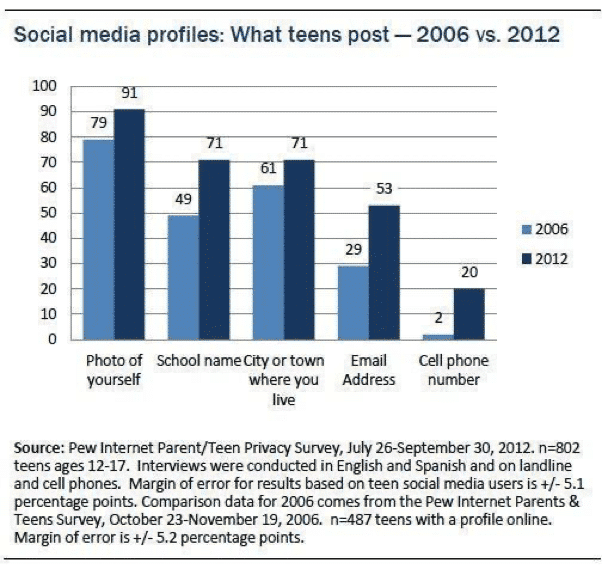
According to Pew Research Center, 71% of teens post their school name, 71% post the name of the city or town they live in, and 20% post their phone number.[1] Further, 36% of older teen’s Facebook friends are people they have never met in person.[2]
Although teens understand that oversharing can be dangerous, few have the life experience to understand exactly how it can be dangerous. When I was a teenager, the more “likes” I got on a photo or the more “friends” or “followers” I had on social media, the better I felt about myself and my online presence. I accepted friend requests from mutual friends who I had never met before, along with accepting requests from strangers. In my teenage mind, there wasn’t any harm in letting strangers see my online profiles. I felt that I would be okay as long as I wasn’t sending them my address. It didn’t occur to me that this data could be used to predict my location or even that anyone could have that kind of predatory intent.
Dr. Bennett shared a story with us where she worked on the production of the Lifetime TV show, I Catfished My Kid. In the show, producers created a poster board map (like detectives do) with yarn connecting the teens’ movements throughout the day for a week. With this data, they were able to predict daily habits like location, activities, and even who they hang out with.
How is Location Data Shared?
Instagram
One way location is shared on social media is through geotagged photos. A geotag is an electronic tag that assigns a geographical location to a photo or video posted on social media or other websites.[3] Geotags are commonly used to share what restaurant or city someone is in and are very popular on Instagram.
If your teen has a public profile and decides to post a photo on Instagram with a geotag, not only will their friends be able to see where they are, but users around the world can too. By simply clicking on that location’s tag, your teen’s photo will pop up as a current or recent visitor.
Another way location is shared on Instagram is by the use of hashtags. If your teen has a public profile and adds hashtags to their posts, their photos will show up as recent users of whatever hashtag they use, similar to the geotag feature. Hashtags are commonly used to have other users find their posts quicker and potentially gain more followers and traffic on their profile. However, that could be a privacy concern for younger users.
Facebook
The check-in feature on Facebook is similar to geotags. Facebook users “check-in” as an announcement to friends that they are visiting a particular location. Once checked-in, it appears on the user’s Facebook profile.
Snapchat
The SnapMap feature on Snapchat can also be a location risk. SnapMap allows your teen to share their location with their Snapchat friends every time they open the app. The SnapMap feature is a default, meaning it is automatically on so your teen might not even know that they are sharing their location. This is another privacy issue and may be a safety concern if your child accepts friend requests from strangers.[4]
Helpful Tips and Tools to Protect Your Child on Social Media
Set up a digital contact like our free Connected Family Screen Agreement and have ongoing, informative conversations with your kids about online safety. Our GKIS blog offers credible, interesting topics that will feed an ongoing agenda. Register for our Connected Family Screen Agreement to get on our weekly email list!
Set up your home to optimize best-use screen practices using our Connected Family Course for school-age kids.
Limit location sharing in Settings. On an iPhone, go to Settings and remove the location by clicking on the social media name > Location > select Never, Ask Next Time, While Using the App, or Always. You also have the option to turn off “Precise Location” meaning apps can only determine your approximate location
Don’t allow your child to have social media accounts until they are ready (we recommend after 13 years old or late middle school).
Require that your child set social media to private and only accept friend requests from family and friends they know in real life
Have your child change to the “Ghost Mode” on Snapchat (their location will no longer be viewable on SnapMap)
Thanks to CSUCI intern, Remi Ali Khan for researching common ways teens overshare on social media for this article.
I’m the mom psychologist who will help you GetKidsInternetSafe.
Onward to More Awesome Parenting,
Tracy S. Bennett, Ph.D.
Mom, Clinical Psychologist, CSUCI Adjunct Faculty
Photo Credits
Photo by Cottonbro from Pexels
Photo by Pixabay from Pexles
Photo by Pew Research Center
Works Cited
Deahl, D. (2017, June 23). Snapchat’s newest feature is also its biggest privacy threat. Retrieved November 04, 2020, from https://www.theverge.com/2017/6/23/15864552/snapchat-snap-map-privacy-threat
Dove, J. (2020, October 07). How to Remove Location Data From Your iPhone Photos in iOS 13. Retrieved November 04, 2020, from https://www.digitaltrends.com/mobile/how-to-remove-location-data-from-iphone-photos-in-ios-13/
Madden, M., Lenhart, A., Cortesi, S., Gasser, U., Duggan, M., Smith, A., & Beaton, M. (2020, August 17). Teens, Social Media, and Privacy. Retrieved November 04, 2020, from https://www.pewresearch.org/internet/2013/05/21/teens-social-media-and-privacy/
Oxford Languages and Google – English. (n.d.). Retrieved November 04, 2020, from https://languages.oup.com/google-dictionary-en/
A 33-year-old army veteran named Ronnie McNutt gruesomely killed himself in a Facebook Live video on August 31, 2020.[1] Soon after, memes and jump cuts to his suicide were floating around social media sites like TikTok, Twitter, and Instagram. From there, reaction videos between friends and siblings began trending. Unfortunately, this is not the first time an online suicide began trending and turned into a meme. This subculture of macabre shock humor not only desensitizes kids to violence, but it can also cause copycat behaviors and serious trauma symptoms.
How Kids Fall Victim to Traumatizing Shock Humor
The extremely popular TikTok has a customized feed called the “For You” page. The For You page shares trending videos that may be relevant to the user’s view history with a few random videos added in for variety. This is the reason disturbing videos may appear out of nowhere on a user’s page.
Users often save and forward the most gruesome content to their friends on a variety of social media platforms. That means that, despite being reported and removed by moderators, the images and videos live on and on. Users even troll each other by hiding a gruesome clip in the middle of a seemingly unrelated video for the GOTCHA effect. Whether your kids are on YouTube, TikTok, Instagram, Snapchat, or Facebook, they may have a difficult time avoiding gruesome content.
Why do kids troll with gruesome videos?
Reaction Formation
Kids are particularly susceptible to videos that make them feel interested, curious, and shocked. The more shocking the video, the more social cred kids get which helps them fit in, gain popularity, and seem cool and edgy.
Because processing this type of content is horrifying, kids often morph their uncomfortable feelings into humor as a way of coping. The father of psychology, Sigmund Freud, called the tendency for people to have an opposite emotional reaction than expected, reaction formation.
Modeling
Modeling is defined in psychology as a type of learning that results from watching behavior and replicating it. Kids are particularly wired for learning through modeling because it helps them grasp useful life strategies such as social cues and dealing with emotions. Seeing peers laughing at these videos or attempting to make funny reactions, makes this type of behavior seem okay and leads them to abandon their initial reaction of revulsion. As a result, the cycle of sharing gruesome videos is repeated.
An example of this is seen in a popular response video created by Jorobe on TikTok. This video highlights a clip between a girl sharing the McNutt video with another girl. The victim gets wide-eyed, leans away from the phone, looks at the camera and then back at the girl who is showing the video, lets out a nervous chuckle, then covers her face. Her raw response shows shock, revulsion, and an uncomfortable attempt to process what she has seen. As she struggles to make sense of her distress, the other girl laughs. She then laughs in response. The transformation from revulsion to humor is, all by itself, the joke.
Most adults tend to be upset at this kind of “gotcha” humor, but kids tend to love it. Without life experience, they do not yet have the empathy skills to pull back before somebody gets hurt. Kids simply get carried away. Powerful and even stressful emotions can release the neurotransmitter, dopamine, which can be interpreted as pleasurable to immature brains.
Viewing Violence Can Cause Psychological Stress: The Impacts on the Mind and Body
Some videos may cause extreme stress and may even be traumatizing for children. In an article published in 2017 by McFadden, it is noted that the brain areas that play a role in complex thought and emotion—the prefrontal cortex and amygdala—are affected by stress. When we are exposed to a threat, our amygdala (commonly called the smoke detector in our brain) determines whether we need to go in crisis mode or problem-solving mode. If we go in crisis mode, the signal is directed to our brain stem so we can fight, flee, freeze, or fold. If we go into problem-solving mode, the signal is directed to our prefrontal cortex to calmly work the problem out.
McFadden found that, with prolonged stress, the brain cells in the prefrontal cortex will begin to deteriorate, while the amygdala will begin to strengthen. This impact then affects other parts of the brain—and therefore, one’s headspace—like a domino effect.[2]
If a person is exposed to traumatic or threatening material often, the crisis pathway overdevelops and the subject panics too easily. They can also lose their problem-solving abilities when stressed.
Further, trauma memories encode in the brain differently than factual memories. Unlike factual memories where we can retrieve the information at will, trauma memories may intrusively come back into our awareness uninvited. In extreme cases, these memories can be very upsetting – like a flashback of the originally traumatizing event. Psychologists recognize these behaviors as symptoms of post-traumatic stress disorder (PTSD). PTSD is characterized by serious sleep problems, social isolation, anxiety, and mood disorders.
Desensitization
Desensitization in psychology is explained as a decline in emotional response due to repeated exposure.[3] This could be from something as simple as a joke becoming less and less funny when it is heard many times to something as serious as becoming more and more emotionally numb towards upsetting events. For example, psychological research has demonstrated that violent video games can desensitize children to violence due to frequent exposure to battery, weapons, blood, and death or murder. Similarly, exposure to videos of real-life gore and violence can cause desensitization and lack of empathy.
How to Protect Your Child
When shock videos are trending, it’s best to stay off social media apps until the trend dies down. For young children, your best resource for blocking, filtering, and management is the GKIS Screen Safety Toolkit. With this resource guide, we offer links to the best parental controls, safety centers, and third-party tools and apps to help you protect your family.
For school-age kids, tech tools are simply not enough. GKIS also offers a free digital contract called our Family Agreement. With this powerful tool, you can set rules and regulations, teach important problem-solving skills, and discuss family values. An informed sensible parent-child alliance pays off for years to come. Our Connected Family Course complements the agreement with 10 steps for best-learning and safety.
Finally, we created a tool for tweens and teens that encourages more independence and accountability: our GKIS Social Media Readiness Course. Like driver’s training but for the internet, this course offers 10 lessons for your kid to work through with matching mastery quizzes at the end of each lesson. Not only does this course teach the risks of digital injury and how to avoid it, but it also offers Dr. Tracy Bennett’s hand-picked, outcome-based psychology wellness tools to help with resilience and mental health. We cannot keep them away from screens entirely, so it’s important that we offer them tools to avoid trauma.
Thanks to CSUCI intern, Avery Flower for researching how traumatic videos can affect childhood development and co-authoring this article.
I’m the mom psychologist who will help you GetKidsInternetSafe.
Onward to More Awesome Parenting,
Tracy S. Bennett, Ph.D.
Mom, Clinical Psychologist, CSUCI Adjunct Faculty
[3] Krahé, B., Möller, I., Huesmann, L. R., Kirwil, L., Felber, J., & Berger, A. (2011). Desensitization to media violence: Links with habitual media violence exposure, aggressive cognitions, and aggressive behavior. Journal of Personality and Social Psychology, 100(4), 630–646. https://doi-org.summit.csuci.edu/10.1037/a0021711
I am deeply saddened on top of many layers of horror and sadness from these last few weeks. While we are all still reeling from the fears of unknowing and weeks of social isolation due to the COVID-19 pandemic, we witnessed the heartless murder of George Floyd on TV as he begged for his life and onlookers pled for his safety. The #blacklivesmatter dialogues that have followed by our leaders, celebrities, neighbors, friends, and families have sparked further insights, horrors, hopes, and healing. From my position of privilege, it is impossible to try on the skin of oppressed black and brown Americans. I do not have the capacity to do so no matter how hard I try. But I really do try. I know from decades of training and experience that none of us walk through this unjust world without prejudice and bias. It is the human condition. We ALL have work to do. Our rage and pain and fear and sadness offer opportunities for insight. Some are taking it in quietly, some are coming out fists up. I choose to believe that important voices are being heard, just as I believe they will unconsciously dim from our awareness when the news cycle becomes stale. We all must commit to keeping our fight against hate, oppression, and prejudice in the forefront of our minds and behavior from here until we breathe our last breath. As a collective, we can make a difference but only with consistent effort, education, and heart.
For this article from my role as a screen safety expert and child advocate, I’d also like to shine a light on another angry mob that feels justified in shaming online postings in passionate pursuit of justice. Last night it was a viral post that appeared in my 5k member mom community Facebook group. I woke up this morning and checked the weather, the news, and Facebook. First on my feed was a post from a young woman outing a pickup truck full of teens flying an American flag. She wrote, “Nothing brings me more joy than exposing racists, these troubled souls were driving by a peaceful protest in Camarillo yelling, “Fuck black lives.” Then she posted the license plate number. Shortly after, a s&^tstorm of comments ensued. The kids were named with the grade they were in and the school they attended. Moms raged that the boys were racists and terrorized a group of peaceful protesters by driving around saying these hateful things. Many blamed the parents and the parents’ businesses were mentioned. A few commenters spoke up saying it isn’t OK to socially shame minors or out their parents. Over 200 comments later, I was mortified.
I reported the post and impulsively posted this response:
I agree that some teen behavior is despicable but posting photos and names of minors on a forum that’s supposed to be for community building is wrong. Being a cyberbullying social shaming mob is the opposite of community building. We teach our kids to be better than this and then we, the adults, do it? As a mother, screen safety expert, and psychologist, I had to speak up as an advocate for kids. Kids make stupid mistakes. It’s our job as experienced adults who have learned from our stupid mistakes to work them through to insight. Instead of leading with compassion, this post could be potentially devastating for their futures. It teaches hate and shame rather than judgment and discernment. Just because a poster feels like they have the right to humiliate and harm those kids does not make it acceptable. Photos, names, and their grade and school?!! That’s called doxing. What you post may be legally actionable. We each need to consider how we’d feel if our child was outed like this. As a collective, we are not law enforcement, judge, and jury of this town. We can do better.
Immediately from there, the admin shut down all comments to my post and took off the other post. I believe this was in support of my message and to stop the bleeding. Several likes and loves have ensued, but the dialogue stopped. Was that the right move to make?
The admin for this group and I have consulted about the bad behavior on this page before. Last time we talked, the kids of the town were cyberbullying and trolling the page with horrific images, one regarding the holocaust. She said she was so upset she threw up. My teen son told me that the kids had waged war on the “Karens” for outing kids on the page in the past with inaccurate claims and unfair vitriol. It sparked a lot of complicated discussions between us as a family. I listened a lot and raised ideas and challenged him. He and I talk a lot about social justice issues and how they are handled online. Recent events have been especially rich in opportunity.
The post went up late last night. It’s unclear if the admin even saw it until this morning. She has an impossible job wrangling angry moms all of the time, trying to offer an open forum but police it with reasonable community guidelines. It’s got to be an impossible and mostly thankless job. She’s even recruited helpers, but it’s tough to discern when a post is offensive rather than an opinion. She strikes me as gracious, generous, and reasonable.
Shortly after the comments were frozen and the post was taken down, I went on to see that one of the moms wrote a heartfelt apology for her son. Although many moms supported her, stating that teens make mistakes and it took courage for her to post, others continued to hatefully blame her and pick apart her apology word-for-word. Once again, this string was a far cry from listening, learning, and healing. I sent her a private message of support saying:
I am deeply saddened by what your family is going through. I have a child your son’s age…not sure if we know each other. Of course, I do not in any way support his behavior. I support the black lives matter movement. But I also passionately advocate for kids of all colors, stages of learning, and momentary headspaces. But I know many truths from many years of training and experience. 1) he has lived in an entirely different virtual world than any of these moms. He was probably thinking that black lives matter is so obvious that its ok to poke fun. 2) He got way too carried away. He was probably jacked up from friend provocation and testosterone and his vengeance for the “Karens” that his generation wants to put down. We’ve run their lives, they’re pushing back. We did it too. 3) He’s only 17 years old. He doesn’t have the experience or brain wiring to anticipate consequences. Hell, most of us cannot see into the future either. My son is 16 yo, and he has so so much to learn still too. So does my 18-year-old daughter. and my 26-year-old daughter. So do I. Still making mistakes to this day, still learning. 4) You’re raising a human being, not a robot. You can’t control his choices. But it’s obvious you are a good mom really trying. Cheers to you for that. 5) It took so much courage to enter that fray. You did what was right. There was no way you could have strung the nouns and verbs together to ease the anger. 6) I could rant all day but I wanted you to know that my compassion, prayers, and mom juju is 100% behind you and your son. He has learning and healing to do. Assaulting him as that poster did was very wrong. I’m so sorry you are going through this. I’m behind you.
The mom went on to a private dialogue with me from there. Her story was that her son was not one who yelled out and that many of the kids were saying “copslivesmatter” and “whitelivesmatter.” Some of them were children of police officers. For the record, I knew the original poster as a little girl. She had her scrapes as a teen too. Small town living indeed. There are always many sides to the story.
When I read my response to her now, I think I probably was too easy. Maybe I was “whitewashing” it and not taking into account how these boys deeply frightened and intimidated others. Do they have a right to free speech when they are acting aggressively? Were they acting aggressively? This was far more than “poking fun.” See? It takes so much awareness and contemplation to recognize our blinders. A fair point is that some would consider my empathetic response to this mom and son to be part of the problem. They would say that quiet compassion isn’t enough. Anger, shame, and even violence are justified due to years of oppression and violence toward Americans of color. That pickup truckload of boys scared people. That kind of behavior blossoms into hate crimes. People of color live with that every day, all of the time. I read another post from the daughter of a policeman who spoke of her fear for his life every day. But she took it a bit further. She recognized that her dad gets to take his badge off at the end of the day and walk around town without fear. So many perspectives to take, so many stories to tell.
I’m not an expert with the #blacklivesmatter movement. But I am an expert on child psychology. We need to listen and challenge more. We need to read, learn, and continue these very hard conversations. We need to lean into the discomfort and ask ourselves what role we are playing. The admins of this Facebook group later came on and apologized for taking the comments down. They invited more discussion and asked for people to message them their concerns. Many in the forum praised them for stopping hateful dialogue. Others said it was an injustice to delete the education from the black moms on the post and their allies. Some said discomfort is necessary and many still felt those boys deserved to be confronted.
I don’t have the answers here. I’m still grappling too. But I am listening and challenging and trying. I believe that shame and violence are not where the learning is at. Community building is where we will achieve the best insight. Until we figure this out, we can do better.
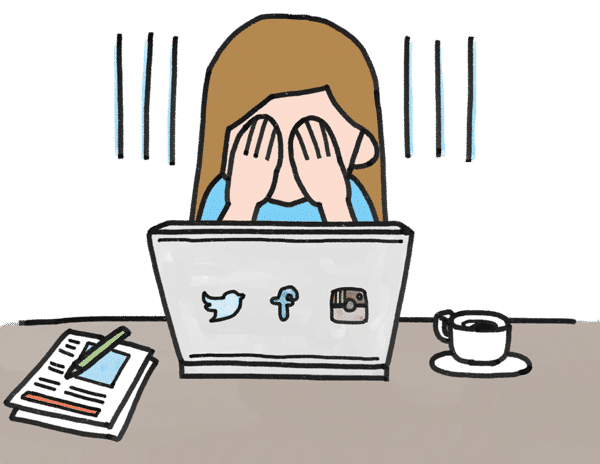











 An example of this is seen in a popular response video created by Jorobe on TikTok. This video highlights a clip between a girl sharing the McNutt video with another girl. The victim gets wide-eyed, leans away from the phone, looks at the camera and then back at the girl who is showing the video, lets out a nervous chuckle, then covers her face. Her raw response shows shock, revulsion, and an uncomfortable attempt to process what she has seen. As she struggles to make sense of her distress, the other girl laughs. She then laughs in response. The transformation from revulsion to humor is, all by itself, the joke.