
Need peaceful screen time negotiations?

Get your FREE GKIS Connected Family Screen Agreement

exploitation

Showcasing Child Talent Online Leads to Exploitation and Scams 

When children and parents use online platforms to showcase talents, they open themselves up to becoming victims of exploitation and scams. Someone’s hopes and dreams can turn into their worst nightmare. It is easier than ever before to fall victim due to today’s technology. As a psychologist, Dr. Tracy Bennett saw the growing rate of online injuries and the need to educate families about online safety. Our Social Media Readiness Course helps tweens and teens avoid digital injury and optimize psychological wellness. Today’s GKIS article discusses exploitation and scams on online platforms used to showcase kids’ talents. 

Parents Use Social Media to Showcase Child Talent 

Kids love to be creative and show off their talents, whether it’s sports, art, singing, dancing, acting, or modeling. And for a lucky few, online branding can lead to big profits. Social media can be the perfect platform to build an audience and get the attention of professionals in that industry.  

One of the most popular social media apps for showcasing talent is TikTok.[3] TikTok is one of the fastest-growing platforms where users can create a huge following and make income. It’s the most popular medium currently for showcasing talent.

Here are some methods commonly used to optimize child talent exposure

  • posting high-quality content regularly on social media 
  • running advertisements 
  • partnering with other influencers 
  • partnering with various brands 
  • contracting with content developers 
  • buying likes and follows 
  • creating custom websites[11] 

The Benefits of Showcasing Talent 

Showcasing children’s talents can be profitable, lead to amazing opportunities, and may help boost a child’s confidence, self-esteem, and social capital. In fact, Dr. Bennett often presents to high school students how to create a personal brand to help them showcase their strengths and qualifications for college. This webinar is offered as a live webinar for students and parents and is included in our Screen Safety Essentials Course. 

The Risks of Showcasing Talent 

Anytime we reveal personal information online or allow strangers to have access to us, we must be aware of risks. Big exposure can make one vulnerable to exploitation, scams, cyberbullies, and predators.   

Child exploitation refers to using a child to perform or work for the benefit of others at a disservice to the child’s mental or physical health, education, or development.[1]  

A scam is popularly known as a deceptive trick or a scheme used to cheat someone out of something valuable, usually money.[2]  

Types of scams include: 

  • Talent scouting scams  
  • Charity Scams 
  • Lottery Scams 
  • Government Impersonation Scams 
  • Sweepstakes Scams[12]

For more information on scams and how you can avoid them, we encourage you to read our Scammers Target the Elderly: How to Avoid Being Scammed article. 

Harm That Can Occur Due to Online Exposure 

Parent Pressure and Excessive Demand 

Some argue that supporting your child so they can benefit from their talents and helping them achieve their dreams is the job of a parent. Others believe that kids should be allowed to be kids and that putting them to work creating a “brand” meets the needs of the parents rather than the child. We at GKIS recognize both situations exist out there.

While it can be healthy to have high expectations, applying too much pressure can be harmful. Because kids don’t have the cognitive abilities necessary to calculate the odds of success and risks involved with online exposure, some say online branding should wait until adulthood. Other risks from overdoing it include physical or cognitive injury, mental illness, self-esteem problems, academic delay, and sleep deprivation.[8] 

Gaming a System Set Up for Child Protection 

Another cause for concern is how many kids on social media do not meet the age requirements specified in the platforms’ terms of agreement. These terms are created for the protection of children. Unfortunately, it is hard to enforce because children easily bypass these by simply creating accounts under a false age. 

Interpersonal Exploitation 

Another harmful outcome of online showcasing is unsafe peers and predators communicating with your child online. For example, a father was interviewed after discovering that his seven-year-old daughter was being contacted by adults for naked pictures on TikTok.[4] This type of exploitation is a common threat that parents need to be aware of and why monitoring activity regularly is imperative. Setting parental controls can be beneficial and possible with our Screen Safety Toolkit. 

Financial Exploitation 

Another risk is financial exploitation with identity theft. Scammers have many ways to target children online. Scammers can open lines of credit that can go undetected for several years.[5] To read more about how to protect your family against cybercrime, read our article Child Identity Theft is on the Rise. Protect Your Family Against Cybercrime.  

Red Flags to Look Out For 

  • Before interacting with potential producers or partners, vet them online using search engines like Google and LinkedIn, professional organization credentialing, and reviewing testimonials and reviews. Avoid rushing into having your child interact with people claiming to want to work with them  
  • Also, when your child is hired to showcase their talents, do not pay fees upfront.[9] 

Also, be wary of talent opportunities where

  • the other party uses urgent or threatening language  
  • appears to be too good to be true  
  • provides suspicious attachments 
  • makes threats of any kind 
  • requests personal or private information 
  • urges you to click on a link 
  • provides information that you were not expecting[7]

How to Protect Your Family from Online Dangers  

Educate Your Child and Initiate Frequent Screen Safety Conversations 

To help your kids learn about red flags for online exploitation, use our free Connected Family Screen Agreement. Our Connected Family Screen Agreement is like a screen safety checklist but so much more. It informs you about the risks of digital injury and how to prevent them. Our agreement also aids in empowering your kids to teach you since they are digital natives and you’re the digital immigrant. Use it to clarify your expectations and prevent conflict while practicing critical listening and negotiating skills while having fun. With our screen agreement, you will create a living document that can be changed and renegotiated along the way. 

Set Up Your Online Management Toolkit 

Children are more prone than ever before to fall victim to online injury. With this in mind, psychologist Dr. Tracy Bennett has dedicated herself to perfecting products for families like yours. To help parents and families prevent digital injury, we created several online courses like the GKIS Screen Safety Toolkit for parents of kids of all ages.  

Optimize Healthy Tech Use with Best Home Setup 

To help you learn how to achieve screen sanity, we at GKIS have spent time creating a vital course for your entire family. Our Screen Safety Essentials Course includes parent-only videos with the information and tools you need to earn the credibility to be your go-to expert. We also include family videos, workbook pages, and colorful infographic downloads to help do the teaching and discussing with you. You also get exclusive access to Dr. Bennett’s BEST webinars. Need a little expert support? Opt for private coaching with Dr. Bennett. 

Encourage Independence and Critical Problem Solving 

Our GKIS Social Media Readiness Course is an awesome resource for tweens and teens. Our free GKIS Blog articles offer great ideas for screen safety discussions during a screen-free dinner. 

Thanks to CSUCI intern Janette Jimenez for researching the risks of exploitation and scams when using online platforms to showcase kids’ talent and authoring this article. 

I’m the mom psychologist who will help you GetKidsInternetSafe. 

Onward to More Awesome Parenting, 

Tracy S. Bennett, Ph.D.
Mom, Clinical Psychologist, CSUCI Adjunct Faculty
GetKidsInternetSafe.com 

Works Cited 

[1] Action for the Rights of Children (ARC) chrome-extension://efaidnbmnnnibpcajpcglclefindmkaj/https://www.unhcr.org/3bb81aea4.pdf 

[2] Scam Definition & Meaning https://www.dictionary.com/browse/scam#:~:text=A%20scam%20is%20a%20deceptive,security%20number%20over%20the%20phone. 

[3] How TikTok Predators Are Interacting With Kids https://www.bark.us/blog/predators-use-tiktok-kids/ 

[4] Father Warns Parents About Popular App After His 7-Year-Old Daughter Is Asked to Send Suggestive Photos https://people.com/human-interest/father-warns-parents-about-popular-app-after-his-7-year-old-daughter-is-asked-to-send-suggestive-photos/ 

[5] How Scammers Target Kids Online https://www.onpointcu.com/blog/how-scammers-target-kids-online/ 

[6]Social Media And Mental Health: How To Help Your Child Develop Healthy Social Media Habits https://fairhopepeds.com/blog/social-media-and-mental-health-how-to-help-your-child-develop-healthy-social-media-habits/ 

[7]How to Teach Kids About Phishing and Online Scams https://www.verywellfamily.com/teach-kids-about-phishing-and-online-scams-5248479 

[8]The Dangers of Putting Too Much Pressure on Kids https://www.verywellfamily.com/the-dangers-of-putting-too-much-pressure-on-kids-1094823 

[9] The Parent Trap: Entertainment Industry Scams, Scammers and Scumbags. https://vadastudios.com/news/the-parent-trap-entertainment-industry-scams-scammers-and-scumbags/ 

[10]` TikTok Parents Are Taking Advantage of Their Kids. It Needs to Stop https://www.cnet.com/tech/services-and-software/tiktok-parents-are-taking-advantage-of-their-kids-it-needs-to-stop/ 

[11] 25 Actionable Tips on How to Make Your Child an Instagram Influencer https://www.olesia.co.in/actionable-tips-on-how-to-make-your-child-an-instagram-influencer 

[12] https://getkidsinternetsafe.com/scammed/ 

Photo Credits 

Photo by Kelly Huang https://unsplash.com/photos/2bZnaKfM2JA?utm_source=unsplash&utm_medium=referral&utm_content=creditShareLink 

Photo by rupixen.com https://unsplash.com/photos/Q59HmzK38eQ?utm_source=unsplash&utm_medium=referral&utm_content=creditShareLink 

Photo by Amanda Vick  

https://unsplash.com/photos/pPV-kqfs5wA?utm_source=unsplash&utm_medium=referral&utm_content=creditShareLink 

Photo by Al Elmes  

https://unsplash.com/photos/Ou7I8x-9T_s?utm_source=unsplash&utm_medium=referral&utm_content=creditShareLink 

Photo by Natalya Zaritskaya https://unsplash.com/photos/SIOdjcYotms?utm_source=unsplash&utm_medium=referral&utm_content=creditShareLink 

Drug Dealers Use Social Media to Hook Teen Girl on Fentanyl

Drug addiction is on the rise with many drug dealers finding teen customers on social media.[1] Once engaged with the dealer, teens are vulnerable to drug use, solicitation for nude photos and videos, coercion, extortion, and even violence. Once hooked, dealers may also use their victims to recruit other teens. Improving their methods one teen at a time, dealers become experts at persuading kids to try that first pill, often lying about what it is and how it may affect them. Most parents would deny that their kids are at risk, insisting that they’ve spoken to them and know their kids would never be so foolish. But if you’re not tracking content on your kids’ devices because you believe they deserve digital privacy, can you be so sure? To help close risk gaps and set appropriate expectations, check out our Screen Safety Essentials Course. With weekly family and parenting videos, you can be confident that you are doing all you can to protect your kids from risks like these. Today’s GKIS article shares a true story about a 16-year-old girl who got caught up in this shocking series of tragic events driven by social media use. Learn about how she got started, the workarounds she used, and what her parents would recommend to help keep your teens safe.

Morgan’s Story

Tom recently shared a tragic story with us about his 16-year-old stepdaughter, Morgan. Morgan is like any high school sophomore. She loves fashion, her friends, and her 17-year-old boyfriend, Parker. She earns straight As and loves to ride horses. Tom and his wife Julie frequently have Morgan’s friends and boyfriend over to the house to hang out and occasionally Morgan and Parker would go out too. Parker seemed like a good kid, and they insisted on meeting his parents right from the beginning. They didn’t think twice when, over time, Morgan started mouthing off, rolling her eyes, and pushing back against the rules. They figured it was normal adolescent boundary-pushing. Besides, Julie and Morgan moved to this new community only a year ago before Tom and Julie got married. They figured there would be some growing pains as she figured out her new school and friend situation.

Over time, however, Morgan’s defiance escalated. She was constantly on her phone, isolating herself in her room, coming home past curfew, and eventually started sneaking out at odd times “to go for a walk.” Grounding her and taking her phone didn’t seem to help, and Julie was reticent to repeatedly punish her due to the screaming fights that would ensue when she tried to implement consequences. Julie felt like maintaining a cooperative alliance with Morgan was more effective than punishment. So, she worked hard to spend time with her daughter and felt that she’d grow out of the teen attitude.

More Than Teen Rebellion

Tom realized it was more than teen rebellion when his neighbor, who worked in law enforcement, came by and reported that he’d seen Morgan buying drugs from different men that would drive up to her during her walks. Julie and Tom were shocked and terrified. They put Morgan into therapy and drug-tested her. When she came up positive for multiple drugs, they put her in intensive outpatient therapy for teens who abuse drugs. They tightened up on their rules and hoped that everything would sort out now that Morgan was getting professional help.

Over time, Morgan’s attitude got better, and she said she liked her therapists. Until one day Julie discovered fentanyl tablets in Morgan’s room and realized they needed to investigate further. Although Julie was still reticent to invade Morgan’s privacy, Tom insisted they confiscate Morgan’s phone and restrict social media and socializing privileges until they could better understand and control the situation.

Phone Content Reveals the “Real” Story

When they accessed Morgan’s phone, they discovered she was swept up in many dealings with multiple drug dealers, most of them adults and some in gangs. They also saw text exchanges that demonstrated that she and her boyfriend were offering nude photos and videos of them having sex in exchange for drugs. It was also clear that Morgan had sex with some of the dealers in exchange for drugs. Julie and Tom were heartbroken and reached out to law enforcement.

From the phone content, several arrests ensued and Morgan filed a restraining order against Parker. The videos revealed that both teens were under the influence during the sexual encounters and Parker may even be charged with a crime since Morgan is heard saying “no” in some of the videos.

Morgan was immediately enrolled in an online charter school and has been admitted to several inpatient drug rehabilitation programs. She takes the prescription drug, Suboxone, to help her avoid opioid withdrawal and stay off fentanyl. Tom and Julie deleted her social media profiles and don’t allow her any screen use except when she borrows her mom’s phone for browsing here and there. Despite these measures, she has found alternative ways to communicate with old friends by using and sneaking other people’s devices and using the computers at school. As she “unlearns” the manipulative, unhealthy behaviors typical of addiction, she has been kicked out of various schools, friend groups, extracurricular activities, treatment centers, and therapy groups. It will be a long road to healing for Morgan. Although Julie and Tom did the best they could, they wish they would have done more and sooner.

Tom’s Take-Away Advice  

When we asked Tom what he wish he’d have done, he shared the following suggestions:

If I had known how rampant drug sales are among middle and high school students on social media platforms like Snapchat and Instagram, I would not have allowed any social media until the age of 16 minimum

I would have set up more stringent monitoring on all devices and computers, and I would have provided a talk-and-text-only phone with no way to add apps and no way to access the Internet until the age of 16.

I would have volunteered to be the pickup parent instead of the drop-off. Kids are smart. They knew I would catch them if they were under the influence when I picked them up.

I would have shut off our Wi-Fi network every night and checked which devices were using our Wifi. Morgan was able to sneak a “burner phone” at night until he realized that he could monitor WiFi use.

Finally, I would have set up random drug testing as a general policy. Parents who assume that they have no reason to drug test their kids because they’re athletes, straight-A students, or generally good kids still can’t be confident their kids are not being influenced by dangerous others. Drug testing is an insurance policy to help keep your kids alive.

If you want to get into smart parenting habits before your kids run into trouble:

Use our free Connected Family Screen Agreement (and weekly GKIS Blog articles) to set rules and expectations when your kids first get ownership over digital devices and social media platforms. The first rule is that nothing on your device is private, and parents get anytime access.

Purchase our Screen Safety Essentials Course to support the whole family and parenting team for better screen safety and a more honest and cooperative home life.

Check out Social Media Readiness Course for tweens and teens. This course offers 10 modules that teach screen safety issues and psychological wellness tools to optimize mental health in both real-life and digital landscapes. Each module offers a quiz to demonstrate mastery of content.

Finally, talk to your kids, be consistent with monitoring and screen use rules, and don’t assume they won’t experiment with dangerous situations. To learn more about which social media platforms are popular for drug deals and the emoticons they use, check out our article A Teen’s Addicts Confessions About Online Workarounds.

I’m the mom psychologist who will help you GetKidsInternetSafe.

Onward to More Awesome Parenting,

Tracy S. Bennett, Ph.D.
Mom, Clinical Psychologist, CSUCI Adjunct Faculty
GetKidsInternetSafe.com

                                                   Photo Credits

Photo by Myriam Zilles on Unsplash

Photo by sebastiaan stam on Unsplash

Photo by MART PRODUCTION, https://www.pexels.com/photo/a-man-and-a-woman-leaning-on-a-vandalized-wall-7231496/

Photo by Aphiwat Chuangchoem,

Photo by John Schnobrich on Unsplash

“Metaverse” VR Apps Allow Sexual Exploitation of Minors

Virtual reality (VR) software has become increasingly popular among young tech consumers. Users of the latest VR headset technology love to explore vast digital worlds and interact with other users. While there are many creative and exciting possibilities for this technology, intensive oversight is needed to ensure the safety of our kids in this brave new world of virtual reality. Unfortunately, recent reports have come forth detailing disturbing issues of sexual impropriety and exploitation of minors across virtual reality domains. It is important for parents to be aware of the possible risks of VR so that kids can be better protected while exploring its fun and creative applications. It’s also important for tweens and teens to be aware. That is why we created the Social Media Readiness Course. This course was designed to prepare kids and teens for the inherent risks of social media in order to prevent digital injuries and promote responsibility

What is the Metaverse?

The term metaverse appears to be one of those recent buzzwords that seemingly everyone has heard of yet understands very little about. People wonder if it’s a game, a new type of internet, or a singular virtual reality space inhabited by everyone who has a VR headset. As it exists right now, the metaverse refers to apps that use virtual reality technology. For example, someone can download a Jurassic-themed VR app that allows them to use their VR headsets to engage in a virtual space inhabited by dinosaurs. Or someone could download a different VR app that allows the user to virtually explore a museum. Although they are completely separate from one another, the virtual spaces provided by the two different apps collectively comprise the metaverse.

Kids may access adult-themed virtual domains.

The VR industry profits billions of dollars per year which has resulted in an enormous amount of VR apps being developed for consumer use. The expansion rate for app development is too fast for there to be comprehensive oversight of all the apps that children have access to download. This means that it is relatively easy for kids to download a VR app that may look innocent but end up being completely inappropriate for them. Additionally, some apps that should have stringent user-age restrictions simply don’t, allowing kids access to virtual strip clubs and other adult-themed spaces.

Children and Adults Mix

A researcher posing as a 13-year-old girl was given access to a virtual strip club while using a VR app that had a minimum user age agreement of 13. The researcher downloaded an app called VRChat which is characterized as an online virtual platform which users can navigate through as 3-D avatars. The app can be downloaded from an app store on Facebook’s Meta Quest VR headset, which only requires a Facebook account instead of an age verification. Inside of the app there are virtual rooms where users can meet and interact with one another. Some of these rooms are quite innocent such as popular fast-food restaurants whereas others are highly sexually explicit.

Upon entering the virtual strip club, the researcher was exposed to sex toys, condoms, and approached by adult male avatars who asked her to engage in erotic role play. The adult content is not restricted to a single room, rather it spans across multiple virtual rooms providing more points of access and exposure for young users. While pink flashing neon lights and booming music might signal sexual connotations to adults in the real world, to kids on a VR headset this might just look like an enticing feature of a fun video game.

Children using this app and others like it have reported being groomed by other users with adult avatars and forced to engage in virtual sex. The avatars on this app have the ability to get completely nude and simulate sex acts which may require the user wearing the headset to physically act out the motions themselves. The completely immersive nature of VR can make these experiences as traumatic and harmful as they would be in real life.

Parents Can Help

Parents can’t rely on tech companies and app developers to keep their children safe in a virtual reality space, especially with billions of dollars on the table. However, this doesn’t mean that kids should not be allowed to engage with this technology that also offers fun, creative, and educational experiences. Keep in mind that technology is like any other tool. The tool may be safe as long as it is being handled properly and wisely.

To optimize a safe and positive VR experience:

  • Research apps before allowing your kids to download them.
  • Take time to explore the virtual space yourself to sample what your kids will be seeing.
  • Periodically monitor the list of apps your kids have downloaded to ensure that no unapproved apps are being used.
  • Hold your children accountable to understand and guard against potential online risks that can lead to digital injury.
    • Check out our GKIS Social Media Readiness Course. Our course is a valuable tool that teaches tweens and teens about the inherent risks of social media and ways to be prepared when encountering them. We also cover critical psychological wellness tools to optimize mental health and overall satisfaction.
  • Verbally check in with your kids about what their experiences in the metaverse are like.
    • If you have school-age kids, you’ll want to check out Dr. B’s GKIS Connected Family Course which offers essential tips for fostering this kind of open communication.
  • Finally, remember to be kind, create an environment that allows for open dialogue between you and your kids, and rest assured that you have provided your family with the tools to facilitate safe and healthy internet practices. For ideas on what to talk about and to stay up to date on relevant internet/gaming topics, read our weekly free articles on the GKIS Blog by signing up for our free Connected Family Agreement.

Thanks to CSUCI intern, Mackenzie Morrow for researching some of the risks of virtual reality spaces for kids and co-authoring this article.

I’m the mom psychologist who will help you GetKidsInternetSafe.

Onward to More Awesome Parenting,

Tracy S. Bennett, Ph.D.
Mom, Clinical Psychologist, CSUCI Adjunct Faculty
GetKidsInternetSafe.com

Photo Credits

Photo by Julia M Cameron (https://www.pexels.com/photo/photo-of-boy-using-vr-headset-4145251/)

Photo by Setyaki Irham (https://unsplash.com/photos/QGDsM8qwkEA)

Photo by Julia M Cameron (https://www.pexels.com/photo/a-father-talking-to-his-son-8841296/)

Intimacy With Minors Encouraged at the Hype House

In recent years, social media influencers and internet celebrities have created a popular niche in pop culture. Some content creators possess a level of fame among their young fans which rivals that of traditional A-list celebrities. In the past, these A-list stars were only accessible to the public through the big screen or tabloid articles. Today’s internet celebrities are virtually accessible to fans 24/7 through social media. A new group of wildly popular content creators on the platform TikTok have pushed the boundaries of celebrity accessibility a step further towards toxicity by creating what they have coined “The Hype House.” If you are worried that your kids are living to watch a hype house instead of living their best lives within their own house, you can benefit from our Screen Safety Essentials Course. It has all the resources you need to best manage screen time while getting closer as a family.

TikTok and the Hype House Explained

TikTok is a social media and video-sharing platform/app that is primarily marketed to kids and teens. Since its launch in 2016, it has become one of the most popular social media sites attracting over 1 billion monthly users.

As you might have learned from Netflix’s recent show, the Hype House is a collective of young TikTok celebrities who live and work together in a large luxury house in Los Angeles, CA. Due to their popularity, the residents of the house get paid to create millions of dollars worth of sponsored content on TikTok. The more popular a content creator is, the more money they earn through ad revenue and branded merchandise.

Typical content created by Hype House residents feature videos of them hanging out, pulling pranks, partying, and (most often) dancing. Each of the Hype House members has a follower count in the hundreds of thousands to millions which illustrates their immense star power. However, there is a flip side. As avid fans discovered the address of the collective, Hype House residents were swarmed with groups of people stationed outside the home hoping to interact with their favorite TikTokers.

Blurred Boundaries

Fans traveled from all over and waited outside the house for hours just to catch a glimpse of the Hype House members. As soon as someone was spotted, a frenzy of excited screams would ensue. Perhaps it’s not surprising that some teens would go to such lengths to be in close proximity to their favorite celebrities and score pics for their own social media pages. What is surprising, however, is that many of the fans who would gather outside the collective were elementary school-aged children with parents.

Oddly enough, many of the parents seemed to be just as swept up in the frenzy as their kids. One video features a mother bragging that her daughter handed a box of donuts to someone affiliated with the house and that “now her donuts are inside the hype house.” A second video features a woman telling a mob of children “remember, you guys made them famous, you guys give them paychecks…” in response to the children being asked to leave the front doorstep they were trespassing on.

On one occasion, in a bid to gain followers, a 13-year-old TikToker allegedly broke into the Hype House along with her mother and a few friends while the residents weren’t home. The group filmed themselves going through the house and even wearing and stealing the famous housemates’ clothes. The 13-year-old’s mother even uploaded a video to TikTok saying, “We are currently in the Hype House. We’re gonna have amazing content.”

Despite some extreme (and illegal) instances like this, the residents of the Hype House typically accept the mobs of fans and do their best to have positive interactions with them because the fans’ support ultimately translates to more money in the bank. Unfortunately, access to the Hype House has led to the victimization of some young fans rather than the house members themselves.

Appeal to Emotion and the Illusion of Intimacy

The hordes of fans who habitually gathered in front of the Hype House weren’t actually all that bad for the famous TikTokers who lived there. In fact, this situation went on uninhibited by security enforcement or calls to the police for a long time. This is because it was a reciprocal interaction between the famous TikTokers and their fans. The fans got to interact with their idols, take photographs, and hear a celebrity say “I love you” to them in real life. In return, Hype House members gain increased loyalty, views, and support which ensures the longevity of their success as TikTok stars.

When kids and teens feel acknowledged by a person they look up to, it can have a powerful effect. An interaction where a celebrity appeals to the emotions of a fan creates an illusion of intimacy. This makes the relationship feel real and can lead to personal exploitation.

Hype House Star Tony Lopez: Sexual Misconduct

TikTok has a feature called Duet that allows users to build on another user’s video by recording and then placing their own videos next to the original to create a sort of split-screen duet. The troublesome aspect of this feature is that, despite the minimum age of use for TikTok being 12 years old, the music and dance moves in popular videos are often sexually suggestive and explicit. Duet videos are wildly popular on the app.

Tony Lopez is a 21-year-old TikTok celebrity and an original member of the Hype House who is known to post sexually explicit videos. He’s been accused of committing multiple acts of sexual misconduct by several young girls. Lopez, who has over 22 million followers on TikTok alone, is alleged to have used his status as an internet celebrity to coerce underaged female fans into engaging in sexually inappropriate exchanges with him. According to these young fans, Tony Lopez employed various forms of emotional manipulation, preying upon their admiration of him as well as their desire to feel a unique and personal connection with him.

The Graphic Video

In 2020, a video of Tony Lopez surfaced on various social media platforms showing him standing nude in front of a mirror while gyrating the lower half of his body. The video was apparently leaked by Twitter users via direct message. After going viral, TikTok parody videos were posted by clothed minors. In response, Tony posted videos laughing along with the caption, “Oops. Lol.”

Solicitation of Child Pornography

During the same year, several underage girls came forward stating that Tony Lopez had either requested or received nude photographs from them or sent them nude photographs of himself. Tony Lopez would use his private Snapchat account to add young female fans and interact with them in an exclusive forum.

Lopez would use the promise of access to his private account by telling girls that he would only add them if they sent him “sexy pics.” A series of screenshots featuring conversations between Tony and the victims on his private Snapchat were posted online by some of the girls themselves. The screenshots show crude attempts by Tony to solicit nude photos as well as his reactions when they refused. When a young fan turned down Tony’s request for nude photos, he blocked her from his private account as punishment. After these allegations came out, Tony Lopez officially separated from the Hype House brand.

Sexual Battery

In January 2021, Tony Lopez was served with a civil lawsuit on behalf of two minors accusing Lopez of sexual battery and emotional distress. Both girls claim that Tony used his fame to groom and coerce them into engaging in sexual acts with him and to solicit nude photographs of them despite being aware that they were underaged. According to the victims, Tony, who was 20 years old at the time, emotionally manipulated the two via text and direct messaging by saying things like, “I’m tryna marry you.” He would ask the girls to sneak out of their homes at night to meet up with him.

One of the girls originally met Lopez when she was invited to the Hype House by founding member Thomas Petrou, who is also named in the lawsuit for negligent hiring of Lopez. After coming forward, Tony’s accusers were cyberstalked, harassed, and threatened with violence by Tony’s avid fans. Tony has publicly denied these allegations stating that the victims’ motivations are to make money.

Why are fans so easily victimized?

The fascination with celebrities that sees young fans either trespassing onto private property or becoming victimized themselves can be explained by a psychological phenomenon referred to as parasocial relationships. A parasocial relationship is characterized as a one-sided emotional attachment to a media persona that can lead to strong feelings of familiarity, intimacy, friendship, and romance.

For the most part, fans realize that the relationship does not actually exist. Yet the intensity of their feelings causes them to react as if it does. This is manifested as investments of time, energy, and emotion just as in real-world relationships. Except, with parasocial relationships, none of these things are reciprocated by the celebrity.

How Parents Can Help

While understanding this phenomenon can help to keep you aware of some of social media’s pitfalls, Dr. Bennett has also created and compiled a series of valuable tools and guidelines to help you equip your family with the knowledge and strategies needed to safely navigate today’s technological world.

To avoid the kinds of negative outcomes addressed in this article, check out Dr. B’s tried and true GKIS Social Media Readiness Course. Our course is a valuable tool that teaches tweens and teens about the inherent risks of social media and ways to be prepared when encountering them. Additionally, parent-child communication and parental oversight are key. Dr. B offers essential tips for fostering this kind of communication in her GKIS Connected Family Course. With this online course, you will learn how to create a safer screen home environment through fun parenting techniques designed to guide sensible screen management.

Thanks to CSUCI intern, Mackenzie Morrow for researching accusations of inappropriate behavior concerning Hype House influencers and co-authoring this article.

I’m the mom psychologist who will help you GetKidsInternetSafe.

Onward to More Awesome Parenting,

Tracy S. Bennett, Ph.D.
Mom, Clinical Psychologist, CSUCI Adjunct Faculty
GetKidsInternetSafe.com

Photo Credits

Photo by cottonbro (https://www.pexels.com/photo/person-holding-black-android-smartphone-5081930/)

Photo by Artem Podrez (https://www.pexels.com/photo/man-person-people-woman-6003277/)

Photo by Liza Summer (https://www.pexels.com/photo/concerned-woman-browsing-smartphone-in-room-6383268/)

Photo by Rafal Maciejski (https://www.pexels.com/photo/hollywood-sign-on-hill-5688653/)

GKIS Supports Sexual Assault Awareness and Prevention Month

April is Sexual Assault Awareness and Prevention Month (SAAPM). According to the Rape, Abuse, and Incest National Network every nine minutes a child is sexually abused, 93% of survivors know the perpetrator, and 1 in 5 kids have been solicited sexually online before the age of 18.[1] The National Sexual Assault Hotline (1-800-656-4673) provides confidential support to victims. This GKIS article covers sexual violence, technology misuse, support groups, and ways to help. The following information may be triggering to some readers, discretion is advised.

Sexual Violence

Ending sexual violence and assault has become a national outcry. The National Sexual Violence Resource Center conducted a survey in the United States, reporting 734,630 people were raped in 2018.[2] GKIS has partnered with various organizations to raise awareness and end sexual assault.

Survivors endure the trauma of the assault and suffer chronic mental disorders (post-traumatic stress disorder, substance abuse, depression) and physical issues (HIV, sexually transmitted infections (STI), unplanned pregnancy).

The Sexual Assault Nurse Examiners (SANE) is a 24-hour service of first responders aiding sexual assault victims. SANE supports victims with emotional recovery, offers STI testing, and provides investigational leads to law enforcement which speeds and increases the chance for prosecution.[2]

Sexual assault is legally defined as “any type of sexual contact or behavior that occurs without the explicit consent of a recipient.”[3] By legal definition, the following are types of sexual assaults according to California law:

  • Forced sexual intercourse
  • Forcible sodomy
  • Child molestation
  • Sexualized bullying
  • Incest
  • Fondling
  • Attempted rape
  • Nonconsensual sharing
  • Exploitation
  • Unwanted sexualization[3]

In 2015, the People of the State of California v. Brock Allen Turner made national headlines for convicting a Stanford student for sexually assaulting an unconscious victim. He received a sentence of six months for his crimes. Based on the previous CA law, prison time was only sentenced if the victim could defend themselves. The presiding judge, Aaron Persky, was disbarred after his ruling stating that a prison sentence would “have a severe effect” on the student’s future.[3] In an effort to decrease victim-blaming, former Governor Jerry Brown signed AB 2888 which requires a mandatory minimum sentence and requires that sex crime convictions must result in state prison.[3]

Victimization of Children

Sexual violence is common in youth, with reports of 42.2% of females having experienced their first completed rape before 18 according to the 2010 summary report by the National Intimate Partner and Sexual Violence Survey.[15] Sexual abuse of minors is often unreported because victims are often secretly coerced and confused about the feelings that result from the abuse. Legally, a child cannot consent to sexual activity with an adult due to immature brain development.[4] Pettis and Hughes report that male adult victims are particularly unlikely to seek treatment for childhood abuse.[4]

Violence in Intimate Relationships

Sexual abuse involving an intimate relationship refers to an unwanted or coercive sexual behavior toward one’s partner. In a Burke and colleagues’ study, males and females with high feminine gender identity were more likely to sustain abuse if they refused to perform sexual acts.[5]

Warning signs of an abusive relationship include if your partner

  • isolates you from friends or family
  • manipulates you into performing sexual acts
  • gets frustrated and jealous if you have unaccounted-for time
  • belittles you or calls you names
  • restricts you from going to your job or school
  • demands that they do the decision-making
  • forces you to watch pornographic content
  • infects you with an STI purposely
  • threatens your personal values
  • threatens to harm your loved ones
  • demands full control over finances[6]


Sexual Harassment

Sexual harassment is defined as an unwelcome verbal or physical advance for sexual gratification.[7] A study by Adams-Roy and Barling reported that 35-45% of women face severe sexual harassment at the workplace, resulting in an increase in stress, anxiety, and depression. Assertiveness training often helps victims of sexual harassment confront the assaulter.[7]

Online Sexual Abuse

Online sexual abuse is defined by the United Nations Children’s Funds as coercing victims to use live streams, virtual communities, and social media platforms for illegal sexual acts.[13] Social media influencers have been accused of having sexual relationships with minors. For example, YouTube and Tik Tok influencers James Charles and Tony Lopez have been accused of inappropriate intimate involvement with young fans using fame, power, sexual manipulation, and abusive behaviors. Uplift is a non-profit organization that was founded in 2015 that works to combat sexual abuse in the online community. John Green, author of “The Fault in our Stars,” pledged to support the Uplift movement on YouTube, helping Uplift attract additional supporters.

Sexual Abuse of Children Online

In 2017, GKIS published the article GetKidsInternetSafe Sheds Light on the Dark Net: Drug Traffickers, Child Pornographers, and Nude Selfies. Dr. Bennett explained the risks children face when being exposed to predators and pornographic content online. Another problematic issue involves minors financially profiting from releasing pornographic content on sites like Onlyfans.

Our 2015 article, How Texting Can Turn To Sexting in the Blink of an Eye, explains how predators groom children in order to pressure them to send nude photos. Revenge porn is another form of digital abuse, defined as the act of posting someone else’s nude image without consent. Perpetrators illegally use the photos to control and exploit their victims. Revenge porn laws vary by state. If you want to know your state’s revenge porn laws, visit Cyberbully.

Sex Trafficking

Sex trafficking is the use of force, fraud, and coercion against someone for prostitution, pornography, and sexual performance fueled by the buyer’s money.[14] Sex trafficking is increasingly aiding the internet. It has been estimated that 3.8 million adults and 1 million children are used for forced and commercial sexual exploitation each year.[11] In 2020, a conspiracy erupted on Reddit accusing Wayfair of trafficking children by disguising codes located behind furniture sales. The public demanded the U.S. government to investigate allegations, which were later proven false.

People who are vulnerable to sex trafficking include:

  • recent migrants
  • substance abusers
  • people with mental illness
  • children in the welfare system
  • online discussion and meetups with strangers
  • homeless youth[10]

Illegal Camera Misconduct

Frequently child sexual abuse (commonly called child pornography) is captured and shared on smartphones and Go-Pro. According to California law, sending or receiving semi-nude or nude images of minors is child sexual abuse. This act qualifies as transmitting obscene material by distributing generated image(s) containing sexual conduct, punishable up to six years in state prison.[11]

Another form of camera misconduct is capturing or recording a subject in a bedroom or restroom without their consent. In 2019, a vacation rental guest rented an Airbnb for the weekend. He discovered that the chargers in the bedroom were video recorders.[12] Now, the placement of indoor cameras inside vacation rentals is illegal.

Security cameras placed in a particular area to capture a neighbor’s pool, bedroom, or restroom are forms of electronic surveillance that may be illegal depending on intent. Voyeurism is defined as gaining sexual pleasure by watching or recording someone undress.[5] A perpetrator may be imprisoned for 60 days and registered as a sex offender. From our recent article, Red-Light Websites and Online Services that Can Be Dangerous to Kids, GKIS described the Hide It Pro application that can store images and videos from security cameras.

Support Groups for SAAPM

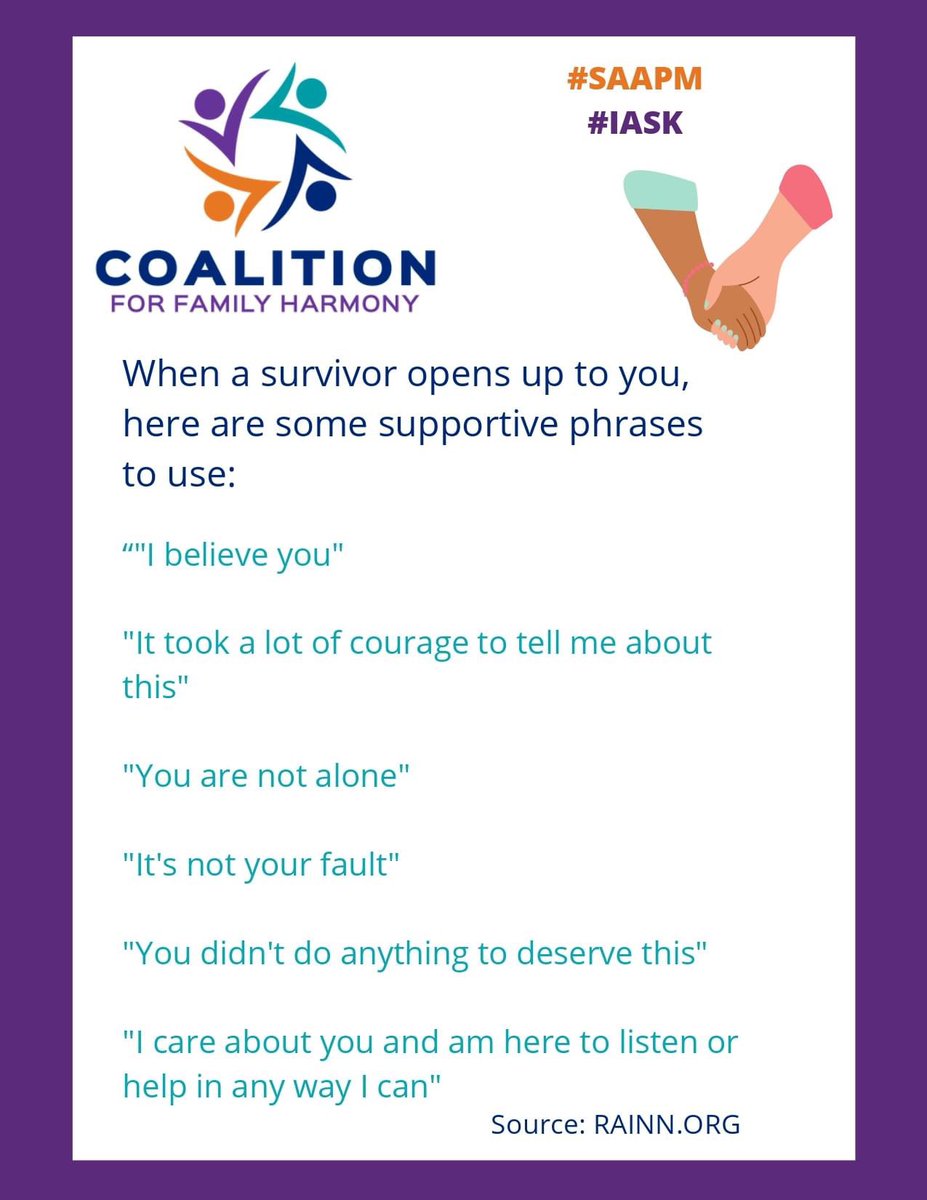
Coalition for Family Harmony

This organization offers mental support, including counseling for sexual assault survivors, support groups for adults and teens, forensic exams, and a 24/7 service with the Rape Crisis Advocates. Dr. Sandy Gomez oversees the Rape Crisis Center in Ventura County at Coalition for Family Harmony and LGBTQ Program. She states that “a person’s access to mental health services should not be limited by their socioeconomic status.” Ten free psychotherapy sessions using a survivor-centered approach are available for sexual assault survivors. There are extended services for survivors who are of color and LGBTQ+.

In April, the Coalition for Family Harmony offers presentations to educate the community and mitigate online romance fraud, which is defined as the act of deceiving another person for financial gains through an online romantic relationship using a fake identity.

A special message from Dr. Sandy Gomez; “If you have experienced sexual violence, you are not alone and what happened to you is not your fault. You are the expert of your situation and we are here to help you review your options so that you can make an informed decision that works for your needs.” Contact their office at (805) 983-6014 or 1-800-300-2181 for a 24-hour Bilingual Crisis Hotline.

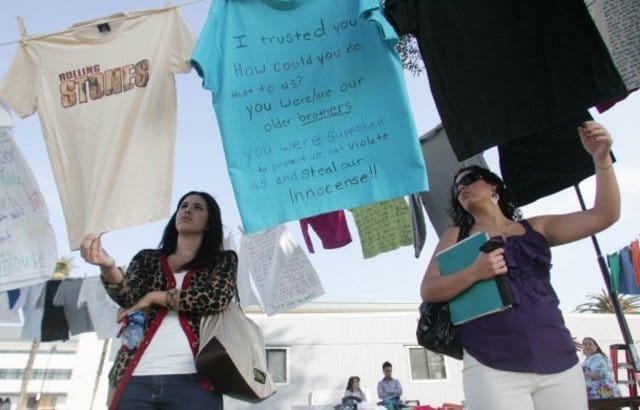
The Clothesline Project at Ventura College

According to Professor Capuano, the Ventura Psychology Club advisor and Coordinator of the Clothesline Project for 18 years, the purpose of the Clothesline Project “is to educate students and the community that violence is a problem everywhere, and that help is available.” Students and the community can visit Ventura College to listen to survivors, attend presentations, receive on-site counseling, and speak with 15+ local organizations. Visitors put their personal message on a shirt for display on campus. Topics covered include incest, cyber exploitation, domestic violence, and sexual violence.

Bikers Against Child Abuse

B.A.C.A. is a non-profit organization free of charge which assists abused children. They work together in conjunction with the local and state officials. B.A.C.A. uses their physical appearance to lend physical and emotional support. These bikers are the shield that protects children from future physical, sexual, and emotional abuse.

Ogie, a current member of B.A.C.A., uses the phrase, “no child should live in fear,” giving children hope for a safer world. In the eyes of children and the community, they are heroes. There are monthly meetings for members and the general public to attend. For more information on Who Is B.A.C.A. and local chapters in your area, visit their website.

American Foundation for Suicide Prevention

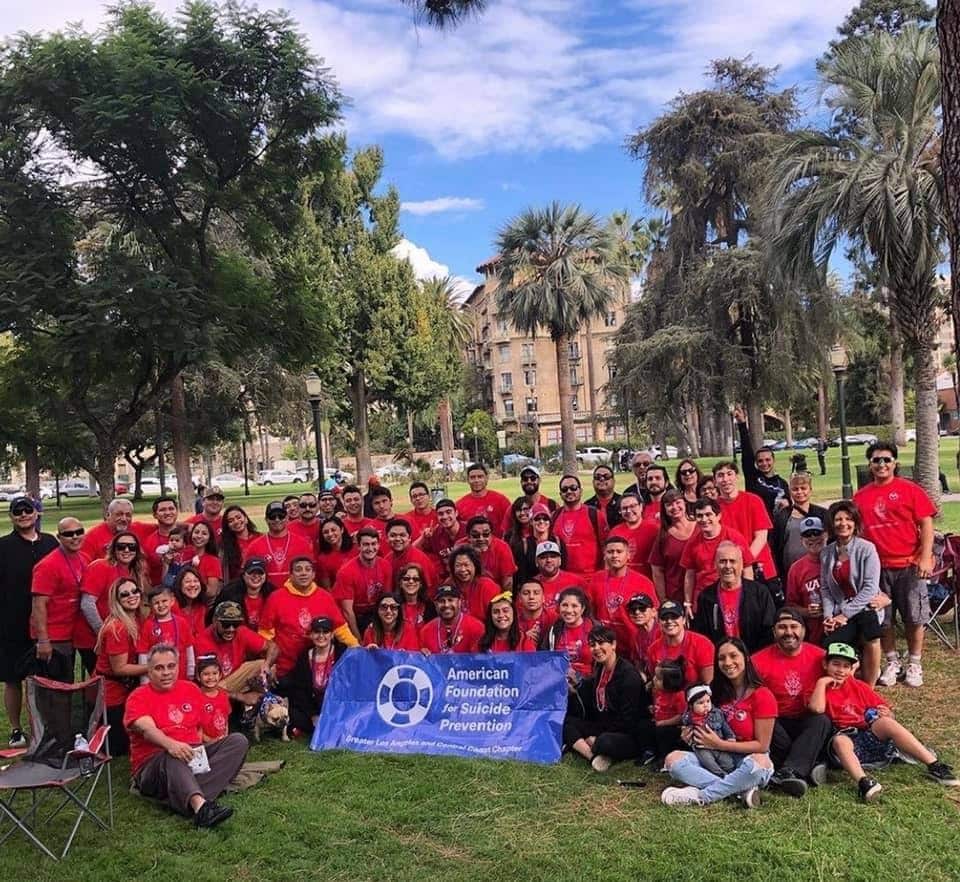
Thirty-three percent of female sexual assault victims contemplate suicide.[1] The American Foundation for Suicide Prevention (AFSP) offers advocacy, research, education, and support to survivors with suicidal ideation. They recognize the importance of diversity, equity, and inclusion. AFSP is offering spring actives, such as Marathon in a Month and Campus Walks Day of Action. To learn more about the events, visit AFSP Greater Los Angeles and Central Coats. Let us be the voice AFSP is missioning for “Save Lives and Bring Hope to Those Affected by Suicide.”

Denim Day

In 1992, a 45-year-old driving instructor raped an 18-year-old woman on her first driving lesson in Italy. The survivor reported the rape, and the perpetrator was arrested and jailed for 6 years. Years later, the man appealed his conviction stating it was consensual sex evidenced by her tight jeans that would be too difficult to be pulled off involuntarily. The conviction was overturned, allowing the rapist to be released. This was to be known as the “jean alibi.”[9]

A Denim Day campaign was established in 1999 to support sexual assault victims. Denim Day is considered the most prolonged prevention and education movement for sexual assault.[9] Feel free to tag GKIS social media accounts to see you be a part of the movement.

The importance of consent shows respect for others and yourself. If you are struggling to explain or understand consent, visit Blue Seat Studio’s published video on YouTube: Tea Consent.

Call to Action Against Sexual Assault

LISTEN to victims when they report assault and assist them to achieve emotional and physical safety (e.g., walking, shopping, or eating in public settings).

PARTICIPATE in April to show your support. Wear or post a teal ribbon on your social media page to give awareness of sexual assault.

ACT to stop victim-blaming, known as the belief that the victim is responsible for the assault because of how they dressed, spoke, or behaved. Fear of being blamed is a significant contributor to the low rates of unreported cases.

Adults must show respectful modeling behaviors to all genders to reduce sexual assault. At National Sexual Violence Resource Center, Jenny Coleman explains the importance of speaking out if someone uses inappropriate phrases and terminology in front of minors. If you order our highly reviewed online course, The GKIS Connected Family Course, GKIS will invite you to our private parenting Facebook group in the service of child safety.

GKIS recommends taking self-defense classes to protect yourself from sexual assault. Visit Ando Mierzwa on YouTube or Threat Management on Tik Tok for free self-defense tactics used in martial arts. Furthermore, BSafe, My Safetipin, and Life360 are GPS tracking apps to provide personal safety in dangerous situations.

SPEAK out against sexual violence outside of April. The importance of sharing one’s story brings hope and awareness. For sexual assault survivors who are willing to share their stories, Boston University created an Instagram page for survivors to be heard: visit Campus Survivors. At the end of the day, the story being said is yours, and the story has the power to change the world.

Thanks to CSUCI intern, Christian Sandoval, for giving awareness and prevention of sexual assault in April. The importance of hearing someone’s story is critical, and we hope you will support the movement.

I’m the mom psychologist who will help you GetKidsInternetSafe.

Onward to More Awesome Parenting,

Tracy S. Bennett, Ph. D.

Mom, Clinical Psychologist, CSUCI Adjunct Faculty

GetKidsInternetSafe

Photo Credits

Photo by Mihai Surdu on Unsplash

Photo by Mika Baumeister on Unsplash

Photo by Ehimetalor Akhere Unuabona on Unsplash

Photo by Karl on Unsplash

Photo by Sydney Sims on Unsplash

Photo by Anna Shvets from Pexels

Photo by Nataliya Vaitkevich from Pexels

Works Cited

[1] Children and teens: Statistics. (n.d.). Retrieved March 18, 2021, from Rainn.org website: https://www.rainn.org/statistics/children-and-teens

[2] Morgan, E. R., & Oudekerk, A. B. (2019). Criminal Victimization, 2018. Bureau of Justice Statistics. Retrieved from https://www.bjs.gov/content/pub/pdf/cv18.pdf

[3] Sevenslegal. (2016, September 8). An update to California’s sexual assault laws. Retrieved March 18, 2021, from Sevenslegal.com website: https://www.sevenslegal.com/assault/update-californias-sexual-assault-laws/538/

[4] Pettis, K., & Hughes, R. (1985). Sexual Victimization of Children: A Current Perspective. Behavioral Disorders, 10(2), 136-144. Retrieved March 16, 2021, from http://www.jstor.org/stable/23882265

[5] Burke, P., Stets, J., & Pirog-Good, M. (1988). Gender Identity, Self-Esteem, and Physical and Sexual Abuse in Dating Relationships. Social Psychology Quarterly, 51(3), 272-285. Retrieved March 16, 2021, from http://www.jstor.org/stable/2786925

[6] Intimate Partner Sexual Violence. (n.d.). Retrieved March 18, 2021, from Rainn.org website: https://www.rainn.org/articles/intimate-partner-sexual-violence

[7] Adams-Roy, J., & Barling, J. (1998). Predicting the Decision to Confront or Report Sexual Harassment. Journal of Organizational Behavior, 19(4), 329-336. Retrieved March 16, 2021, from http://www.jstor.org/stable/3100150

[8] National Sexual Violence Resource Center. (2020, April 3). Start at home: Modeling healthy behaviors keeps kids safe. Retrieved March 18, 2021, from Sexual Assault Awareness Month 2020 website: https://medium.com/sexual-assault-awareness-month-2020/start-at-home-modeling-healthy-behaviors-keeps-kids-safe-f454b929a2a0

[9] Why denim? — denim Day. (n.d.). Retrieved March 18, 2021, from Denimdayinfo.org website: https://www.denimdayinfo.org/why-denim

[10] Myths, facts, and statistics. (2018, November 7). Retrieved April 8, 2021, from Polarisproject.org website: https://polarisproject.org/myths-facts-and-statistics/

[11] Codes Display Text. (n.d.). Retrieved April 8, 2021, from Legislature.ca.gov website: https://leginfo.legislature.ca.gov/faces/codes_displayText.xhtml?lawCode=PEN&division=&title=9.&part=1.&chapter=7.5.&article

[12] Fussell, S. (2019, March 26). Airbnb Has a Hidden-Camera Problem. Atlantic Monthly (Boston, Mass.: 1993). Retrieved from https://www.theatlantic.com/technology/archive/2019/03/what-happens-when-you-find-cameras-your-airbnb/585007/

[13] Brown, A. (2016). Safe from harm: Tackling webcam child sexual abuse in the Philippines. Retrieved April 21, 2021, from Unicef.org website: https://www.unicef.org/stories/safe-from-harm-tackling-webcam-child-sexual-abuse-philippines

[14] Chin, K.-L., & Finckenauer, J. O. (2012). What is sex trafficking? In Selling Sex Overseas (pp. 1–33). NYU Press.

[15] Black C. M., Basile C. K., Breiding J. M., Smith G. S., Walters L. M., Merrick T. M., Chen J., & Stevens R. M. (2011). National Intimate Partner and Sexual Violence Survey 2010 Summary Report. Retrieved from https://www.cdc.gov/violenceprevention/pdf/NISVS_Report2010-a.pdf

The Digital Age of Human Trafficking

According to the International Labor Organization, there are an estimated 40.3 million victims of human trafficking globally, with 25% of those victims being children.[1] All youth are vulnerable to human trafficking. However, youth that are in foster care, identify as LGBTQ+, have run away, and are from abusive households are at the highest risk.[2] With online recruitment on the rise, grooming can take place right under our noses. This GKIS article covers what you need to know about human trafficking to keep your family safe from online predators.

Human Trafficking and Grooming

Human trafficking is “the acquisition of people by improper means such as force, fraud, or deception, with the aim of exploiting them.”[3] Often traffickers groom their victims online for days and even months before asking to meet in real life. Grooming is the act of building a relationship and trust, with the intent to manipulate and exploit the other person.[4]

As devices become more accessible to younger generations, their chances of encountering an online predator increases as well. With this in mind, we must take proper precautions when granting children screen-time. Let us help you with our free Connected Family Screen Agreement, a step-by-step digital contract that will help you clarify expectations, implement an expert action plan, and create a connection for safety and resilience. You can find the opt-in box in the right-hand corner of the GetKidsInternetSafe home page.

Recent Findings

According to the U.S National Human Trafficking Hotline, the number of trafficking crisis cases increased by more than 40% following shelter-in-place orders.[5] Crisis cases are defined as cases that require assistance with transportation, shelter, and law enforcement involvement within twenty-four hours of the report. Because of stay-at-home orders and mandated quarantines, the captivity of victims is being reinforced. The pandemic has also cut off economic opportunities, leaving people to become vulnerable to exploitation in exchange for basic needs.

A 2019 data report from the Polaris Project found that the three most common trafficking situations include sex trafficking (escort services, illicit massage businesses, pornography), labor trafficking (domestic work, agriculture, traveling sales crews), and a combination of the two.[6] In addition, this report indicated the average age of victims of sex trafficking as seventeen and labor trafficking as twenty-two.

In a 2016 survey conducted by Thorn, 260 survivors of domestic minor sex trafficking reported that technology is increasingly being used as a means of making contact for recruitment. 55% of those survivors reported meeting their trafficker via text, websites, and apps.[7] Further, findings show that traffickers weaponize virtual communication to contact and groom multiple victims at a time.

Grooming Tactics and Testimony

Online recruitment comes in different forms, including boyfriending through dating apps, fake job listings, and online marketplaces.[8] Boyfriending is defined as feigned romantic interests in order to form a trusting relationship with the victim. Trafficking recruiters use this tactic to lure their victims with intimacy, security, and sweet nothings.

Rebecca Bender shared her experience with boyfriending and human trafficking in her 2020 YouTube video with Anthony Padilla. A single mother at 18, all she wanted was to get herself and her daughter to a better place. She met a man online that promised her security. After six months of dating, she took a leap of faith to be with him.

One night when they went out, the man turned the car around to a strip of buildings without lights. He told her that she needed to pay him back (for moving expenses to Las Vegas), by participating in escort services. He used fear and physical abuse to get Rebecca to comply. Little did she know that she would become enslaved for the next six years with three different traffickers.

Since her escape, she has become an advocate in the fight against human trafficking. She offers the advice, “If anyone is forcing you to do something you are not comfortable with, it doesn’t just have to feel like this big, giant word of human trafficking.”[9] She elaborated that secretive jobs, frequent traveling, and hypersexuality (beyond your boundaries) within a relationship could be signs of exploitation. If you or someone you know is a victim of human trafficking, the National Human Trafficking Hotline is fully operational at 1-888-373-7888.

Psychological Manipulation

According to Psychology Today, three psychological staples behind grooming include instilling fear, manipulation, and coercion.[10]

Fear

Fear, aggression, and anger are emotions that trigger the amygdala within our brains.[11] The amygdala is like our smoke detector, in that it helps us determine how to respond to a threat.

Because the amygdala develops before our prefrontal cortex (our calm reasoning center), teens often make decisions based on an emotional response rather than experience-informed logical reasoning.

Predators are adept at identifying vulnerable targets who demonstrate immaturity, blind obedience, or those who have a social and economic vulnerability (e.g. youth living in unstable households, living in poverty, or participating in early drug/alcohol use).[12]

Manipulation and Coercion

Coercion and manipulation in the context of human trafficking typically come in the form of ultimatums and threats to maintain control over their victims. Because kids do not have the cognitive development or experience to reason through complex situations, they often fall back on obeying authority when faced with conflict. Predators exploit this vulnerability to reinforce control.

Everyday Real-Time Accessibility

According to a report from January 2015 to December 2017, data from the Polaris Project shows that common internet platforms used for recruitment include Facebook, dating sites, Instagram, and websites like Craigslist and online chatrooms.[13] Increasing, child screen access offers accessibility and opportunity.

Earlier this year, a video of a 37-year-old mother going undercover as an 11-year-old girl on social media went viral.[14] Within hours of creating the Instagram account and being clear that she was underage, an influx of explicit messages from strangers flooded the inbox. From there, the undercover team arranged to meet the predator and he was arrested. Videos like this one demonstrate that kids can be easy targets online. For more information on accessibility and sensible tips, check out Dr. Bennett’s GKIS article on sex trafficking.

Oversharing on Social Media

Victims are often identified as targets based on their willingness to overshare online. Different platforms provide opportunities for oversharing, including locations identified with geotagged photos, the Snap Map on Snapchat, and the Check-In feature on Facebook. Some platforms even require your location on your phone to be turned on to gain access to specific filters. To learn more about the dangers of these location features, check out this GKIS article about oversharing.

Online Gaming

Kids can also be readily groomed by predators on gaming platforms. A relative of mine told a story of how she received a message when she was fifteen years old from another gamer she met in the game’s online public lobby. He sent her a message asking for pictures, demographic details, and her home address (even after clarifying that she was only fifteen). He told her, “It’s okay that you’re fifteen, I’m eighteen, it doesn’t matter.” After being denied, he confessed he was twenty-two years old.

With the help of information and insight she’d gained from open, informative family conversations, she knew that his behavior was dangerous. She instantly blocked him and has not heard from him since. What might have happened if her parents hadn’t been proactive in offering education and support?

Among Us is a game that is currently popular among youth. I recently investigated this game for risk. Sure enough, in the public lobby of the game, it was common to see minors exchanging ages and Snapchat handles. I have even seen children as young as nine playing this game (one being my cousin), and streamers as old as thirty playing as well.

Although your message may be directed towards one person in that online lobby, the chat feature is open for 5+ other strangers to see. There is an option to censor the chat for inappropriate comments, but the unmoderated chat cannot be turned off completely. The game does provide the opportunity to play in a private lobby that requires a code. If your child plays this game, I suggest this option for friends and family. For more information about the dangers of games containing chat features, check out this GKIS article about the dangers of online multiplayer games.

Social Media Readiness Course

With all of this in mind, our children must understand the bigger picture of screen safety and online accounts. It is our responsibility as parents to do everything in our power to protect our children, but you don’t have to do it alone. GKIS offers our Social Media Readiness Course. Tailored for kids, our Social Media Readiness Course helps tweens & teens get educated about the risks of digital injury as well as Dr. B’s tested psychological wellness techniques. Using modules and mastery quizzes, this online course offers expertise to parents and kids, so they can maintain a healthy alliance against digital injuries and online predators.

Thanks to CSUCI intern Kaylen Sanchez for researching the digital age of human trafficking for this GKIS article.

I’m the mom psychologist who will help you GetKidsInternetSafe.

Onward to More Awesome Parenting,

Tracy S. Bennett, Ph.D.
Mom, Clinical Psychologist, CSUCI Adjunct Faculty
GetKidsInternetSafe.com

Photo Credit

Photo by Soumil Kumar from Pexels

Photo by Alok Sharma from Pexels

Photo by Cristian Dina from Pexels

Image by StockSnap from Pixabay


Work Cited

[1] https://love146.org/child-trafficking-some-facts-stats/

[2] https://love146.org/child-trafficking-some-facts-stats/

[3] UNODC – Human Trafficking. (n.d.). Retrieved from https://www.unodc.org/unodc/en/human-trafficking/index.html?ref=menuside

[4] https://www.nspcc.org.uk/what-is-child-abuse/types-of-abuse/grooming/

[5] https://polarisproject.org/press-releases/human-trafficking-during-the-covid-19-pandemic/

[6] https://polarisproject.org/2019-us-national-human-trafficking-hotline-statistics/

[7] https://www.thorn.org/wp-content/uploads/2018/01/Thorn_Survivor_Insights_DMST_Executive_Summary.pdf

[8] https://polarisproject.org/wp-content/uploads/2018/08/A-Roadmap-for-Systems-and-Industries-to-Prevent-and-Disrupt-Human-Trafficking-Social-Media.pdf

[9] Padilla, A. [AnthonyPadilla]. (2020, Nov 10). I spent a day with HUMAN TRAFFICKING SURVIVORS. [Video File]. Retrieved from:  https://youtu.be/KGE_CUj0f1s

[10] Psychological Tactics Used by Human Traffickers. (2016, October 19). Retrieved from https://www.psychologytoday.com/us/blog/modern-day-slavery/201610/psychological-tactics-used-human-traffickers

[11] Griggs, R. A. (2014). Psychology: A concise introduction. Worth Publishers

[12] https://polarisproject.org/blog/2020/08/what-we-know-about-how-child-sex-trafficking-happens/

[13] https://polarisproject.org/wp-content/uploads/2018/08/A-Roadmap-for-Systems-and-Industries-to-Prevent-and-Disrupt-Human-Trafficking-Social-Media.pdf

[14] Social Media Dangers Exposed by Mom Posing as 11-Year-Old. (2020, February 20). Retrieved from https://youtu.be/dbg4hNHsc_8